
Progress Report on Research Strategic Planning at
GB
Published · 33 slides · 0 views
1 / 1

Description
Progress Report on Research Strategic Planning at UH Mānoa M. Bruno Vice Chancellor for Research August, 2016 1 Overarching Goal: Increase the volume and impact of UH Mānoa research ACROSS disciplines Five target areas: Improve faculty
Related Topics
Share
Embed code
Download this presentation From Below
"Progress Report on Research Strategic Planning at" is the property of its rightful owner. Permission is granted to download and print the materials on this website for personal, non-commercial use only, and to display it on your personal computer provided you do not modify the materials and that you retain all copyright notices contained in the materials. By downloading content from our website, you accept the terms of this agreement.
Presentation Transcript
01
Progress Report on Research Strategic Planning at UH Mānoa M. Bruno
Vice Chancellor for Research
August, 2016 1<br>
02
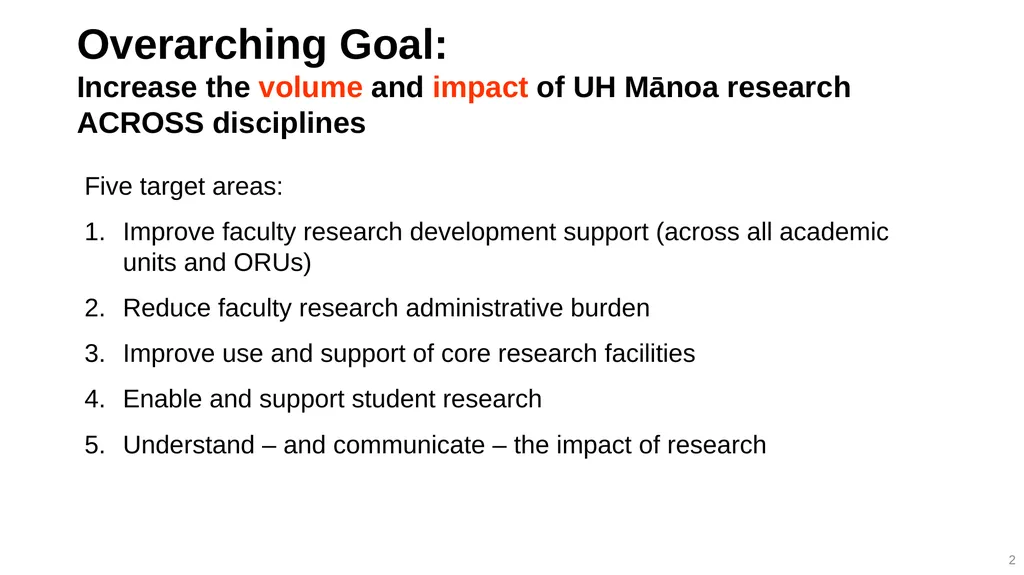
Overarching Goal:
Increase the volume and impact of UH Mānoa research ACROSS disciplines Five target areas:
Improve faculty research development support (across all academic units and ORUs)
Reduce faculty research administrative burden
Improve use and support of core research facilities
Enable and support student research
Understand – and communicate – the impact of research 2<br>
Improve faculty research development support (across all academic units and ORUs)
Reduce faculty research administrative burden
Improve use and support of core research facilities
Enable and support student research
Understand – and communicate – the impact of research 2<br>
03
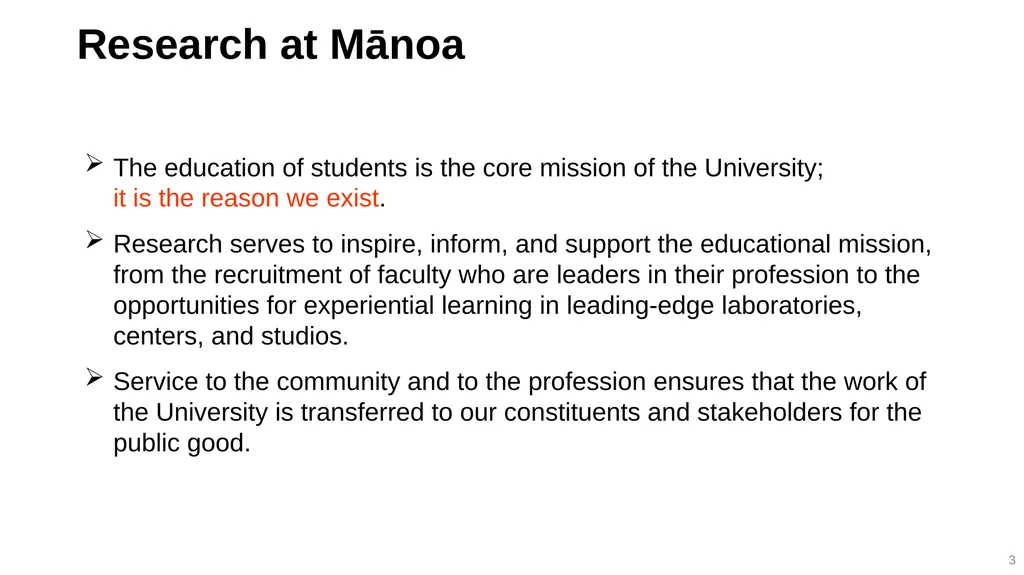
Research at Mānoa The education of students is the core mission of the University;
it is the reason we exist.
Research serves to inspire, inform, and support the educational mission, from the recruitment of faculty who are leaders in their profession to the opportunities for experiential learning in leading-edge laboratories, centers, and studios.
Service to the community and to the profession ensures that the work of the University is transferred to our constituents and stakeholders for the public good. 3<br>
04
Research at Mānoa Goals Improve faculty research development support (across all academic units and ORUs)
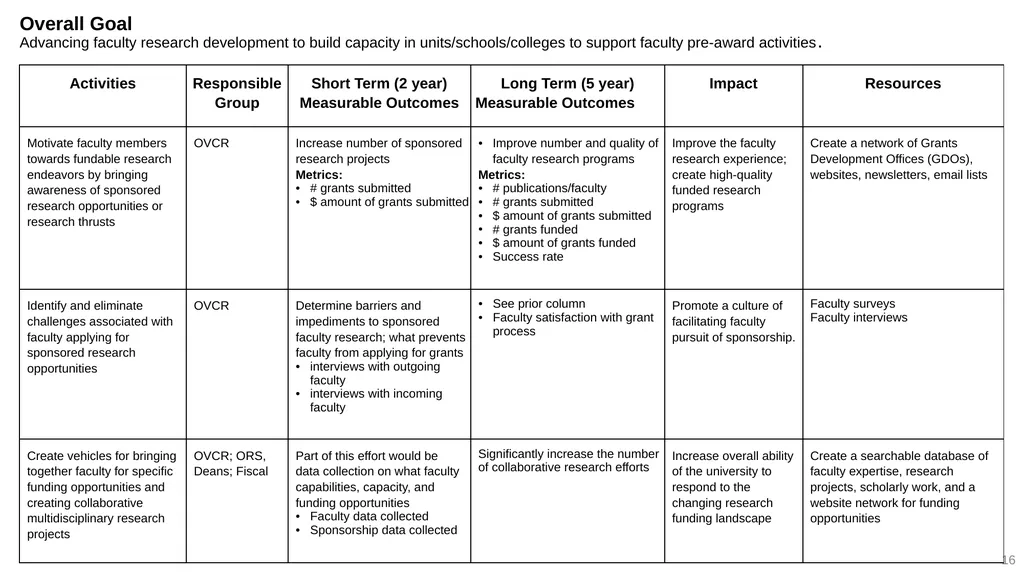
Create a network of Grants Development Offices (GDOs), websites, newsletters, email lists
Create a searchable database of faculty expertise, research projects, scholarly work, and a website network for funding opportunities
Faculty incentives for IP development, commercialization
Reduce faculty research administrative burden
Urgent Care Facility for faculty researchers 4<br>
05
Research at Mānoa Goals (continued) Improve use and support of core research facilities
Online searchable information resource for campus core facilities
Enable and support student research
Create a Center for Undergraduate Research
Encourage & facilitate programs to have an undergraduate research requirement
Understand – and communicate – the impact of research
Highly visible network of communications professionals 5<br>
06
The Big Issues Comprehensive review of the Organized Research Units
new ORUs?
re-organized ORUs?
new models?
Expectations for Research Faculty, including teaching. Already underway.
Strategic hiring, including across Organized Research Units and Academic Units 6<br>
new ORUs?
re-organized ORUs?
new models?
Expectations for Research Faculty, including teaching. Already underway.
Strategic hiring, including across Organized Research Units and Academic Units 6<br>
07
Next Steps Early Fall – socialize recommendations more widely via website, faculty and staff surveys, and several Research Town Halls
Finalize recommendations and action plans by December, 2016 7<br>
Finalize recommendations and action plans by December, 2016 7<br>
08
Appendix
the full progress report<br>
09
Progress Report on Research Strategic Planning at UH Mānoa M. Bruno
Vice Chancellor for Research
August, 2016 9<br>
10
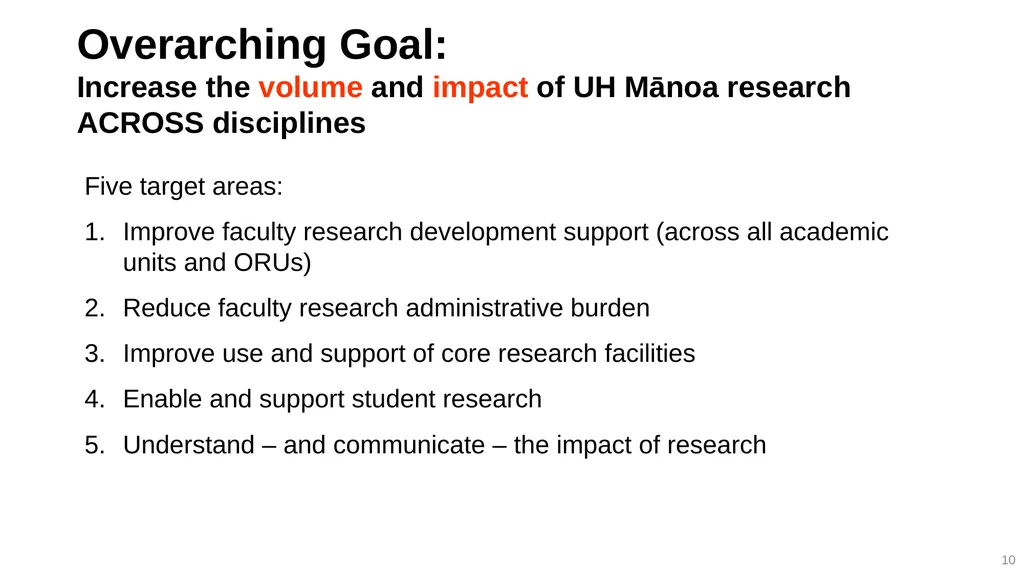
Overarching Goal:
Increase the volume and impact of UH Mānoa research ACROSS disciplines Five target areas:
Improve faculty research development support (across all academic units and ORUs)
Reduce faculty research administrative burden
Improve use and support of core research facilities
Enable and support student research
Understand – and communicate – the impact of research 10<br>
Improve faculty research development support (across all academic units and ORUs)
Reduce faculty research administrative burden
Improve use and support of core research facilities
Enable and support student research
Understand – and communicate – the impact of research 10<br>
11
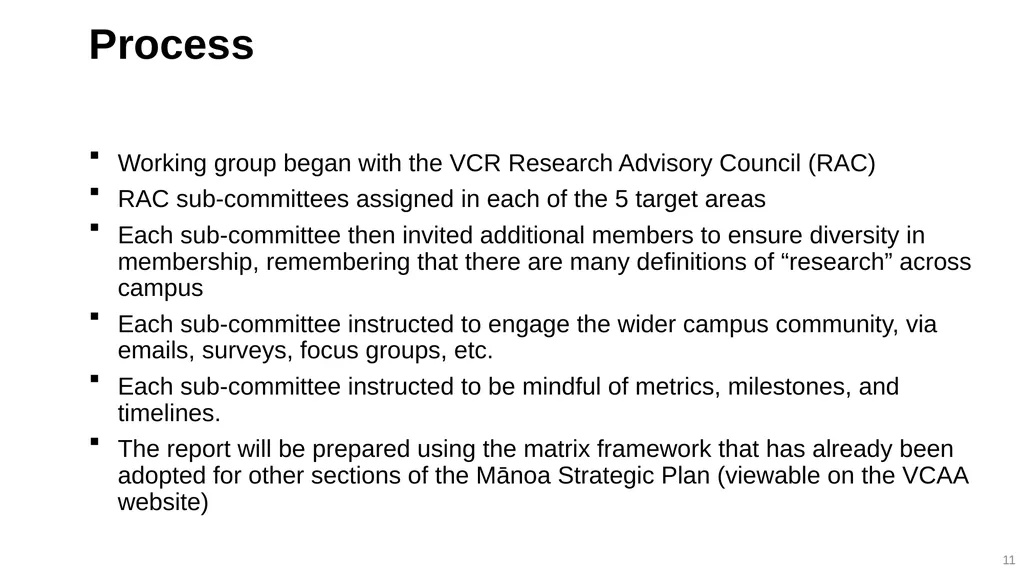
Process Working group began with the VCR Research Advisory Council (RAC)
RAC sub-committees assigned in each of the 5 target areas
Each sub-committee then invited additional members to ensure diversity in membership, remembering that there are many definitions of “research” across campus
Each sub-committee instructed to engage the wider campus community, via emails, surveys, focus groups, etc.
Each sub-committee instructed to be mindful of metrics, milestones, and timelines.
The report will be prepared using the matrix framework that has already been adopted for other sections of the Mānoa Strategic Plan (viewable on the VCAA website) 11<br>
12
Members of the
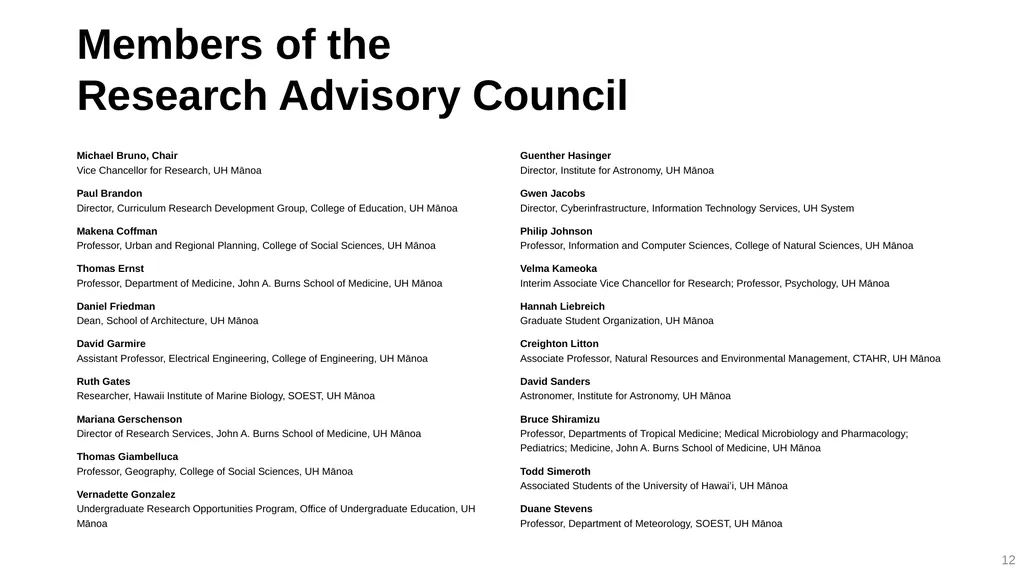
Research Advisory Council Michael Bruno, Chair
Vice Chancellor for Research, UH Mānoa
Paul Brandon Director, Curriculum Research Development Group, College of Education, UH Mānoa
Makena Coffman Professor, Urban and Regional Planning, College of Social Sciences, UH Mānoa
Thomas Ernst Professor, Department of Medicine, John A. Burns School of Medicine, UH Mānoa
Daniel Friedman Dean, School of Architecture, UH Mānoa
David Garmire Assistant Professor, Electrical Engineering, College of Engineering, UH Mānoa
Ruth Gates Researcher, Hawaii Institute of Marine Biology, SOEST, UH Mānoa
Mariana Gerschenson Director of Research Services, John A. Burns School of Medicine, UH Mānoa
Thomas Giambelluca Professor, Geography, College of Social Sciences, UH Mānoa
Vernadette Gonzalez Undergraduate Research Opportunities Program, Office of Undergraduate Education, UH Mānoa Guenther Hasinger Director, Institute for Astronomy, UH Mānoa
Gwen Jacobs Director, Cyberinfrastructure, Information Technology Services, UH System
Philip Johnson Professor, Information and Computer Sciences, College of Natural Sciences, UH Mānoa
Velma Kameoka Interim Associate Vice Chancellor for Research; Professor, Psychology, UH Mānoa
Hannah Liebreich Graduate Student Organization, UH Mānoa
Creighton Litton Associate Professor, Natural Resources and Environmental Management, CTAHR, UH Mānoa
David Sanders Astronomer, Institute for Astronomy, UH Mānoa
Bruce Shiramizu Professor, Departments of Tropical Medicine; Medical Microbiology and Pharmacology; Pediatrics; Medicine, John A. Burns School of Medicine, UH Mānoa
Todd Simeroth Associated Students of the University of Hawai’i, UH Mānoa
Duane Stevens Professor, Department of Meteorology, SOEST, UH Mānoa 12<br>
13
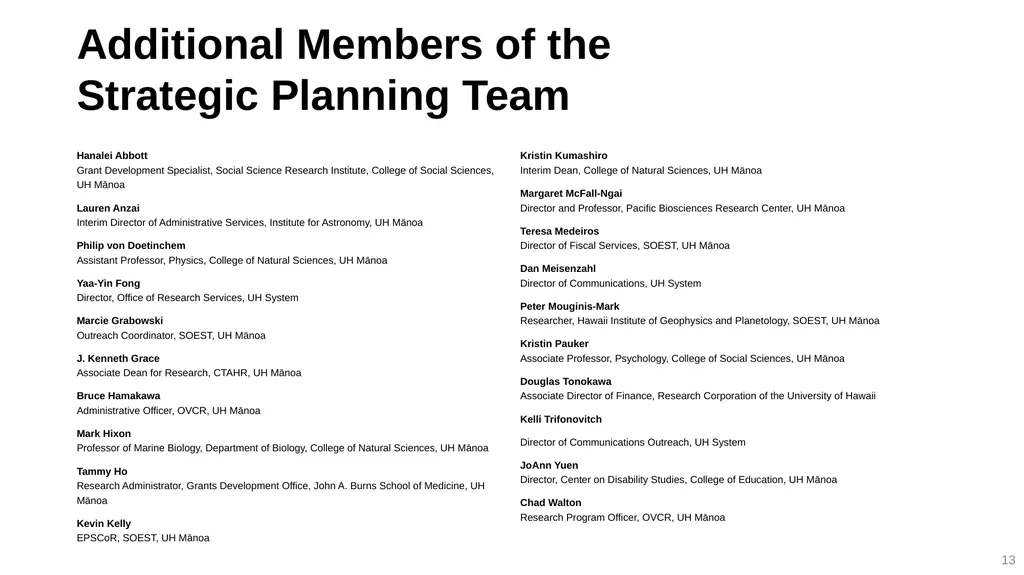
Additional Members of the
Strategic Planning Team Hanalei Abbott
Grant Development Specialist, Social Science Research Institute, College of Social Sciences, UH Mānoa
Lauren Anzai Interim Director of Administrative Services, Institute for Astronomy, UH Mānoa
Philip von Doetinchem Assistant Professor, Physics, College of Natural Sciences, UH Mānoa
Yaa-Yin Fong Director, Office of Research Services, UH System
Marcie Grabowski Outreach Coordinator, SOEST, UH Mānoa
J. Kenneth Grace Associate Dean for Research, CTAHR, UH Mānoa
Bruce Hamakawa Administrative Officer, OVCR, UH Mānoa
Mark Hixon Professor of Marine Biology, Department of Biology, College of Natural Sciences, UH Mānoa
Tammy Ho Research Administrator, Grants Development Office, John A. Burns School of Medicine, UH Mānoa
Kevin Kelly EPSCoR, SOEST, UH Mānoa Kristin Kumashiro Interim Dean, College of Natural Sciences, UH Mānoa
Margaret McFall-Ngai Director and Professor, Pacific Biosciences Research Center, UH Mānoa
Teresa Medeiros Director of Fiscal Services, SOEST, UH Mānoa
Dan Meisenzahl Director of Communications, UH System
Peter Mouginis-Mark Researcher, Hawaii Institute of Geophysics and Planetology, SOEST, UH Mānoa
Kristin Pauker Associate Professor, Psychology, College of Social Sciences, UH Mānoa
Douglas Tonokawa Associate Director of Finance, Research Corporation of the University of Hawaii
Kelli Trifonovitch
Director of Communications Outreach, UH System
JoAnn Yuen Director, Center on Disability Studies, College of Education, UH Mānoa
Chad Walton Research Program Officer, OVCR, UH Mānoa 13<br>
14
Research at Mānoa The education of students is the core mission of the University; it is the reason we exist.
Research serves to inspire, inform, and support the educational mission, from the recruitment of faculty who are leaders in their profession to the opportunities for experiential learning in leading-edge laboratories, centers, and studios.
Service to the community and to the profession ensures that the work of the University is transferred to our constituents and stakeholders for the public good. 14<br>
15
Improve faculty research development support
(across all academic units and ORUs)<br>
16
Overall Goal
Advancing faculty research development to build capacity in units/schools/colleges to support faculty pre-award activities. 16<br>
17
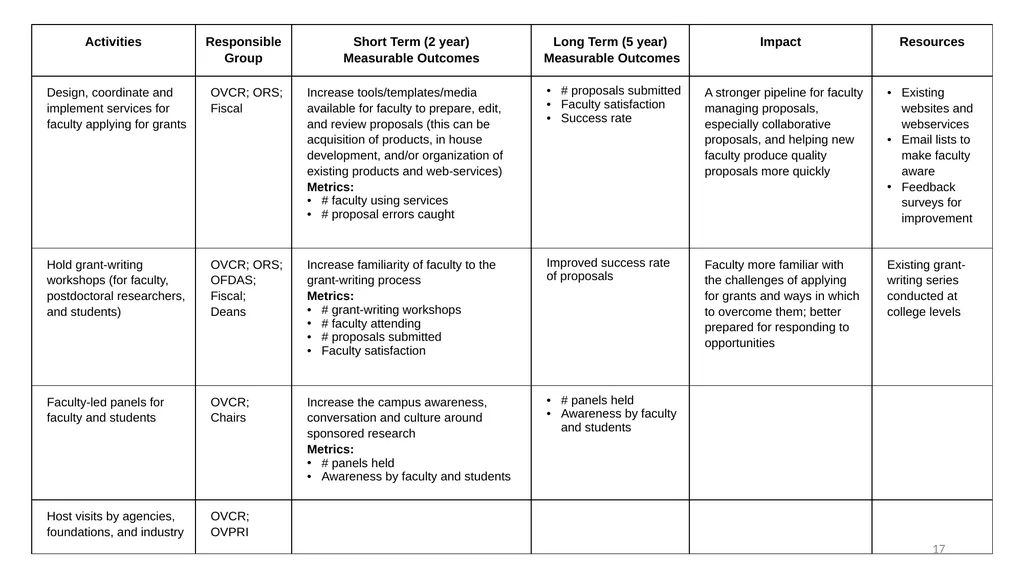
17 Overall goals (continued)<br>
18
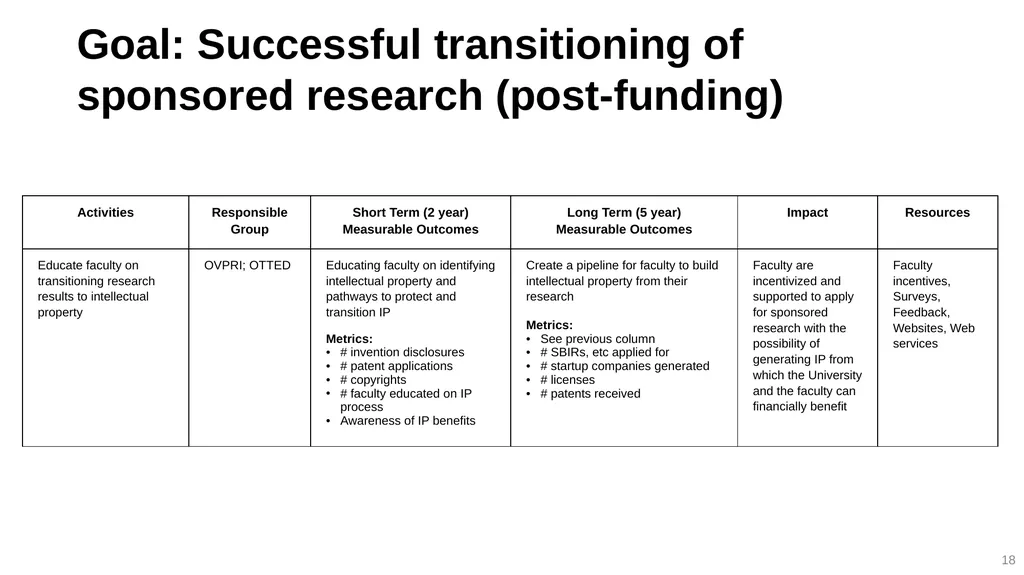
Goal: Successful transitioning of sponsored research (post-funding) 18<br>
19
Reduce faculty research administrative burden<br>
20
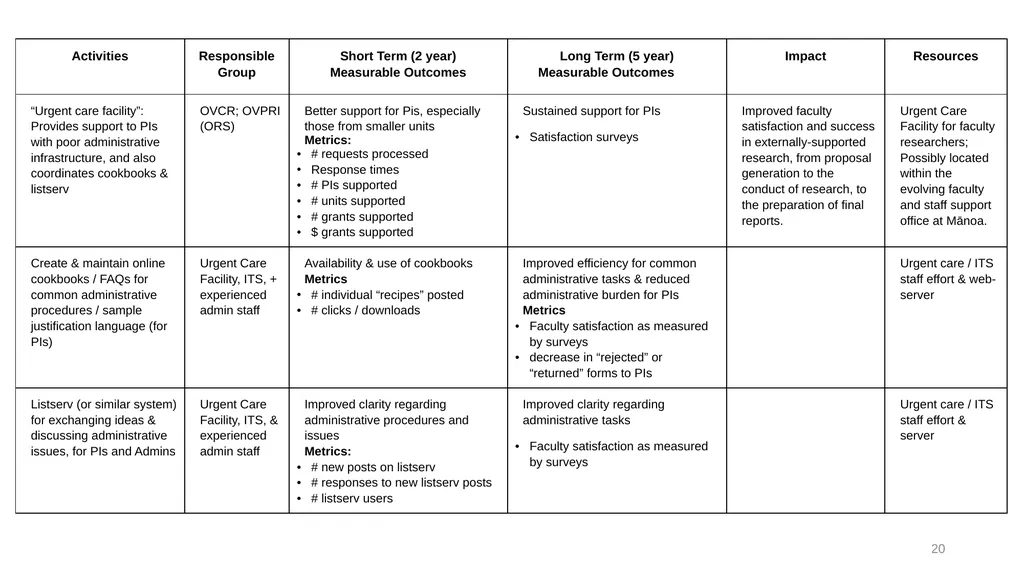
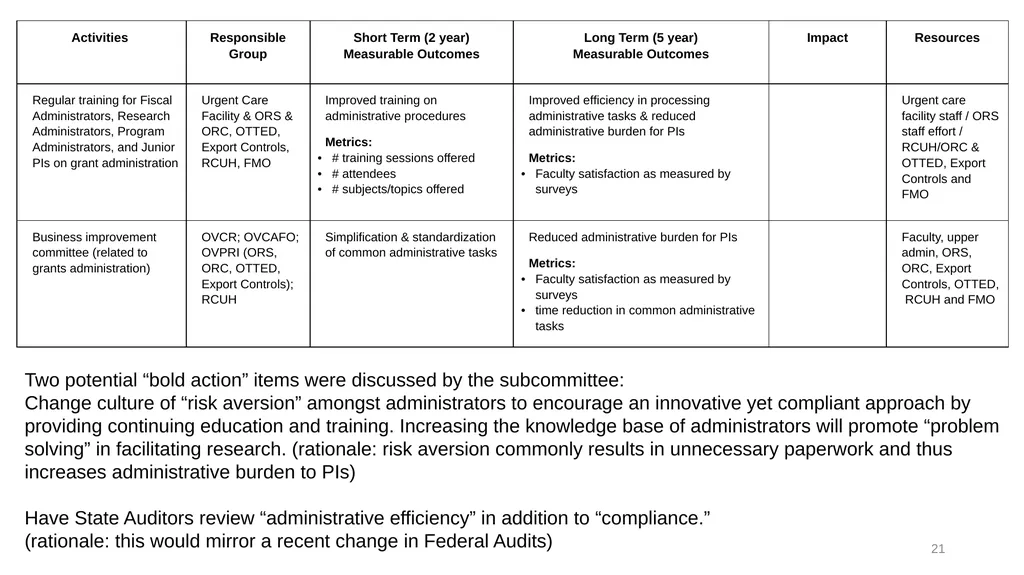
20 Reducing Faculty Research Administrative Burden – Action Matrix<br>
21
Two potential “bold action” items were discussed by the subcommittee:
Change culture of “risk aversion” amongst administrators to encourage an innovative yet compliant approach by providing continuing education and training. Increasing the knowledge base of administrators will promote “problem solving” in facilitating research. (rationale: risk aversion commonly results in unnecessary paperwork and thus increases administrative burden to PIs)
Have State Auditors review “administrative efficiency” in addition to “compliance.” (rationale: this would mirror a recent change in Federal Audits) 21 Reducing Faculty Research Administrative Burden – Action Matrix (continued)<br>
22
Improve use and support of
core research facilities<br>
23
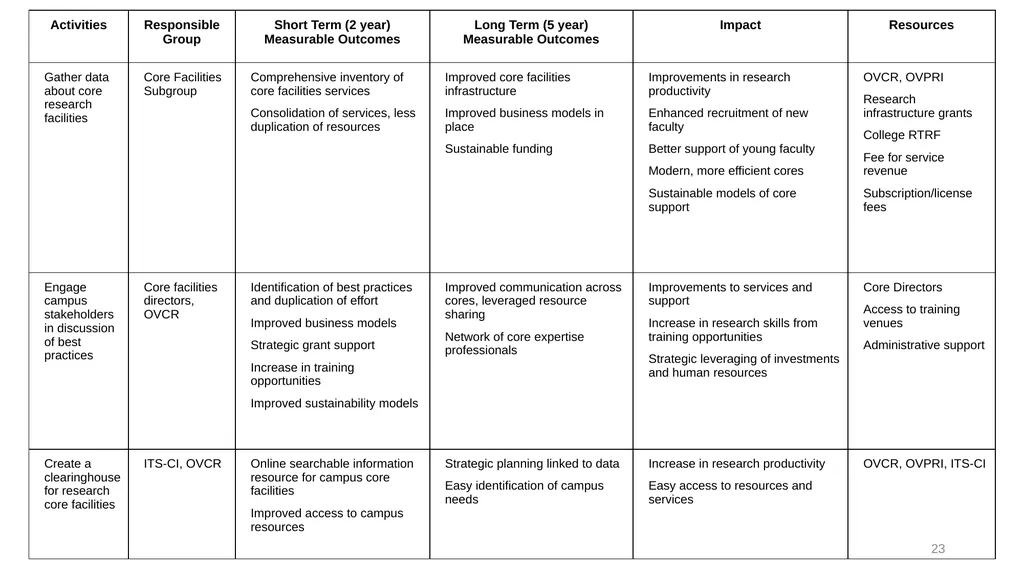
23 Improving use and support of
core research facilities matrix<br>
24
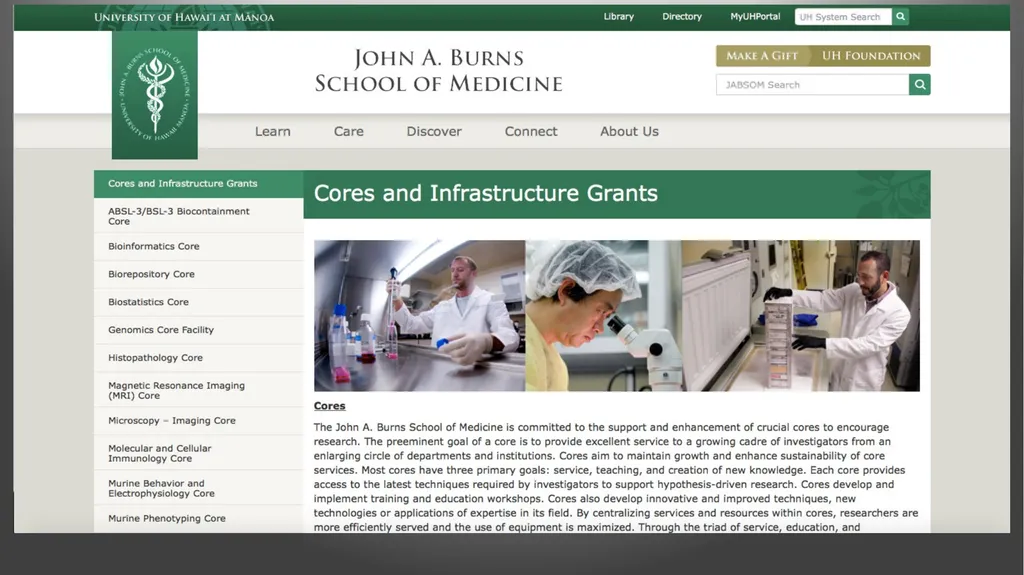
Example of Core and Infrastructure Grants<br>
25
Enable and support
student research<br>
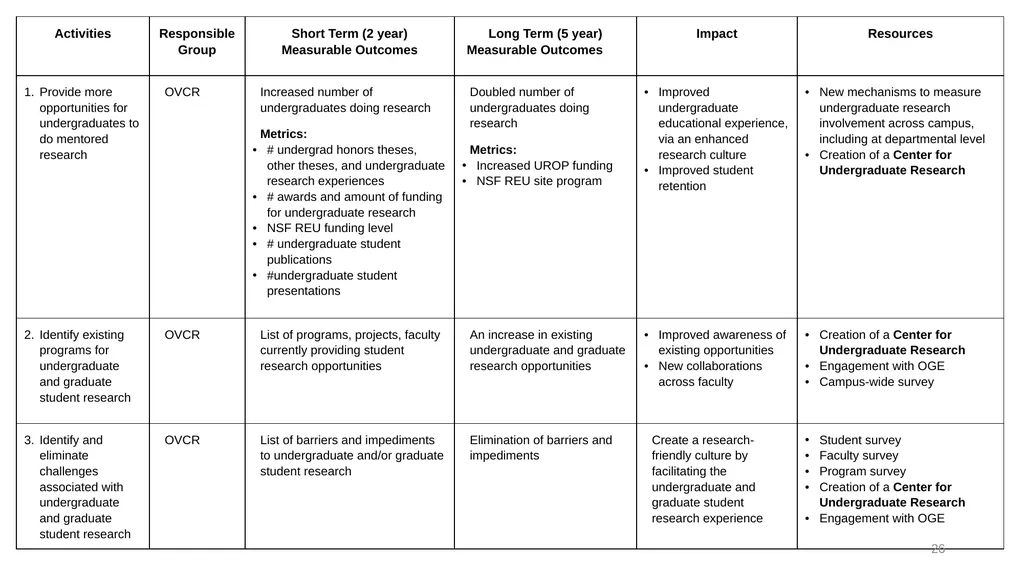
26
26 Enabling and supporting
student research - matrix<br>
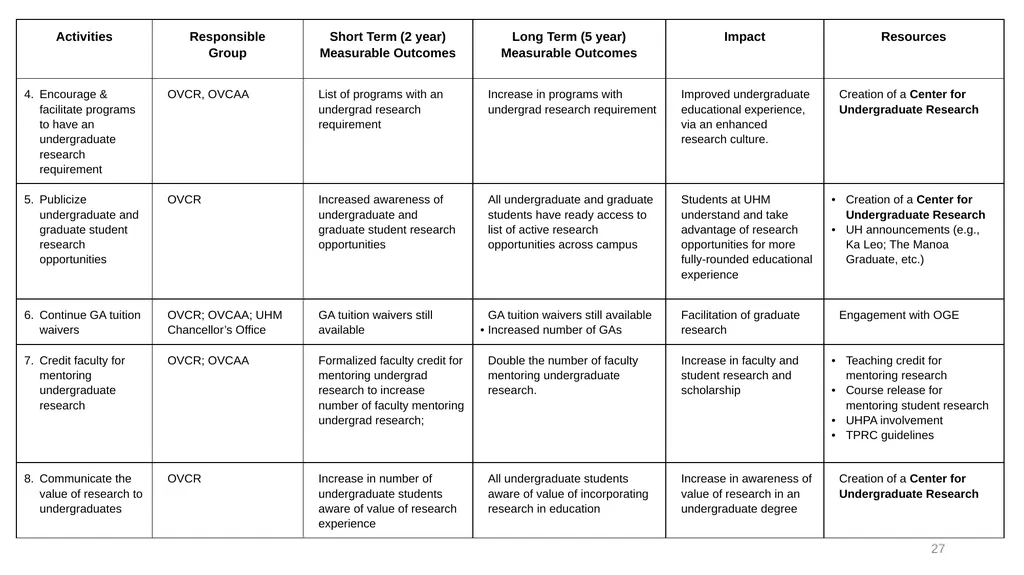
27
27 Enabling and supporting
student research – matrix (continued)<br>
28
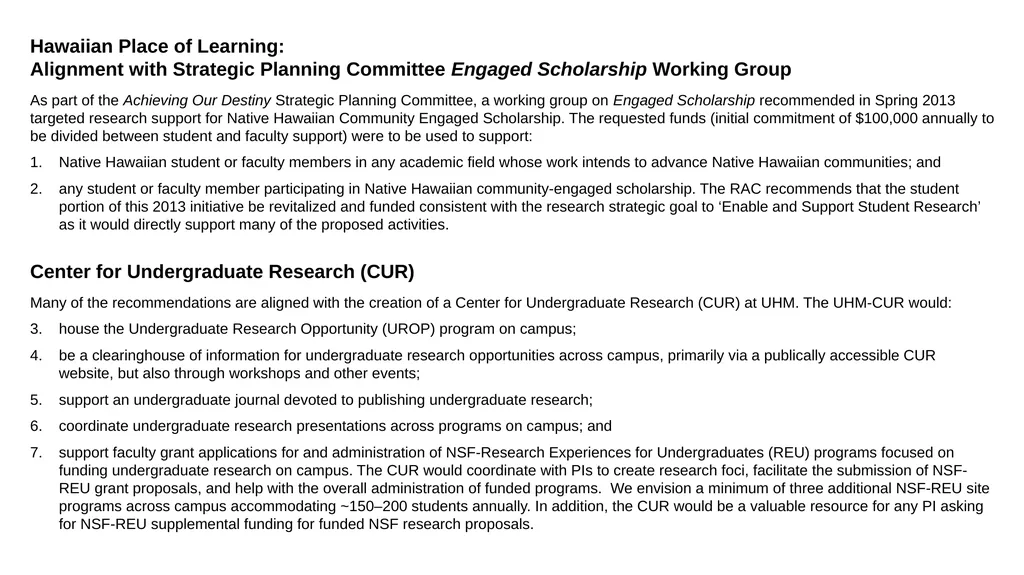
Hawaiian Place of Learning:
Alignment with Strategic Planning Committee Engaged Scholarship Working Group
As part of the Achieving Our Destiny Strategic Planning Committee, a working group on Engaged Scholarship recommended in Spring 2013 targeted research support for Native Hawaiian Community Engaged Scholarship. The requested funds (initial commitment of $100,000 annually to be divided between student and faculty support) were to be used to support:
Native Hawaiian student or faculty members in any academic field whose work intends to advance Native Hawaiian communities; and
any student or faculty member participating in Native Hawaiian community-engaged scholarship. The RAC recommends that the student portion of this 2013 initiative be revitalized and funded consistent with the research strategic goal to ‘Enable and Support Student Research’ as it would directly support many of the proposed activities.
Center for Undergraduate Research (CUR)
Many of the recommendations are aligned with the creation of a Center for Undergraduate Research (CUR) at UHM. The UHM-CUR would:
house the Undergraduate Research Opportunity (UROP) program on campus;
be a clearinghouse of information for undergraduate research opportunities across campus, primarily via a publically accessible CUR website, but also through workshops and other events;
support an undergraduate journal devoted to publishing undergraduate research;
coordinate undergraduate research presentations across programs on campus; and
support faculty grant applications for and administration of NSF-Research Experiences for Undergraduates (REU) programs focused on funding undergraduate research on campus. The CUR would coordinate with PIs to create research foci, facilitate the submission of NSF-REU grant proposals, and help with the overall administration of funded programs. We envision a minimum of three additional NSF-REU site programs across campus accommodating ~150–200 students annually. In addition, the CUR would be a valuable resource for any PI asking for NSF-REU supplemental funding for funded NSF research proposals. Planning for a Hawaiian Place of Learning and a Center for Undergraduate Research<br>
29
Understand – and communicate –
the impact of research<br>
30
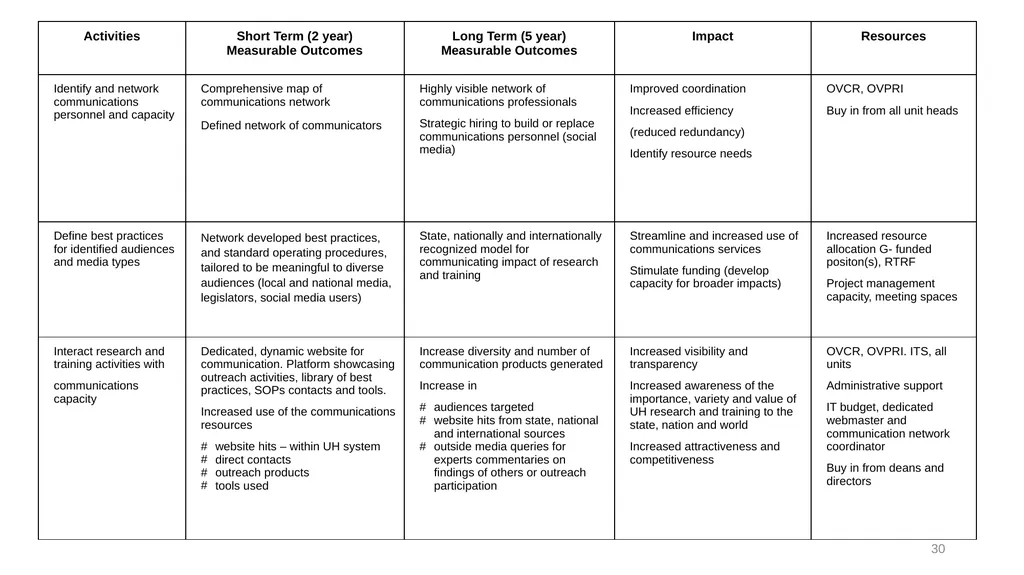
30 Understanding and communicating the impact of research - matrix<br>
31
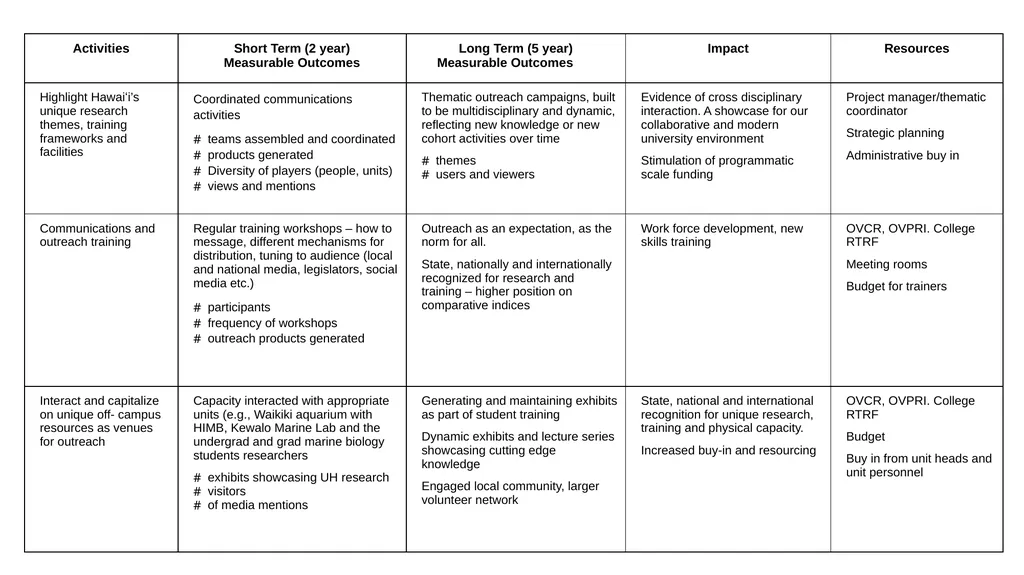
Understanding and communicating the impact of research – matrix (continued)<br>
32
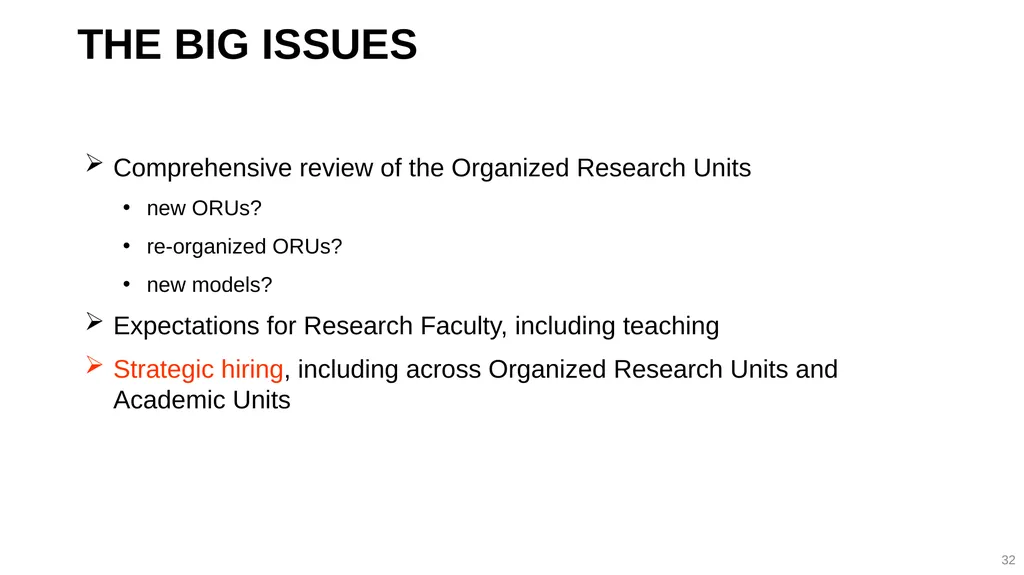
THE BIG ISSUES Comprehensive review of the Organized Research Units
new ORUs?
re-organized ORUs?
new models?
Expectations for Research Faculty, including teaching
Strategic hiring, including across Organized Research Units and Academic Units 32<br>
new ORUs?
re-organized ORUs?
new models?
Expectations for Research Faculty, including teaching
Strategic hiring, including across Organized Research Units and Academic Units 32<br>
33
Next Steps Early Fall – socialize recommendations more widely via website, faculty and staff surveys, and several Research Town Halls
Finalize recommendations and action plans by December, 2016 33<br>
Finalize recommendations and action plans by December, 2016 33<br>