Public Procurement and e-Government Content Key steps in the procurement process Typical challenges when implementing the public procurement process How digitising the procurement process can help Key objectives of public procurement Order
"Public Procurement and e-Government Content Key" is the property of its rightful owner. Permission is granted to
download and print the materials on this website for personal, non-commercial use only, and to display it
on your personal computer provided you do not modify the materials and that you retain all copyright
notices contained in the materials. By downloading content from our website, you accept the terms of this
agreement.
Presentation Transcript
01
Public Procurement and e-Government<br>
02
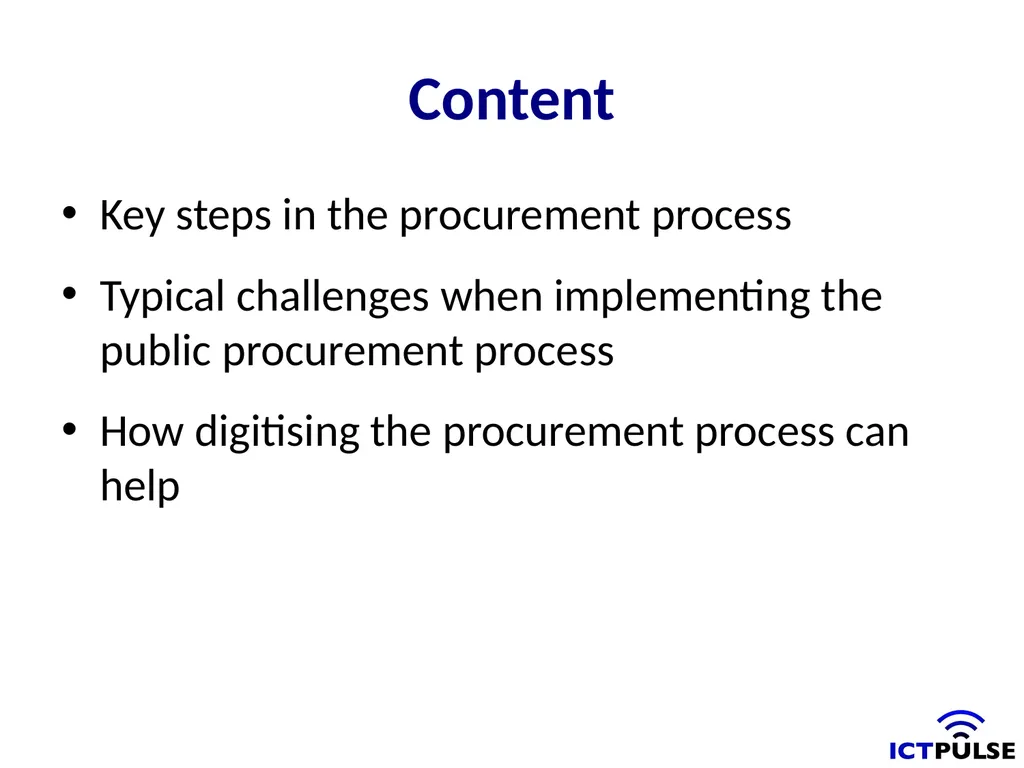
Content Key steps in the procurement process
Typical challenges when implementing the public procurement process
How digitising the procurement process can help<br>
03
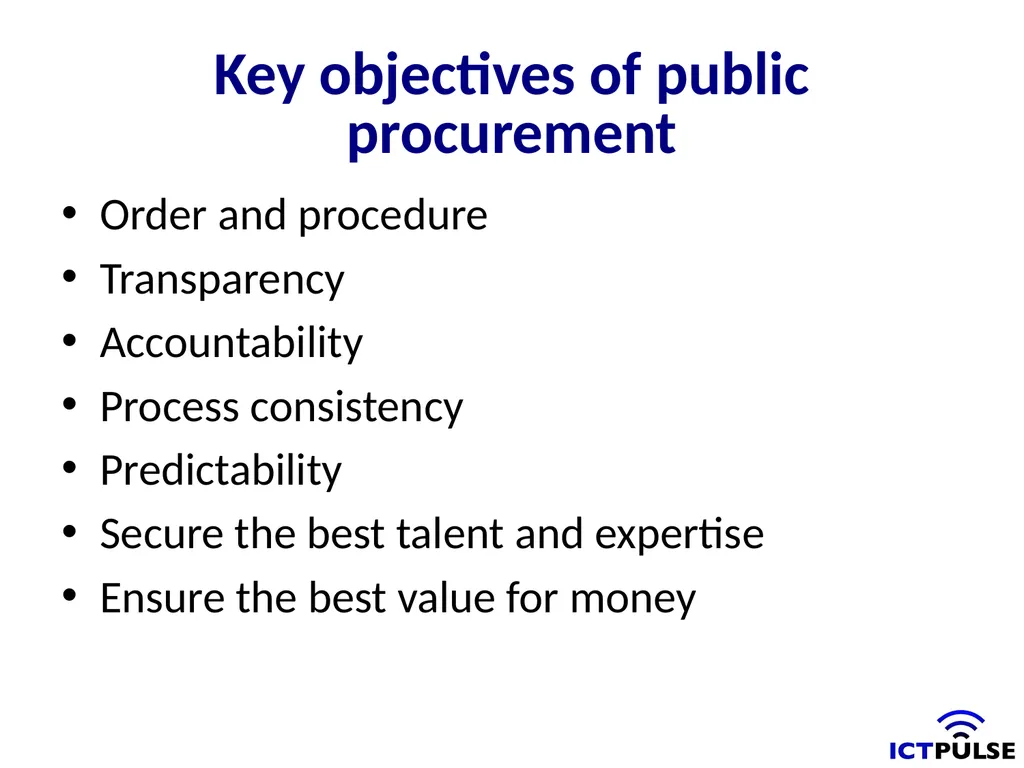
Key objectives of public procurement Order and procedure
Transparency
Accountability
Process consistency
Predictability
Secure the best talent and expertise
Ensure the best value for money<br>
04
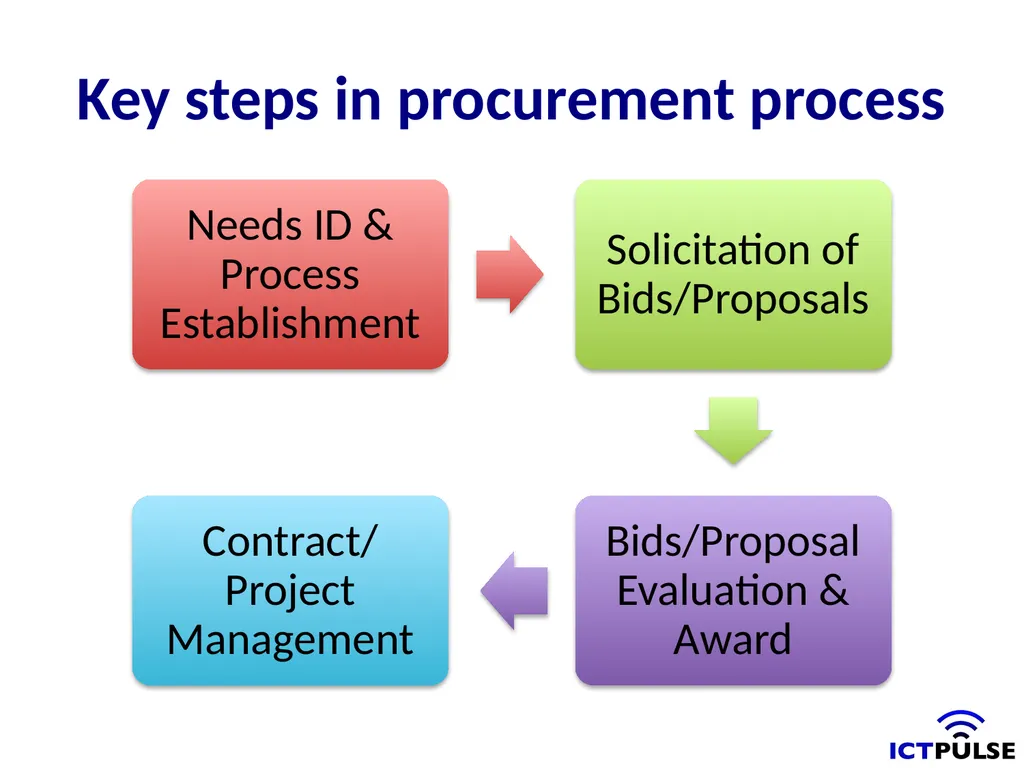
Key steps in procurement process<br>
05
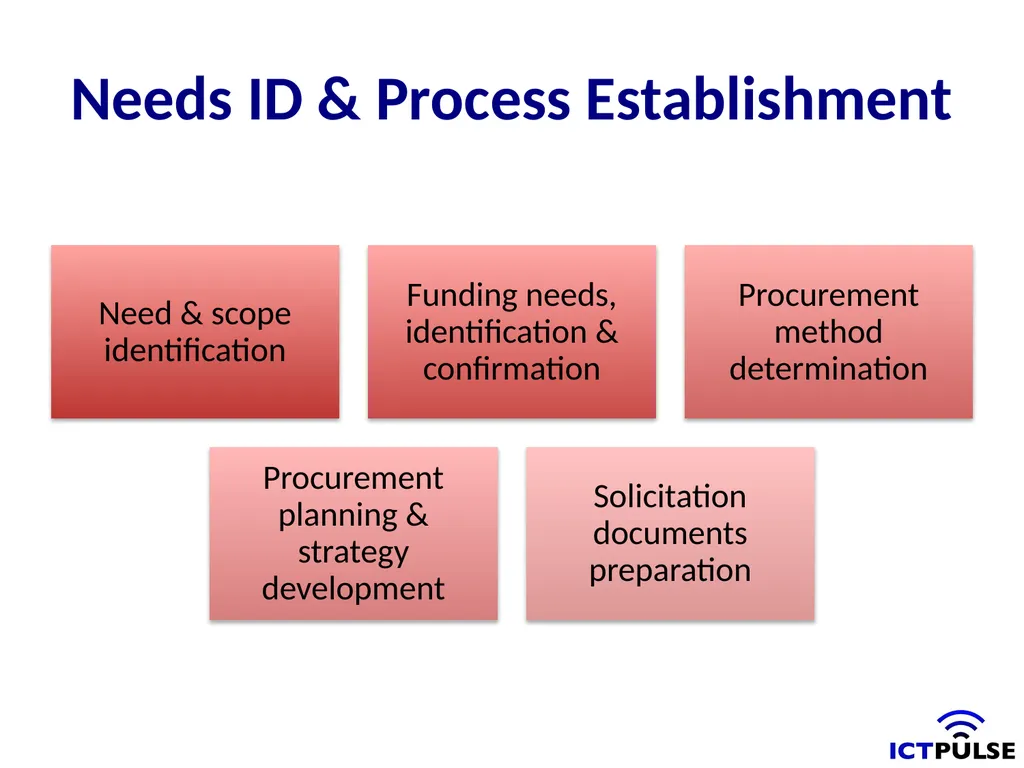
Needs ID & Process Establishment<br>
06
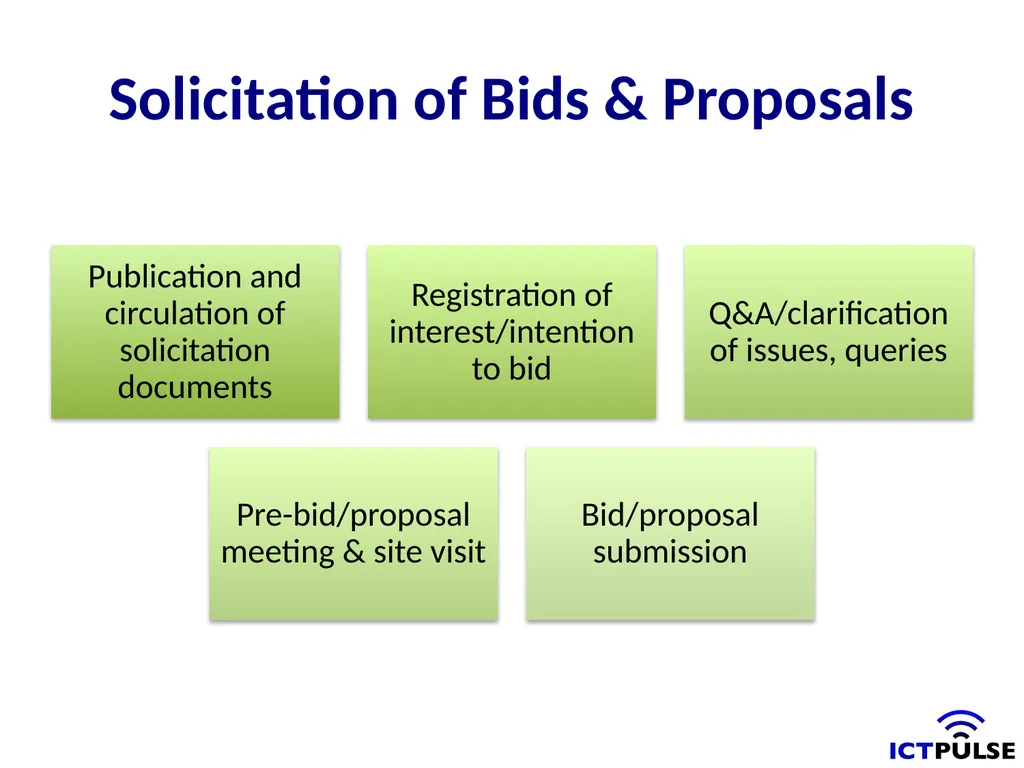
Solicitation of Bids & Proposals<br>
07
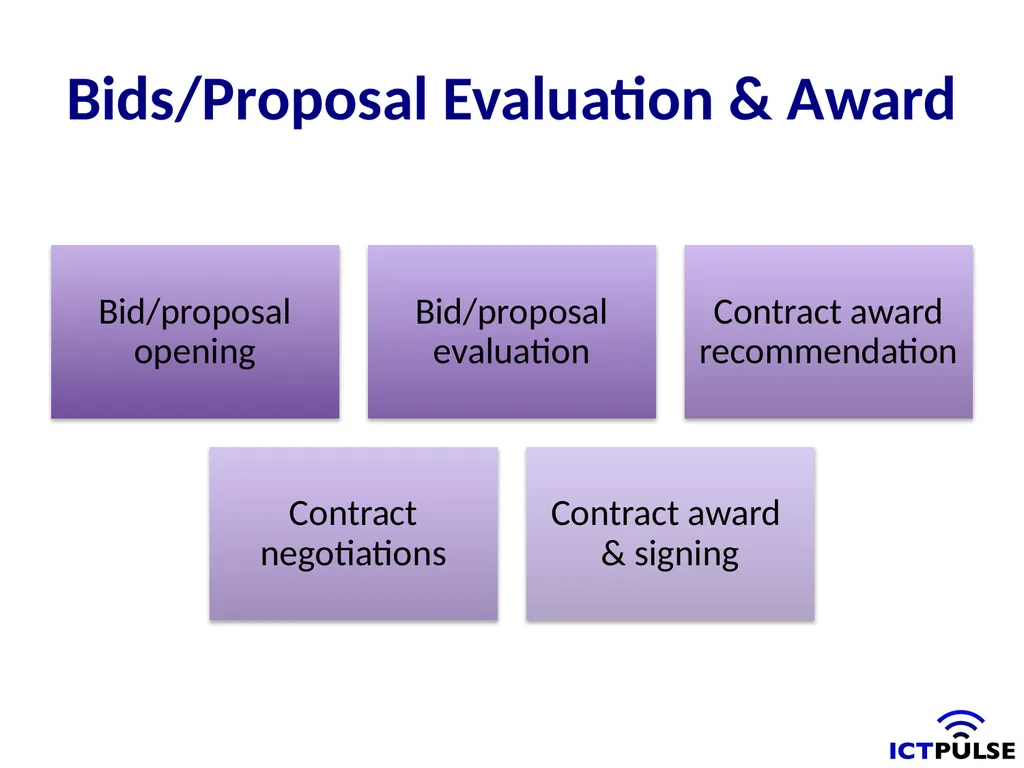
Bids/Proposal Evaluation & Award<br>
08
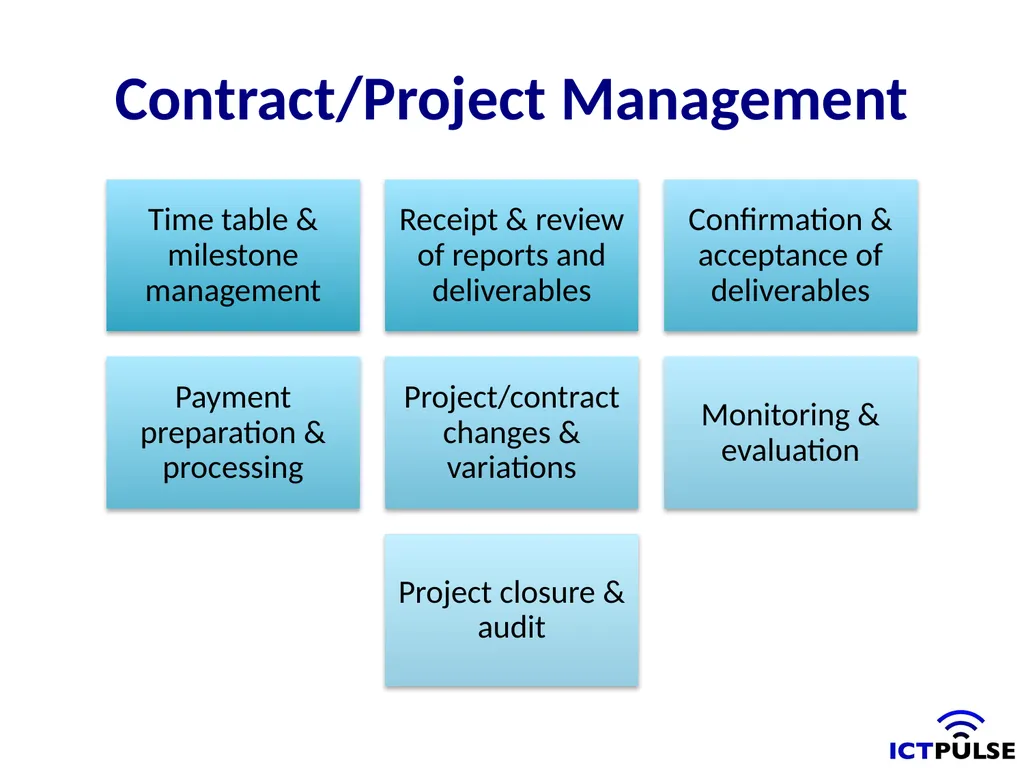
Contract/Project Management<br>
09
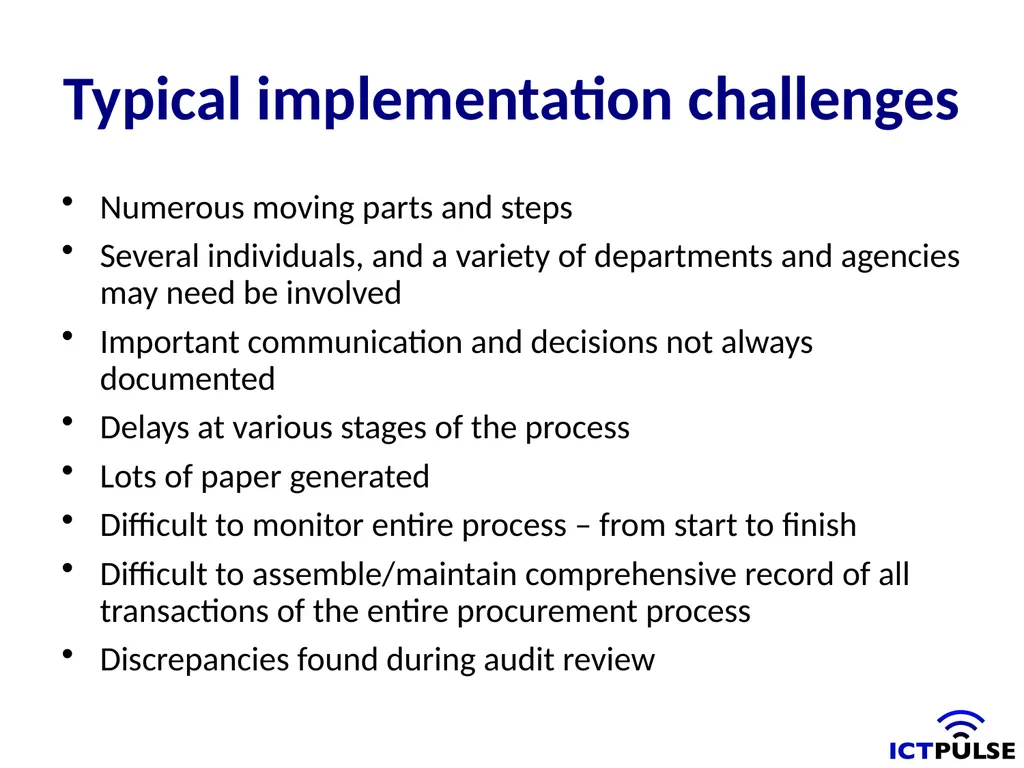
Typical implementation challenges Numerous moving parts and steps
Several individuals, and a variety of departments and agencies may need be involved
Important communication and decisions not always documented
Delays at various stages of the process
Lots of paper generated
Difficult to monitor entire process – from start to finish
Difficult to assemble/maintain comprehensive record of all transactions of the entire procurement process
Discrepancies found during audit review<br>
10
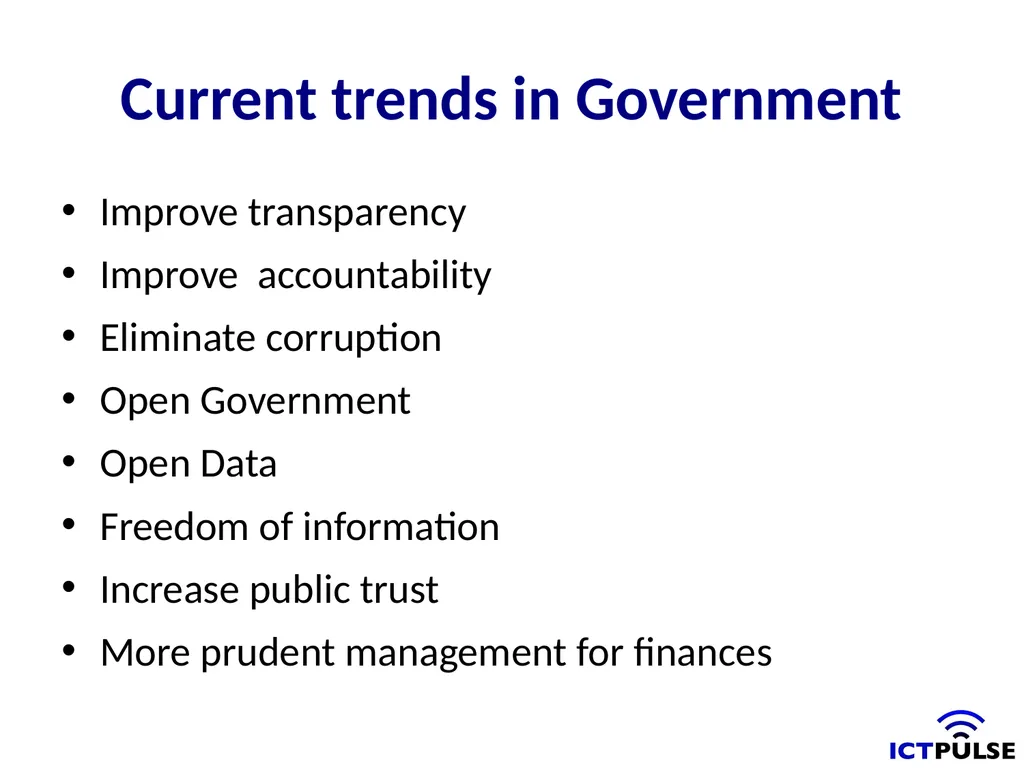
Current trends in Government Improve transparency
Improve accountability
Eliminate corruption
Open Government
Open Data
Freedom of information
Increase public trust
More prudent management for finances<br>
11
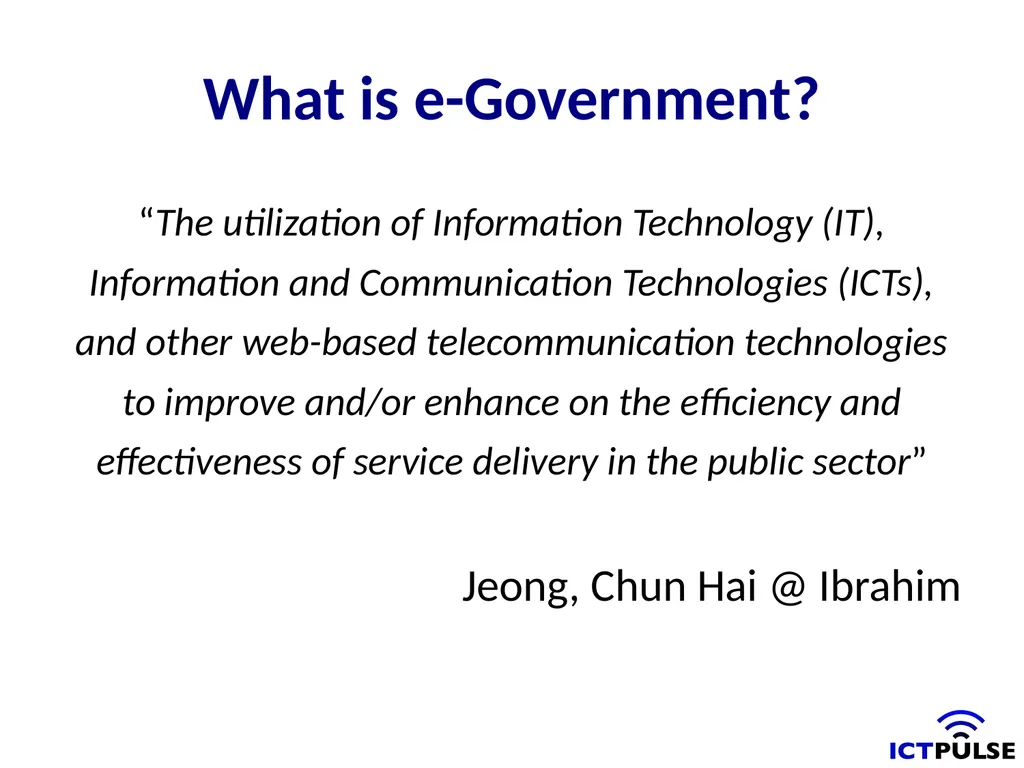
What is e-Government? “The utilization of Information Technology (IT), Information and Communication Technologies (ICTs), and other web-based telecommunication technologies to improve and/or enhance on the efficiency and effectiveness of service delivery in the public sector”
Jeong, Chun Hai @ Ibrahim<br>
12
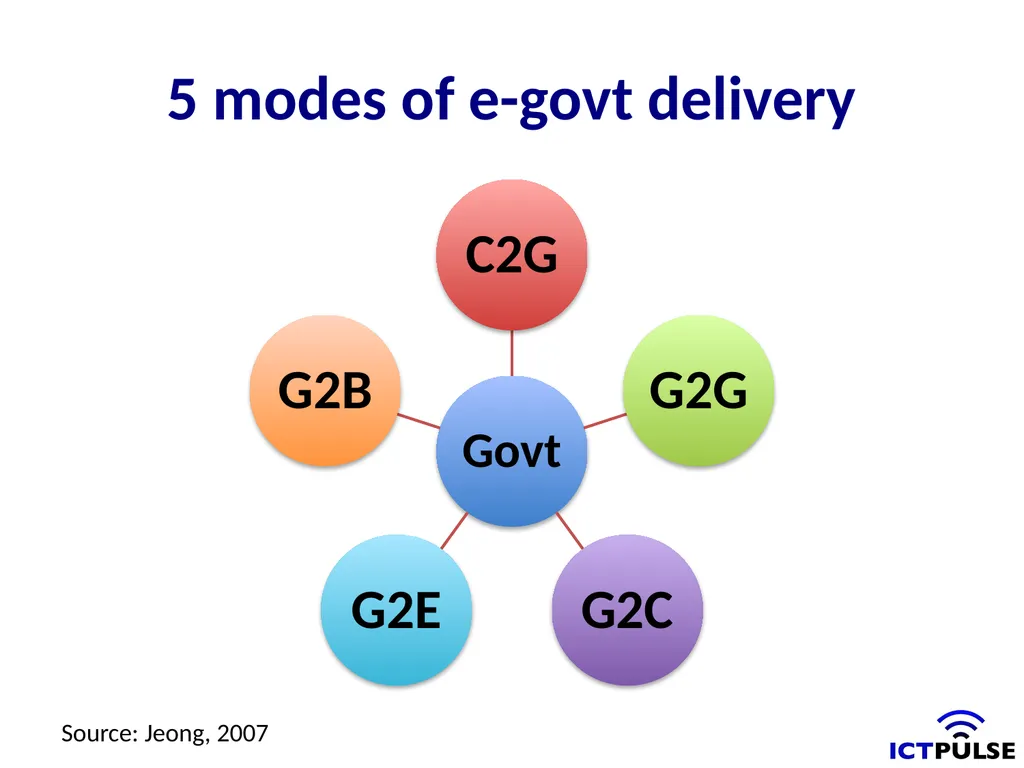
5 modes of e-govt delivery Source: Jeong, 2007<br>
13
E-Govt in the Caribbean is not new Earlier initiatives…
Automated System for Customs Data (ASYCUDA)
Standard Integrated Government Tax Administration System (SIGTAS)
FINMAN
Pharmaceutical Procurement Service
More recent ones…
Govt portals
GovNet
GATE eService
ttconnect
Application Management and Data Automation (AMANDA)
Barbados Revenue Authority
Electronic document and record management systems
Electronic Government for Regional Integration Project (EGRIP)<br>
14
Why digitising public procurement can work Steps and process already well established
Reporting lines, responsibilities, authority known
Electronic platform(s) can be developed to, inter alia:
Coordinate, manage and monitor the process G2G
Disseminate information G2G, G2B
Coordinate participation G2G, G2B, B2G
Provide updates G2G, G2B, G2C
Create and store a record of the process and decisions G2G, G2B, G2C
Platform(s) can be used to optimise the public procurement process and improve the experience for all<br>
15
Summary The public procurement process is essential to provide a framework for transparent and defensible purchase of works, goods and services by Govt
However, the process can be arduous, complex and protracted
Frequently comprises numerous steps and several actors
Across the Caribbean, efforts are already being made to move towards e-govt
Some countries are more enthusiastic/aggressive than others
Moving to e-procurement could address key challenges in public procurement
Can foster public procurement objectives and be aligned with current trends in Govt/public sector management and administration<br>
16
Any Questions? Michele Marius
Blog: ict-pulse.com
FB: facebook.com/ICTPulse
Twitter: @ictpulse<br>