Public Workforce Performance and Prosperity Zahid Hasnain Lead Governance Specialist World Bank Group Why is the public workforce important? 400 million public workers and 7 trillion wage bill State capacity Outcomes E.g., 80 percent of
"Public Workforce Performance and Prosperity Zahid" is the property of its rightful owner. Permission is granted to
download and print the materials on this website for personal, non-commercial use only, and to display it
on your personal computer provided you do not modify the materials and that you retain all copyright
notices contained in the materials. By downloading content from our website, you accept the terms of this
agreement.
Presentation Transcript
01
Public Workforce Performance and Prosperity Zahid Hasnain
Lead Governance Specialist
World Bank Group<br>
02
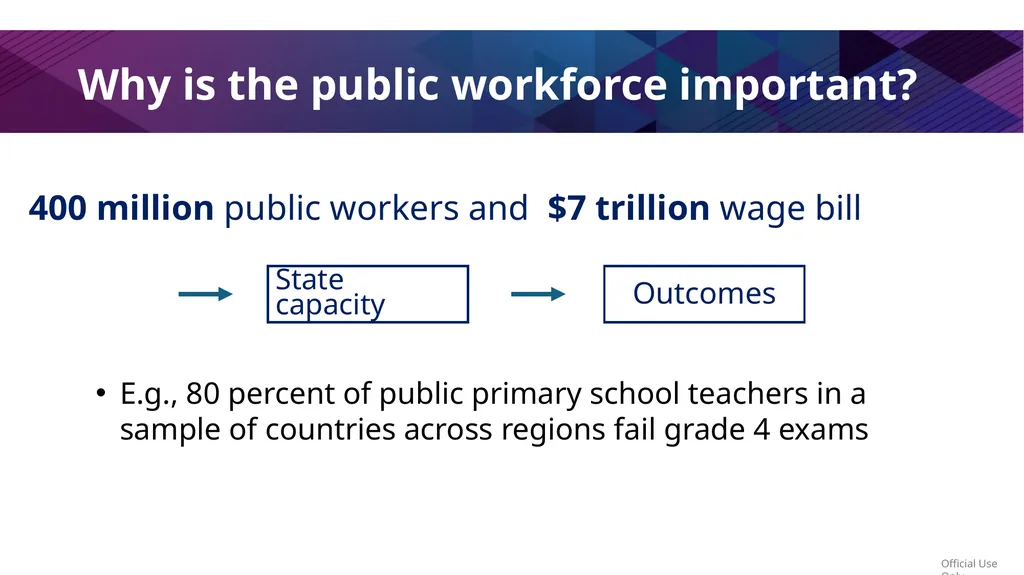
Why is the public workforce important? 400 million public workers and $7 trillion wage bill State capacity Outcomes E.g., 80 percent of public primary school teachers in a sample of countries across regions fail grade 4 exams<br>
03
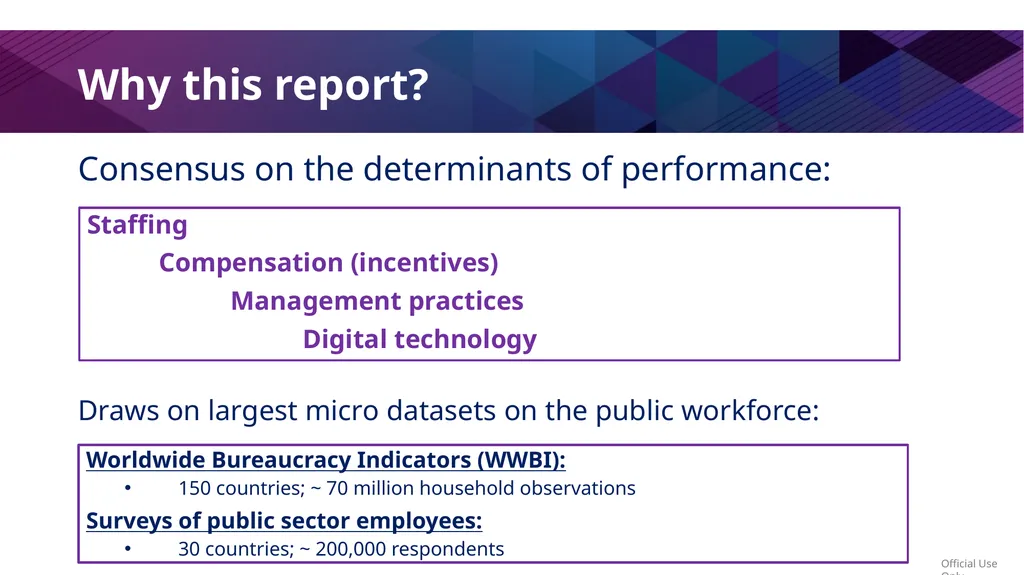
Why this report? Consensus on the determinants of performance: Staffing
Compensation (incentives)
Management practices
Digital technology Draws on largest micro datasets on the public workforce: Worldwide Bureaucracy Indicators (WWBI):
150 countries; ~ 70 million household observations
Surveys of public sector employees:
30 countries; ~ 200,000 respondents<br>
04
Public sectors in poor countries are understaffed but not underpaid compared to the market 1<br>
05
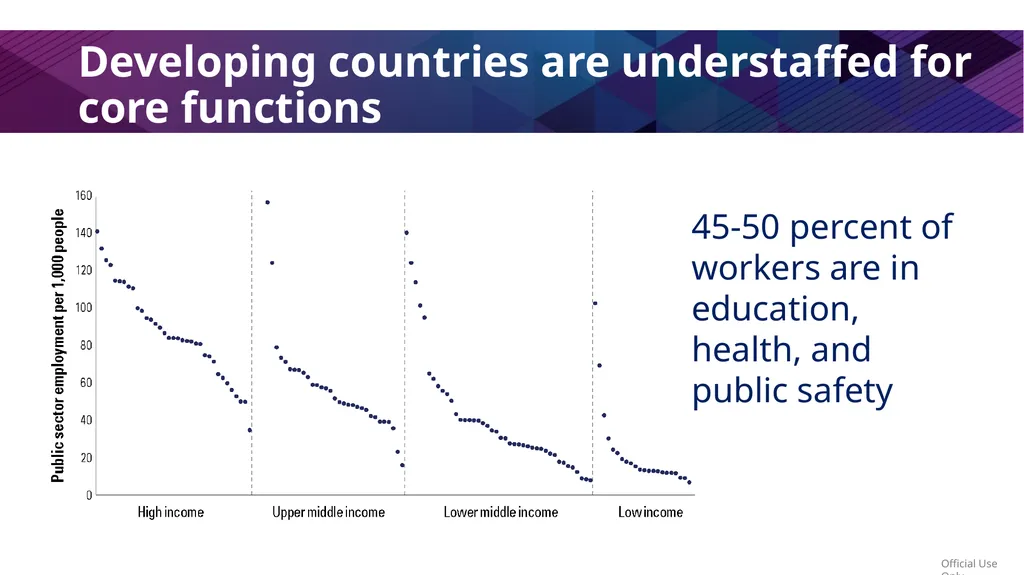
Developing countries are understaffed for core functions 45-50 percent of workers are in education, health, and public safety<br>
06
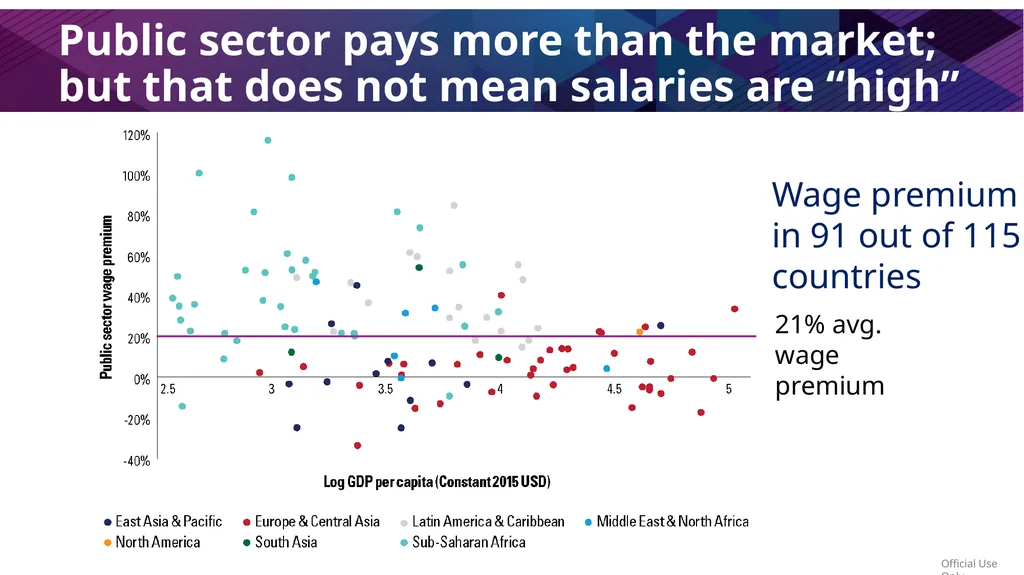
Public sector pays more than the market; but that does not mean salaries are “high” Wage premium
in 91 out of 115 countries 21% avg. wage premium<br>
07
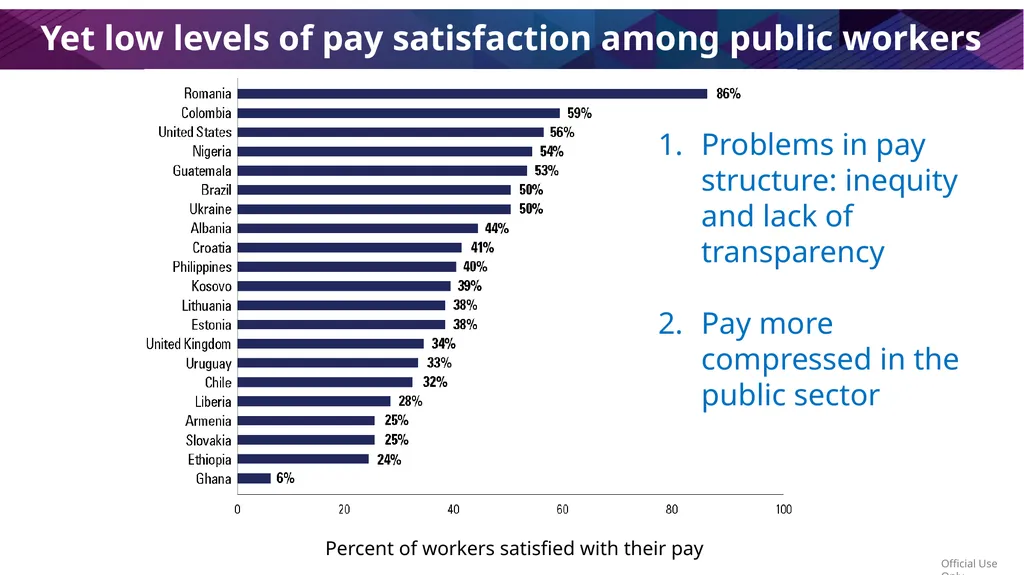
Yet low levels of pay satisfaction among public workers Problems in pay structure: inequity and lack of transparency
Pay more compressed in the public sector Percent of workers satisfied with their pay<br>
08
The public sector’s large labor market footprint creates opportunities but also risks 2<br>
09
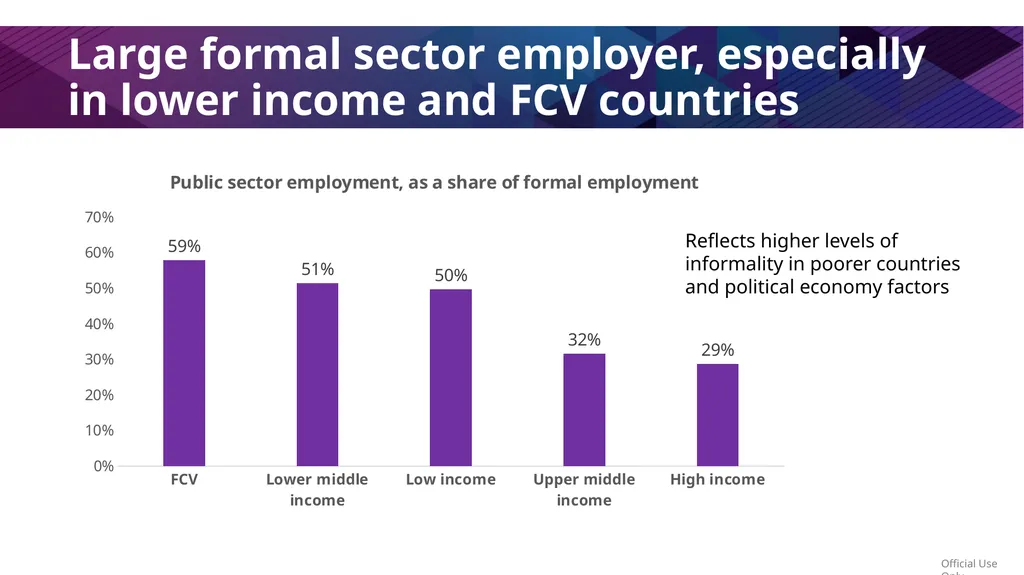
Large formal sector employer, especially in lower income and FCV countries Reflects higher levels of informality in poorer countries and political economy factors<br>
10
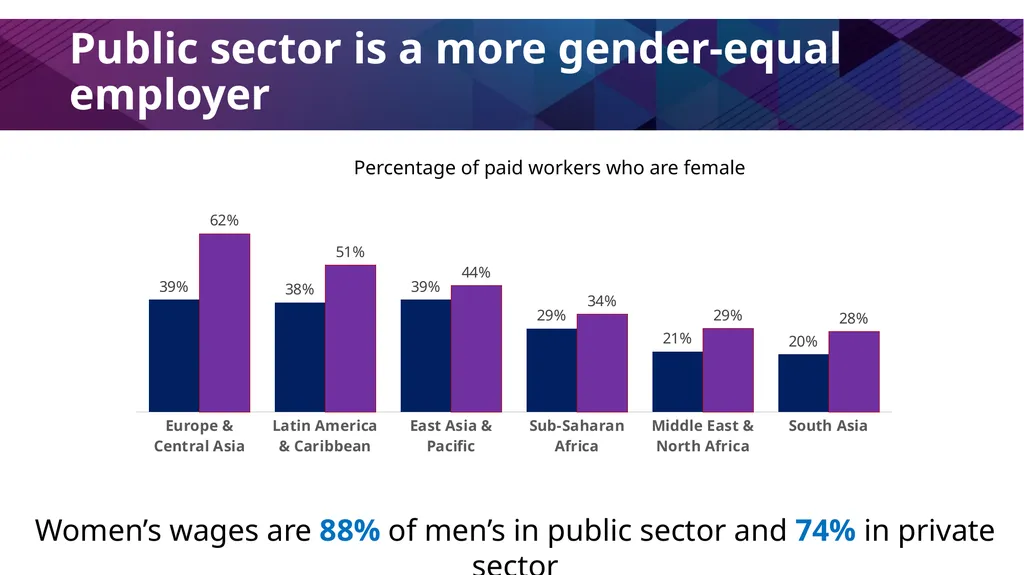
Public sector is a more gender-equal employer Women’s wages are 88% of men’s in public sector and 74% in private sector Percentage of paid workers who are female<br>
11
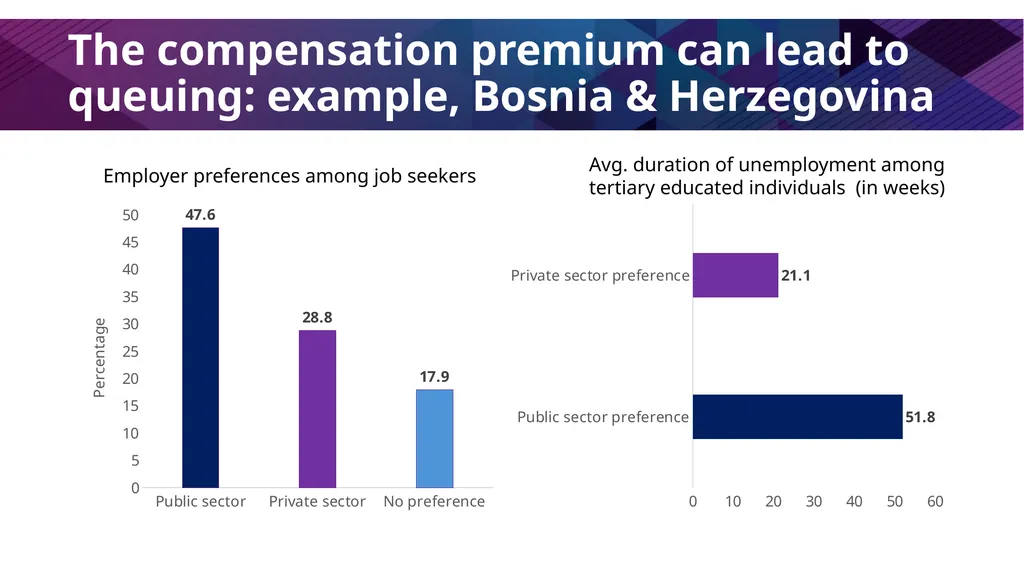
The compensation premium can lead to queuing: example, Bosnia & Herzegovina Employer preferences among job seekers Avg. duration of unemployment among tertiary educated individuals (in weeks)<br>
12
Wage bill management is a difficult balance: Priority should be on pay reform and workforce reforms in revenue agencies 3<br>
13
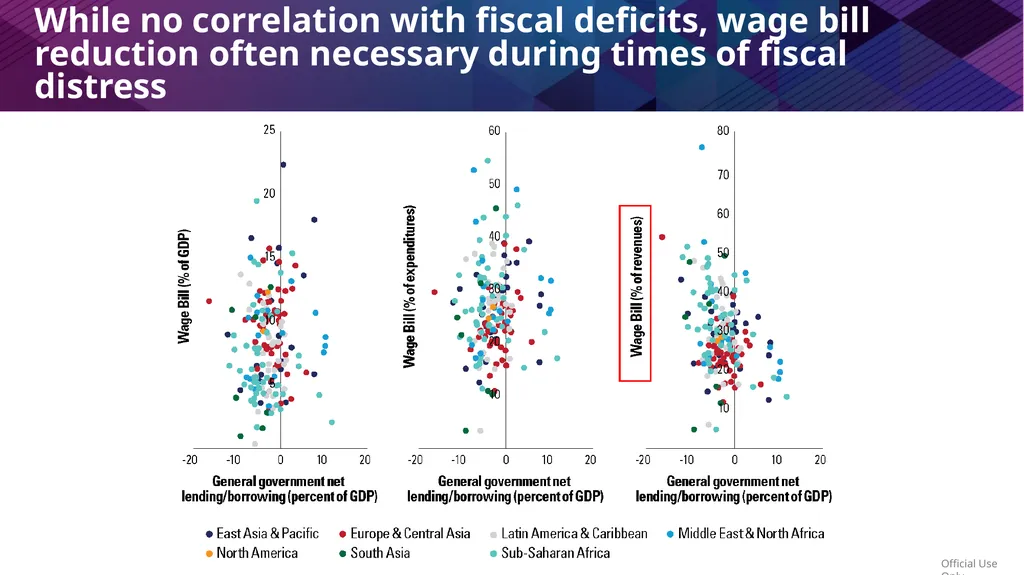
While no correlation with fiscal deficits, wage bill reduction often necessary during times of fiscal distress<br>
14
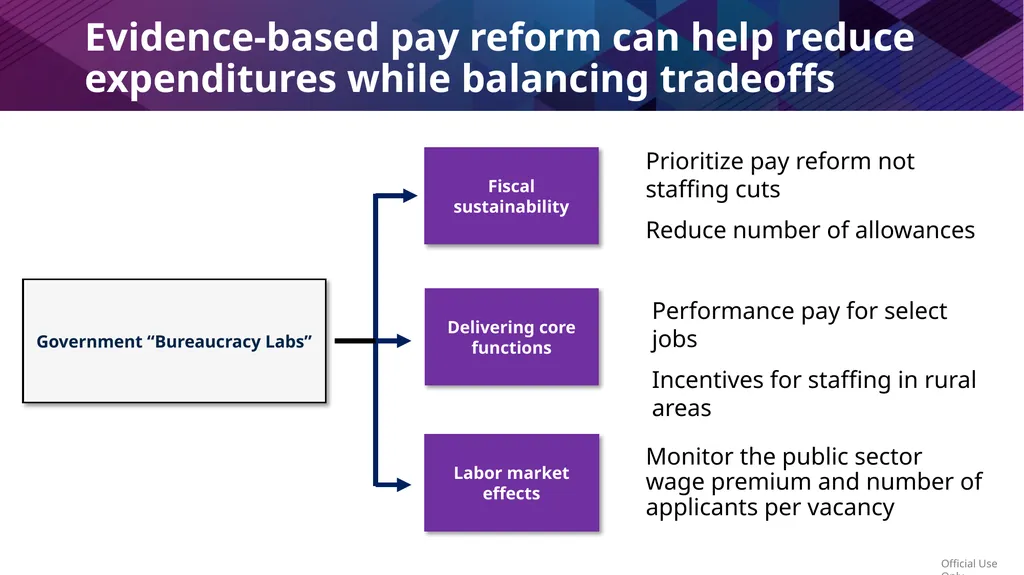
Monitor the public sector wage premium and number of applicants per vacancy Evidence-based pay reform can help reduce expenditures while balancing tradeoffs Prioritize pay reform not staffing cuts
Reduce number of allowances Performance pay for select jobs
Incentives for staffing in rural areas Delivering core functions Fiscal sustainability Labor market effects Government “Bureaucracy Labs”<br>
15
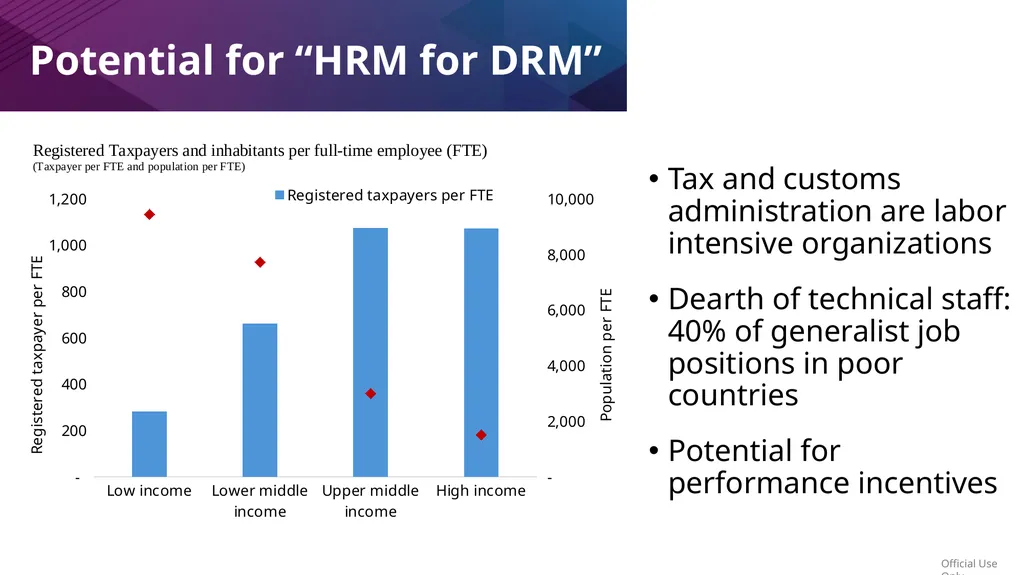
Potential for “HRM for DRM” Tax and customs administration are labor intensive organizations
Dearth of technical staff: 40% of generalist job positions in poor countries
Potential for performance incentives<br>
16
Weaknesses in meritocracy and limited in-service training compromise the quality of the workforce 4<br>
17
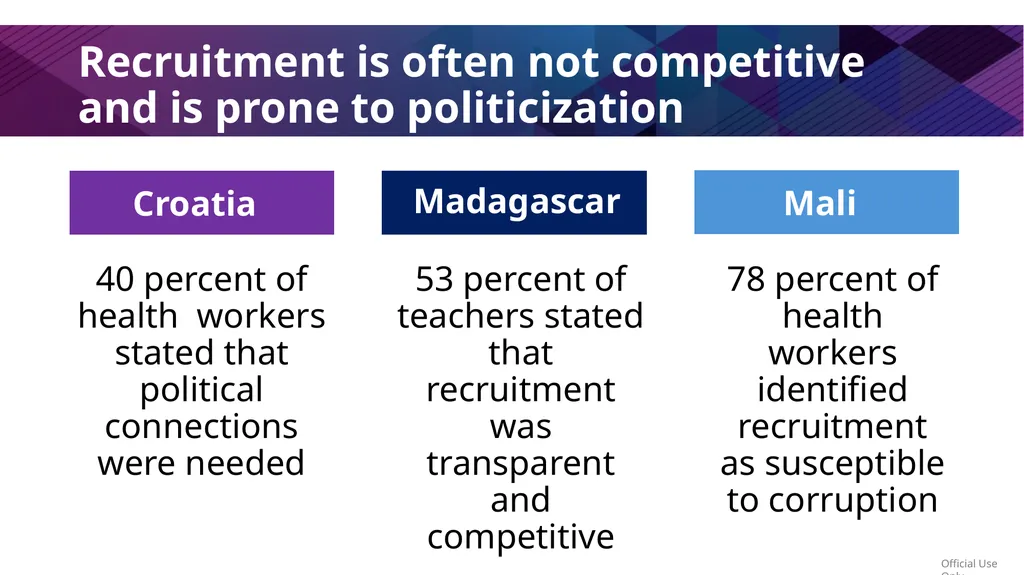
Recruitment is often not competitive and is prone to politicization 78 percent of health workers identified recruitment as susceptible to corruption Croatia Madagascar Mali 40 percent of health workers stated that political connections were needed 53 percent of teachers stated that recruitment was transparent and competitive<br>
18
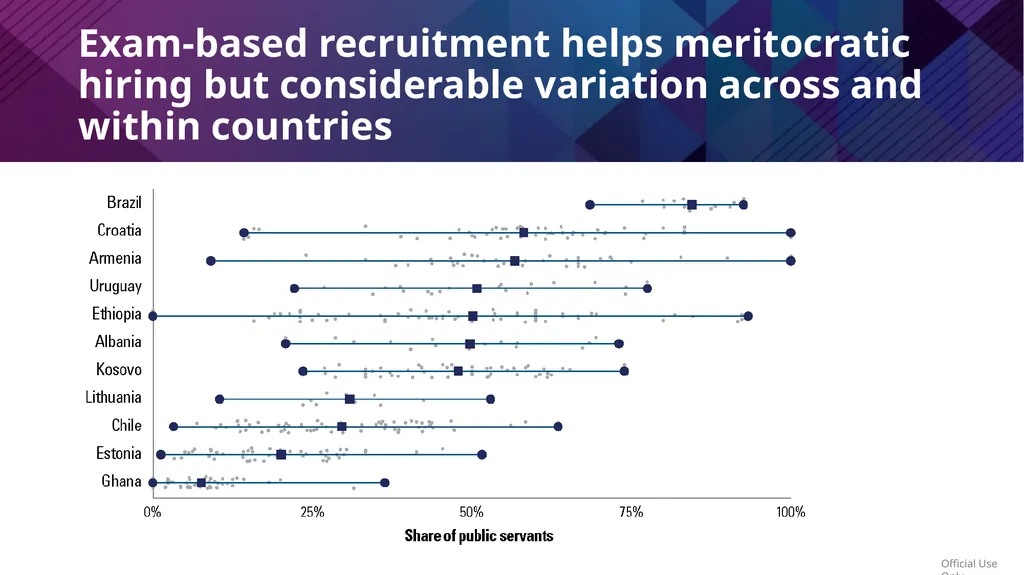
Exam-based recruitment helps meritocratic hiring but considerable variation across and within countries<br>
19
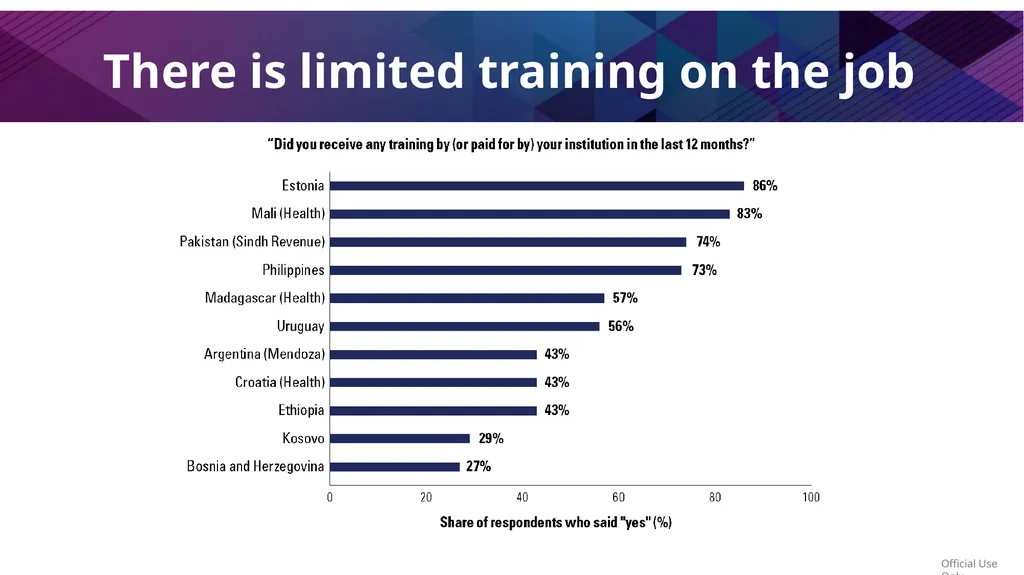
There is limited training on the job<br>
20
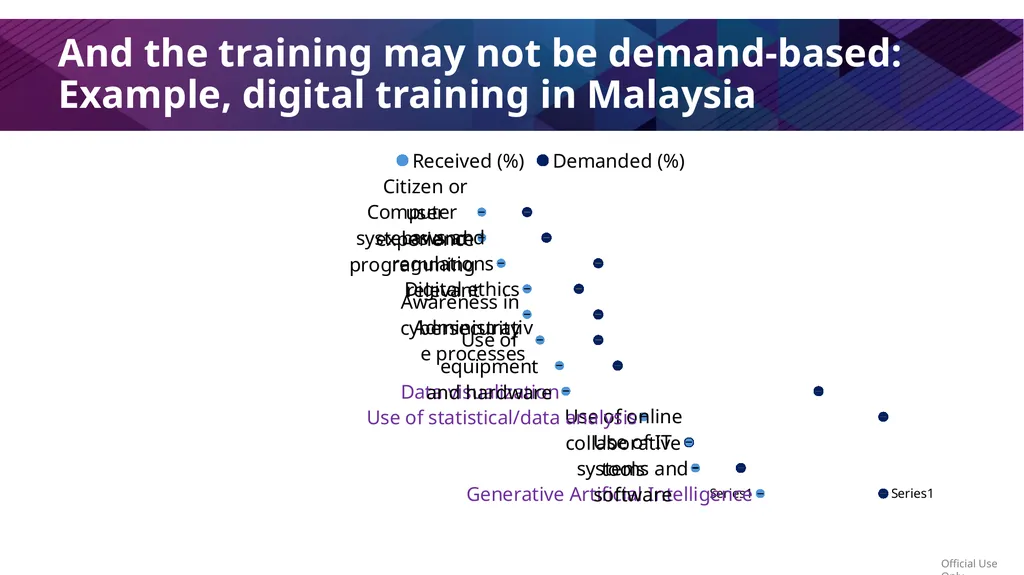
And the training may not be demand-based: Example, digital training in Malaysia<br>
21
Management should be reoriented towards empowerment to spur public service motivation 5<br>
22
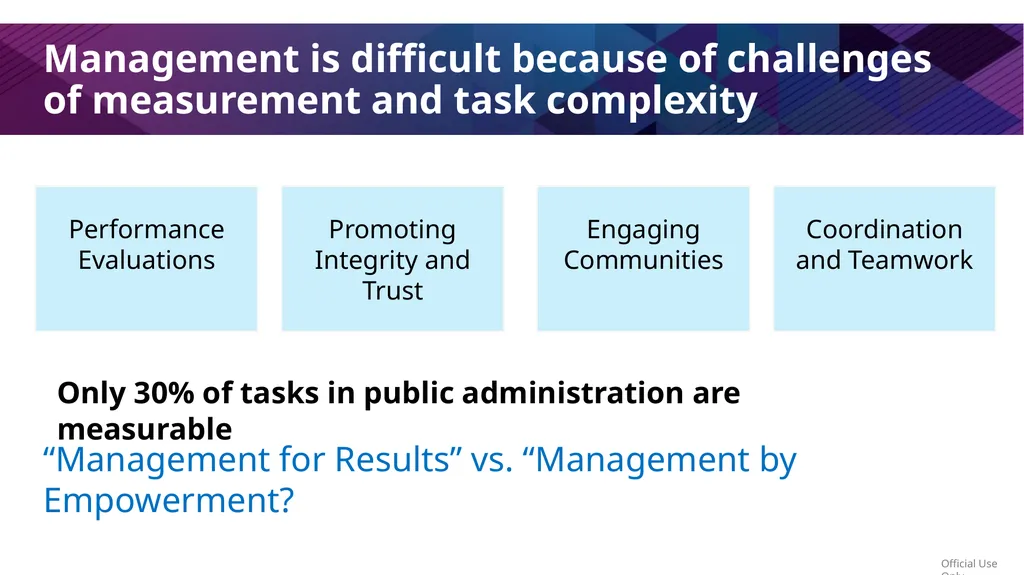
Management is difficult because of challenges of measurement and task complexity Promoting Integrity and Trust Engaging Communities Performance Evaluations Coordination and Teamwork “Management for Results” vs. “Management by Empowerment? Only 30% of tasks in public administration are measurable<br>
23
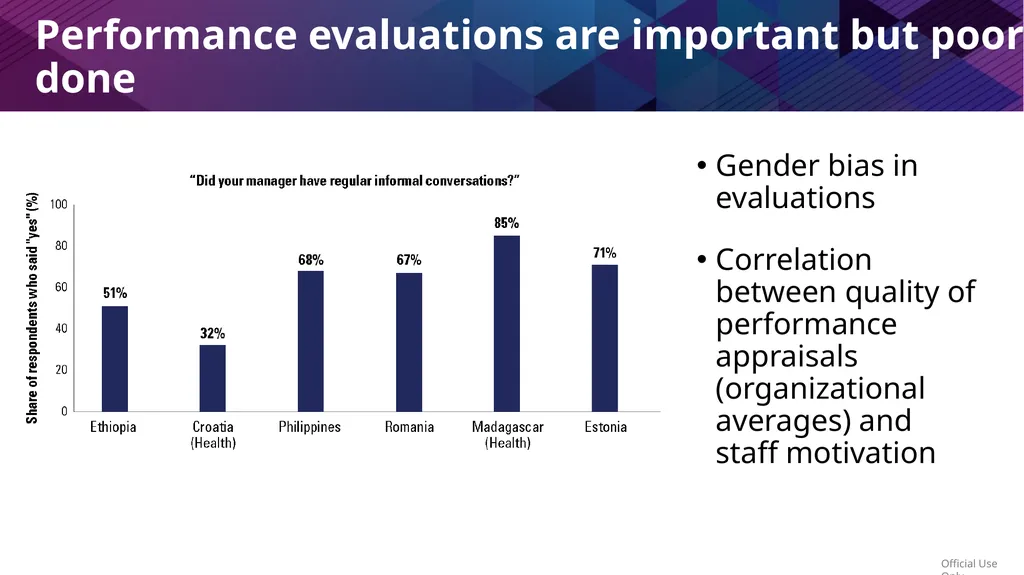
Performance evaluations are important but poorly done Gender bias in evaluations
Correlation between quality of performance appraisals (organizational averages) and staff motivation<br>
24
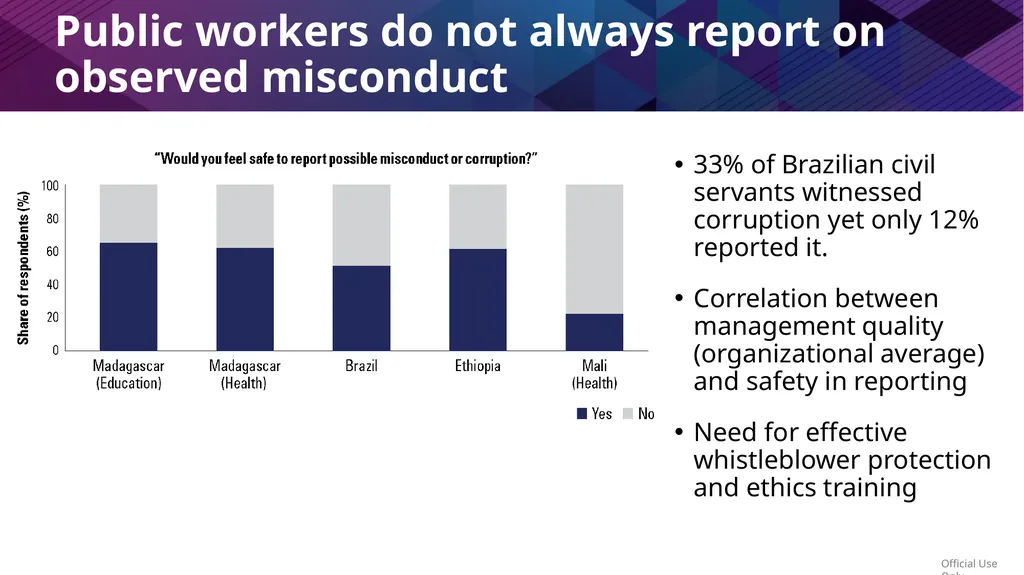
Public workers do not always report on observed misconduct 33% of Brazilian civil servants witnessed corruption yet only 12% reported it.
Correlation between management quality (organizational average) and safety in reporting
Need for effective whistleblower protection and ethics training<br>
25
Most bureaucrats have limited interaction with citizens WDR 2004 “Short route of accountability” Mixed evidence of impact of social accountability interventions
Limited potential for administrative and policy functions Cultivating public service motivation Being representative of communities: E.g., police
Ensuring staff are in the communities.
Digital tools for engagement In Romania, most civil servants state that their job is “to follow rules”
In Ethiopia, managers rarely visit education and health facilities<br>
26
Digital skills and supportive management are necessary to achieve the potential of digital technologies 6<br>
27
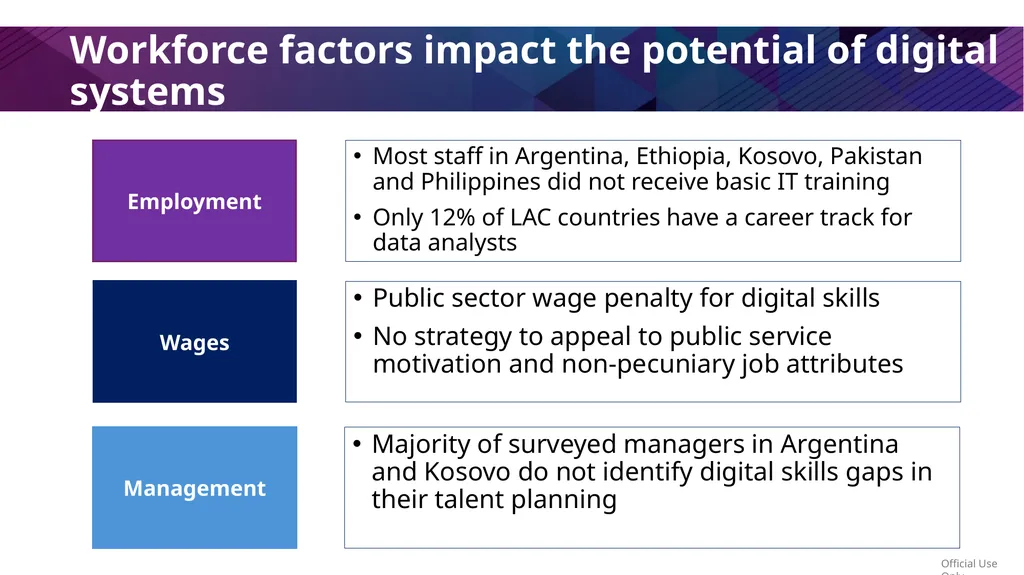
Workforce factors impact the potential of digital systems Most staff in Argentina, Ethiopia, Kosovo, Pakistan and Philippines did not receive basic IT training
Only 12% of LAC countries have a career track for data analysts Wages Employment Management Majority of surveyed managers in Argentina and Kosovo do not identify digital skills gaps in their talent planning Public sector wage penalty for digital skills
No strategy to appeal to public service motivation and non-pecuniary job attributes<br>
28
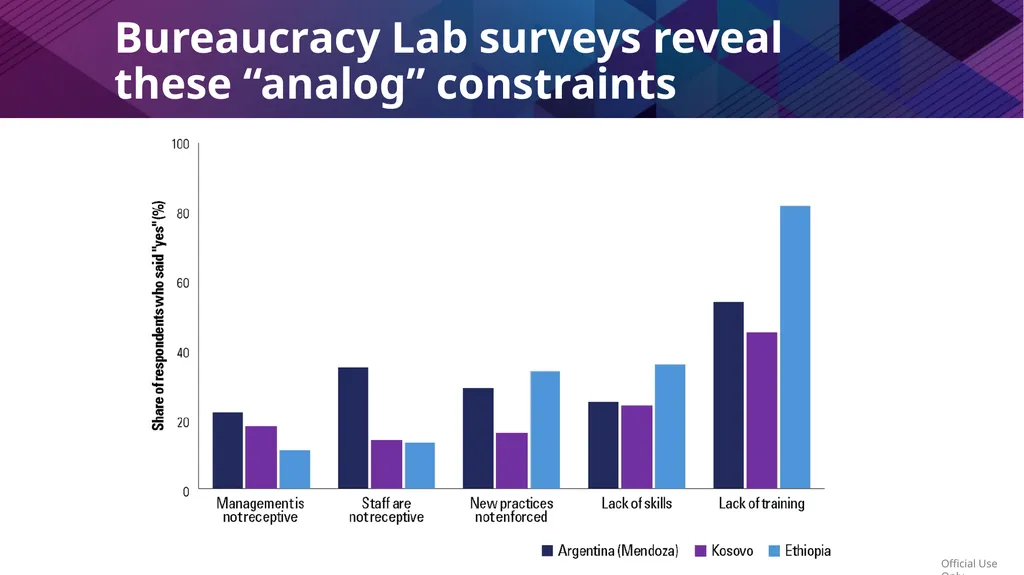
Bureaucracy Lab surveys reveal these “analog” constraints<br>
29
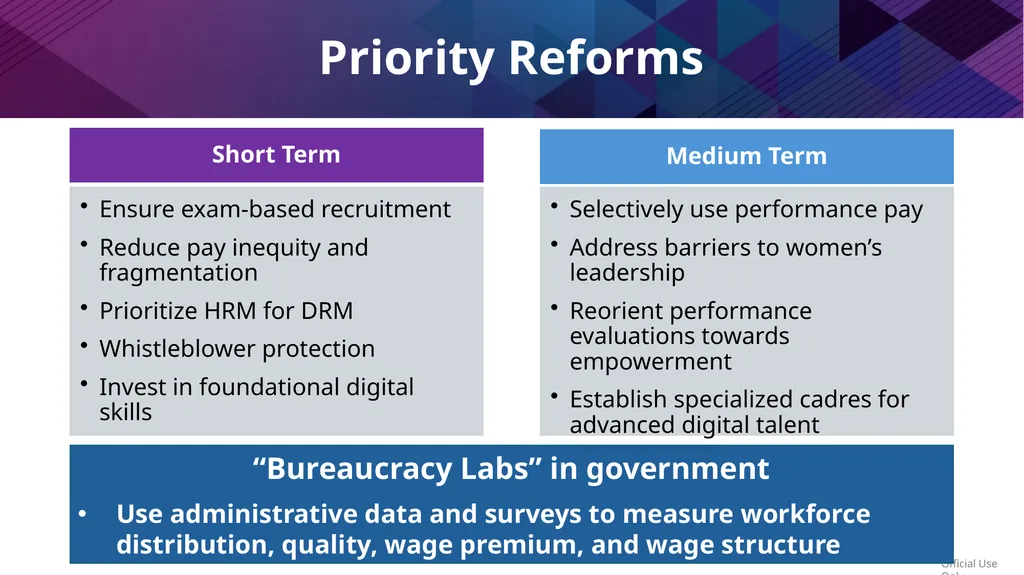
Priority Reforms “Bureaucracy Labs” in government
Use administrative data and surveys to measure workforce distribution, quality, wage premium, and wage structure<br>