04
DIRECTION 1: search by quantum walk<br>
05
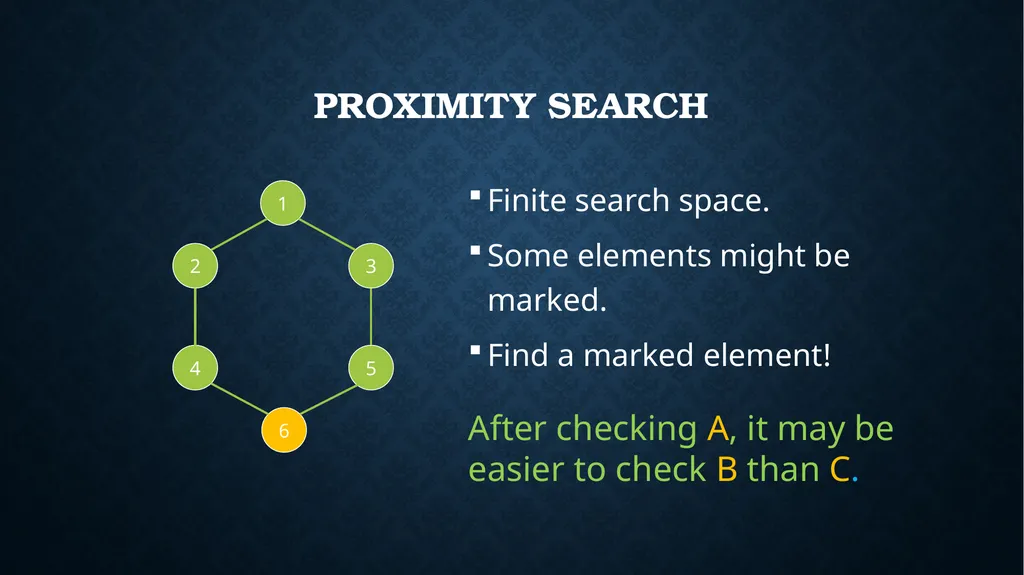
Proximity search Finite search space.
Some elements might be marked.
Find a marked element! 1 2 3 4 5 6 After checking A, it may be easier to check B than C.<br>
06
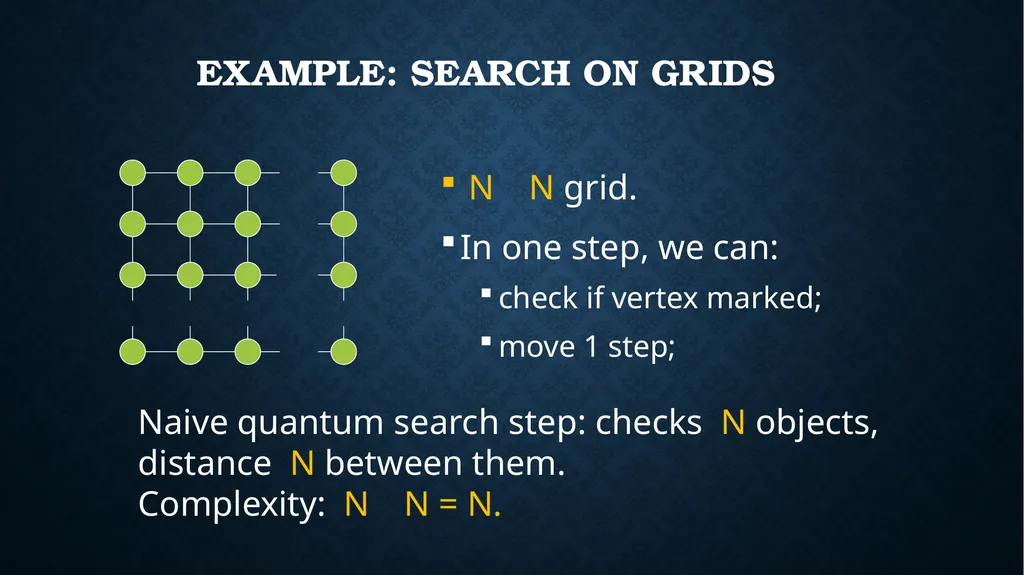
Example: search on grids N N grid.
In one step, we can:
check if vertex marked;
move 1 step; Naive quantum search step: checks N objects,
distance N between them.
Complexity: N N = N.<br>
07
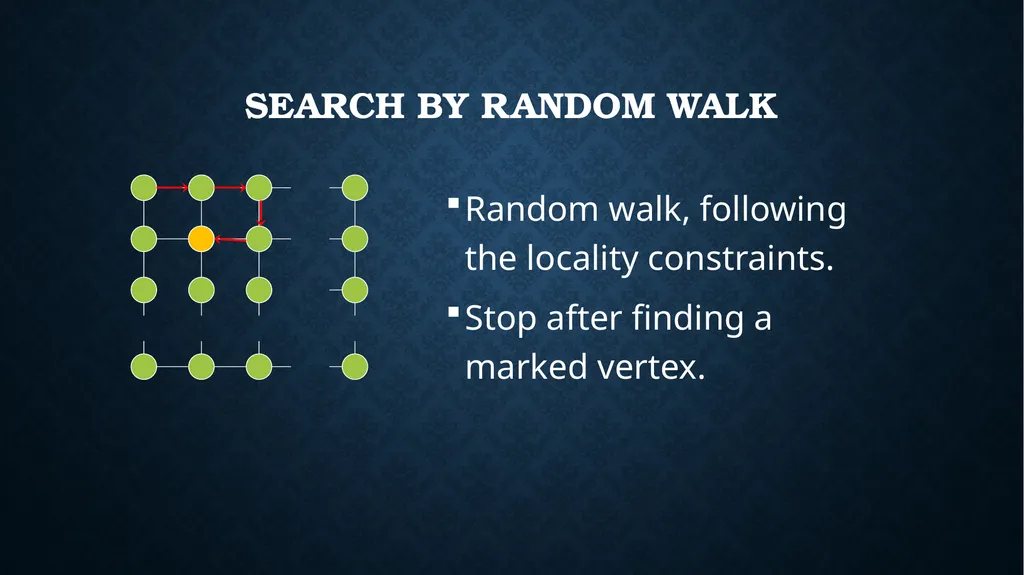
Search by random walk Random walk, following the locality constraints.
Stop after finding a marked vertex.<br>
08
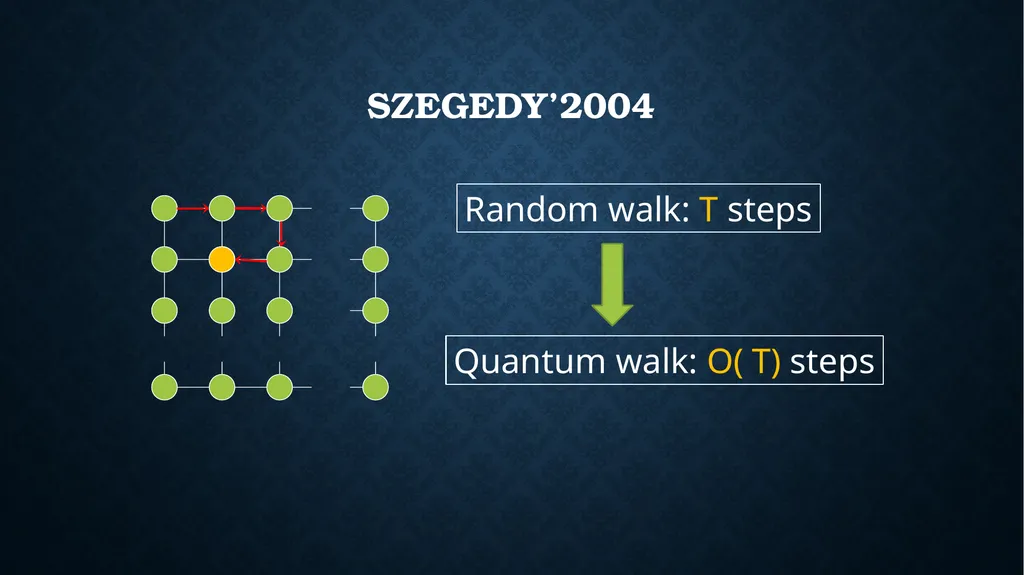
Szegedy’2004 Random walk: T steps Quantum walk: O(T) steps<br>
09
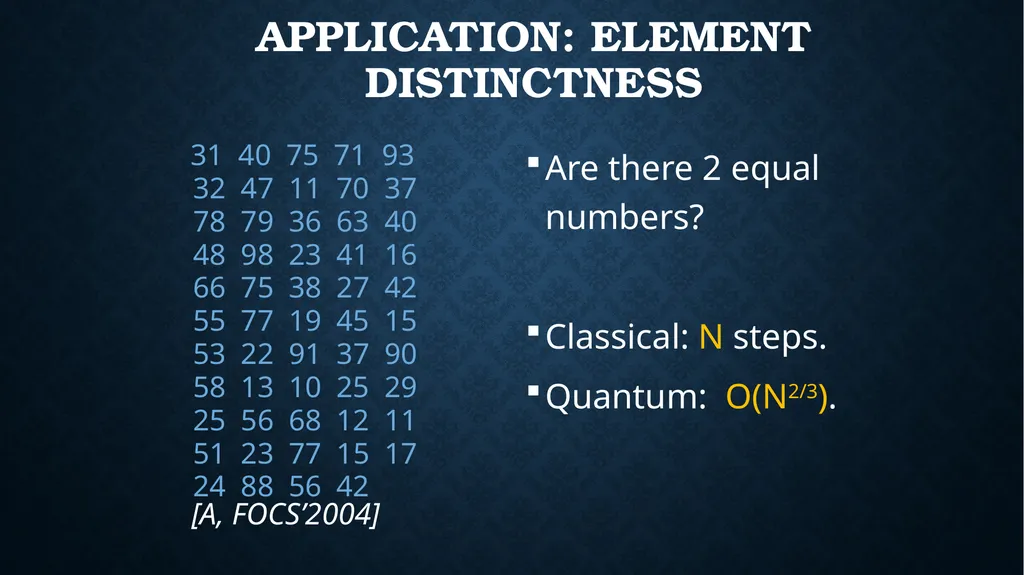
APPLIcation: Element distinctness 31 40 75 71 93 32 47 11 70 37 78 79 36 63 40 48 98 23 41 16 66 75 38 27 42 55 77 19 45 15 53 22 91 37 90 58 13 10 25 29 25 56 68 12 11 51 23 77 15 17 24 88 56 42 Are there 2 equal numbers?
Classical: N steps.
Quantum: O(N2/3). [A, FOCS’2004]<br>
10
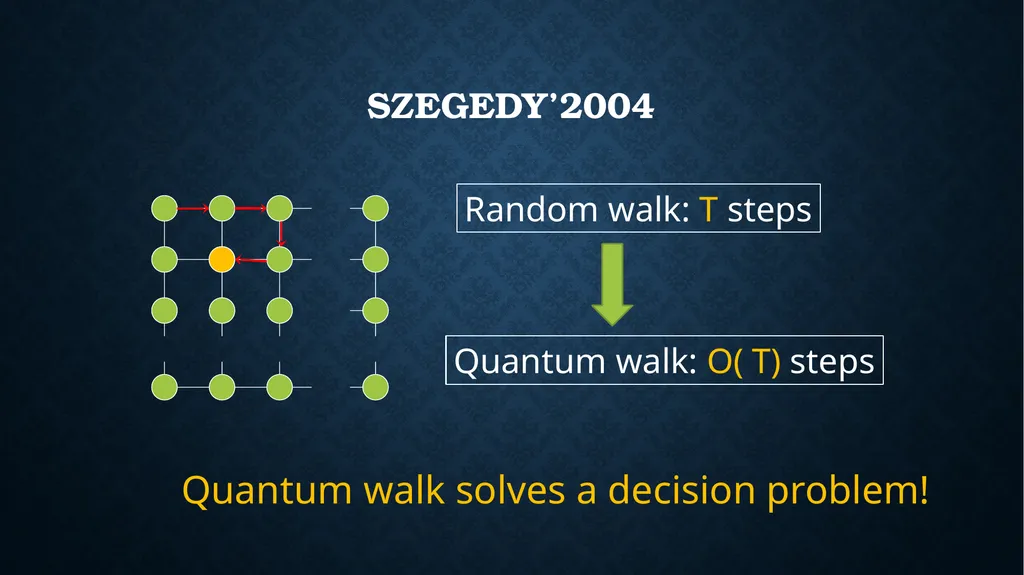
Szegedy’2004 Random walk: T steps Quantum walk: O(T) steps Quantum walk solves a decision problem!<br>
11
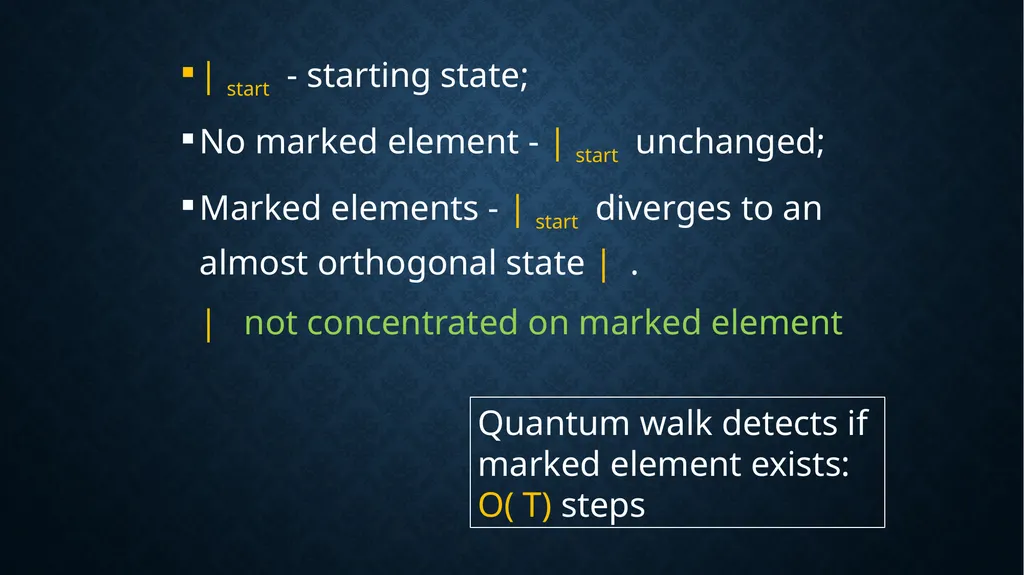
Quantum walk detects if
marked element exists:
O(T) steps |start - starting state;
No marked element - |start unchanged;
Marked elements - |start diverges to an almost orthogonal state |. | not concentrated on marked element<br>
12
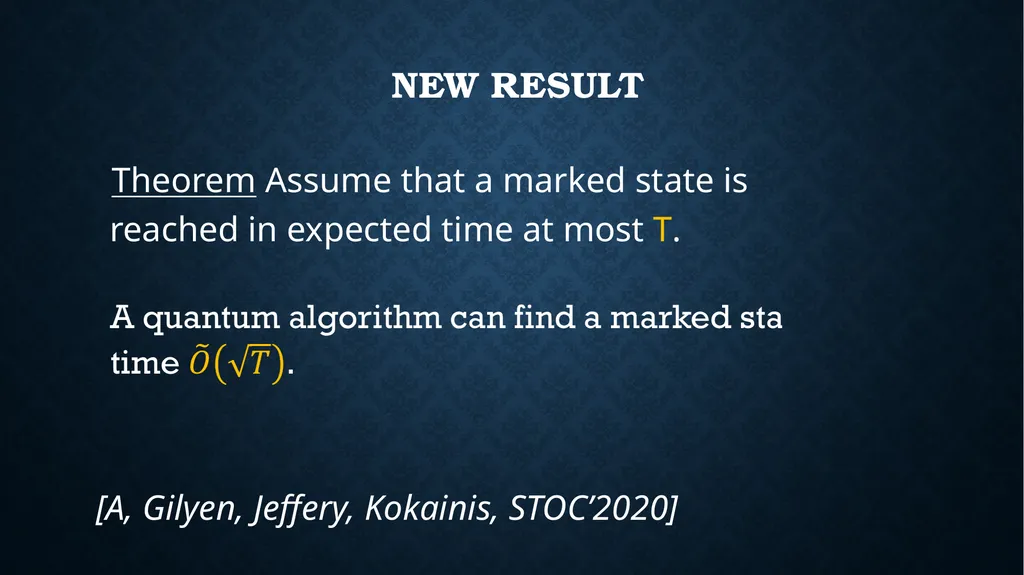
New result Theorem Assume that a marked state is reached in expected time at most T. [A, Gilyen, Jeffery, Kokainis, STOC’2020]<br>
13
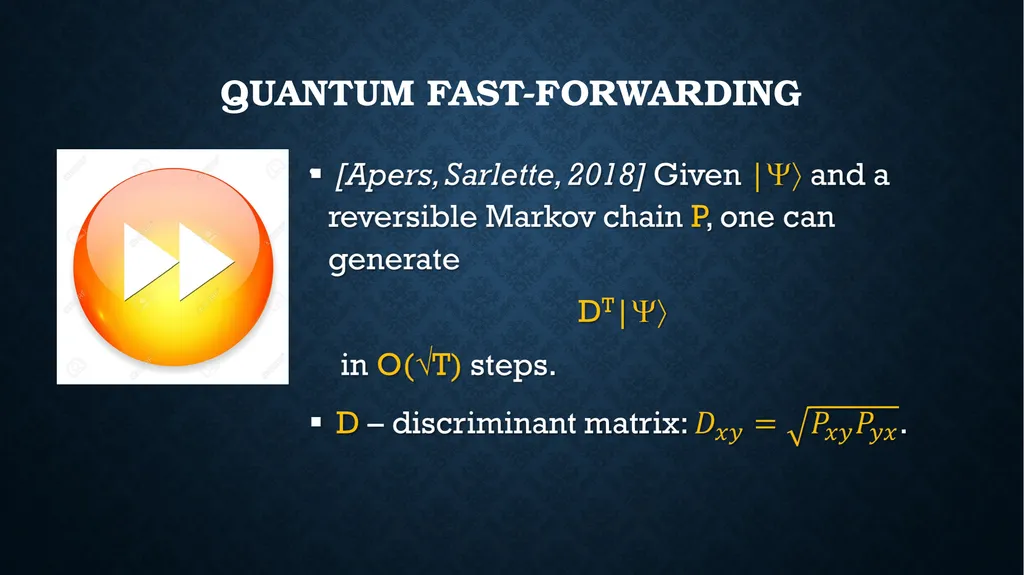
Quantum fast-forwarding<br>
14
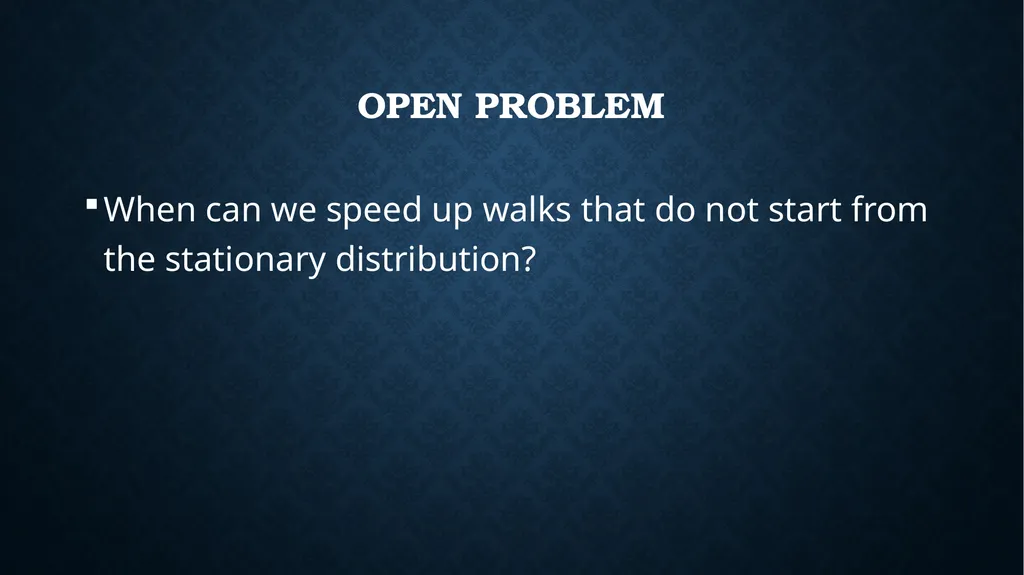
Open problem When can we speed up walks that do not start from the stationary distribution?<br>
15
direction 2: quantum speedups for np-complete problems?<br>
16
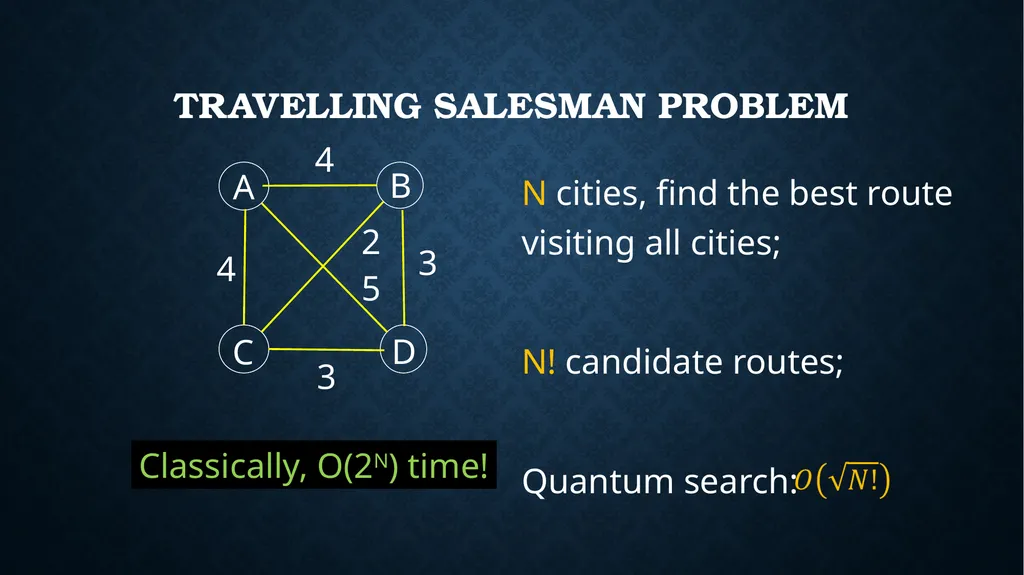
Travelling Salesman Problem N cities, find the best route visiting all cities;
N! candidate routes;
Quantum search: B C D 4 4 3 2 5 3 Classically, O(2N) time!<br>
17
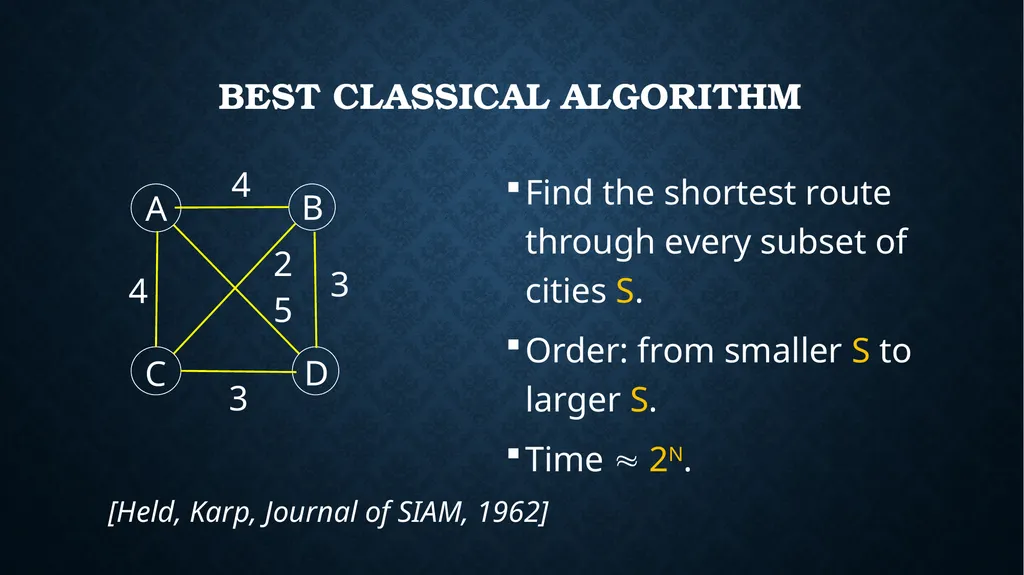
Best classical algorithm Find the shortest route through every subset of cities S.
Order: from smaller S to larger S.
Time 2N. B C D 4 4 3 2 5 3 [Held, Karp, Journal of SIAM, 1962]<br>
18
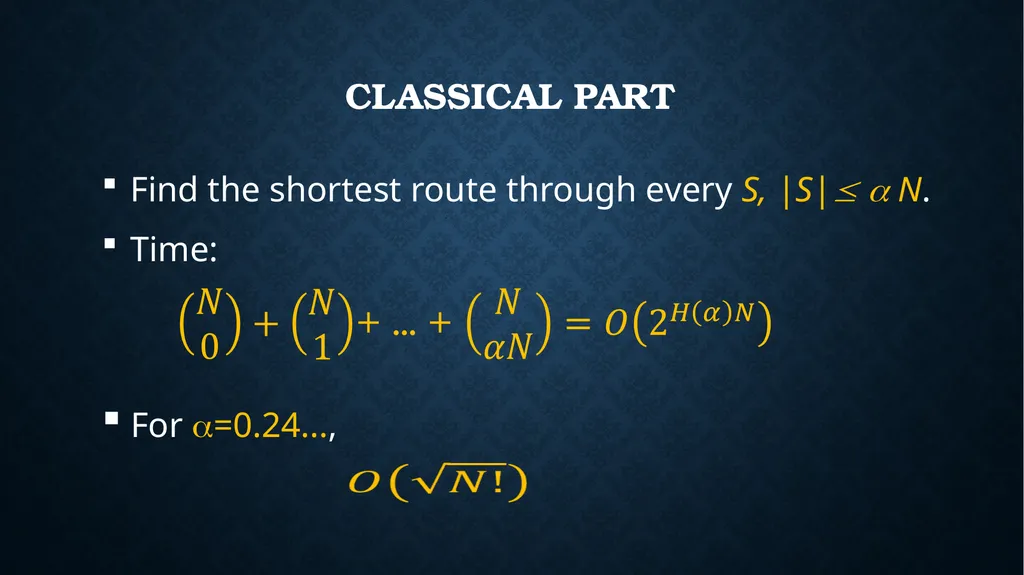
classical part Find the shortest route through every S, |S| N.
Time: For =0.24...,<br>
19
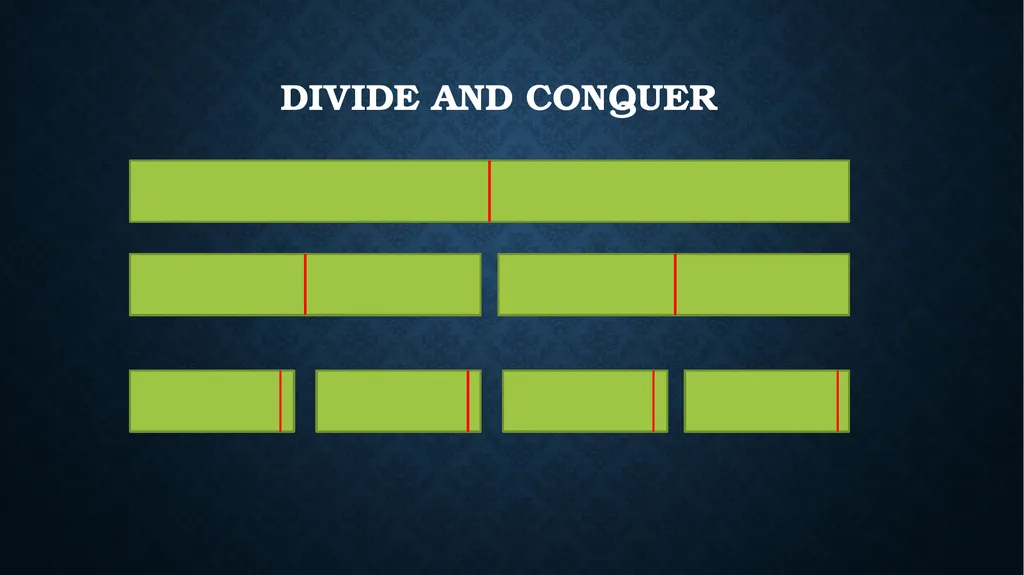
Divide and conquer<br>
20
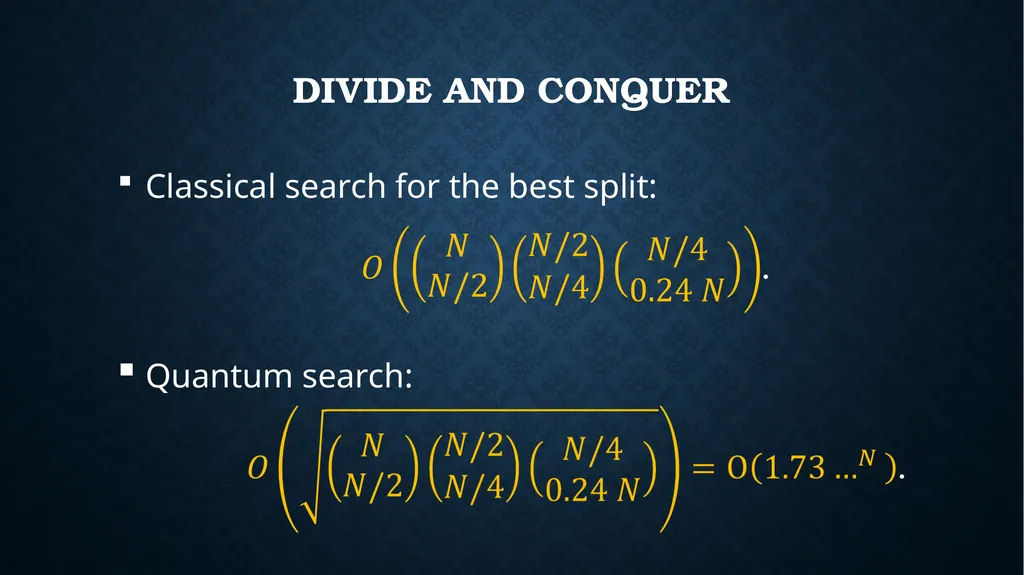
Divide and conquer Classical search for the best split: Quantum search:<br>
21
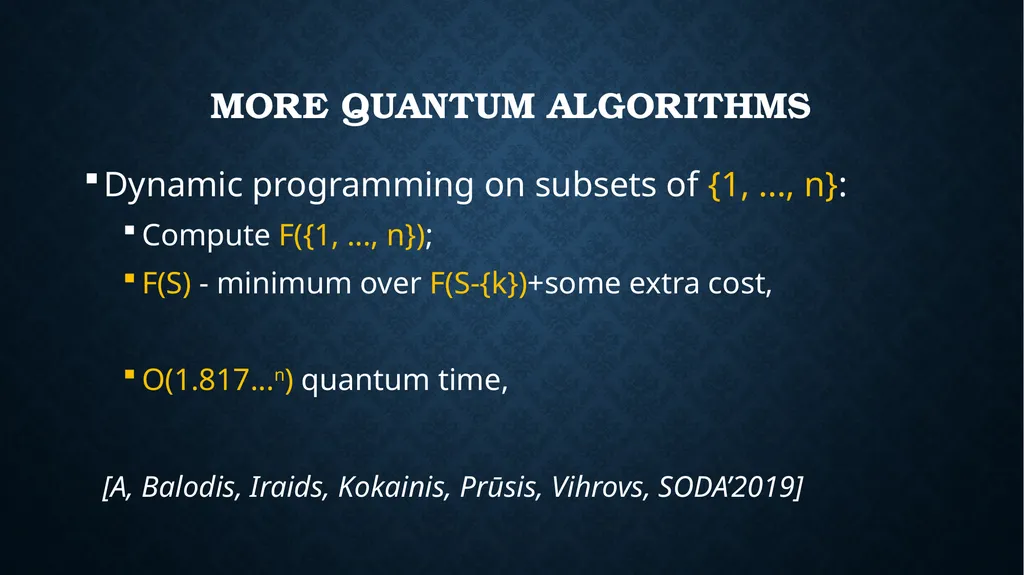
MORE Quantum algorithms Dynamic programming on subsets of {1, ..., n}:
Compute F({1, ..., n});
F(S) - minimum over F(S-{k})+some extra cost,
O(1.817...n) quantum time, [A, Balodis, Iraids, Kokainis, Prūsis, Vihrovs, SODA’2019]<br>
22
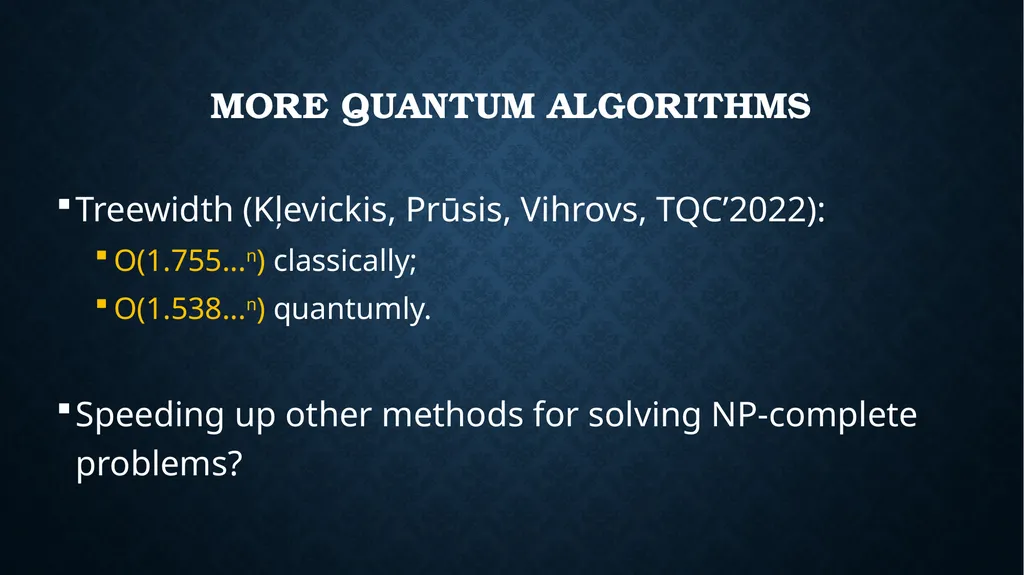
More quantum algorithms Treewidth (Kļevickis, Prūsis, Vihrovs, TQC’2022):
O(1.755...n) classically;
O(1.538...n) quantumly.
Speeding up other methods for solving NP-complete problems?<br>
23
direction 3: variable time search<br>
24
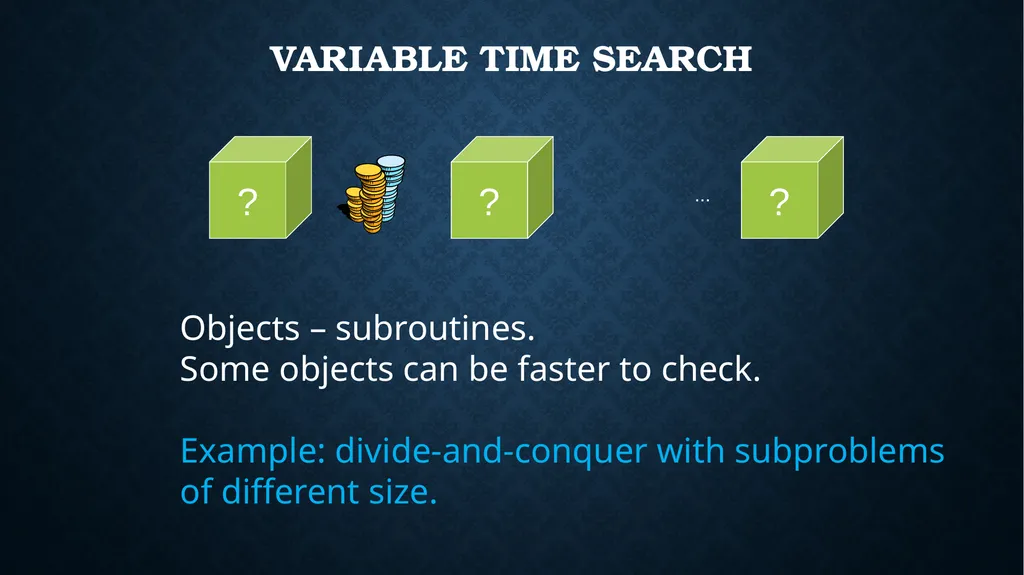
Variable time search ? ? ... ? Objects – subroutines.
Some objects can be faster to check.
Example: divide-and-conquer with subproblems
of different size.<br>
25
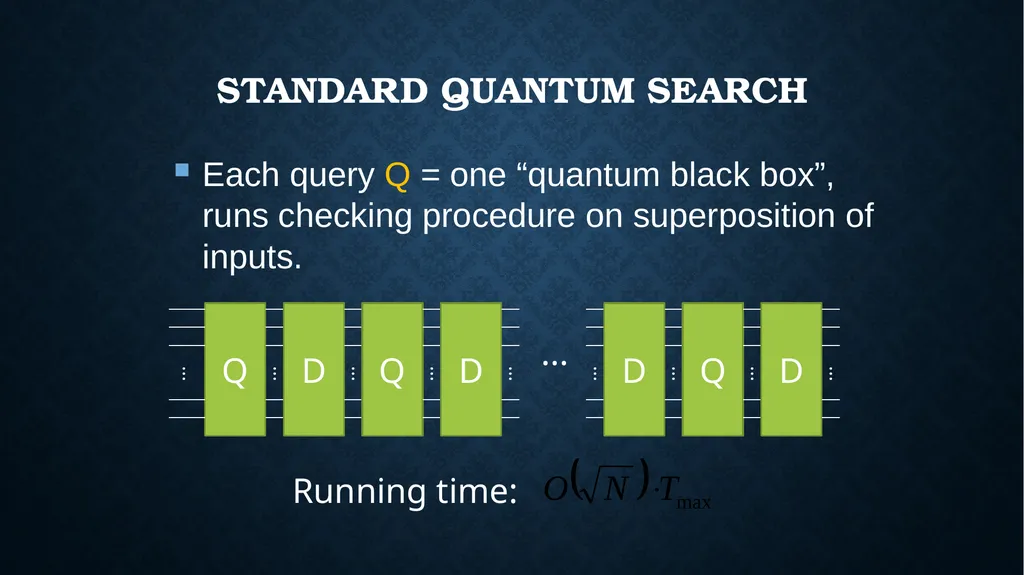
Standard quantum search Q ... ... D ... Q ... D ... ... ... D ... Q ... D ... Running time: Each query Q = one “quantum black box”, runs checking procedure on superposition of inputs.<br>
26
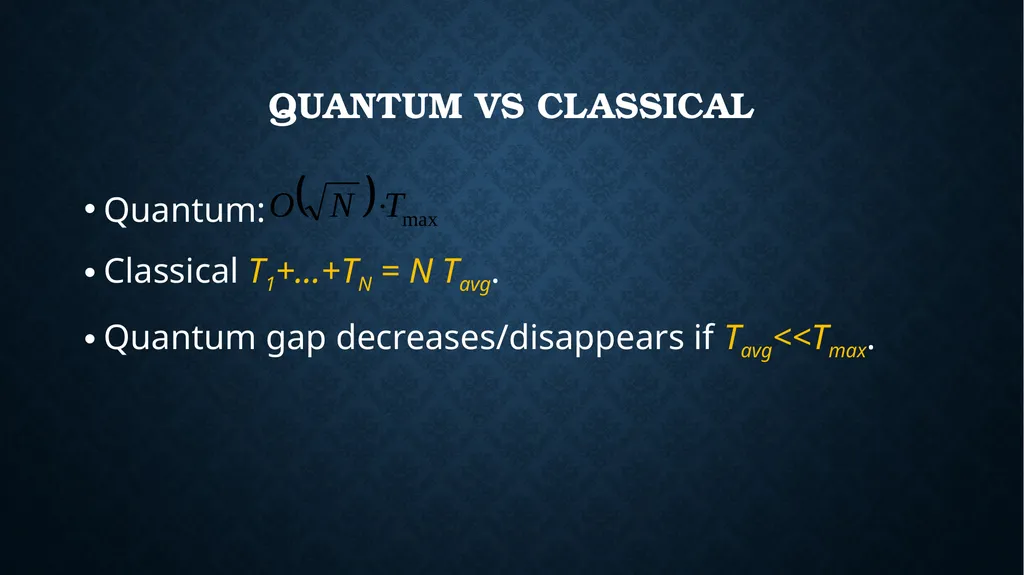
Quantum vs classical Quantum:
Classical T1+...+TN = N Tavg.
Quantum gap decreases/disappears if Tavg<<Tmax.<br>
27
Two models Known times: checking time Ti for object i known in advance, can be used to design algorithm.
Unknown times: Ti discovered by running the checking algorithm.<br>
28
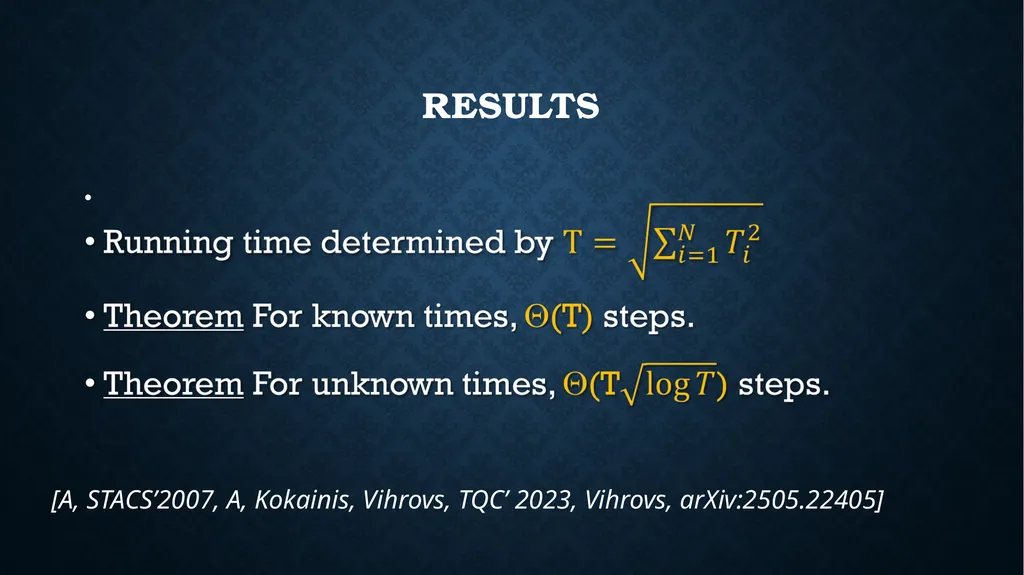
results [A, STACS’2007, A, Kokainis, Vihrovs, TQC’ 2023, Vihrovs, arXiv:2505.22405]<br>
29
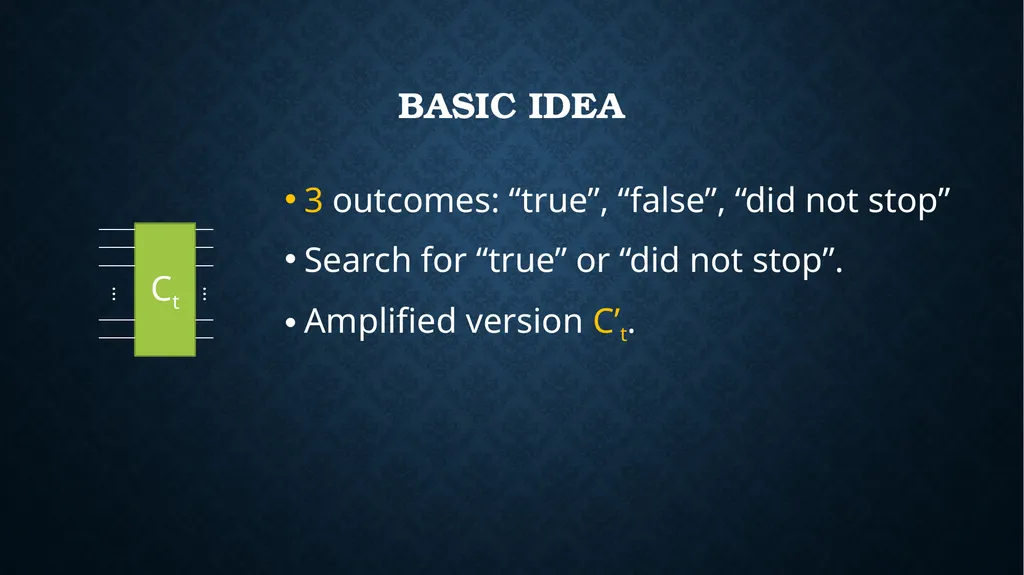
Basic idea 3 outcomes: “true”, “false”, “did not stop”
Search for “true” or “did not stop”.
Amplified version C’t. Ct ... ...<br>
30
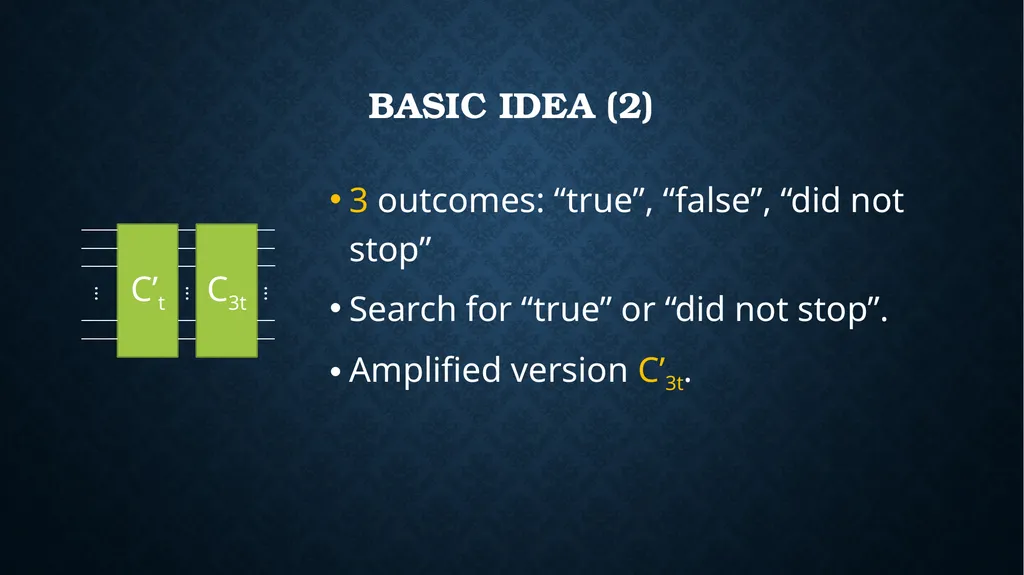
Basic idea (2) C’t ... ... C3t ... 3 outcomes: “true”, “false”, “did not stop”
Search for “true” or “did not stop”.
Amplified version C’3t.<br>
31
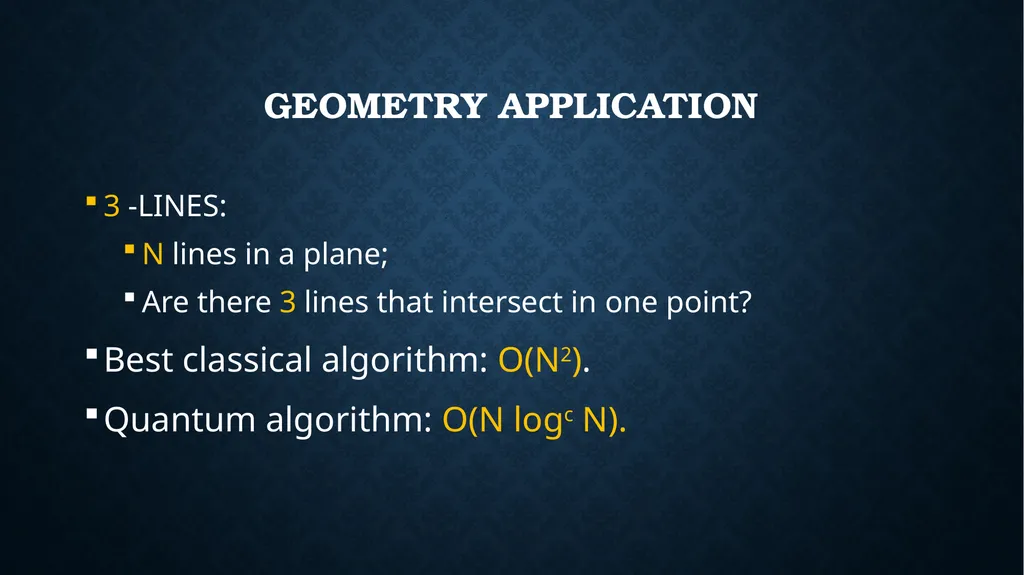
Geometry application 3 -LINES:
N lines in a plane;
Are there 3 lines that intersect in one point?
Best classical algorithm: O(N2).
Quantum algorithm: O(N logc N).<br>
32
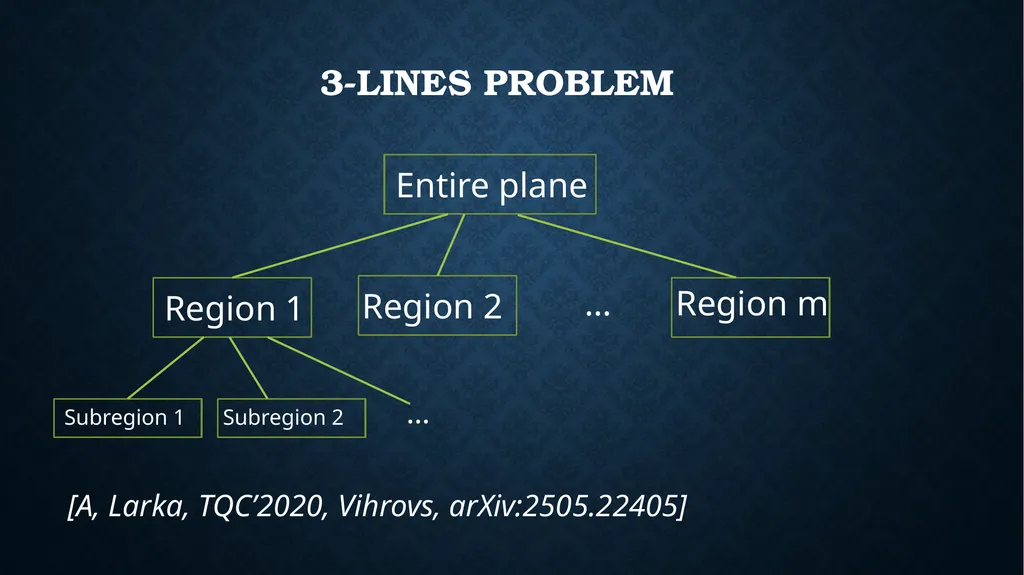
3-LINES problem Entire plane Region 1 Region 2 Region m … Subregion 1 Subregion 2 … [A, Larka, TQC’2020, Vihrovs, arXiv:2505.22405]<br>
33
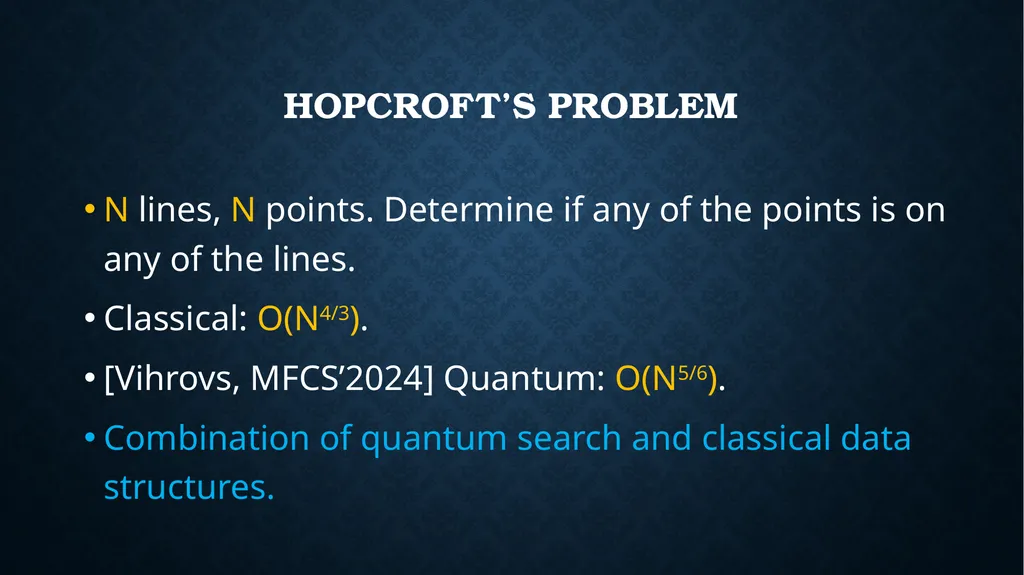
Hopcroft’s problem N lines, N points. Determine if any of the points is on any of the lines.
Classical: O(N4/3).
[Vihrovs, MFCS’2024] Quantum: O(N5/6).
Combination of quantum search and classical data structures.<br>
34
Outlook Exponential quantum speedups for a few problems (factoring, simulation).
Up-to-quadratic speedups for many problems.
Interesting combinations of quantum and classical methods.<br>