
Range-Through Chart and Diversity Curve Lab Dr.

Description: Range-Through Chart and Diversity Curve Lab Dr. Kate Bulinski Bellarmine University Geology for Non-Science Majors Meets for 2 hours twice a week First hour lecture, second hour lab Lab reinforces concepts introduced in lecture Limited to
Related Topics
Download Presentation
"Range-Through Chart and Diversity Curve Lab Dr." is the property of its rightful owner. Permission is granted to download and print the materials on this website for personal, non-commercial use only, and to display it on your personal computer provided you do not modify the materials and that you retain all copyright notices contained in the materials. By downloading content from our website, you accept the terms of this agreement.
Presentation Transcript
slide1. Range-Through Chart and Diversity Curve Lab Dr. Kate Bulinski
Bellarmine University<br>
slide2. Geology for Non-Science Majors Meets for 2 hours twice a week
First hour lecture, second hour lab
Lab reinforces concepts introduced in lecture
Limited to 20 students
Students work in groups of 3-4<br>
slide3. Objectives of Lab Reinforce knowledge about major paleontological events
Diversifications
Mass Extinctions
Increase familiarity with the geological time scale
Increase familiarity with major groups of organisms
Implement the use of Microsoft Excel for graphing<br>
slide4. Next: Sample Lecture Slides<br>
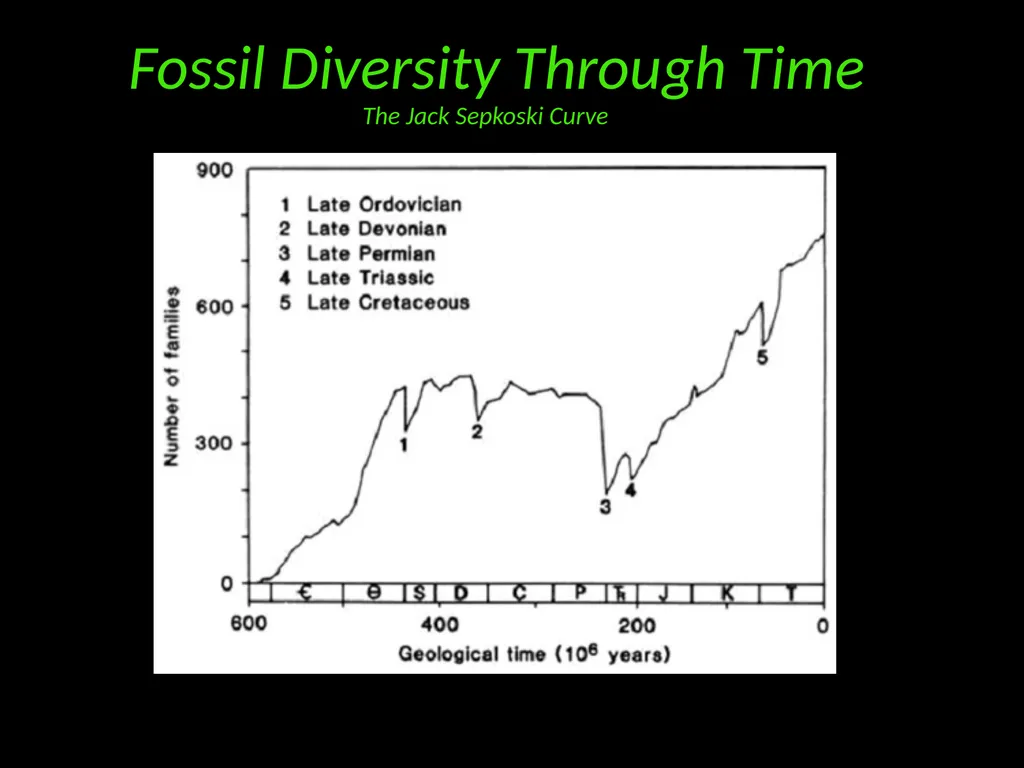
slide5. Fossil Diversity Through Time The Jack Sepkoski Curve<br>
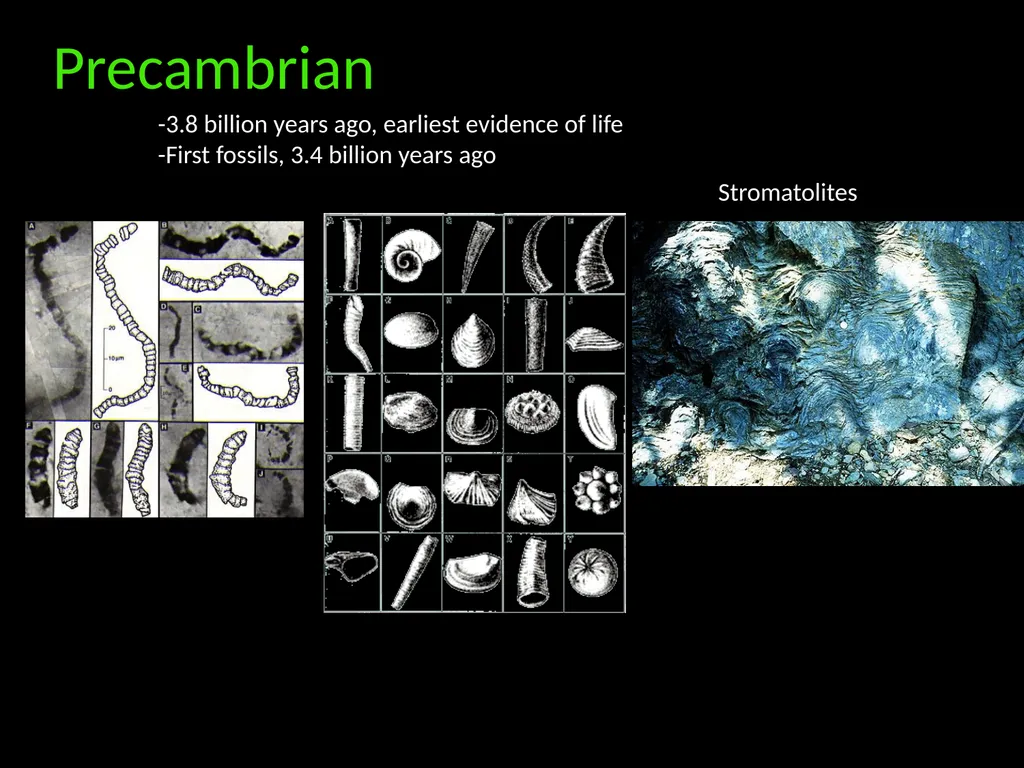
slide6. Precambrian -3.8 billion years ago, earliest evidence of life
-First fossils, 3.4 billion years ago Stromatolites<br>
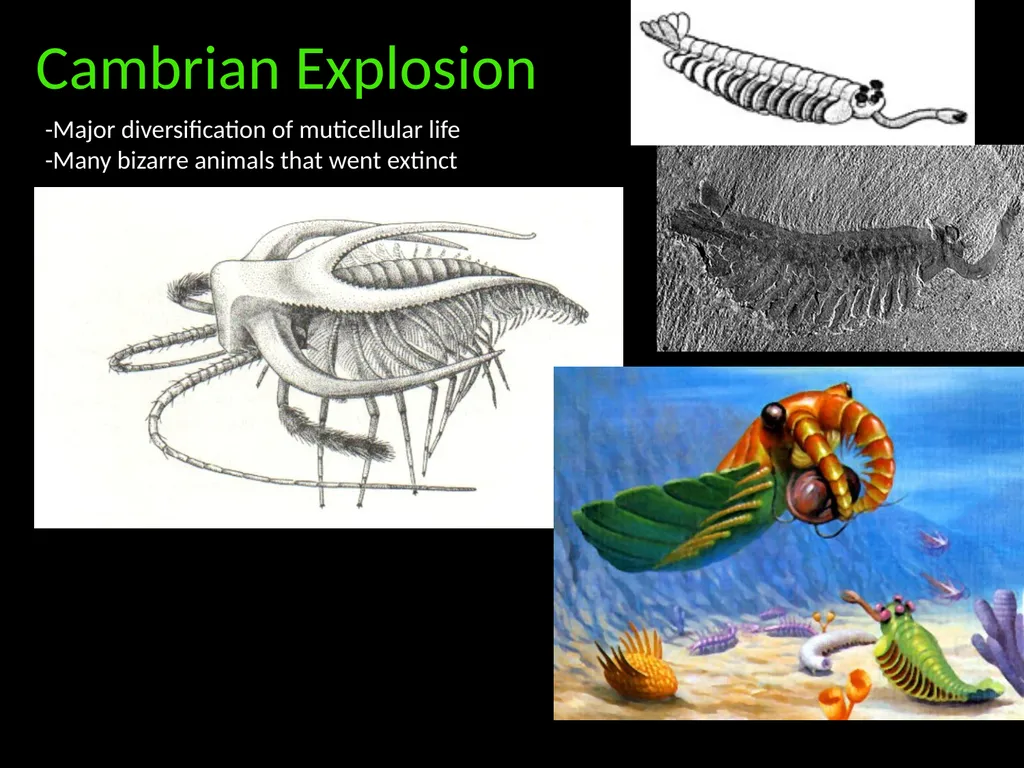
slide7. Cambrian Explosion -Major diversification of muticellular life
-Many bizarre animals that went extinct<br>
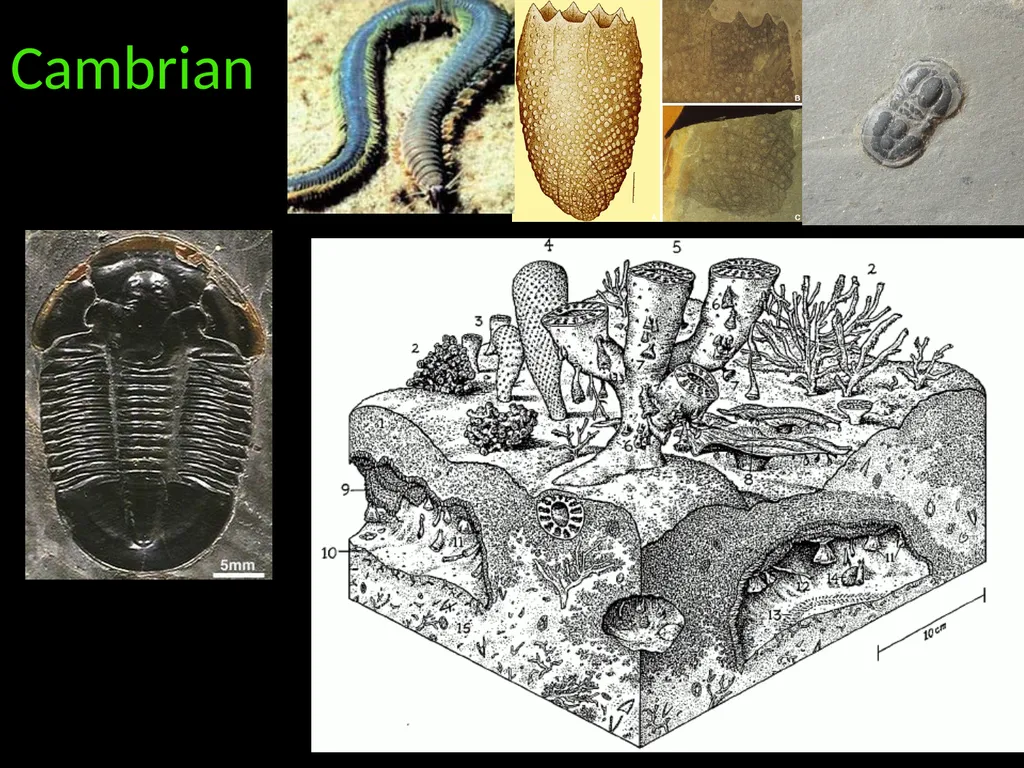
slide8. Cambrian<br>
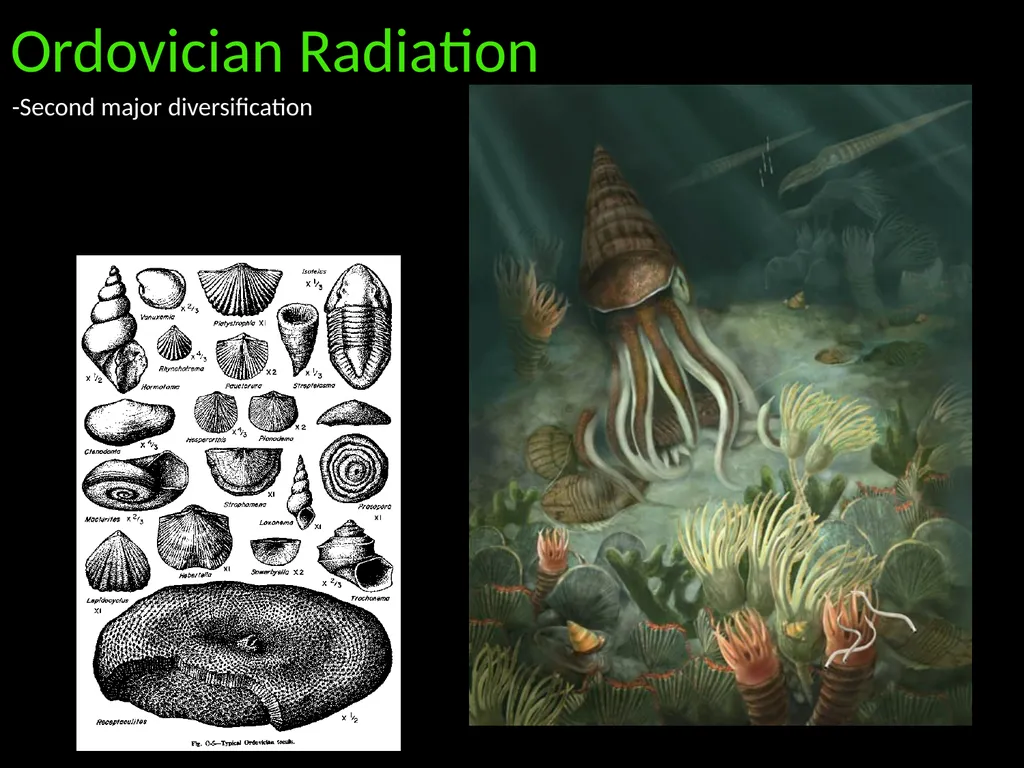
slide9. Ordovician Radiation -Second major diversification<br>
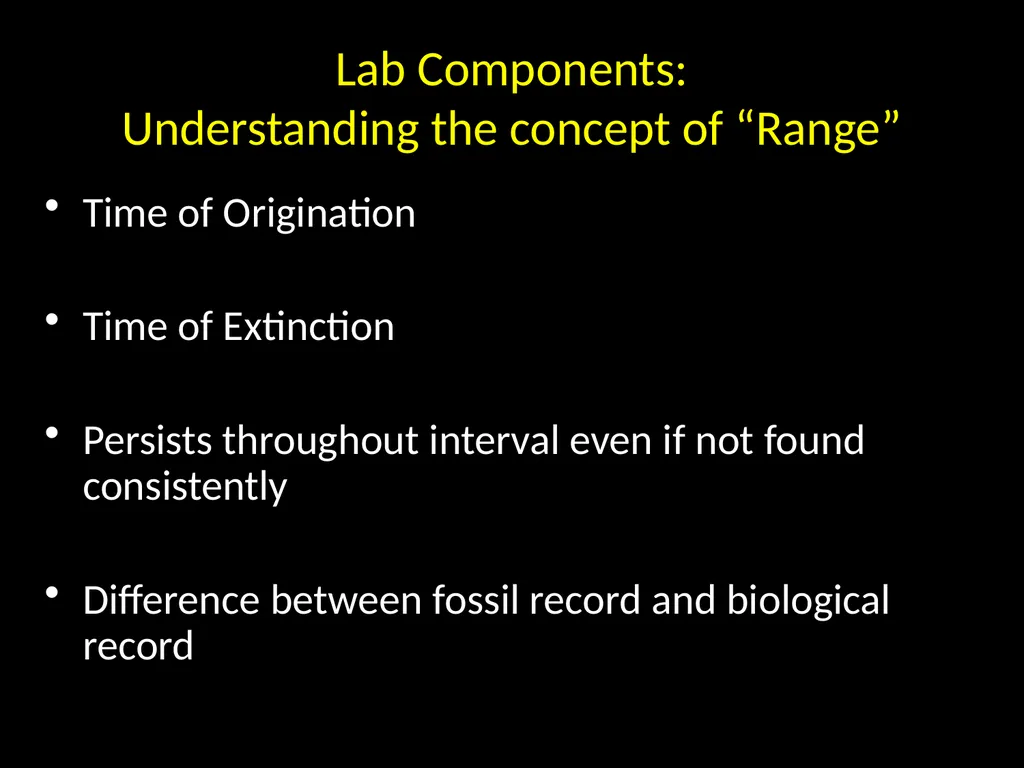
slide10. Lab Components: Understanding the concept of “Range” Time of Origination
Time of Extinction
Persists throughout interval even if not found consistently
Difference between fossil record and biological record<br>
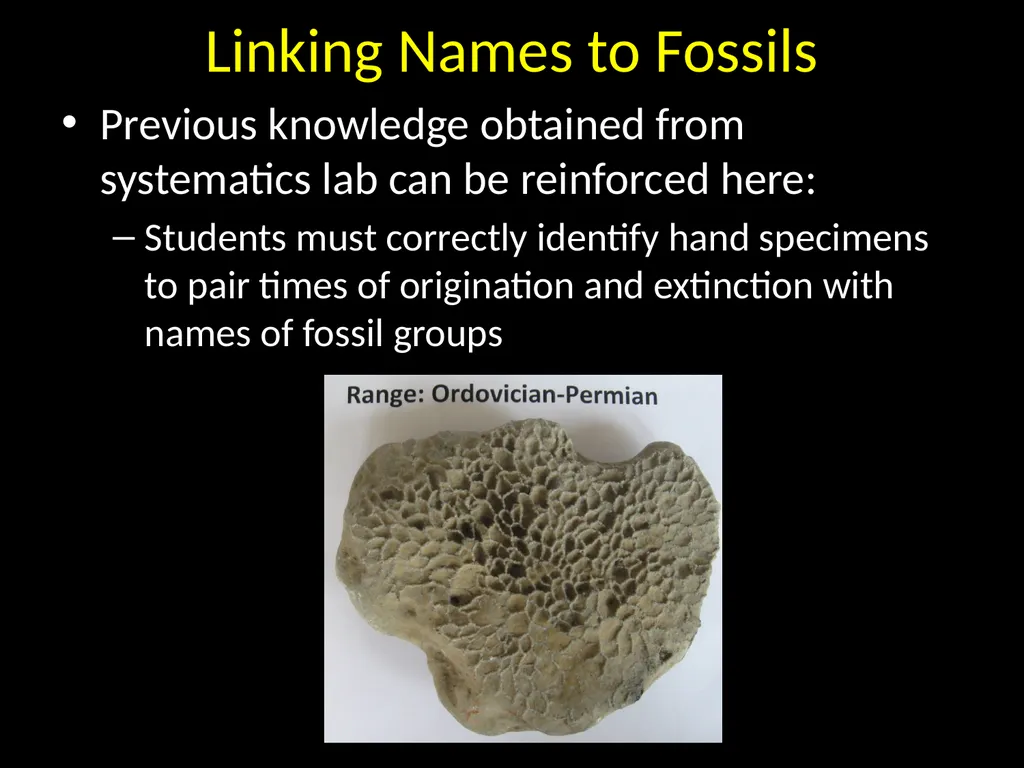
slide11. Linking Names to Fossils Previous knowledge obtained from systematics lab can be reinforced here:
Students must correctly identify hand specimens to pair times of origination and extinction with names of fossil groups<br>
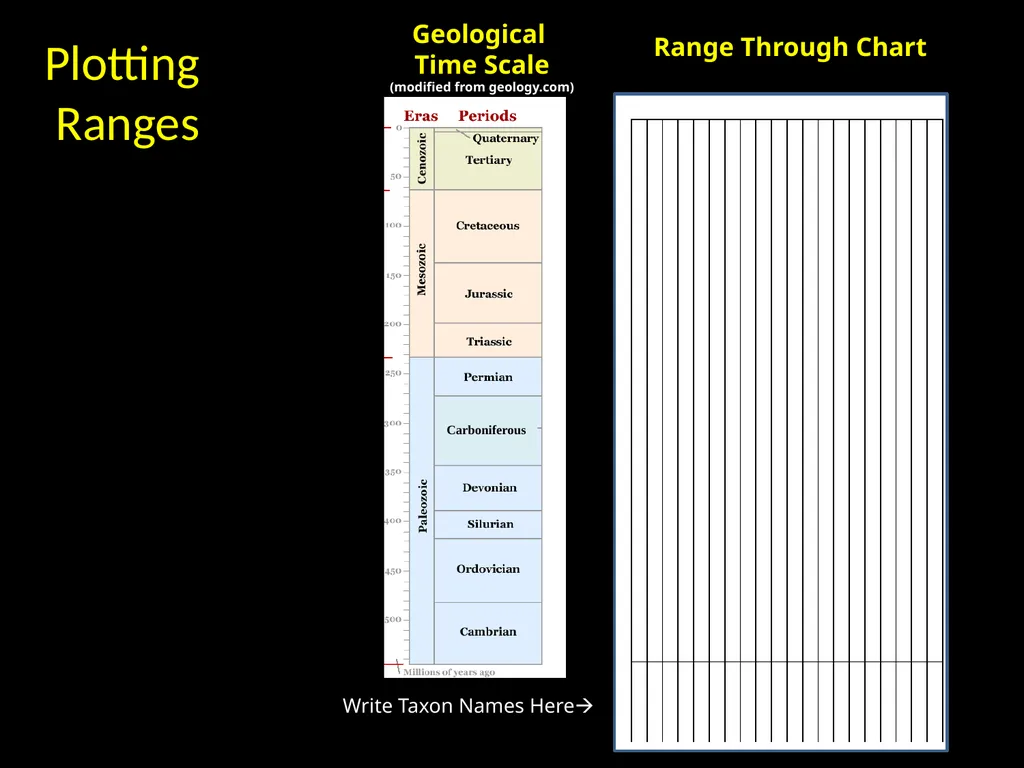
slide12. Plotting Ranges Carboniferous Geological
Time Scale
(modified from geology.com) Write Taxon Names Here Range Through Chart<br>
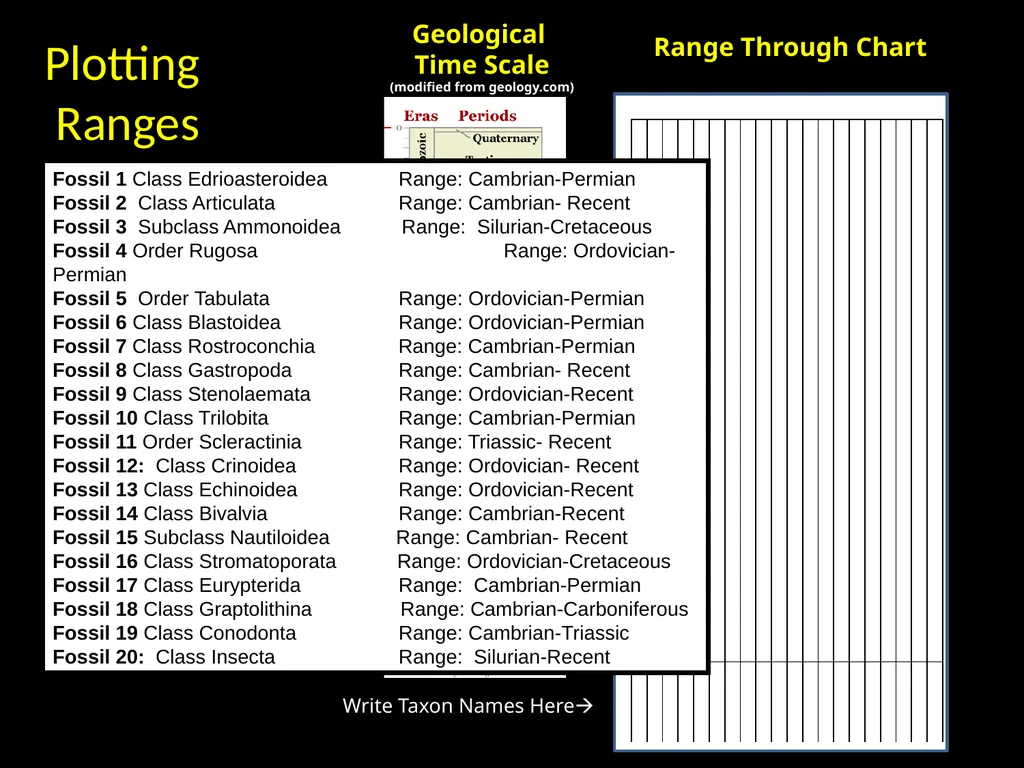
slide13. Plotting Ranges Carboniferous Geological
Time Scale
(modified from geology.com) Write Taxon Names Here Range Through Chart Fossil 1 Class Edrioasteroidea Range: Cambrian-Permian
Fossil 2 Class Articulata Range: Cambrian- Recent
Fossil 3 Subclass Ammonoidea Range: Silurian-Cretaceous
Fossil 4 Order Rugosa Range: Ordovician-Permian
Fossil 5 Order Tabulata Range: Ordovician-Permian
Fossil 6 Class Blastoidea Range: Ordovician-Permian
Fossil 7 Class Rostroconchia Range: Cambrian-Permian
Fossil 8 Class Gastropoda Range: Cambrian- Recent
Fossil 9 Class Stenolaemata Range: Ordovician-Recent
Fossil 10 Class Trilobita Range: Cambrian-Permian
Fossil 11 Order Scleractinia Range: Triassic- Recent
Fossil 12: Class Crinoidea Range: Ordovician- Recent
Fossil 13 Class Echinoidea Range: Ordovician-Recent
Fossil 14 Class Bivalvia Range: Cambrian-Recent
Fossil 15 Subclass Nautiloidea Range: Cambrian- Recent
Fossil 16 Class Stromatoporata Range: Ordovician-Cretaceous
Fossil 17 Class Eurypterida Range: Cambrian-Permian
Fossil 18 Class Graptolithina Range: Cambrian-Carboniferous
Fossil 19 Class Conodonta Range: Cambrian-Triassic
Fossil 20: Class Insecta Range: Silurian-Recent<br>
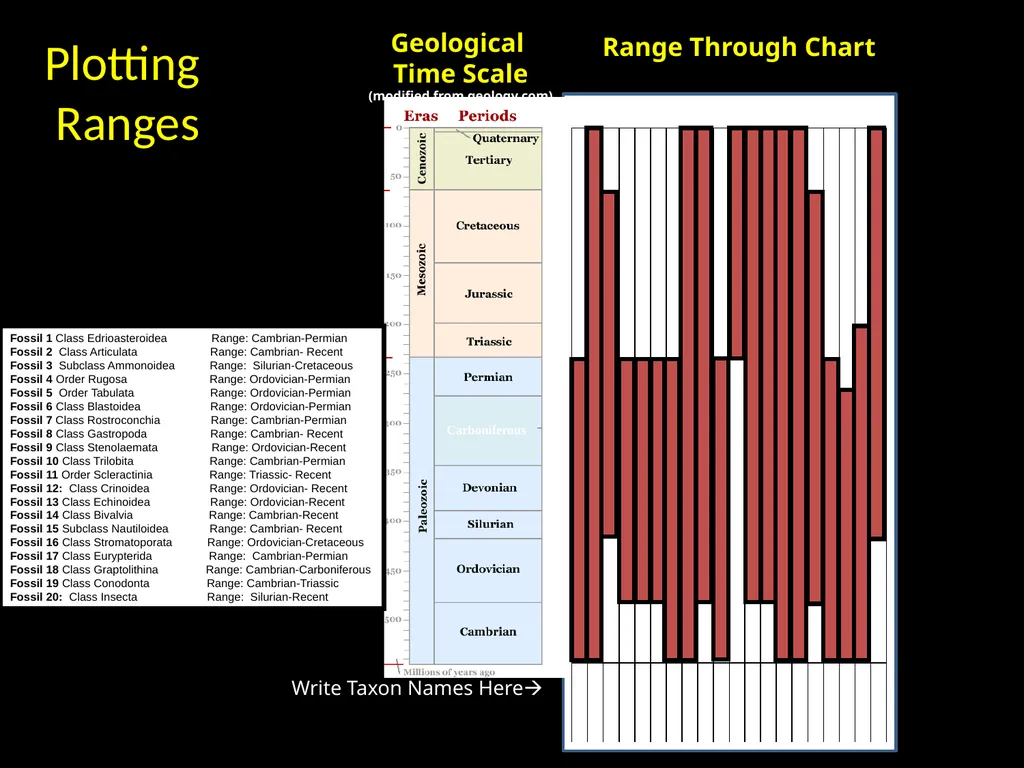
slide14. Plotting Ranges Carboniferous Geological
Time Scale
(modified from geology.com) Write Taxon Names Here Range Through Chart Fossil 1 Class Edrioasteroidea Range: Cambrian-Permian
Fossil 2 Class Articulata Range: Cambrian- Recent
Fossil 3 Subclass Ammonoidea Range: Silurian-Cretaceous
Fossil 4 Order Rugosa Range: Ordovician-Permian
Fossil 5 Order Tabulata Range: Ordovician-Permian
Fossil 6 Class Blastoidea Range: Ordovician-Permian
Fossil 7 Class Rostroconchia Range: Cambrian-Permian
Fossil 8 Class Gastropoda Range: Cambrian- Recent
Fossil 9 Class Stenolaemata Range: Ordovician-Recent
Fossil 10 Class Trilobita Range: Cambrian-Permian
Fossil 11 Order Scleractinia Range: Triassic- Recent
Fossil 12: Class Crinoidea Range: Ordovician- Recent
Fossil 13 Class Echinoidea Range: Ordovician-Recent
Fossil 14 Class Bivalvia Range: Cambrian-Recent
Fossil 15 Subclass Nautiloidea Range: Cambrian- Recent
Fossil 16 Class Stromatoporata Range: Ordovician-Cretaceous
Fossil 17 Class Eurypterida Range: Cambrian-Permian
Fossil 18 Class Graptolithina Range: Cambrian-Carboniferous
Fossil 19 Class Conodonta Range: Cambrian-Triassic
Fossil 20: Class Insecta Range: Silurian-Recent<br>
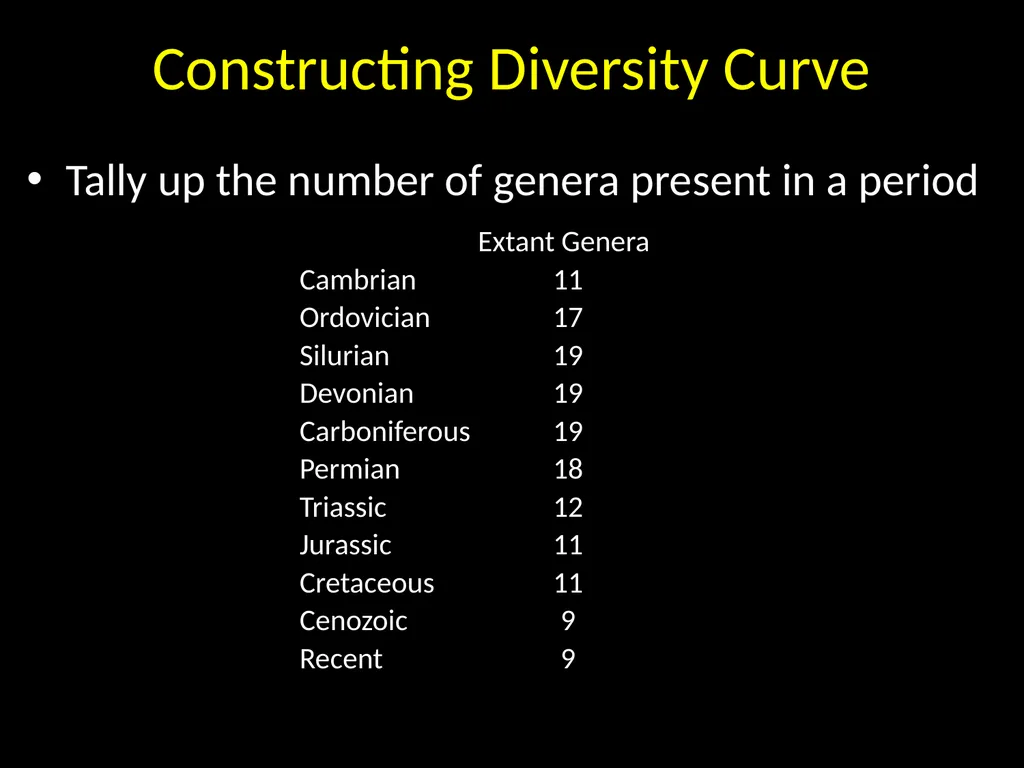
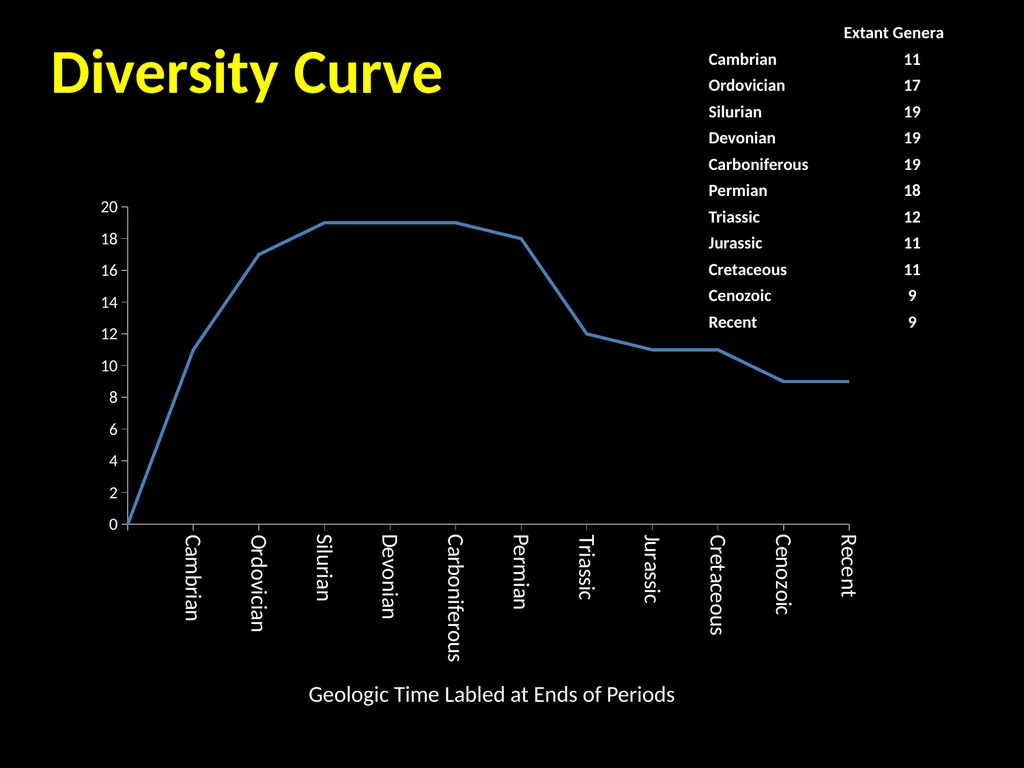
slide15. Constructing Diversity Curve Tally up the number of genera present in a period<br>
slide16. Geologic Time Labled at Ends of Periods Diversity Curve<br>
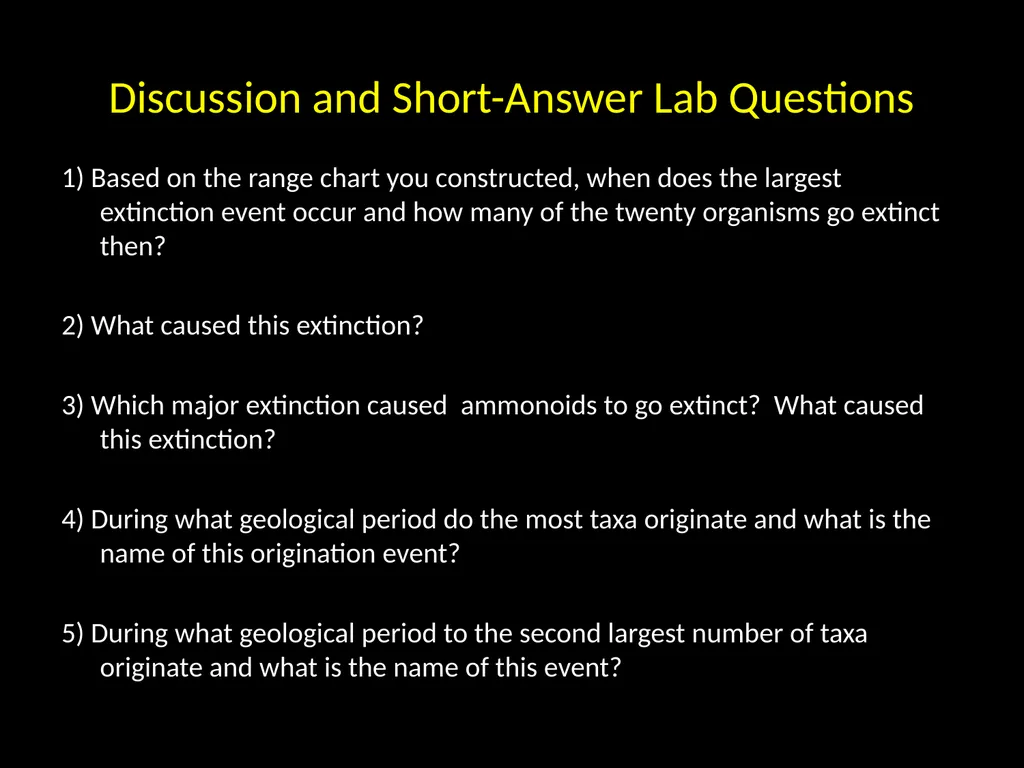
slide17. Discussion and Short-Answer Lab Questions 1) Based on the range chart you constructed, when does the largest extinction event occur and how many of the twenty organisms go extinct then?
2) What caused this extinction?
3) Which major extinction caused ammonoids to go extinct? What caused this extinction?
4) During what geological period do the most taxa originate and what is the name of this origination event?
5) During what geological period to the second largest number of taxa originate and what is the name of this event?<br>
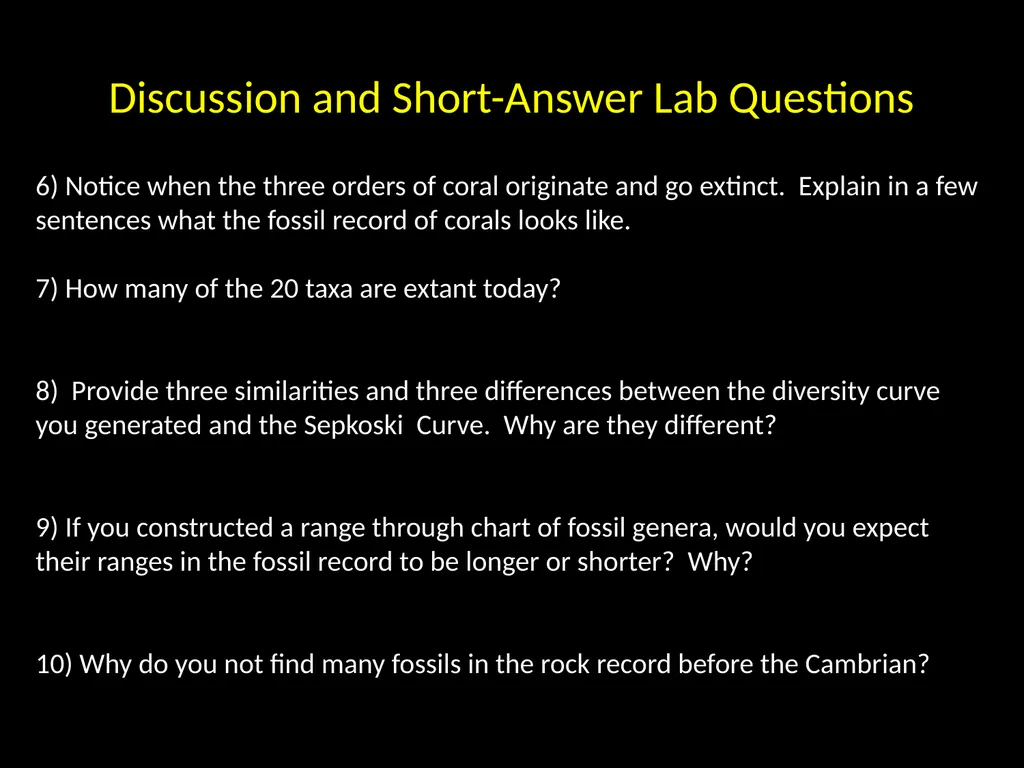
slide18. Discussion and Short-Answer Lab Questions 6) Notice when the three orders of coral originate and go extinct. Explain in a few sentences what the fossil record of corals looks like.
7) How many of the 20 taxa are extant today?
8) Provide three similarities and three differences between the diversity curve you generated and the Sepkoski Curve. Why are they different?
9) If you constructed a range through chart of fossil genera, would you expect their ranges in the fossil record to be longer or shorter? Why?
10) Why do you not find many fossils in the rock record before the Cambrian?<br>
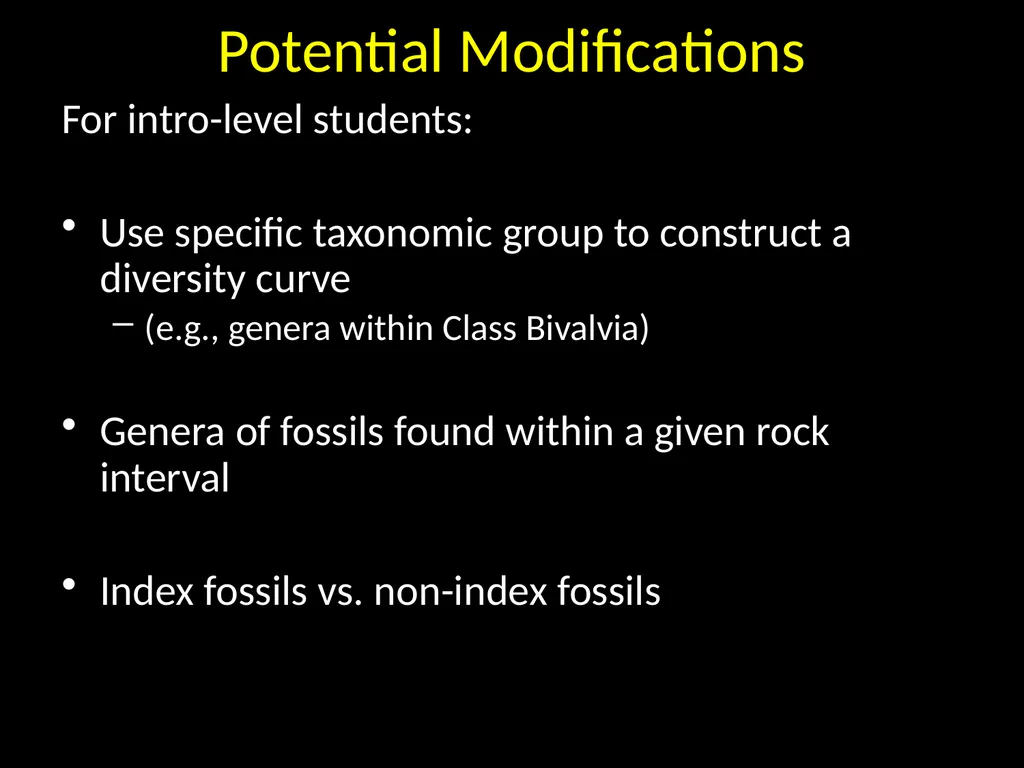
slide19. Potential Modifications For intro-level students:
Use specific taxonomic group to construct a diversity curve
(e.g., genera within Class Bivalvia)
Genera of fossils found within a given rock interval
Index fossils vs. non-index fossils<br>
slide20. Potential Modifications For upper-level students:
-each group or individual is assigned a class of organisms and must construct a genus-level diversity curve for comparison with other groups
-students will determine genus ranges using the Paleobiology Database (www.paleodb.org)
-provide guidelines for:
-number of genera to include
-resolution of the geological time scale
(i.e., epochs vs. periods vs. PaleoDB 10my time bins)<br>
slide21. Questions?<br>
Bellarmine University<br>
slide2. Geology for Non-Science Majors Meets for 2 hours twice a week
First hour lecture, second hour lab
Lab reinforces concepts introduced in lecture
Limited to 20 students
Students work in groups of 3-4<br>
slide3. Objectives of Lab Reinforce knowledge about major paleontological events
Diversifications
Mass Extinctions
Increase familiarity with the geological time scale
Increase familiarity with major groups of organisms
Implement the use of Microsoft Excel for graphing<br>
slide4. Next: Sample Lecture Slides<br>
slide5. Fossil Diversity Through Time The Jack Sepkoski Curve<br>
slide6. Precambrian -3.8 billion years ago, earliest evidence of life
-First fossils, 3.4 billion years ago Stromatolites<br>
slide7. Cambrian Explosion -Major diversification of muticellular life
-Many bizarre animals that went extinct<br>
slide8. Cambrian<br>
slide9. Ordovician Radiation -Second major diversification<br>
slide10. Lab Components: Understanding the concept of “Range” Time of Origination
Time of Extinction
Persists throughout interval even if not found consistently
Difference between fossil record and biological record<br>
slide11. Linking Names to Fossils Previous knowledge obtained from systematics lab can be reinforced here:
Students must correctly identify hand specimens to pair times of origination and extinction with names of fossil groups<br>
slide12. Plotting Ranges Carboniferous Geological
Time Scale
(modified from geology.com) Write Taxon Names Here Range Through Chart<br>
slide13. Plotting Ranges Carboniferous Geological
Time Scale
(modified from geology.com) Write Taxon Names Here Range Through Chart Fossil 1 Class Edrioasteroidea Range: Cambrian-Permian
Fossil 2 Class Articulata Range: Cambrian- Recent
Fossil 3 Subclass Ammonoidea Range: Silurian-Cretaceous
Fossil 4 Order Rugosa Range: Ordovician-Permian
Fossil 5 Order Tabulata Range: Ordovician-Permian
Fossil 6 Class Blastoidea Range: Ordovician-Permian
Fossil 7 Class Rostroconchia Range: Cambrian-Permian
Fossil 8 Class Gastropoda Range: Cambrian- Recent
Fossil 9 Class Stenolaemata Range: Ordovician-Recent
Fossil 10 Class Trilobita Range: Cambrian-Permian
Fossil 11 Order Scleractinia Range: Triassic- Recent
Fossil 12: Class Crinoidea Range: Ordovician- Recent
Fossil 13 Class Echinoidea Range: Ordovician-Recent
Fossil 14 Class Bivalvia Range: Cambrian-Recent
Fossil 15 Subclass Nautiloidea Range: Cambrian- Recent
Fossil 16 Class Stromatoporata Range: Ordovician-Cretaceous
Fossil 17 Class Eurypterida Range: Cambrian-Permian
Fossil 18 Class Graptolithina Range: Cambrian-Carboniferous
Fossil 19 Class Conodonta Range: Cambrian-Triassic
Fossil 20: Class Insecta Range: Silurian-Recent<br>
slide14. Plotting Ranges Carboniferous Geological
Time Scale
(modified from geology.com) Write Taxon Names Here Range Through Chart Fossil 1 Class Edrioasteroidea Range: Cambrian-Permian
Fossil 2 Class Articulata Range: Cambrian- Recent
Fossil 3 Subclass Ammonoidea Range: Silurian-Cretaceous
Fossil 4 Order Rugosa Range: Ordovician-Permian
Fossil 5 Order Tabulata Range: Ordovician-Permian
Fossil 6 Class Blastoidea Range: Ordovician-Permian
Fossil 7 Class Rostroconchia Range: Cambrian-Permian
Fossil 8 Class Gastropoda Range: Cambrian- Recent
Fossil 9 Class Stenolaemata Range: Ordovician-Recent
Fossil 10 Class Trilobita Range: Cambrian-Permian
Fossil 11 Order Scleractinia Range: Triassic- Recent
Fossil 12: Class Crinoidea Range: Ordovician- Recent
Fossil 13 Class Echinoidea Range: Ordovician-Recent
Fossil 14 Class Bivalvia Range: Cambrian-Recent
Fossil 15 Subclass Nautiloidea Range: Cambrian- Recent
Fossil 16 Class Stromatoporata Range: Ordovician-Cretaceous
Fossil 17 Class Eurypterida Range: Cambrian-Permian
Fossil 18 Class Graptolithina Range: Cambrian-Carboniferous
Fossil 19 Class Conodonta Range: Cambrian-Triassic
Fossil 20: Class Insecta Range: Silurian-Recent<br>
slide15. Constructing Diversity Curve Tally up the number of genera present in a period<br>
slide16. Geologic Time Labled at Ends of Periods Diversity Curve<br>
slide17. Discussion and Short-Answer Lab Questions 1) Based on the range chart you constructed, when does the largest extinction event occur and how many of the twenty organisms go extinct then?
2) What caused this extinction?
3) Which major extinction caused ammonoids to go extinct? What caused this extinction?
4) During what geological period do the most taxa originate and what is the name of this origination event?
5) During what geological period to the second largest number of taxa originate and what is the name of this event?<br>
slide18. Discussion and Short-Answer Lab Questions 6) Notice when the three orders of coral originate and go extinct. Explain in a few sentences what the fossil record of corals looks like.
7) How many of the 20 taxa are extant today?
8) Provide three similarities and three differences between the diversity curve you generated and the Sepkoski Curve. Why are they different?
9) If you constructed a range through chart of fossil genera, would you expect their ranges in the fossil record to be longer or shorter? Why?
10) Why do you not find many fossils in the rock record before the Cambrian?<br>
slide19. Potential Modifications For intro-level students:
Use specific taxonomic group to construct a diversity curve
(e.g., genera within Class Bivalvia)
Genera of fossils found within a given rock interval
Index fossils vs. non-index fossils<br>
slide20. Potential Modifications For upper-level students:
-each group or individual is assigned a class of organisms and must construct a genus-level diversity curve for comparison with other groups
-students will determine genus ranges using the Paleobiology Database (www.paleodb.org)
-provide guidelines for:
-number of genera to include
-resolution of the geological time scale
(i.e., epochs vs. periods vs. PaleoDB 10my time bins)<br>
slide21. Questions?<br>