Reaching the last miles First-Time successful implementation of a client level electronic data management system (DHIS2 Tracker based) in Liberia HIV program Rachel Lyimo Senior Technical Advisor Strategic Information, EpiC FHI360
"Reaching the last miles First-Time successful" is the property of its rightful owner. Permission is granted to
download and print the materials on this website for personal, non-commercial use only, and to display it
on your personal computer provided you do not modify the materials and that you retain all copyright
notices contained in the materials. By downloading content from our website, you accept the terms of this
agreement.
Presentation Transcript
01
Reaching the last miles First-Time successful implementation of a client level electronic data management system (DHIS2 Tracker based) in Liberia HIV program Rachel Lyimo Senior Technical Advisor – Strategic Information, EpiC /FHI360 Liberia
rlyimo@fhi360.org<br>
02
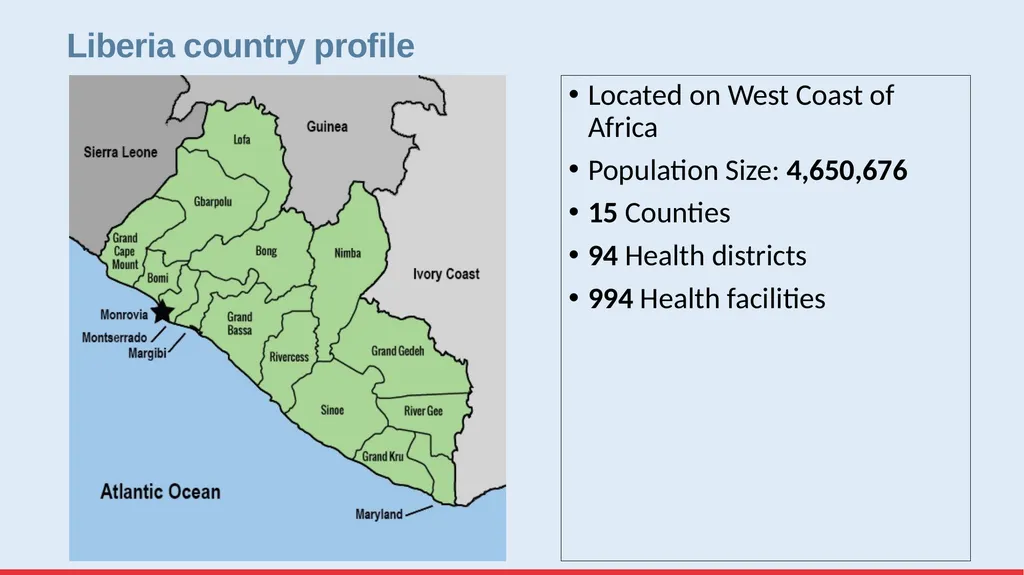
Liberia country profile Located on West Coast of Africa
Population Size: 4,650,676
15 Counties
94 Health districts
994 Health facilities<br>
03
EpiC Project Overview, scope and partnerships EpiC is a five-year USAID- and PEPFAR-funded global cooperative agreement dedicated to achieving and maintaining HIV epidemic control. Since 2020 EpiC also implements COVID clinical care and vaccine response programs.
EpiC is primed by FHI 360 with sub partners PSI, Palladium Group and Right to Care.
Liberia became a PEPFAR funded country effective October 2019, to complement the efforts of Government to end HIV epidemic through 95-95-95 goals under the leadership of NACP and NAC.
Works through a “merged partnership” approach to support the acceleration of uptake of HIV services in 21 PEPFAR supported health facilities and community civil society organizations which is aimed at linking the hard-to-reach communities to HIV services.<br>
04
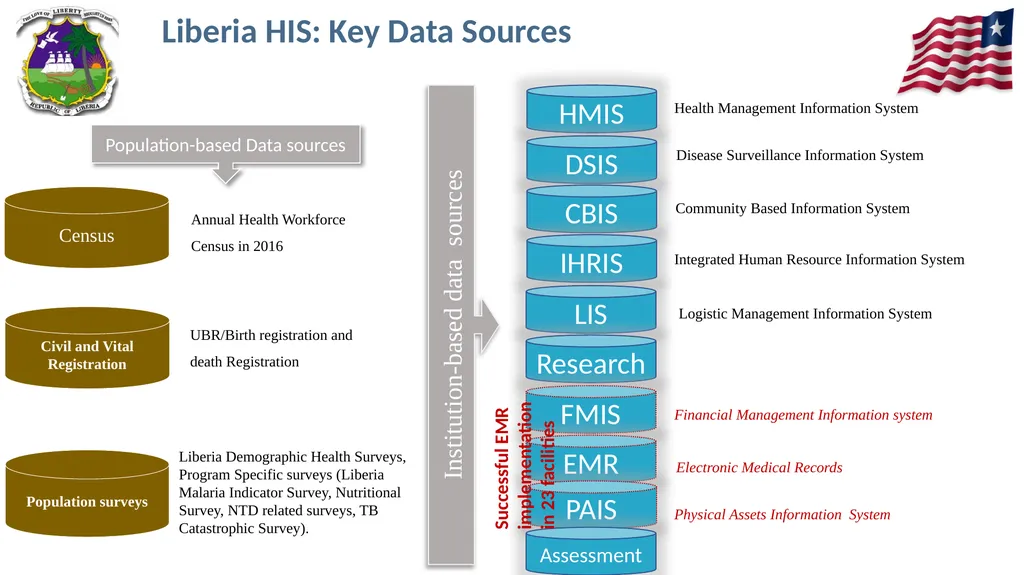
Liberia HIS: Key Data Sources Population-based Data sources<br>
05
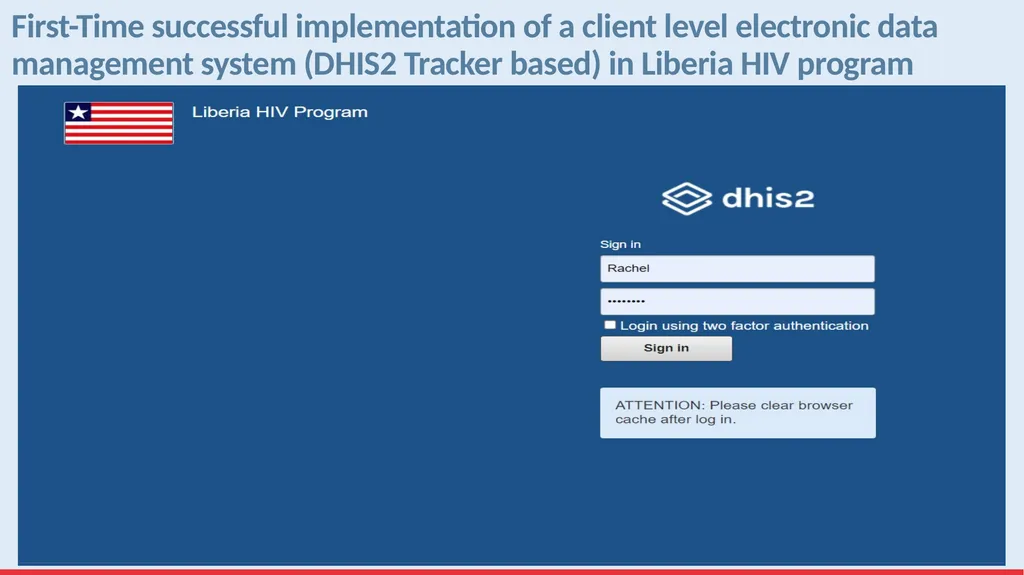
First-Time successful implementation of a client level electronic data management system (DHIS2 Tracker based) in Liberia HIV program<br>
06
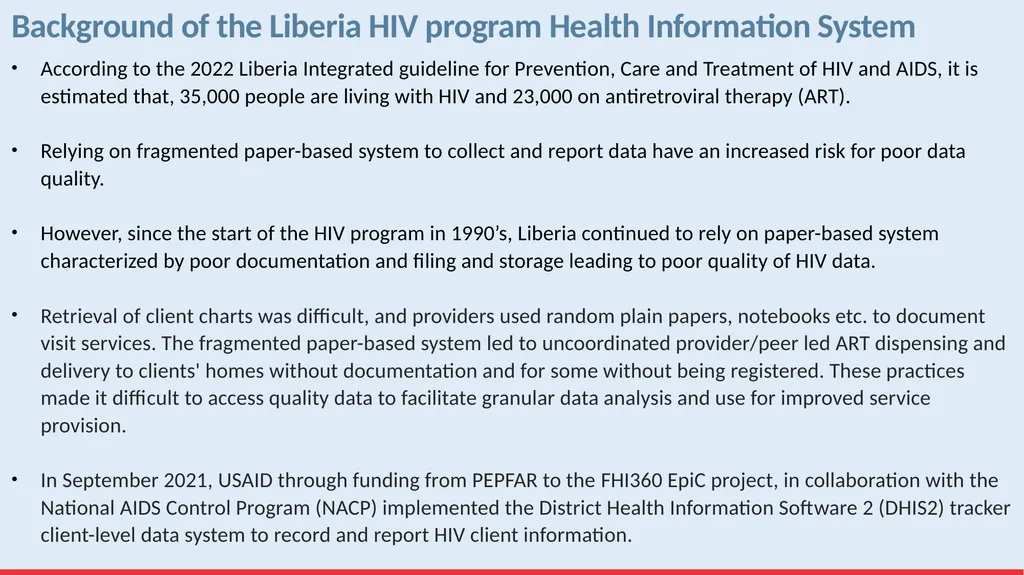
Background of the Liberia HIV program Health Information System According to the 2022 Liberia Integrated guideline for Prevention, Care and Treatment of HIV and AIDS, it is estimated that, 35,000 people are living with HIV and 23,000 on antiretroviral therapy (ART).
Relying on fragmented paper-based system to collect and report data have an increased risk for poor data quality.
However, since the start of the HIV program in 1990’s, Liberia continued to rely on paper-based system characterized by poor documentation and filing and storage leading to poor quality of HIV data.
Retrieval of client charts was difficult, and providers used random plain papers, notebooks etc. to document visit services. The fragmented paper-based system led to uncoordinated provider/peer led ART dispensing and delivery to clients' homes without documentation and for some without being registered. These practices made it difficult to access quality data to facilitate granular data analysis and use for improved service provision.
In September 2021, USAID through funding from PEPFAR to the FHI360 EpiC project, in collaboration with the National AIDS Control Program (NACP) implemented the District Health Information Software 2 (DHIS2) tracker client-level data system to record and report HIV client information.<br>
07
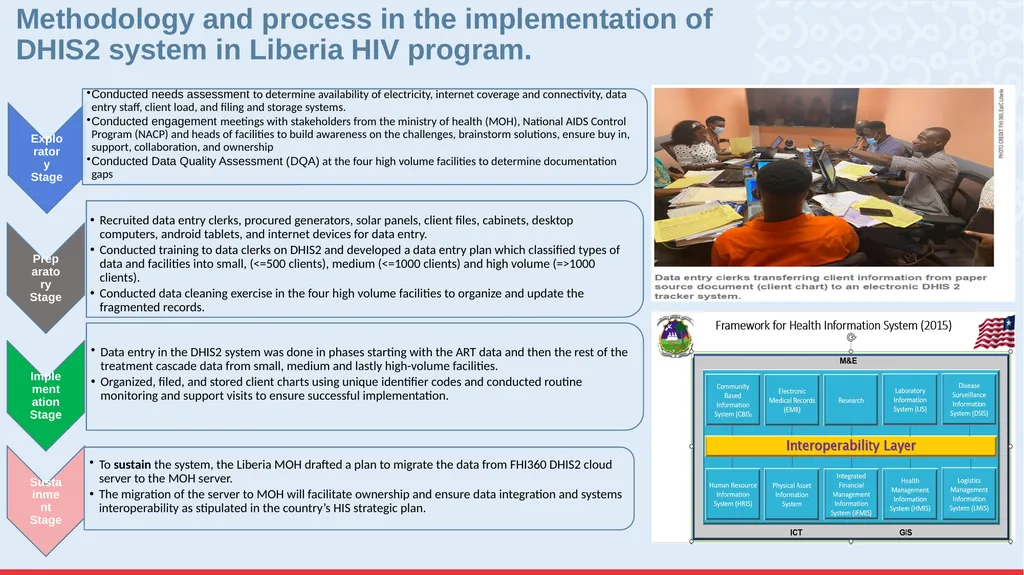
Methodology and process in the implementation of DHIS2 system in Liberia HIV program.<br>
08
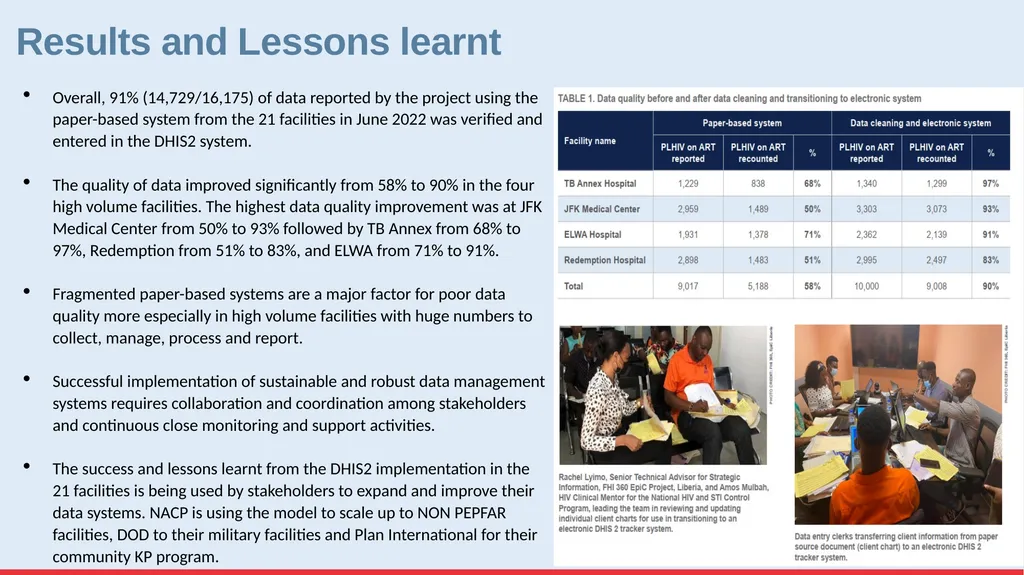
Results and Lessons learnt Overall, 91% (14,729/16,175) of data reported by the project using the paper-based system from the 21 facilities in June 2022 was verified and entered in the DHIS2 system.
The quality of data improved significantly from 58% to 90% in the four high volume facilities. The highest data quality improvement was at JFK Medical Center from 50% to 93% followed by TB Annex from 68% to 97%, Redemption from 51% to 83%, and ELWA from 71% to 91%.
Fragmented paper-based systems are a major factor for poor data quality more especially in high volume facilities with huge numbers to collect, manage, process and report.
Successful implementation of sustainable and robust data management systems requires collaboration and coordination among stakeholders and continuous close monitoring and support activities.
The success and lessons learnt from the DHIS2 implementation in the 21 facilities is being used by stakeholders to expand and improve their data systems. NACP is using the model to scale up to NON PEPFAR facilities, DOD to their military facilities and Plan International for their community KP program.<br>
09
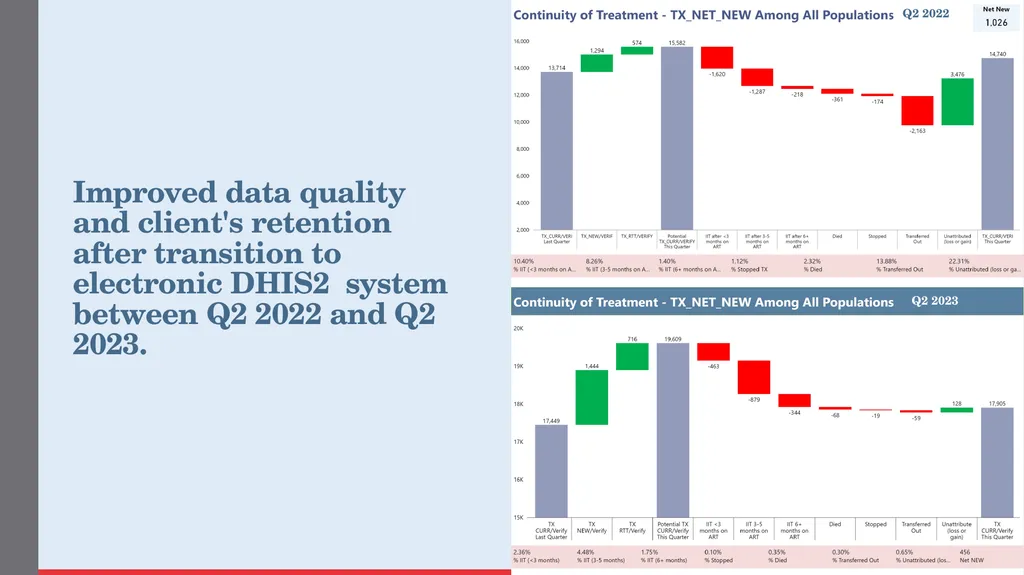
Improved data quality and client's retention after transition to electronic DHIS2 system between Q2 2022 and Q2 2023.<br>
10
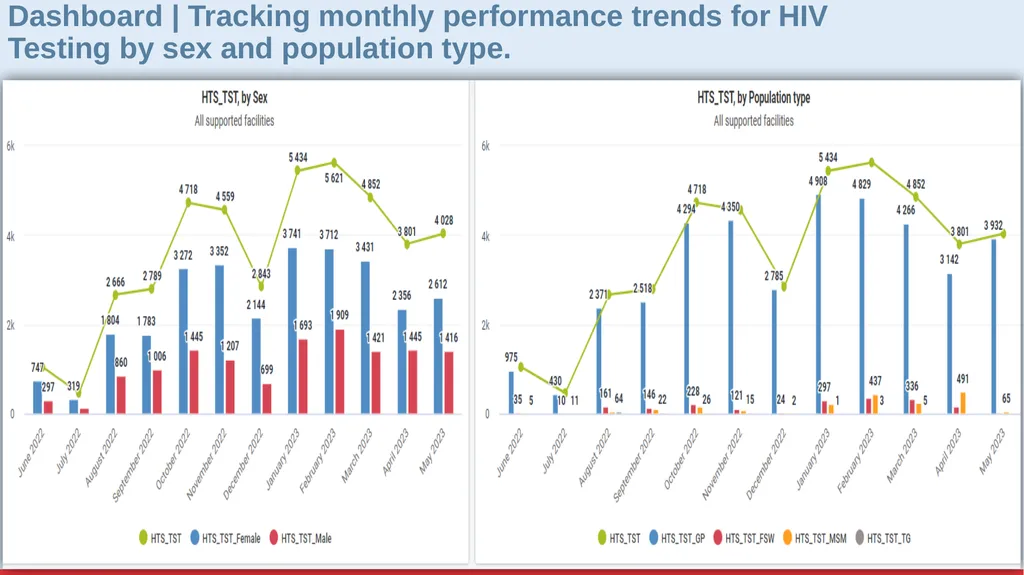
Dashboard | Tracking monthly performance trends for HIV Testing by sex and population type.<br>
11
Way Forward Facilitate data analysis, visualization and use in DHIS2 system for improved HIV service provision and performance at the supported facilities.
Migration of the DHIS2 server to Liberia MOH to facilitate ownership, ensure data integration and systems interoperability and sustainability.
Support Liberia MOH and other partners in improving data management systems using DHIS2 tracker.<br>
12
Conclusion Successful implementation of the DHIS2 system in the 21 facilities in Liberia and the significant impact it has had in improving the quality of HIV/AIDS data, makes it a benchmark for other future efforts to expand and improve data management systems in the country.<br>
13
EpiC is a global cooperative agreement dedicated to achieving and maintaining HIV epidemic control. It is led by FHI 360 with core partners Right to Care, Palladium, and Population Services International (PSI). EpiC Twitter EpiC Facebook EpiC Blog EpiC Webpage Stay connected EpiC YouTube<br>