ReactJS 24th October 2019 Front-end frameworks Express is a back end framework for server-side JS scripting Brings in useful abstractions to simplify programming common server-side actions There are also front-end frameworks for client-side
"ReactJS 24th October 2019 Front-end frameworks" is the property of its rightful owner. Permission is granted to
download and print the materials on this website for personal, non-commercial use only, and to display it
on your personal computer provided you do not modify the materials and that you retain all copyright
notices contained in the materials. By downloading content from our website, you accept the terms of this
agreement.
Presentation Transcript
01
ReactJS 24th October 2019<br>
02
Front-end frameworks Express is a back end framework for server-side JS scripting
Brings in useful abstractions to simplify programming common server-side actions
There are also front-end frameworks for client-side JS scripting
Bring in useful abstractions to simplify programming common client-side actions<br>
03
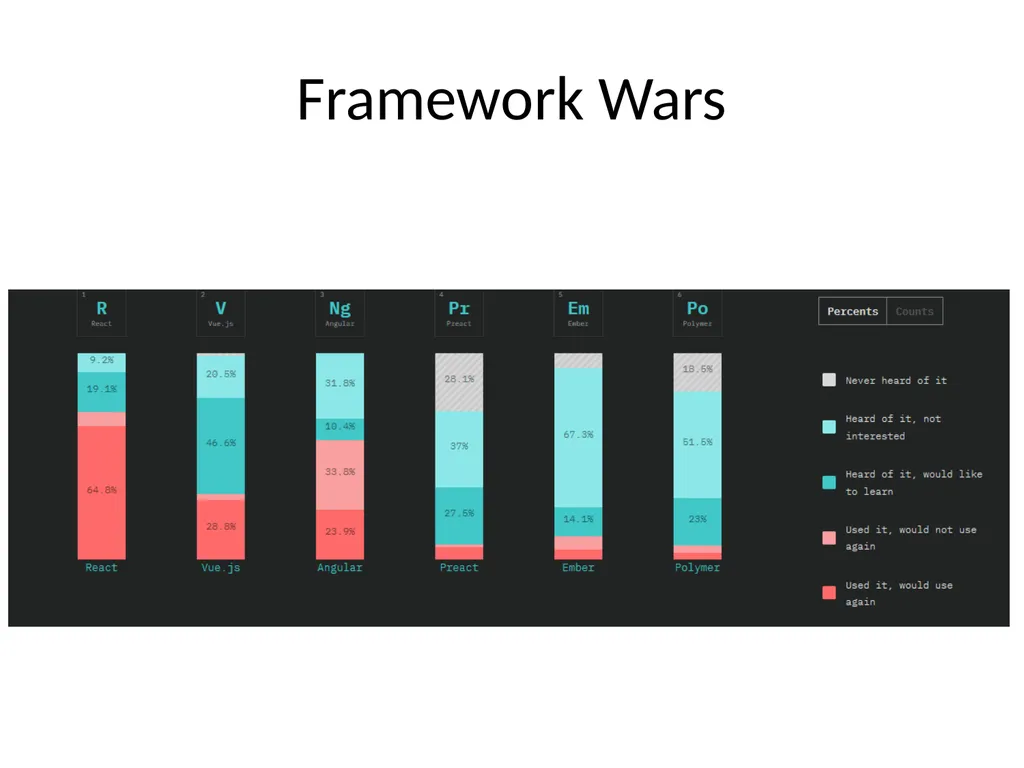
Framework Wars<br>
04
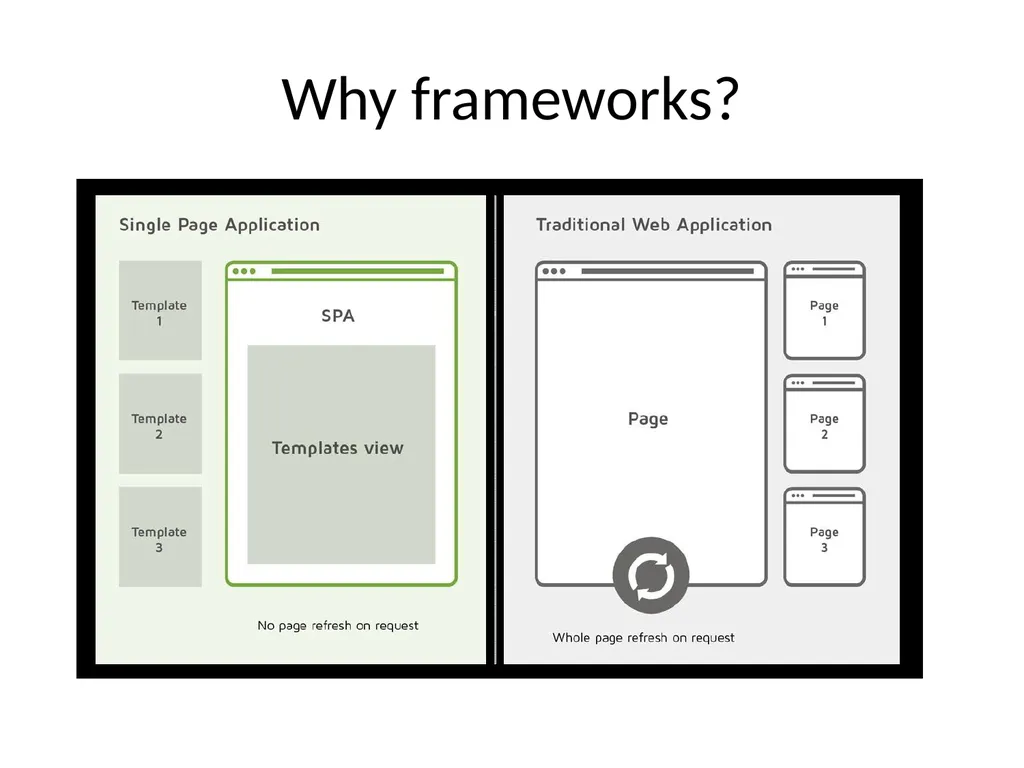
Why frameworks?<br>
05
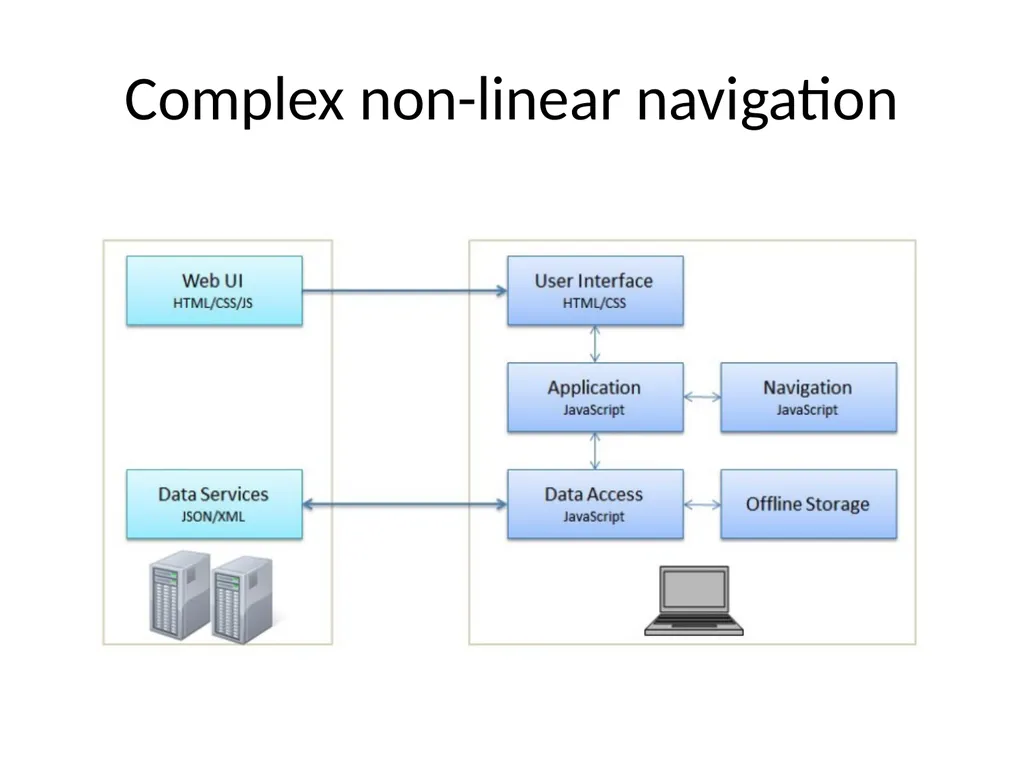
Complex non-linear navigation<br>
06
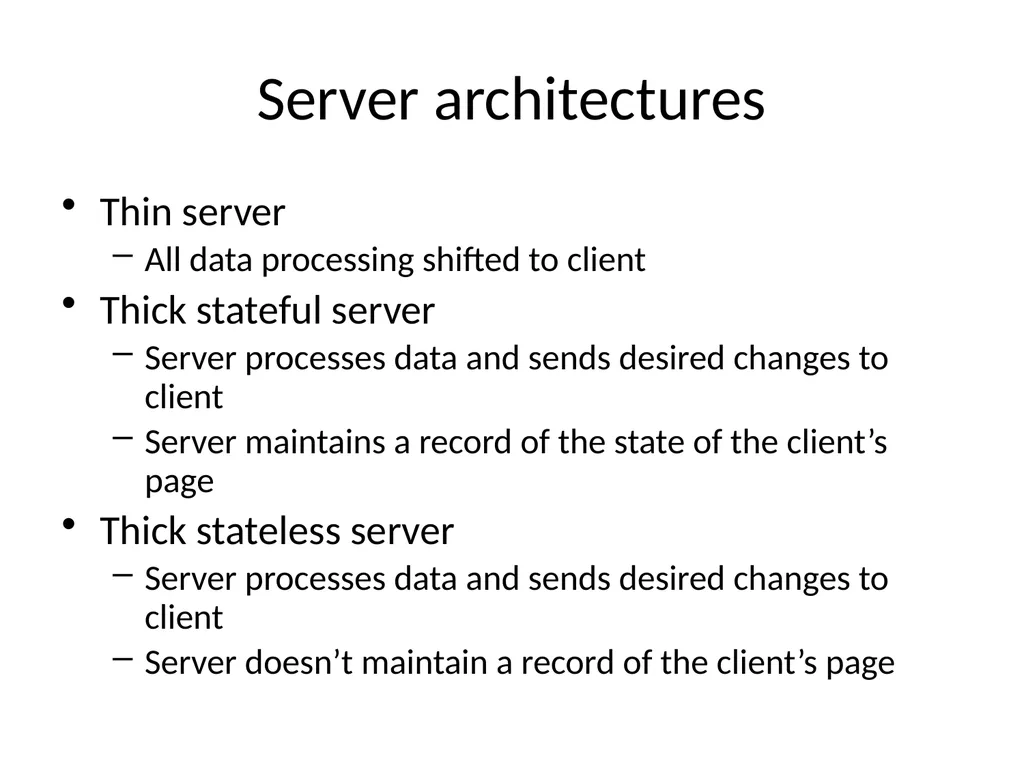
Server architectures Thin server
All data processing shifted to client
Thick stateful server
Server processes data and sends desired changes to client
Server maintains a record of the state of the client’s page
Thick stateless server
Server processes data and sends desired changes to client
Server doesn’t maintain a record of the client’s page<br>
07
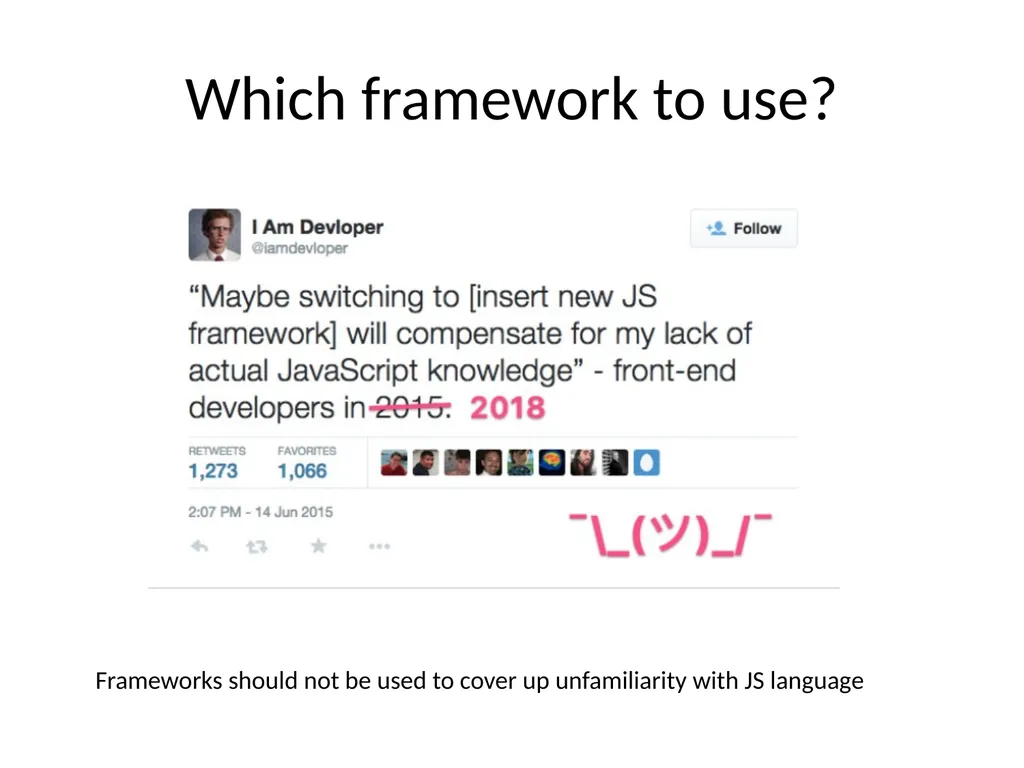
Which framework to use? Frameworks should not be used to cover up unfamiliarity with JS language<br>
08
ReactJS Developed by FB
Initial release 2013
Caught on with developers strongly in the past couple of years
Optimal for updating page components individually<br>
09
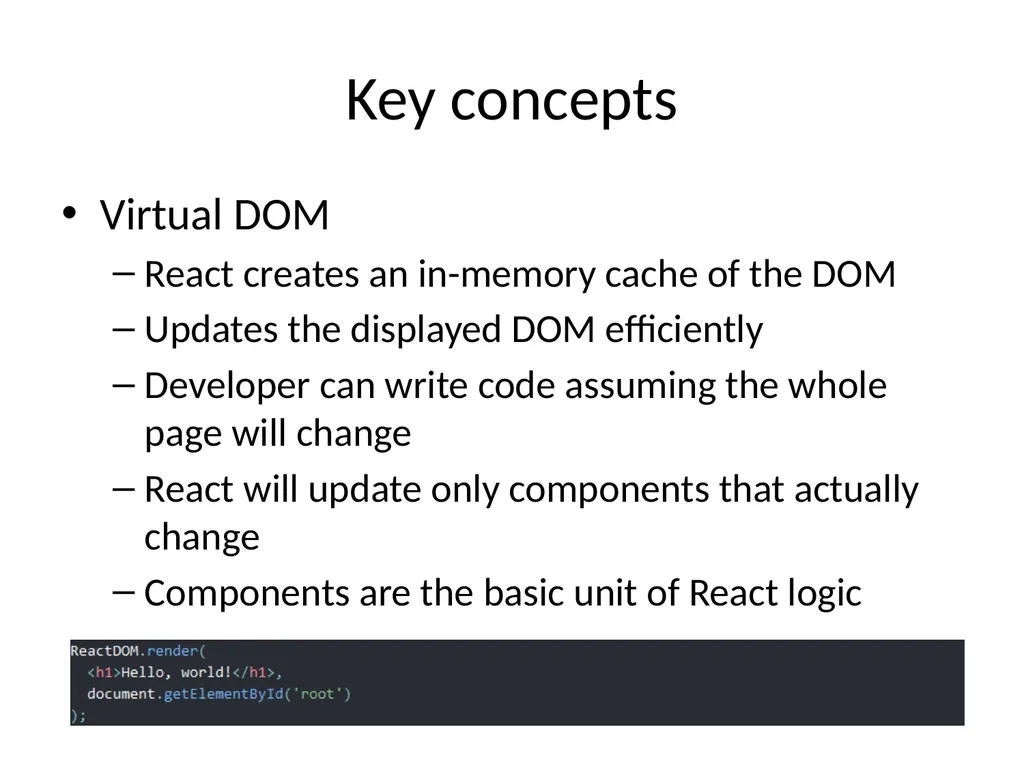
Key concepts Virtual DOM
React creates an in-memory cache of the DOM
Updates the displayed DOM efficiently
Developer can write code assuming the whole page will change
React will update only components that actually change
Components are the basic unit of React logic<br>
10
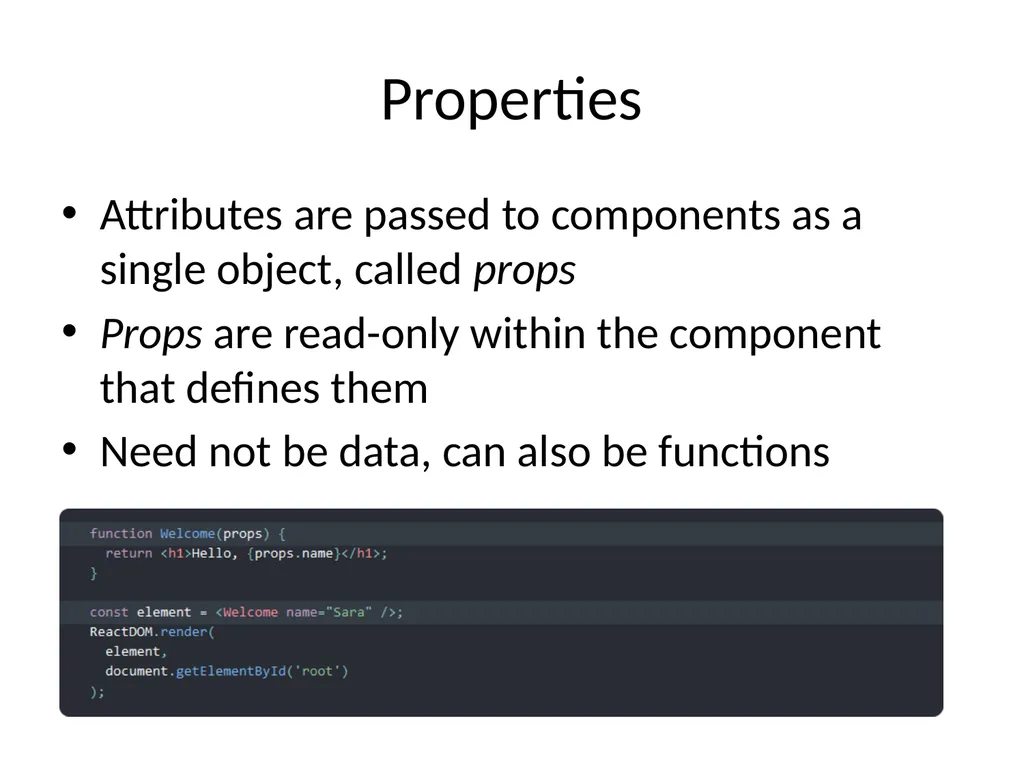
Properties Attributes are passed to components as a single object, called props
Props are read-only within the component that defines them
Need not be data, can also be functions<br>
11
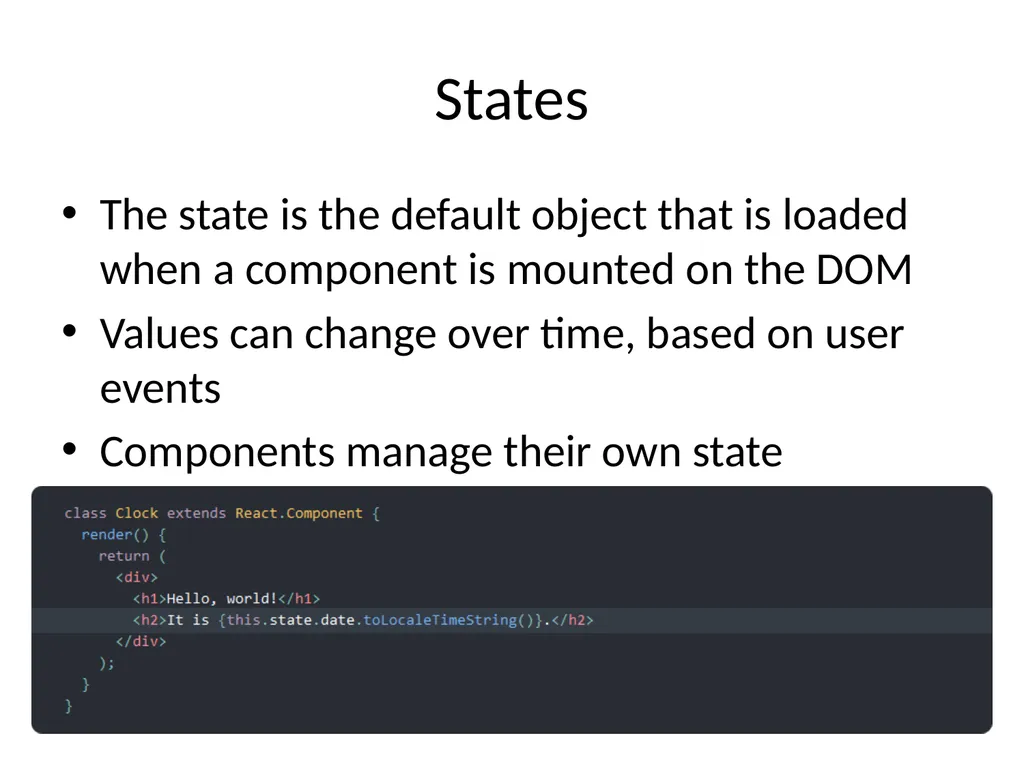
States The state is the default object that is loaded when a component is mounted on the DOM
Values can change over time, based on user events
Components manage their own state<br>
12
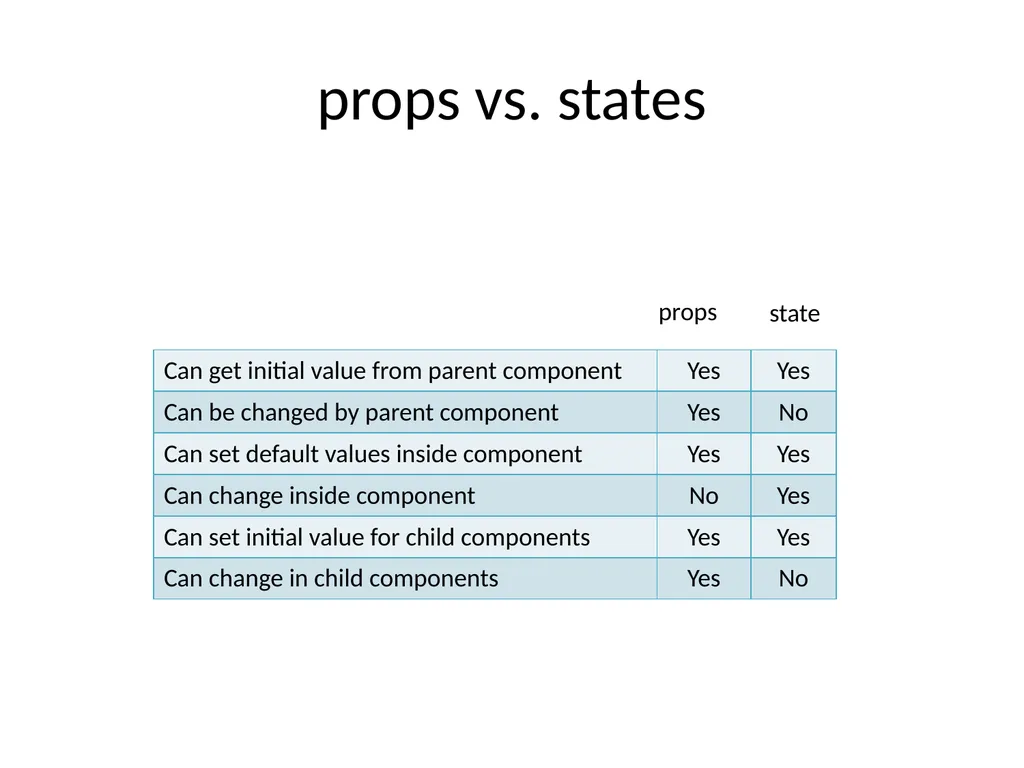
props vs. states props state<br>
13
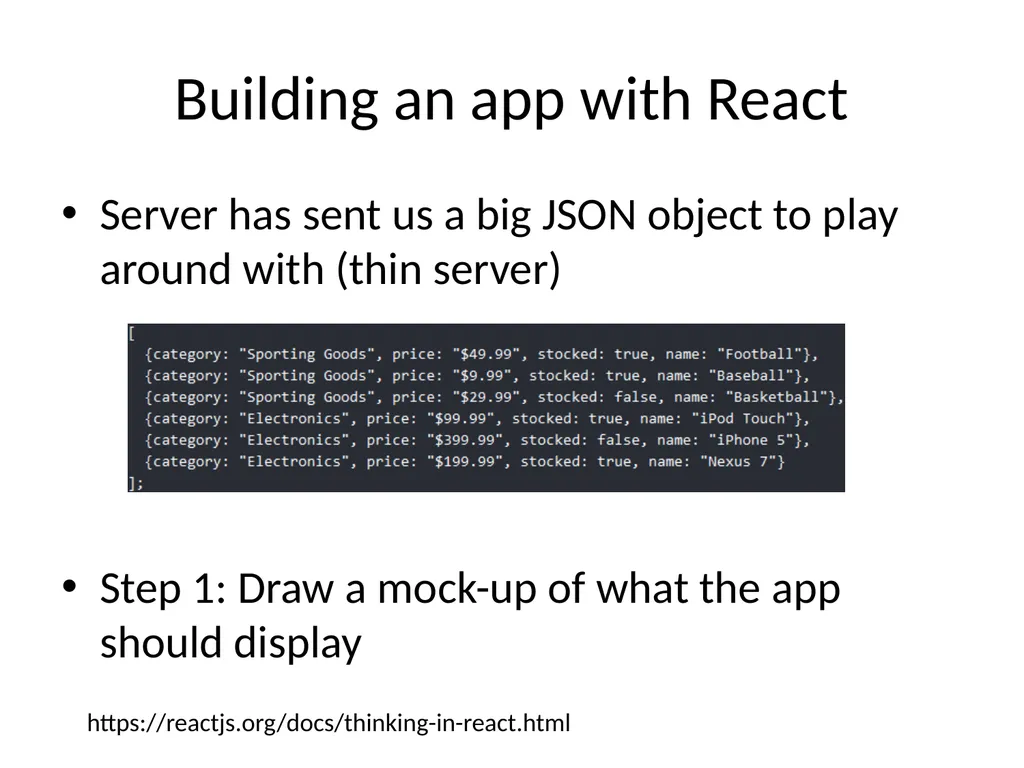
Building an app with React Server has sent us a big JSON object to play around with (thin server)
Step 1: Draw a mock-up of what the app should display https://reactjs.org/docs/thinking-in-react.html<br>
14
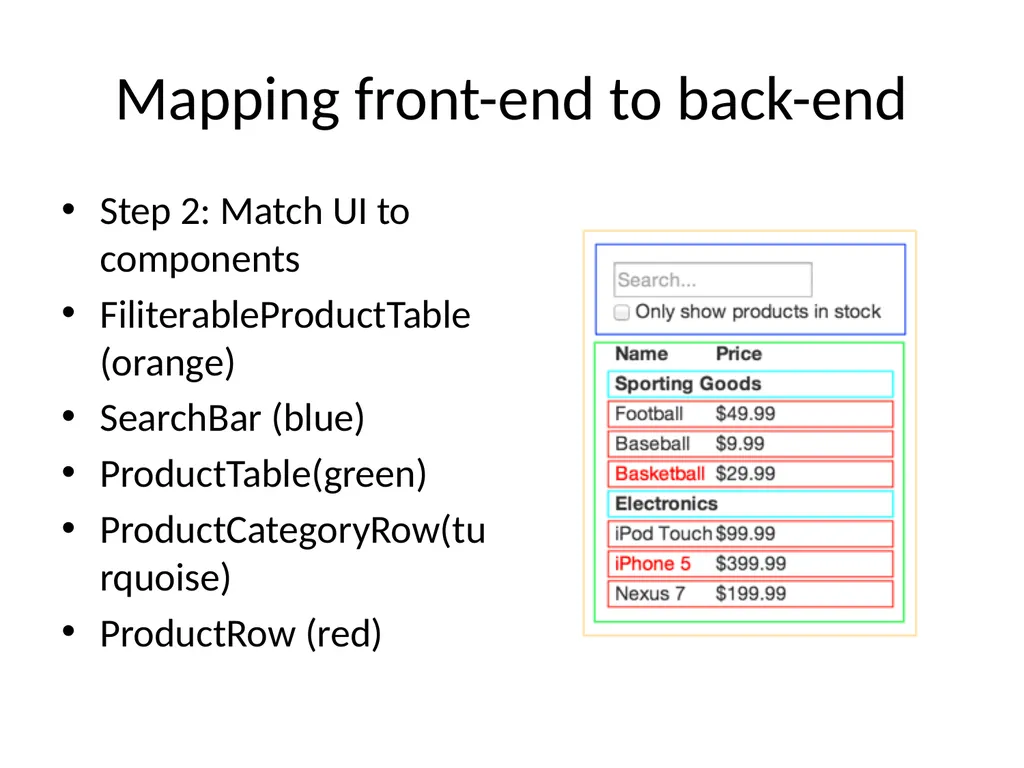
Mapping front-end to back-end Step 2: Match UI to components
FiliterableProductTable (orange)
SearchBar (blue)
ProductTable(green)
ProductCategoryRow(turquoise)
ProductRow (red)<br>
15
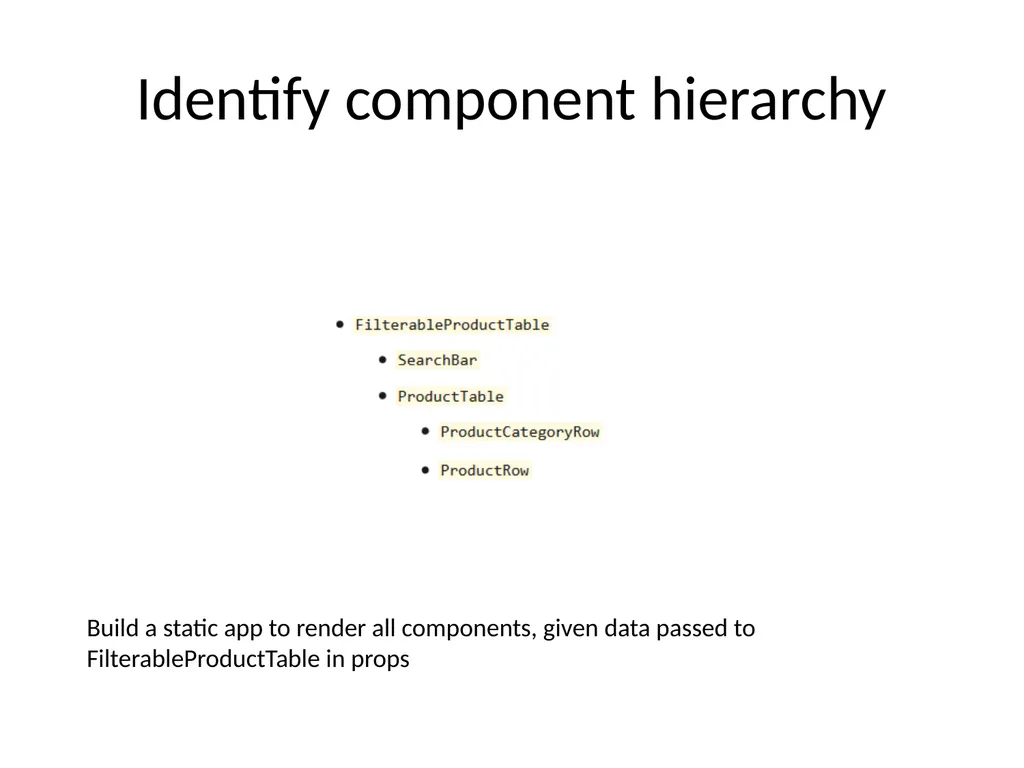
Identify component hierarchy Build a static app to render all components, given data passed to FilterableProductTable in props<br>
16
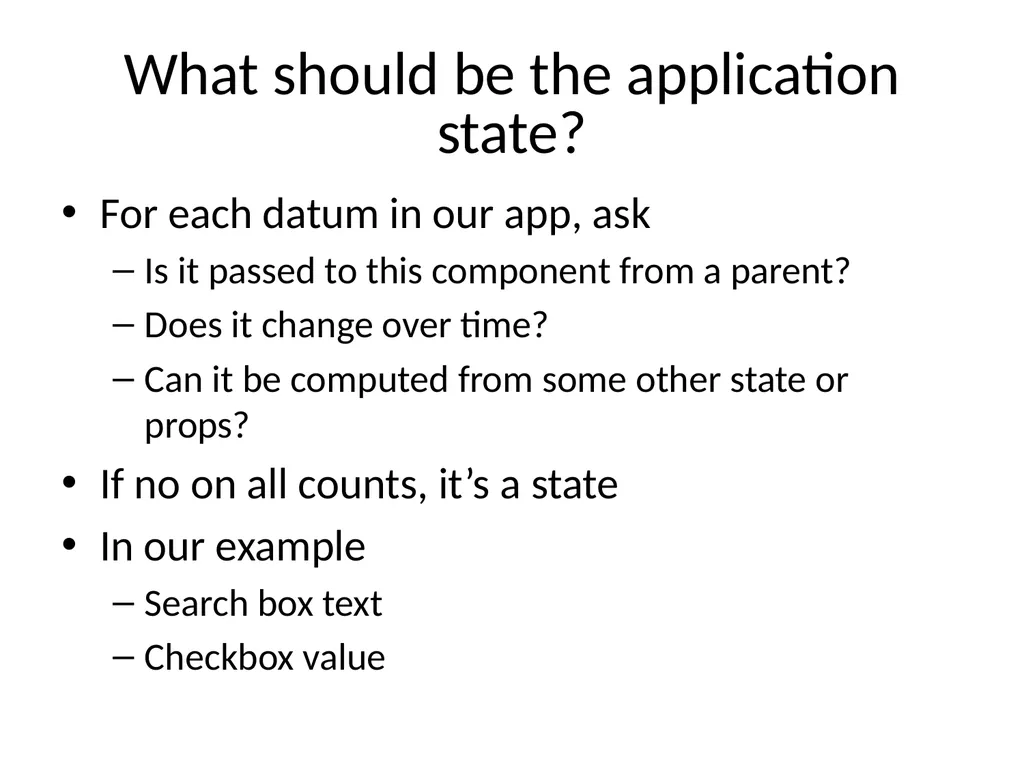
What should be the application state? For each datum in our app, ask
Is it passed to this component from a parent?
Does it change over time?
Can it be computed from some other state or props?
If no on all counts, it’s a state
In our example
Search box text
Checkbox value<br>
17
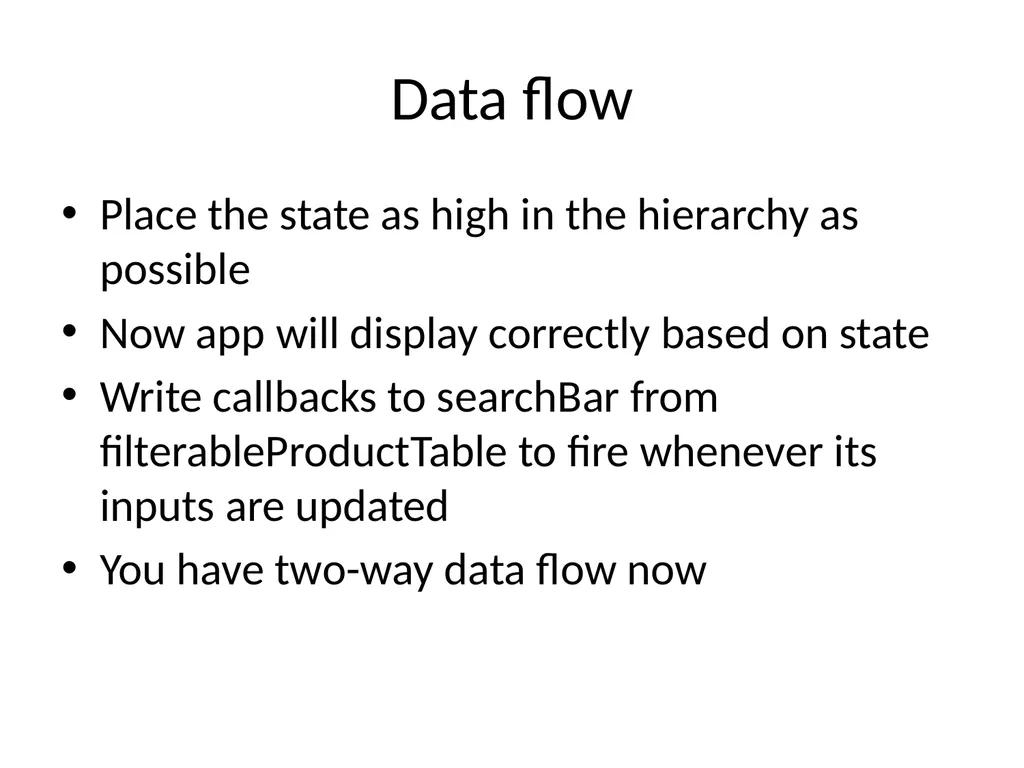
Data flow Place the state as high in the hierarchy as possible
Now app will display correctly based on state
Write callbacks to searchBar from filterableProductTable to fire whenever its inputs are updated
You have two-way data flow now<br>
18
Next week in lab Follow the tic-tac-toe React tutorial
Make it work for a 4x4 grid
Hopefully, you have your NodeJS app hooked up to a database by now
If not, please ensure this is so by end of the coming week<br>
19
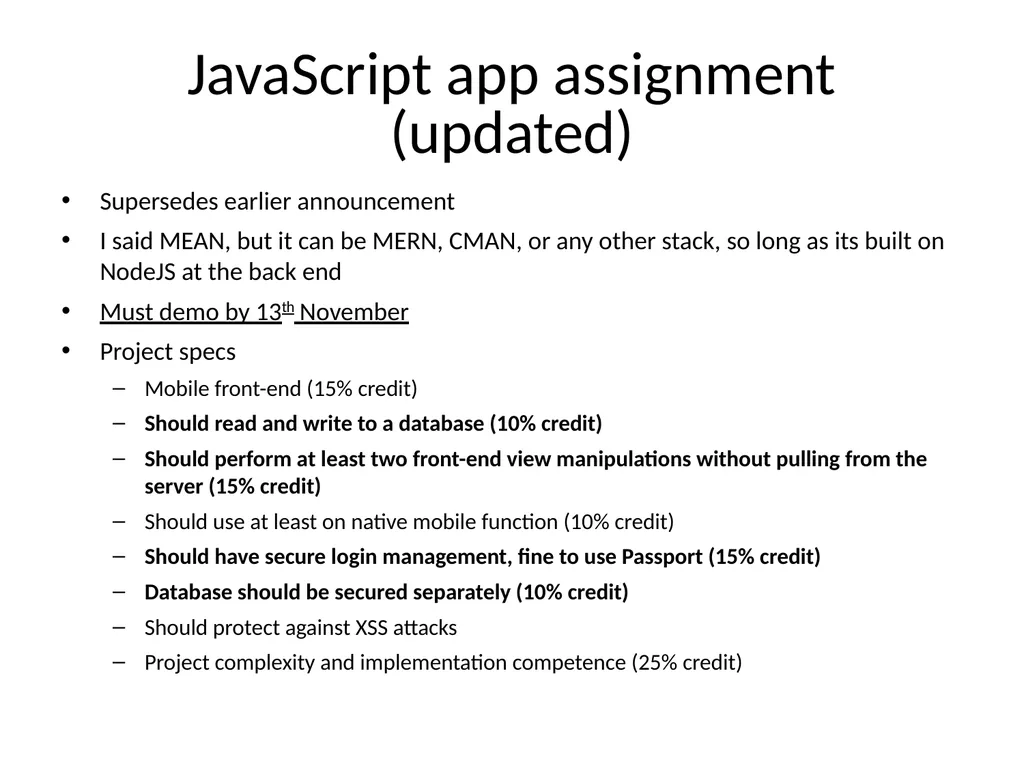
JavaScript app assignment (updated) Supersedes earlier announcement
I said MEAN, but it can be MERN, CMAN, or any other stack, so long as its built on NodeJS at the back end
Must demo by 13th November
Project specs
Mobile front-end (15% credit)
Should read and write to a database (10% credit)
Should perform at least two front-end view manipulations without pulling from the server (15% credit)
Should use at least on native mobile function (10% credit)
Should have secure login management, fine to use Passport (15% credit)
Database should be secured separately (10% credit)
Should protect against XSS attacks
Project complexity and implementation competence (25% credit)<br>