Reading Lists - End to End Gary Brewerton Middleware and Library Systems Manager https:www.linkedin.compubgary-brewerton841a40b Contents Setting the Context What is a reading listRLMS Reading lists at Loughborough An ongoing issue
"Reading Lists - End to End Gary Brewerton" is the property of its rightful owner. Permission is granted to
download and print the materials on this website for personal, non-commercial use only, and to display it
on your personal computer provided you do not modify the materials and that you retain all copyright
notices contained in the materials. By downloading content from our website, you accept the terms of this
agreement.
Presentation Transcript
01
Reading Lists - End to End Gary Brewerton
Middleware and Library Systems Manager
https://www.linkedin.com/pub/gary-brewerton/84/1a/40b<br>
02
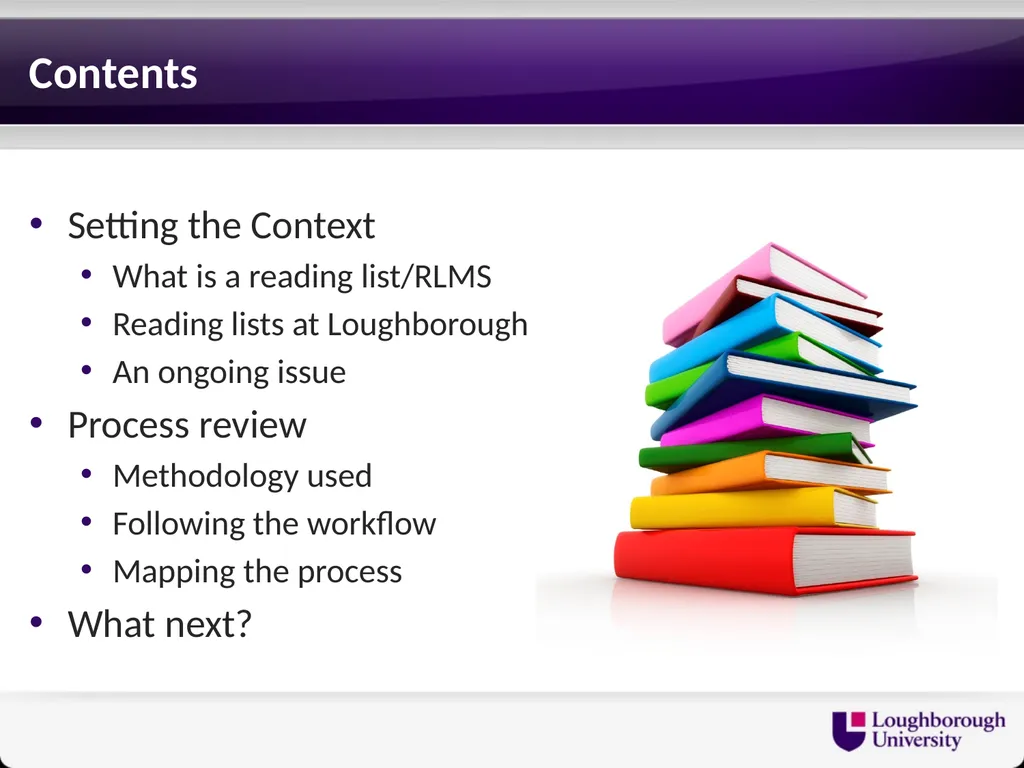
Contents Setting the Context
What is a reading list/RLMS
Reading lists at Loughborough
An ongoing issue
Process review
Methodology used
Following the workflow
Mapping the process
What next?<br>
03
Setting the context<br>
04
What is a reading list/RLMS Reading list
A list of resources (books, journals, AV material, websites, etc.) compiled by an academic to support students in their studies
Reading List Management System (RLMS)
enables students to access their reading list online and check availability of recommended resources
allows appropriate staff to create and maintain the reading lists
provides the Library with information to support its collection development<br>
05
Reading lists at Loughborough We’ve had our own in-house RLMS (called LORLS) at Loughborough since June 2000
Initially we hired students to pump prime the system
Thereafter academics took on responsible for maintaining their own reading lists
New academics trained by library staff to use the system
In February 2011 we introduced significant new version of the system
Included multiple methods of creating/updating reading lists<br>
06
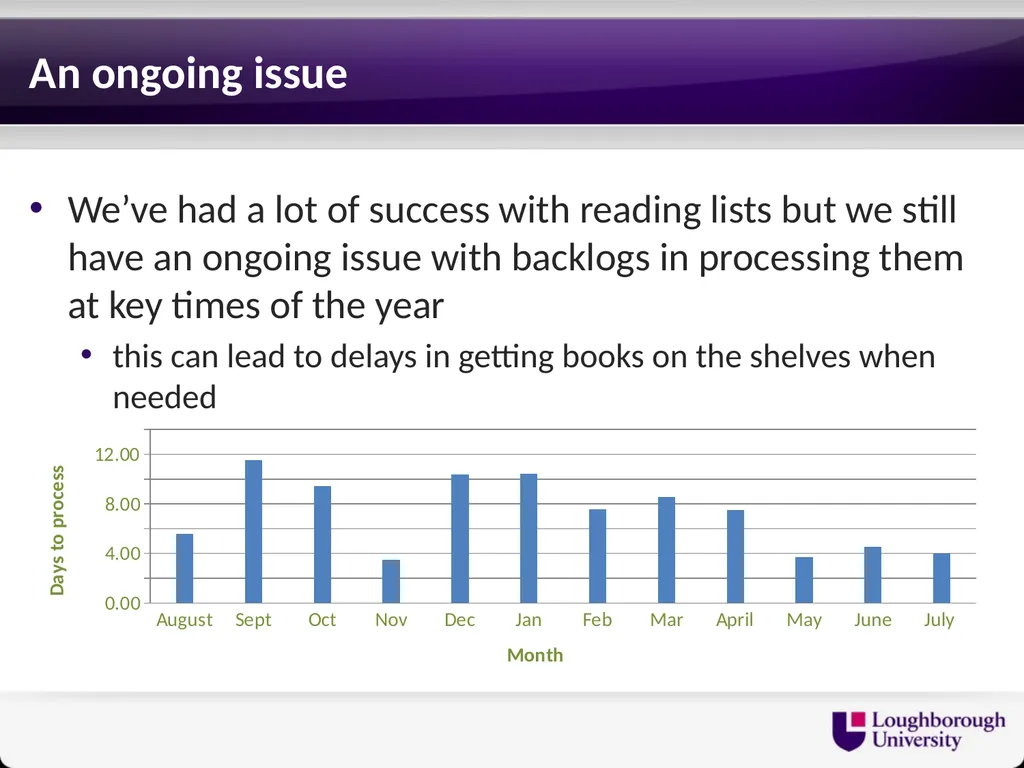
An ongoing issue We’ve had a lot of success with reading lists but we still have an ongoing issue with backlogs in processing them at key times of the year
this can lead to delays in getting books on the shelves when needed<br>
07
Process review<br>
08
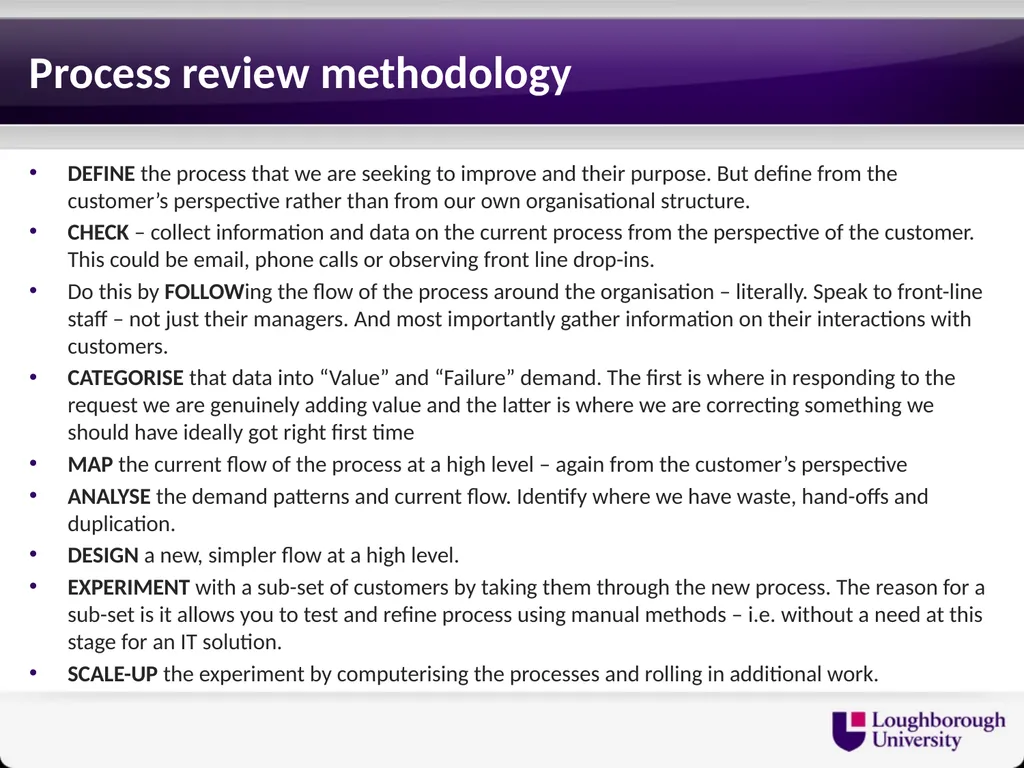
Process review methodology DEFINE the process that we are seeking to improve and their purpose. But define from the customer’s perspective rather than from our own organisational structure.
CHECK – collect information and data on the current process from the perspective of the customer. This could be email, phone calls or observing front line drop-ins.
Do this by FOLLOWing the flow of the process around the organisation – literally. Speak to front-line staff – not just their managers. And most importantly gather information on their interactions with customers.
CATEGORISE that data into “Value” and “Failure” demand. The first is where in responding to the request we are genuinely adding value and the latter is where we are correcting something we should have ideally got right first time
MAP the current flow of the process at a high level – again from the customer’s perspective
ANALYSE the demand patterns and current flow. Identify where we have waste, hand-offs and duplication.
DESIGN a new, simpler flow at a high level.
EXPERIMENT with a sub-set of customers by taking them through the new process. The reason for a sub-set is it allows you to test and refine process using manual methods – i.e. without a need at this stage for an IT solution.
SCALE-UP the experiment by computerising the processes and rolling in additional work.<br>
09
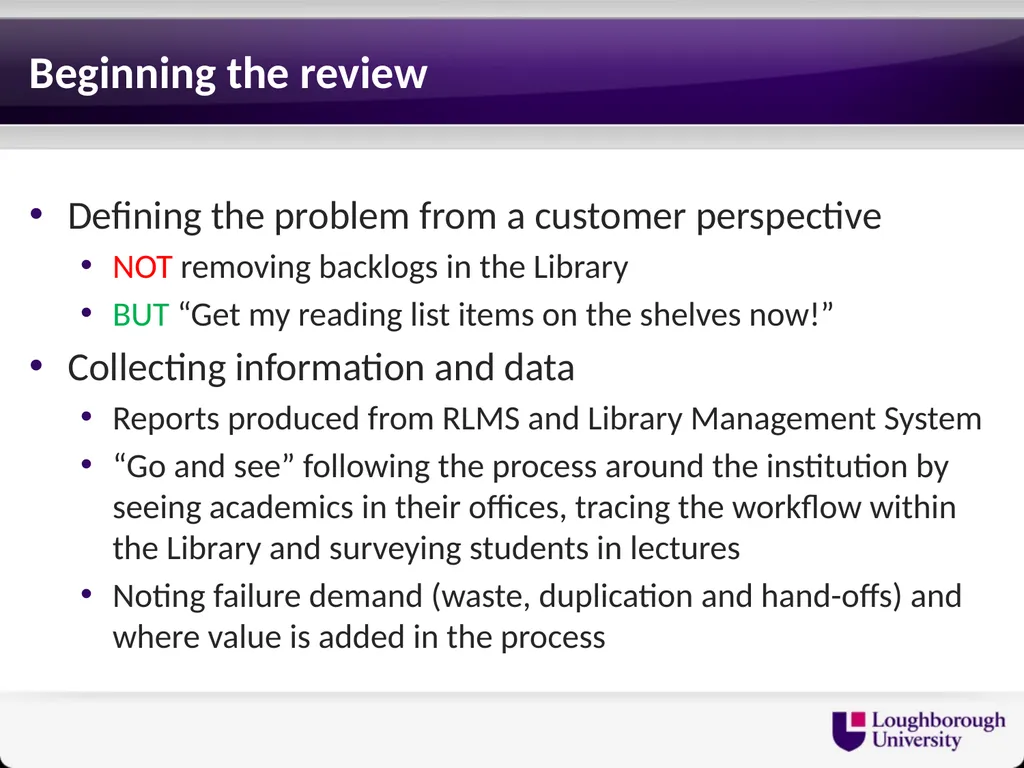
Beginning the review Defining the problem from a customer perspective
NOT removing backlogs in the Library
BUT “Get my reading list items on the shelves now!”
Collecting information and data
Reports produced from RLMS and Library Management System
“Go and see” following the process around the institution by seeing academics in their offices, tracing the workflow within the Library and surveying students in lectures
Noting failure demand (waste, duplication and hand-offs) and where value is added in the process<br>
10
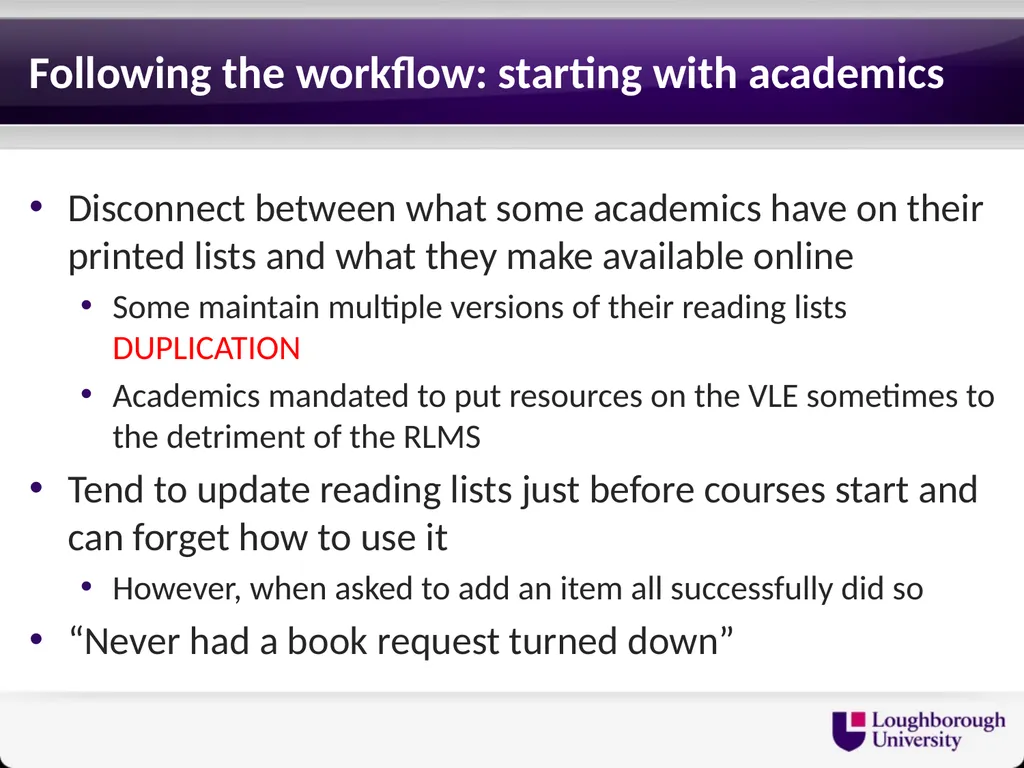
Following the workflow: starting with academics Disconnect between what some academics have on their printed lists and what they make available online
Some maintain multiple versions of their reading lists DUPLICATION
Academics mandated to put resources on the VLE sometimes to the detriment of the RLMS
Tend to update reading lists just before courses start and can forget how to use it
However, when asked to add an item all successfully did so
“Never had a book request turned down”<br>
11
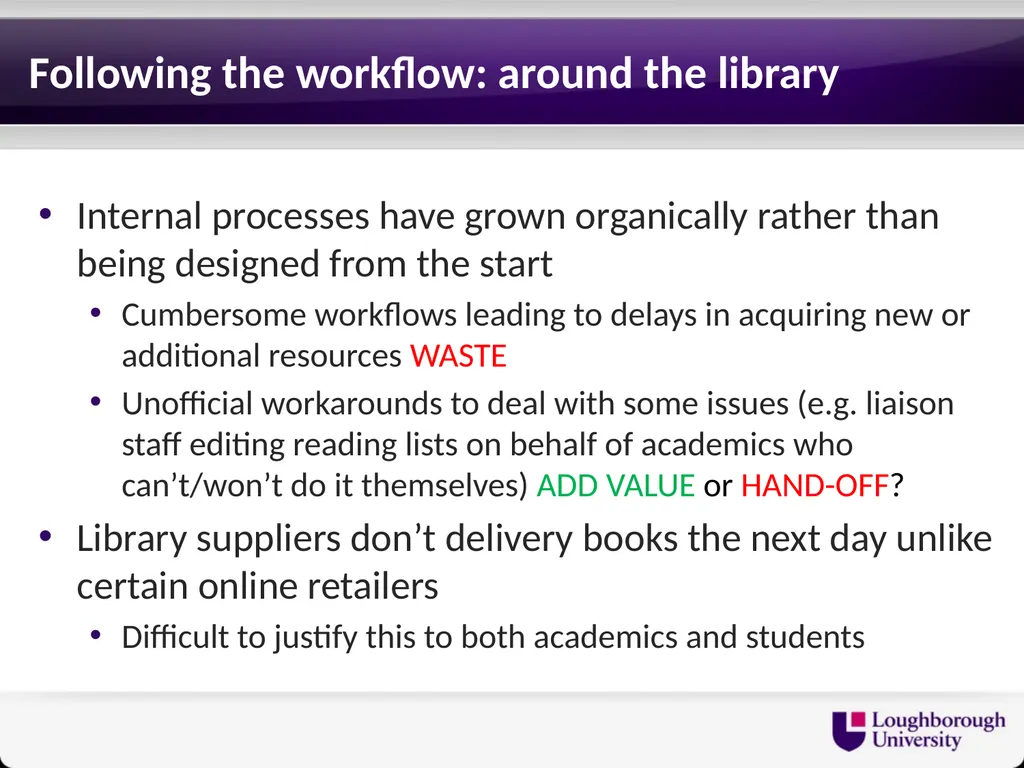
Following the workflow: around the library Internal processes have grown organically rather than being designed from the start
Cumbersome workflows leading to delays in acquiring new or additional resources WASTE
Unofficial workarounds to deal with some issues (e.g. liaison staff editing reading lists on behalf of academics who can’t/won’t do it themselves) ADD VALUE or HAND-OFF?
Library suppliers don’t delivery books the next day unlike certain online retailers
Difficult to justify this to both academics and students<br>
12
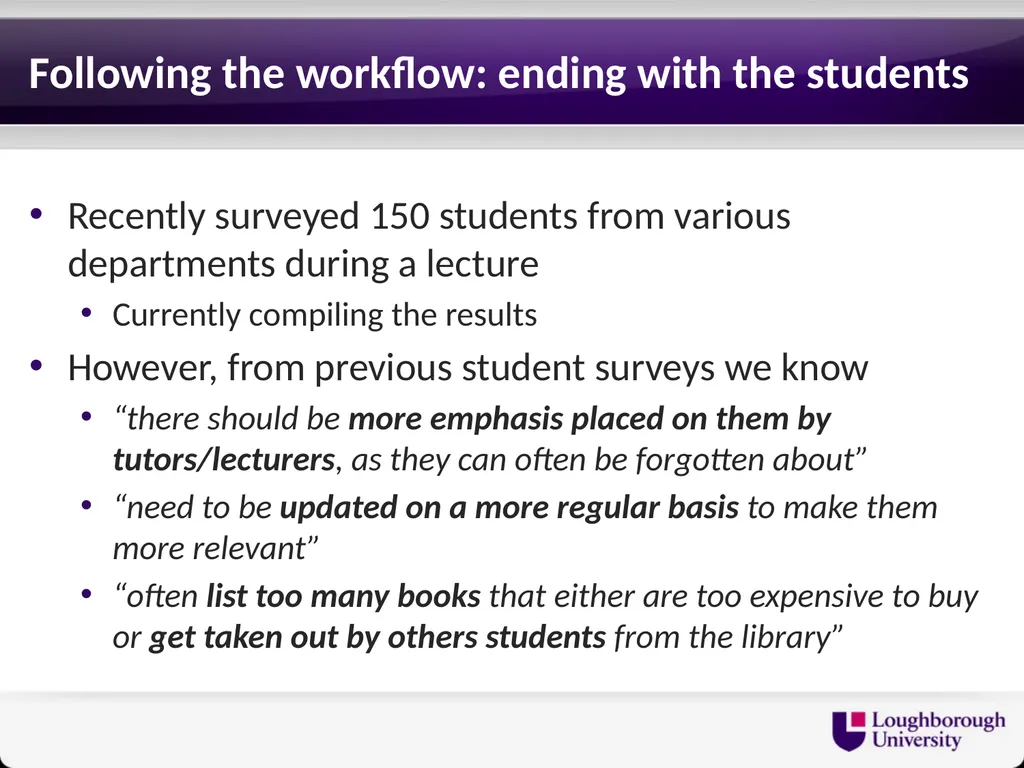
Following the workflow: ending with the students Recently surveyed 150 students from various departments during a lecture
Currently compiling the results
However, from previous student surveys we know
“there should be more emphasis placed on them by tutors/lecturers, as they can often be forgotten about”
“need to be updated on a more regular basis to make them more relevant”
“often list too many books that either are too expensive to buy or get taken out by others students from the library”<br>
13
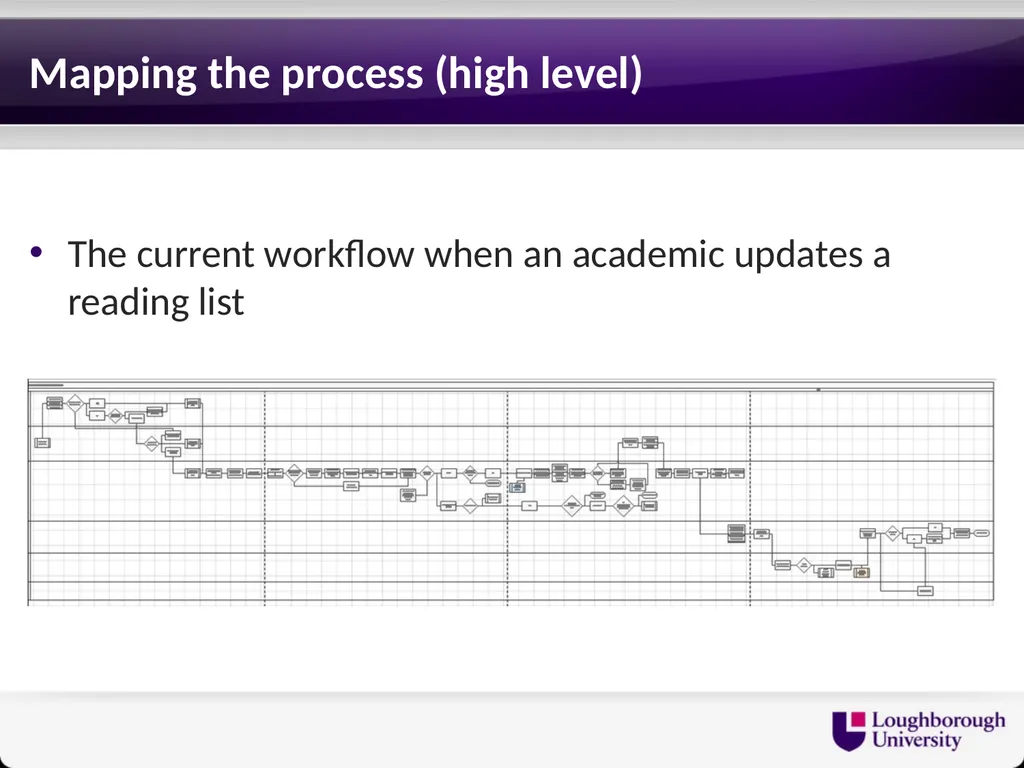
Mapping the process (high level) The current workflow when an academic updates a reading list<br>
14
What next?<br>
15
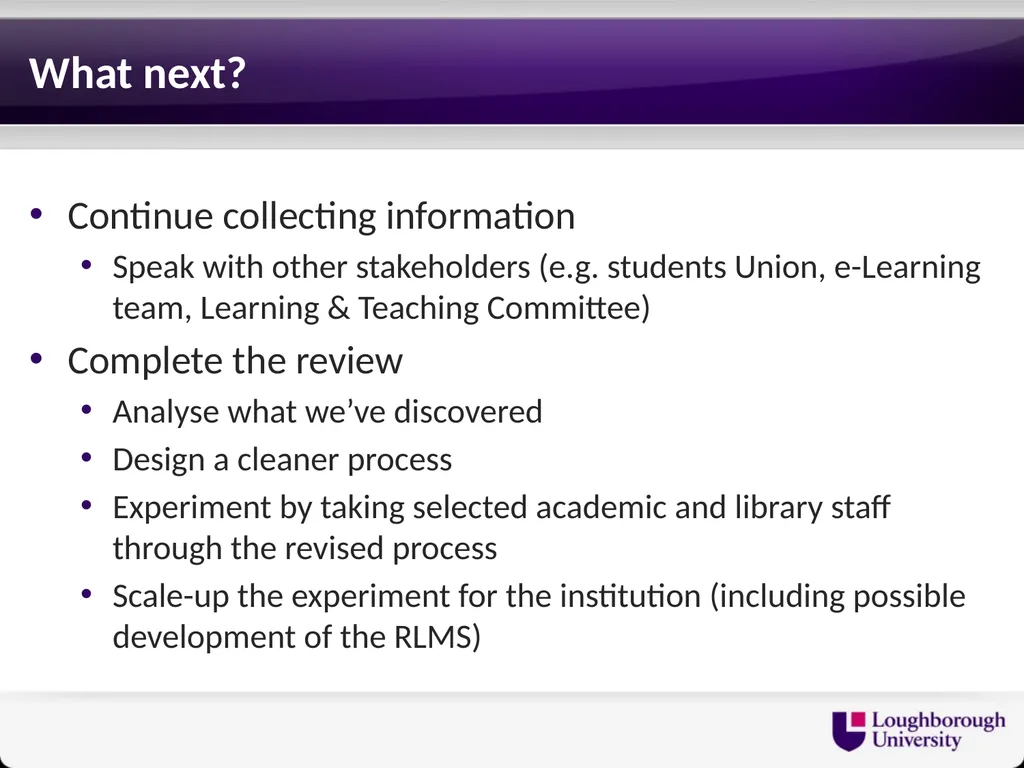
What next? Continue collecting information
Speak with other stakeholders (e.g. students Union, e-Learning team, Learning & Teaching Committee)
Complete the review
Analyse what we’ve discovered
Design a cleaner process
Experiment by taking selected academic and library staff through the revised process
Scale-up the experiment for the institution (including possible development of the RLMS)<br>