
Reading & Understanding Financial Statements March
CB
Published · 45 slides · 0 views

1 / 1



Description
Reading Understanding Financial Statements March 12, 2025 Disclaimer The presenter recognizes the very large audience present today has a wide variety of financial and accounting expertise or a lack thereof. In addition, although many
Related Topics
Share
Embed code
Download this presentation From Below
"Reading & Understanding Financial Statements March" is the property of its rightful owner. Permission is granted to download and print the materials on this website for personal, non-commercial use only, and to display it on your personal computer provided you do not modify the materials and that you retain all copyright notices contained in the materials. By downloading content from our website, you accept the terms of this agreement.
Presentation Transcript
01
Reading &
Understanding
Financial Statements
March 12, 2025<br>
02
Disclaimer The presenter recognizes the very large audience present today has a wide variety of financial and accounting expertise – or a lack thereof. In addition, although many countries are coalescing toward the use of a common standard referred to as International Financial Reporting Standards (IFRS), it is known that accounting regulations of each country do vary.
Terms and definitions provided should be understood to represent a best effort to explain certain financial concepts in simple terms for people without formal accounting training. If a perceived conflict is present, please refer to IFRS and the SDA Accounting Manual for clarification.<br>
Terms and definitions provided should be understood to represent a best effort to explain certain financial concepts in simple terms for people without formal accounting training. If a perceived conflict is present, please refer to IFRS and the SDA Accounting Manual for clarification.<br>
03
Goal To equip you, as a newly elected leader, with basic knowledge of how to read and understand financial statements.<br>
04
Why? To enable you to fulfil your administrative responsibilities and fiduciary duties which you accepted when the mantel of leadership was placed on your shoulders.<br>
05
Reading Financial Statements<br>
06
Preliminaries Seventh-day Adventist Accounting Framework
Based on International Financial Reporting Standards (IFRS),
Standard format for comparability and transparency
Specific examples used are from the Seventh-day Adventist Accounting Manual released in 2011
A new manual is being prepared<br>
Based on International Financial Reporting Standards (IFRS),
Standard format for comparability and transparency
Specific examples used are from the Seventh-day Adventist Accounting Manual released in 2011
A new manual is being prepared<br>
07
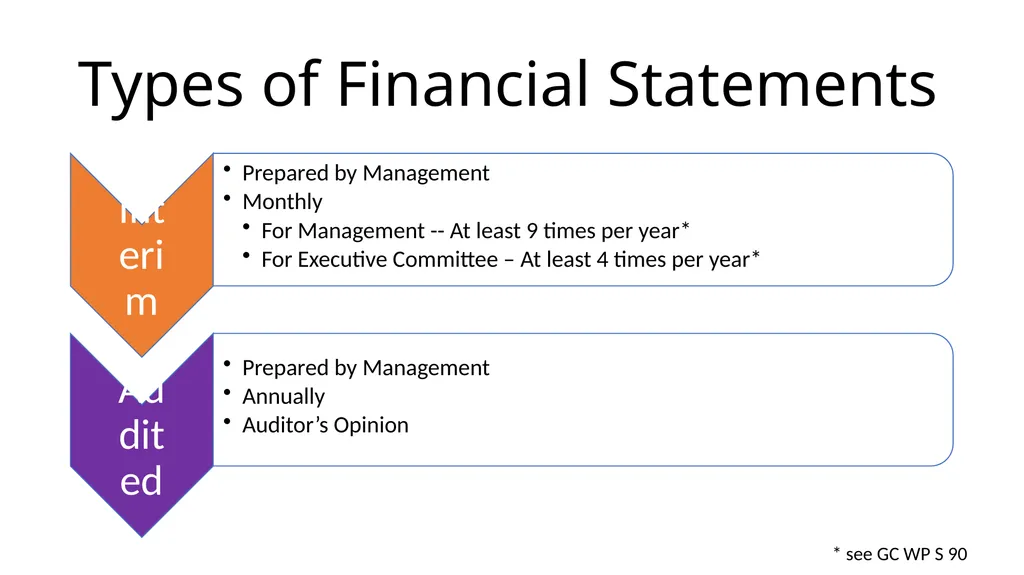
Types of Financial Statements * see GC WP S 90<br>
08
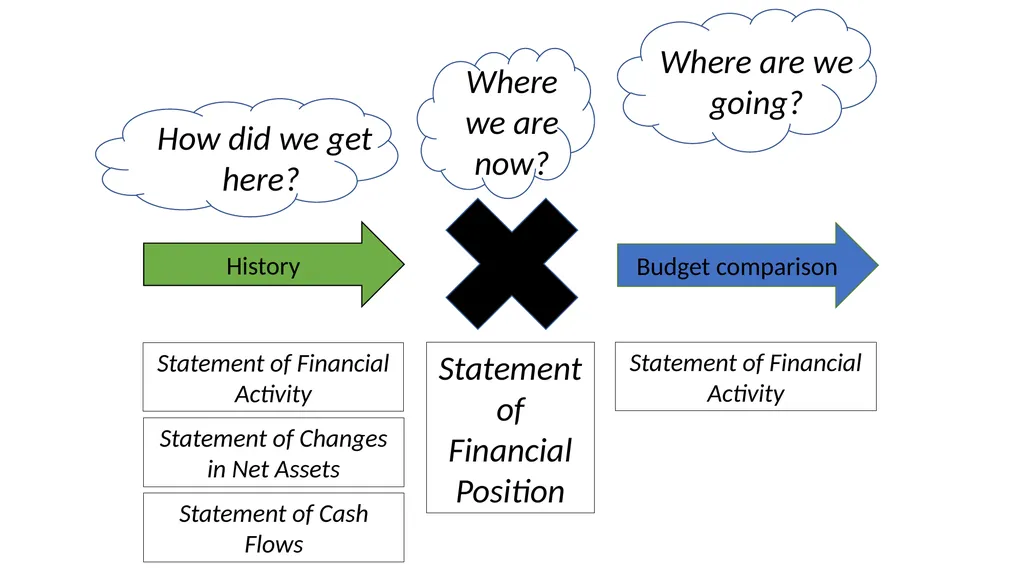
History Budget comparison Where we are now? Where are we going? Statement of Financial Activity Statement of Changes in Net Assets How did we get here? Statement of Financial Position Statement of Financial Activity Statement of Cash Flows<br>
09
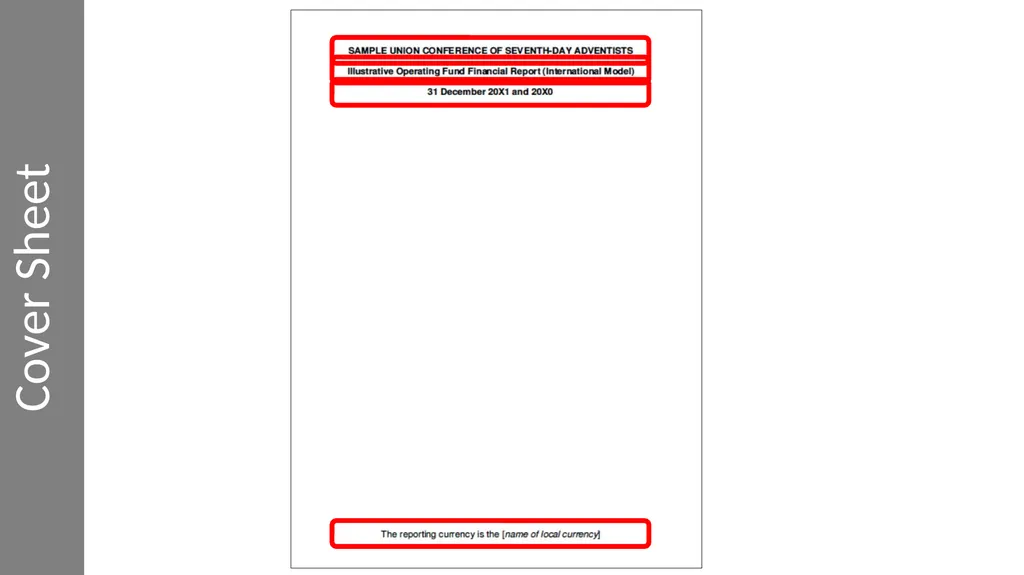
Cover Sheet<br>
10
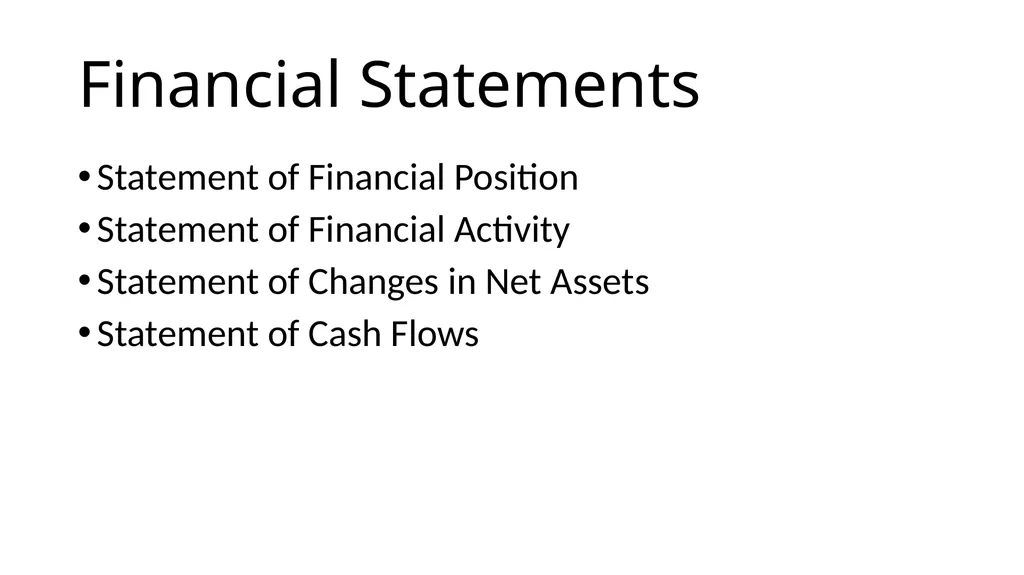
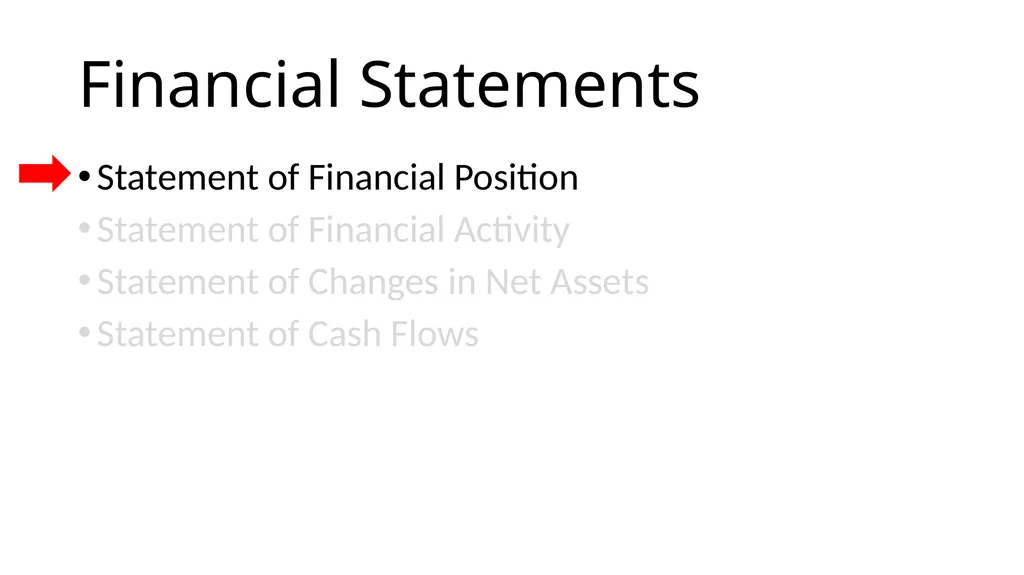
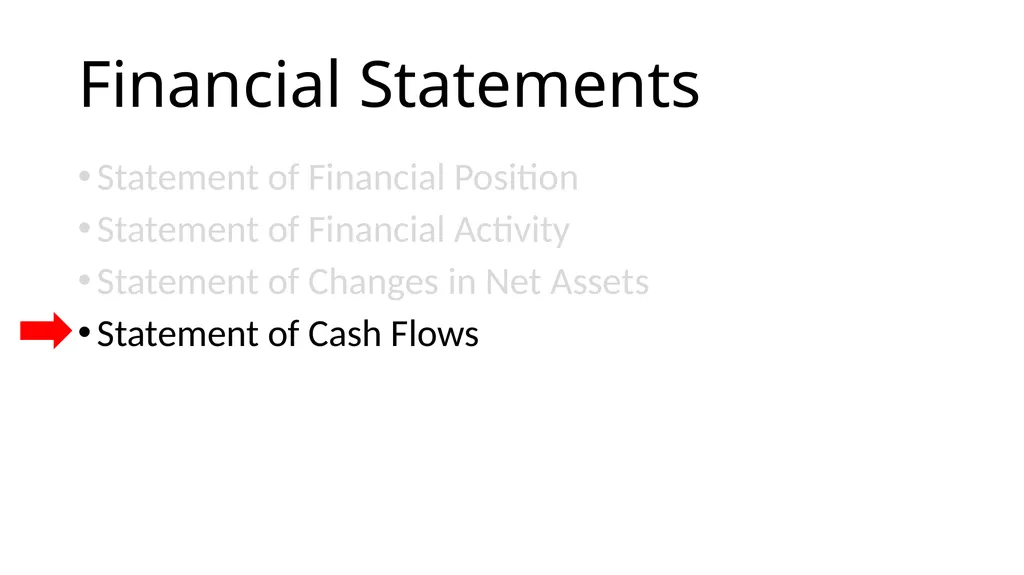
Financial Statements Statement of Financial Position
Statement of Financial Activity
Statement of Changes in Net Assets
Statement of Cash Flows<br>
Statement of Financial Activity
Statement of Changes in Net Assets
Statement of Cash Flows<br>
11
Financial Statements Statement of Financial Position
Statement of Financial Activity
Statement of Changes in Net Assets
Statement of Cash Flows<br>
Statement of Financial Activity
Statement of Changes in Net Assets
Statement of Cash Flows<br>
12
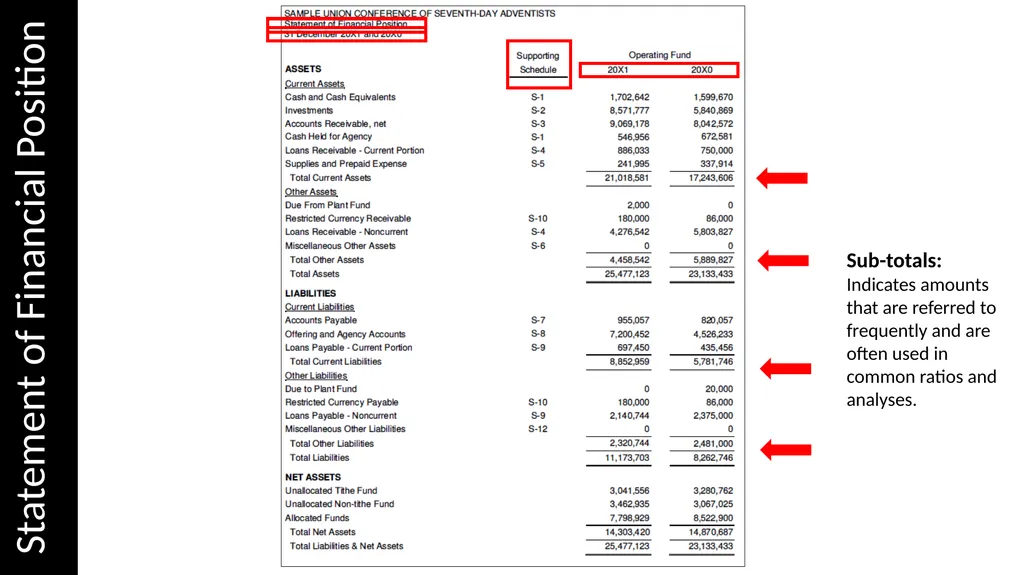
Sub-totals: Indicates amounts that are referred to frequently and are often used in common ratios and analyses. Statement of Financial Position<br>
13
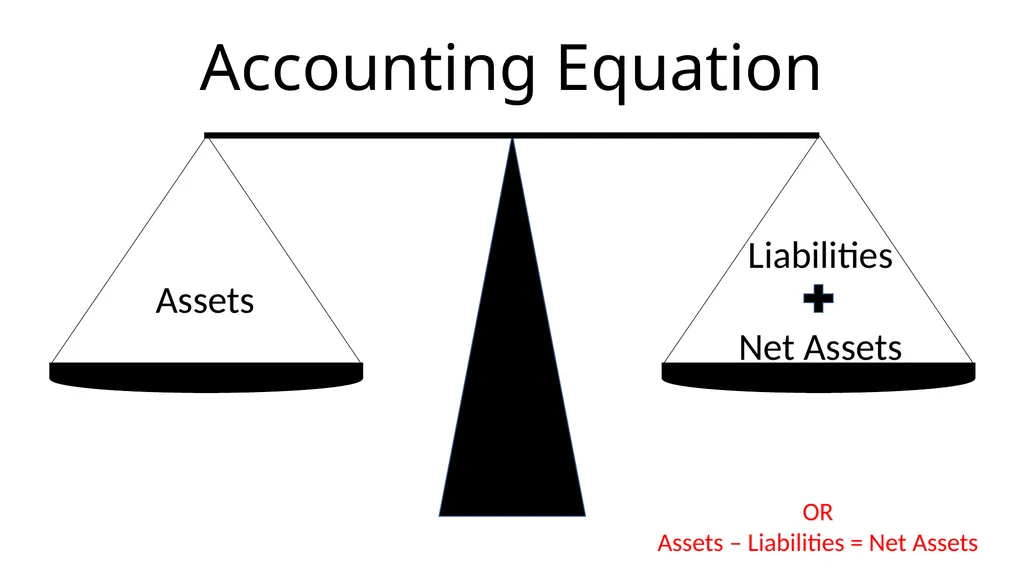
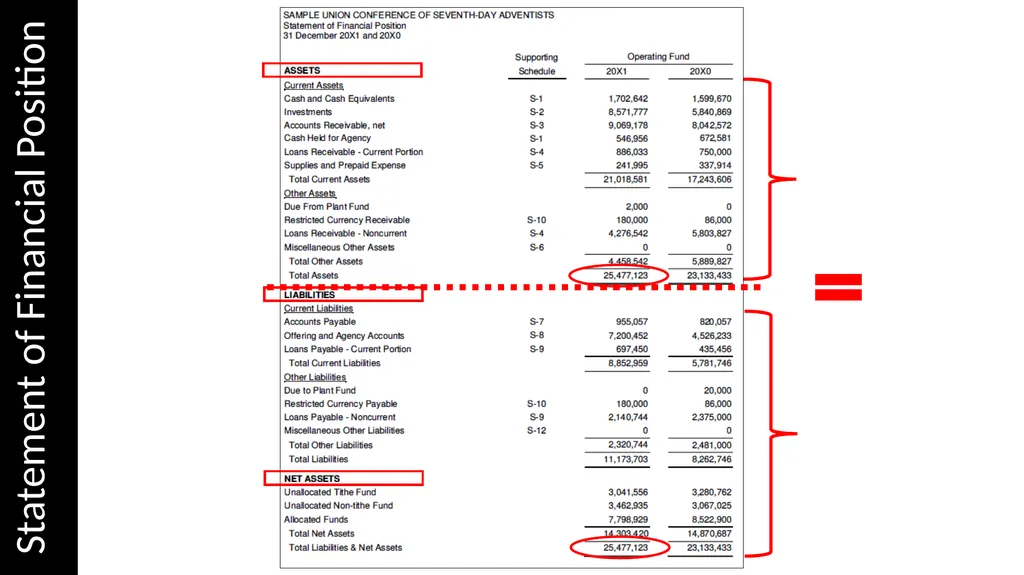
Assets Liabilities
Net Assets Accounting Equation OR
Assets – Liabilities = Net Assets<br>
Net Assets Accounting Equation OR
Assets – Liabilities = Net Assets<br>
14
Statement of Financial Position<br>
15
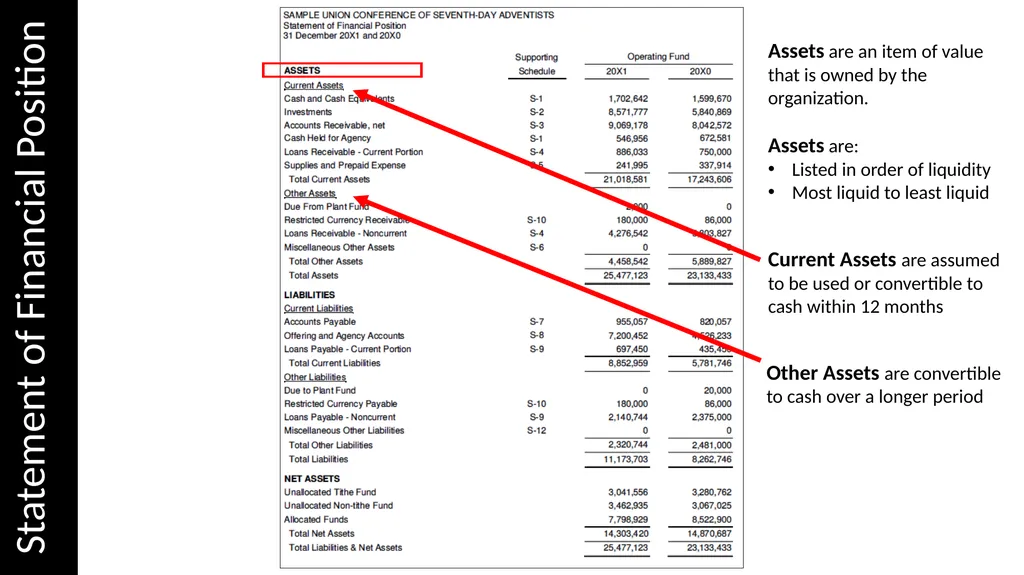
Assets are an item of value that is owned by the organization.
Assets are:
Listed in order of liquidity
Most liquid to least liquid Current Assets are assumed to be used or convertible to cash within 12 months Other Assets are convertible to cash over a longer period Statement of Financial Position<br>
Assets are:
Listed in order of liquidity
Most liquid to least liquid Current Assets are assumed to be used or convertible to cash within 12 months Other Assets are convertible to cash over a longer period Statement of Financial Position<br>
16
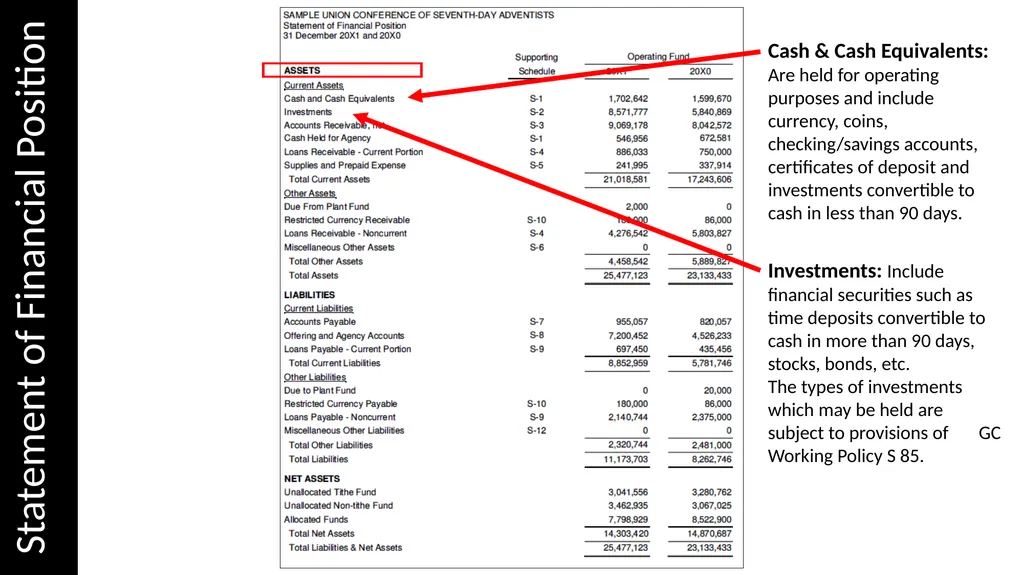
Cash & Cash Equivalents: Are held for operating purposes and include currency, coins, checking/savings accounts, certificates of deposit and investments convertible to cash in less than 90 days. Investments: Include financial securities such as time deposits convertible to cash in more than 90 days, stocks, bonds, etc.
The types of investments which may be held are subject to provisions of GC Working Policy S 85. Statement of Financial Position<br>
The types of investments which may be held are subject to provisions of GC Working Policy S 85. Statement of Financial Position<br>
17
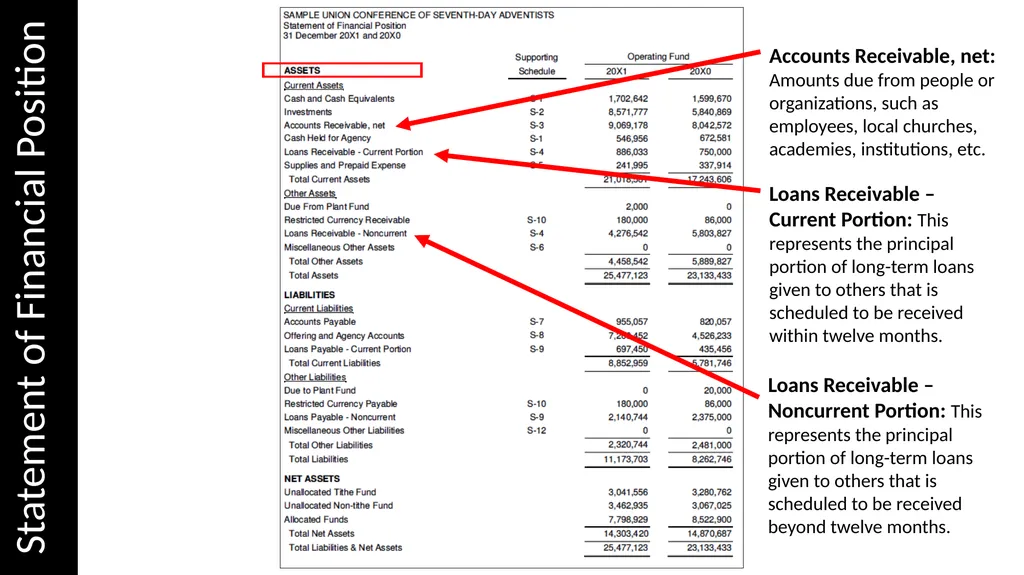
Accounts Receivable, net: Amounts due from people or organizations, such as employees, local churches, academies, institutions, etc. Loans Receivable – Noncurrent Portion: This represents the principal portion of long-term loans given to others that is scheduled to be received beyond twelve months. Loans Receivable – Current Portion: This represents the principal portion of long-term loans given to others that is scheduled to be received within twelve months. Statement of Financial Position<br>
18
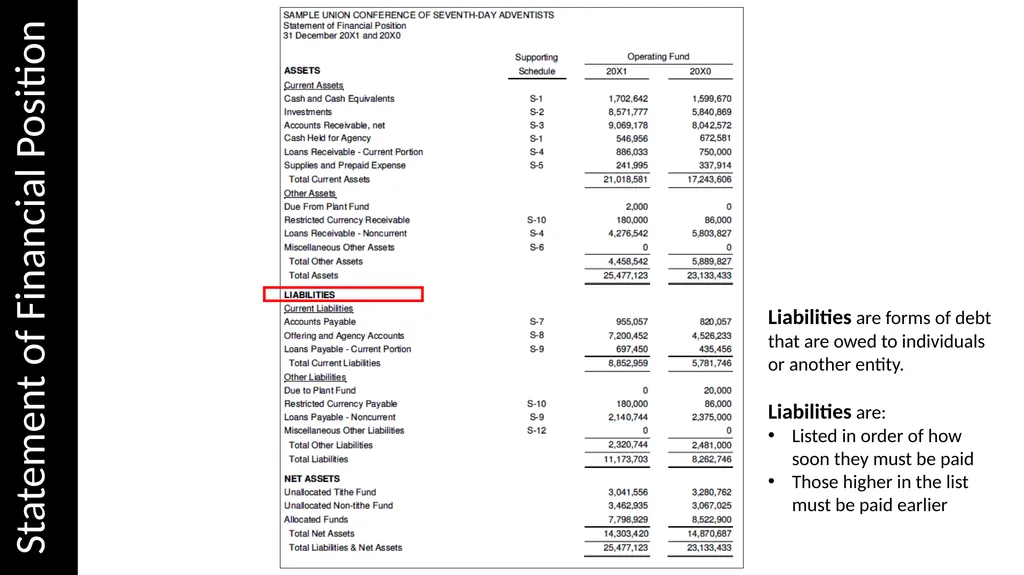
Liabilities are forms of debt that are owed to individuals or another entity.
Liabilities are:
Listed in order of how soon they must be paid
Those higher in the list must be paid earlier Statement of Financial Position<br>
Liabilities are:
Listed in order of how soon they must be paid
Those higher in the list must be paid earlier Statement of Financial Position<br>
19
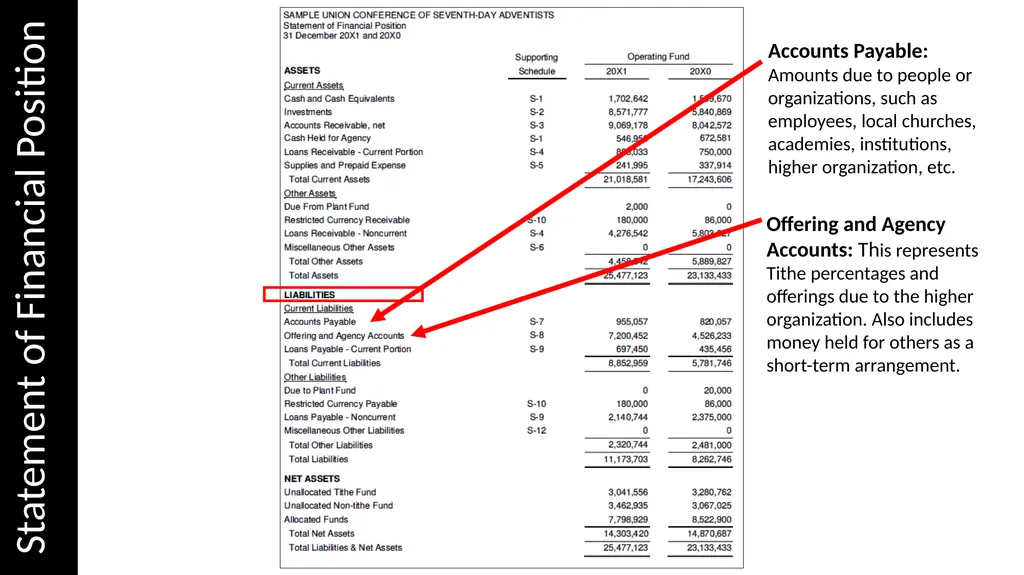
Accounts Payable: Amounts due to people or organizations, such as employees, local churches, academies, institutions, higher organization, etc. Offering and Agency Accounts: This represents Tithe percentages and offerings due to the higher organization. Also includes money held for others as a short-term arrangement. Statement of Financial Position<br>
20
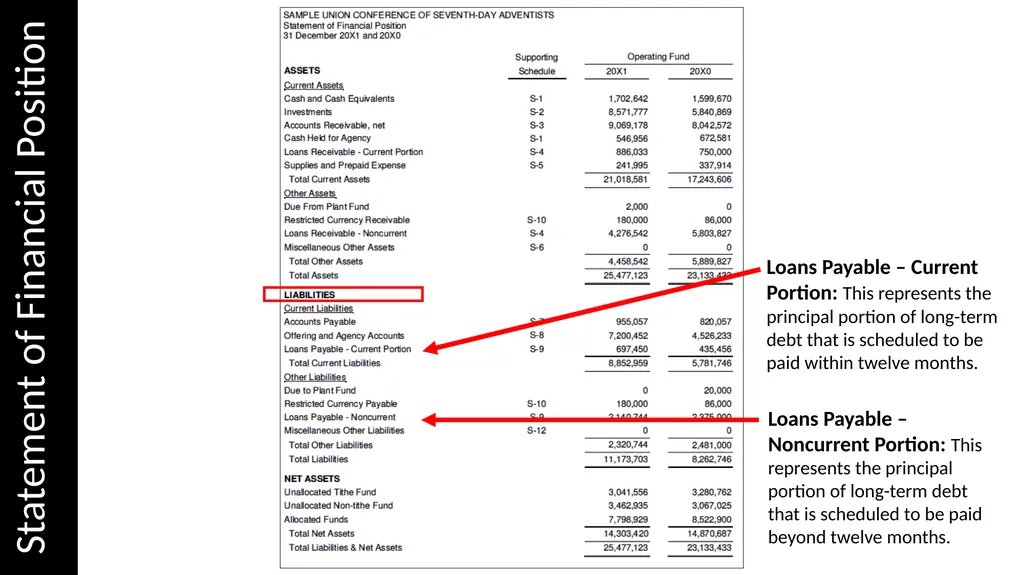
Loans Payable – Noncurrent Portion: This represents the principal portion of long-term debt that is scheduled to be paid beyond twelve months. Loans Payable – Current Portion: This represents the principal portion of long-term debt that is scheduled to be paid within twelve months. Statement of Financial Position<br>
21
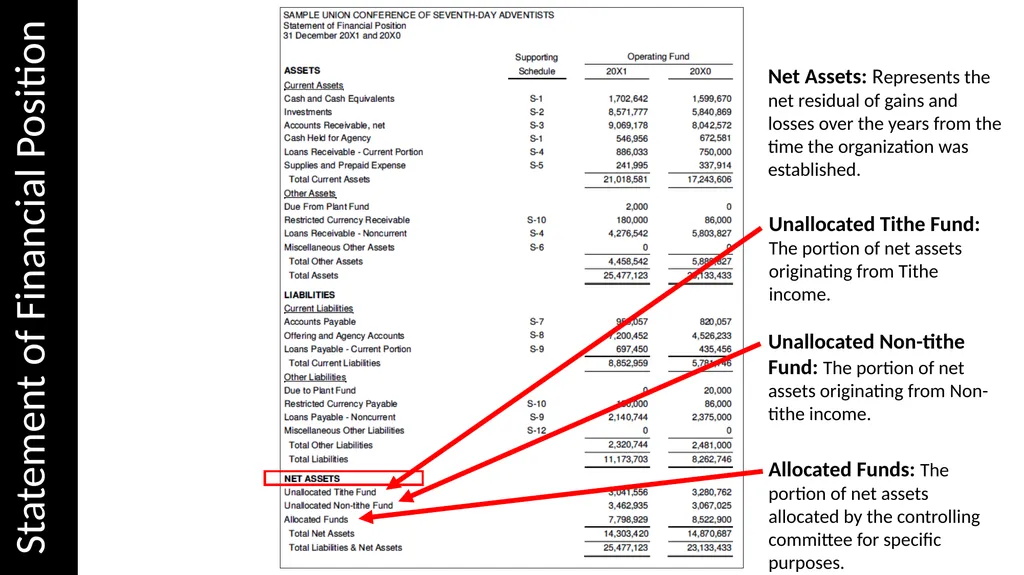
Net Assets: Represents the net residual of gains and losses over the years from the time the organization was established. Unallocated Tithe Fund: The portion of net assets originating from Tithe income. Unallocated Non-tithe Fund: The portion of net assets originating from Non-tithe income. Allocated Funds: The portion of net assets allocated by the controlling committee for specific purposes. Statement of Financial Position<br>
22
Financial Statements Statement of Financial Position
Statement of Financial Activity
Statement of Changes in Net Assets
Statement of Cash Flows<br>
Statement of Financial Activity
Statement of Changes in Net Assets
Statement of Cash Flows<br>
23
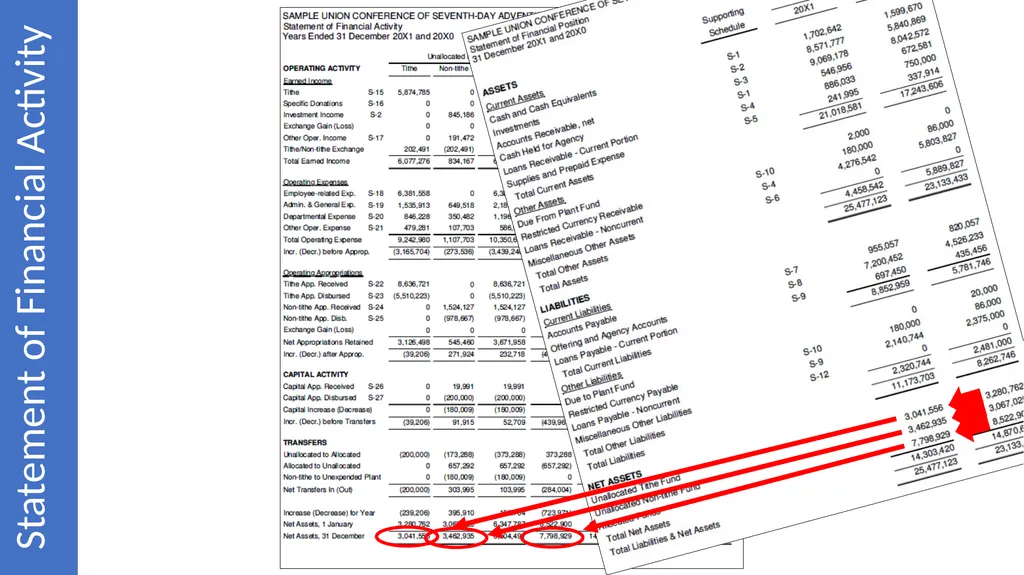
Statement of Financial Activity<br>
24
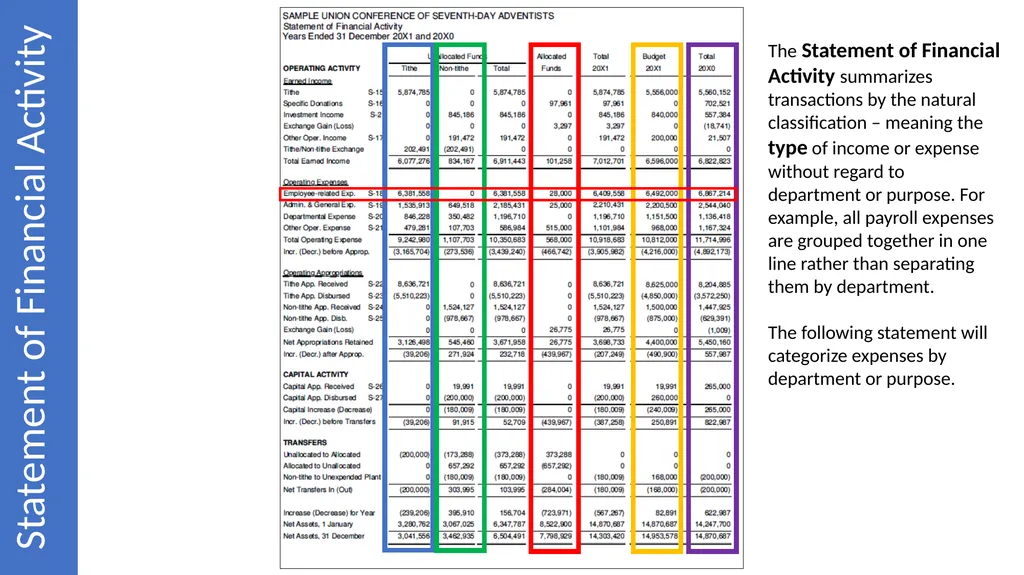
The Statement of Financial Activity summarizes transactions by the natural classification – meaning the type of income or expense without regard to department or purpose. For example, all payroll expenses are grouped together in one line rather than separating them by department.
The following statement will categorize expenses by department or purpose. Statement of Financial Activity<br>
The following statement will categorize expenses by department or purpose. Statement of Financial Activity<br>
25
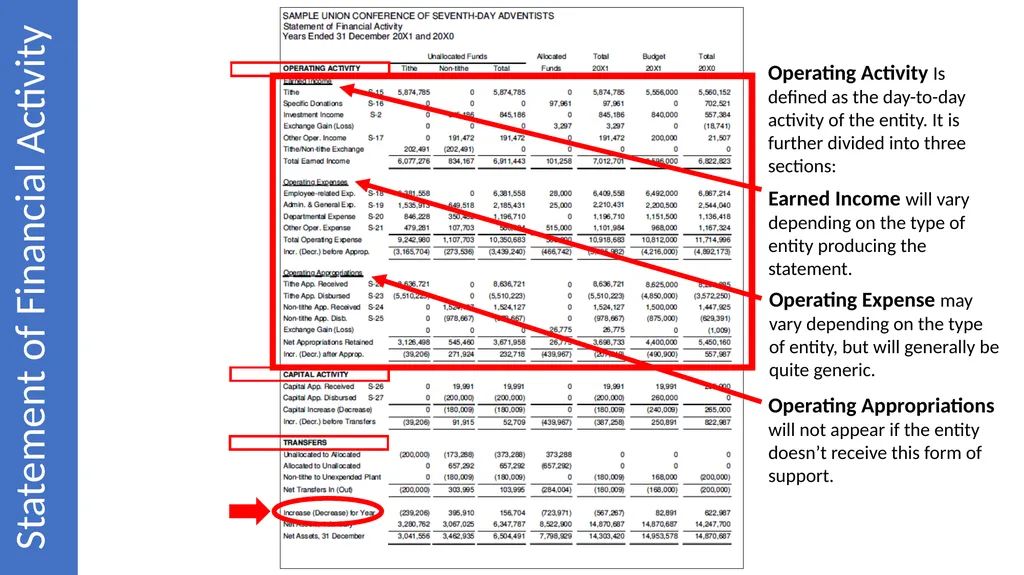
Operating Activity Is defined as the day-to-day activity of the entity. It is further divided into three sections: Earned Income will vary depending on the type of entity producing the statement. Operating Expense may vary depending on the type of entity, but will generally be quite generic. Operating Appropriations will not appear if the entity doesn’t receive this form of support. Statement of Financial Activity<br>
26
Financial Statements Statement of Financial Position
Statement of Financial Activity
Statement of Changes in Net Assets
Statement of Cash Flows<br>
Statement of Financial Activity
Statement of Changes in Net Assets
Statement of Cash Flows<br>
27
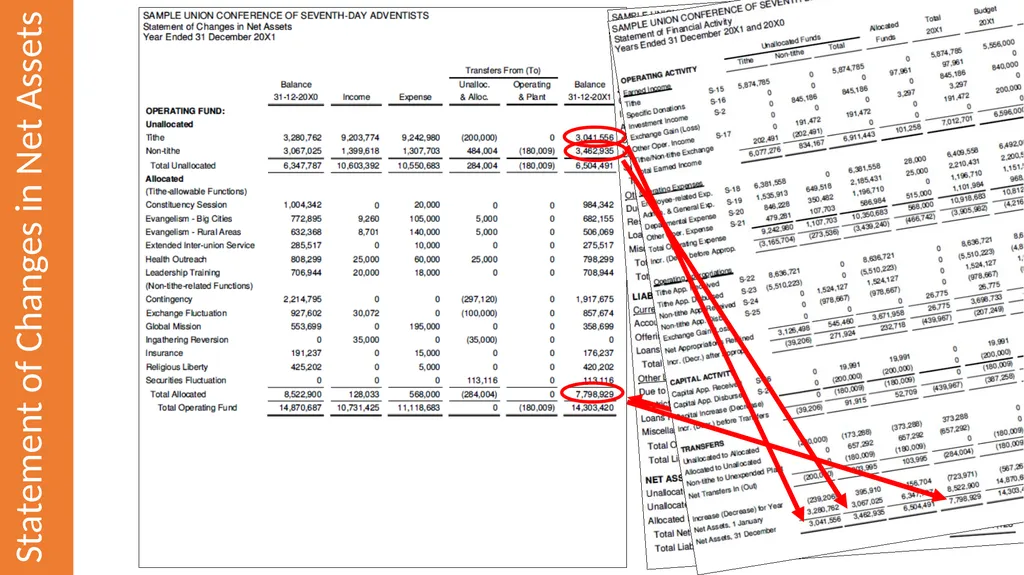
Statement of Changes in Net Assets<br>
28
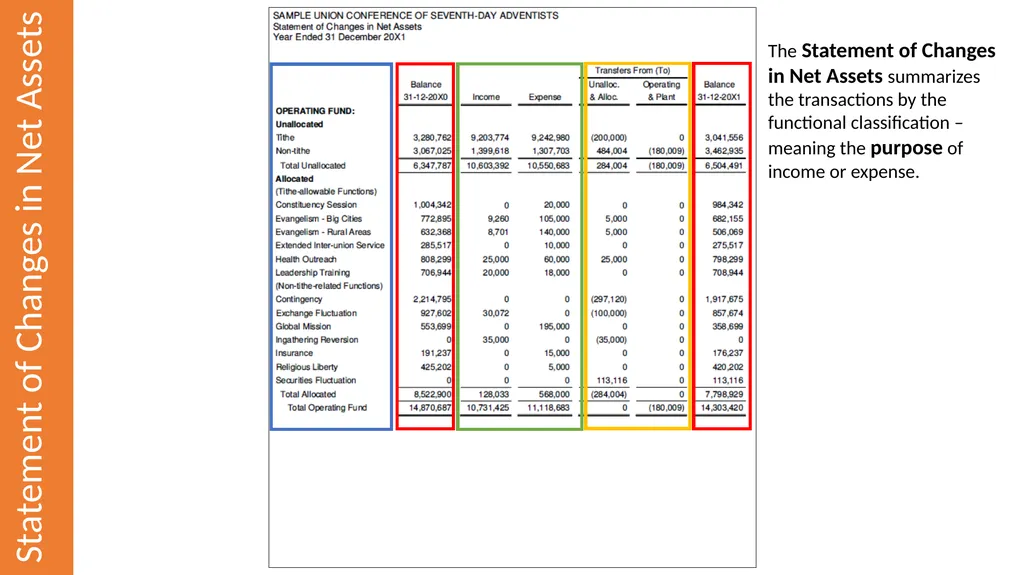
The Statement of Changes in Net Assets summarizes the transactions by the functional classification – meaning the purpose of income or expense. Statement of Changes in Net Assets<br>
29
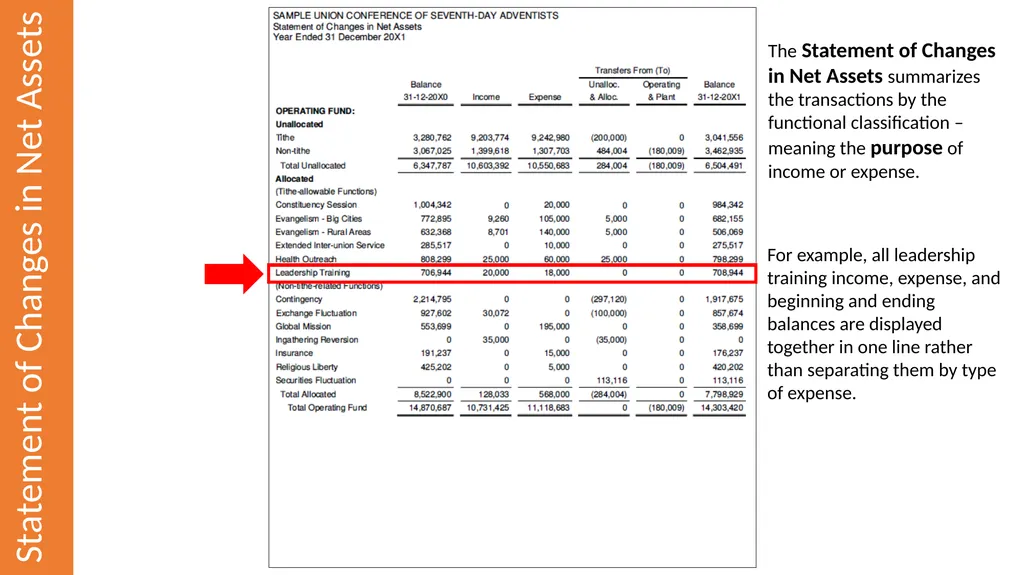
The Statement of Changes in Net Assets summarizes the transactions by the functional classification – meaning the purpose of income or expense. For example, all leadership training income, expense, and beginning and ending balances are displayed together in one line rather than separating them by type of expense. Statement of Changes in Net Assets<br>
30
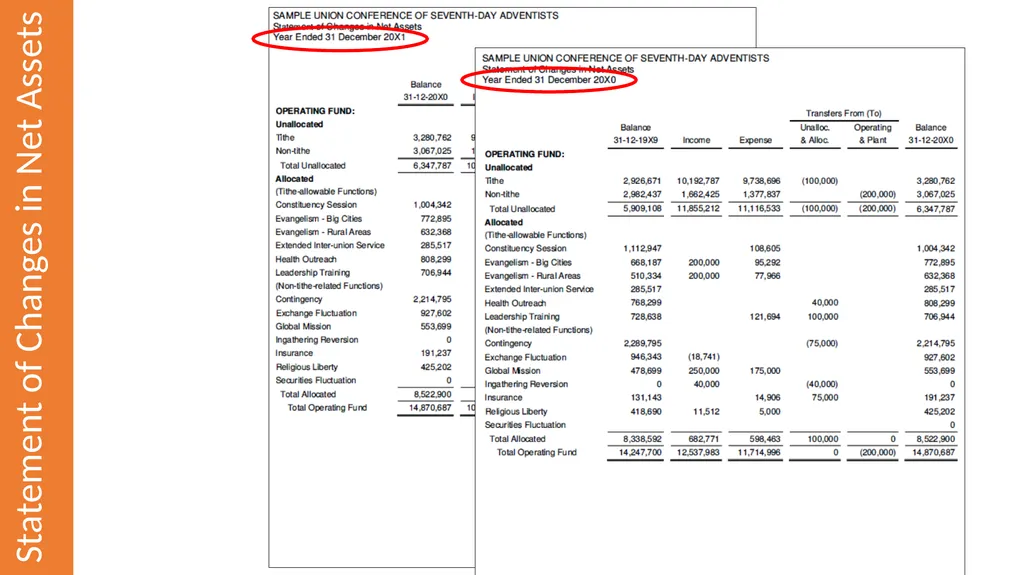
Statement of Changes in Net Assets<br>
31
Financial Statements Statement of Financial Position
Statement of Financial Activity
Statement of Changes in Net Assets
Statement of Cash Flows<br>
Statement of Financial Activity
Statement of Changes in Net Assets
Statement of Cash Flows<br>
32
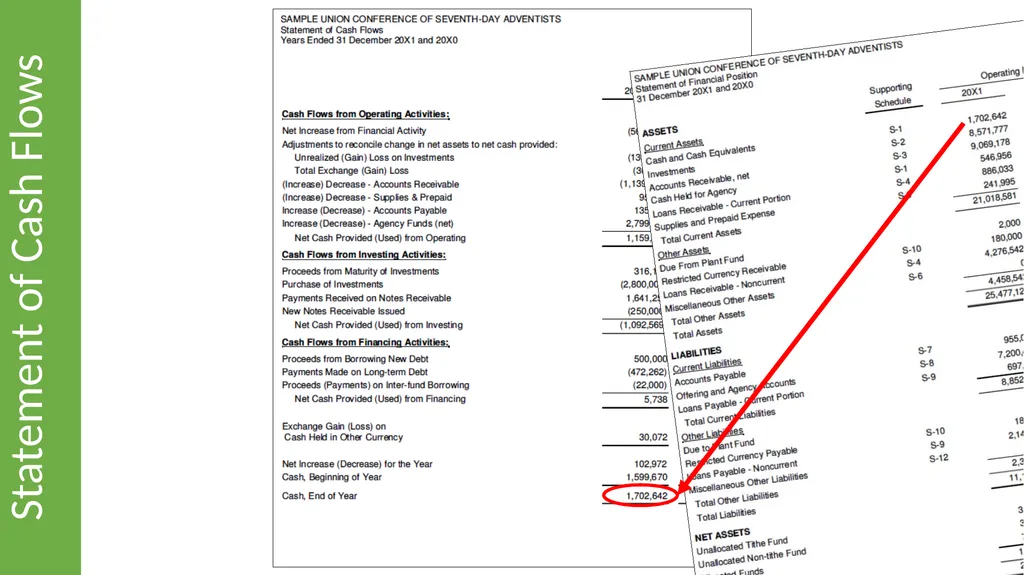
Statement of Cash Flows<br>
33
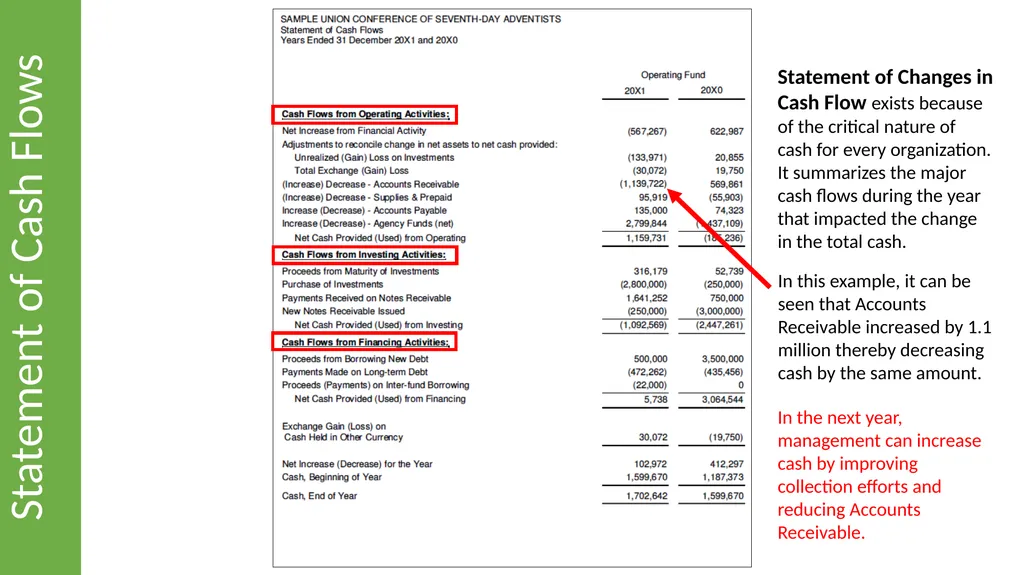
Statement of Changes in Cash Flow exists because of the critical nature of cash for every organization. It summarizes the major cash flows during the year that impacted the change in the total cash. In this example, it can be seen that Accounts Receivable increased by 1.1 million thereby decreasing cash by the same amount. In the next year, management can increase cash by improving collection efforts and reducing Accounts Receivable. Statement of Cash Flows<br>
34
Understanding Financial Statements<br>
35
What are you seeking to Understand? Financial Health and Sustainability
Operational Efficiency and Effectiveness
Missional alignment<br>
Operational Efficiency and Effectiveness
Missional alignment<br>
36
Context It is important to understand:
Where are we?
Macro-economic situation?
Point in business cycle?
What are we?
Type of entity?<br>
Where are we?
Macro-economic situation?
Point in business cycle?
What are we?
Type of entity?<br>
37
Trends Are there any recognizable patterns?
Time
Between various points in time, or
Relative to a goal or deadline
Direction
Where are we heading?
Velocity
How fast are we moving?
Momentum or Inertia
Relative ability to change direction<br>
Time
Between various points in time, or
Relative to a goal or deadline
Direction
Where are we heading?
Velocity
How fast are we moving?
Momentum or Inertia
Relative ability to change direction<br>
38
Comparisons Internal
Strength or weakness of specific components
Consistency between specific components
External
What is the current situation and experience of similar entities?
How does my organization compare to the typical entity (or ideally the “best in class”)?<br>
Strength or weakness of specific components
Consistency between specific components
External
What is the current situation and experience of similar entities?
How does my organization compare to the typical entity (or ideally the “best in class”)?<br>
39
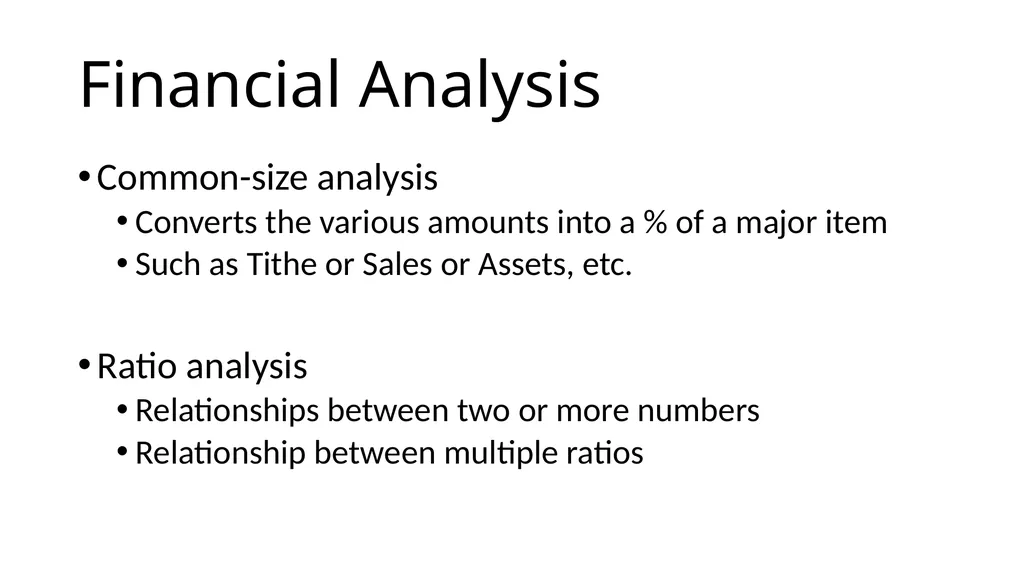
Financial Analysis Common-size analysis
Converts the various amounts into a % of a major item
Such as Tithe or Sales or Assets, etc.
Ratio analysis
Relationships between two or more numbers
Relationship between multiple ratios<br>
Converts the various amounts into a % of a major item
Such as Tithe or Sales or Assets, etc.
Ratio analysis
Relationships between two or more numbers
Relationship between multiple ratios<br>
40
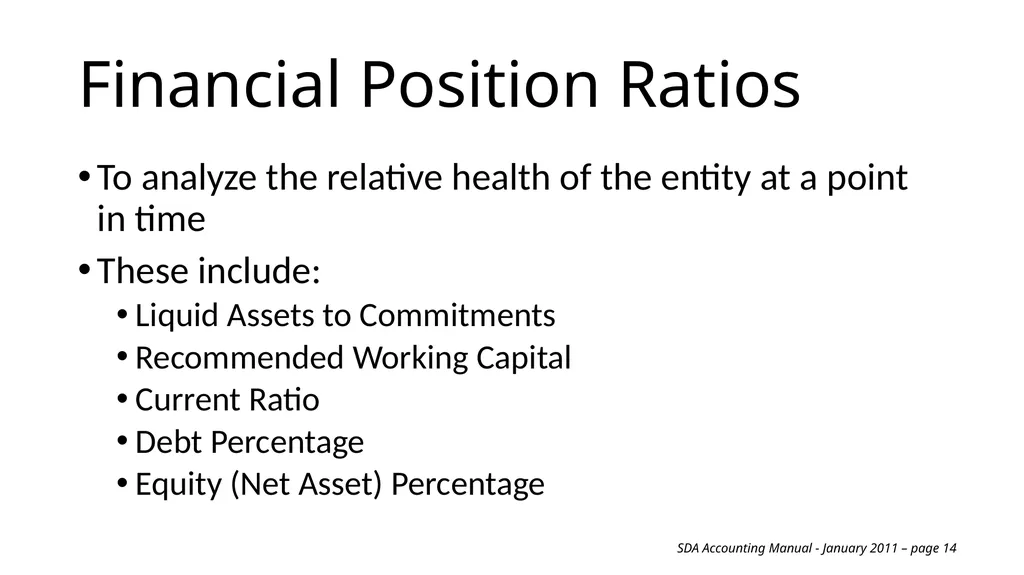
Financial Position Ratios To analyze the relative health of the entity at a point in time
These include:
Liquid Assets to Commitments
Recommended Working Capital
Current Ratio
Debt Percentage
Equity (Net Asset) Percentage SDA Accounting Manual - January 2011 – page 14<br>
These include:
Liquid Assets to Commitments
Recommended Working Capital
Current Ratio
Debt Percentage
Equity (Net Asset) Percentage SDA Accounting Manual - January 2011 – page 14<br>
41
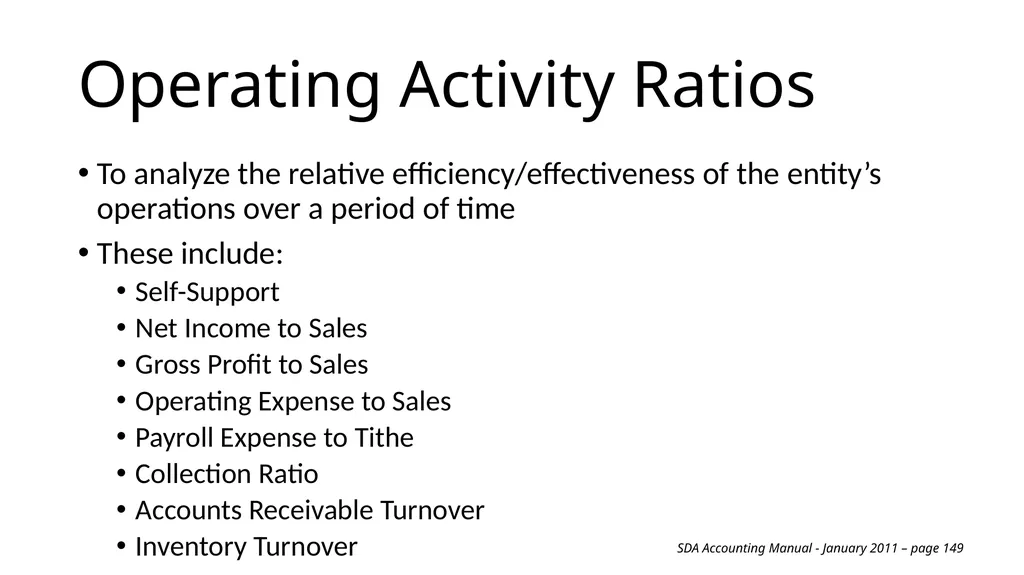
Operating Activity Ratios To analyze the relative efficiency/effectiveness of the entity’s operations over a period of time
These include:
Self-Support
Net Income to Sales
Gross Profit to Sales
Operating Expense to Sales
Payroll Expense to Tithe
Collection Ratio
Accounts Receivable Turnover
Inventory Turnover SDA Accounting Manual - January 2011 – page 149<br>
These include:
Self-Support
Net Income to Sales
Gross Profit to Sales
Operating Expense to Sales
Payroll Expense to Tithe
Collection Ratio
Accounts Receivable Turnover
Inventory Turnover SDA Accounting Manual - January 2011 – page 149<br>
42
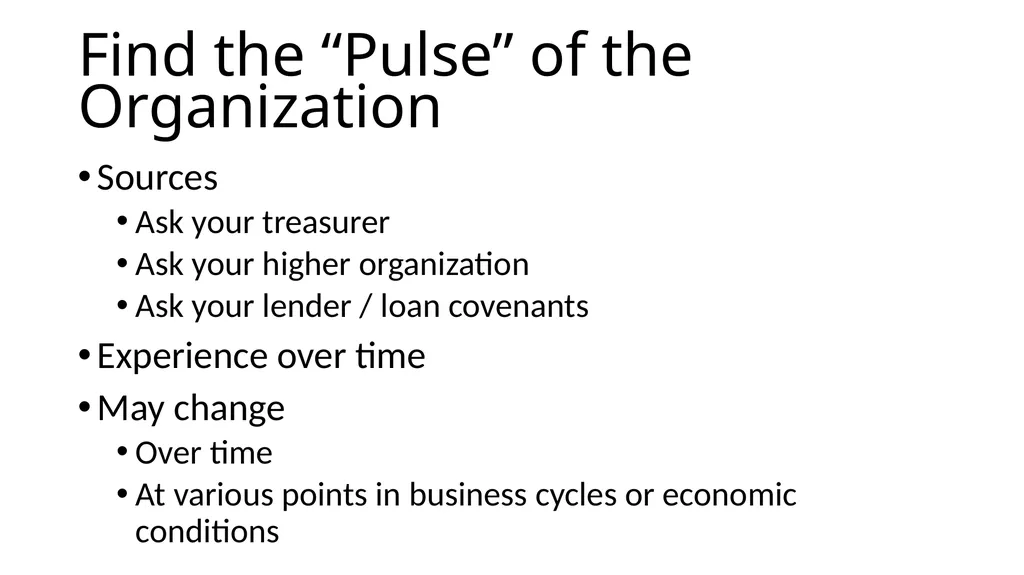
Find the “Pulse” of the Organization Sources
Ask your treasurer
Ask your higher organization
Ask your lender / loan covenants
Experience over time
May change
Over time
At various points in business cycles or economic conditions<br>
Ask your treasurer
Ask your higher organization
Ask your lender / loan covenants
Experience over time
May change
Over time
At various points in business cycles or economic conditions<br>
43
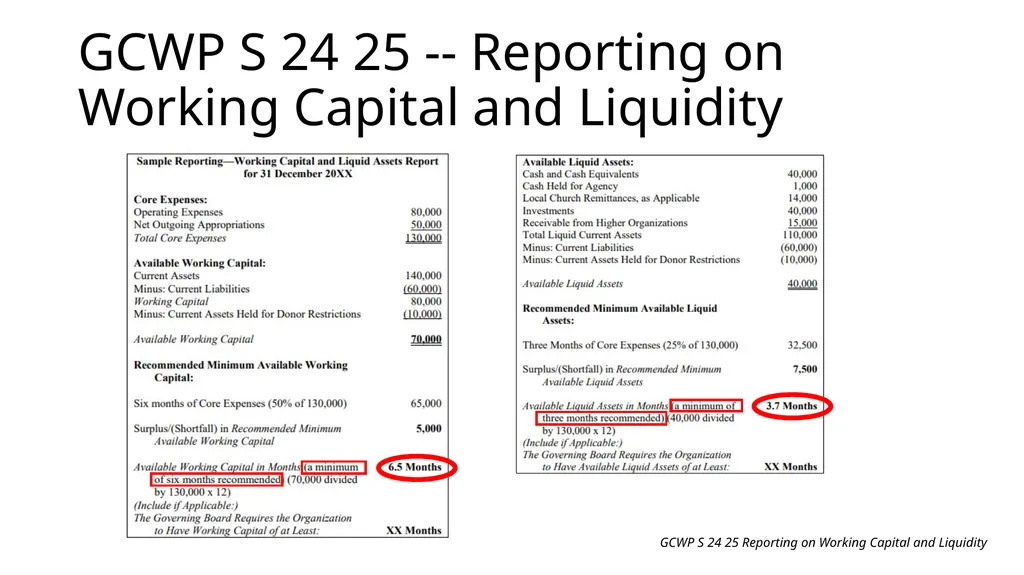
GCWP S 24 25 -- Reporting on Working Capital and Liquidity GCWP S 24 25 Reporting on Working Capital and Liquidity<br>
44
Thank you!<br>
45
Bibliography Galasso, Melisa F., CPA, Money Matters For NonProfits, River Grove Books, Austin, TX, USA, 2022
Seventh-day Adventist Accounting Manual, January 2011 Edition, https://www.gcasconnect.org/assets/files/manuals/SDAAM_Jan_2011_Final.pdf?_ga=2.195916204.1296290738.1678485819-1638045833.1678485819
General Conference Working Policy, 2023-2024 Edition<br>
Seventh-day Adventist Accounting Manual, January 2011 Edition, https://www.gcasconnect.org/assets/files/manuals/SDAAM_Jan_2011_Final.pdf?_ga=2.195916204.1296290738.1678485819-1638045833.1678485819
General Conference Working Policy, 2023-2024 Edition<br>