
Research methodology by Dr.Y.Vijila Basic concepts
CB
Published · 63 slides · 0 views

1 / 1











Description
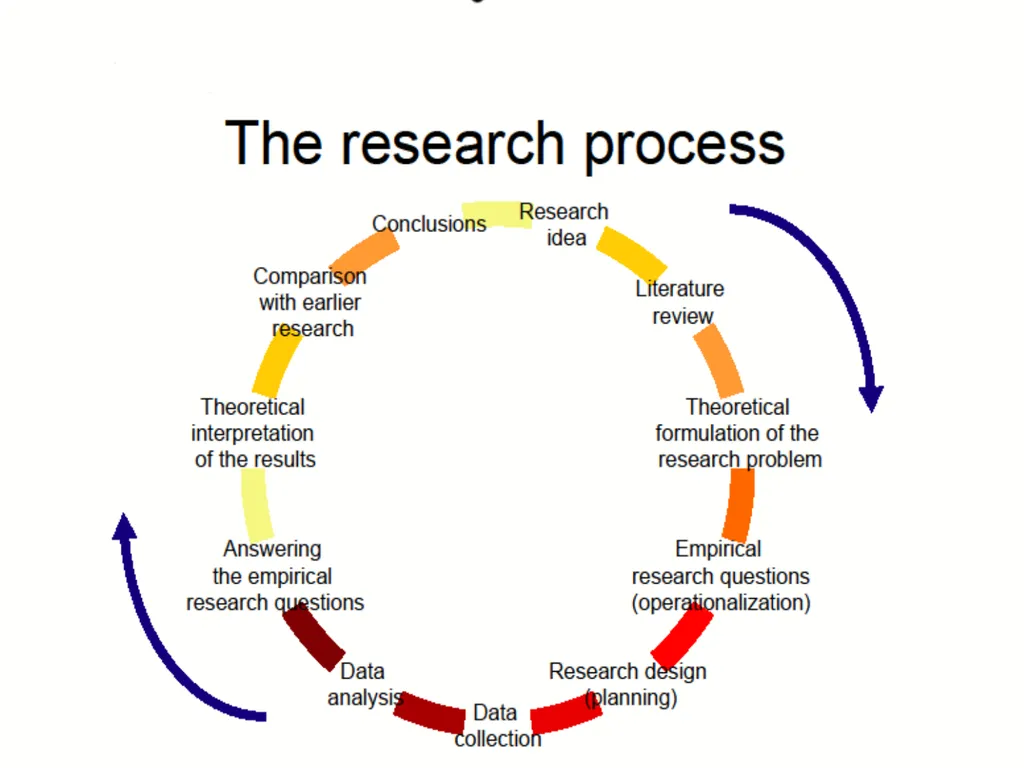
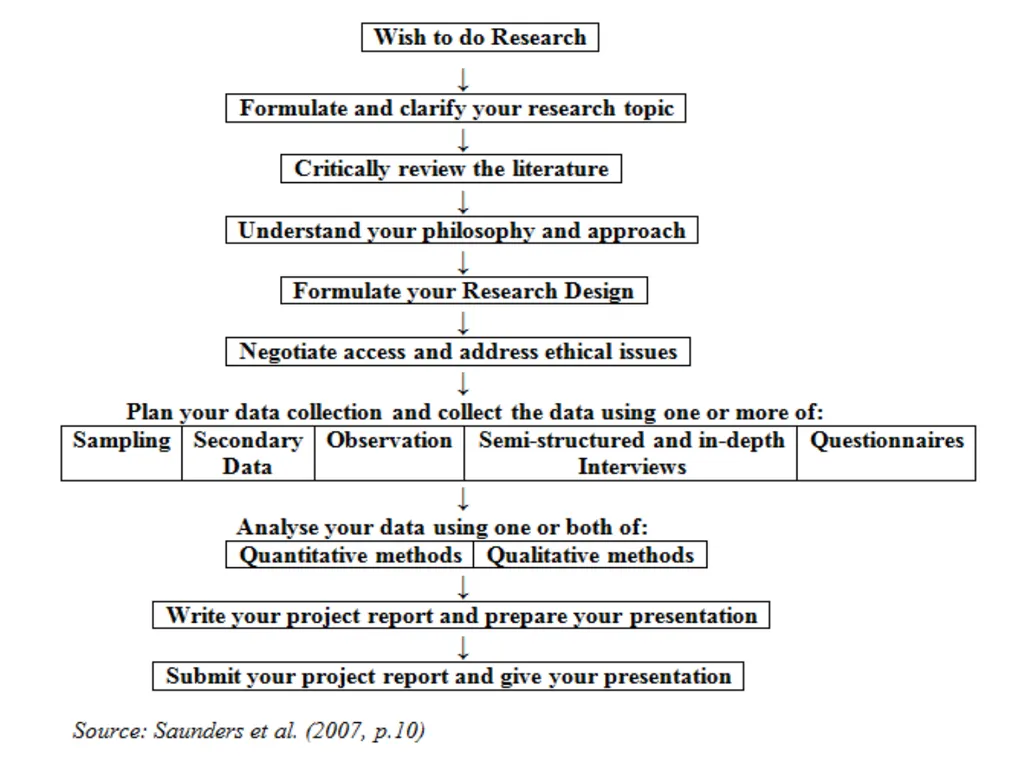
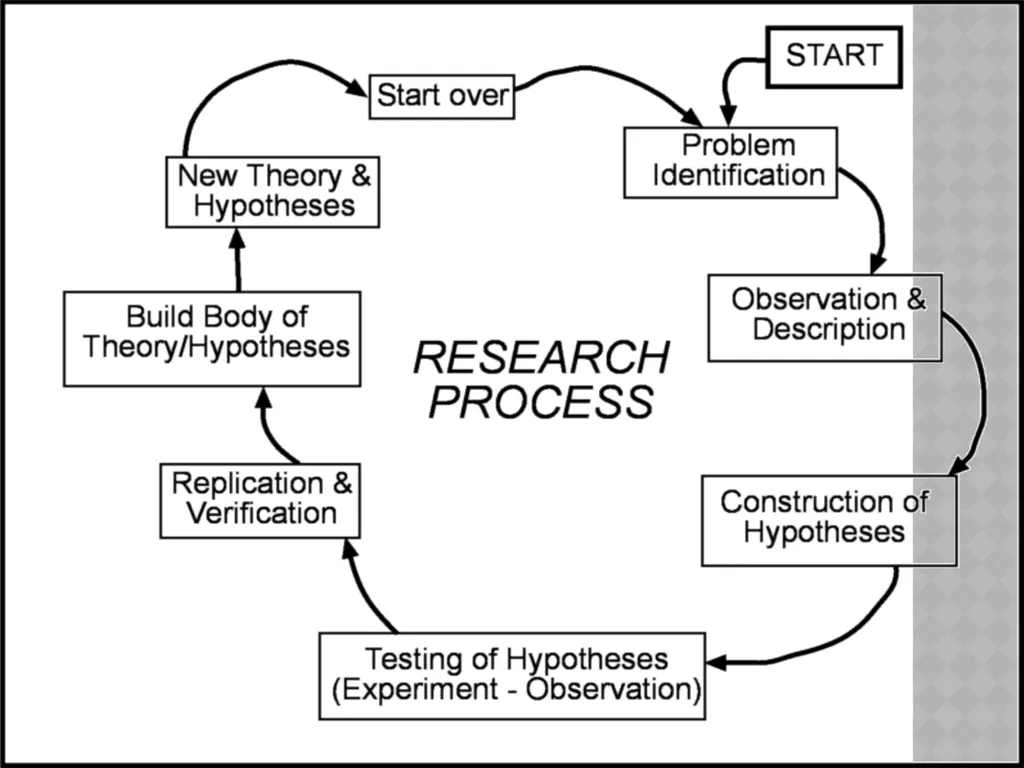
Research methodology by Dr.Y.Vijila Basic concepts and Types of Research Meaning of research The Research QuestionProblem The Hypothesis Defining the Instrument Gathering Data Analyzing Data Drawing Conclusions Discussion Research -
Related Topics
Share
Embed code
Download this presentation From Below
"Research methodology by Dr.Y.Vijila Basic concepts" is the property of its rightful owner. Permission is granted to download and print the materials on this website for personal, non-commercial use only, and to display it on your personal computer provided you do not modify the materials and that you retain all copyright notices contained in the materials. By downloading content from our website, you accept the terms of this agreement.
Presentation Transcript
01
Research methodology by
Dr.Y.Vijila<br>
02
Basic concepts and Types of Research Meaning of research
The Research Question/Problem
The Hypothesis
Defining the Instrument
Gathering Data
Analyzing Data
Drawing Conclusions
Discussion<br>
The Research Question/Problem
The Hypothesis
Defining the Instrument
Gathering Data
Analyzing Data
Drawing Conclusions
Discussion<br>
03
Research - Meaning search for facts.
Research is a continuous and dynamic process. Research is the systematic collection ,analysis and interpretation of data to answer a certain question or solve a problem.
Research is a movement from the known to unknown. Example:Buying TV
Research is the scholarly pursuit of new knowledge, discovery, or creative activity in an area with the goal of advancing that area's frontiers or boundaries."<br>
04
Nature of research Development of knowledge
Scientific study of social life
Welfare of Humanity
Classification of facts
Transformative Experience
Specialist Knowledge and Skills
Empirical/Field based
Analytical/ Conceptual problems
Normative/Evaluative(value judgements)
Social control and prediction<br>
Scientific study of social life
Welfare of Humanity
Classification of facts
Transformative Experience
Specialist Knowledge and Skills
Empirical/Field based
Analytical/ Conceptual problems
Normative/Evaluative(value judgements)
Social control and prediction<br>
05
Objectives of research To gain familiarity with a phenomenon or to achieve new insights into it (exploratory or formulative research studies);
2. To portray accurately the characteristics of a particular individual, situation or a group
(studies with this object in view are known as descriptive research studies);
3. To determine the frequency with which something occurs or with which it is associated with something else (studies with this object in view are known as diagnostic research studies);
4. To test a hypothesis of a causal relationship between variables (such studies are known as hypothesis-testing research studies).<br>
06
Scope Research inculcates scientific and inductive thinking and it promotes the development of logical habits of thinking and organisation.
Research provides the basis for nearly all government policies in our economic system.
Research has its special significance in solving various operational and planning problems of business and industry
Research is equally important for social scientists in studying social relationships and in seeking answers to various social problems<br>
07
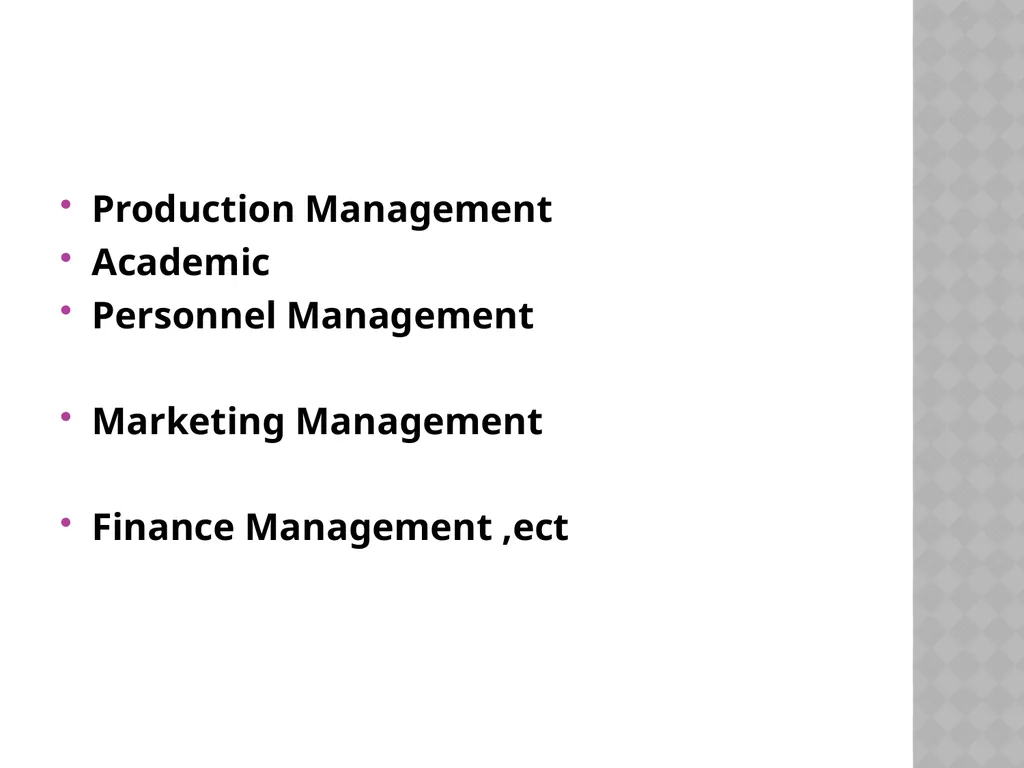
Production Management
Academic
Personnel Management
Marketing Management
Finance Management ,ect<br>
Academic
Personnel Management
Marketing Management
Finance Management ,ect<br>
08
Relevance/Needs Provide guidance to social planning
Facilitates control by providing knowledge
Knowledge is enlightment
Suggests effective remedial measures
Affords sound basis for prediction<br>
Facilitates control by providing knowledge
Knowledge is enlightment
Suggests effective remedial measures
Affords sound basis for prediction<br>
09
In addition to what has been stated above, the significance of research can also be understood
keeping in view the following points:
(a) To those students who are to write a master’s or Ph.D. thesis, research may mean a careerism or a way to attain a high position in the social structure;
(b) To professionals in research methodology, research may mean a source of livelihood;<br>
keeping in view the following points:
(a) To those students who are to write a master’s or Ph.D. thesis, research may mean a careerism or a way to attain a high position in the social structure;
(b) To professionals in research methodology, research may mean a source of livelihood;<br>
10
(c) To philosophers and thinkers, research may mean the outlet for new ideas and insights;
(d) To literary men and women, research may mean the development of new styles and creative work;
(e) To analysts and intellectuals, research may mean the generalisations of new theories.<br>
(d) To literary men and women, research may mean the development of new styles and creative work;
(e) To analysts and intellectuals, research may mean the generalisations of new theories.<br>
11
Criteria of Good Research The purpose of the research should be clearly defined and common concepts be used.
The research procedure used should be described in sufficient detail to permit another
researcher to repeat the research for further advancement, keeping the continuity of what
has already been attained.<br>
The research procedure used should be described in sufficient detail to permit another
researcher to repeat the research for further advancement, keeping the continuity of what
has already been attained.<br>
12
The procedural design of the research should be carefully planned to yield results that are
as objective as possible.
The researcher should report with complete frankness, flaws in procedural design and
estimate their effects upon the findings.
The analysis of data should be sufficiently adequate to reveal its significance and the methods of analysis used should be appropriate. The validity and reliability of the data should be checked carefully.<br>
13
The analysis of data should be sufficiently adequate to reveal its significance and the methods of analysis used should be appropriate. The validity and reliability of the data should be checked carefully.
Conclusions should be confined to those justified by the data of the research and limited to those for which the data provide an adequate basis.
Greater confidence in research is warranted if the researcher is experienced, has a good reputation in research and is a person of integrity.<br>
Conclusions should be confined to those justified by the data of the research and limited to those for which the data provide an adequate basis.
Greater confidence in research is warranted if the researcher is experienced, has a good reputation in research and is a person of integrity.<br>
14
The qualities of a good research Good research is systematic: It means that research is structured with specified steps to be taken in a specified sequence in accordance with the well defined set of rules. Systematic characteristic of the research does not rule out creative thinking but it certainly does reject the use of guessing and intuition in arriving at conclusions.<br>
15
Good research is logical: This implies that research is guided by the rules of logical reasoning and the logical process of induction and deduction are of great value in carrying
out research.
Induction is the process of reasoning from a part to the whole whereas deduction is the process of reasoning from some premise to a conclusion which follows from that very premise. In fact, logical reasoning makes research more meaningful in the context of decision making.<br>
out research.
Induction is the process of reasoning from a part to the whole whereas deduction is the process of reasoning from some premise to a conclusion which follows from that very premise. In fact, logical reasoning makes research more meaningful in the context of decision making.<br>
16
Good research is empirical: It implies that research is related basically to one or more aspects of a real situation and deals with concrete data that provides a basis for external validity to research results.
Good research is replicable: This characteristic allows research results to be verified by replicating the study and thereby building a sound basis for decisions.<br>
Good research is replicable: This characteristic allows research results to be verified by replicating the study and thereby building a sound basis for decisions.<br>
17
Types of research Pure- Basic/Methodologically correct
Applied
Basic
Descriptive
Explorative
Predictive
Qualitative
Quantitative<br>
Applied
Basic
Descriptive
Explorative
Predictive
Qualitative
Quantitative<br>
18
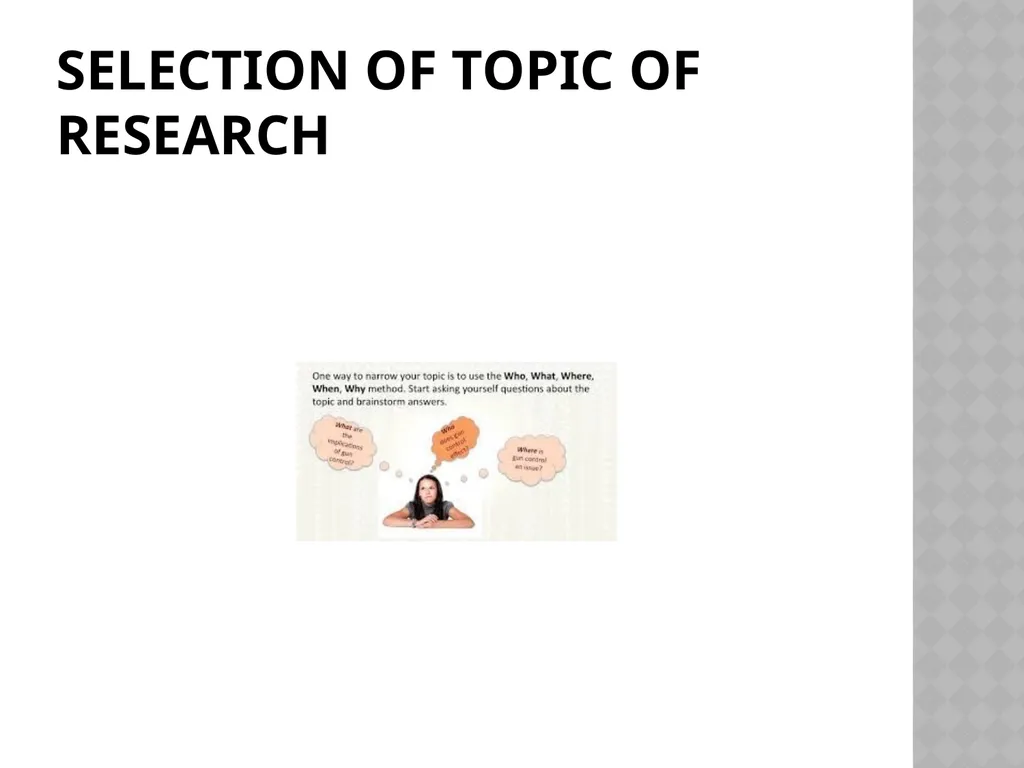
Selection of Topic of Research<br>
19
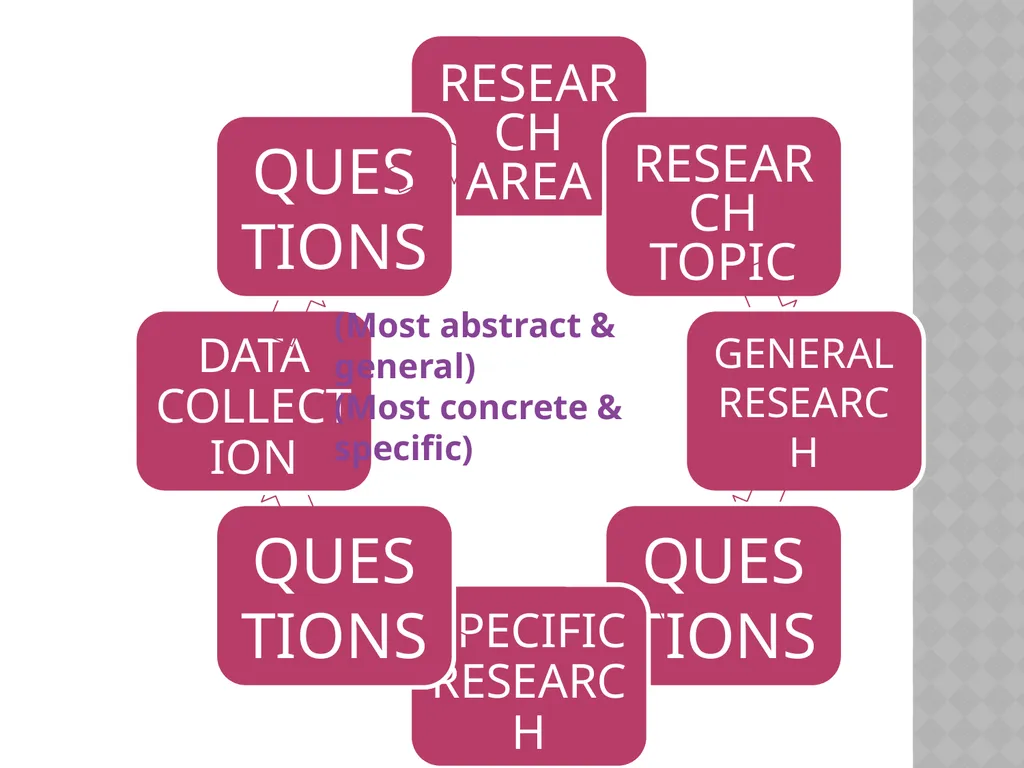
Problem formulation involves “moving to and from different levels of
abstraction and generality” (Punch 2000)
“a progressive sharpening of concepts and
a progressive narrowing of scope” (Selltiz
1976)<br>
abstraction and generality” (Punch 2000)
“a progressive sharpening of concepts and
a progressive narrowing of scope” (Selltiz
1976)<br>
20
(Most abstract & general)
(Most concrete & specific)<br>
(Most concrete & specific)<br>
21
There must be an individual or a group which has some difficulty or the problem.
(ii) There must be some objective(s) to be attained.
(iv) There must remain some doubt in the mind of a researcher with regard to the selection of alternatives.
(v) There must be some environment(s) to which the difficulty pertains.<br>
(ii) There must be some objective(s) to be attained.
(iv) There must remain some doubt in the mind of a researcher with regard to the selection of alternatives.
(v) There must be some environment(s) to which the difficulty pertains.<br>
22
NECESSITY OF DEFINING THE PROBLEM A proper definition of research problem will enable the researcher to be on the track whereas an ill-defined problem may create hurdles.
Questions like: What data are to be collected? What characteristics of data are relevant and need to be studied?
What relations are to be explored. What techniques are to be used for the purpose?<br>
Questions like: What data are to be collected? What characteristics of data are relevant and need to be studied?
What relations are to be explored. What techniques are to be used for the purpose?<br>
23
TECHNIQUE INVOLVED IN DEFINING A PROBLEM (i) statement of the problem in a general way;
(ii)understanding the nature of the problem;
(iii) surveying the available literature
(iv) developing the ideas through discussions;
(v) rephrasing the research problem into a working proposition.<br>
(ii)understanding the nature of the problem;
(iii) surveying the available literature
(iv) developing the ideas through discussions;
(v) rephrasing the research problem into a working proposition.<br>
24
Technical terms and words or phrases, with special meanings used in the statement of the problem, should be clearly defined.
Basic assumptions or postulates (if any) relating to the research problem should be clearly stated.
A straight forward statement of the value of the investigation (i.e., the criteria for the selection of the problem) should be provided.
The suitability of the time-period and the sources of data available must also be considered by the researcher in defining the problem.
The scope of the investigation or the limits within which the problem is to be studied must be mentioned explicitly in defining a research problem.<br>
25
What is a literature review? A literature review is not an annotated bibliography in which you summarize briefly each article that you have reviewed. While a summary of the what you have read is contained within the literature review, it goes well beyond merely summarizing professional literature.<br>
26
It focuses on a specific topic of interest to you and includes a critical analysis of the relationship among different works, and relating this research to your work. It may be written as a stand-alone paper or to provide a theoretical framework and rationale for a research study (such as a thesis or dissertation).<br>
27
Un biased
Comprehensive
Critical review
Best use of available knowledge
Known to unknown
How others done their study
It gives steps to carryout your research
Published,unpublished<br>
Comprehensive
Critical review
Best use of available knowledge
Known to unknown
How others done their study
It gives steps to carryout your research
Published,unpublished<br>
28
Gap identification
Why am i doing this study
Different findings
Underlying theory(gender and belief)
Different perspectives of same study(what is sociological/psychological/management perspective?)
Methodological review(What kind of measures they used, items they used, what type of statistics are they used)
Historical review(when it started what are the changes occurred over the period)<br>
29
Journal articles are current in information
Books are best for theoretical understanding
Internet, published or unpublished dissertations, govt records/reports<br>
Books are best for theoretical understanding
Internet, published or unpublished dissertations, govt records/reports<br>
30
Conducting a systematic review Identify and define the area / topic of research
Decide on type of review/ period cover
Design a search strategy/search engine
List out key words for search
Search on reference list and bibliography
What to include while writing review
Objective, method, finding,direction for future research<br>
Decide on type of review/ period cover
Design a search strategy/search engine
List out key words for search
Search on reference list and bibliography
What to include while writing review
Objective, method, finding,direction for future research<br>
31
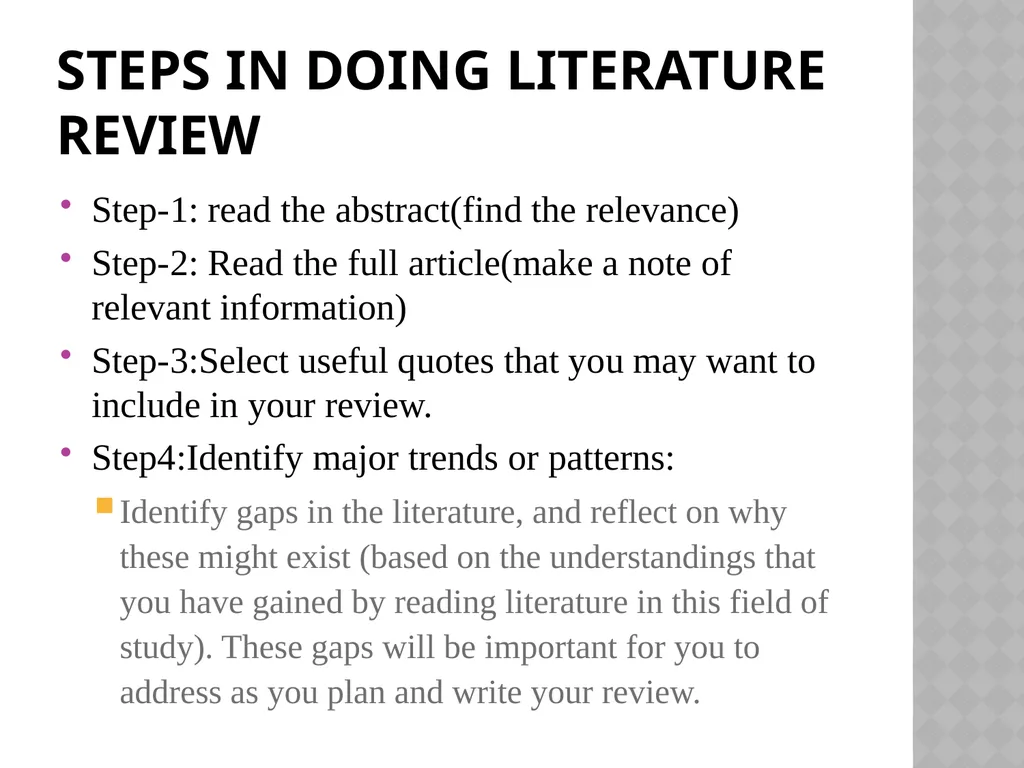
Steps in doing literature review Step-1: read the abstract(find the relevance)
Step-2: Read the full article(make a note of relevant information)
Step-3:Select useful quotes that you may want to include in your review.
Step4:Identify major trends or patterns:
Identify gaps in the literature, and reflect on why these might exist (based on the understandings that you have gained by reading literature in this field of study). These gaps will be important for you to address as you plan and write your review.<br>
32
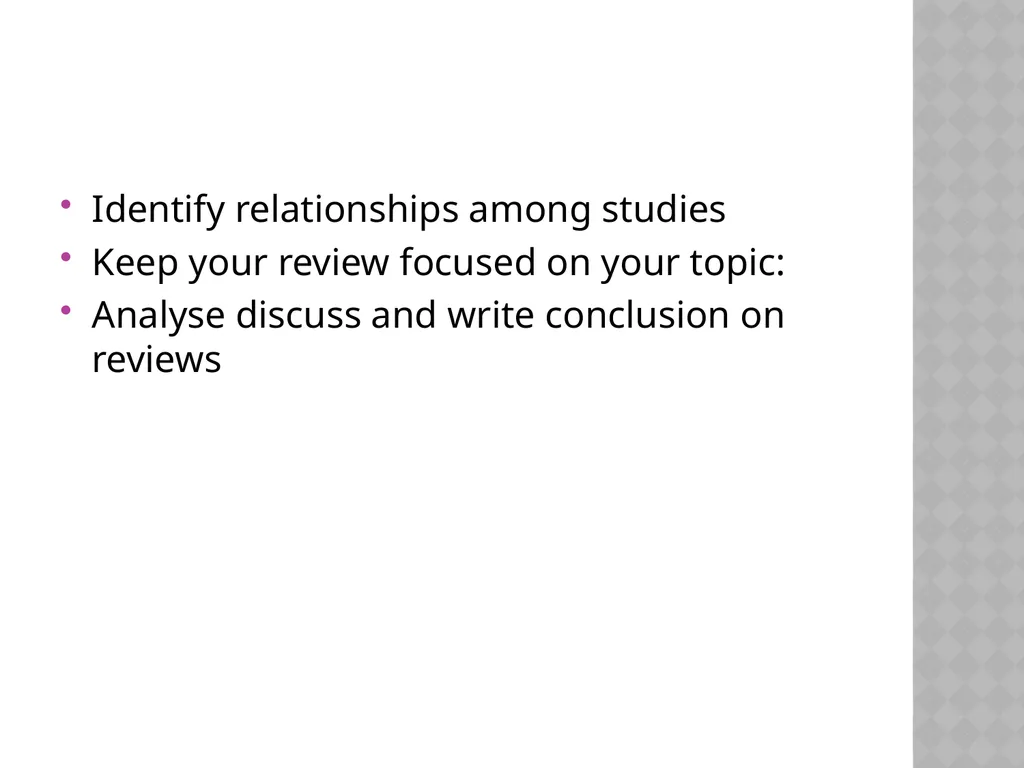
Identify relationships among studies
Keep your review focused on your topic:
Analyse discuss and write conclusion on reviews<br>
Keep your review focused on your topic:
Analyse discuss and write conclusion on reviews<br>
33
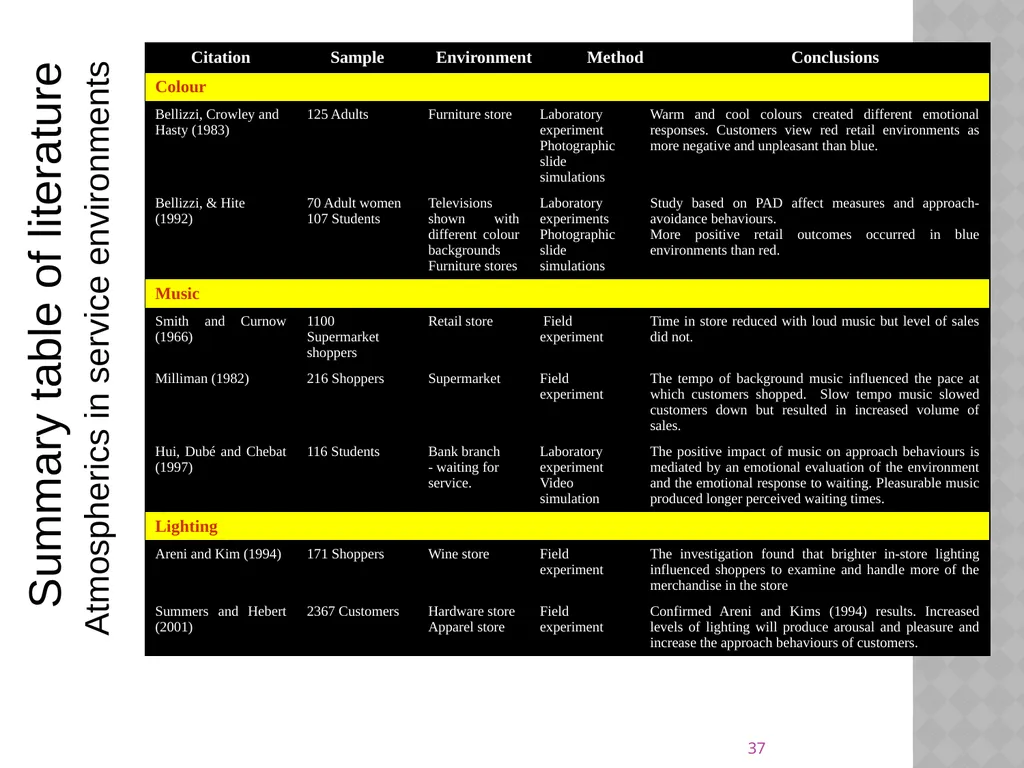
37 Summary table of literature
Atmospherics in service environments<br>
Atmospherics in service environments<br>
34
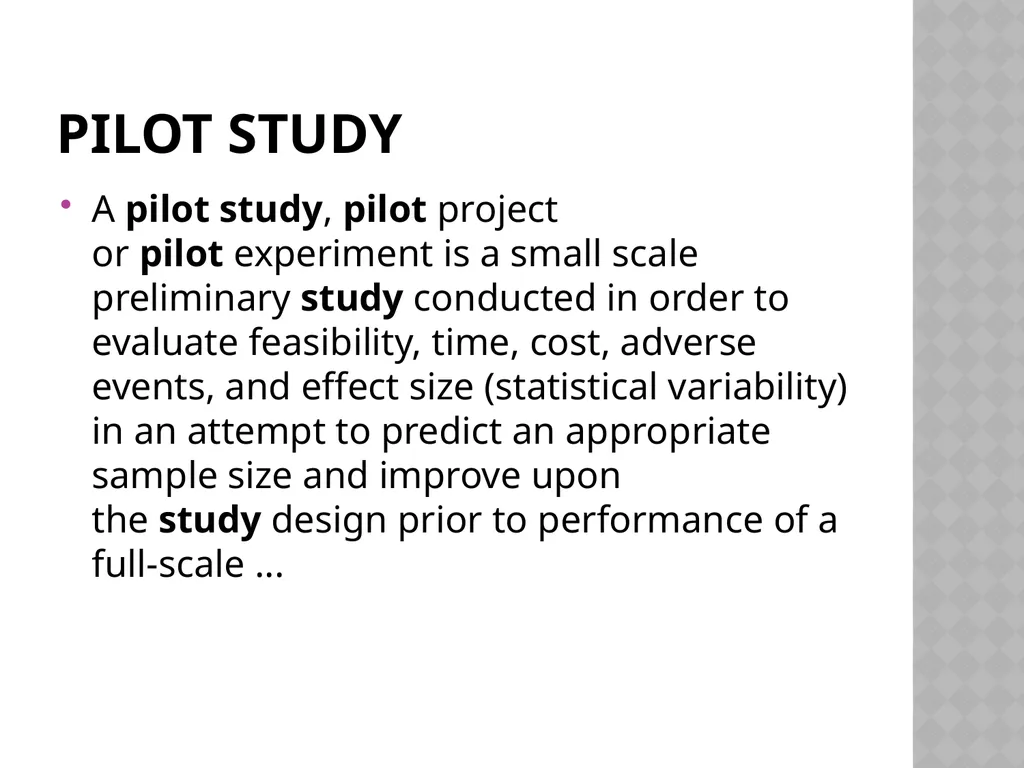
Pilot study A pilot study, pilot project or pilot experiment is a small scale preliminary study conducted in order to evaluate feasibility, time, cost, adverse events, and effect size (statistical variability) in an attempt to predict an appropriate sample size and improve upon the study design prior to performance of a full-scale ...<br>
35
Pilot study A smaller version of a larger study that is conducted to prepare for that study. A pilot study can involve pretesting a research tool, like a new data collection method. It can also be used to test an idea or hypothesis.
Pilot studies are used as feasibility studies, to ensure that the ideas or methods behind a research idea are sound, as well as to “work out the kinks” in a study protocol before launching a larger study.<br>
Pilot studies are used as feasibility studies, to ensure that the ideas or methods behind a research idea are sound, as well as to “work out the kinks” in a study protocol before launching a larger study.<br>
36
Pilot study A small study conducted in advance of a planned project, specifically to test aspects of the research design (such as stimulus material) and to allow necessary adjustment before final commitment to the design. Although not unknown in qualitative research, these are more common in large quantitative studies, since adjustment after the beginning of fieldwork is less possible than in qualitative work<br>
37
Variables Variables are names that are given to the variance we wish to explain. A variable is either a result of some force or is itself the force that causes a change in another variable. In experiments, these are called dependent and independent variables respectively.<br>
38
Types of variables Numerical
Categorical
Dependent and Independent
Active
Attribute
Composite
Confounding
Qualitative
Quantitative
Continuous
Universal<br>
Categorical
Dependent and Independent
Active
Attribute
Composite
Confounding
Qualitative
Quantitative
Continuous
Universal<br>
39
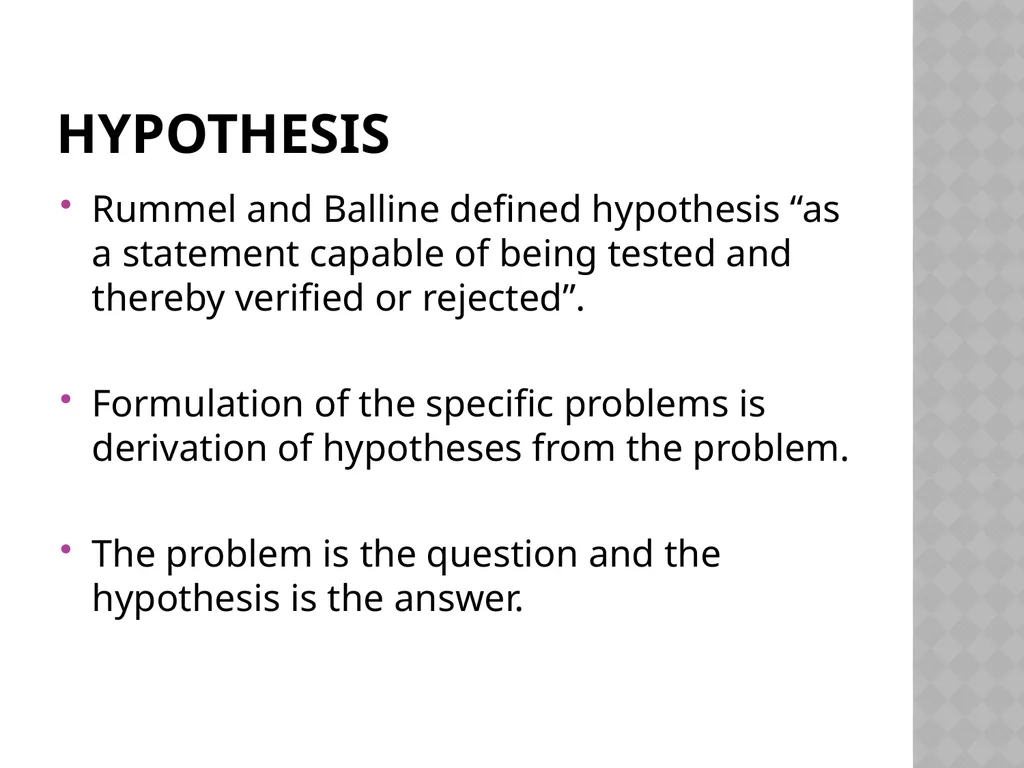
Hypothesis Rummel and Balline defined hypothesis “as a statement capable of being tested and thereby verified or rejected”.
Formulation of the specific problems is derivation of hypotheses from the problem.
The problem is the question and the hypothesis is the answer.<br>
Formulation of the specific problems is derivation of hypotheses from the problem.
The problem is the question and the hypothesis is the answer.<br>
40
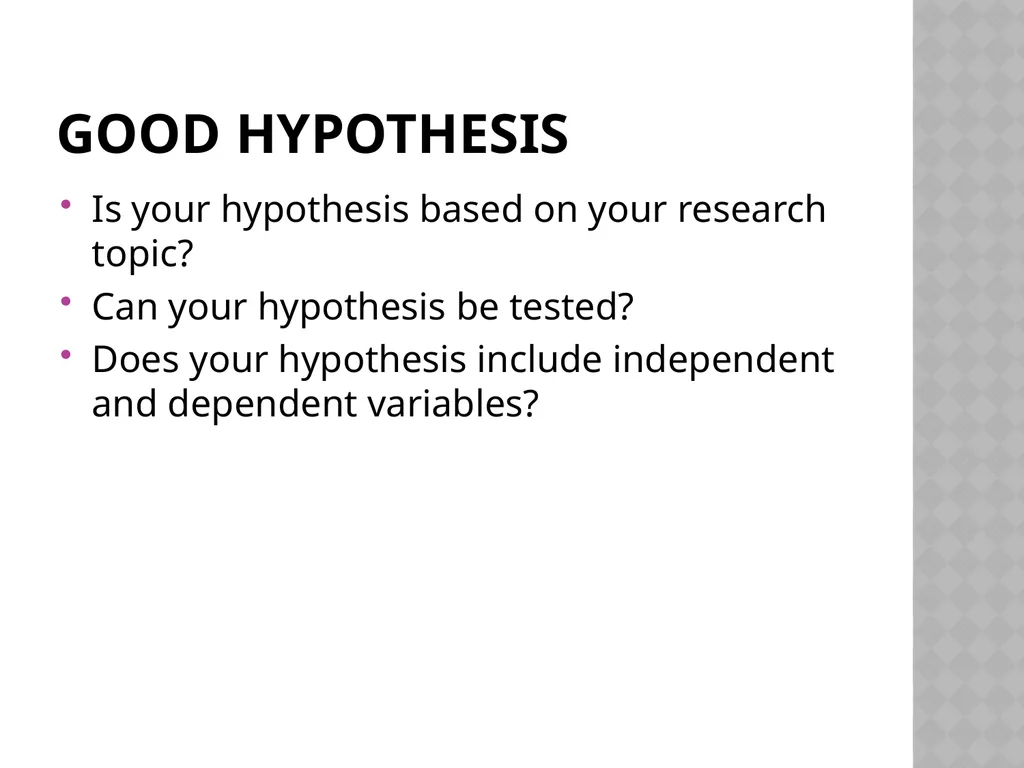
Good hypothesis Is your hypothesis based on your research topic?
Can your hypothesis be tested?
Does your hypothesis include independent and dependent variables?<br>
Can your hypothesis be tested?
Does your hypothesis include independent and dependent variables?<br>
41
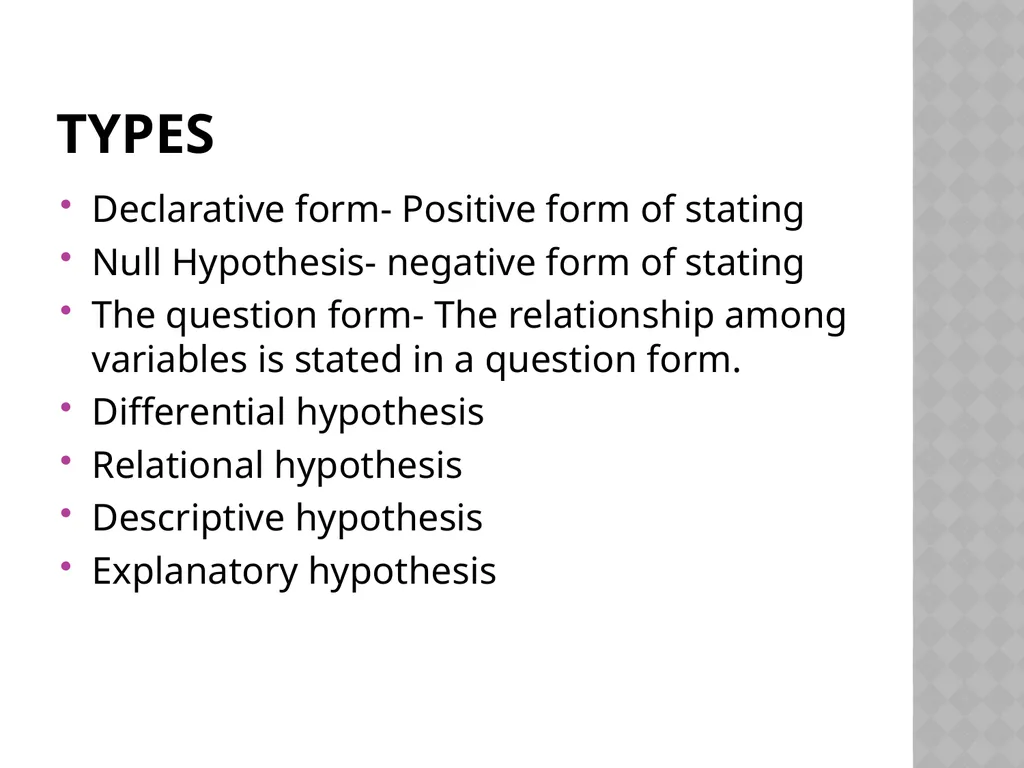
Types Declarative form- Positive form of stating
Null Hypothesis- negative form of stating
The question form- The relationship among variables is stated in a question form.
Differential hypothesis
Relational hypothesis
Descriptive hypothesis
Explanatory hypothesis<br>
Null Hypothesis- negative form of stating
The question form- The relationship among variables is stated in a question form.
Differential hypothesis
Relational hypothesis
Descriptive hypothesis
Explanatory hypothesis<br>
42
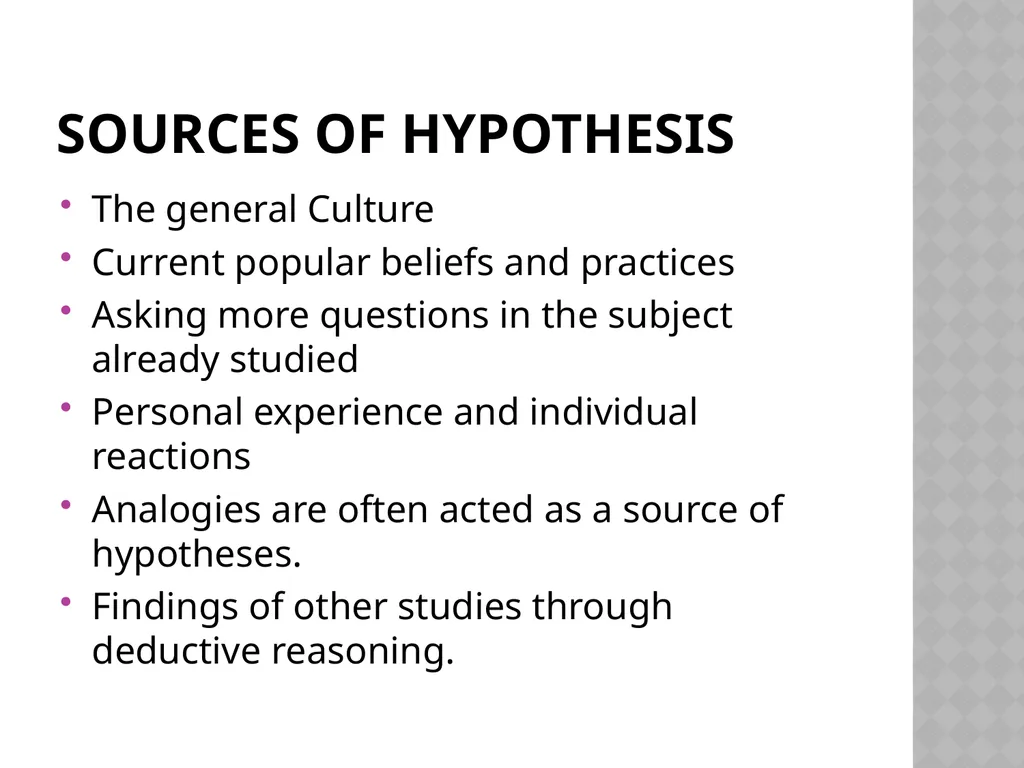
Sources of Hypothesis The general Culture
Current popular beliefs and practices
Asking more questions in the subject already studied
Personal experience and individual reactions
Analogies are often acted as a source of hypotheses.
Findings of other studies through deductive reasoning.<br>
Current popular beliefs and practices
Asking more questions in the subject already studied
Personal experience and individual reactions
Analogies are often acted as a source of hypotheses.
Findings of other studies through deductive reasoning.<br>
43
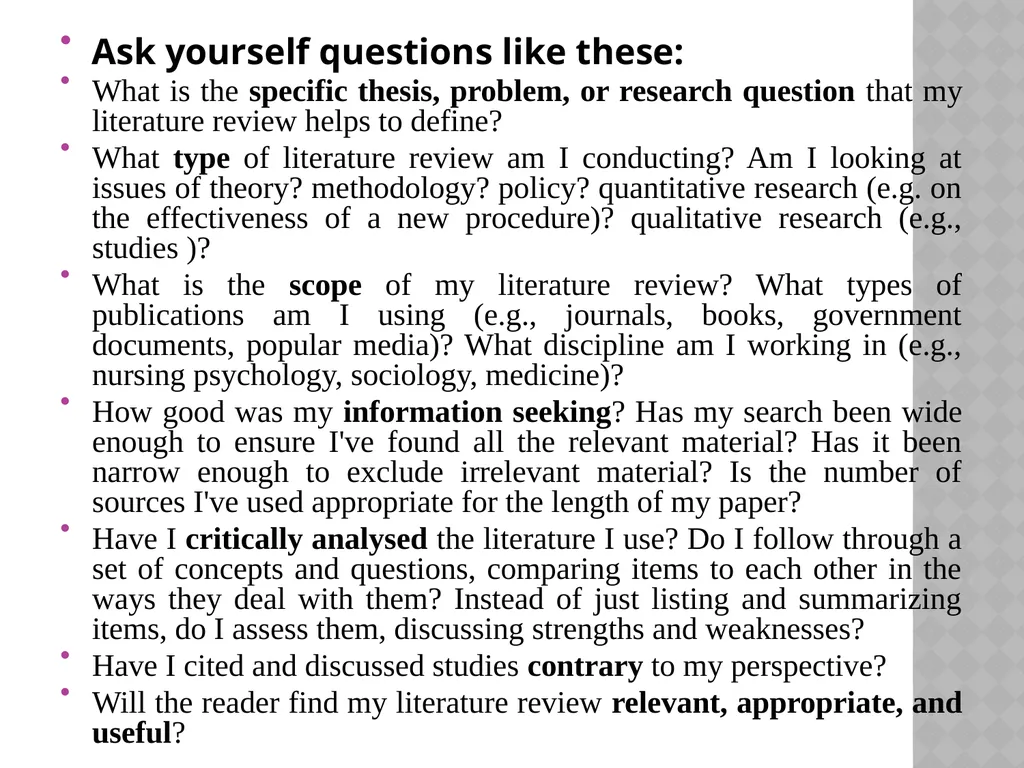
Ask yourself questions like these:
What is the specific thesis, problem, or research question that my literature review helps to define?
What type of literature review am I conducting? Am I looking at issues of theory? methodology? policy? quantitative research (e.g. on the effectiveness of a new procedure)? qualitative research (e.g., studies )?
What is the scope of my literature review? What types of publications am I using (e.g., journals, books, government documents, popular media)? What discipline am I working in (e.g., nursing psychology, sociology, medicine)?
How good was my information seeking? Has my search been wide enough to ensure I've found all the relevant material? Has it been narrow enough to exclude irrelevant material? Is the number of sources I've used appropriate for the length of my paper?
Have I critically analysed the literature I use? Do I follow through a set of concepts and questions, comparing items to each other in the ways they deal with them? Instead of just listing and summarizing items, do I assess them, discussing strengths and weaknesses?
Have I cited and discussed studies contrary to my perspective?
Will the reader find my literature review relevant, appropriate, and useful?<br>
44
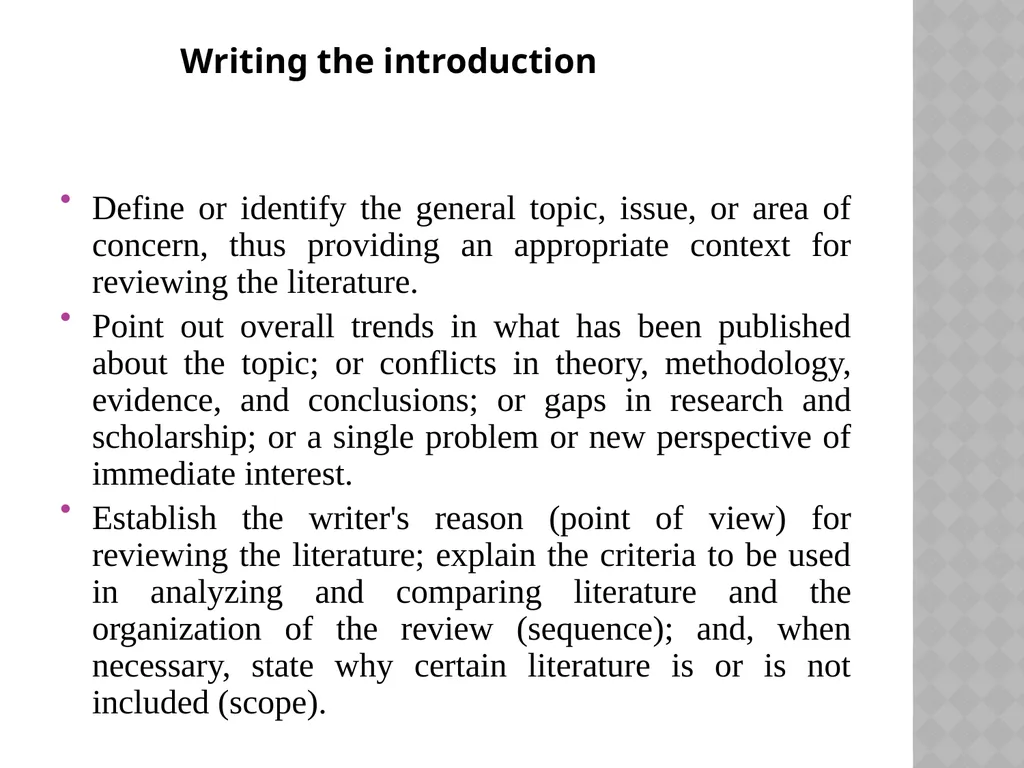
Define or identify the general topic, issue, or area of concern, thus providing an appropriate context for reviewing the literature.
Point out overall trends in what has been published about the topic; or conflicts in theory, methodology, evidence, and conclusions; or gaps in research and scholarship; or a single problem or new perspective of immediate interest.
Establish the writer's reason (point of view) for reviewing the literature; explain the criteria to be used in analyzing and comparing literature and the organization of the review (sequence); and, when necessary, state why certain literature is or is not included (scope). Writing the introduction<br>
45
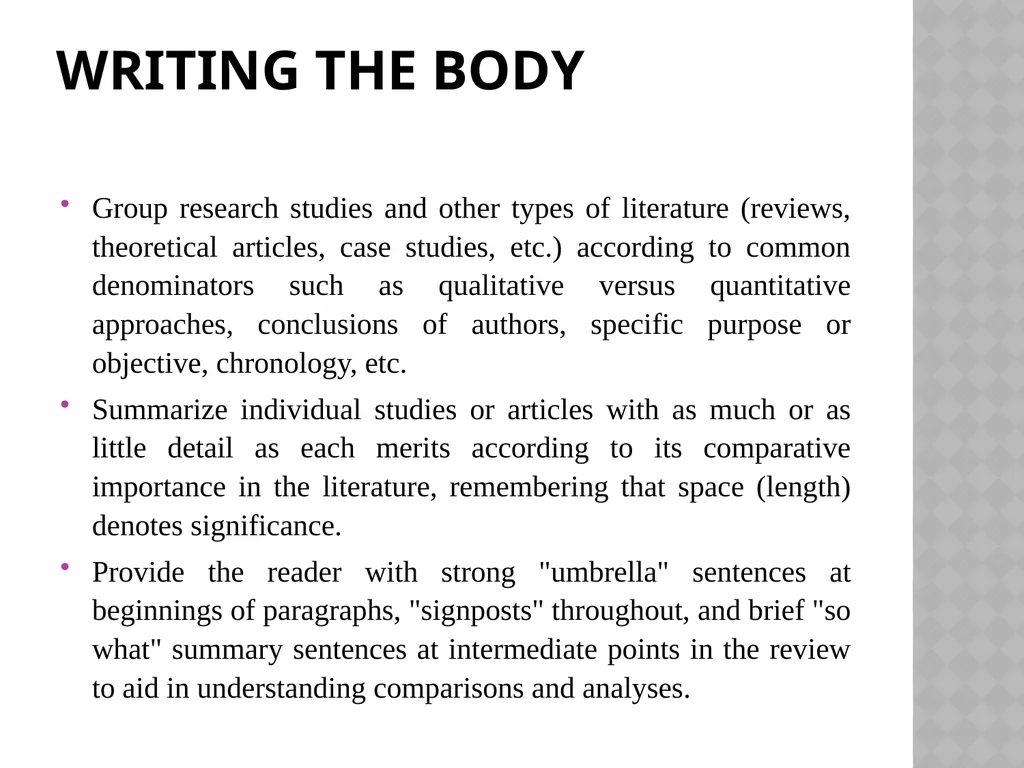
Writing the body Group research studies and other types of literature (reviews, theoretical articles, case studies, etc.) according to common denominators such as qualitative versus quantitative approaches, conclusions of authors, specific purpose or objective, chronology, etc.
Summarize individual studies or articles with as much or as little detail as each merits according to its comparative importance in the literature, remembering that space (length) denotes significance.
Provide the reader with strong "umbrella" sentences at beginnings of paragraphs, "signposts" throughout, and brief "so what" summary sentences at intermediate points in the review to aid in understanding comparisons and analyses.<br>
46
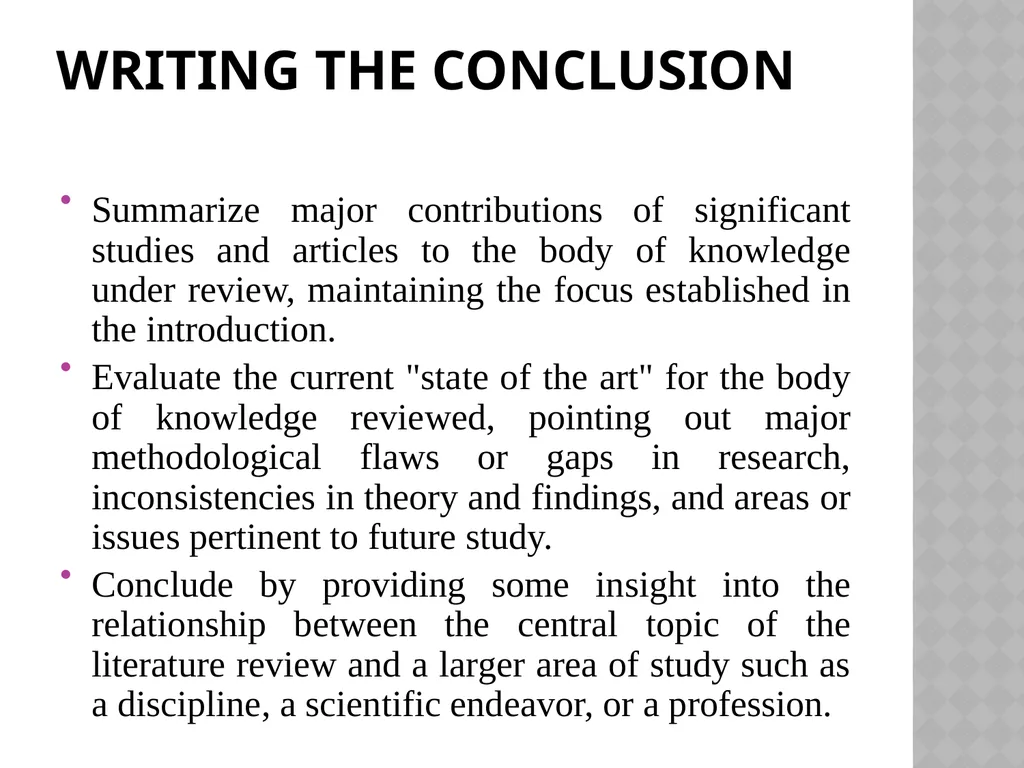
Writing the conclusion Summarize major contributions of significant studies and articles to the body of knowledge under review, maintaining the focus established in the introduction.
Evaluate the current "state of the art" for the body of knowledge reviewed, pointing out major methodological flaws or gaps in research, inconsistencies in theory and findings, and areas or issues pertinent to future study.
Conclude by providing some insight into the relationship between the central topic of the literature review and a larger area of study such as a discipline, a scientific endeavor, or a profession.<br>
47
In order to make sure that your reading and your literature review cover all the
relevant literature, you need to have a system to seek out and identify key sources.
Some methods of doing this include:
In focusing your field of inquiry, base your reading around a specific
research question. The research question may change or develop as you
read more, but the more specific your research question, the more specific
you can be in your reading.
Think about both the history and context of study in this area. This will
help define what the field and focus of your research will be.
Your university library is likely to give you on-line access to many
excellent databases providing abstracts and/or full-text versions of peerreviewed
journal articles, and these should be your prime source of
references for a thesis. So you should identify the key databases in your
area, enter specific search terms and look for relevant peer-reviewed
articles. While you might include references to practitioner or unrefereed
material to show trends in practice, there is a lot of junk in the cyberspace
of knowledge, and your literature review should primarily reflect peerreviewed
sources.
While electronic databases are invaluable for research students, if there
are key journals in your area that aren’t available in abstract or full-text
form from an electronic database, you will need to ensure that you have
searched for and obtained relevant articles from these journals.
Don’t overlook encyclopaedias, compendiums, general books and
textbooks, in order to get a general appreciation of the writing in the<br>
48
A theory is a set of systematically interrelated constructs and propositions intended to explain and predict a phenomenon or behavior of interest, within certain boundary conditions and assumptions.<br>
49
What is scientific method
Scientific method refers to a standardized set of techniques for building scientific knowledge, such as how to make valid observations, how to interpret results, and how to generalize those results. The scientific method allows researchers to independently and impartially test preexisting theories and prior findings, and subject them to open debate, modifications, or enhancements<br>
Scientific method refers to a standardized set of techniques for building scientific knowledge, such as how to make valid observations, how to interpret results, and how to generalize those results. The scientific method allows researchers to independently and impartially test preexisting theories and prior findings, and subject them to open debate, modifications, or enhancements<br>
50
Unit of Analysis
The unit of analysis refers to the person, collective, or object that is the target of the investigation. Typical unit of analysis include individuals, groups, organizations, countries, technologies, objects, and such.
Ex:studying people’s shopping behavior, understand how firms can improve profitability , national cultures<br>