
Research methodology Introduction: Approaches to








Description: Research methodology Introduction: Approaches to social research Objectives By the end of this week students should: Know the characteristics of research Realize the importance of educational research. Distinguish between Quantitative and
Related Topics
Download Presentation
"Research methodology Introduction: Approaches to" is the property of its rightful owner. Permission is granted to download and print the materials on this website for personal, non-commercial use only, and to display it on your personal computer provided you do not modify the materials and that you retain all copyright notices contained in the materials. By downloading content from our website, you accept the terms of this agreement.
Presentation Transcript
slide1. Research methodology Introduction: Approaches to social research<br>
slide2. Objectives By the end of this week students should:
Know the characteristics of research
Realize the importance of educational research.
Distinguish between Quantitative and Qualitative approach in educational research.
Know about research-engaged schools.
Be familiar with informative sites for educational research<br>
slide3. Keywords Educational research
Quantitative approach
Qualitative approach
Empirical study
Generalization-uniqueness
Research-engaged schools
Small-scale / Large-scale studies
Stakeholders in research<br>
slide4. Research The process of collecting, analyzing and interpreting information to answer questions
But to qualify as research, the process must have certain characteristics: it must be, among others, rigorous, systematic, valid , verifiable and critical.<br>
slide5. Characteristics of research Rigorous- must be scrupulous in ensuring that the procedures followed to find answers to questions are relevant, appropriate and justified.
Systematic- this implies that the procedure adopted to undertake an investigation follow a certain logical sequence.
Valid and verifiable-this concept implies that whatever you conclude on the basis of your findings is correct and can be verified by you and others.
Critical-critical scrutiny of the procedures used and the methods employed is crucial to a research enquiry. The process of investigation must be foolproof and free from drawbacks. The process adopted and the procedures used must be able to withstand critical scrutiny.<br>
slide6. The importance of research Broadens horizons
Addresses issues regarding the existing knowledge by:
evaluating outcomes in different settings
adding different perspectives
endorsing new ideas / practices
Provides the necessary information in order to adopt new approaches in educational contexts<br>
slide7. The importance of educational research Designing and developing the research methodology, could prove more valuable for educators than the research outcomes
Engaging in the research process is a vital procedure for all education professionals
Being part of the research process as a researcher and not as the subject of research, leads to different ways of thinking and acting<br>
slide8. Quantitative research Quantitative research is based on the measurement of quantity or amount
Emphasizes the generalization of outcomes
It is usually based upon numerical measurements and thus tends to use numbers and statistical methods as key research indicators and tools.
It tends to be associated with researcher detachment, producing 'objective' numerical data that is independent of the researcher<br>
slide9. Quantitative research It tends to be associated with large-scale studies and with a specific focus, often condensing information from a large number of specific occurrences to search for general description or to investigate causal hypotheses.
It tends to be associated with pre-determined research design, using measurements and analyses in a systematic and logically ordered fashion that may be replicated relatively easily by other researchers.
Validity and reliability can be measured numerically using statistical tests.<br>
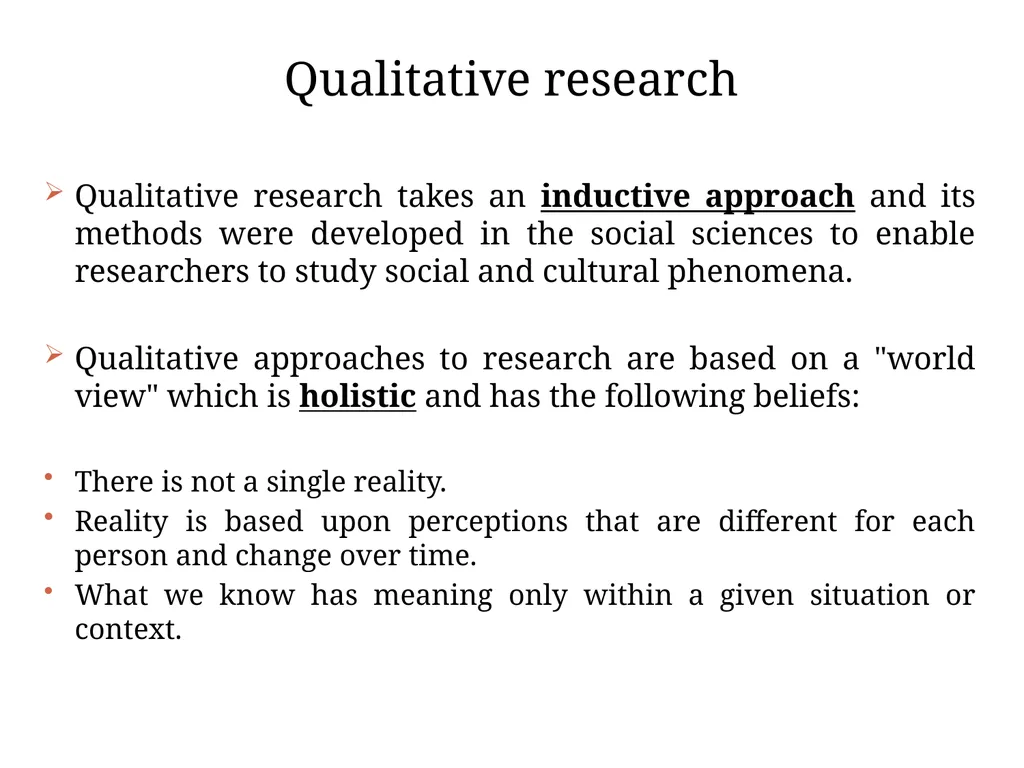
slide10. Qualitative research Qualitative research takes an inductive approach and its methods were developed in the social sciences to enable researchers to study social and cultural phenomena.
Qualitative approaches to research are based on a "world view" which is holistic and has the following beliefs:
There is not a single reality.
Reality is based upon perceptions that are different for each person and change over time.
What we know has meaning only within a given situation or context.<br>
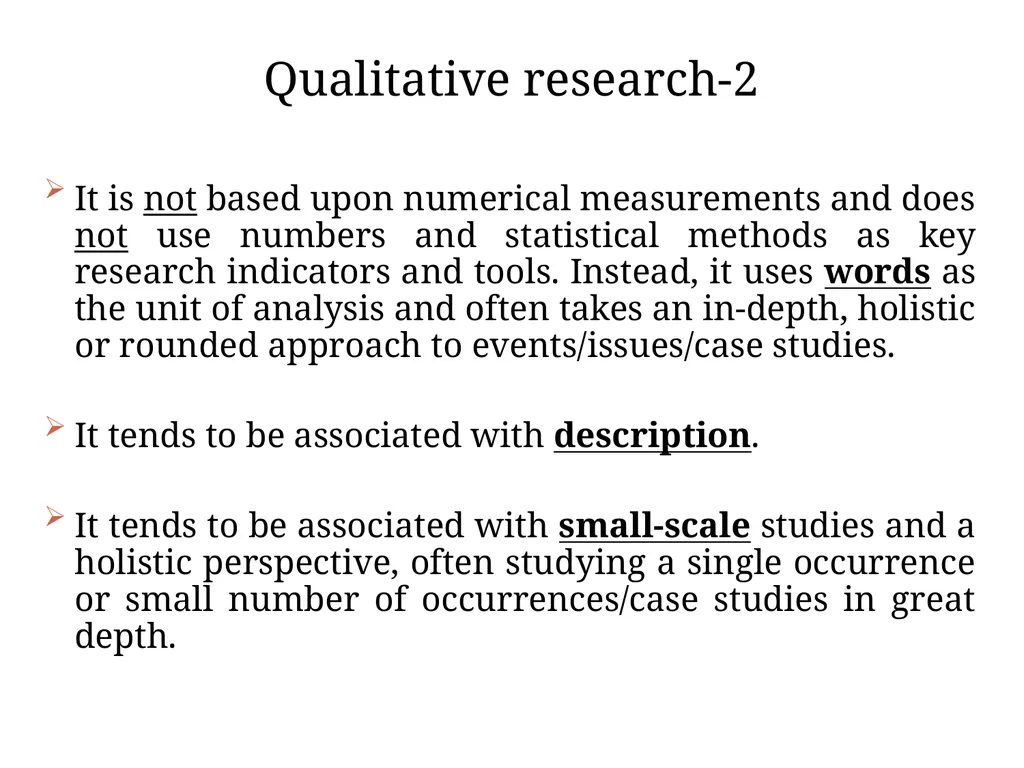
slide11. Qualitative research-2 It is not based upon numerical measurements and does not use numbers and statistical methods as key research indicators and tools. Instead, it uses words as the unit of analysis and often takes an in-depth, holistic or rounded approach to events/issues/case studies.
It tends to be associated with description.
It tends to be associated with small-scale studies and a holistic perspective, often studying a single occurrence or small number of occurrences/case studies in great depth.<br>
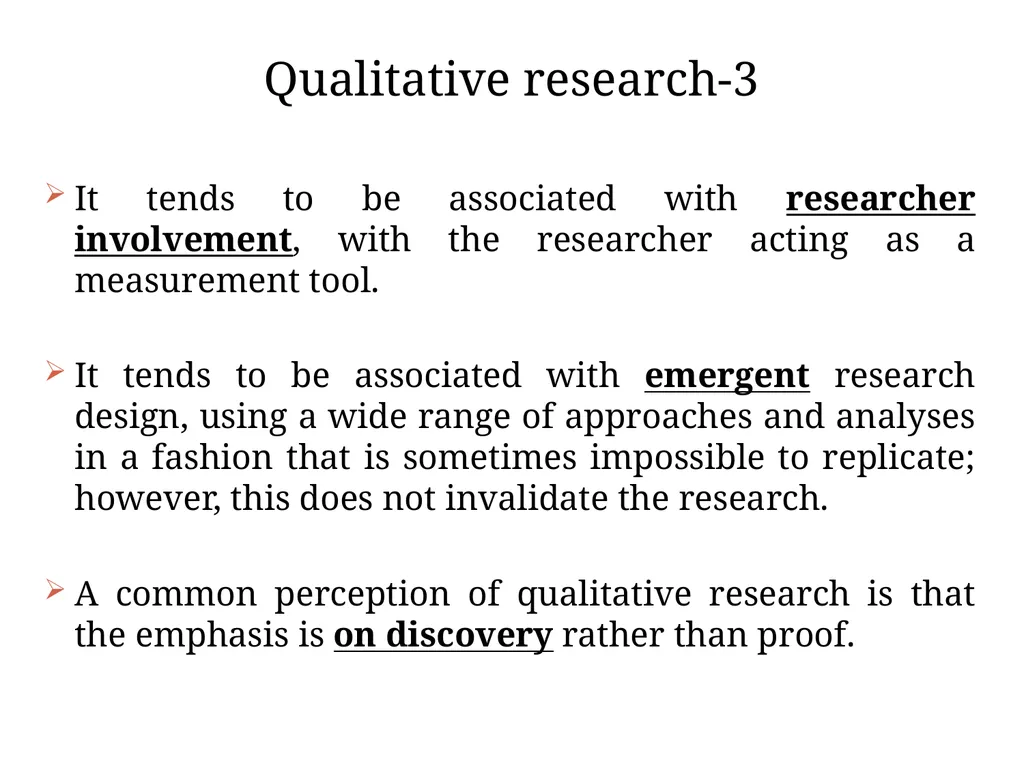
slide12. Qualitative research-3 It tends to be associated with researcher involvement, with the researcher acting as a measurement tool.
It tends to be associated with emergent research design, using a wide range of approaches and analyses in a fashion that is sometimes impossible to replicate; however, this does not invalidate the research.
A common perception of qualitative research is that the emphasis is on discovery rather than proof.<br>
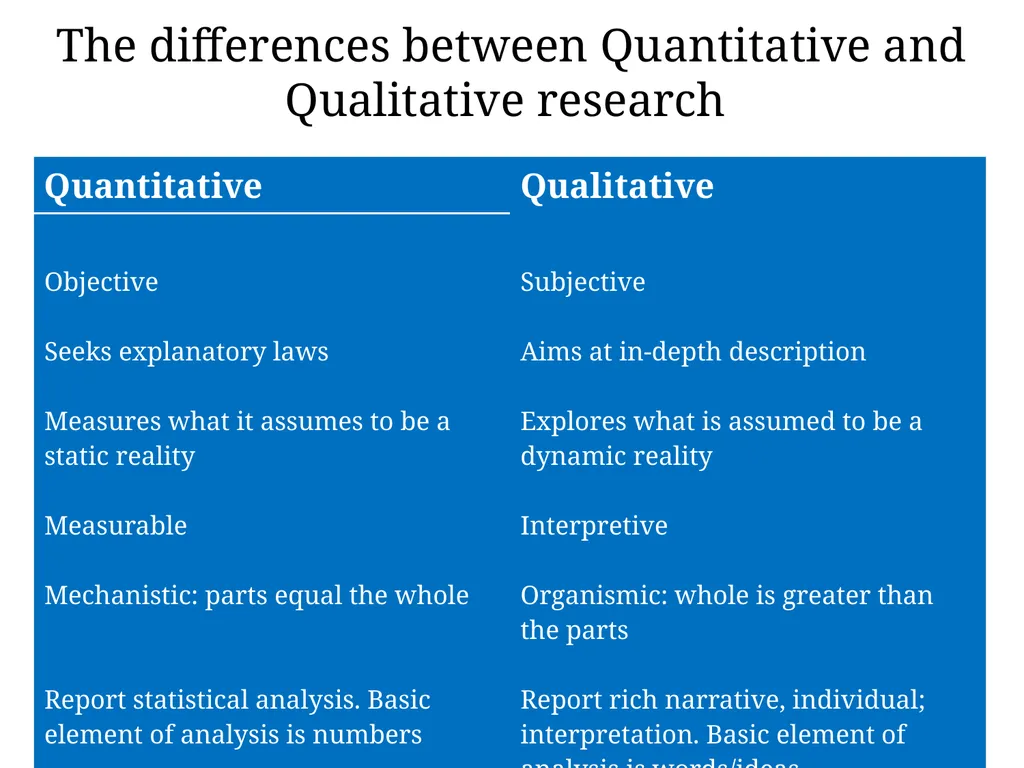
slide13. The differences between Quantitative and Qualitative research<br>
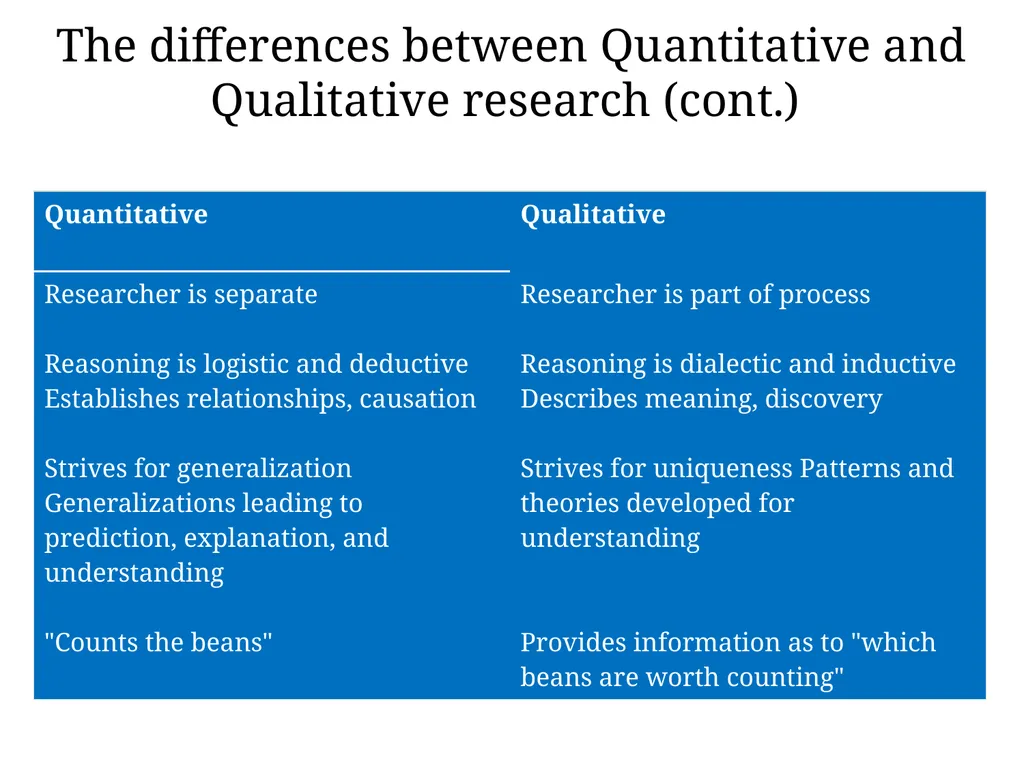
slide14. The differences between Quantitative and Qualitative research (cont.)<br>
slide15. Need for teachers to get involved Classroom teaching has not changed considerably over the years despite many findings and challenges
Educational research is being carried out mainly by academics. This often leads to get results of limited use for school teachers
Teachers’ professional foundation can be improved and upgraded incorporating research into their professional profile.
It is imperative that teachers become
stakeholders in research.<br>
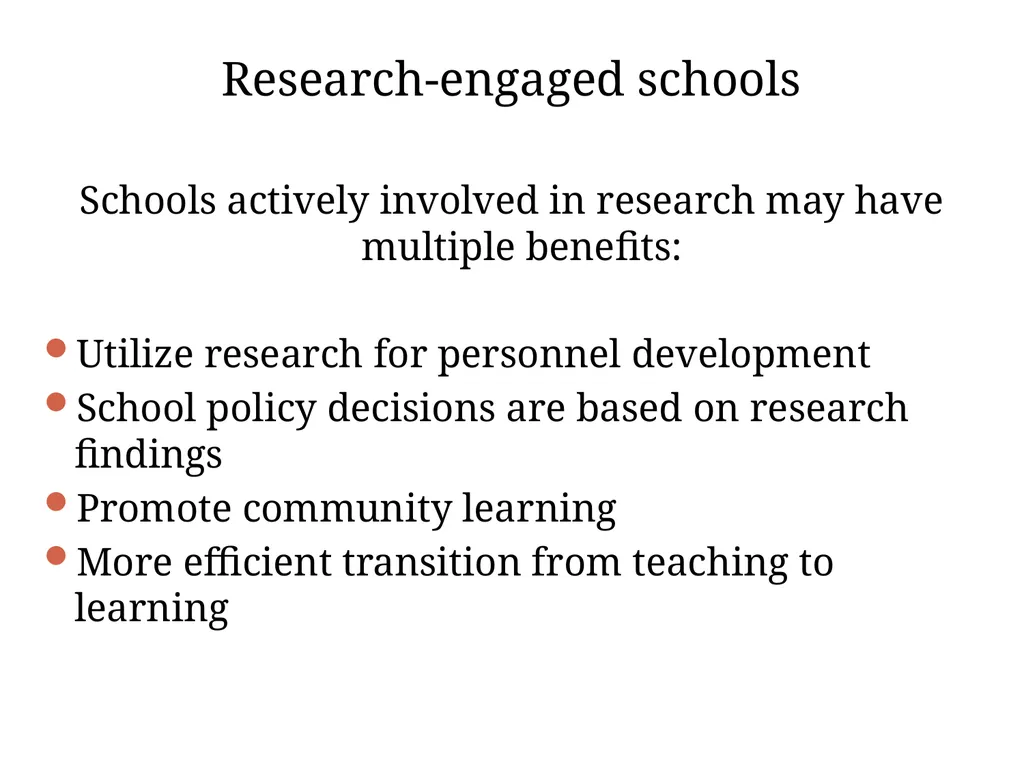
slide16. Research-engaged schools Schools actively involved in research may have multiple benefits:
Utilize research for personnel development
School policy decisions are based on research findings
Promote community learning
More efficient transition from teaching to learning<br>
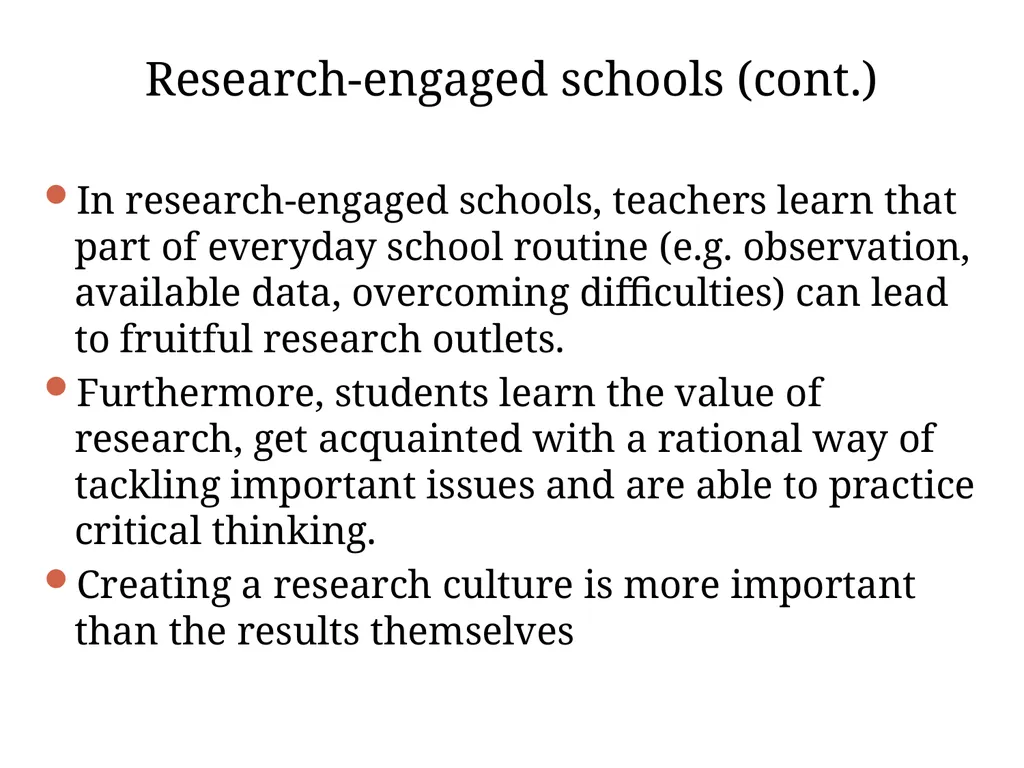
slide17. Research-engaged schools (cont.) In research-engaged schools, teachers learn that part of everyday school routine (e.g. observation, available data, overcoming difficulties) can lead to fruitful research outlets.
Furthermore, students learn the value of research, get acquainted with a rational way of tackling important issues and are able to practice critical thinking.
Creating a research culture is more important than the results themselves<br>
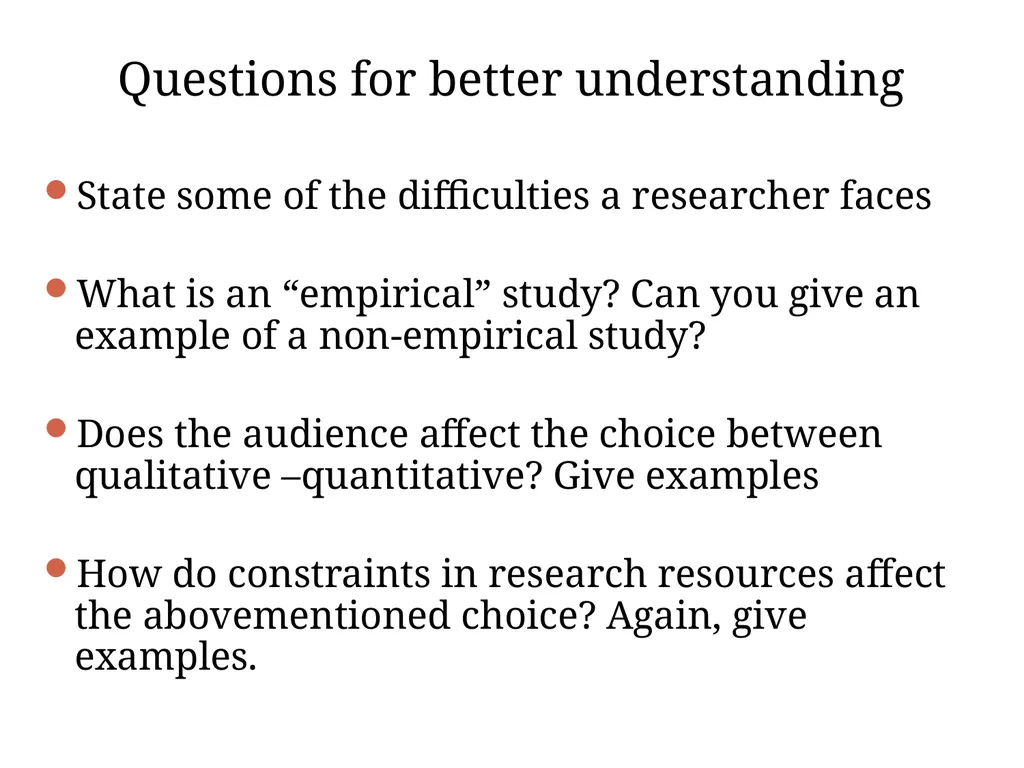
slide18. Questions for better understanding State some of the difficulties a researcher faces
What is an “empirical” study? Can you give an example of a non-empirical study?
Does the audience affect the choice between qualitative –quantitative? Give examples
How do constraints in research resources affect the abovementioned choice? Again, give examples.<br>
slide19. Practice activity Using the electronic databases locate a research article where the author(s) employ(s) either a quantitative or a qualitative approach.
Justify the use of the selected approach
Can you point to differences if the other approach is selected?<br>
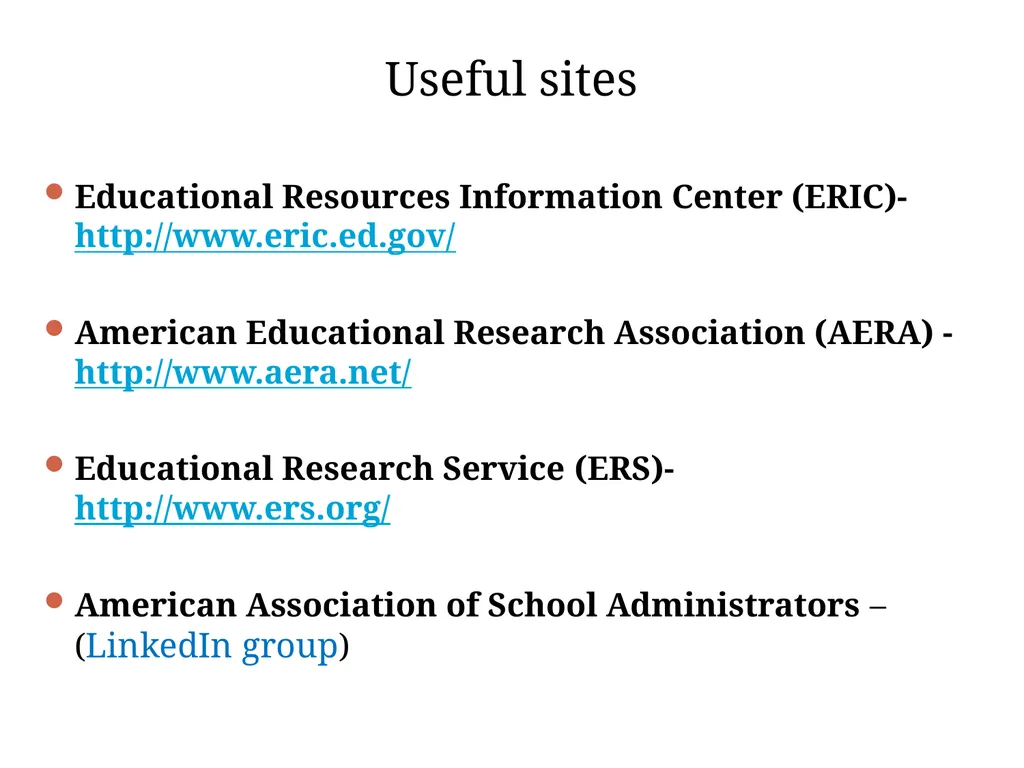
slide20. Useful sites Educational Resources Information Center (ERIC)-http://www.eric.ed.gov/
American Educational Research Association (AERA) - http://www.aera.net/
Educational Research Service (ERS)- http://www.ers.org/
American Association of School Administrators – (LinkedIn group)<br>
slide2. Objectives By the end of this week students should:
Know the characteristics of research
Realize the importance of educational research.
Distinguish between Quantitative and Qualitative approach in educational research.
Know about research-engaged schools.
Be familiar with informative sites for educational research<br>
slide3. Keywords Educational research
Quantitative approach
Qualitative approach
Empirical study
Generalization-uniqueness
Research-engaged schools
Small-scale / Large-scale studies
Stakeholders in research<br>
slide4. Research The process of collecting, analyzing and interpreting information to answer questions
But to qualify as research, the process must have certain characteristics: it must be, among others, rigorous, systematic, valid , verifiable and critical.<br>
slide5. Characteristics of research Rigorous- must be scrupulous in ensuring that the procedures followed to find answers to questions are relevant, appropriate and justified.
Systematic- this implies that the procedure adopted to undertake an investigation follow a certain logical sequence.
Valid and verifiable-this concept implies that whatever you conclude on the basis of your findings is correct and can be verified by you and others.
Critical-critical scrutiny of the procedures used and the methods employed is crucial to a research enquiry. The process of investigation must be foolproof and free from drawbacks. The process adopted and the procedures used must be able to withstand critical scrutiny.<br>
slide6. The importance of research Broadens horizons
Addresses issues regarding the existing knowledge by:
evaluating outcomes in different settings
adding different perspectives
endorsing new ideas / practices
Provides the necessary information in order to adopt new approaches in educational contexts<br>
slide7. The importance of educational research Designing and developing the research methodology, could prove more valuable for educators than the research outcomes
Engaging in the research process is a vital procedure for all education professionals
Being part of the research process as a researcher and not as the subject of research, leads to different ways of thinking and acting<br>
slide8. Quantitative research Quantitative research is based on the measurement of quantity or amount
Emphasizes the generalization of outcomes
It is usually based upon numerical measurements and thus tends to use numbers and statistical methods as key research indicators and tools.
It tends to be associated with researcher detachment, producing 'objective' numerical data that is independent of the researcher<br>
slide9. Quantitative research It tends to be associated with large-scale studies and with a specific focus, often condensing information from a large number of specific occurrences to search for general description or to investigate causal hypotheses.
It tends to be associated with pre-determined research design, using measurements and analyses in a systematic and logically ordered fashion that may be replicated relatively easily by other researchers.
Validity and reliability can be measured numerically using statistical tests.<br>
slide10. Qualitative research Qualitative research takes an inductive approach and its methods were developed in the social sciences to enable researchers to study social and cultural phenomena.
Qualitative approaches to research are based on a "world view" which is holistic and has the following beliefs:
There is not a single reality.
Reality is based upon perceptions that are different for each person and change over time.
What we know has meaning only within a given situation or context.<br>
slide11. Qualitative research-2 It is not based upon numerical measurements and does not use numbers and statistical methods as key research indicators and tools. Instead, it uses words as the unit of analysis and often takes an in-depth, holistic or rounded approach to events/issues/case studies.
It tends to be associated with description.
It tends to be associated with small-scale studies and a holistic perspective, often studying a single occurrence or small number of occurrences/case studies in great depth.<br>
slide12. Qualitative research-3 It tends to be associated with researcher involvement, with the researcher acting as a measurement tool.
It tends to be associated with emergent research design, using a wide range of approaches and analyses in a fashion that is sometimes impossible to replicate; however, this does not invalidate the research.
A common perception of qualitative research is that the emphasis is on discovery rather than proof.<br>
slide13. The differences between Quantitative and Qualitative research<br>
slide14. The differences between Quantitative and Qualitative research (cont.)<br>
slide15. Need for teachers to get involved Classroom teaching has not changed considerably over the years despite many findings and challenges
Educational research is being carried out mainly by academics. This often leads to get results of limited use for school teachers
Teachers’ professional foundation can be improved and upgraded incorporating research into their professional profile.
It is imperative that teachers become
stakeholders in research.<br>
slide16. Research-engaged schools Schools actively involved in research may have multiple benefits:
Utilize research for personnel development
School policy decisions are based on research findings
Promote community learning
More efficient transition from teaching to learning<br>
slide17. Research-engaged schools (cont.) In research-engaged schools, teachers learn that part of everyday school routine (e.g. observation, available data, overcoming difficulties) can lead to fruitful research outlets.
Furthermore, students learn the value of research, get acquainted with a rational way of tackling important issues and are able to practice critical thinking.
Creating a research culture is more important than the results themselves<br>
slide18. Questions for better understanding State some of the difficulties a researcher faces
What is an “empirical” study? Can you give an example of a non-empirical study?
Does the audience affect the choice between qualitative –quantitative? Give examples
How do constraints in research resources affect the abovementioned choice? Again, give examples.<br>
slide19. Practice activity Using the electronic databases locate a research article where the author(s) employ(s) either a quantitative or a qualitative approach.
Justify the use of the selected approach
Can you point to differences if the other approach is selected?<br>
slide20. Useful sites Educational Resources Information Center (ERIC)-http://www.eric.ed.gov/
American Educational Research Association (AERA) - http://www.aera.net/
Educational Research Service (ERS)- http://www.ers.org/
American Association of School Administrators – (LinkedIn group)<br>