
Review of Seda’s Non-Financial Support Programmes
OM
Published · 51 slides · 0 views

1 / 1
Description
Review of Sedas Non-Financial Support Programmes Presentation to the Portfolio Committee on Small Business Development 6 April 2016 1 Presentation Outline Preamble Purpose and Objectives of the Review Seda Programme Development Context
Related Topics
Share
Embed code
Download this presentation From Below
"Review of Seda’s Non-Financial Support Programmes" is the property of its rightful owner. Permission is granted to download and print the materials on this website for personal, non-commercial use only, and to display it on your personal computer provided you do not modify the materials and that you retain all copyright notices contained in the materials. By downloading content from our website, you accept the terms of this agreement.
Presentation Transcript
01
Review of Seda’s Non-Financial Support Programmes Presentation to the
Portfolio Committee
on
Small Business Development
6 April 2016 1<br>
02
Presentation Outline Preamble
Purpose and Objectives of the Review
Seda Programme Development Context
Programmes considered for review
Review methodology
Demographics of surveyed clients
Findings, Recommendations and Actions 2<br>
03
3 Purpose of the Review<br>
04
Preamble The presentation is based on the final Programme Review Report which has been approved by Seda 4<br>
05
Purpose “ . . . to conduct an evaluation on the relevance of Seda non-financial support services to small enterprises and co-operatives, in relation to the policy positions as outlined in the National Development Plan as well as the strategic plans of the Department of Small Business Development (the DSBD).” 5<br>
06
Objectives of the Review Perform a situational analysis of the small enterprise sector, focusing on size of the sector, key characteristics and challenges of small enterprises.
Analyse government policy and the strategy of the DSBD focusing on non-financial support.
Ensure aligned understanding of small enterprise sector characteristics and challenges, and analysis of government policy and DSBD strategies with consultants reviewing financial support programmes and DSBD programmes.
Review Seda’s products and services in terms of relevance, effectiveness, delivery mechanisms, scale against government policy and DSBD strategies.
Propose recommendations including, but not limited to, priority programmes, mechanisms to maximise impact, improving coordination with other support programmes within the DSBD and SEFA.
Although not the part of the purpose, Seda felt it necessary to add the first three objectives to enrich the review. 6<br>
07
7 Seda Programme Development Context<br>
08
Seda Programme Development Context Seda programmes are informed by comprehensive research that includes needs assessment, and a business case prior to approval and development.
For objectivity, the research is conducted by external service providers.
Seda routinely conducts programme evaluations (at least every three years) to reassess relevance, impact, implementation challenges, etc.
Examples of such research, are:
Women and youth owned businesses – Assessing the needs, opportunities and challenges, 2016.
TradePoint programme evaluation, 2014.
SMME Supplier Development Gap Analysis, 2013.
Research to identify the needs, opportunities and challenges facing SMMEs in the plastics and chemicals sector, 2013.
Research to identify the needs, opportunities and challenges facing SMMEs in the traditional medicines sector, 2013.
A number of programmes have had to be discontinued as a result of these evaluations, such as TradePoint programme, CIPC registrations, etc. 8<br>
09
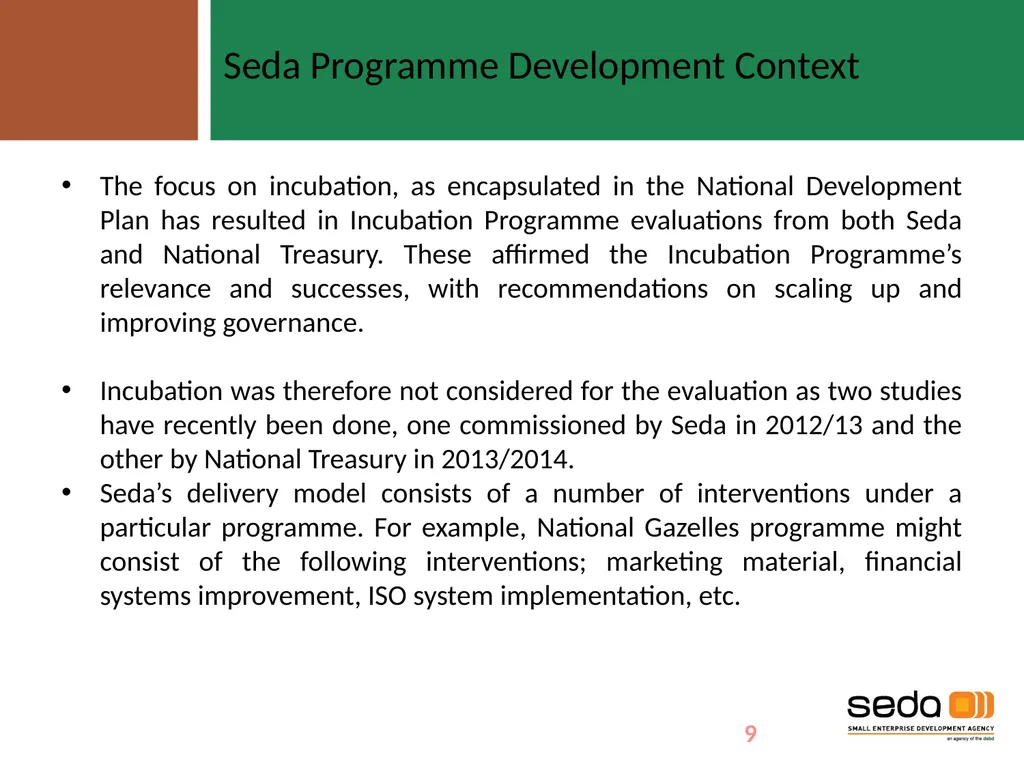
Seda Programme Development Context The focus on incubation, as encapsulated in the National Development Plan has resulted in Incubation Programme evaluations from both Seda and National Treasury. These affirmed the Incubation Programme’s relevance and successes, with recommendations on scaling up and improving governance.
Incubation was therefore not considered for the evaluation as two studies have recently been done, one commissioned by Seda in 2012/13 and the other by National Treasury in 2013/2014.
Seda’s delivery model consists of a number of interventions under a particular programme. For example, National Gazelles programme might consist of the following interventions; marketing material, financial systems improvement, ISO system implementation, etc. 9<br>
10
10 Programmes considered for the Review<br>
11
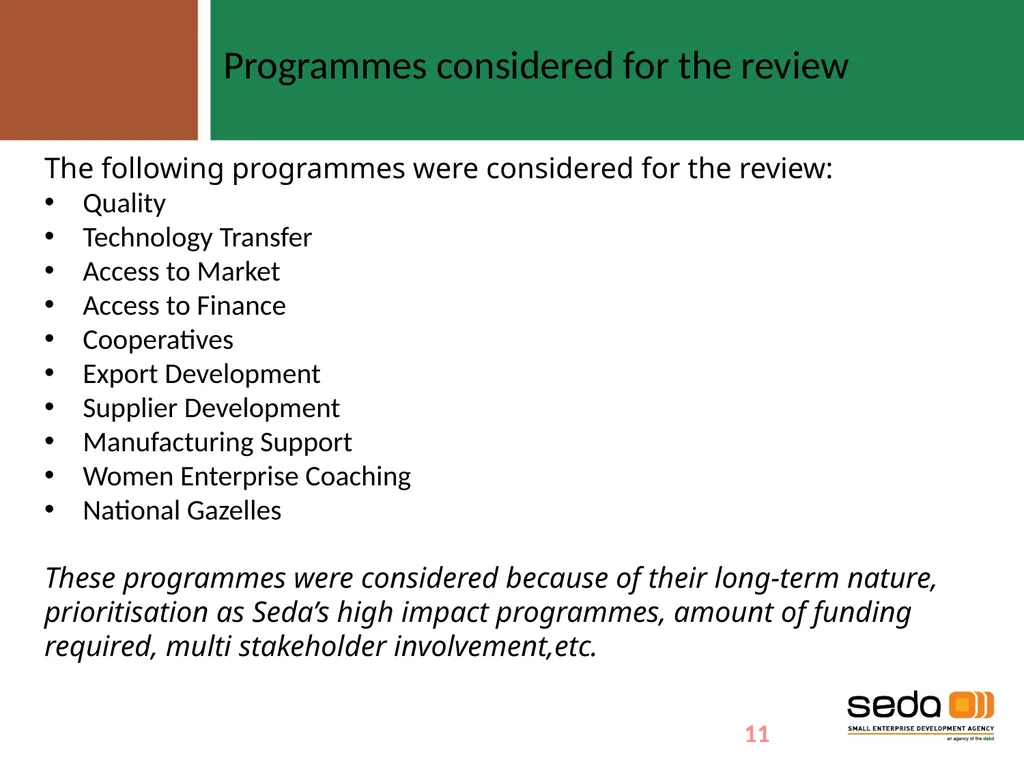
Programmes considered for the review The following programmes were considered for the review:
Quality
Technology Transfer
Access to Market
Access to Finance
Cooperatives
Export Development
Supplier Development
Manufacturing Support
Women Enterprise Coaching
National Gazelles
These programmes were considered because of their long-term nature, prioritisation as Seda’s high impact programmes, amount of funding required, multi stakeholder involvement,etc. 11<br>
12
12 Review Methodology<br>
13
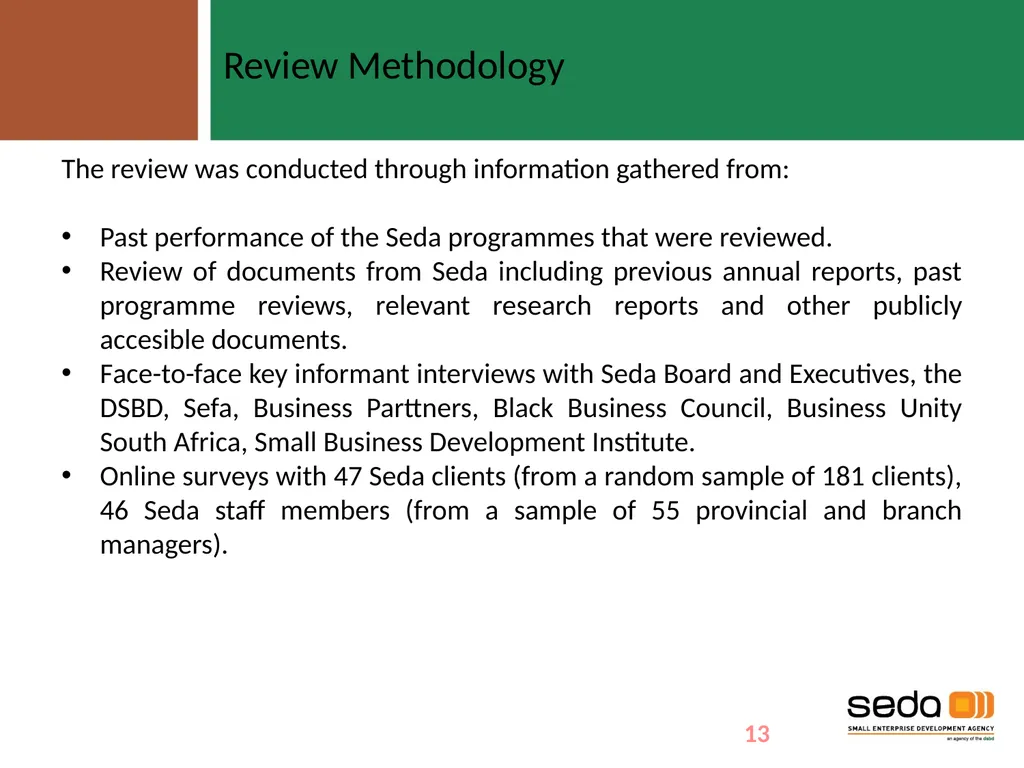
Review Methodology The review was conducted through information gathered from:
Past performance of the Seda programmes that were reviewed.
Review of documents from Seda including previous annual reports, past programme reviews, relevant research reports and other publicly accesible documents.
Face-to-face key informant interviews with Seda Board and Executives, the DSBD, Sefa, Business Parttners, Black Business Council, Business Unity South Africa, Small Business Development Institute.
Online surveys with 47 Seda clients (from a random sample of 181 clients), 46 Seda staff members (from a sample of 55 provincial and branch managers). 13<br>
14
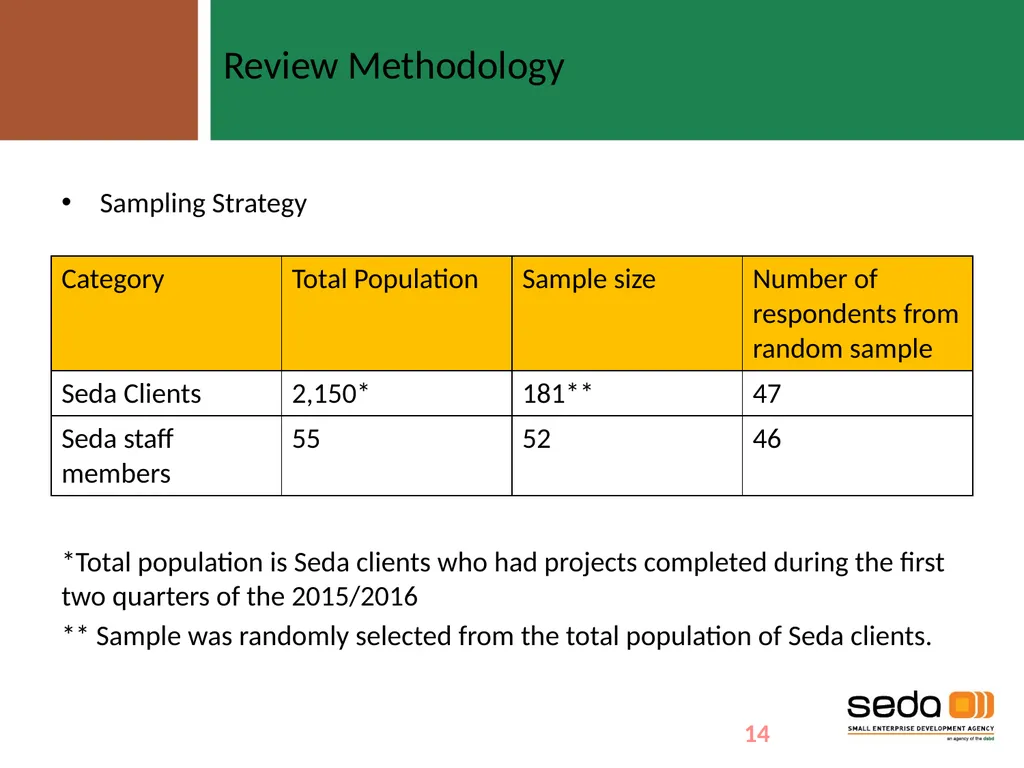
Review Methodology 14 Sampling Strategy
*Total population is Seda clients who had projects completed during the first two quarters of the 2015/2016
** Sample was randomly selected from the total population of Seda clients.<br>
15
15 Demographics of Surveyed Clients<br>
16
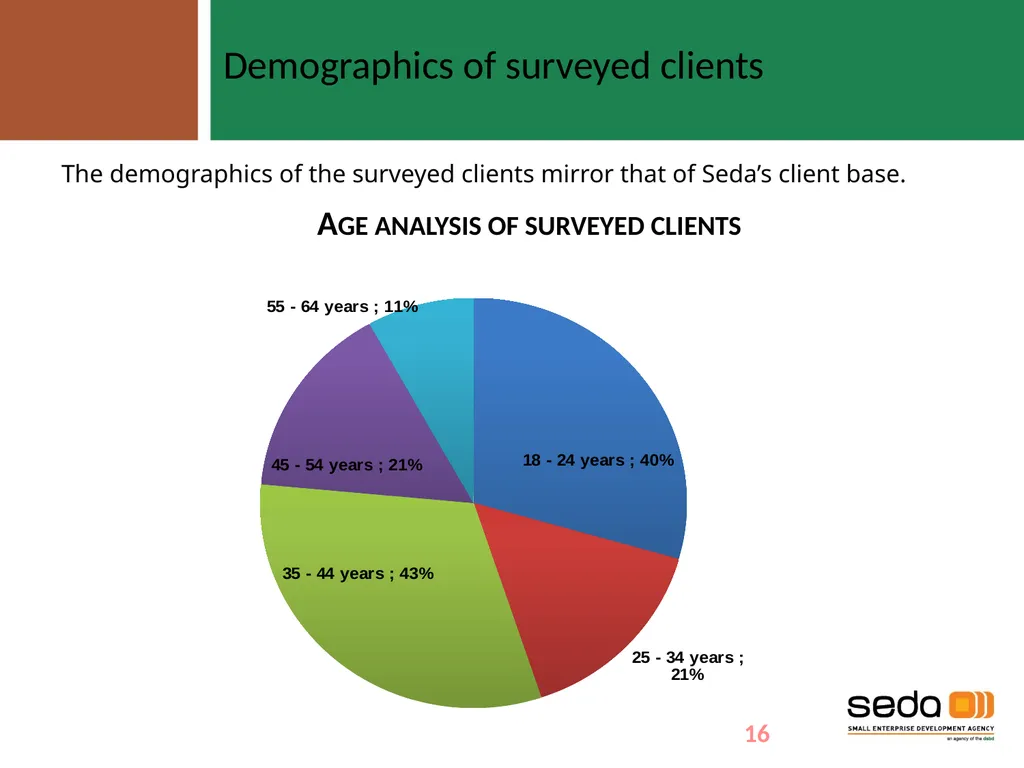
Demographics of surveyed clients The demographics of the surveyed clients mirror that of Seda’s client base. 16 Age analysis of surveyed clients<br>
17
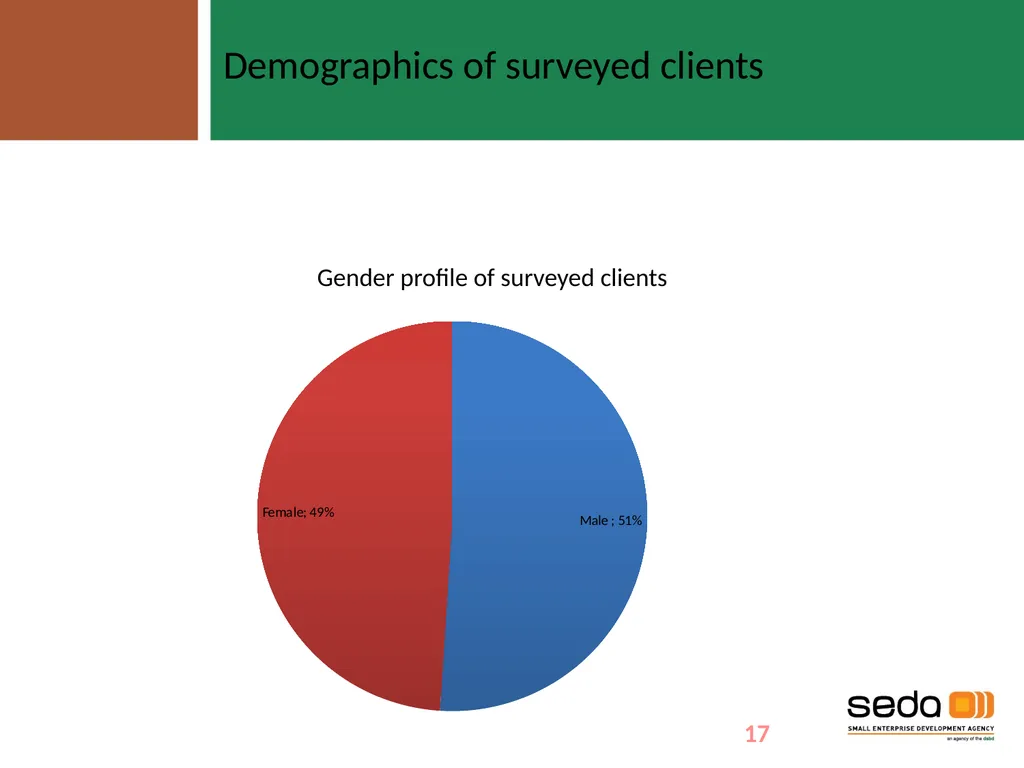
Demographics of surveyed clients 17 Gender profile of surveyed clients<br>
18
Demographics of surveyed clients 18<br>
19
Demographics of surveyed clients 19<br>
20
Demographics of surveyed clients 20<br>
21
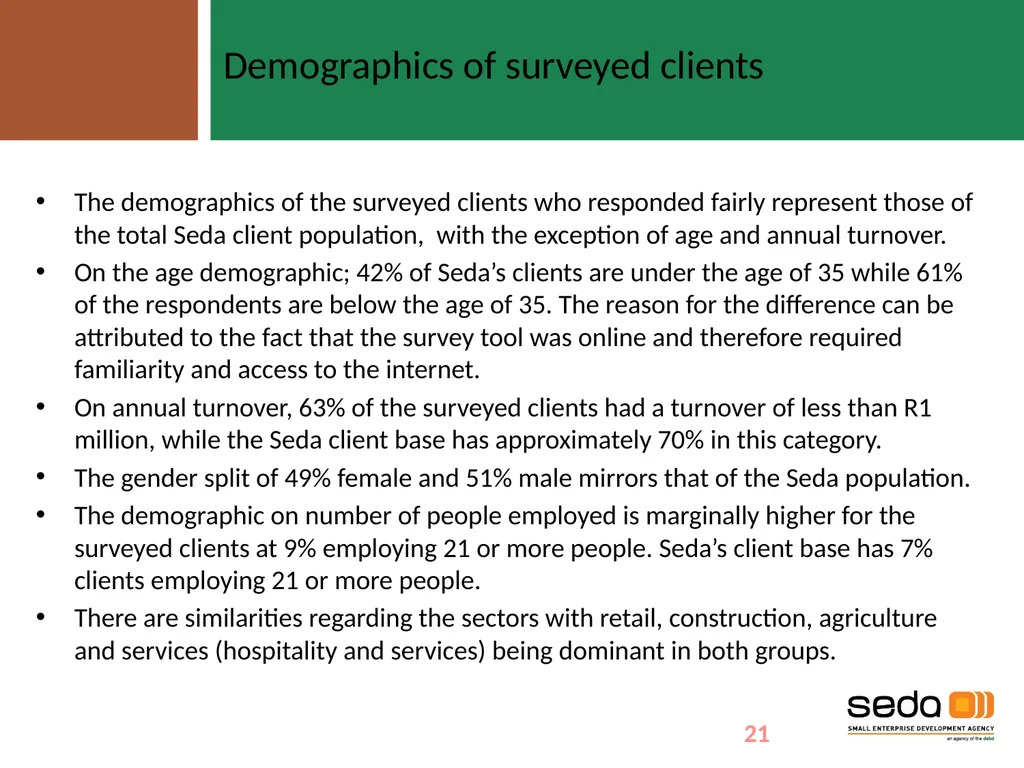
Demographics of surveyed clients The demographics of the surveyed clients who responded fairly represent those of the total Seda client population, with the exception of age and annual turnover.
On the age demographic; 42% of Seda’s clients are under the age of 35 while 61% of the respondents are below the age of 35. The reason for the difference can be attributed to the fact that the survey tool was online and therefore required familiarity and access to the internet.
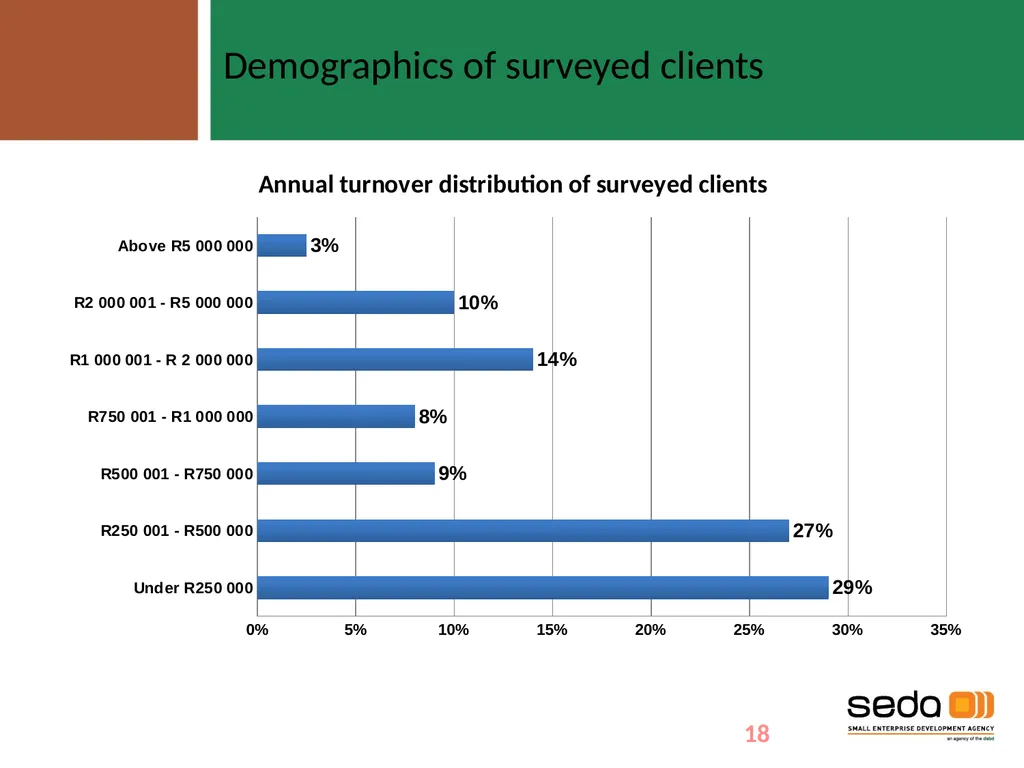
On annual turnover, 63% of the surveyed clients had a turnover of less than R1 million, while the Seda client base has approximately 70% in this category.
The gender split of 49% female and 51% male mirrors that of the Seda population.
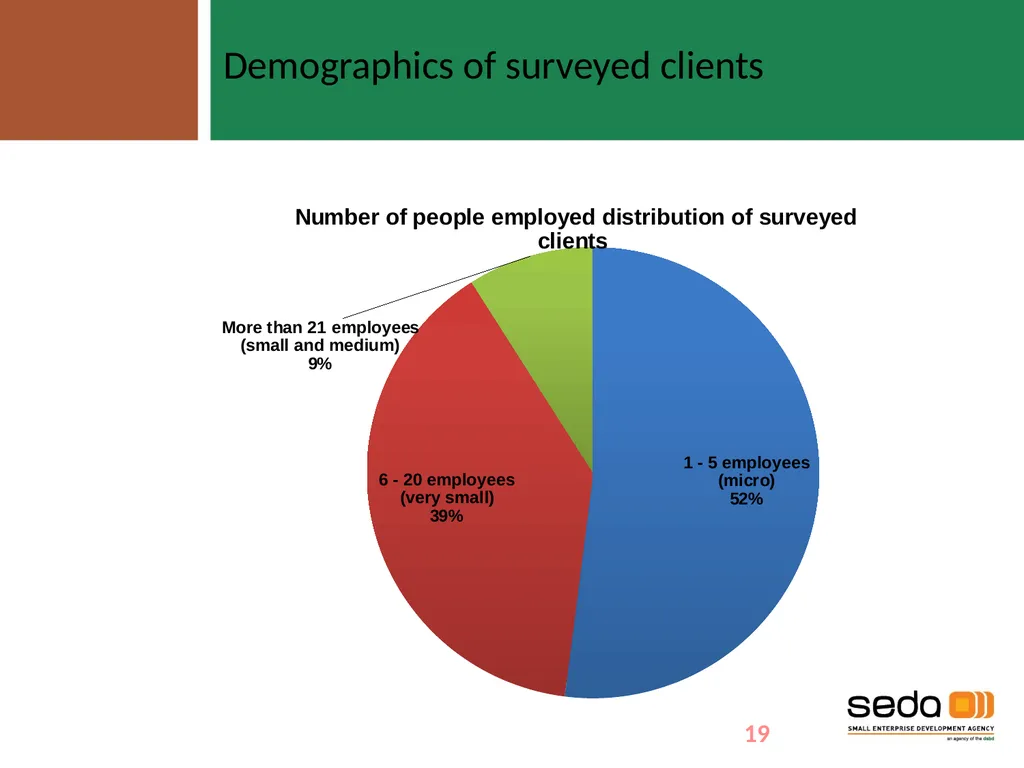
The demographic on number of people employed is marginally higher for the surveyed clients at 9% employing 21 or more people. Seda’s client base has 7% clients employing 21 or more people.
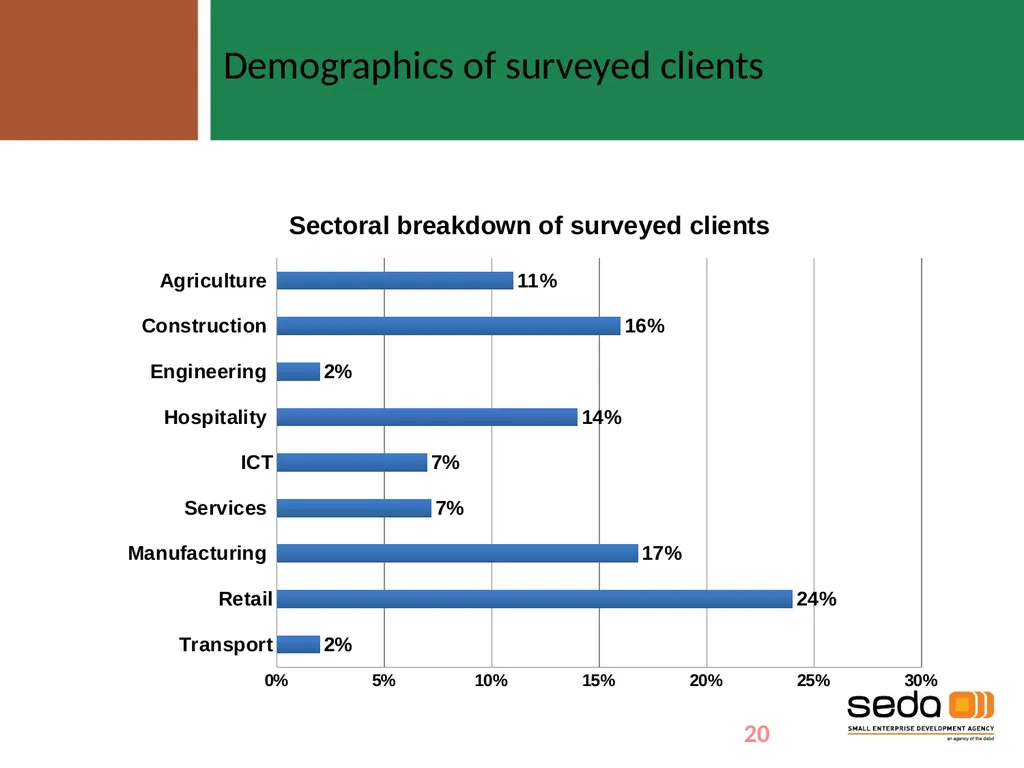
There are similarities regarding the sectors with retail, construction, agriculture and services (hospitality and services) being dominant in both groups. 21<br>
22
22 Findings and Recommendations<br>
23
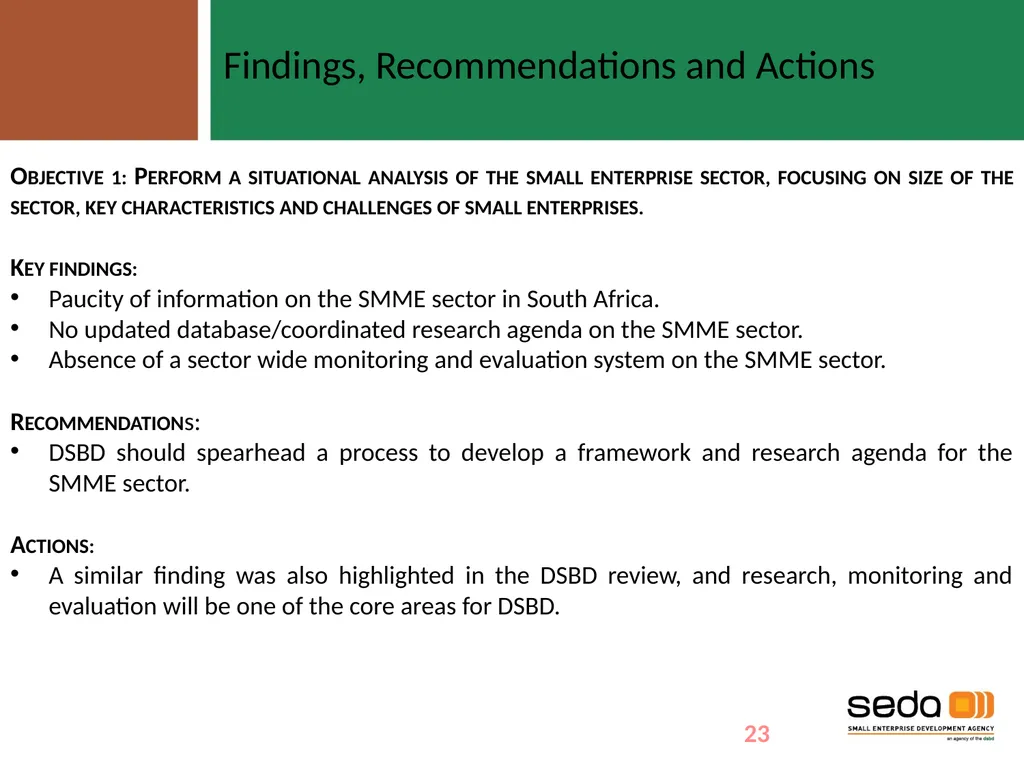
Findings, Recommendations and Actions Objective 1: Perform a situational analysis of the small enterprise sector, focusing on size of the sector, key characteristics and challenges of small enterprises.
Key findings:
Paucity of information on the SMME sector in South Africa.
No updated database/coordinated research agenda on the SMME sector.
Absence of a sector wide monitoring and evaluation system on the SMME sector.
Recommendations:
DSBD should spearhead a process to develop a framework and research agenda for the SMME sector.
Actions:
A similar finding was also highlighted in the DSBD review, and research, monitoring and evaluation will be one of the core areas for DSBD. 23<br>
24
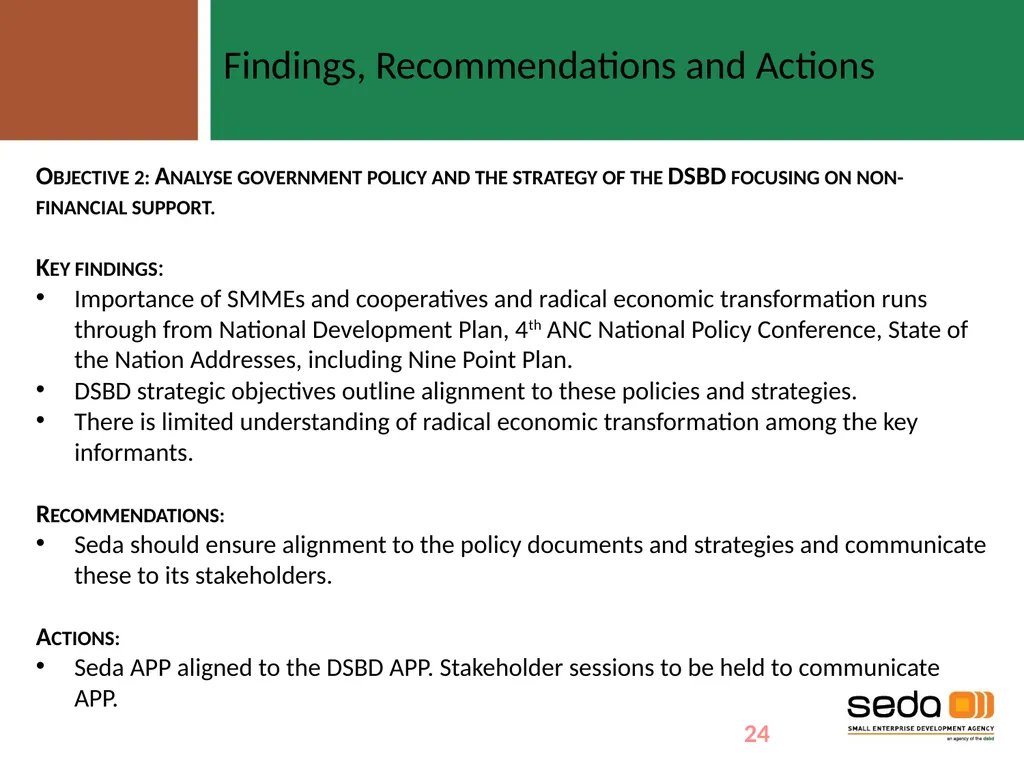
Findings, Recommendations and Actions Objective 2: Analyse government policy and the strategy of the DSBD focusing on non-financial support.
Key findings:
Importance of SMMEs and cooperatives and radical economic transformation runs through from National Development Plan, 4th ANC National Policy Conference, State of the Nation Addresses, including Nine Point Plan.
DSBD strategic objectives outline alignment to these policies and strategies.
There is limited understanding of radical economic transformation among the key informants.
Recommendations:
Seda should ensure alignment to the policy documents and strategies and communicate these to its stakeholders.
Actions:
Seda APP aligned to the DSBD APP. Stakeholder sessions to be held to communicate APP. 24<br>
25
Findings, Recommendations and Actions Objective 3: Ensure aligned understanding of small enterprise sector characteristics and challenges, and analysis of government policy and DSBD strategies with consultants reviewing financial support programmes and DSBD programmes.
Partially achieved, meetings held with the team reviewing the DSBD review, DSBD review team were part of a key stakeholder focus group.
Unable to synchronise with the Sefa review, Sefa however part of the key stakeholder focus group and key informant interviews. 25<br>
26
Findings, Recommendations and Actions Objective 4: Review SEDA’s products and services in terms of relevance, effectiveness, delivery mechanisms, scale against government policy and DSBD strategies.
Review done through surveys with both Seda clients and Seda business advisors.
Programmes evaluated on effectiveness/benefits, relevance and awareness/familiarity.
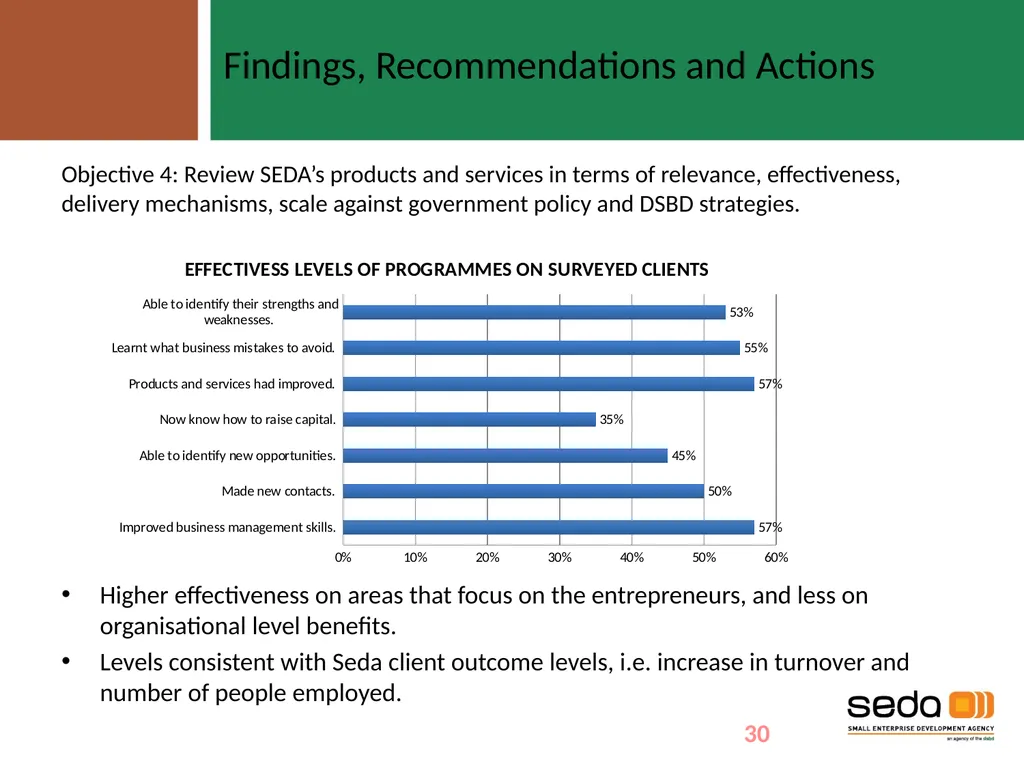
Seven scale items used to assess effectiveness/benefits. These are:
Improved business management skills.
Made new contacts.
Able to identify new opportunities.
Now know how to raise capital.
Products and services had improved.
Learnt what business mistakes to avoid.
Able to identify their strengths and weaknesses.
Evaluation of the delivery mechanism, focused on Seda as an organisation, the Business Advisors and the service providers. 26<br>
27
Findings, Recommendations and Actions Objective 4: Review SEDA’s products and services in terms of relevance, effectiveness, delivery mechanisms, scale against government policy and DSBD strategies.
KEY FINDINGS RELATED TO PROGRAMMES:
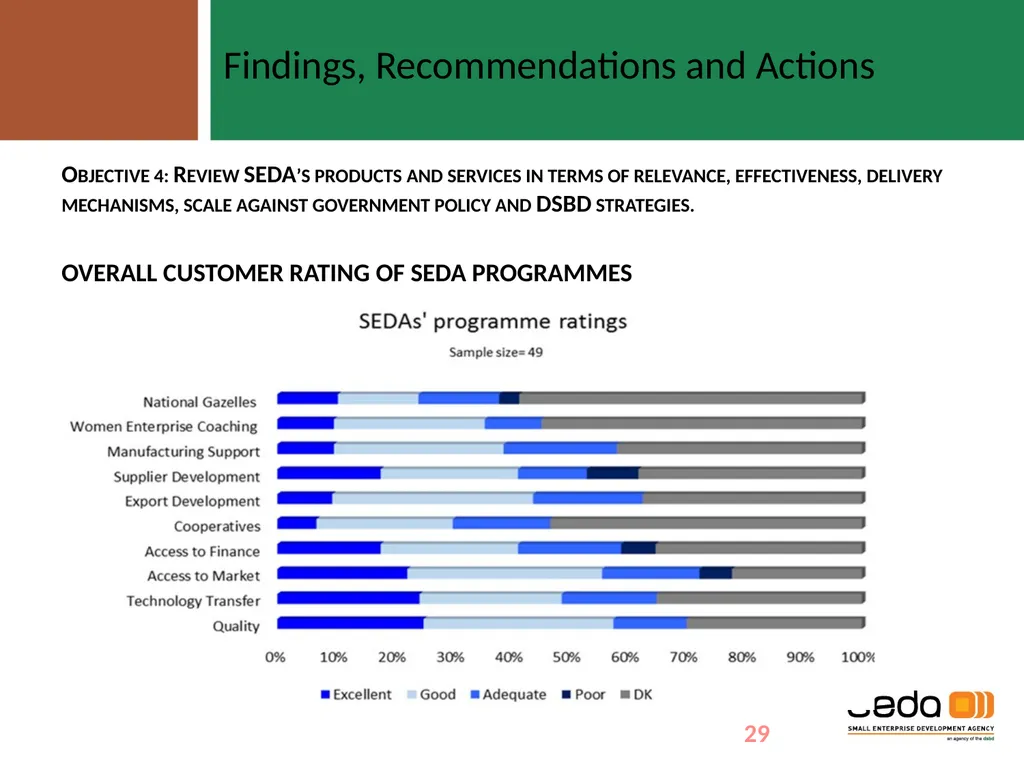
Overall, programmes found to be relevant and effective.
Incubation programme highly regarded, National Gazelles offers much promise.
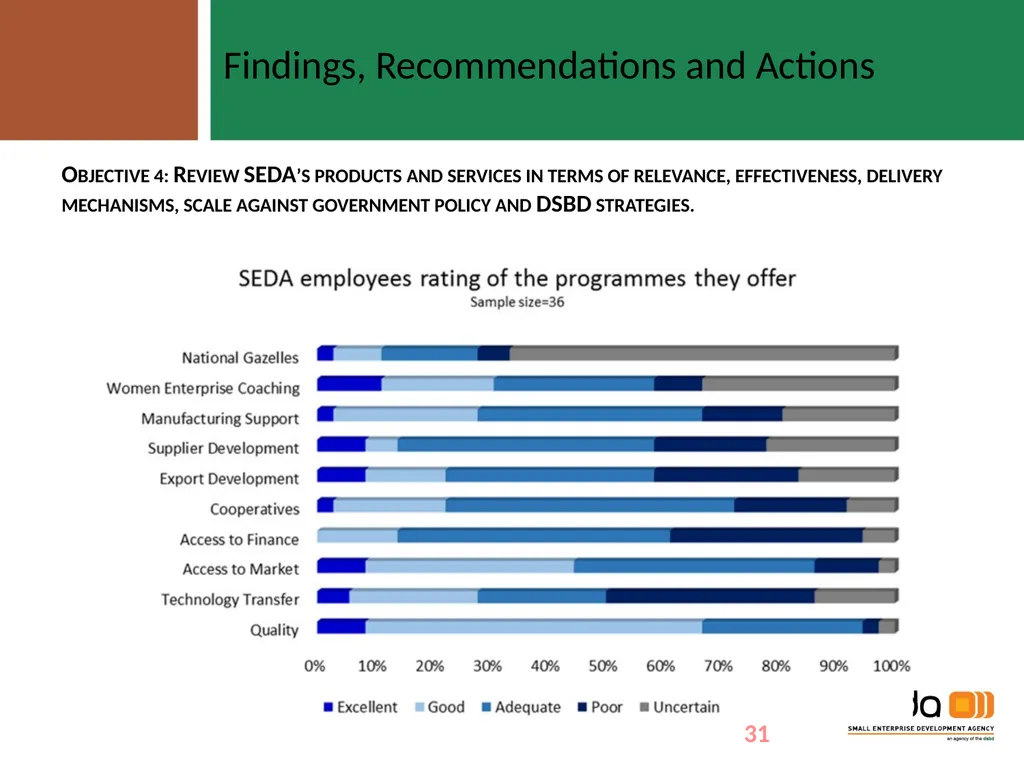
Clients rated Seda programmes higher than internal staff.
Low levels of awareness/familiarity of Seda programmes, particularly new ones such as National Gazelles. Reflected in do not know (DK) responses.
Organisation network well established, staff reasonably well trained, sound relations with key stakeholders.
Capacity issues identified with two key components of the delivery mechanism, i.e. business advisors and service providers.
Two schools thought on what Seda focus should be; the entire SMME sector, or a part of the sector to maximise impact.
Seda currently does not have the capacity to cover the entire SMME and cooperative spectrum 27<br>
28
Findings, Recommendations and Actions Objective 4: Review SEDA’s products and services in terms of relevance, effectiveness, delivery mechanisms, scale against government policy and DSBD strategies.
ACTIONS:
Awareness on the organisation to also incorporate programmes, to be part of briefing to clients when they register on Seda database.
Assessment of Business Advisors to be done against an organisational competency framework, appropriate training programmes being developed.
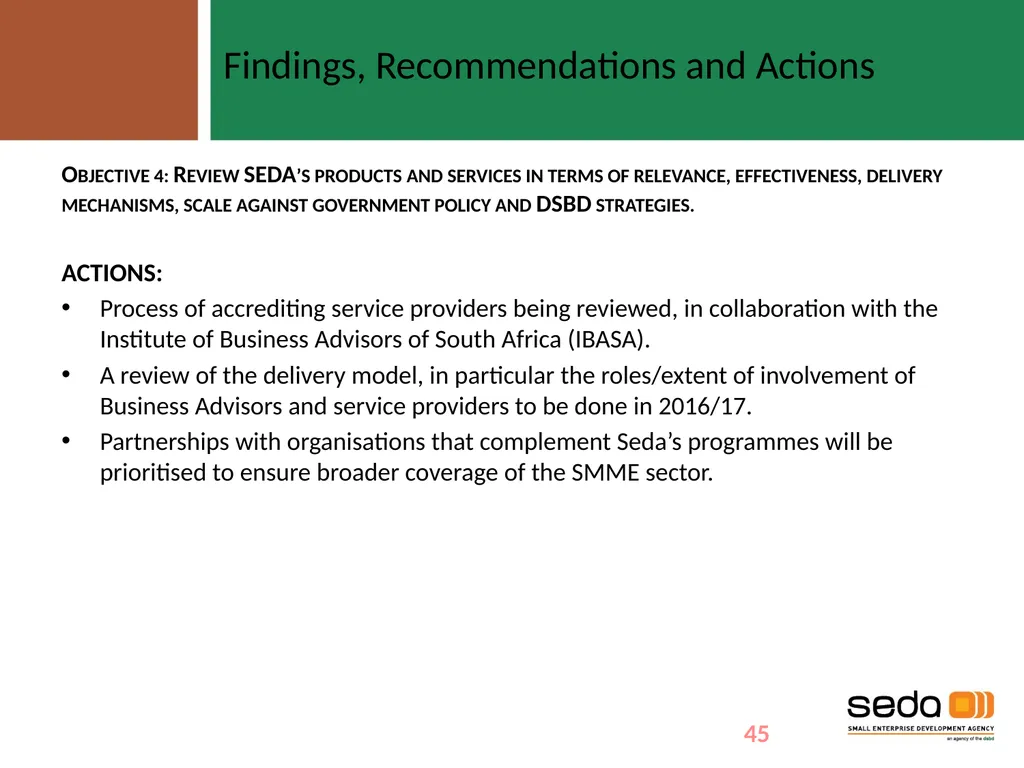
Process of accrediting service providers being reviewed, in collaboration with the Institute of Business Advisors of South Africa (IBASA).
A review of the delivery model, in particular the roles/extent of involvement of Business Advisors and service providers to be done in 2016/17.
Partnerships with organisations that complement Seda’s programmes will be prioritised to ensure broader coverage of the SMME sector. 28<br>
29
Findings, Recommendations and Actions Objective 4: Review SEDA’s products and services in terms of relevance, effectiveness, delivery mechanisms, scale against government policy and DSBD strategies.
OVERALL CUSTOMER RATING OF SEDA PROGRAMMES 29<br>
30
Findings, Recommendations and Actions Objective 4: Review SEDA’s products and services in terms of relevance, effectiveness, delivery mechanisms, scale against government policy and DSBD strategies.
Higher effectiveness on areas that focus on the entrepreneurs, and less on organisational level benefits.
Levels consistent with Seda client outcome levels, i.e. increase in turnover and number of people employed. 30<br>
31
Findings, Recommendations and Actions Objective 4: Review SEDA’s products and services in terms of relevance, effectiveness, delivery mechanisms, scale against government policy and DSBD strategies. 31<br>
32
Findings, Recommendations and Actions Objective 4: Review SEDA’s products and services in terms of relevance, effectiveness, delivery mechanisms, scale against government policy and DSBD strategies.
ANALYSIS:
Although ratings of programmes as either excellent, good or adequate are at an acceptable level for both Seda staff and Seda clients, what is worth noting is that the clients rate the programmes higher than internal staff.
At close out workshop, this was discussed and the Seda staff (provincial and branch managers) perceived the programme development process to be done without consulting them, and programmes were not adequately communicated to the delivery network.
The quality and technology transfer programmes, which are offered through the Seda Technology Programme were cited as examples of programme development and communication to learn from. 32<br>
33
Findings, Recommendations and Actions Objective 4: Review SEDA’s products and services in terms of relevance, effectiveness, delivery mechanisms, scale against government policy and DSBD strategies.
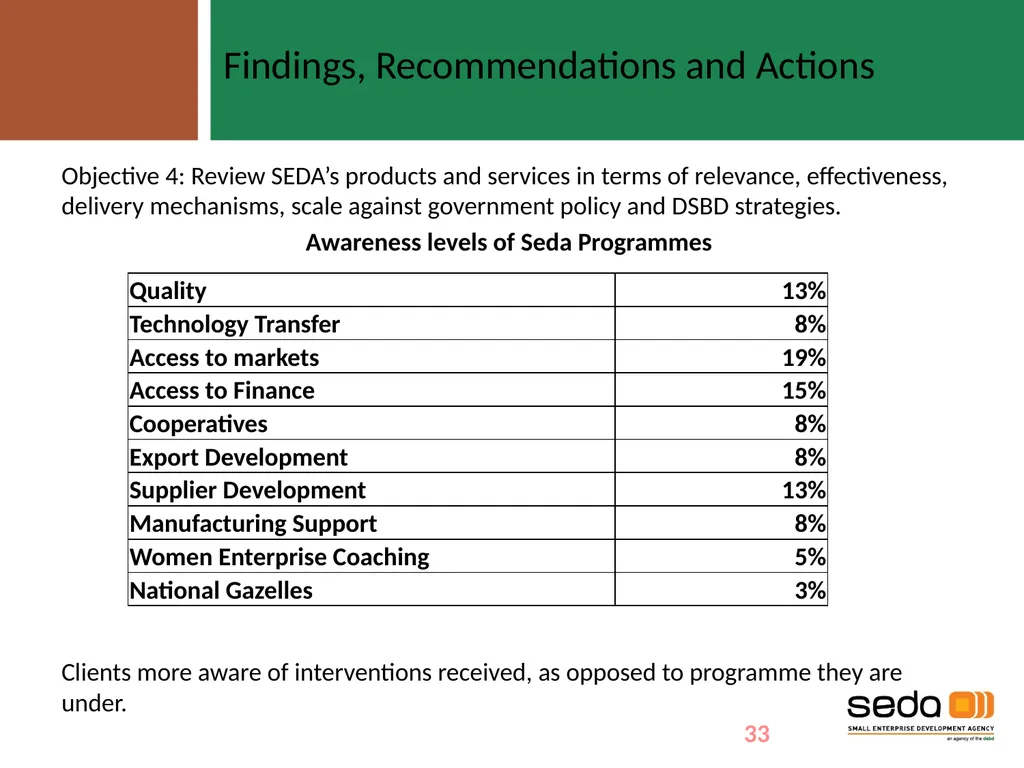
Awareness levels of Seda Programmes
Clients more aware of interventions received, as opposed to programme they are under. 33<br>
34
Findings, Recommendations and Actions Objective 4: Review SEDA’s products and services in terms of relevance, effectiveness, delivery mechanisms, scale against government policy and DSBD strategies.
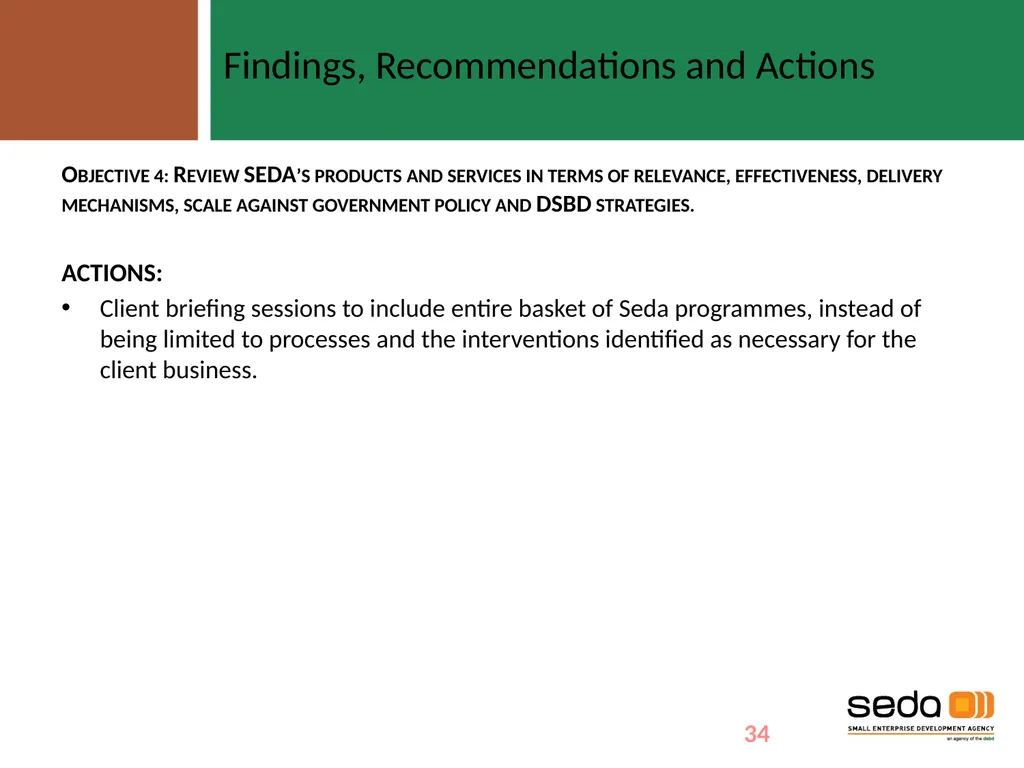
ACTIONS:
Client briefing sessions to include entire basket of Seda programmes, instead of being limited to processes and the interventions identified as necessary for the client business. 34<br>
35
Findings, Recommendations and Actions Objective 4: Review SEDA’s products and services in terms of relevance, effectiveness, delivery mechanisms, scale against government policy and DSBD strategies.
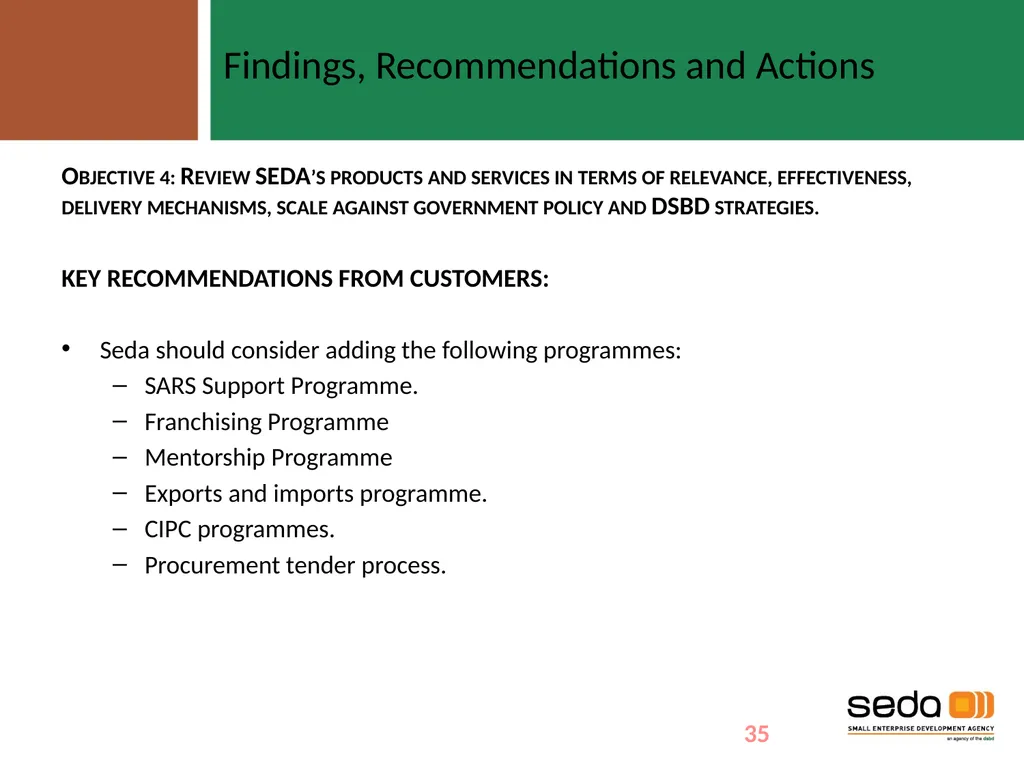
KEY RECOMMENDATIONS FROM CUSTOMERS:
Seda should consider adding the following programmes:
SARS Support Programme.
Franchising Programme
Mentorship Programme
Exports and imports programme.
CIPC programmes.
Procurement tender process. 35<br>
36
Findings, Recommendations and Actions Objective 4: Review SEDA’s products and services in terms of relevance, effectiveness, delivery mechanisms, scale against government policy and DSBD strategies.
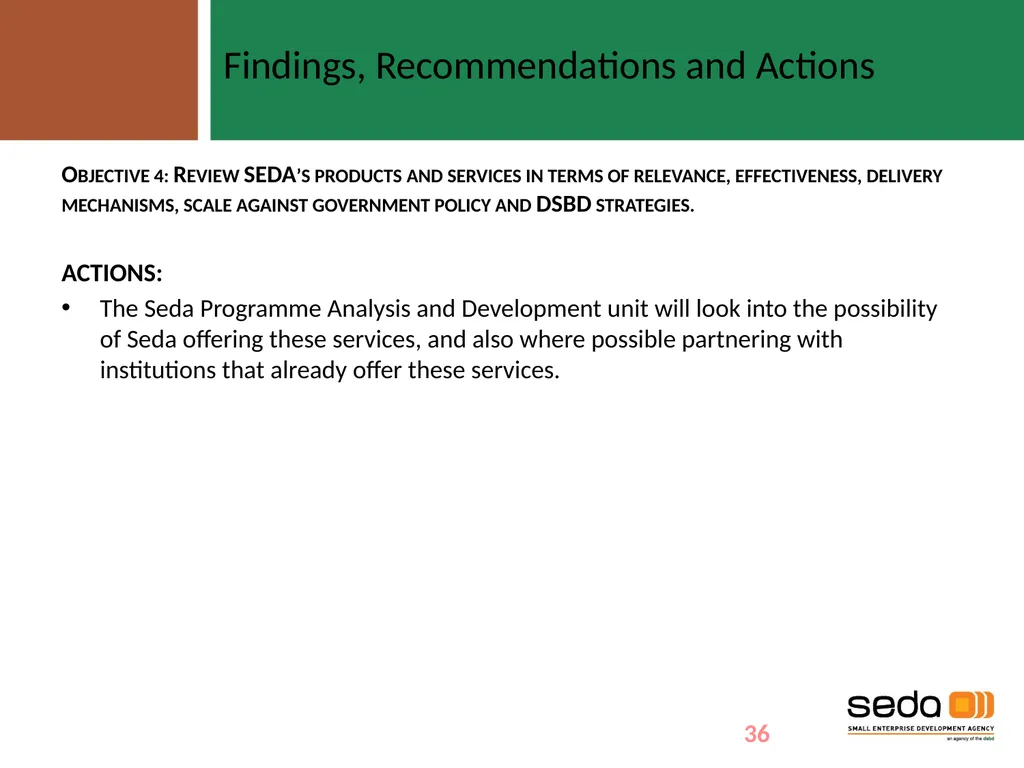
ACTIONS:
The Seda Programme Analysis and Development unit will look into the possibility of Seda offering these services, and also where possible partnering with institutions that already offer these services. 36<br>
37
Findings, Recommendations and Actions Objective 4: Review SEDA’s products and services in terms of relevance, effectiveness, delivery mechanisms, scale against government policy and DSBD strategies.
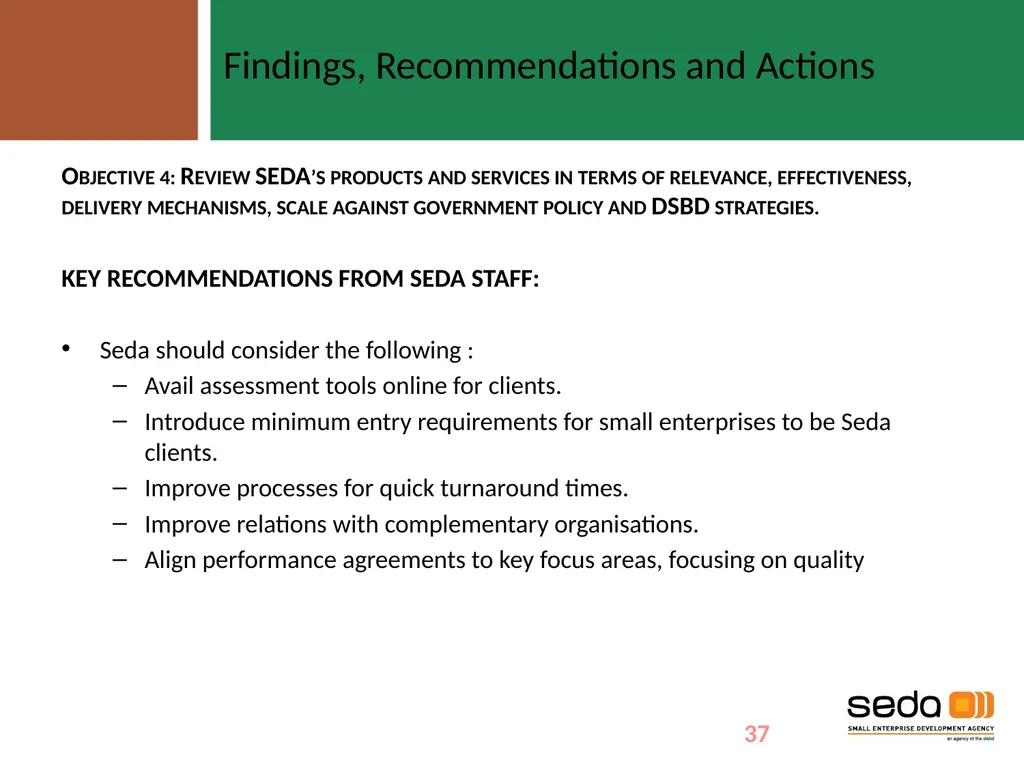
KEY RECOMMENDATIONS FROM SEDA STAFF:
Seda should consider the following :
Avail assessment tools online for clients.
Introduce minimum entry requirements for small enterprises to be Seda clients.
Improve processes for quick turnaround times.
Improve relations with complementary organisations.
Align performance agreements to key focus areas, focusing on quality 37<br>
38
Findings, Recommendations and Actions Objective 4: Review SEDA’s products and services in terms of relevance, effectiveness, delivery mechanisms, scale against government policy and DSBD strategies.
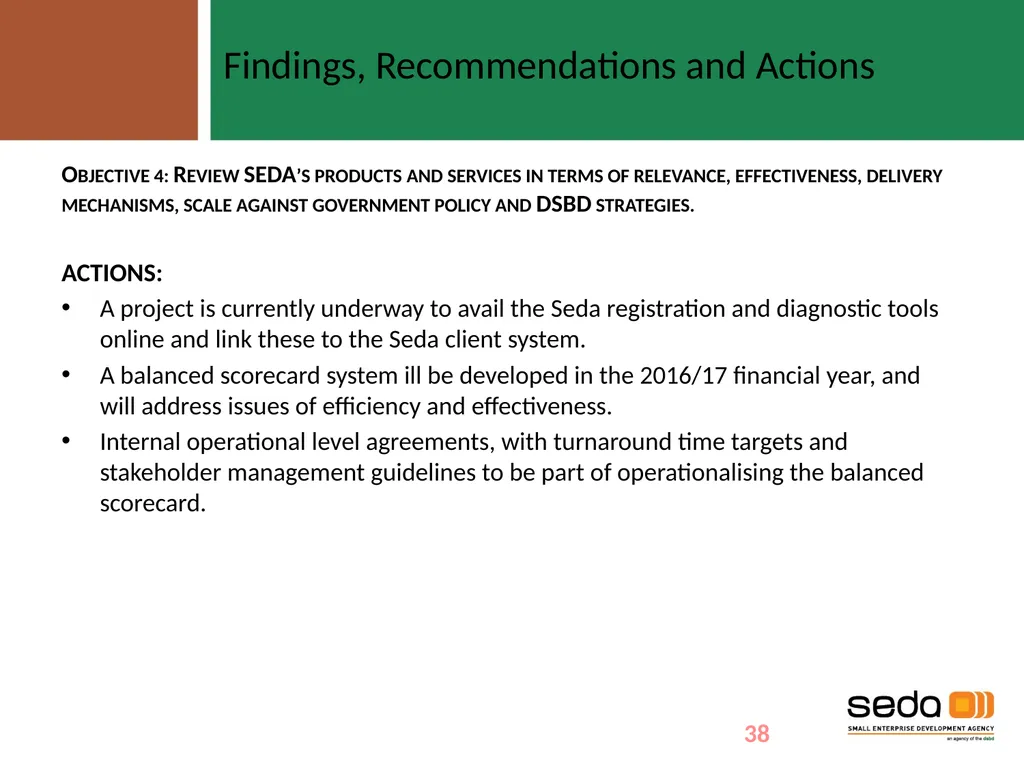
ACTIONS:
A project is currently underway to avail the Seda registration and diagnostic tools online and link these to the Seda client system.
A balanced scorecard system ill be developed in the 2016/17 financial year, and will address issues of efficiency and effectiveness.
Internal operational level agreements, with turnaround time targets and stakeholder management guidelines to be part of operationalising the balanced scorecard. 38<br>
39
Findings, Recommendations and Actions Objective 4: Review SEDA’s products and services in terms of relevance, effectiveness, delivery mechanisms, scale against government policy and DSBD strategies.
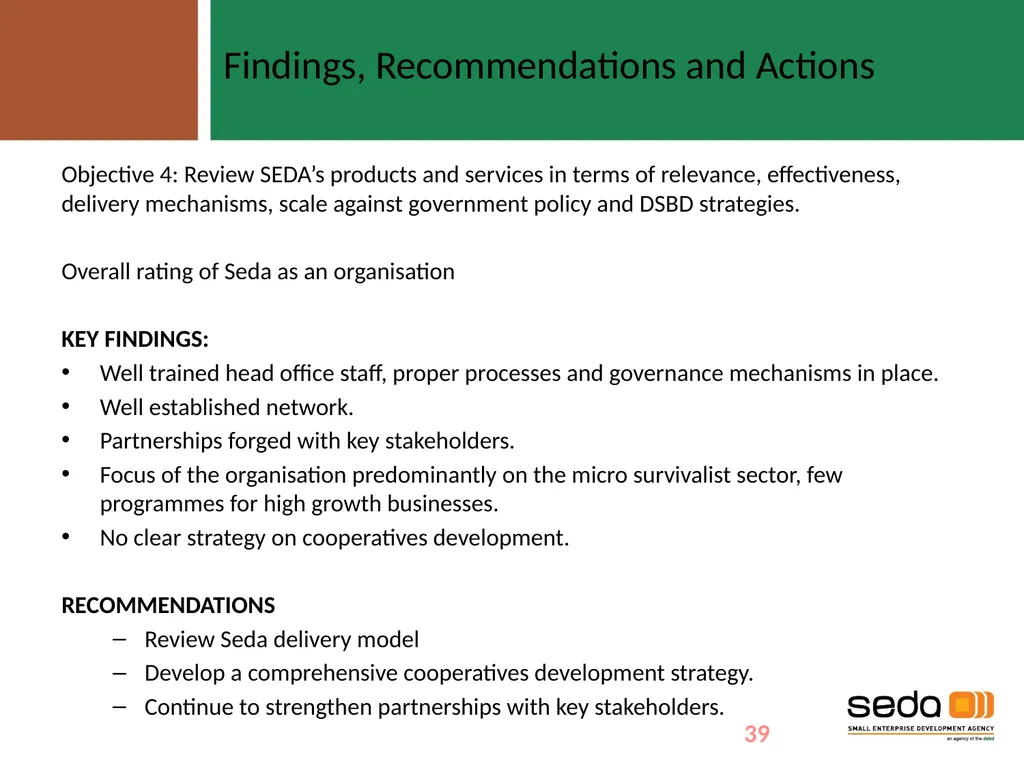
Overall rating of Seda as an organisation
KEY FINDINGS:
Well trained head office staff, proper processes and governance mechanisms in place.
Well established network.
Partnerships forged with key stakeholders.
Focus of the organisation predominantly on the micro survivalist sector, few programmes for high growth businesses.
No clear strategy on cooperatives development.
RECOMMENDATIONS
Review Seda delivery model
Develop a comprehensive cooperatives development strategy.
Continue to strengthen partnerships with key stakeholders. 39<br>
40
Findings, Recommendations and Actions Objective 4: Review SEDA’s products and services in terms of relevance, effectiveness, delivery mechanisms, scale against government policy and DSBD strategies.
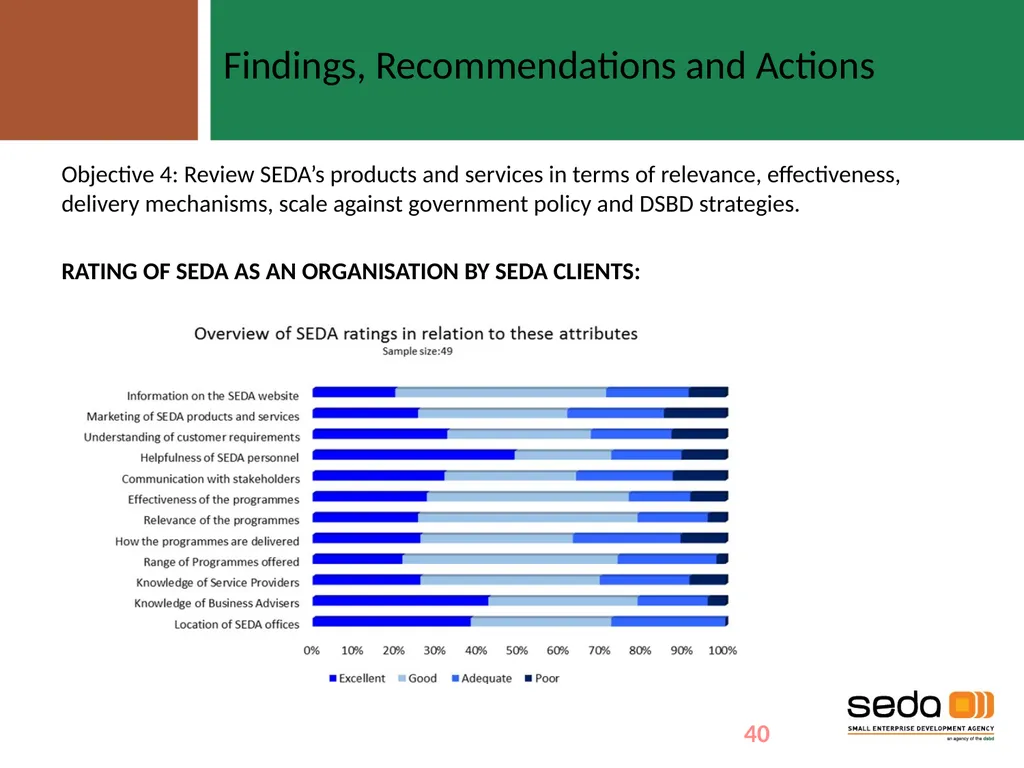
RATING OF SEDA AS AN ORGANISATION BY SEDA CLIENTS: 40<br>
41
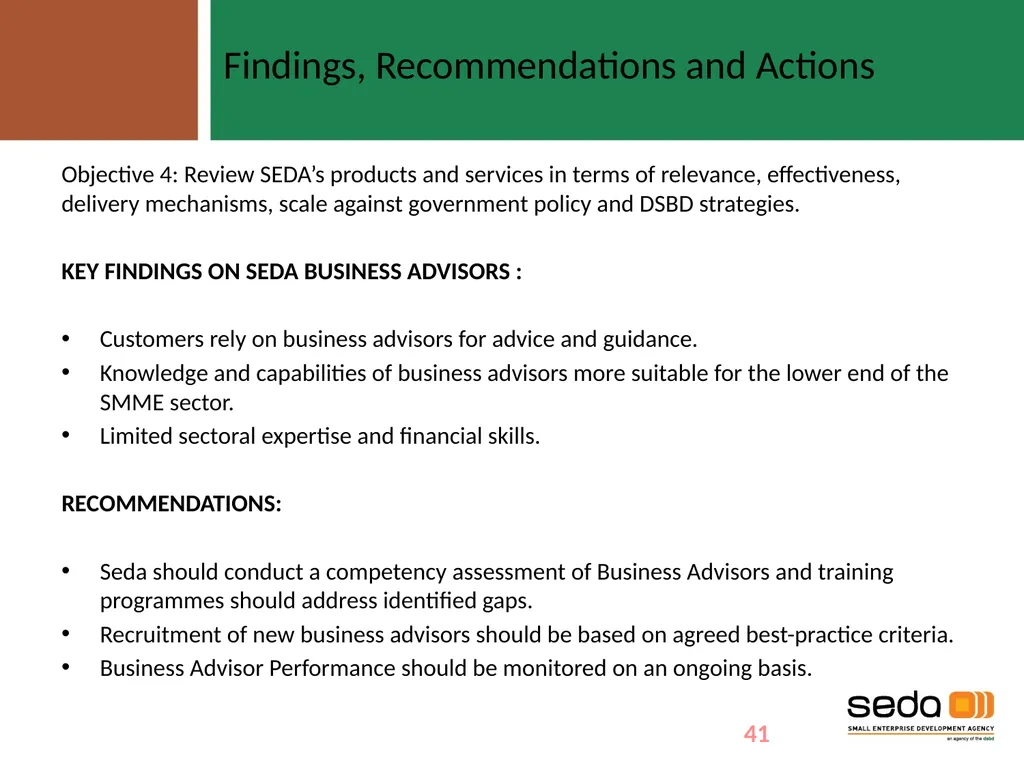
Findings, Recommendations and Actions Objective 4: Review SEDA’s products and services in terms of relevance, effectiveness, delivery mechanisms, scale against government policy and DSBD strategies.
KEY FINDINGS ON SEDA BUSINESS ADVISORS :
Customers rely on business advisors for advice and guidance.
Knowledge and capabilities of business advisors more suitable for the lower end of the SMME sector.
Limited sectoral expertise and financial skills.
RECOMMENDATIONS:
Seda should conduct a competency assessment of Business Advisors and training programmes should address identified gaps.
Recruitment of new business advisors should be based on agreed best-practice criteria.
Business Advisor Performance should be monitored on an ongoing basis. 41<br>
42
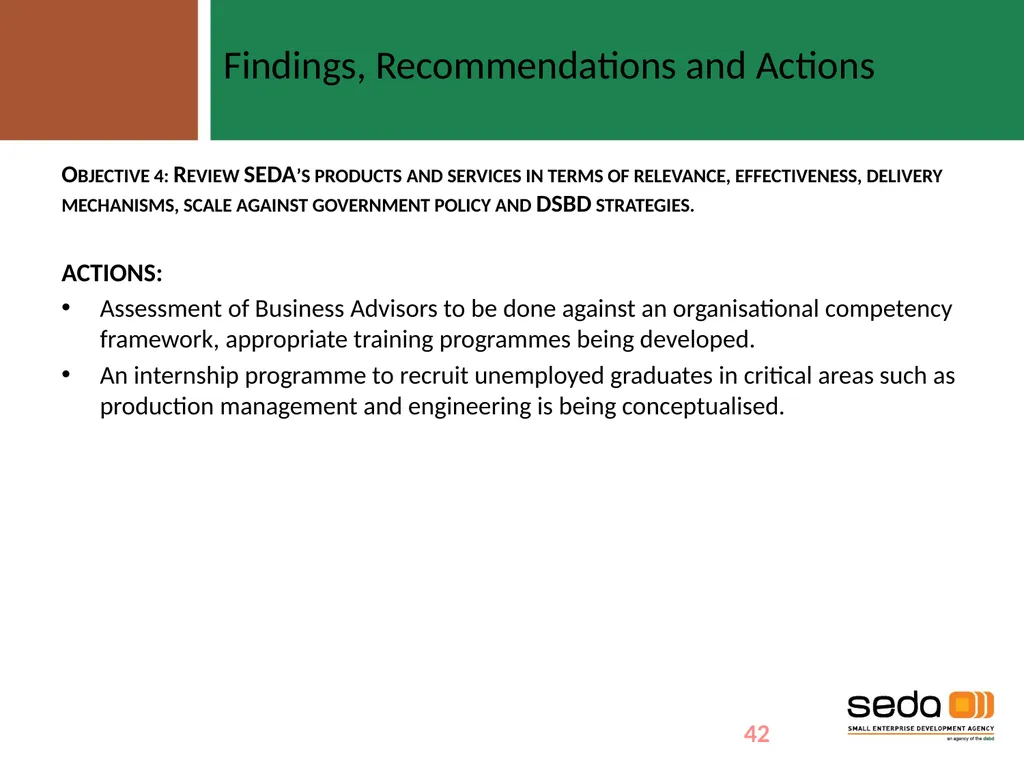
Findings, Recommendations and Actions Objective 4: Review SEDA’s products and services in terms of relevance, effectiveness, delivery mechanisms, scale against government policy and DSBD strategies.
ACTIONS:
Assessment of Business Advisors to be done against an organisational competency framework, appropriate training programmes being developed.
An internship programme to recruit unemployed graduates in critical areas such as production management and engineering is being conceptualised. 42<br>
43
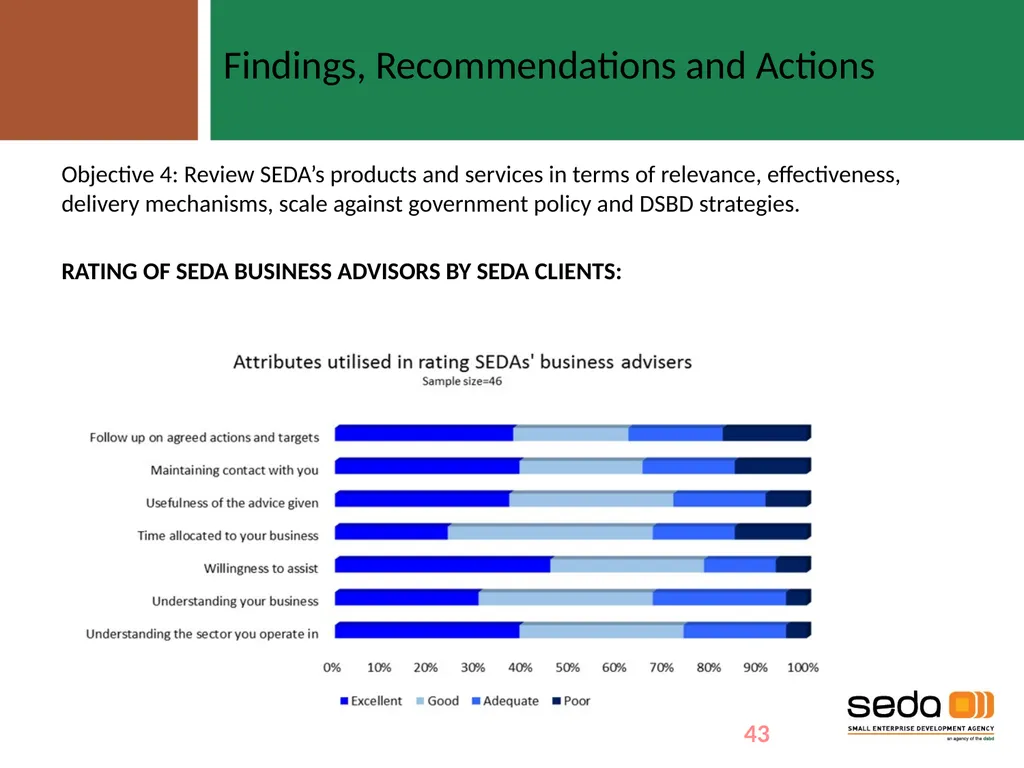
Findings, Recommendations and Actions Objective 4: Review SEDA’s products and services in terms of relevance, effectiveness, delivery mechanisms, scale against government policy and DSBD strategies.
RATING OF SEDA BUSINESS ADVISORS BY SEDA CLIENTS: 43<br>
44
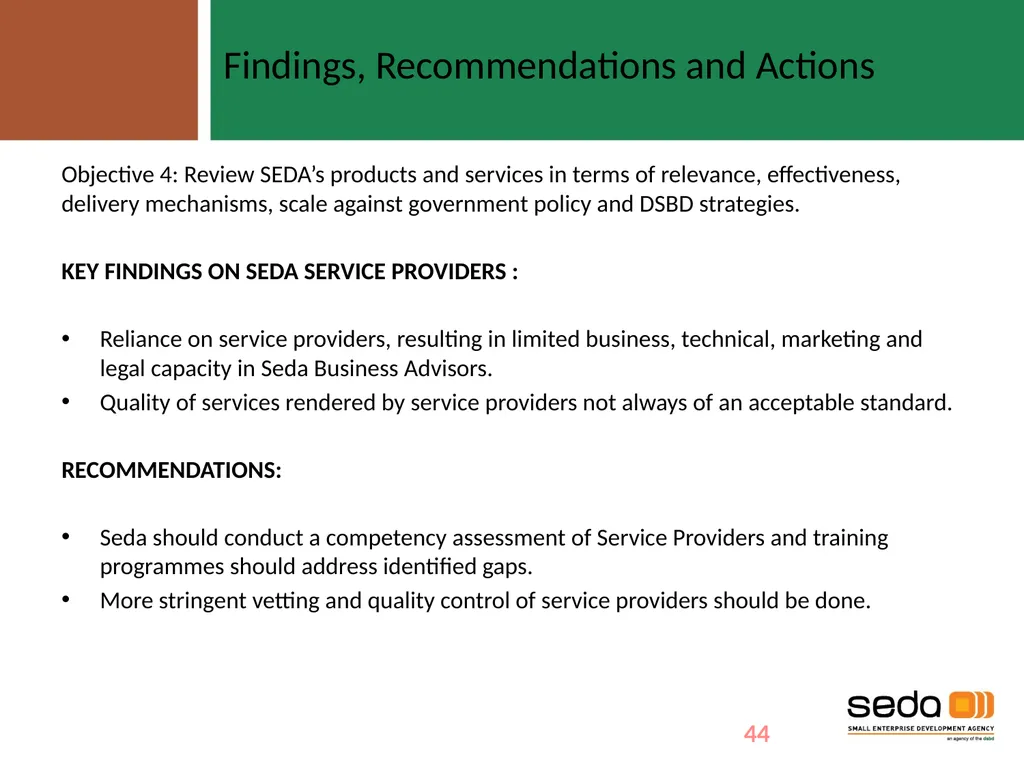
Findings, Recommendations and Actions Objective 4: Review SEDA’s products and services in terms of relevance, effectiveness, delivery mechanisms, scale against government policy and DSBD strategies.
KEY FINDINGS ON SEDA SERVICE PROVIDERS :
Reliance on service providers, resulting in limited business, technical, marketing and legal capacity in Seda Business Advisors.
Quality of services rendered by service providers not always of an acceptable standard.
RECOMMENDATIONS:
Seda should conduct a competency assessment of Service Providers and training programmes should address identified gaps.
More stringent vetting and quality control of service providers should be done. 44<br>
45
Findings, Recommendations and Actions Objective 4: Review SEDA’s products and services in terms of relevance, effectiveness, delivery mechanisms, scale against government policy and DSBD strategies.
ACTIONS:
Process of accrediting service providers being reviewed, in collaboration with the Institute of Business Advisors of South Africa (IBASA).
A review of the delivery model, in particular the roles/extent of involvement of Business Advisors and service providers to be done in 2016/17.
Partnerships with organisations that complement Seda’s programmes will be prioritised to ensure broader coverage of the SMME sector. 45<br>
46
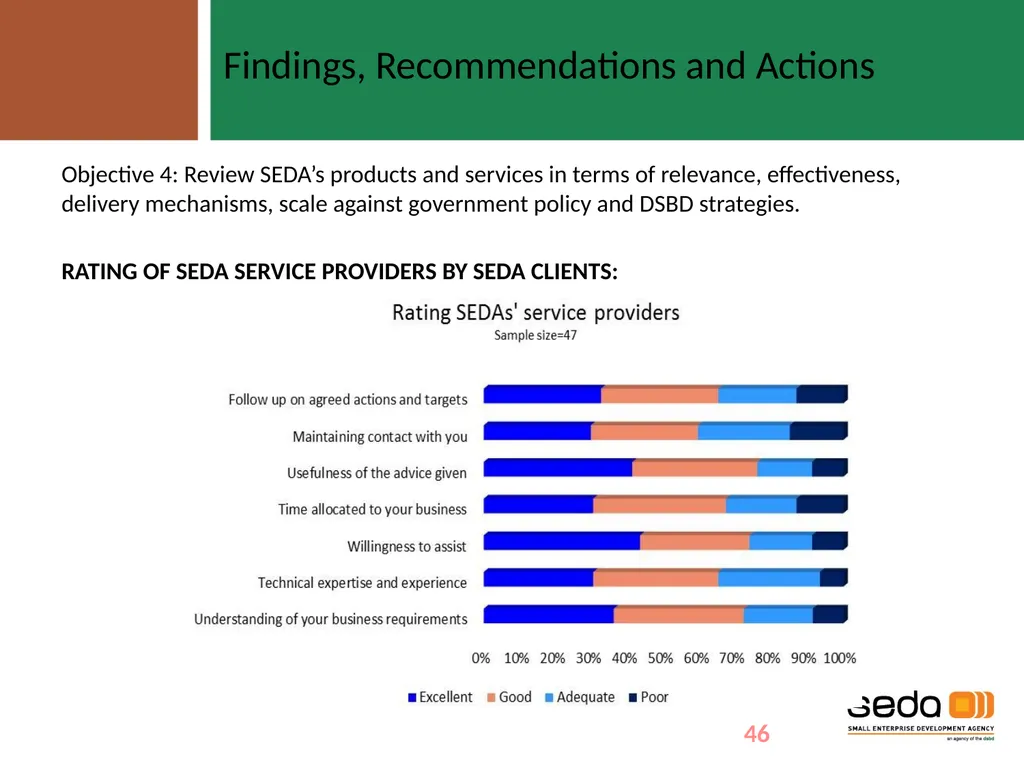
Findings, Recommendations and Actions Objective 4: Review SEDA’s products and services in terms of relevance, effectiveness, delivery mechanisms, scale against government policy and DSBD strategies.
RATING OF SEDA SERVICE PROVIDERS BY SEDA CLIENTS: 46<br>
47
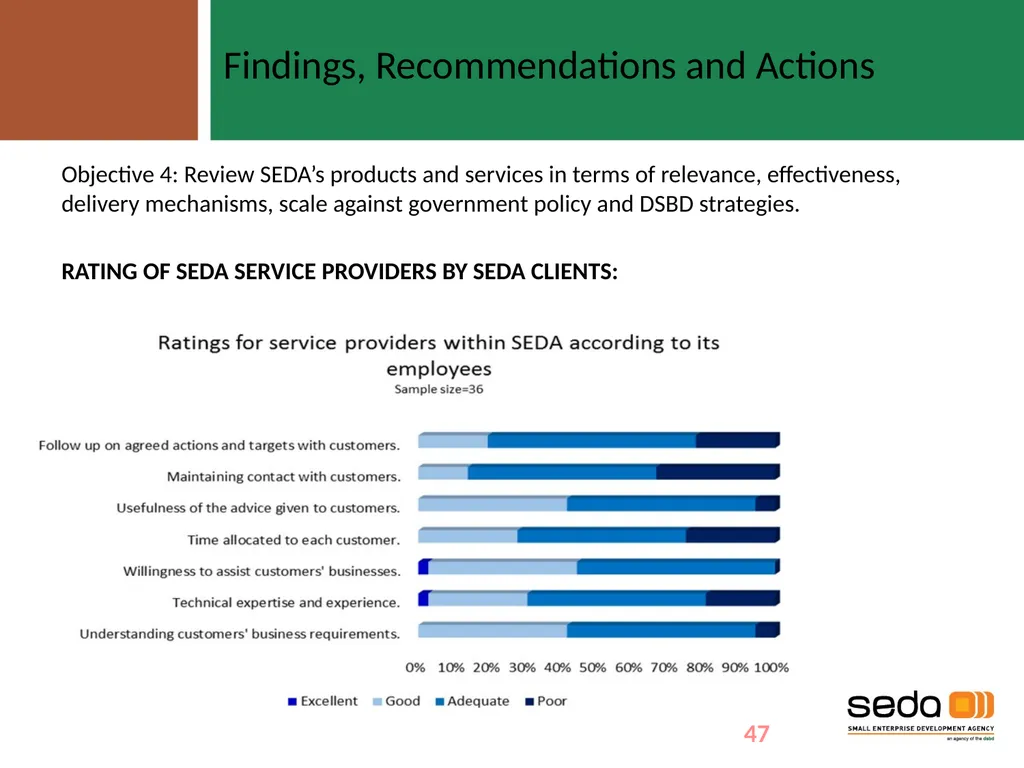
Findings, Recommendations and Actions Objective 4: Review SEDA’s products and services in terms of relevance, effectiveness, delivery mechanisms, scale against government policy and DSBD strategies.
RATING OF SEDA SERVICE PROVIDERS BY SEDA CLIENTS: 47<br>
48
Findings, Recommendations and Actions Objective 4: Review SEDA’s products and services in terms of relevance, effectiveness, delivery mechanisms, scale against government policy and DSBD strategies.
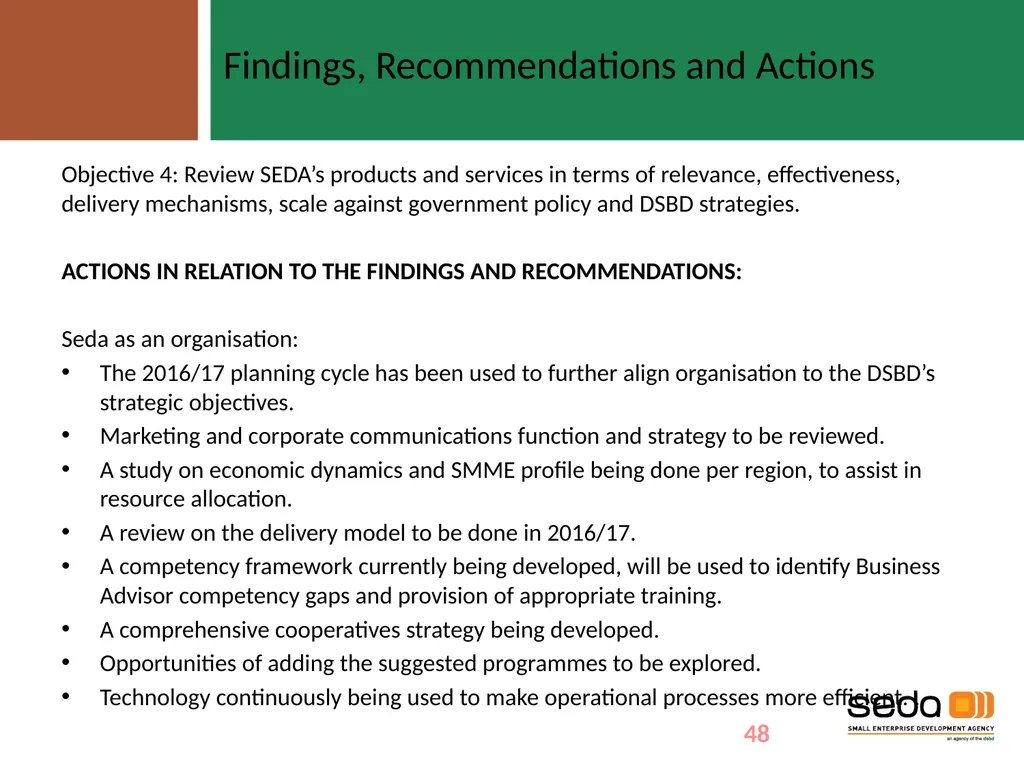
ACTIONS IN RELATION TO THE FINDINGS AND RECOMMENDATIONS:
Seda as an organisation:
The 2016/17 planning cycle has been used to further align organisation to the DSBD’s strategic objectives.
Marketing and corporate communications function and strategy to be reviewed.
A study on economic dynamics and SMME profile being done per region, to assist in resource allocation.
A review on the delivery model to be done in 2016/17.
A competency framework currently being developed, will be used to identify Business Advisor competency gaps and provision of appropriate training.
A comprehensive cooperatives strategy being developed.
Opportunities of adding the suggested programmes to be explored.
Technology continuously being used to make operational processes more efficient. . 48<br>
49
Findings, Recommendations and Actions Objective 5: Propose recommendations including, but not limited to, priority programmes, mechanisms to maximise impact, improving coordination with other support programmes within the DSBD and SEFA.
This objective is covered in the comments on Objective 4. 49<br>
50
Way Forward Review study has been presented to the Seda and DSBD EXCO teams.
The recommendations to be discussed and prioritisation done with the recommendations that have implications for Seda from similar studies by the DSBD and Sefa.
Some of the actions outlined in the presentation are in the process of being implemented, and the rest will explored in 2016/2017 financial year.
Executive Management to provide updates on the implementation of the actions to the Seda Board and the DSBD. 50<br>
51
Thank you 51<br>