Root words, prefixes and suffixes Jan 2012. Kindly contributed by Helen Holt, Lincoln College. Search for Helen on www.skillsworkshop.org Visit the download page for this resource to find further links and related activities. Adult Literacy
"Root words, prefixes and suffixes Jan 2012. Kindly" is the property of its rightful owner. Permission is granted to
download and print the materials on this website for personal, non-commercial use only, and to display it
on your personal computer provided you do not modify the materials and that you retain all copyright
notices contained in the materials. By downloading content from our website, you accept the terms of this
agreement.
Presentation Transcript
01
Root words, prefixes and suffixes Jan 2012. Kindly contributed by Helen Holt, Lincoln College.
Search for Helen on www.skillsworkshop.org
Visit the download page for this resource to find further links and related activities. Adult Literacy curriculum links
Rw/E3.5
Use a variety of reading strategies to help decode an increasing range of unfamiliar words
(a) Understand that effective readers draw on several sources of knowledge to help them make sense of unfamiliar words (besides looking at the individual words themselves): clues from context, experience, text and sentence structure (b) Apply knowledge of sound and letter patterns, and of the structure of words, to help decode them: including compounds, root words, grammatical endings, prefixes, suffixes, syllable divisions
Rw/L1.3
Recognise and understand an increasing range of vocabulary, applying knowledge of word structure, related words, word roots, derivations, borrowings
(a) Understand that some words are related to each other in form and meaning, and use this knowledge to help understand new words (b) Understand that prefixes and base/stem/root words can provide clues to meaning (c) Understand that languages borrow words from each other (d) Understand that suffixes can provide clues to word class<br>
02
Helen Holt 2 SfL LITERACY - Root words, prefixes and suffixes.<br>
03
Helen Holt 3 Session outcomes To understand the terms ‘root’, ‘prefix’ and ‘suffix’;
To use these to help with spelling and working out the meaning of unfamiliar words.<br>
04
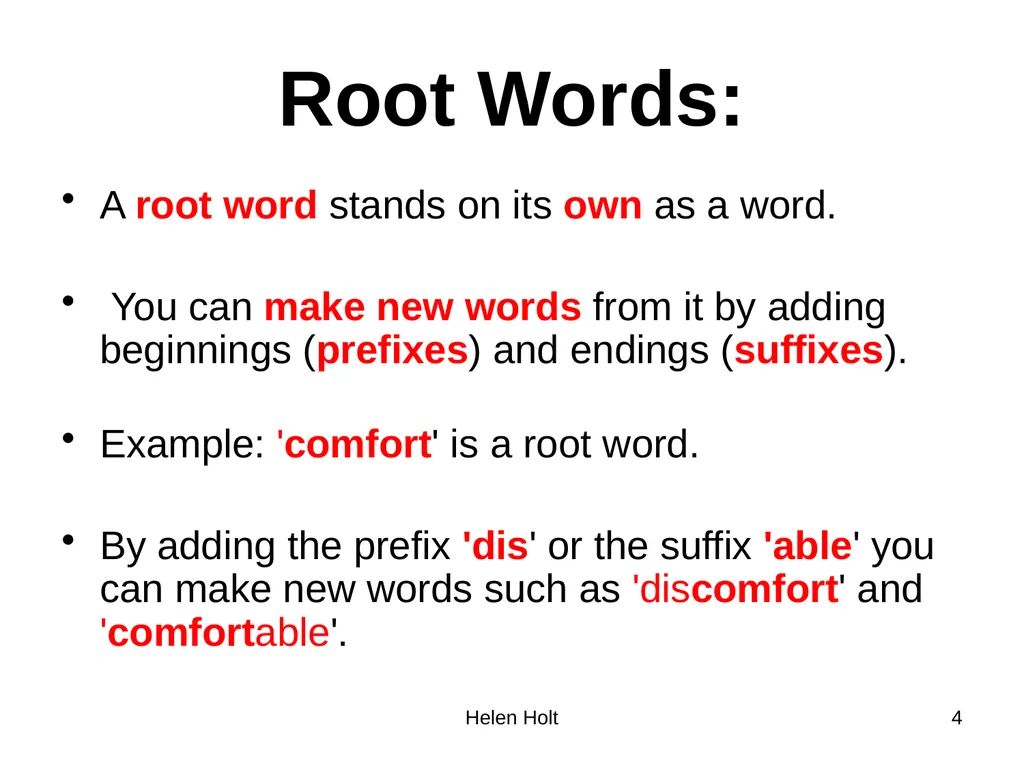
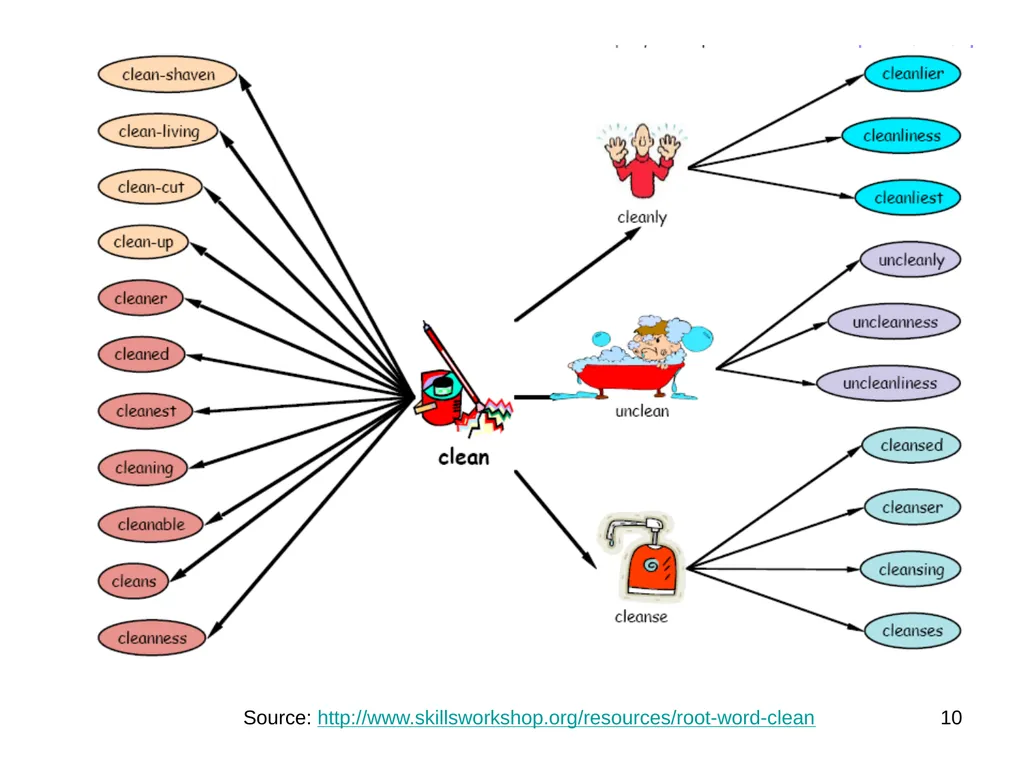
Helen Holt 4 Root Words: A root word stands on its own as a word.
You can make new words from it by adding beginnings (prefixes) and endings (suffixes).
Example: 'comfort' is a root word.
By adding the prefix 'dis' or the suffix 'able' you can make new words such as 'discomfort' and 'comfortable'.<br>
05
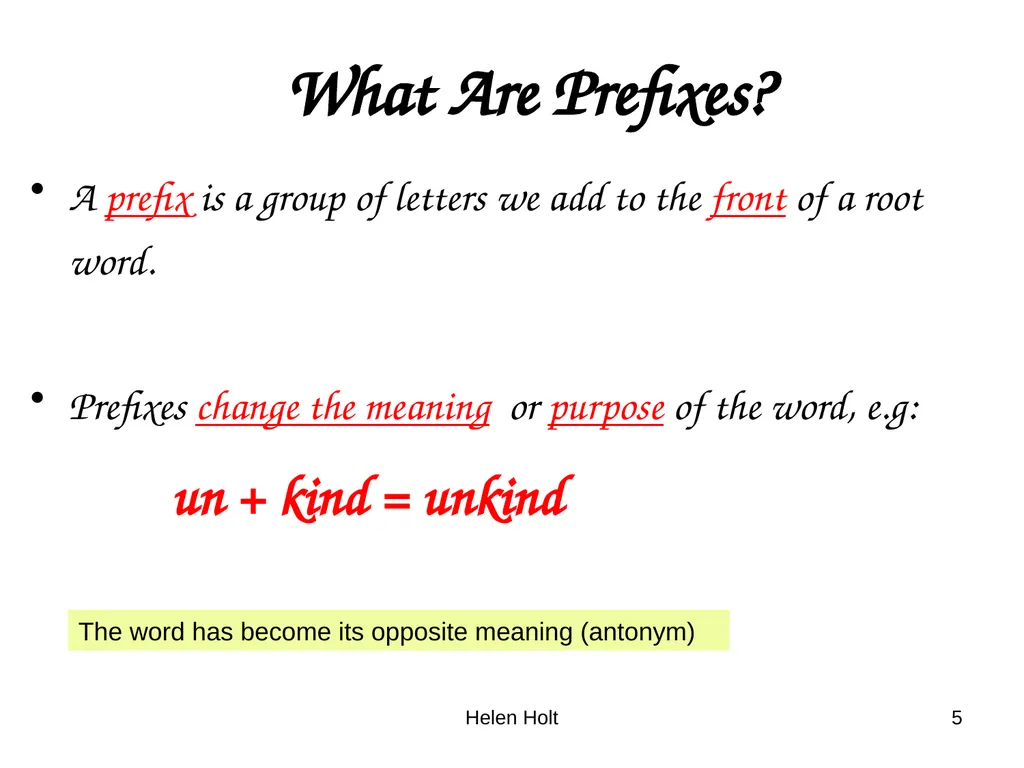
Helen Holt 5 What Are Prefixes? A prefix is a group of letters we add to the front of a root word.
Prefixes change the meaning or purpose of the word, e.g:
un + kind = unkind The word has become its opposite meaning (antonym)<br>
06
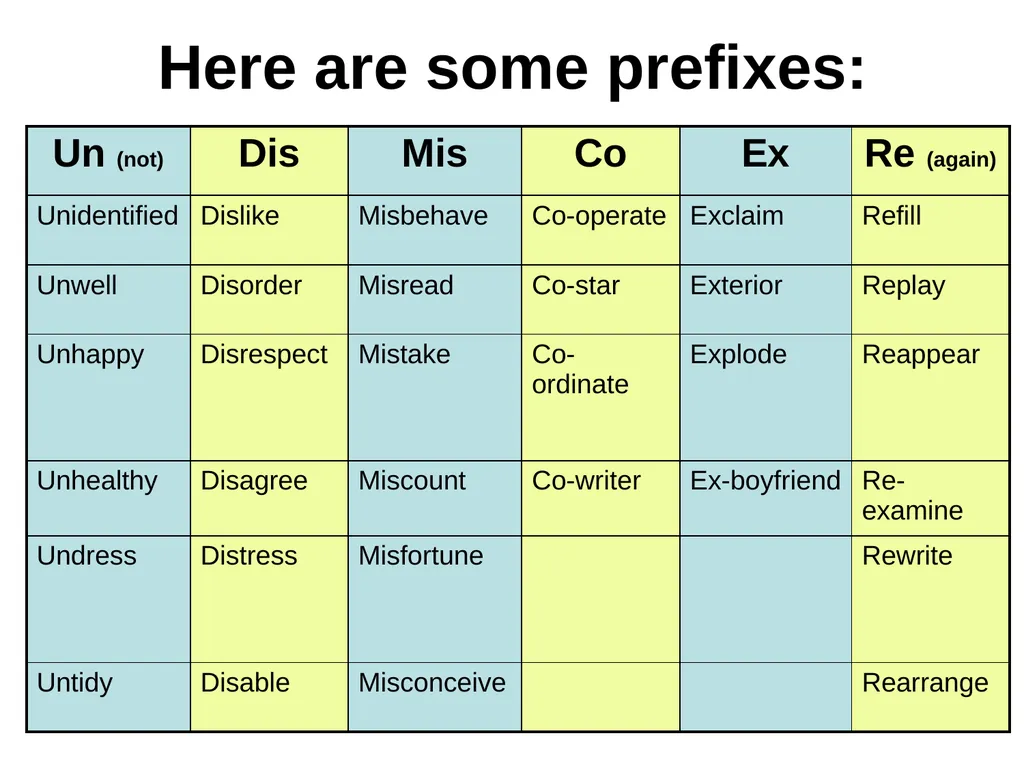
Helen Holt 6 Here are some prefixes:<br>
07
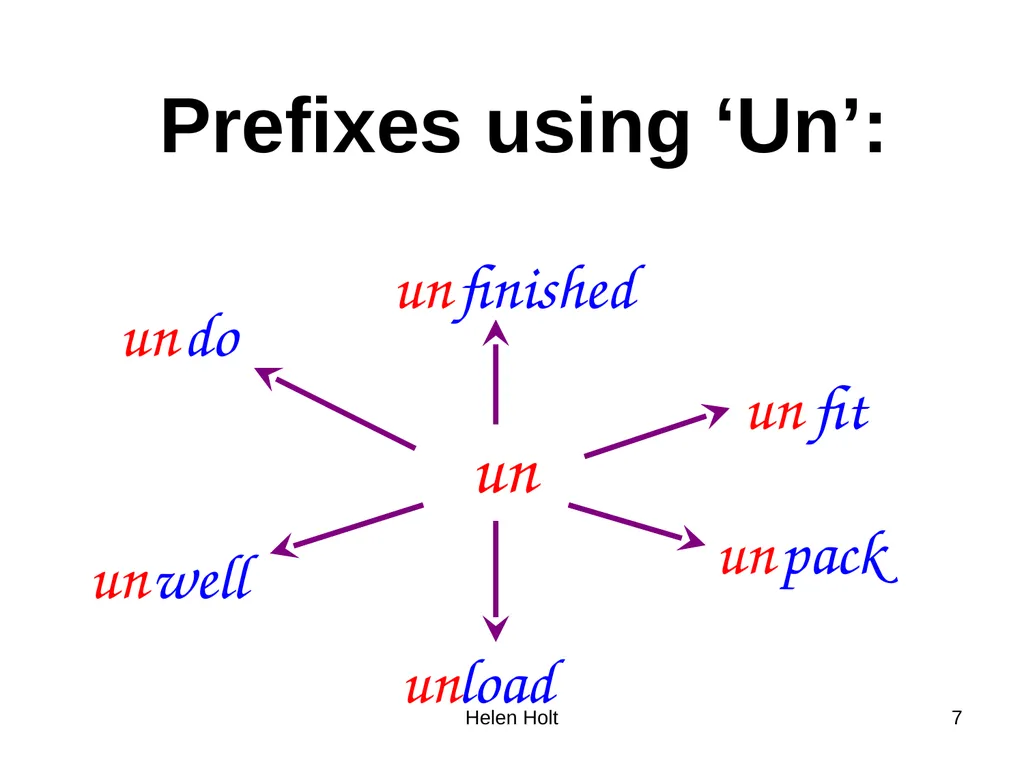
Helen Holt 7 un do fit load pack finished well un un un un un un Prefixes using ‘Un’:<br>
08
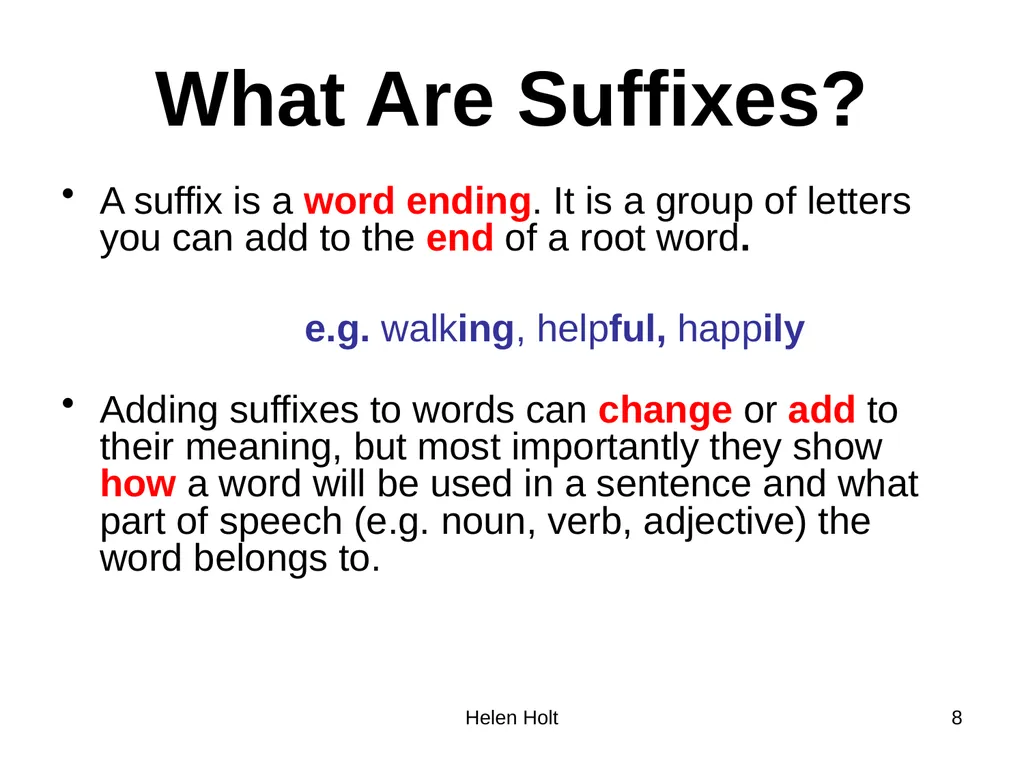
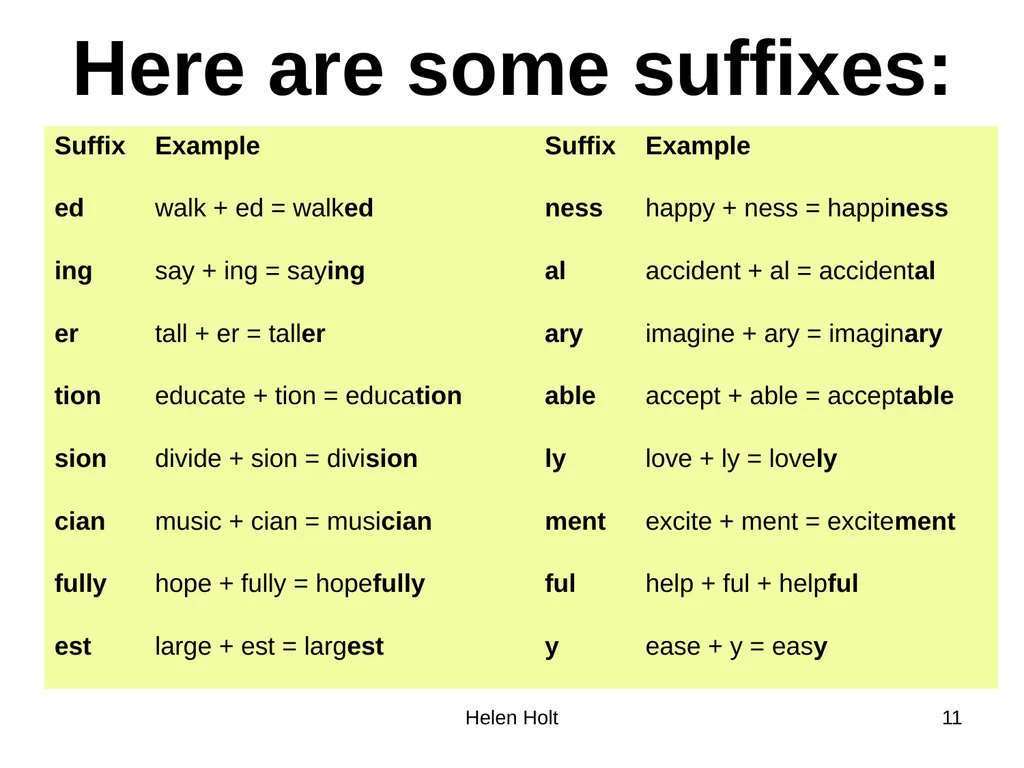
Helen Holt 8 What Are Suffixes? A suffix is a word ending. It is a group of letters you can add to the end of a root word.
e.g. walking, helpful, happily
Adding suffixes to words can change or add to their meaning, but most importantly they show how a word will be used in a sentence and what part of speech (e.g. noun, verb, adjective) the word belongs to.<br>
09
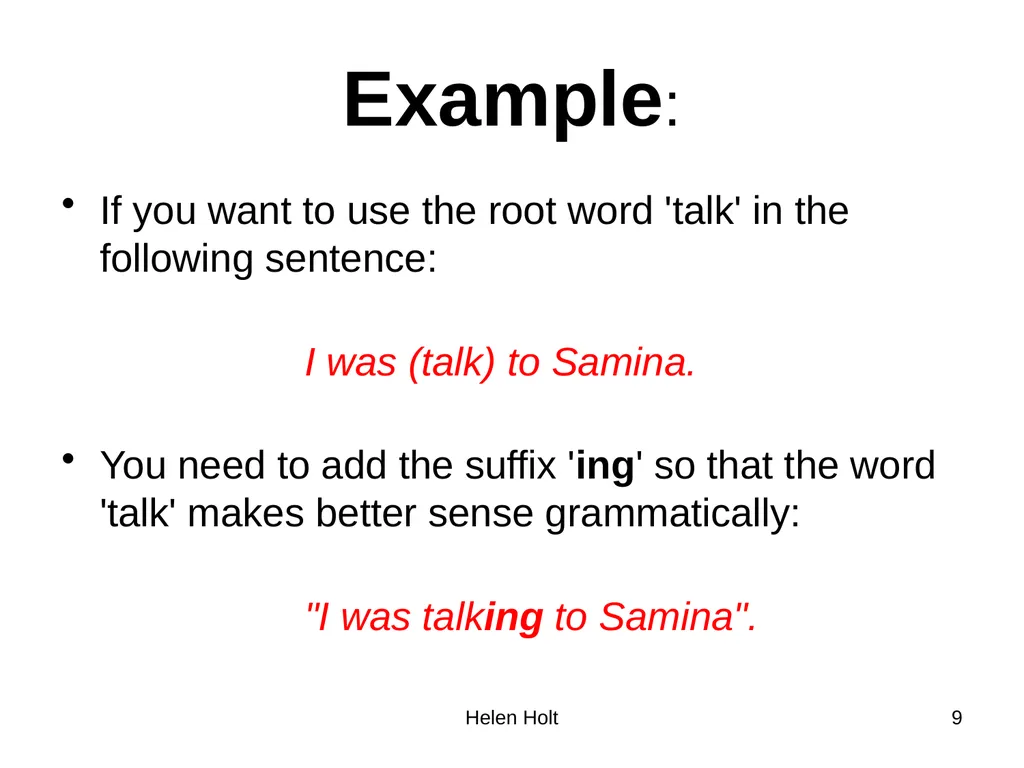
Helen Holt 9 Example: If you want to use the root word 'talk' in the following sentence:
I was (talk) to Samina.
You need to add the suffix 'ing' so that the word 'talk' makes better sense grammatically:
"I was talking to Samina".<br>