Salmonellae are often pathogenic for humans or animals when acquired by the oral route. They are transmitted from animals and animal products to humans, where they cause enteritis, systemic infection, and enteric fever. The Salmonella
"Salmonellae are often pathogenic for humans or" is the property of its rightful owner. Permission is granted to
download and print the materials on this website for personal, non-commercial use only, and to display it
on your personal computer provided you do not modify the materials and that you retain all copyright
notices contained in the materials. By downloading content from our website, you accept the terms of this
agreement.
Presentation Transcript
01
Salmonellae are often pathogenic for humans or animals when acquired by the oral route. They are transmitted from animals and animal products to humans, where they cause enteritis, systemic infection, and enteric fever. The Salmonella<br>
02
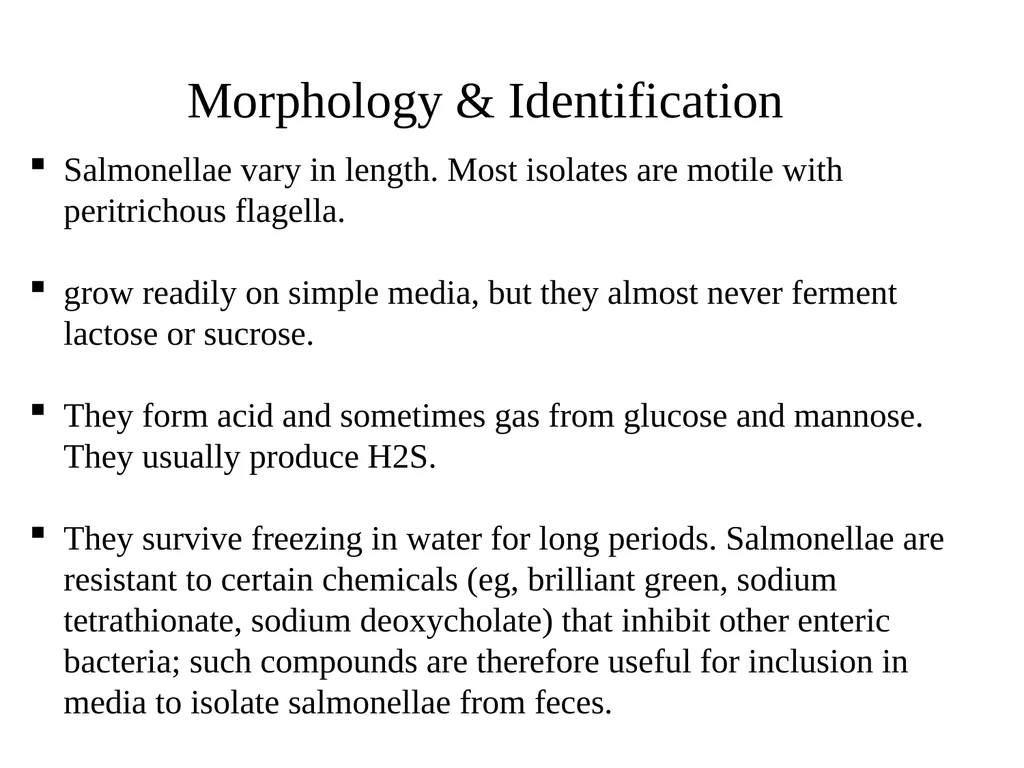
Salmonellae vary in length. Most isolates are motile with peritrichous flagella.
grow readily on simple media, but they almost never ferment lactose or sucrose.
They form acid and sometimes gas from glucose and mannose. They usually produce H2S.
They survive freezing in water for long periods. Salmonellae are resistant to certain chemicals (eg, brilliant green, sodium tetrathionate, sodium deoxycholate) that inhibit other enteric bacteria; such compounds are therefore useful for inclusion in media to isolate salmonellae from feces. Morphology & Identification<br>
03
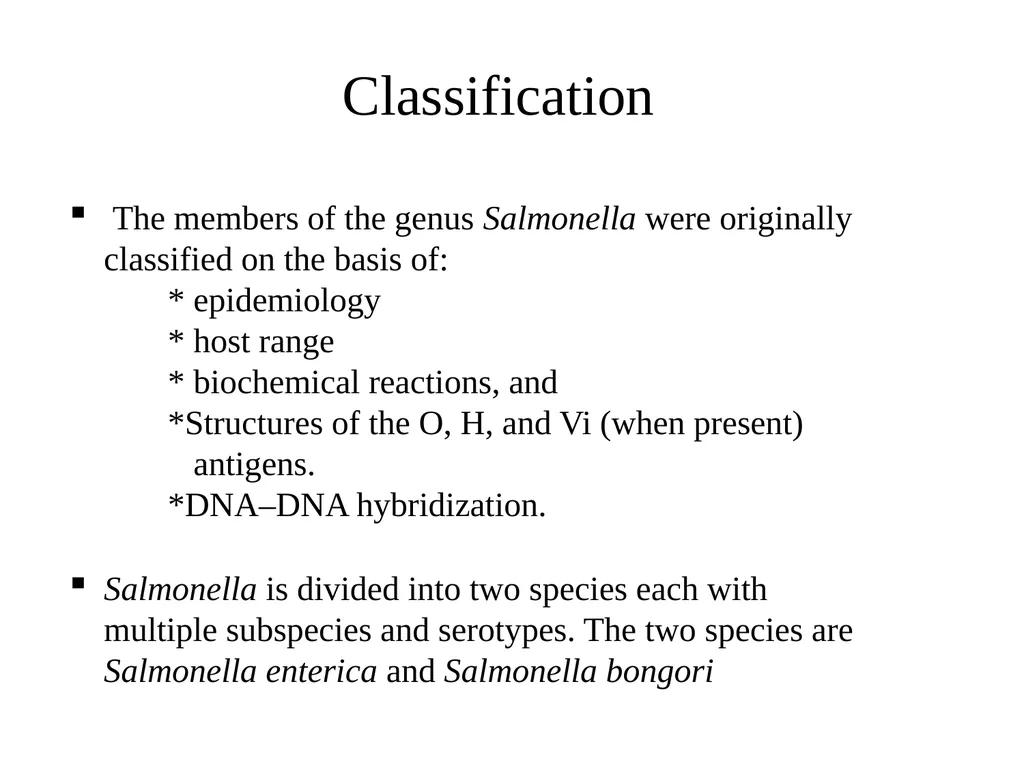
The members of the genus Salmonella were originally classified on the basis of:
* epidemiology
* host range
* biochemical reactions, and
*Structures of the O, H, and Vi (when present)
antigens.
*DNA–DNA hybridization. Classification Salmonella is divided into two species each with multiple subspecies and serotypes. The two species are Salmonella enterica and Salmonella bongori<br>
04
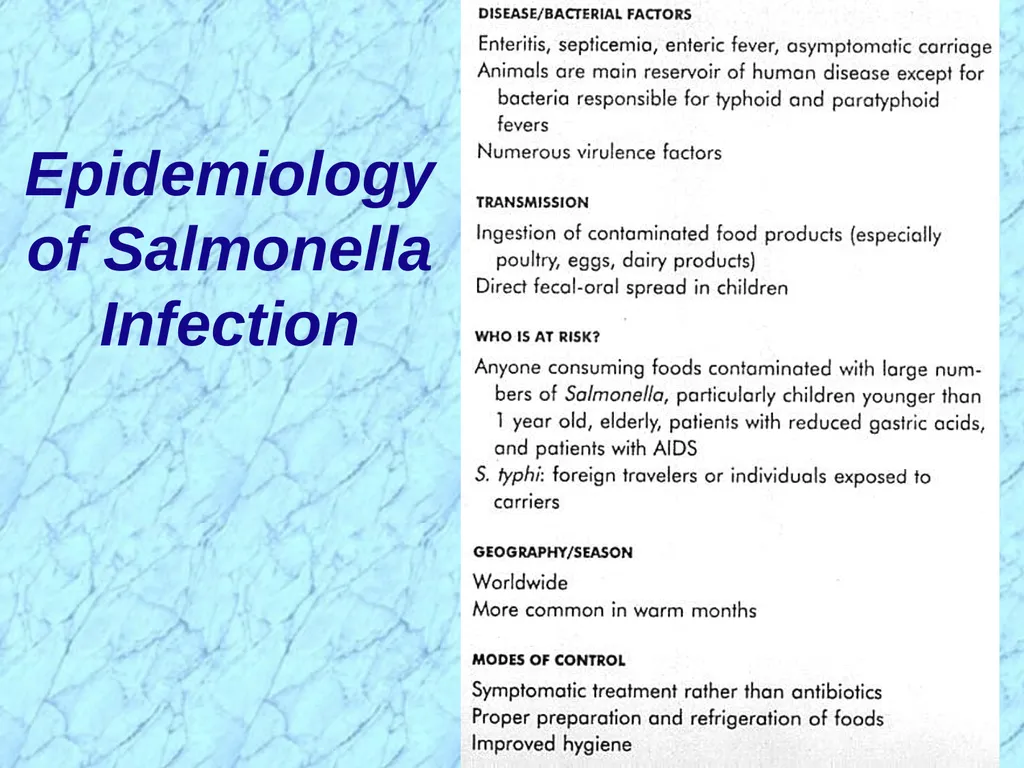
Epidemiology of Salmonella Infection<br>
05
S Typhi, S Choleraesuis, and perhaps Salmonella Paratyphi A and Salmonella Paratyphi B are primarily infective for humans, and infection with these organisms implies acquisition from a human source. The vast majority of salmonellae, however, are chiefly pathogenic in animals that constitute the reservoir for human infection. Pathogenesis<br>
06
The organisms almost always enter via the oral route, usually with contaminated food or drink and cause three main disease:
The “Enteric Fevers” (Typhoid Fever)
Salmonella typhi: The ingested salmonellae reach the small intestine, from which they enter the lymphatics and then the bloodstream. They are carried by the blood to many organs, including the intestine. The organisms multiply in intestinal lymphoid tissue and are excreted in stools. After an incubation period of 10–14 days.
B. Bacteremia with Focal Lesions
This is associated commonly with S choleraesuis
C. Enterocolitis
S Typhimurium and Salmonella Enteritidis are prominent.<br>
07
Specimens:
* Blood for culture must be taken repeatedly. In enteric fevers and septicaemias, blood culture results are often positive in the first week of the disease.
* Bone marrow cultures may be useful.
* Urine culture results may be positive after the second
week.
*Stool specimens also must be taken repeatedly. In enteric fevers, the stools yield positive results from the second or third week on; in enterocolitis, the stools yield positive results during the first week. A positive culture of duodenal drainage establishes the presence of salmonellae in the biliary tract in carriers. Laboratory Diagnosis<br>
08
B. Bacteriologic Methods:
1. Differential medium cultures:- EMB, MacConkey, or deoxycholate medium permits rapid detection of lactose non fermenters (not only salmonellae and shigellae but also Proteus, Serratia, Pseudomonas, and so on. Gram-positive organisms are somewhat inhibited. Bismuth sulfite medium permits rapid detection of salmonellae, which form black colonies because of H2S production. Many salmonellae produce H2S.<br>
09
2. Selective medium cultures—The specimen is plated on salmonella-shigella (SS) agar, Hektoen enteric agar, xylose-lysine decarboxylase (XLD) agar, or deoxycholatecitrate agar, which favor growth of salmonellae and shigellae over other Enterobacteriaceae.
3. Enrichment cultures—The specimen (usually stool) also is put into selenite F or tetrathionate broth, both of which inhibit replication of normal intestinal bacteria and permit multiplication of salmonellae. After incubation for 1–2 days, this is plated on differential and selective media.<br>
10
4. Final identification—Suspect colonies from solid media are identified by:
* biochemical reaction patterns , and
* slide agglutination tests with specific sera.<br>
11
C. Serologic Methods:
1. Agglutination test—In this test, known sera and unknown culture are mixed on a slide. Clumping, when it occurs, can be observed within a few minutes. This test is particularly useful for rapid preliminary identification of cultures. There are commercial kits available to agglutinate and serogroup salmonellae by their O antigens: A, B, C1, C2, D, and E.<br>
12
2. Tube dilution agglutination test (Widal test)— Serum agglutinins rise sharply during the second and third weeks of S Typhi infection. The Widal test to detect these antibodies against the O and H antigens has been in use for decades. At least two serum specimens, obtained at intervals of 7–10 days, are needed to prove a rise in antibody titer. Serial dilutions of unknown sera are tested against antigens from representative salmonellae. False-positive and false-negative results occur. The interpretive criteria when single serum specimens are tested vary, but a titer against the O antigen of greater than 1:320 and against the H antigen of greater than 1:640 is considered positive.
High titer of antibody to the Vi antigen occurs in some carriers. Alternatives to the Widal test include rapid colorimetric and EIA methods. There are conflicting reports in the literature regarding superiority of these methods to the Widal test. Results of serologic tests for Salmonella infection cannot be relied upon to establish a definitive diagnosis of typhoid fever<br>
13
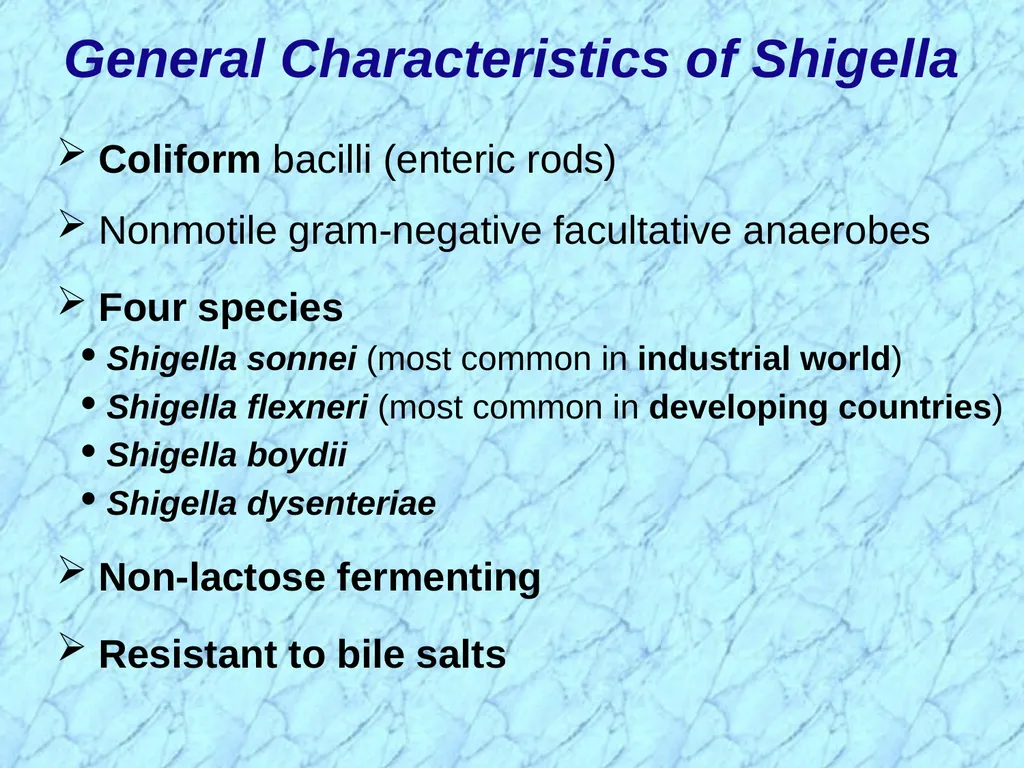
Coliform bacilli (enteric rods)
Nonmotile gram-negative facultative anaerobes
Four species
Shigella sonnei (most common in industrial world)
Shigella flexneri (most common in developing countries)
Shigella boydii
Shigella dysenteriae
Non-lactose fermenting
Resistant to bile salts General Characteristics of Shigella<br>
14
Natural habitat of shigellae is limited to the intestinal tracts of humans and other primates, where they produce bacillary dysentery. The Shigellae Shigellae are slender gram-negative rods; coccobacillary forms occur in young cultures. Shigellae are facultative anaerobes but grow best aerobically. Convex, circular, transparent colonies with intact edges reach a diameter of about 2 mm in 24 hours.<br>
15
All shigellae ferment glucose. With the exception of Shigella sonnei, they do not ferment lactose. The inability to ferment lactose distinguishes shigellae on differential media. Shigellae form acid from carbohydrates but rarely produce gas.<br>
16
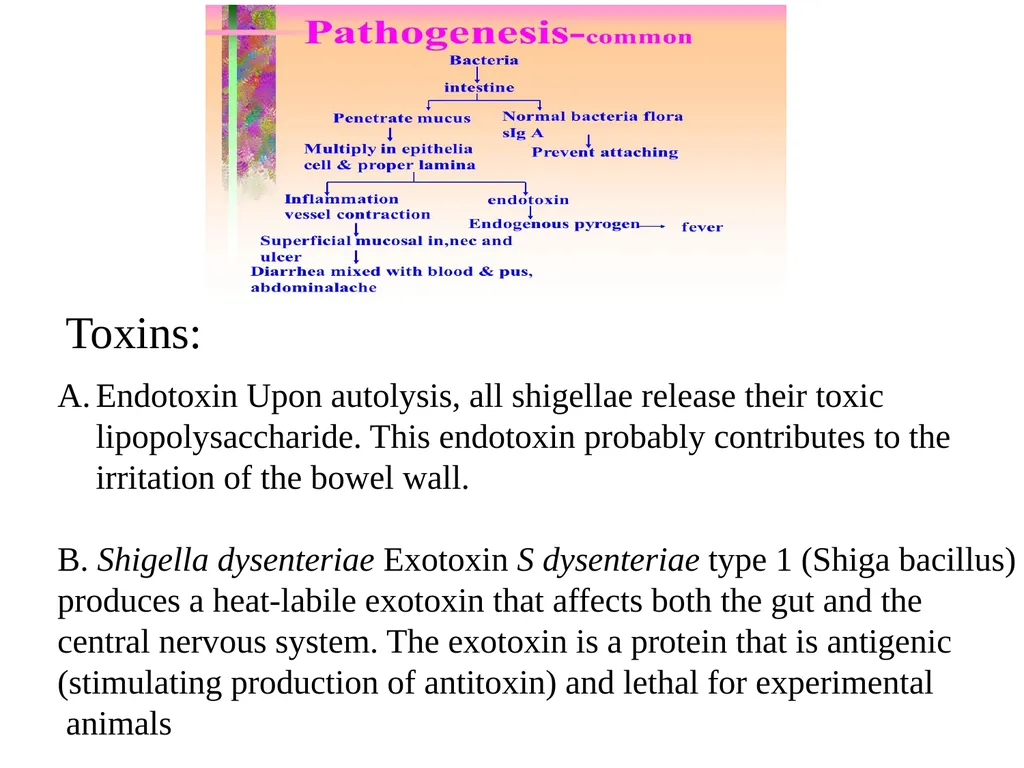
Endotoxin Upon autolysis, all shigellae release their toxic lipopolysaccharide. This endotoxin probably contributes to the irritation of the bowel wall.
B. Shigella dysenteriae Exotoxin S dysenteriae type 1 (Shiga bacillus) produces a heat-labile exotoxin that affects both the gut and the central nervous system. The exotoxin is a protein that is antigenic (stimulating production of antitoxin) and lethal for experimental
animals Toxins:<br>
17
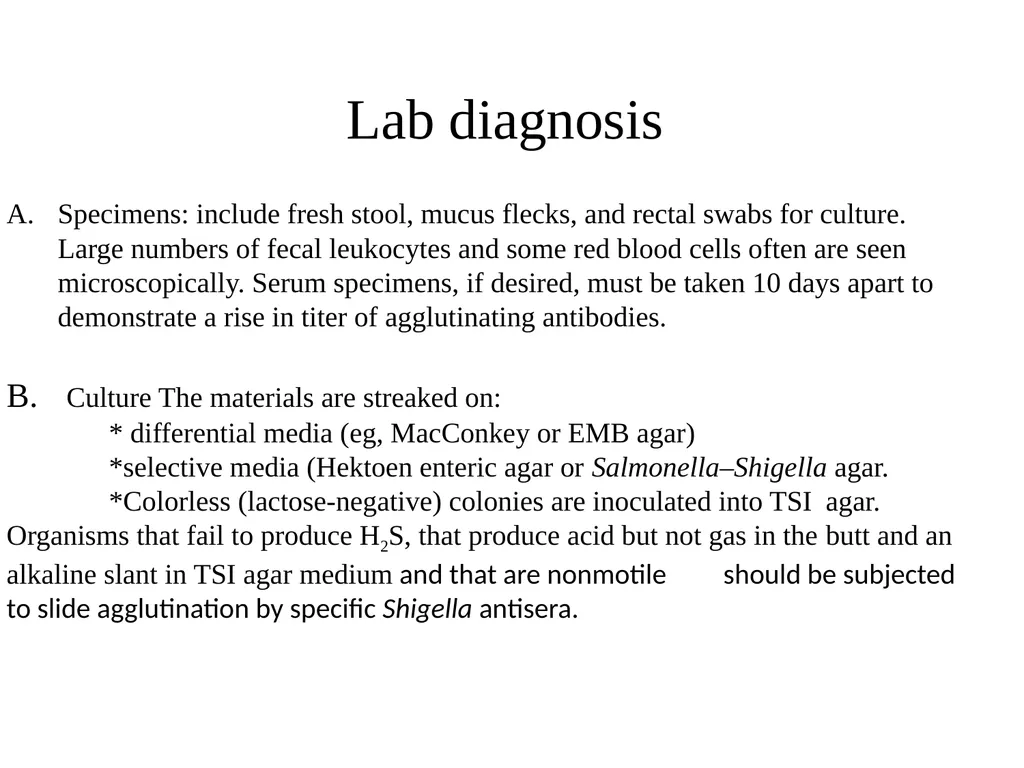
Specimens: include fresh stool, mucus flecks, and rectal swabs for culture. Large numbers of fecal leukocytes and some red blood cells often are seen microscopically. Serum specimens, if desired, must be taken 10 days apart to demonstrate a rise in titer of agglutinating antibodies.
Culture The materials are streaked on:
* differential media (eg, MacConkey or EMB agar)
*selective media (Hektoen enteric agar or Salmonella–Shigella agar.
*Colorless (lactose-negative) colonies are inoculated into TSI agar. Organisms that fail to produce H2S, that produce acid but not gas in the butt and an alkaline slant in TSI agar medium and that are nonmotile should be subjected to slide agglutination by specific Shigella antisera. Lab diagnosis<br>
18
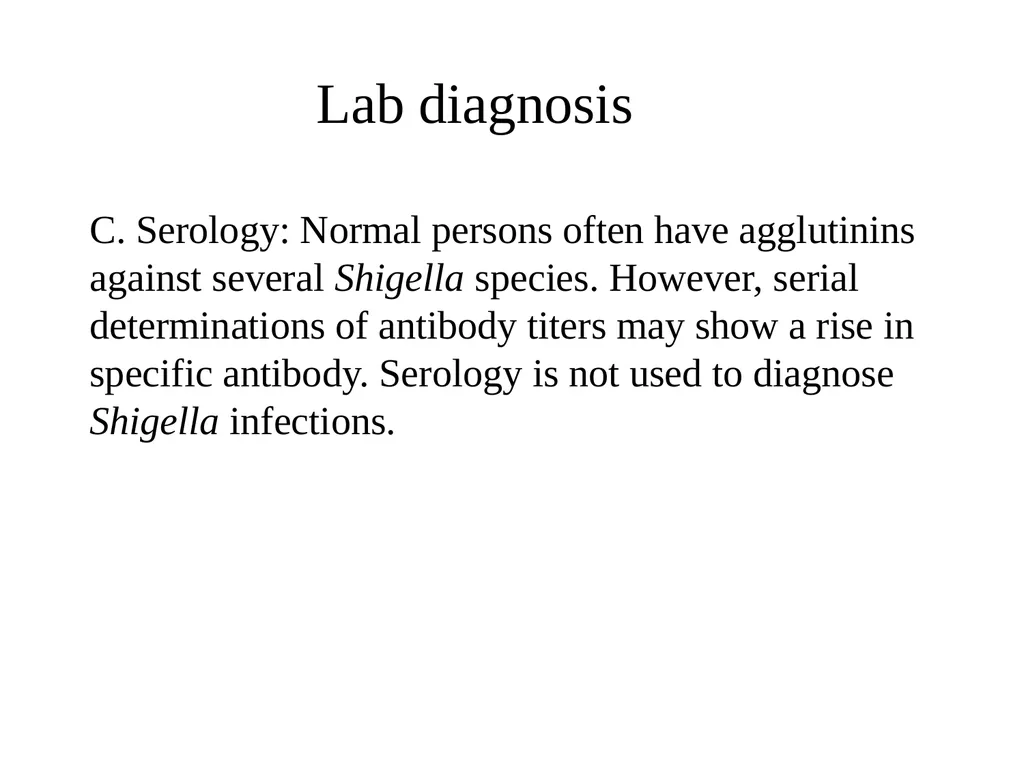
C. Serology: Normal persons often have agglutinins against several Shigella species. However, serial determinations of antibody titers may show a rise in specific antibody. Serology is not used to diagnose Shigella infections. Lab diagnosis<br>