Sampling in Graphs Alexandr Andoni (Microsoft
Description: Sampling in Graphs Alexandr Andoni (Microsoft Research) Graph compression Why smaller graphs? use less storage space faster algorithms easier visualization Preserve some structure Cuts approximately Other properties: Distances,
Related Topics
Download Presentation
"Sampling in Graphs Alexandr Andoni (Microsoft" is the property of its rightful owner. Permission is granted to download and print the materials on this website for personal, non-commercial use only, and to display it on your personal computer provided you do not modify the materials and that you retain all copyright notices contained in the materials. By downloading content from our website, you accept the terms of this agreement.
Presentation Transcript
slide1. Sampling in Graphs Alexandr Andoni
(Microsoft Research)<br>
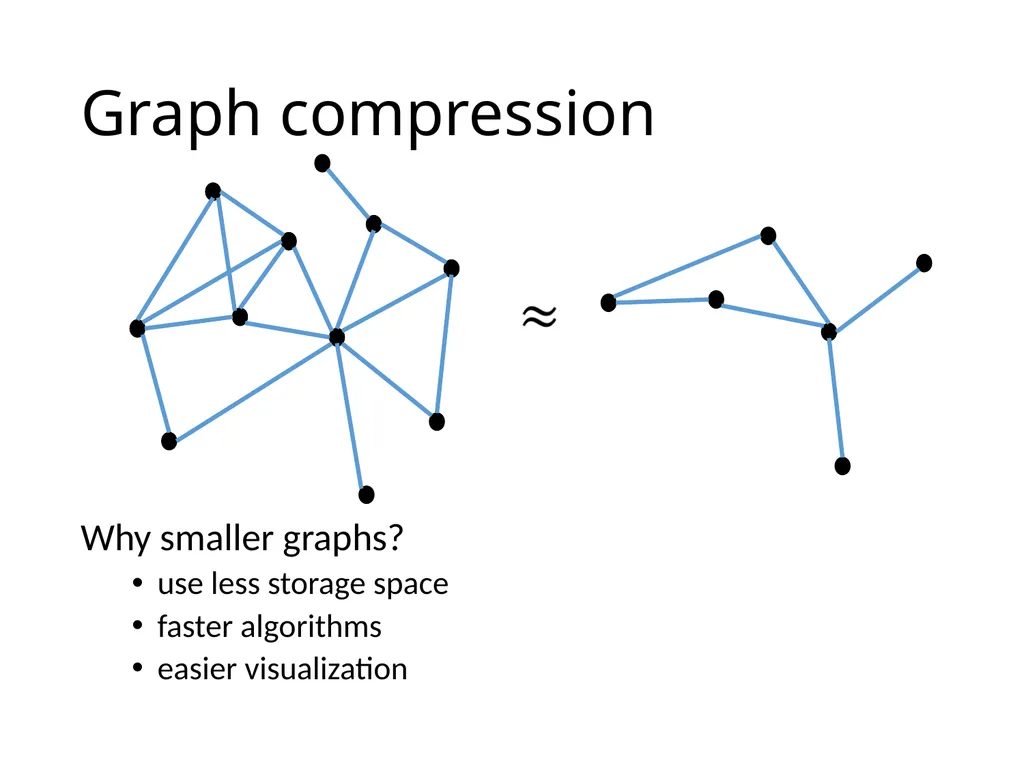
slide2. Graph compression Why smaller graphs?
use less storage space
faster algorithms
easier visualization<br>
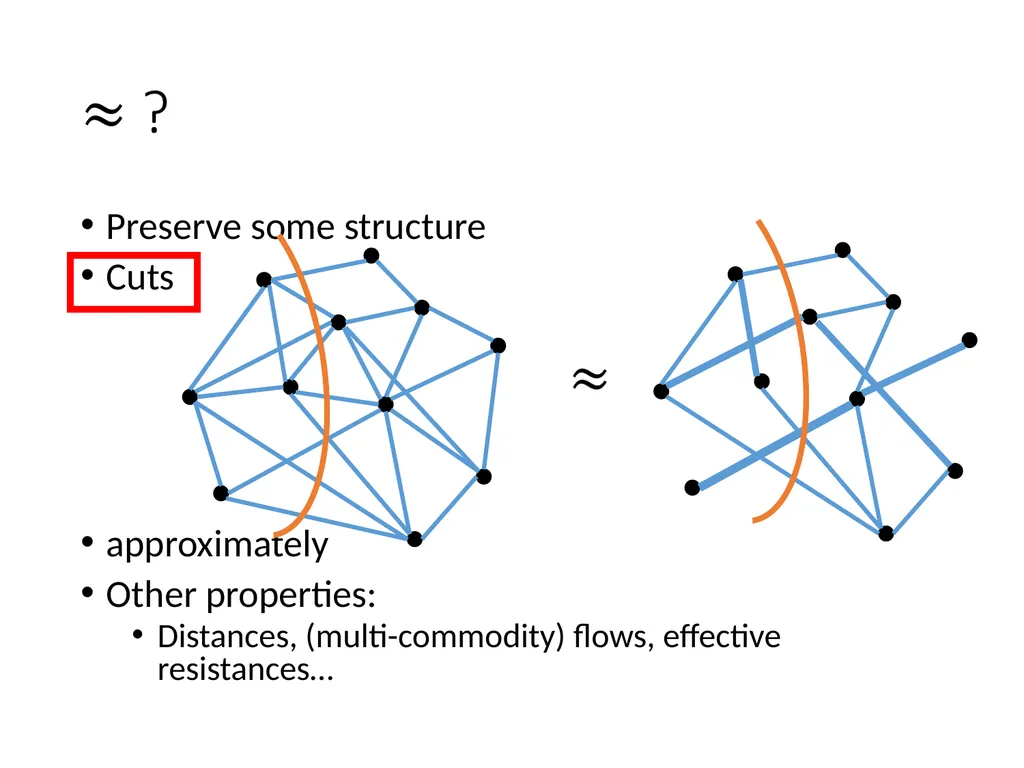
slide3. Preserve some structure
Cuts
approximately
Other properties:
Distances, (multi-commodity) flows, effective resistances…<br>
slide4. Plan 1) Cut sparsifiers
2) More efficient cut sparsifiers
3) Node sparsifiers<br>
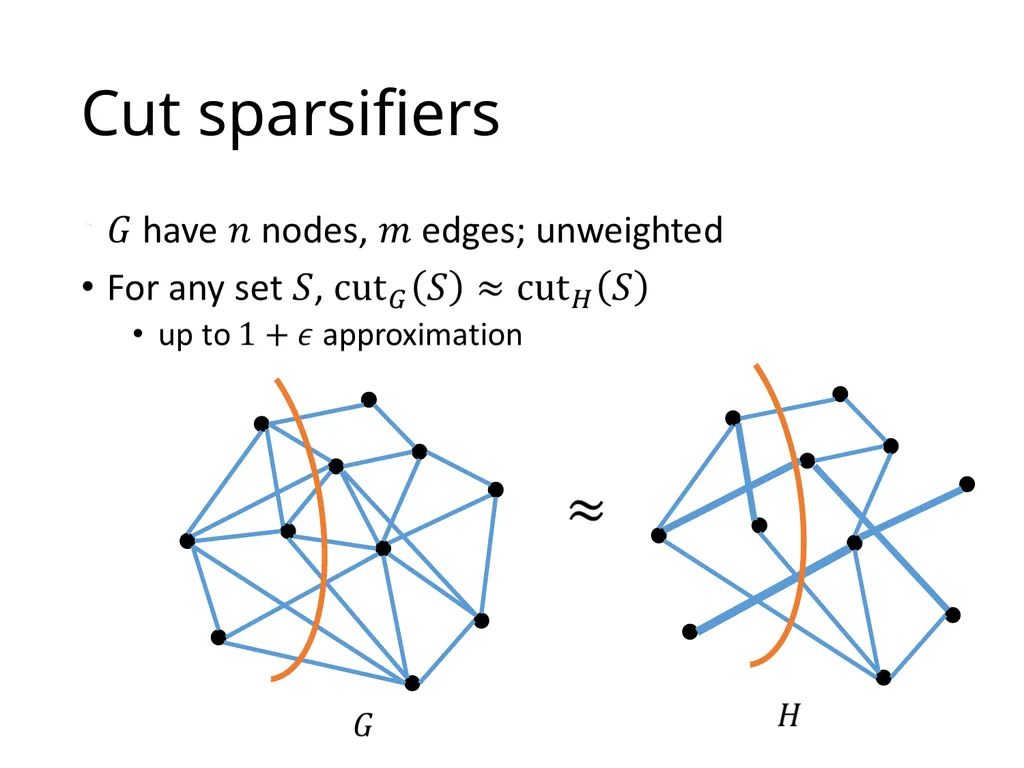
slide5. Cut sparsifiers<br>
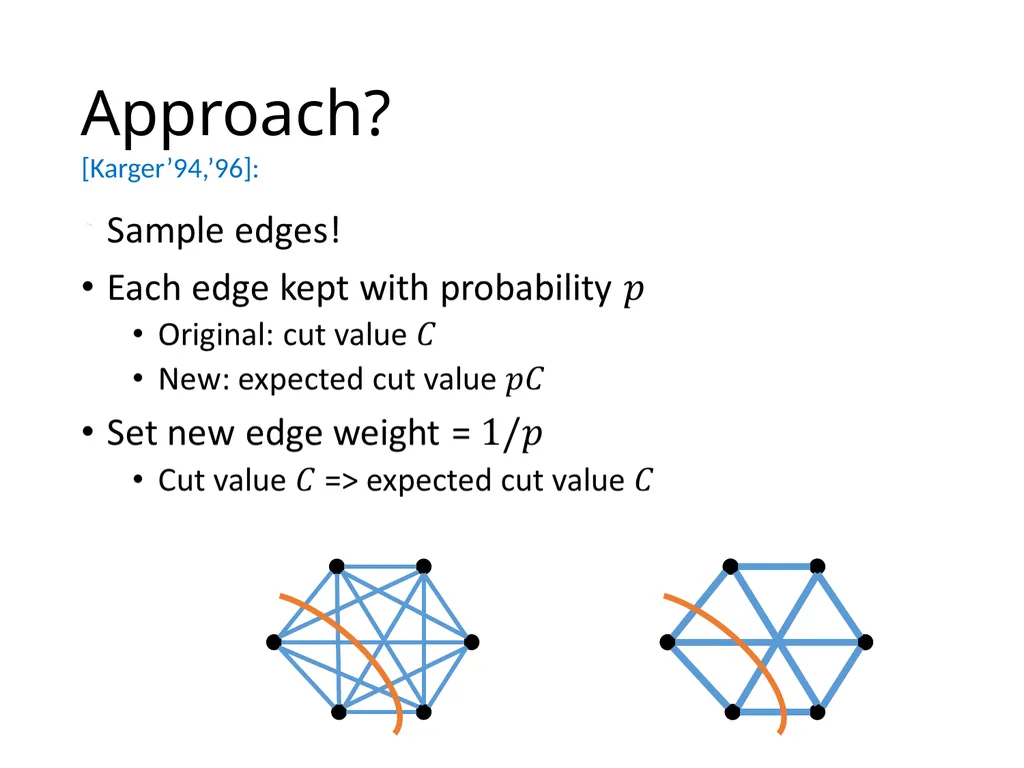
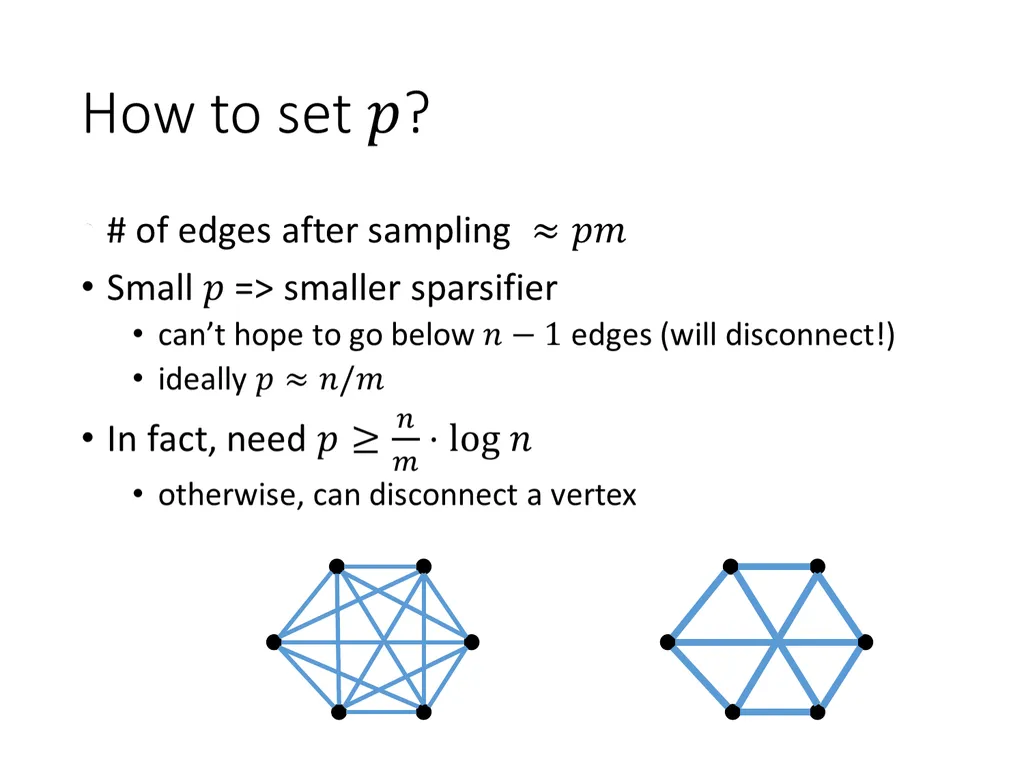
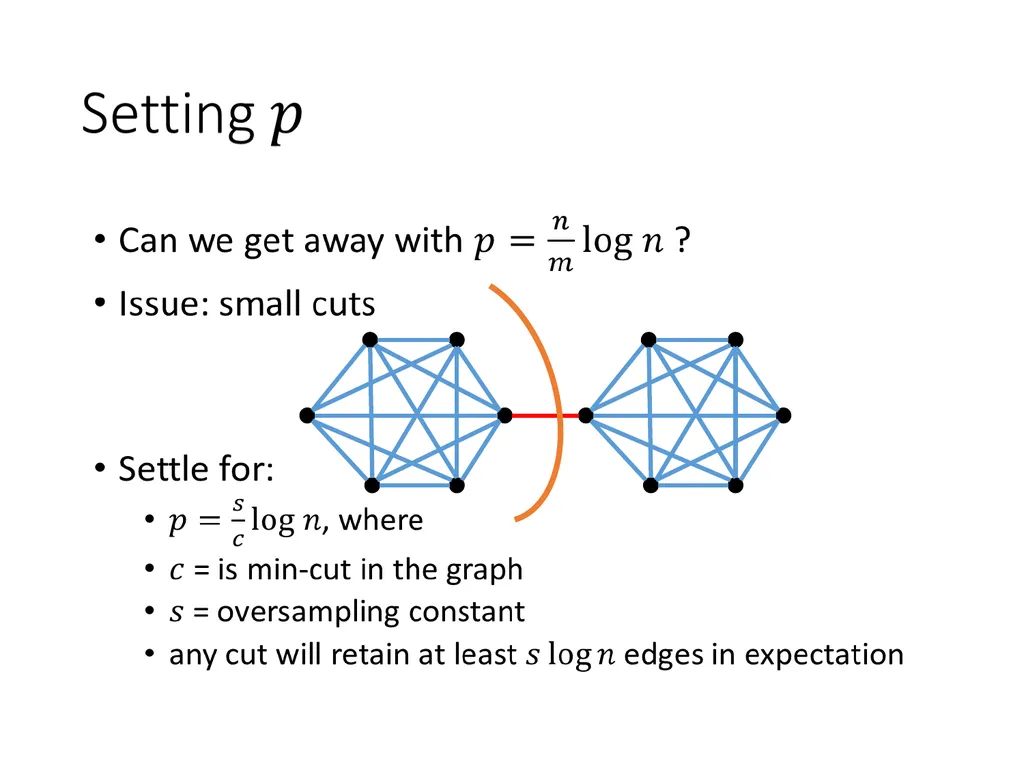
slide6. Approach? [Karger’94,’96]:<br>
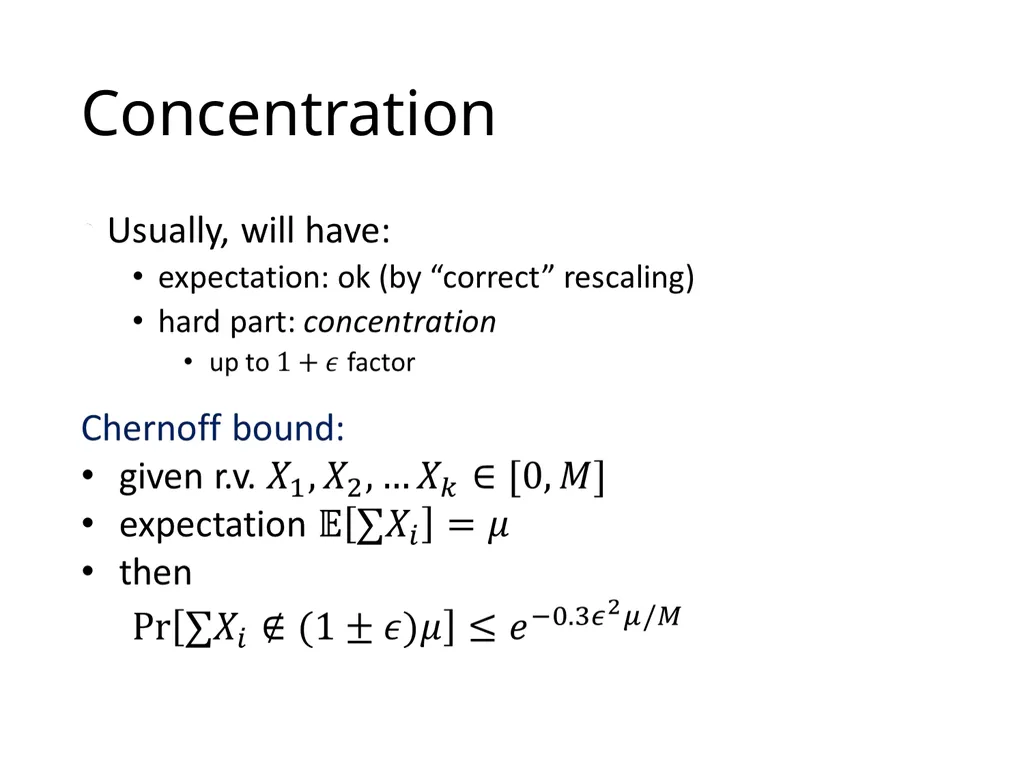
slide9. Concentration<br>
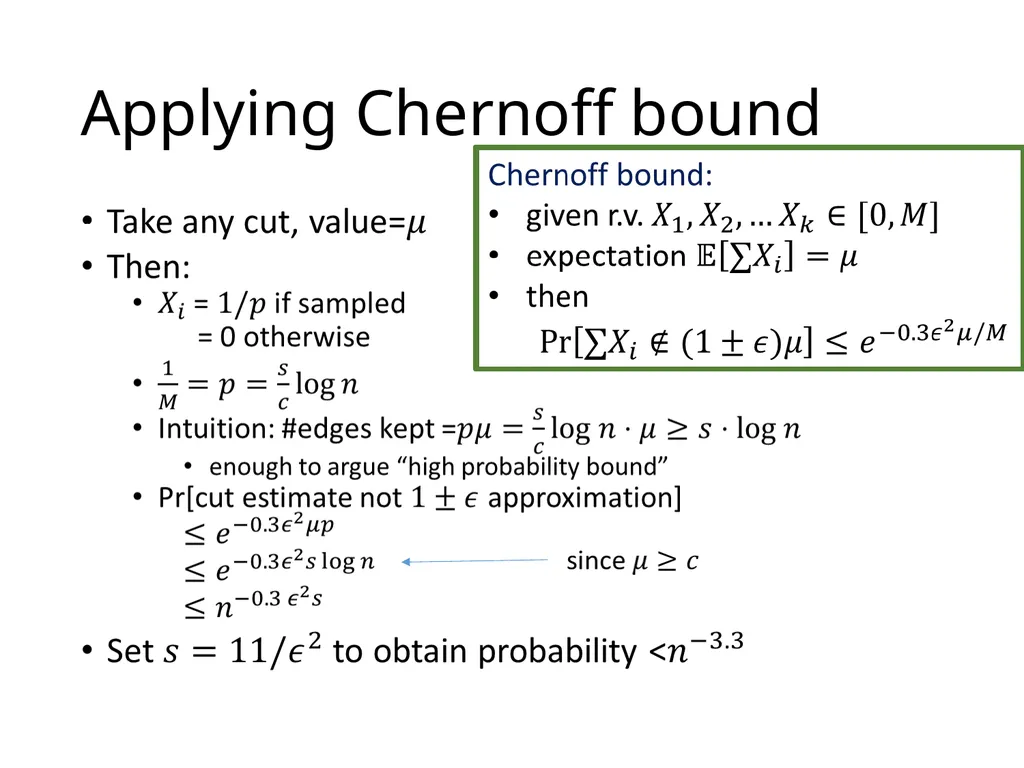
slide10. Applying Chernoff bound<br>
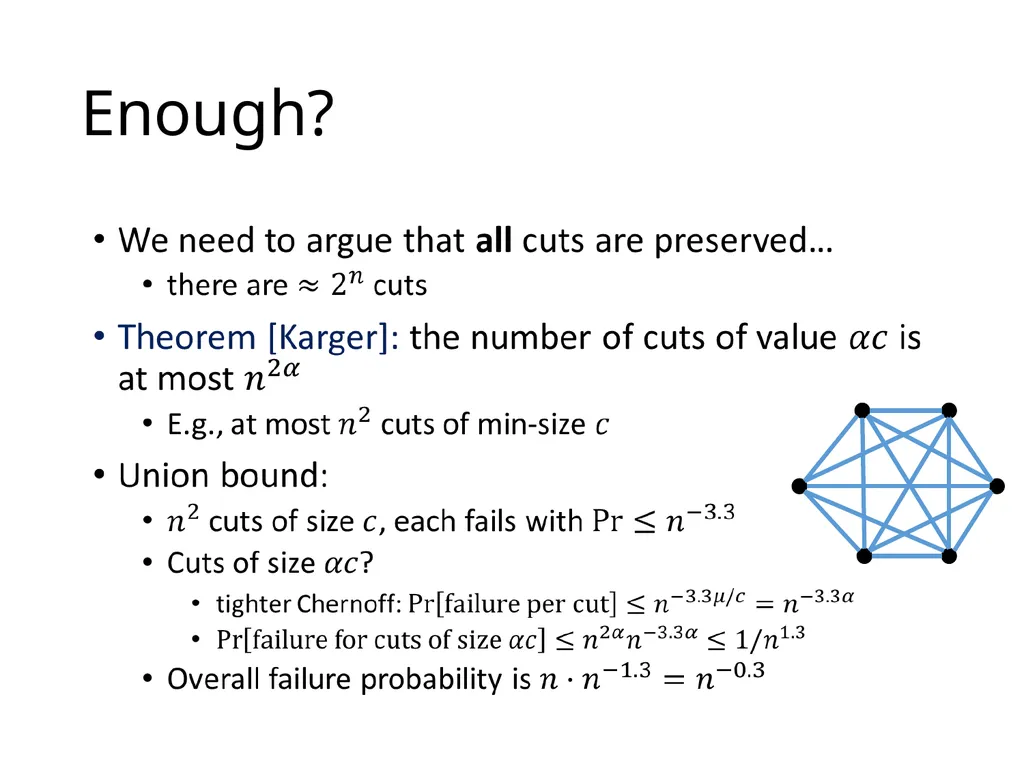
slide11. Enough?<br>
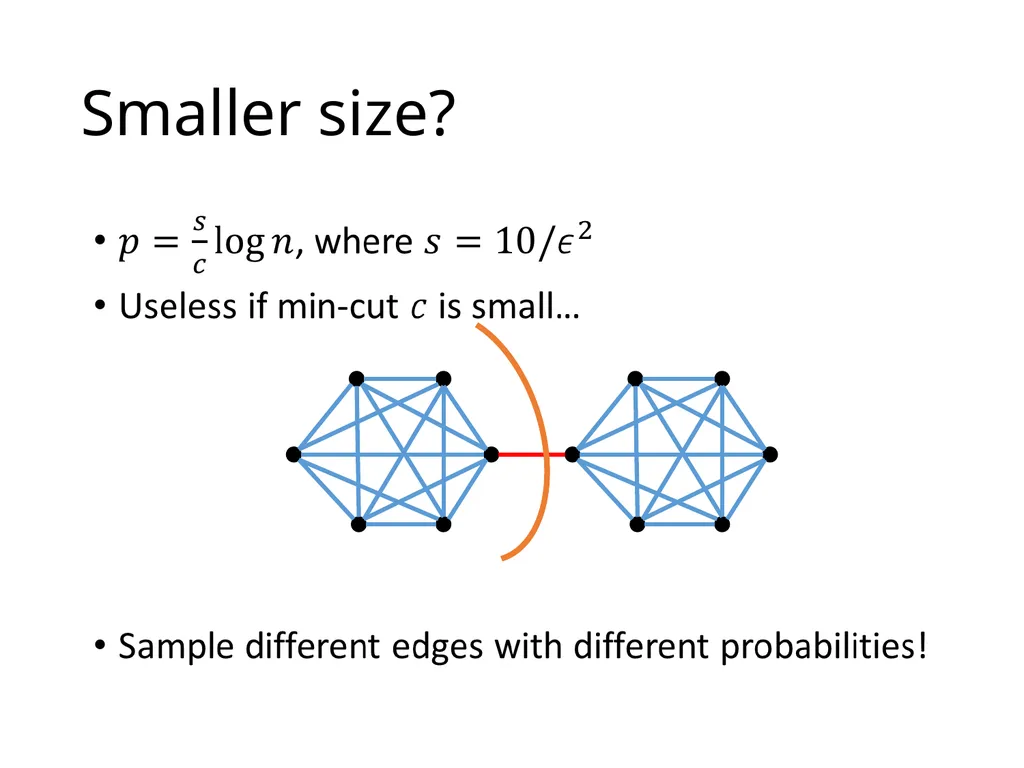
slide12. Smaller size?<br>
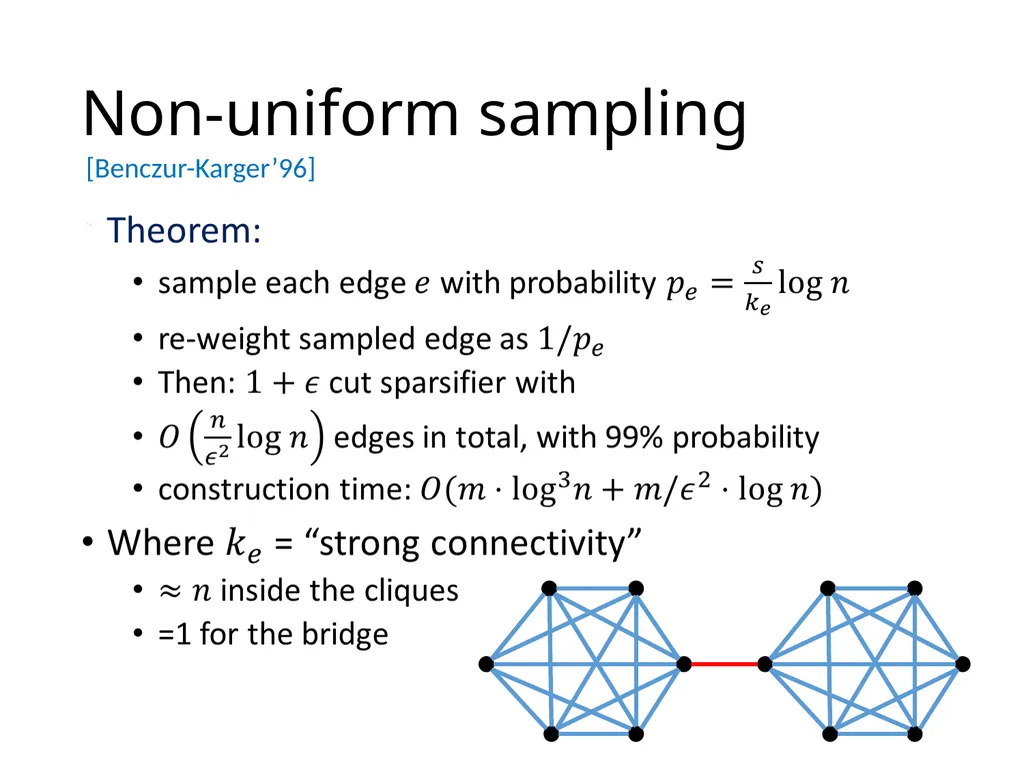
slide13. Non-uniform sampling [Benczur-Karger’96]<br>
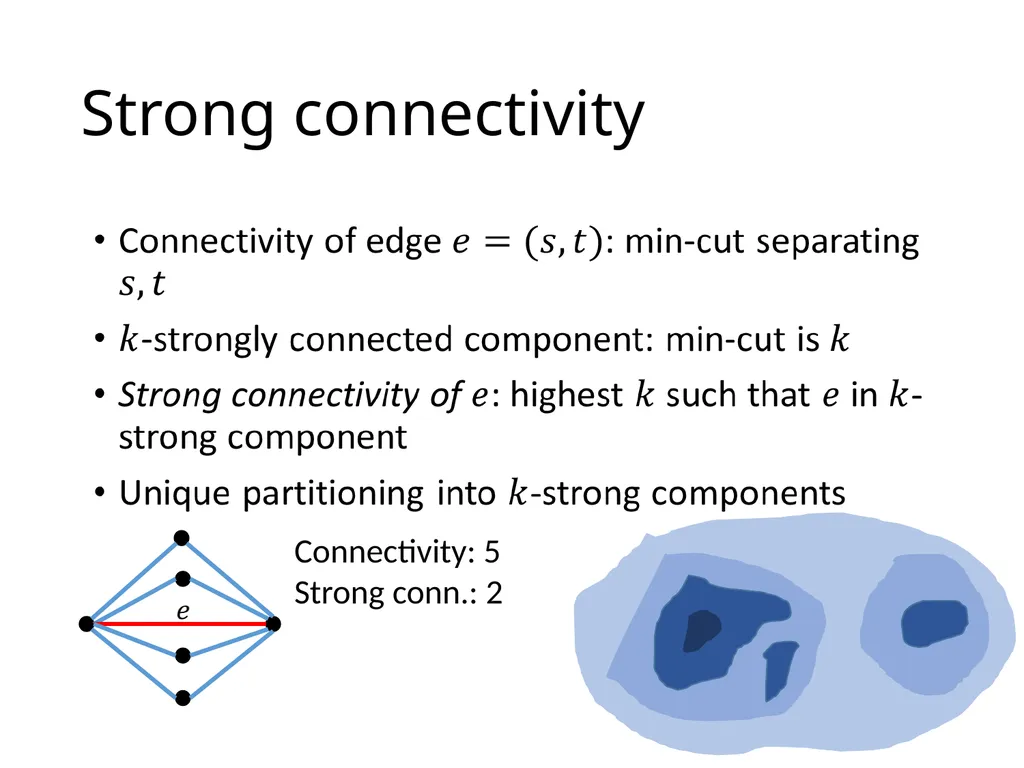
slide14. Strong connectivity Connectivity: 5
Strong conn.: 2<br>
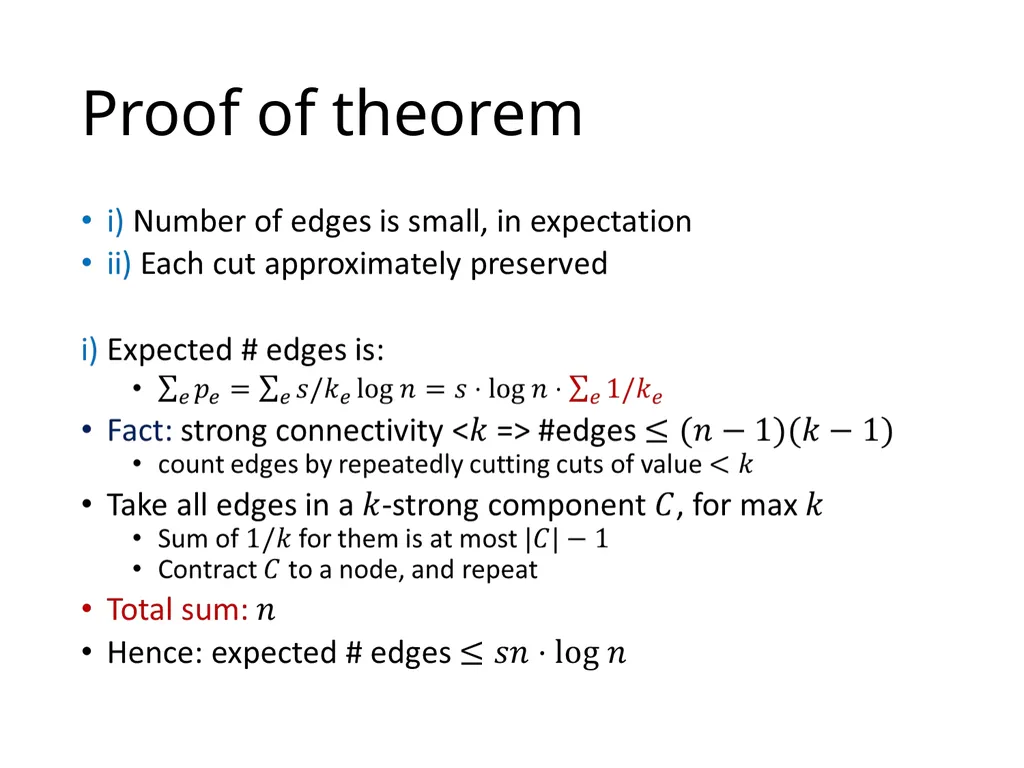
slide15. Proof of theorem<br>
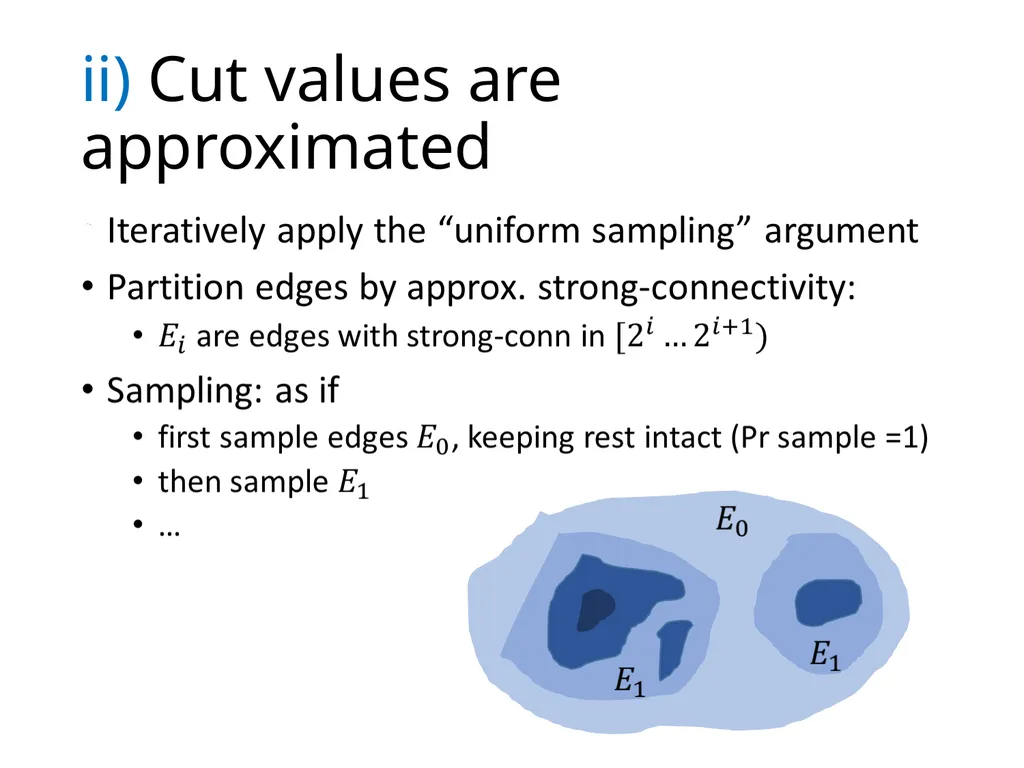
slide16. ii) Cut values are approximated<br>
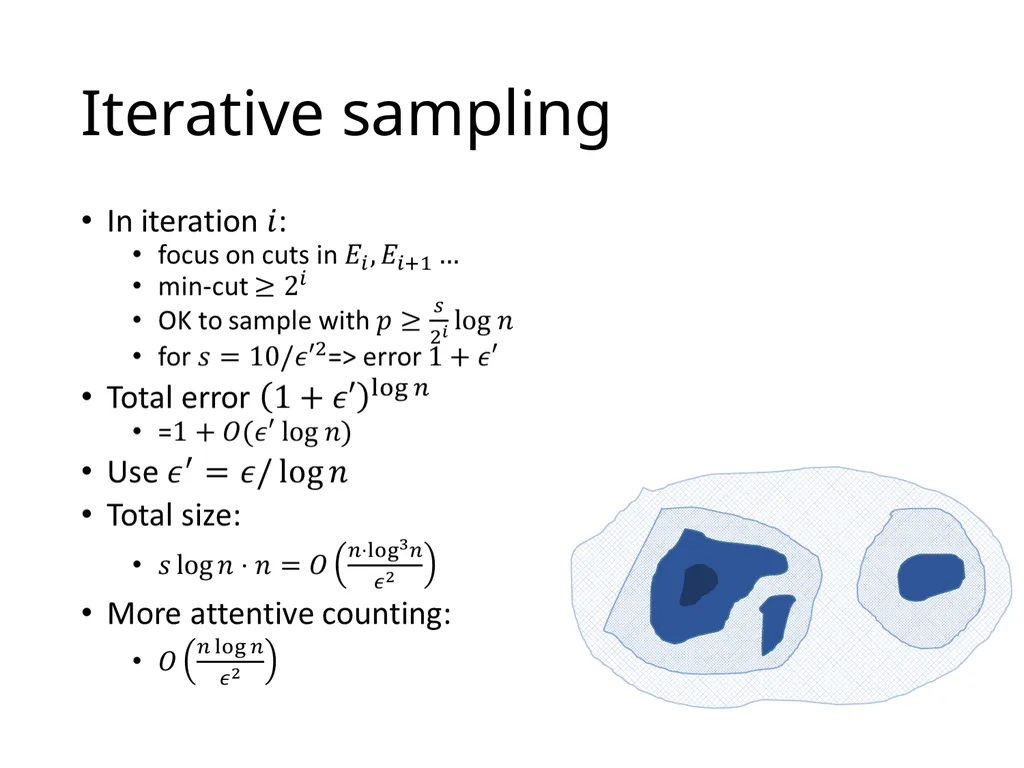
slide17. Iterative sampling<br>
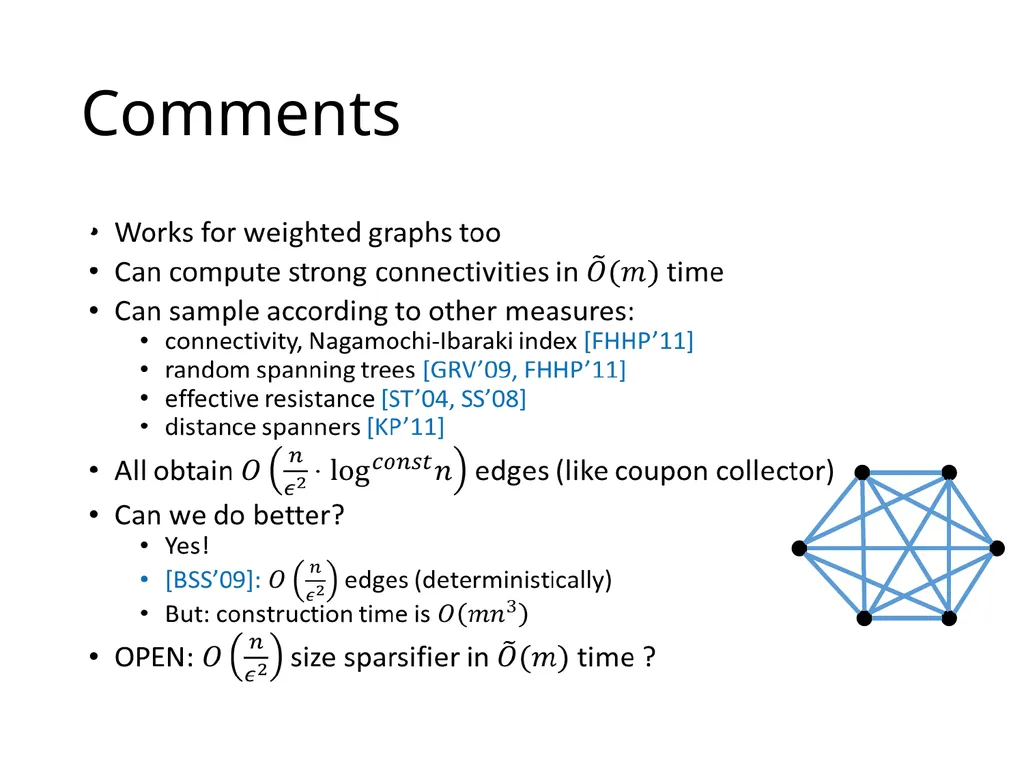
slide18. Comments<br>
slide19. BREAK<br>
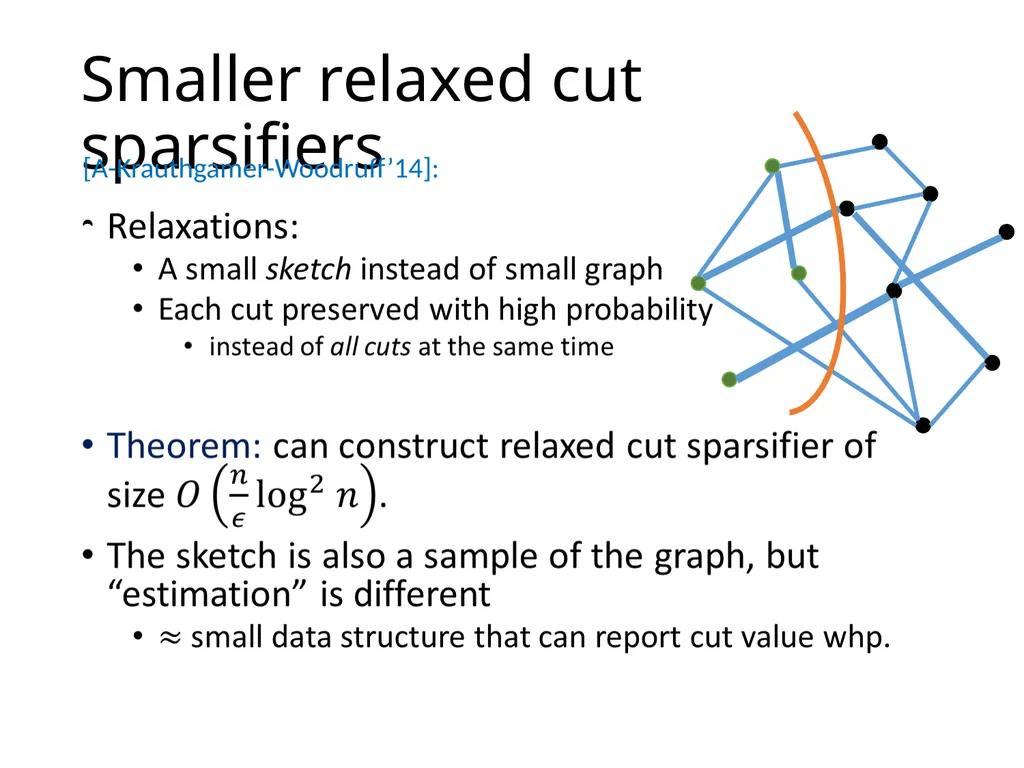
slide21. Smaller relaxed cut sparsifiers [A-Krauthgamer-Woodruff’14]:<br>
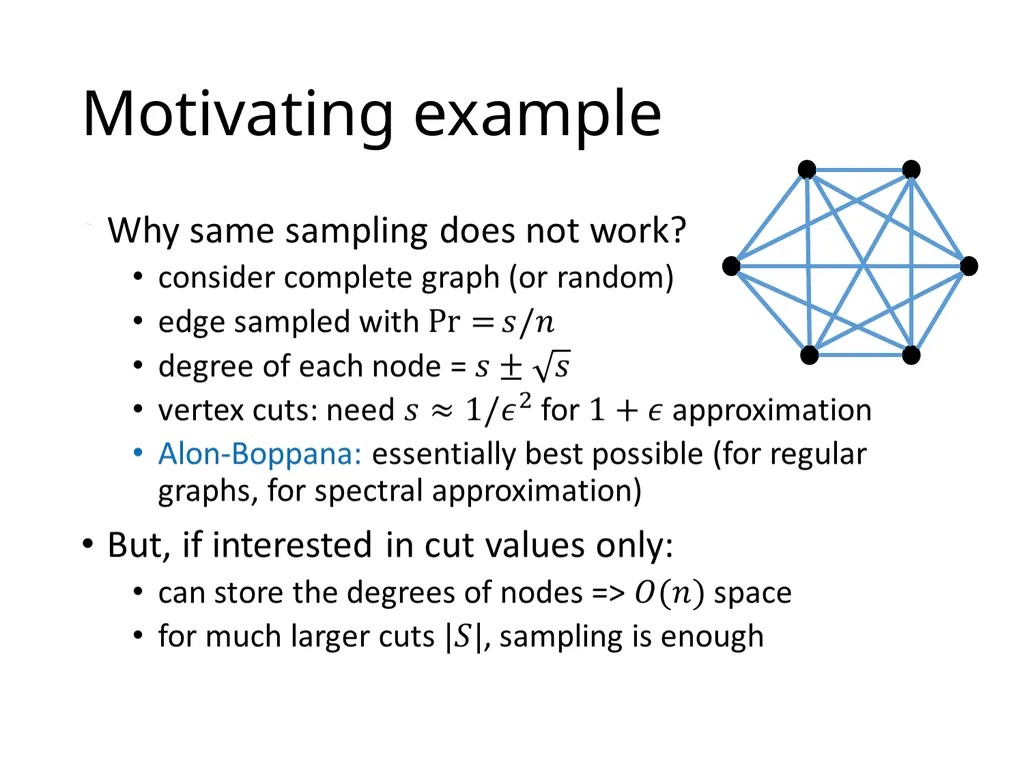
slide22. Motivating example<br>
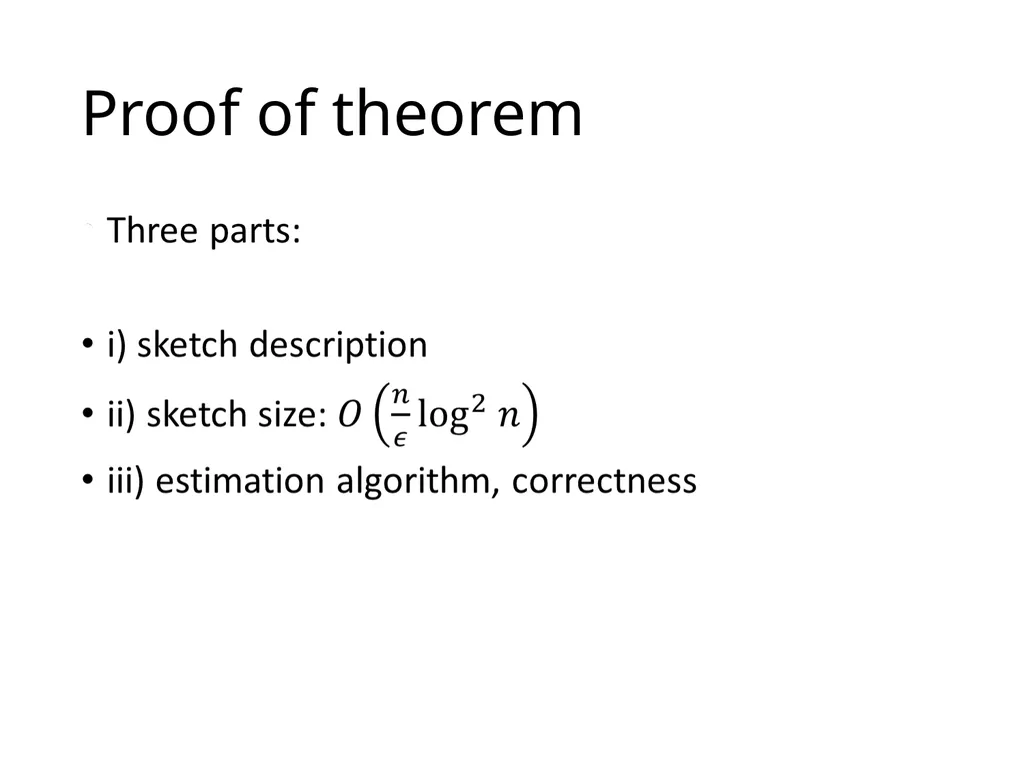
slide23. Proof of theorem<br>
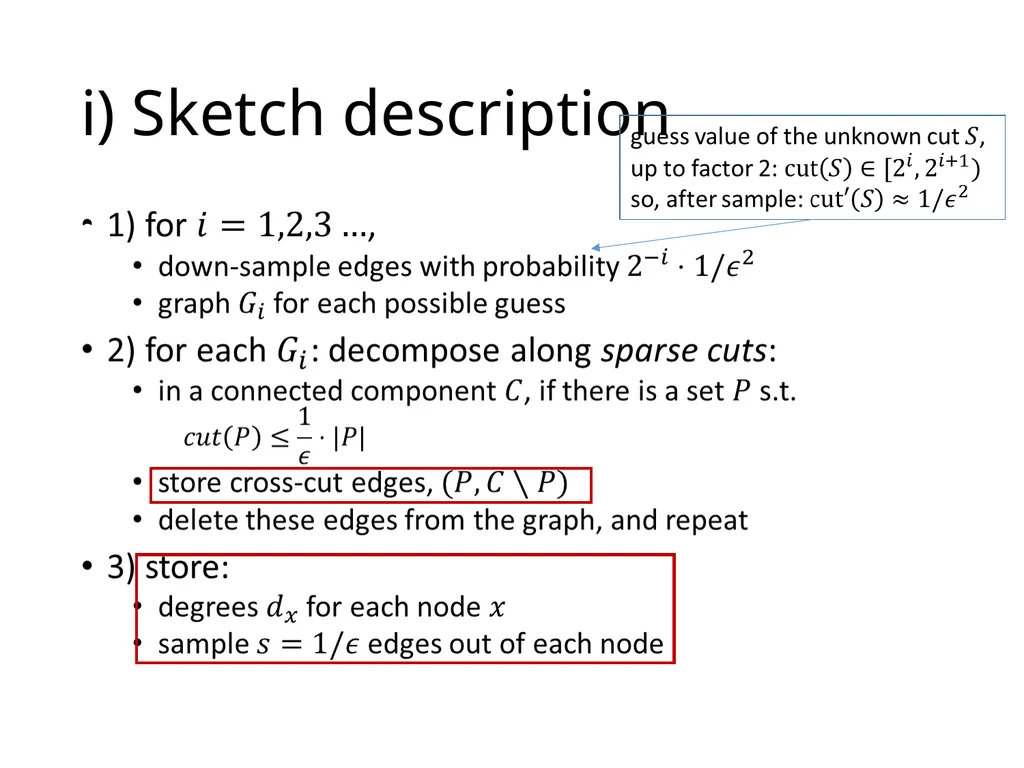
slide24. i) Sketch description<br>
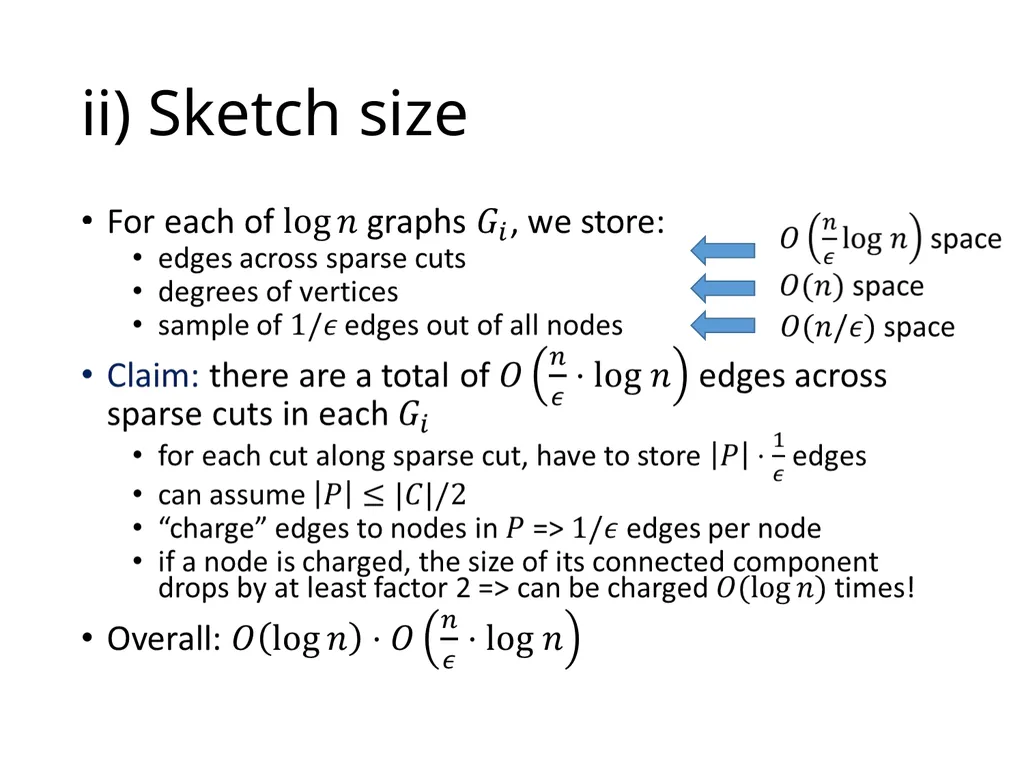
slide25. ii) Sketch size ???<br>
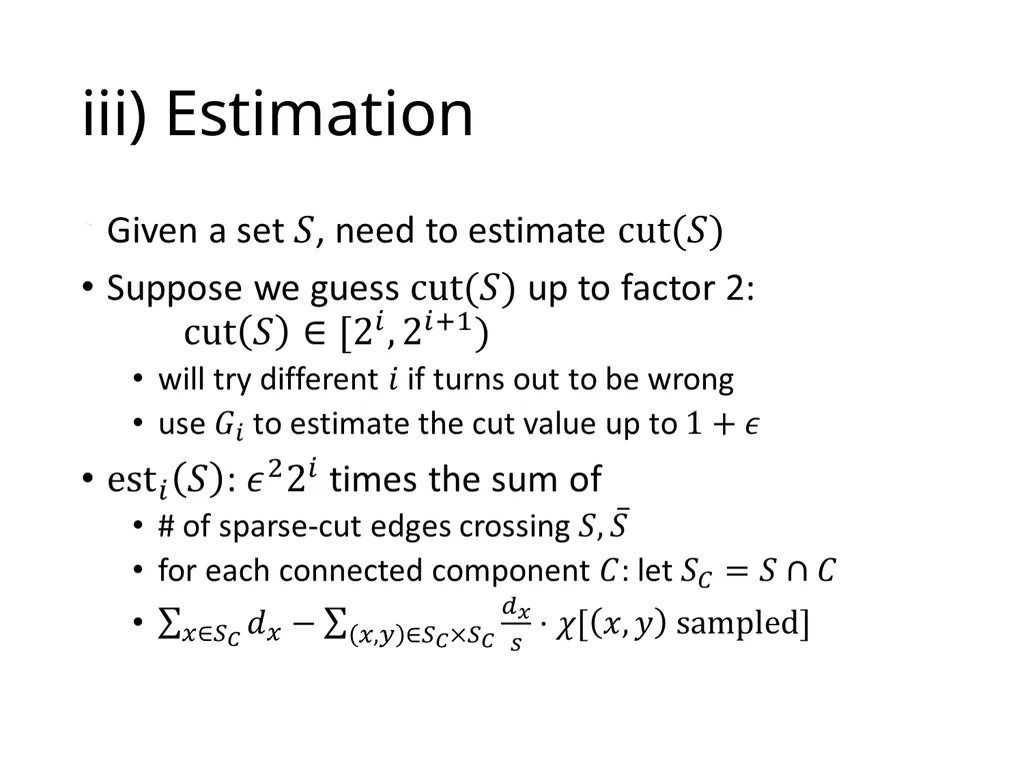
slide26. iii) Estimation<br>
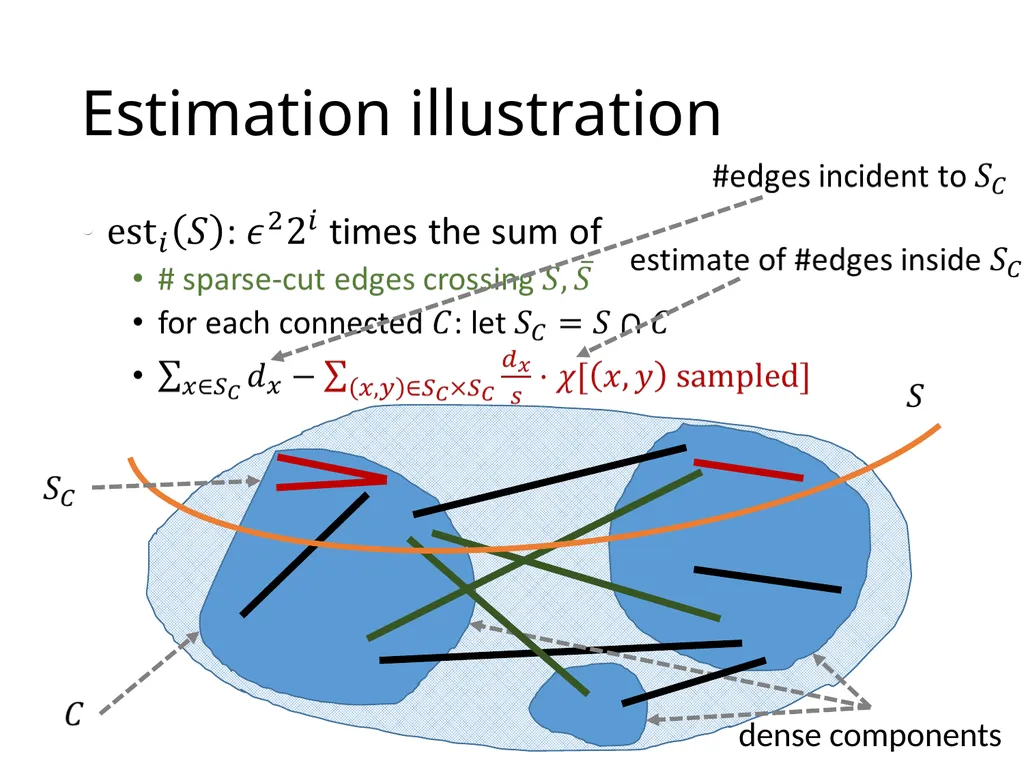
slide27. Estimation illustration dense components<br>
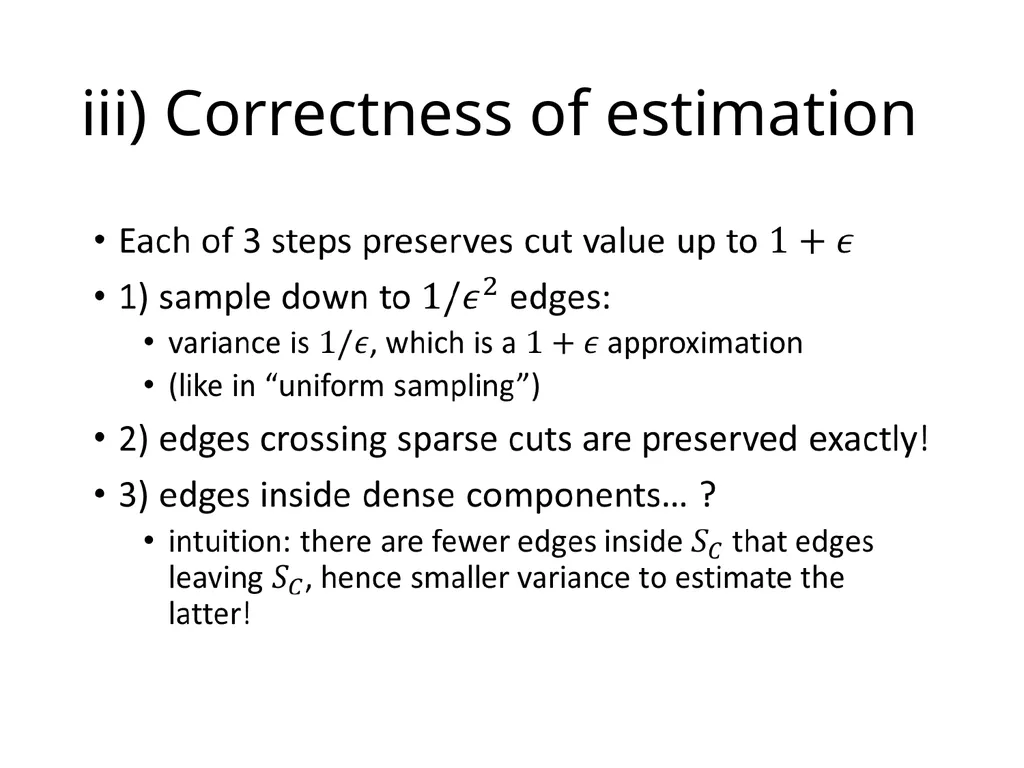
slide28. iii) Correctness of estimation<br>
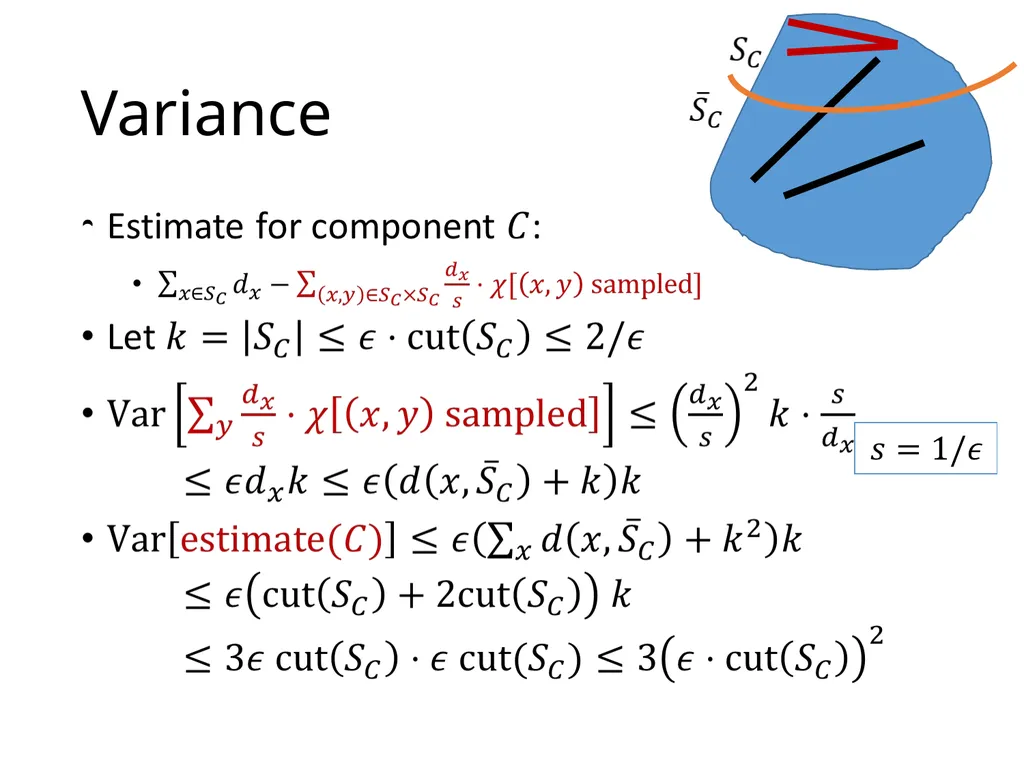
slide30. Variance<br>
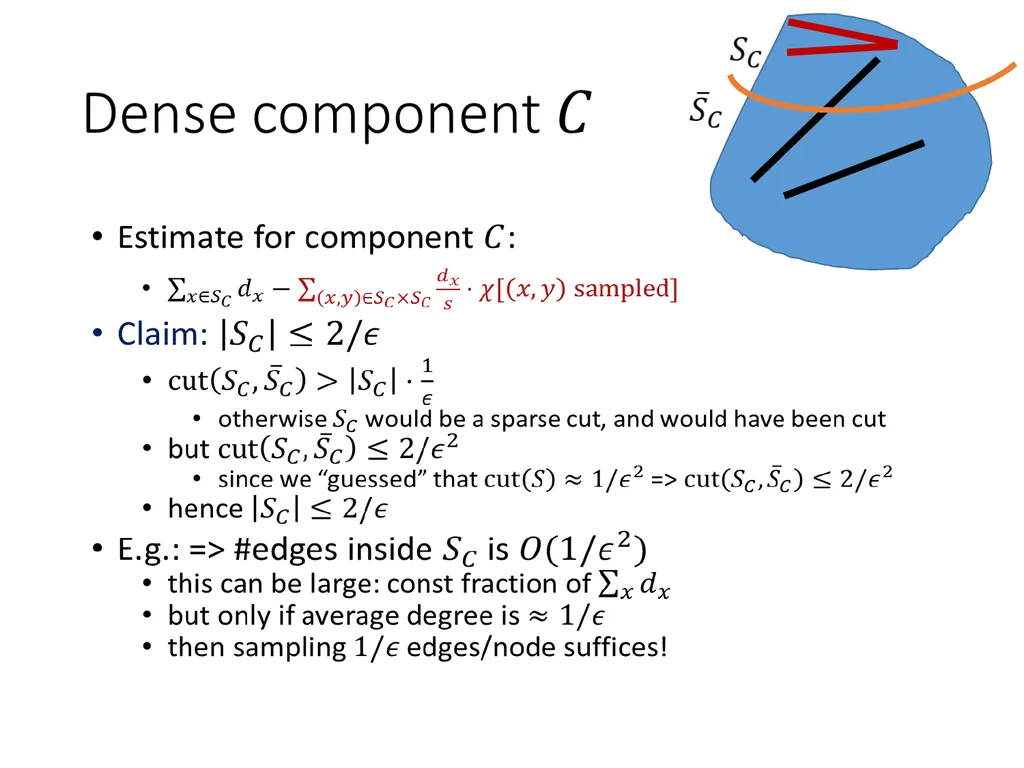
slide31. Dense component estimate<br>
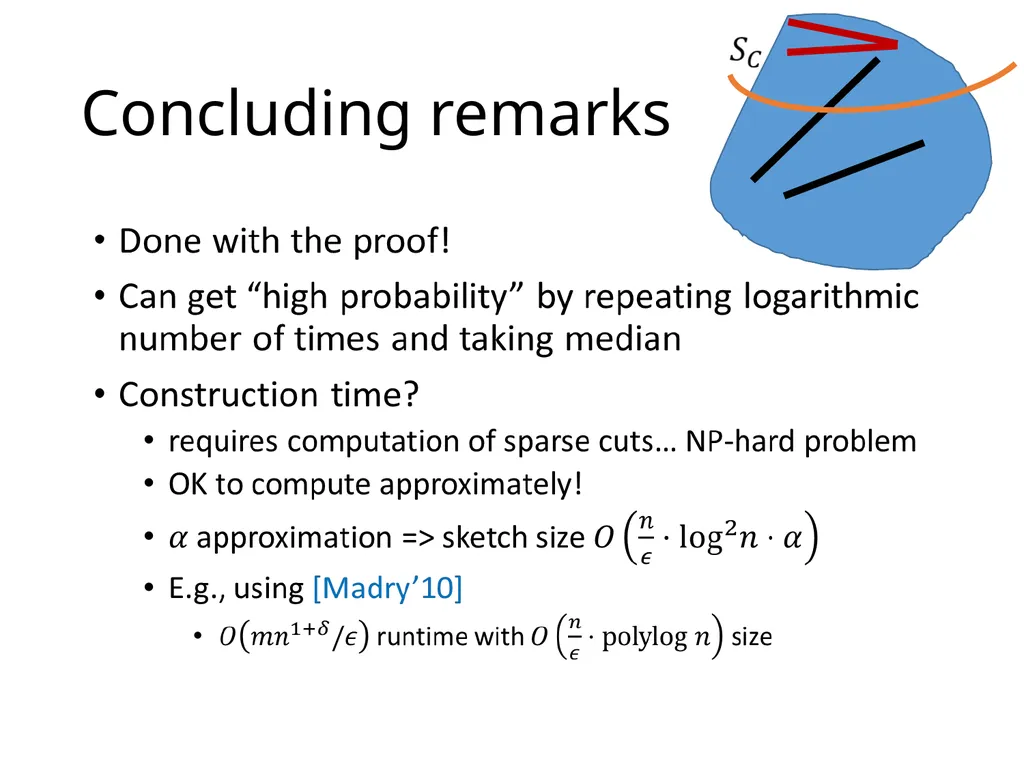
slide32. Concluding remarks<br>
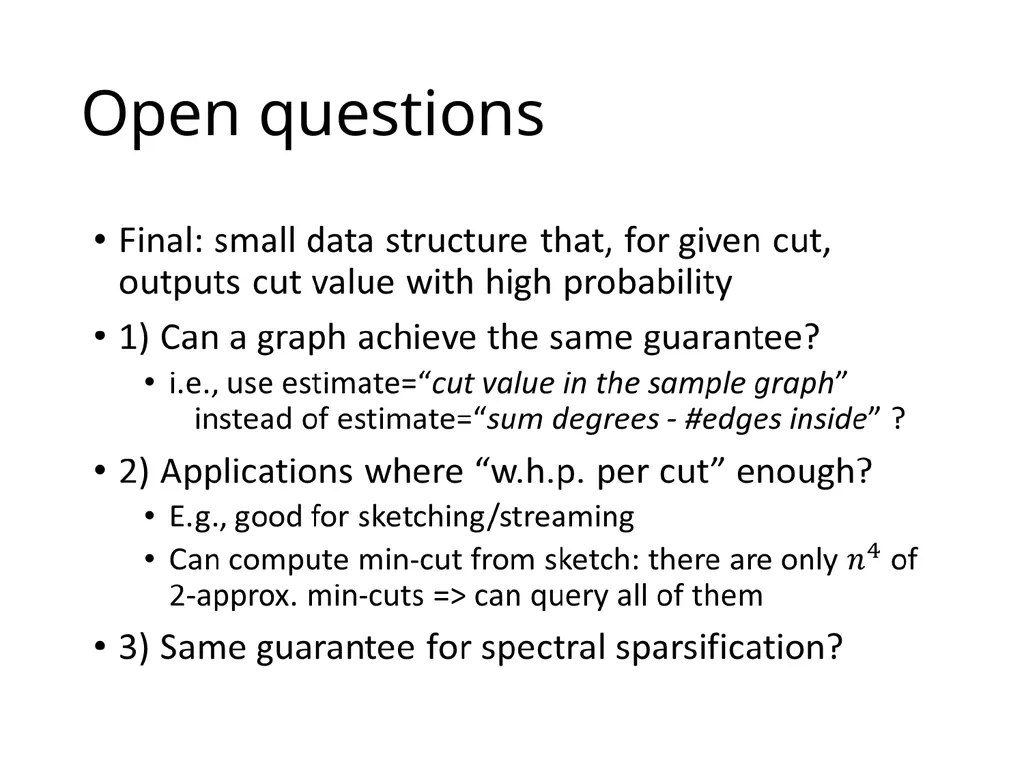
slide33. Open questions<br>
(Microsoft Research)<br>
slide2. Graph compression Why smaller graphs?
use less storage space
faster algorithms
easier visualization<br>
slide3. Preserve some structure
Cuts
approximately
Other properties:
Distances, (multi-commodity) flows, effective resistances…<br>
slide4. Plan 1) Cut sparsifiers
2) More efficient cut sparsifiers
3) Node sparsifiers<br>
slide5. Cut sparsifiers<br>
slide6. Approach? [Karger’94,’96]:<br>
slide9. Concentration<br>
slide10. Applying Chernoff bound<br>
slide11. Enough?<br>
slide12. Smaller size?<br>
slide13. Non-uniform sampling [Benczur-Karger’96]<br>
slide14. Strong connectivity Connectivity: 5
Strong conn.: 2<br>
slide15. Proof of theorem<br>
slide16. ii) Cut values are approximated<br>
slide17. Iterative sampling<br>
slide18. Comments<br>
slide19. BREAK<br>
slide21. Smaller relaxed cut sparsifiers [A-Krauthgamer-Woodruff’14]:<br>
slide22. Motivating example<br>
slide23. Proof of theorem<br>
slide24. i) Sketch description<br>
slide25. ii) Sketch size ???<br>
slide26. iii) Estimation<br>
slide27. Estimation illustration dense components<br>
slide28. iii) Correctness of estimation<br>
slide30. Variance<br>
slide31. Dense component estimate<br>
slide32. Concluding remarks<br>
slide33. Open questions<br>