04
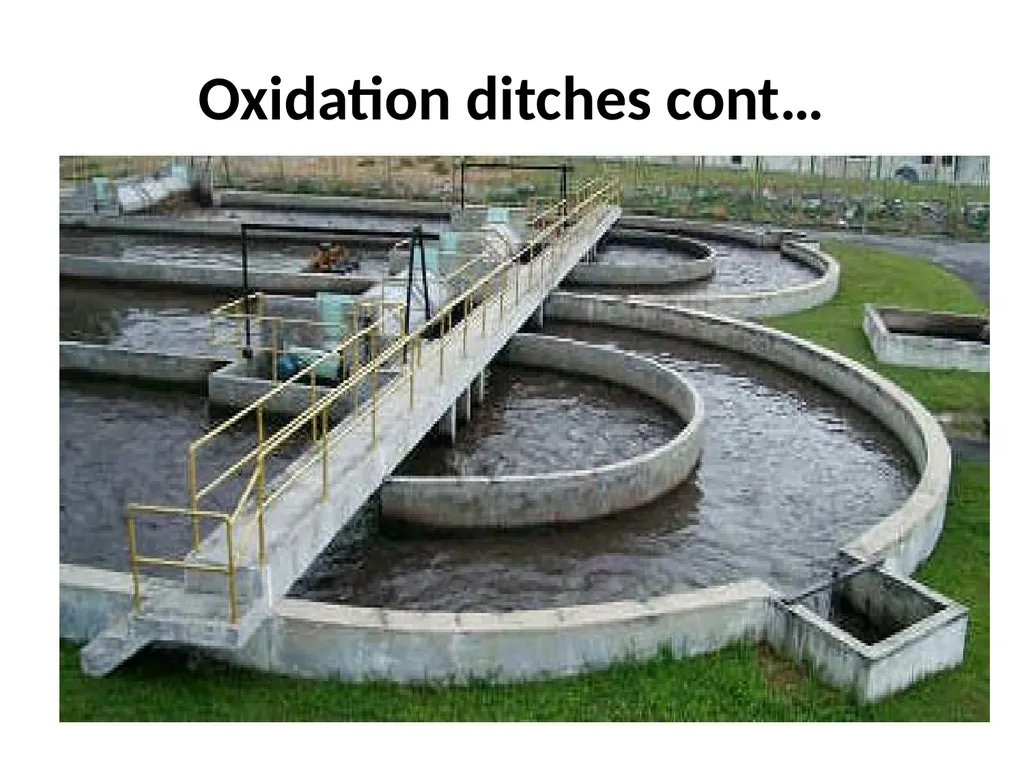
Oxidation ditches This can be considered as a modification of the convectional activated sludge process. Oxidation ditches usually consist of an oval shaped continuous channel, about 1-2m deep and lined with plastic, tar or butyl rubber.<br>
05
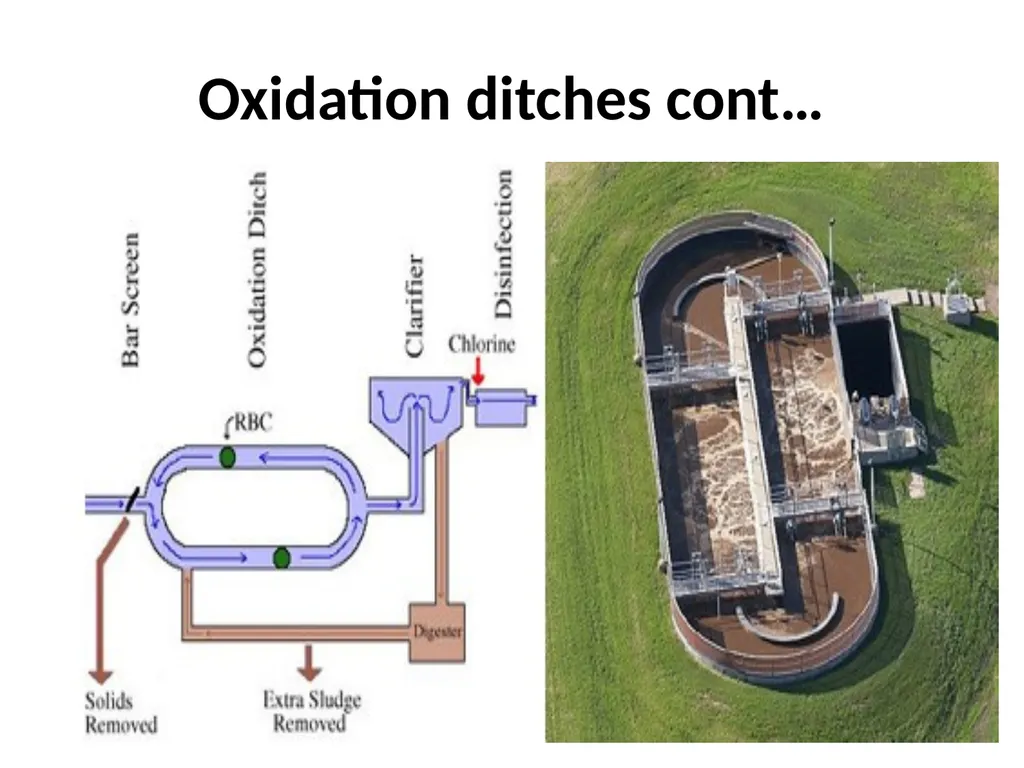
Oxidation ditches cont… Wastewater, after screening or commutation in preliminary treatment, is allowed into the oxidation ditch. Activated sludge is added to the oxidation ditch so that the microorganisms will reduce the BOD in the wastewater. This mixture of raw wastewater and returned sludge is known as mixed liquor.<br>
06
Oxidation ditches cont…<br>
07
Oxidation ditches cont…<br>
08
Oxidation ditches cont… The mixed liquor containing the sludge solids is aerated using rotating biological contactors (RBC's.) in the channel with the help of mechanical rotors. Longer retention times are needed. The usual hydraulic retention time is 12-24hours and for solids, it is 20-30 days.<br>
09
Oxidation ditches cont… Once the BOD has been reduced in the wastewater, the mixed liquor flows out of the oxidation ditch. Sludge is removed in the clarifier. This sludge is pumped to an aerobic digester where the sludge is thickened with the help of aerator pumps.<br>
10
Oxidation ditches cont… This method greatly reduces the amount of sludge produced. Some of the sludge is returned to the oxidation ditch while the rest of the sludge is sent to waste. The surplus sludge can be dried on sand drying beds.<br>
11
Advantages of oxidation ditches Simplicity in operation
Easy maintenance
Low cost construction, operation and maintenance
Overall efficiency and flexibility<br>
12
Disadvantages of oxidation ditches Requires a larger land area than other activated sludge treatment options. This can prove costly, limiting the feasibility of oxidation ditches in urban, suburban, or other areas where land acquisition costs are relatively high.<br>
13
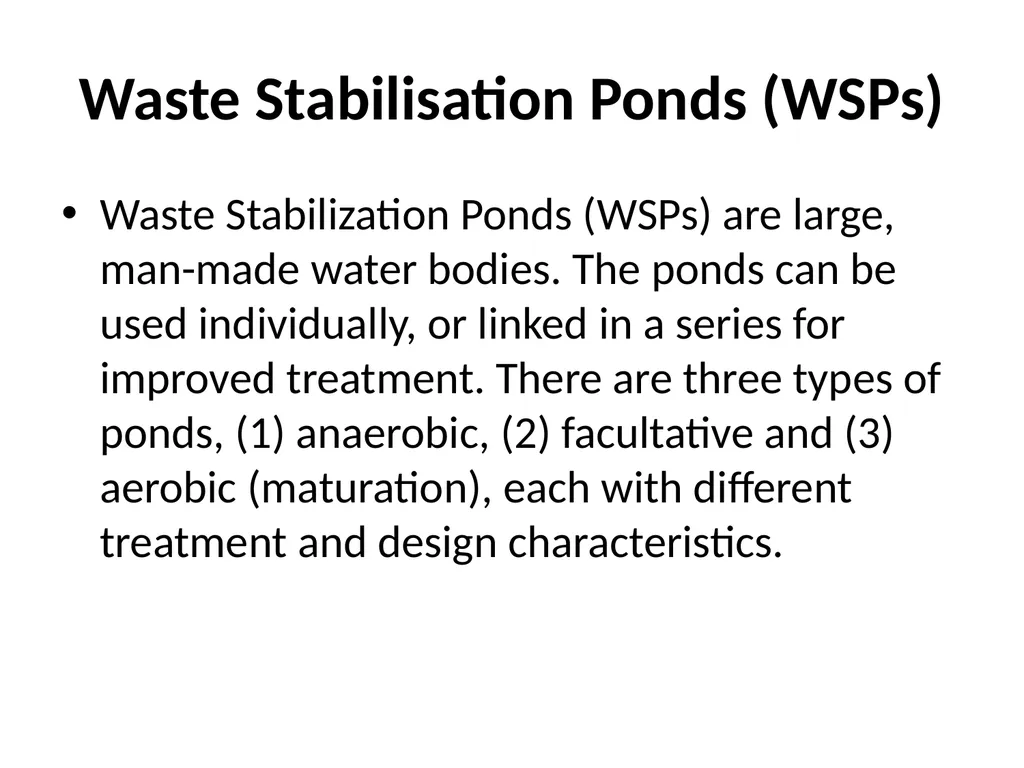
Waste Stabilisation Ponds (WSPs) Waste Stabilization Ponds (WSPs) are large, man-made water bodies. The ponds can be used individually, or linked in a series for improved treatment. There are three types of ponds, (1) anaerobic, (2) facultative and (3) aerobic (maturation), each with different treatment and design characteristics.<br>
14
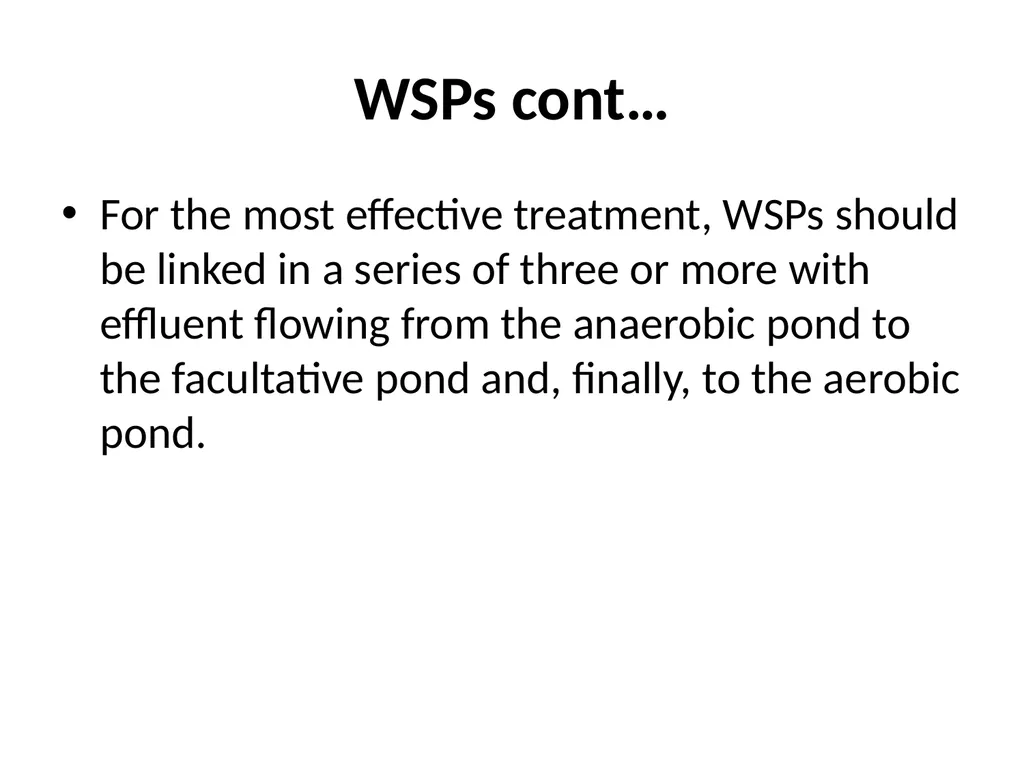
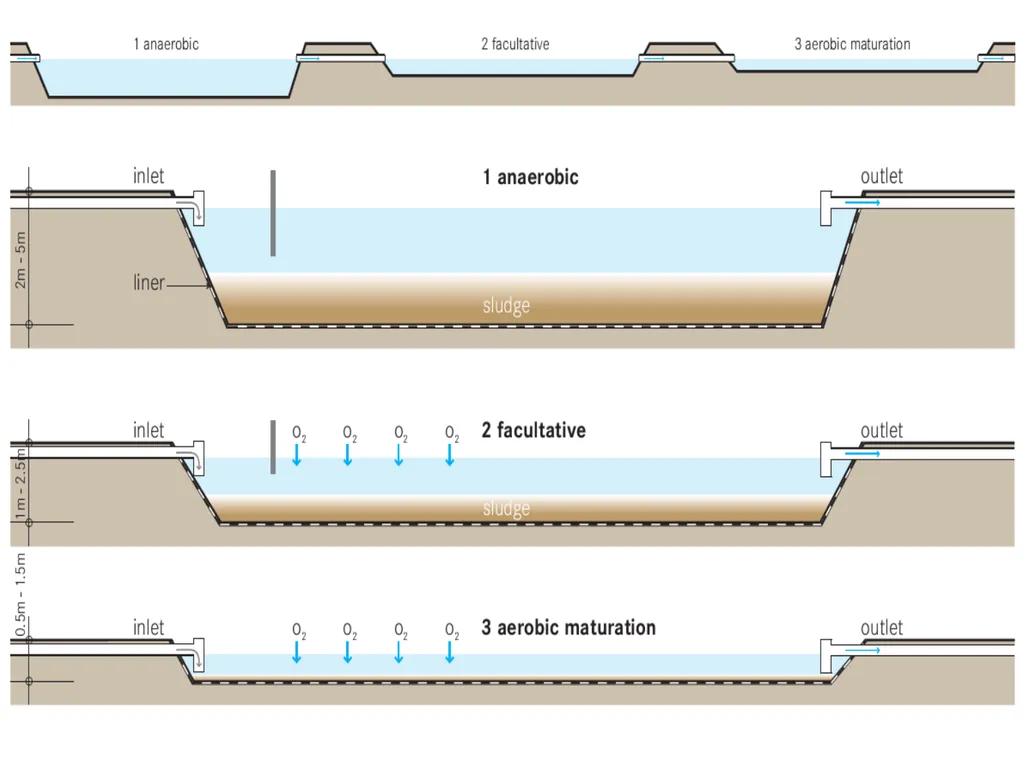
WSPs cont… For the most effective treatment, WSPs should be linked in a series of three or more with effluent flowing from the anaerobic pond to the facultative pond and, finally, to the aerobic pond.<br>
15
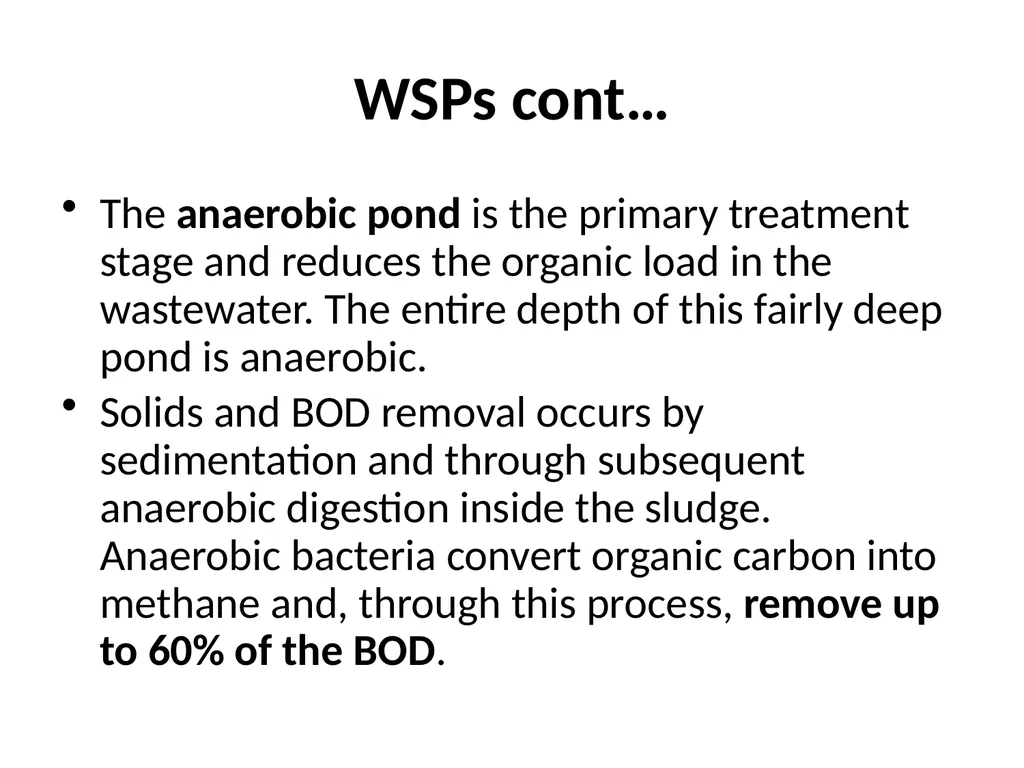
WSPs cont… The anaerobic pond is the primary treatment stage and reduces the organic load in the wastewater. The entire depth of this fairly deep pond is anaerobic.
Solids and BOD removal occurs by sedimentation and through subsequent anaerobic digestion inside the sludge. Anaerobic bacteria convert organic carbon into methane and, through this process, remove up to 60% of the BOD.<br>
16
WSPs cont… In a series of WSPs, the effluent from the anaerobic pond is transferred to the facultative pond, where further BOD is removed. The top layer of the pond receives oxygen from natural diffusion, wind mixing and algae-driven photosynthesis.<br>
17
WSPs cont… The lower layer is deprived of oxygen and becomes anoxic or anaerobic. Settleable solids accumulate and are digested on the bottom of the pond. The aerobic and anaerobic organisms work together to achieve BOD reductions of up to 75%.<br>
18
WSPs cont… Anaerobic and facultative ponds are designed for BOD removal, while aerobic ponds are designed for pathogen removal. An aerobic pond is commonly referred to as a maturation, polishing, or finishing pond because it is usually the last step in a series of ponds and provides the final level of treatment.<br>
19
Design considerations for WSPs Anaerobic ponds are built to a depth of 2 to 5 m and have a relatively short detention time of 1 to 7 days.
Facultative ponds should be constructed to a depth of 1 to 2.5 m and have a detention time between 5 to 30 days.
Aerobic ponds are usually between 0.5 to 1.5 m deep.<br>
20
Design considerations for WSPs cont... If used in combination with algae and/or fish harvesting, this type of pond is effective at removing the majority of nitrogen and phosphorus from the effluent. Ideally, several aerobic ponds can be built in series to provide a high level of pathogen removal.<br>
21
Design considerations for WSPs cont... To prevent leaching into the groundwater, the ponds should have a liner. The liner can be made from clay, asphalt, compacted earth, or any other impervious material.<br>
22
Design considerations for WSPs cont... To protect the pond from runoff and erosion, a protective berm should be constructed around the pond using the excavated material.
A fence should be installed to ensure that people and animals stay out of the area and that garbage does not enter the ponds.<br>
23
Appropriateness of WSPs WSPs are especially appropriate for rural and peri-urban communities that have large, unused land, at a distance from homes and public spaces. They are not appropriate for very dense or urban areas.<br>
24
Operation & maintenance of WSPs Scum that builds up on the pond surface should be regularly removed. Aquatic plants (macrophytes) that are present in the pond should also be removed as they may provide a breeding habitat for mosquitoes and prevent light from penetrating the water column.<br>
25
Operation & maintenance of WSPs cont… The anaerobic pond must be desludged approximately once every 2 to 5 years, when the accumulated solids reach one third of the pond volume. For facultative ponds sludge removal is even rarer and maturation ponds hardly ever need desludging.<br>
26
Operation & maintenance of WSPs cont… Sludge can be removed by using a raft-mounted sludge pump, a mechanical scraper at the bottom of the pond or by draining and dewatering the pond and removing the sludge with a front-end loader.<br>
27
Effluent Limits The effluents from WSPs should conform to ZEMA effluent limits. Effluent limits represent the maximum amount of pollutants allowed to discharge from wastewater to its final destination (waterway, reservoir for reuse, etc.).<br>
28
Advantages of WSPs Resistant to organic and hydraulic shock loads
High reduction of solids, BOD and pathogens
High nutrient removal if combined with aquaculture
Low operating costs
No electrical energy is required
No real problems with insects or odours if designed and maintained correctly<br>
29
Disadvantages of WSPs Requires a large land area
High capital costs depending on the price of land
Requires expert design and construction
Sludge requires proper removal and treatment<br>