Saving for the Future Dollars and Sense What is Financial Planning? Financial Plan Without a financial plan, long-term goals may never be affordable. A financial plan should reflect personal and family goals. A Financial Plan Considers
Related Topics
Share
Embed code
Download this presentation From Below
"Saving for the Future Dollars and Sense What is" is the property of its rightful owner. Permission is granted to
download and print the materials on this website for personal, non-commercial use only, and to display it
on your personal computer provided you do not modify the materials and that you retain all copyright
notices contained in the materials. By downloading content from our website, you accept the terms of this
agreement.
Presentation Transcript
01
Saving for the Future Dollars and Sense<br>
02
What is Financial Planning?<br>
03
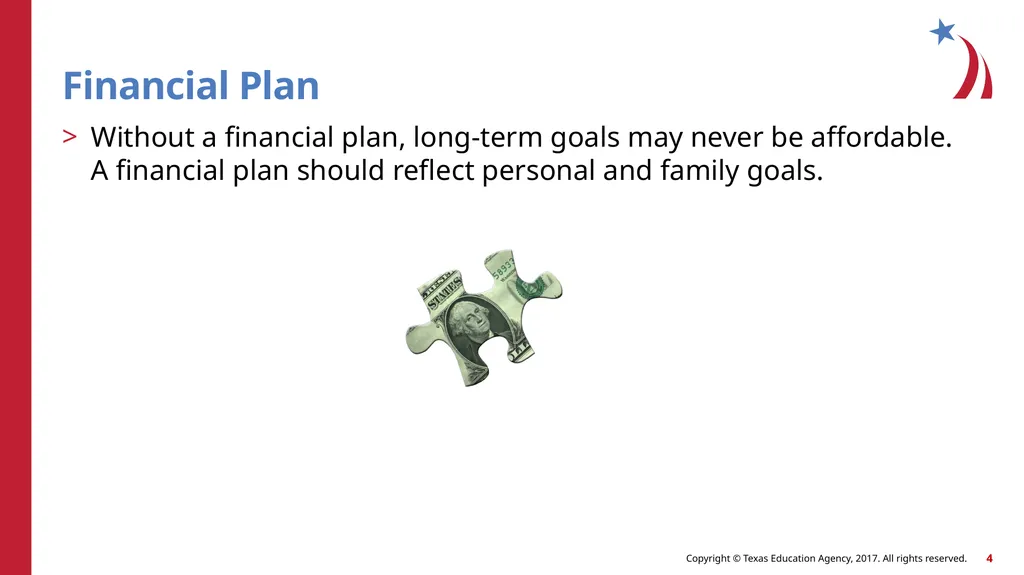
Financial Plan Without a financial plan, long-term goals may never be affordable. A financial plan should reflect personal and family goals.<br>
04
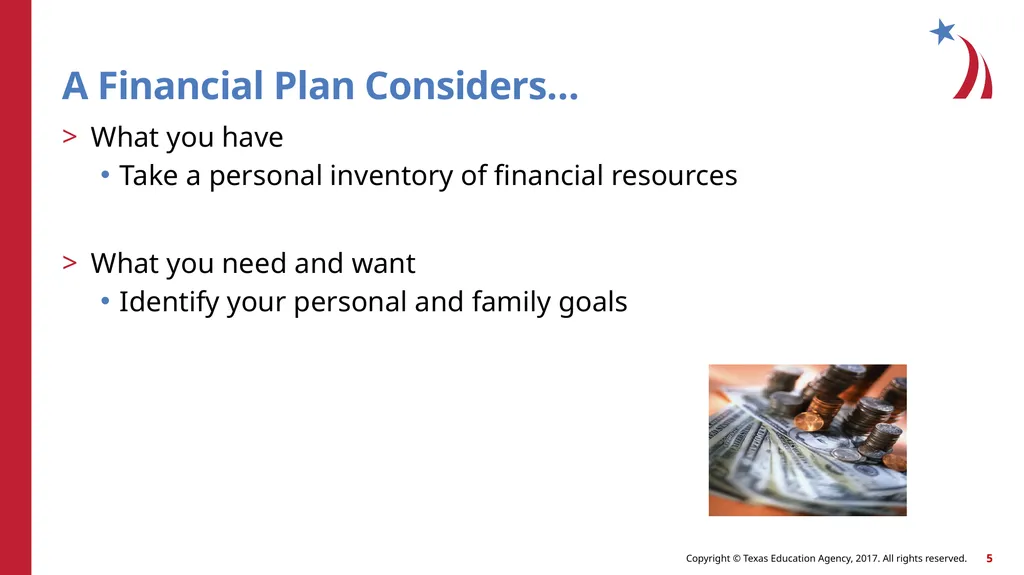
A Financial Plan Considers… What you have
Take a personal inventory of financial resources
What you need and want
Identify your personal and family goals<br>
05
A Financial Plan Considers… How you can best use your financial resources to achieve your needs and wants
Develop plans to achieve and use available tools to manage:
Spending
Savings
Borrowing
Investing
Protecting against financial crises<br>
06
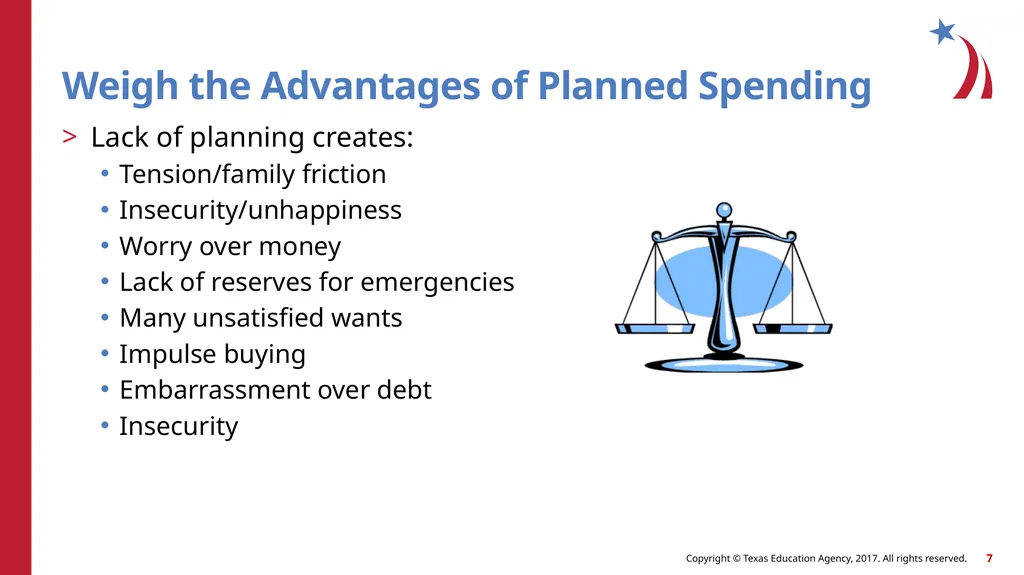
Weigh the Advantages of Planned Spending Lack of planning creates:
Tension/family friction
Insecurity/unhappiness
Worry over money
Lack of reserves for emergencies
Many unsatisfied wants
Impulse buying
Embarrassment over debt
Insecurity<br>
07
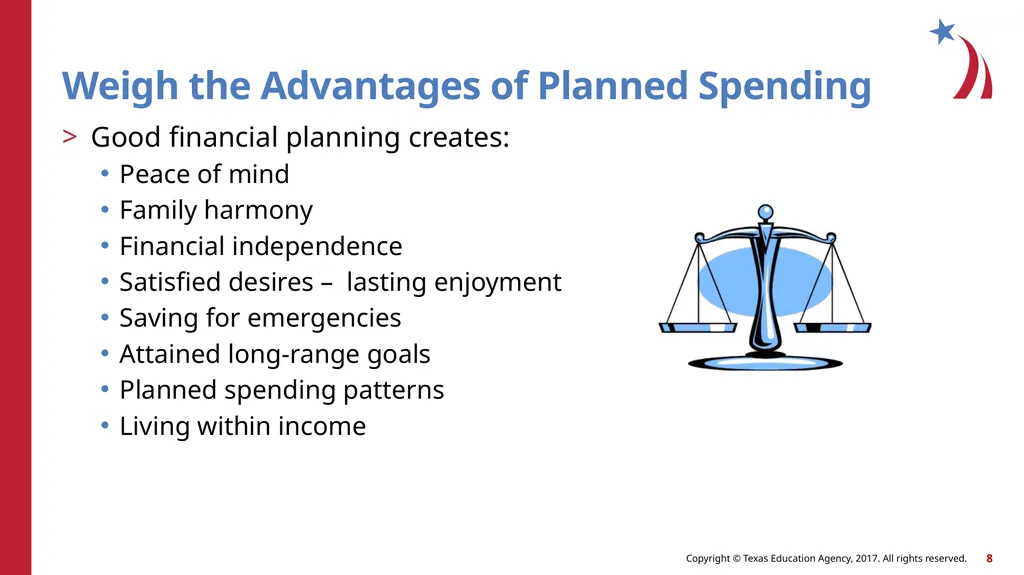
Weigh the Advantages of Planned Spending Good financial planning creates:
Peace of mind
Family harmony
Financial independence
Satisfied desires – lasting enjoyment
Saving for emergencies
Attained long-range goals
Planned spending patterns
Living within income<br>
08
Saving Your Money Where to Stash Your Money
(click on link)<br>
09
Savings Plan Saving money should be a cornerstone of a financial plan, not the money left over after paying expenses
The Compounding Calculator
(click on link)<br>
10
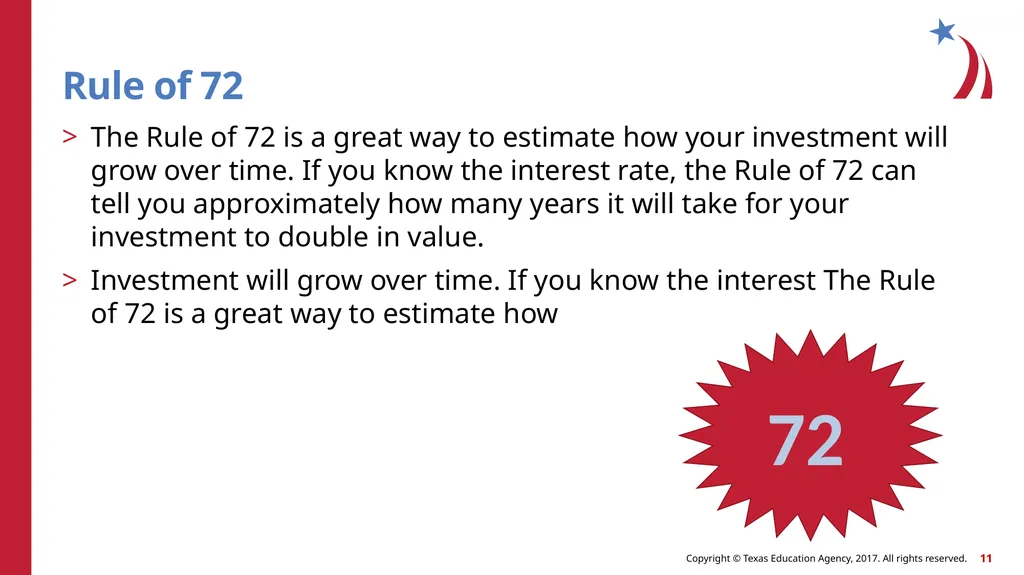
Rule of 72 The Rule of 72 is a great way to estimate how your investment will grow over time. If you know the interest rate, the Rule of 72 can tell you approximately how many years it will take for your investment to double in value.
Investment will grow over time. If you know the interest The Rule of 72 is a great way to estimate how 72<br>
11
Rule of 72 How to Teach the Rule of 72 to Children
(click on link)<br>
12
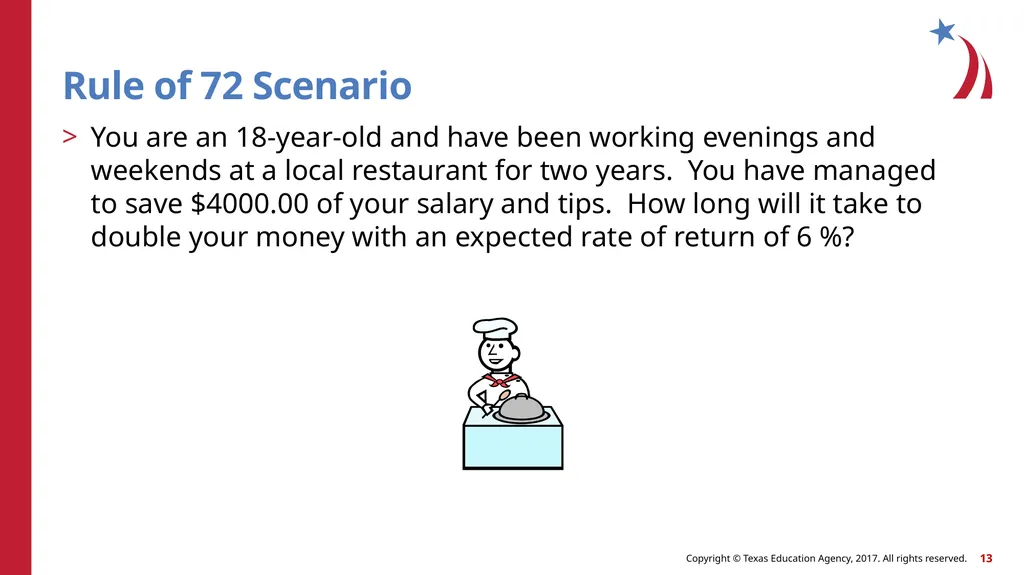
Rule of 72 Scenario You are an 18-year-old and have been working evenings and weekends at a local restaurant for two years. You have managed to save $4000.00 of your salary and tips. How long will it take to double your money with an expected rate of return of 6 %?<br>
13
Saving versus Investing Abc
Abc<br>
14
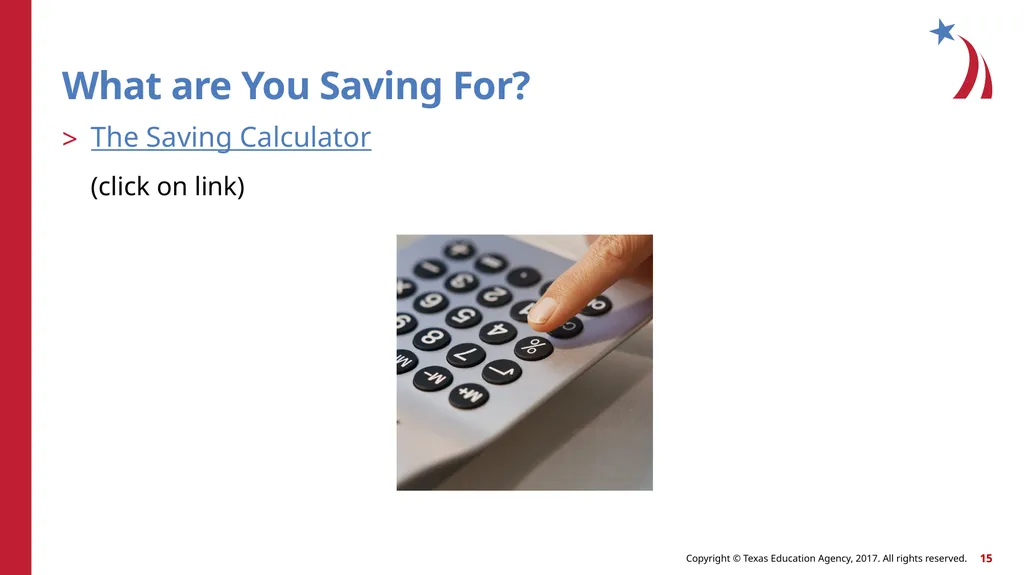
What are You Saving For? The Saving Calculator
(click on link)<br>
15
Deciding Where to Save Consider the following factors:
The interest rate paid
The method used to calculate interest
How often interest is compounded
Policies and requirements of the institution
Liquidity of the money
Safety of the funds<br>
16
What is Retirement?<br>
17
Three Legs of Retirement Planning Social Security benefits
Employer pension
Individual savings and investment earnings<br>
18
Questions?<br>
19
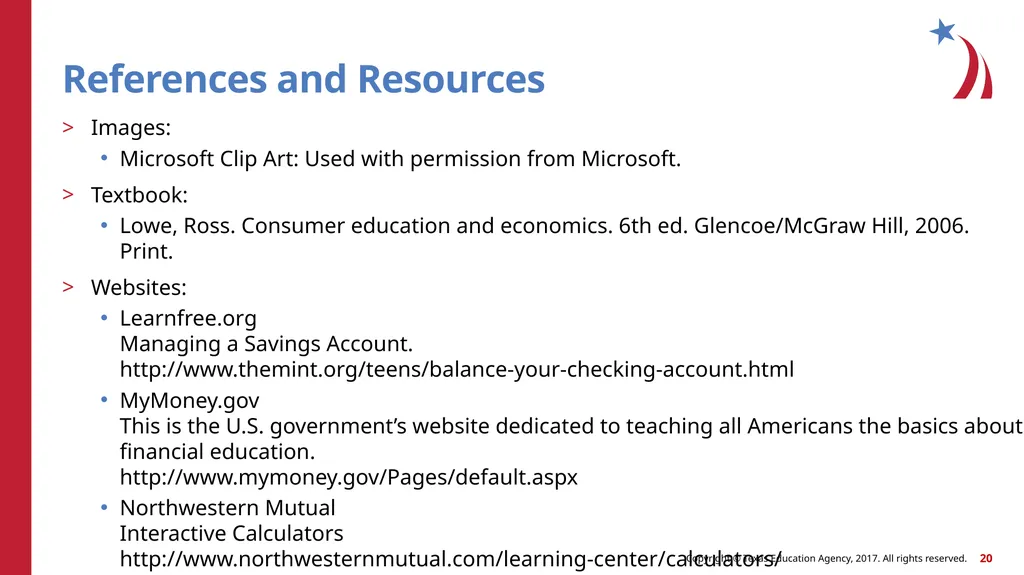
References and Resources Images:
Microsoft Clip Art: Used with permission from Microsoft.
Textbook:
Lowe, Ross. Consumer education and economics. 6th ed. Glencoe/McGraw Hill, 2006. Print.
Websites:
Learnfree.org Managing a Savings Account. http://www.themint.org/teens/balance-your-checking-account.html
MyMoney.gov This is the U.S. government’s website dedicated to teaching all Americans the basics about financial education. http://www.mymoney.gov/Pages/default.aspx
Northwestern Mutual Interactive Calculators http://www.northwesternmutual.com/learning-center/calculators/<br>
20
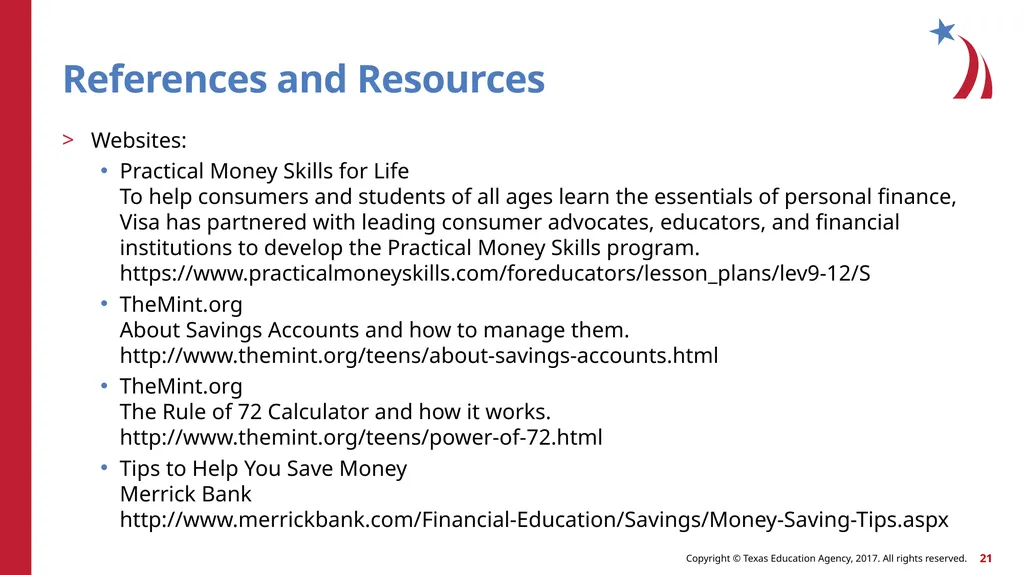
References and Resources Websites:
Practical Money Skills for Life To help consumers and students of all ages learn the essentials of personal finance, Visa has partnered with leading consumer advocates, educators, and financial institutions to develop the Practical Money Skills program. https://www.practicalmoneyskills.com/foreducators/lesson_plans/lev9-12/S
TheMint.org About Savings Accounts and how to manage them. http://www.themint.org/teens/about-savings-accounts.html
TheMint.org The Rule of 72 Calculator and how it works. http://www.themint.org/teens/power-of-72.html
Tips to Help You Save Money Merrick Bank http://www.merrickbank.com/Financial-Education/Savings/Money-Saving-Tips.aspx<br>
21
References and Resources YouTube™:
How to Teach the Rule of 72 to Children Teaching Children about the Rule of 72 http://youtu.be/ShwCeTeKWOI<br>