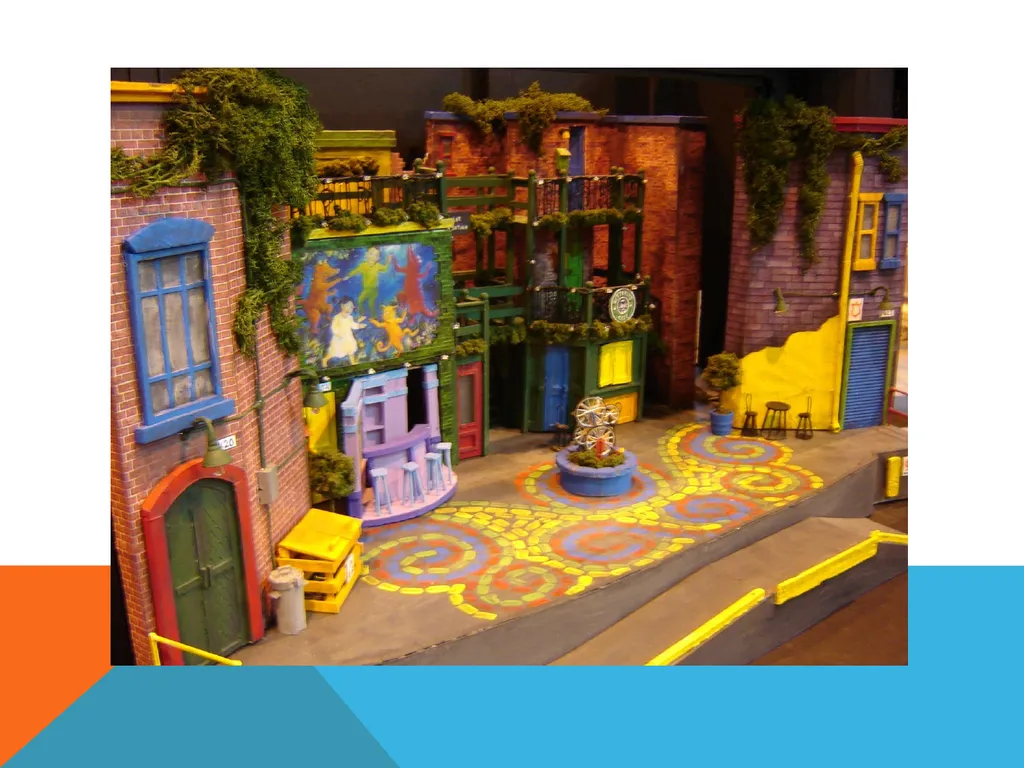
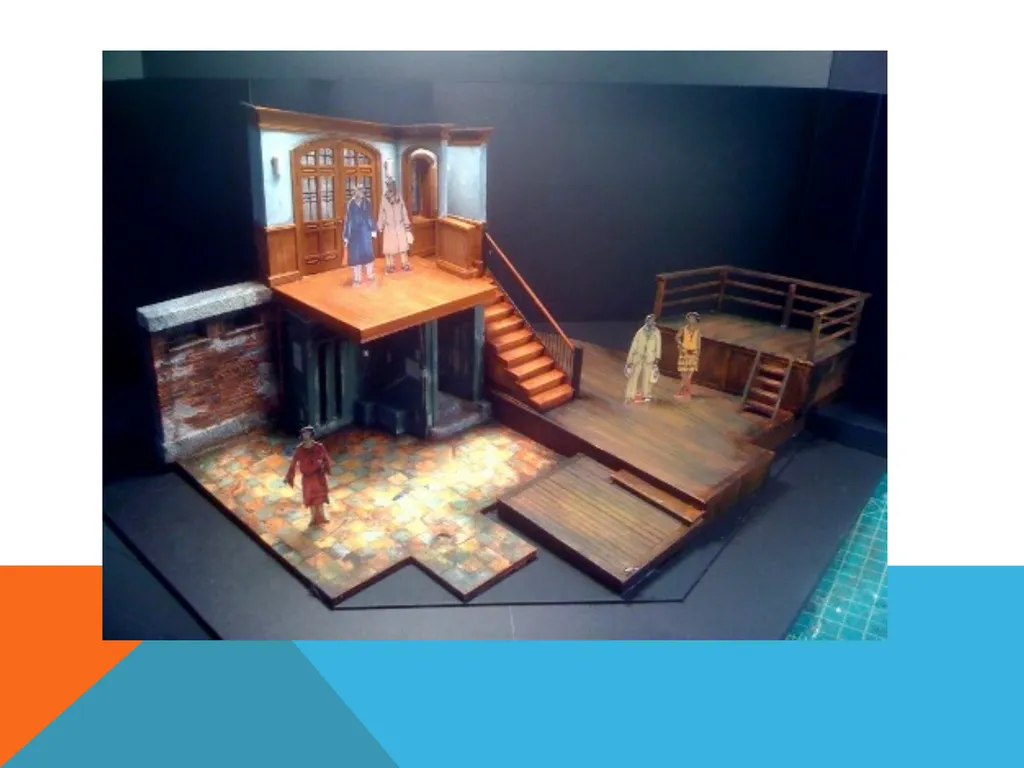
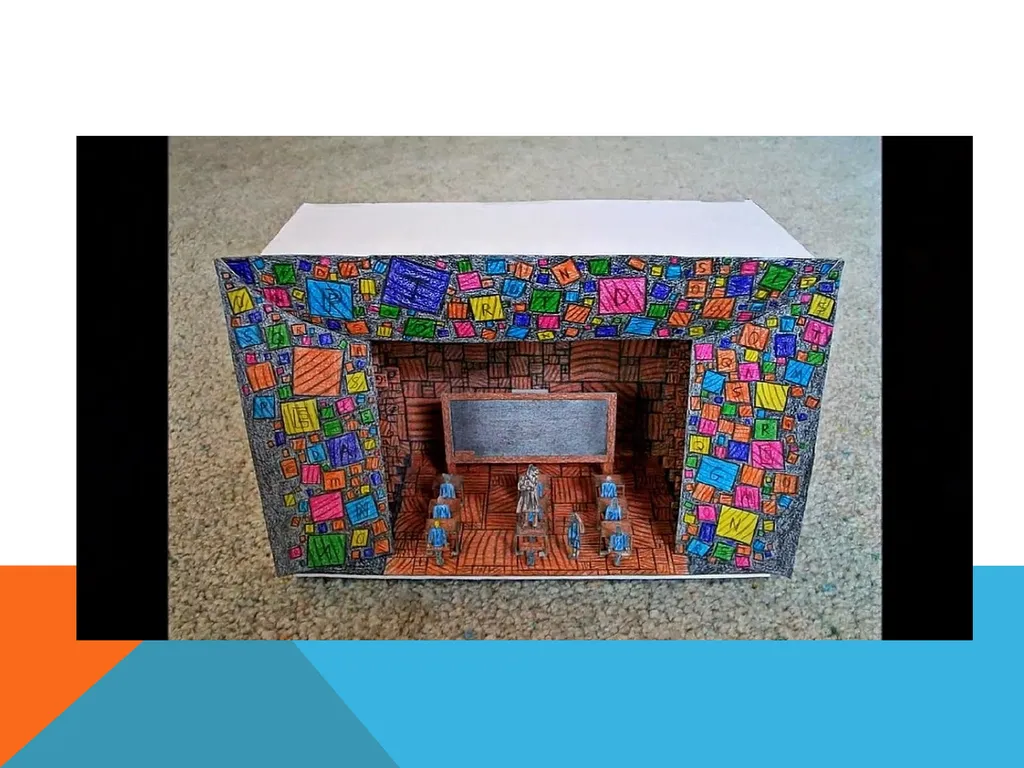
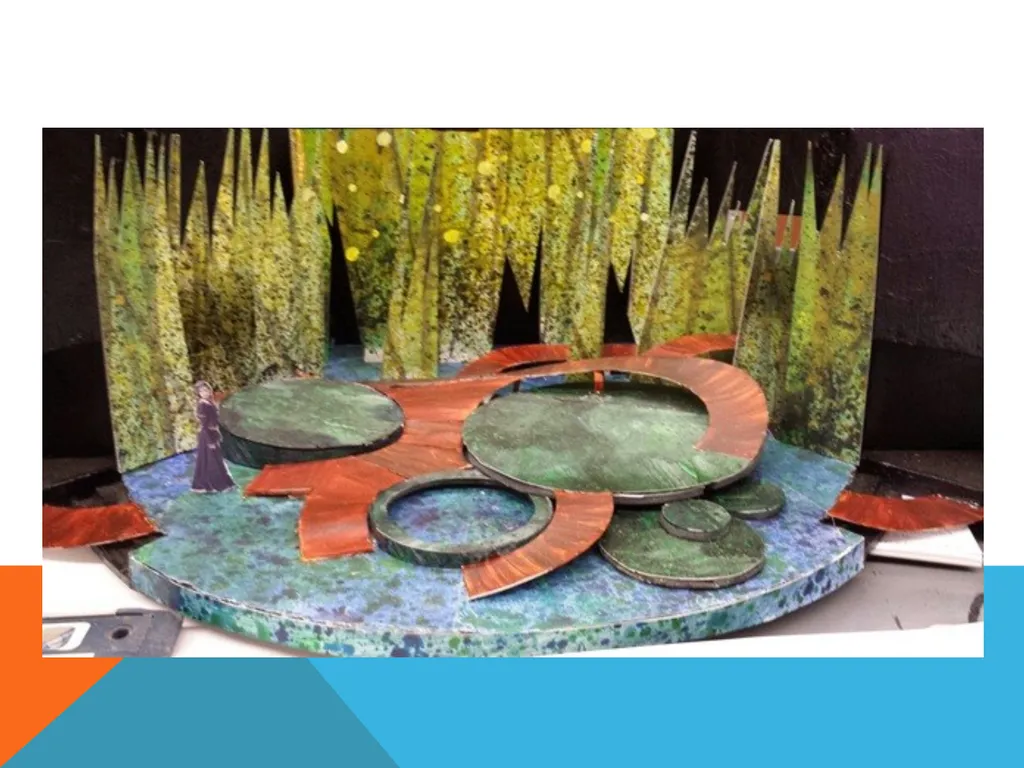
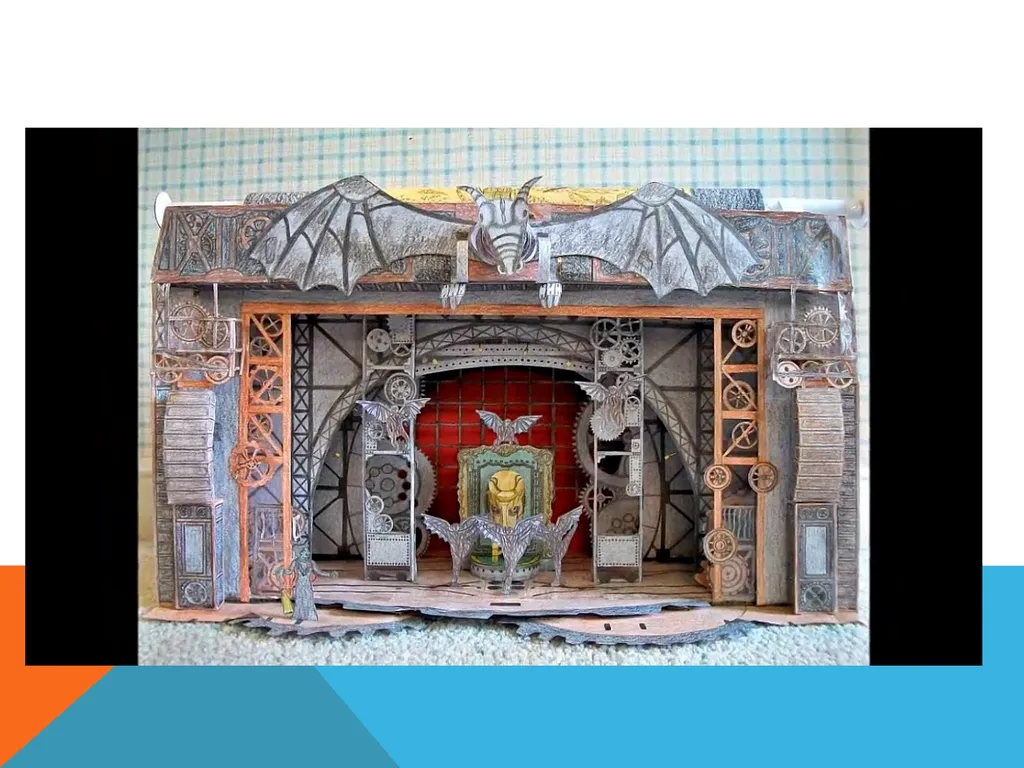
SCENERY DESIGN The purpose, procedures, and techniques for Stage Scenery PURPOSES OF SCENERY The most important purpose of scenery is to provide a place to act The set should define the time and setting of the play: Time Historical period
"SCENERY DESIGN The purpose, procedures, and" is the property of its rightful owner. Permission is granted to
download and print the materials on this website for personal, non-commercial use only, and to display it
on your personal computer provided you do not modify the materials and that you retain all copyright
notices contained in the materials. By downloading content from our website, you accept the terms of this
agreement.
Presentation Transcript
01
SCENERY DESIGN The purpose, procedures, and techniques for Stage Scenery<br>
02
PURPOSES OF SCENERY The most important purpose of scenery is to provide a place to act
The set should define the time and setting of the play:
Time
Historical period
Season of year
Time of day
Changes in time during the play<br>
03
PURPOSES OF SCENERY Setting
Climate / geographical conditions
Socioeconomic situation
Cultural background
Political-governmental system of area
Interior or exterior
Rural or urban
Real or imaginary<br>
04
PURPOSES OF SCENERY Reveals interrelationships between people
Rank
Stations, influence
Positions in their families, office or community
Provides a way to focus the audiences attention on the actor
Elevating on a platform or stairs
Framed by a doorway
Triangular blocking with furniture and actors with focus on the middle<br>
05
PURPOSES OF SCENERY Indicates the style of the production
Romantic
Epic
Fantasy
Creates a mood and atmosphere
Bright yellows, oranges and pinks=light & cheery
Dark, cool colors, grays, blacks = heavy & serious<br>
06
STAGING CONVENTIONS Most sets are realistic depictions that follow a few staging conventions:
Almost all furniture faces the audience
Exterior doors are usually offstage right
Interior doors are usually stage left or upstage
Fireplaces tend to be placed on stage-right walls
French doors are usually stage left
Living-room and dining-room furniture often appear in the same area<br>
07
Effective scenery and design should:
Match the author’s intent and the director’s interpretation
Always serve the actor, never dominate him/her
Complement the costumes, never clash with them
Never become an obstacle course for blocking
Work toward consistency, avoiding distractions
Aid the action of the play, not hinder it
Fit the needs of the play
Simple in design, construction, and shifting<br>
08
DEVELOPMENT OF SCENERY RENAISSANCE
Stage design as we know it started in Italy in the mid 1400’s
Actors performed against painted scenes (often showing perspective)
Raked stage developed
Stage slanted upward toward the back
Where terms upstage and downstage came from
Development of Proscenium and:
Backdrops
revolving stages
Shutters (movable flats on tracks )<br>
09
RESTORATION
In England, most acting was on raked aprons
Proscenium was thick wall with doors on either side for entrance and exits onto apron
EARLY NINETEENTH CENTURY
Scenery made to suit the individual play
Creation of typical scenes:
Interior = canvas drops and painted wings
Exterior = painted trees, fountains, gates, paths
Entrances parallel to back wall
Street scenes = painted buildings, store windows, signs, street lamps<br>
10
MID-NINETEENTH CENTURY
More accurate historical and realistic scenery
Realism brought changes:
Gradual shrinking of the apron
Addition of orchestra seats
Elimination of painted backdrops
Closing of wings giving illusion of left and right walls<br>
11
TWENTIETH CENTURY
Naturalism developed
Photographically accurate sets
Scenery sometimes distracted audience from the action
Selective Realism
An impression is better
Convey an idea of locale not exact replica
Plastics (3 dimensional structures and Cut-outs (two dimensional profiles) placed against a drop/sky/etc
Proscenium stage called “forth wall theatre” an invisible wall where audience observes action
Dramatic lighting introduced<br>
12
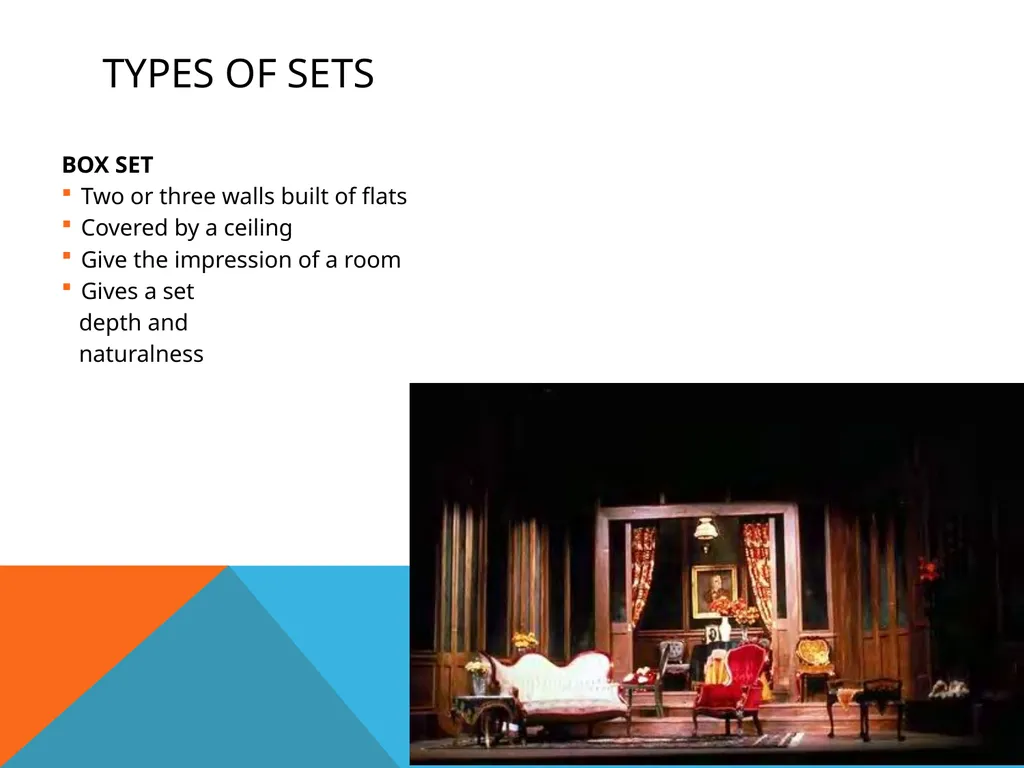
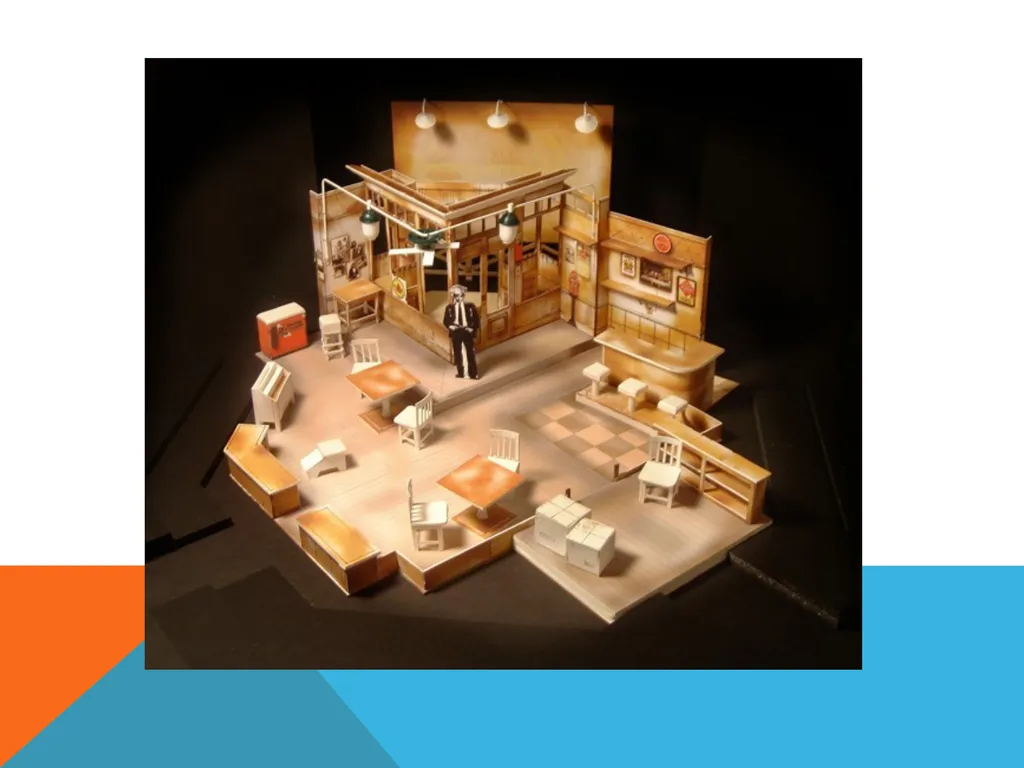
TYPES OF SETS BOX SET
Two or three walls built of flats
Covered by a ceiling
Give the impression of a room
Gives a set
depth and
naturalness<br>
13
UNIT SET
Made up of several units that can be moved, turned and interchanged to create several settings
Usually made with several flats in combination
Very practical for schools
Present one-act plays program
Multi-set plays
Built units can be reused to fit almost any play<br>
14
PERMANENT SET
Staging rarely changes during the play
Basically three kinds
Single permanent set
Controlled lights help determine locale-outside/inside
Set with many openings
Doors, windows, curtains, background, etc are placed behind openings to simulate scene changes
Multiple set
Modified permanent set
Several distinct acting areas separated with dividers like platforms or railings<br>
15
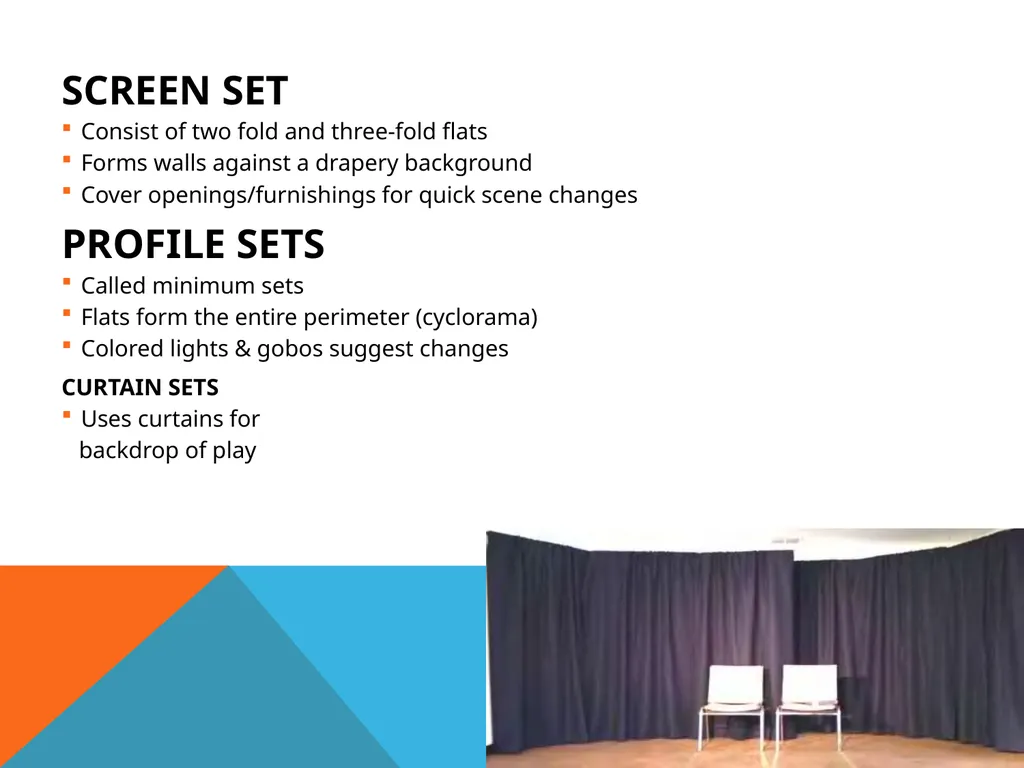
SCREEN SET
Consist of two fold and three-fold flats
Forms walls against a drapery background
Cover openings/furnishings for quick scene changes
PROFILE SETS
Called minimum sets
Flats form the entire perimeter (cyclorama)
Colored lights & gobos suggest changes
CURTAIN SETS
Uses curtains for
backdrop of play<br>
16
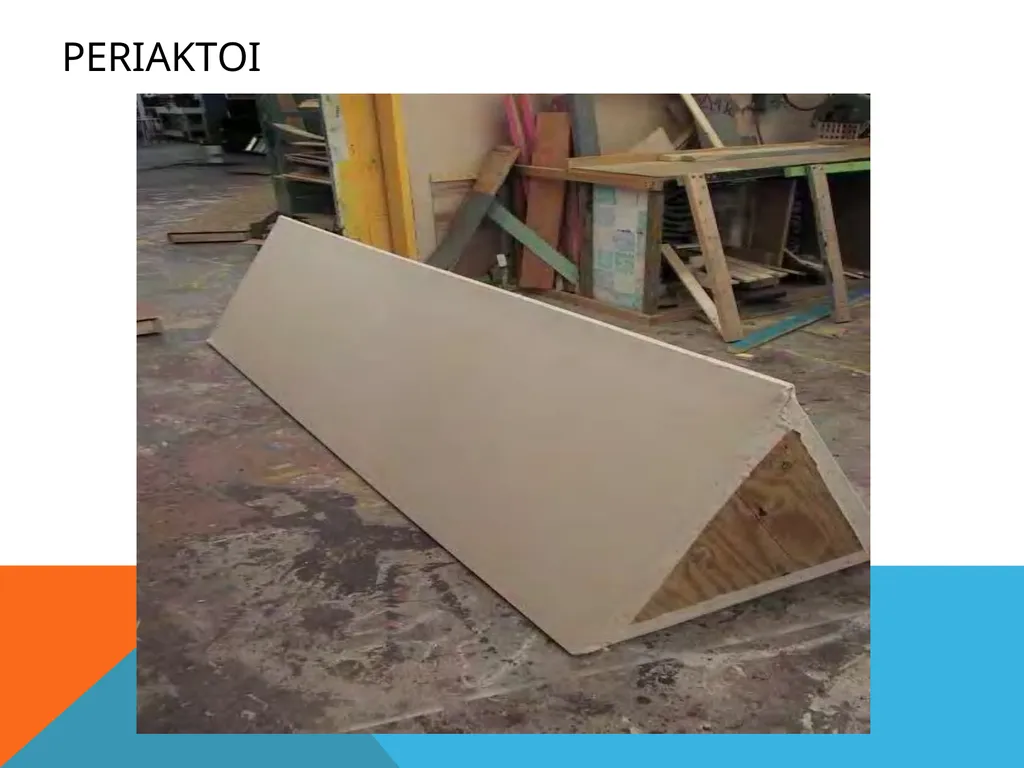
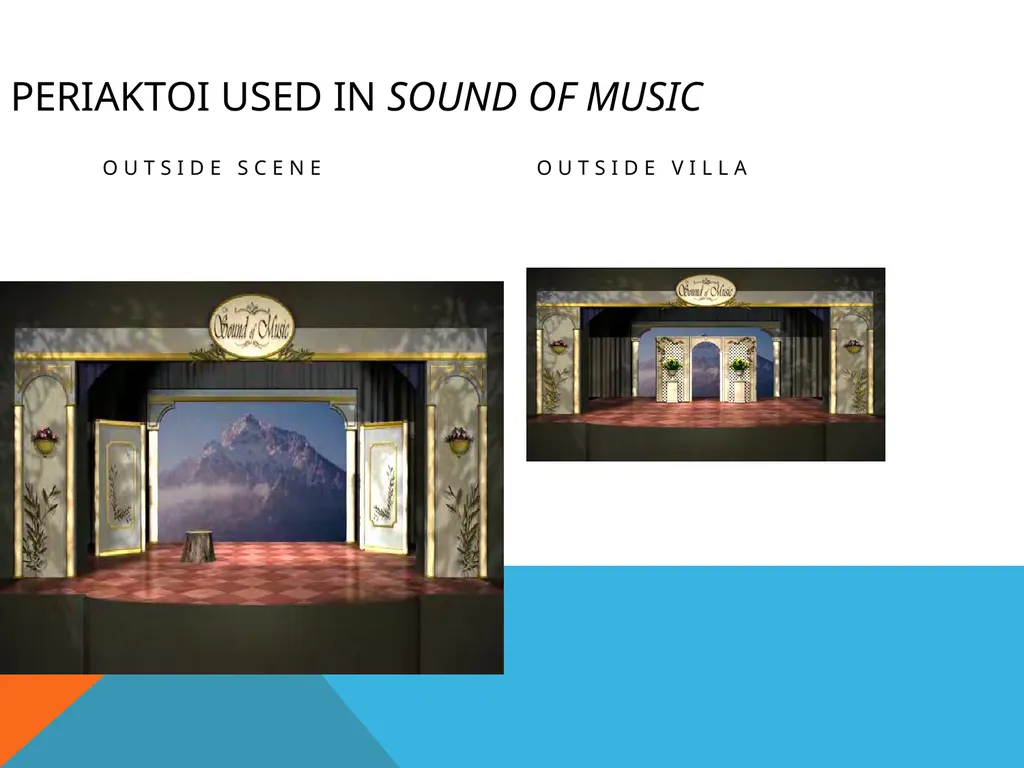
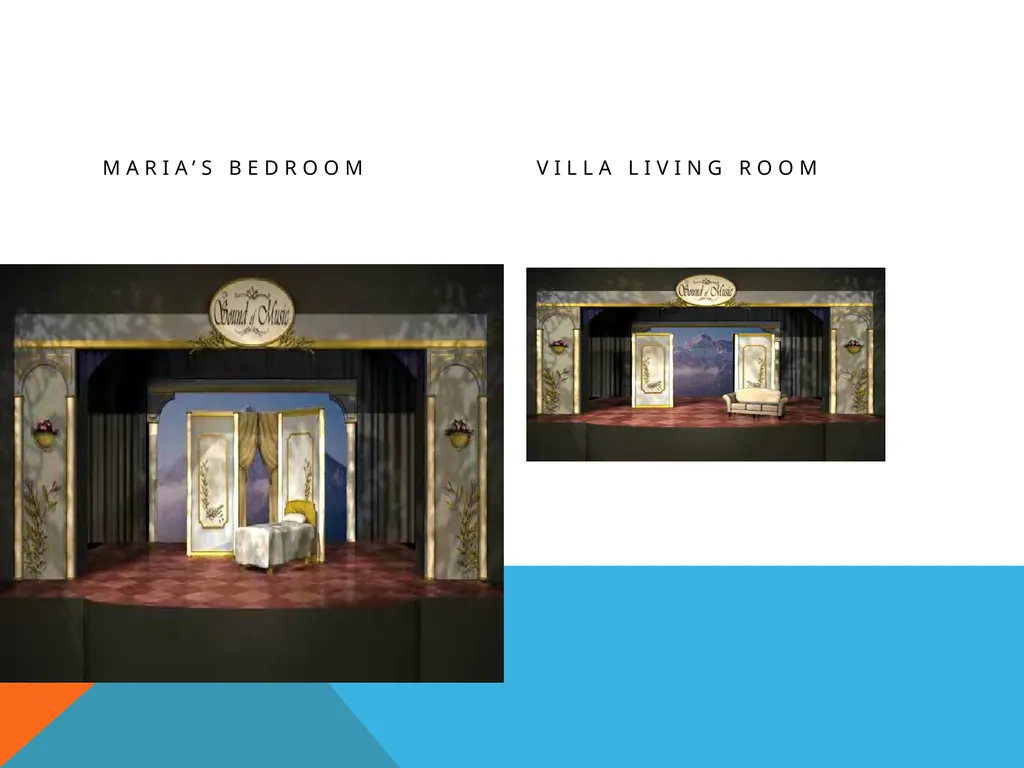
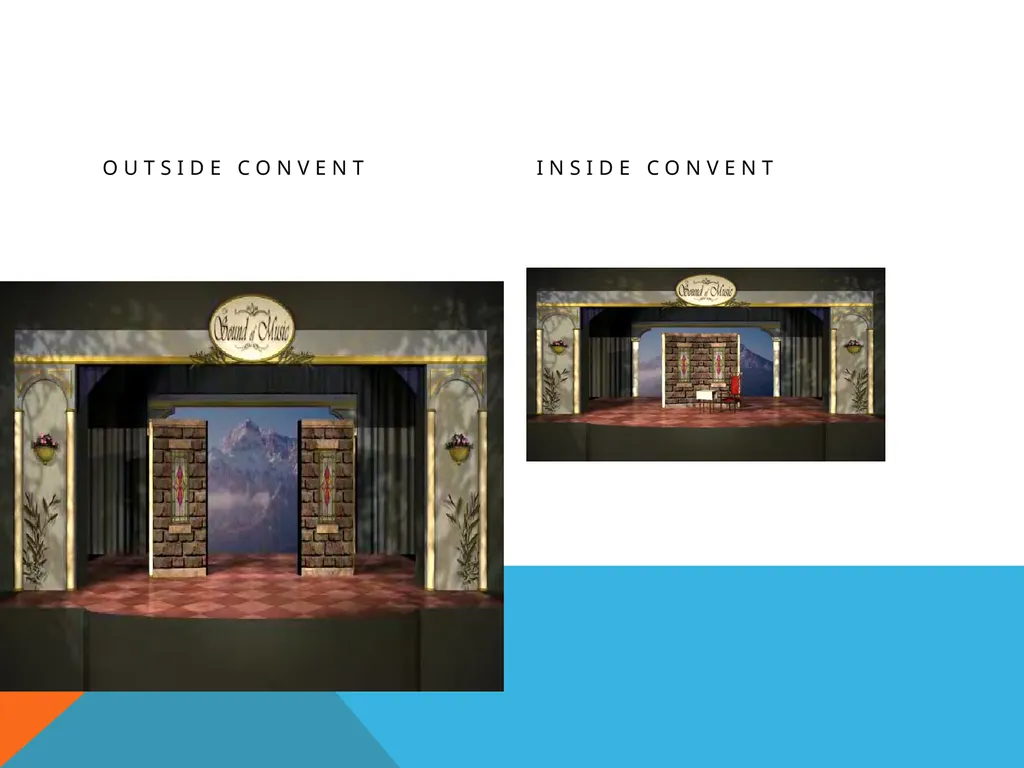
PERIAKTOI (PRISMS)
Three six foot flats
Equilateral or isosceles triangles mounted to a wheeled carriage
Can be pivoted for changes
4 – 8 needed for a set
Doors, windows, etc hang between two Periaktoi
Good for schools with no fly space or wing space!<br>
17
Periaktoi<br>
18
Periaktoi used in Sound of Music Outside scene Outside villa<br>