School Based Assessment (SBA) NCERT, New Delhi NCF-2005 Recommendations We need to be able to shift towards school based assessment. We need to device ways in which to make such internal assessment credible. Each school should evolve a
"School Based Assessment (SBA) NCERT, New Delhi" is the property of its rightful owner. Permission is granted to
download and print the materials on this website for personal, non-commercial use only, and to display it
on your personal computer provided you do not modify the materials and that you retain all copyright
notices contained in the materials. By downloading content from our website, you accept the terms of this
agreement.
Presentation Transcript
01
School Based Assessment (SBA) NCERT, New Delhi<br>
02
NCF-2005 Recommendations We need to be able to shift towards school based assessment.
We need to device ways in which to make such internal assessment credible.
Each school should evolve a flexible and implementable scheme of CCE.<br>
03
The purpose of evaluation is not
to motivate children to study under threat;
to identify or label children as ‘slow learners’, or ‘bright students’, or
‘problem children’. Such categories segregate children, placing the onus for learning solely on them, and detract from the role and purpose of pedagogy;
to identify children who need remediation (this need not wait for formal assessment. It can be detected by teacher in the course of teaching-learning and attended to as a part of pedagogic planning, through individualised attention);
to diagnose learning difficulties and problem areas— while broad
indications about conceptual difficulties can be identified via evaluation and formal testing.
Diagnosis requires special testing instruments and training. It is also
specific to foundational areas of literacy and numeracy, and is not meant for subject areas. NCF-2005 Recommendations<br>
04
School Based Assessment (SBA) Why SBA is to be undertaken?
Who would assess and what is to be assessed under SBA?
How should SBA be interwoven with teaching-learning process ?
When should SBA be carried out?
How can the information gathered from SBA be used?
What is the understanding about SBA among different stakeholders?<br>
05
School Based Assessment: How and When How can assessment be school based?
How can assessment information under SBA be used effectively?
How can SBA help different stakeholders , including all students?
What would be the profile of a child reflecting holistic progress in relation to different subject areas and overall personality development?
When can SBA be undertaken?<br>
06
To decipher learning needs of students
To identify learning gaps in conceptual understanding
To provide timely feedback to enrich students’ learning
Multiple resources are used to collect information
Is Multiple evidence based
Is learner centred
Multiple aspects of learning is assessed
knowledge,competency,skill,interest,ability,desposition,motivation
For reflection to teachers School Based Assessment :Why<br>
07
Features of School Based Assessment Learner centred approach to assessment
Repeated many times i.e. Assessment FOR learning and Assessment AS learning. Assessment OF learning.
Takes care of all round development of learners .
Assessed is done formally as well informally.
Guides the learner in her self assessment and facilitates the learner to take responsibility of her own learning.
There is a collective learning among all concerned ---learner, teacher, parents and school ,about what is being evaluated.<br>
08
To decipher learning needs of students
To identify learning gaps in conceptual understanding
To provide timely feedback to enrich students’ learning
Multiple resources are used to collect information
Is Multiple evidence based
Is learner centered
Multiple aspects of learning is assessed :
knowledge,competency,skill,interest,ability,desposition,motivation
For reflection to teachers School Based Assessment : Why<br>
09
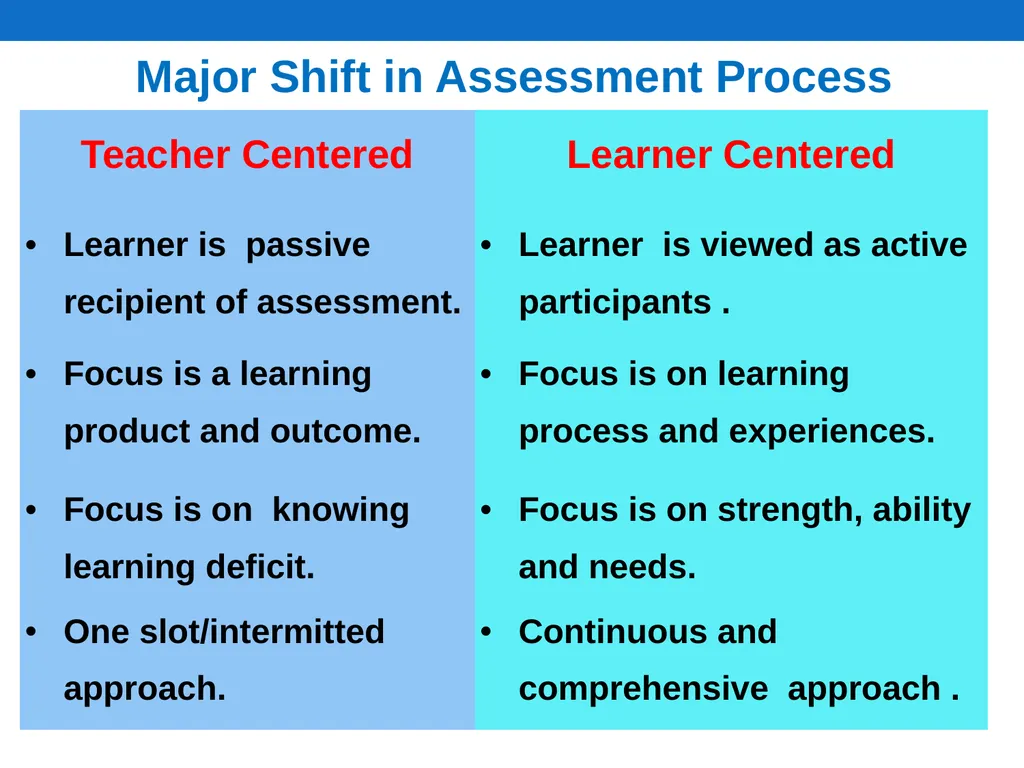
Major Shift in Assessment Process<br>
10
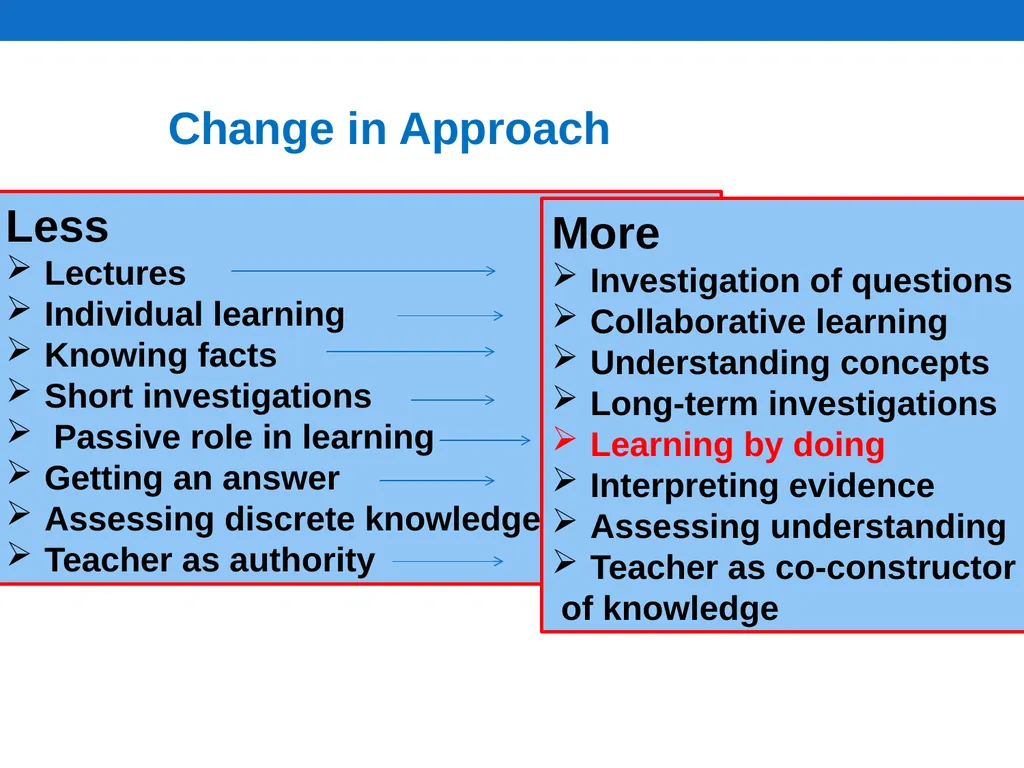
Less
Lectures
Individual learning
Knowing facts
Short investigations
Passive role in learning
Getting an answer
Assessing discrete knowledge
Teacher as authority Change in Approach More
Investigation of questions
Collaborative learning
Understanding concepts
Long-term investigations
Learning by doing
Interpreting evidence
Assessing understanding
Teacher as co-constructor
of knowledge<br>
11
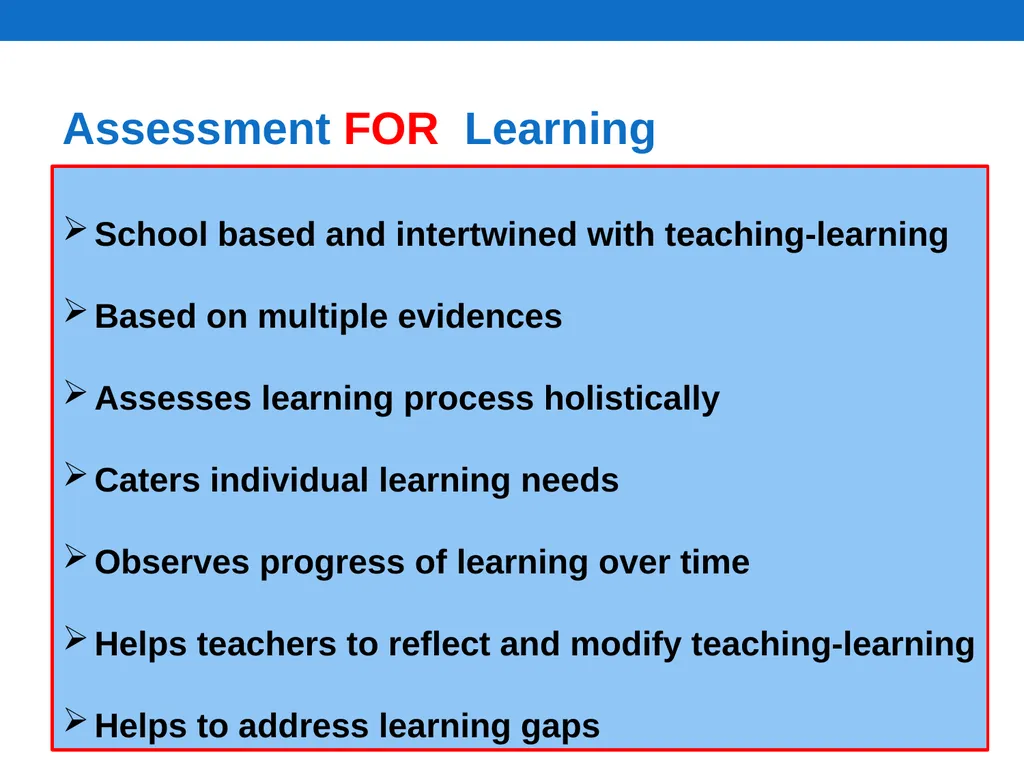
Assessment FOR Learning School based and intertwined with teaching-learning
Based on multiple evidences
Assesses learning process holistically
Caters individual learning needs
Observes progress of learning over time
Helps teachers to reflect and modify teaching-learning
Helps to address learning gaps<br>
12
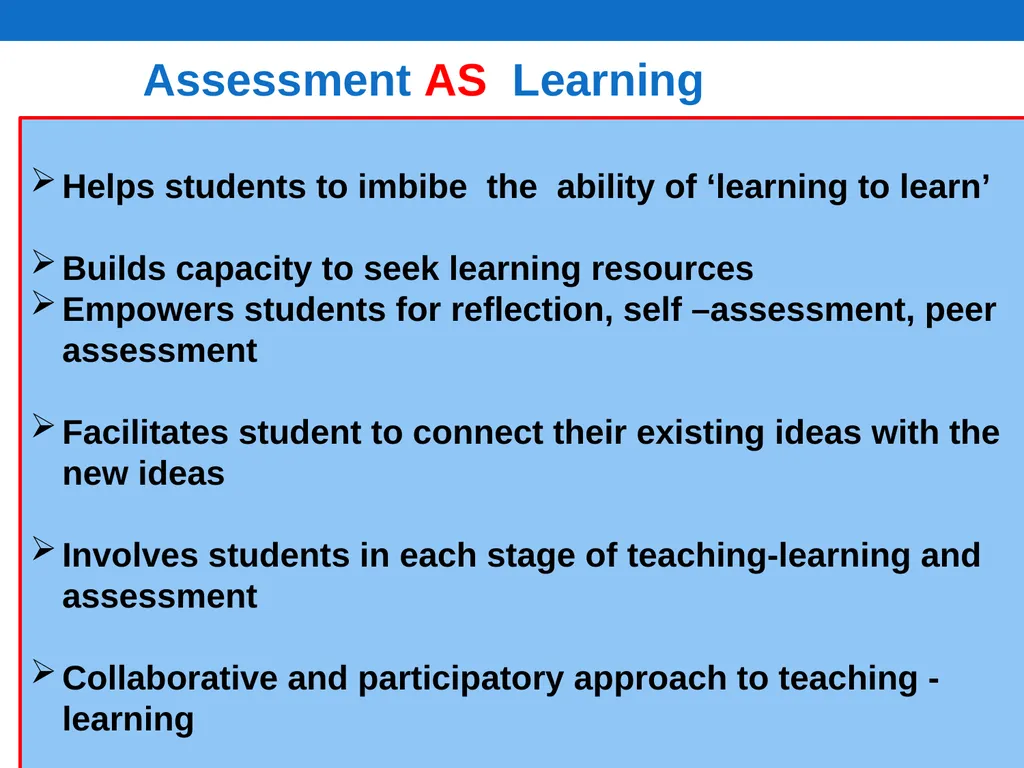
Assessment AS Learning Helps students to imbibe the ability of ‘learning to learn’
Builds capacity to seek learning resources
Empowers students for reflection, self –assessment, peer assessment
Facilitates student to connect their existing ideas with the new ideas
Involves students in each stage of teaching-learning and assessment
Collaborative and participatory approach to teaching -learning<br>
13
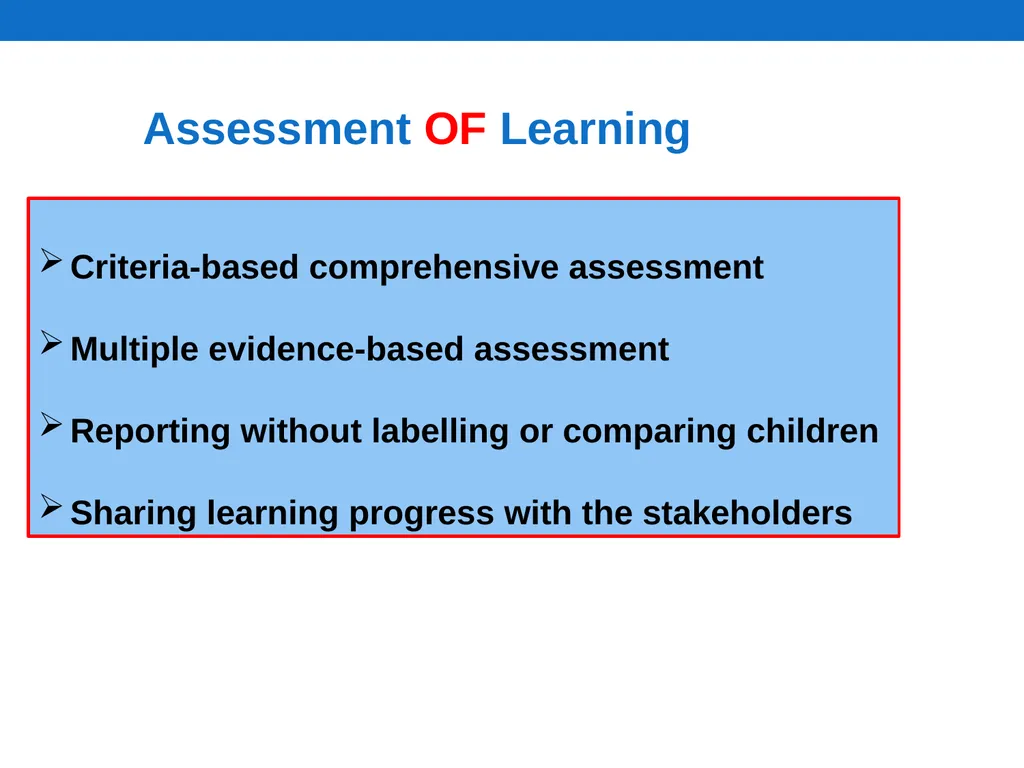
Assessment OF Learning Criteria-based comprehensive assessment
Multiple evidence-based assessment
Reporting without labelling or comparing children
Sharing learning progress with the stakeholders<br>
14
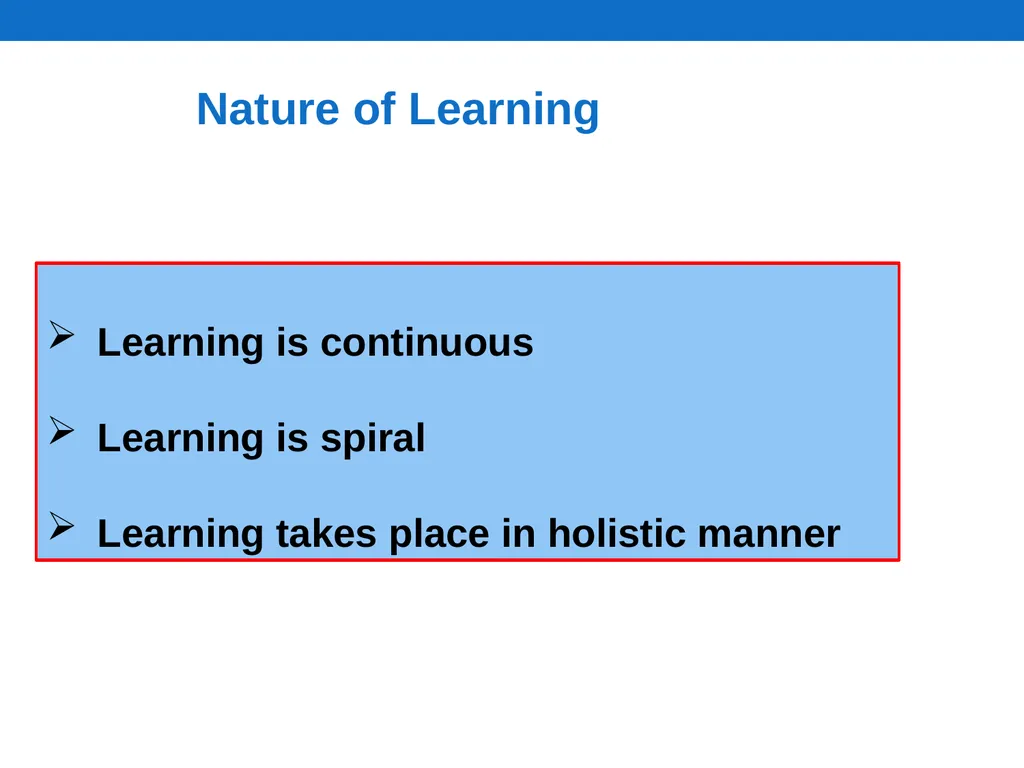
Nature of Learning Learning is continuous
Learning is spiral
Learning takes place in holistic manner<br>
15
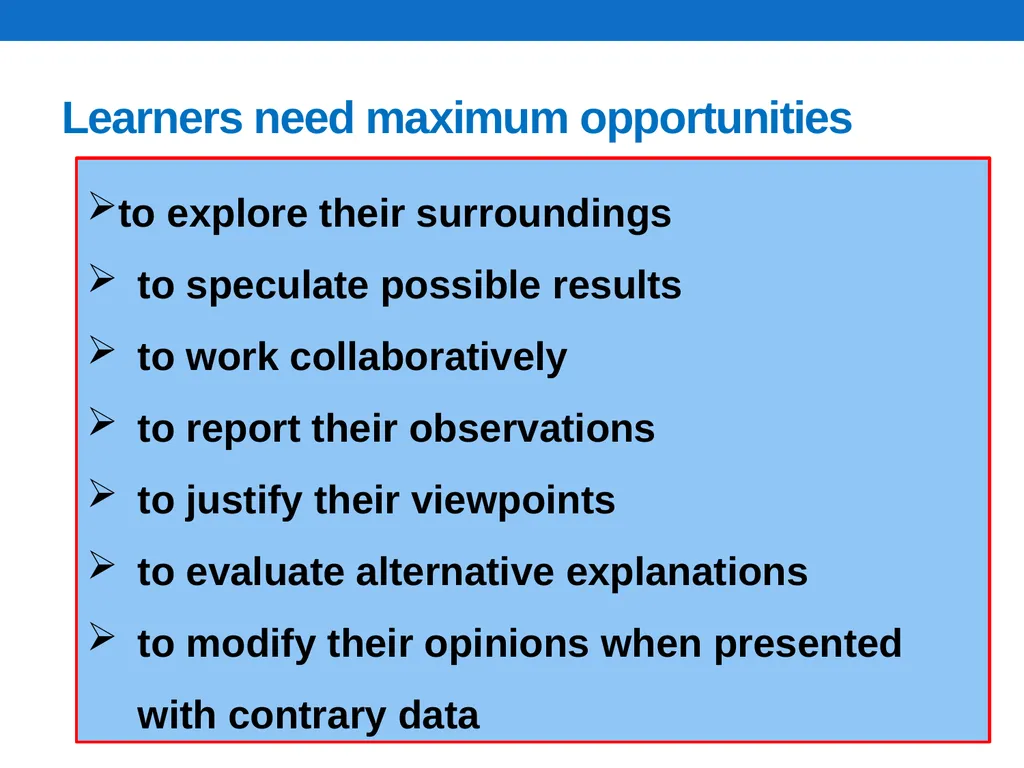
Learners need maximum opportunities to explore their surroundings
to speculate possible results
to work collaboratively
to report their observations
to justify their viewpoints
to evaluate alternative explanations
to modify their opinions when presented with contrary data<br>
16
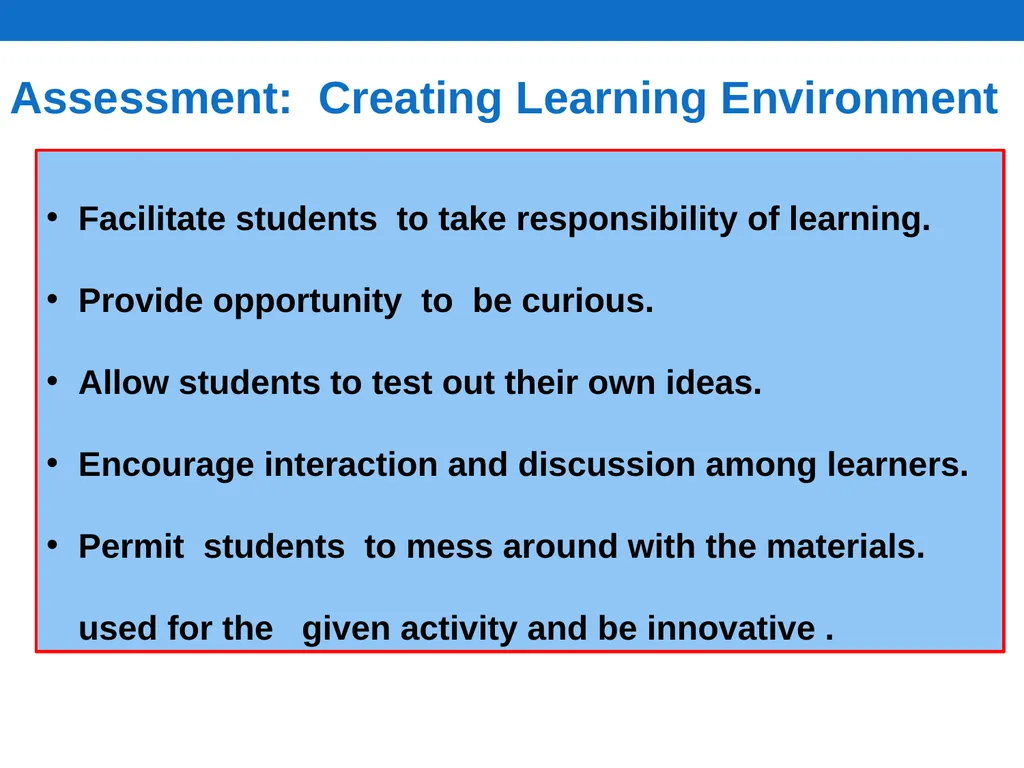
Assessment: Creating Learning Environment Facilitate students to take responsibility of learning.
Provide opportunity to be curious.
Allow students to test out their own ideas.
Encourage interaction and discussion among learners.
Permit students to mess around with the materials. used for the given activity and be innovative .<br>
17
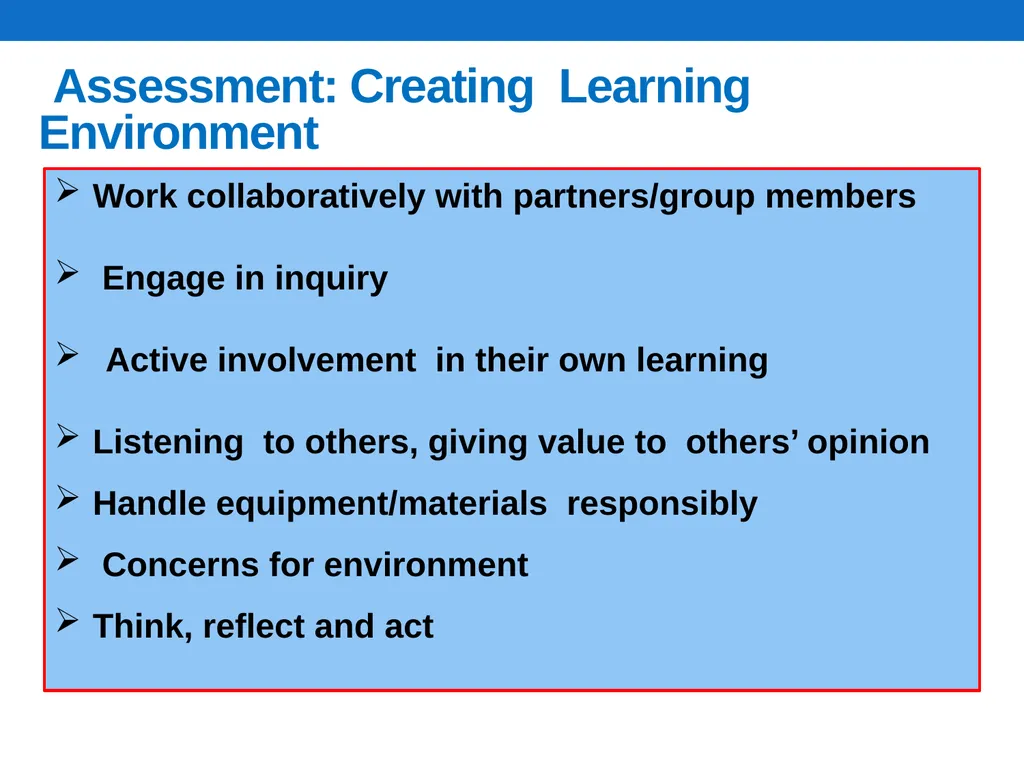
Assessment: Creating Learning Environment Work collaboratively with partners/group members
Engage in inquiry
Active involvement in their own learning
Listening to others, giving value to others’ opinion
Handle equipment/materials responsibly
Concerns for environment
Think, reflect and act<br>
18
Generating curiosity during Teaching-learning for Getting Familiarized with Students’ Existing ideas<br>
19
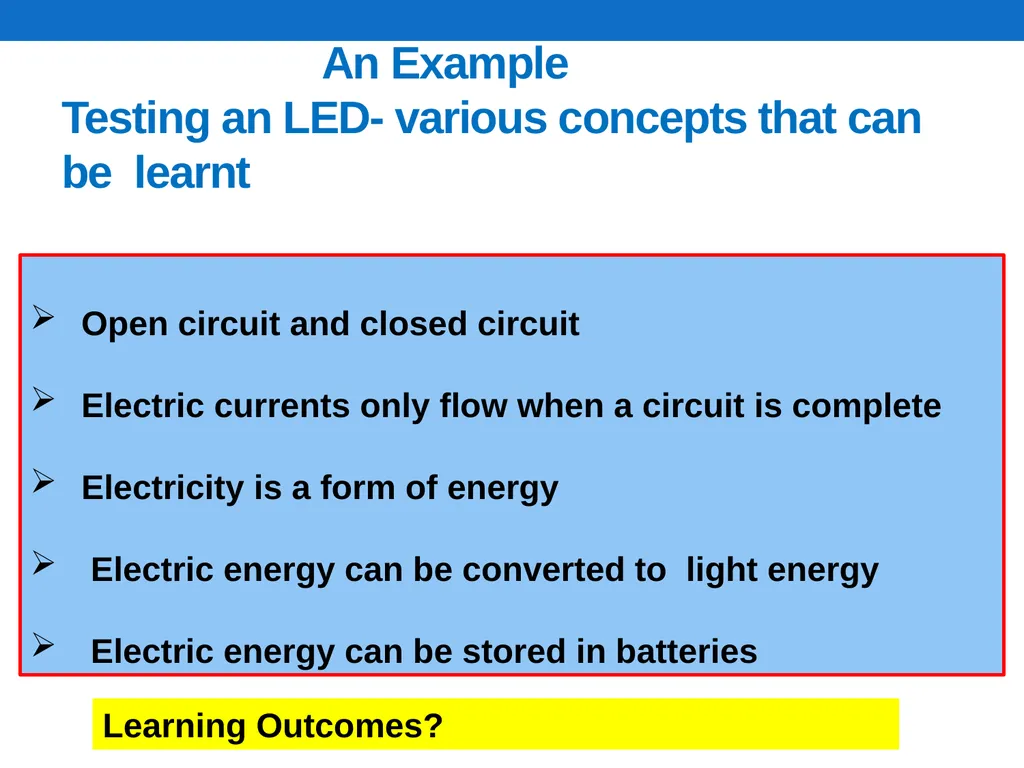
An Example Testing an LED- various concepts that can be learnt Open circuit and closed circuit
Electric currents only flow when a circuit is complete
Electricity is a form of energy
Electric energy can be converted to light energy
Electric energy can be stored in batteries Learning Outcomes?<br>
20
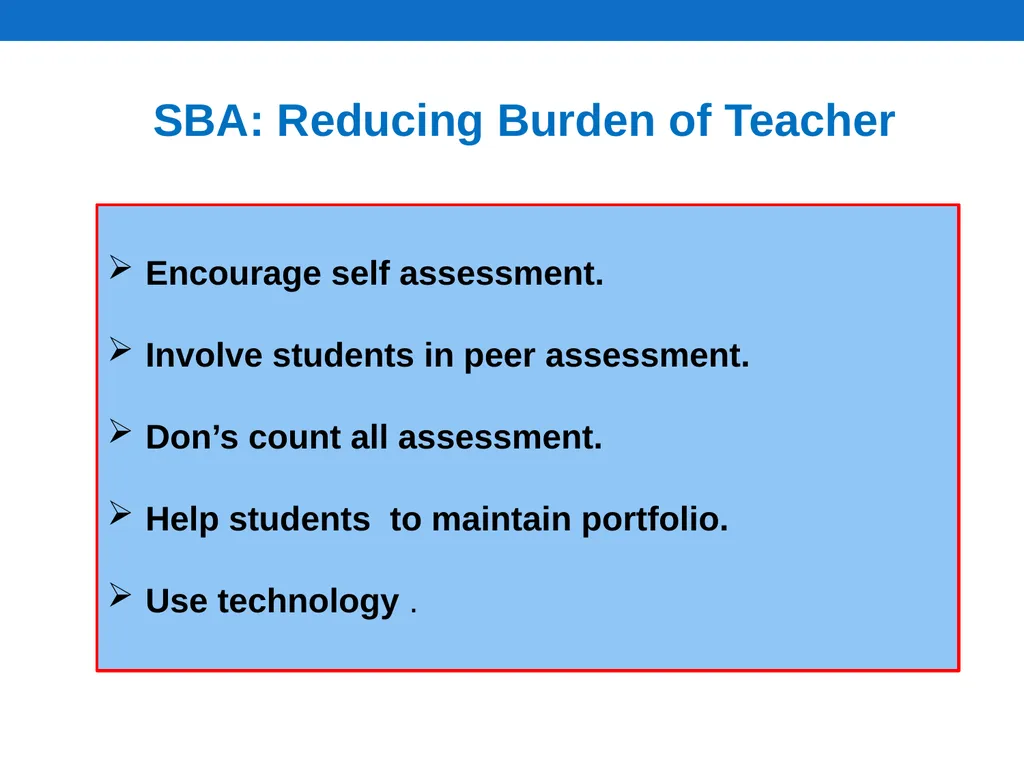
Encourage self assessment.
Involve students in peer assessment.
Don’s count all assessment.
Help students to maintain portfolio.
Use technology . SBA: Reducing Burden of Teacher<br>
21
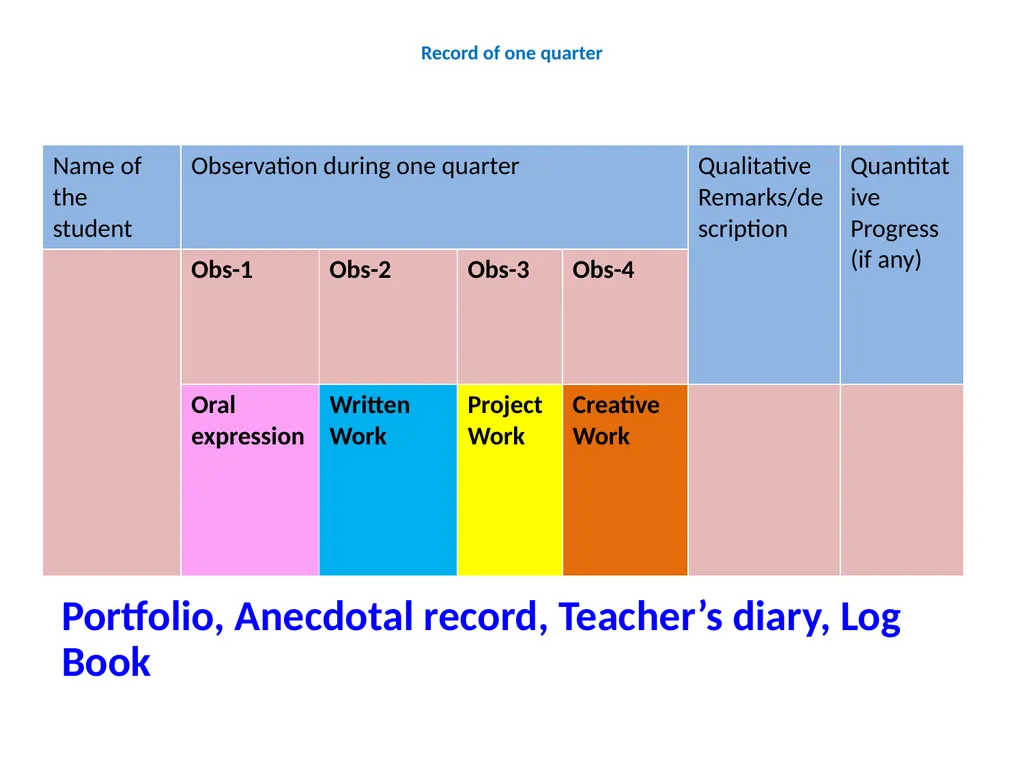
Record of one quarter Portfolio, Anecdotal record, Teacher’s diary, Log Book<br>