School Funding Formulas: A National Perspective Presentation to the Task Force on School Funding John Myers Mark Fermanich, APA Consulting Salem, Oregon May 12, 2014 APA Background APA is a Denver-based consulting firm, founded in 1983,
"School Funding Formulas: A National Perspective" is the property of its rightful owner. Permission is granted to
download and print the materials on this website for personal, non-commercial use only, and to display it
on your personal computer provided you do not modify the materials and that you retain all copyright
notices contained in the materials. By downloading content from our website, you accept the terms of this
agreement.
Presentation Transcript
01
School Funding Formulas: A National Perspective Presentation to the Task Force on School Funding
John Myers & Mark Fermanich, APA Consulting
Salem, Oregon
May 12, 2014<br>
02
APA Background APA is a Denver-based consulting firm, founded in 1983, that works primarily with state-level policymakers on education finance and governance issues.
APA has worked extensively with states on the procedures used to allocate state aid to districts and schools.
APA has worked for the Oregon Legislature: 1991 and 2000.<br>
03
APA Experience School finance equity & adequacy
Linking school finance to student results
Teacher quality & teacher compensation
Bi-partisan work for policymakers<br>
04
Presenters’ Experience John
Former Legislator and NCSL Education Program Director
Consultant to the NBPTS and Alternative Teacher Pay School Districts
37 years of school finance formula work
Mark
Former legislative and school district staff
School finance researcher
University faculty member
29 years of education policy work<br>
05
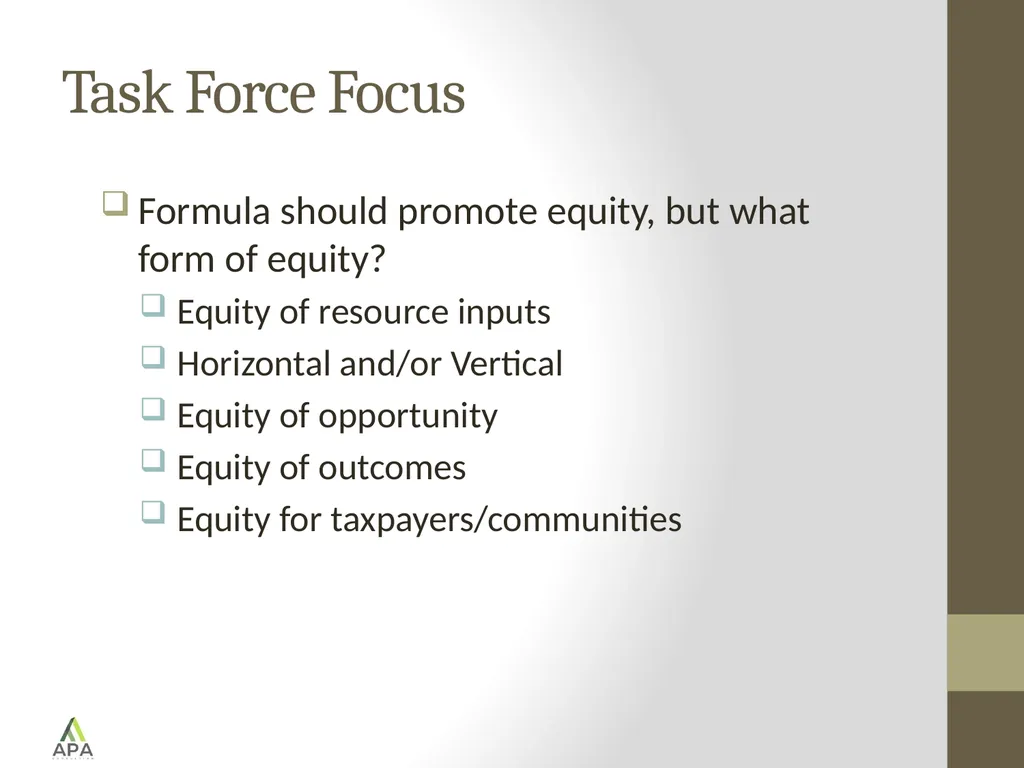
Task Force Focus Formula should promote equity, but what form of equity?
Equity of resource inputs
Horizontal and/or Vertical
Equity of opportunity
Equity of outcomes
Equity for taxpayers/communities<br>
06
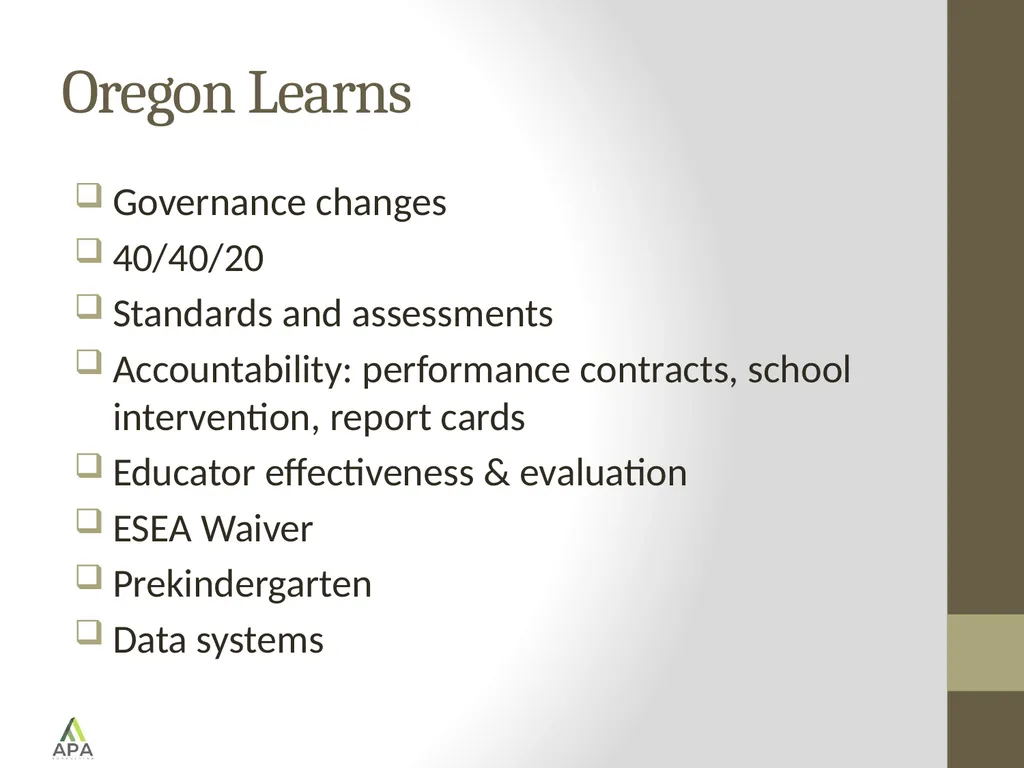
Oregon Learns Governance changes
40/40/20
Standards and assessments
Accountability: performance contracts, school intervention, report cards
Educator effectiveness & evaluation
ESEA Waiver
Prekindergarten
Data systems<br>
07
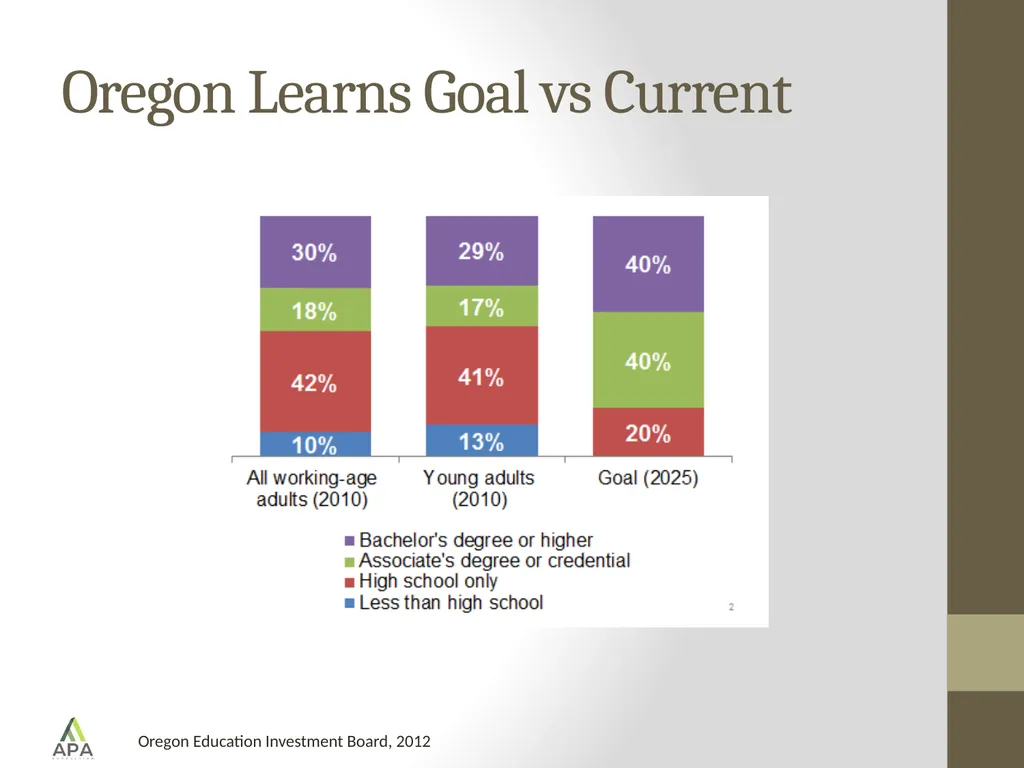
Oregon Learns Goal vs Current Oregon Education Investment Board, 2012<br>
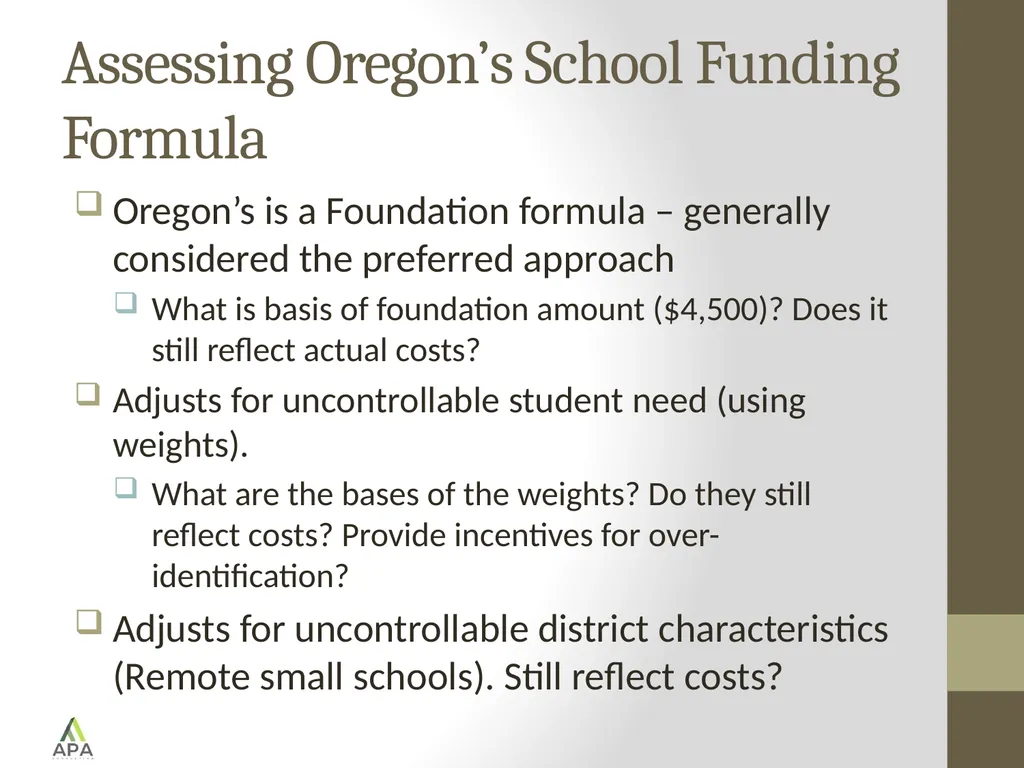
Assessing Oregon’s School Funding Formula Oregon’s is a Foundation formula – generally considered the preferred approach
What is basis of foundation amount ($4,500)? Does it still reflect actual costs?
Adjusts for uncontrollable student need (using weights).
What are the bases of the weights? Do they still reflect costs? Provide incentives for over-identification?
Adjusts for uncontrollable district characteristics (Remote small schools). Still reflect costs?<br>
15
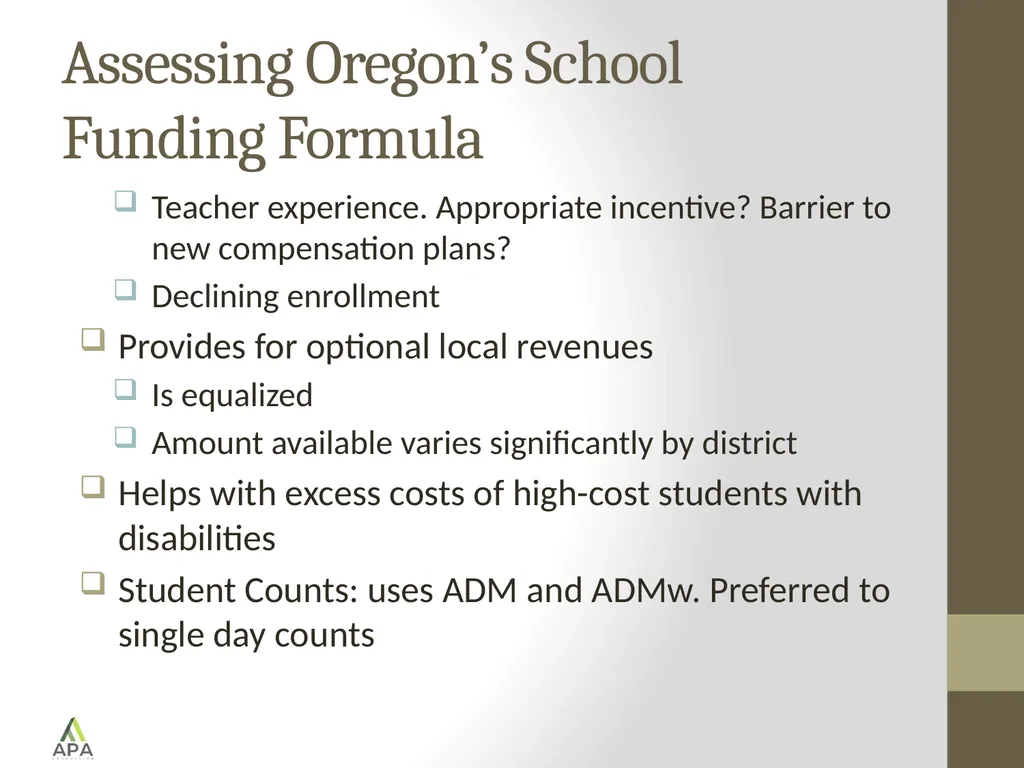
Assessing Oregon’s School Funding Formula Teacher experience. Appropriate incentive? Barrier to new compensation plans?
Declining enrollment
Provides for optional local revenues
Is equalized
Amount available varies significantly by district
Helps with excess costs of high-cost students with disabilities
Student Counts: uses ADM and ADMw. Preferred to single day counts<br>
16
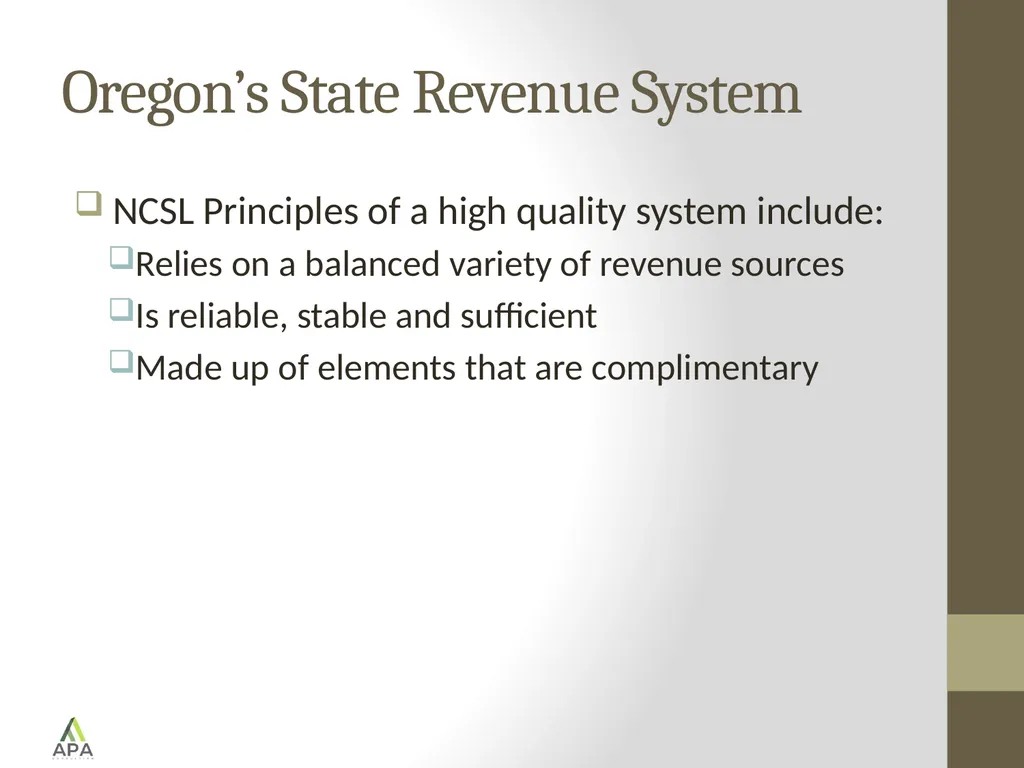
Oregon’s State Revenue System NCSL Principles of a high quality system include:
Relies on a balanced variety of revenue sources
Is reliable, stable and sufficient
Made up of elements that are complimentary<br>
17
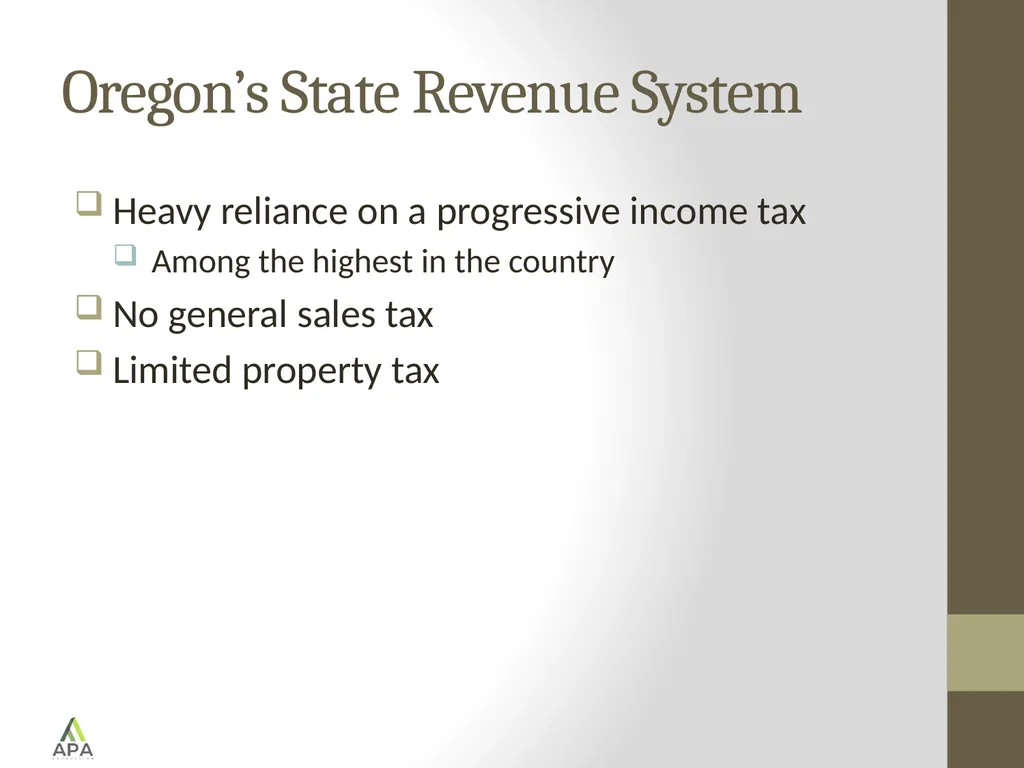
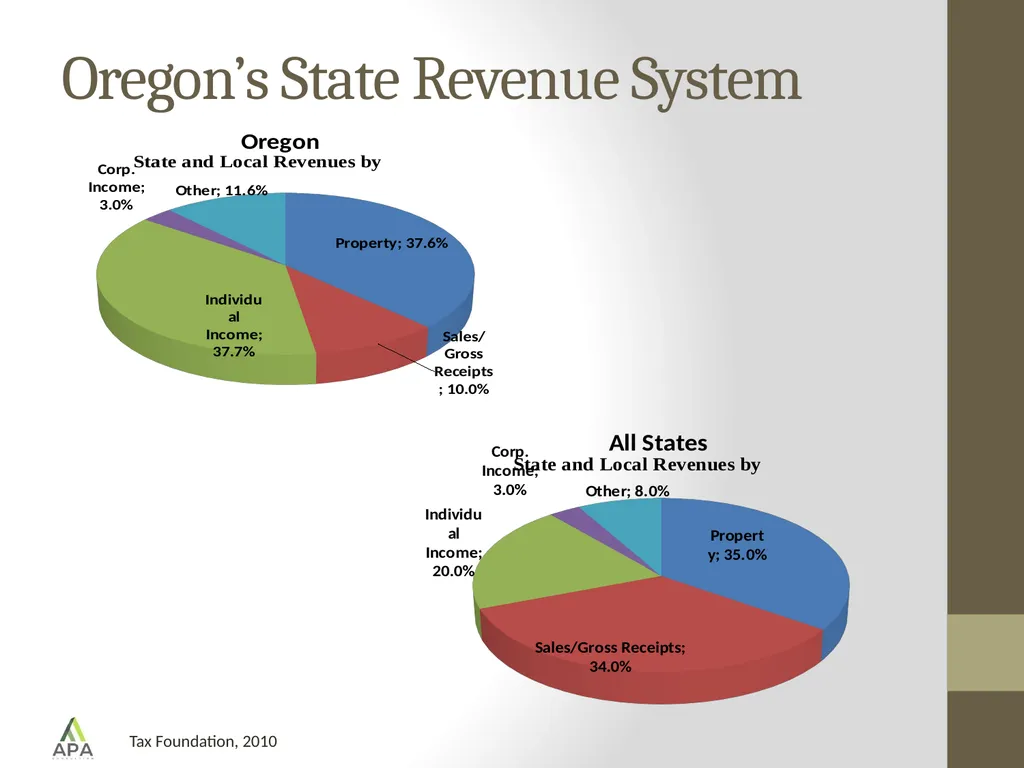
Oregon’s State Revenue System Heavy reliance on a progressive income tax
Among the highest in the country
No general sales tax
Limited property tax<br>
18
Oregon’s State Revenue System Tax Foundation, 2010<br>