School Of Pharmaceutical Science Presentation on-
Description: School Of Pharmaceutical Science Presentation on- Anti Diarrheal INTRODUCTION Diarrhea Diarrhea is characterized by increased frequency of bowel movement, wet stool and abdominal pain. Diarrhea (contd) Acute diarrhea Self limiting Last
Related Topics
Download Presentation
"School Of Pharmaceutical Science Presentation on-" is the property of its rightful owner. Permission is granted to download and print the materials on this website for personal, non-commercial use only, and to display it on your personal computer provided you do not modify the materials and that you retain all copyright notices contained in the materials. By downloading content from our website, you accept the terms of this agreement.
Presentation Transcript
slide1. School Of Pharmaceutical Science Presentation on- Anti –Diarrheal<br>
slide2. INTRODUCTION Diarrhea
Diarrhea is characterized by increased frequency of bowel movement, wet stool and abdominal pain.<br>
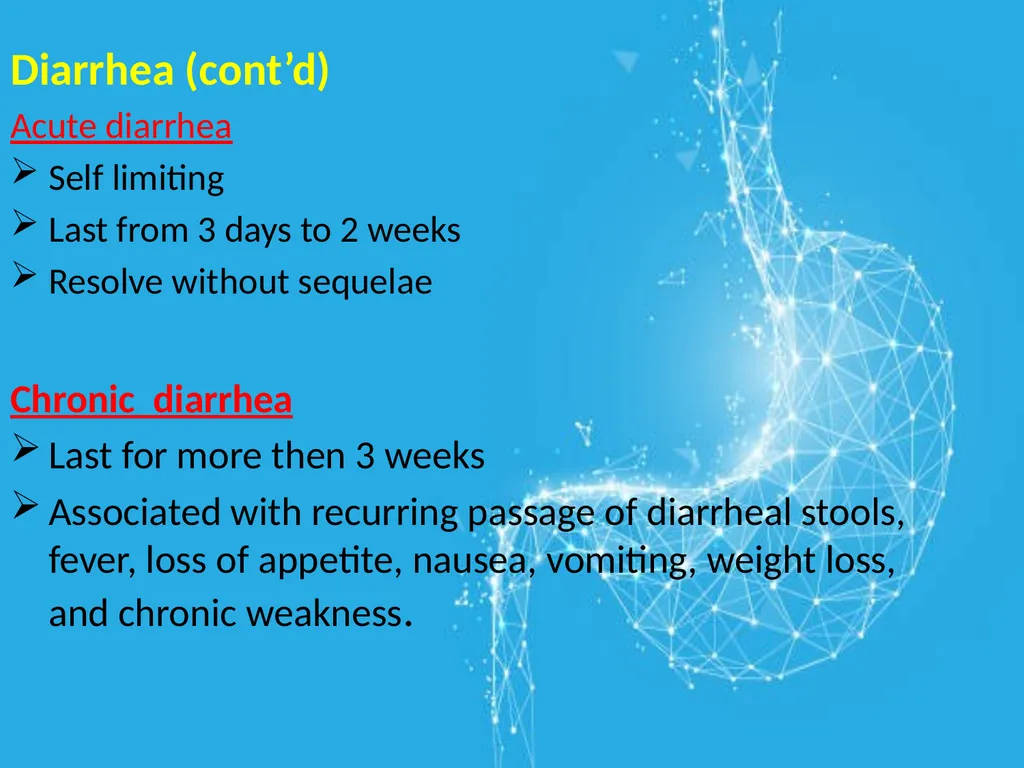
slide3. Diarrhea (cont’d)
Acute diarrhea
Self limiting
Last from 3 days to 2 weeks
Resolve without sequelae
Chronic diarrhea
Last for more then 3 weeks
Associated with recurring passage of diarrheal stools, fever, loss of appetite, nausea, vomiting, weight loss, and chronic weakness.<br>
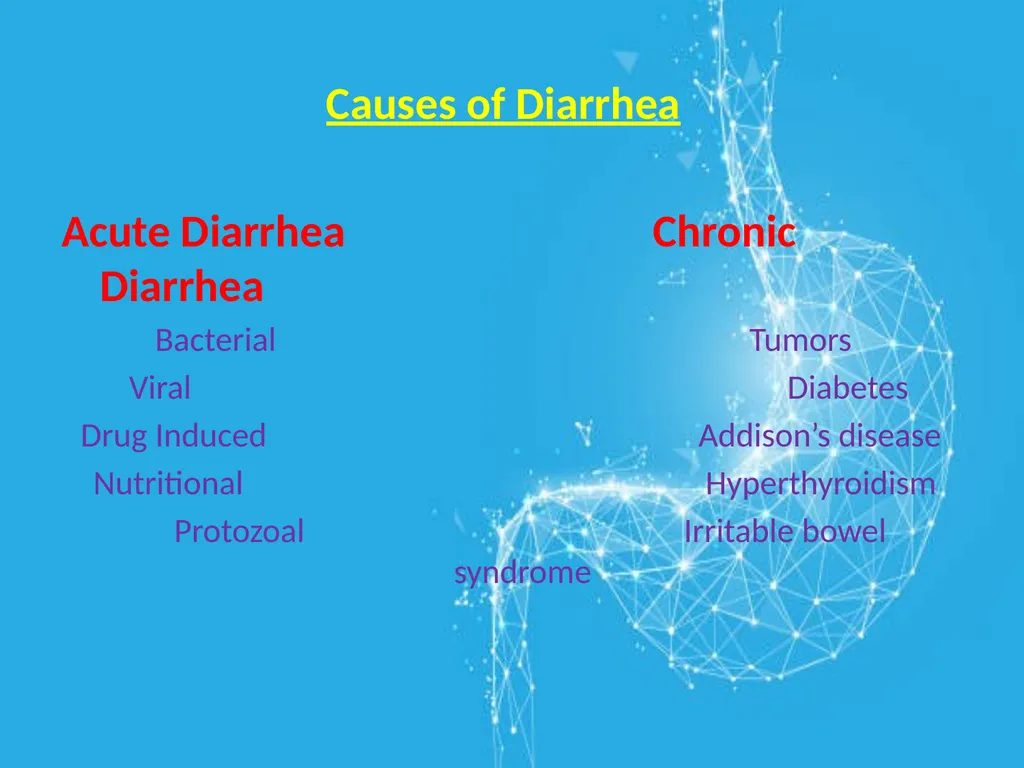
slide4. Causes of Diarrhea
Acute Diarrhea Chronic Diarrhea
Bacterial Tumors
Viral Diabetes
Drug Induced Addison’s disease
Nutritional Hyperthyroidism
Protozoal Irritable bowel syndrome<br>
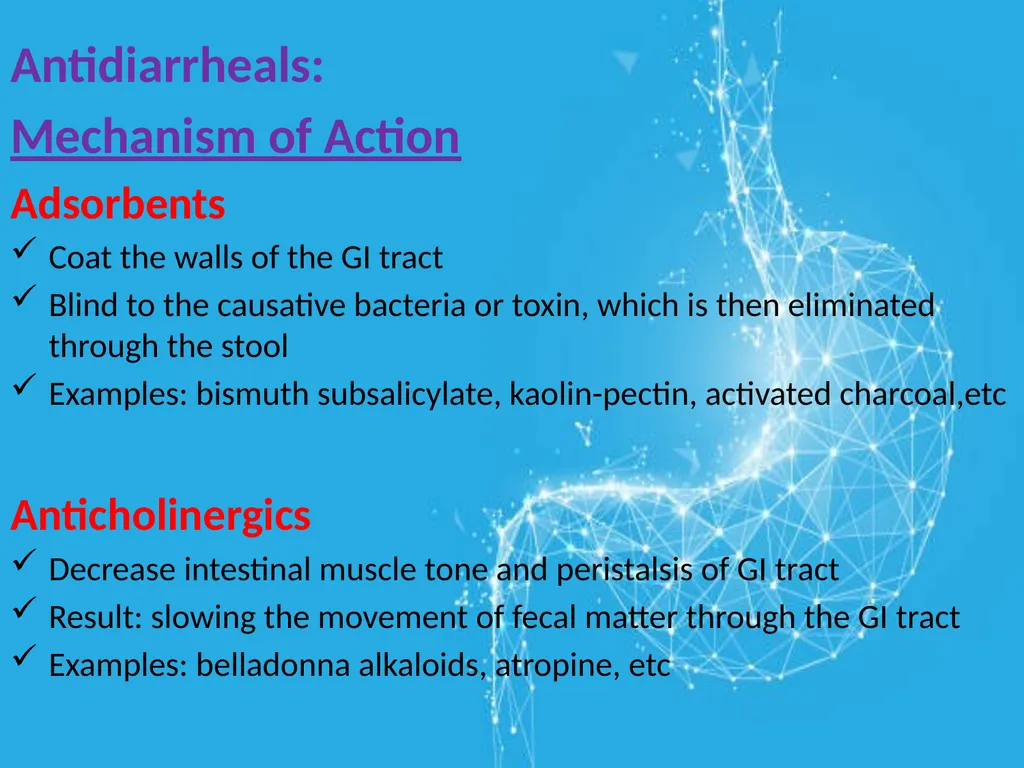
slide5. Antidiarrheals:
Mechanism of Action
Adsorbents
Coat the walls of the GI tract
Blind to the causative bacteria or toxin, which is then eliminated through the stool
Examples: bismuth subsalicylate, kaolin-pectin, activated charcoal,etc
Anticholinergics
Decrease intestinal muscle tone and peristalsis of GI tract
Result: slowing the movement of fecal matter through the GI tract
Examples: belladonna alkaloids, atropine, etc<br>
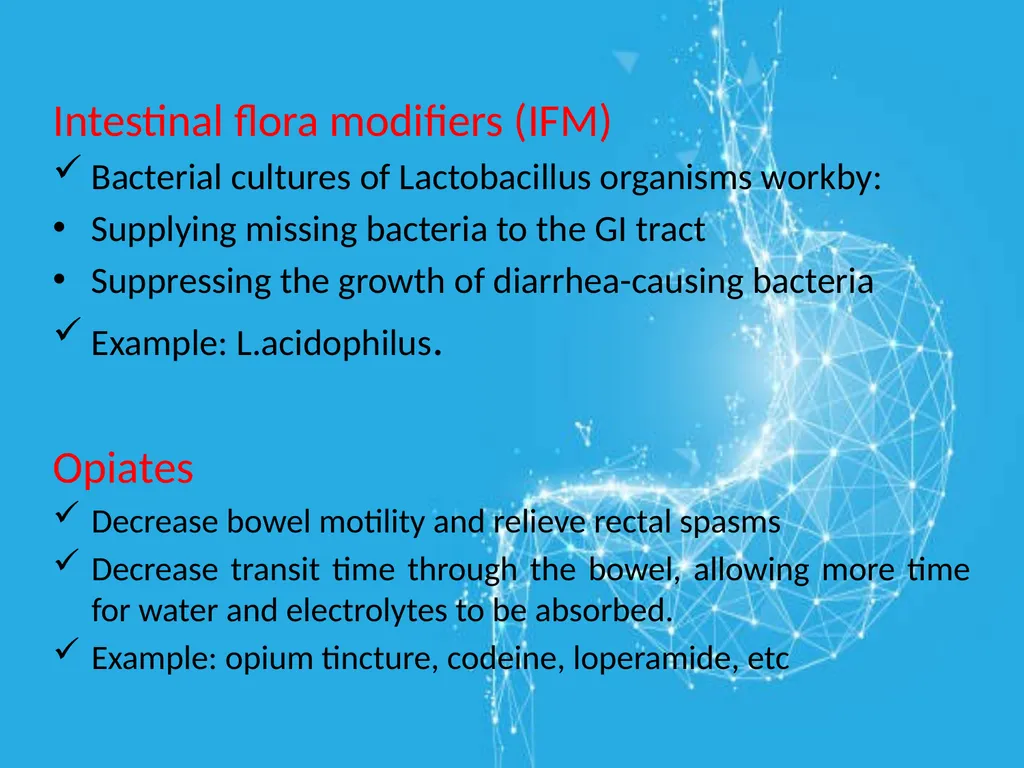
slide6. Intestinal flora modifiers (IFM)
Bacterial cultures of Lactobacillus organisms workby:
Supplying missing bacteria to the GI tract
Suppressing the growth of diarrhea-causing bacteria
Example: L.acidophilus.
Opiates
Decrease bowel motility and relieve rectal spasms
Decrease transit time through the bowel, allowing more time for water and electrolytes to be absorbed.
Example: opium tincture, codeine, loperamide, etc<br>
slide7. Screening Mode In vivo model
Castor oil-induced diarrhea
Gastrointestinal motility test
Castol oil-induced enterpooling
Magnesium sulfate-induced diarrhea<br>
slide8. Rationale, Purpose & Methods Rationale: The induction of diarrhea with castor oil results from the action of ricinoleic acid by hydrolysis of the oil. Ricinoleic acid produces change in the transport of water and electrolytes resulting in a hypersecretory response.
Purpose: The seeds of Swietenia macrophylla are used in traditional medicine for the treatment of diarrhea. Thus the petroleum ether extract from Swietenia macrophylla(Meliaceae) seeds was investigated foe its anti-diarrheal property in wistar albino rats to substantiate folklore claim.<br>
slide9. Methods: Petroleum ether extract of the seeds of the this plant, at graded doses (25, 50 & 100mg/kg body weight) was investigated for anti-diarrheal activity in term of reducing in the rate of defecation and consistency of feces in castor oil induced diarrhea. To understand the mechanism of its anti diarrheal activity, its effect was evaluated on intestinal transit and castor oil induced intestinal fluid accumulation (enteropooling).
Animals: Swiss albino rats (150-280gm) of either sex were selected for the experiments. Animals were allowed to be acclimatize for a period of 2 weeks in our laboratory environment prior to study.
Animals were house in polypropylene cages (4 animals per cage), maintained under standard laboratory conditions (i.e. 12:12 hours light and dark sequence: at an room temperature of 25.<br>
slide10. Chemicals and Reagents:
Atropine sulfate and diphenoxylate (standard reference diarrheal drugs), castor oil ( laxative agent normal saline solution 0.9% NaCl) charcoal meal (10% activated charcole in 5% gun acacia) and vehicle (2% v/v Tween 80 in distilled water)were used.<br>
slide11. Castrol oil-induced diarrhoea Rate were fasted for 18hrs and divided into five groups of six animals per group.
Castor oil at dose of 1ml/animals orally, was given to all group of animals for the induction of diarrhea.
Thirty minutes after castor castor oil administration, the first group (control group) received vehicle (0.5%v/v Tween 80 in distilled water)<br>
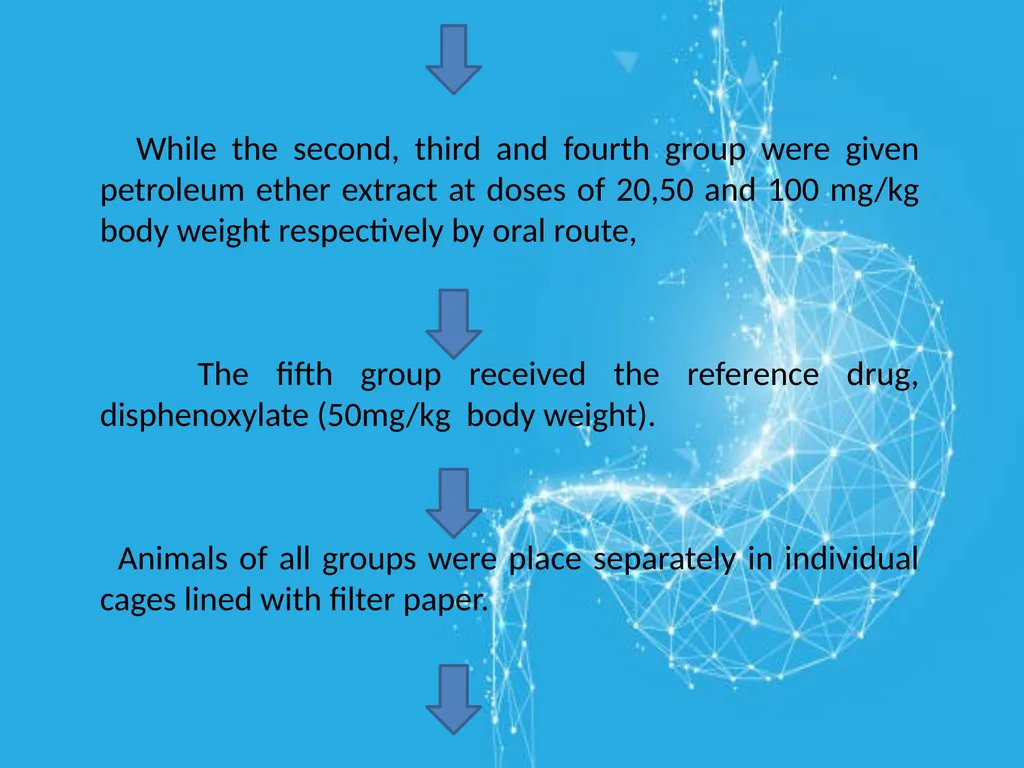
slide12. While the second, third and fourth group were given petroleum ether extract at doses of 20,50 and 100 mg/kg body weight respectively by oral route,
The fifth group received the reference drug, disphenoxylate (50mg/kg body weight).
Animals of all groups were place separately in individual cages lined with filter paper.<br>
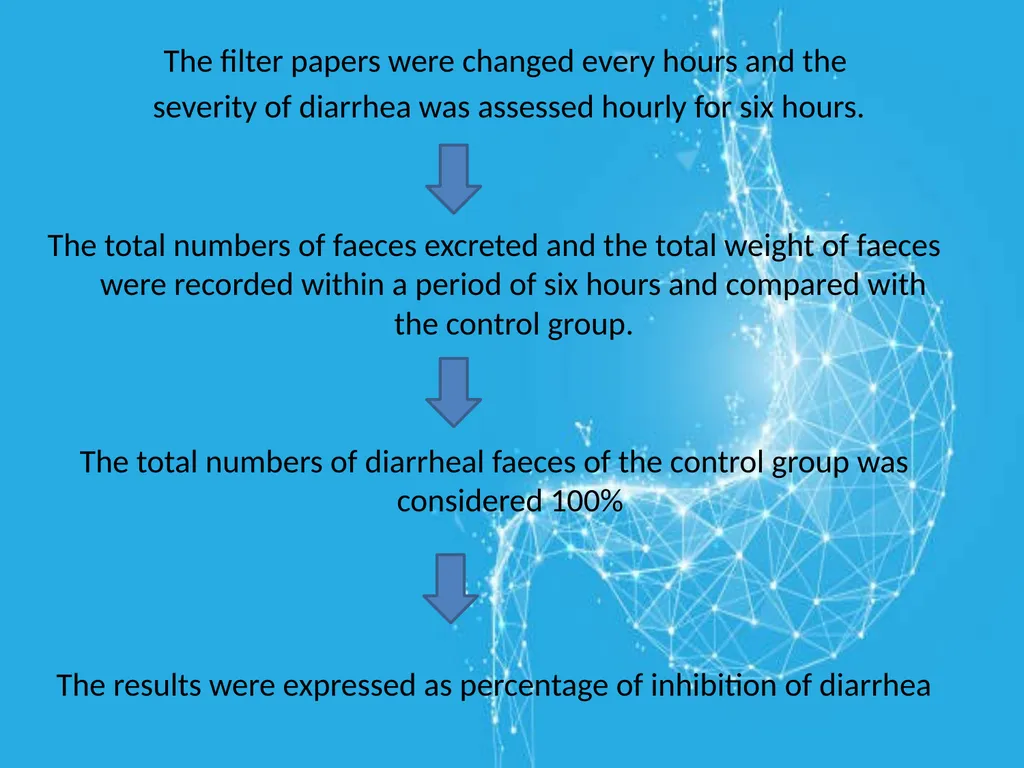
slide13. The filter papers were changed every hours and the
severity of diarrhea was assessed hourly for six hours.
The total numbers of faeces excreted and the total weight of faeces were recorded within a period of six hours and compared with the control group.
The total numbers of diarrheal faeces of the control group was considered 100%
The results were expressed as percentage of inhibition of diarrhea<br>
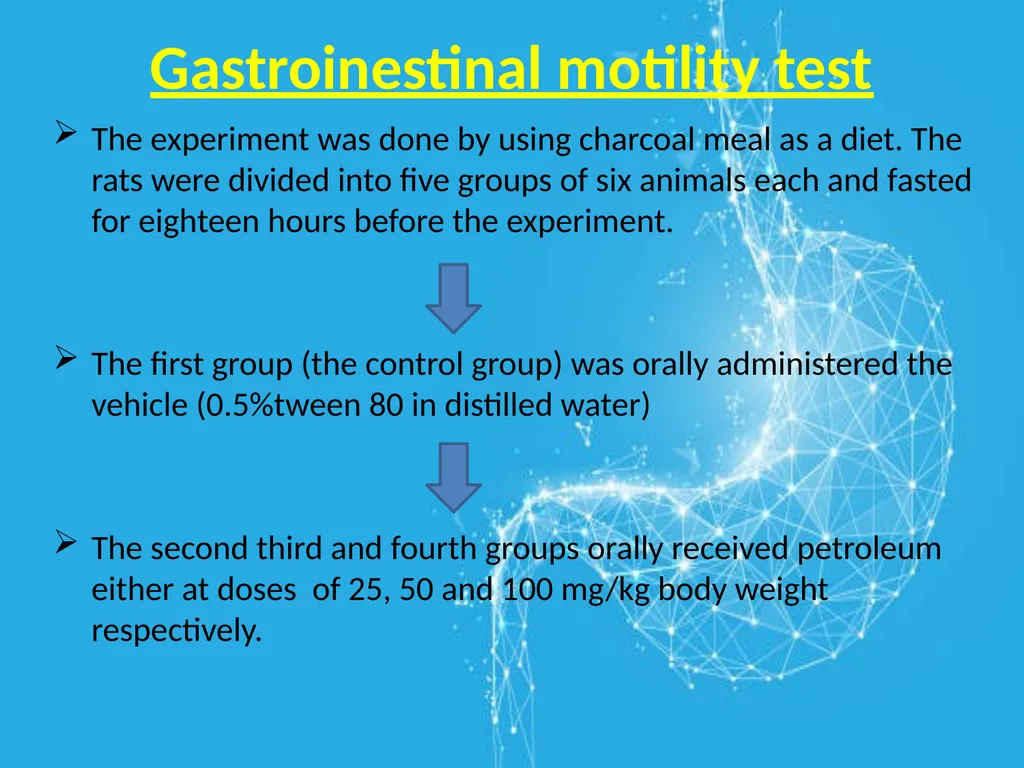
slide14. Gastroinestinal motility test The experiment was done by using charcoal meal as a diet. The rats were divided into five groups of six animals each and fasted for eighteen hours before the experiment.
The first group (the control group) was orally administered the vehicle (0.5%tween 80 in distilled water)
The second third and fourth groups orally received petroleum either at doses of 25, 50 and 100 mg/kg body weight respectively.<br>
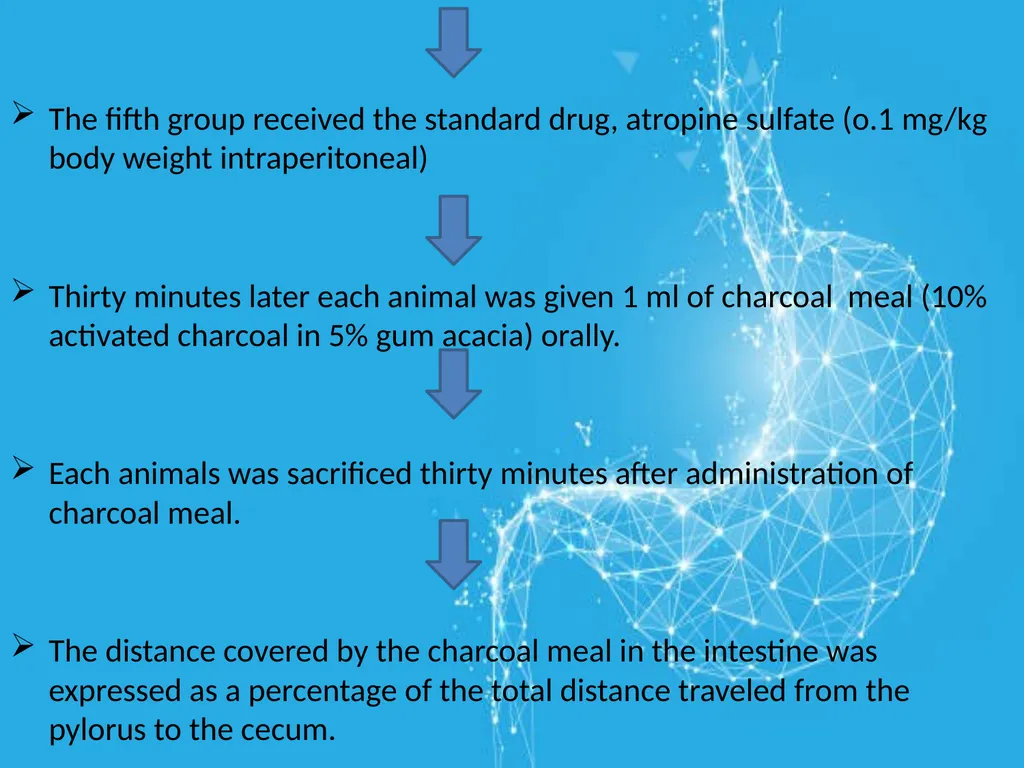
slide15. The fifth group received the standard drug, atropine sulfate (o.1 mg/kg body weight intraperitoneal)
Thirty minutes later each animal was given 1 ml of charcoal meal (10% activated charcoal in 5% gum acacia) orally.
Each animals was sacrificed thirty minutes after administration of charcoal meal.
The distance covered by the charcoal meal in the intestine was expressed as a percentage of the total distance traveled from the pylorus to the cecum.<br>
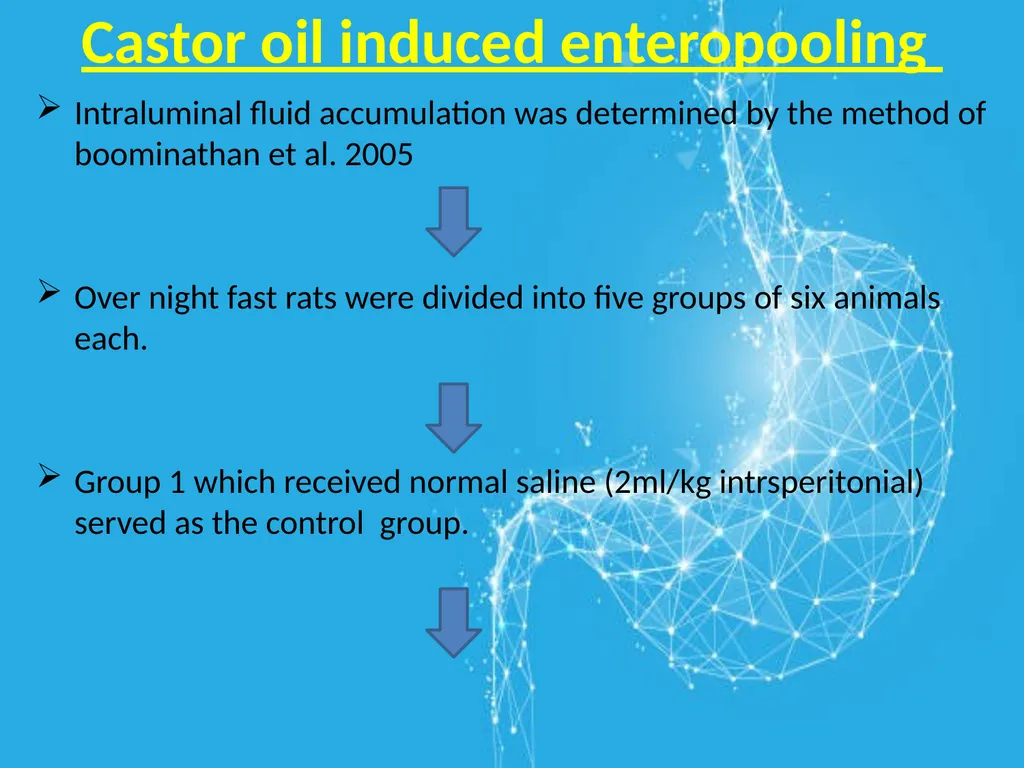
slide16. Castor oil induced enteropooling Intraluminal fluid accumulation was determined by the method of boominathan et al. 2005
Over night fast rats were divided into five groups of six animals each.
Group 1 which received normal saline (2ml/kg intrsperitonial) served as the control group.<br>
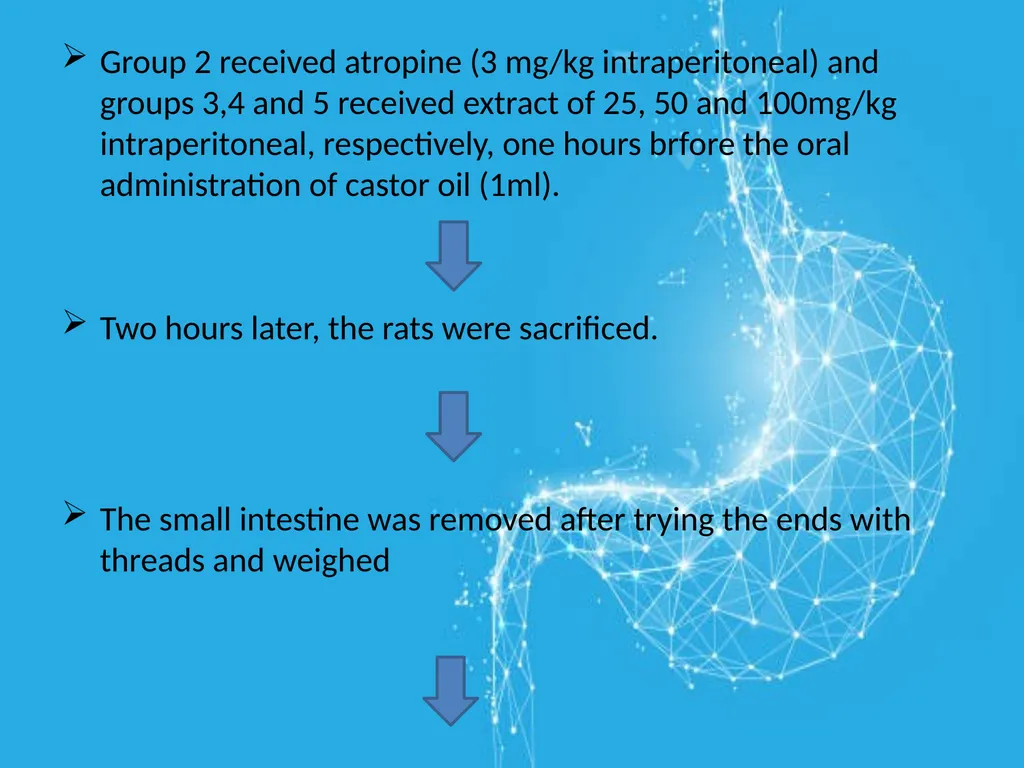
slide17. Group 2 received atropine (3 mg/kg intraperitoneal) and groups 3,4 and 5 received extract of 25, 50 and 100mg/kg intraperitoneal, respectively, one hours brfore the oral administration of castor oil (1ml).
Two hours later, the rats were sacrificed.
The small intestine was removed after trying the ends with threads and weighed<br>
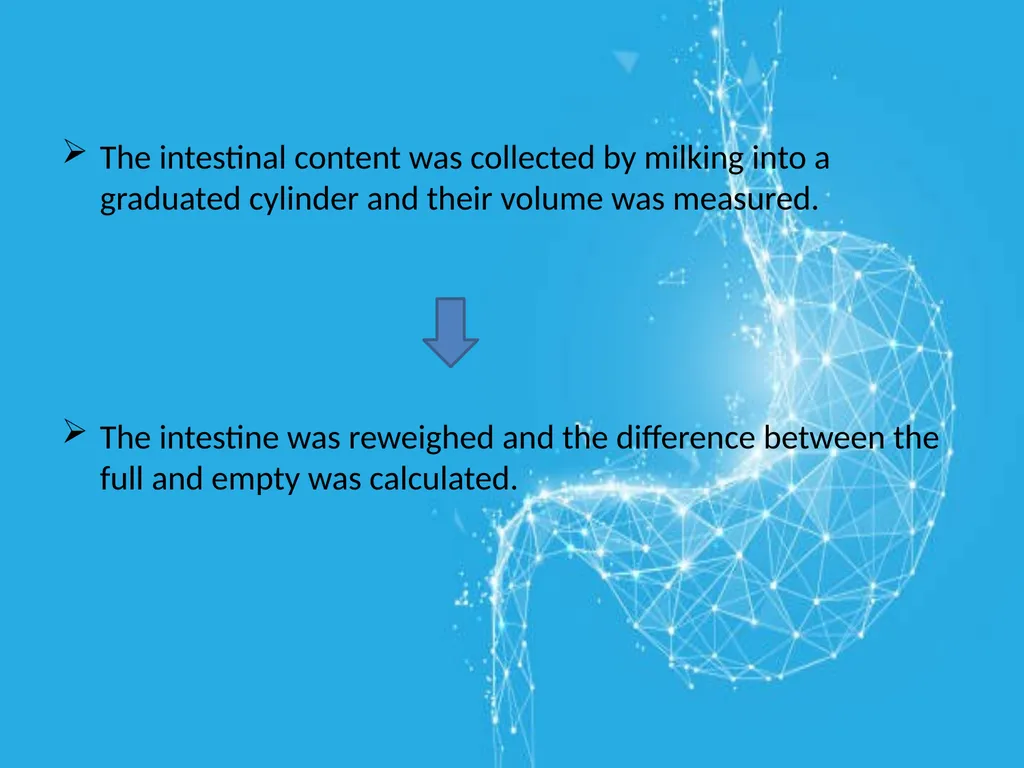
slide18. The intestinal content was collected by milking into a graduated cylinder and their volume was measured.
The intestine was reweighed and the difference between the full and empty was calculated.<br>
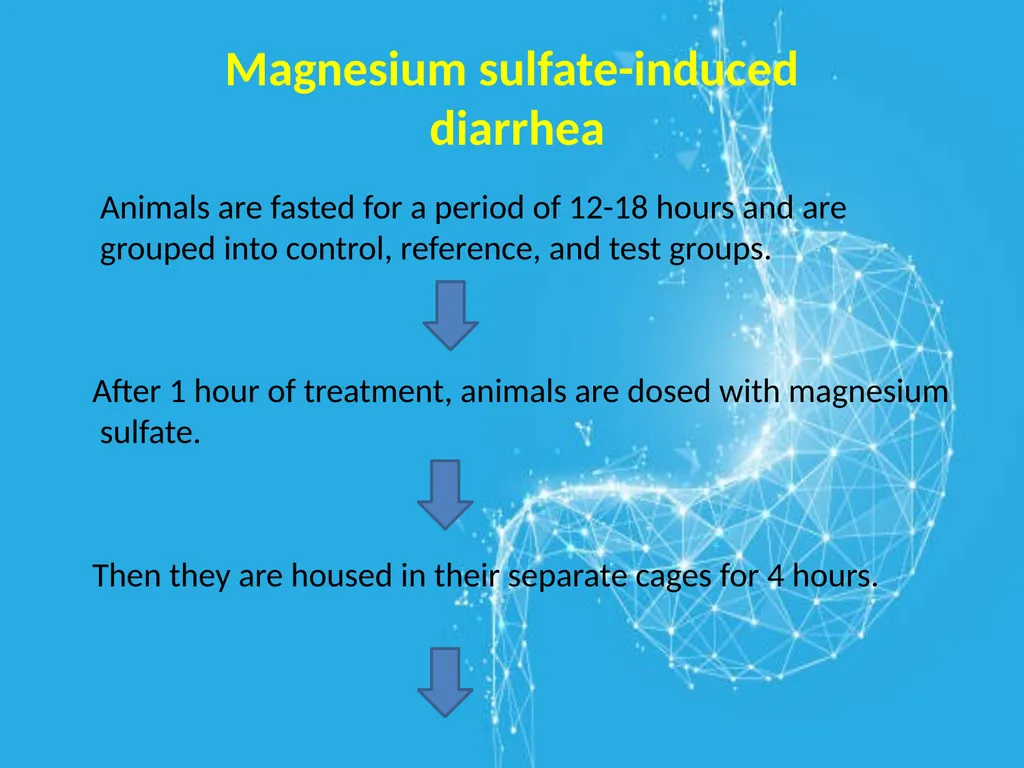
slide19. Magnesium sulfate-induced diarrhea Animals are fasted for a period of 12-18 hours and are grouped into control, reference, and test groups.
After 1 hour of treatment, animals are dosed with magnesium sulfate.
Then they are housed in their separate cages for 4 hours.<br>
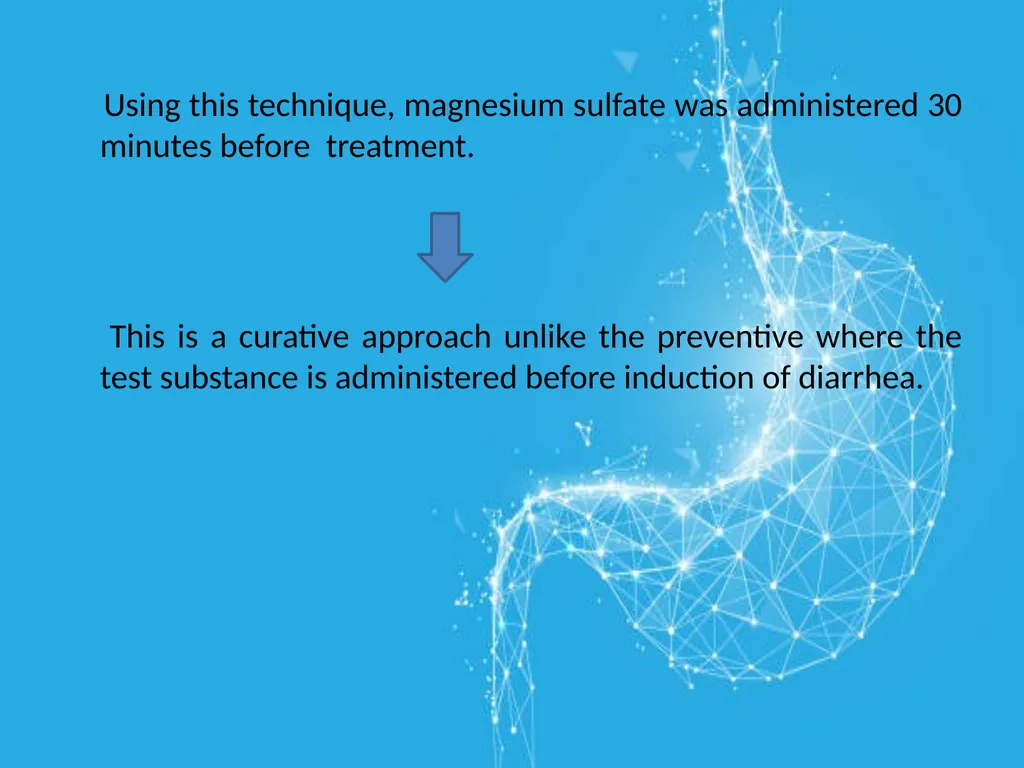
slide20. Using this technique, magnesium sulfate was administered 30 minutes before treatment.
This is a curative approach unlike the preventive where the test substance is administered before induction of diarrhea.<br>
slide21. EVALUATION With anti-diarrheal agents dose-response curve are obtained for decrease of hyper-secretion (stool weight) and increase of the diarrhea-free period are obtained.
Inhibitors of prostaglandin biosynthesis increase the diarrhea free period but do not affect early diarrheal secretion.<br>
slide22. REFERENCE
Tripathi KD (ed.). Essentials of Medical
Pharmacology (6th ed.). New Delhi: Jaypee<br>

slide2. INTRODUCTION Diarrhea
Diarrhea is characterized by increased frequency of bowel movement, wet stool and abdominal pain.<br>
slide3. Diarrhea (cont’d)
Acute diarrhea
Self limiting
Last from 3 days to 2 weeks
Resolve without sequelae
Chronic diarrhea
Last for more then 3 weeks
Associated with recurring passage of diarrheal stools, fever, loss of appetite, nausea, vomiting, weight loss, and chronic weakness.<br>
slide4. Causes of Diarrhea
Acute Diarrhea Chronic Diarrhea
Bacterial Tumors
Viral Diabetes
Drug Induced Addison’s disease
Nutritional Hyperthyroidism
Protozoal Irritable bowel syndrome<br>
slide5. Antidiarrheals:
Mechanism of Action
Adsorbents
Coat the walls of the GI tract
Blind to the causative bacteria or toxin, which is then eliminated through the stool
Examples: bismuth subsalicylate, kaolin-pectin, activated charcoal,etc
Anticholinergics
Decrease intestinal muscle tone and peristalsis of GI tract
Result: slowing the movement of fecal matter through the GI tract
Examples: belladonna alkaloids, atropine, etc<br>
slide6. Intestinal flora modifiers (IFM)
Bacterial cultures of Lactobacillus organisms workby:
Supplying missing bacteria to the GI tract
Suppressing the growth of diarrhea-causing bacteria
Example: L.acidophilus.
Opiates
Decrease bowel motility and relieve rectal spasms
Decrease transit time through the bowel, allowing more time for water and electrolytes to be absorbed.
Example: opium tincture, codeine, loperamide, etc<br>
slide7. Screening Mode In vivo model
Castor oil-induced diarrhea
Gastrointestinal motility test
Castol oil-induced enterpooling
Magnesium sulfate-induced diarrhea<br>
slide8. Rationale, Purpose & Methods Rationale: The induction of diarrhea with castor oil results from the action of ricinoleic acid by hydrolysis of the oil. Ricinoleic acid produces change in the transport of water and electrolytes resulting in a hypersecretory response.
Purpose: The seeds of Swietenia macrophylla are used in traditional medicine for the treatment of diarrhea. Thus the petroleum ether extract from Swietenia macrophylla(Meliaceae) seeds was investigated foe its anti-diarrheal property in wistar albino rats to substantiate folklore claim.<br>
slide9. Methods: Petroleum ether extract of the seeds of the this plant, at graded doses (25, 50 & 100mg/kg body weight) was investigated for anti-diarrheal activity in term of reducing in the rate of defecation and consistency of feces in castor oil induced diarrhea. To understand the mechanism of its anti diarrheal activity, its effect was evaluated on intestinal transit and castor oil induced intestinal fluid accumulation (enteropooling).
Animals: Swiss albino rats (150-280gm) of either sex were selected for the experiments. Animals were allowed to be acclimatize for a period of 2 weeks in our laboratory environment prior to study.
Animals were house in polypropylene cages (4 animals per cage), maintained under standard laboratory conditions (i.e. 12:12 hours light and dark sequence: at an room temperature of 25.<br>
slide10. Chemicals and Reagents:
Atropine sulfate and diphenoxylate (standard reference diarrheal drugs), castor oil ( laxative agent normal saline solution 0.9% NaCl) charcoal meal (10% activated charcole in 5% gun acacia) and vehicle (2% v/v Tween 80 in distilled water)were used.<br>
slide11. Castrol oil-induced diarrhoea Rate were fasted for 18hrs and divided into five groups of six animals per group.
Castor oil at dose of 1ml/animals orally, was given to all group of animals for the induction of diarrhea.
Thirty minutes after castor castor oil administration, the first group (control group) received vehicle (0.5%v/v Tween 80 in distilled water)<br>
slide12. While the second, third and fourth group were given petroleum ether extract at doses of 20,50 and 100 mg/kg body weight respectively by oral route,
The fifth group received the reference drug, disphenoxylate (50mg/kg body weight).
Animals of all groups were place separately in individual cages lined with filter paper.<br>
slide13. The filter papers were changed every hours and the
severity of diarrhea was assessed hourly for six hours.
The total numbers of faeces excreted and the total weight of faeces were recorded within a period of six hours and compared with the control group.
The total numbers of diarrheal faeces of the control group was considered 100%
The results were expressed as percentage of inhibition of diarrhea<br>
slide14. Gastroinestinal motility test The experiment was done by using charcoal meal as a diet. The rats were divided into five groups of six animals each and fasted for eighteen hours before the experiment.
The first group (the control group) was orally administered the vehicle (0.5%tween 80 in distilled water)
The second third and fourth groups orally received petroleum either at doses of 25, 50 and 100 mg/kg body weight respectively.<br>
slide15. The fifth group received the standard drug, atropine sulfate (o.1 mg/kg body weight intraperitoneal)
Thirty minutes later each animal was given 1 ml of charcoal meal (10% activated charcoal in 5% gum acacia) orally.
Each animals was sacrificed thirty minutes after administration of charcoal meal.
The distance covered by the charcoal meal in the intestine was expressed as a percentage of the total distance traveled from the pylorus to the cecum.<br>
slide16. Castor oil induced enteropooling Intraluminal fluid accumulation was determined by the method of boominathan et al. 2005
Over night fast rats were divided into five groups of six animals each.
Group 1 which received normal saline (2ml/kg intrsperitonial) served as the control group.<br>
slide17. Group 2 received atropine (3 mg/kg intraperitoneal) and groups 3,4 and 5 received extract of 25, 50 and 100mg/kg intraperitoneal, respectively, one hours brfore the oral administration of castor oil (1ml).
Two hours later, the rats were sacrificed.
The small intestine was removed after trying the ends with threads and weighed<br>
slide18. The intestinal content was collected by milking into a graduated cylinder and their volume was measured.
The intestine was reweighed and the difference between the full and empty was calculated.<br>
slide19. Magnesium sulfate-induced diarrhea Animals are fasted for a period of 12-18 hours and are grouped into control, reference, and test groups.
After 1 hour of treatment, animals are dosed with magnesium sulfate.
Then they are housed in their separate cages for 4 hours.<br>
slide20. Using this technique, magnesium sulfate was administered 30 minutes before treatment.
This is a curative approach unlike the preventive where the test substance is administered before induction of diarrhea.<br>
slide21. EVALUATION With anti-diarrheal agents dose-response curve are obtained for decrease of hyper-secretion (stool weight) and increase of the diarrhea-free period are obtained.
Inhibitors of prostaglandin biosynthesis increase the diarrhea free period but do not affect early diarrheal secretion.<br>
slide22. REFERENCE
Tripathi KD (ed.). Essentials of Medical
Pharmacology (6th ed.). New Delhi: Jaypee<br>