
Scientific Method Introduction This method is used
Description: Scientific Method Introduction This method is used by college students, scientists and school students beginning about 4th grade. It is an important part of the PA Science PSSA testing. For elementary students, inquiry, which is a more
Related Topics
Download Presentation
"Scientific Method Introduction This method is used" is the property of its rightful owner. Permission is granted to download and print the materials on this website for personal, non-commercial use only, and to display it on your personal computer provided you do not modify the materials and that you retain all copyright notices contained in the materials. By downloading content from our website, you accept the terms of this agreement.
Presentation Transcript
slide1. Scientific Method<br>
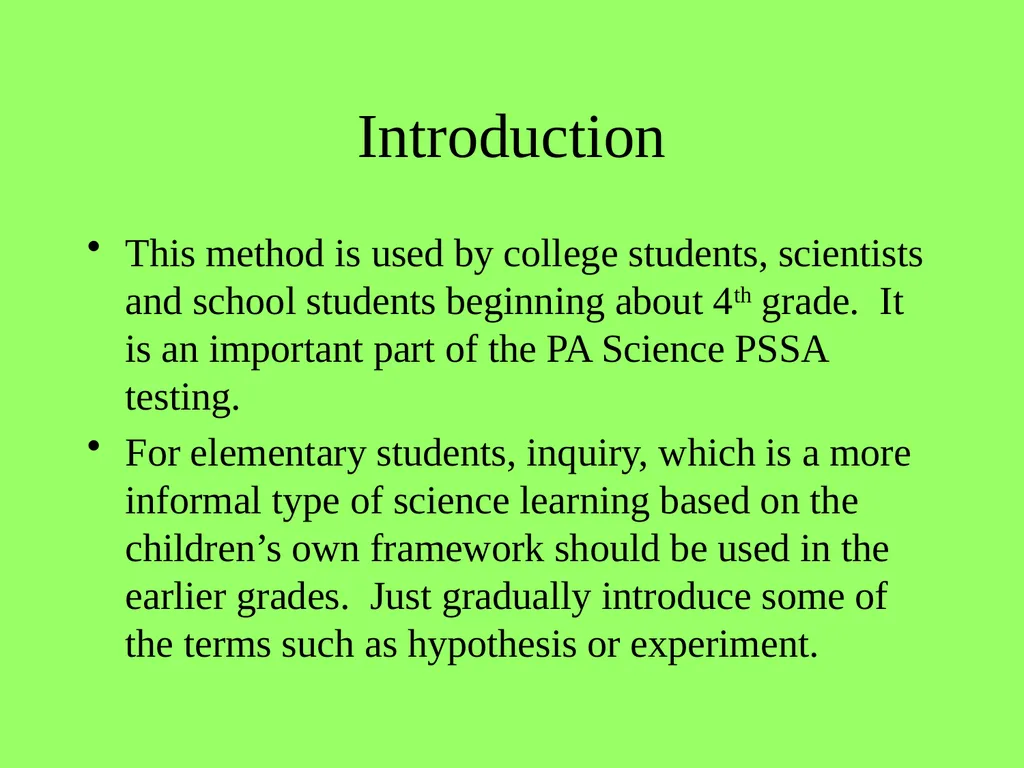
slide2. Introduction This method is used by college students, scientists and school students beginning about 4th grade. It is an important part of the PA Science PSSA testing.
For elementary students, inquiry, which is a more informal type of science learning based on the children’s own framework should be used in the earlier grades. Just gradually introduce some of the terms such as hypothesis or experiment.<br>
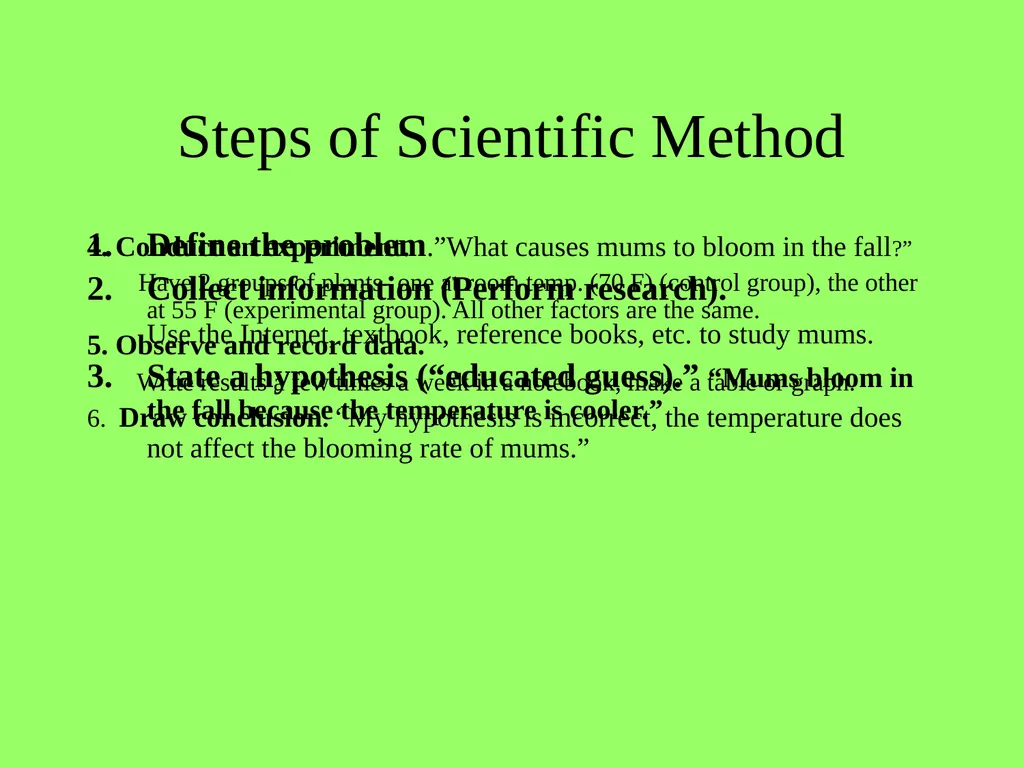
slide3. Steps of Scientific Method Define the problem.”What causes mums to bloom in the fall?”
Collect information (Perform research).
Use the Internet, textbook, reference books, etc. to study mums.
State a hypothesis (“educated guess).” “Mums bloom in the fall because the temperature is cooler.” 4. Conduct an experiment.
Have 2 groups of plants- one at room temp. (70 F) (control group), the other at 55 F (experimental group). All other factors are the same.
5. Observe and record data.
Write results a few times a week in a notebook, make a table or graph.
6. Draw conclusion. “My hypothesis is incorrect, the temperature does not affect the blooming rate of mums.”<br>
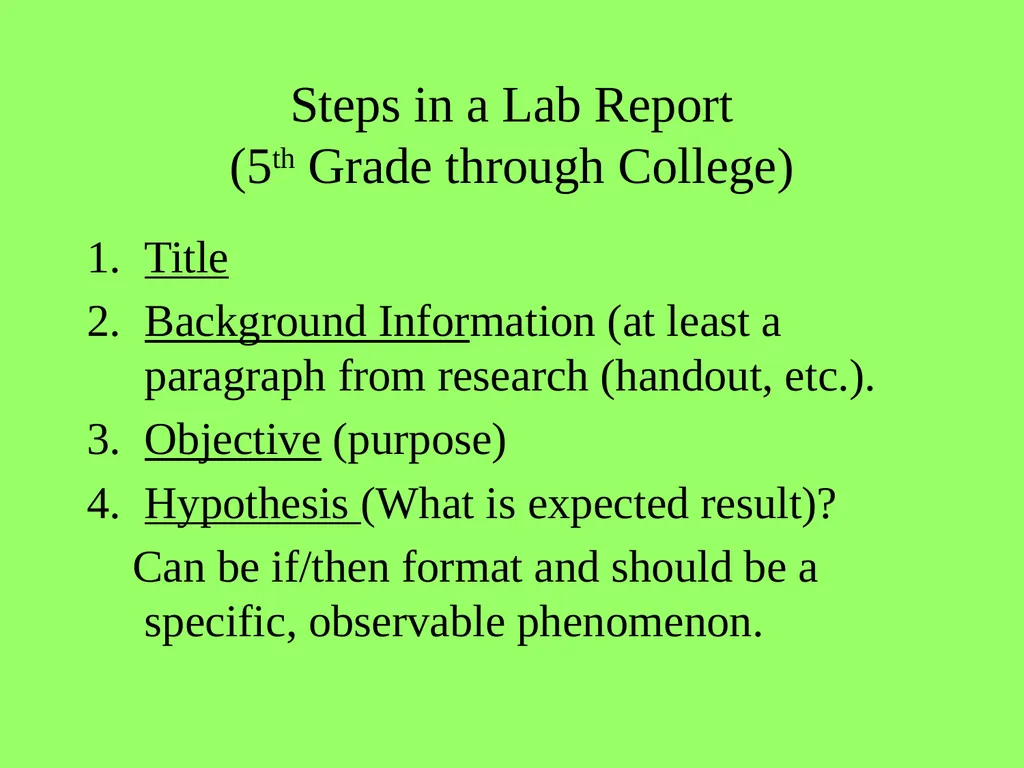
slide4. Steps in a Lab Report (5th Grade through College) Title
Background Information (at least a paragraph from research (handout, etc.).
Objective (purpose)
Hypothesis (What is expected result)?
Can be if/then format and should be a specific, observable phenomenon.<br>
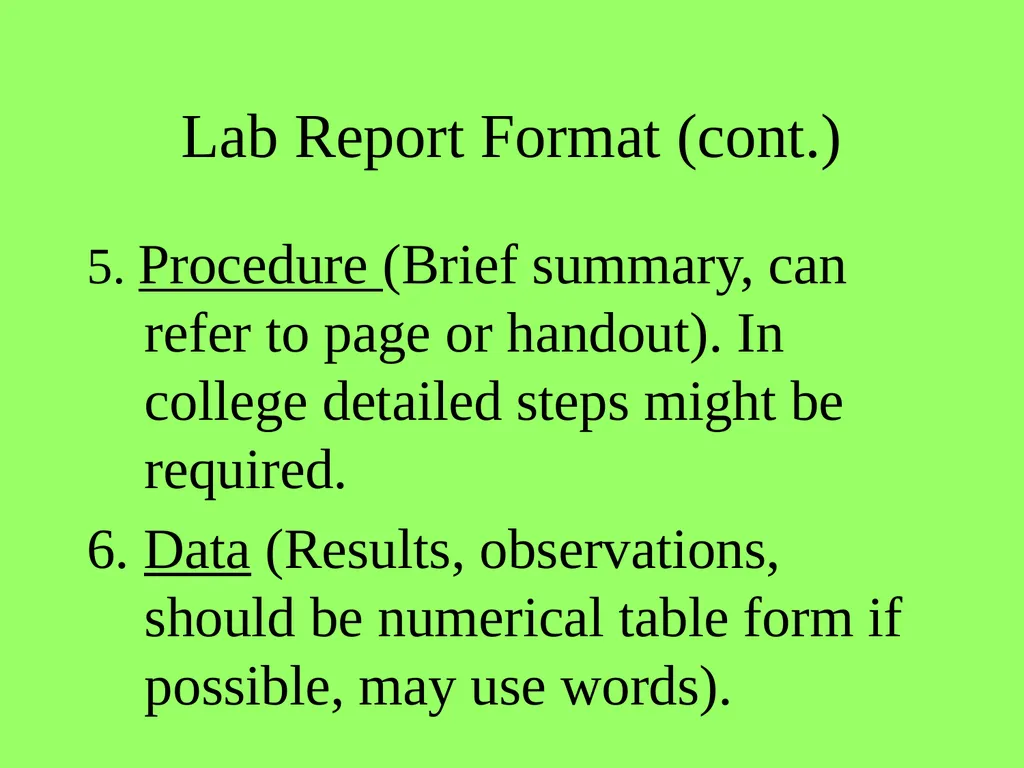
slide5. Lab Report Format (cont.) 5. Procedure (Brief summary, can refer to page or handout). In college detailed steps might be required.
6. Data (Results, observations, should be numerical table form if possible, may use words).<br>
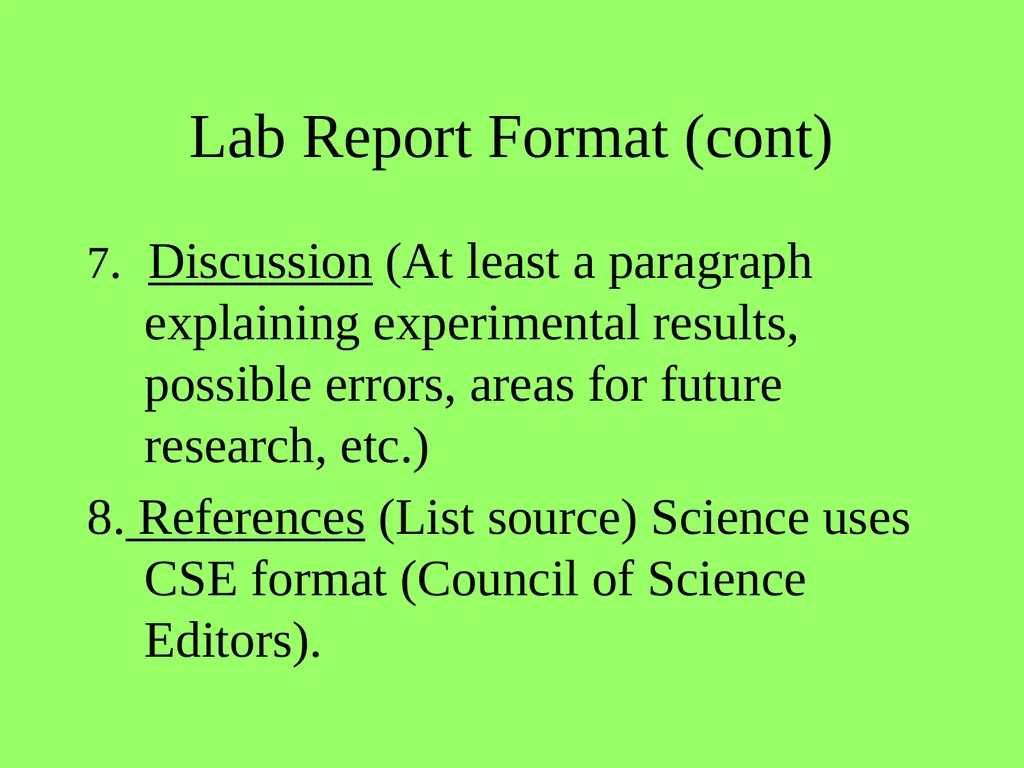
slide6. Lab Report Format (cont) 7. Discussion (At least a paragraph explaining experimental results, possible errors, areas for future research, etc.)
8. References (List source) Science uses CSE format (Council of Science Editors).<br>
slide2. Introduction This method is used by college students, scientists and school students beginning about 4th grade. It is an important part of the PA Science PSSA testing.
For elementary students, inquiry, which is a more informal type of science learning based on the children’s own framework should be used in the earlier grades. Just gradually introduce some of the terms such as hypothesis or experiment.<br>
slide3. Steps of Scientific Method Define the problem.”What causes mums to bloom in the fall?”
Collect information (Perform research).
Use the Internet, textbook, reference books, etc. to study mums.
State a hypothesis (“educated guess).” “Mums bloom in the fall because the temperature is cooler.” 4. Conduct an experiment.
Have 2 groups of plants- one at room temp. (70 F) (control group), the other at 55 F (experimental group). All other factors are the same.
5. Observe and record data.
Write results a few times a week in a notebook, make a table or graph.
6. Draw conclusion. “My hypothesis is incorrect, the temperature does not affect the blooming rate of mums.”<br>
slide4. Steps in a Lab Report (5th Grade through College) Title
Background Information (at least a paragraph from research (handout, etc.).
Objective (purpose)
Hypothesis (What is expected result)?
Can be if/then format and should be a specific, observable phenomenon.<br>
slide5. Lab Report Format (cont.) 5. Procedure (Brief summary, can refer to page or handout). In college detailed steps might be required.
6. Data (Results, observations, should be numerical table form if possible, may use words).<br>
slide6. Lab Report Format (cont) 7. Discussion (At least a paragraph explaining experimental results, possible errors, areas for future research, etc.)
8. References (List source) Science uses CSE format (Council of Science Editors).<br>