
Securing Wireless Medical Implants Shyamnath















Description: Securing Wireless Medical Implants Shyamnath Gollakota Haitham Hassanieh Benjamin Ransford Dina Katabi Kevin Fu Modern Implants Have Wireless Cardiac Defibrillators Neurostimulators Cochlear Implants Easier communication with implant Remote
Related Topics
Download Presentation
"Securing Wireless Medical Implants Shyamnath" is the property of its rightful owner. Permission is granted to download and print the materials on this website for personal, non-commercial use only, and to display it on your personal computer provided you do not modify the materials and that you retain all copyright notices contained in the materials. By downloading content from our website, you accept the terms of this agreement.
Presentation Transcript
slide1. Securing Wireless Medical Implants Shyamnath Gollakota
Haitham Hassanieh
Benjamin Ransford
Dina Katabi
Kevin Fu<br>
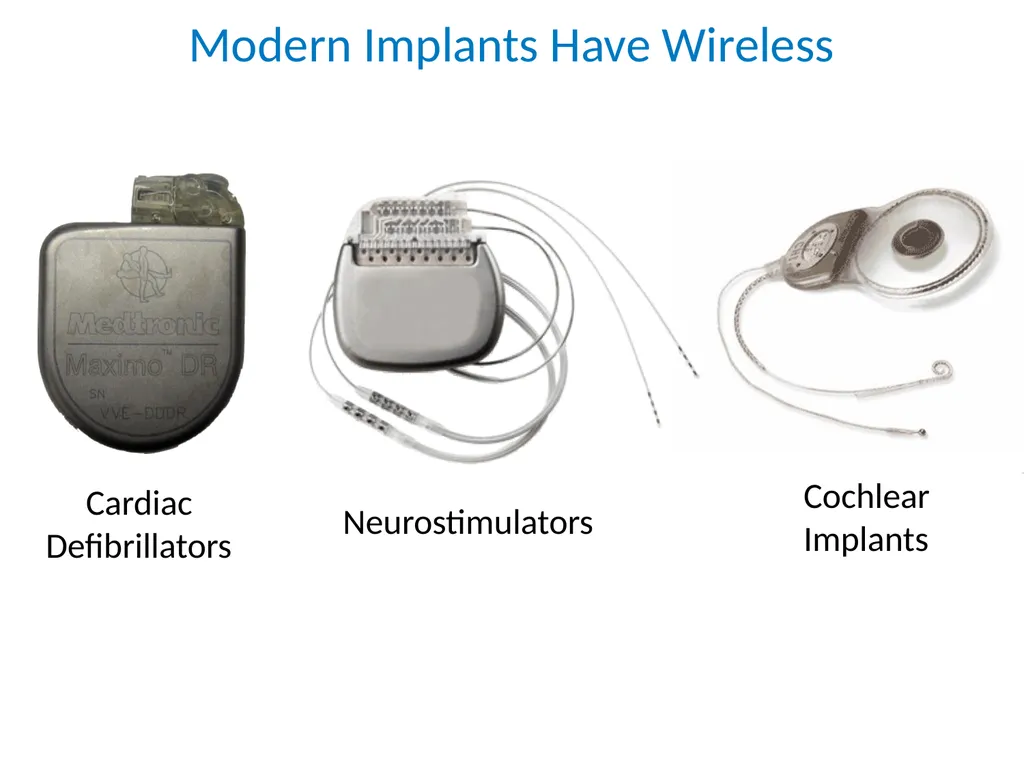
slide2. Modern Implants Have Wireless Cardiac
Defibrillators Neurostimulators Cochlear Implants<br>
slide3. Easier communication with implant
Remote monitoring Benefits of Wireless<br>
slide4. Easier communication with implant
Remote monitoring Reduces hospital visits by 40% and cost per visit by $1800 [Journal of the American College of Cardiology, 2011] What about security? Benefits of Wireless<br>
slide5. 1) Passive attack: Eavesdrop on private data Patient diagnosis, vital signs 2) Active attack: Send unauthorized commands Turn off therapies, Security Attacks [Halperin’08] demonstrated attacks using software radios deliver electric shock<br>
slide6. How Do We Protect Against Such Attacks? Cryptography?<br>
slide7. Problems with Adding Cryptography on Implants In emergencies, patient may be taken to a foreign hospital where doctors don’t have the secret key
Millions of patients already have implants with no crypto; would require surgery to replace<br>
slide8. Ideally, secure implants without modifying them<br>
slide9. Ideally, secure implants without modifying them Delegate security to an external device In emergencies, doctor turns external device off
Helps people who already have implants<br>
slide10. Wireless Device Solution Idea<br>
slide11. Shield Protects from Active Attacks<br>
slide12. Shield jams unauthorized commands Turn off therapy Implants can’t decode or react to command Shield Protects from Active Attacks Implant ID Shield listens on medium Implant protected from active attacks<br>
slide13. But How to Protect from Passive Attacks? Simply jamming prevents everyone from getting data! How can we prevent eavesdropper from getting data while delivering data to doctor? Analog one-time pad Naïve Sol: Shield jams implant tx so attacker can’t decode<br>
slide14. Only a node that has the key can decrypt Classic Approach: One-Time Pad Message = Decryption<br>
slide15. Channel sums implant’s signal with shield’s random signal Implant’s signal shield
jams Random Sum Eavesdropper doesn’t know jamming signal can’t decode Shield knows the jamming signal
subtracts it
decodes implant’s transmission Protect from Passive Attacks: Analog One-Time Pad Jamming signal acts like the key in one-time pad<br>
slide16. Traditional System Putting it together<br>
slide17. Our System Putting it together Doctor configures the shield with a secret key Shield acts as proxy Use encryption Shield encrypts the implant data and forwards it to doctor<br>
slide18. First system that secures wireless implants without modifying them
Design that simultaneously jams and decodes medical implant transmissions
Implemented and evaluated using commercial cardiac defibrillators
Effective at protecting the implants Contributions<br>
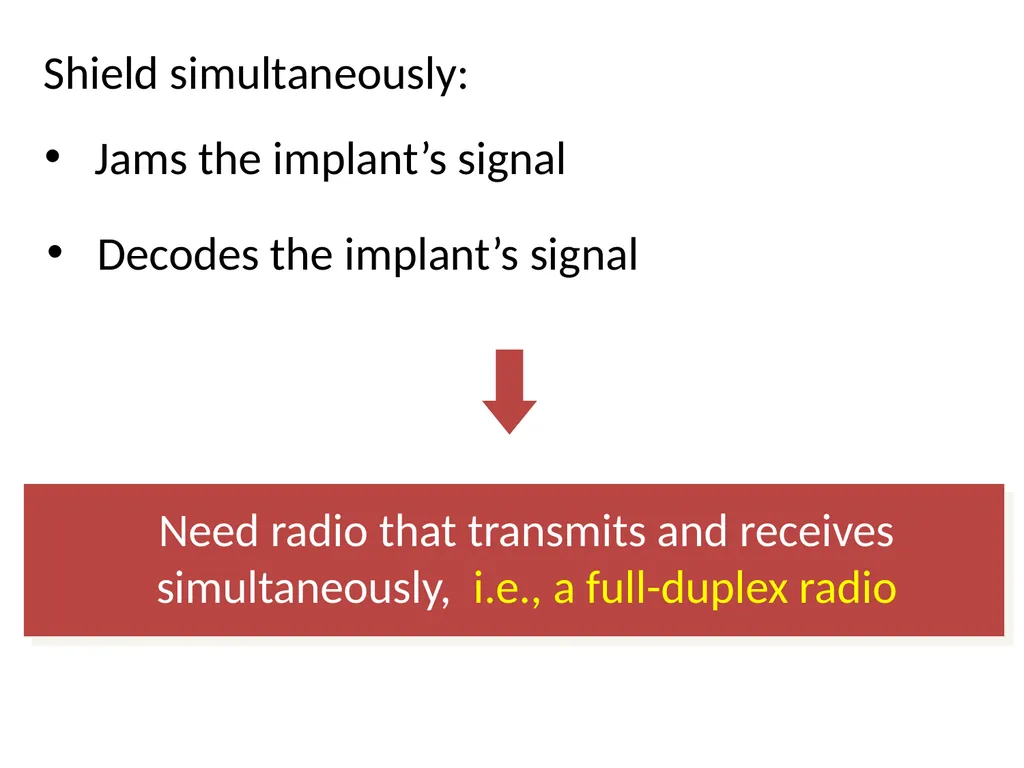
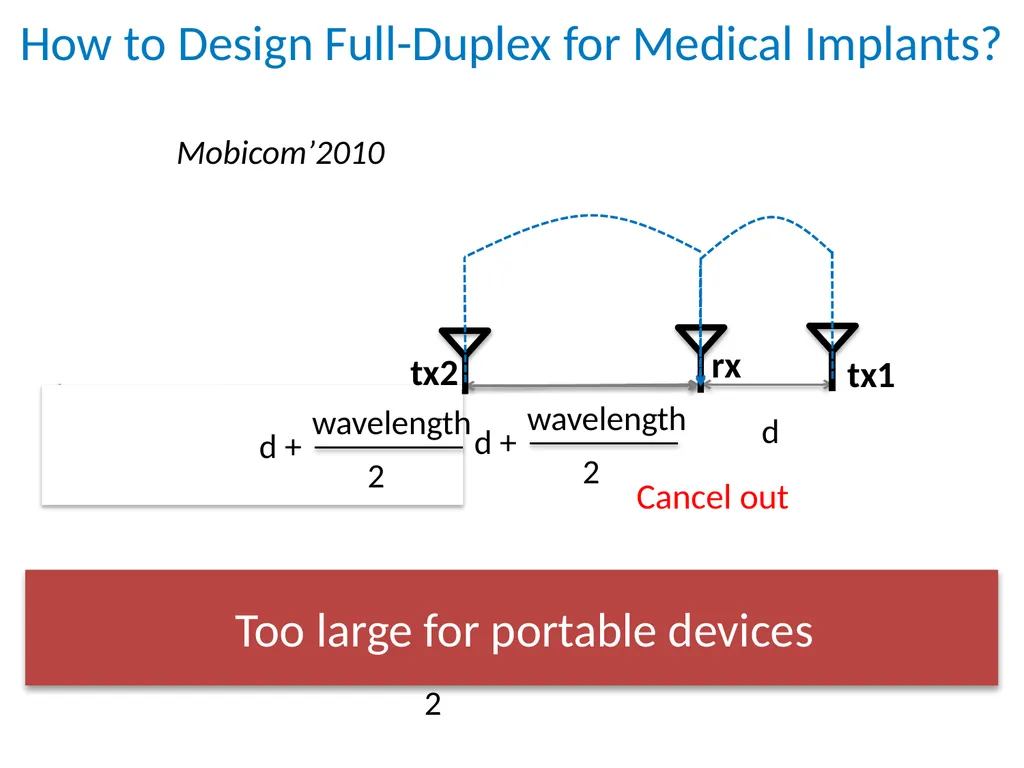
slide19. Need radio that transmits and receives simultaneously, i.e., a full-duplex radio Jams the implant’s signal Decodes the implant’s signal Shield simultaneously:<br>
slide20. Medical implant work at 400 MHz d How to Design Full-Duplex for Medical Implants? Cancel out Mobicom’2010 Too large for portable devices<br>
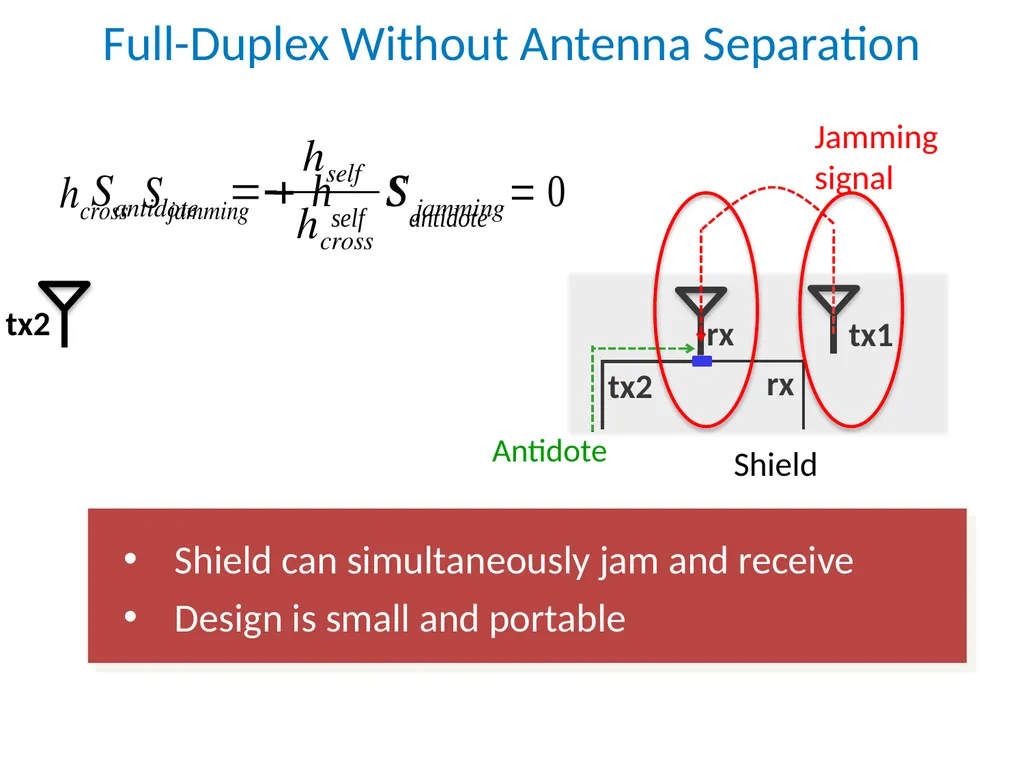
slide21. Jamming signal Antidote rx Full-Duplex Without Antenna Separation Antidote signal cancels out jamming signal Shield can simultaneously jam and receive
Design is small and portable<br>
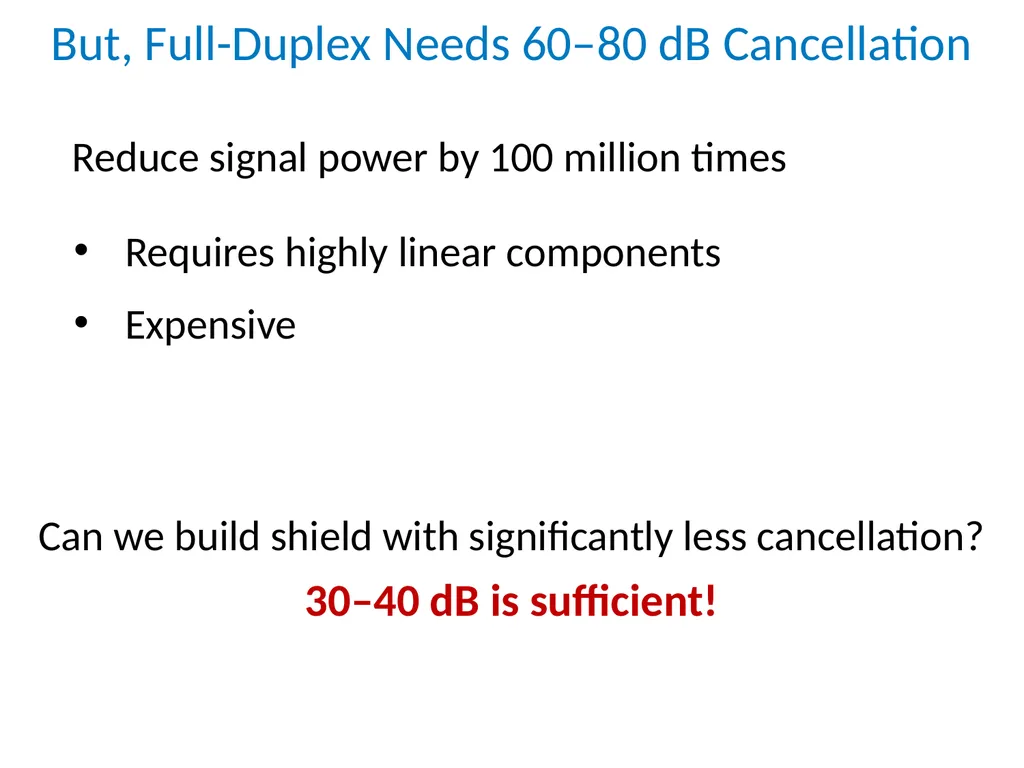
slide22. Reduce signal power by 100 million times Requires highly linear components
Expensive Can we build shield with significantly less cancellation? 30–40 dB is sufficient! But, Full-Duplex Needs 60–80 dB Cancellation<br>
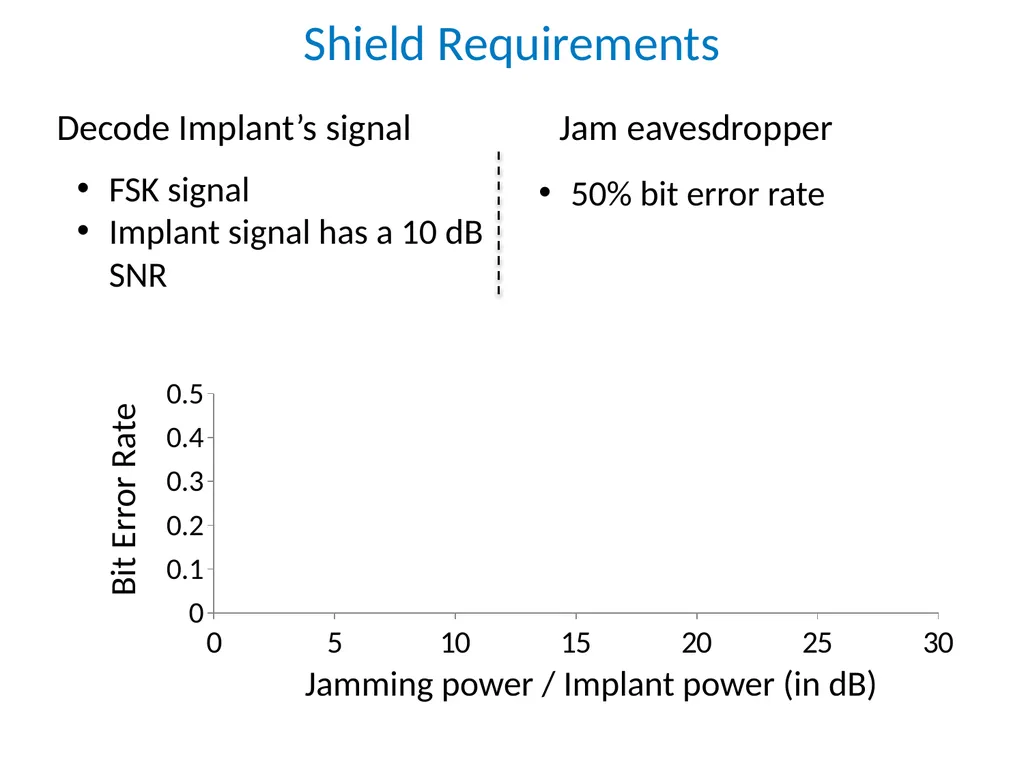
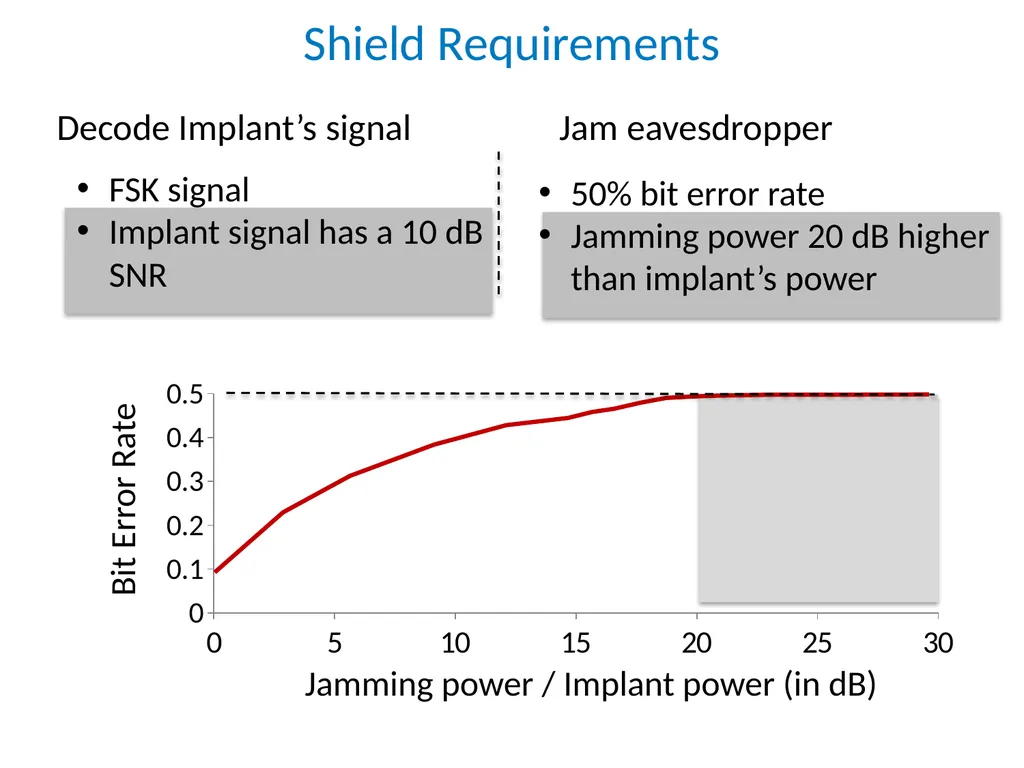
slide23. Decode Implant’s signal FSK signal
Implant signal has a 10 dB SNR 50% bit error rate Jamming power / Implant power (in dB) Bit Error Rate Shield Requirements Jam eavesdropper<br>
slide24. Decode Implant’s signal FSK signal
Implant signal has a 10 dB SNR 50% bit error rate
Jamming power 20 dB higher than implant’s power Jamming power / Implant power (in dB) Bit Error Rate Shield Requirements Jam eavesdropper<br>
slide25. Time 20 dB 10 dB Shield Requirements Decode Implant’s signal FSK signal
Implant signal has a 10 dB SNR 50% bit error rate
Jamming power 20 dB higher than implant’s power Cancel 30 dB Jam eavesdropper Shield requires only 30 dB cancellation<br>
slide26. Empirical Results<br>
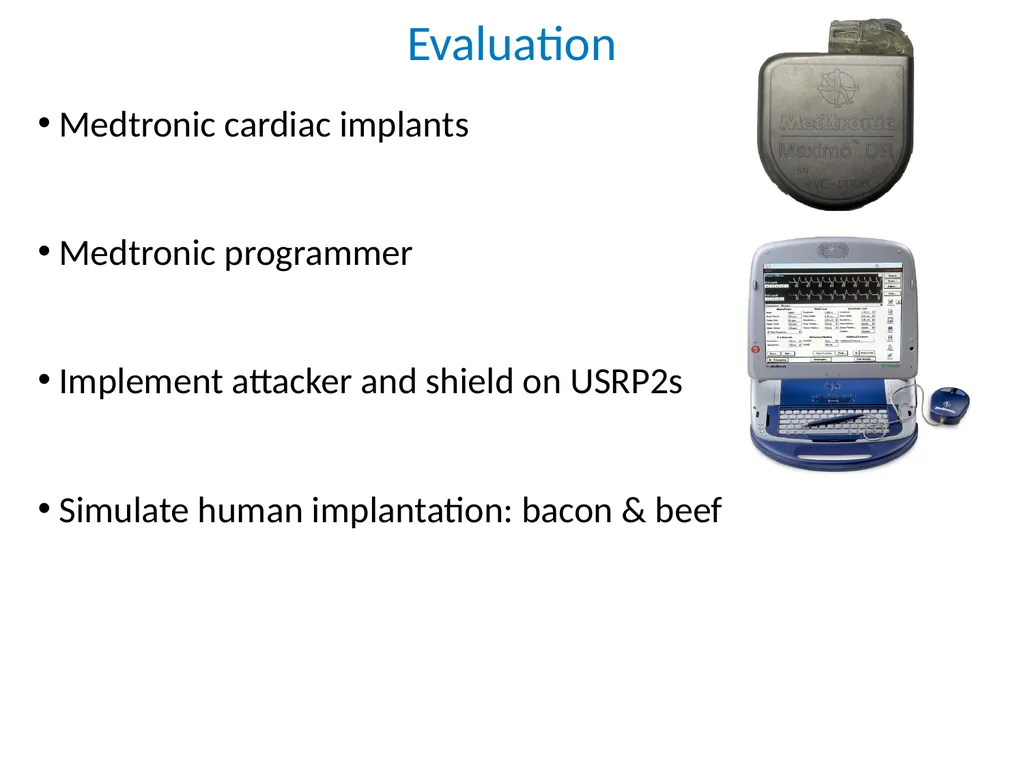
slide27. Medtronic cardiac implants
Medtronic programmer
Implement attacker and shield on USRP2s
Simulate human implantation: bacon & beef Evaluation<br>
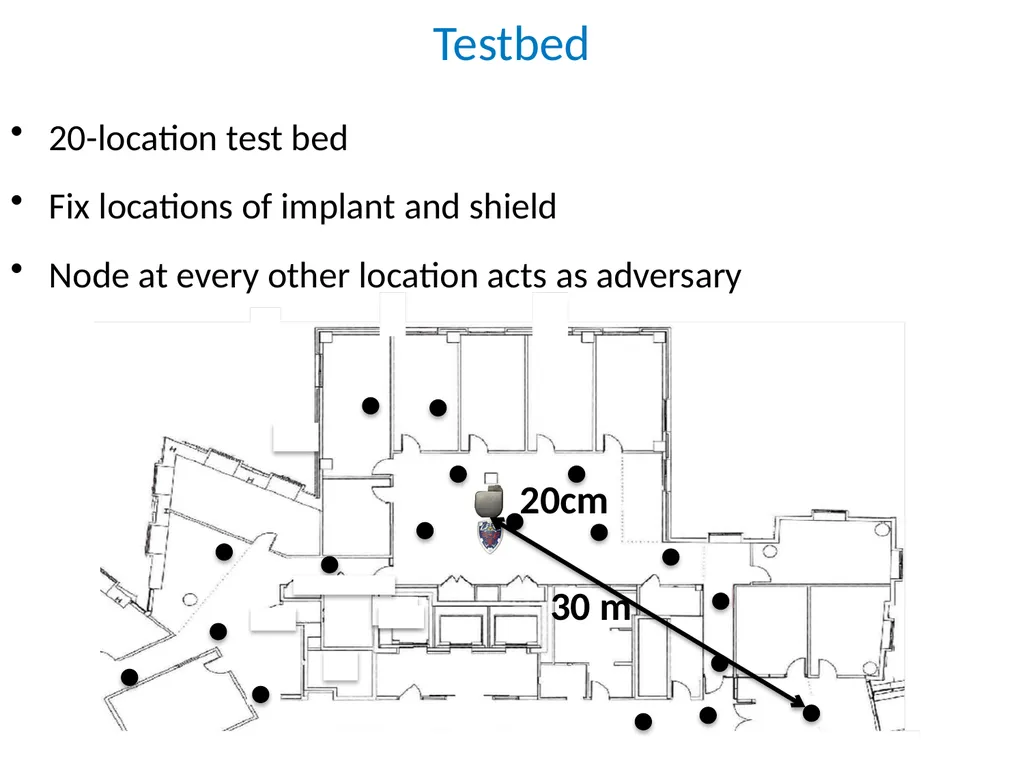
slide28. 20-location test bed
Fix locations of implant and shield
Node at every other location acts as adversary Testbed 30 m 20cm<br>
slide29. Passive Attacks Eavesdrop on private data Decode implant’s transmissions
Use optimal FSK decoder<br>
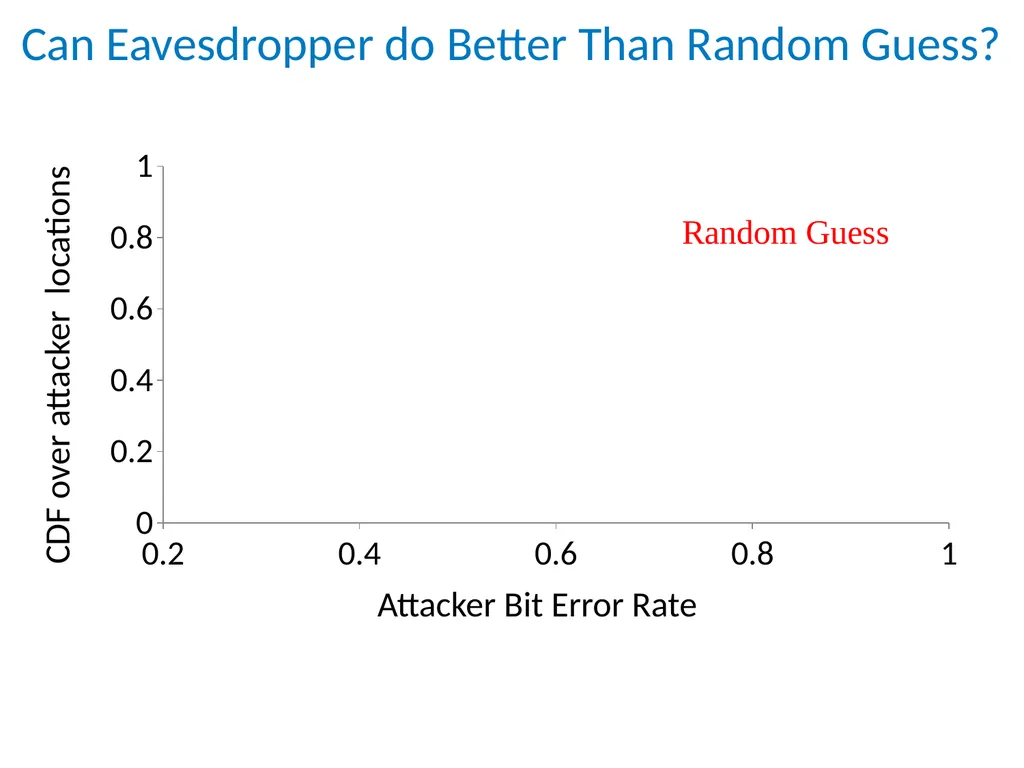
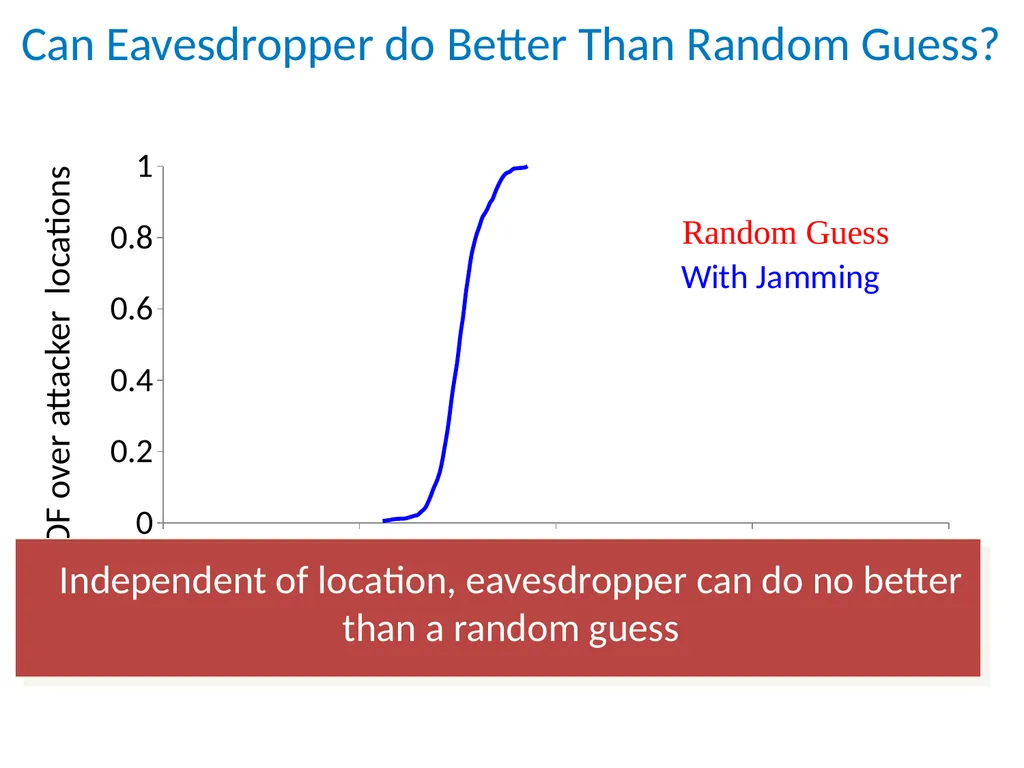
slide30. Attacker Bit Error Rate CDF over attacker locations Can Eavesdropper do Better Than Random Guess?<br>
slide31. Can Eavesdropper do Better Than Random Guess? CDF over attacker locations Attacker Bit Error Rate<br>
slide32. Can Eavesdropper do Better Than Random Guess? CDF over attacker locations Attacker Bit Error Rate Independent of location, eavesdropper can do no better than a random guess<br>
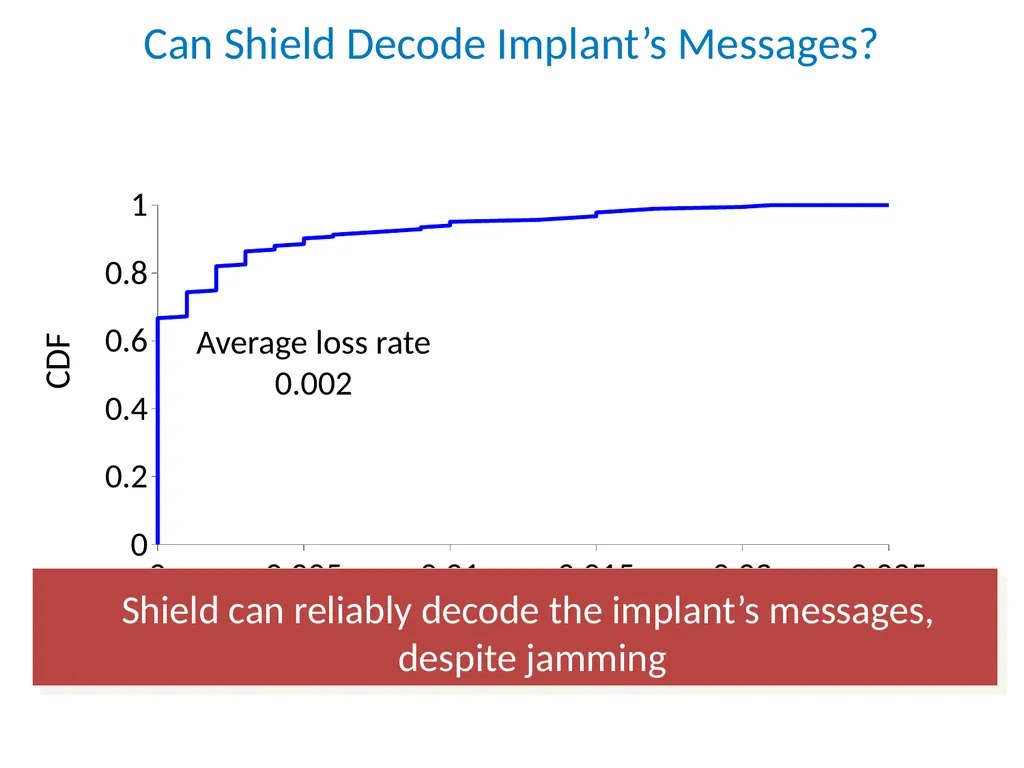
slide33. Packet Loss at Shield CDF Can Shield Decode Implant’s Messages?<br>
slide34. Packet Loss at Shield CDF Can Shield Decode Implant’s Messages? Shield can reliably decode the implant’s messages,
despite jamming Average loss rate
0.002<br>
slide35. Active Attacks Attacker sends “change therapy”
Shield jams
Read implant to check if therapy has changed Send unauthorized commands<br>
slide36. Off-the-shelf implant programmers Same power as our shield Customized hardware 100 times the power of our shield Two Types of Active Attacks<br>
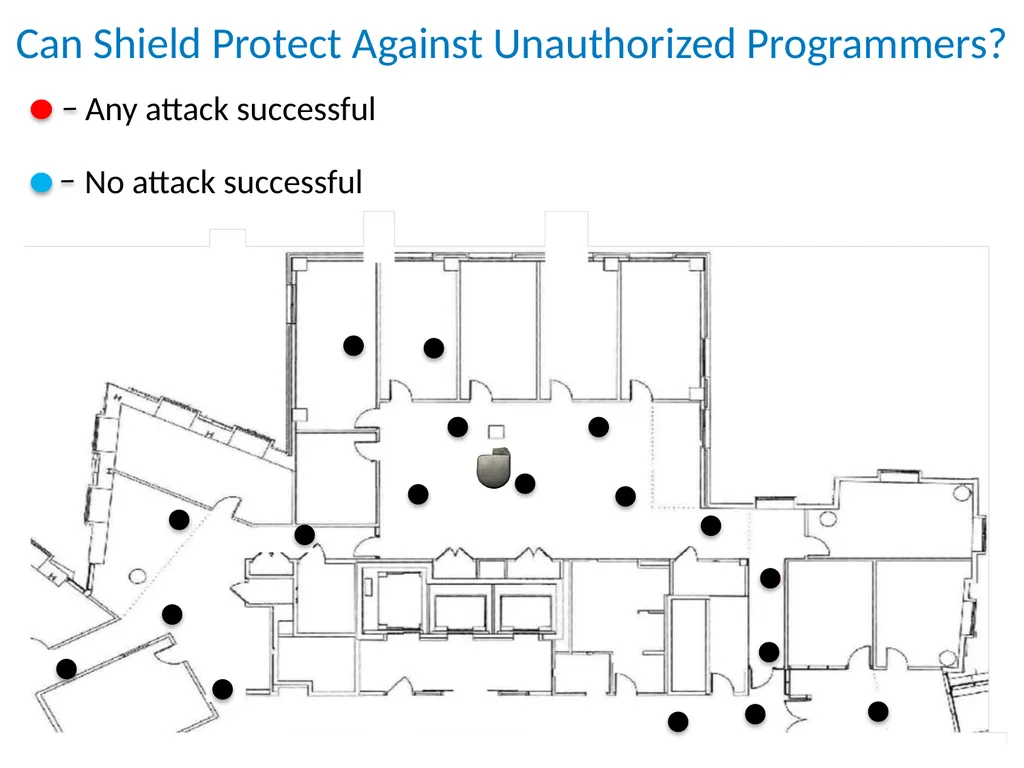
slide37. Fraction of Successful Attacks Can Shield Protect Against Unauthorized Programmers? Attacker location #<br>
slide38. Fraction of Successful Attacks Without Shield With Shield 0 0 0 0 0 0 0 0 0 Can Shield Protect Against Unauthorized Programmers? Attacker location #<br>
slide39. Can Shield Protect Against Unauthorized Programmers?<br>
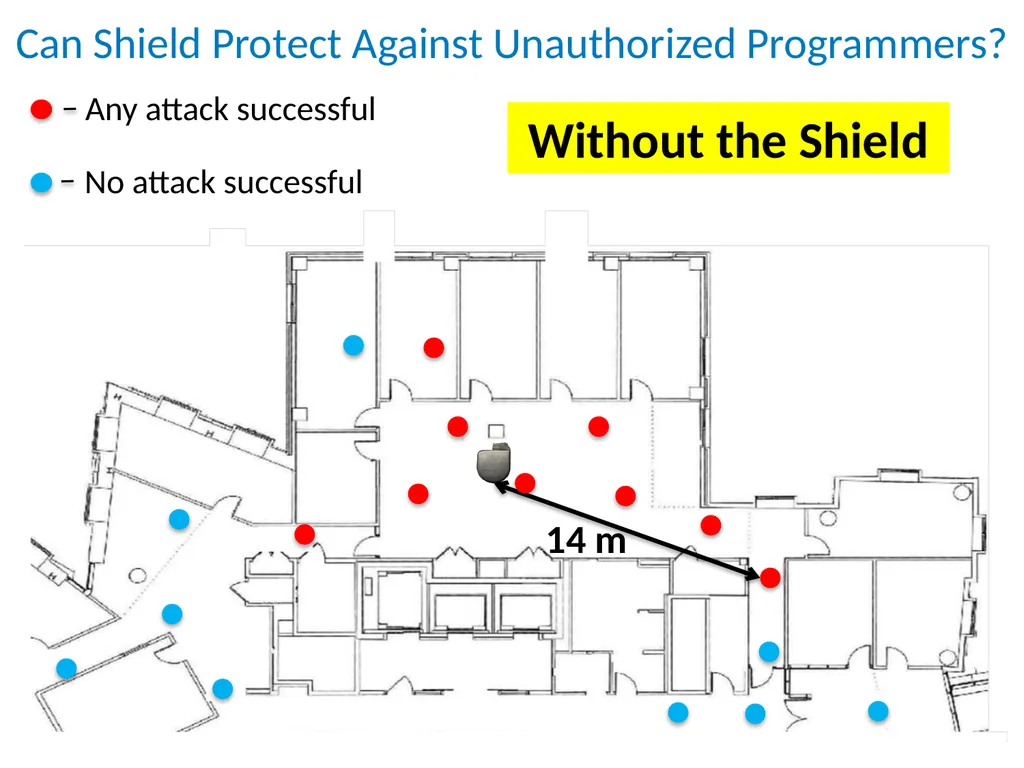
slide40. Can Shield Protect Against Unauthorized Programmers? Without the Shield 14 m<br>
slide41. Can Shield Protect Against Unauthorized Programmers? With the Shield 20 cm Independent of the location, shield protects from unauthorized programmers<br>
slide42. Can Shield Protect Against High-Power Attacks?<br>
slide43. Can Shield Protect Against High-Power Attacks? Without the Shield 27 m<br>
slide44. Can Shield Protect Against High-Power Attacks? With the Shield Shield forces the attacker to get closer
raises the bar Intrinsic limitation of jamming<br>
slide45. Can Shield Protect Against High-Power Attacks? With the Shield Can we do better? Can always detect high-power attacks
Raise alarm and inform doctor or patient<br>
slide46. First to secure medical implants without modifying them
Other applications in RFIDs, small low-power sensors, legacy devices
Convergence of wireless and medical devices open up new research problems Conclusion<br>
Haitham Hassanieh
Benjamin Ransford
Dina Katabi
Kevin Fu<br>
slide2. Modern Implants Have Wireless Cardiac
Defibrillators Neurostimulators Cochlear Implants<br>
slide3. Easier communication with implant
Remote monitoring Benefits of Wireless<br>
slide4. Easier communication with implant
Remote monitoring Reduces hospital visits by 40% and cost per visit by $1800 [Journal of the American College of Cardiology, 2011] What about security? Benefits of Wireless<br>
slide5. 1) Passive attack: Eavesdrop on private data Patient diagnosis, vital signs 2) Active attack: Send unauthorized commands Turn off therapies, Security Attacks [Halperin’08] demonstrated attacks using software radios deliver electric shock<br>
slide6. How Do We Protect Against Such Attacks? Cryptography?<br>
slide7. Problems with Adding Cryptography on Implants In emergencies, patient may be taken to a foreign hospital where doctors don’t have the secret key
Millions of patients already have implants with no crypto; would require surgery to replace<br>
slide8. Ideally, secure implants without modifying them<br>
slide9. Ideally, secure implants without modifying them Delegate security to an external device In emergencies, doctor turns external device off
Helps people who already have implants<br>
slide10. Wireless Device Solution Idea<br>
slide11. Shield Protects from Active Attacks<br>
slide12. Shield jams unauthorized commands Turn off therapy Implants can’t decode or react to command Shield Protects from Active Attacks Implant ID Shield listens on medium Implant protected from active attacks<br>
slide13. But How to Protect from Passive Attacks? Simply jamming prevents everyone from getting data! How can we prevent eavesdropper from getting data while delivering data to doctor? Analog one-time pad Naïve Sol: Shield jams implant tx so attacker can’t decode<br>
slide14. Only a node that has the key can decrypt Classic Approach: One-Time Pad Message = Decryption<br>
slide15. Channel sums implant’s signal with shield’s random signal Implant’s signal shield
jams Random Sum Eavesdropper doesn’t know jamming signal can’t decode Shield knows the jamming signal
subtracts it
decodes implant’s transmission Protect from Passive Attacks: Analog One-Time Pad Jamming signal acts like the key in one-time pad<br>
slide16. Traditional System Putting it together<br>
slide17. Our System Putting it together Doctor configures the shield with a secret key Shield acts as proxy Use encryption Shield encrypts the implant data and forwards it to doctor<br>
slide18. First system that secures wireless implants without modifying them
Design that simultaneously jams and decodes medical implant transmissions
Implemented and evaluated using commercial cardiac defibrillators
Effective at protecting the implants Contributions<br>
slide19. Need radio that transmits and receives simultaneously, i.e., a full-duplex radio Jams the implant’s signal Decodes the implant’s signal Shield simultaneously:<br>
slide20. Medical implant work at 400 MHz d How to Design Full-Duplex for Medical Implants? Cancel out Mobicom’2010 Too large for portable devices<br>
slide21. Jamming signal Antidote rx Full-Duplex Without Antenna Separation Antidote signal cancels out jamming signal Shield can simultaneously jam and receive
Design is small and portable<br>
slide22. Reduce signal power by 100 million times Requires highly linear components
Expensive Can we build shield with significantly less cancellation? 30–40 dB is sufficient! But, Full-Duplex Needs 60–80 dB Cancellation<br>
slide23. Decode Implant’s signal FSK signal
Implant signal has a 10 dB SNR 50% bit error rate Jamming power / Implant power (in dB) Bit Error Rate Shield Requirements Jam eavesdropper<br>
slide24. Decode Implant’s signal FSK signal
Implant signal has a 10 dB SNR 50% bit error rate
Jamming power 20 dB higher than implant’s power Jamming power / Implant power (in dB) Bit Error Rate Shield Requirements Jam eavesdropper<br>
slide25. Time 20 dB 10 dB Shield Requirements Decode Implant’s signal FSK signal
Implant signal has a 10 dB SNR 50% bit error rate
Jamming power 20 dB higher than implant’s power Cancel 30 dB Jam eavesdropper Shield requires only 30 dB cancellation<br>
slide26. Empirical Results<br>
slide27. Medtronic cardiac implants
Medtronic programmer
Implement attacker and shield on USRP2s
Simulate human implantation: bacon & beef Evaluation<br>
slide28. 20-location test bed
Fix locations of implant and shield
Node at every other location acts as adversary Testbed 30 m 20cm<br>
slide29. Passive Attacks Eavesdrop on private data Decode implant’s transmissions
Use optimal FSK decoder<br>
slide30. Attacker Bit Error Rate CDF over attacker locations Can Eavesdropper do Better Than Random Guess?<br>
slide31. Can Eavesdropper do Better Than Random Guess? CDF over attacker locations Attacker Bit Error Rate<br>
slide32. Can Eavesdropper do Better Than Random Guess? CDF over attacker locations Attacker Bit Error Rate Independent of location, eavesdropper can do no better than a random guess<br>
slide33. Packet Loss at Shield CDF Can Shield Decode Implant’s Messages?<br>
slide34. Packet Loss at Shield CDF Can Shield Decode Implant’s Messages? Shield can reliably decode the implant’s messages,
despite jamming Average loss rate
0.002<br>
slide35. Active Attacks Attacker sends “change therapy”
Shield jams
Read implant to check if therapy has changed Send unauthorized commands<br>
slide36. Off-the-shelf implant programmers Same power as our shield Customized hardware 100 times the power of our shield Two Types of Active Attacks<br>
slide37. Fraction of Successful Attacks Can Shield Protect Against Unauthorized Programmers? Attacker location #<br>
slide38. Fraction of Successful Attacks Without Shield With Shield 0 0 0 0 0 0 0 0 0 Can Shield Protect Against Unauthorized Programmers? Attacker location #<br>
slide39. Can Shield Protect Against Unauthorized Programmers?<br>
slide40. Can Shield Protect Against Unauthorized Programmers? Without the Shield 14 m<br>
slide41. Can Shield Protect Against Unauthorized Programmers? With the Shield 20 cm Independent of the location, shield protects from unauthorized programmers<br>
slide42. Can Shield Protect Against High-Power Attacks?<br>
slide43. Can Shield Protect Against High-Power Attacks? Without the Shield 27 m<br>
slide44. Can Shield Protect Against High-Power Attacks? With the Shield Shield forces the attacker to get closer
raises the bar Intrinsic limitation of jamming<br>
slide45. Can Shield Protect Against High-Power Attacks? With the Shield Can we do better? Can always detect high-power attacks
Raise alarm and inform doctor or patient<br>
slide46. First to secure medical implants without modifying them
Other applications in RFIDs, small low-power sensors, legacy devices
Convergence of wireless and medical devices open up new research problems Conclusion<br>