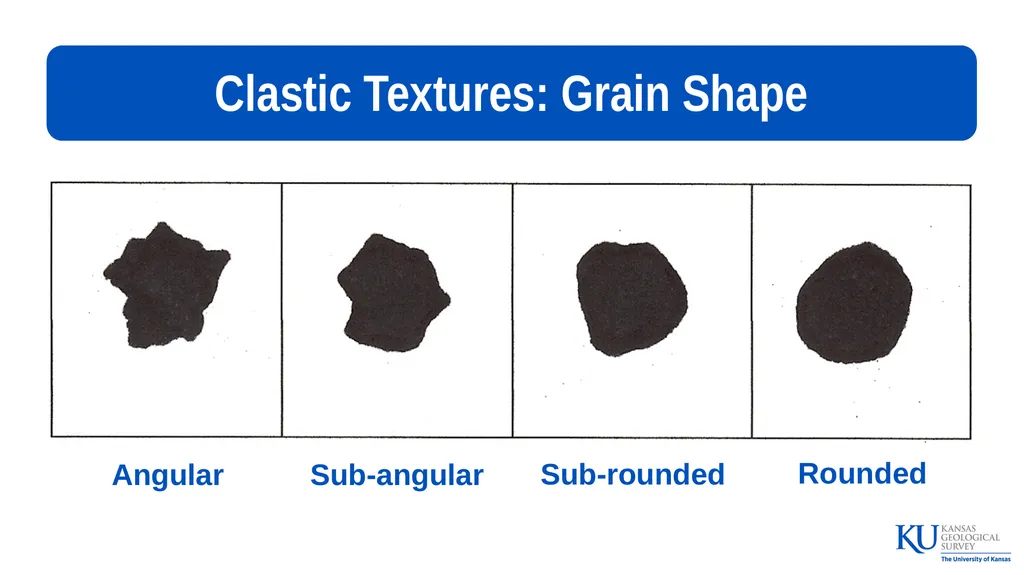
Sedimentary Rocks An Introduction to Key Vocabulary Clast a constituent fragment of a clastic rock Crystal a naturally occurring solid made up of atoms arranged in a regular repeating pattern Grain a mineral or rock particle, less than a
"Sedimentary Rocks An Introduction to Key" is the property of its rightful owner. Permission is granted to
download and print the materials on this website for personal, non-commercial use only, and to display it
on your personal computer provided you do not modify the materials and that you retain all copyright
notices contained in the materials. By downloading content from our website, you accept the terms of this
agreement.
Presentation Transcript
01
Sedimentary Rocks An Introduction to<br>
02
Key Vocabulary Clast
a constituent fragment of a clastic rock
Crystal
a naturally occurring solid made up of atoms arranged in a regular repeating pattern
Grain
a mineral or rock particle, less than a few millimeters in diameter, and generally lacking well-developed crystal faces<br>
03
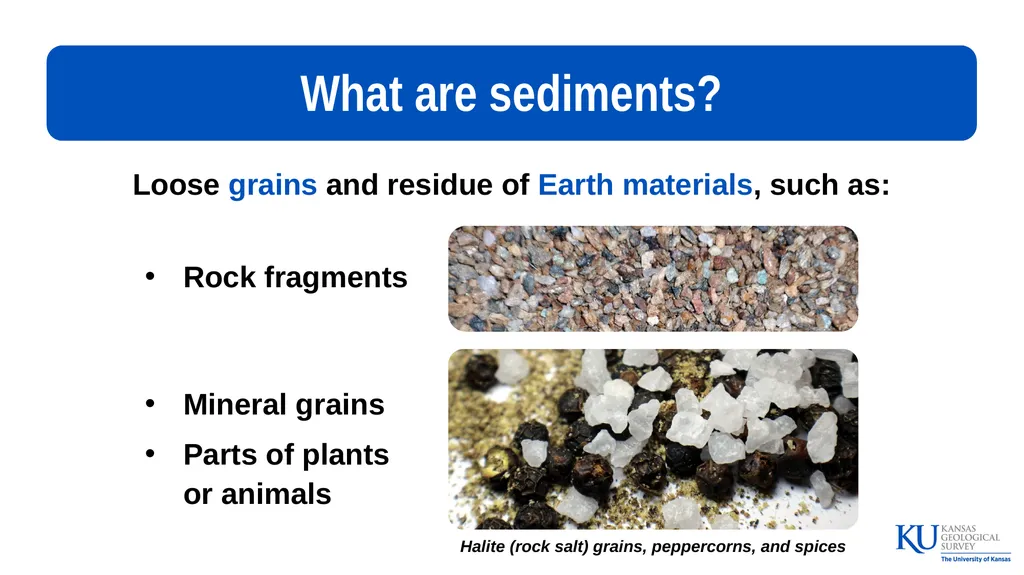
What are sediments? Loose grains and residue of Earth materials, such as: Rock fragments
Mineral grains
Parts of plants or animals Halite (rock salt) grains, peppercorns, and spices<br>
04
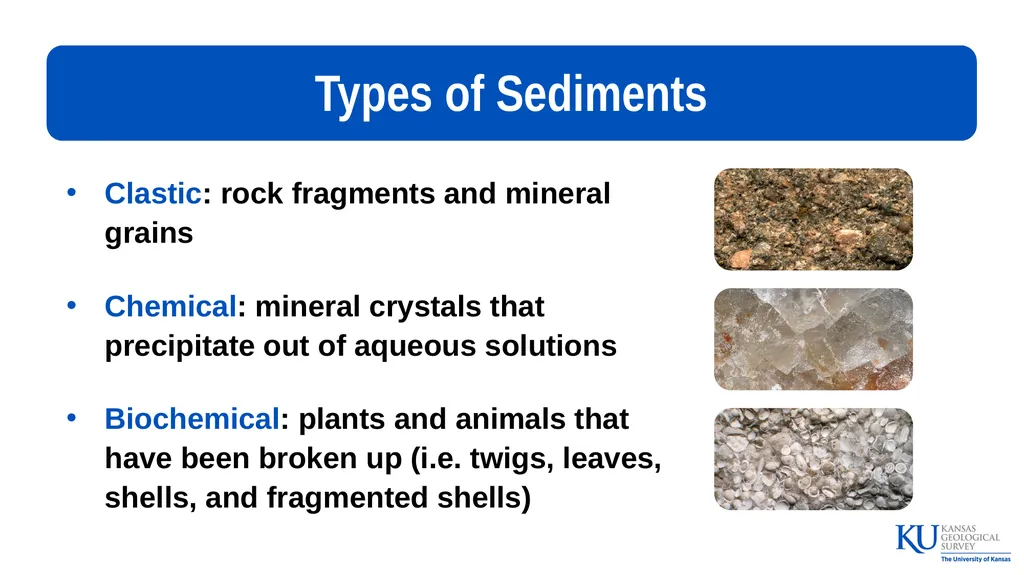
Types of Sediments Clastic: rock fragments and mineral grains
Chemical: mineral crystals that precipitate out of aqueous solutions
Biochemical: plants and animals that have been broken up (i.e. twigs, leaves, shells, and fragmented shells)<br>
05
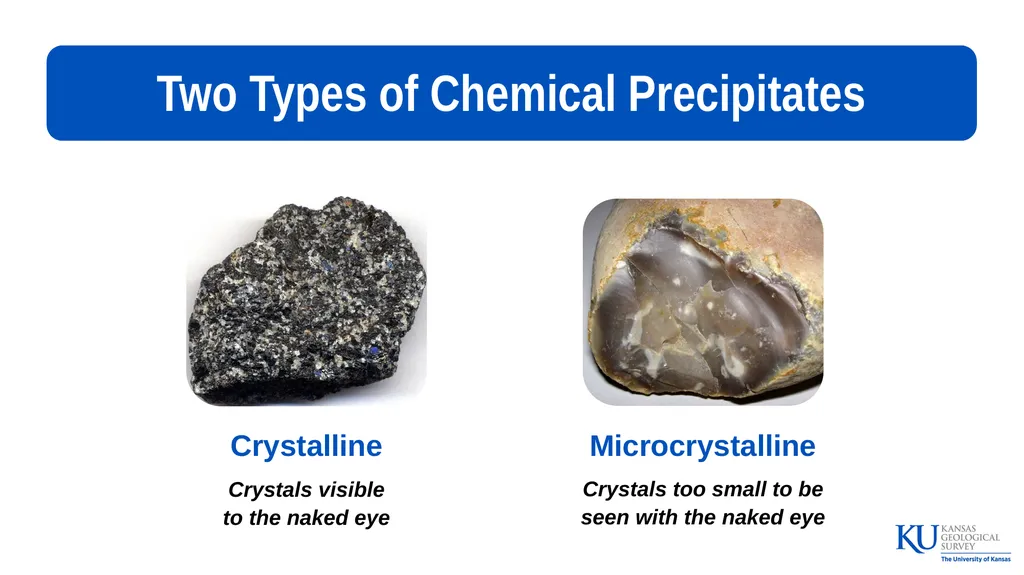
Two Types of Chemical Precipitates Crystalline
Crystals visible to the naked eye Microcrystalline
Crystals too small to be seen with the naked eye<br>
06
Sediments are produced by weathering! Physical/mechanical weathering
Chemical weathering
Biochemical weathering<br>
07
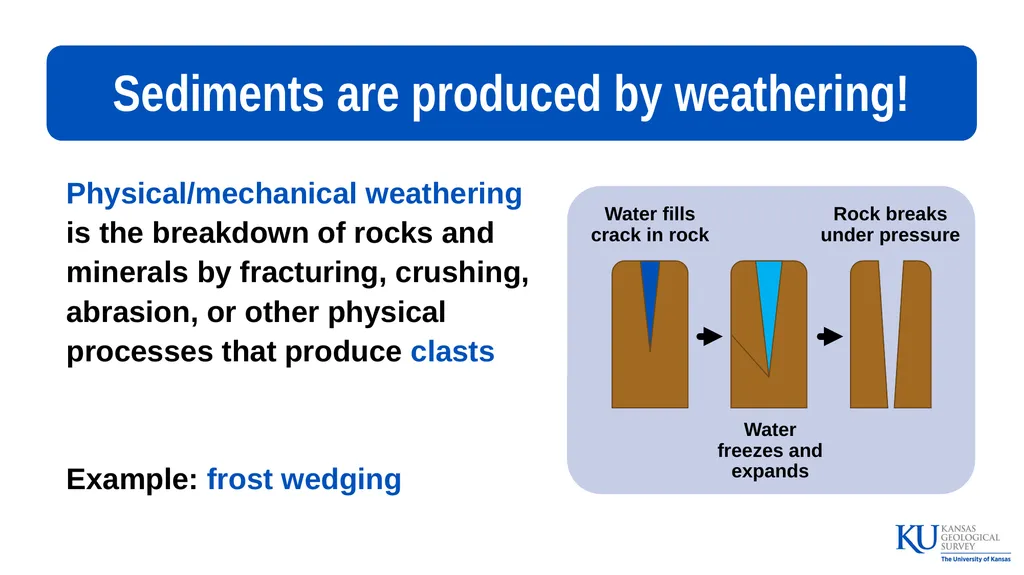
Sediments are produced by weathering! Physical/mechanical weathering is the breakdown of rocks and minerals by fracturing, crushing, abrasion, or other physical processes that produce clasts
Example: frost wedging Water fills crack in rock Water freezes and expands Rock breaks under pressure<br>
08
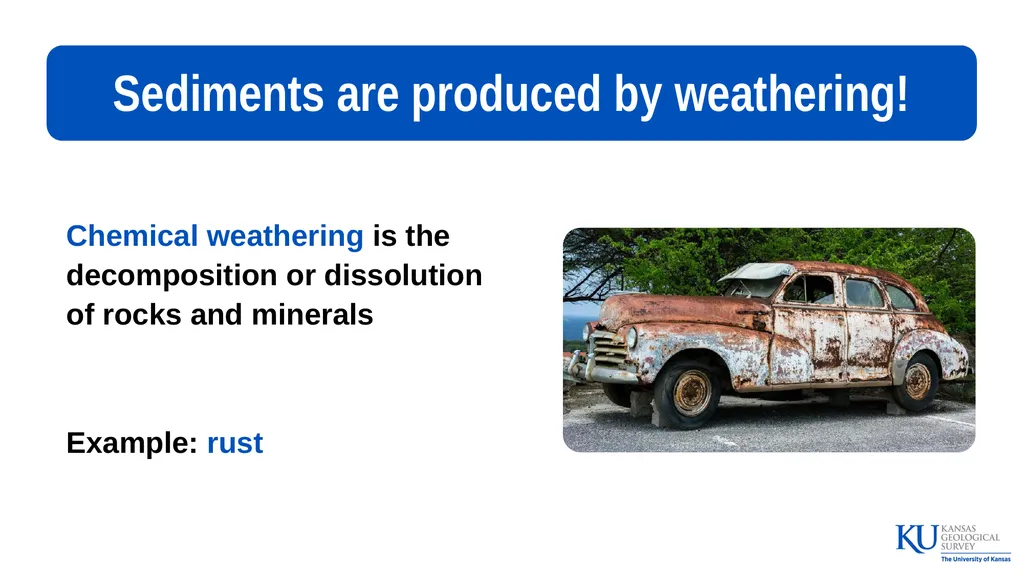
Sediments are produced by weathering! Chemical weathering is the decomposition or dissolution of rocks and minerals
Example: rust<br>
09
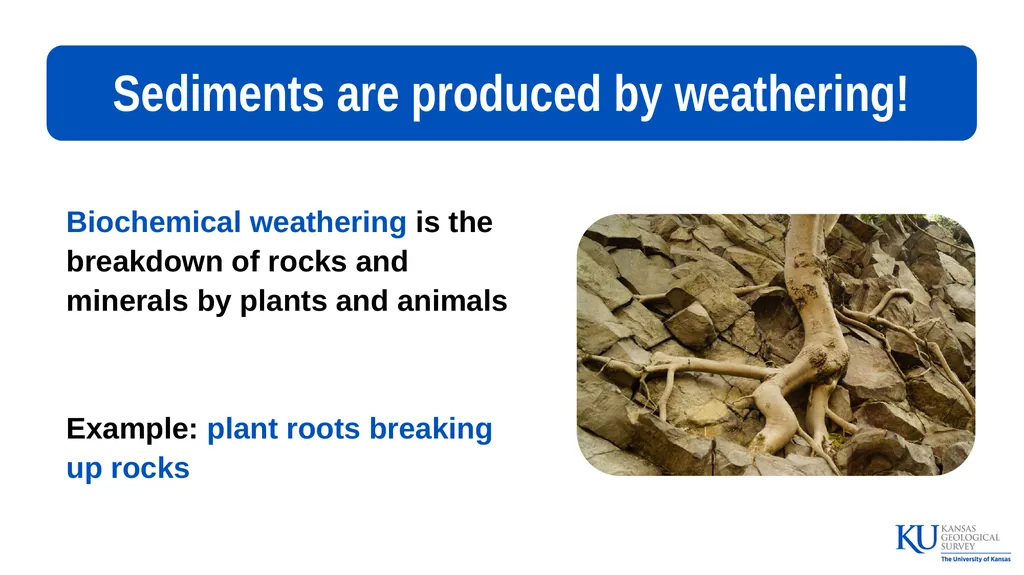
Sediments are produced by weathering! Biochemical weathering is the breakdown of rocks and minerals by plants and animals
Example: plant roots breaking up rocks<br>
10
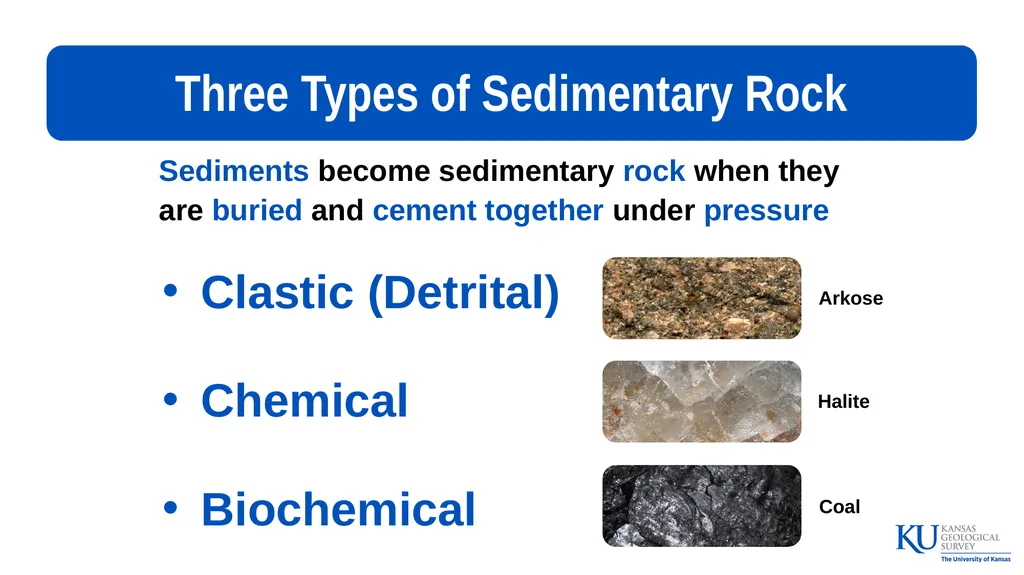
Three Types of Sedimentary Rock Clastic (Detrital)
Chemical
Biochemical Arkose Halite Coal Sediments become sedimentary rock when they are buried and cement together under pressure<br>
11
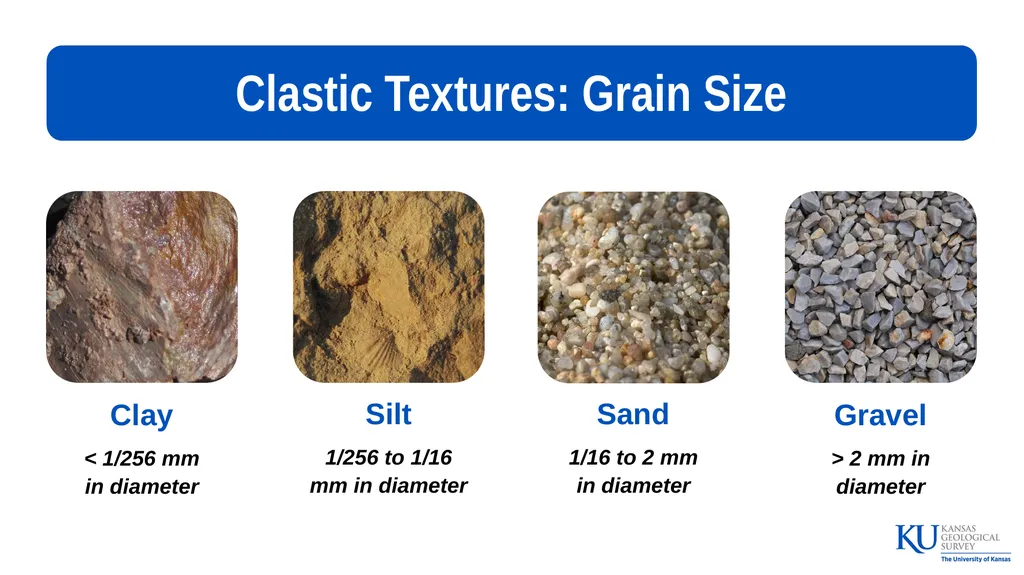
Clastic Textures: Grain Size Gravel
> 2 mm in diameter Sand
1/16 to 2 mm in diameter Silt
1/256 to 1/16 mm in diameter Clay
< 1/256 mm in diameter<br>
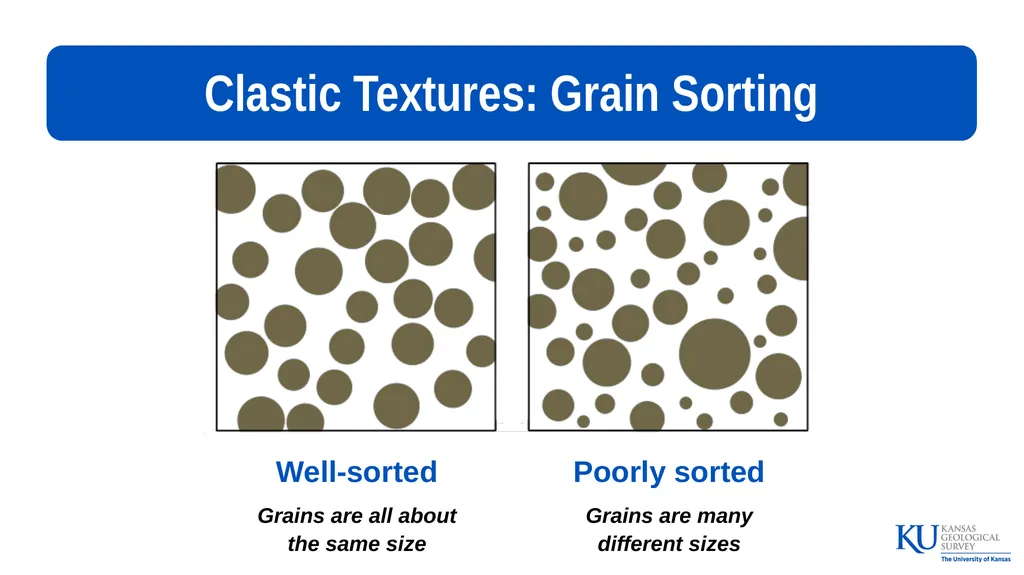
Clastic Textures: Grain Sorting Well-sorted
Grains are all about the same size Poorly sorted
Grains are many different sizes<br>
14
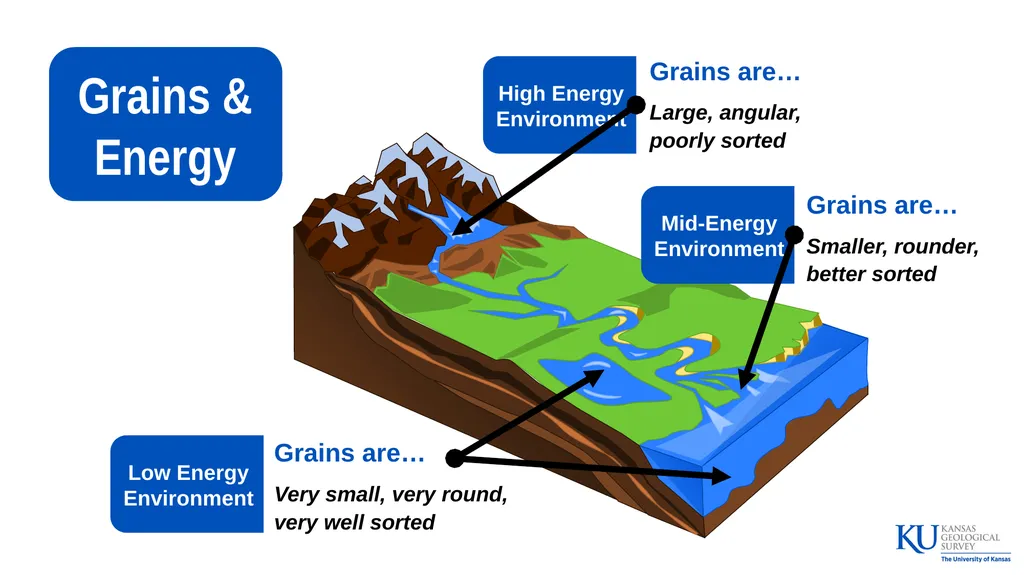
Grains are…
Large, angular, poorly sorted Grains are…
Smaller, rounder, better sorted Grains are…
Very small, very round, very well sorted High Energy Environment Low Energy Environment Mid-Energy Environment Grains & Energy<br>
15
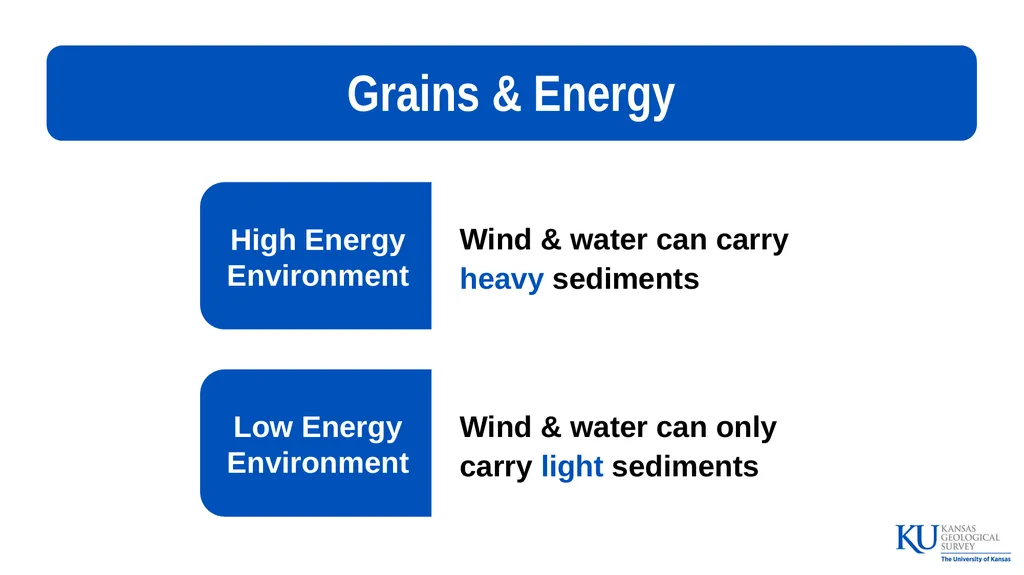
Grains & Energy<br>
16
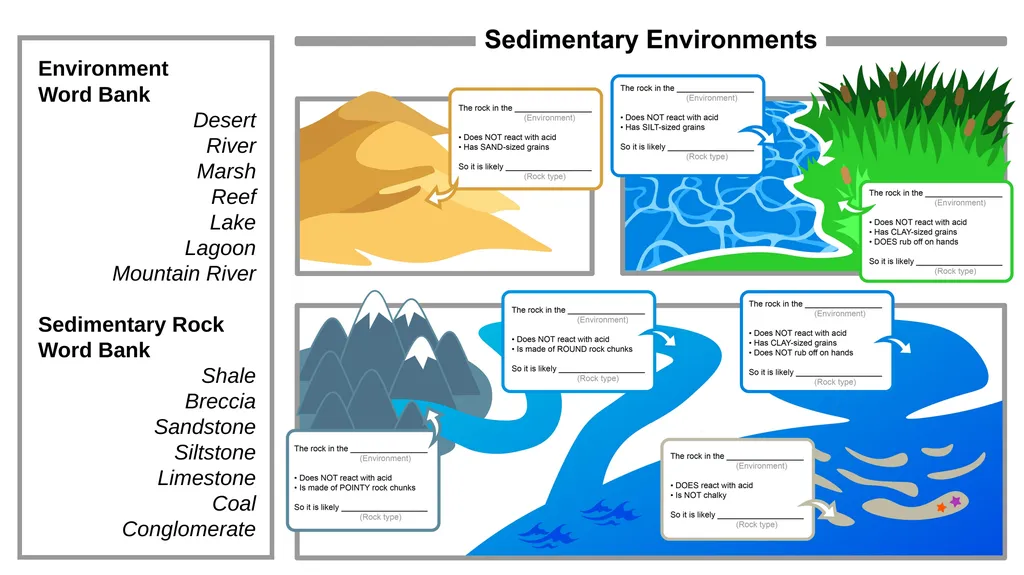
Environment
Word Bank
Desert
River
Marsh
Reef
Lake
Lagoon
Mountain River
Sedimentary Rock
Word Bank
Shale
Breccia
Sandstone
Siltstone
Limestone
Coal
Conglomerate<br>
17
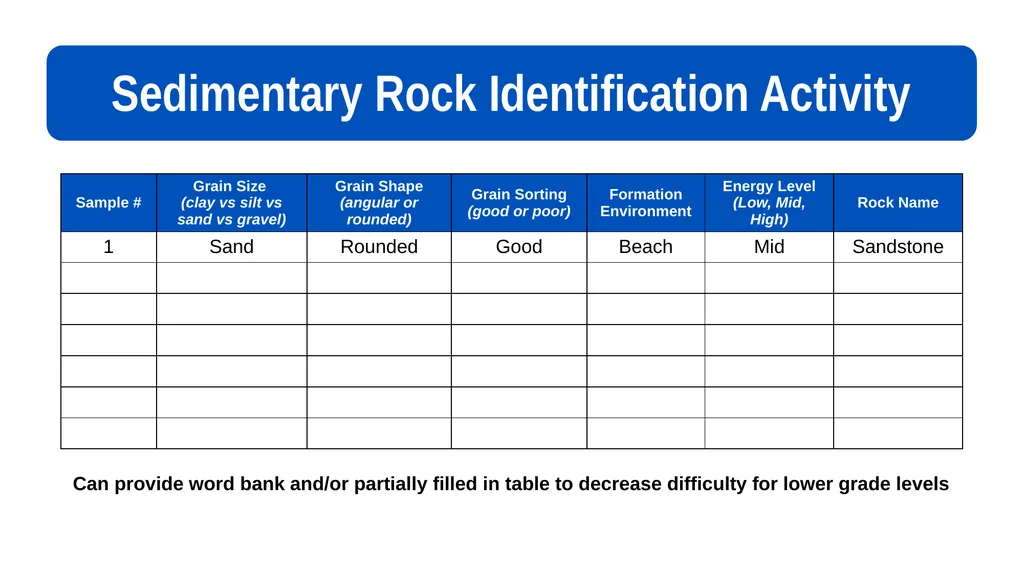
Sedimentary Rock Identification Activity Can provide word bank and/or partially filled in table to decrease difficulty for lower grade levels<br>