
Seed Dormancy Seed is fertilized ovule which
NS
Published · 31 slides · 0 views

1 / 1

Description
Seed Dormancy Seed is fertilized ovule which develops in the ovary of the flower. It possess the rudimentary plant or embryo, consisting of an embryonic axis bearing one or two cotyledons. At one end of axis is plumule which forms shoot,
Related Topics
Download this presentation From Below
"Seed Dormancy Seed is fertilized ovule which" is the property of its rightful owner. Permission is granted to download and print the materials on this website for personal, non-commercial use only, and to display it on your personal computer provided you do not modify the materials and that you retain all copyright notices contained in the materials. By downloading content from our website, you accept the terms of this agreement.
Share
Embed code
Presentation Transcript
01
Seed Dormancy Seed is fertilized ovule which develops in the ovary of the flower.
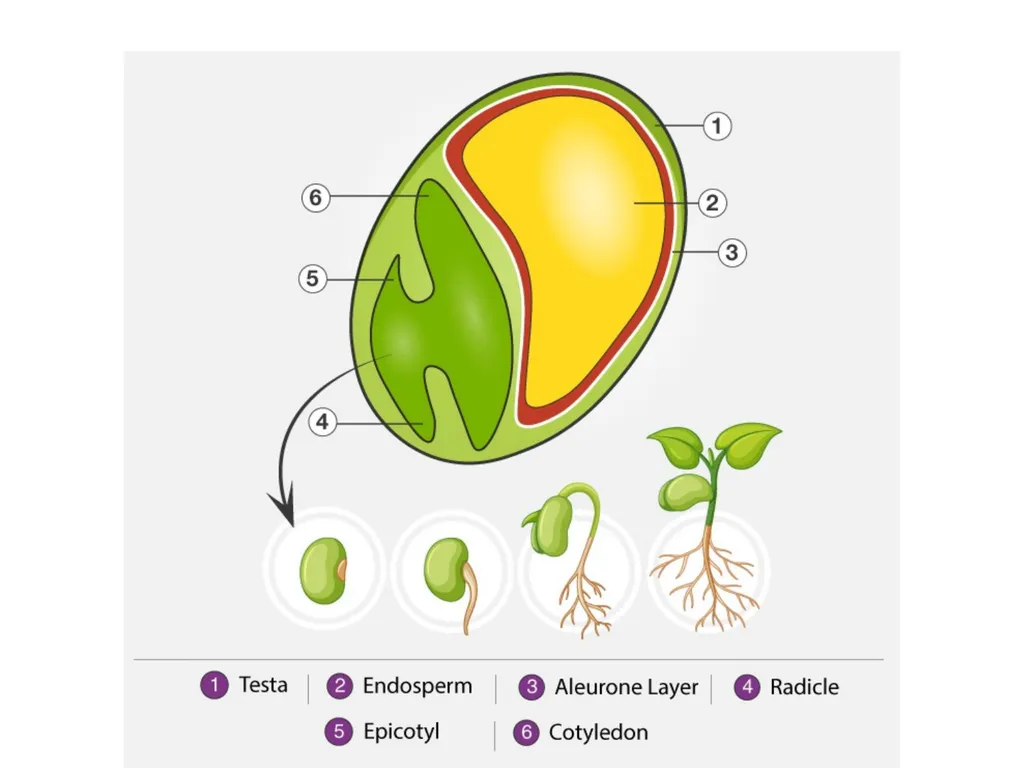
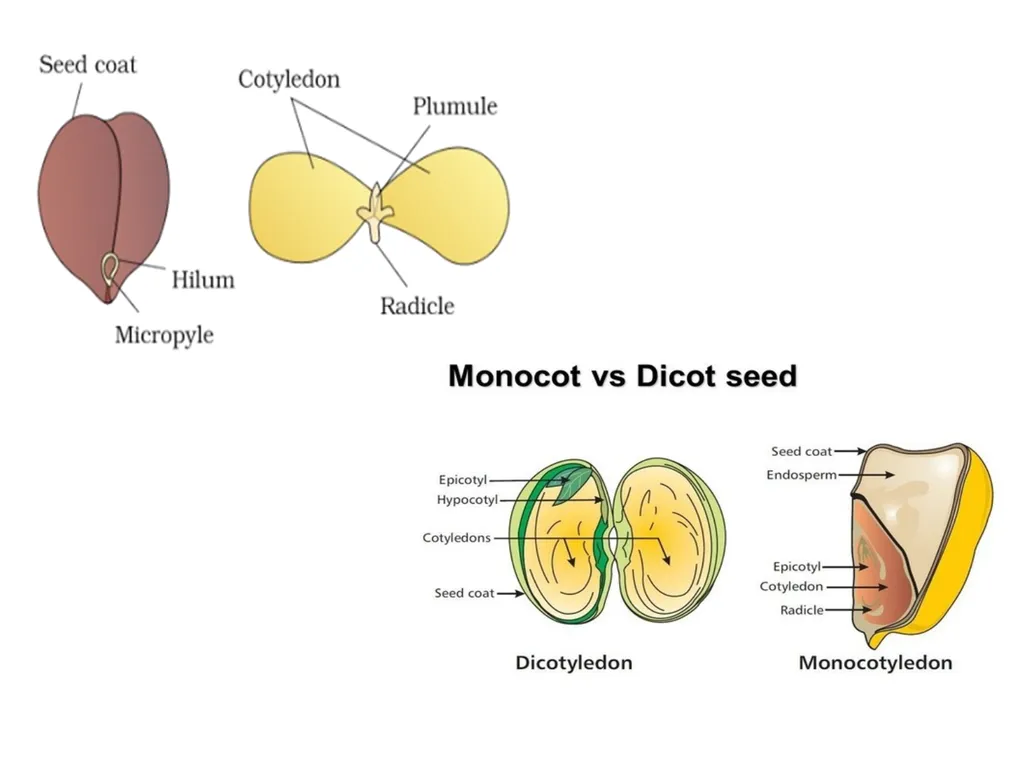
It possess the rudimentary plant or embryo, consisting of an embryonic axis bearing one or two cotyledons.
At one end of axis is plumule which forms shoot, and another end is radicle which gives rise to root.
Seeds of monocot have single cotyledons, termed as Scutellum and those of dicot have two cotyledons.
Embryo is surrounded by nutritive tissue, called endosperm, that nourish embryo during early seed formation and maturation.
On the basis of presence of endosperm in the seed at the maturity there are two types; endospermic seeds (mainly monocot) and non-endospermic seeds (chiefly dicot).<br>
It possess the rudimentary plant or embryo, consisting of an embryonic axis bearing one or two cotyledons.
At one end of axis is plumule which forms shoot, and another end is radicle which gives rise to root.
Seeds of monocot have single cotyledons, termed as Scutellum and those of dicot have two cotyledons.
Embryo is surrounded by nutritive tissue, called endosperm, that nourish embryo during early seed formation and maturation.
On the basis of presence of endosperm in the seed at the maturity there are two types; endospermic seeds (mainly monocot) and non-endospermic seeds (chiefly dicot).<br>
02
Plant Physiology Presented By
Garima Yadav
Research Scholar
Mohanlal Sukhadia University, Udaipur Department Of Botany<br>
Garima Yadav
Research Scholar
Mohanlal Sukhadia University, Udaipur Department Of Botany<br>
03
Seed or a small embryonic axis (along with some storage tissues) enclosed by a series of membranes, collectively called the seed coat or testa ( develops from integuments of the ovule).
The seed coat serves a protective function much as bud scales do. Its presence often suppresses germination by restricting the uptake of water and exchange of oxygen, it mechanically limits the expansion of the embryo and, in some cases, contains inhibitors that prevent growth of the embryo.
Seed development can be divided into three phases of approximately equal duration:
1. During the first phase, which is characterized by cell divisions and tissue differentiation, the zygote undergoes embryogenesis and the endosperm tissue proliferates.
2. During the second phase, cell divisions cease and storage compounds accumulate.
3. In the final phase, the embryo becomes tolerant to desiccation, and the seed dehydrates, losing up to 90% of its water. As a consequence of dehydration, metabolism comes to a halt and the seed enters a quiescent (“resting”) state. In contrast to dormant seeds, quiescent seeds will germinate upon rehydration.
The latter two phases result in the production of viable seeds with adequate resources to support germination andthe capacity to wait weeks to years before resuming growth.<br>
The seed coat serves a protective function much as bud scales do. Its presence often suppresses germination by restricting the uptake of water and exchange of oxygen, it mechanically limits the expansion of the embryo and, in some cases, contains inhibitors that prevent growth of the embryo.
Seed development can be divided into three phases of approximately equal duration:
1. During the first phase, which is characterized by cell divisions and tissue differentiation, the zygote undergoes embryogenesis and the endosperm tissue proliferates.
2. During the second phase, cell divisions cease and storage compounds accumulate.
3. In the final phase, the embryo becomes tolerant to desiccation, and the seed dehydrates, losing up to 90% of its water. As a consequence of dehydration, metabolism comes to a halt and the seed enters a quiescent (“resting”) state. In contrast to dormant seeds, quiescent seeds will germinate upon rehydration.
The latter two phases result in the production of viable seeds with adequate resources to support germination andthe capacity to wait weeks to years before resuming growth.<br>
04
During seed maturation, the embryo enters a quiescent phase in response to desiccation. Seed germination can be defined as the resumption of growth of the embryo of the mature seed; it depends on the same environmental conditions as vegetative growth does.
Water and oxygen must be available, the temperature must be suitable, and there must be no inhibitory substances present. In many cases a viable (living) seed will not germinate even if all the necessary environmental conditions for growth are satisfied. This phenomenon is termed seed dormancy.
Seed dormancy introduces a temporal delay in the germination process that provides additional time for seed dispersal over greater geographic distances. It also maximizes seedling survival by preventing germination under unfavorable conditions. Two types of seed dormancy have been recognized: coat-imposed dormancy and embryo dormancy.<br>
Water and oxygen must be available, the temperature must be suitable, and there must be no inhibitory substances present. In many cases a viable (living) seed will not germinate even if all the necessary environmental conditions for growth are satisfied. This phenomenon is termed seed dormancy.
Seed dormancy introduces a temporal delay in the germination process that provides additional time for seed dispersal over greater geographic distances. It also maximizes seedling survival by preventing germination under unfavorable conditions. Two types of seed dormancy have been recognized: coat-imposed dormancy and embryo dormancy.<br>
05
Coat-imposed dormancy. Dormancy imposed on the embryo by the seed coat and other enclosing tissues, such as endosperm, pericarp, or extrafloral organs, is known as coat-imposed dormancy. The embryos of such seeds will germinate readily in the presence of water and oxygen once the seed coat and other surrounding tissues have been either removed or damaged. There are five basic mechanisms of coat-imposed dormancy (Bewley and Black 1994):
1. Prevention of water uptake. As with buds, dormancy in seeds refers to the situation wherein the embryo fails to grow because of physiological or environmental limitations. These limitations commonly include the inability of water or oxygen to penetrate the seed coat. Seeds of some plants, particularly in the family Leguminoseae, have specialized structures that control seed moisture content.<br>
1. Prevention of water uptake. As with buds, dormancy in seeds refers to the situation wherein the embryo fails to grow because of physiological or environmental limitations. These limitations commonly include the inability of water or oxygen to penetrate the seed coat. Seeds of some plants, particularly in the family Leguminoseae, have specialized structures that control seed moisture content.<br>
06
A structure in seeds of lupine (Lupinus arboreus) that functions as a hygroscopically operated check-valve and that limits imbibition of water by the seed. Because water cannot pass through the unscarified seed coat, the only possible route of entry is through a small pore, called the hilum. When the water content of the seed is higher than ambient, the hilum is open to permit the exit of water and allow the seed to dry. But when the moisture content outside the seed is higher than inside, cells surrounding the hilum swell, thus closing off the pore and preventing the uptake of water. In addition, as the seed dries out the permeability of the seed coat to water also decreases and the dormancy of the seed increases.<br>
07
2. Mechanical constraint. The first visible sign of germination is typically the radicle breaking through the seed coat. In some cases, however, the seed coat may be too rigid for the radicle to penetrate. For the seeds to germinate, the endosperm cell walls must be weakened by the production of cell wall–degrading enzymes.
These limitations can be removed and the germination of many seeds accelerated by mechanically disrupting or removing the seed coat, a process called scarification. In the laboratory, scarification may be accomplished with files or sandpaper.
In nature, abrasion by sand, microbial action, or passage of the seed through animal gut will accomplish the same end.<br>
These limitations can be removed and the germination of many seeds accelerated by mechanically disrupting or removing the seed coat, a process called scarification. In the laboratory, scarification may be accomplished with files or sandpaper.
In nature, abrasion by sand, microbial action, or passage of the seed through animal gut will accomplish the same end.<br>
08
Seed coats can be very tough. Uniformity and rate of germination of morning glory (Pharbitis nil), cotton, and some tropical legume seeds, for example, can be improved by soaking the dry seed in concentrated sulfuric acid for up to an hour. Scarification by passage through animal gut no doubt occurs as a result of the acidic conditions in the gut.<br>
09
3. Interference with gas exchange. Lowered permeability of seed coats to oxygen suggests that the seed coat inhibits germination by limiting the oxygen supply to the embryo.
Some seeds have pores that are blocked with a plug, called the strophiolar plug, which must be mechanically dislodged before water and oxygen can enter. There is a considerable body of evidence to suggest that seed coats also interfere with gas exchange, oxygen uptake in particular. As noted above, removal of the seed coat often leads to a significant increase in respiratory consumption of oxygen. Measurements of the oxygen permeability of seed coats have been made and there is general agreement that permeability is very low in those seeds tested. However, it is not always clear that limited oxygen permeability is the primary cause of dormancy.<br>
Some seeds have pores that are blocked with a plug, called the strophiolar plug, which must be mechanically dislodged before water and oxygen can enter. There is a considerable body of evidence to suggest that seed coats also interfere with gas exchange, oxygen uptake in particular. As noted above, removal of the seed coat often leads to a significant increase in respiratory consumption of oxygen. Measurements of the oxygen permeability of seed coats have been made and there is general agreement that permeability is very low in those seeds tested. However, it is not always clear that limited oxygen permeability is the primary cause of dormancy.<br>
10
The complexity of the situation and problems of interpretation are well illustrated by studies of the genus Xanthium, or cocklebur. A cocklebur contains two seeds: an upper, dormant seed and a lower, nondormant seed. Dormancy of the upper seed can be overcome either by removing the seed coat or by subjecting the intact seed to high oxygen tension. The inference is that seed coat permeability in the dormant seed limits the supply of oxygen to the embryo and thus prevents germination.
However, several other observations have cast doubt on this conclusion. There are, for example, no measurable differences between the dormant and nondormant seed with respect to the permeability of the seed coat to oxygen. Moreover, the rate of oxygen diffusion through the seed coats is more than sufficient to support measured rates of oxygen consumption by the embryos inside. Clearly, dormancy of the upper seed in Xanthium cannot be due to limited permeability of the seed coat to oxygen.
Why then, do the upper, dormant seeds require a higher oxygen level to elicit germination? It appears that the seed coat is a barrier, not to the uptake of oxygen but to the removal of an inhibitor from the embryo.
Aqueous extracts of Xanthium seeds have revealed the presence of two unidentified inhibitors, based on tests of the extracts in a wheat coleoptile elongation assay. The same two inhibitors are found in diffusate collected from isolated embryos placed on a moist medium, but not in diffusate from seeds surrounded by an intact seed coat.
Thus germination in the dormant seed appears to be prevented by the presence of these inhibitors and the seed coat serves as a barrier that prevents those inhibitors from being leached out. The oxygen requirement can be explained by the observation that high oxygen tension reduces the quantity of an extractable inhibitor, presumably by some oxidative degradation.<br>
However, several other observations have cast doubt on this conclusion. There are, for example, no measurable differences between the dormant and nondormant seed with respect to the permeability of the seed coat to oxygen. Moreover, the rate of oxygen diffusion through the seed coats is more than sufficient to support measured rates of oxygen consumption by the embryos inside. Clearly, dormancy of the upper seed in Xanthium cannot be due to limited permeability of the seed coat to oxygen.
Why then, do the upper, dormant seeds require a higher oxygen level to elicit germination? It appears that the seed coat is a barrier, not to the uptake of oxygen but to the removal of an inhibitor from the embryo.
Aqueous extracts of Xanthium seeds have revealed the presence of two unidentified inhibitors, based on tests of the extracts in a wheat coleoptile elongation assay. The same two inhibitors are found in diffusate collected from isolated embryos placed on a moist medium, but not in diffusate from seeds surrounded by an intact seed coat.
Thus germination in the dormant seed appears to be prevented by the presence of these inhibitors and the seed coat serves as a barrier that prevents those inhibitors from being leached out. The oxygen requirement can be explained by the observation that high oxygen tension reduces the quantity of an extractable inhibitor, presumably by some oxidative degradation.<br>
11
4. Retention of inhibitors. The seed coat may prevent the escape of inhibitors from the seed. . Even the role of inhibitors in seed dormancy is not clear. Along with hormones such as auxins and gibberellins, a large number of inhibitors have been identified in seeds, fruits, and other dispersal units. These include hormones (ABA), unsaturated lactones (coumarin), phenolic compounds (ferulic acid), various amino acids, and cyanogenic compounds (i.e., compounds that release cyanide) characteristic of apple and other seeds in the family Rosaceae.
The simple presence of an inhibitor does not, however, prove its role in dormancy. The inhibitors could be localized in tissues not directly involved in growth of the embryo or otherwise sequestered so as to preclude any role in preventing germination. Evidence in support of a role for inhibitors is generally limited to leaching experiments such as that described above for Xanthium. In some cases, dormancy can then be restored by exposing the leached seed to the putative inhibitor.
In order to clearly establish whether an inhibitor has an active role in regulating germination, it is necessary to establish whether inhibitor levels in the seed correlate with the onset and termination of dormancy. In spite of the voluminous literature relating inhibitors to dormancy, there is very little critical support for a direct role. For the present, evidence for the imposition and maintenance of dormancy by inhibitors remains largely circumstantial.<br>
The simple presence of an inhibitor does not, however, prove its role in dormancy. The inhibitors could be localized in tissues not directly involved in growth of the embryo or otherwise sequestered so as to preclude any role in preventing germination. Evidence in support of a role for inhibitors is generally limited to leaching experiments such as that described above for Xanthium. In some cases, dormancy can then be restored by exposing the leached seed to the putative inhibitor.
In order to clearly establish whether an inhibitor has an active role in regulating germination, it is necessary to establish whether inhibitor levels in the seed correlate with the onset and termination of dormancy. In spite of the voluminous literature relating inhibitors to dormancy, there is very little critical support for a direct role. For the present, evidence for the imposition and maintenance of dormancy by inhibitors remains largely circumstantial.<br>
12
5. Inhibitor production. Seed coats and pericarps may contain relatively high concentrations of growth inhibitors, including ABA, that can suppress germination of the embryo<br>
13
Embryo dormancy. The second type of seed dormancy is embryo dormancy, a dormancy that is intrinsic to the embryo and is not due to any influence of the seed coat or other surrounding tissues. In some cases, embryo dormancy can be relieved by amputation of the cotyledons. Species in which the cotyledons exert an inhibitory effect include European hazel (Corylus avellana) and European ash (Fraxinus excelsior). Afascinating demonstration of the cotyledon’s ability to inhibit growth is found in species (e.g., peach) in which the isolated dormant embryos germinate but grow extremely slowly to form a dwarf plant. If the cotyledons are removed at an early stage of development, however, the plant abruptly shifts to normal growth.
Embryo dormancy is thought to be due to the presence of inhibitors, especially ABA, as well as the absence of growth promoters, such as GA (gibberellic acid). The loss of embryo dormancy is often associated with a sharp drop in the ratio of ABA to GA.<br>
Embryo dormancy is thought to be due to the presence of inhibitors, especially ABA, as well as the absence of growth promoters, such as GA (gibberellic acid). The loss of embryo dormancy is often associated with a sharp drop in the ratio of ABA to GA.<br>
14
Primary versus secondary seed dormancy.
Different types of seed dormancy also can be distinguished on the basis of the timing of dormancy onset rather than the cause of dormancy:
• Seeds that are released from the plant in a dormant state are said to exhibit primary dormancy.
• Seeds that are released from the plant in a nondormant state, but that become dormant if the conditions for germination are unfavorable, exhibit secondary dormancy. For example, seeds of Avena sativa (oat) can become dormant in the presence of temperatures higher than the maximum for germination, whereas seeds of Phacelia dubia (small-flower scorpionweed) become dormant at temperatures below the minimum for germination. The mechanisms of secondary dormancy are poorly understood.<br>
Different types of seed dormancy also can be distinguished on the basis of the timing of dormancy onset rather than the cause of dormancy:
• Seeds that are released from the plant in a dormant state are said to exhibit primary dormancy.
• Seeds that are released from the plant in a nondormant state, but that become dormant if the conditions for germination are unfavorable, exhibit secondary dormancy. For example, seeds of Avena sativa (oat) can become dormant in the presence of temperatures higher than the maximum for germination, whereas seeds of Phacelia dubia (small-flower scorpionweed) become dormant at temperatures below the minimum for germination. The mechanisms of secondary dormancy are poorly understood.<br>
15
Environmental Factors Control the Release
from Seed Dormancy Various external factors release the seed from embryo dormancy, and dormant seeds typically respond to more than one of three factors:
1. Afterripening. Many seeds lose their dormancy when their moisture content is reduced to a certain level by drying—a phenomenon known as afterripening.
2. Chilling. Low temperature, or chilling, can release seeds from dormancy. Many seeds require a period of cold (0–10°C) while in a fully hydrated (imbibed) state in order to germinate.
3. Light. Many seeds have a light requirement for germination, which may involve only a brief exposure, as in the case of lettuce, an intermittent treatment (e.g., succulents of the genus Kalanchoe), or even a specific photoperiod involving short or long days.<br>
1. Afterripening. Many seeds lose their dormancy when their moisture content is reduced to a certain level by drying—a phenomenon known as afterripening.
2. Chilling. Low temperature, or chilling, can release seeds from dormancy. Many seeds require a period of cold (0–10°C) while in a fully hydrated (imbibed) state in order to germinate.
3. Light. Many seeds have a light requirement for germination, which may involve only a brief exposure, as in the case of lettuce, an intermittent treatment (e.g., succulents of the genus Kalanchoe), or even a specific photoperiod involving short or long days.<br>
16
Temperature and Seed dormancy Temperature has a significant impact on termination of dormancy in many seeds. In fully imbibed seeds, both alternating and low (chilling) temperatures are known to terminate dormancy. Many seeds, even though fully hydrated, will not germinate when maintained under constant temperature. They require instead a diurnal cycle of fluctuating temperature. The required temperature differential between the high and low temperature is often not great, ranging from a few degrees to perhaps 5◦ C or 10◦ C, depending on the species.
Germination of broad-leaved dock (Rumex obtusifolia) seeds, for example, exceeds 90 percent when the temperature differential is about 10◦ C and when the high temperature is given for 16 hours each day. The reaction to alternating temperature is complex and poorly understood. In Rumex, alternating treatments are effective only when the high temperature is greater than 15◦ C. Also, when the high temperature is given for only 8 hours each day, a differential of only 5◦ C is required to induce 90 percent germination.<br>
Germination of broad-leaved dock (Rumex obtusifolia) seeds, for example, exceeds 90 percent when the temperature differential is about 10◦ C and when the high temperature is given for 16 hours each day. The reaction to alternating temperature is complex and poorly understood. In Rumex, alternating treatments are effective only when the high temperature is greater than 15◦ C. Also, when the high temperature is given for only 8 hours each day, a differential of only 5◦ C is required to induce 90 percent germination.<br>
17
Although in some cases the effect of alternating temperature appears to be localized in the embryo itself, there are many well-documented cases where the effect of alternating temperature is mechanical. It is, in effect, a form of scarification, releasing the seed from some kind of seed coat–imposed dormancy. It has long been known that freshly shed seeds of many herbaceous and woody species have dormant embryos that can be induced to growth only by a prolonged low-temperature treatment. These include maples (Acer sps.), hazel (Corylus), and many genera in the family Rosaceae (pear, Pyrus; apple, Malus; hawthorne, Crateagus). Normally, following the required period of low temperature, the seeds will not germinate until temperatures are more favorable for embryo emergence and seedling development. In most cases this requirement ensures that the seed shed in late summer or fall will not germinate until spring. The exposure to low temperature that satisfies this germination requirement is known as either pre-chilling, or stratification.<br>
18
The latter term has its origin in the horticultural practice of layering seeds in moist sand or peat moss and exposing them to low temperature for several weeks or months to induce germination. It is important that the pre-chilling requirement for release of seed dormancy not be confused with vernalization, which is a cold treatment to an already germinated seedling, as discussed earlier in the previous chapter. As with breaking of bud dormancy, temperatures near freezing but below 10◦ C are most effective for terminating seed dormancy. The optimum for most species is near 5◦ C. In a population of seeds, the effectiveness is also a function of the length of the cold treatment. It is presumed that seeds undergo some metabolic changes during the period of low temperature, generally referred to as after-ripening, but the exact nature of these changes is unclear. There is some evidence for redistribution of carbon and nitrogen from the endosperm to the embryo, a decline in the inhibitor content, and a rise in gibberellin and cytokinin content. Gibberellin treatments will substitute at least partially for the cold requirement in many seeds, just as they do in other cold-requiring systems.<br>
19
Light and Seed dormancy Light quality also plays a role in regulating the germination of some seeds.
In general, large-seeded species, with ample food reserves to sustain prolonged seedling growth in darkness (e.g., underground), do not require light for germination.
However, a light requirement is often observed in the small seeds of herbaceous and grassland species, many of which remain dormant, even while hydrated, if they are buried below the depth to which light penetrates. Even when such seeds are on or near the soil surface, their level of shading by the vegetation canopy (i.e., the R:FR ratio they receive) is likely to affect their germination.
For example, it is well documented that far-red enrichment imparted by a leaf canopy inhibits germination in a range of small-seeded species.<br>
In general, large-seeded species, with ample food reserves to sustain prolonged seedling growth in darkness (e.g., underground), do not require light for germination.
However, a light requirement is often observed in the small seeds of herbaceous and grassland species, many of which remain dormant, even while hydrated, if they are buried below the depth to which light penetrates. Even when such seeds are on or near the soil surface, their level of shading by the vegetation canopy (i.e., the R:FR ratio they receive) is likely to affect their germination.
For example, it is well documented that far-red enrichment imparted by a leaf canopy inhibits germination in a range of small-seeded species.<br>
20
For the small seeds of the tropical species trumpet tree (Cecropia obtusifolia) and Veracruz pepper (Piper auritum) planted on the floor of a deeply shaded forest, this inhibition can be reversed if a light filter is placed immediately above the seeds that permits the red component of the canopy-shaded light to pass through while blocking the far-red component. Although the canopy transmits very little red light, the level is enough to stimulate the seeds to germinate, probably because most of the inhibitory far-red light is excluded by the filter and the R:FR ratio is very high. These seeds would also be more likely to germinate in spaces receiving sunlight through gaps in the canopy than in densely shaded spaces. The sunlight would help ensure that the seedlings became photosynthetically self sustaining before their seed food reserves were exhausted.<br>
21
Recent studies on light-dependent lettuce seeds have shown that red light–induced germination is the result of an increase in the level of the biologically active form of the hormone gibberellin.
Thus, phytochrome may promote seed germination through its effects on gibberellin biosynthesis.
The germination of many seeds is influenced by light as evident in the flush of germination in areas of cultivation or natural disturbance. Some seeds, known as positively photoblastic seeds, are stimulated to germinate by light.
The germination of others, known as negatively photoblastic seeds, is inhibited by light.
Some seeds, mostly agriculturally important species that have been selected for high germinability, are not affected by light.
Many seeds, such as lettuce, may require only brief exposure to light, measured in seconds or minutes, while others may require as much as several hours or even days of constant or intermittent light (e.g., Lythrum salicaria, Epilobium cephalostigma). In all cases, the responsible pigment appears to be phytochrome<br>
Thus, phytochrome may promote seed germination through its effects on gibberellin biosynthesis.
The germination of many seeds is influenced by light as evident in the flush of germination in areas of cultivation or natural disturbance. Some seeds, known as positively photoblastic seeds, are stimulated to germinate by light.
The germination of others, known as negatively photoblastic seeds, is inhibited by light.
Some seeds, mostly agriculturally important species that have been selected for high germinability, are not affected by light.
Many seeds, such as lettuce, may require only brief exposure to light, measured in seconds or minutes, while others may require as much as several hours or even days of constant or intermittent light (e.g., Lythrum salicaria, Epilobium cephalostigma). In all cases, the responsible pigment appears to be phytochrome<br>
22
Most seeds that require light for germination tend to be very small seeds that have comparably small embryos and limited endosperm. They need to be close to the surface when they germinate so that the young seedling can reach the sunlight before the reserves are exhausted.
Interestingly, most common agricultural weeds such as Amaranthus (pigweed), Ambrosia (ragweed), and Chenopodium (lambs quarters) produce prodigious numbers of very small light-sensitive seeds. These seeds accumulate in the ‘‘seed bank’’ just below the surface of the soil where they will not germinate. Every time the soil is disturbed, however, a new batch of seeds germinates because they are exposed to light. This is a major factor in the competitive success of these species.<br>
Interestingly, most common agricultural weeds such as Amaranthus (pigweed), Ambrosia (ragweed), and Chenopodium (lambs quarters) produce prodigious numbers of very small light-sensitive seeds. These seeds accumulate in the ‘‘seed bank’’ just below the surface of the soil where they will not germinate. Every time the soil is disturbed, however, a new batch of seeds germinates because they are exposed to light. This is a major factor in the competitive success of these species.<br>
23
Suppression of germination in negatively photoblastic seeds, such as wild oats (Avena fatua), generally requires long-term exposures at high fluence rates. Far-red and blue light are most effective, although in some cases (e.g., Phacelia tanacetifolia) red light is also effective. Photoinhibition of seed germination appears to be an example of a high irradiance reaction. In Arabidopsis, seed germination is controlled solely by phytochromes.<br>
24
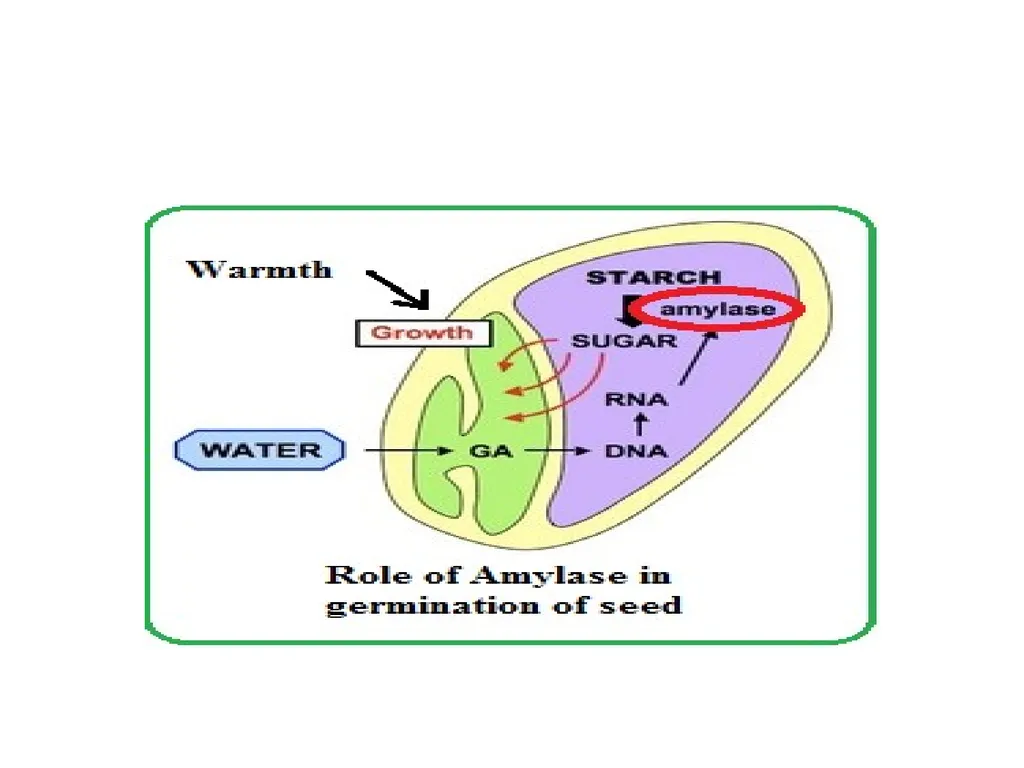
SEED GERMINATION Seeds are thus quiescent, or resting, organs that represent a normal hiatus in the life cycle of a plant. The embryo appears to be in a state of suspended animation, capable in some cases of surviving adverse conditions for long periods of time. Resumption of embryo growth, called germination, is dependent upon a number of factors, but three are especially important: adequate water to re-hydrate the tissues, the presence of oxygen to support aerobic respiration, and a ‘‘physiological’’ temperature. Although many seeds will germinate over a wide range of temperatures, the optimum range for most seeds is 25◦C to 45◦ C. The lower limit is highly variable, depending on the species. The upper limit generally reflects the temperature which denatures proteins.<br>
25
The initial step in germination of seeds is the uptake of water and rehydration of the seed tissues by the process of imbibition. Like osmosis, imbibition involves the movement of water down a water potential gradient.
Hydration causes a swelling of the imbibing material, which may generate substantial forces (called imbibition pressure). Imbibition pressure developed by a germinating seed will cause the seed coat to rupture, thus permitting the embryo to emerge.
Imbibition of water is followed by a general activation of seed metabolism within minutes of water entering the cells, initially utilizing a few mitochondria and respiratory enzymes that had been conserved in the dehydrated state. Renewed protein synthesis is also an early event, utilizing preexisting RNA transcripts and ribosomes, as existing organelles are repaired and new organelles are formed. This is followed closely by (1) the release of hydrolytic enzymes that digest and mobilize the stored reserves, and (2) renewed cell division and cell enlargement in the embryonic axis.<br>
Hydration causes a swelling of the imbibing material, which may generate substantial forces (called imbibition pressure). Imbibition pressure developed by a germinating seed will cause the seed coat to rupture, thus permitting the embryo to emerge.
Imbibition of water is followed by a general activation of seed metabolism within minutes of water entering the cells, initially utilizing a few mitochondria and respiratory enzymes that had been conserved in the dehydrated state. Renewed protein synthesis is also an early event, utilizing preexisting RNA transcripts and ribosomes, as existing organelles are repaired and new organelles are formed. This is followed closely by (1) the release of hydrolytic enzymes that digest and mobilize the stored reserves, and (2) renewed cell division and cell enlargement in the embryonic axis.<br>
26
In nonendospermic dicot seed such as the legumes (peas, beans), the initial stages of radicle elongation appear to depend on reserves stored in the tissues of the radicle itself. Later, carbon reserves are mobilized from the cotyledons and transported to the elongating axis.
In most species, germination is considered complete when the radicle emerges from the seed coat. Radicle emergence occurs through a combination of cell enlargement within the radicle itself and imbibition pressures developed within the seed. Rupture of the seed coat and protrusion of the radicle allows it to make direct contact with water and nutrient salts required to support further growth of the young seedling.
Seed development is characterized by often dramatic changes in the levels of the principal plant hormones. In most seeds, cytokinin (CK) levels are highest during the very early stages of embryo development when the rate of cell division is also highest. As the cytokinin levels decline and the embryo enters a period of rapid cell enlargement and differentiation, both auxin and gibberellin (GA) levels increase.<br>
In most species, germination is considered complete when the radicle emerges from the seed coat. Radicle emergence occurs through a combination of cell enlargement within the radicle itself and imbibition pressures developed within the seed. Rupture of the seed coat and protrusion of the radicle allows it to make direct contact with water and nutrient salts required to support further growth of the young seedling.
Seed development is characterized by often dramatic changes in the levels of the principal plant hormones. In most seeds, cytokinin (CK) levels are highest during the very early stages of embryo development when the rate of cell division is also highest. As the cytokinin levels decline and the embryo enters a period of rapid cell enlargement and differentiation, both auxin and gibberellin (GA) levels increase.<br>
27
In the early stages of embryogenesis, there is little or no detectable abscisic acid (ABA). It is during the latter stages of embryo development, as GA and IAA levels begin to decline, that ABA levels begin to rise. ABA levels generally peak during the maturation stage when seed volume and dry weight also reach a maximum. Maturation of the embryo is characterized by cessation of embryo growth, accumulation of nutrient reserves, and the development of tolerance to desiccation.
The first structure to emerge when a seed germinates is the radicle. The radicle, which is the nascent primary root, anchors the seed in the soil and begins the process of mining the soil for water and nutrients. As the primary roots elongates, it gives rise to branch, or lateral, roots.<br>
The first structure to emerge when a seed germinates is the radicle. The radicle, which is the nascent primary root, anchors the seed in the soil and begins the process of mining the soil for water and nutrients. As the primary roots elongates, it gives rise to branch, or lateral, roots.<br>
28
Emergence of the radicle is followed by elongation of the shoot axis. In some dicot seedlings, such as the bean (Phaseous vulgaris) the hypocotyl (hypo, below the cotyledons) is the first part of the axis to elongate.
The hypocotyl is hooked so that it pulls rather than pushes the cotyledons and the enclosed first foliage leaves and shoot tip, called the plumule, up through the soil.<br>
The hypocotyl is hooked so that it pulls rather than pushes the cotyledons and the enclosed first foliage leaves and shoot tip, called the plumule, up through the soil.<br>