Sepsis: How Laboratory Can Help Mackenzie Roesti, RN, MSN, CCRN What is Sepsis? Sepsis is a complex illness involving both infection and inflammation. Normally, the bodys response to an infection is targeted to the site of the infection.
"Sepsis: How Laboratory Can Help Mackenzie Roesti," is the property of its rightful owner. Permission is granted to
download and print the materials on this website for personal, non-commercial use only, and to display it
on your personal computer provided you do not modify the materials and that you retain all copyright
notices contained in the materials. By downloading content from our website, you accept the terms of this
agreement.
Presentation Transcript
01
Sepsis: How Laboratory Can Help
Mackenzie Roesti, RN, MSN, CCRN<br>
02
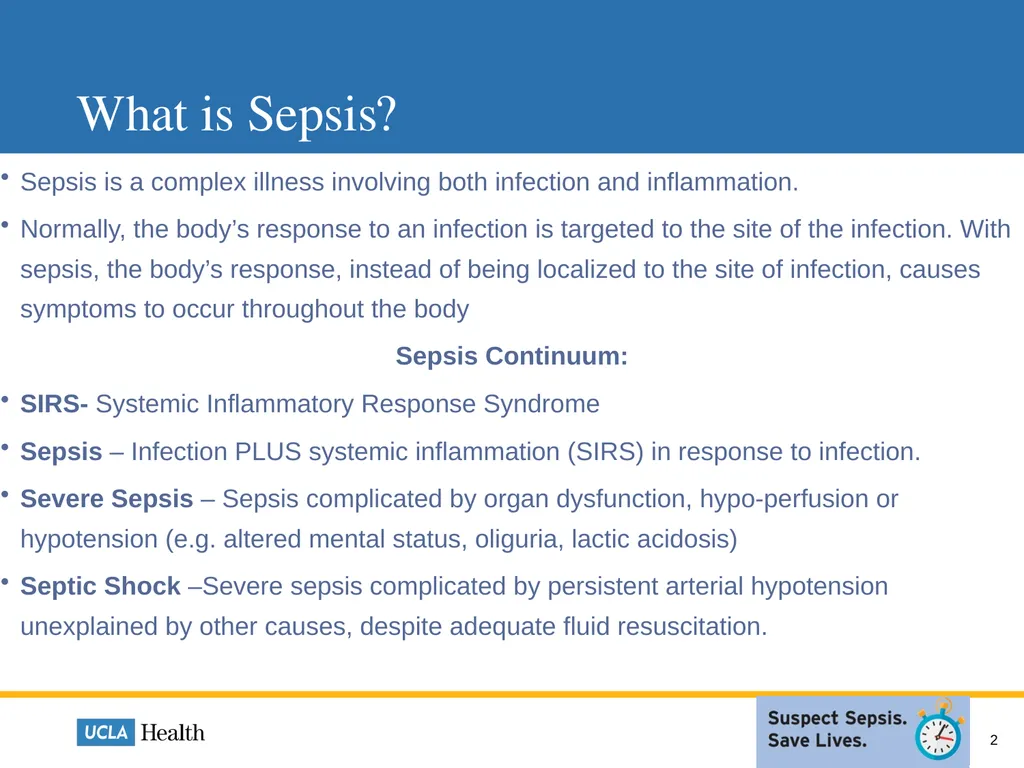
What is Sepsis? Sepsis is a complex illness involving both infection and inflammation.
Normally, the body’s response to an infection is targeted to the site of the infection. With sepsis, the body’s response, instead of being localized to the site of infection, causes symptoms to occur throughout the body
Sepsis Continuum:
SIRS- Systemic Inflammatory Response Syndrome
Sepsis – Infection PLUS systemic inflammation (SIRS) in response to infection.
Severe Sepsis – Sepsis complicated by organ dysfunction, hypo-perfusion or hypotension (e.g. altered mental status, oliguria, lactic acidosis)
Septic Shock –Severe sepsis complicated by persistent arterial hypotension unexplained by other causes, despite adequate fluid resuscitation. 2<br>
03
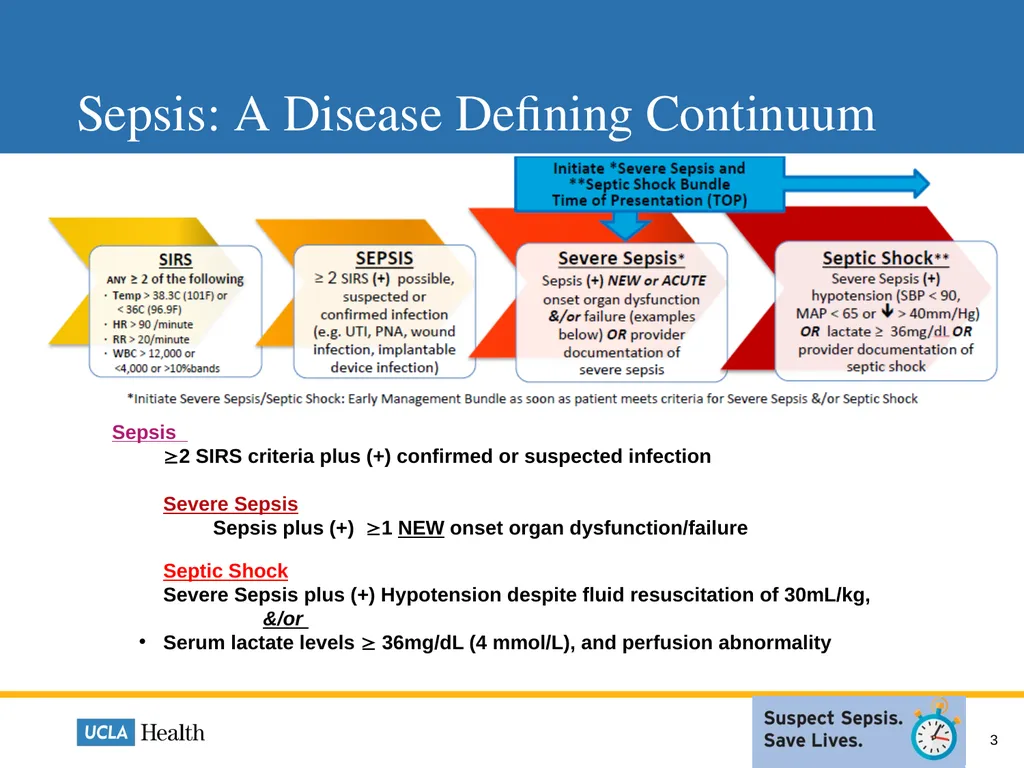
Sepsis: A Disease Defining Continuum 3 Sepsis
2 SIRS criteria plus (+) confirmed or suspected infection
Severe Sepsis
Sepsis plus (+) 1 NEW onset organ dysfunction/failure
Septic Shock
Severe Sepsis plus (+) Hypotension despite fluid resuscitation of 30mL/kg,
&/or
Serum lactate levels 36mg/dL (4 mmol/L), and perfusion abnormality<br>
04
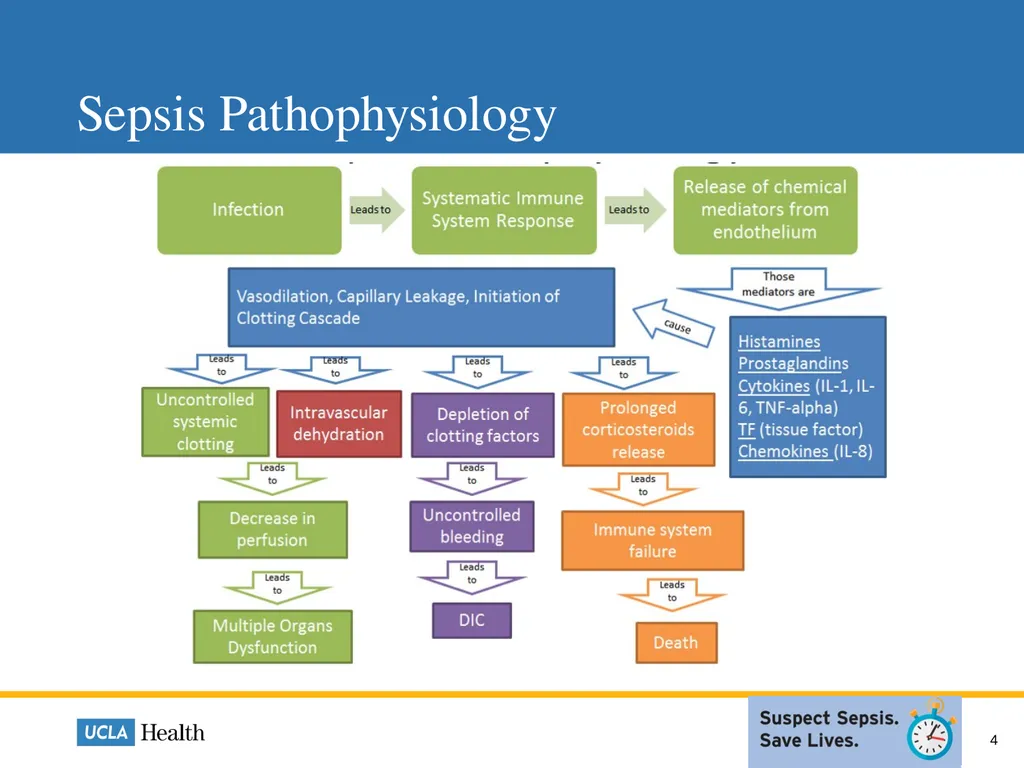
Sepsis Pathophysiology 4<br>
05
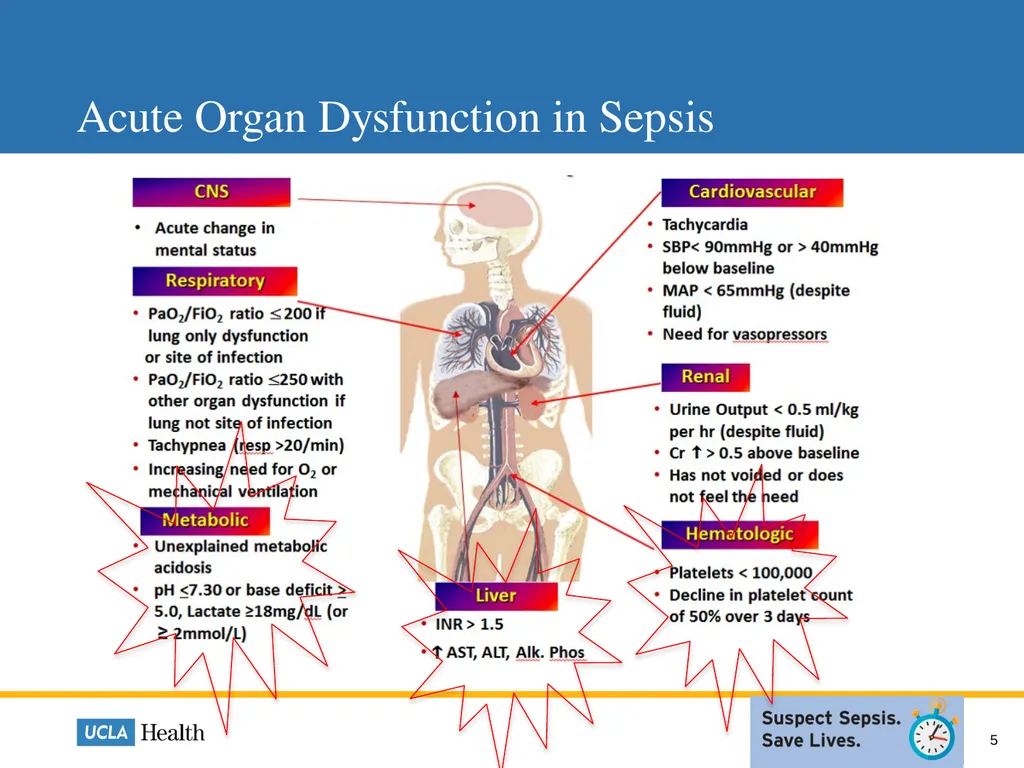
5 Acute Organ Dysfunction in Sepsis<br>
06
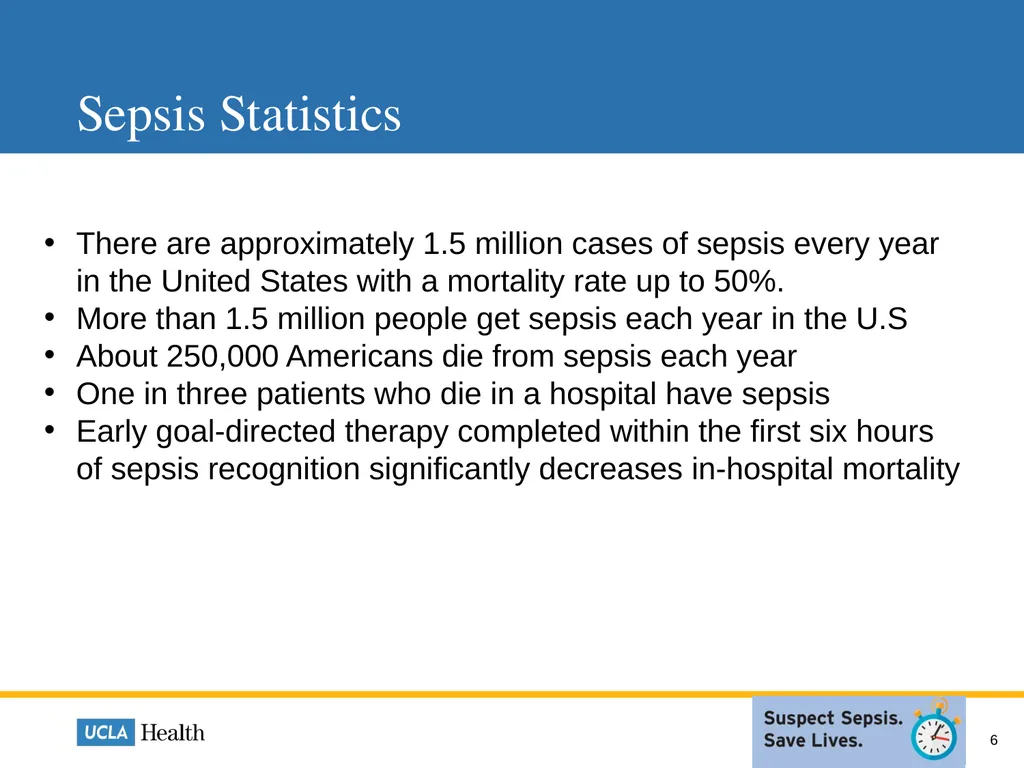
Sepsis Statistics 6 There are approximately 1.5 million cases of sepsis every year in the United States with a mortality rate up to 50%.
More than 1.5 million people get sepsis each year in the U.S
About 250,000 Americans die from sepsis each year
One in three patients who die in a hospital have sepsis
Early goal-directed therapy completed within the first six hours of sepsis recognition significantly decreases in-hospital mortality<br>
07
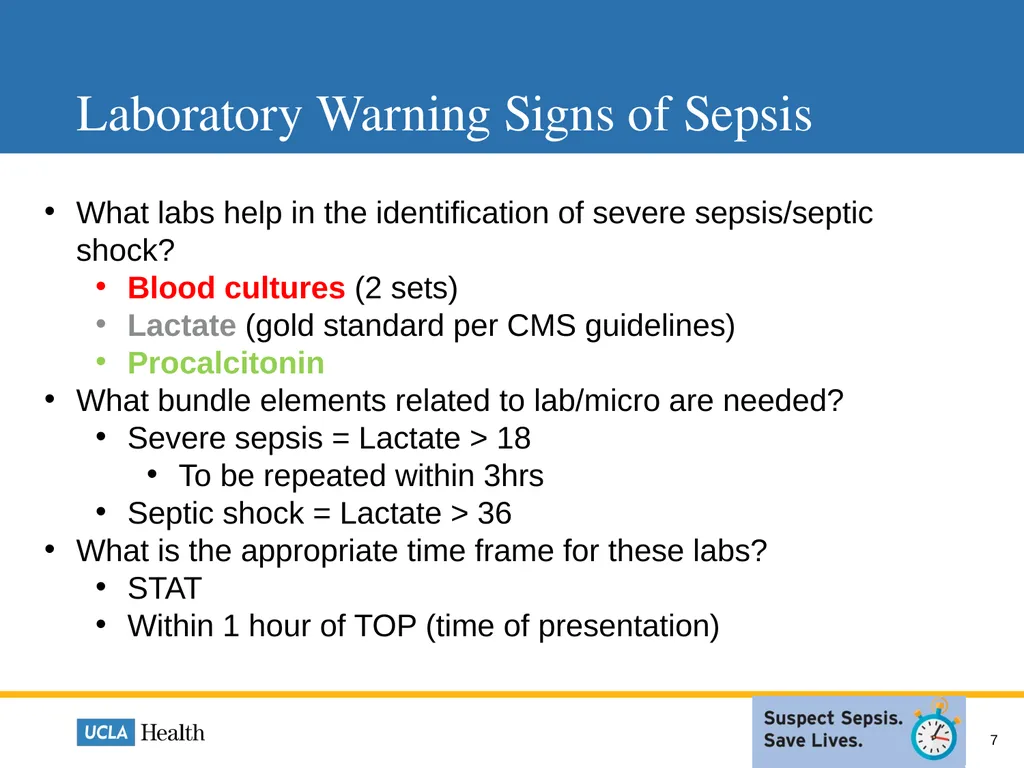
Laboratory Warning Signs of Sepsis 7 What labs help in the identification of severe sepsis/septic shock?
Blood cultures (2 sets)
Lactate (gold standard per CMS guidelines)
Procalcitonin
What bundle elements related to lab/micro are needed?
Severe sepsis = Lactate > 18
To be repeated within 3hrs
Septic shock = Lactate > 36
What is the appropriate time frame for these labs?
STAT
Within 1 hour of TOP (time of presentation)<br>
08
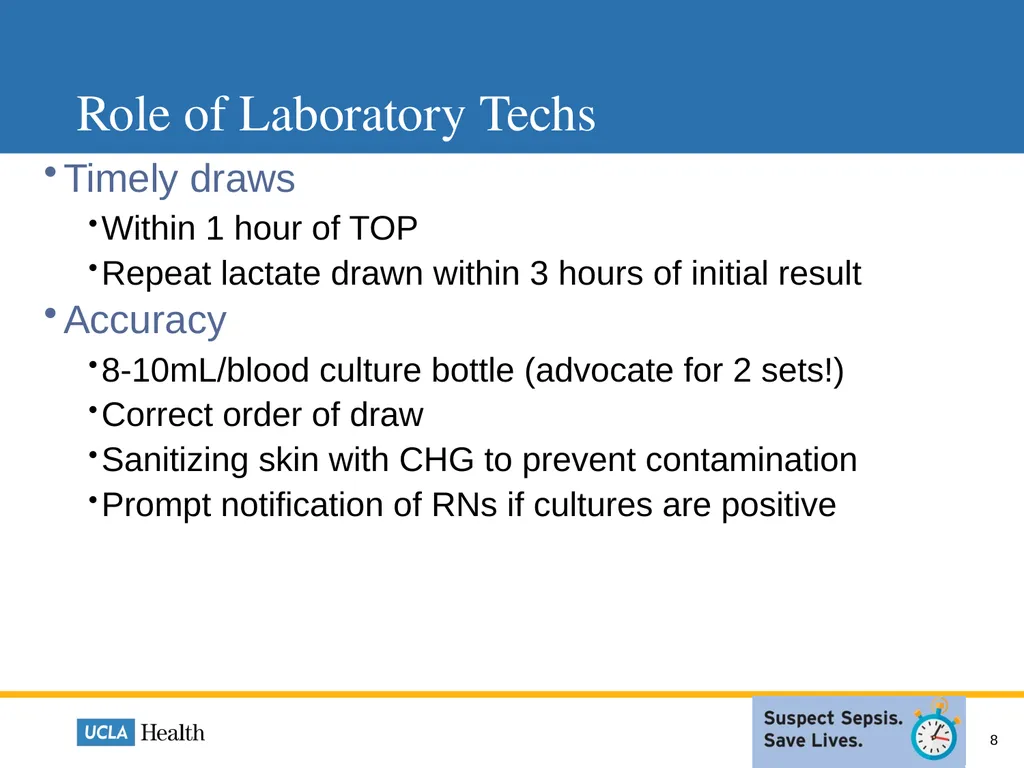
Role of Laboratory Techs Timely draws
Within 1 hour of TOP
Repeat lactate drawn within 3 hours of initial result
Accuracy
8-10mL/blood culture bottle (advocate for 2 sets!)
Correct order of draw
Sanitizing skin with CHG to prevent contamination
Prompt notification of RNs if cultures are positive 8<br>
09
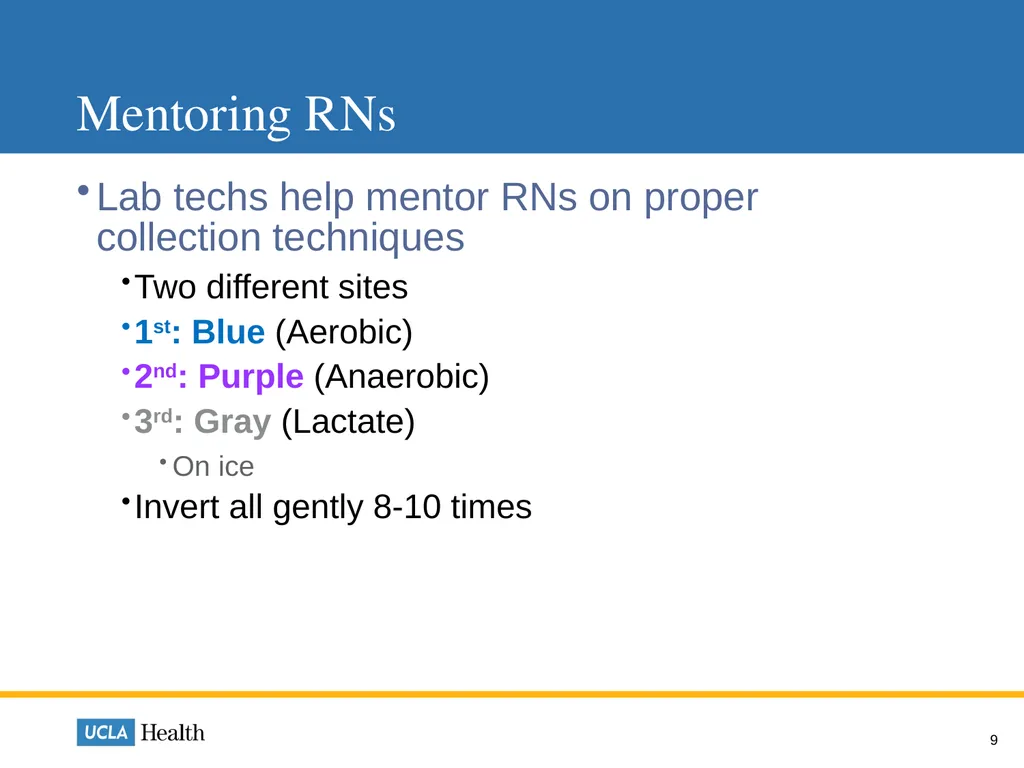
Mentoring RNs Lab techs help mentor RNs on proper collection techniques
Two different sites
1st: Blue (Aerobic)
2nd: Purple (Anaerobic)
3rd: Gray (Lactate)
On ice
Invert all gently 8-10 times 9<br>