
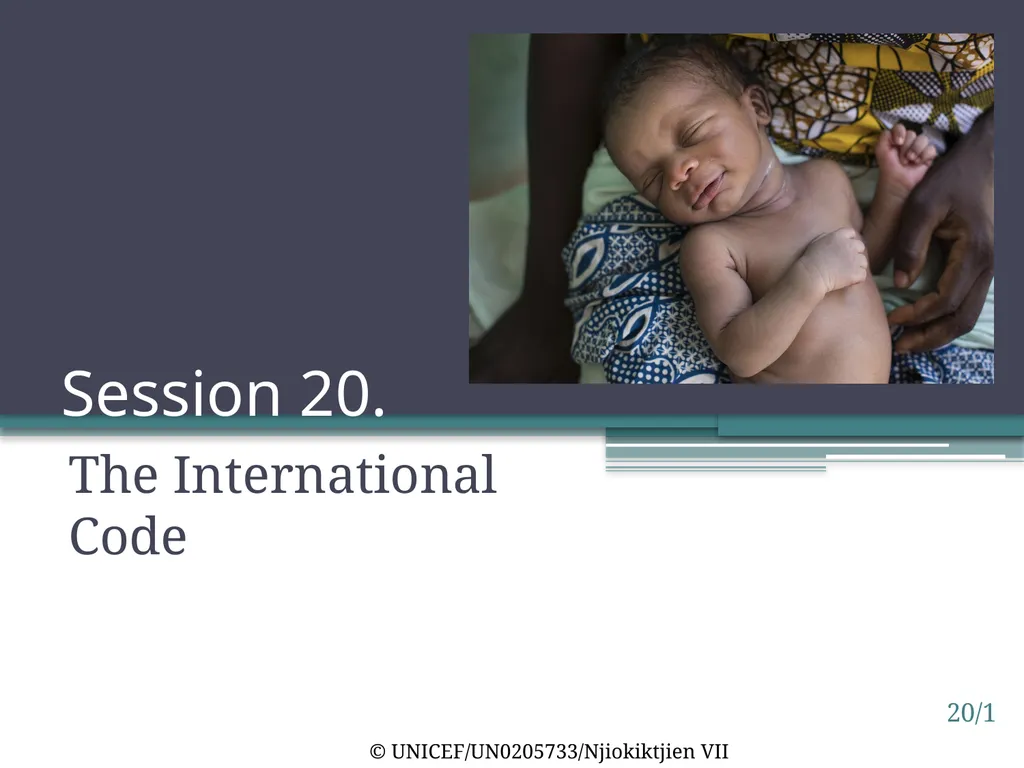
Session 20. The International Code 20/1 ©

Published  . 0 views
↓ Download
Session 20. The International Code 20/1 ©
1 / 1
Session 20. The International Code 20/1 © - slide 1 of 3 Session 20. The International Code 20/1 © - slide 2 of 3 Session 20. The International Code 20/1 © - slide 3 of 3
Description: Session 20. The International Code 201 UNICEFUN0205733Njiokiktjien VII Session 20. Objectives The International Code After completing this session, participants will be able to: explain how manufacturers promote breast-milk

Related Topics

Download Presentation

"Session 20. The International Code 20/1 ©" is the property of its rightful owner. Permission is granted to download and print the materials on this website for personal, non-commercial use only, and to display it on your personal computer provided you do not modify the materials and that you retain all copyright notices contained in the materials. By downloading content from our website, you accept the terms of this agreement.

Presentation Transcript

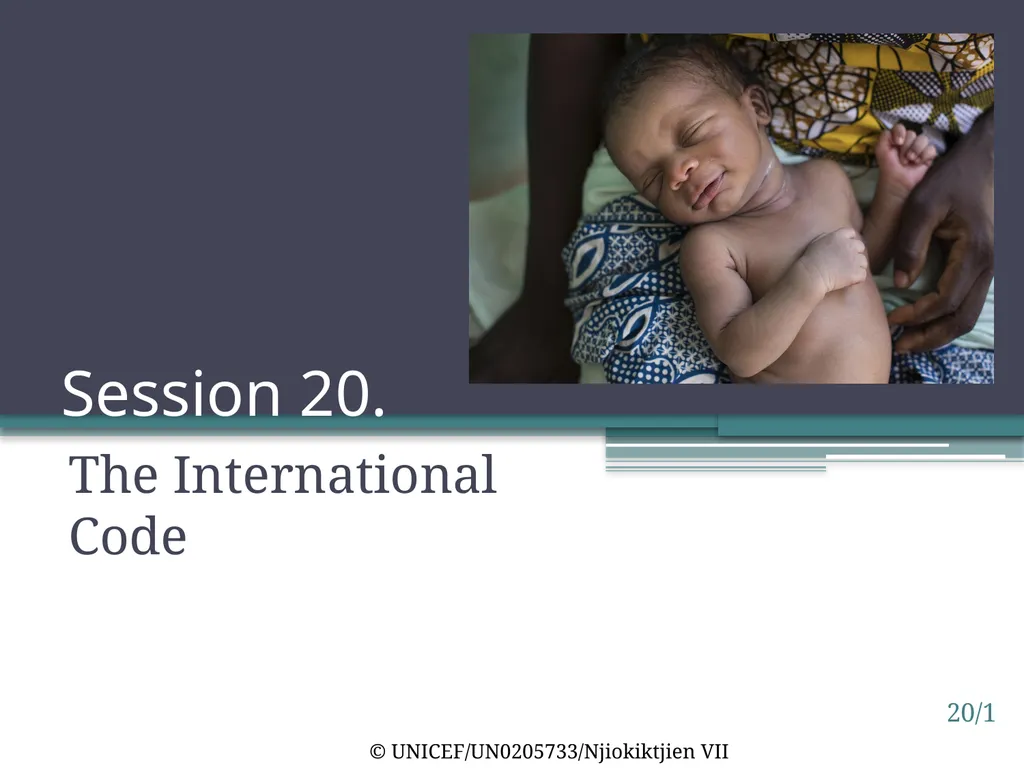
slide1. Session 20. The International Code 20/1 © UNICEF/UN0205733/Njiokiktjien VII<br>
slide2. Session 20. Objectives The International Code After completing this session, participants will be able to:

explain how manufacturers promote breast-milk substitutes;
outline the major provisions of the International Code of Marketing of Breast-milk Substitutes and subsequent relevant World Health Assembly resolutions (the Code);
explain the difficulties with donations and samples of breast-milk substitutes milk;
recognize violations of the Code and indicate actions when violations are identified. 20/2<br>
slide3. The Code 1981 World Health Assembly adopted the Code, which aims to regulate promotion and marketing of breast-milk substitutes.
The Code is a code of marketing.
Covers all breast-milk substitutes, including infant breast-milk substitutes, follow-up breast-milk substitutes, growing-up milks and any other milk products marketed for babies up to the age of 36 months.
Also includes other food such as water, teas and cereals sometimes marketed as suitable for infants under 6 months of age, and also feeding bottles and teats. 20/3<br>