Session 5. How breastfeeding works 51 UNICEFUN0202182 Session 5. Objectives: How breastfeeding works After completing this session, participants will be able to describe: the parts of the breast involved in lactation and their function;
Session 5. Objectives: How breastfeeding works After completing this session, participants will be able to describe:
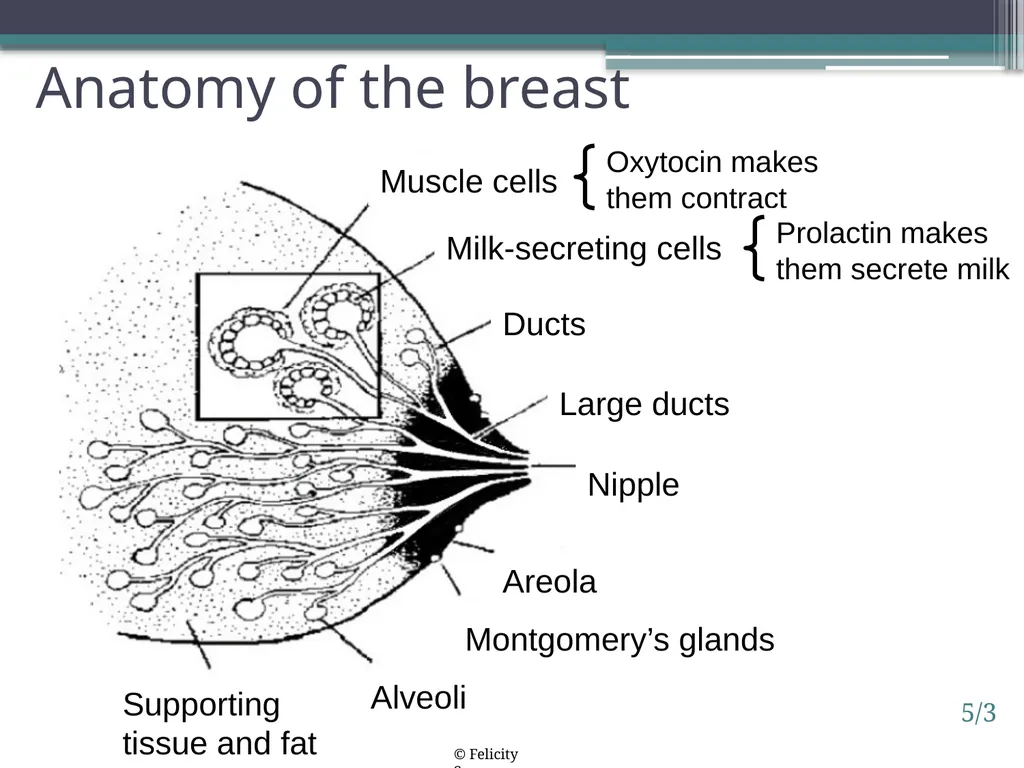
the parts of the breast involved in lactation and their function;
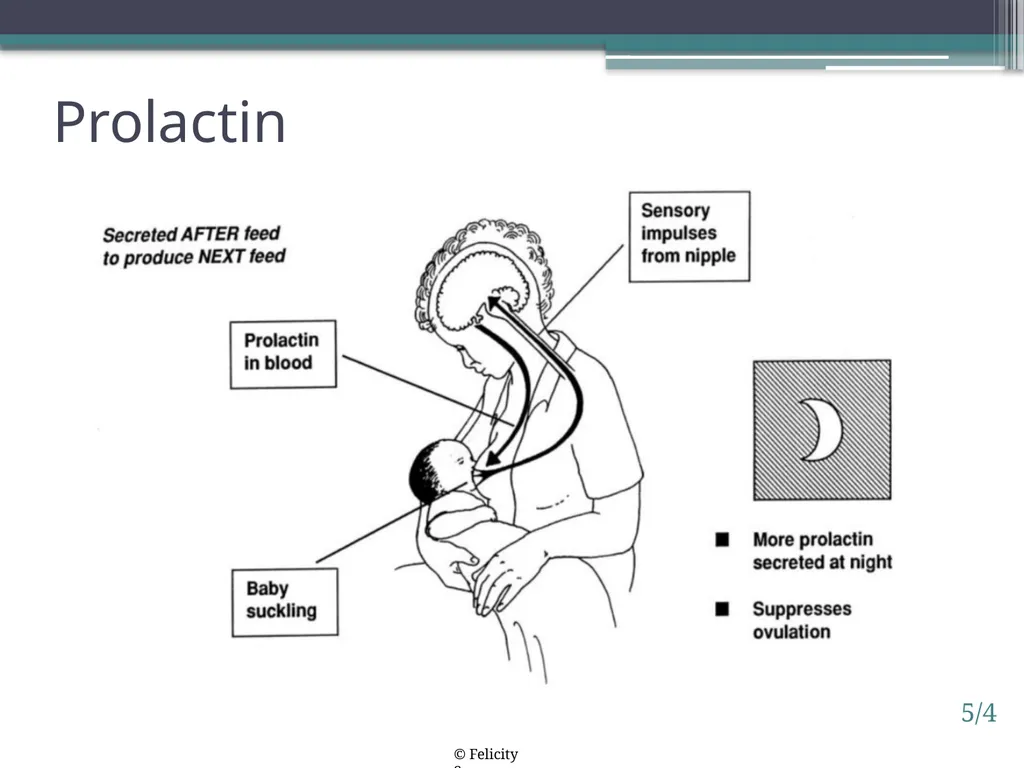
the physiology of the lactation hormones;
the physiology of breast-milk production and flow;
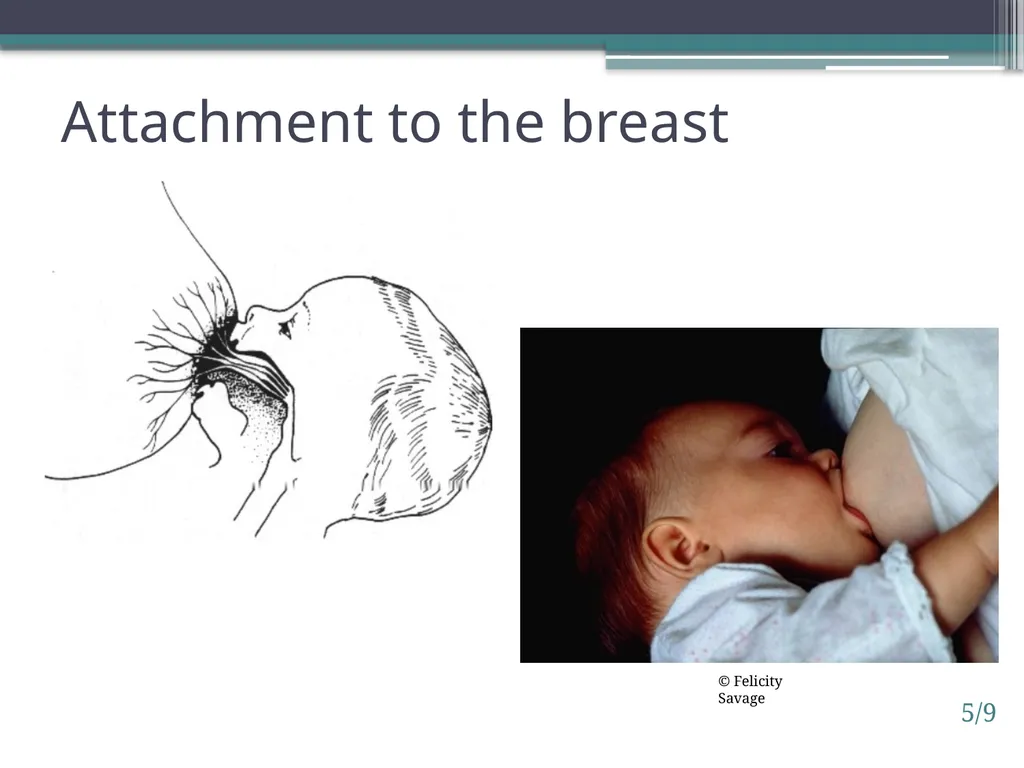
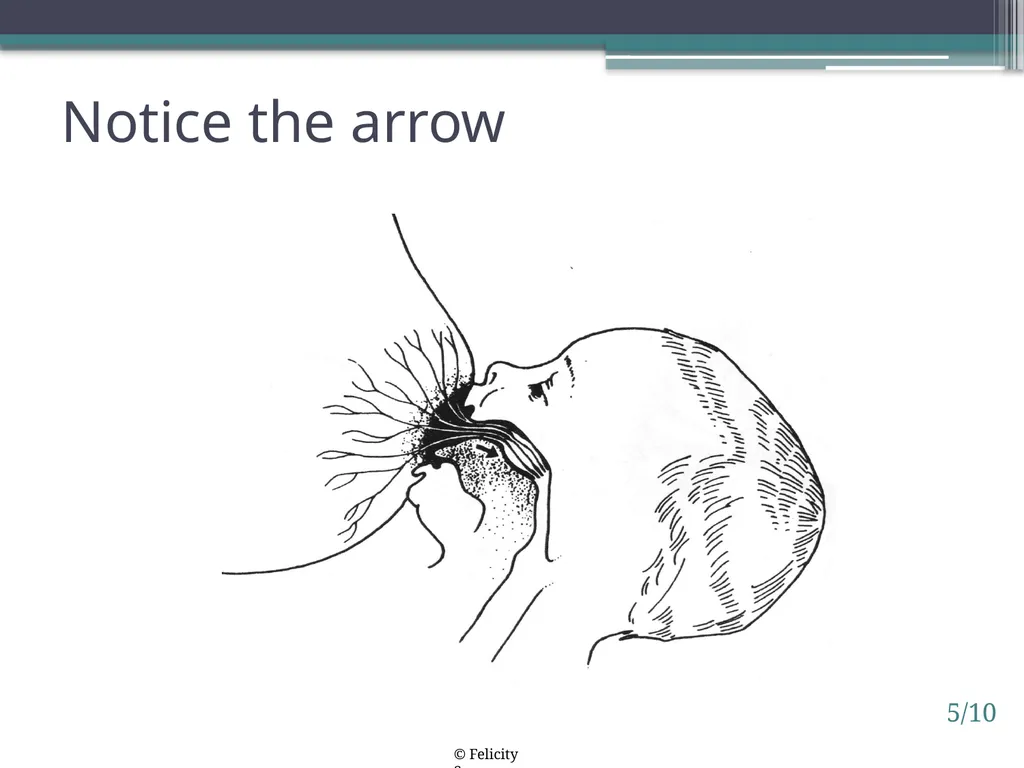
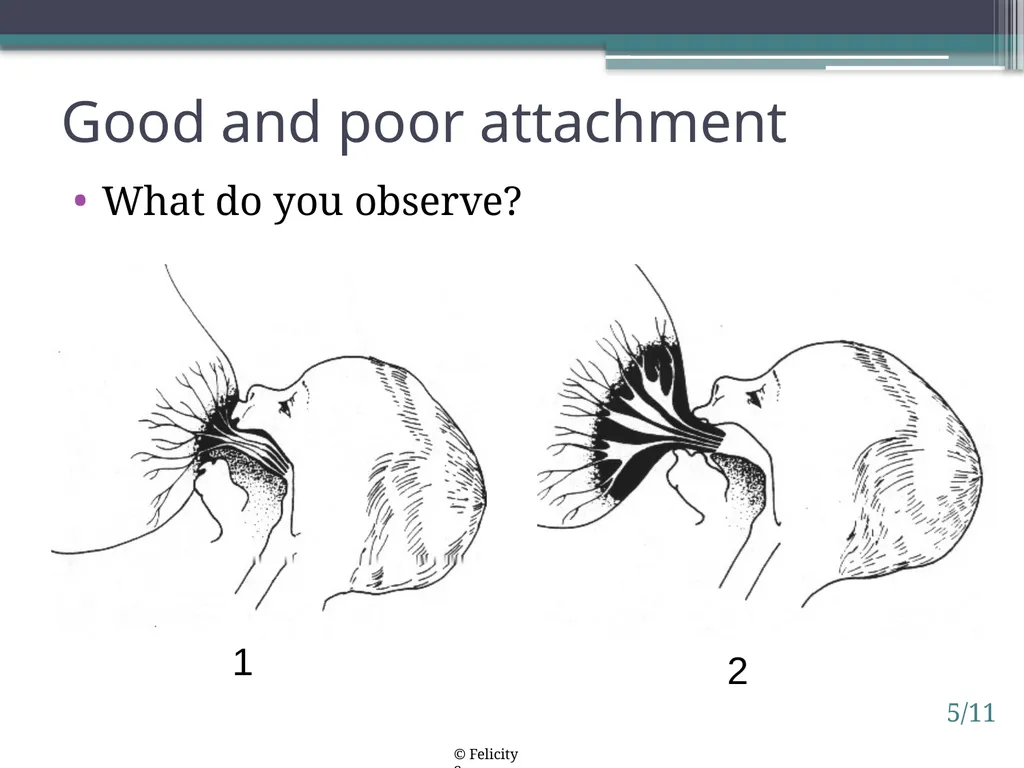
the difference between good and poor attachment of a baby at the breast;
the four key points of attachment;
the suckling action of the baby when well attached or poorly attached. 5/2<br>
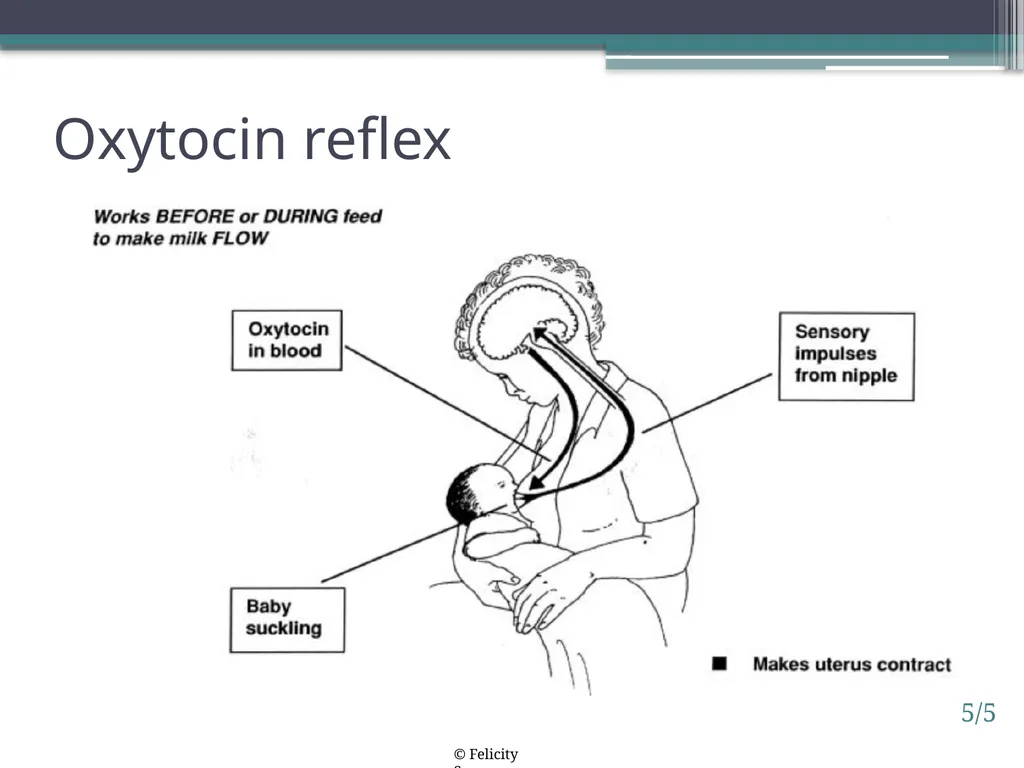
Signs and sensations of oxytocin reflex: a squeezing or tingling sensation in her breasts just before she feeds her baby, or during a feed;
milk flowing from her breasts when she thinks of her baby or hears the baby crying;
milk dripping from her other breast, when her baby is suckling. milk flowing from her breast in fine streams, if her baby comes off the breast during a feed;
pain from uterine contractions, sometimes with a rush of blood, during feeds in the first week;
slow deep sucks and swallowing by the baby, which show that breast milk is flowing into their mouth. 5/7<br>
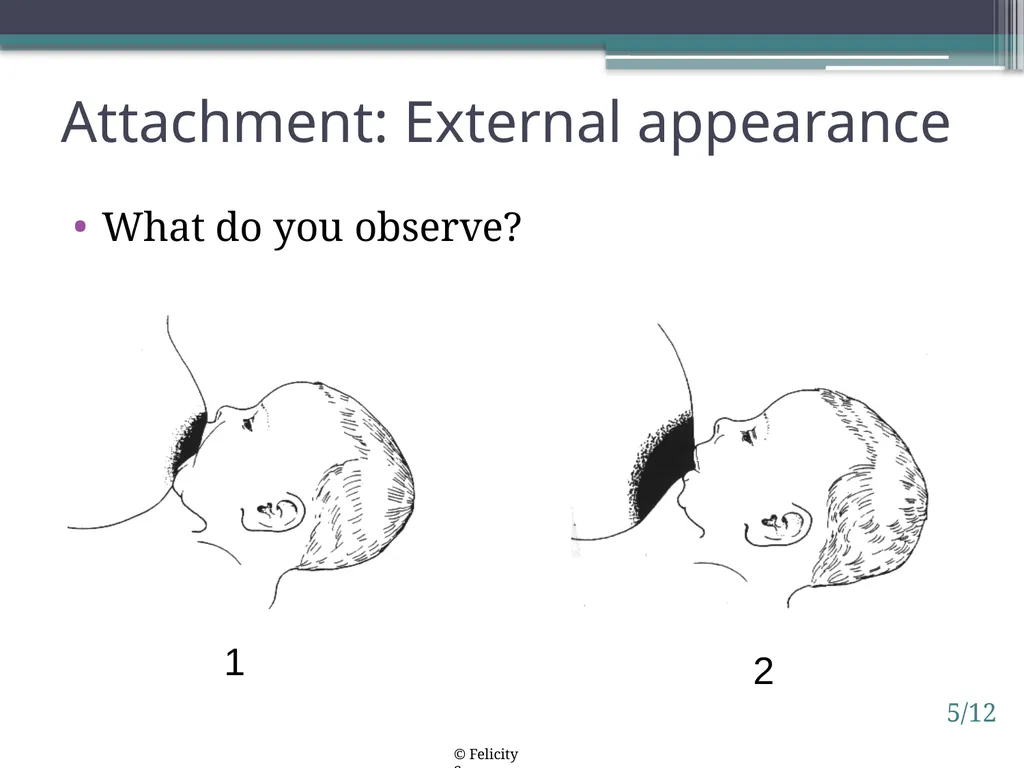
Good attachment More areola is visible above the baby’s mouth than below
The baby’s mouth is wide open
The lower lip is turned out
The chin is touching the breast (or nearly so) 5/13<br>
14
Poor attachment Less areola is visible above the baby’s mouth than below (you might see equal amounts of areola above and below the mouth)
The mouth is not wide open
The lower lip is pointing forward or turned in
The chin is away from the breast 5/14<br>