Simulation Process Data Management as part of the Systems Engineering process Transforming systems engineering through advanced modeling and simulation techniques Peter Dugan May 20-21, 2025 Recent Advancements in Model Based Systems
"Simulation Process Data Management as part of the" is the property of its rightful owner. Permission is granted to
download and print the materials on this website for personal, non-commercial use only, and to display it
on your personal computer provided you do not modify the materials and that you retain all copyright
notices contained in the materials. By downloading content from our website, you accept the terms of this
agreement.
Presentation Transcript
01
Simulation Process Data Management as part of the Systems Engineering process Transforming systems engineering through advanced modeling and simulation techniques Peter Dugan
May 20-21, 2025<br>
02
Recent Advancements in Model Based Systems Engineering (MBSE) Understanding Complex Systems
Modeling and simulation help engineers understand complex systems across multiple disciplines by breaking decomposing capabilities into manageable components for analysis.
Analyzing and Visualizing Behaviors
These techniques allow for visualization and analysis of system behaviors, helping identify potential issues before implementation.
Advanced Modeling Techniques
Integrating advanced modeling, simulation, and visualization techniques is essential for accurate system representation and analysis.
Invaluable Insights Across Lifecycle
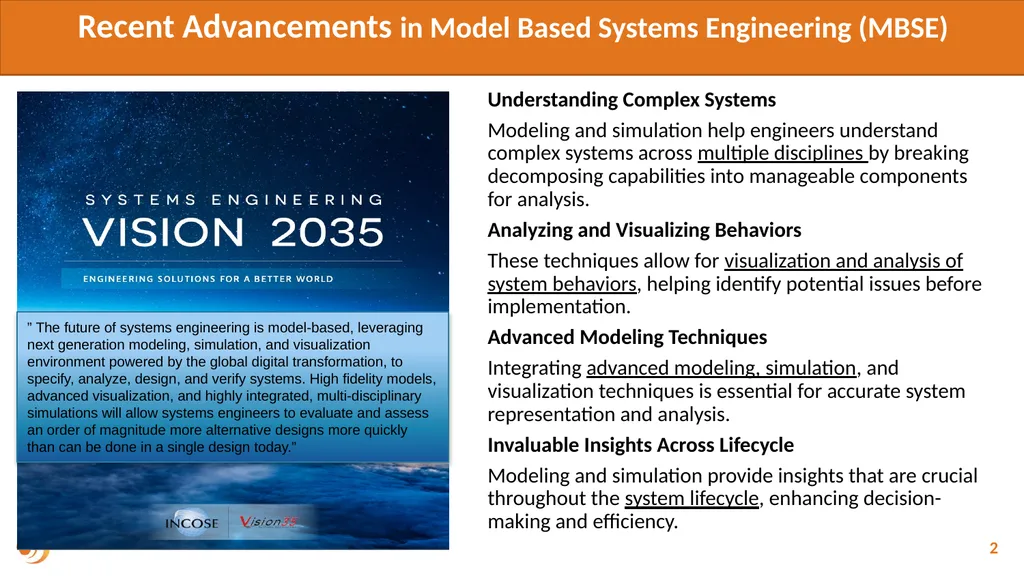
Modeling and simulation provide insights that are crucial throughout the system lifecycle, enhancing decision-making and efficiency. 2 ” The future of systems engineering is model-based, leveraging next generation modeling, simulation, and visualization environment powered by the global digital transformation, to specify, analyze, design, and verify systems. High fidelity models, advanced visualization, and highly integrated, multi-disciplinary simulations will allow systems engineers to evaluate and assess an order of magnitude more alternative designs more quickly than can be done in a single design today.”<br>
03
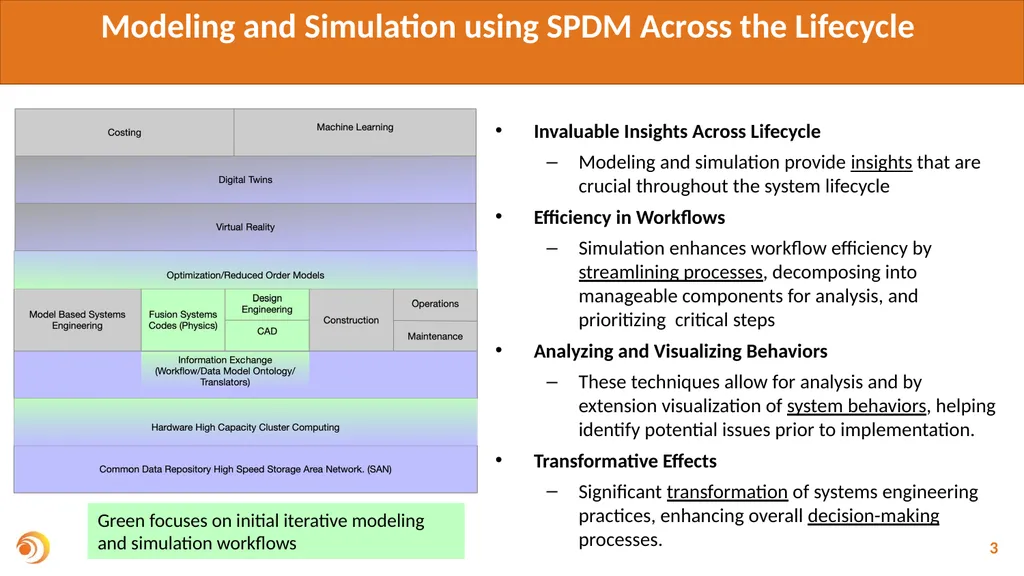
Modeling and Simulation using SPDM Across the Lifecycle Invaluable Insights Across Lifecycle
Modeling and simulation provide insights that are crucial throughout the system lifecycle
Efficiency in Workflows
Simulation enhances workflow efficiency by streamlining processes, decomposing into manageable components for analysis, and prioritizing critical steps
Analyzing and Visualizing Behaviors
These techniques allow for analysis and by extension visualization of system behaviors, helping identify potential issues prior to implementation.
Transformative Effects
Significant transformation of systems engineering practices, enhancing overall decision-making processes. Green focuses on initial iterative modeling and simulation workflows 3<br>
04
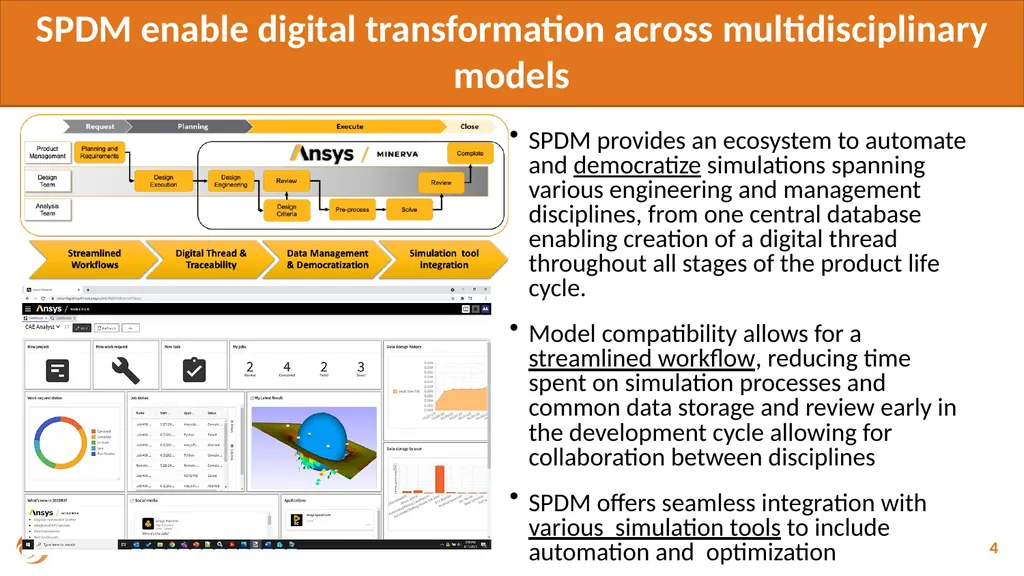
SPDM enable digital transformation across multidisciplinary models SPDM provides an ecosystem to automate and democratize simulations spanning various engineering and management disciplines, from one central database enabling creation of a digital thread throughout all stages of the product life cycle.
Model compatibility allows for a streamlined workflow, reducing time spent on simulation processes and common data storage and review early in the development cycle allowing for collaboration between disciplines
SPDM offers seamless integration with various simulation tools to include automation and optimization 4<br>
05
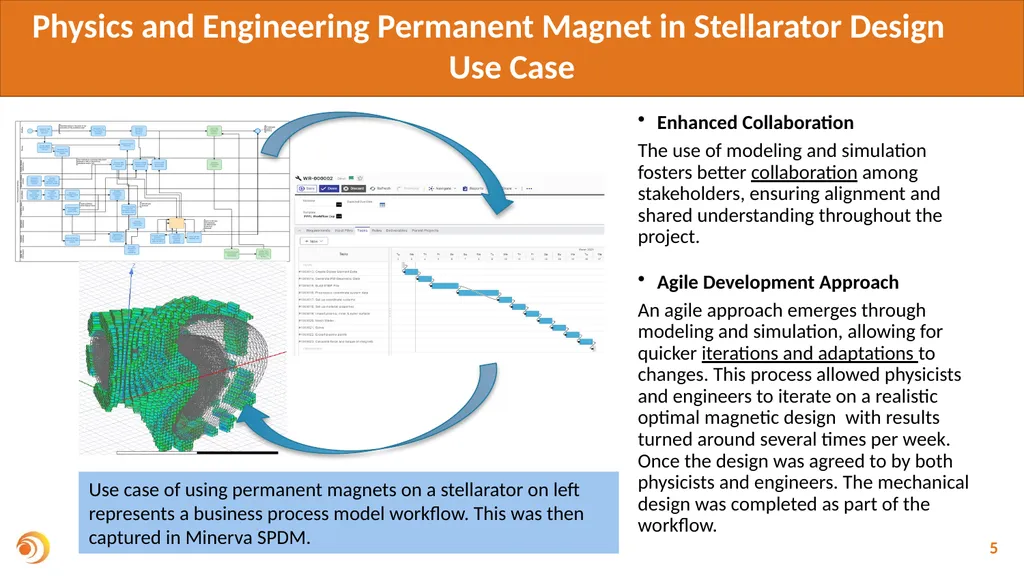
Physics and Engineering Permanent Magnet in Stellarator Design Use Case Enhanced Collaboration
The use of modeling and simulation fosters better collaboration among stakeholders, ensuring alignment and shared understanding throughout the project.
Agile Development Approach
An agile approach emerges through modeling and simulation, allowing for quicker iterations and adaptations to changes. This process allowed physicists and engineers to iterate on a realistic optimal magnetic design with results turned around several times per week. Once the design was agreed to by both physicists and engineers. The mechanical design was completed as part of the workflow. 5 Use case of using permanent magnets on a stellarator on left represents a business process model workflow. This was then captured in Minerva SPDM.<br>
06
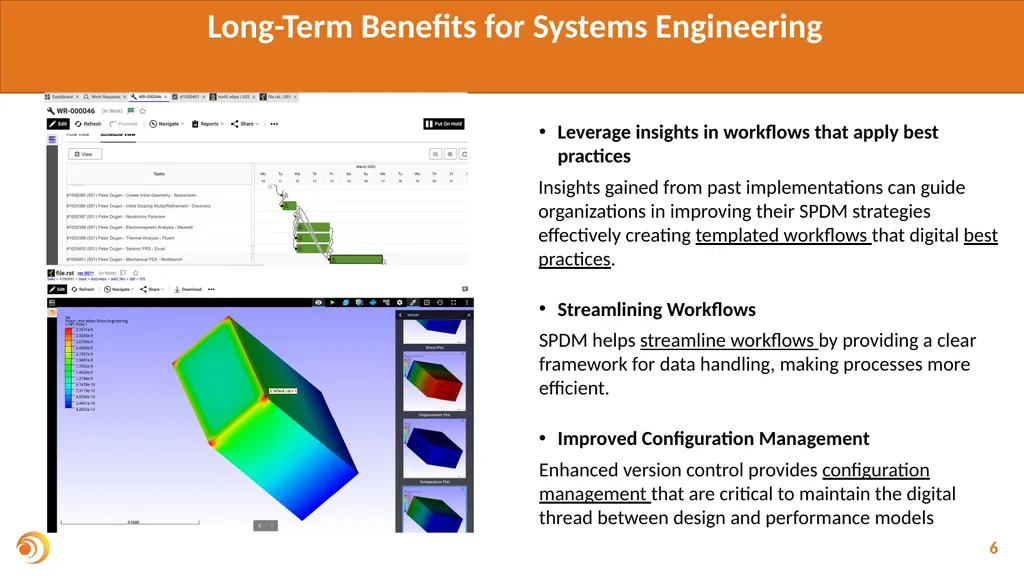
Long-Term Benefits for Systems Engineering Leverage insights in workflows that apply best practices
Insights gained from past implementations can guide organizations in improving their SPDM strategies effectively creating templated workflows that digital best practices.
Streamlining Workflows
SPDM helps streamline workflows by providing a clear framework for data handling, making processes more efficient.
Improved Configuration Management
Enhanced version control provides configuration management that are critical to maintain the digital thread between design and performance models 6<br>
07
Emerging Technologies trend towards SPDM Emerging technologies such as artificial intelligence (AI) are redefining how organizations will capture and manage their simulation data
AI integration into data management is revolutionizing how engineers analyze and interpret vast amounts of data
Integration of system optimization and digital twin technologies
The trend of increased automation in simulation processes is transforming efficiency and accuracy in engineering practices 7<br>