
Six Sigma Chad Laux 1 Strategic Model Strategy
YM
Published · 39 slides · 0 views

1 / 1
Description
Six Sigma Chad Laux 1 Strategic Model Strategy Goals Processes Projects ISO-based QMS Set Standards Strategic Areas for Improvement Lean Thinking Quick Wins Kaizen 6 Sigma 2 Data and Facts Practical Problem Statistical Problem
Related Topics
Share
Embed code
Download this presentation From Below
"Six Sigma Chad Laux 1 Strategic Model Strategy" is the property of its rightful owner. Permission is granted to download and print the materials on this website for personal, non-commercial use only, and to display it on your personal computer provided you do not modify the materials and that you retain all copyright notices contained in the materials. By downloading content from our website, you accept the terms of this agreement.
Presentation Transcript
01
Six Sigma
Chad Laux 1<br>
02
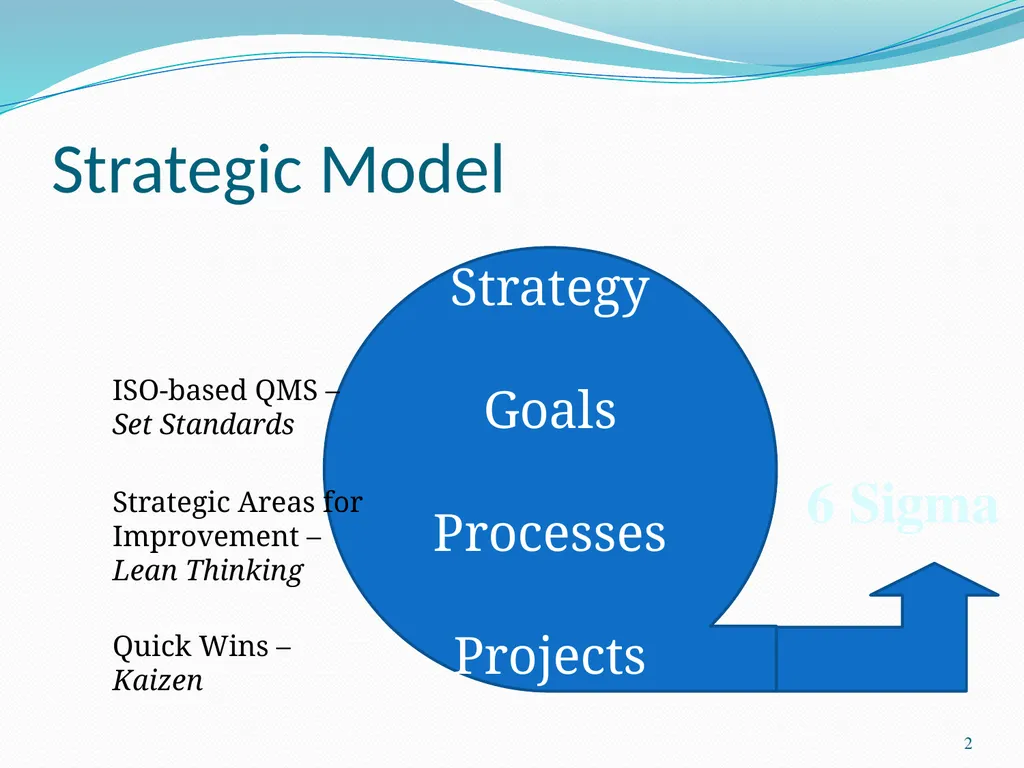
Strategic Model Strategy
Goals
Processes
Projects ISO-based QMS –
Set Standards Strategic Areas for Improvement –
Lean Thinking Quick Wins –
Kaizen 6 Sigma 2<br>
Goals
Processes
Projects ISO-based QMS –
Set Standards Strategic Areas for Improvement –
Lean Thinking Quick Wins –
Kaizen 6 Sigma 2<br>
03
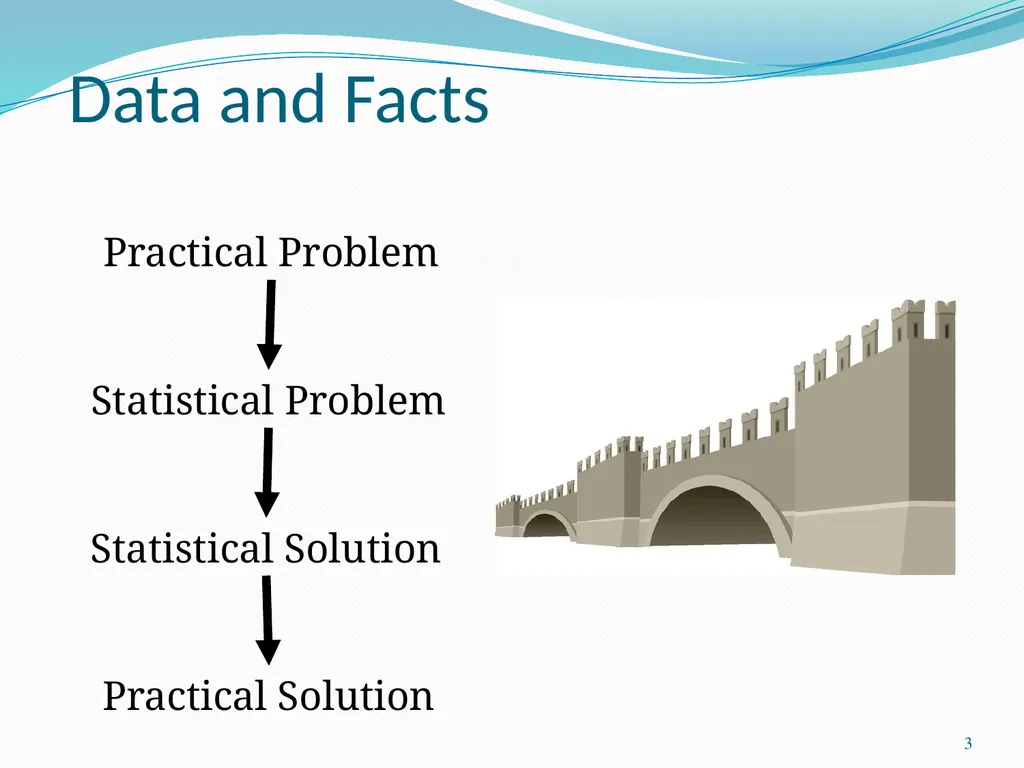
Data and Facts Practical Problem Statistical Problem Statistical Solution Practical Solution 3<br>
04
”Eight-five percent of the reasons for failure to meet customer expectations are related to deficiencies in systems and process…rather than the employee. The role of management is To Change The Process rather than badgering individuals to do better”
W. Edwards Deming 4<br>
W. Edwards Deming 4<br>
05
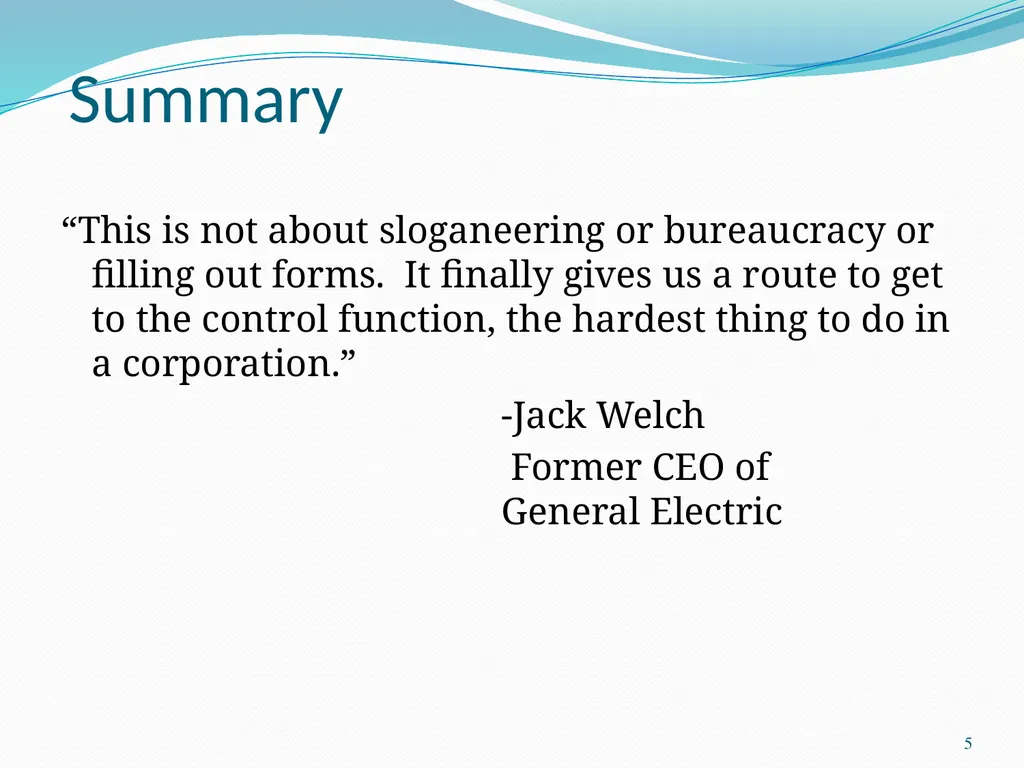
Summary “This is not about sloganeering or bureaucracy or filling out forms. It finally gives us a route to get to the control function, the hardest thing to do in a corporation.”
-Jack Welch
Former CEO of General Electric 5<br>
-Jack Welch
Former CEO of General Electric 5<br>
06
“Learning is not compulsory... neither is survival.“
-W. Edwards Deming Questions? 6<br>
07
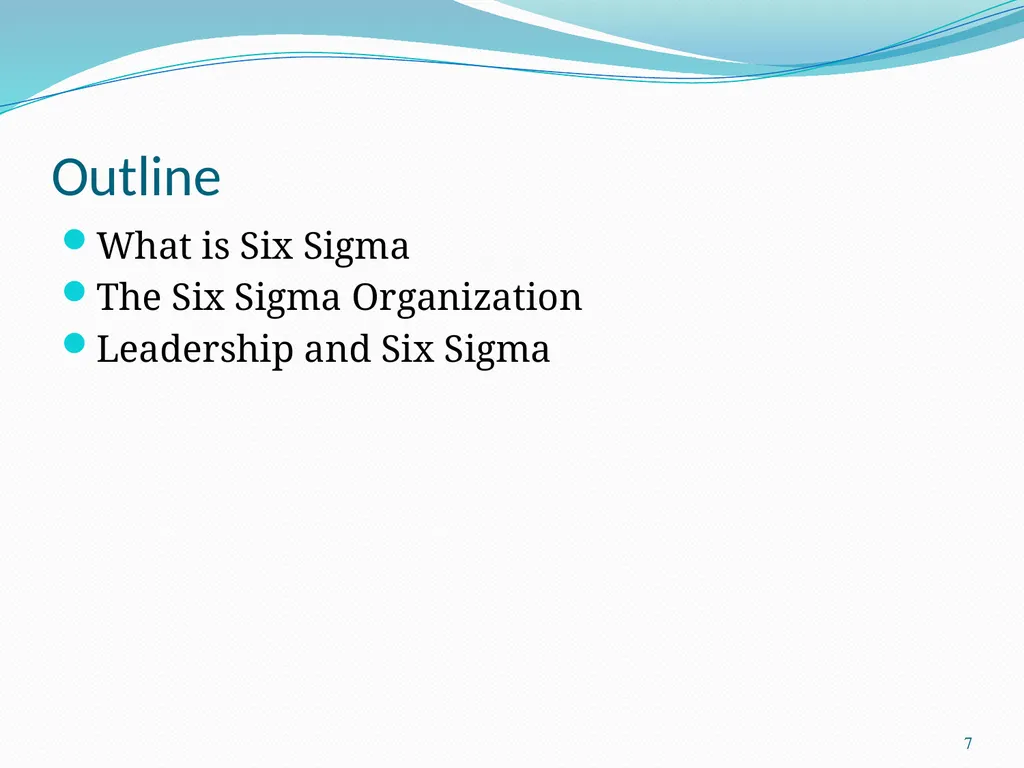
Outline What is Six Sigma
The Six Sigma Organization
Leadership and Six Sigma 7<br>
The Six Sigma Organization
Leadership and Six Sigma 7<br>
08
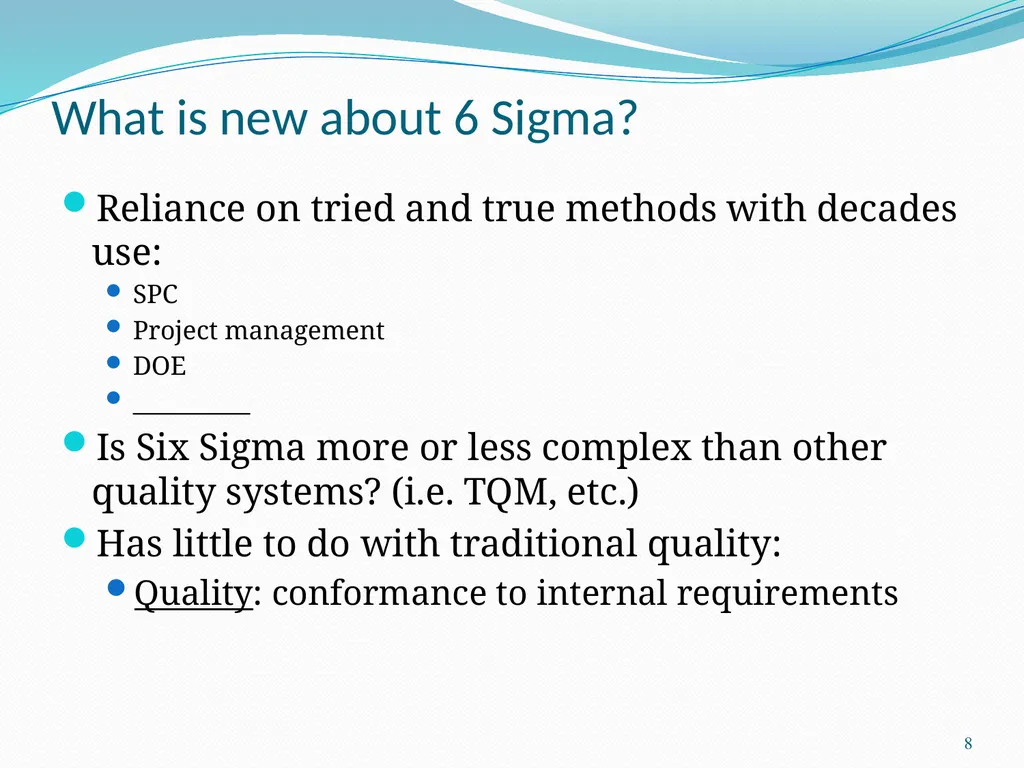
What is new about 6 Sigma? Reliance on tried and true methods with decades use:
SPC
Project management
DOE
__________
Is Six Sigma more or less complex than other quality systems? (i.e. TQM, etc.)
Has little to do with traditional quality:
Quality: conformance to internal requirements 8<br>
SPC
Project management
DOE
__________
Is Six Sigma more or less complex than other quality systems? (i.e. TQM, etc.)
Has little to do with traditional quality:
Quality: conformance to internal requirements 8<br>
09
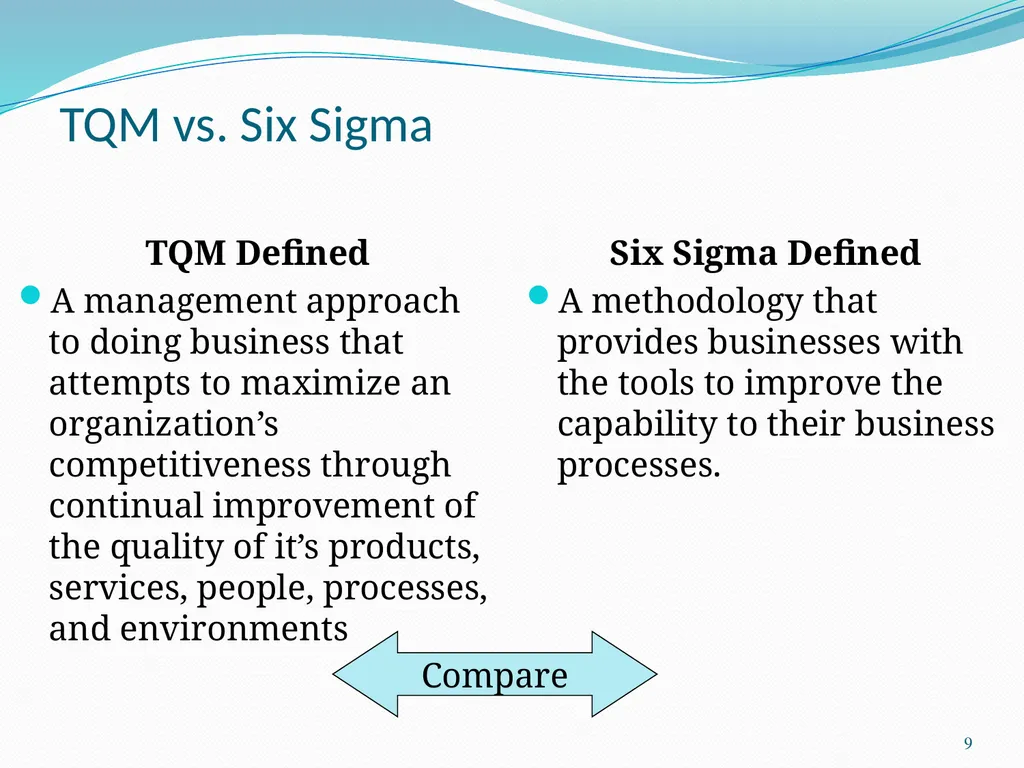
TQM vs. Six Sigma TQM Defined
A management approach to doing business that attempts to maximize an organization’s competitiveness through continual improvement of the quality of it’s products, services, people, processes, and environments Six Sigma Defined
A methodology that provides businesses with the tools to improve the capability to their business processes. Compare 9<br>
10
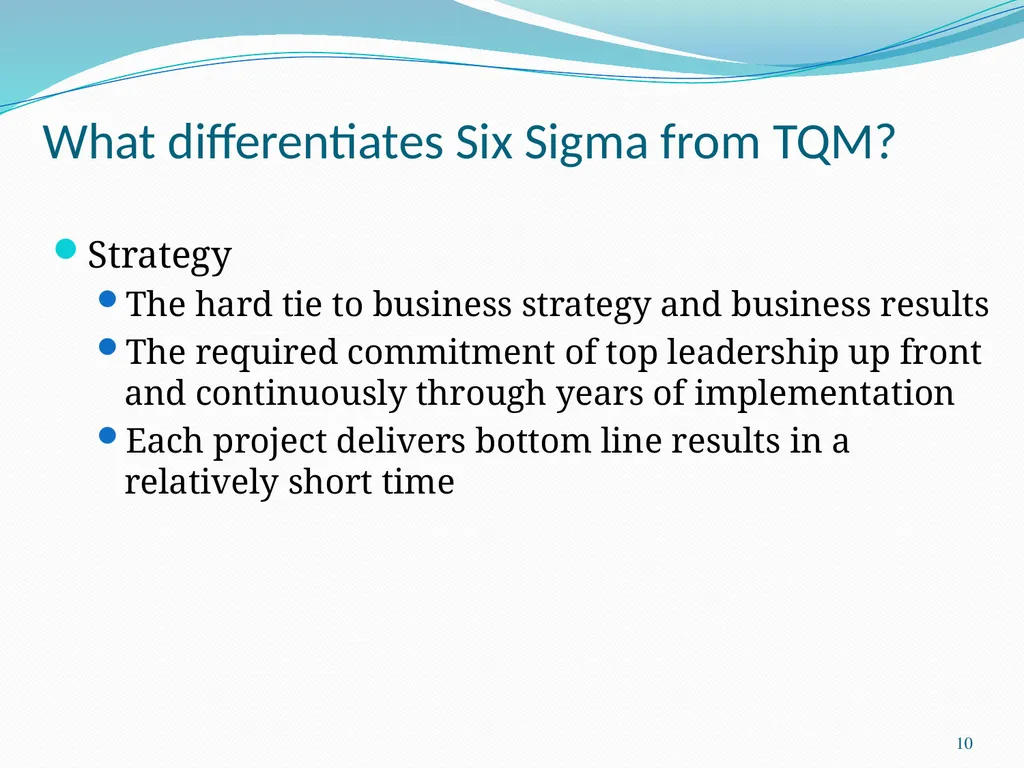
What differentiates Six Sigma from TQM? Strategy
The hard tie to business strategy and business results
The required commitment of top leadership up front and continuously through years of implementation
Each project delivers bottom line results in a relatively short time 10<br>
The hard tie to business strategy and business results
The required commitment of top leadership up front and continuously through years of implementation
Each project delivers bottom line results in a relatively short time 10<br>
11
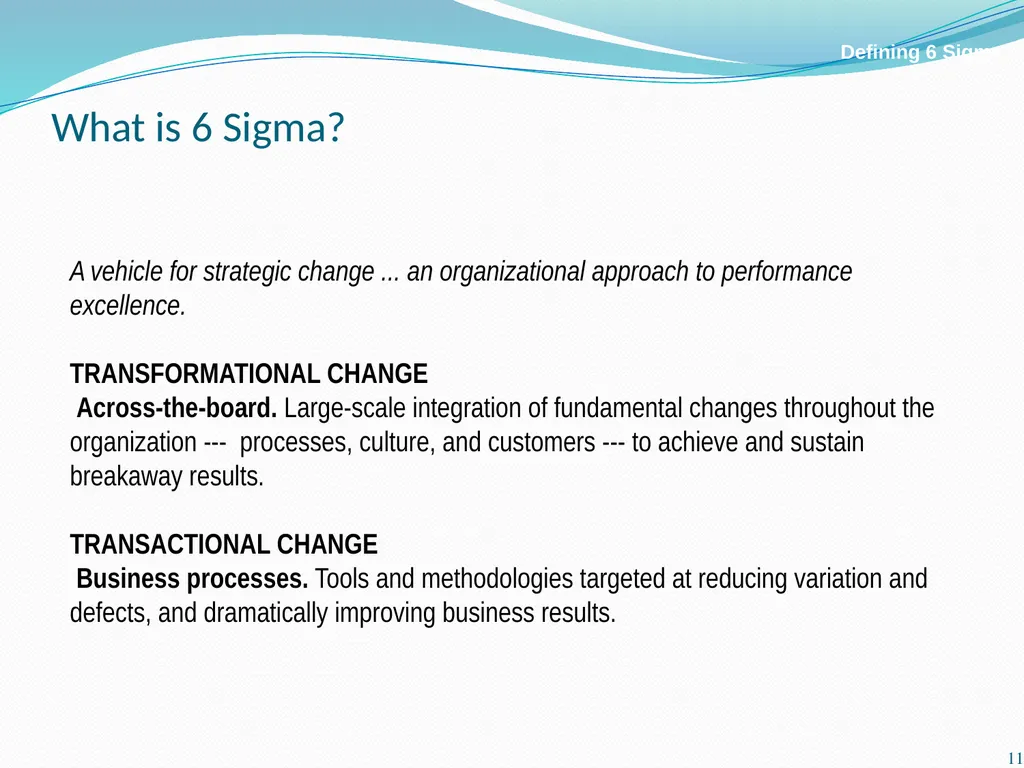
What is 6 Sigma? 11 A vehicle for strategic change ... an organizational approach to performance excellence.
TRANSFORMATIONAL CHANGE Across-the-board. Large-scale integration of fundamental changes throughout the organization --- processes, culture, and customers --- to achieve and sustain breakaway results.
TRANSACTIONAL CHANGE Business processes. Tools and methodologies targeted at reducing variation and defects, and dramatically improving business results. Defining 6 Sigma<br>
12
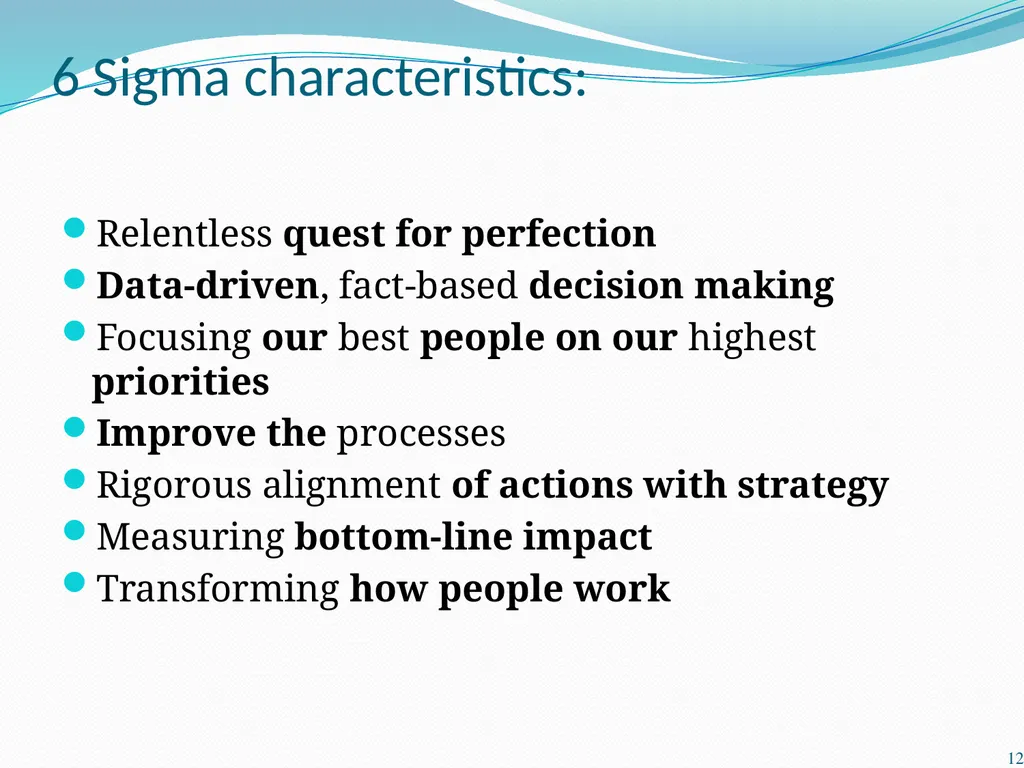
6 Sigma characteristics: Relentless quest for perfection
Data-driven, fact-based decision making
Focusing our best people on our highest priorities
Improve the processes
Rigorous alignment of actions with strategy
Measuring bottom-line impact
Transforming how people work 12<br>
Data-driven, fact-based decision making
Focusing our best people on our highest priorities
Improve the processes
Rigorous alignment of actions with strategy
Measuring bottom-line impact
Transforming how people work 12<br>
13
Mikel Harry’s 6 Sigma Observations “Selecting a tool is much like picking a spouse – both make several assumptions.”
“Black Belts are about ideas, quality engineers are about tools.”
“There are key analytical ideas that every Black Belt should ponder and explore.”
“If tools were the ticket, statisticians would be CEO’s.”
“A simple idea can often negate the need for a tool.”
“The majority of a physician’s curriculum is about knowledge, not scalpels.”
“Six sigma is about the quality of business, not the business of quality” 13<br>
14
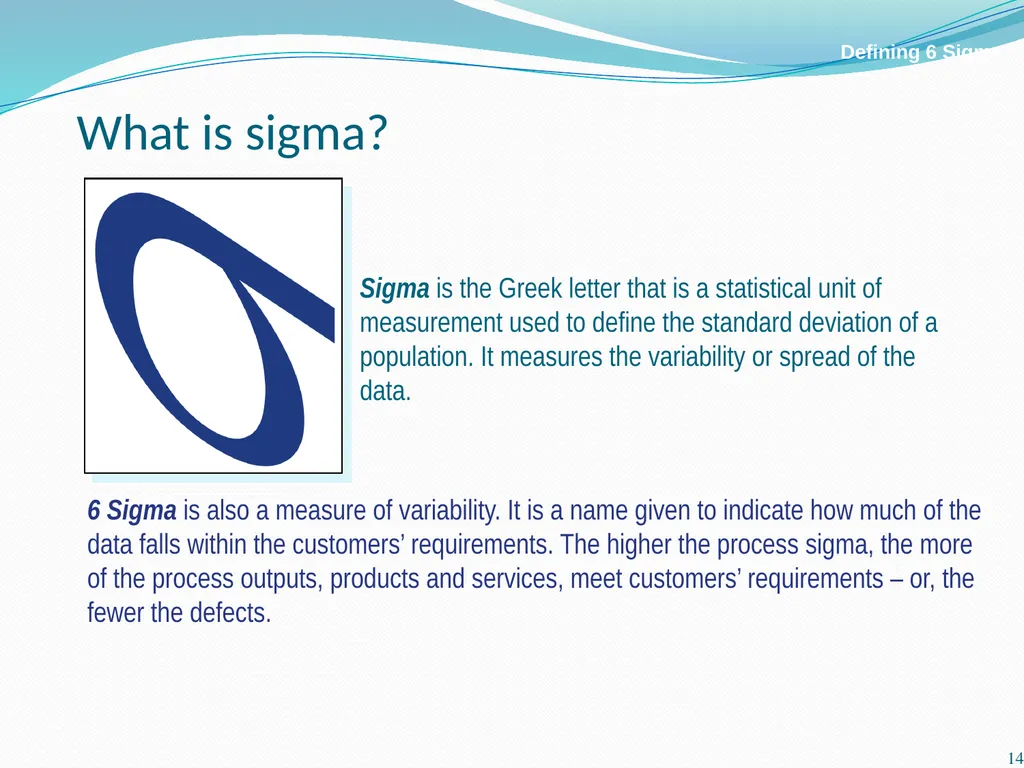
What is sigma? 14 6 Sigma is also a measure of variability. It is a name given to indicate how much of the data falls within the customers’ requirements. The higher the process sigma, the more of the process outputs, products and services, meet customers’ requirements – or, the fewer the defects. Sigma is the Greek letter that is a statistical unit of measurement used to define the standard deviation of a population. It measures the variability or spread of the data. Defining 6 Sigma<br>
15
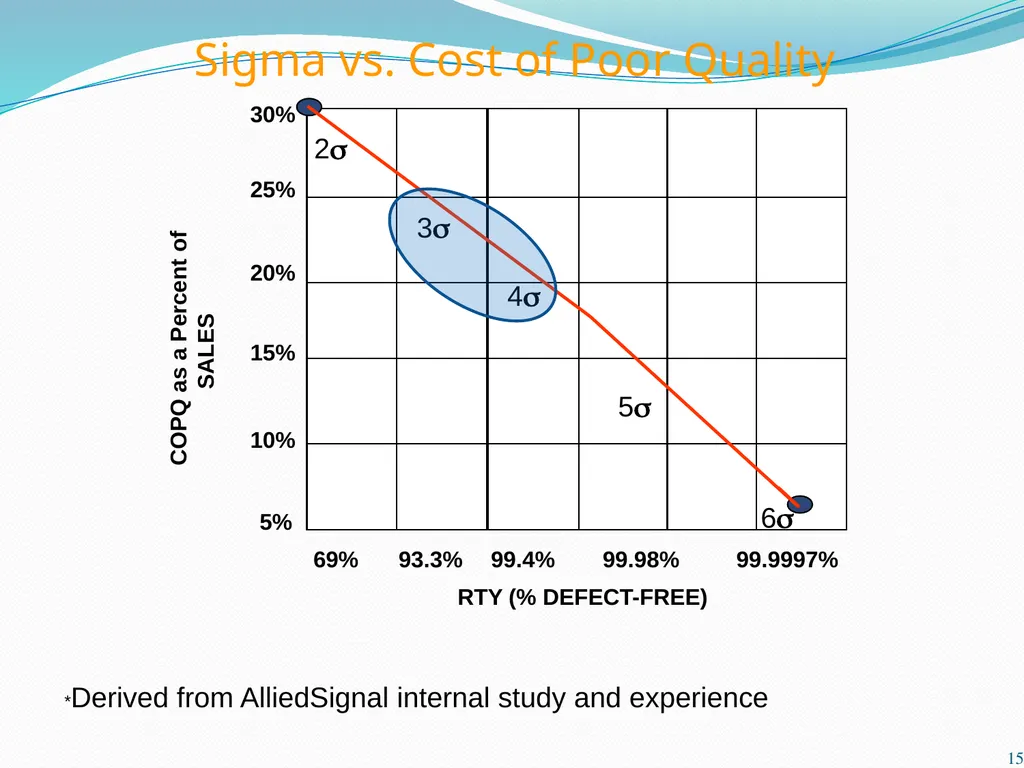
15 Sigma vs. Cost of Poor Quality *Derived from AlliedSignal internal study and experience<br>
16
93% v 99.9% levels Examples of a world at 3 Sigma
54,000 wrong drug prescriptions per year
40,500 new-born babies per year dropped at delivery
Usage drinking water 2 hours a month
5 crash landings per day at the busiest airports
54,000 lost pieces of mail per hour
Examples of a world at 6 Sigma
1 wrong prescription in 25 years
3 new-born babies dropped in 100 year
Unsafe drinking water 1 second every 16 years
1 crash landing in 10 years
35 lost pieces of mail per year 16<br>
17
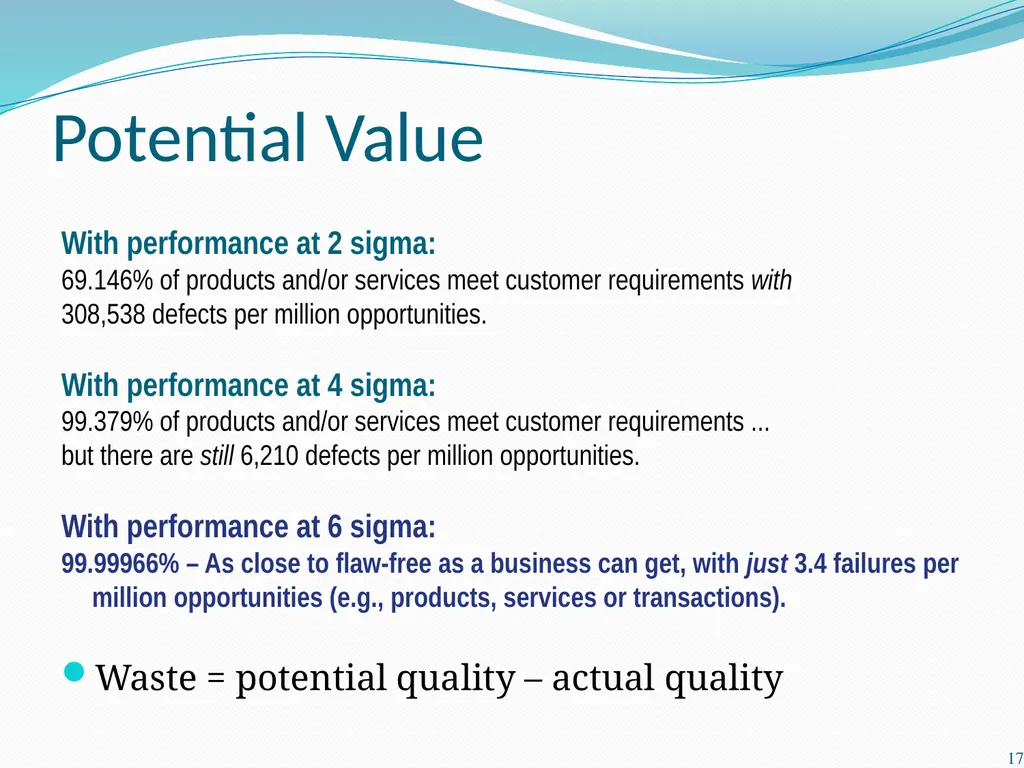
Potential Value With performance at 2 sigma:
69.146% of products and/or services meet customer requirements with
308,538 defects per million opportunities.
With performance at 4 sigma:
99.379% of products and/or services meet customer requirements ...
but there are still 6,210 defects per million opportunities.
With performance at 6 sigma:
99.99966% – As close to flaw-free as a business can get, with just 3.4 failures per million opportunities (e.g., products, services or transactions).
Waste = potential quality – actual quality 17<br>
18
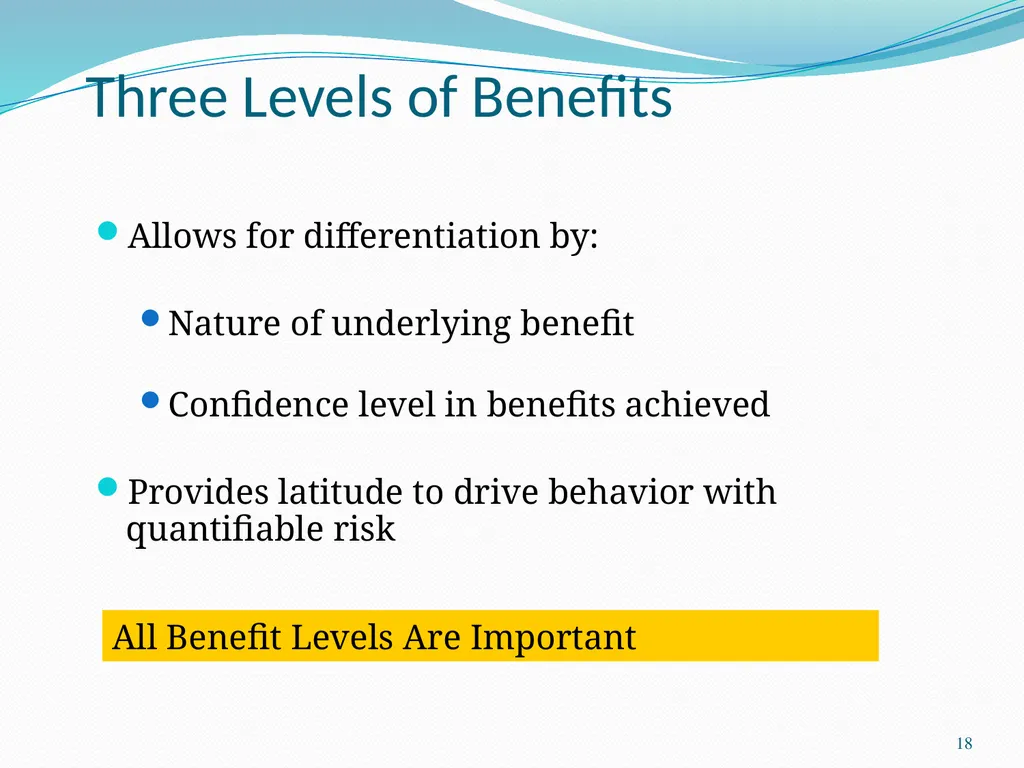
Three Levels of Benefits Allows for differentiation by:
Nature of underlying benefit
Confidence level in benefits achieved
Provides latitude to drive behavior with quantifiable risk All Benefit Levels Are Important 18<br>
Nature of underlying benefit
Confidence level in benefits achieved
Provides latitude to drive behavior with quantifiable risk All Benefit Levels Are Important 18<br>
19
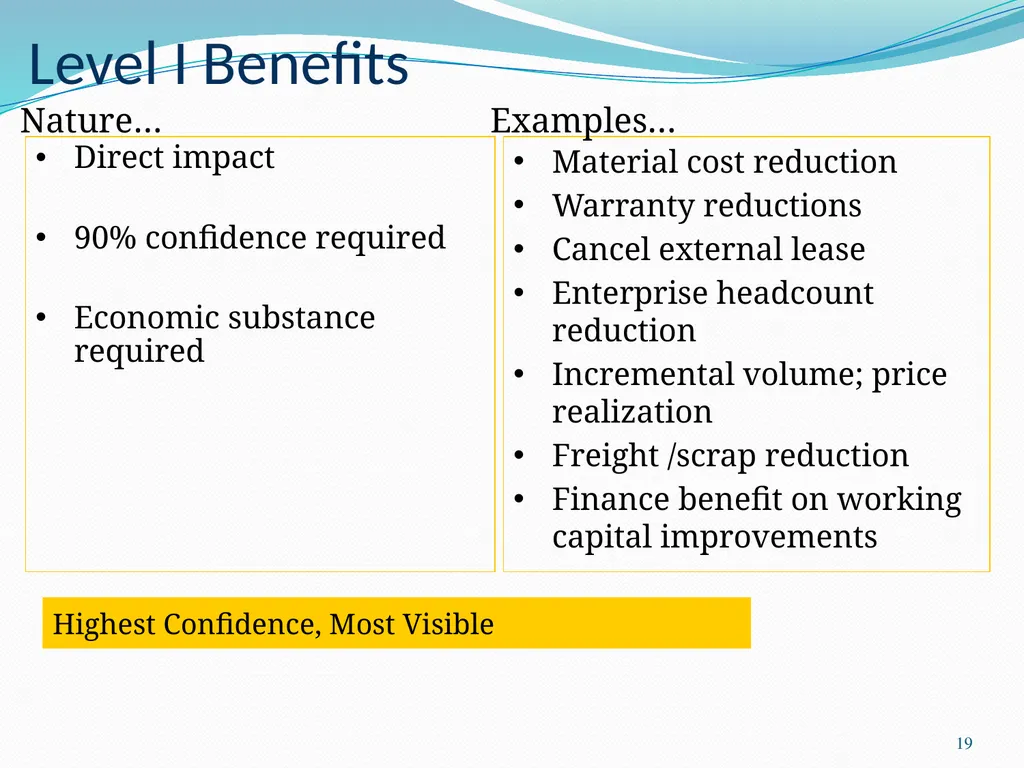
Material cost reduction
Warranty reductions
Cancel external lease
Enterprise headcount reduction
Incremental volume; price realization
Freight /scrap reduction
Finance benefit on working capital improvements Direct impact
90% confidence required
Economic substance required Nature… Examples… Highest Confidence, Most Visible Level I Benefits 19<br>
20
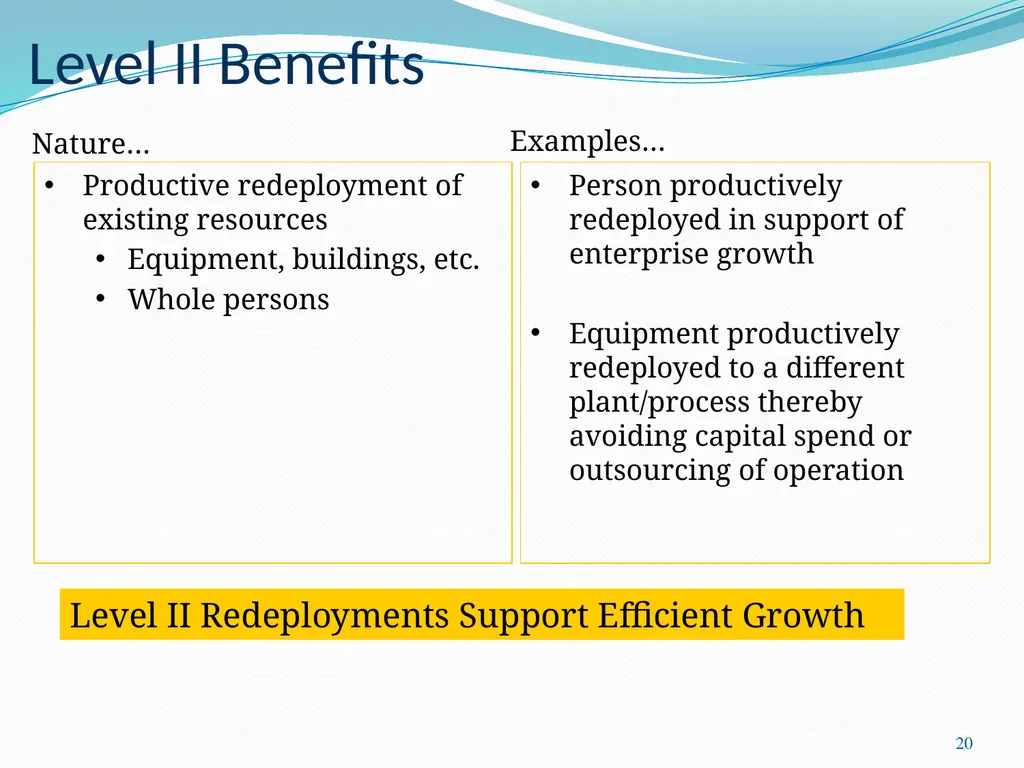
Productive redeployment of existing resources
Equipment, buildings, etc.
Whole persons Person productively redeployed in support of enterprise growth
Equipment productively redeployed to a different plant/process thereby avoiding capital spend or outsourcing of operation Examples… Nature… Level II Redeployments Support Efficient Growth Level II Benefits 20<br>
21
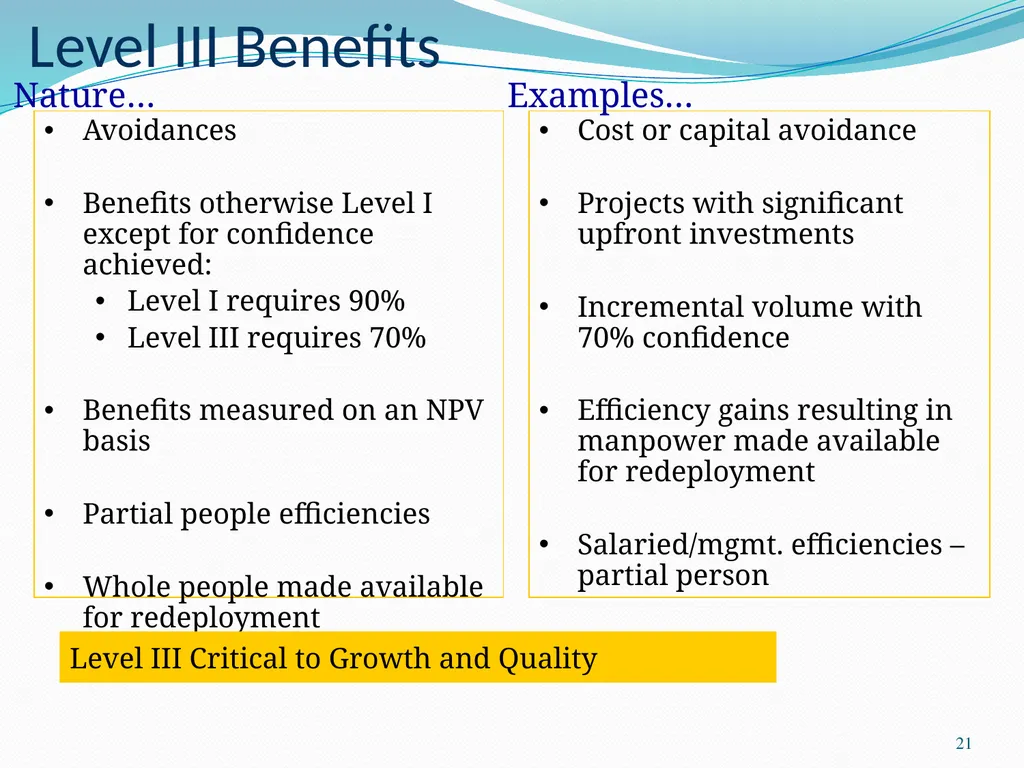
Avoidances
Benefits otherwise Level I except for confidence achieved:
Level I requires 90%
Level III requires 70%
Benefits measured on an NPV basis
Partial people efficiencies
Whole people made available for redeployment Cost or capital avoidance
Projects with significant upfront investments
Incremental volume with 70% confidence
Efficiency gains resulting in manpower made available for redeployment
Salaried/mgmt. efficiencies – partial person Nature… Examples… Level III Critical to Growth and Quality Level III Benefits 21<br>
22
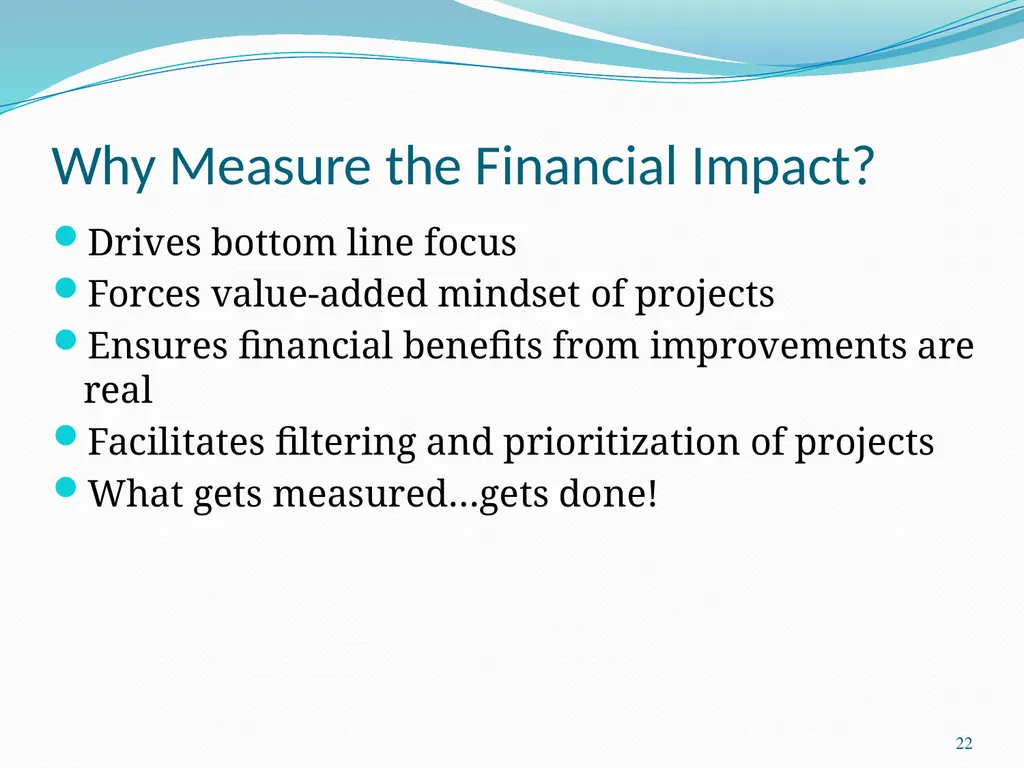
Why Measure the Financial Impact? Drives bottom line focus
Forces value-added mindset of projects
Ensures financial benefits from improvements are real
Facilitates filtering and prioritization of projects
What gets measured…gets done! 22<br>
Forces value-added mindset of projects
Ensures financial benefits from improvements are real
Facilitates filtering and prioritization of projects
What gets measured…gets done! 22<br>
23
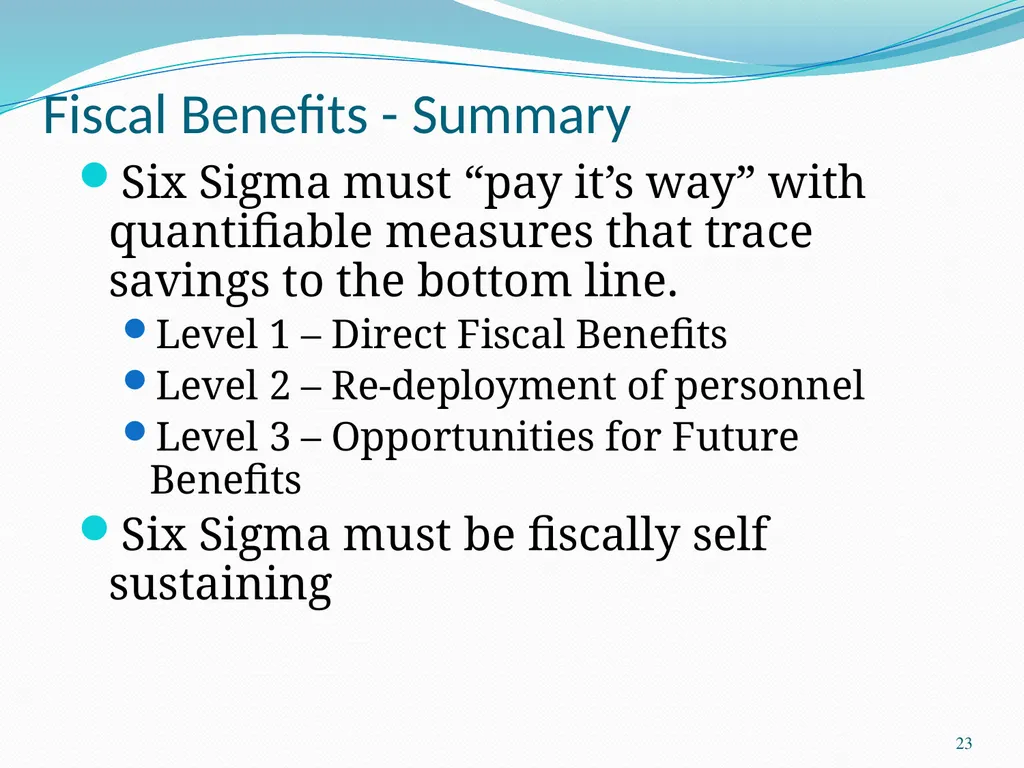
Fiscal Benefits - Summary Six Sigma must “pay it’s way” with quantifiable measures that trace savings to the bottom line.
Level 1 – Direct Fiscal Benefits
Level 2 – Re-deployment of personnel
Level 3 – Opportunities for Future Benefits
Six Sigma must be fiscally self sustaining 23<br>
Level 1 – Direct Fiscal Benefits
Level 2 – Re-deployment of personnel
Level 3 – Opportunities for Future Benefits
Six Sigma must be fiscally self sustaining 23<br>
24
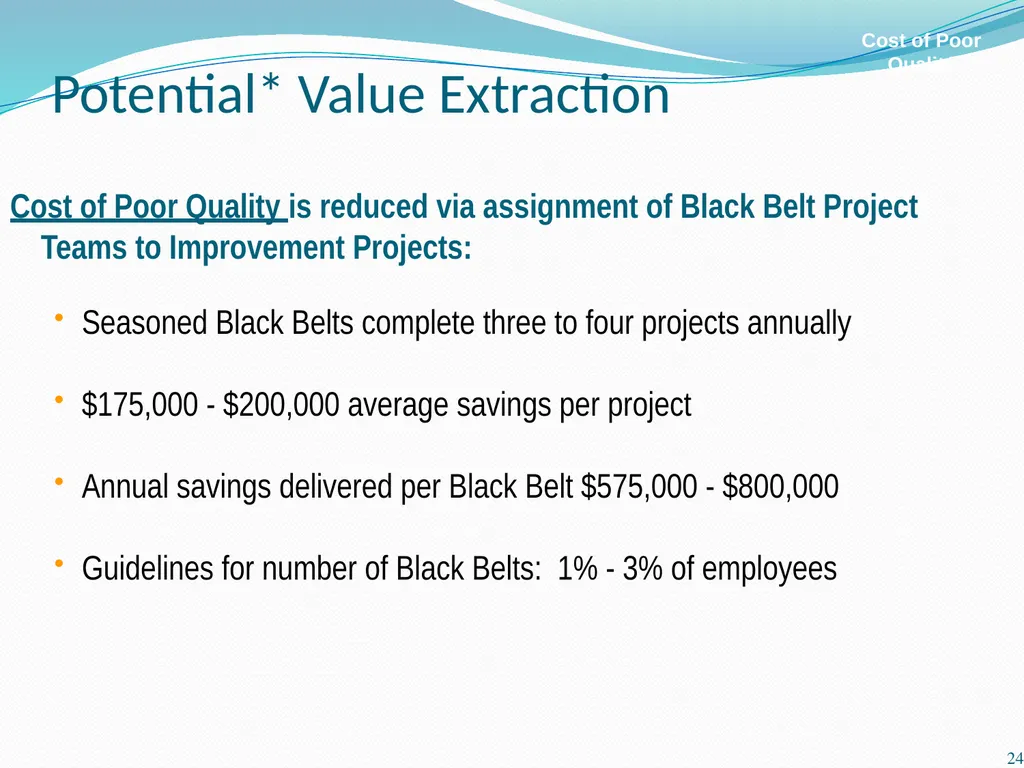
Potential* Value Extraction Cost of Poor Quality is reduced via assignment of Black Belt Project Teams to Improvement Projects:
Seasoned Black Belts complete three to four projects annually
$175,000 - $200,000 average savings per project
Annual savings delivered per Black Belt $575,000 - $800,000
Guidelines for number of Black Belts: 1% - 3% of employees 24 Cost of Poor Quality<br>
Seasoned Black Belts complete three to four projects annually
$175,000 - $200,000 average savings per project
Annual savings delivered per Black Belt $575,000 - $800,000
Guidelines for number of Black Belts: 1% - 3% of employees 24 Cost of Poor Quality<br>
25
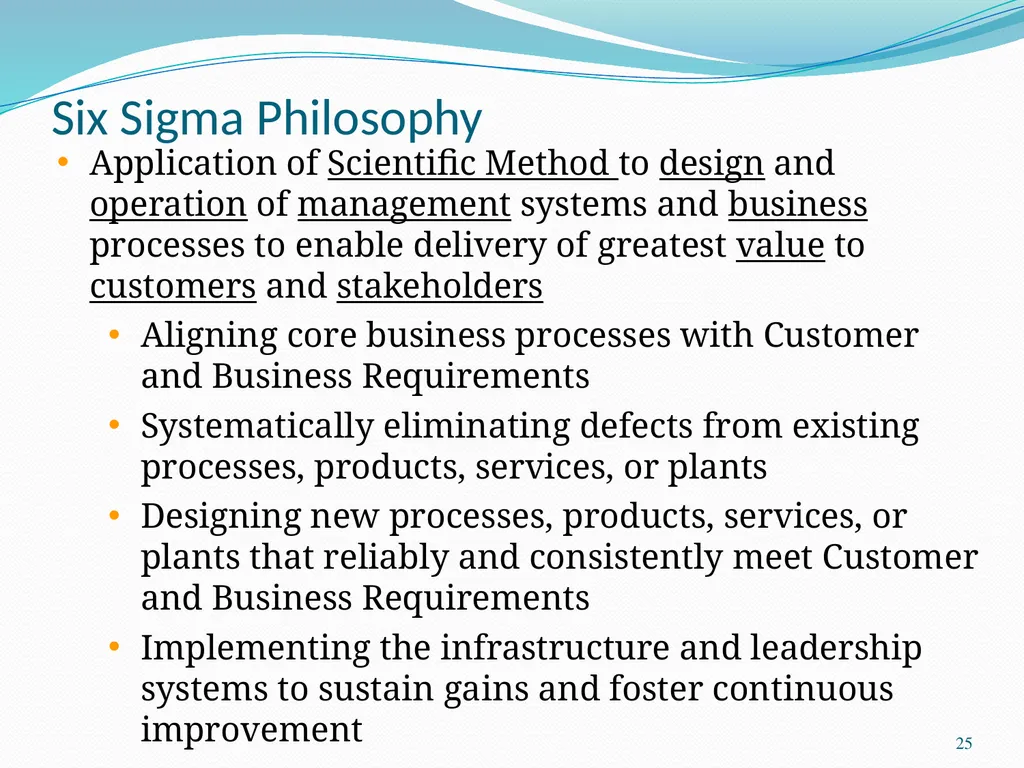
Six Sigma Philosophy 25 Application of Scientific Method to design and operation of management systems and business processes to enable delivery of greatest value to customers and stakeholders
Aligning core business processes with Customer and Business Requirements
Systematically eliminating defects from existing processes, products, services, or plants
Designing new processes, products, services, or plants that reliably and consistently meet Customer and Business Requirements
Implementing the infrastructure and leadership systems to sustain gains and foster continuous improvement<br>
26
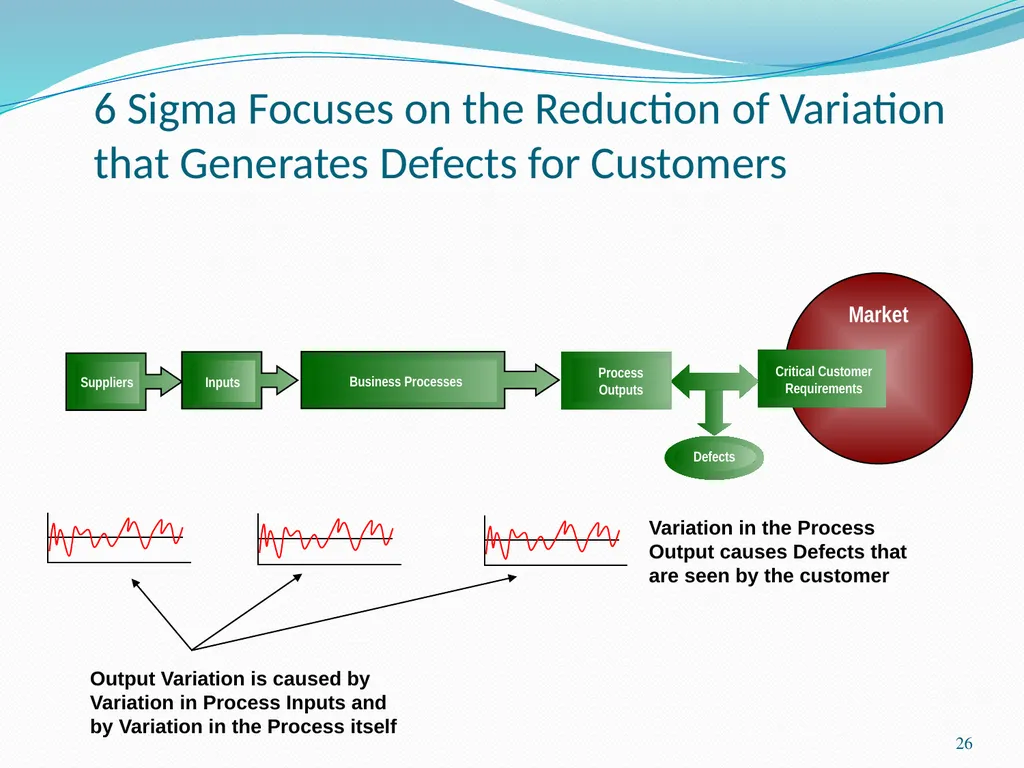
Market Variation in the Process Output causes Defects that are seen by the customer Output Variation is caused by Variation in Process Inputs and by Variation in the Process itself 6 Sigma Focuses on the Reduction of Variation that Generates Defects for Customers 26<br>
27
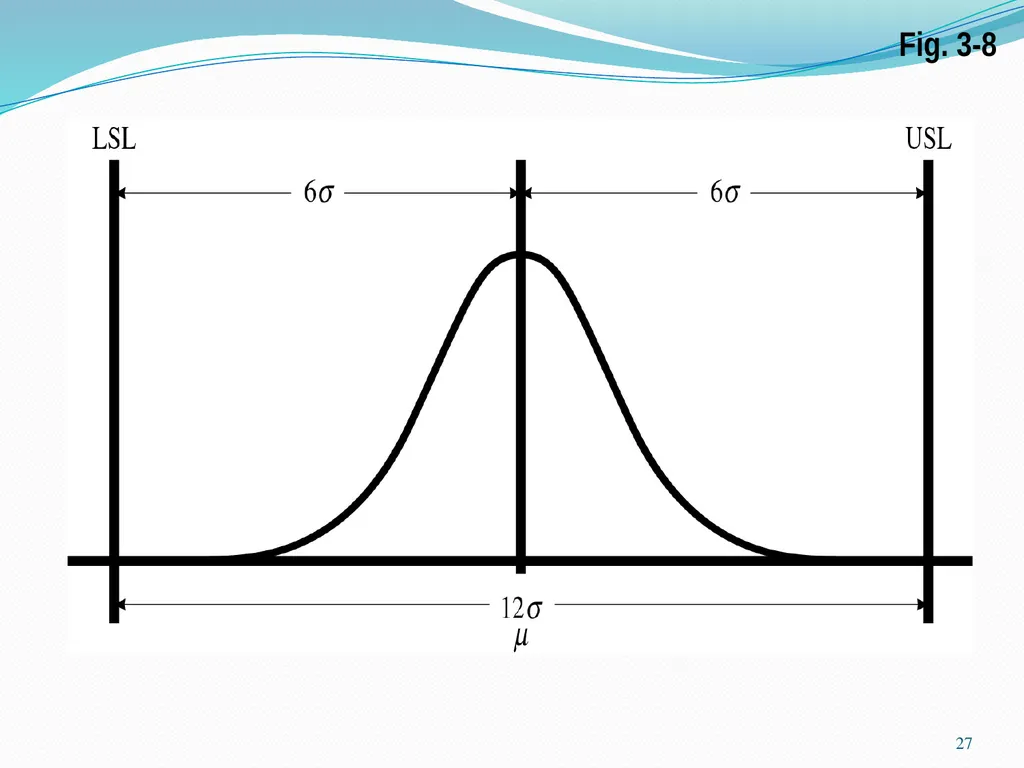
Fig. 3-8 27<br>
28
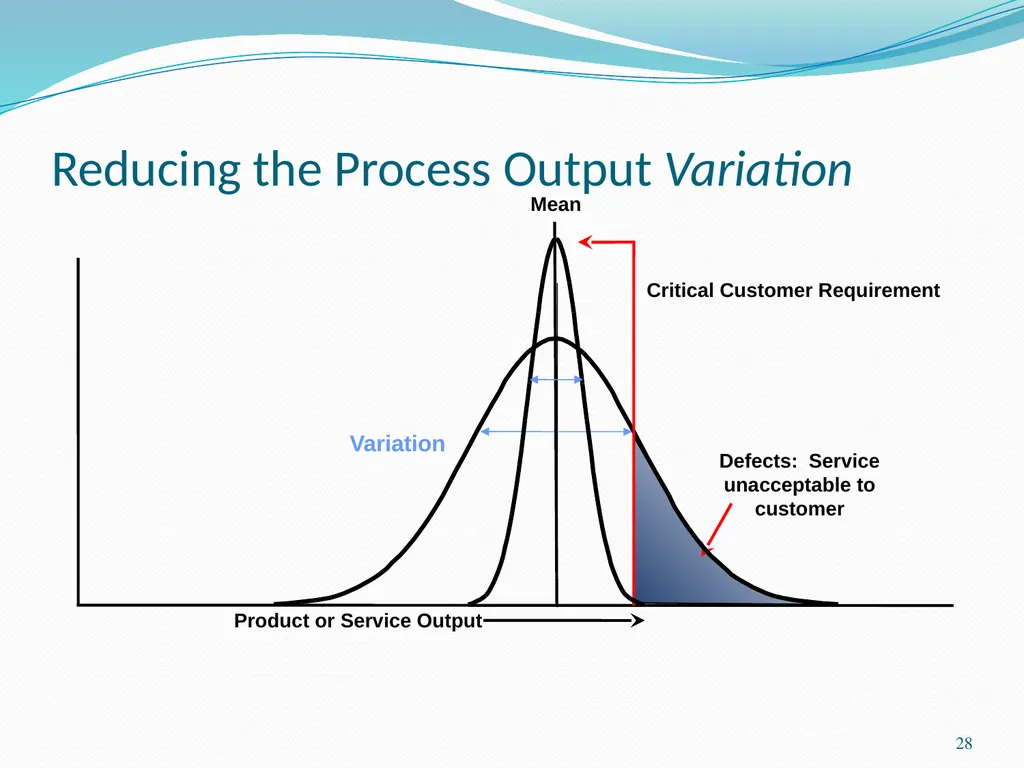
Reducing the Process Output Variation Mean Variation Product or Service Output Critical Customer Requirement 28<br>
29
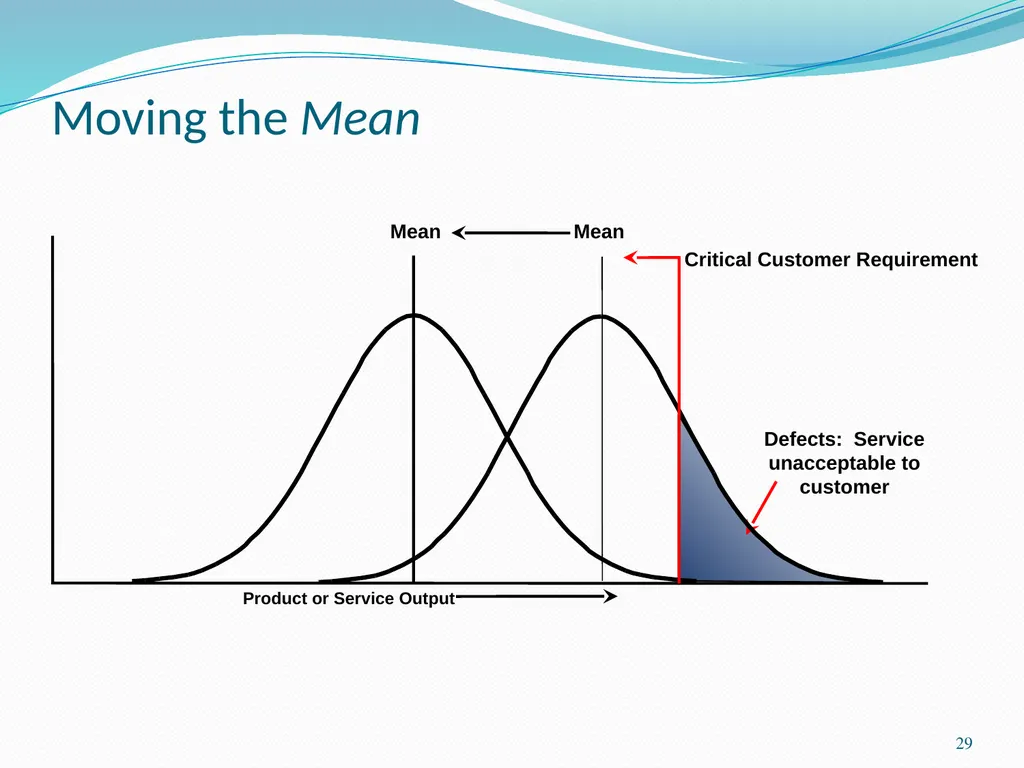
Moving the Mean Product or Service Output Critical Customer Requirement Mean 29<br>
30
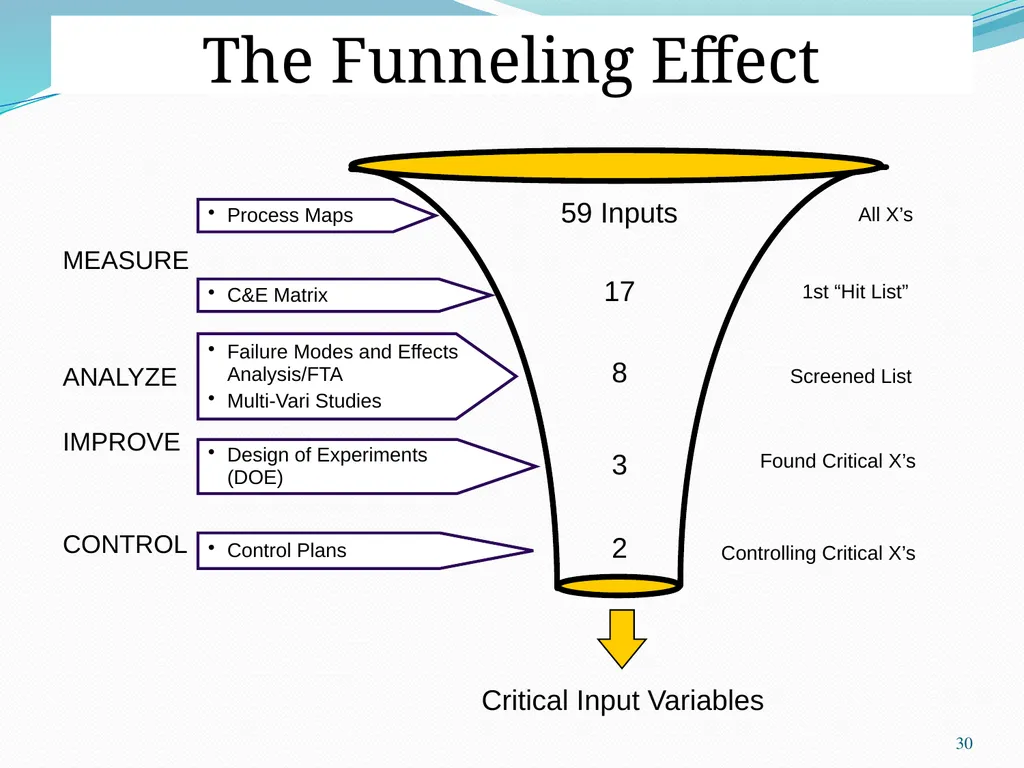
The Funneling Effect 30<br>
31
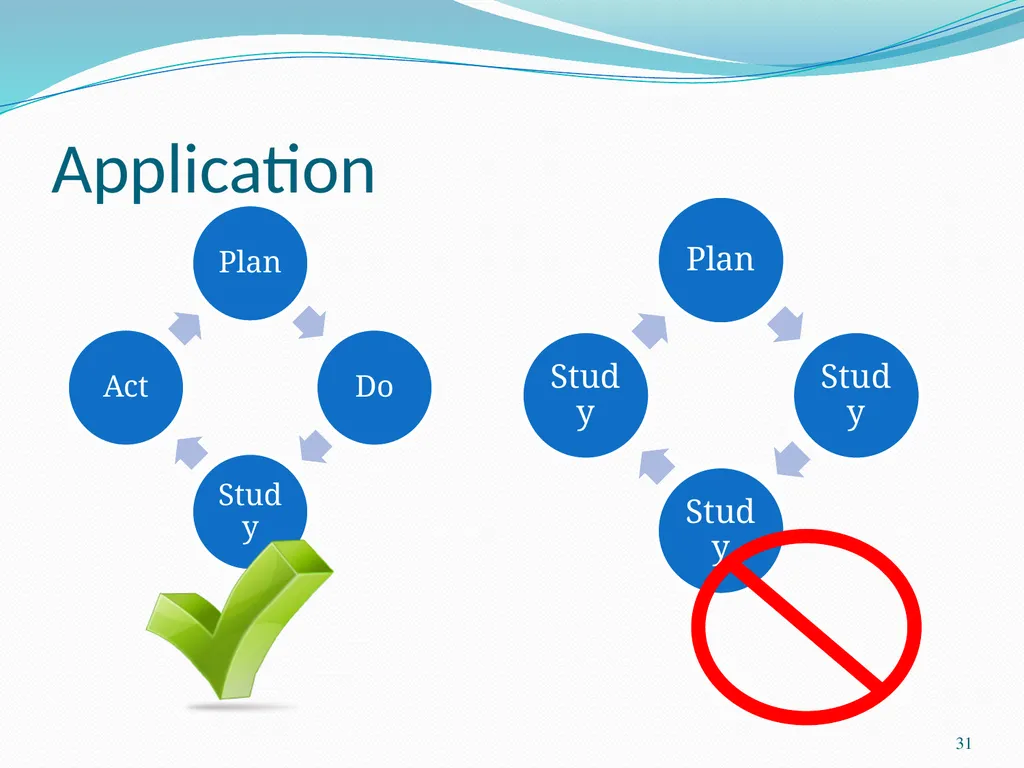
Application 31<br>
32
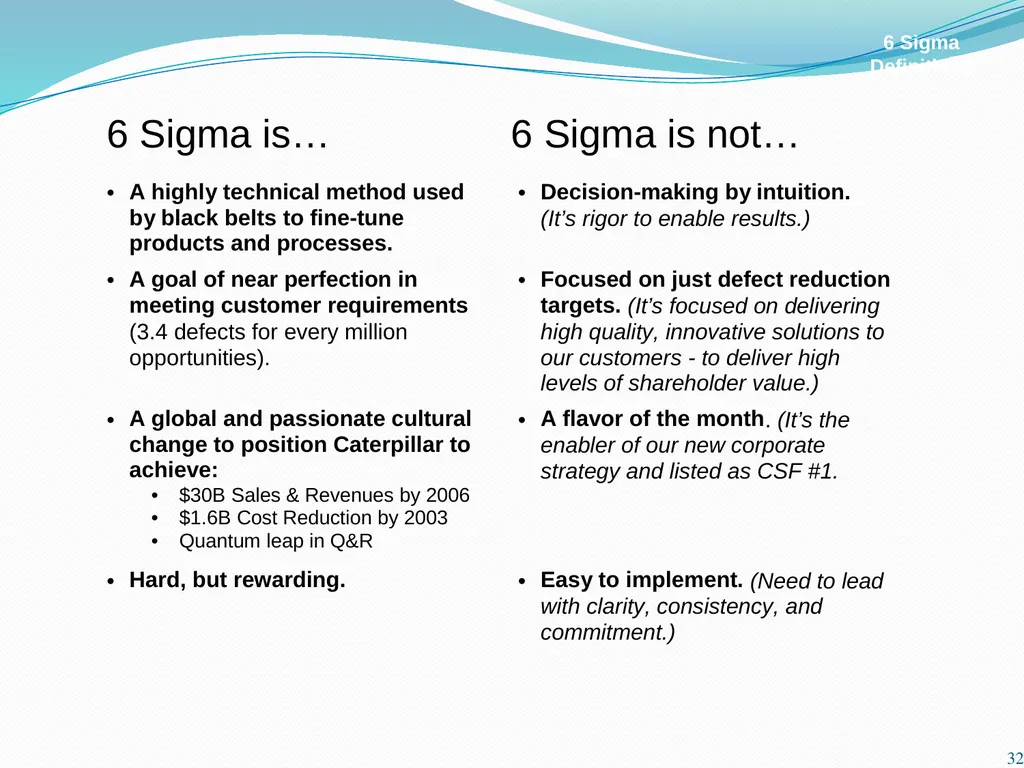
32 6 Sigma Definitions<br>
33
Implementing Six Sigma 33<br>
34
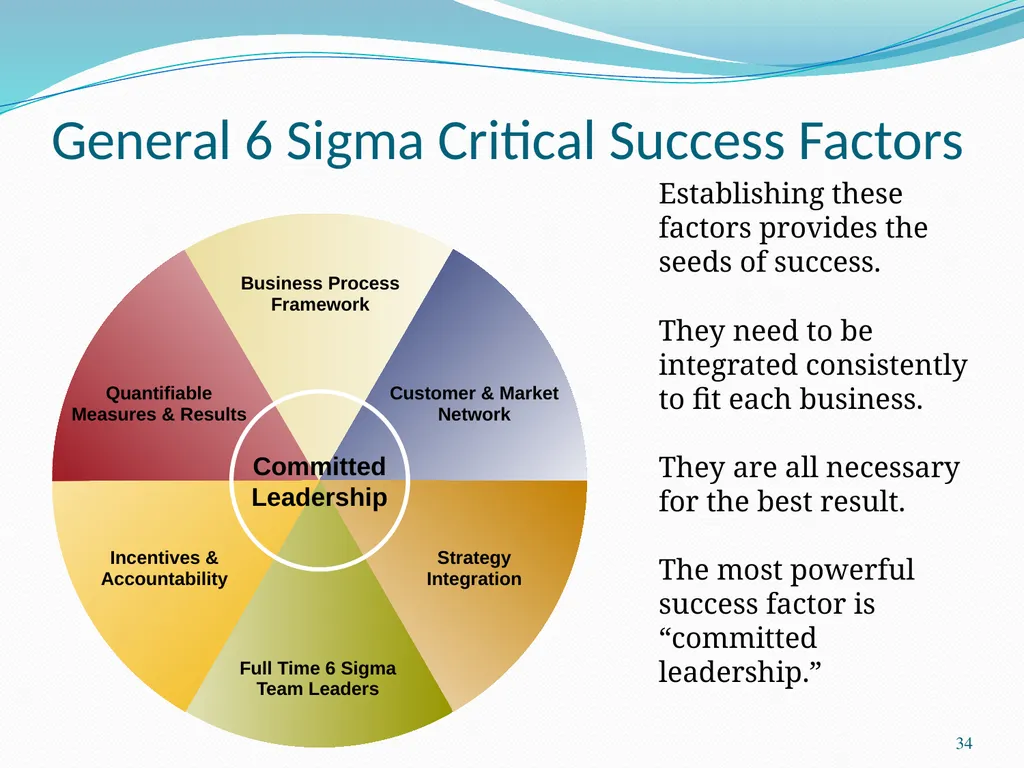
Establishing these factors provides the seeds of success.
They need to be integrated consistently to fit each business.
They are all necessary for the best result.
The most powerful success factor is “committed leadership.” General 6 Sigma Critical Success Factors 34<br>
They need to be integrated consistently to fit each business.
They are all necessary for the best result.
The most powerful success factor is “committed leadership.” General 6 Sigma Critical Success Factors 34<br>
35
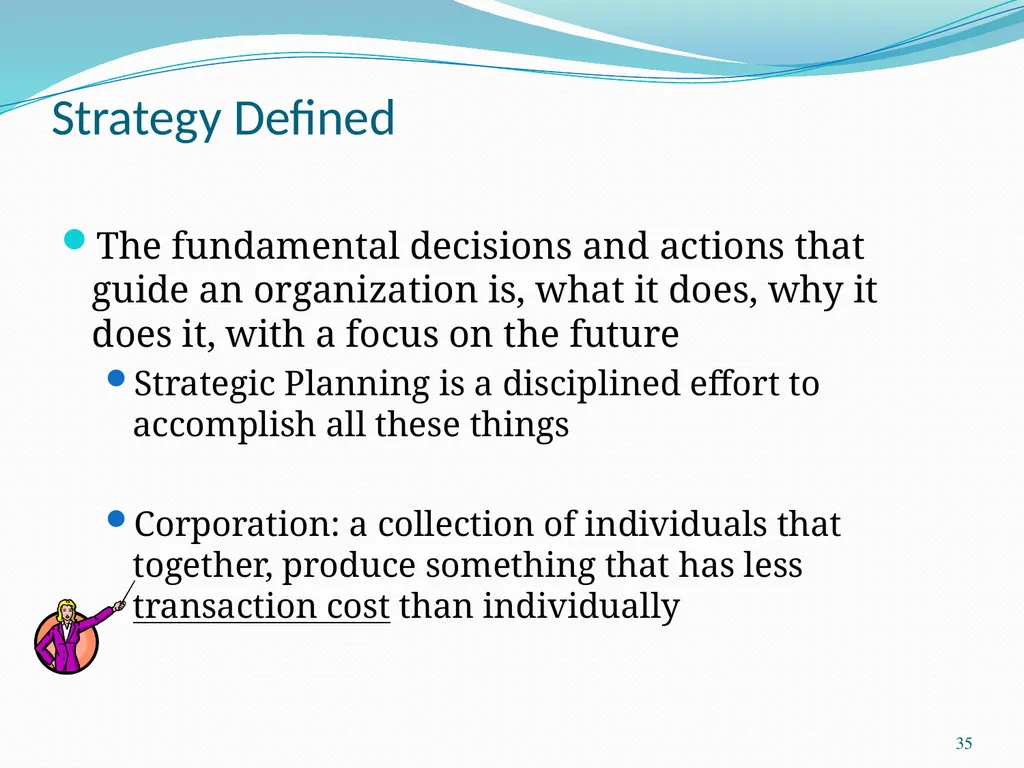
Strategy Defined The fundamental decisions and actions that guide an organization is, what it does, why it does it, with a focus on the future
Strategic Planning is a disciplined effort to accomplish all these things
Corporation: a collection of individuals that together, produce something that has less transaction cost than individually 35<br>
Strategic Planning is a disciplined effort to accomplish all these things
Corporation: a collection of individuals that together, produce something that has less transaction cost than individually 35<br>
36
36<br>
37
Implementing Six Sigma: 3 Basic On-Ramps Business Transformation
Pros: rapid change, significant improvements in a few months
Cons: chaotic, challenging to muster the time and people needed to meet the demands
Strategic Improvement
Pros: helps to focus on higher-priority opportunities, limits the challenges
Cons: people feel left out in the process, uncertainty on how to align parts of the company that are doing Six Sigma with those that aren’t
- Problem Solving
Pros: less disruptive, gives the company a chance to get a feel for how it works
Cons: doesn’t fix underlying problems or take a broad view of making change successful 37<br>
38
Leadership Champion the process by understanding 6 Sigma and committed to success
Guidance through creating “vision” by drawing mental images of future
Visions embody abstract values; convert the abstractions 38<br>
Guidance through creating “vision” by drawing mental images of future
Visions embody abstract values; convert the abstractions 38<br>
39
Visioning Stories are another way to communicate abstract ideas
Event(s) occur that capture the essence of leader’s vision
May create situation with powerful symbolic meaning and use to communicate vision – serves purpose for clarity 39<br>
Event(s) occur that capture the essence of leader’s vision
May create situation with powerful symbolic meaning and use to communicate vision – serves purpose for clarity 39<br>