Skill Needs for the Demographic, Digital and Green Transitions: OECD Evidence Stefano Scarpetta Director, Employment, Labour and Social Affairs OECD 1 Old-age dependency ratio (65 and over 20-64), 2022 and 2050 Source: OECD Statistics
"Skill Needs for the Demographic, Digital and Green" is the property of its rightful owner. Permission is granted to
download and print the materials on this website for personal, non-commercial use only, and to display it
on your personal computer provided you do not modify the materials and that you retain all copyright
notices contained in the materials. By downloading content from our website, you accept the terms of this
agreement.
Presentation Transcript
01
Skill Needs for the Demographic, Digital and Green Transitions: OECD Evidence Stefano Scarpetta
Director, Employment, Labour and Social Affairs
OECD 1<br>
02
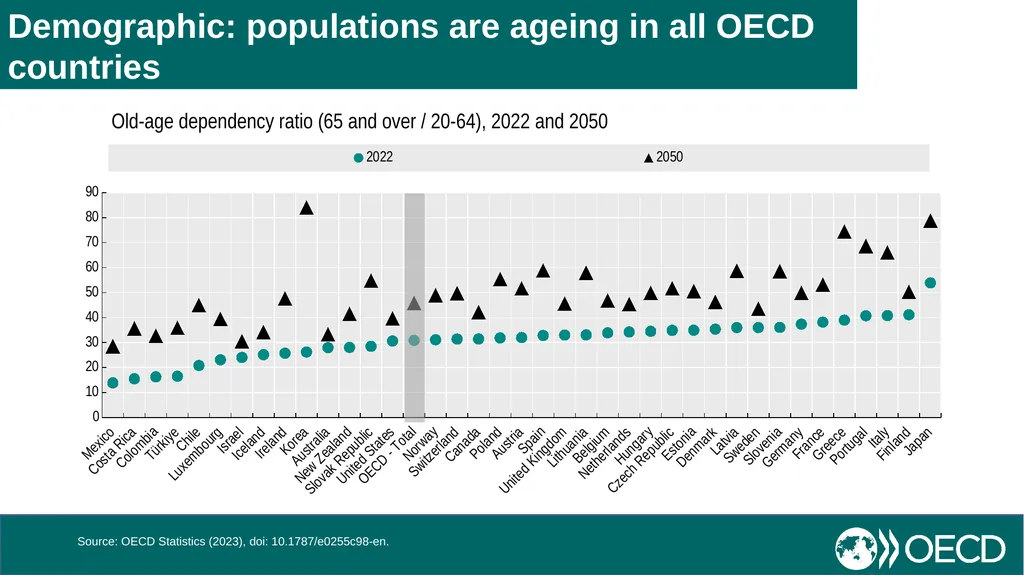
Old-age dependency ratio (65 and over / 20-64), 2022 and 2050 Source: OECD Statistics (2023), doi: 10.1787/e0255c98-en. Demographic: populations are ageing in all OECD countries<br>
03
SUPPLY
Skills obsolescence
Physical intensity of tasks
Motivation to train DEMAND
Consumer preferences by age
Healthcare pressures in ageing societies Demographic: population ageing affects both
demand and supply of skills<br>
04
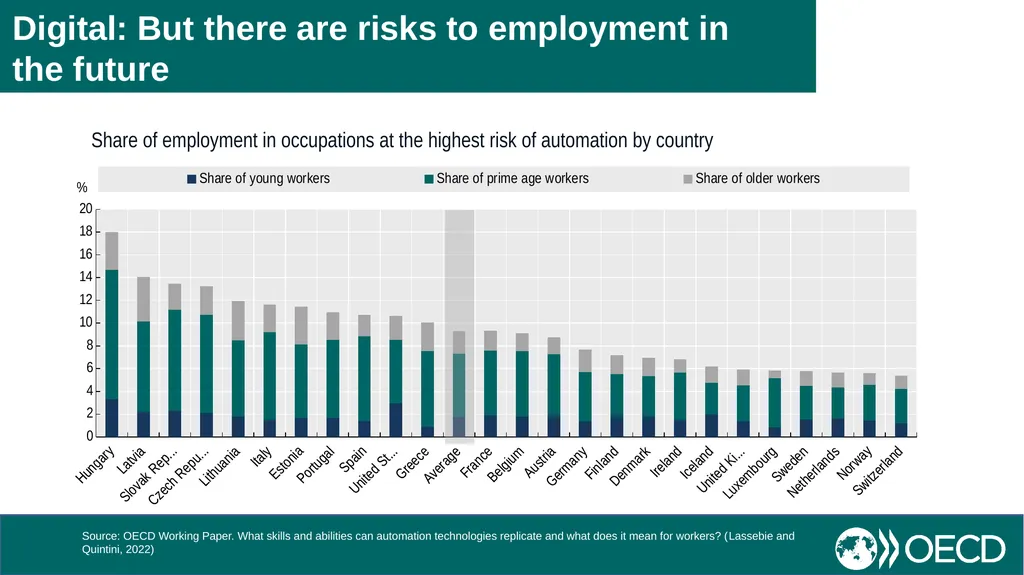
Digital: But there are risks to employment in
the future Share of employment in occupations at the highest risk of automation by country Source: OECD Working Paper. What skills and abilities can automation technologies replicate and what does it mean for workers? (Lassebie and Quintini, 2022)<br>
05
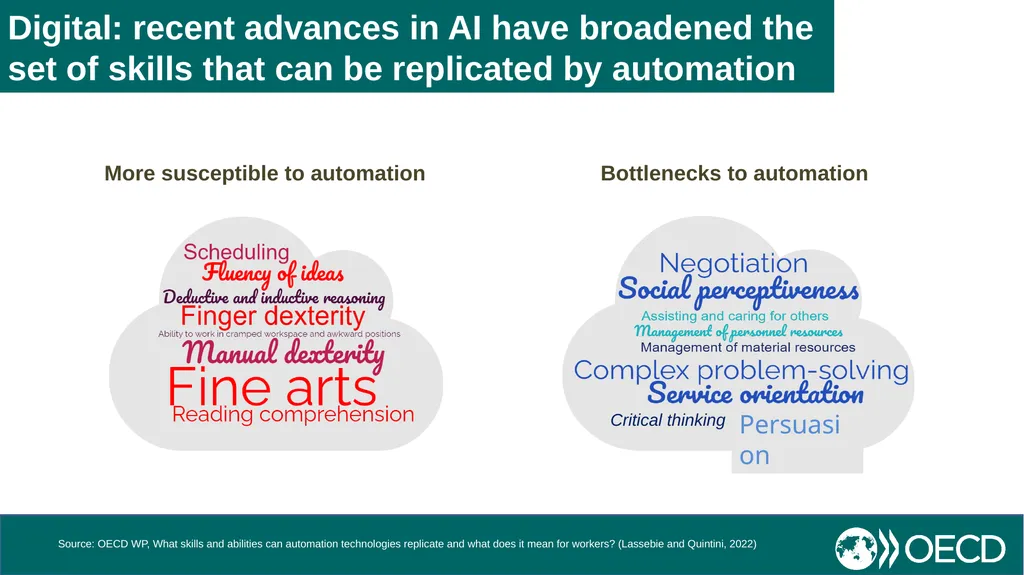
Digital: recent advances in AI have broadened the set of skills that can be replicated by automation Unlocking Talent for a Greener Future More susceptible to automation Bottlenecks to automation Source: OECD WP, What skills and abilities can automation technologies replicate and what does it mean for workers? (Lassebie and Quintini, 2022) Critical thinking Persuasion<br>
06
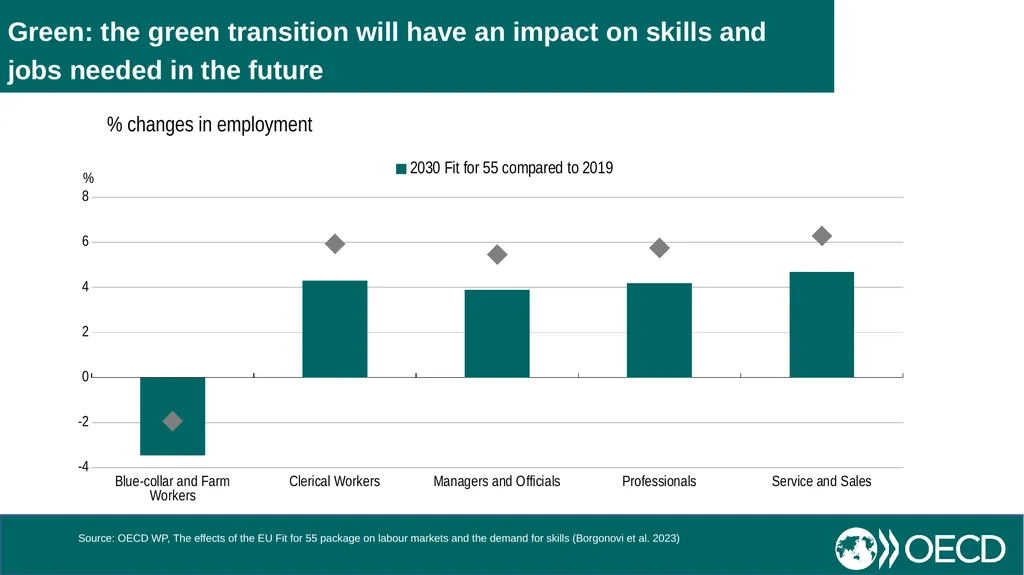
Green: the green transition will have an impact on skills and jobs needed in the future Unlocking Talent for a Greener Future Source: OECD WP, The effects of the EU Fit for 55 package on labour markets and the demand for skills (Borgonovi et al. 2023) % changes in employment<br>
07
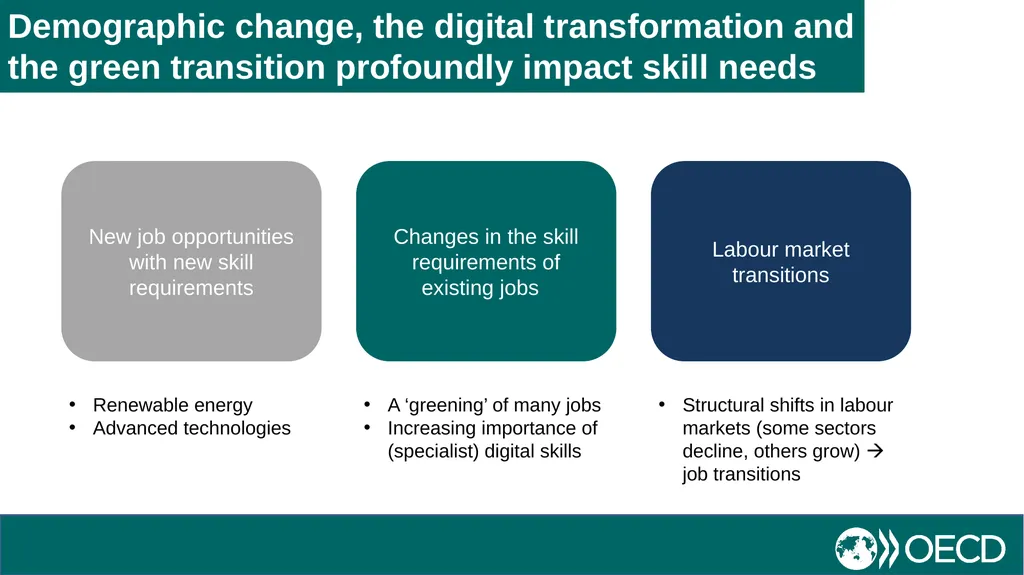
Demographic change, the digital transformation and the green transition profoundly impact skill needs New job opportunities with new skill requirements Changes in the skill requirements of existing jobs Labour market transitions Renewable energy
Advanced technologies A ‘greening’ of many jobs
Increasing importance of (specialist) digital skills Structural shifts in labour markets (some sectors decline, others grow) job transitions<br>
08
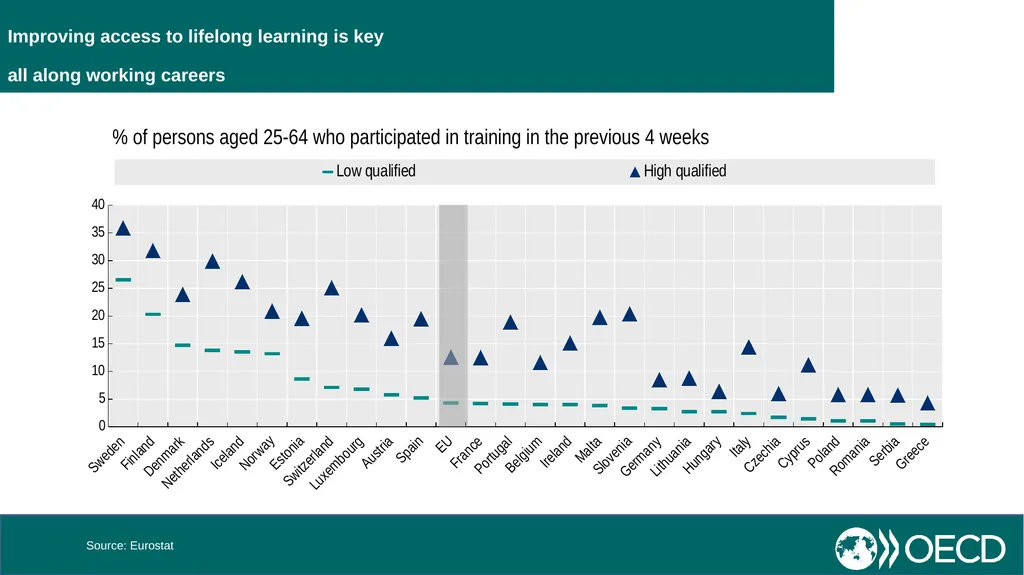
Unlocking Talent for a Greener Future Improving access to lifelong learning is key all along working careers % of persons aged 25-64 who participated in training in the previous 4 weeks Source: Eurostat<br>
09
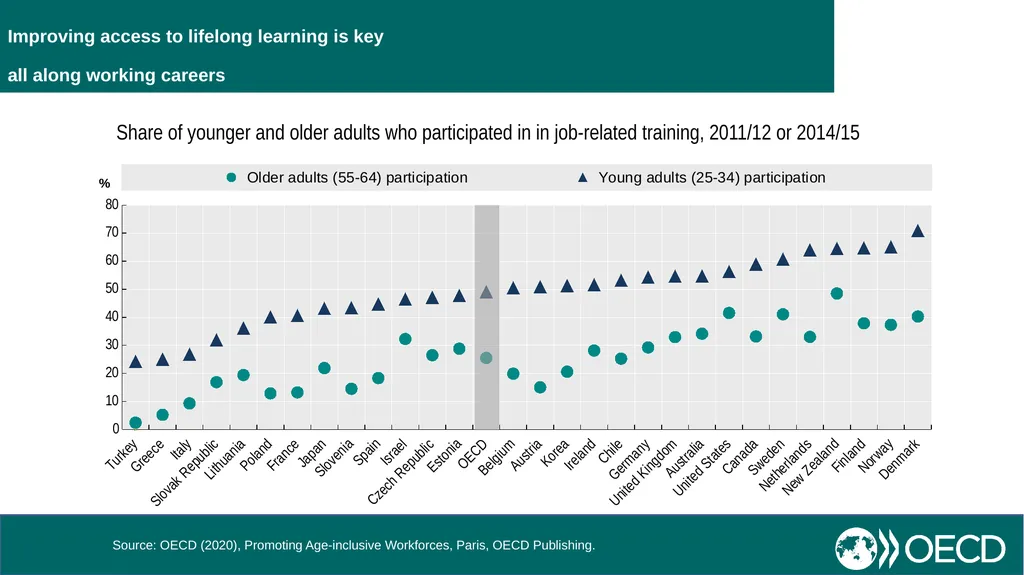
Share of younger and older adults who participated in in job-related training, 2011/12 or 2014/15 Unlocking Talent for a Greener Future Source: OECD (2020), Promoting Age-inclusive Workforces, Paris, OECD Publishing. Improving access to lifelong learning is key all along working careers<br>
10
% of adults who did not participate in training by barrier to participation, OECD average Unlocking Talent for a Greener Future Source: Survey of Adult Skills (PIAAC) (2012, 2015 and 2018) Training is crucial but many adults do not train<br>
11
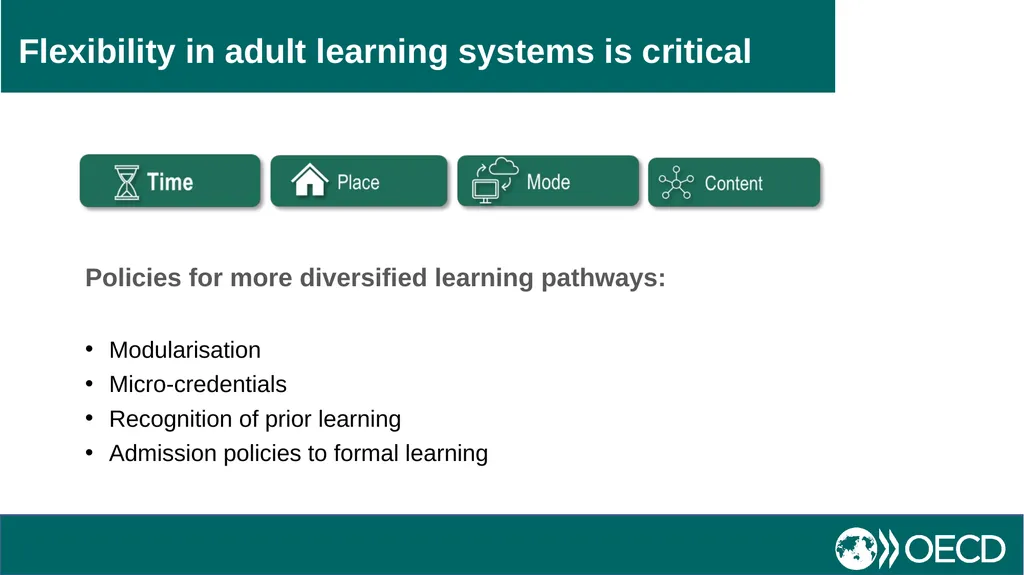
Flexibility in adult learning systems is critical Policies for more diversified learning pathways:
Modularisation
Micro-credentials
Recognition of prior learning
Admission policies to formal learning Unlocking Talent for a Greener Future<br>
12
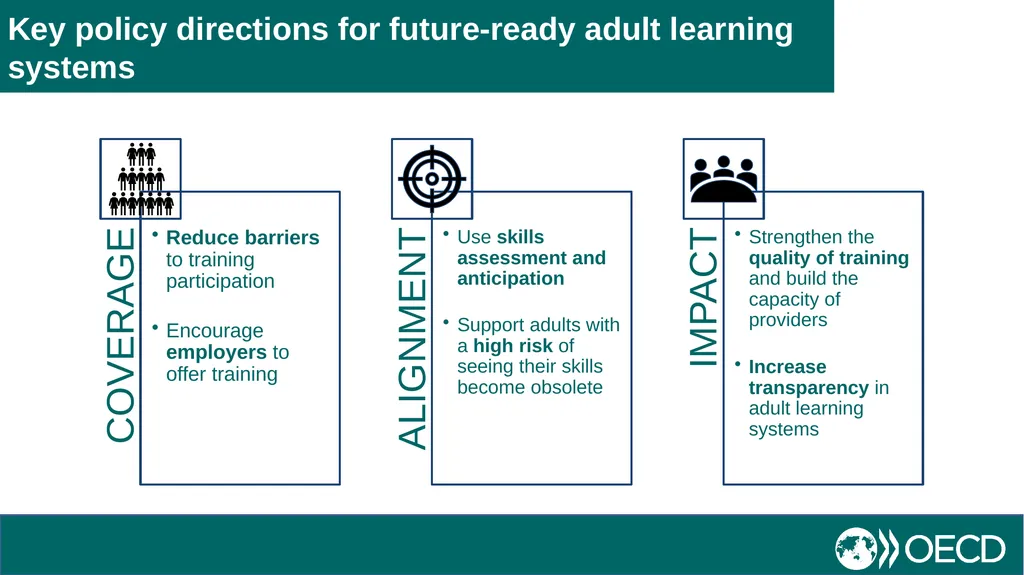
Unlocking Talent for a Greener Future Key policy directions for future-ready adult learning systems Unlocking Talent for a Greener Future<br>
13
Thank you Advancing social justice, promoting decent work 13 Find out more about our work at: