Solid-Based Rapid Prototyping Systems Starting material is a solid Solid-based RP systems include the following processes: Laminated object manufacturing Fused deposition modeling Fused Deposition Modeling- FDM Developed by S. Scott Crump
"Solid-Based Rapid Prototyping Systems Starting" is the property of its rightful owner. Permission is granted to
download and print the materials on this website for personal, non-commercial use only, and to display it
on your personal computer provided you do not modify the materials and that you retain all copyright
notices contained in the materials. By downloading content from our website, you accept the terms of this
agreement.
Presentation Transcript
01
Solid-Based Rapid Prototyping Systems Starting material is a solid
Solid-based RP systems include the following processes:
Laminated object manufacturing
Fused deposition modeling<br>
02
Fused Deposition Modeling- FDM Developed by S. Scott Crump in the late 1980s
Commercialized in early 1990s
Principle of laying down molten material in layers
Nozzle is heated to melt the thermoplastics material
The print head moves on X-Y Axis to draw the layer
The platform drops down on Z for each layer
Separate dissolvable support material
Several material and color options 2 Fused Deposition Modeling (FDM) is an additive manufacturing technology.
Used for modeling, prototyping and production applications.<br>
03
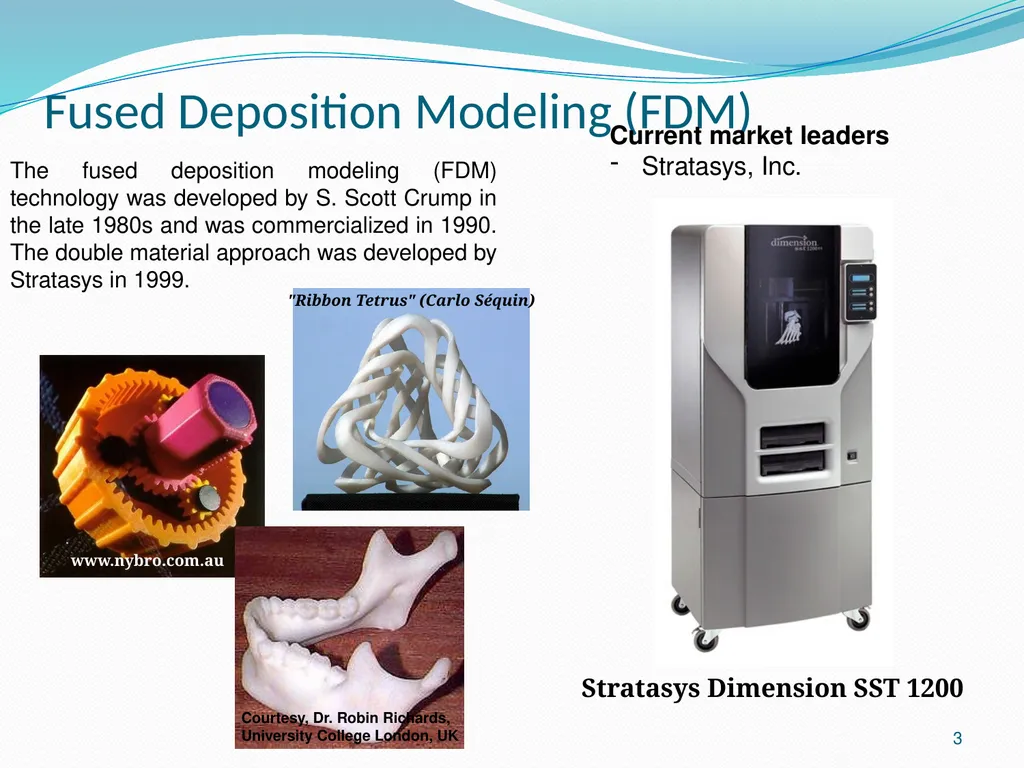
Fused Deposition Modeling (FDM) The fused deposition modeling (FDM) technology was developed by S. Scott Crump in the late 1980s and was commercialized in 1990. The double material approach was developed by Stratasys in 1999. 3 Current market leaders
Stratasys, Inc. Stratasys Dimension SST 1200 www.nybro.com.au<br>
04
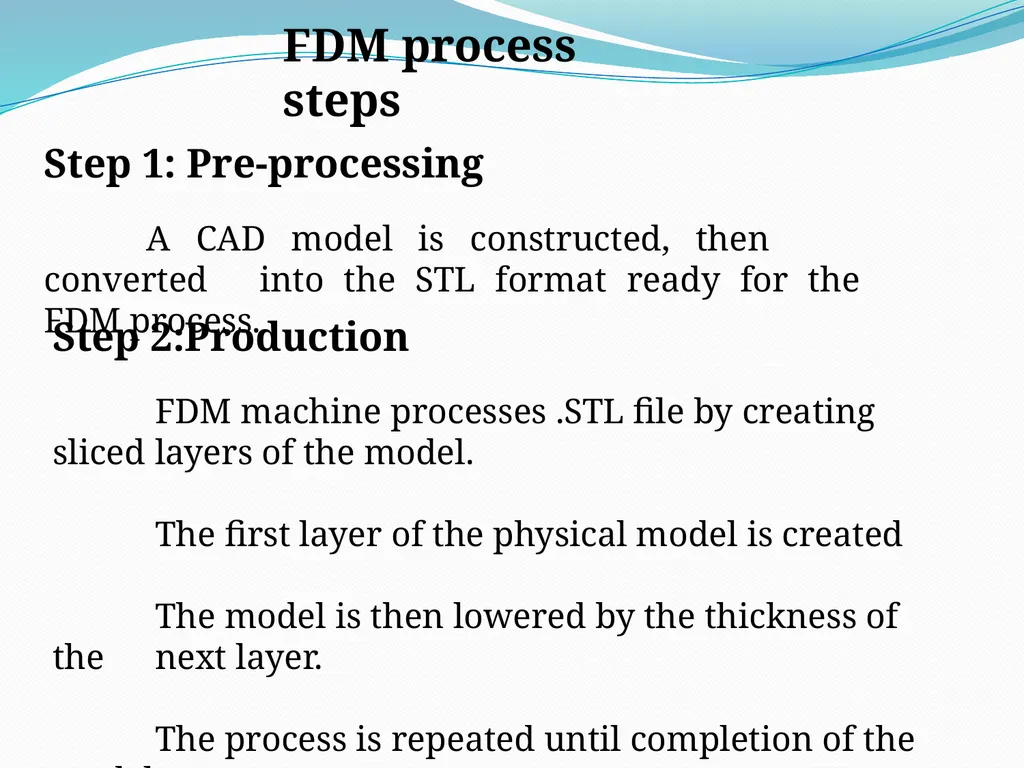
Step 1: Pre-processing
A CAD model is constructed, then converted into the STL format ready for the FDM process. Step 2:Production
FDM machine processes .STL file by creating sliced layers of the model.
The first layer of the physical model is created
The model is then lowered by the thickness of the next layer.
The process is repeated until completion of the model. FDM process steps<br>
05
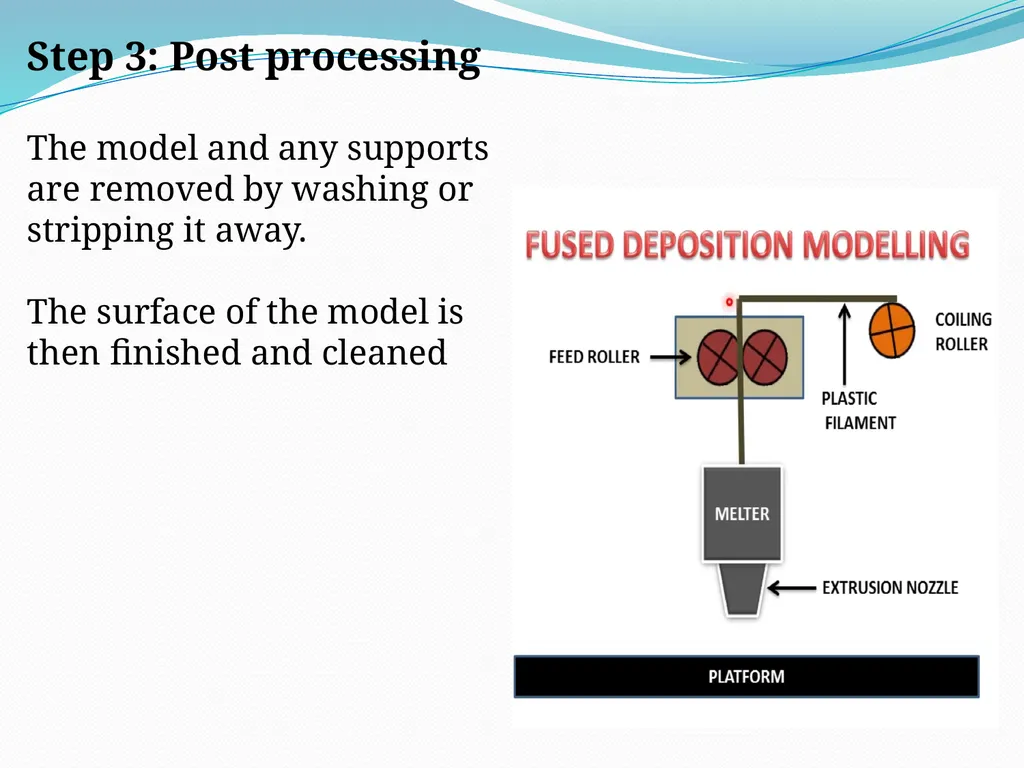
Step 3: Post processing
The model and any supports are removed by washing or stripping it away.
The surface of the model is then finished and cleaned<br>
06
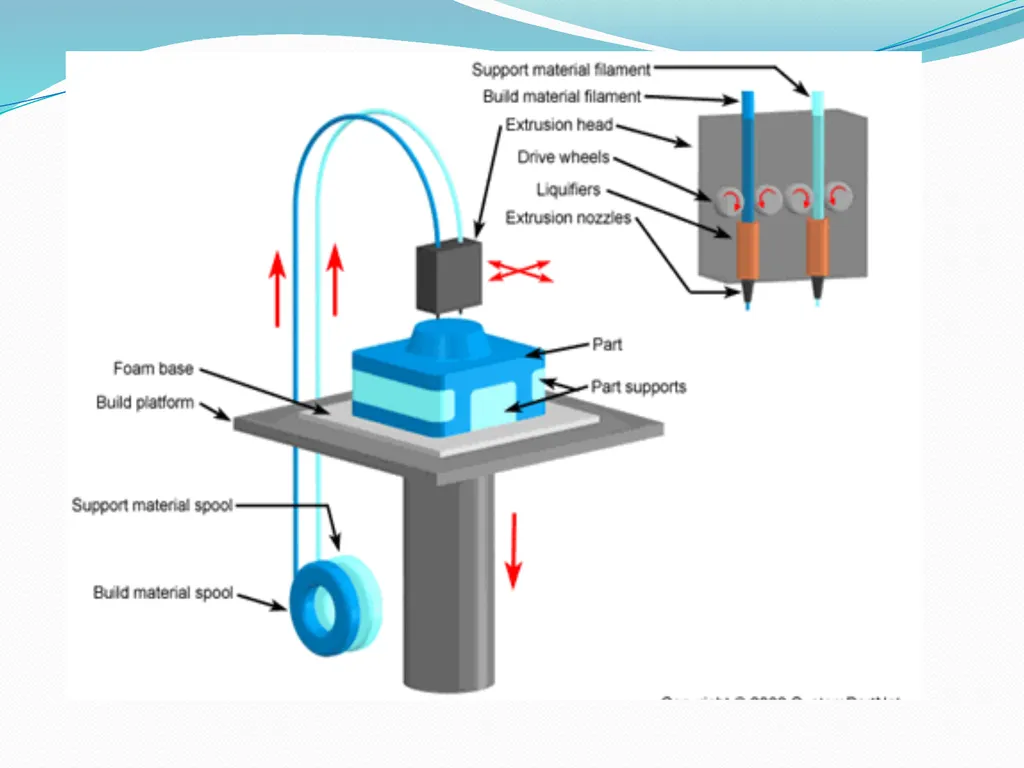
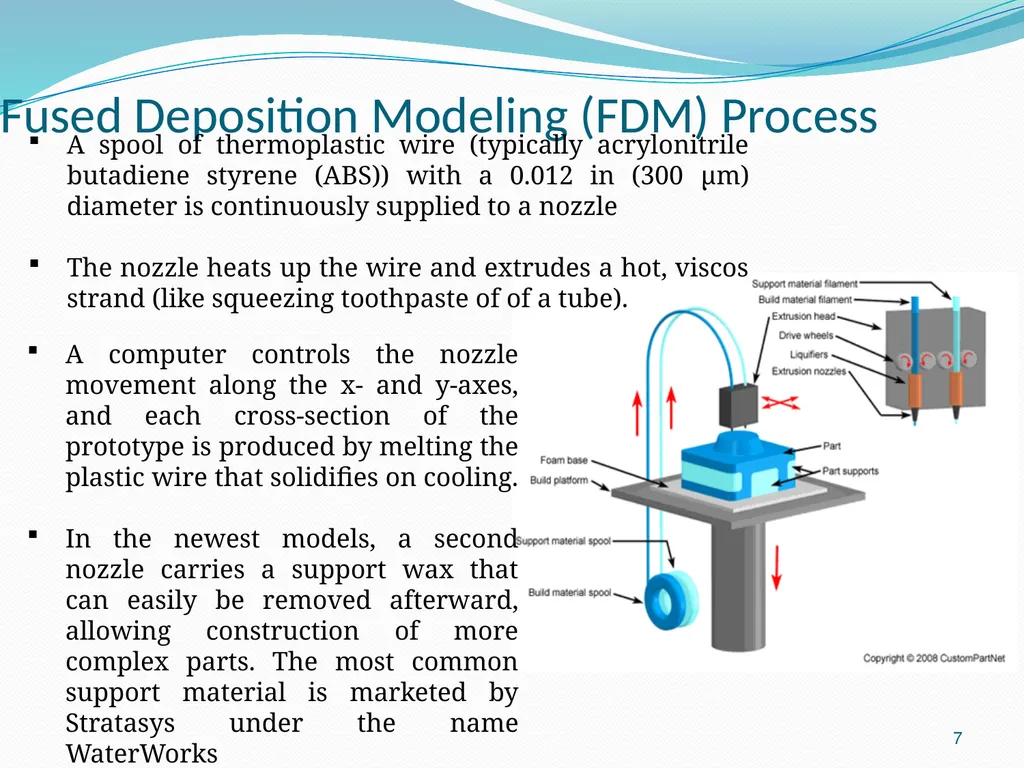
Fused Deposition Modeling (FDM) Process 7 A spool of thermoplastic wire (typically acrylonitrile butadiene styrene (ABS)) with a 0.012 in (300 μm) diameter is continuously supplied to a nozzle
The nozzle heats up the wire and extrudes a hot, viscos strand (like squeezing toothpaste of of a tube). A computer controls the nozzle movement along the x- and y-axes, and each cross-section of the prototype is produced by melting the plastic wire that solidifies on cooling.
In the newest models, a second nozzle carries a support wax that can easily be removed afterward, allowing construction of more complex parts. The most common support material is marketed by Stratasys under the name WaterWorks<br>
07
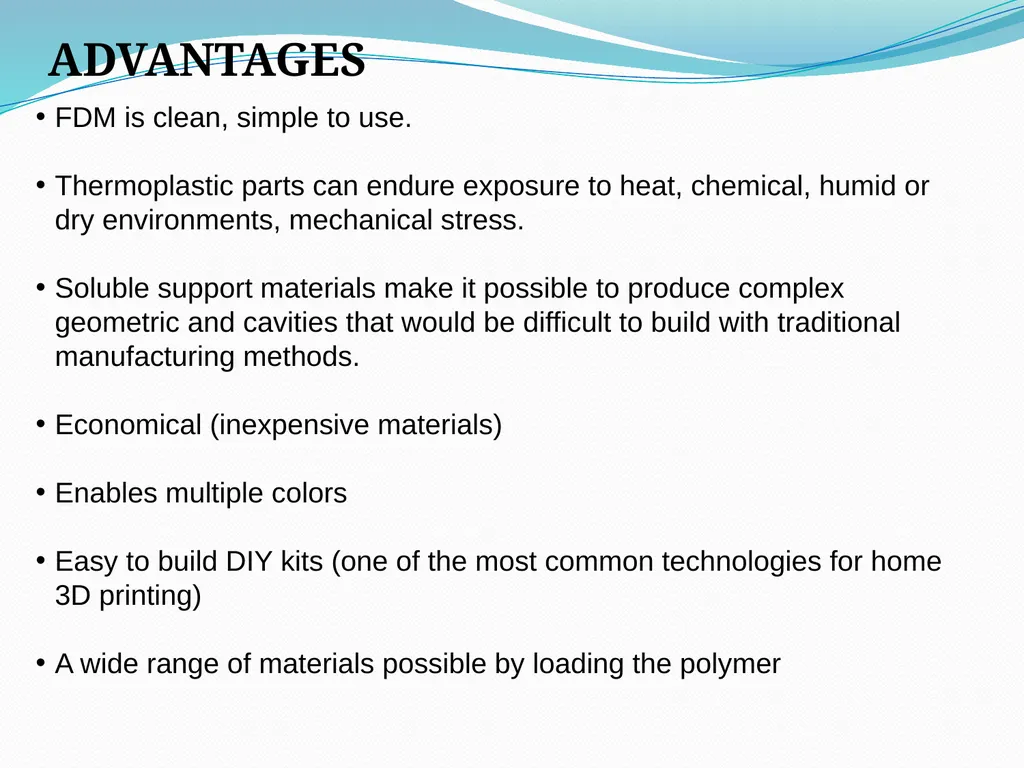
ADVANTAGES FDM is clean, simple to use.
Thermoplastic parts can endure exposure to heat, chemical, humid or dry environments, mechanical stress.
Soluble support materials make it possible to produce complex geometric and cavities that would be difficult to build with traditional manufacturing methods.
Economical (inexpensive materials)
Enables multiple colors
Easy to build DIY kits (one of the most common technologies for home 3D printing)
A wide range of materials possible by loading the polymer<br>
08
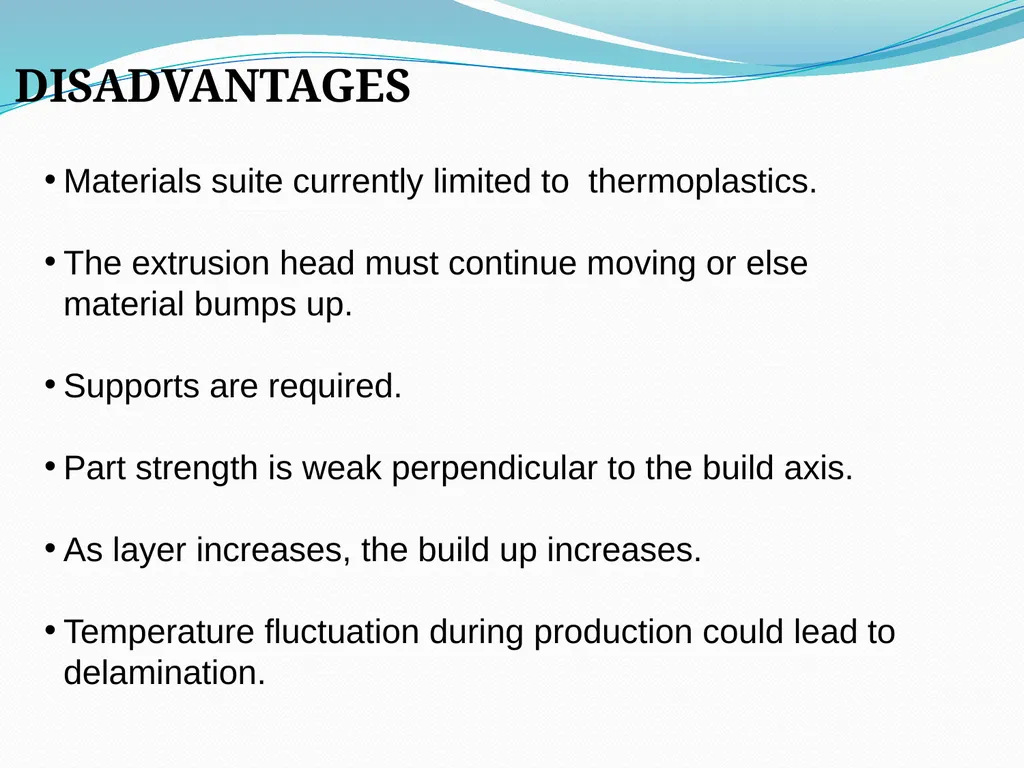
DISADVANTAGES Materials suite currently limited to thermoplastics.
The extrusion head must continue moving or else material bumps up.
Supports are required.
Part strength is weak perpendicular to the build axis.
As layer increases, the build up increases.
Temperature fluctuation during production could lead to delamination.<br>
09
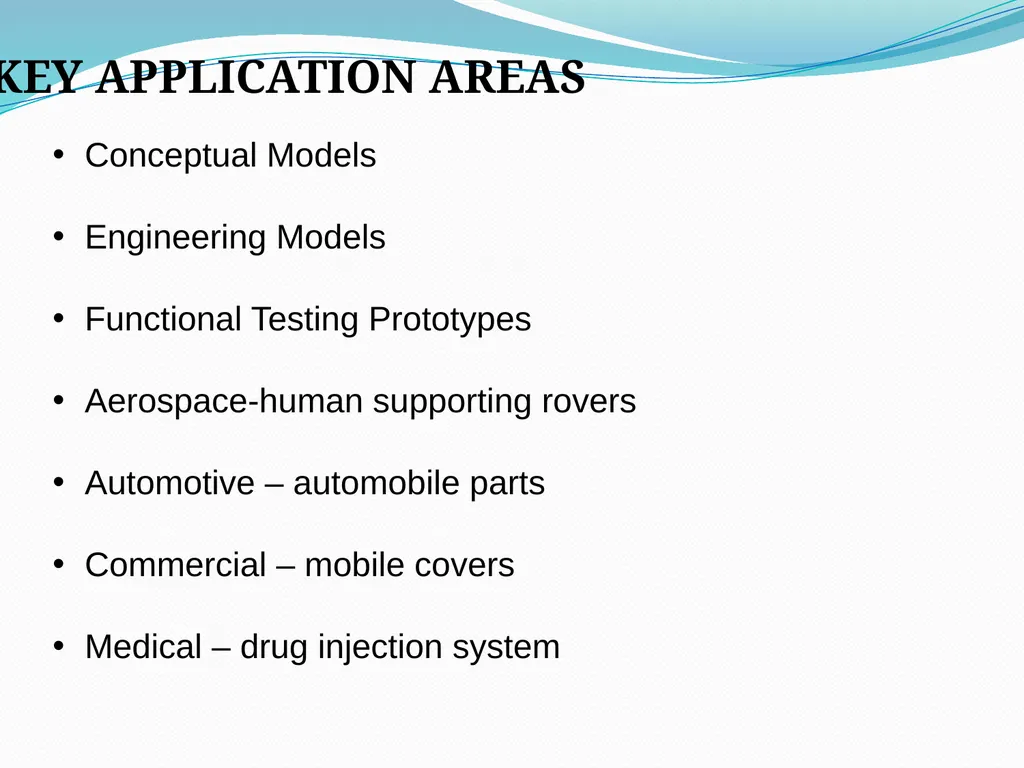
KEY APPLICATION AREAS Conceptual Models
Engineering Models
Functional Testing Prototypes
Aerospace-human supporting rovers
Automotive – automobile parts
Commercial – mobile covers
Medical – drug injection system<br>
10
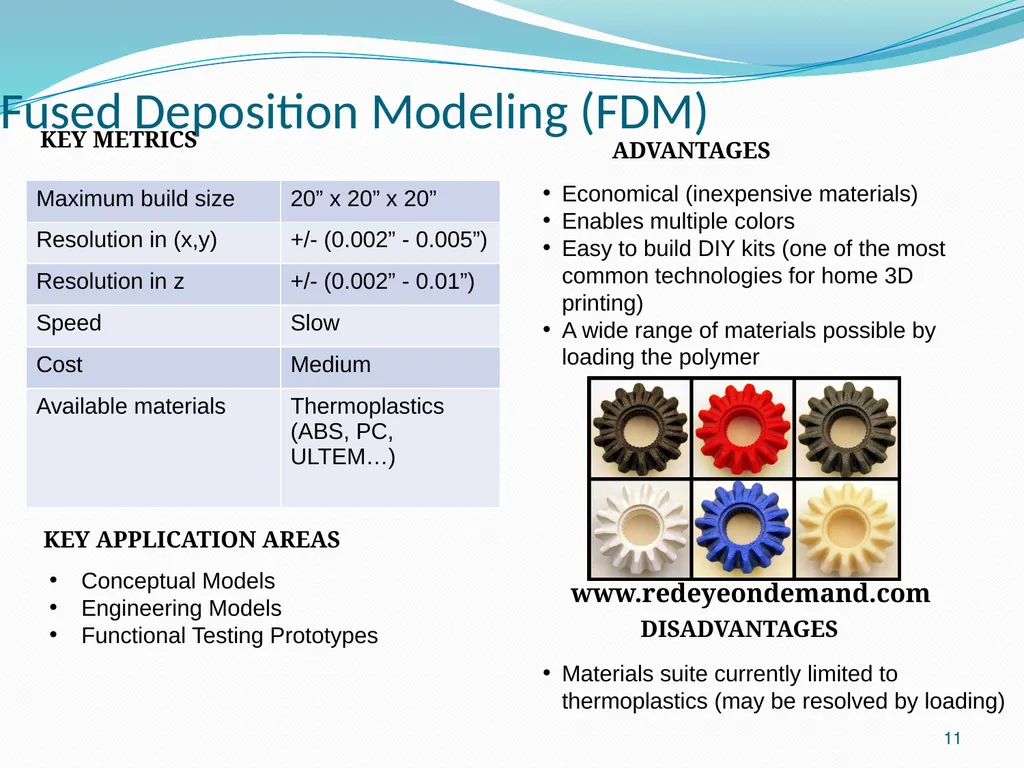
Fused Deposition Modeling (FDM) 11 KEY APPLICATION AREAS KEY METRICS ADVANTAGES DISADVANTAGES Economical (inexpensive materials)
Enables multiple colors
Easy to build DIY kits (one of the most common technologies for home 3D printing)
A wide range of materials possible by loading the polymer Materials suite currently limited to thermoplastics (may be resolved by loading) Conceptual Models
Engineering Models
Functional Testing Prototypes www.redeyeondemand.com<br>
11
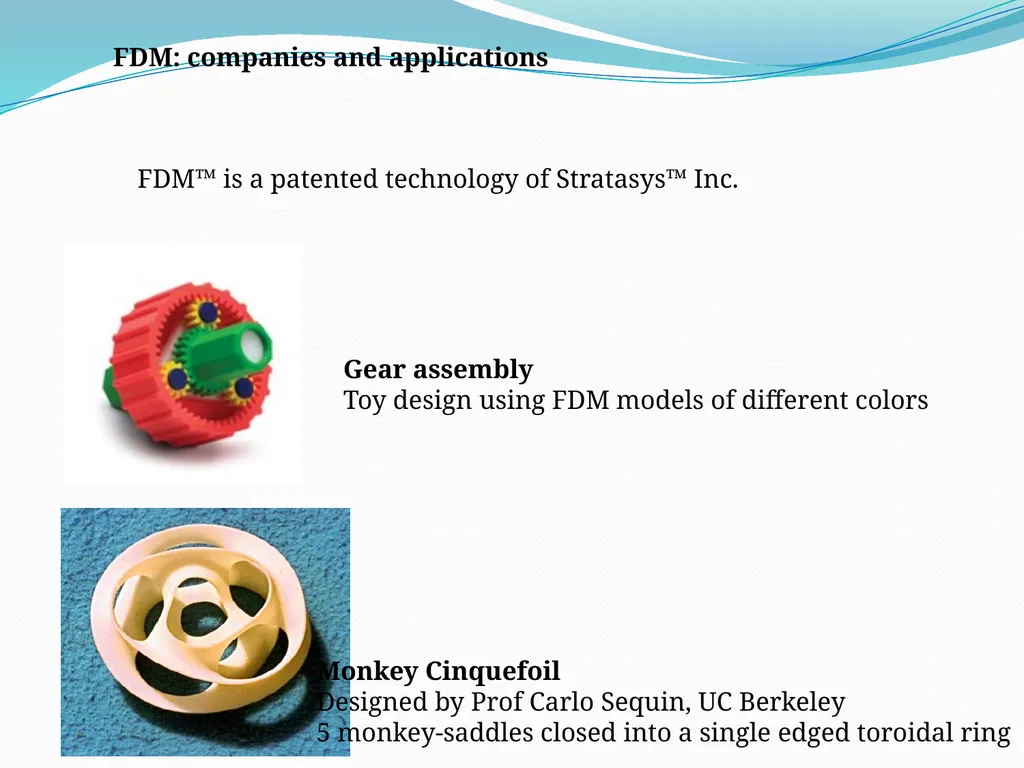
FDM: companies and applications FDM™ is a patented technology of Stratasys™ Inc. Monkey Cinquefoil Designed by Prof Carlo Sequin, UC Berkeley
5 monkey-saddles closed into a single edged toroidal ring Gear assembly Toy design using FDM models of different colors<br>