
Some current research problems Crystals (the

Published  . 0 views
↓ Download
Some current research problems Crystals (the
1 / 1
Some current research problems Crystals (the - slide 1 of 9 Some current research problems Crystals (the - slide 2 of 9 Some current research problems Crystals (the - slide 3 of 9 Some current research problems Crystals (the - slide 4 of 9 Some current research problems Crystals (the - slide 5 of 9 Some current research problems Crystals (the - slide 6 of 9 Some current research problems Crystals (the - slide 7 of 9 Some current research problems Crystals (the - slide 8 of 9 Some current research problems Crystals (the - slide 9 of 9
Description: Some current research problems Crystals (the anomaly) 1. Low temperature ( 1K) properties of glasses Glasses (the norm) A bet: Measure Predict not crystalline, not metallic verified: 30 different materials falsified 1-2 WHY? Standard

Related Topics

Download Presentation

"Some current research problems Crystals (the" is the property of its rightful owner. Permission is granted to download and print the materials on this website for personal, non-commercial use only, and to display it on your personal computer provided you do not modify the materials and that you retain all copyright notices contained in the materials. By downloading content from our website, you accept the terms of this agreement.

Presentation Transcript

slide1. Some current research problems<br>
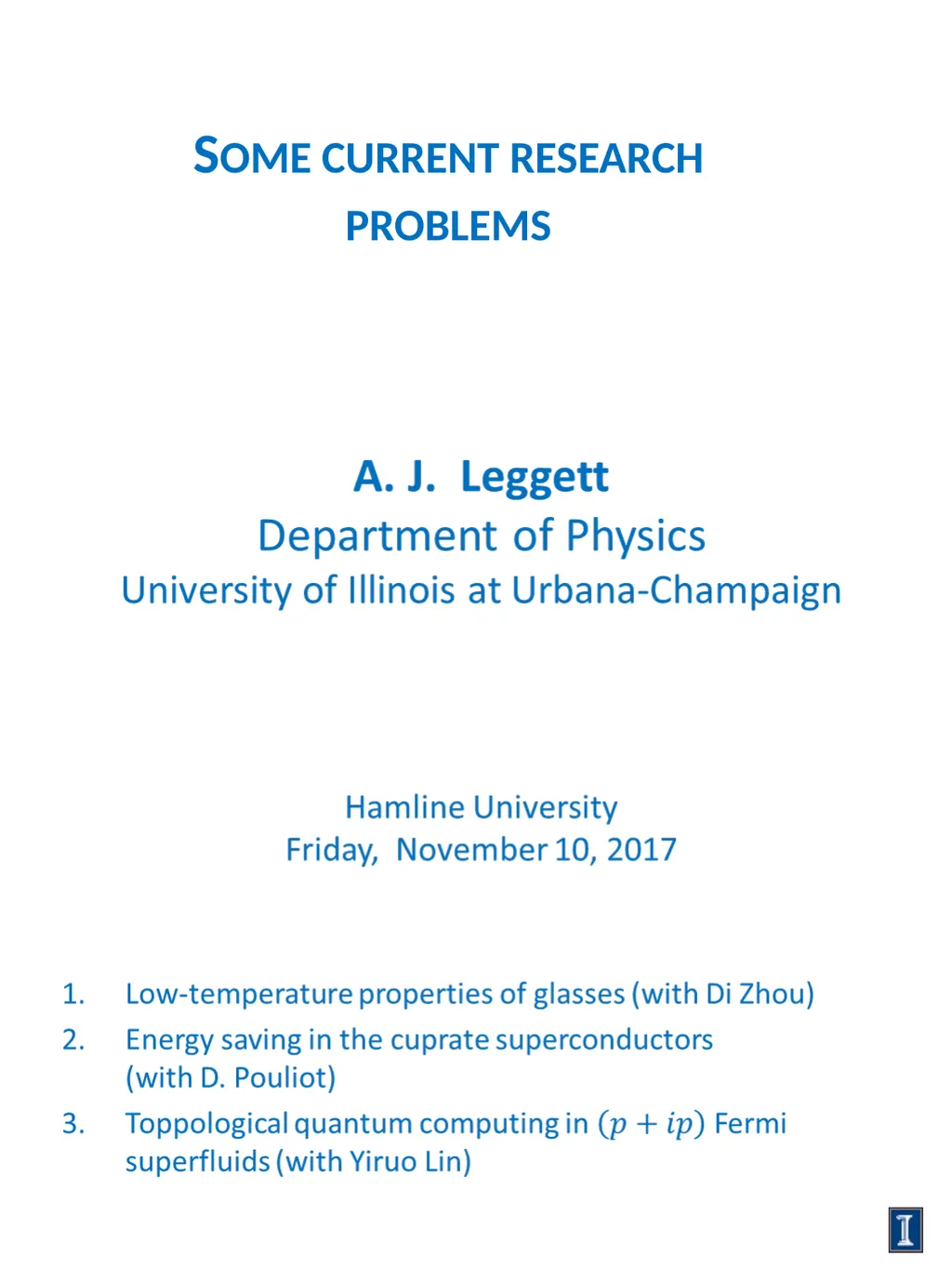
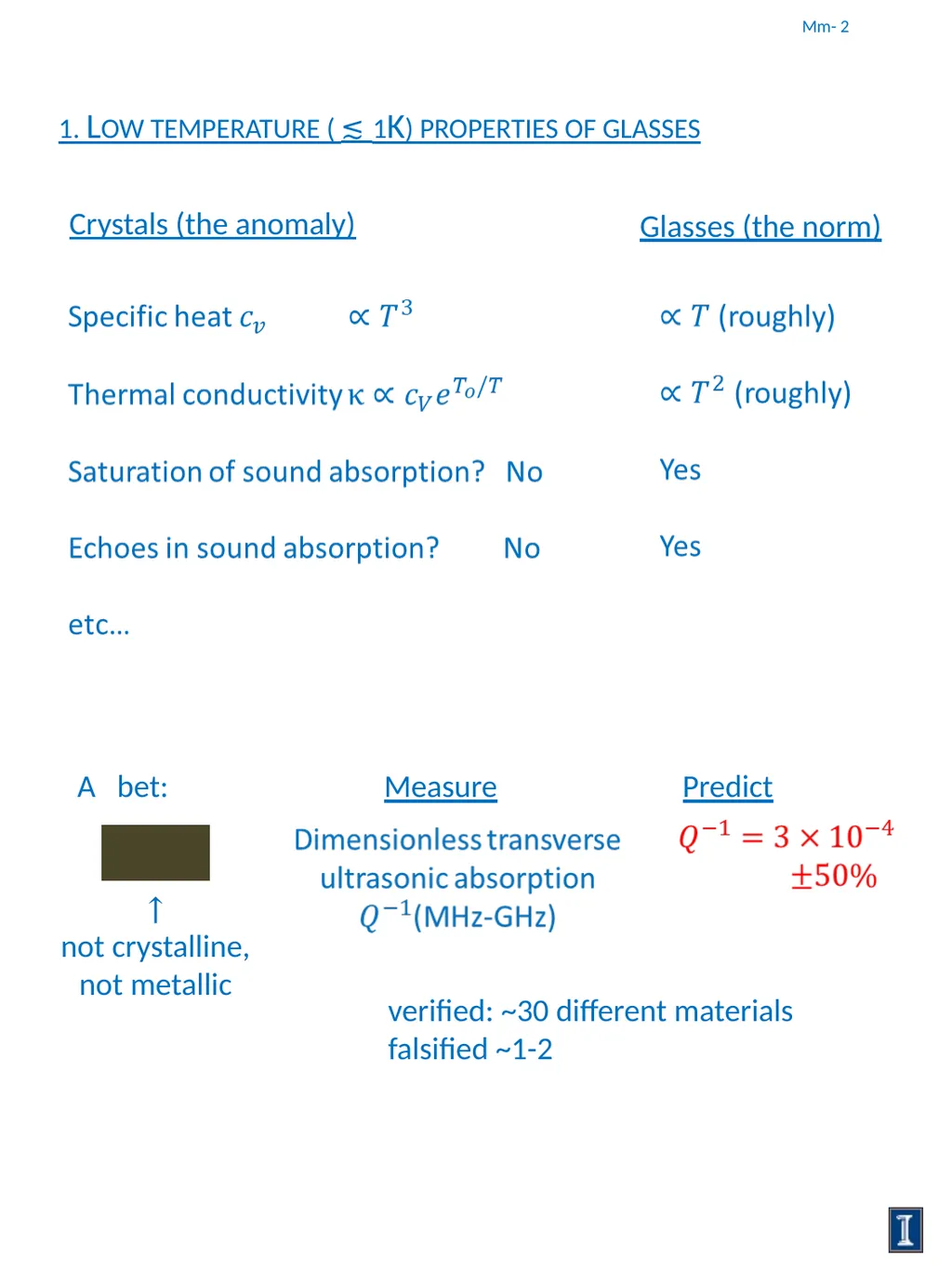
slide2. Crystals (the anomaly) 1. Low temperature ( ≲ 1K) properties of glasses Glasses (the norm) A bet: Measure Predict ↑
not crystalline, not metallic verified: ~30 different materials falsified ~1-2<br>
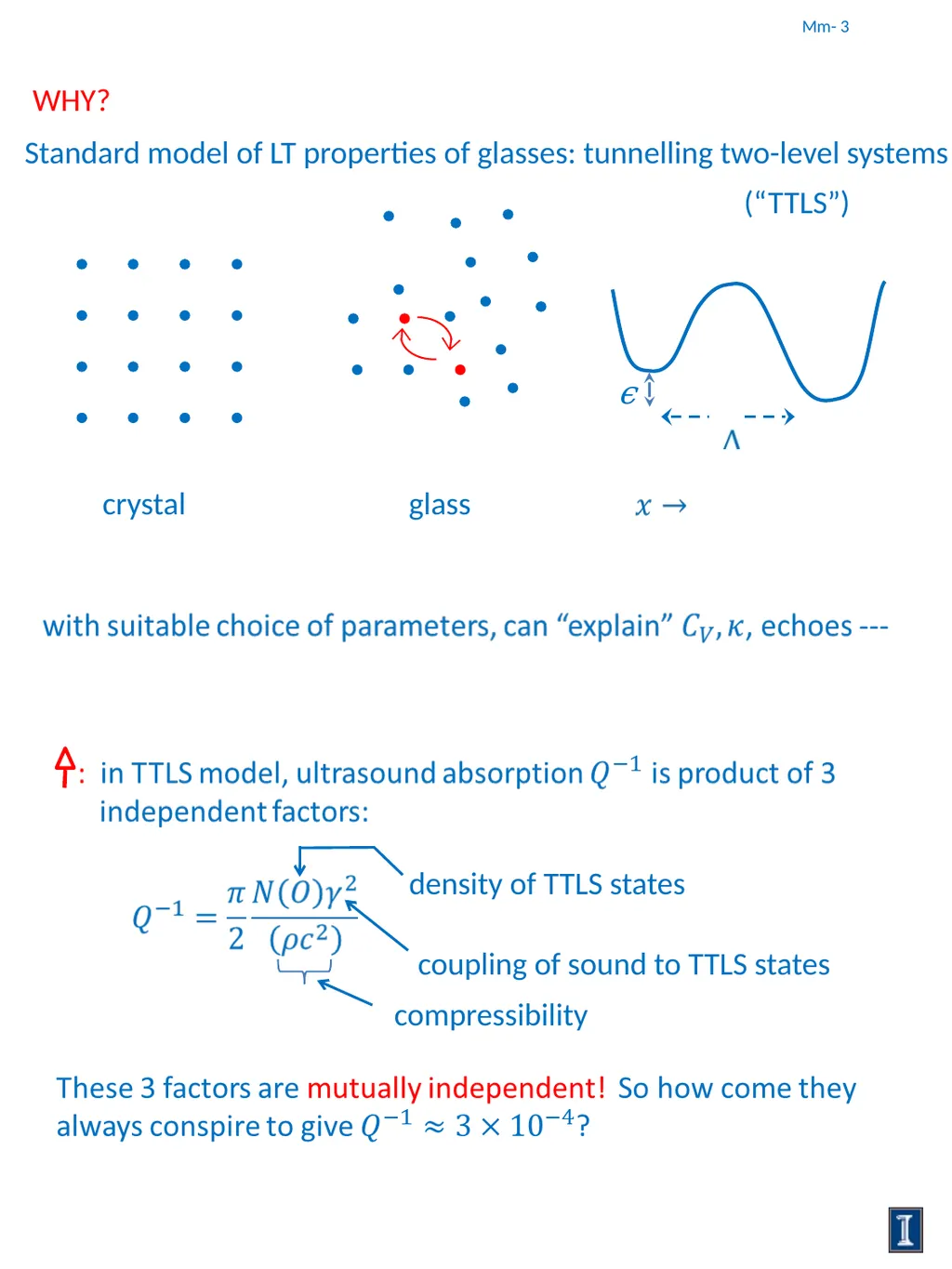
slide3. WHY? Standard model of LT properties of glasses: tunnelling two-level systems ϵ crystal glass density of TTLS states coupling of sound to TTLS states compressibility (“TTLS”)<br>
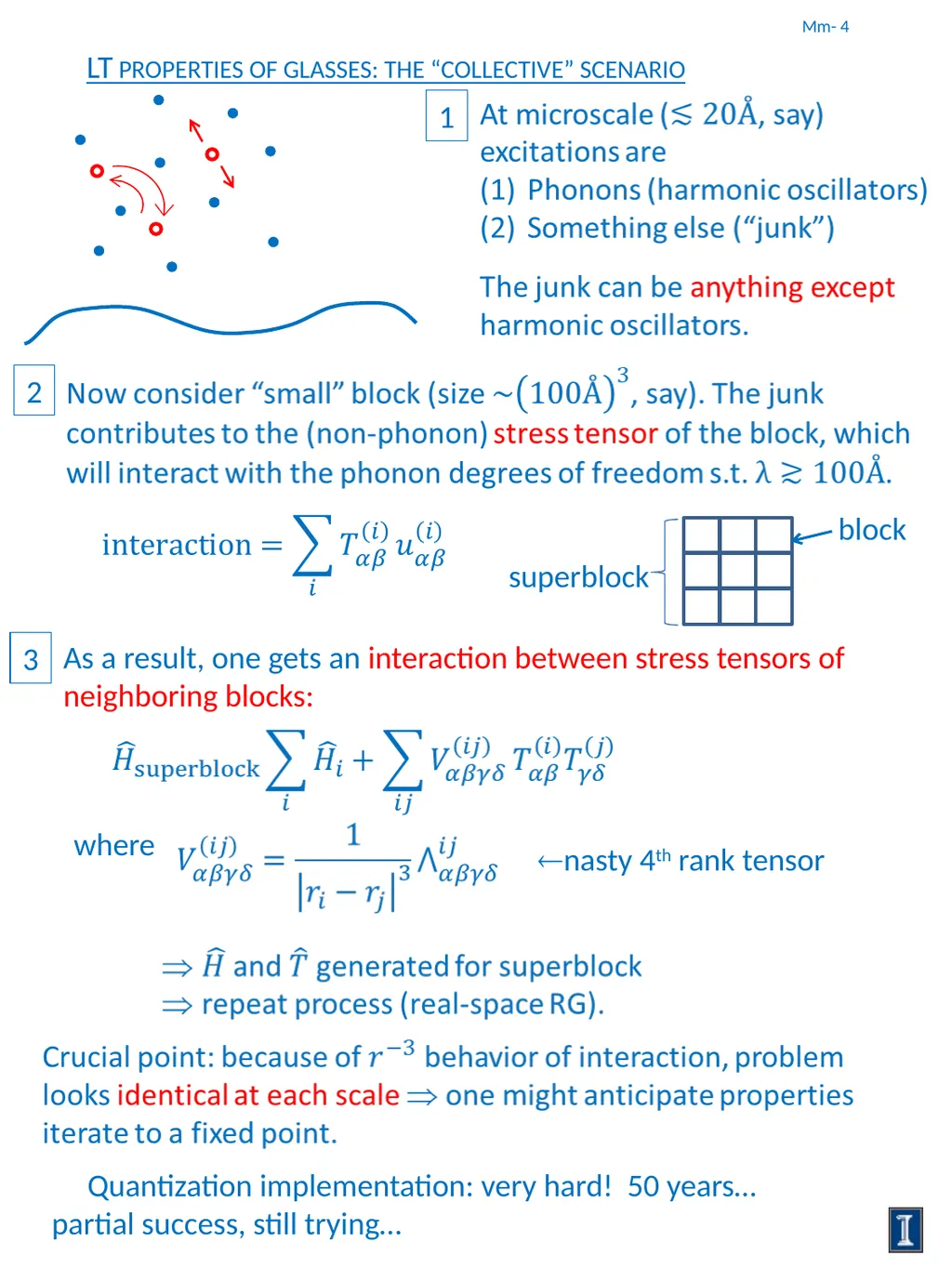
slide4. 1 LT properties of glasses: the “collective” scenario 2 block superblock 3 As a result, one gets an interaction between stress tensors of neighboring blocks: where nasty 4th rank tensor Quantization implementation: very hard! 50 years…
partial success, still trying…<br>
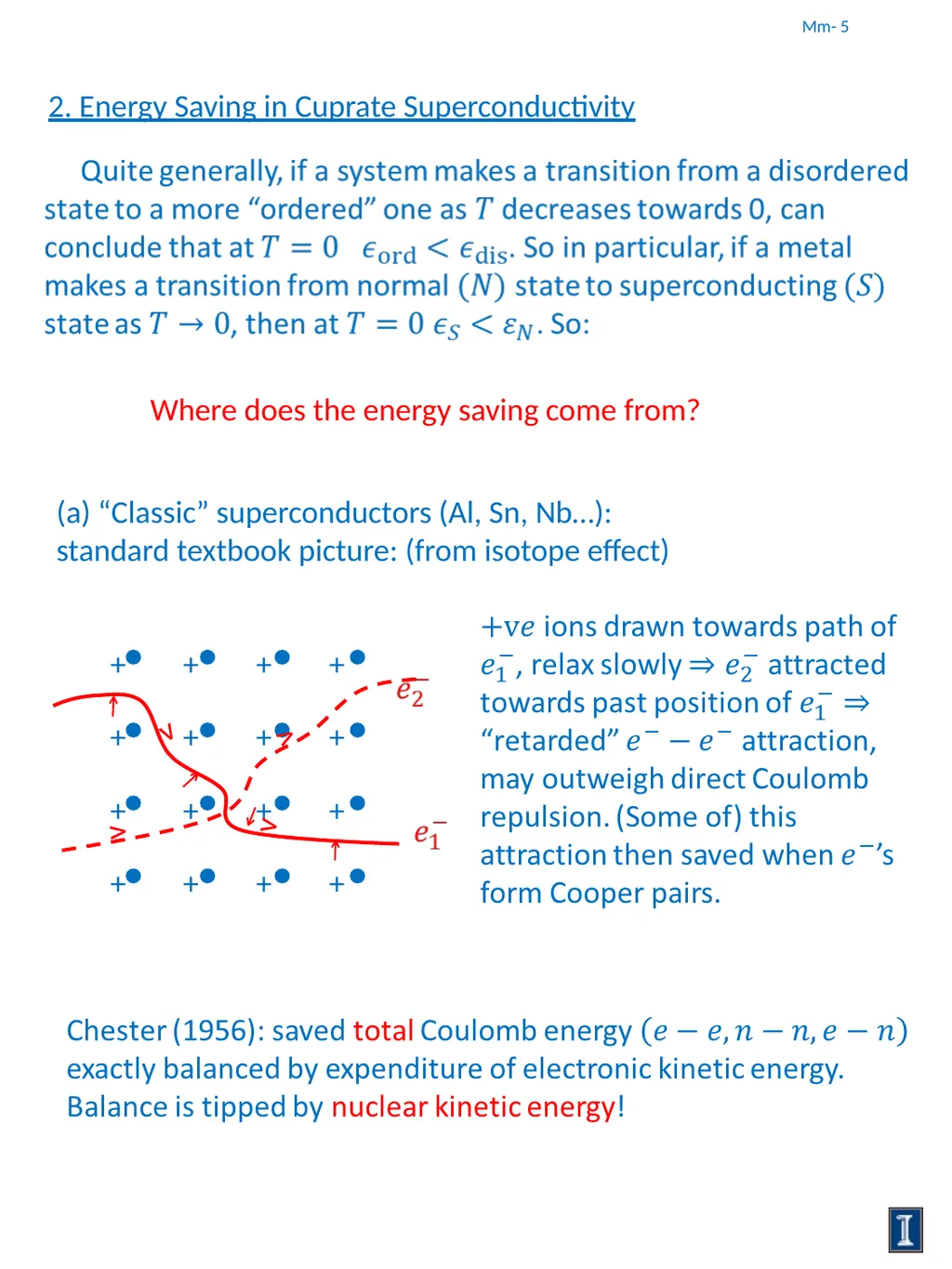
slide5. 2. Energy Saving in Cuprate Superconductivity Where does the energy saving come from? (a) “Classic” superconductors (Al, Sn, Nb…):
standard textbook picture: (from isotope effect)<br>
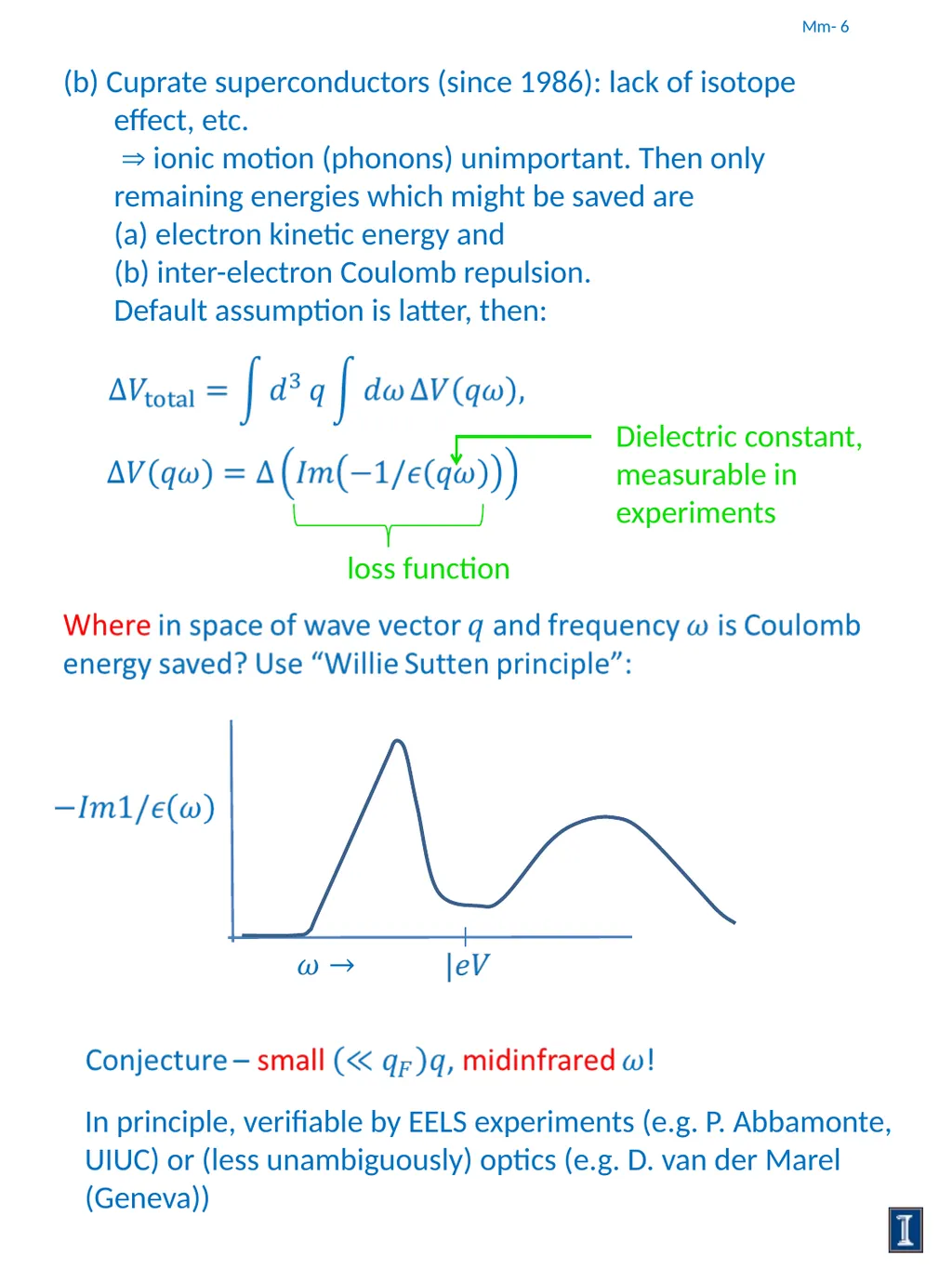
slide6. (b) Cuprate superconductors (since 1986): lack of isotope effect, etc.  ionic motion (phonons) unimportant. Then only remaining energies which might be saved are (a) electron kinetic energy and (b) inter-electron Coulomb repulsion. Default assumption is latter, then: loss function Dielectric constant, measurable in experiments In principle, verifiable by EELS experiments (e.g. P. Abbamonte, UIUC) or (less unambiguously) optics (e.g. D. van der Marel (Geneva))<br>
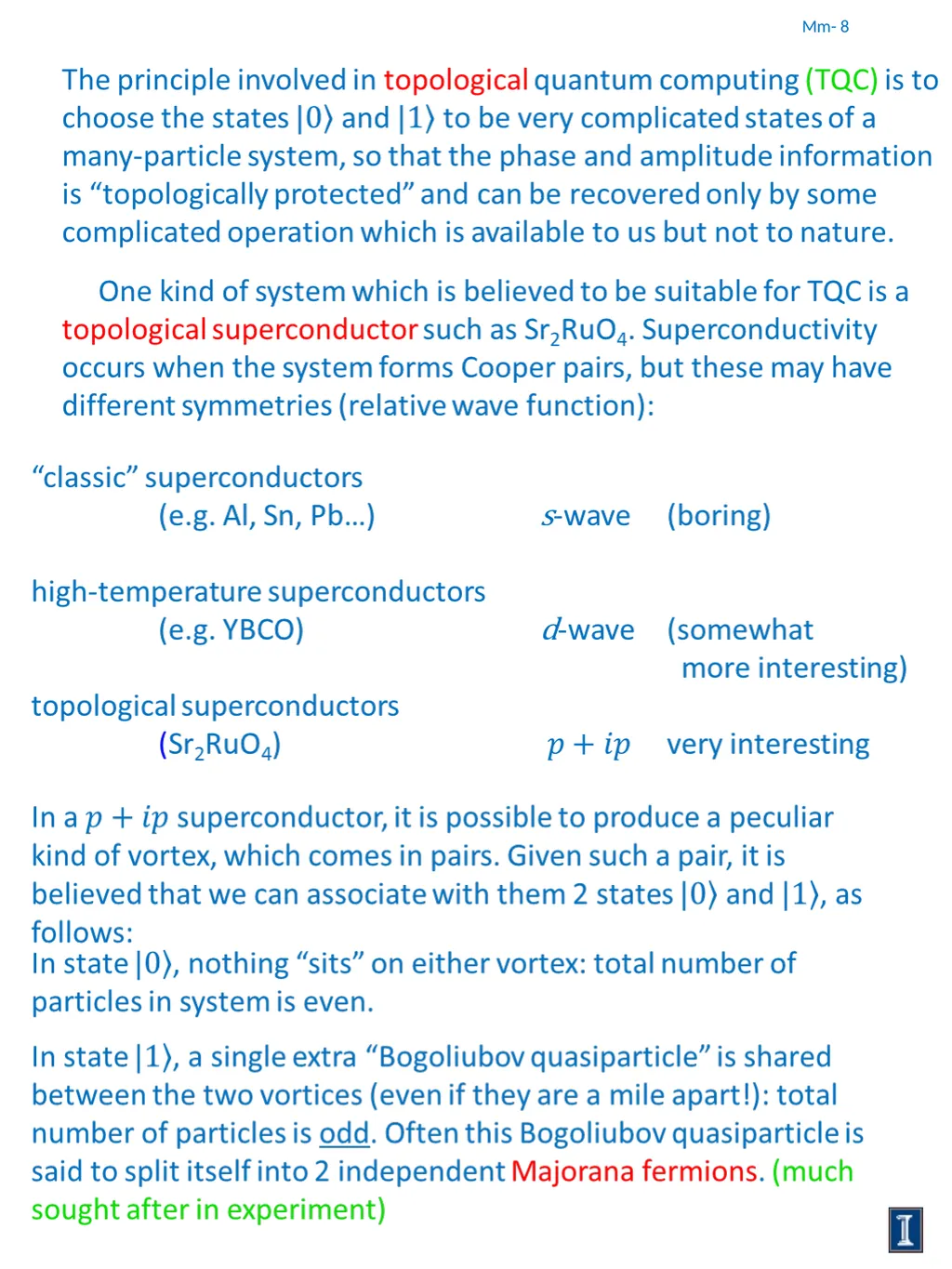
slide7. 3. Topological Quantum Computing<br>
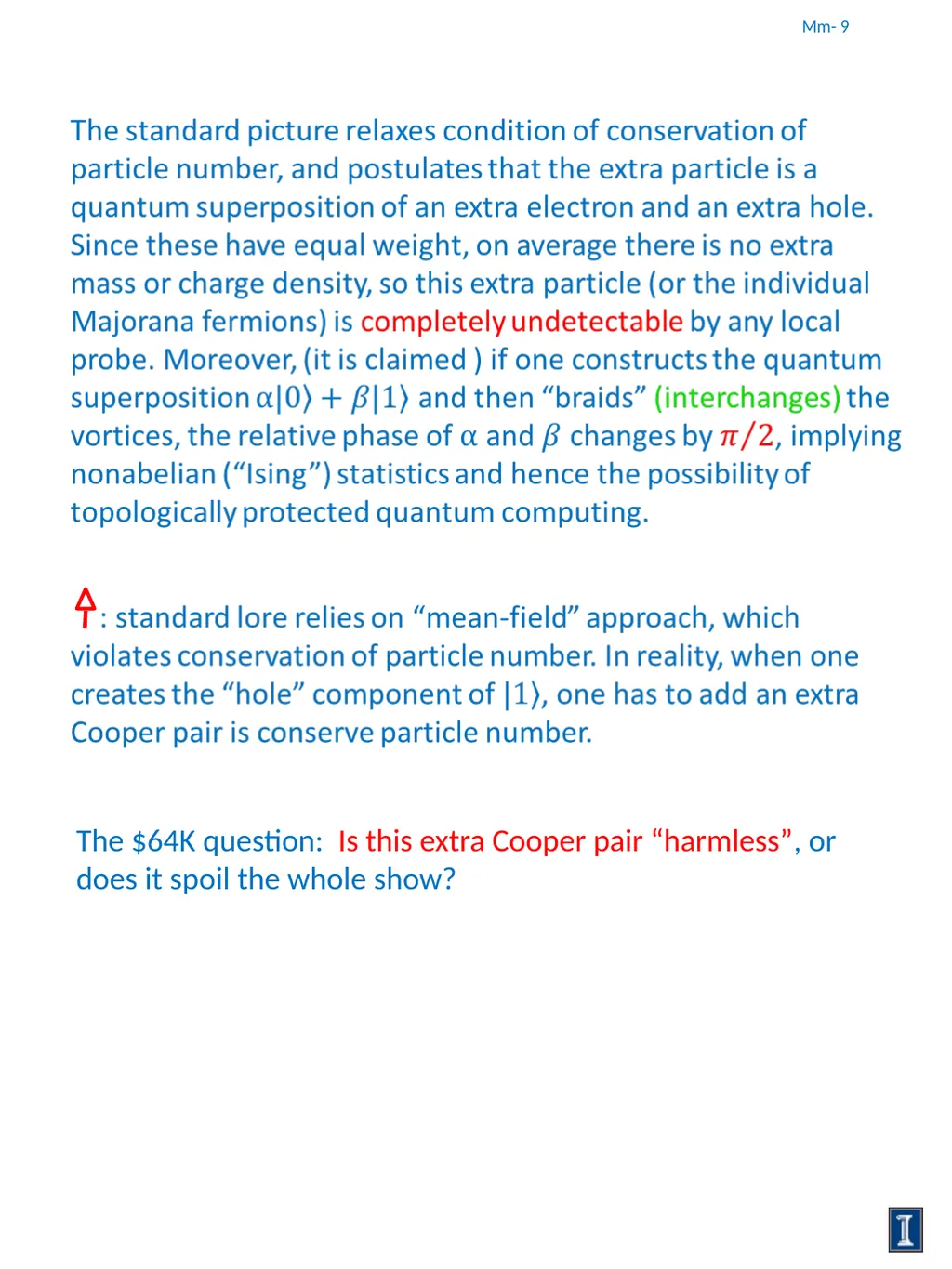
slide9. The $64K question: Is this extra Cooper pair “harmless”, or does it spoil the whole show?<br>