
Space Rocks Questions and Answers Do large or






Description: Space Rocks Questions and Answers Do large or small asteroids hit the Earth more frequently? a. Large asteroids strike more frequently b. Small asteroids impact more frequently c. All asteroids hit the Earth at the same rate Which is hit
Related Topics
Download Presentation
"Space Rocks Questions and Answers Do large or" is the property of its rightful owner. Permission is granted to download and print the materials on this website for personal, non-commercial use only, and to display it on your personal computer provided you do not modify the materials and that you retain all copyright notices contained in the materials. By downloading content from our website, you accept the terms of this agreement.
Presentation Transcript
slide1. Space Rocks Questions and Answers<br>
slide2. Do large or small asteroids hit the Earth more frequently?
a. Large asteroids strike more frequently
b. Small asteroids impact more frequently
c. All asteroids hit the Earth at the same rate<br>
slide3. Which is hit the most by the smallest particles from asteroids and comets?
a. Earth
b. The Moon
c. Mars<br>
slide4. Which does an asteroid hit the fastest?
a. Earth
b. The Moon
c. Mars<br>
slide5. Where did an impact cause a mass extinction?
a. Earth
b. The Moon
c. Mars<br>
slide6. How long have asteroids been hitting the planets?
a. 10 thousand years
b. 5 million years
c. 4.5 billion years<br>
slide7. Which hits the Earth most frequently?
a. Comets
b. Asteroids
c. Both hit the Earth at the same rate<br>
slide8. We have not found meteorites on Earth from
a. The Moon
b. Mars
c. Venus<br>
slide9. Which does not have meteors?
a. The Moon
b. Mars
c. Earth<br>
slide10. On Earth, where do meteorites fall?
a. North America
b. Antarctica
c. Everywhere<br>
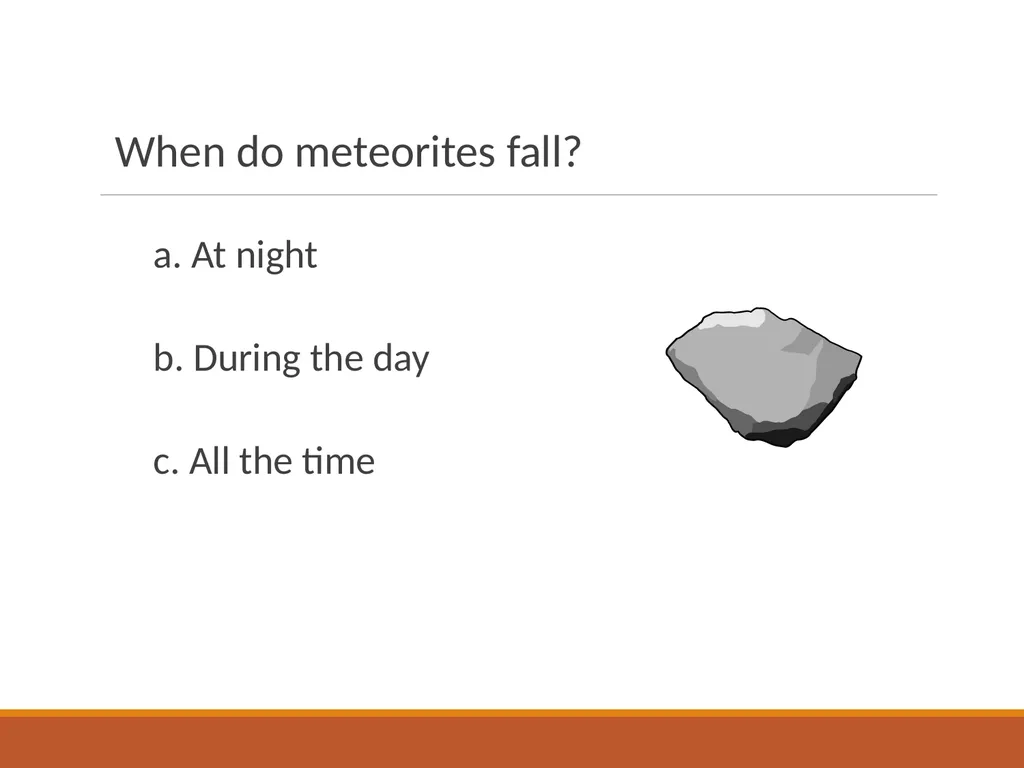
slide11. When do meteorites fall?
a. At night
b. During the day
c. All the time<br>
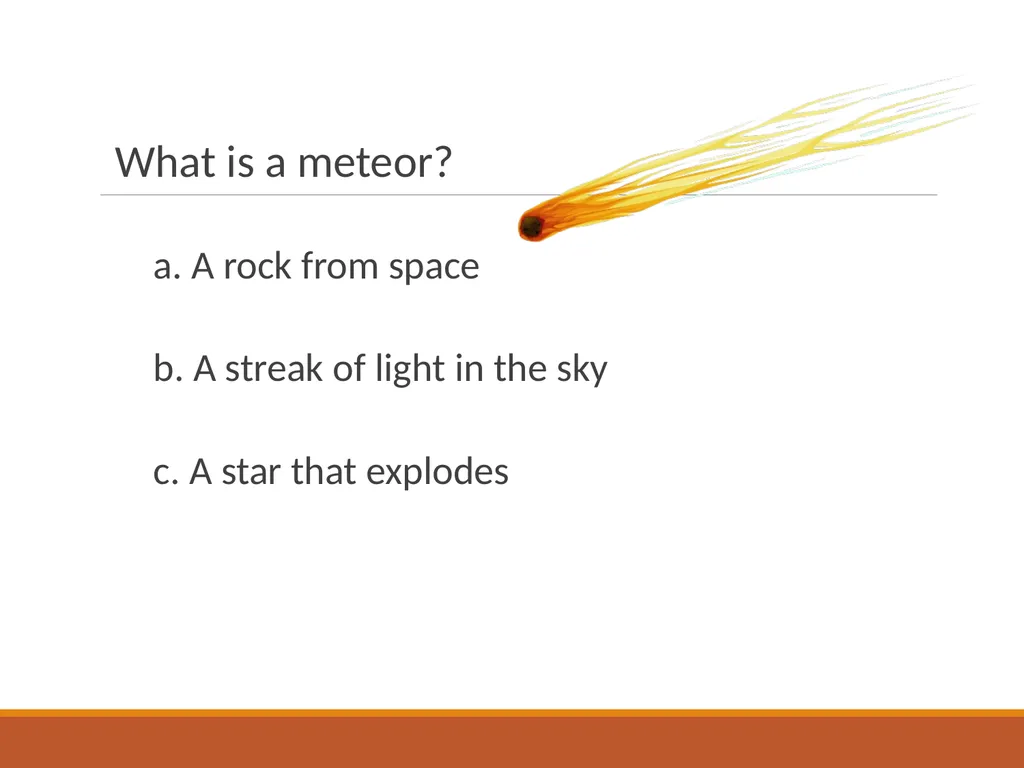
slide12. What is a meteor?
a. A rock from space
b. A streak of light in the sky
c. A star that explodes<br>
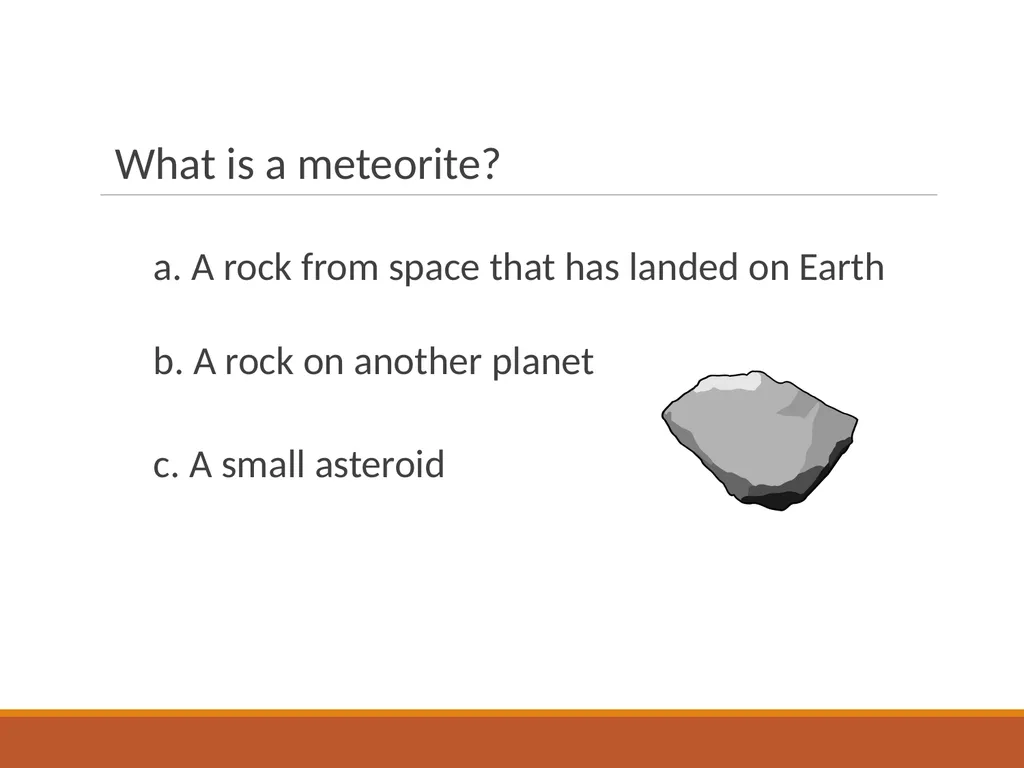
slide13. What is a meteorite?
a. A rock from space that has landed on Earth
b. A rock on another planet
c. A small asteroid<br>
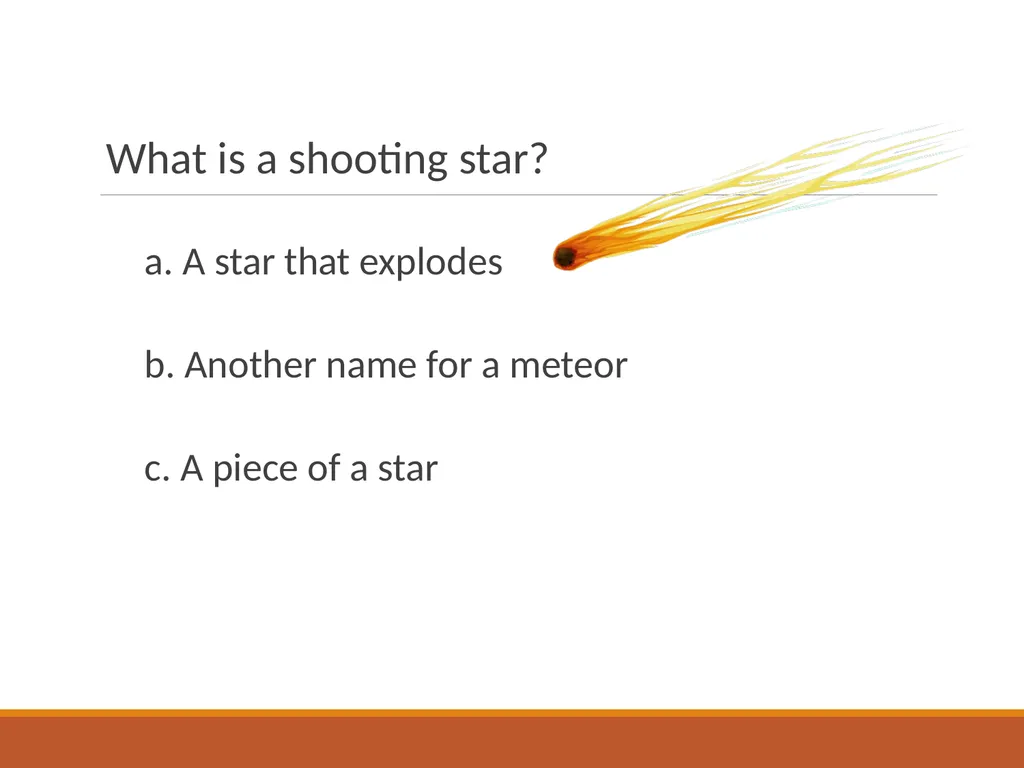
slide14. What is a shooting star?
a. A star that explodes
b. Another name for a meteor
c. A piece of a star<br>
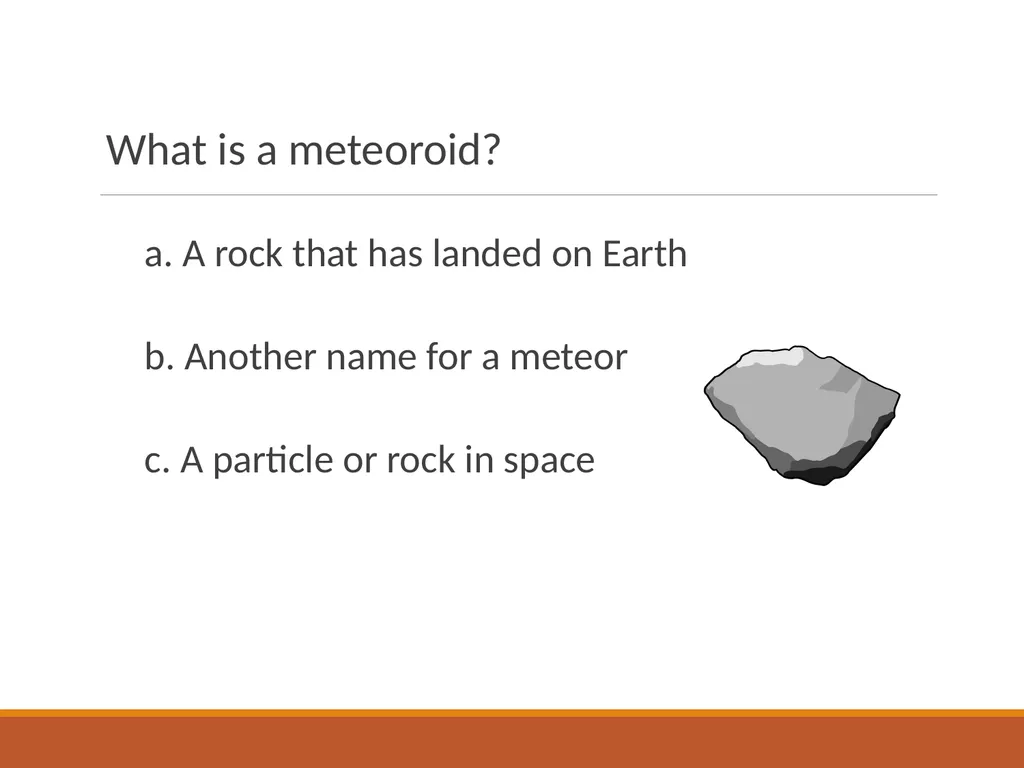
slide15. What is a meteoroid?
a. A rock that has landed on Earth
b. Another name for a meteor
c. A particle or rock in space<br>
slide16. Why does a meteor glow?
a. Meteoroids glow white-hot in our atmosphere
b. Meteoroids ignite our atmosphere
c. The air around the meteoroid is ionized<br>
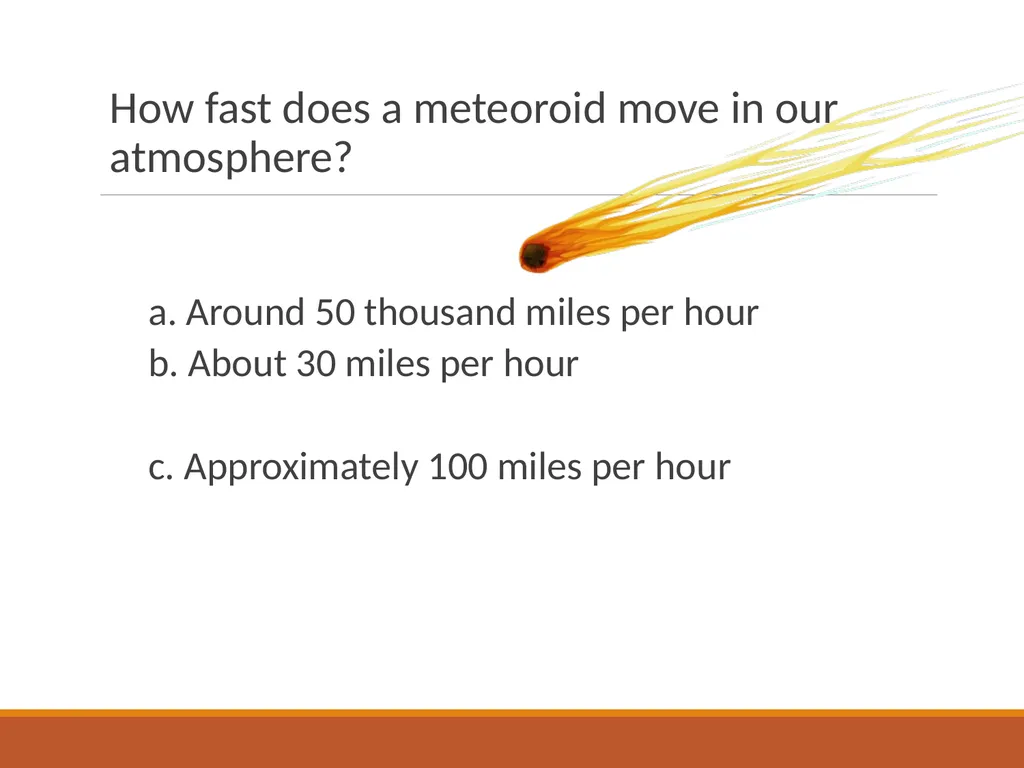
slide17. How fast does a meteoroid move in our atmosphere?
a. Around 50 thousand miles per hour
b. About 30 miles per hour
c. Approximately 100 miles per hour<br>
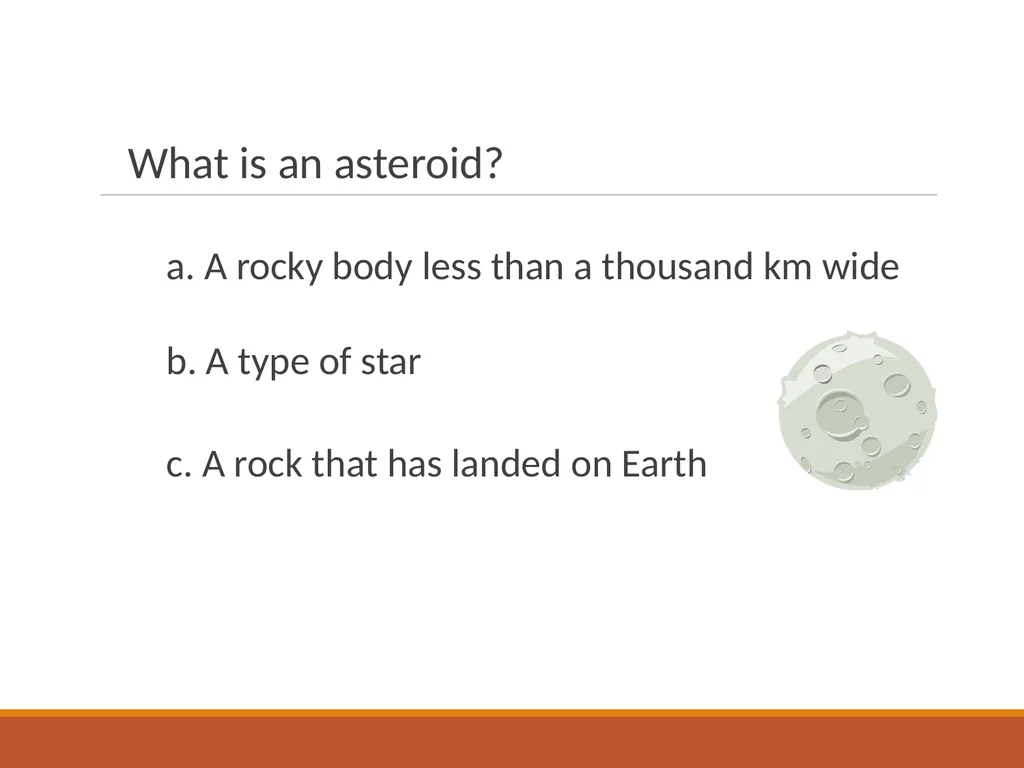
slide18. What is an asteroid?
a. A rocky body less than a thousand km wide
b. A type of star
c. A rock that has landed on Earth<br>
slide19. Which of these is not an asteroid?
a. Ceres
b. Mars
c. Vesta<br>
slide20. What causes meteor showers?
a. Earth passes through a trail of comet dust
b. Asteroids explode above our atmosphere
c. Rain forms due to an asteroid impact<br>
slide21. What are the different types of meteorites?
a. Fast and slow
b. Icy, rocky, and iron
c. Stony, iron, and stony-iron<br>
slide22. What do most meteorites look like?
a. Silver, round, and red
b. Dark and irregular-shaped
c. Black and shiny<br>
slide23. Which is a meteor shower?
a. The Perseids
b. The Katydids
c. The Lemonids<br>
slide24. What makes an impact crater?
a. A comet or asteroid exploding on the surface
b. A meteorite melting the surface
c. An asteroid bouncing off the surface<br>
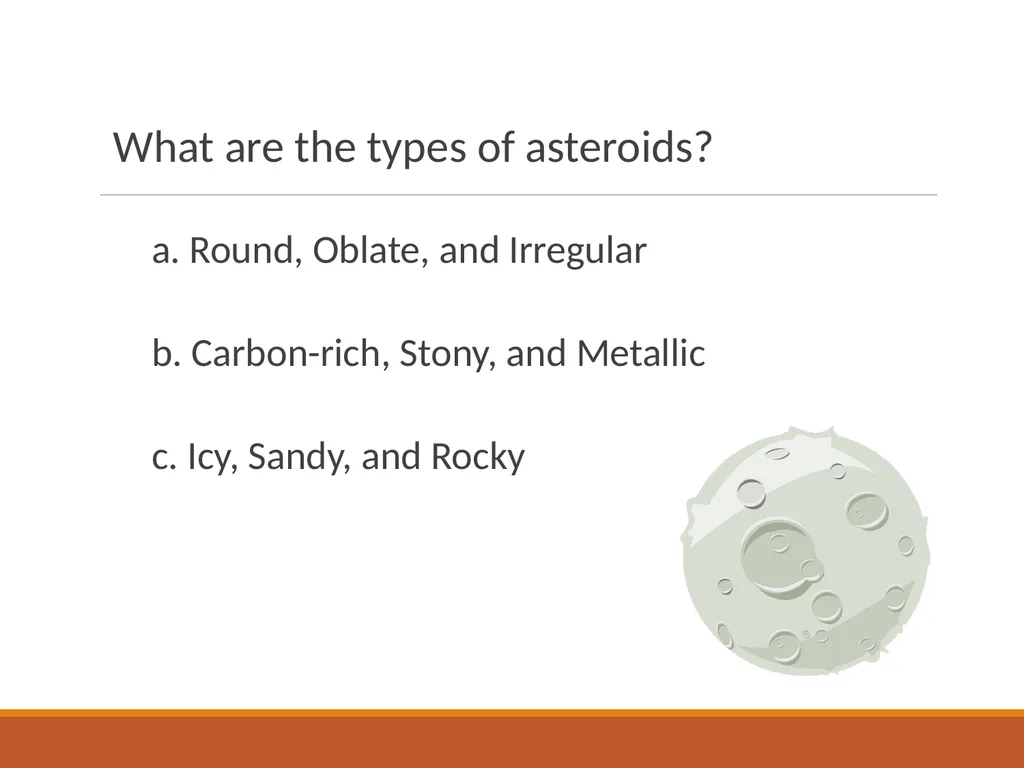
slide25. What are the types of asteroids?
a. Round, Oblate, and Irregular
b. Carbon-rich, Stony, and Metallic
c. Icy, Sandy, and Rocky<br>
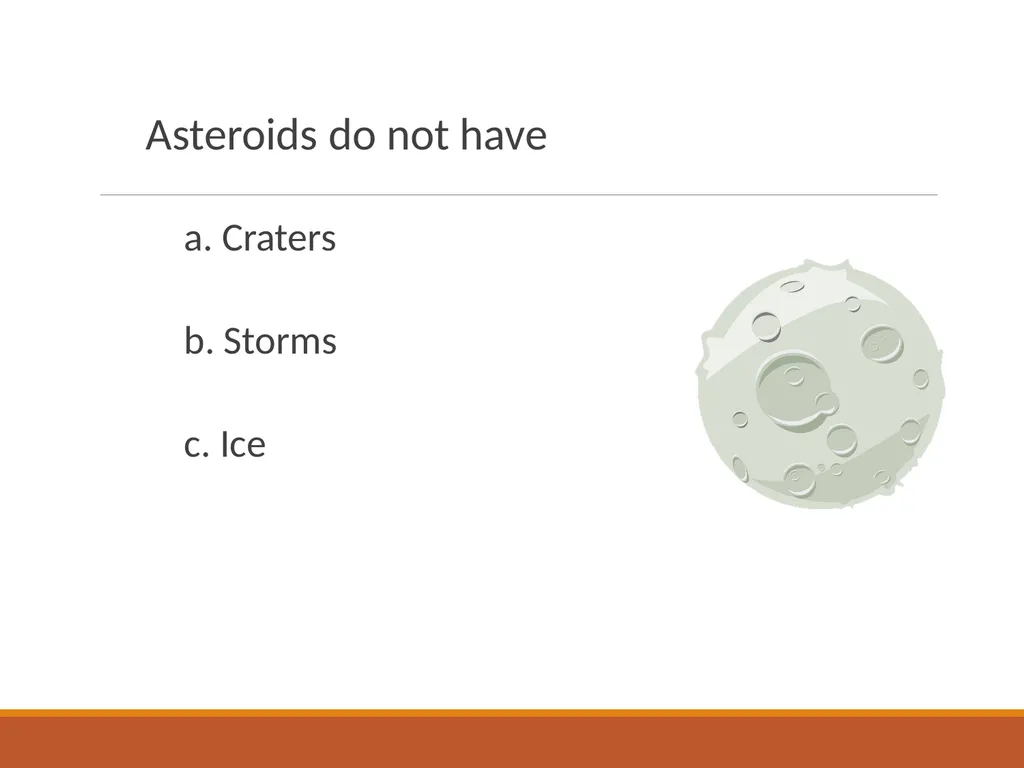
slide26. Asteroids do not have
a. Craters
b. Storms
c. Ice<br>
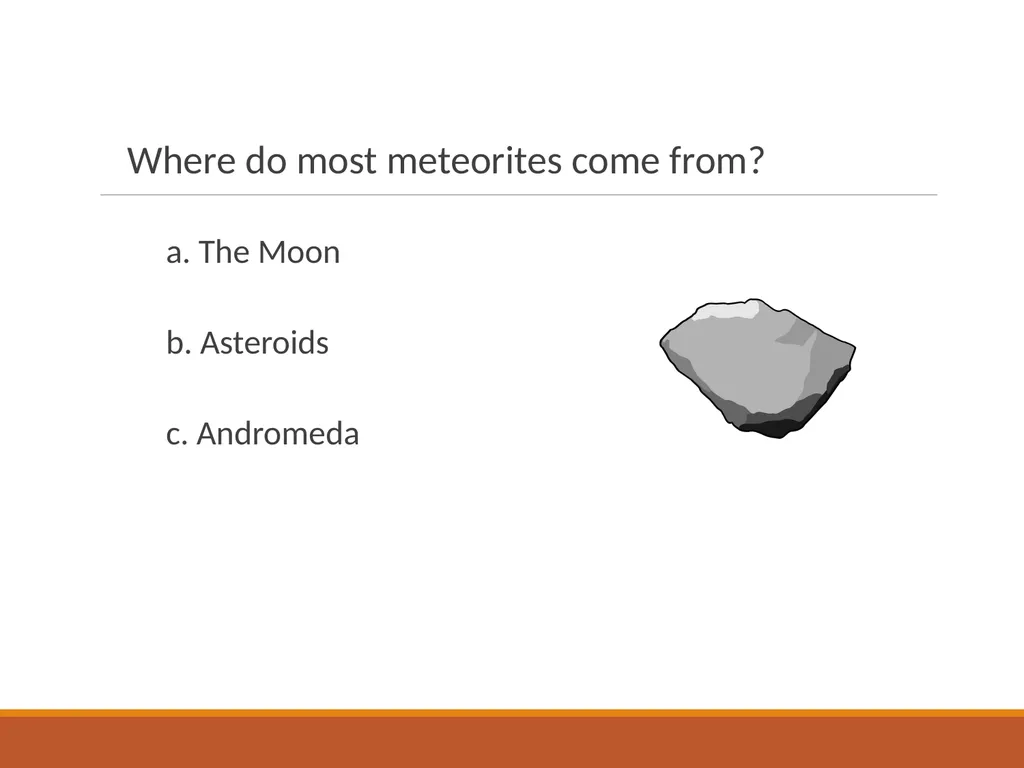
slide27. Where do most meteorites come from?
a. The Moon
b. Asteroids
c. Andromeda<br>
slide28. What is another name for a meteorite from the Moon?
a. Brie
b. Moonite
c. Lunaite<br>
slide29. How fast does a rock need to go to escape from the Moon’s gravity?
a. 1.5 miles per second
b. 15 miles per hour
c. 100 miles per hour<br>
slide30. How many meteorites have we found from the Moon?
a. About 4
b. About 400
c. About 40,000<br>
slide31. Where on the Moon do lunar meteorites come from?
a. The Maria
b. The Highlands
c. All over the Moon<br>
slide32. How many lunar meteorites were seen falling as a meteor?
a. 0
b. 10
c. 15<br>
slide33. A lunar meteorite has never been found on which continent?
a. Antarctica
b. Africa
c. North America<br>
slide34. In what year was the first identified lunar meteorite found?
a. 1701
b. 1981
c. 2019<br>
slide35. Which asteroid is the OSIRIS REx mission orbiting?
a. Vesta
b. Ceres
c. Bennu<br>
slide36. Which of these asteroids has been identified as the source for many meteorites?
a. Vesta
b. Ceres
c. Bennu<br>
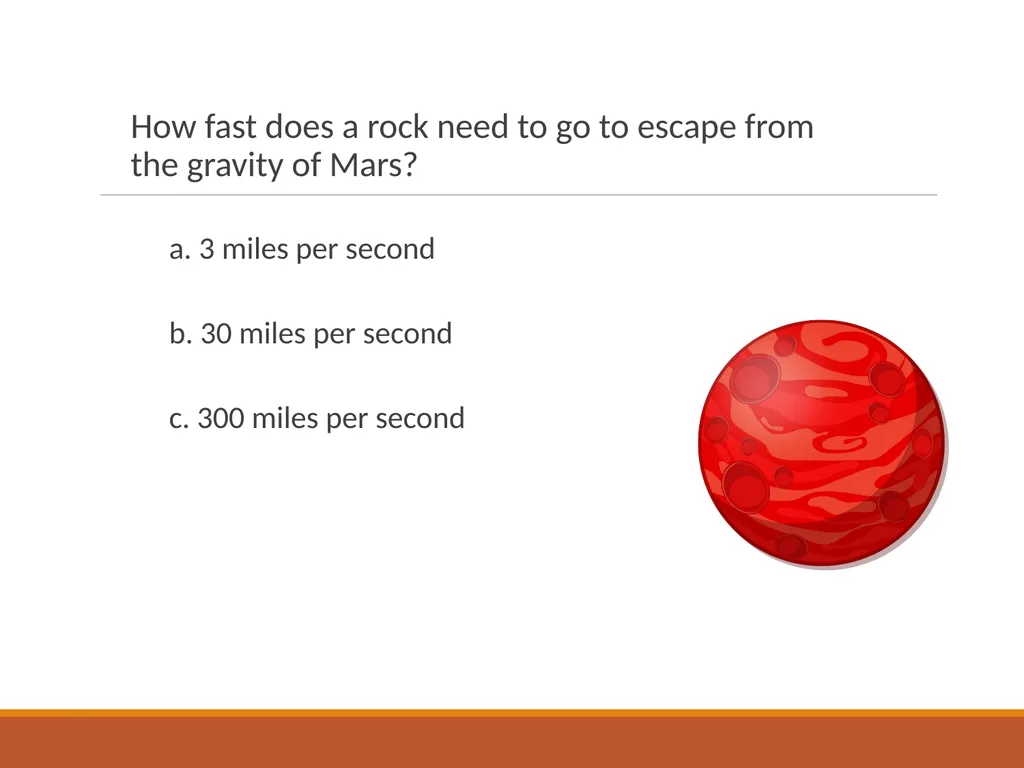
slide37. How fast does a rock need to go to escape from the gravity of Mars?
a. 3 miles per second
b. 30 miles per second
c. 300 miles per second<br>
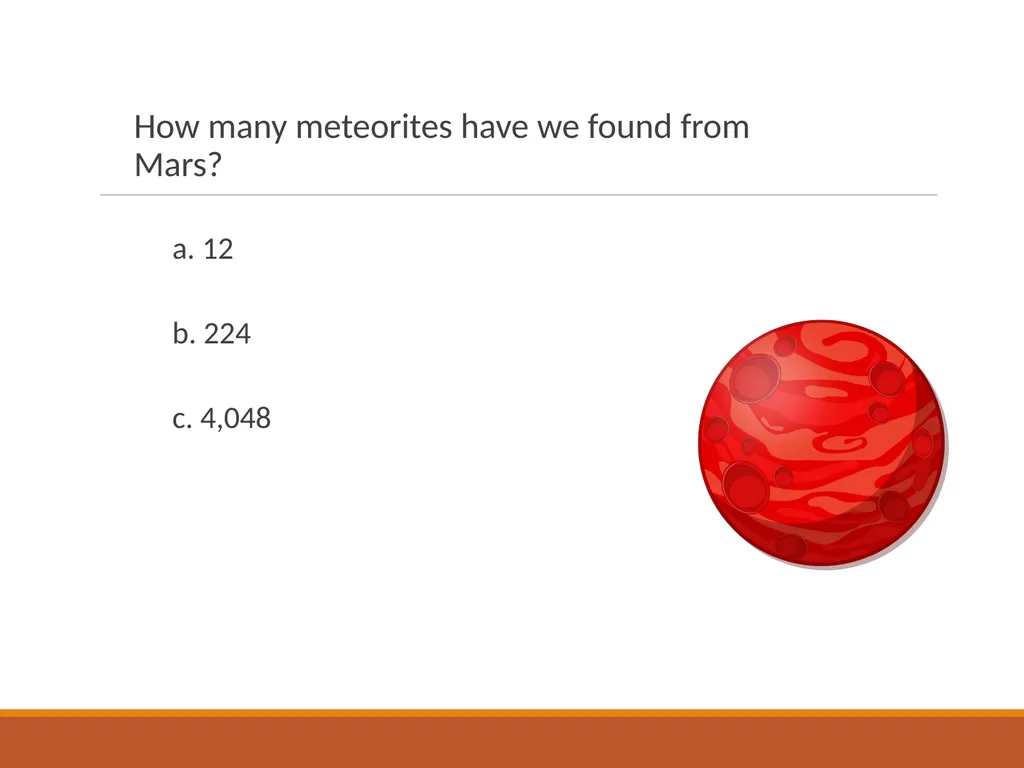
slide38. How many meteorites have we found from Mars?
a. 12
b. 224
c. 4,048<br>
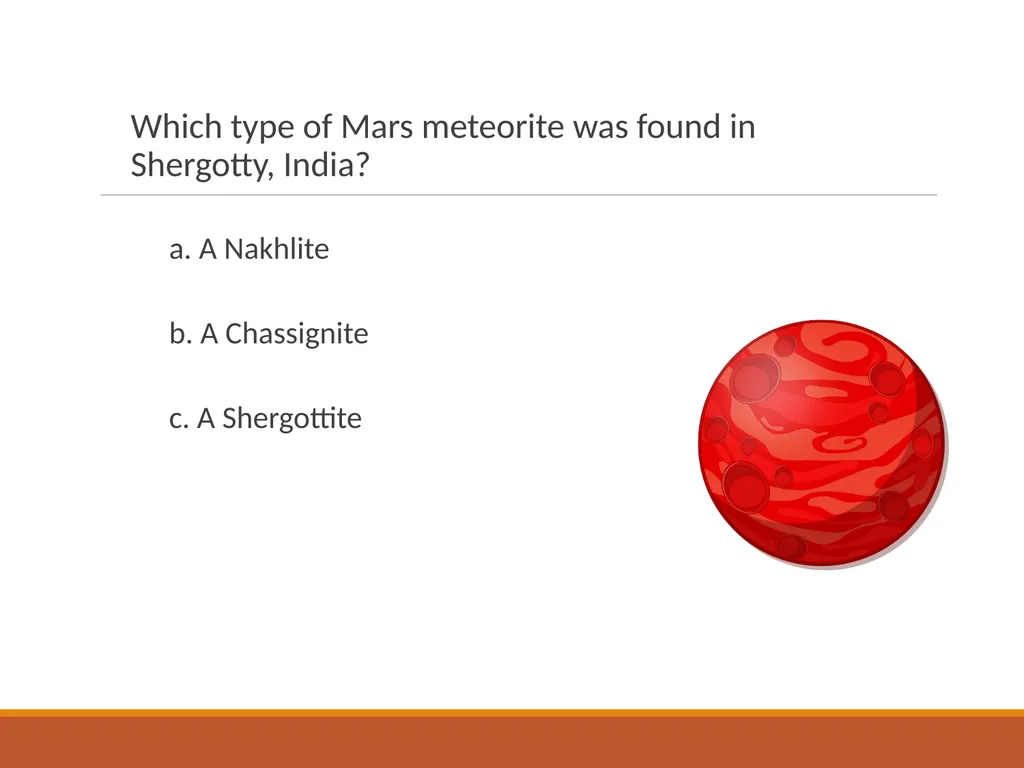
slide39. Which type of Mars meteorite was found in Shergotty, India?
a. A Nakhlite
b. A Chassignite
c. A Shergottite<br>
slide40. Many meteorites on Earth came from when Vesta_________ .
a. Was hit by another asteroid a billion years ago.
b. Had an enormous volcanic eruption.
c. exploded.<br>
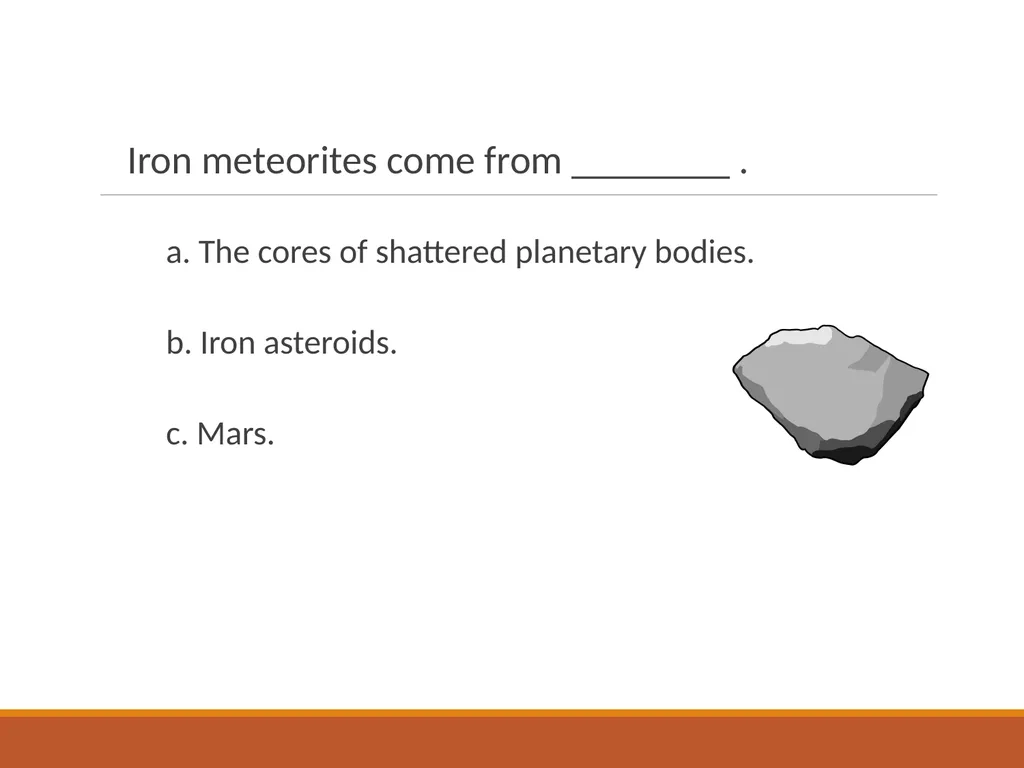
slide41. Iron meteorites come from ________ .
a. The cores of shattered planetary bodies.
b. Iron asteroids.
c. Mars.<br>
slide42. About how old are the oldest Mars meteorites?
a. Under 4 thousand years old
b. About 4 million years old
c. Over 4 billion years old<br>
slide43. Mars meteorites with “NWA” in their names were found in _________ .
a. Northwest Africa
b. Northwest America
c. Northwest Antarctica<br>
slide44. After leaving Mars, how long did meteorite Dhofar 019 spend in space?
a. 3 years
b. 20 million years
c. 4 billion years<br>
slide45. Which helps identify meteorites from Mars?
a. Their weight is lighter.
b. The color is redder.
c. The gas composition matches Mars’.<br>
slide2. Do large or small asteroids hit the Earth more frequently?
a. Large asteroids strike more frequently
b. Small asteroids impact more frequently
c. All asteroids hit the Earth at the same rate<br>
slide3. Which is hit the most by the smallest particles from asteroids and comets?
a. Earth
b. The Moon
c. Mars<br>
slide4. Which does an asteroid hit the fastest?
a. Earth
b. The Moon
c. Mars<br>
slide5. Where did an impact cause a mass extinction?
a. Earth
b. The Moon
c. Mars<br>
slide6. How long have asteroids been hitting the planets?
a. 10 thousand years
b. 5 million years
c. 4.5 billion years<br>
slide7. Which hits the Earth most frequently?
a. Comets
b. Asteroids
c. Both hit the Earth at the same rate<br>
slide8. We have not found meteorites on Earth from
a. The Moon
b. Mars
c. Venus<br>
slide9. Which does not have meteors?
a. The Moon
b. Mars
c. Earth<br>
slide10. On Earth, where do meteorites fall?
a. North America
b. Antarctica
c. Everywhere<br>
slide11. When do meteorites fall?
a. At night
b. During the day
c. All the time<br>
slide12. What is a meteor?
a. A rock from space
b. A streak of light in the sky
c. A star that explodes<br>
slide13. What is a meteorite?
a. A rock from space that has landed on Earth
b. A rock on another planet
c. A small asteroid<br>
slide14. What is a shooting star?
a. A star that explodes
b. Another name for a meteor
c. A piece of a star<br>
slide15. What is a meteoroid?
a. A rock that has landed on Earth
b. Another name for a meteor
c. A particle or rock in space<br>
slide16. Why does a meteor glow?
a. Meteoroids glow white-hot in our atmosphere
b. Meteoroids ignite our atmosphere
c. The air around the meteoroid is ionized<br>
slide17. How fast does a meteoroid move in our atmosphere?
a. Around 50 thousand miles per hour
b. About 30 miles per hour
c. Approximately 100 miles per hour<br>
slide18. What is an asteroid?
a. A rocky body less than a thousand km wide
b. A type of star
c. A rock that has landed on Earth<br>
slide19. Which of these is not an asteroid?
a. Ceres
b. Mars
c. Vesta<br>
slide20. What causes meteor showers?
a. Earth passes through a trail of comet dust
b. Asteroids explode above our atmosphere
c. Rain forms due to an asteroid impact<br>
slide21. What are the different types of meteorites?
a. Fast and slow
b. Icy, rocky, and iron
c. Stony, iron, and stony-iron<br>
slide22. What do most meteorites look like?
a. Silver, round, and red
b. Dark and irregular-shaped
c. Black and shiny<br>
slide23. Which is a meteor shower?
a. The Perseids
b. The Katydids
c. The Lemonids<br>
slide24. What makes an impact crater?
a. A comet or asteroid exploding on the surface
b. A meteorite melting the surface
c. An asteroid bouncing off the surface<br>
slide25. What are the types of asteroids?
a. Round, Oblate, and Irregular
b. Carbon-rich, Stony, and Metallic
c. Icy, Sandy, and Rocky<br>
slide26. Asteroids do not have
a. Craters
b. Storms
c. Ice<br>
slide27. Where do most meteorites come from?
a. The Moon
b. Asteroids
c. Andromeda<br>
slide28. What is another name for a meteorite from the Moon?
a. Brie
b. Moonite
c. Lunaite<br>
slide29. How fast does a rock need to go to escape from the Moon’s gravity?
a. 1.5 miles per second
b. 15 miles per hour
c. 100 miles per hour<br>
slide30. How many meteorites have we found from the Moon?
a. About 4
b. About 400
c. About 40,000<br>
slide31. Where on the Moon do lunar meteorites come from?
a. The Maria
b. The Highlands
c. All over the Moon<br>
slide32. How many lunar meteorites were seen falling as a meteor?
a. 0
b. 10
c. 15<br>
slide33. A lunar meteorite has never been found on which continent?
a. Antarctica
b. Africa
c. North America<br>
slide34. In what year was the first identified lunar meteorite found?
a. 1701
b. 1981
c. 2019<br>
slide35. Which asteroid is the OSIRIS REx mission orbiting?
a. Vesta
b. Ceres
c. Bennu<br>
slide36. Which of these asteroids has been identified as the source for many meteorites?
a. Vesta
b. Ceres
c. Bennu<br>
slide37. How fast does a rock need to go to escape from the gravity of Mars?
a. 3 miles per second
b. 30 miles per second
c. 300 miles per second<br>
slide38. How many meteorites have we found from Mars?
a. 12
b. 224
c. 4,048<br>
slide39. Which type of Mars meteorite was found in Shergotty, India?
a. A Nakhlite
b. A Chassignite
c. A Shergottite<br>
slide40. Many meteorites on Earth came from when Vesta_________ .
a. Was hit by another asteroid a billion years ago.
b. Had an enormous volcanic eruption.
c. exploded.<br>
slide41. Iron meteorites come from ________ .
a. The cores of shattered planetary bodies.
b. Iron asteroids.
c. Mars.<br>
slide42. About how old are the oldest Mars meteorites?
a. Under 4 thousand years old
b. About 4 million years old
c. Over 4 billion years old<br>
slide43. Mars meteorites with “NWA” in their names were found in _________ .
a. Northwest Africa
b. Northwest America
c. Northwest Antarctica<br>
slide44. After leaving Mars, how long did meteorite Dhofar 019 spend in space?
a. 3 years
b. 20 million years
c. 4 billion years<br>
slide45. Which helps identify meteorites from Mars?
a. Their weight is lighter.
b. The color is redder.
c. The gas composition matches Mars’.<br>