
Spatial Multi-Attribute Decision Analysis with
Description: Spatial Multi-Attribute Decision Analysis with Incomplete Preference Information Mikko Harju, Juuso Liesiö, Kai Virtanen Systems Analysis Laboratory, Department of Mathematics and Systems Analysis, Aalto University School of Science
Related Topics
Download Presentation
"Spatial Multi-Attribute Decision Analysis with" is the property of its rightful owner. Permission is granted to download and print the materials on this website for personal, non-commercial use only, and to display it on your personal computer provided you do not modify the materials and that you retain all copyright notices contained in the materials. By downloading content from our website, you accept the terms of this agreement.
Presentation Transcript
slide1. Spatial Multi-Attribute Decision Analysis with Incomplete Preference Information Mikko Harju*, Juuso Liesiö**, Kai Virtanen*
* Systems Analysis Laboratory, Department of Mathematics and Systems Analysis, Aalto University School of Science
** Department of Information and Service Economy, Aalto University School of Business<br>
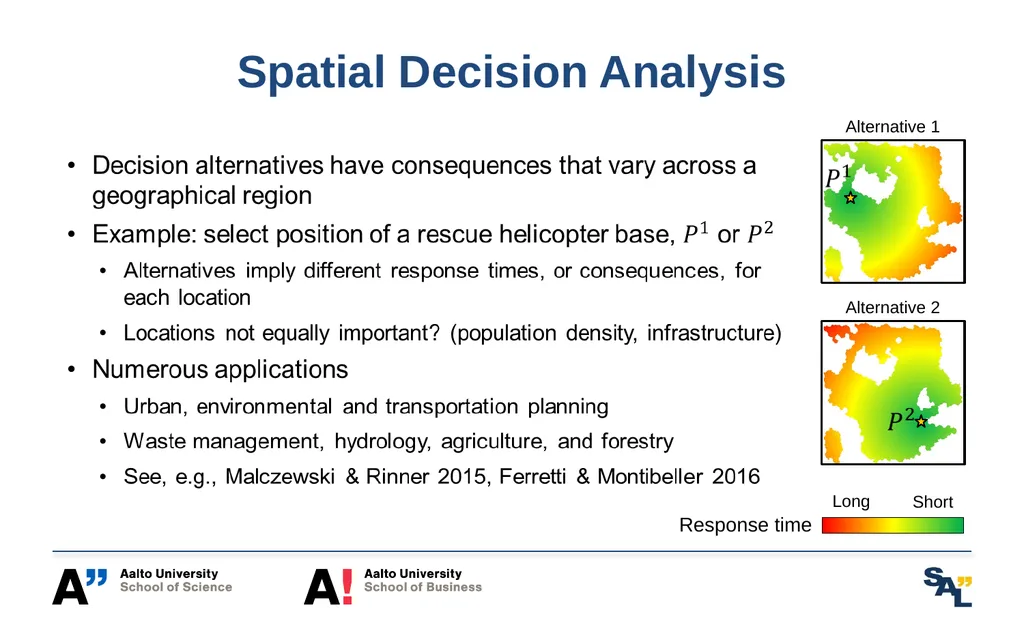
slide2. Spatial Decision Analysis Long Short Response time Alternative 1 Alternative 2<br>
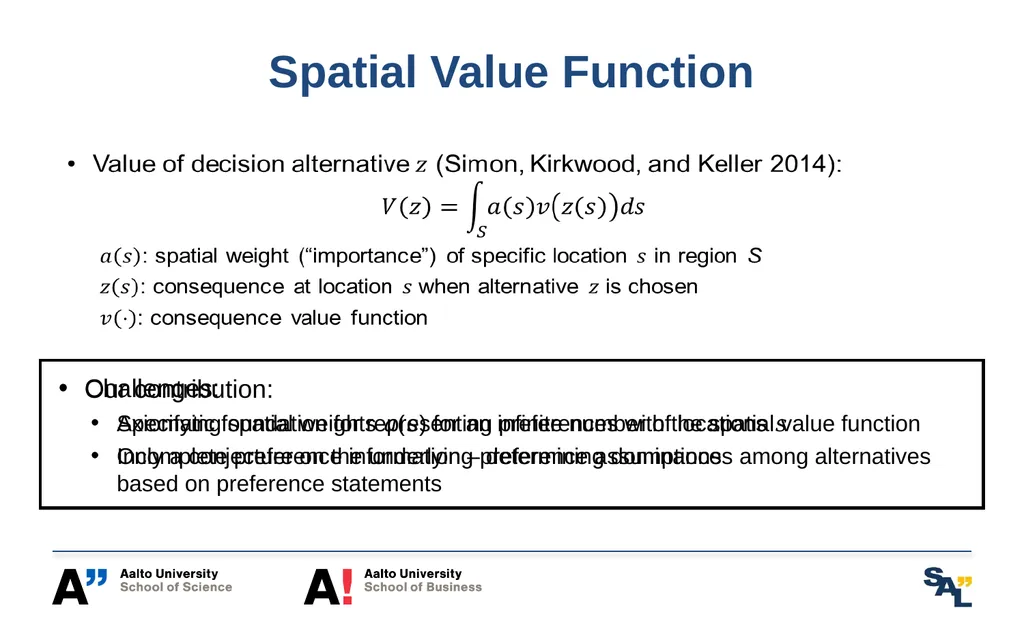
slide3. Our contribution:
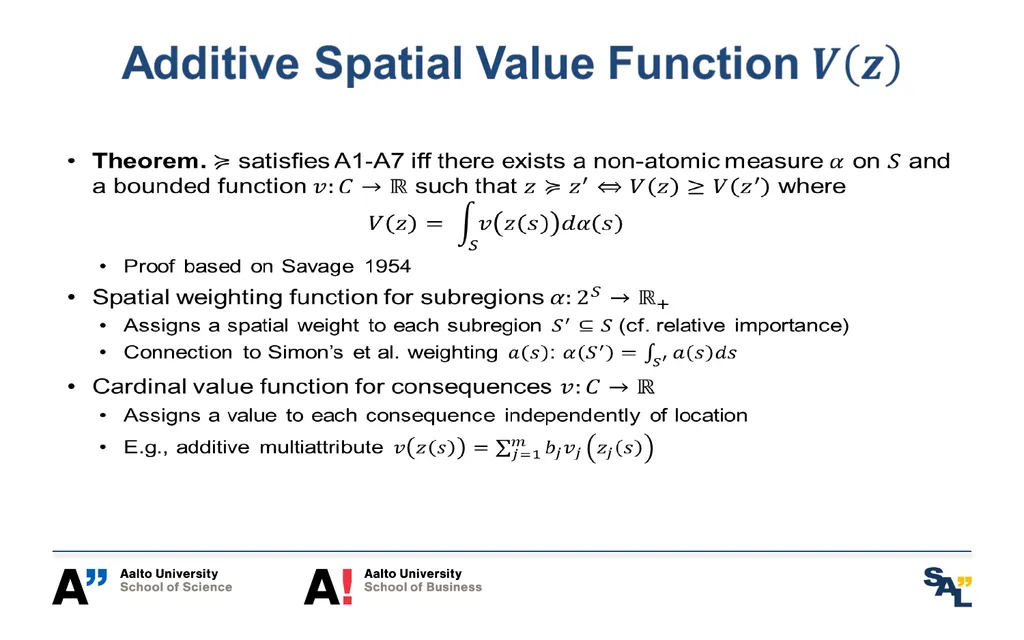
Axiomatic foundation for representing preferences with the spatial value function
Incomplete preference information – determining dominances among alternatives based on preference statements Spatial Value Function Challenges:
Specifying spatial weights 𝑎(𝑠) for an infinite number of locations 𝑠
Only a conjecture on the underlying preference assumptions<br>
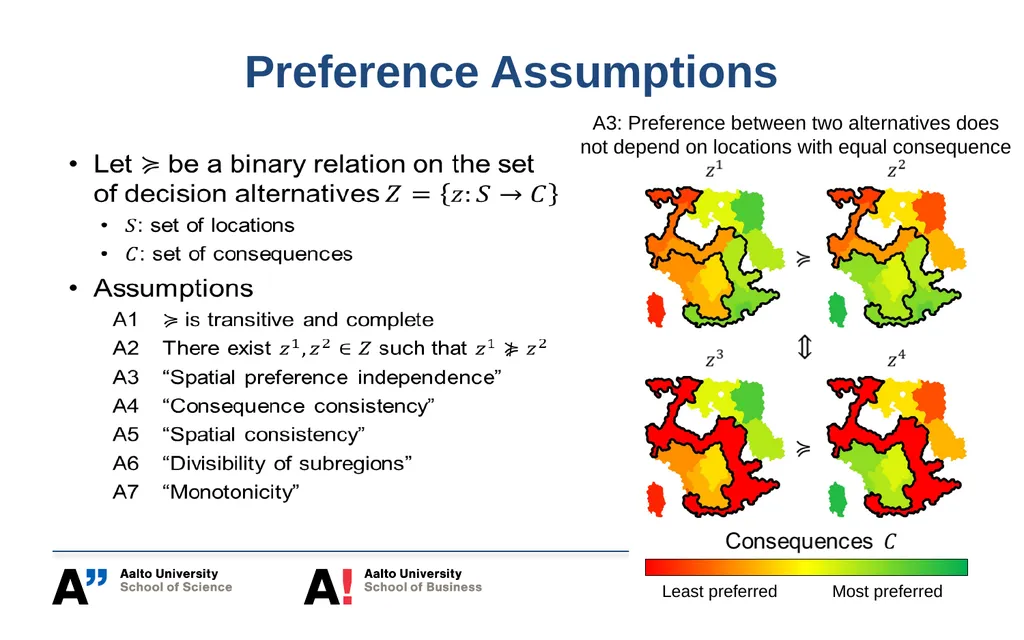
slide4. Preference Assumptions A3: Preference between two alternatives does not depend on locations with equal consequence<br>
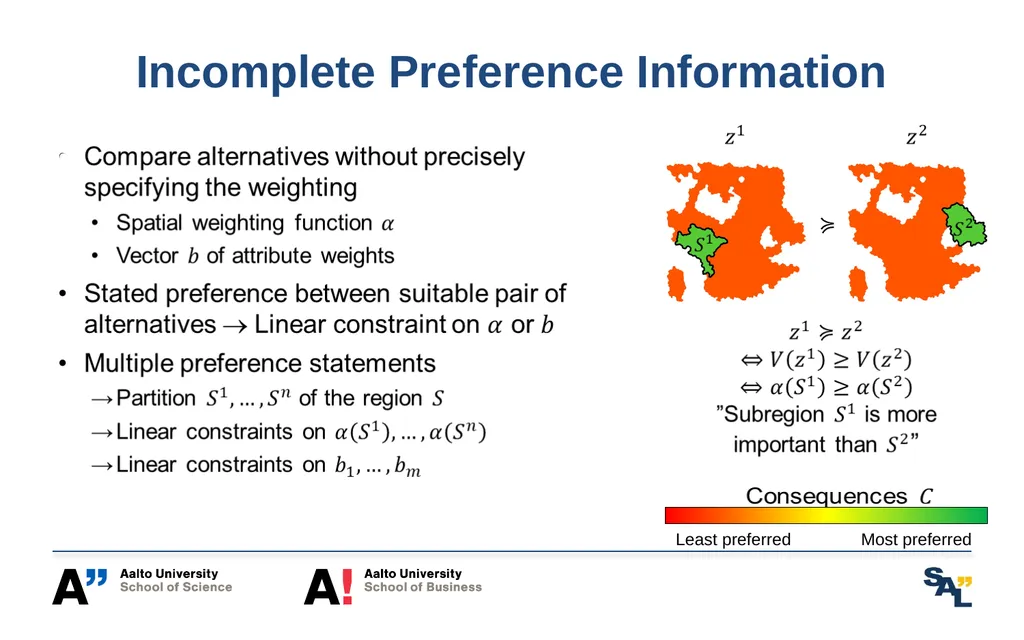
slide6. Incomplete Preference Information<br>
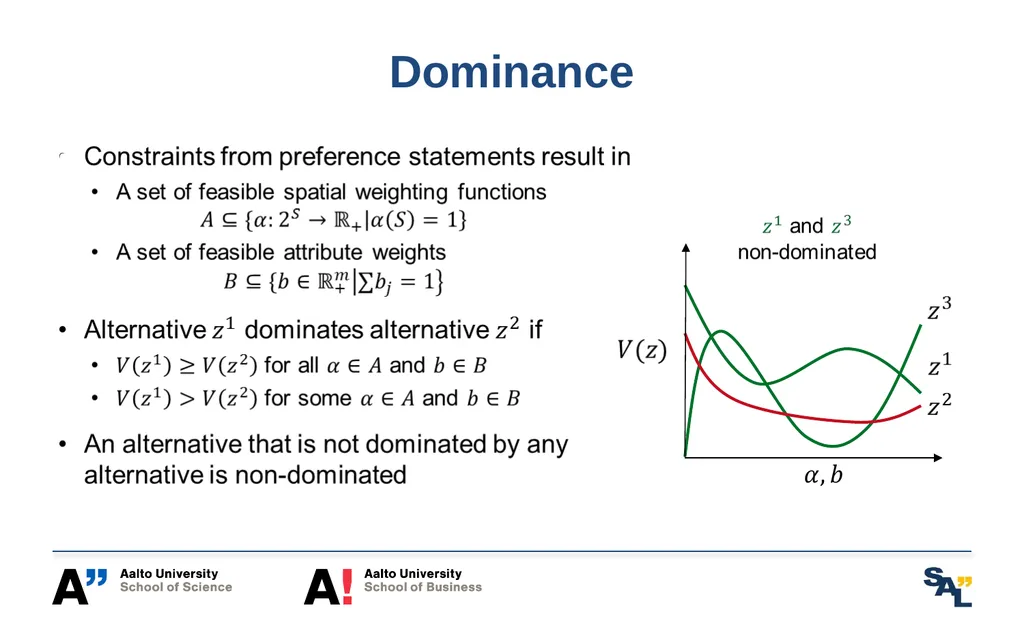
slide7. Dominance<br>
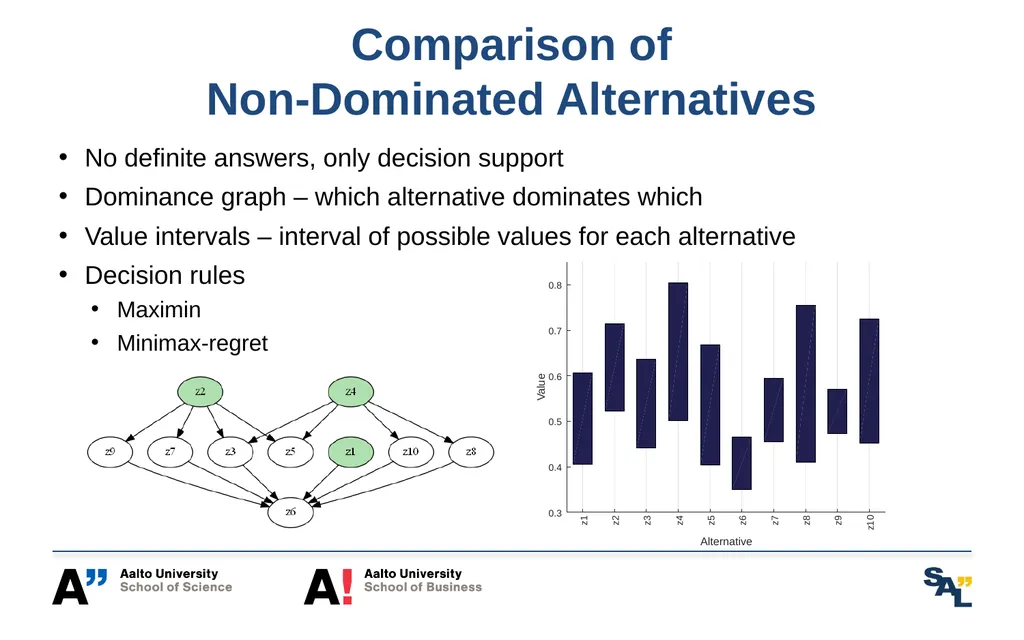
slide8. Comparison of Non-Dominated Alternatives No definite answers, only decision support
Dominance graph – which alternative dominates which
Value intervals – interval of possible values for each alternative
Decision rules
Maximin
Minimax-regret<br>
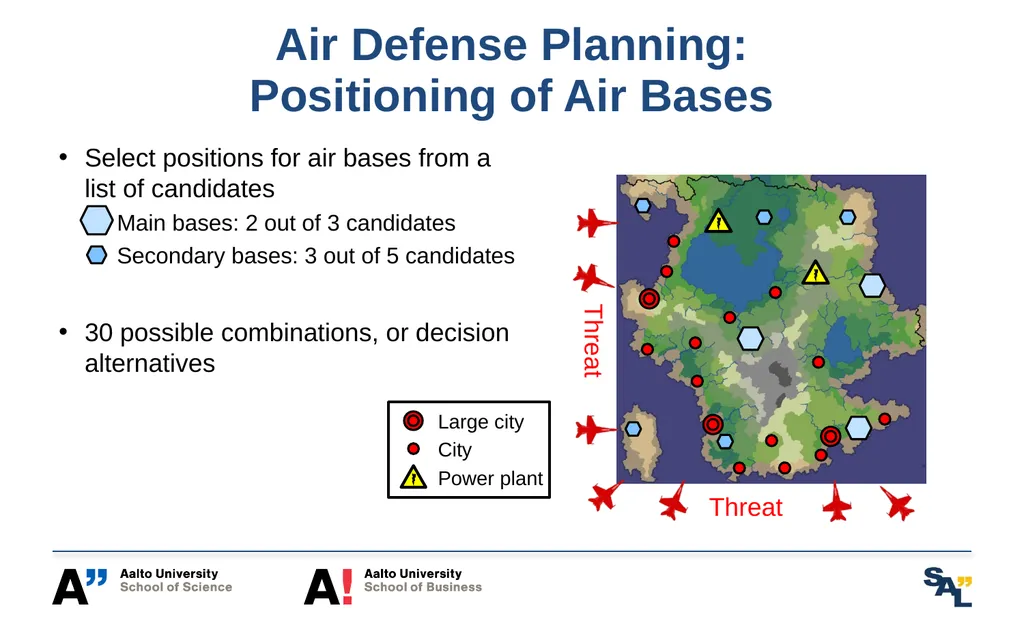
slide9. Air Defense Planning: Positioning of Air Bases Select positions for air bases from a list of candidates
Main bases: 2 out of 3 candidates
Secondary bases: 3 out of 5 candidates
30 possible combinations, or decision alternatives Large city
City
Power plant<br>
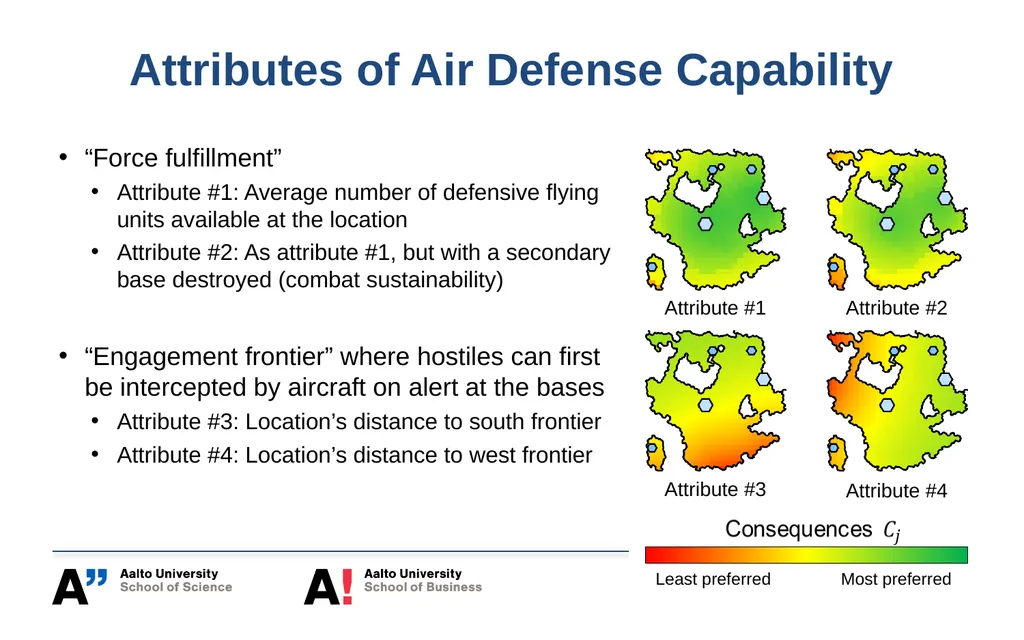
slide10. Attributes of Air Defense Capability “Force fulfillment”
Attribute #1: Average number of defensive flying units available at the location
Attribute #2: As attribute #1, but with a secondary base destroyed (combat sustainability)
“Engagement frontier” where hostiles can first be intercepted by aircraft on alert at the bases
Attribute #3: Location’s distance to south frontier
Attribute #4: Location’s distance to west frontier Attribute #1 Attribute #2 Attribute #3 Attribute #4<br>
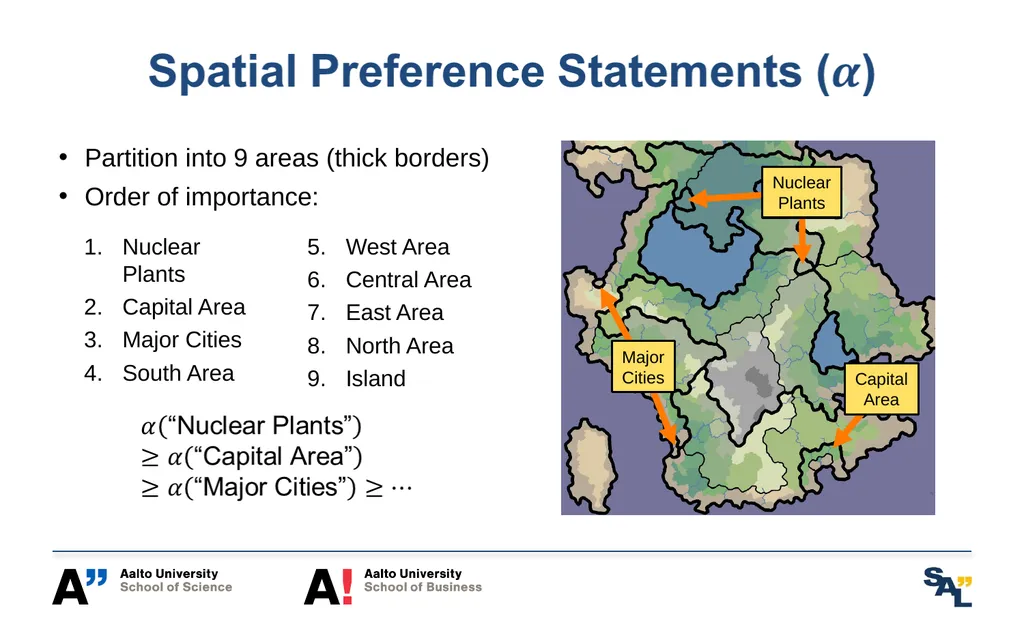
slide11. Partition into 9 areas (thick borders)
Order of importance: Nuclear Plants
Capital Area
Major Cities
South Area
West Area
Central Area
East Area
North Area
Island Nuclear
Plants Major
Cities Capital
Area<br>
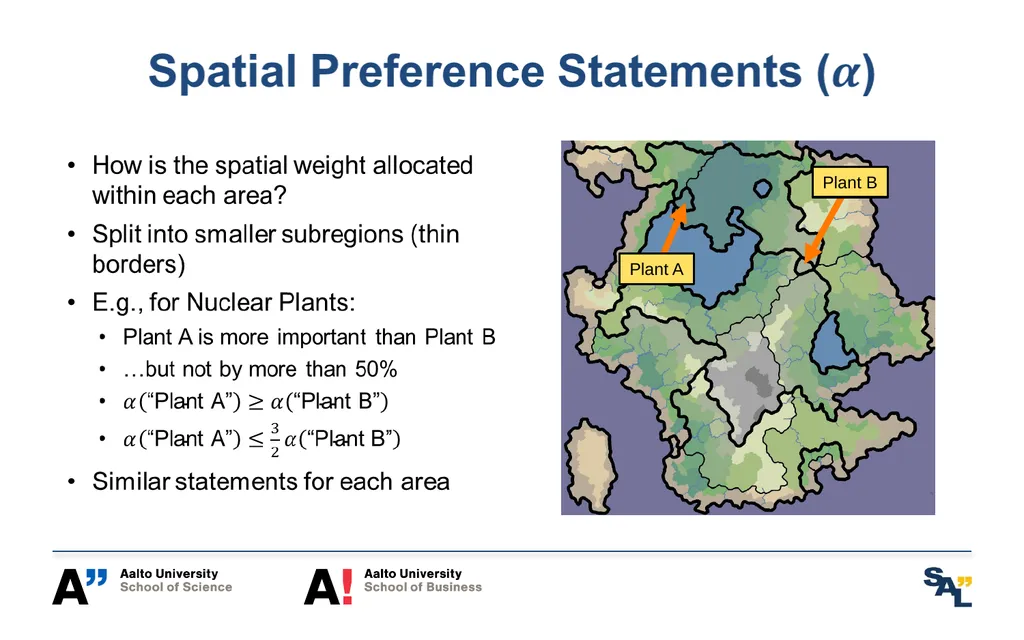
slide12. Plant B Plant A<br>
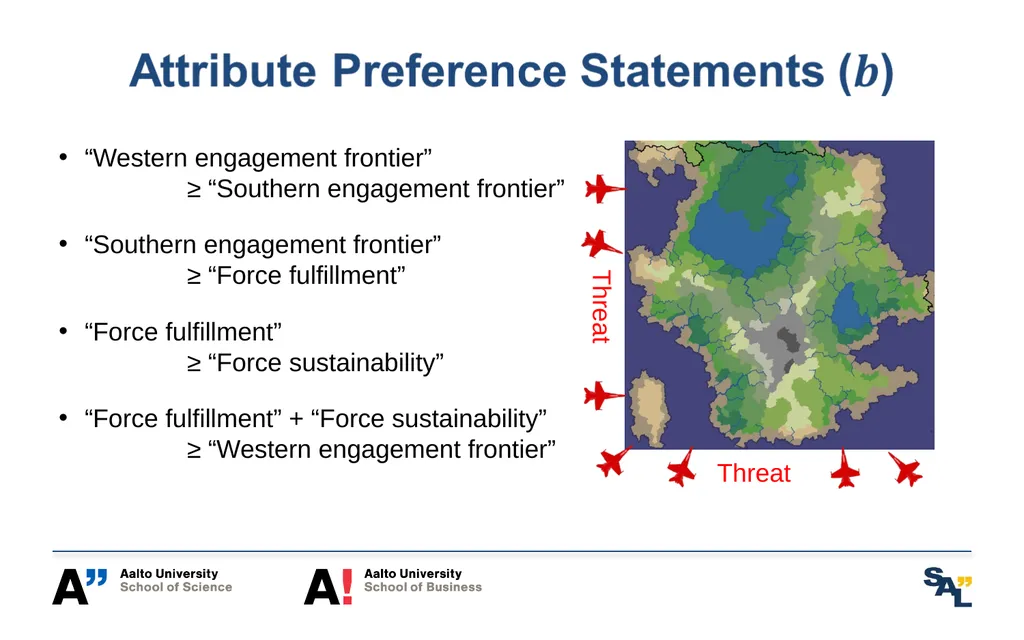
slide13. “Western engagement frontier” ≥ “Southern engagement frontier”
“Southern engagement frontier” ≥ “Force fulfillment”
“Force fulfillment” ≥ “Force sustainability”
“Force fulfillment” + “Force sustainability” ≥ “Western engagement frontier”<br>
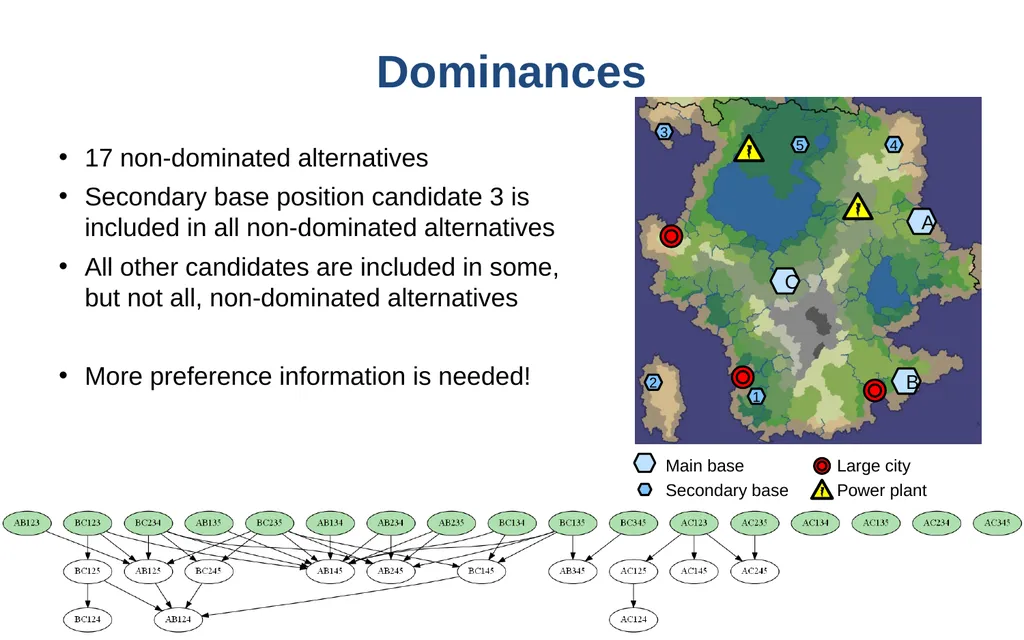
slide14. Dominances 17 non-dominated alternatives
Secondary base position candidate 3 is included in all non-dominated alternatives
All other candidates are included in some, but not all, non-dominated alternatives
More preference information is needed! B C A 2 3 5 4 1 Large city
Power plant Main base
Secondary base<br>
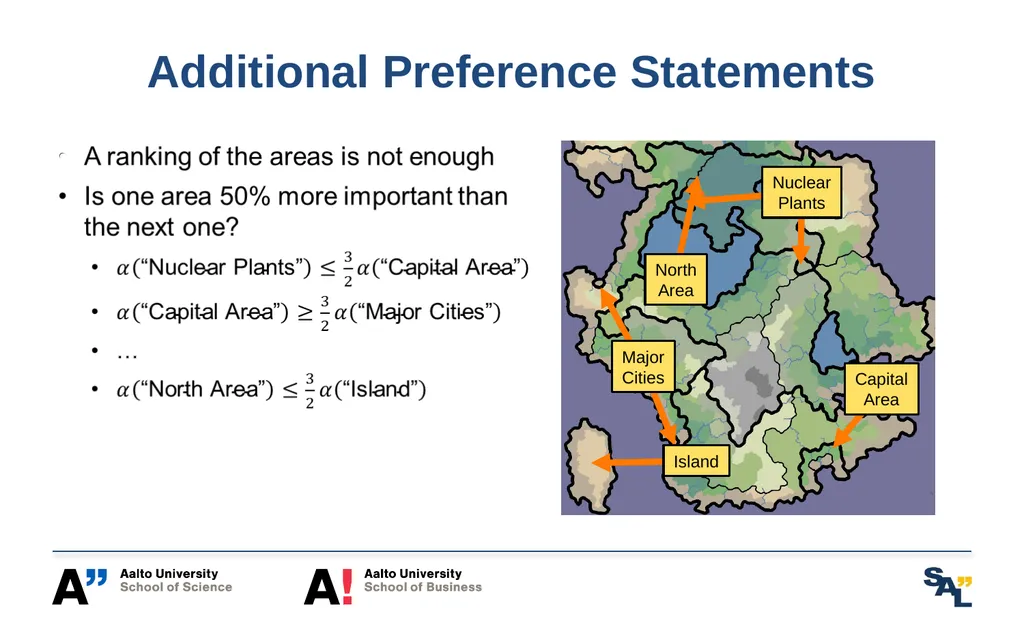
slide15. Additional Preference Statements Nuclear
Plants Major
Cities Capital
Area North
Area Island<br>
slide16. Dominances B C A 2 3 5 4 1 Large city
Power plant Main base
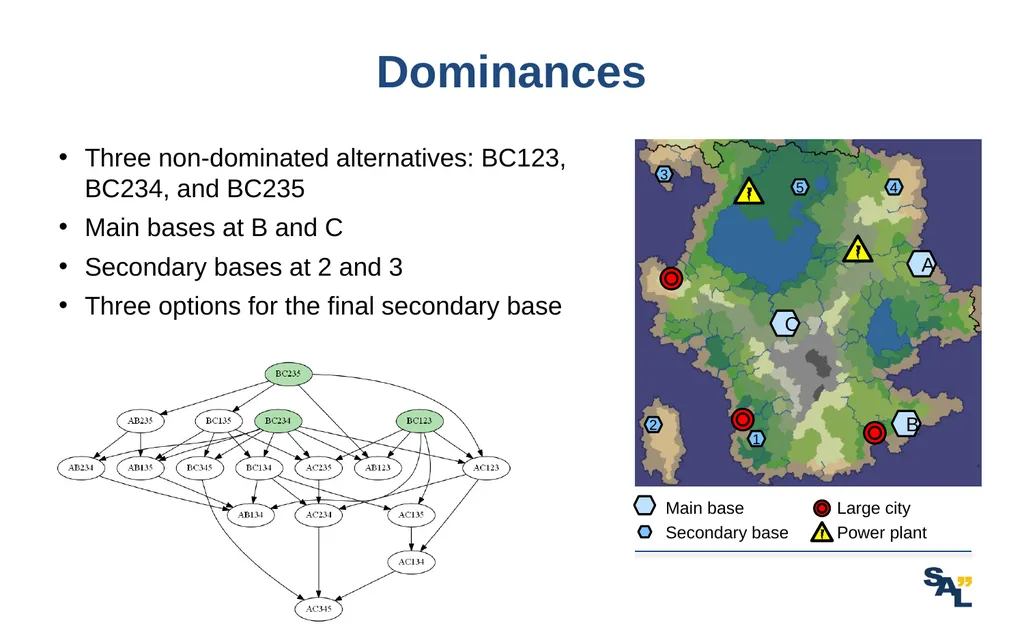
Secondary base Three non-dominated alternatives: BC123, BC234, and BC235
Main bases at B and C
Secondary bases at 2 and 3
Three options for the final secondary base<br>
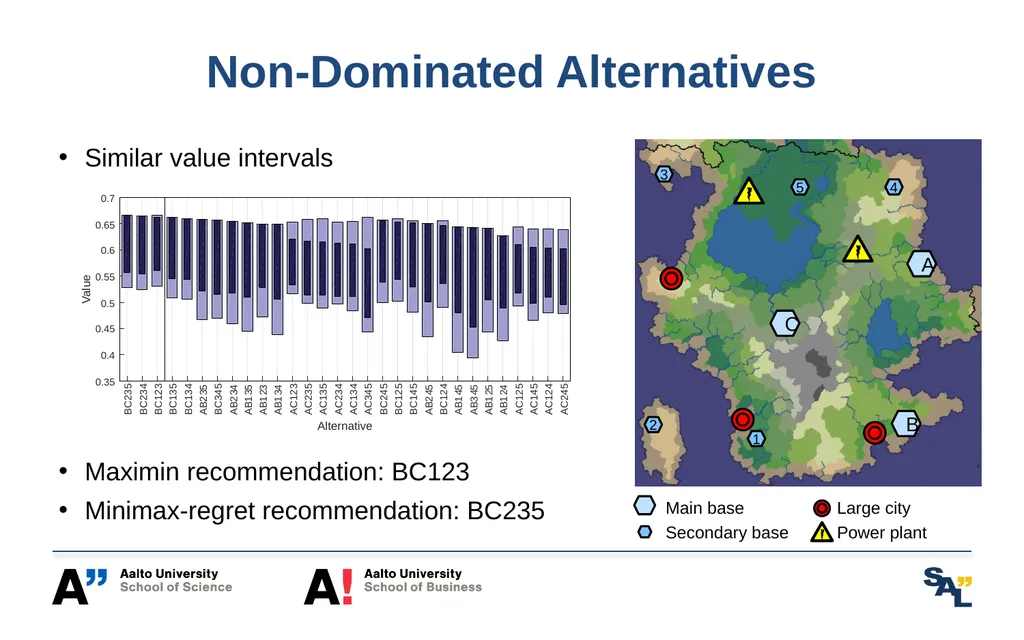
slide17. Non-Dominated Alternatives Similar value intervals
Maximin recommendation: BC123
Minimax-regret recommendation: BC235 B C A 2 3 5 4 1 Large city
Power plant Main base
Secondary base<br>
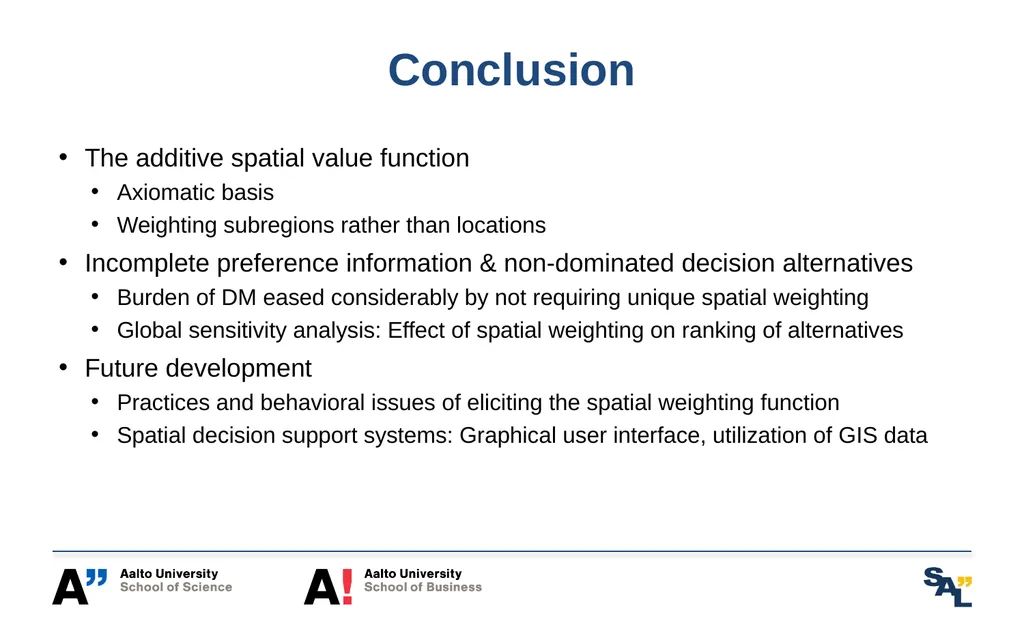
slide18. Conclusion The additive spatial value function
Axiomatic basis
Weighting subregions rather than locations
Incomplete preference information & non-dominated decision alternatives
Burden of DM eased considerably by not requiring unique spatial weighting
Global sensitivity analysis: Effect of spatial weighting on ranking of alternatives
Future development
Practices and behavioral issues of eliciting the spatial weighting function
Spatial decision support systems: Graphical user interface, utilization of GIS data<br>
slide19. References Ferretti, V. and Montibeller, G., 2016. Key challenges and meta-choices in designing and applying multi-criteria spatial decision support systems. Decision Support Systems, 84
Malczewski, J. and Rinner, C., 2015. Multicriteria decision analysis in geographic information science. New York: Springer
Salo, A. and Hämäläinen, R.P., 1992. Preference assessment by imprecise ratio statements. Operations Research, 40(6)
Savage, L.J., 1954. The foundations of statistics. New York: John Wiley and Sons
Simon, J., Kirkwood, C.W. and Keller, L.R., 2014. Decision analysis with geographically varying outcomes: Preference models and illustrative applications. Operations Research, 62(1)<br>
* Systems Analysis Laboratory, Department of Mathematics and Systems Analysis, Aalto University School of Science
** Department of Information and Service Economy, Aalto University School of Business<br>
slide2. Spatial Decision Analysis Long Short Response time Alternative 1 Alternative 2<br>
slide3. Our contribution:
Axiomatic foundation for representing preferences with the spatial value function
Incomplete preference information – determining dominances among alternatives based on preference statements Spatial Value Function Challenges:
Specifying spatial weights 𝑎(𝑠) for an infinite number of locations 𝑠
Only a conjecture on the underlying preference assumptions<br>
slide4. Preference Assumptions A3: Preference between two alternatives does not depend on locations with equal consequence<br>
slide6. Incomplete Preference Information<br>
slide7. Dominance<br>
slide8. Comparison of Non-Dominated Alternatives No definite answers, only decision support
Dominance graph – which alternative dominates which
Value intervals – interval of possible values for each alternative
Decision rules
Maximin
Minimax-regret<br>
slide9. Air Defense Planning: Positioning of Air Bases Select positions for air bases from a list of candidates
Main bases: 2 out of 3 candidates
Secondary bases: 3 out of 5 candidates
30 possible combinations, or decision alternatives Large city
City
Power plant<br>
slide10. Attributes of Air Defense Capability “Force fulfillment”
Attribute #1: Average number of defensive flying units available at the location
Attribute #2: As attribute #1, but with a secondary base destroyed (combat sustainability)
“Engagement frontier” where hostiles can first be intercepted by aircraft on alert at the bases
Attribute #3: Location’s distance to south frontier
Attribute #4: Location’s distance to west frontier Attribute #1 Attribute #2 Attribute #3 Attribute #4<br>
slide11. Partition into 9 areas (thick borders)
Order of importance: Nuclear Plants
Capital Area
Major Cities
South Area
West Area
Central Area
East Area
North Area
Island Nuclear
Plants Major
Cities Capital
Area<br>
slide12. Plant B Plant A<br>
slide13. “Western engagement frontier” ≥ “Southern engagement frontier”
“Southern engagement frontier” ≥ “Force fulfillment”
“Force fulfillment” ≥ “Force sustainability”
“Force fulfillment” + “Force sustainability” ≥ “Western engagement frontier”<br>
slide14. Dominances 17 non-dominated alternatives
Secondary base position candidate 3 is included in all non-dominated alternatives
All other candidates are included in some, but not all, non-dominated alternatives
More preference information is needed! B C A 2 3 5 4 1 Large city
Power plant Main base
Secondary base<br>
slide15. Additional Preference Statements Nuclear
Plants Major
Cities Capital
Area North
Area Island<br>
slide16. Dominances B C A 2 3 5 4 1 Large city
Power plant Main base
Secondary base Three non-dominated alternatives: BC123, BC234, and BC235
Main bases at B and C
Secondary bases at 2 and 3
Three options for the final secondary base<br>
slide17. Non-Dominated Alternatives Similar value intervals
Maximin recommendation: BC123
Minimax-regret recommendation: BC235 B C A 2 3 5 4 1 Large city
Power plant Main base
Secondary base<br>
slide18. Conclusion The additive spatial value function
Axiomatic basis
Weighting subregions rather than locations
Incomplete preference information & non-dominated decision alternatives
Burden of DM eased considerably by not requiring unique spatial weighting
Global sensitivity analysis: Effect of spatial weighting on ranking of alternatives
Future development
Practices and behavioral issues of eliciting the spatial weighting function
Spatial decision support systems: Graphical user interface, utilization of GIS data<br>
slide19. References Ferretti, V. and Montibeller, G., 2016. Key challenges and meta-choices in designing and applying multi-criteria spatial decision support systems. Decision Support Systems, 84
Malczewski, J. and Rinner, C., 2015. Multicriteria decision analysis in geographic information science. New York: Springer
Salo, A. and Hämäläinen, R.P., 1992. Preference assessment by imprecise ratio statements. Operations Research, 40(6)
Savage, L.J., 1954. The foundations of statistics. New York: John Wiley and Sons
Simon, J., Kirkwood, C.W. and Keller, L.R., 2014. Decision analysis with geographically varying outcomes: Preference models and illustrative applications. Operations Research, 62(1)<br>