
SSSAD ATHLETE EDUCATION CONCUSSION GUIDELINES WHAT



Description: SSSAD ATHLETE EDUCATION CONCUSSION GUIDELINES WHAT IS A CONCUSSION? A concussion is a brain injury that cannot be seen on routine X-rays, CT scans, or MRIs. It affects the way you may think and remember things, and can cause a variety of
Related Topics
Download Presentation
"SSSAD ATHLETE EDUCATION CONCUSSION GUIDELINES WHAT" is the property of its rightful owner. Permission is granted to download and print the materials on this website for personal, non-commercial use only, and to display it on your personal computer provided you do not modify the materials and that you retain all copyright notices contained in the materials. By downloading content from our website, you accept the terms of this agreement.
Presentation Transcript
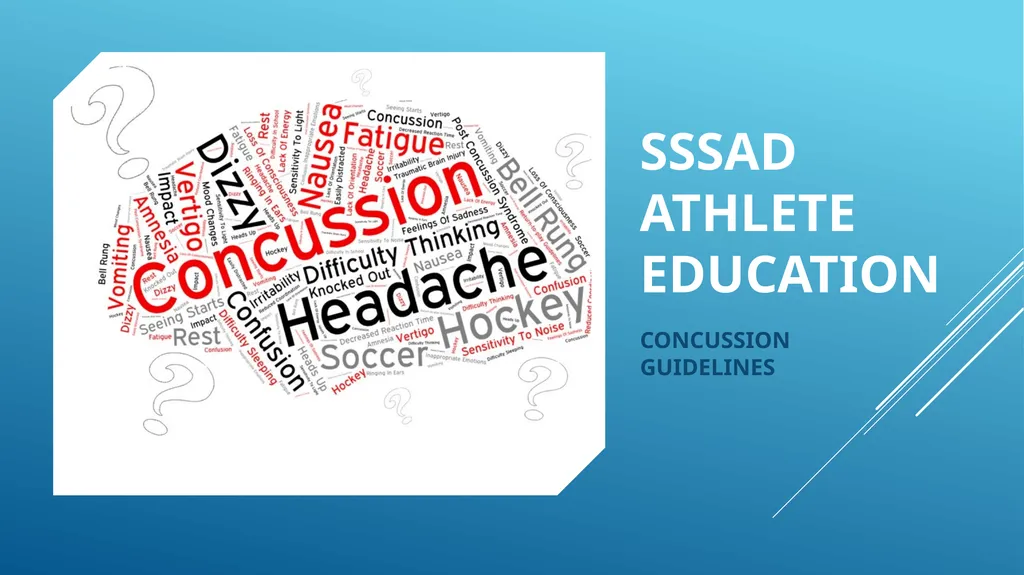
slide1. SSSAD ATHLETE EDUCATION CONCUSSION GUIDELINES<br>
slide2. WHAT IS A CONCUSSION?
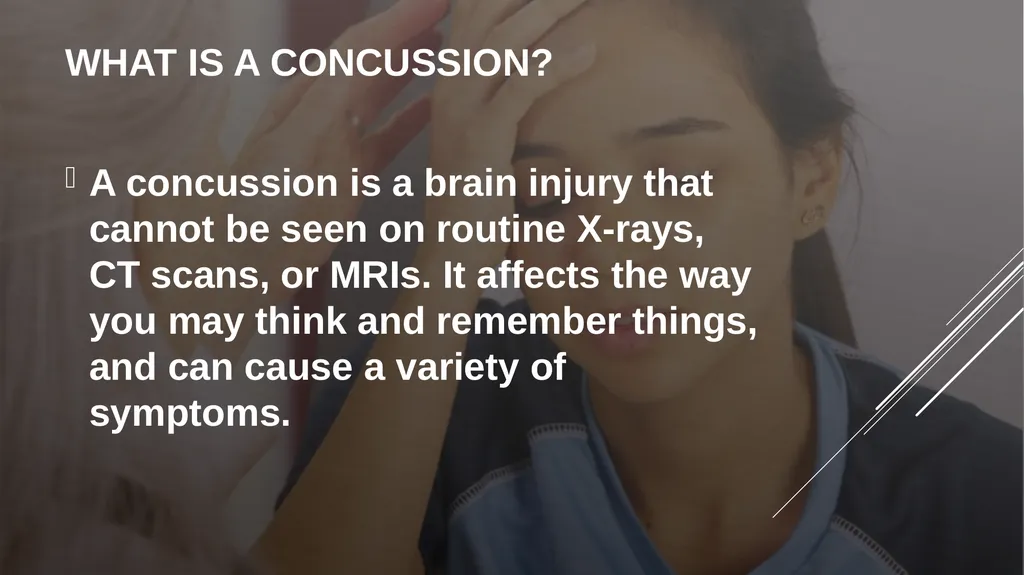
A concussion is a brain injury that cannot be seen on routine X-rays, CT scans, or MRIs. It affects the way you may think and remember things, and can cause a variety of symptoms.<br>
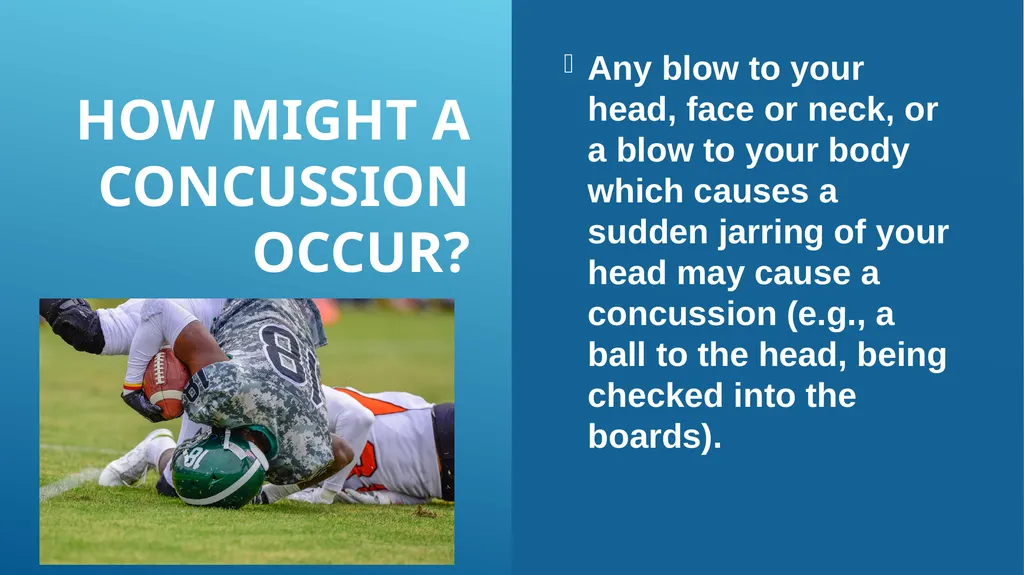
slide3. HOW MIGHT A CONCUSSION OCCUR? Any blow to your head, face or neck, or a blow to your body which causes a sudden jarring of your head may cause a concussion (e.g., a ball to the head, being checked into the boards).<br>
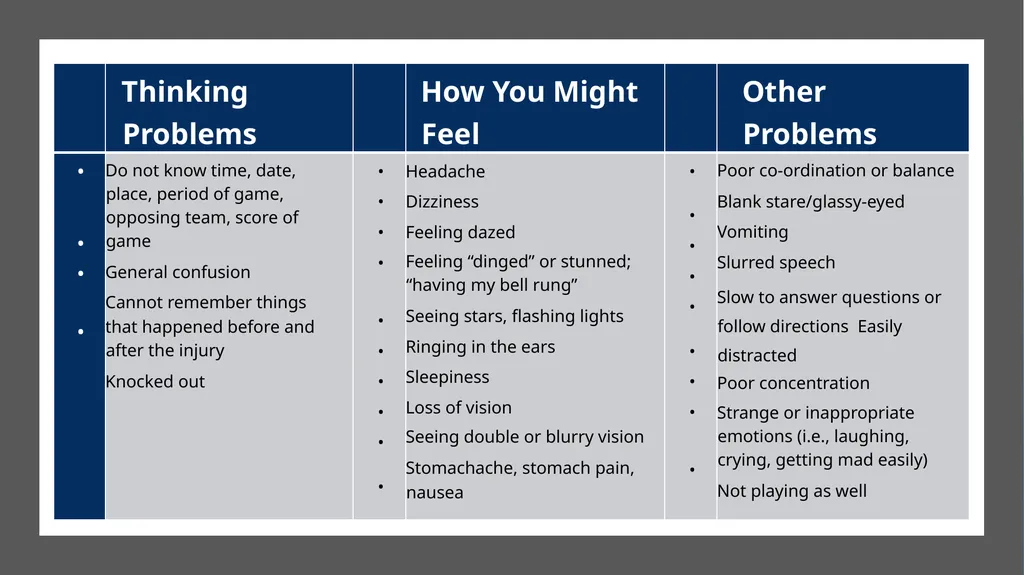
slide4. COMMON SIGNS AND SYMPTOMS OF CONCUSSIONS You do not need to be knocked out (lose consciousness) to have had a concussion. You might experience one or more of the following symptoms on the following slide:<br>
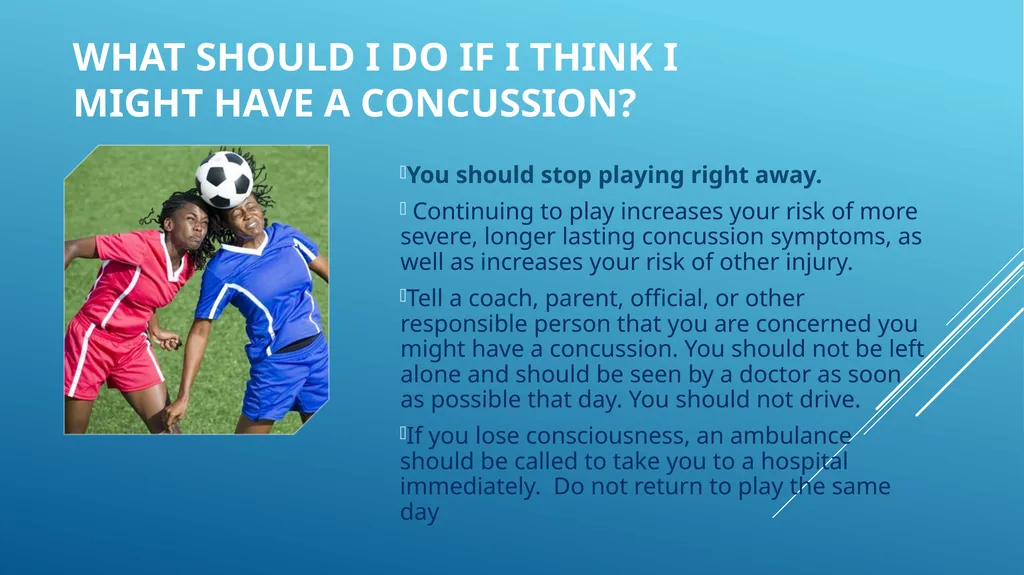
slide7. What should I do if I think I might have a concussion? You should stop playing right away.
Continuing to play increases your risk of more severe, longer lasting concussion symptoms, as well as increases your risk of other injury.
Tell a coach, parent, official, or other responsible person that you are concerned you might have a concussion. You should not be left alone and should be seen by a doctor as soon as possible that day. You should not drive.
If you lose consciousness, an ambulance should be called to take you to a hospital immediately. Do not return to play the same day<br>
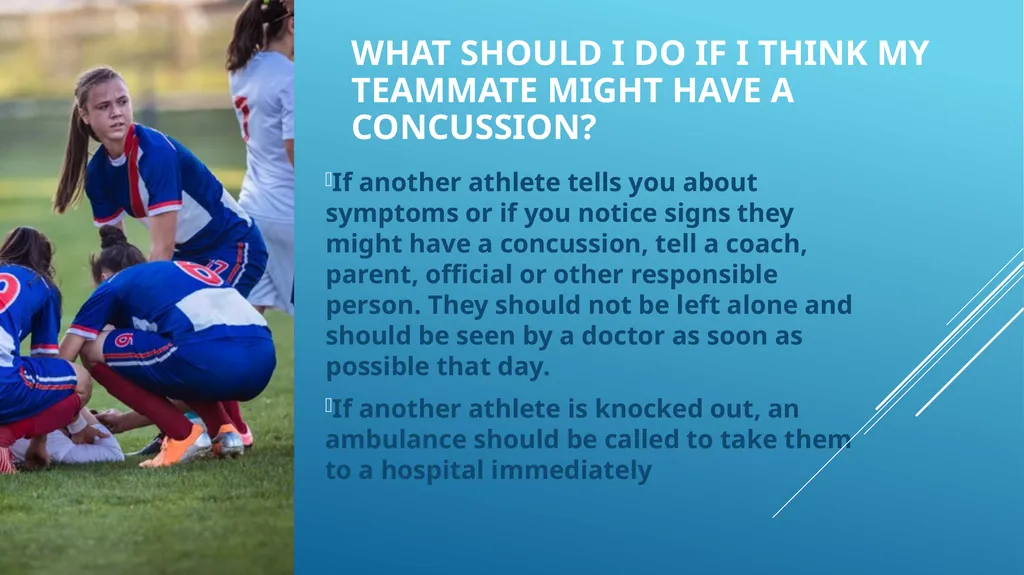
slide8. What should I do if I think my teammate might have a concussion? If another athlete tells you about symptoms or if you notice signs they might have a concussion, tell a coach, parent, official or other responsible person. They should not be left alone and should be seen by a doctor as soon as possible that day.
If another athlete is knocked out, an ambulance should be called to take them to a hospital immediately<br>
slide9. How long will it take to get better? The signs and symptoms of a concussion usually last for one to four weeks but may last longer. In some cases, it may take many weeks or months to heal. If you have had a previous concussion, you may take longer to heal.
If your symptoms are persistent (i.e., last longer than four weeks if you’re under 18 or last longer than two weeks if you’re 18 or older) you should be referred to a healthcare professional who is an expert in the management of concussion<br>
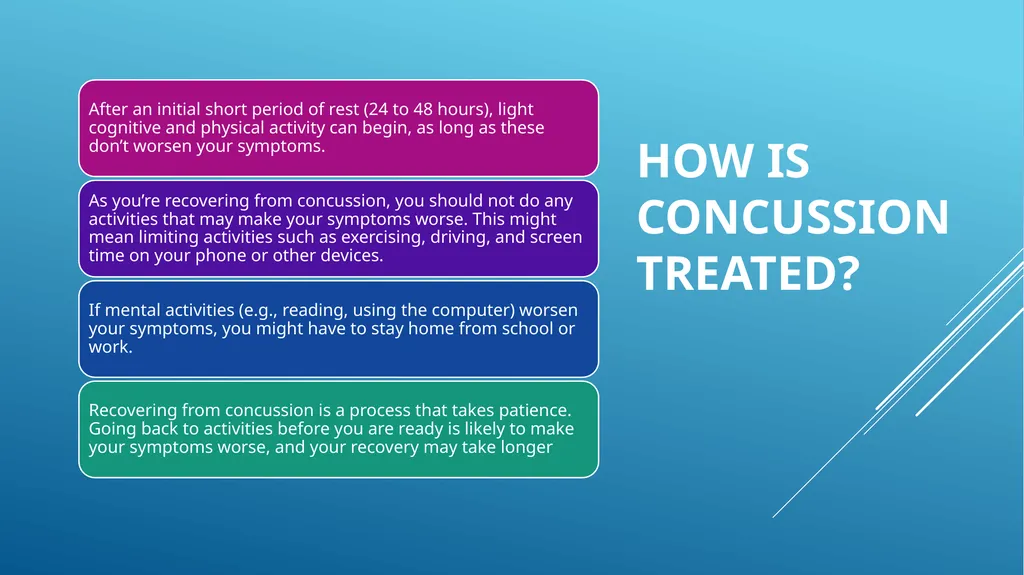
slide10. How is concussion treated?<br>
slide11. When should I go to the doctor? Anyone with a possible head injury should be seen by a doctor as soon as possible. If you are diagnosed with a concussion, your doctor should schedule a follow-up visit with you within the next one to two weeks.<br>
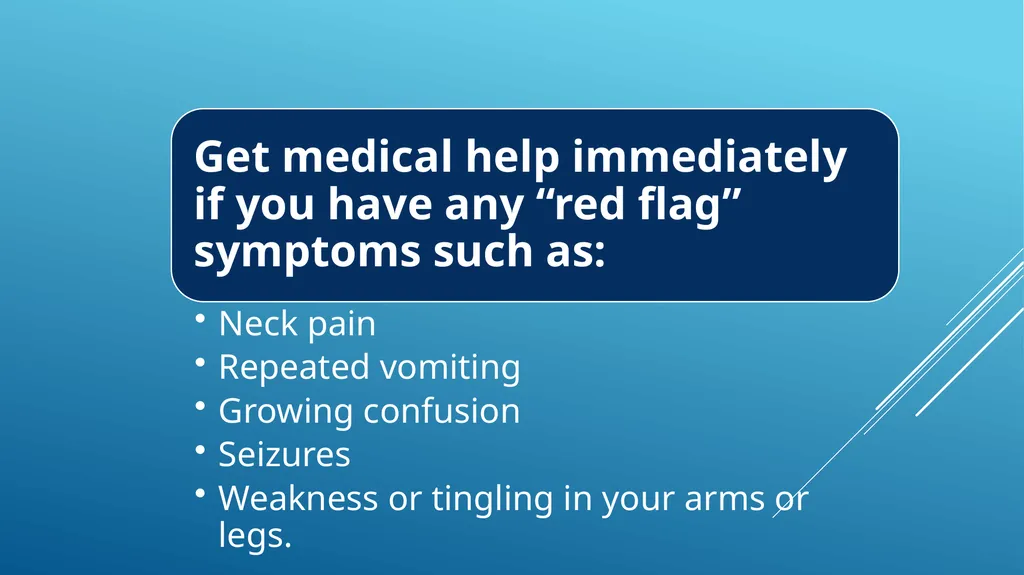
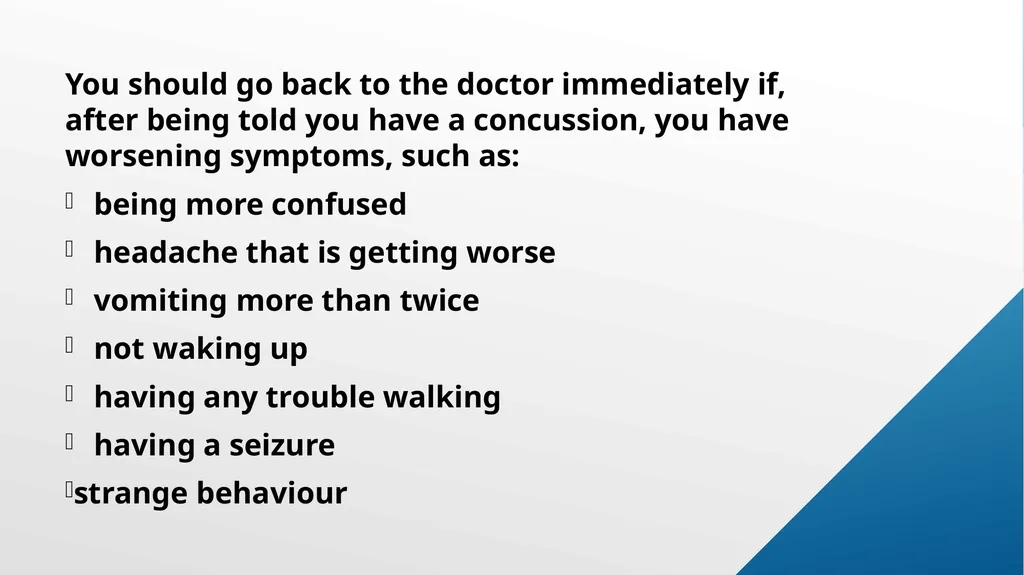
slide12. You should go back to the doctor immediately if, after being told you have a concussion, you have worsening symptoms, such as:
being more confused
headache that is getting worse
vomiting more than twice
not waking up
having any trouble walking
having a seizure
strange behaviour<br>
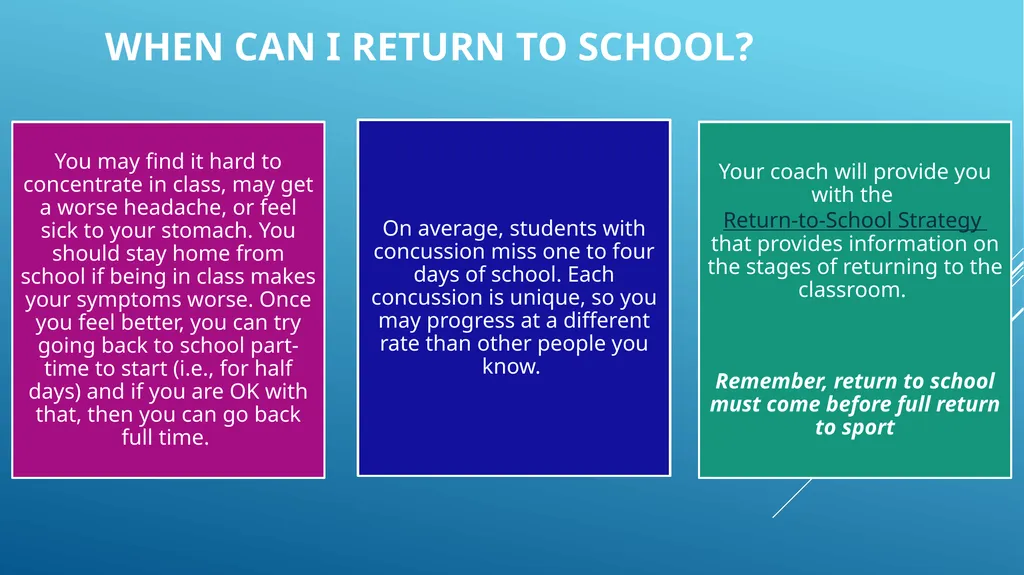
slide13. When can I return to school?<br>
slide14. When can I return to sport? It is very important that you do not go back to full participation in sport if you have any concussion signs or symptoms. Return to sport and physical activity must follow a step-wise approach.
In this approach:
* Each stage is at least 24 hours.
* Move on to the next stage when you can tolerate activities without new or worsening symptoms.
* If any symptoms worsen, stop and go back to the previous stage for at least 24 hours<br>
slide15. Return to sport is a 6-step process Your coach will provide you with the Return to Sport Guidelines should you suffer a concussion<br>
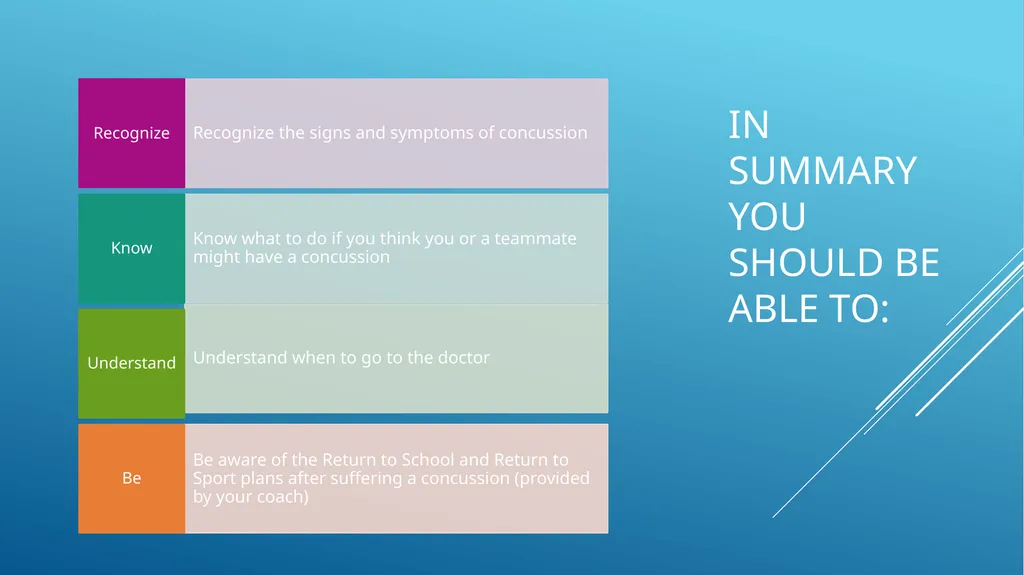
slide17. In summary you should be able to:<br>
slide18. Good luck and have a fun, safe and successful season!<br>
slide2. WHAT IS A CONCUSSION?
A concussion is a brain injury that cannot be seen on routine X-rays, CT scans, or MRIs. It affects the way you may think and remember things, and can cause a variety of symptoms.<br>
slide3. HOW MIGHT A CONCUSSION OCCUR? Any blow to your head, face or neck, or a blow to your body which causes a sudden jarring of your head may cause a concussion (e.g., a ball to the head, being checked into the boards).<br>
slide4. COMMON SIGNS AND SYMPTOMS OF CONCUSSIONS You do not need to be knocked out (lose consciousness) to have had a concussion. You might experience one or more of the following symptoms on the following slide:<br>
slide7. What should I do if I think I might have a concussion? You should stop playing right away.
Continuing to play increases your risk of more severe, longer lasting concussion symptoms, as well as increases your risk of other injury.
Tell a coach, parent, official, or other responsible person that you are concerned you might have a concussion. You should not be left alone and should be seen by a doctor as soon as possible that day. You should not drive.
If you lose consciousness, an ambulance should be called to take you to a hospital immediately. Do not return to play the same day<br>
slide8. What should I do if I think my teammate might have a concussion? If another athlete tells you about symptoms or if you notice signs they might have a concussion, tell a coach, parent, official or other responsible person. They should not be left alone and should be seen by a doctor as soon as possible that day.
If another athlete is knocked out, an ambulance should be called to take them to a hospital immediately<br>
slide9. How long will it take to get better? The signs and symptoms of a concussion usually last for one to four weeks but may last longer. In some cases, it may take many weeks or months to heal. If you have had a previous concussion, you may take longer to heal.
If your symptoms are persistent (i.e., last longer than four weeks if you’re under 18 or last longer than two weeks if you’re 18 or older) you should be referred to a healthcare professional who is an expert in the management of concussion<br>
slide10. How is concussion treated?<br>
slide11. When should I go to the doctor? Anyone with a possible head injury should be seen by a doctor as soon as possible. If you are diagnosed with a concussion, your doctor should schedule a follow-up visit with you within the next one to two weeks.<br>
slide12. You should go back to the doctor immediately if, after being told you have a concussion, you have worsening symptoms, such as:
being more confused
headache that is getting worse
vomiting more than twice
not waking up
having any trouble walking
having a seizure
strange behaviour<br>
slide13. When can I return to school?<br>
slide14. When can I return to sport? It is very important that you do not go back to full participation in sport if you have any concussion signs or symptoms. Return to sport and physical activity must follow a step-wise approach.
In this approach:
* Each stage is at least 24 hours.
* Move on to the next stage when you can tolerate activities without new or worsening symptoms.
* If any symptoms worsen, stop and go back to the previous stage for at least 24 hours<br>
slide15. Return to sport is a 6-step process Your coach will provide you with the Return to Sport Guidelines should you suffer a concussion<br>
slide17. In summary you should be able to:<br>
slide18. Good luck and have a fun, safe and successful season!<br>