STANDING COMMITTEE ON PUBLIC ACCOUNTS (SCOPA) PRESENTATION ON THE LEGACY REPORT (2014-2019) 09 July 2019 1 CONTENTS Mandate of SCOPA SCOPAs three strategic objectives (2014-2019) Focus areas as identified in the strategic plan (2014-2019)
"STANDING COMMITTEE ON PUBLIC ACCOUNTS (SCOPA)" is the property of its rightful owner. Permission is granted to
download and print the materials on this website for personal, non-commercial use only, and to display it
on your personal computer provided you do not modify the materials and that you retain all copyright
notices contained in the materials. By downloading content from our website, you accept the terms of this
agreement.
Presentation Transcript
01
STANDING COMMITTEE ON PUBLIC ACCOUNTS (SCOPA)
PRESENTATION ON THE LEGACY REPORT (2014-2019)
09 July 2019 1<br>
02
CONTENTS Mandate of SCOPA
SCOPA’s three strategic objectives (2014-2019)
Focus areas as identified in the strategic plan (2014-2019)
Key stakeholders
Findings and challenges (SCOPA hearings and Oversight visits)
Key achievements
Challenges (internal and external)
Key follow-up issues
Recommendations to the sixth Parliament 2<br>
03
Mandate of SCOPA SCOPA derives its mandate from section 55(2) of the Constitution, which stipulates that the National Assembly must provide for mechanisms to ensure that all executive organs of state in the national sphere of government are accountable to it, as well as to exercise oversight on the executive authority.
SCOPA is established in terms of Rule 243 of the National Assembly Rules, 9th edition (2016).
Rule 245 stipulates the functions and powers of SCOPA, which is to consider:
The financial statements of all the executive organs of state and constitutional institutions or other public bodies when those statements are submitted to Parliament.
Any audit reports issued on those statements.
Any reports issued by the Auditor-General on the affairs of any executive organ of state, constitutional institution or other public body. 3<br>
04
Mandate of SCOPA Any reports reviewing expenditure of public funds by any executive organ of state and constitutional institution or other public body.
Any other financial statements or reports referred to the committee in terms of these rules.
May report on any of those financial statements or reports to the Assembly.
May initiate any investigation in its area of competence.
Must perform any other functions, tasks or duties assigned to it in terms of the Constitution, legislation and the NA rules, the joint rules or resolutions of the Assembly, including functions, tasks and duties concerning parliamentary financial oversight or supervision of executive organs of state, constitutional institutions or public bodies. 4<br>
05
SCOPA’s three strategic objectives At the beginning of the fifth Parliamentary term, the Committee developed a five-year strategic plan (2014-2019), these strategic objectives were the following:
To consider all annual reports tabled.
To enhance the effectiveness of SCOPA.
To improve the understanding of SCOPA work by the public. 5<br>
06
SCOPA’s focus areas The main focus areas for the five year period under review, were the following:
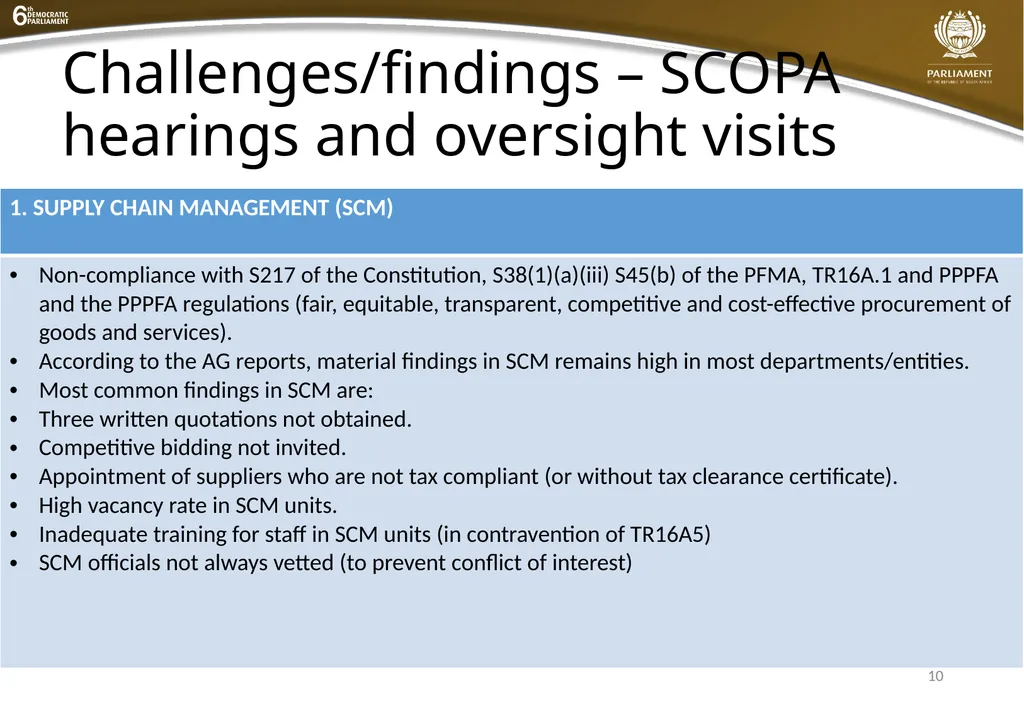
Compliance with Supply Chain Management;
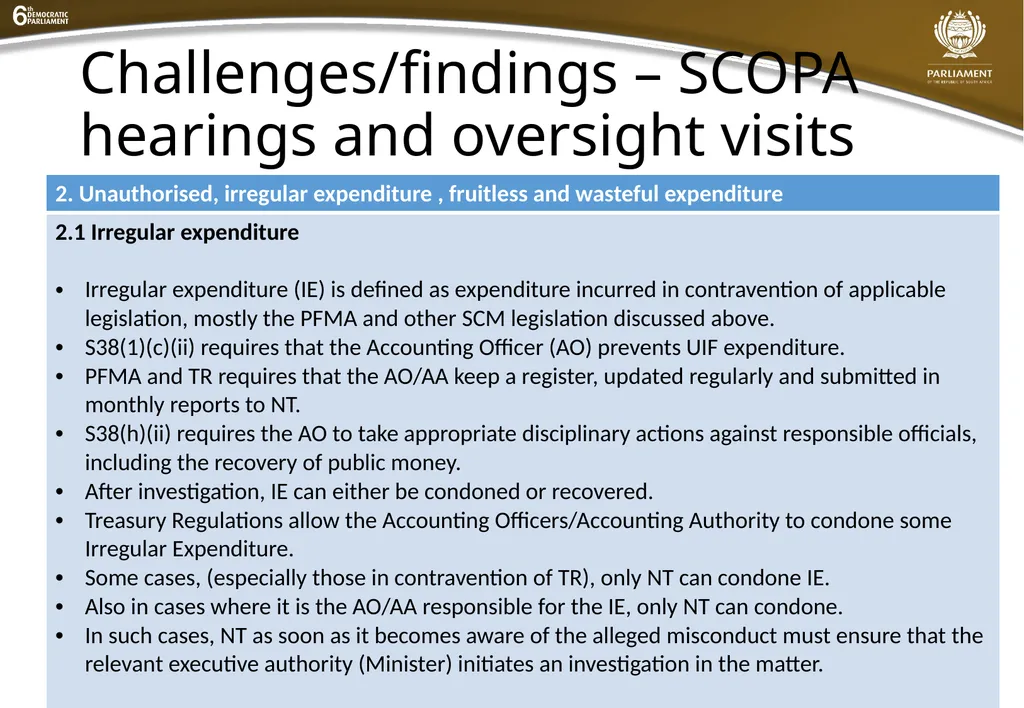
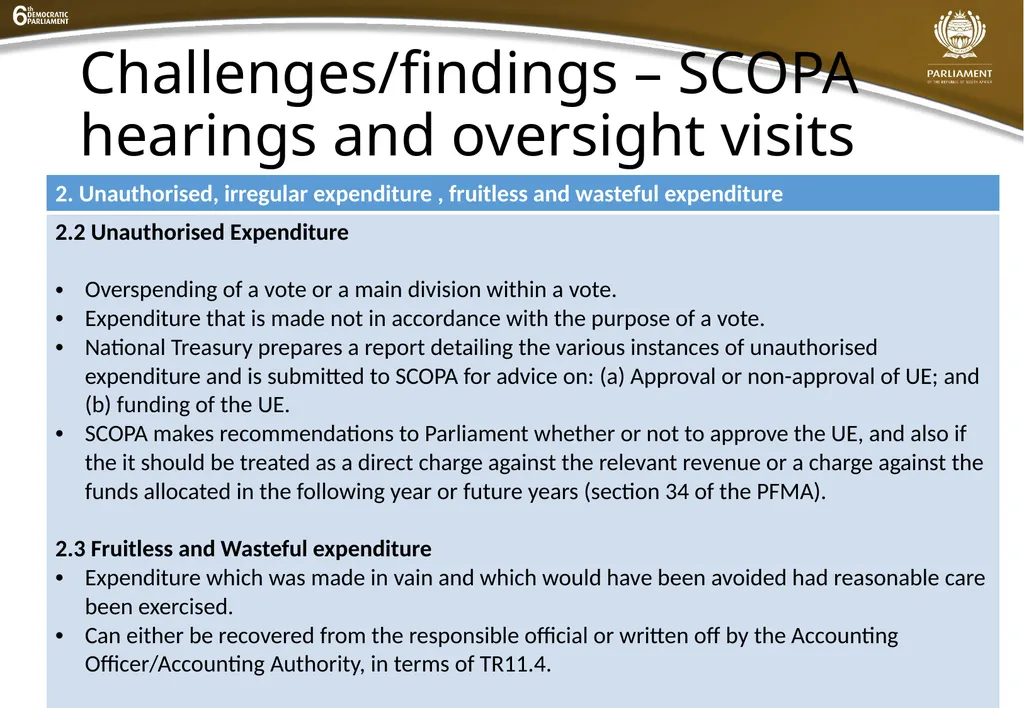
Unauthorized, irregular, Fruitless and Wasteful Expenditure;
Consequence management against officials;
Financial health of departments/entities;
Non-payment of invoices within 30 days;
Human Resource management (including excessive reliance on consultants/non-filling of critical vacancies/non-vetting of employees); and
Deviations and expansions 6<br>
07
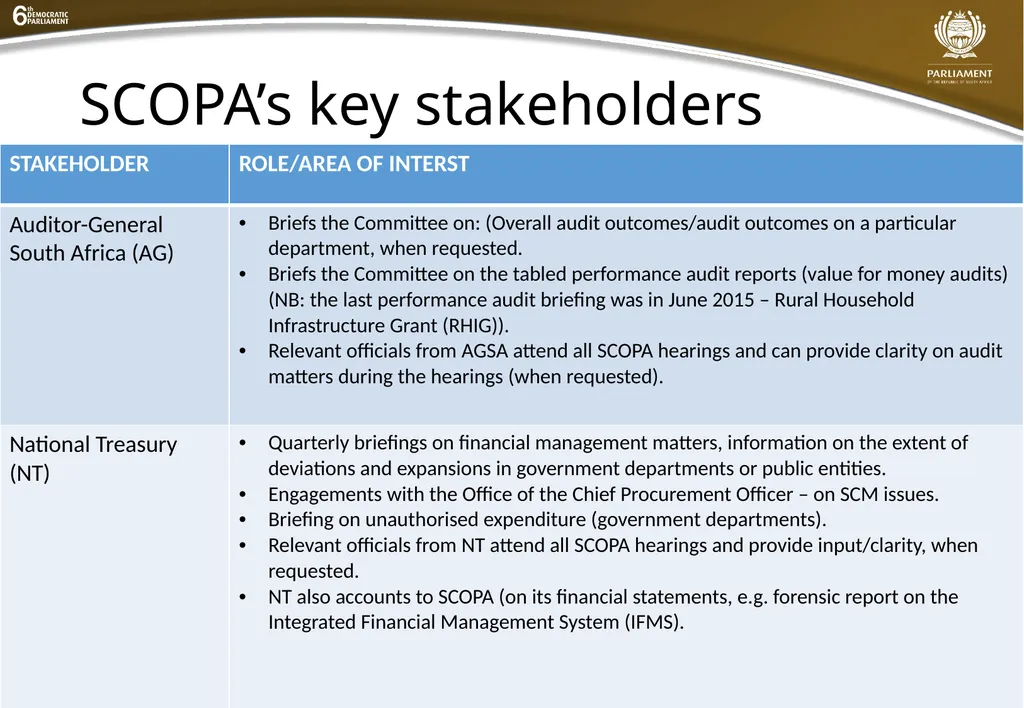
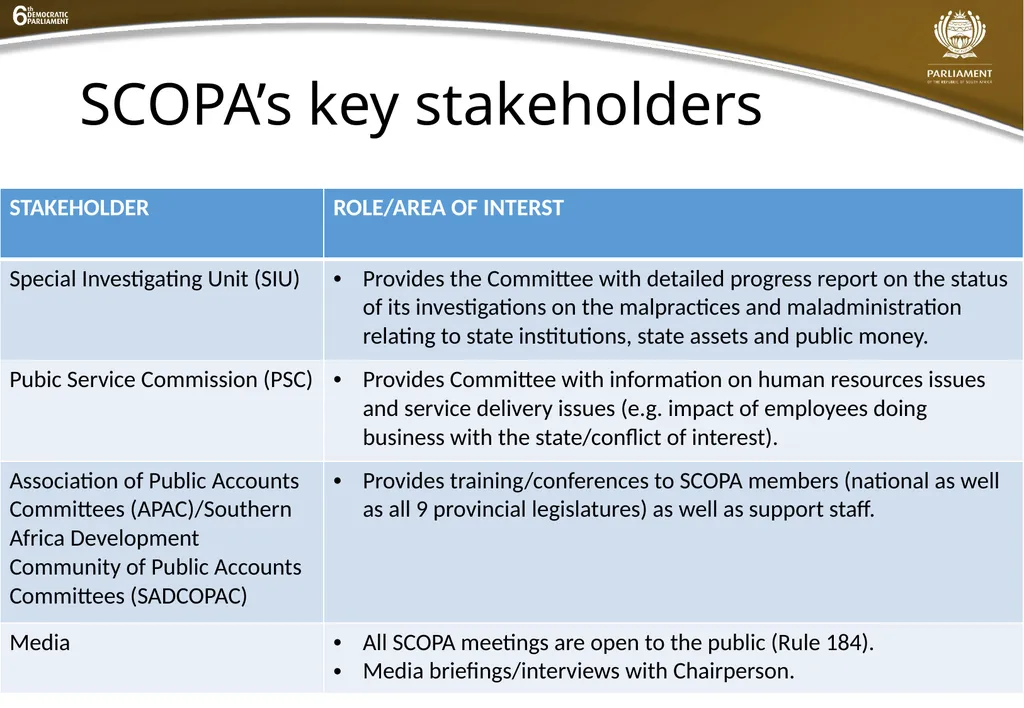
SCOPA’s key stakeholders 7<br>
08
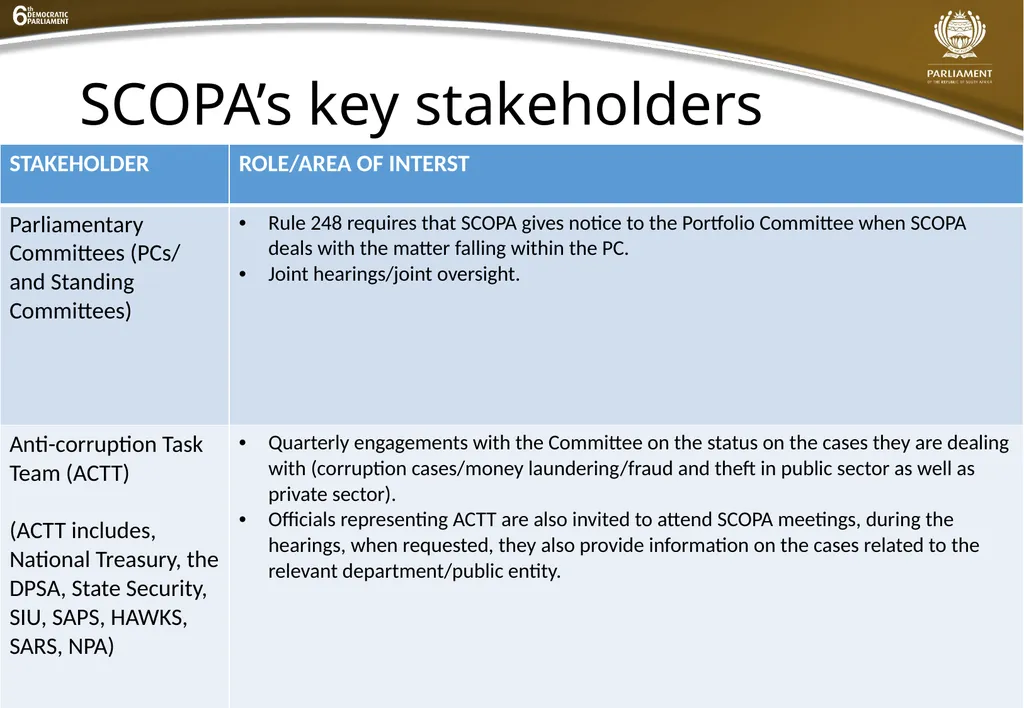
SCOPA’s key stakeholders 8<br>
09
SCOPA’s key stakeholders 9<br>
10
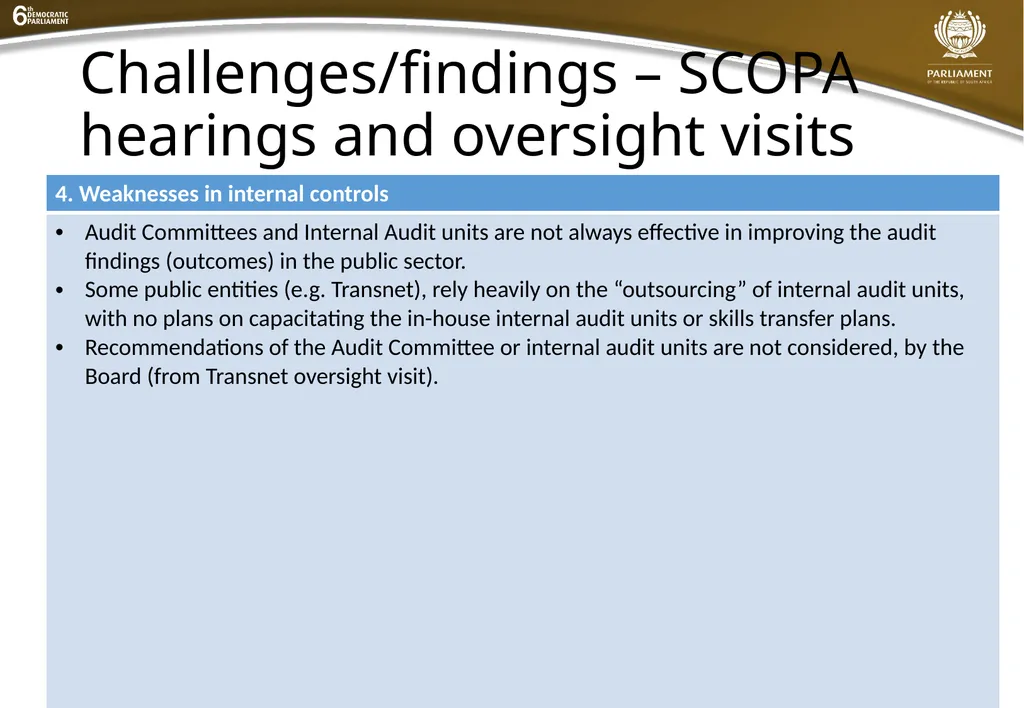
Challenges/findings – SCOPA hearings and oversight visits 10<br>
11
Challenges/findings – SCOPA hearings and oversight visits 11<br>
12
Challenges/findings – SCOPA hearings and oversight visits 12<br>
13
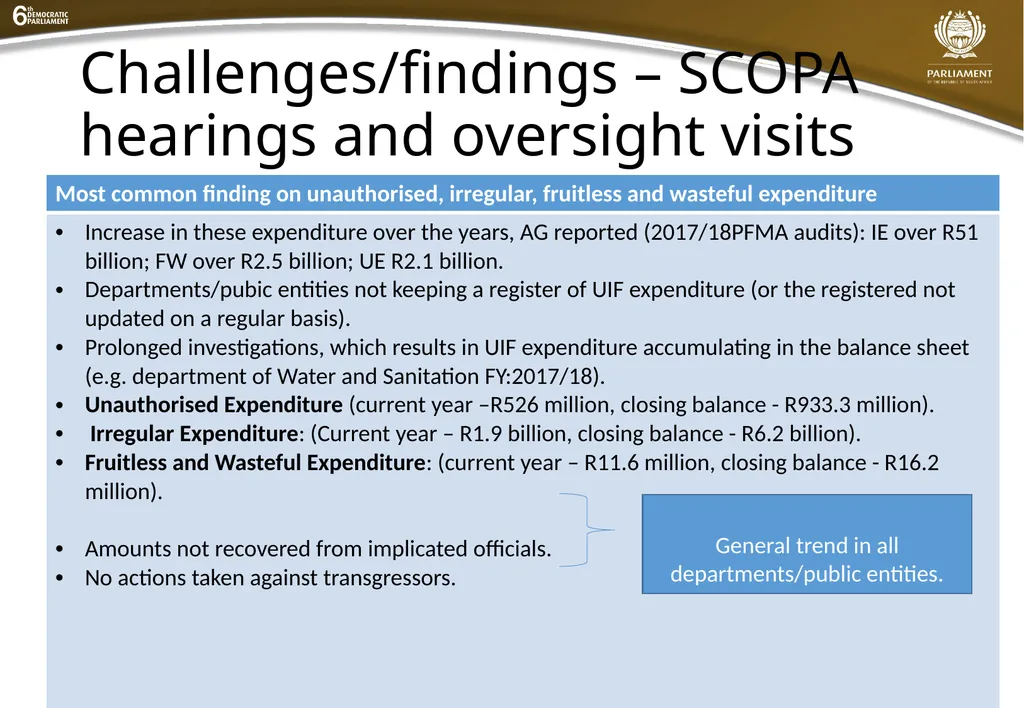
Challenges/findings – SCOPA hearings and oversight visits 13 General trend in all departments/public entities.<br>
14
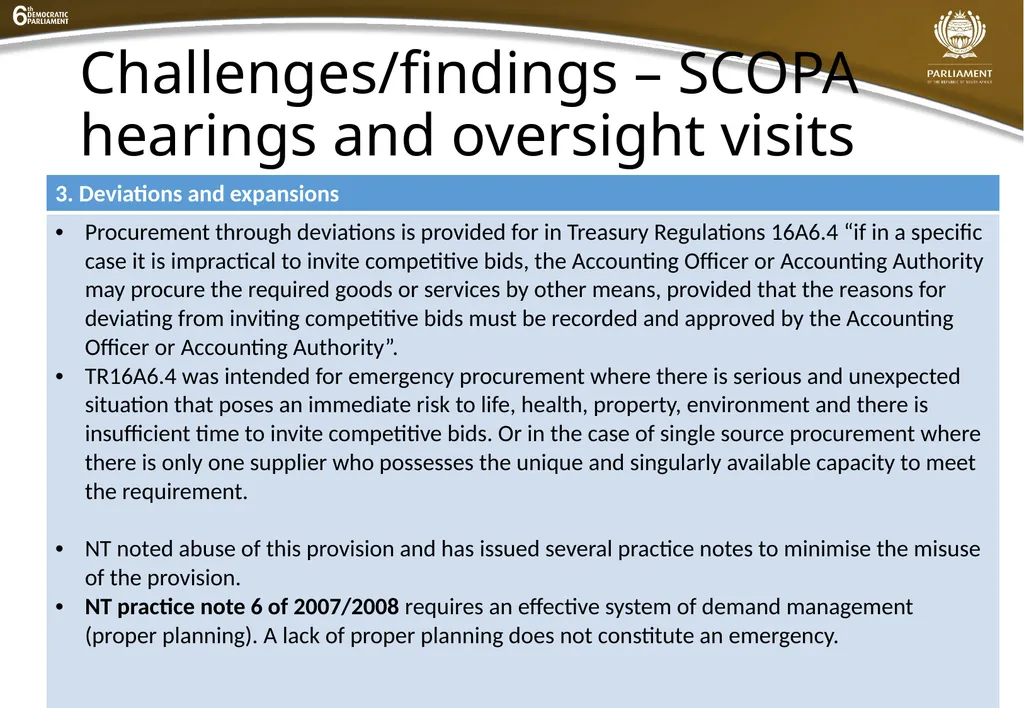
Challenges/findings – SCOPA hearings and oversight visits 14<br>
15
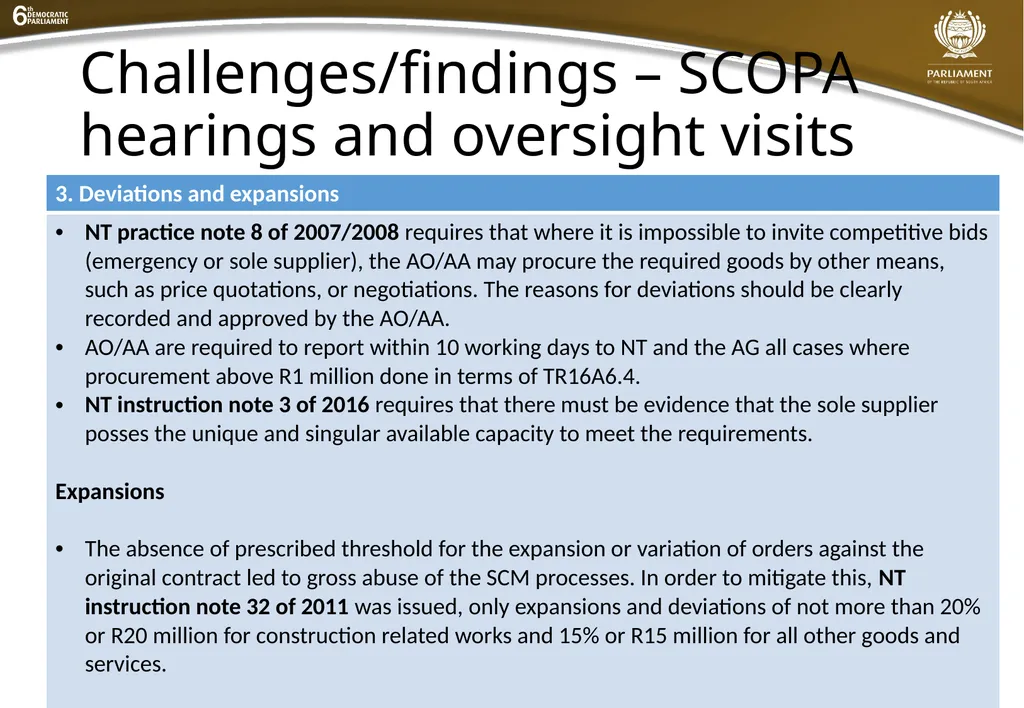
Challenges/findings – SCOPA hearings and oversight visits 15<br>
16
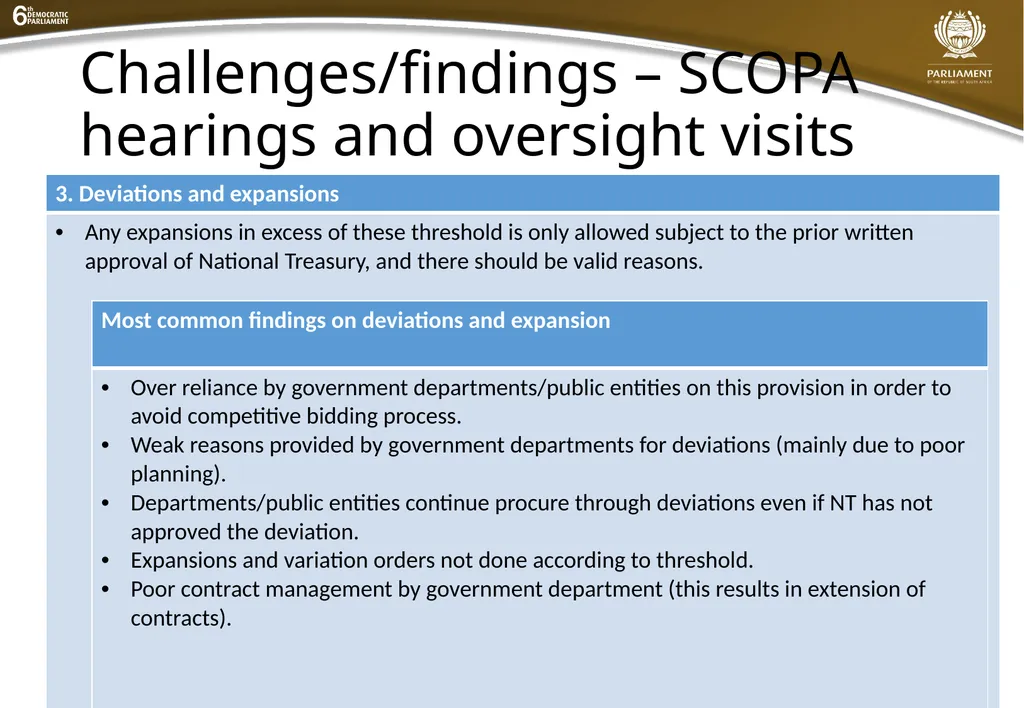
Challenges/findings – SCOPA hearings and oversight visits 16<br>
17
Challenges/findings – SCOPA hearings and oversight visits 17<br>
18
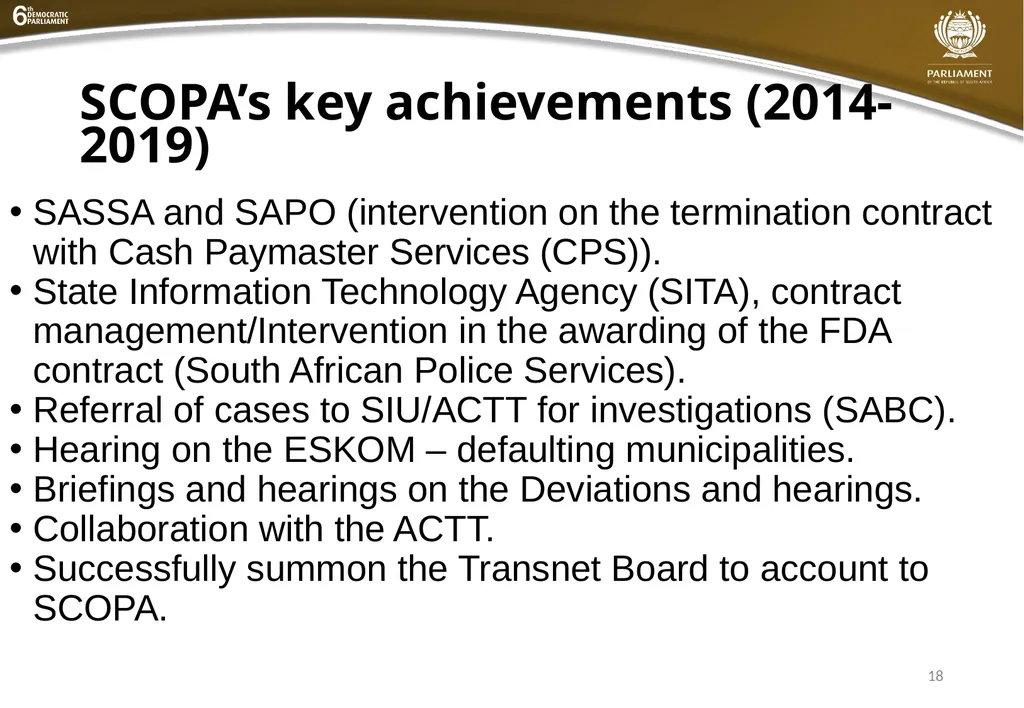
SCOPA’s key achievements (2014-2019) SASSA and SAPO (intervention on the termination contract with Cash Paymaster Services (CPS)).
State Information Technology Agency (SITA), contract management/Intervention in the awarding of the FDA contract (South African Police Services).
Referral of cases to SIU/ACTT for investigations (SABC).
Hearing on the ESKOM – defaulting municipalities.
Briefings and hearings on the Deviations and hearings.
Collaboration with the ACTT.
Successfully summon the Transnet Board to account to SCOPA. 18<br>
19
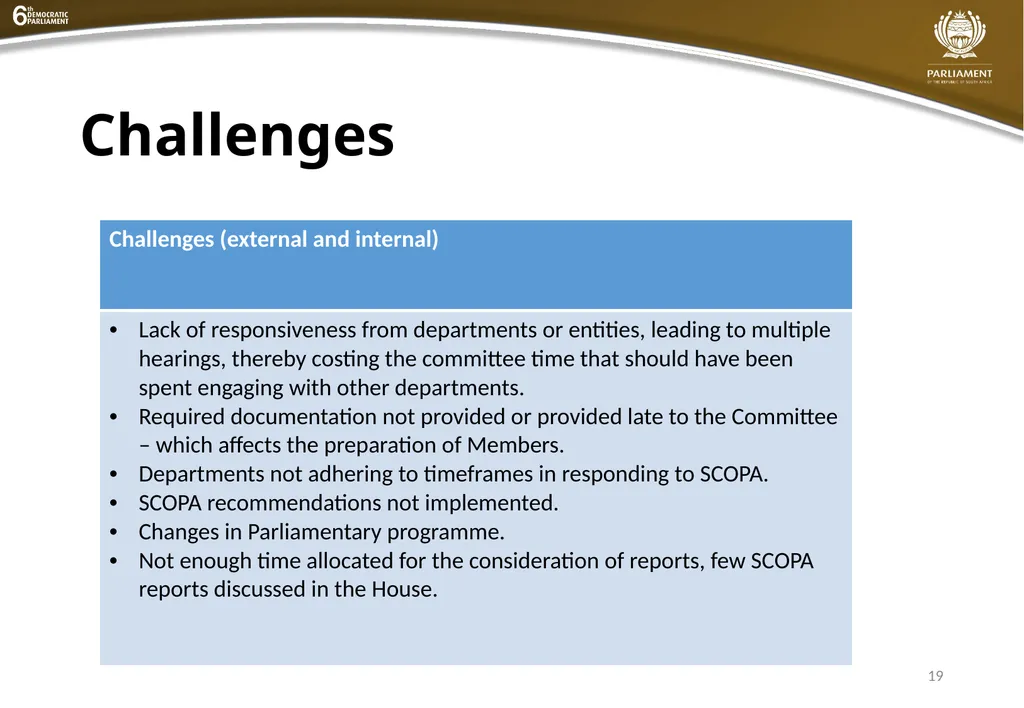
Challenges 19<br>
20
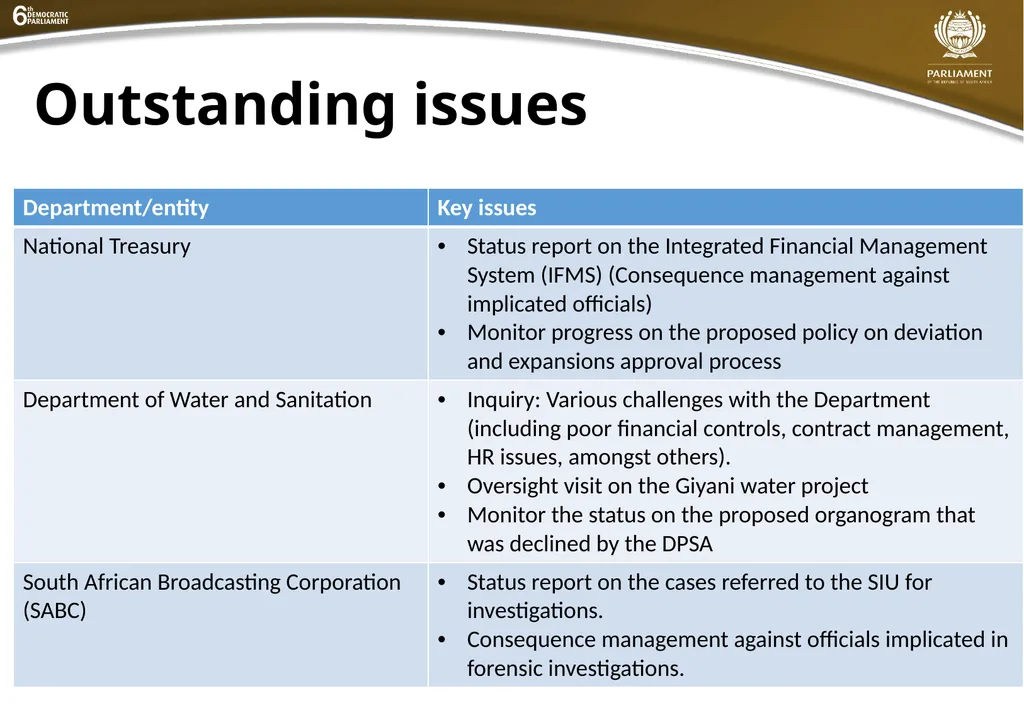
Outstanding issues 20<br>
21
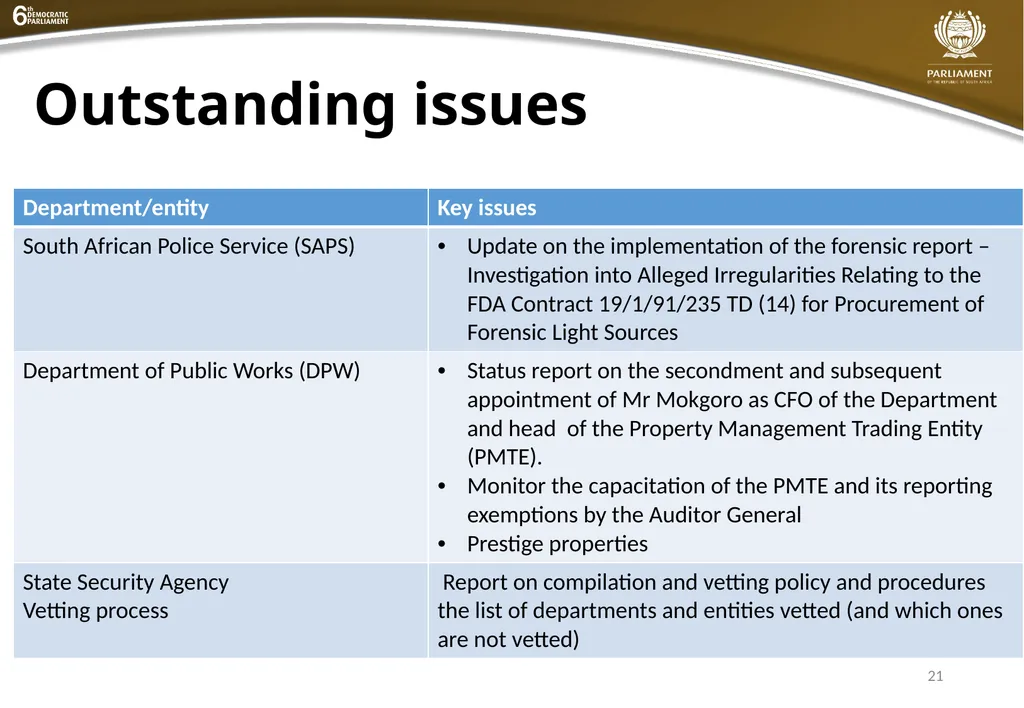
Outstanding issues 21<br>
22
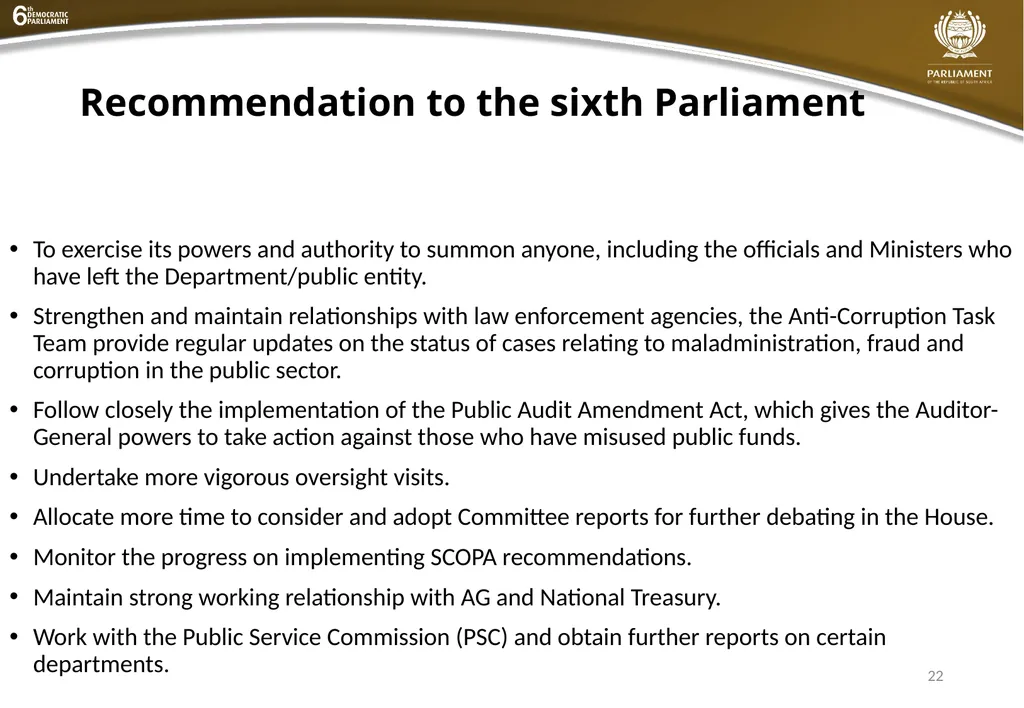
Recommendation to the sixth Parliament To exercise its powers and authority to summon anyone, including the officials and Ministers who have left the Department/public entity.
Strengthen and maintain relationships with law enforcement agencies, the Anti-Corruption Task Team provide regular updates on the status of cases relating to maladministration, fraud and corruption in the public sector.
Follow closely the implementation of the Public Audit Amendment Act, which gives the Auditor-General powers to take action against those who have misused public funds.
Undertake more vigorous oversight visits.
Allocate more time to consider and adopt Committee reports for further debating in the House.
Monitor the progress on implementing SCOPA recommendations.
Maintain strong working relationship with AG and National Treasury.
Work with the Public Service Commission (PSC) and obtain further reports on certain departments. 22<br>