
STAT 101: Day 3 Data Collection: Experiments and
TA
Published · 43 slides · 0 views
1 / 1
Description
STAT 101: Day 3 Data Collection: Experiments and Observational Studies 12312 Association versus Causation Confounding Variables Observational Studies vs Experiments Randomized Experiments Section 1.3 Professor Kari Lock Morgan Duke
Related Topics
Download this presentation From Below
"STAT 101: Day 3 Data Collection: Experiments and" is the property of its rightful owner. Permission is granted to download and print the materials on this website for personal, non-commercial use only, and to display it on your personal computer provided you do not modify the materials and that you retain all copyright notices contained in the materials. By downloading content from our website, you accept the terms of this agreement.
Share
Embed code
Presentation Transcript
01
STAT 101: Day 3
Data Collection: Experiments and Observational Studies
1/23/12 Association versus Causation
Confounding Variables
Observational Studies vs Experiments
Randomized Experiments Section 1.3 Professor Kari Lock Morgan
Duke University<br>
Data Collection: Experiments and Observational Studies
1/23/12 Association versus Causation
Confounding Variables
Observational Studies vs Experiments
Randomized Experiments Section 1.3 Professor Kari Lock Morgan
Duke University<br>
02
From a list of six guesses and hopes for how university teaching will evolve:
6. “Courses of study will place much more emphasis on the analysis of data. Gen. George Marshall famously told a Princeton commencement audience that it was impossible to think seriously about the future of postwar Europe without giving close attention to Thucydides on the Peloponnesian War. Of course, we’ll always learn from history. But the capacity for analysis beyond simple reflection has greatly increased (consider Gen. David Petraeus’s reliance on social science in preparing the army’s counterinsurgency manual).
As the “Moneyball” story aptly displays in the world of baseball, the marshalling of data to test presumptions and locate paths to success is transforming almost every aspect of human life. …” What You (Really) Need to Know
- Larry Summers, NY Times, 1/20/12<br>
6. “Courses of study will place much more emphasis on the analysis of data. Gen. George Marshall famously told a Princeton commencement audience that it was impossible to think seriously about the future of postwar Europe without giving close attention to Thucydides on the Peloponnesian War. Of course, we’ll always learn from history. But the capacity for analysis beyond simple reflection has greatly increased (consider Gen. David Petraeus’s reliance on social science in preparing the army’s counterinsurgency manual).
As the “Moneyball” story aptly displays in the world of baseball, the marshalling of data to test presumptions and locate paths to success is transforming almost every aspect of human life. …” What You (Really) Need to Know
- Larry Summers, NY Times, 1/20/12<br>
03
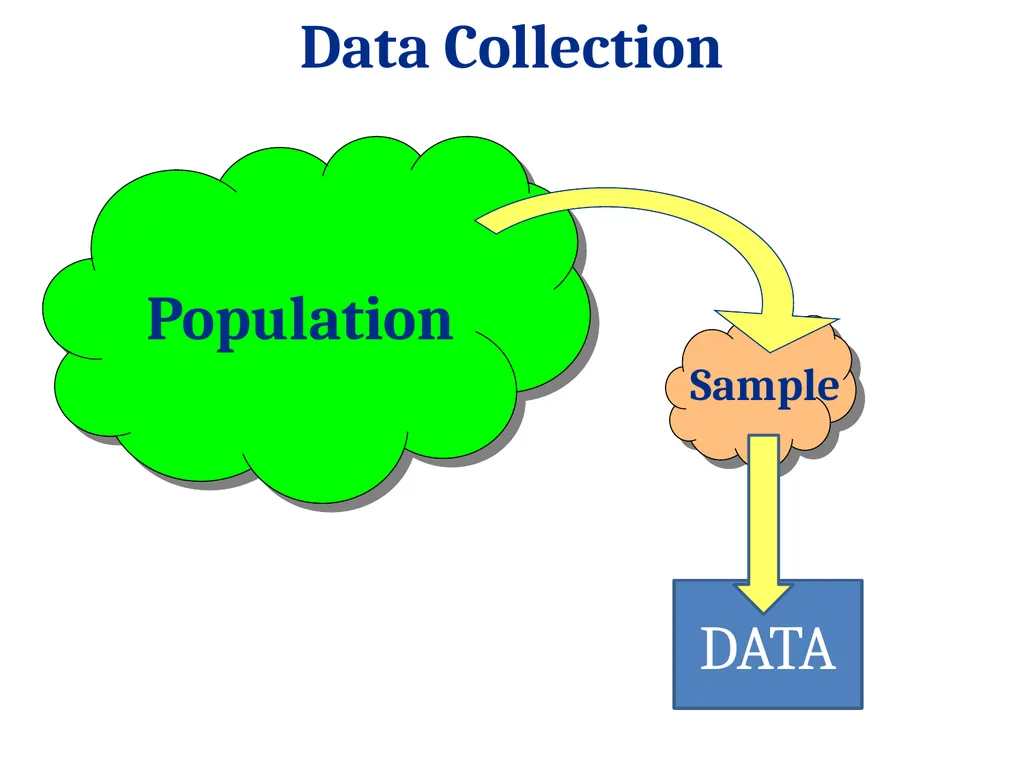
DATA Data Collection Population<br>
04
Association Two variables are associated if values of one variable tend to be related to values of the other variable
Give an example of two variables that are associated.<br>
Give an example of two variables that are associated.<br>
05
Causation Two variables are causally associated if changing the value of one variable influences the value of the other variable
Are your two associated variables causally associated?<br>
Are your two associated variables causally associated?<br>
06
Association or Causation? The following headline recently appeared online or in a newspaper. The wording implies…
(a) Association (not necessarily causal)
(b) Causal Association
“Daily exercise improves mental performance”<br>
(a) Association (not necessarily causal)
(b) Causal Association
“Daily exercise improves mental performance”<br>
07
Association or Causation? The following headline recently appeared online or in a newspaper. The wording implies…
(a) Association (not necessarily causal)
(b) Causal Association
“Cat owners tend to be more educated than dog owners”<br>
(a) Association (not necessarily causal)
(b) Causal Association
“Cat owners tend to be more educated than dog owners”<br>
08
Association or Causation? The following headline recently appeared online or in a newspaper. The wording implies…
(a) Association (not necessarily causal)
(b) Causal Association
“Want to lose weight? Eat more fiber!”<br>
(a) Association (not necessarily causal)
(b) Causal Association
“Want to lose weight? Eat more fiber!”<br>
09
Explanatory and Response Variables When thinking about potential causality between two variables, we have names for the variables
Does changing the explanatory variable influence the response variable?
“Daily exercise improves mental performance”
“Cat owners tend to be more educated than dog owners”
“Want to lose weight? Eat more fiber!”
Note: The terms “explanatory variable” and “response variable” can be used even when a causal relationship does not actually exist<br>
Does changing the explanatory variable influence the response variable?
“Daily exercise improves mental performance”
“Cat owners tend to be more educated than dog owners”
“Want to lose weight? Eat more fiber!”
Note: The terms “explanatory variable” and “response variable” can be used even when a causal relationship does not actually exist<br>
10
A Sharper Mind, Middle Age and Beyond
-NY Times, 1/19/12 “Education seems to be an elixir that can bring us a healthy body and mind throughout adulthood and even a longer life,” says Margie E. Lachman, a psychologist at Brandeis University who specializes in aging. For those in midlife and beyond, a college degree appears to slow the brain’s aging process by up to a decade, adding a new twist to the cost-benefit analysis of higher education — for young students as well as those thinking about returning to school. College Education and Aging The brains of people with a college education stay fit longer.
Are you convinced that “a college degree slows the brain’s aging”?
(a) Yes
(b) No<br>
-NY Times, 1/19/12 “Education seems to be an elixir that can bring us a healthy body and mind throughout adulthood and even a longer life,” says Margie E. Lachman, a psychologist at Brandeis University who specializes in aging. For those in midlife and beyond, a college degree appears to slow the brain’s aging process by up to a decade, adding a new twist to the cost-benefit analysis of higher education — for young students as well as those thinking about returning to school. College Education and Aging The brains of people with a college education stay fit longer.
Are you convinced that “a college degree slows the brain’s aging”?
(a) Yes
(b) No<br>
11
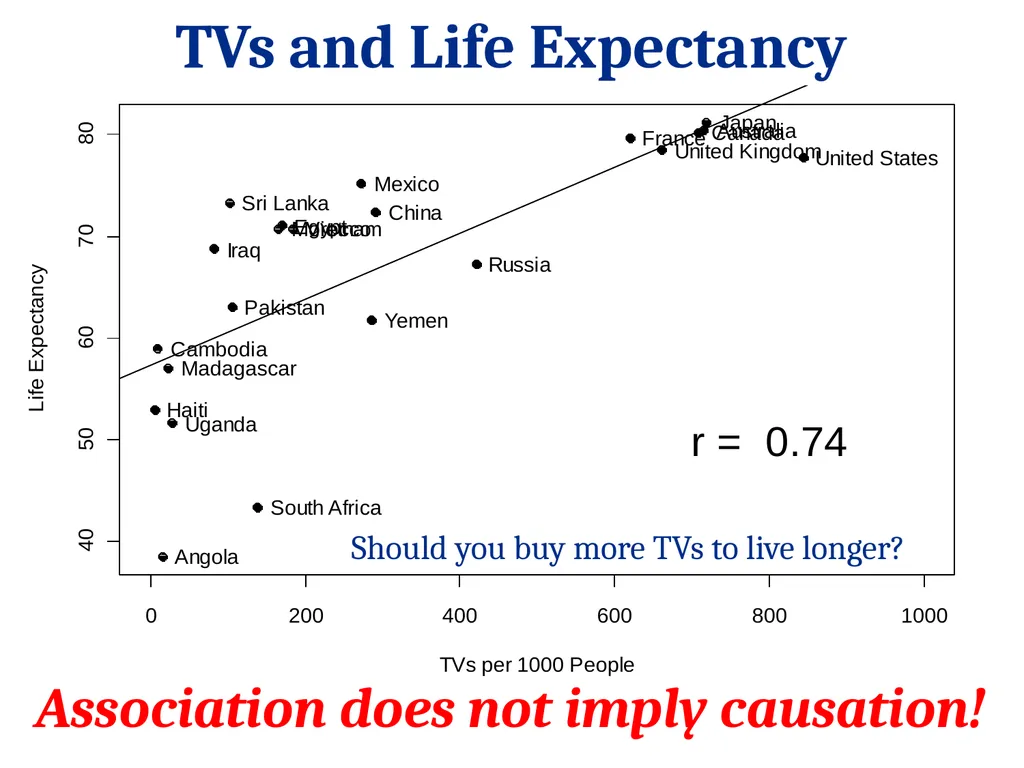
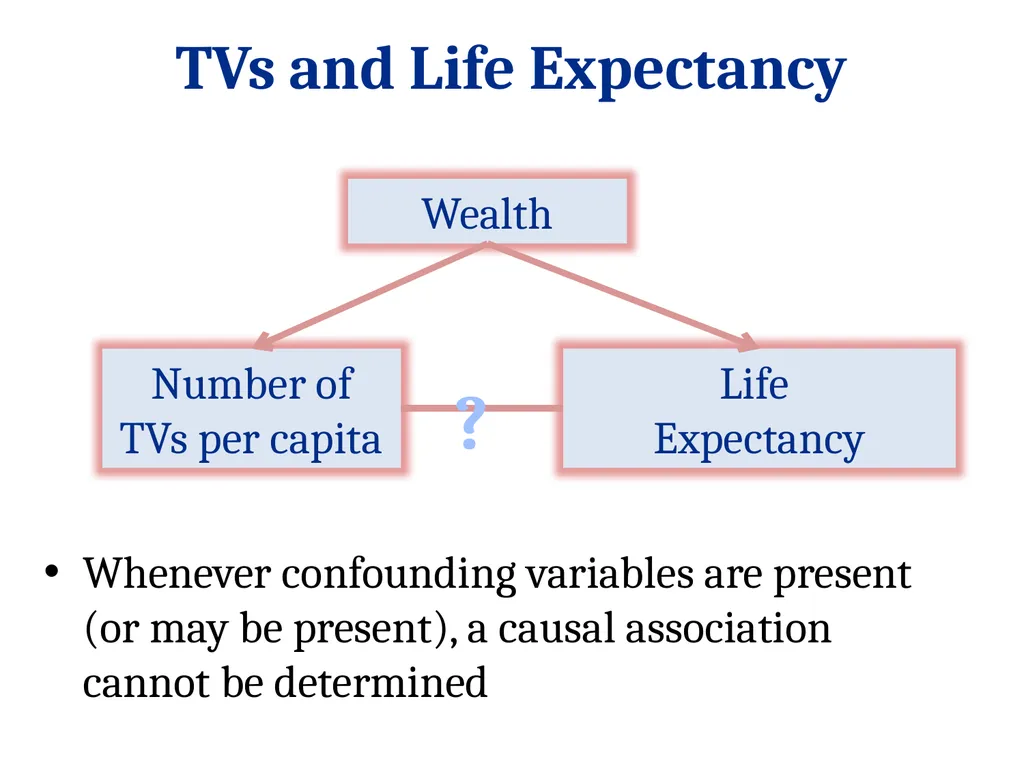
TVs and Life Expectancy Should you buy more TVs to live longer? Association does not imply causation!<br>
12
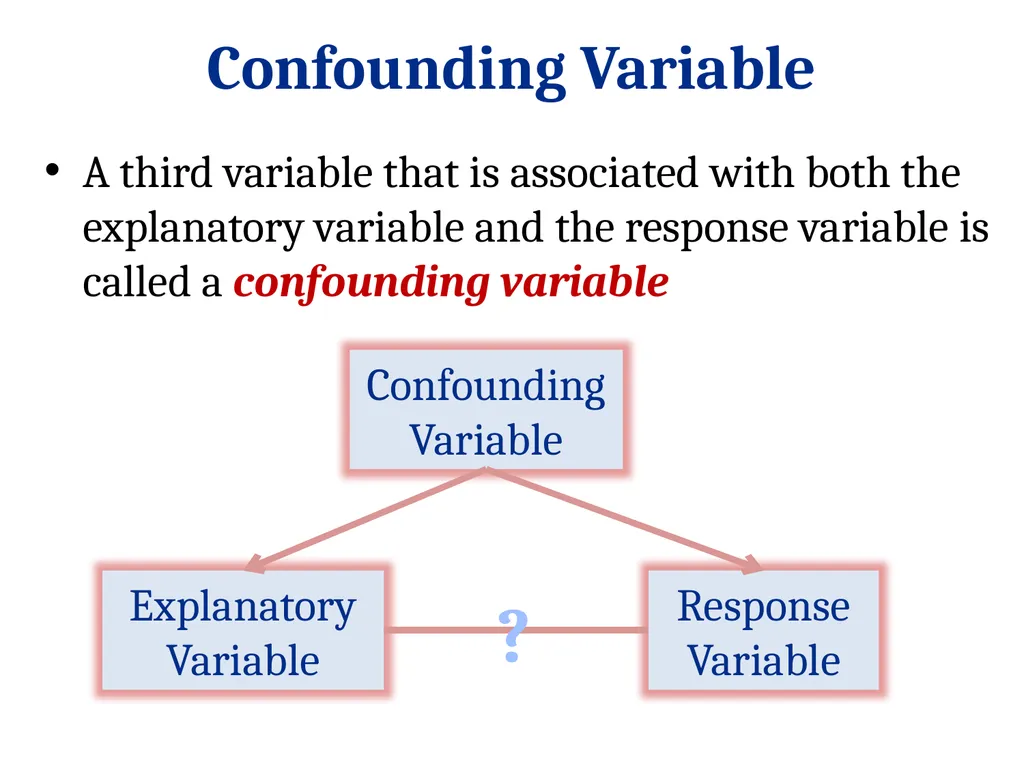
Confounding Variable A third variable that is associated with both the explanatory variable and the response variable is called a confounding variable Explanatory Variable Response Variable Confounding Variable ?<br>
13
TVs and Life Expectancy Number of TVs per capita Life
Expectancy Wealth Whenever confounding variables are present (or may be present), a causal association cannot be determined ?<br>
Expectancy Wealth Whenever confounding variables are present (or may be present), a causal association cannot be determined ?<br>
14
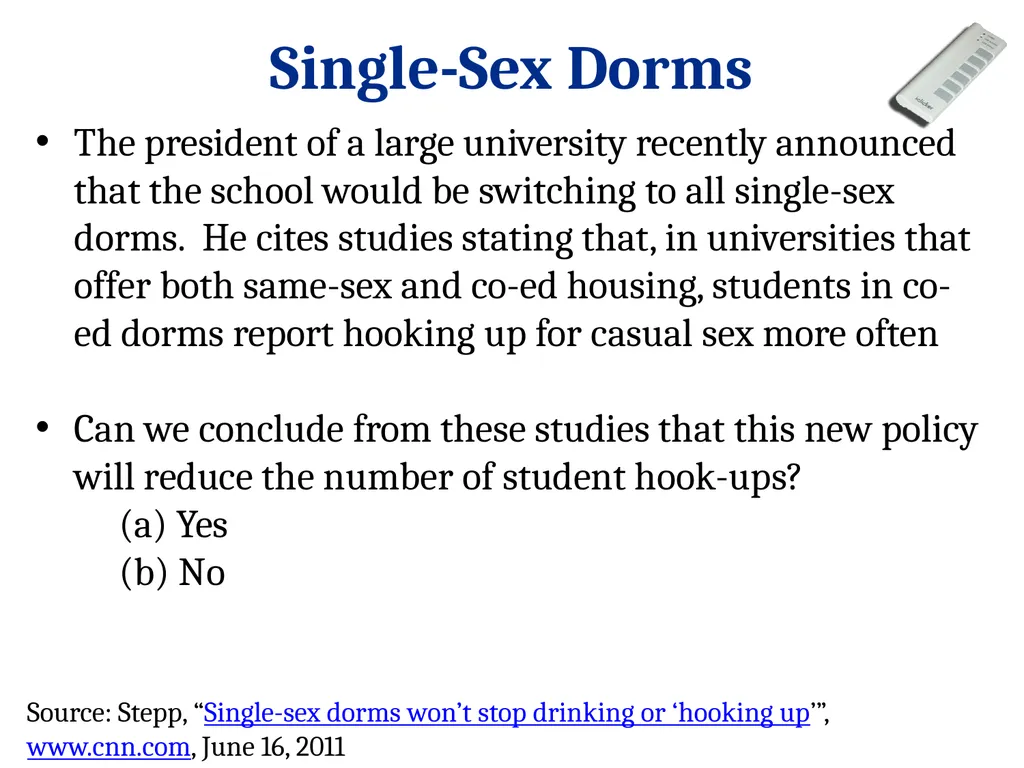
Single-Sex Dorms The president of a large university recently announced that the school would be switching to all single-sex dorms. He cites studies stating that, in universities that offer both same-sex and co-ed housing, students in co-ed dorms report hooking up for casual sex more often
Can we conclude from these studies that this new policy will reduce the number of student hook-ups?
(a) Yes
(b) No Source: Stepp, “Single-sex dorms won’t stop drinking or ‘hooking up’”, www.cnn.com, June 16, 2011<br>
Can we conclude from these studies that this new policy will reduce the number of student hook-ups?
(a) Yes
(b) No Source: Stepp, “Single-sex dorms won’t stop drinking or ‘hooking up’”, www.cnn.com, June 16, 2011<br>
15
Experiment versus Observational Study An experiment is a study in which the researcher actively controls one or more of the explanatory variables
An observational study is a study in which the researcher does not actively control the value of any variable, but simply observes the values as they naturally exist<br>
An observational study is a study in which the researcher does not actively control the value of any variable, but simply observes the values as they naturally exist<br>
16
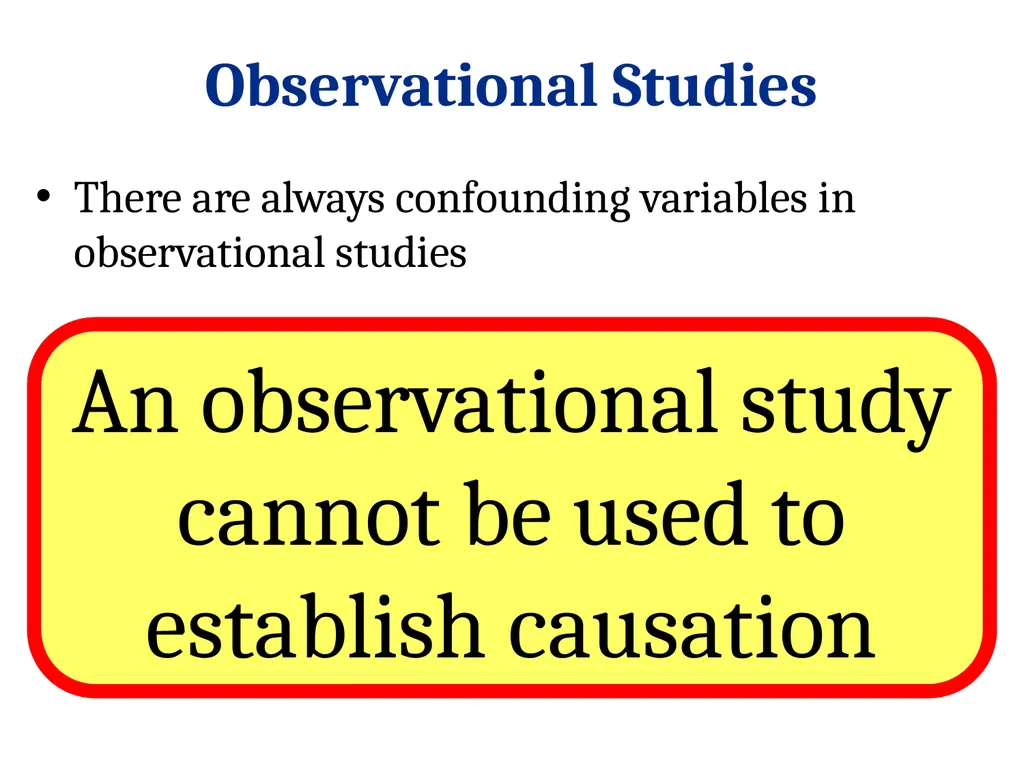
Observational Studies There are always confounding variables in observational studies
An observational study cannot be used to establish causation An observational study cannot be used to establish causation An observational study cannot be used to establish causation<br>
An observational study cannot be used to establish causation An observational study cannot be used to establish causation An observational study cannot be used to establish causation<br>
17
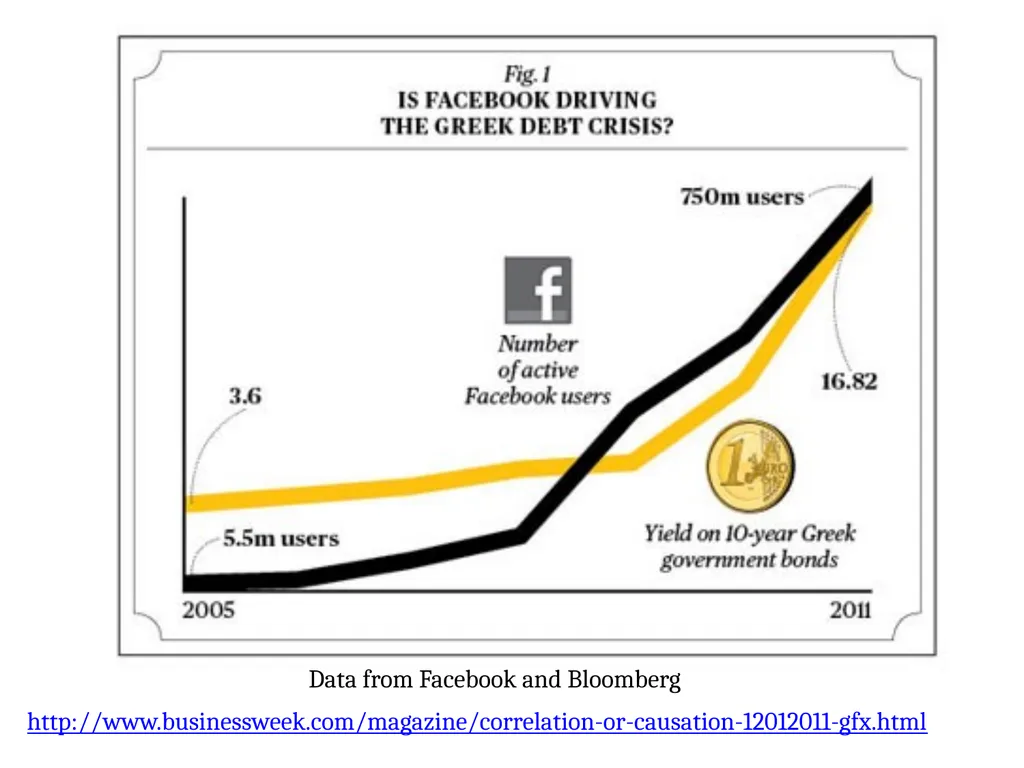
http://www.businessweek.com/magazine/correlation-or-causation-12012011-gfx.html Data from Facebook and Bloomberg<br>
18
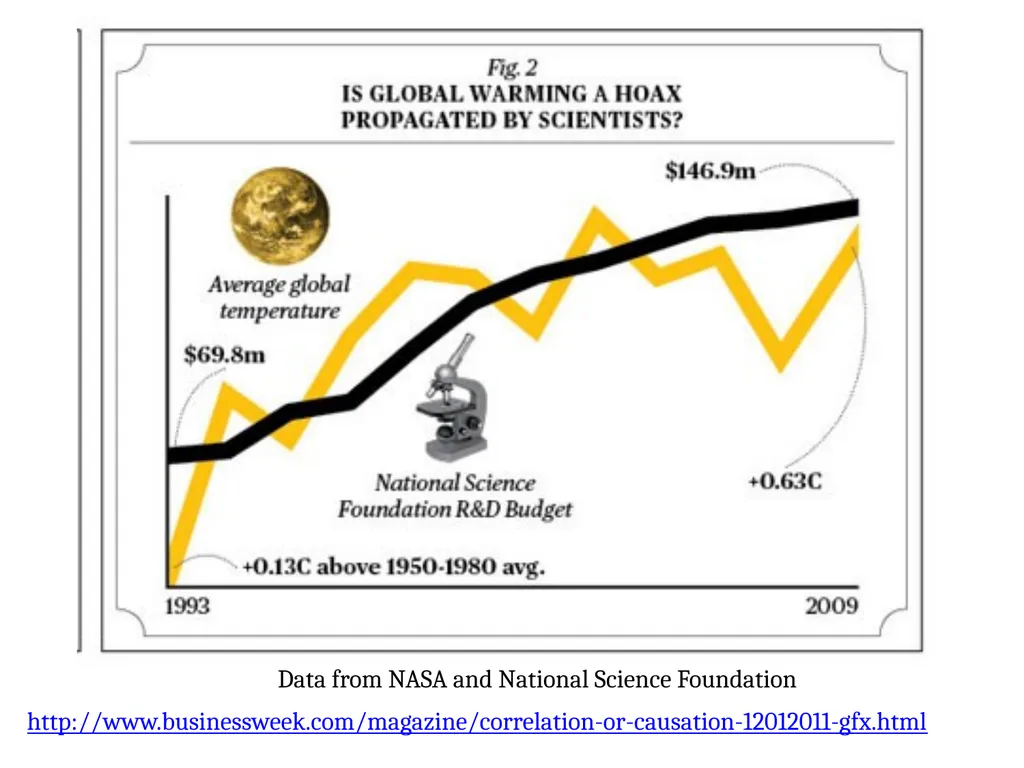
http://www.businessweek.com/magazine/correlation-or-causation-12012011-gfx.html Data from NASA and National Science Foundation<br>
19
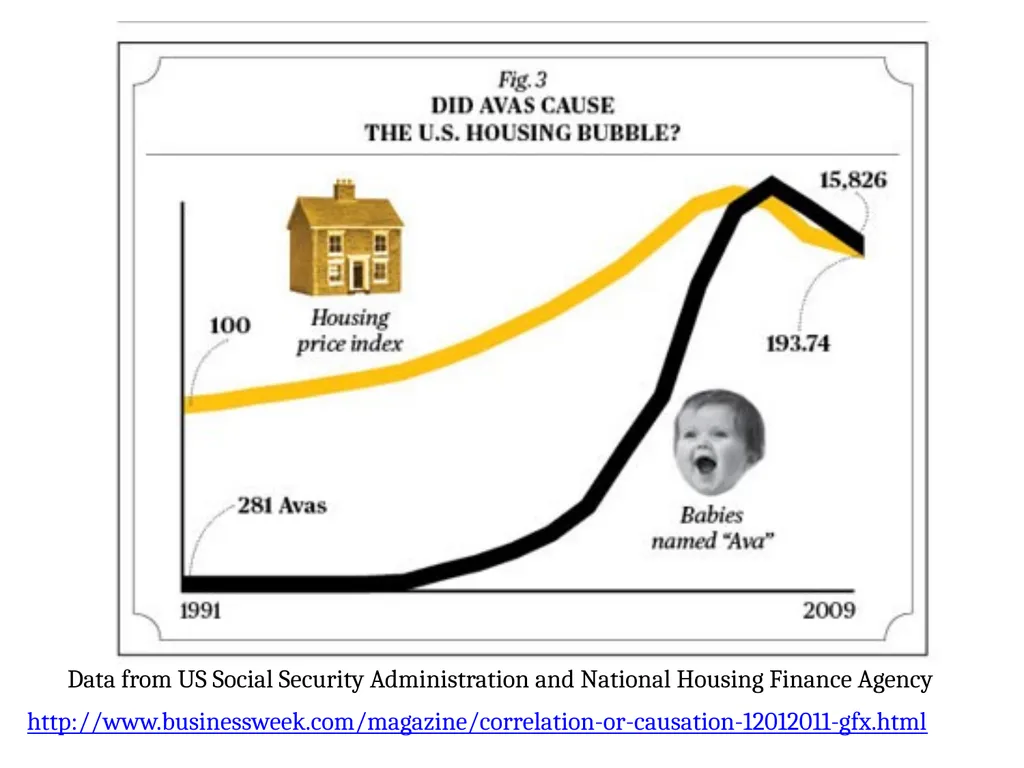
http://www.businessweek.com/magazine/correlation-or-causation-12012011-gfx.html Data from US Social Security Administration and National Housing Finance Agency<br>
20
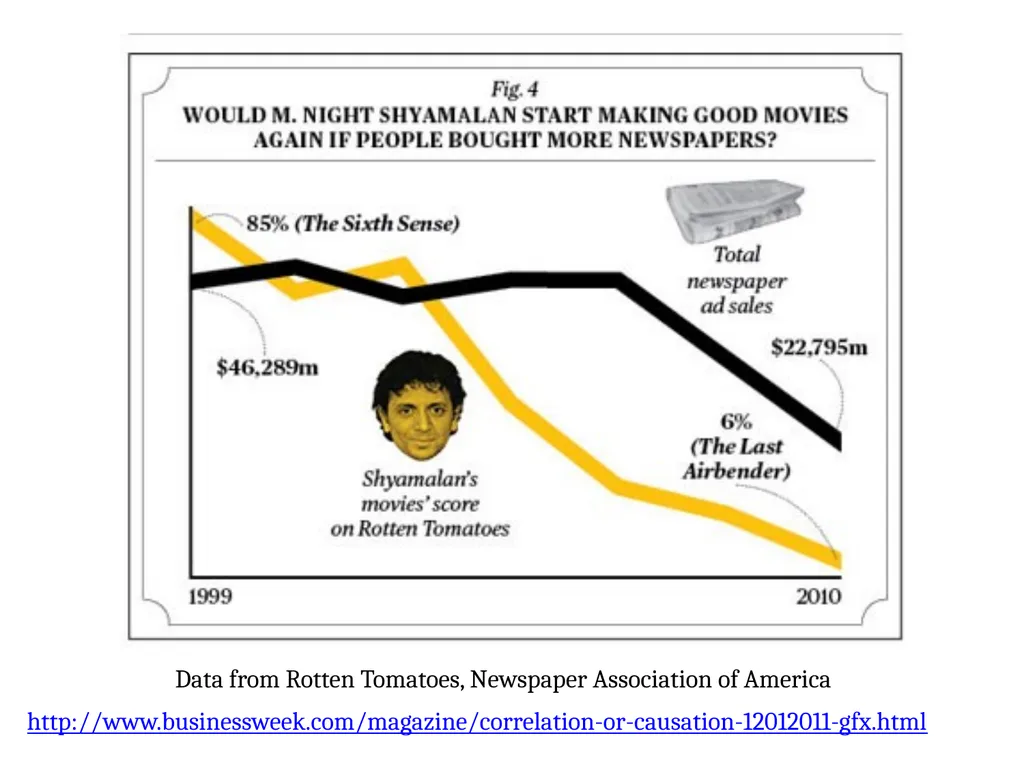
http://www.businessweek.com/magazine/correlation-or-causation-12012011-gfx.html Data from Rotten Tomatoes, Newspaper Association of America<br>
21
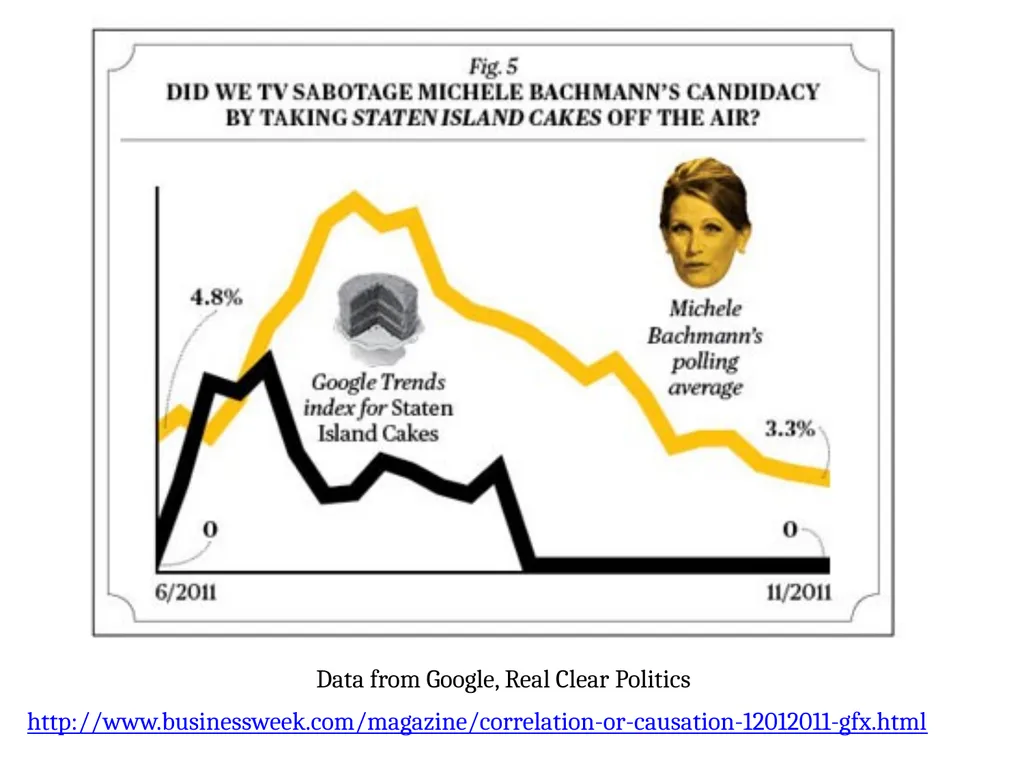
http://www.businessweek.com/magazine/correlation-or-causation-12012011-gfx.html Data from Google, Real Clear Politics<br>
22
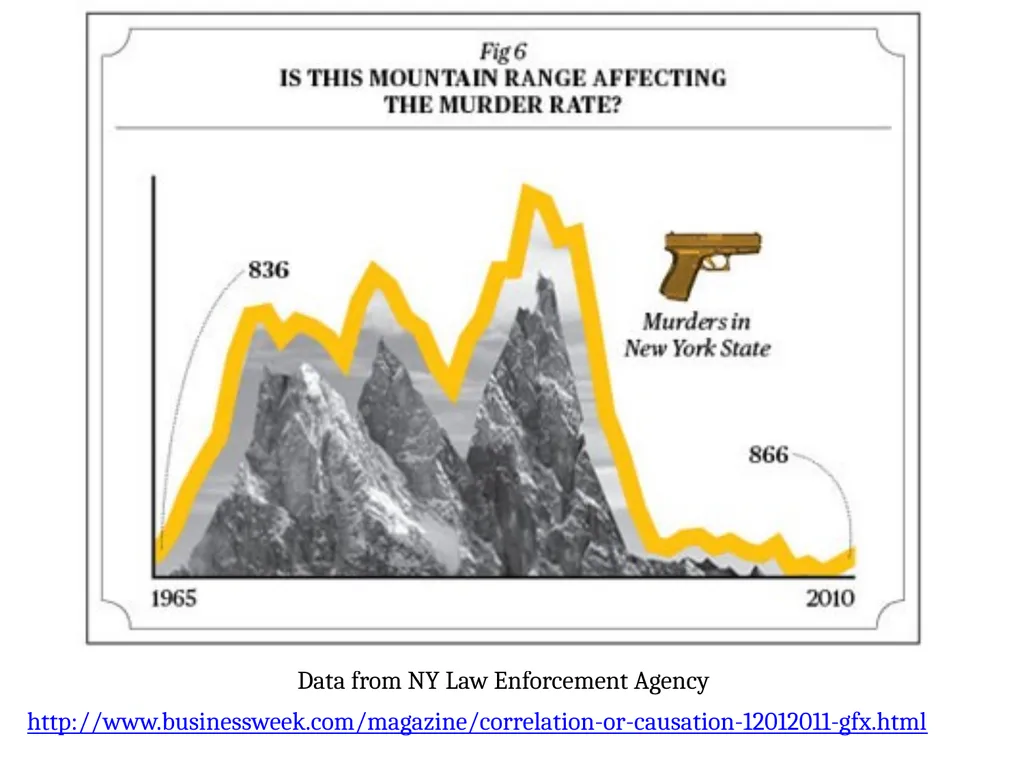
http://www.businessweek.com/magazine/correlation-or-causation-12012011-gfx.html Data from NY Law Enforcement Agency<br>
23
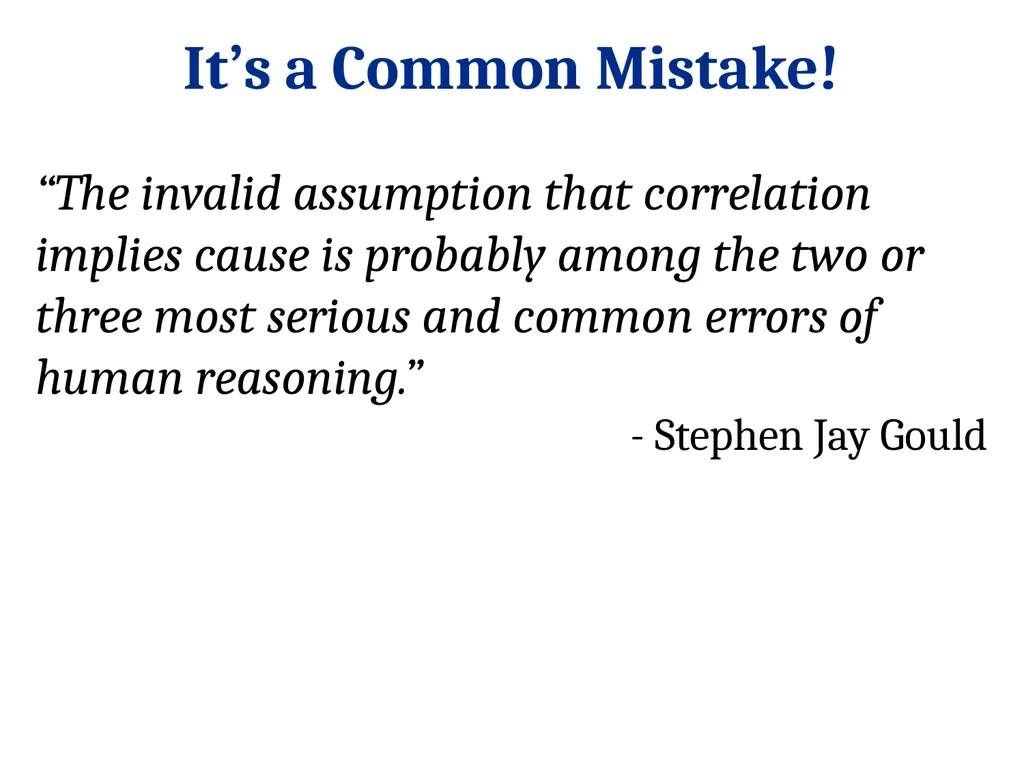
It’s a Common Mistake! “The invalid assumption that correlation implies cause is probably among the two or three most serious and common errors of human reasoning.”
- Stephen Jay Gould<br>
- Stephen Jay Gould<br>
24
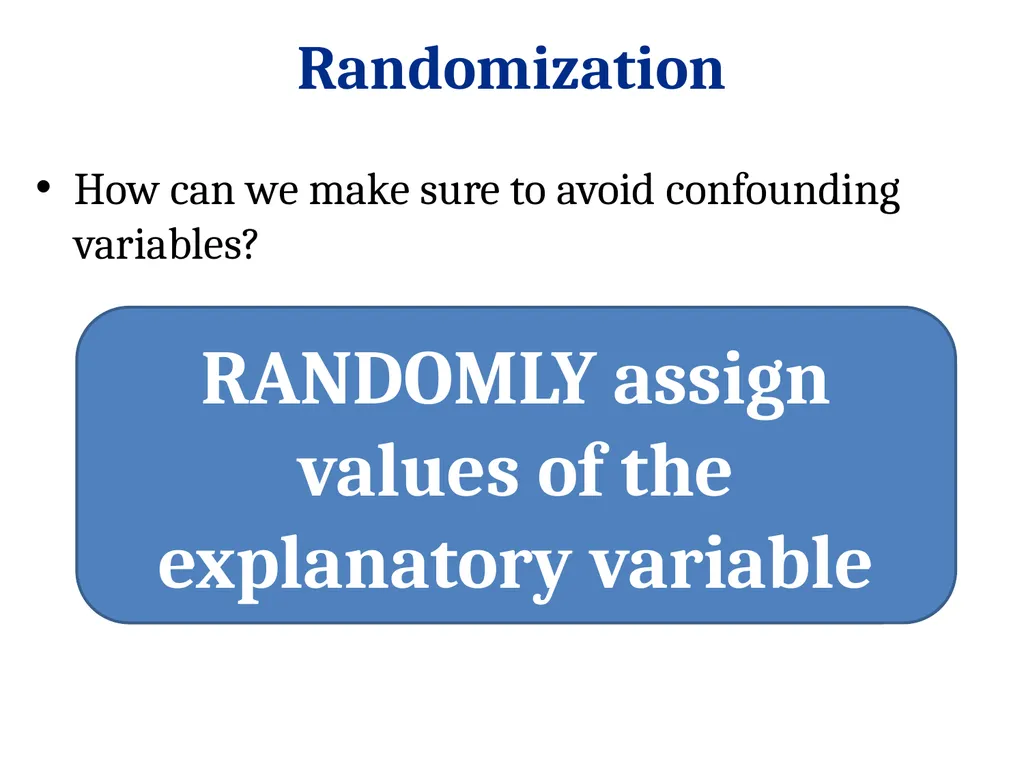
Randomization How can we make sure to avoid confounding variables? RANDOMLY assign values of the explanatory variable<br>
25
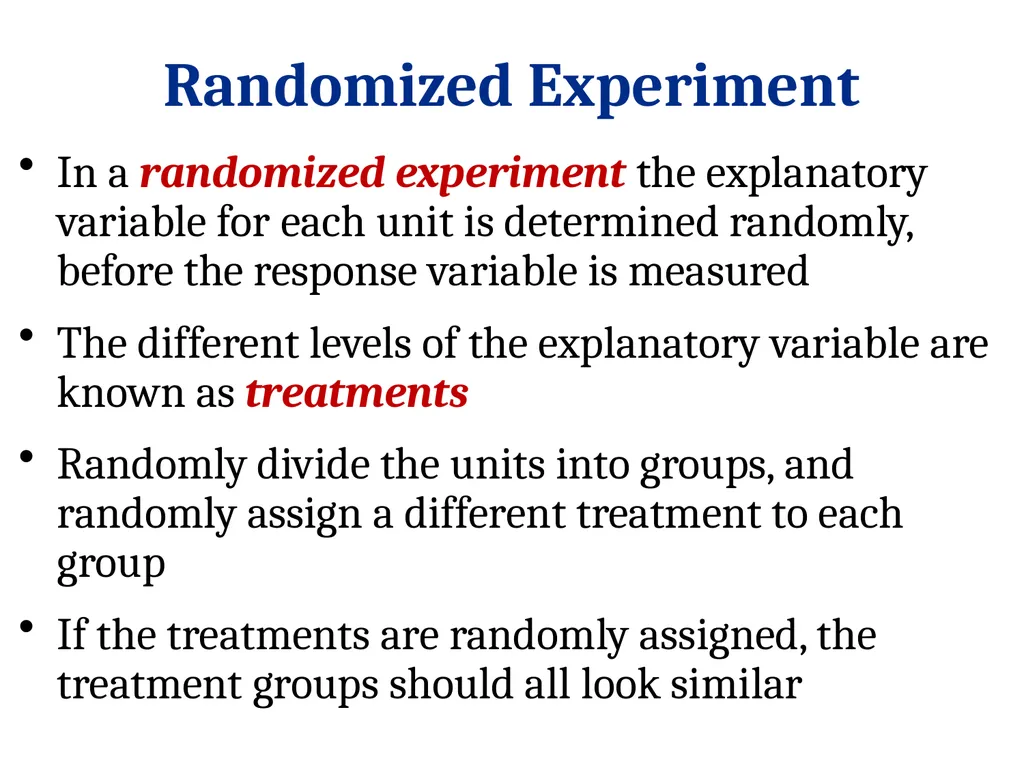
Randomized Experiment In a randomized experiment the explanatory variable for each unit is determined randomly, before the response variable is measured
The different levels of the explanatory variable are known as treatments
Randomly divide the units into groups, and randomly assign a different treatment to each group
If the treatments are randomly assigned, the treatment groups should all look similar<br>
The different levels of the explanatory variable are known as treatments
Randomly divide the units into groups, and randomly assign a different treatment to each group
If the treatments are randomly assigned, the treatment groups should all look similar<br>
26
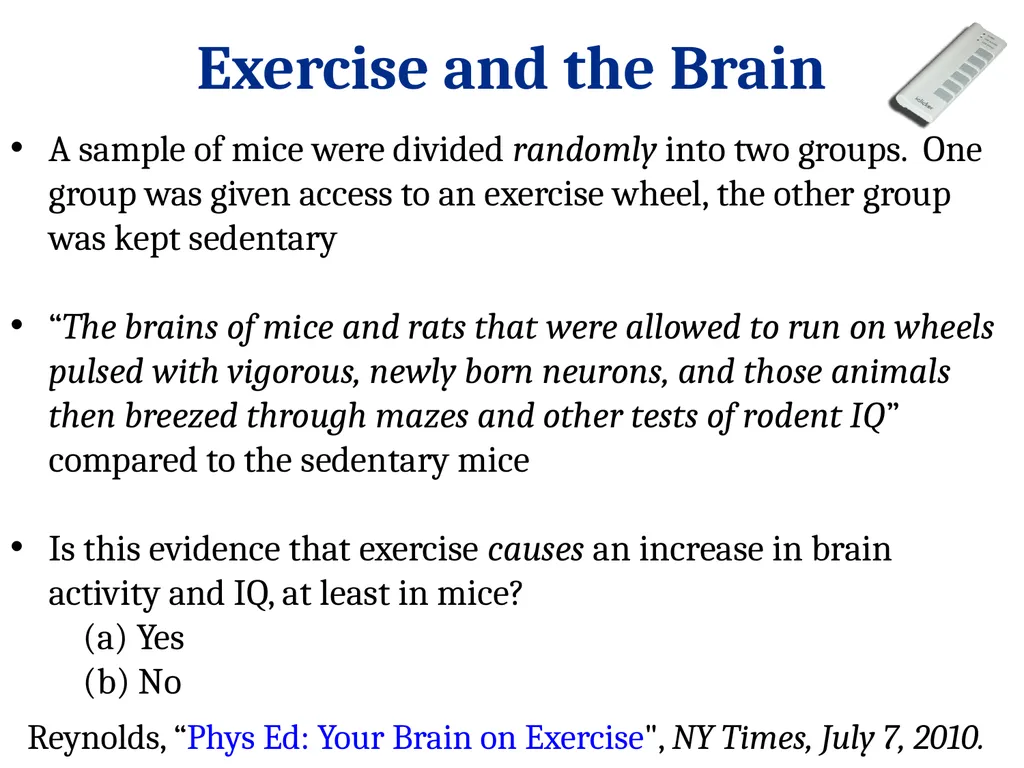
Exercise and the Brain A sample of mice were divided randomly into two groups. One group was given access to an exercise wheel, the other group was kept sedentary
“The brains of mice and rats that were allowed to run on wheels pulsed with vigorous, newly born neurons, and those animals then breezed through mazes and other tests of rodent IQ” compared to the sedentary mice
Is this evidence that exercise causes an increase in brain activity and IQ, at least in mice?
(a) Yes
(b) No Reynolds, “Phys Ed: Your Brain on Exercise", NY Times, July 7, 2010.<br>
“The brains of mice and rats that were allowed to run on wheels pulsed with vigorous, newly born neurons, and those animals then breezed through mazes and other tests of rodent IQ” compared to the sedentary mice
Is this evidence that exercise causes an increase in brain activity and IQ, at least in mice?
(a) Yes
(b) No Reynolds, “Phys Ed: Your Brain on Exercise", NY Times, July 7, 2010.<br>
27
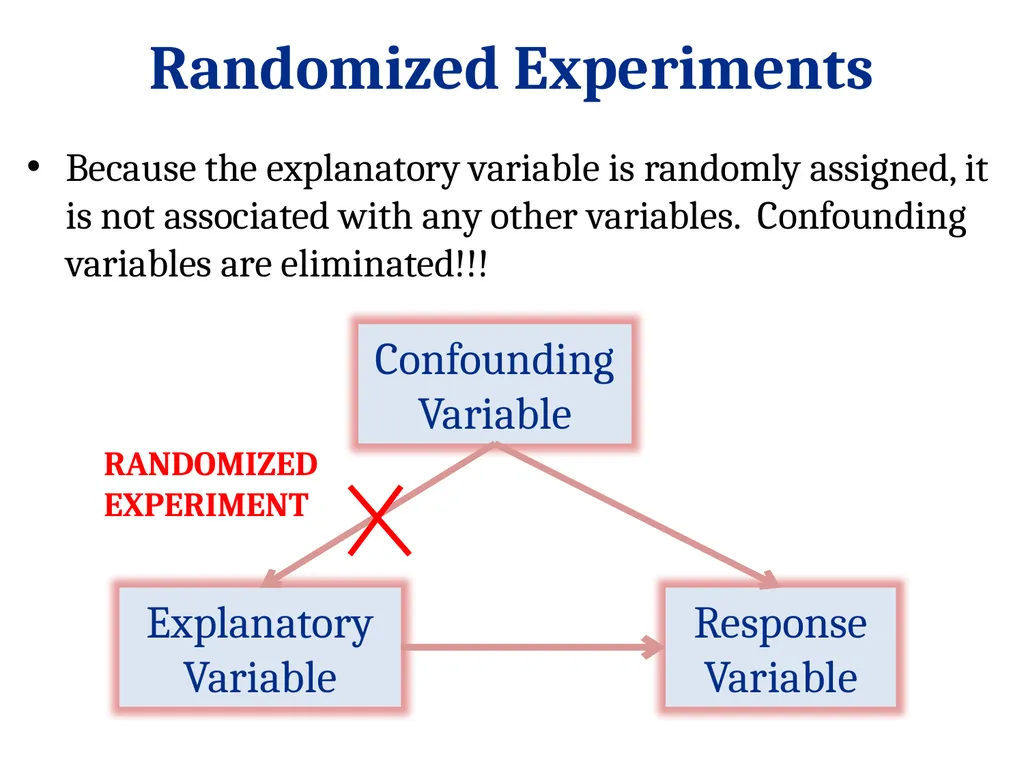
Randomized Experiments Because the explanatory variable is randomly assigned, it is not associated with any other variables. Confounding variables are eliminated!!! Explanatory Variable Response Variable Confounding Variable RANDOMIZED EXPERIMENT<br>
28
Randomized Experiments If a randomized experiment yields a significant association between the two variables, we can establish causation from the explanatory variable to the response variable Randomized experiments are very powerful! They allow you to infer causality.<br>
29
How to Randomize? Option 1: As with random sampling, we can put all the names/numbers into a hat, and randomly pull out names to go into the different groups
Option 2: Put names/numbers on cards, shuffle, and deal out the cards into as many piles as there are treatments
Option 3: Use technology<br>
Option 2: Put names/numbers on cards, shuffle, and deal out the cards into as many piles as there are treatments
Option 3: Use technology<br>
30
Knee Surgery for Arthritis Researchers conducted a study on the effectiveness of a knee surgery to cure arthritis. It was randomly determined whether people got the knee surgery. Everyone who underwent the surgery reported feeling less pain.
Is this evidence that the surgery causes a decrease in pain?
(a) Yes
(b) No<br>
Is this evidence that the surgery causes a decrease in pain?
(a) Yes
(b) No<br>
31
Control Group When determining whether a treatment is effective, it is important to have a comparison group, known as the control group
It isn’t enough to know that everyone in one group improved, we need to know whether they improved more than they would have improved without the surgery
All randomized experiments need either a control group, or two different treatments to compare<br>
It isn’t enough to know that everyone in one group improved, we need to know whether they improved more than they would have improved without the surgery
All randomized experiments need either a control group, or two different treatments to compare<br>
32
Knee Surgery for Arthritis In the knee surgery study, those in the control group received a fake knee surgery. They were put under and cut open, but the doctor did not actually perform the surgery. All of these patients also reported less pain!
In fact, the improvement was indistinguishable between those receiving the real surgery and those receiving the fake surgery! Source: “The Placebo Prescription,” NY Times Magazine, 1/9/00.<br>
In fact, the improvement was indistinguishable between those receiving the real surgery and those receiving the fake surgery! Source: “The Placebo Prescription,” NY Times Magazine, 1/9/00.<br>
33
Placebo Effect Often, people will experience the effect they think they should be experiencing, even if they aren’t actually receiving the treatment
Example: Eurotrip
This is known as the placebo effect
One study estimated that 75% of the effectiveness of anti-depressant medication is due to the placebo effect
For more information on the placebo effect (it’s pretty amazing!) read The Placebo Prescription<br>
Example: Eurotrip
This is known as the placebo effect
One study estimated that 75% of the effectiveness of anti-depressant medication is due to the placebo effect
For more information on the placebo effect (it’s pretty amazing!) read The Placebo Prescription<br>
34
Placebo and Blinding Control groups should be given a placebo, a fake treatment that resembles the active treatment as much as possible
Using a placebo is only helpful if participants do not know whether they are getting the placebo or the active treatment
If possible, randomized experiments should be double-blinded: neither the participants or the researchers involved should know which treatment the patients are actually getting<br>
Using a placebo is only helpful if participants do not know whether they are getting the placebo or the active treatment
If possible, randomized experiments should be double-blinded: neither the participants or the researchers involved should know which treatment the patients are actually getting<br>
35
Green Tea and Prostate Cancer A study was conducted on 60 men with PIN lesions, some of which turn into prostate cancer
Half of these men were randomized to take 600 mg of green tea extract daily, while the other half were given a placebo pill
The study was double-blind, neither the participants nor the doctors knew who was actually receiving green tea
After one year, only 1 person taking green tea had gotten cancer, while 9 taking the placebo had gotten cancer<br>
Half of these men were randomized to take 600 mg of green tea extract daily, while the other half were given a placebo pill
The study was double-blind, neither the participants nor the doctors knew who was actually receiving green tea
After one year, only 1 person taking green tea had gotten cancer, while 9 taking the placebo had gotten cancer<br>
36
Green Tea and Prostate Cancer A difference this large is unlikely to happen just by random chance. Can we conclude that green tea really does help prevent prostate cancer?
(a) Yes
(b) No<br>
(a) Yes
(b) No<br>
37
Why not always randomize? Randomized experiments are ideal, but sometimes not ethical or possible
Often, you have to do the best you can with data from observational studies
Example: research for the Supreme Court case as to whether preferences for minorities in university admissions helps or hurts the minority students<br>
Often, you have to do the best you can with data from observational studies
Example: research for the Supreme Court case as to whether preferences for minorities in university admissions helps or hurts the minority students<br>
38
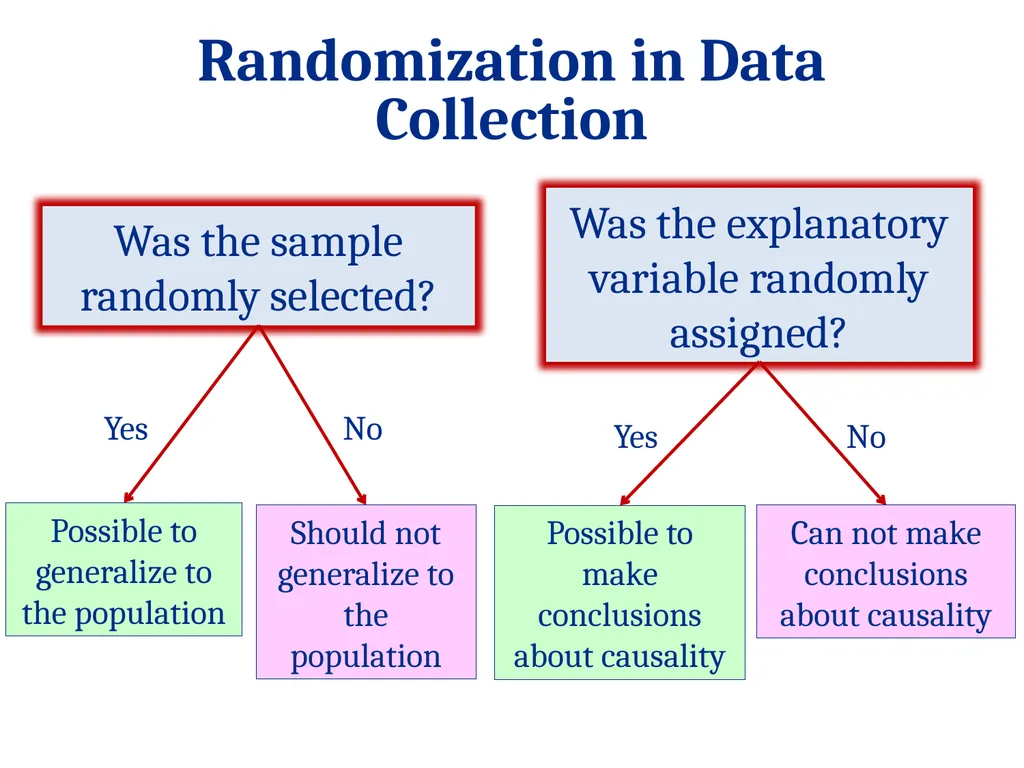
Was the sample randomly selected? Possible to generalize to the population Yes Should not generalize to the population No Was the explanatory variable randomly assigned? Possible to make conclusions about causality Yes Can not make conclusions about causality No Randomization in Data Collection<br>
39
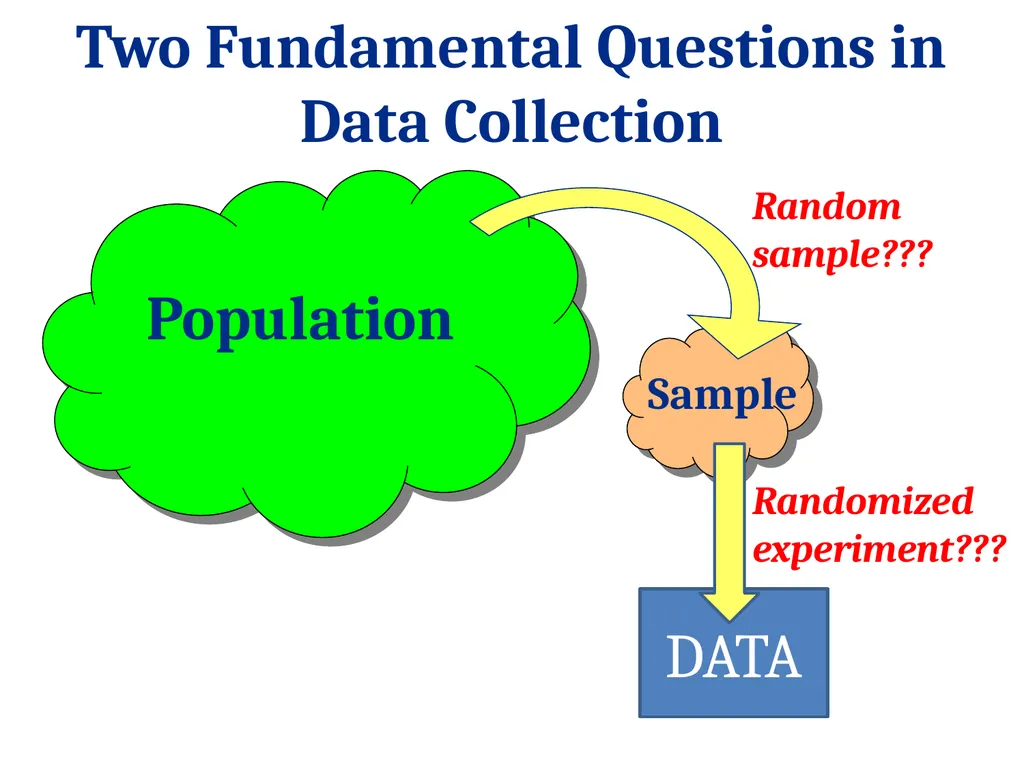
DATA Two Fundamental Questions in Data Collection Population Random sample??? Randomized experiment???<br>
40
Randomization Doing a randomized experiment on a random sample is ideal, but rarely achievable
If the focus of the study is using a sample to estimate a statistic for the entire population, you need a random sample, but do not need a randomized experiment (example: election polling)
If the focus of the study is establishing causality from one variable to another, you need a randomized experiment and can settle for a non-random sample (example: drug testing)<br>
If the focus of the study is using a sample to estimate a statistic for the entire population, you need a random sample, but do not need a randomized experiment (example: election polling)
If the focus of the study is establishing causality from one variable to another, you need a randomized experiment and can settle for a non-random sample (example: drug testing)<br>
41
Summary Association does not imply causation!
In observational studies, confounding variables almost always exist, so causation cannot be established
Randomized experiments involve randomly determining the level of the explanatory variable
Randomized experiments prevent confounding variables, so causality can be inferred
A control or comparison group is necessary
The placebo effect exists, so a placebo and blinding should be used<br>
In observational studies, confounding variables almost always exist, so causation cannot be established
Randomized experiments involve randomly determining the level of the explanatory variable
Randomized experiments prevent confounding variables, so causality can be inferred
A control or comparison group is necessary
The placebo effect exists, so a placebo and blinding should be used<br>
42
To Do Homework 1 (due Monday, 1/30)<br>
43
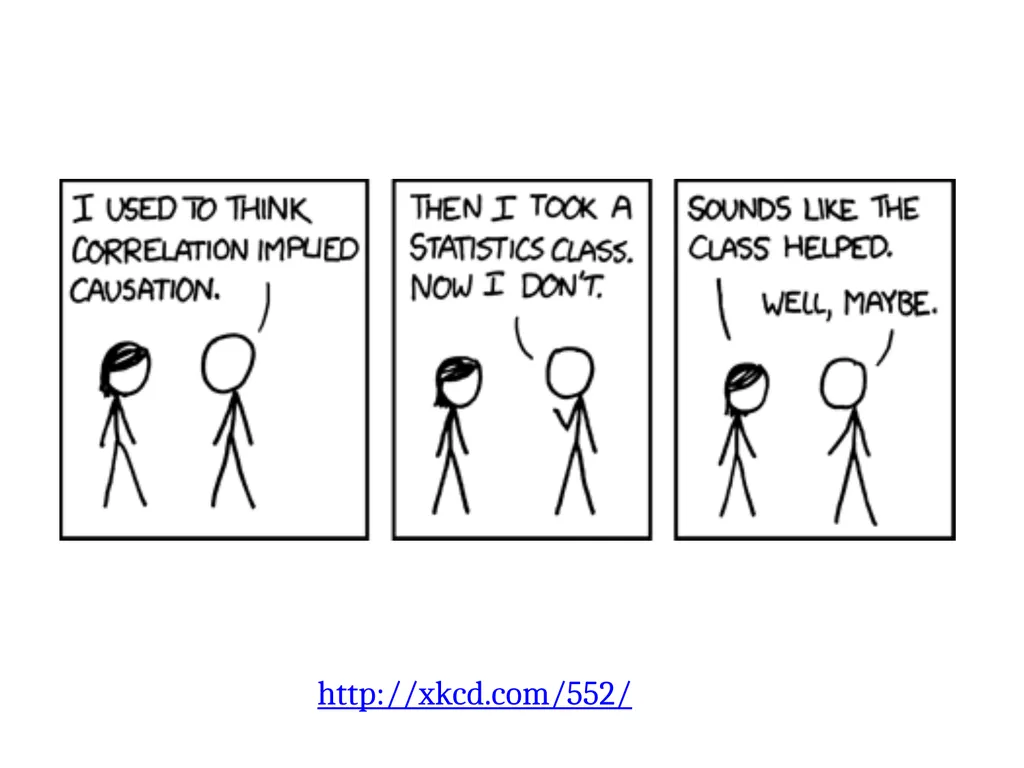
http://xkcd.com/552/<br>