Steps to a Successful Science Fair Project Ms. Holodick Modifications made for Memorial Elementary School Steps Choose a topic. (TITLE) Ask questions. (PURPOSE) Research your topic. (BACKGROUND) Write a Research Report. (PAPER) Form a
"Steps to a Successful Science Fair Project Ms." is the property of its rightful owner. Permission is granted to
download and print the materials on this website for personal, non-commercial use only, and to display it
on your personal computer provided you do not modify the materials and that you retain all copyright
notices contained in the materials. By downloading content from our website, you accept the terms of this
agreement.
Presentation Transcript
01
Steps to a Successful Science Fair Project Ms. Holodick
Modifications made for Memorial Elementary School<br>
02
Steps Choose a topic. (TITLE)
Ask questions. (PURPOSE)
Research your topic. (BACKGROUND)
Write a Research Report. (PAPER)
Form a hypothesis. (HYPOTHESIS)
Test the hypothesis by performing an experiment. (MATERIALS/ PROCEDURE)
Record results/data. (RESULTS)
Write a conclusion. (CONCLUSION)
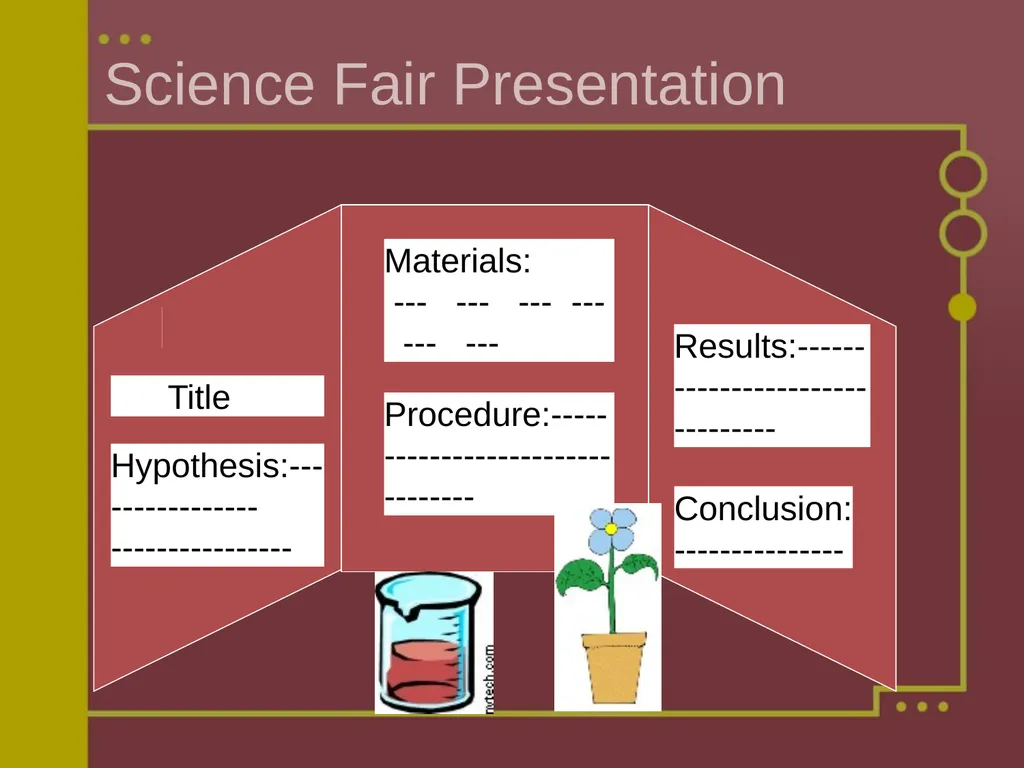
Construct tri-fold or poster board. (PRESENTATION)
Practice the presentation. (ORAL REPORT)<br>
03
Ask a question A science experiment is when something is tested. Begin by asking a question of something you have always wondered.
Example: Will plants grow better with salt water or bottled water?
Then do research on how to test your question to get results.
A science experiment is not building a model! Something must be tested!<br>
04
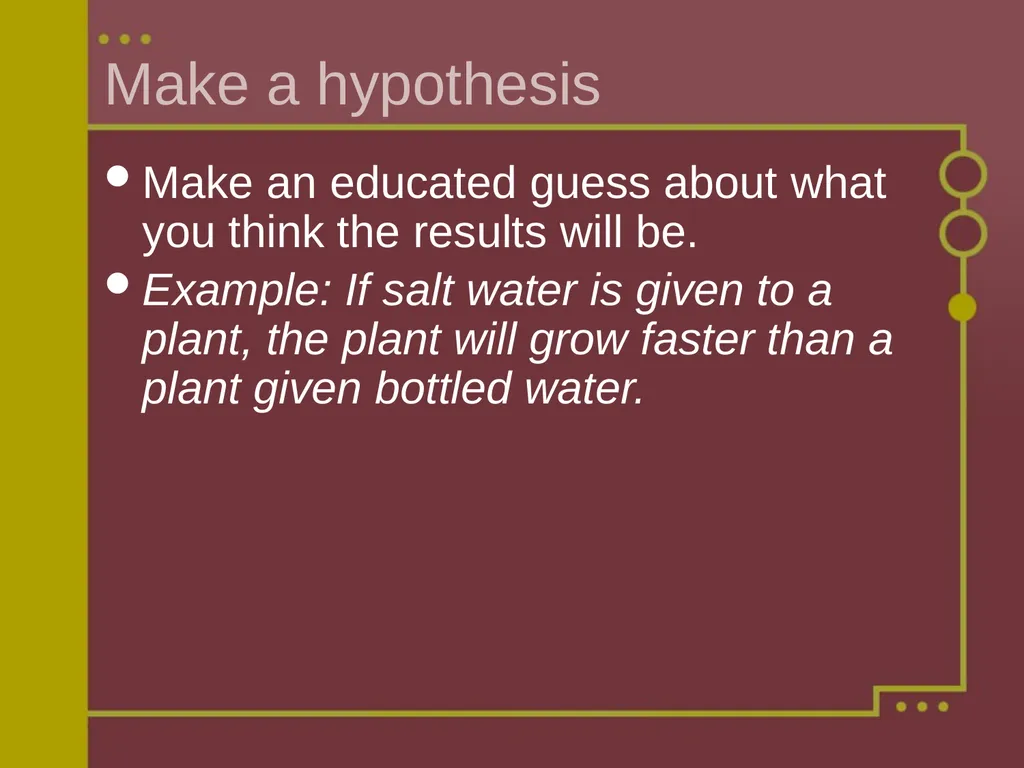
Make a hypothesis Make an educated guess about what you think the results will be.
Example: If salt water is given to a plant, the plant will grow faster than a plant given bottled water.<br>
05
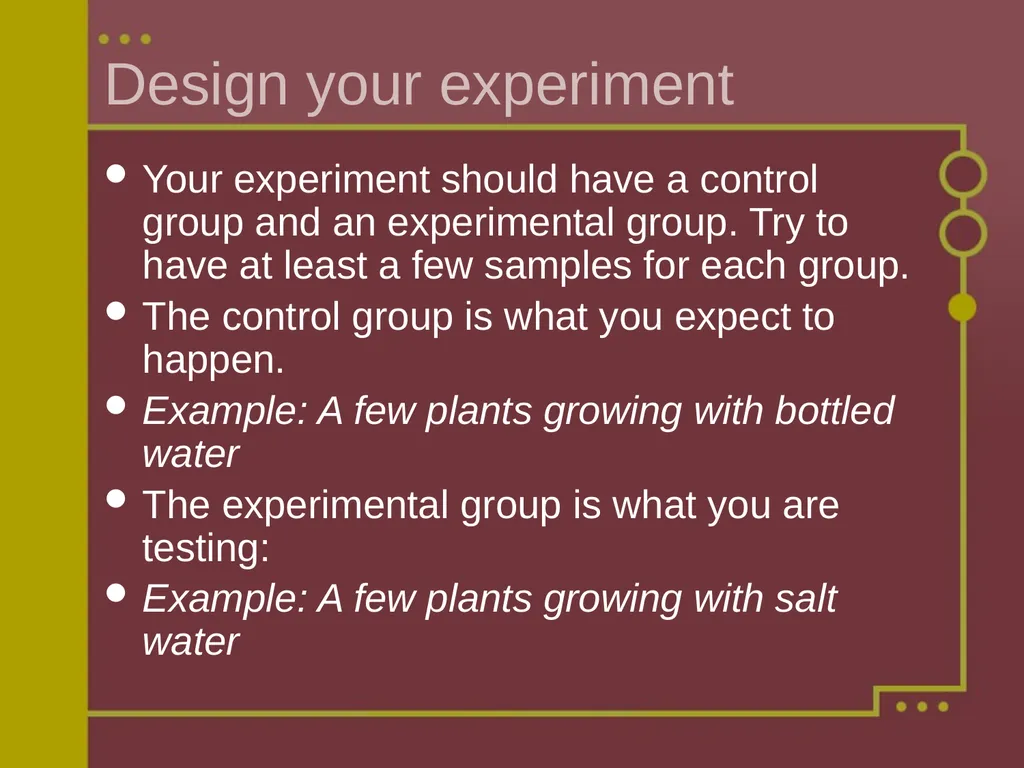
Design your experiment Your experiment should have a control group and an experimental group. Try to have at least a few samples for each group.
The control group is what you expect to happen.
Example: A few plants growing with bottled water
The experimental group is what you are testing:
Example: A few plants growing with salt water<br>
06
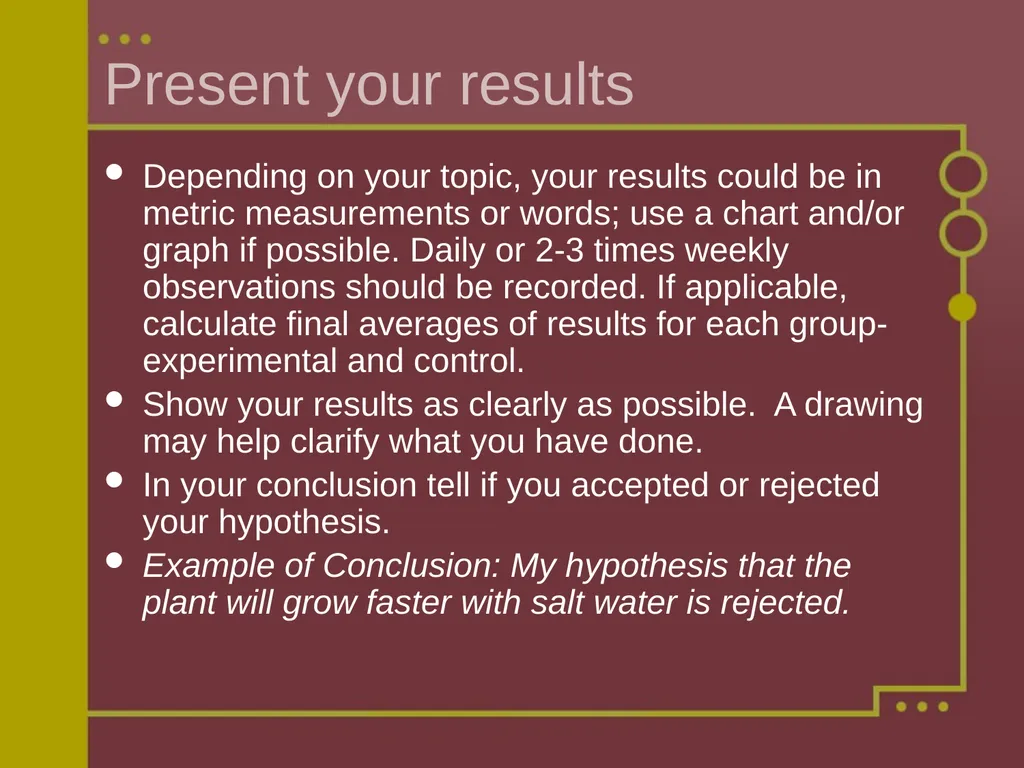
Present your results Depending on your topic, your results could be in metric measurements or words; use a chart and/or graph if possible. Daily or 2-3 times weekly observations should be recorded. If applicable, calculate final averages of results for each group-experimental and control.
Show your results as clearly as possible. A drawing may help clarify what you have done.
In your conclusion tell if you accepted or rejected your hypothesis.
Example of Conclusion: My hypothesis that the plant will grow faster with salt water is rejected.<br>
07
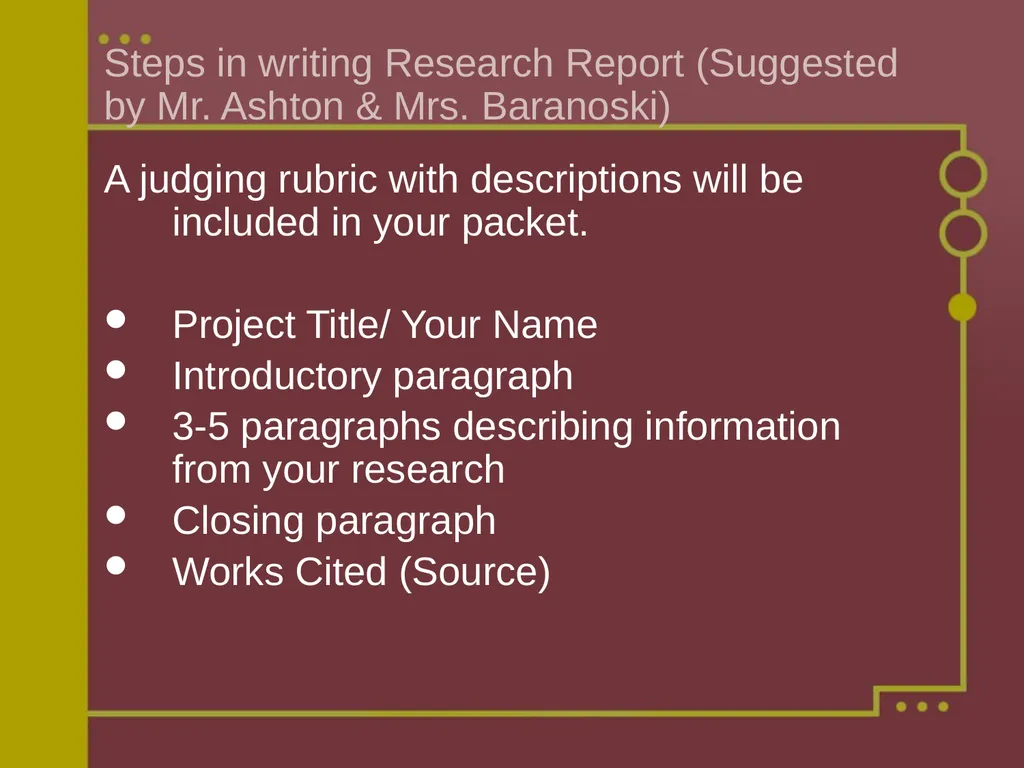
Steps in writing Research Report (Suggested by Mr. Ashton & Mrs. Baranoski) A judging rubric with descriptions will be included in your packet.
Project Title/ Your Name
Introductory paragraph
3-5 paragraphs describing information from your research
Closing paragraph
Works Cited (Source)<br>