Stories in Imaginary Worlds Lesson 4 - What are the ingredients for a good story? Home Schooling Tips This toolkit is to help children understand what needs to be included for a good story. We use them a lot at school and the structure can
"Stories in Imaginary Worlds Lesson 4 - What are" is the property of its rightful owner. Permission is granted to
download and print the materials on this website for personal, non-commercial use only, and to display it
on your personal computer provided you do not modify the materials and that you retain all copyright
notices contained in the materials. By downloading content from our website, you accept the terms of this
agreement.
Presentation Transcript
01
Stories in Imaginary Worlds Lesson 4 - What are the ingredients for a good story?<br>
02
Home Schooling Tips This toolkit is to help children understand what needs to be included for a good story. We use them a lot at school and the structure can be very beneficial. Decide how this will work for you at home and adapt the lesson if this helps.
Top Tips:
* Discuss what makes a good story.
* Act out a short story and think about what you would need to do if you were writing your own story.
* Present the toolkit in a more interesting way/ a way that is more meaningful for you.<br>
03
We are learning to understand the key features of story writing. SUCCESS CRITERIA
I can understand the features outlined in a given toolkit.
I can create my own story toolkit.<br>
04
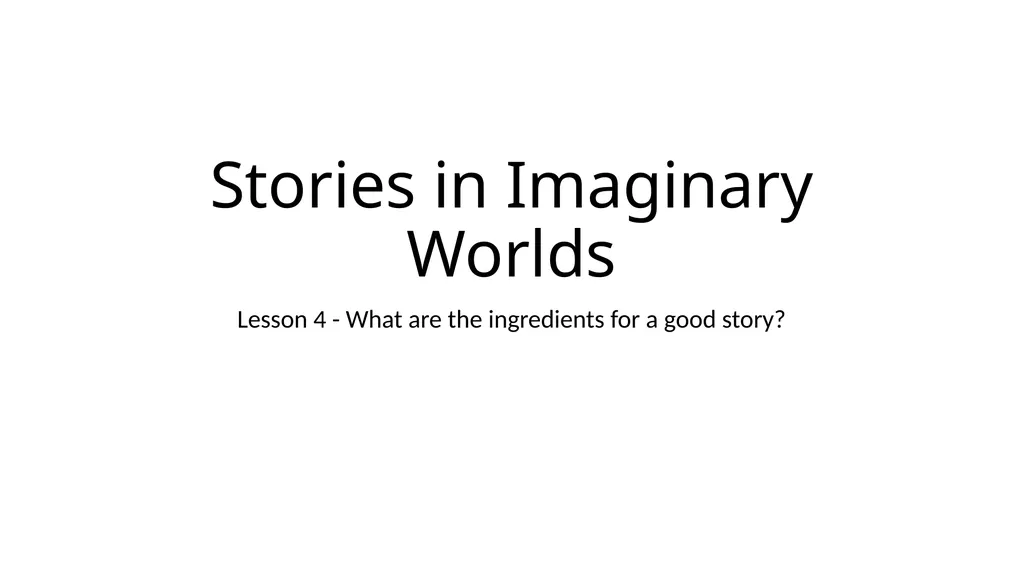
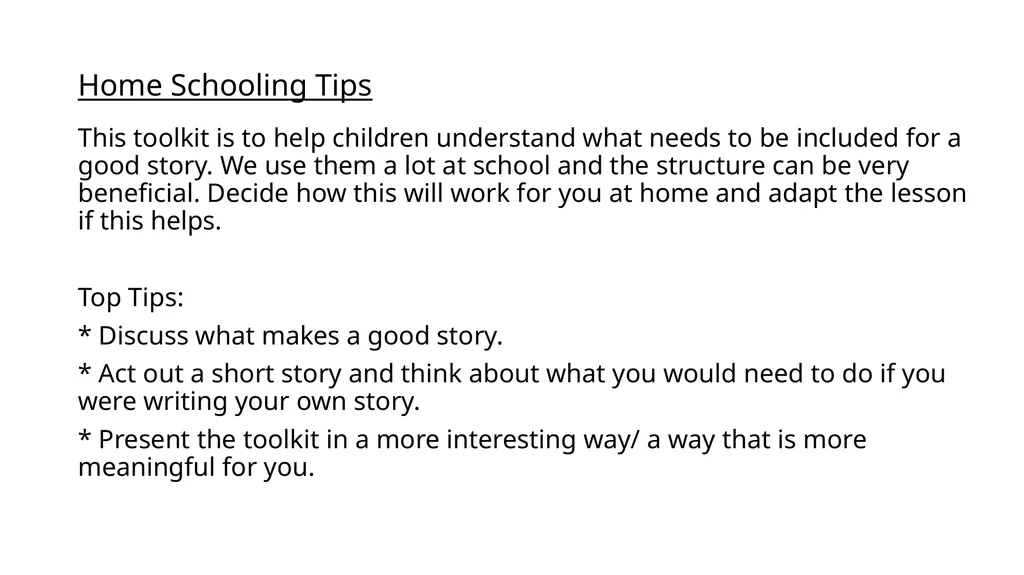
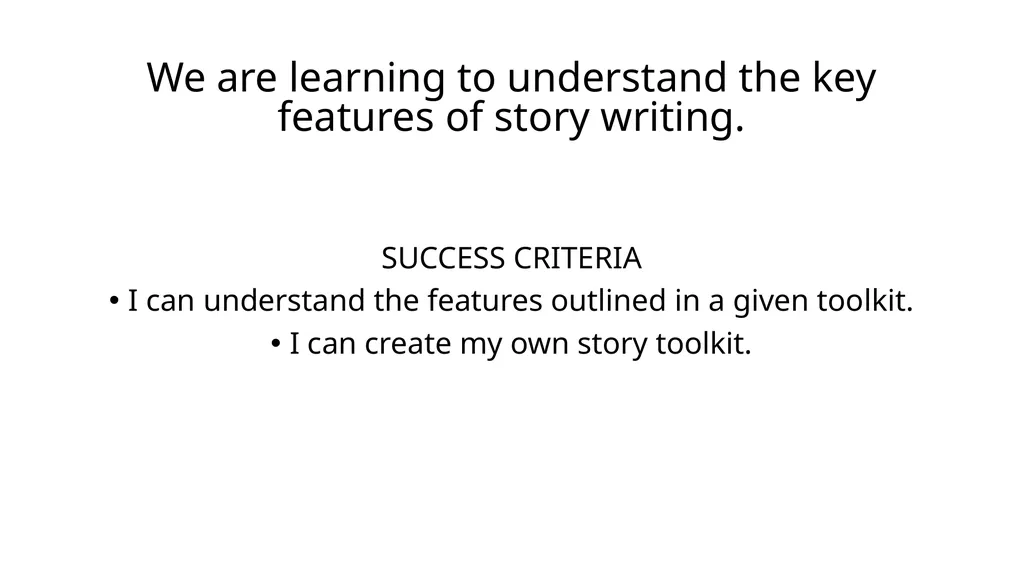
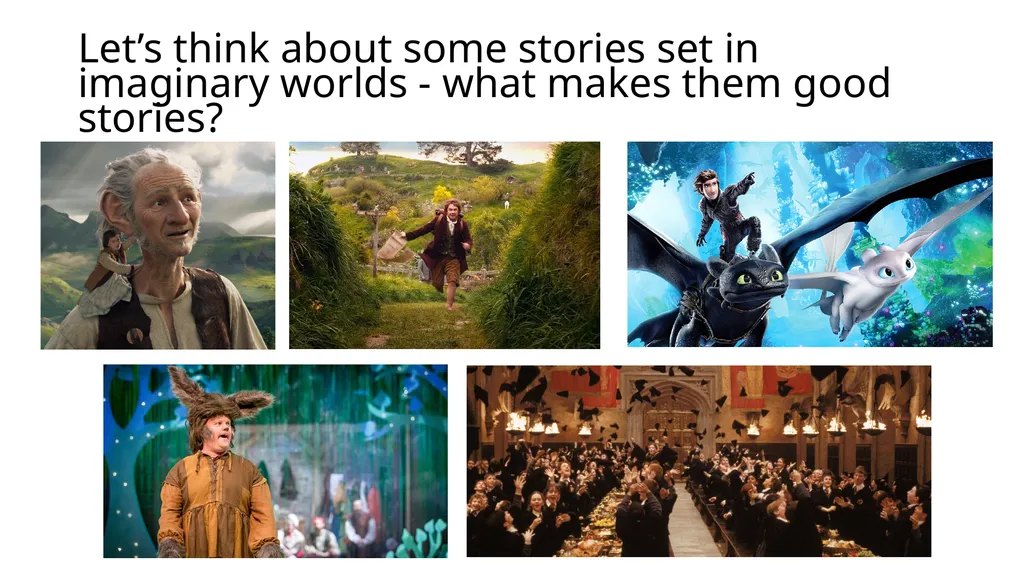
Let’s think about some stories set in imaginary worlds - what makes them good stories?<br>
05
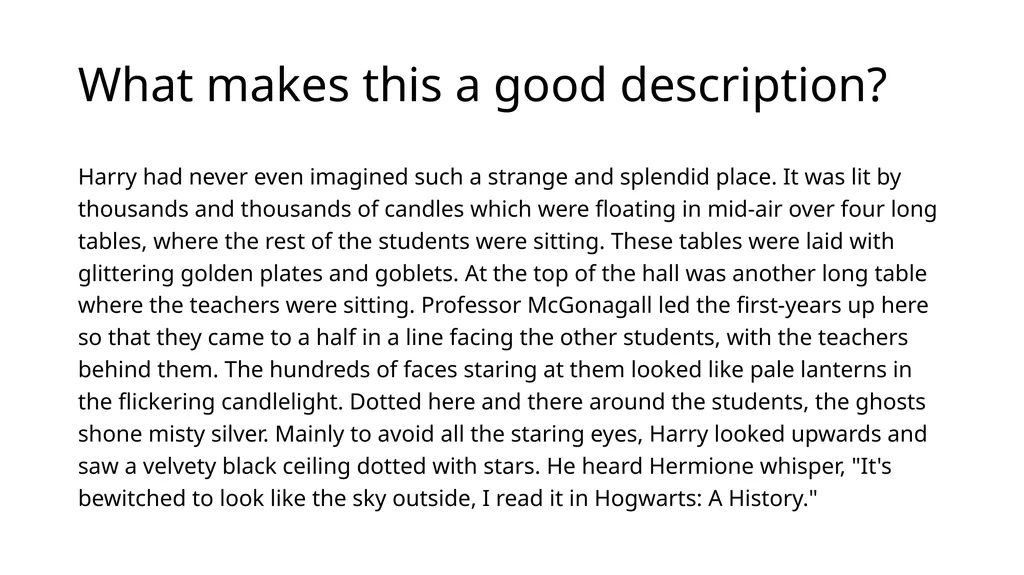
What makes this a good description? Harry had never even imagined such a strange and splendid place. It was lit by thousands and thousands of candles which were floating in mid-air over four long tables, where the rest of the students were sitting. These tables were laid with glittering golden plates and goblets. At the top of the hall was another long table where the teachers were sitting. Professor McGonagall led the first-years up here so that they came to a half in a line facing the other students, with the teachers behind them. The hundreds of faces staring at them looked like pale lanterns in the flickering candlelight. Dotted here and there around the students, the ghosts shone misty silver. Mainly to avoid all the staring eyes, Harry looked upwards and saw a velvety black ceiling dotted with stars. He heard Hermione whisper, "It's bewitched to look like the sky outside, I read it in Hogwarts: A History."<br>
06
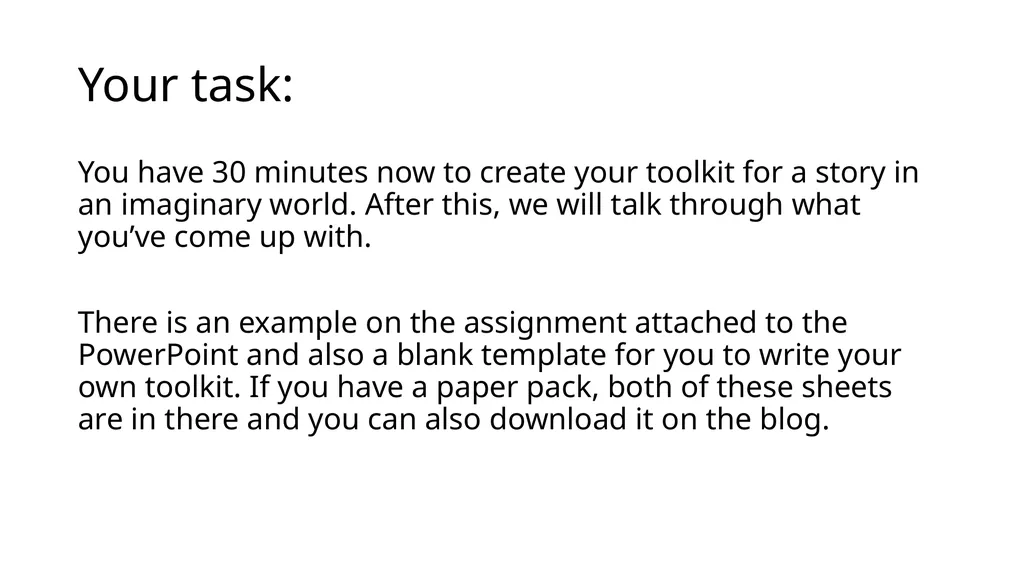
Your task: You have 30 minutes now to create your toolkit for a story in an imaginary world. After this, we will talk through what you’ve come up with.
There is an example on the assignment attached to the PowerPoint and also a blank template for you to write your own toolkit. If you have a paper pack, both of these sheets are in there and you can also download it on the blog.<br>
07
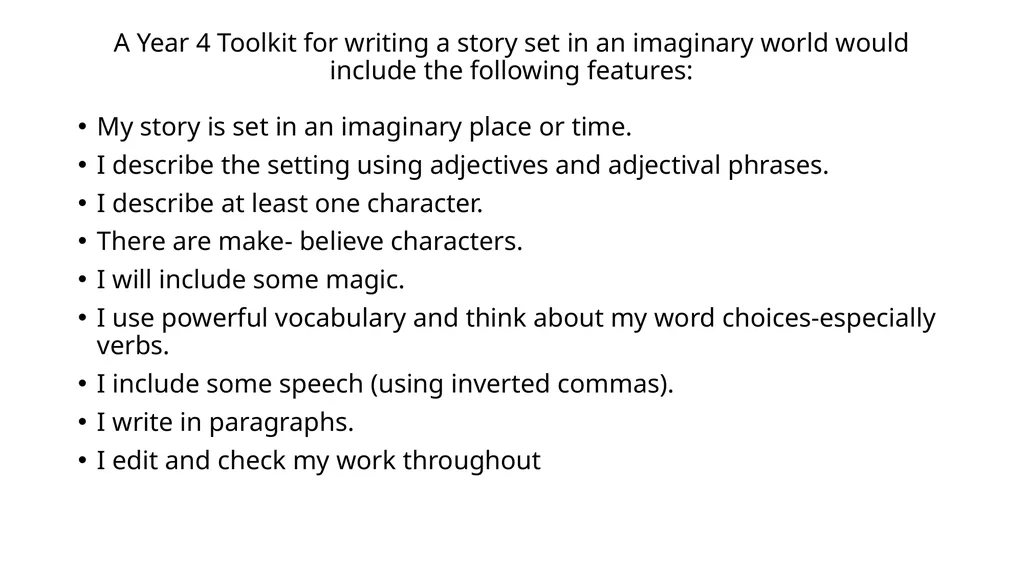
A Year 4 Toolkit for writing a story set in an imaginary world would include the following features: My story is set in an imaginary place or time.
I describe the setting using adjectives and adjectival phrases.
I describe at least one character.
There are make- believe characters.
I will include some magic.
I use powerful vocabulary and think about my word choices-especially verbs.
I include some speech (using inverted commas).
I write in paragraphs.
I edit and check my work throughout<br>
08
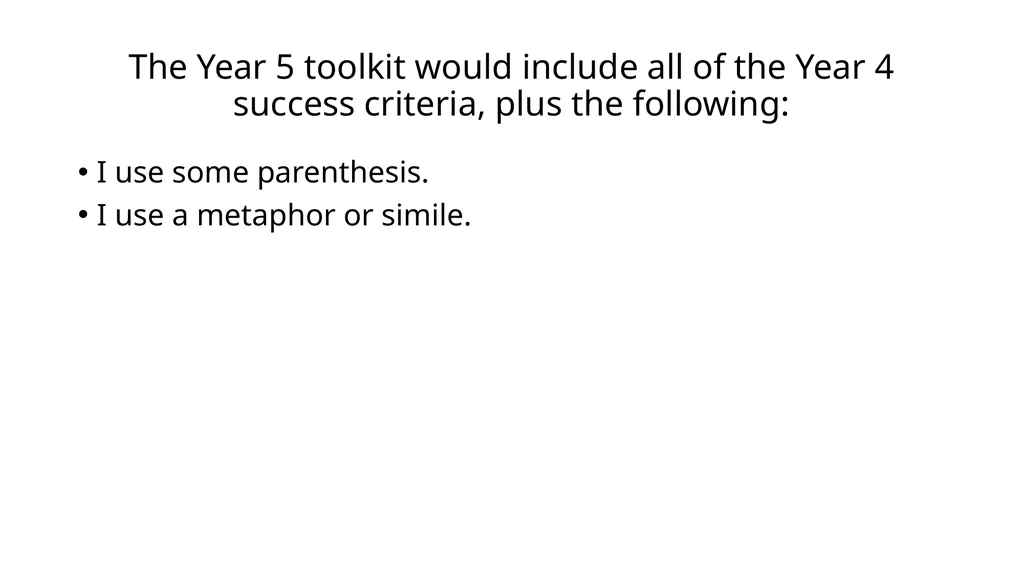
The Year 5 toolkit would include all of the Year 4 success criteria, plus the following: I use some parenthesis.
I use a metaphor or simile.<br>