
Strategy and Management Control system Tasks





Description: Strategy and Management Control system Tasks Involved in Strategic Management MCS Kelley Summer 2009 GM 105 Strategic Management Defining business and stating a mission Setting measurable objectives Crafting a strategy to achieve
Related Topics
Download Presentation
"Strategy and Management Control system Tasks" is the property of its rightful owner. Permission is granted to download and print the materials on this website for personal, non-commercial use only, and to display it on your personal computer provided you do not modify the materials and that you retain all copyright notices contained in the materials. By downloading content from our website, you accept the terms of this agreement.
Presentation Transcript
slide1. Strategy and Management Control system<br>
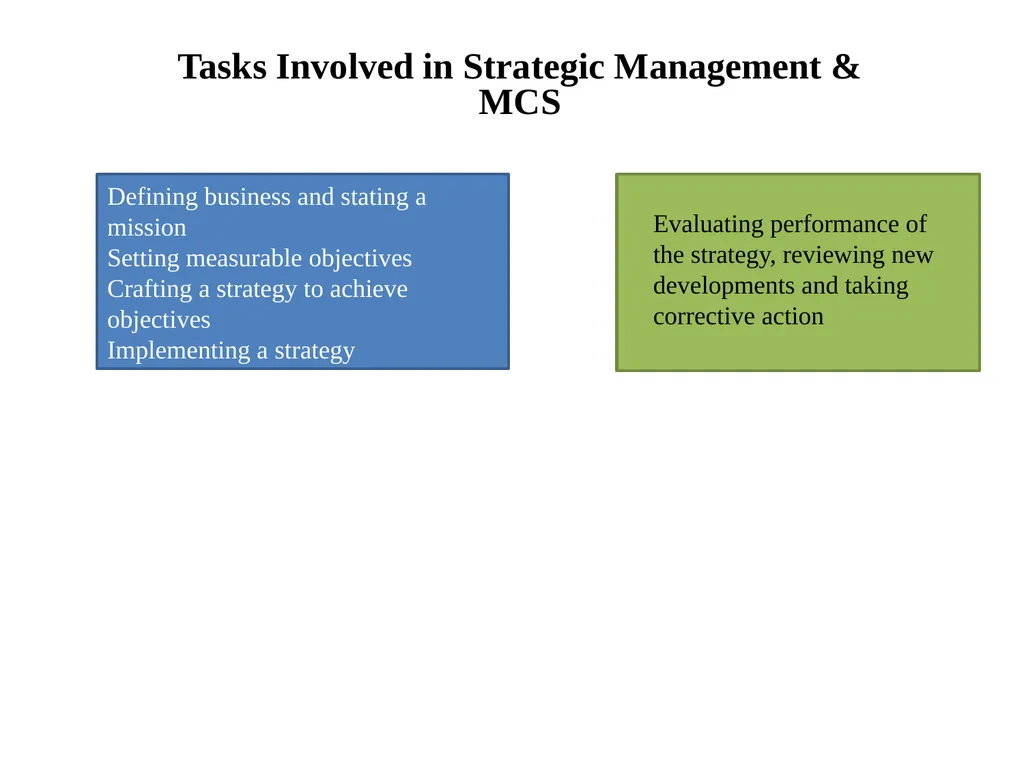
slide2. Tasks Involved in Strategic Management & MCS Kelley Summer 2009 GM 105 Strategic Management Defining business and stating a mission
Setting measurable objectives
Crafting a strategy to achieve objectives
Implementing a strategy Evaluating performance of the strategy, reviewing new developments and taking corrective action<br>
slide3. The essence of strategy of the organization<br>
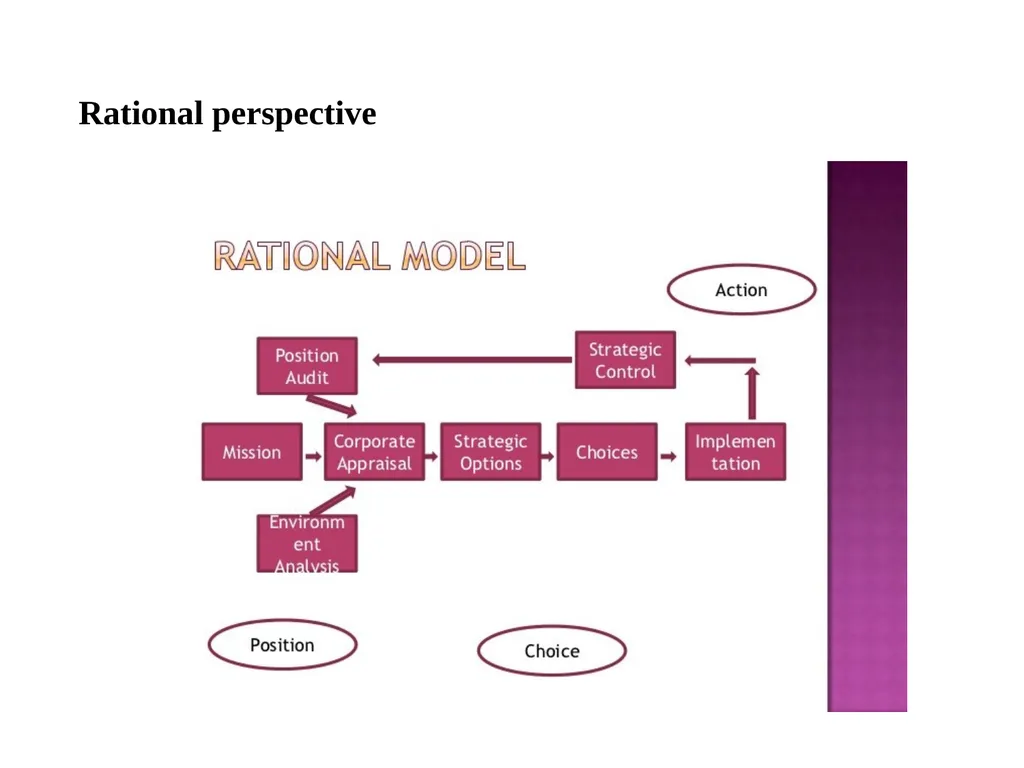
slide4. Rational perspective<br>
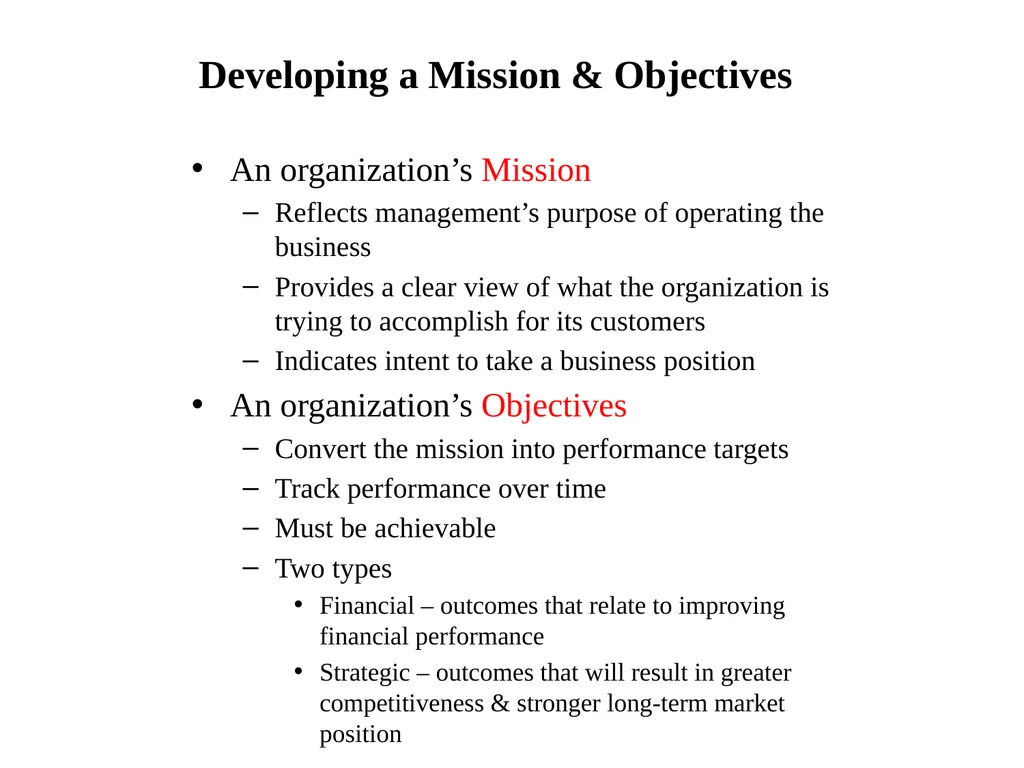
slide5. Developing a Mission & Objectives An organization’s Mission
Reflects management’s purpose of operating the business
Provides a clear view of what the organization is trying to accomplish for its customers
Indicates intent to take a business position
An organization’s Objectives
Convert the mission into performance targets
Track performance over time
Must be achievable
Two types
Financial – outcomes that relate to improving financial performance
Strategic – outcomes that will result in greater competitiveness & stronger long-term market position Kelley Summer 2009 GM 105 Strategic Management<br>
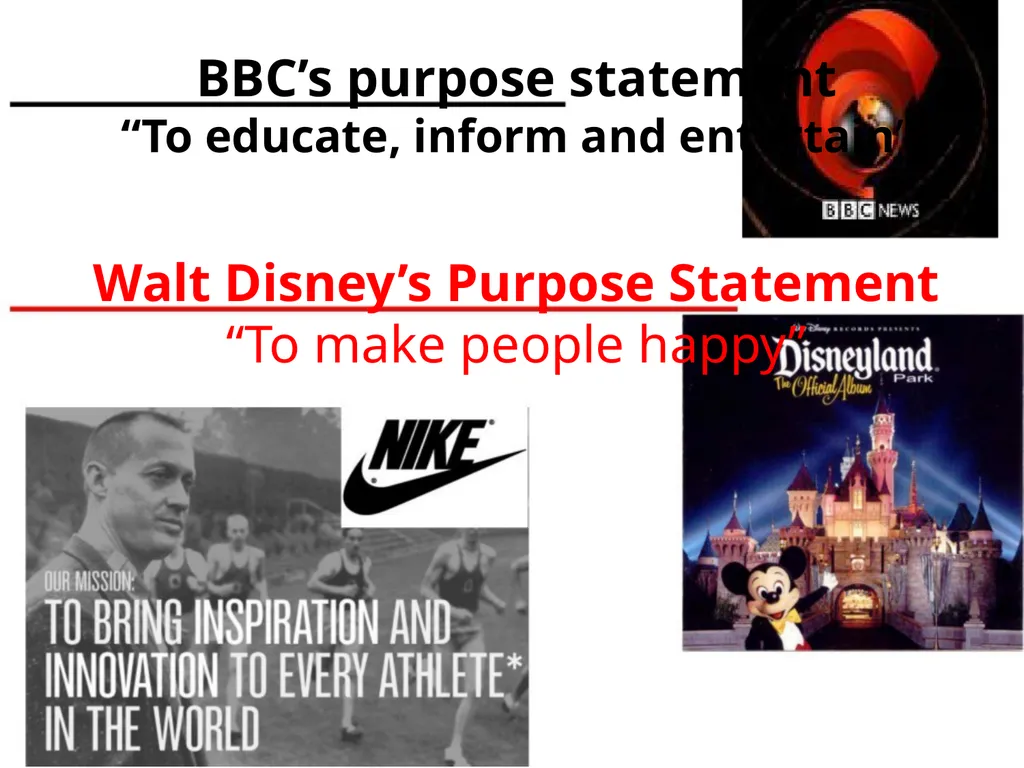
slide6. BBC’s purpose statement “To educate, inform and entertain” Walt Disney’s Purpose Statement “To make people happy”<br>
slide7. Management accounting and strategy • Objectives - Specific statement of what the organisation aims to achieve, often quantified and relating to a specific period of time (SMART) • Strategies - Strategy is the direction and scope of an organisation over the long term which achieves advantage for the organisation through its configuration of resources within a changing environment to fulfil stakeholder expectations.
G. Johnson and K. Scholes Exploring Corporate Strategy 6th edition<br>
slide8. The essence of strategic management-a perspective view • Major decisions - What business will we operate in? - What are our basic directions for the future - What systems and structures should we have in place to support our strategies? • Corporate strategy - Decisions about the types of businesses to operate in, which businesses to acquire and divest, and how best to structure and finance the organisation<br>
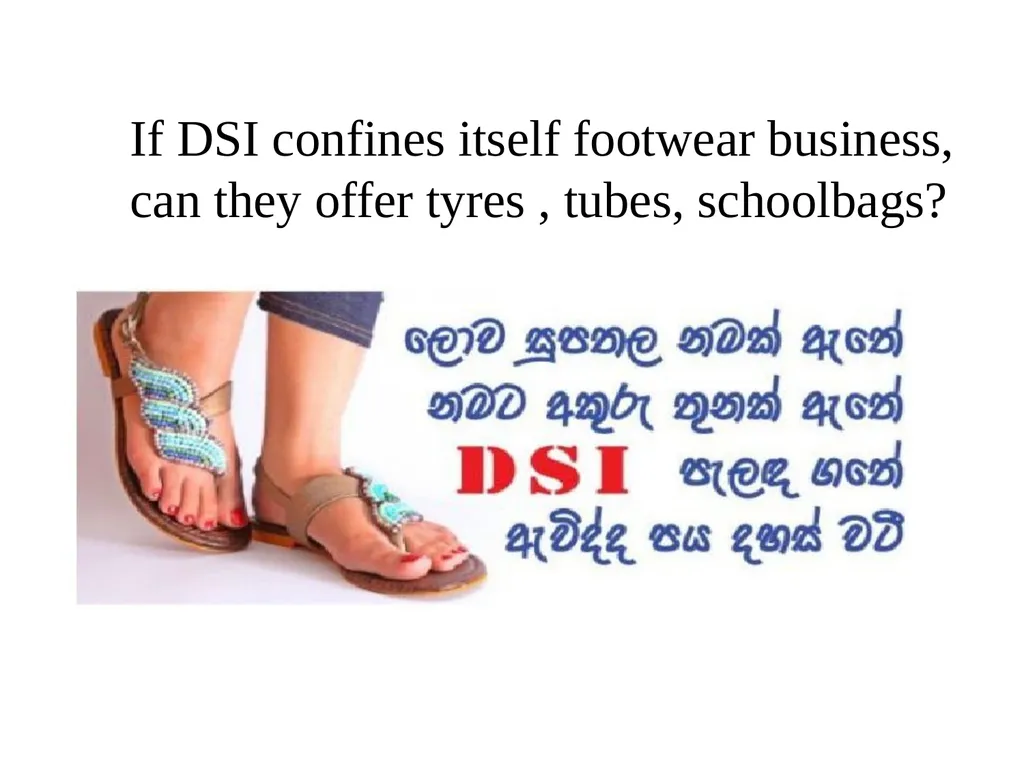
slide9. If DSI confines itself footwear business, can they offer tyres , tubes, schoolbags?<br>
slide10. What business are you in? If you want to travel from London to Manchester, you can choose from the train, coach, car or aeroplane, so what business should Ryanair be in?<br>
slide11. Levels of Strategy Corporate strategy
Business strategy
Functional strategy<br>
slide12. Corporate Level Strategy What businesses are we in? What businesses should we be in?
Four areas of focus
Diversification management (acquisitions and divestitures)
Synergy between units
Investment priorities
Business level strategy approval (but not crafting)<br>
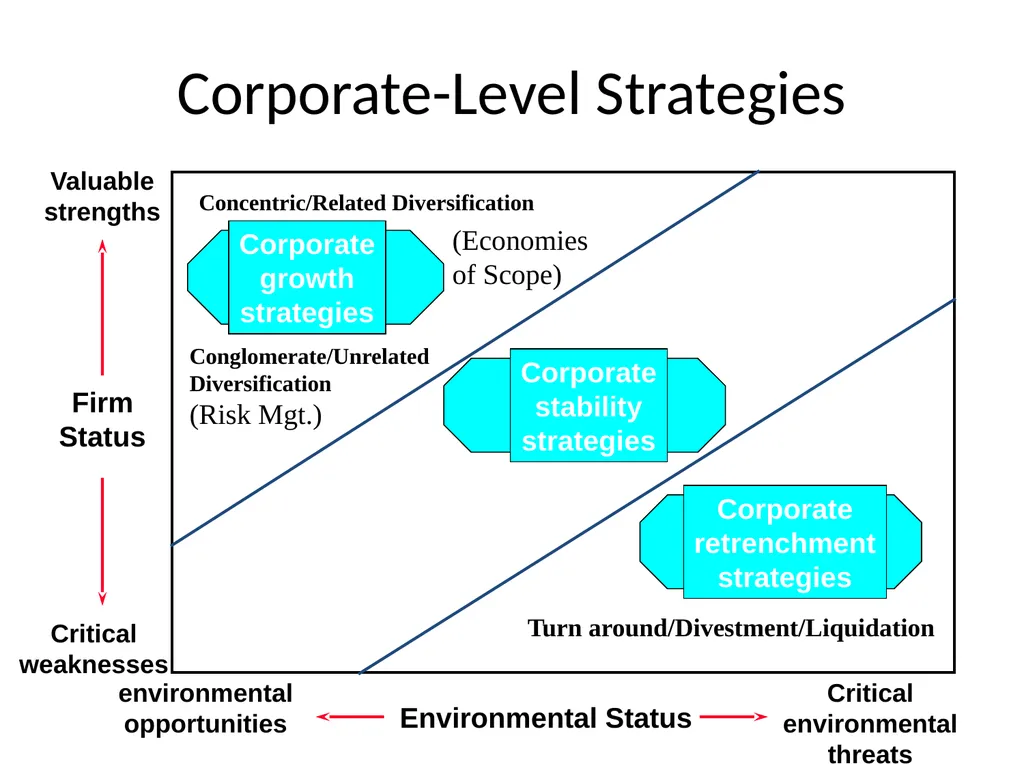
slide13. Corporate-Level Strategies Firm
Status Valuable
strengths Critical
weaknesses Environmental Status environmental
opportunities Critical
environmental
threats Conglomerate/Unrelated
Diversification
(Risk Mgt.) Turn around/Divestment/Liquidation<br>
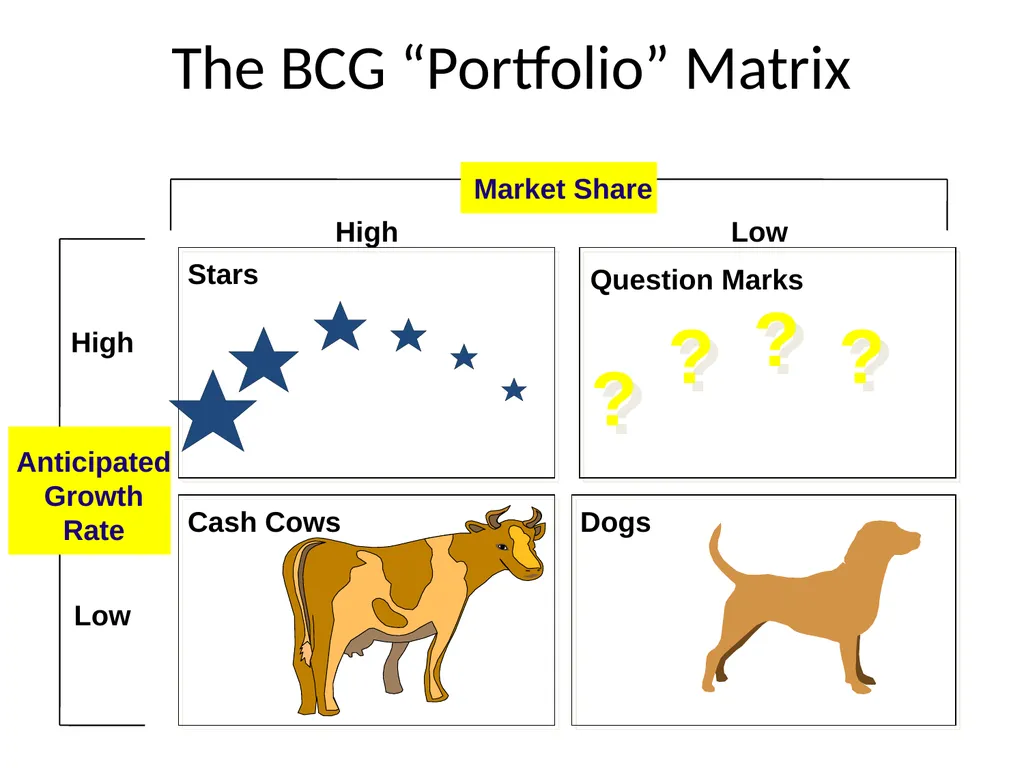
slide14. The BCG “Portfolio” Matrix High Low High Low Market Share Anticipated
Growth
Rate Stars ? ? ? ? Question Marks Cash Cows Dogs<br>
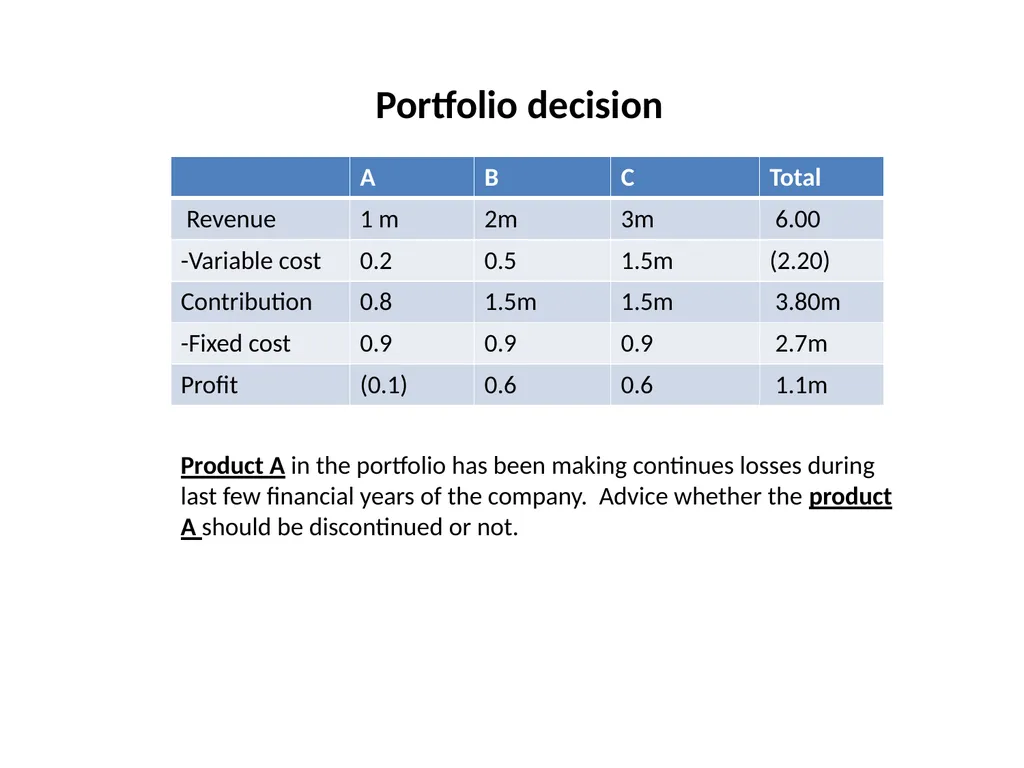
slide15. Portfolio decision Product A in the portfolio has been making continues losses during last few financial years of the company. Advice whether the product A should be discontinued or not.<br>
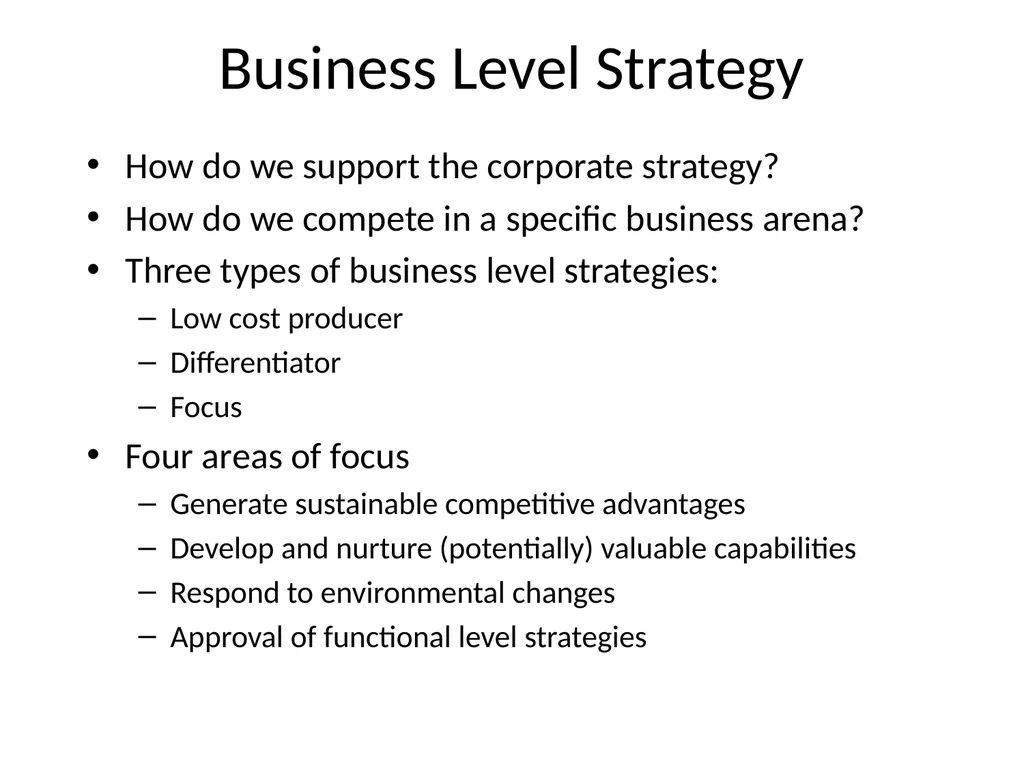
slide16. Business Level Strategy How do we support the corporate strategy?
How do we compete in a specific business arena?
Three types of business level strategies:
Low cost producer
Differentiator
Focus
Four areas of focus
Generate sustainable competitive advantages
Develop and nurture (potentially) valuable capabilities
Respond to environmental changes
Approval of functional level strategies<br>
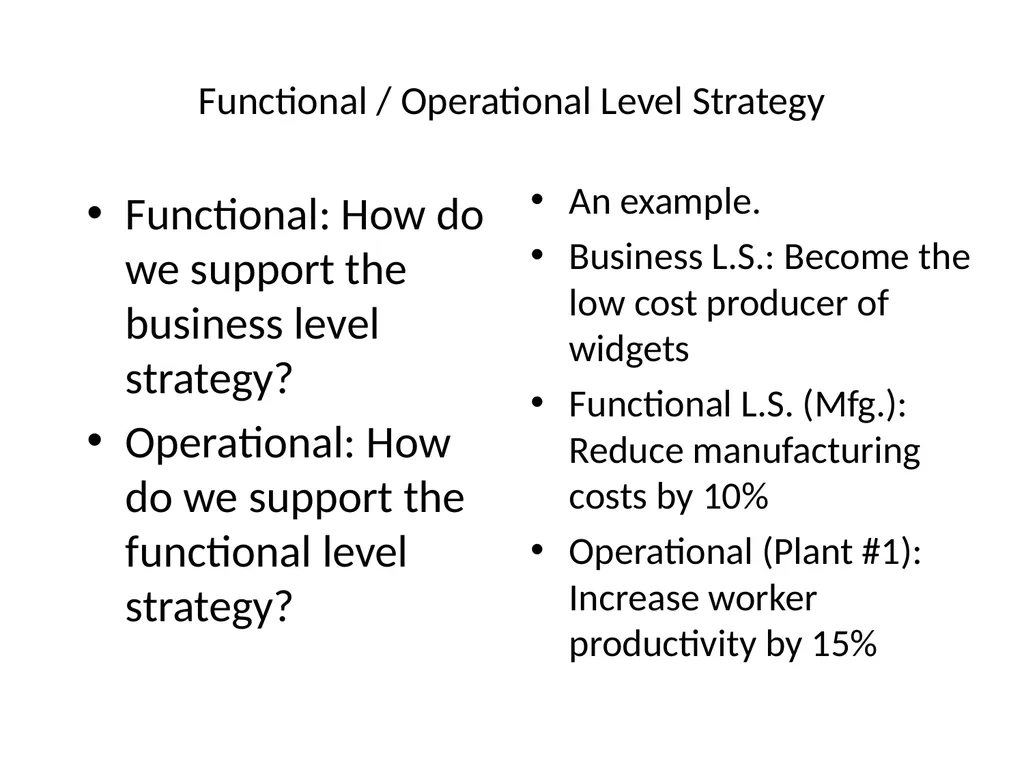
slide17. Functional / Operational Level Strategy Functional: How do we support the business level strategy?
Operational: How do we support the functional level strategy? An example.
Business L.S.: Become the low cost producer of widgets
Functional L.S. (Mfg.): Reduce manufacturing costs by 10%
Operational (Plant #1): Increase worker productivity by 15%<br>
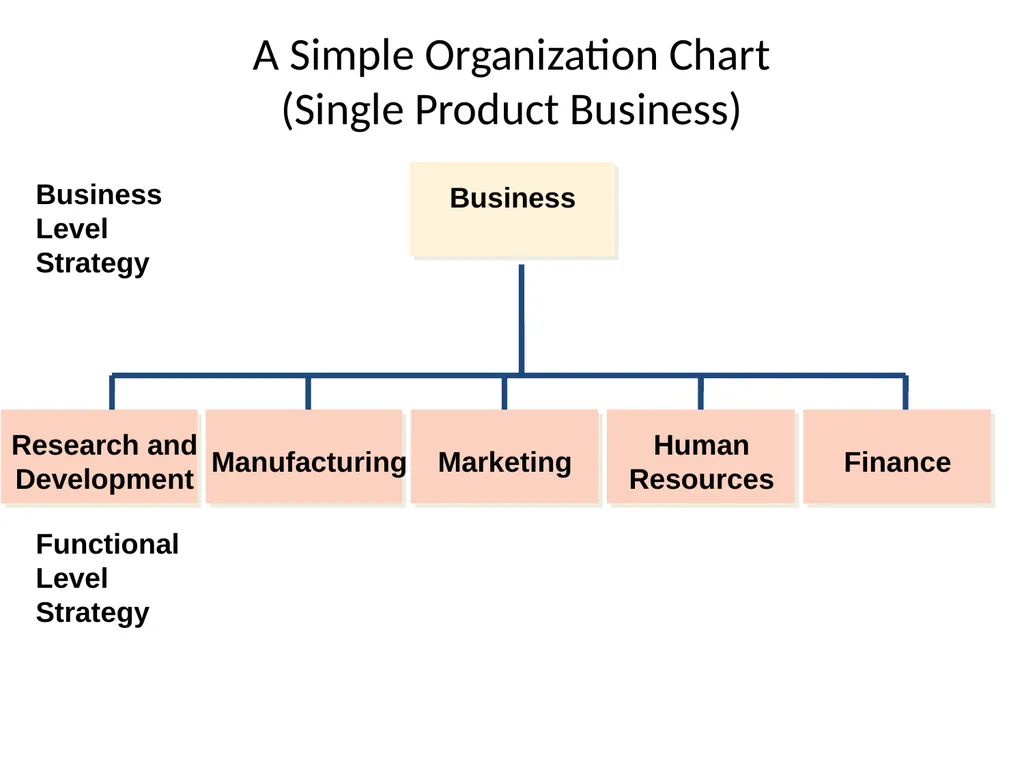
slide18. A Simple Organization Chart (Single Product Business) Business Research and
Development Manufacturing Marketing Human
Resources Finance Functional
Level
Strategy Business
Level
Strategy<br>
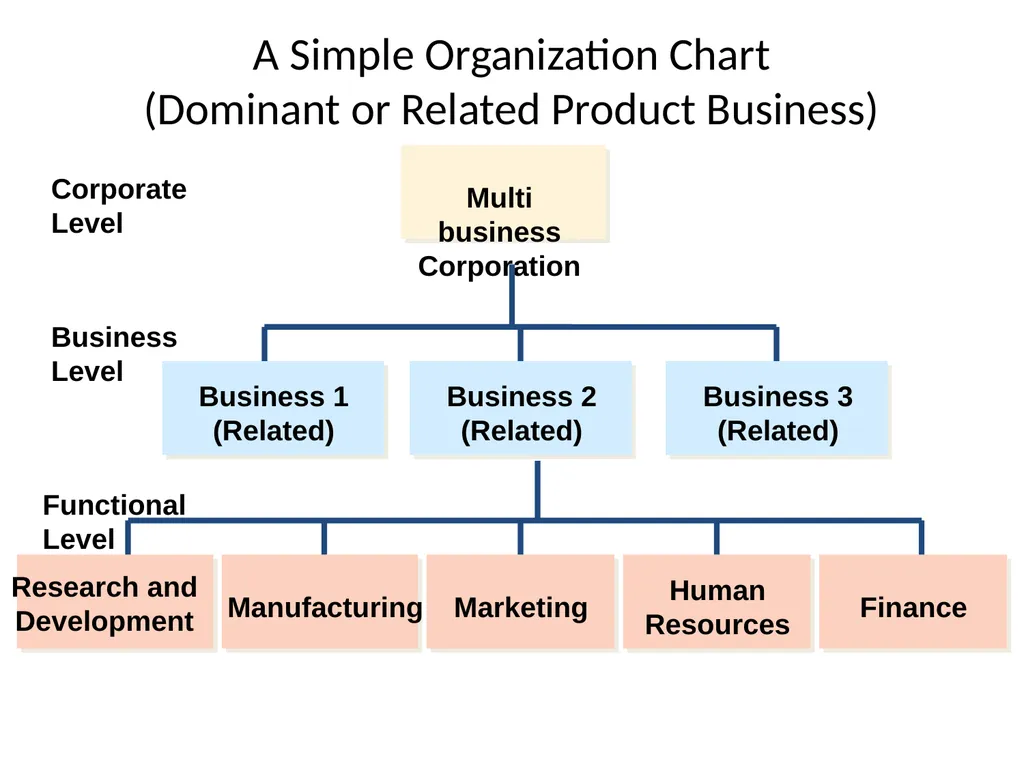
slide19. A Simple Organization Chart (Dominant or Related Product Business) Multi
business
Corporation Corporate
Level<br>
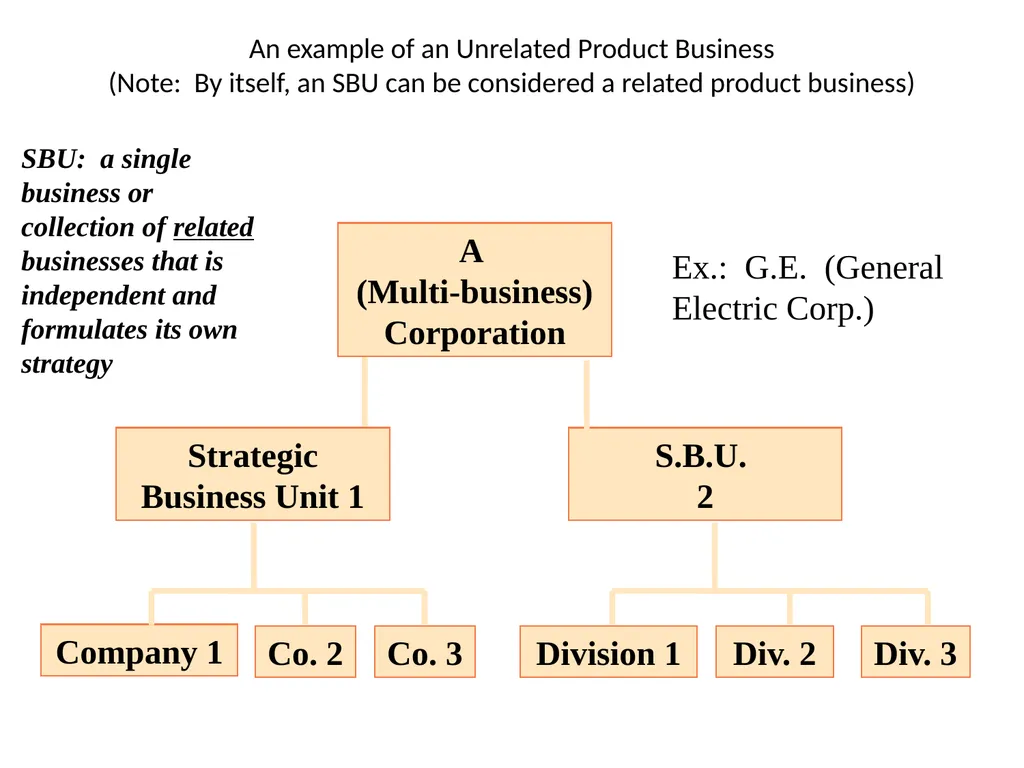
slide20. An example of an Unrelated Product Business (Note: By itself, an SBU can be considered a related product business) A
(Multi-business) Corporation Ex.: G.E. (General
Electric Corp.) Strategic Business Unit 1 S.B.U.
2 SBU: a single business or collection of related businesses that is independent and formulates its own strategy<br>
slide21. An emergent view
Emphasize the uncertainty of the future and suggest that setting out identify purpose and a single strategy and then develop a complete strategic plan may be fruitless task<br>
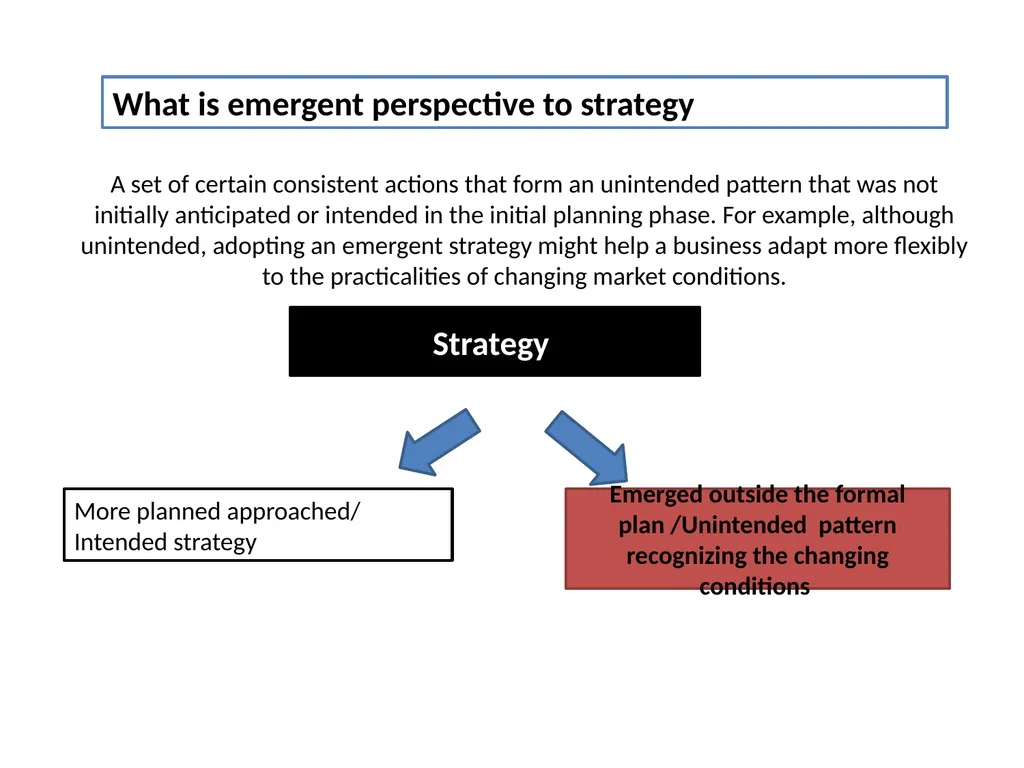
slide22. A set of certain consistent actions that form an unintended pattern that was not initially anticipated or intended in the initial planning phase. For example, although unintended, adopting an emergent strategy might help a business adapt more flexibly to the practicalities of changing market conditions. What is emergent perspective to strategy Strategy More planned approached/ Intended strategy Emerged outside the formal plan /Unintended pattern recognizing the changing conditions<br>
slide23. Henry Mintzberg's emergent strategy<br>
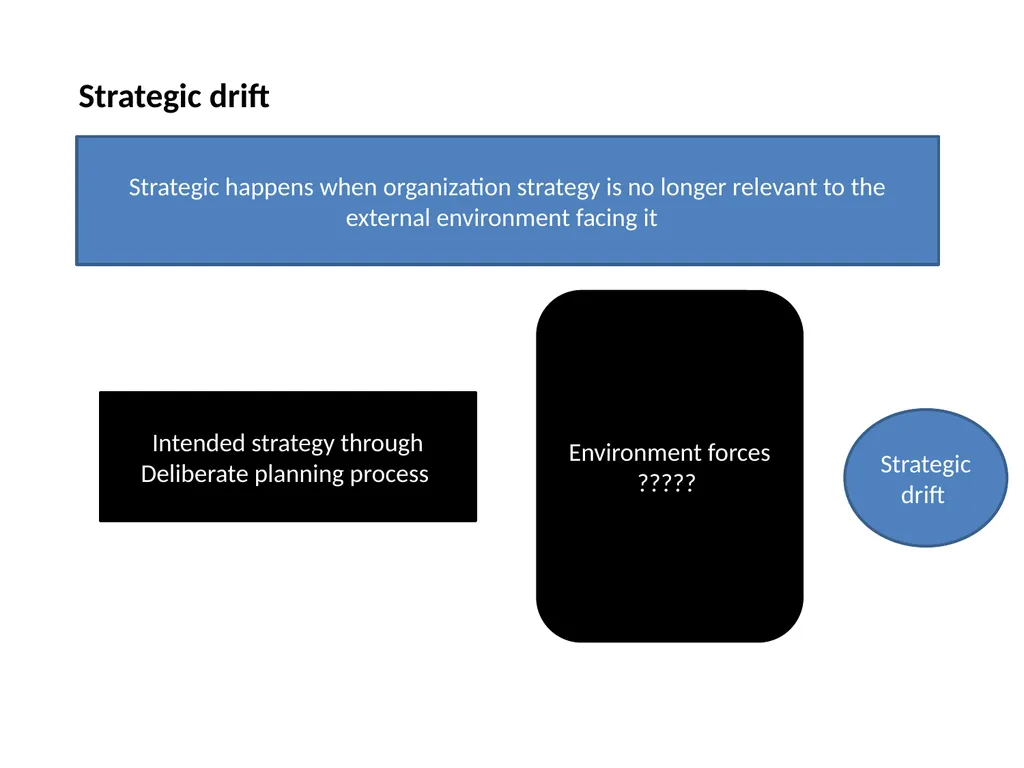
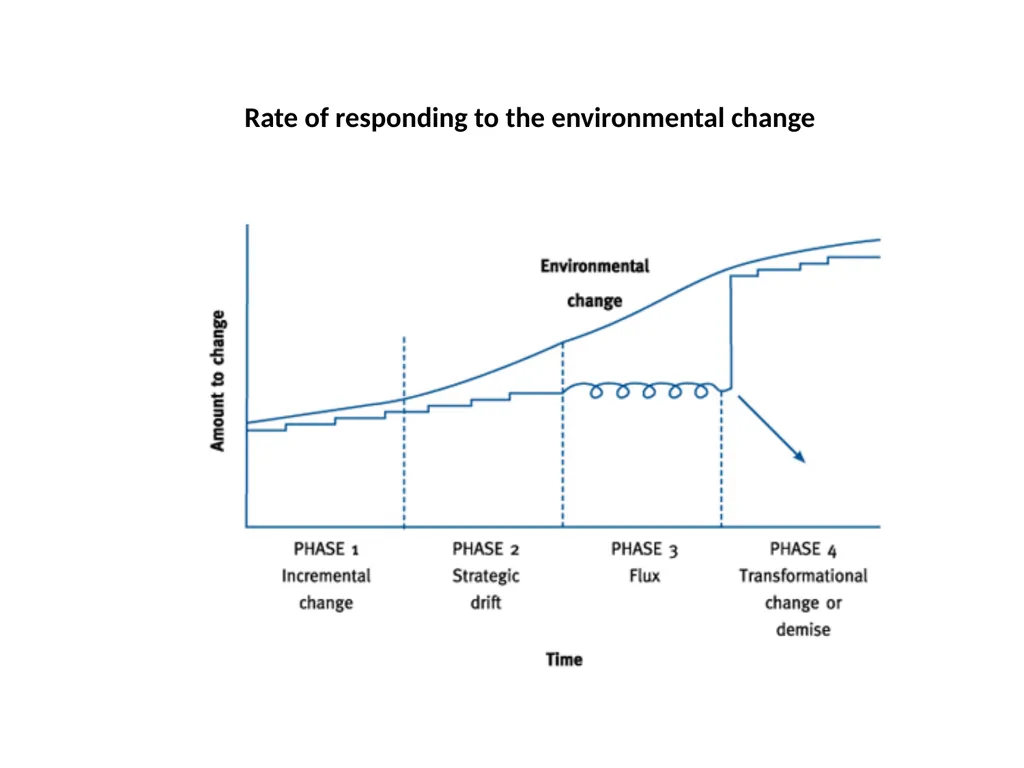
slide24. Strategic drift Strategic happens when organization strategy is no longer relevant to the external environment facing it Intended strategy through Deliberate planning process Environment forces
????? Strategic drift<br>
slide25. Rate of responding to the environmental change<br>
slide26. What if you don’t redefine your business purpose –Strategic drift<br>
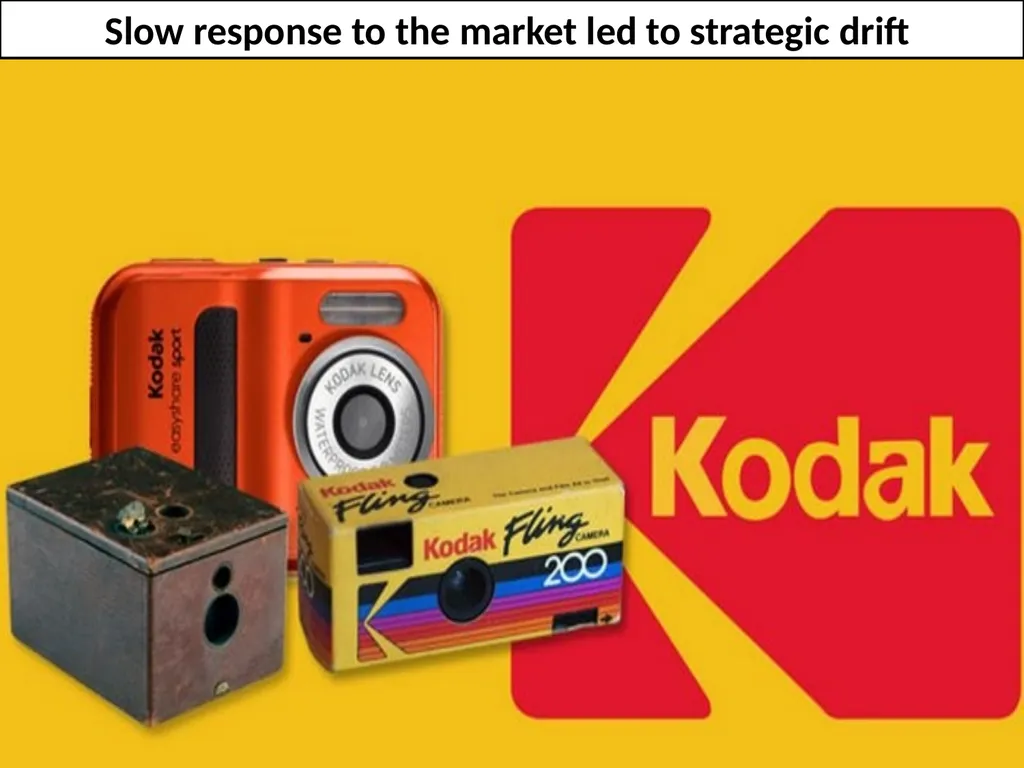
slide27. Slow response to the market led to strategic drift<br>
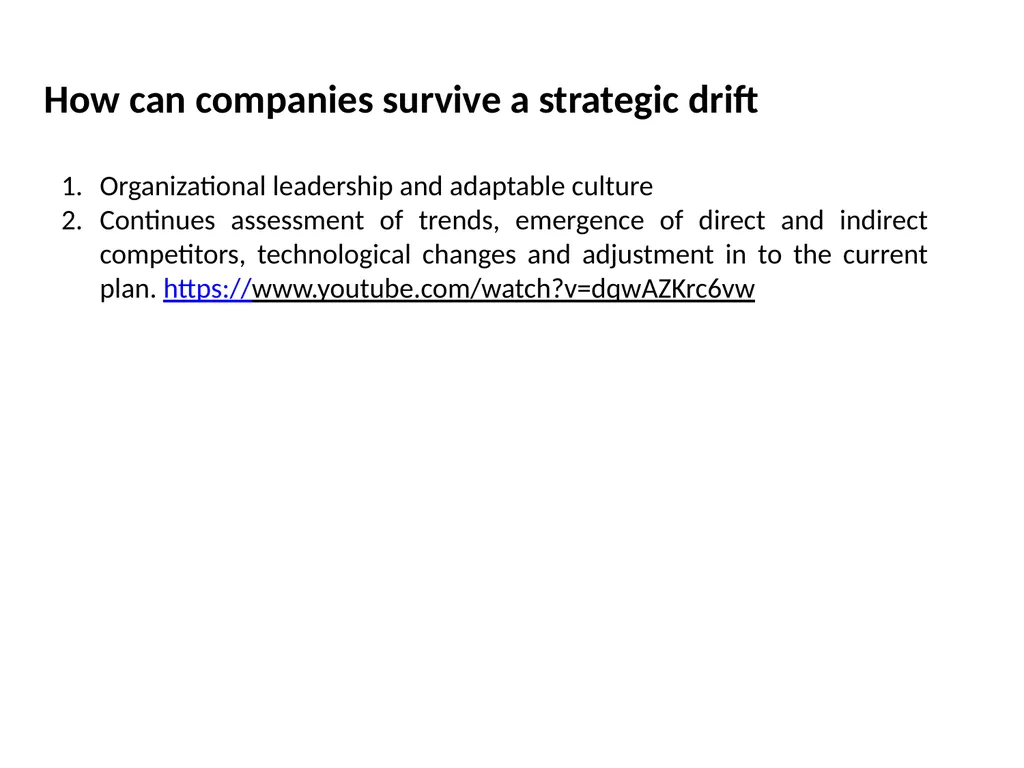
slide28. How can companies survive a strategic drift Organizational leadership and adaptable culture
Continues assessment of trends, emergence of direct and indirect competitors, technological changes and adjustment in to the current plan. https://www.youtube.com/watch?v=dqwAZKrc6vw<br>
slide29. Financial Implication of strategic management decisions<br>
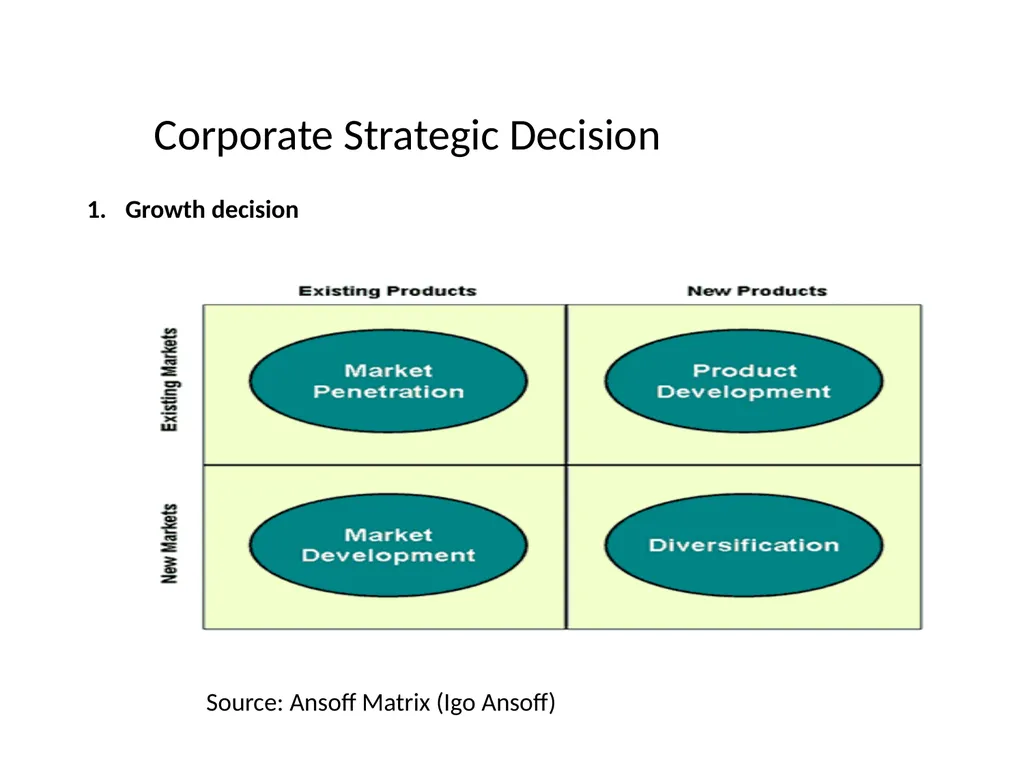
slide30. Corporate Strategic Decision Growth decision Source: Ansoff Matrix (Igo Ansoff)<br>
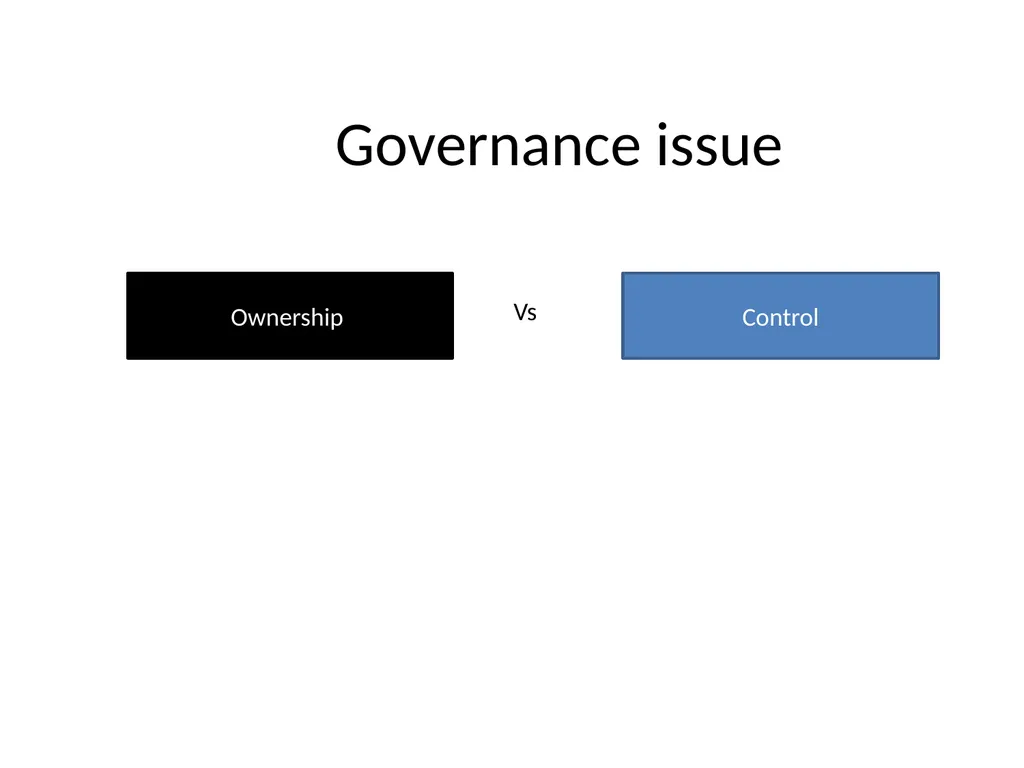
slide31. Governance issue Ownership Control Vs<br>
slide32. Financial Feasibility Evaluating the financial feasibility of such a decision will ensure that share holders money are invested in a profitable investment opportunity.<br>
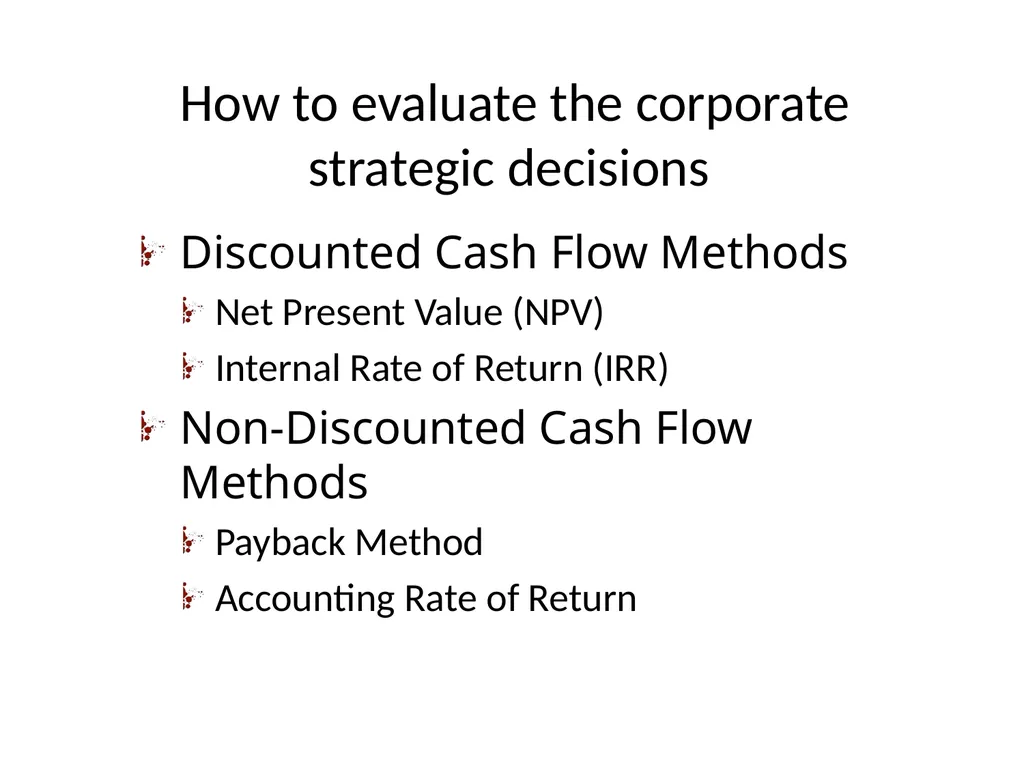
slide33. How to evaluate the corporate strategic decisions Discounted Cash Flow Methods
Net Present Value (NPV)
Internal Rate of Return (IRR)
Non-Discounted Cash Flow Methods
Payback Method
Accounting Rate of Return<br>
slide34. Projections This is the most crucial part of the long term investment decision evaluation. Accurately forecast the cost and the revenue for given period will have significant impact to the decision.<br>
slide35. Assume that your company management is planning to put up a 200 rooms hotel in Trincomalee which will require initial capital outlay USD 500 million. Project the possible cash flows for next five years and what factors should be considered in the determination of the cash flows.<br>
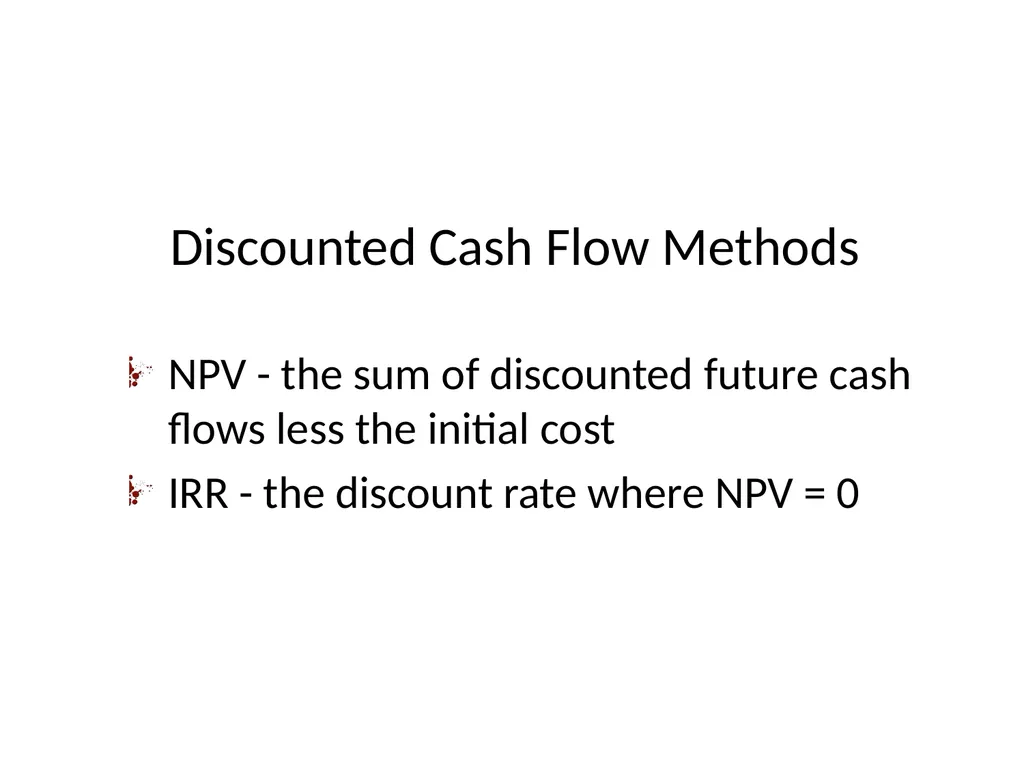
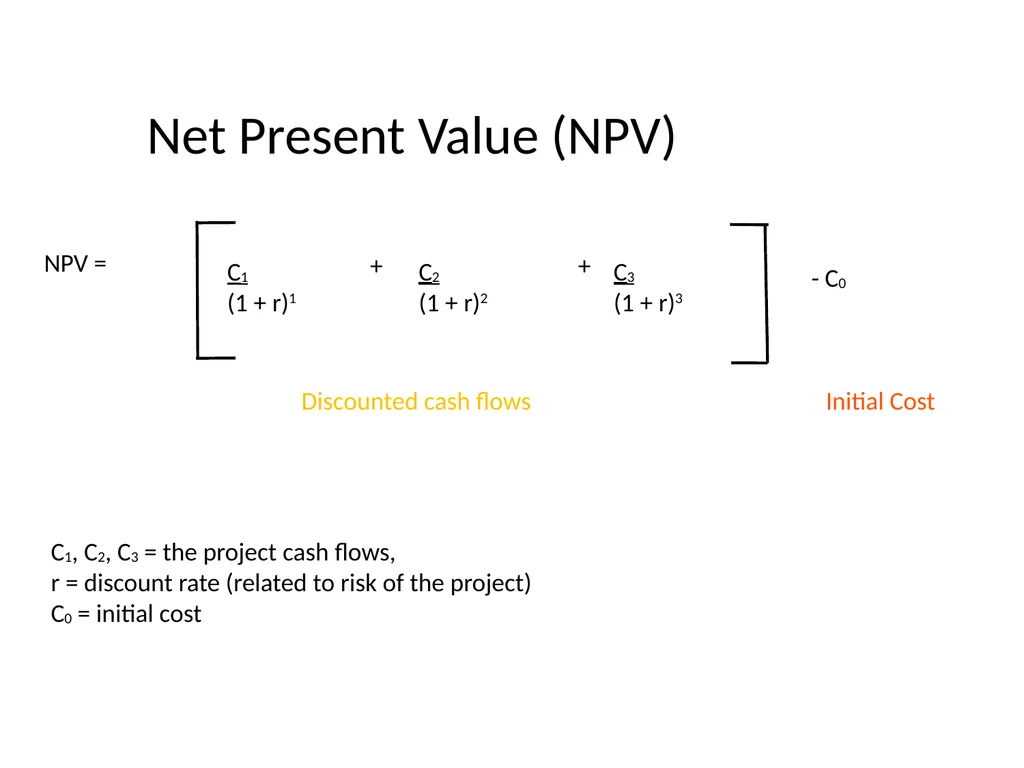
slide36. Discounted Cash Flow Methods NPV - the sum of discounted future cash flows less the initial cost
IRR - the discount rate where NPV = 0<br>
slide37. Net Present Value (NPV) NPV = C1
(1 + r)1 + C2
(1 + r)2 + C3
(1 + r)3 C1, C2, C3 = the project cash flows,
r = discount rate (related to risk of the project)
C0 = initial cost - C0 Discounted cash flows Initial Cost<br>
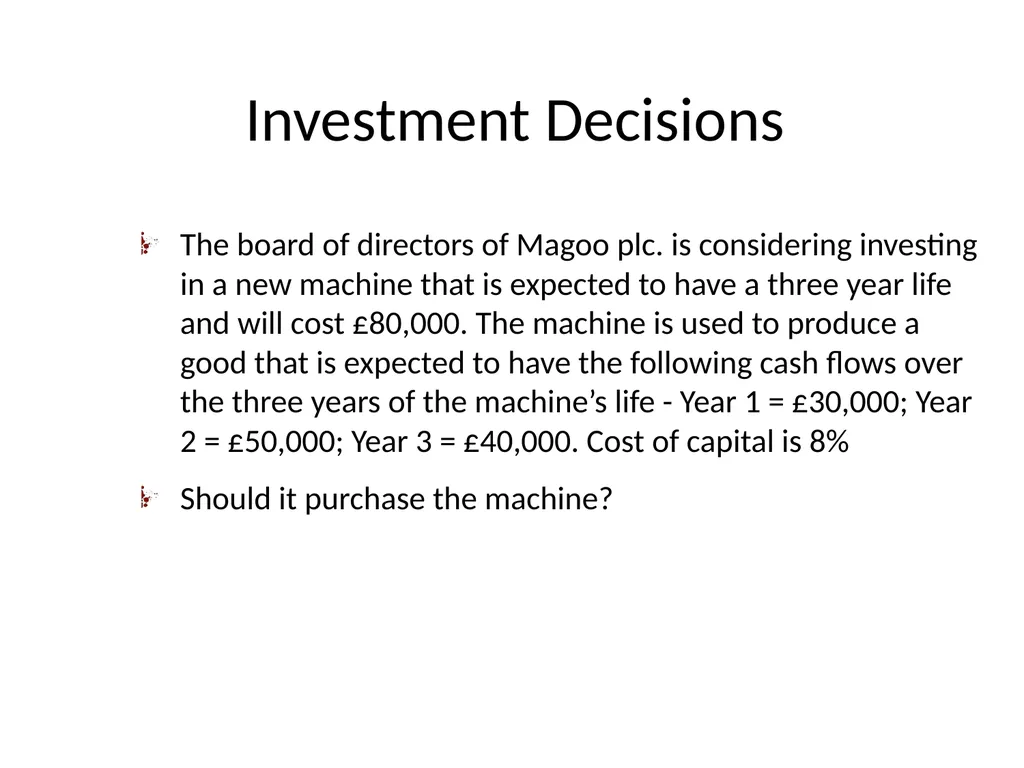
slide38. Investment Decisions The board of directors of Magoo plc. is considering investing in a new machine that is expected to have a three year life and will cost £80,000. The machine is used to produce a good that is expected to have the following cash flows over the three years of the machine’s life - Year 1 = £30,000; Year 2 = £50,000; Year 3 = £40,000. Cost of capital is 8%
Should it purchase the machine?<br>
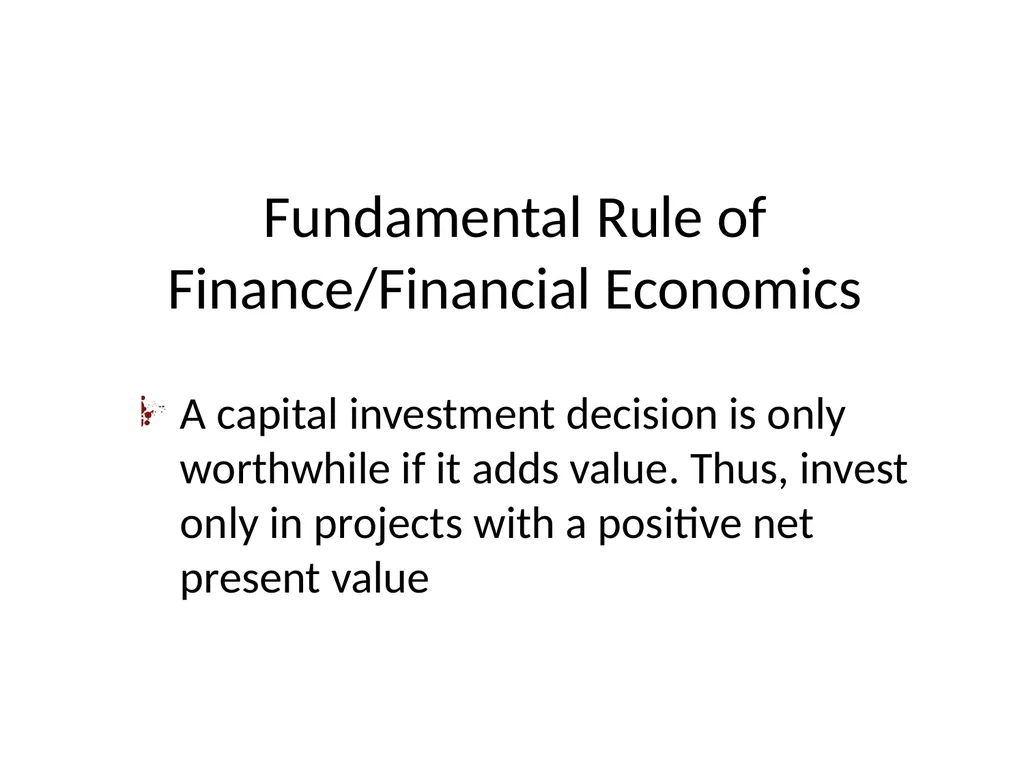
slide39. Fundamental Rule of Finance/Financial Economics A capital investment decision is only worthwhile if it adds value. Thus, invest only in projects with a positive net present value<br>
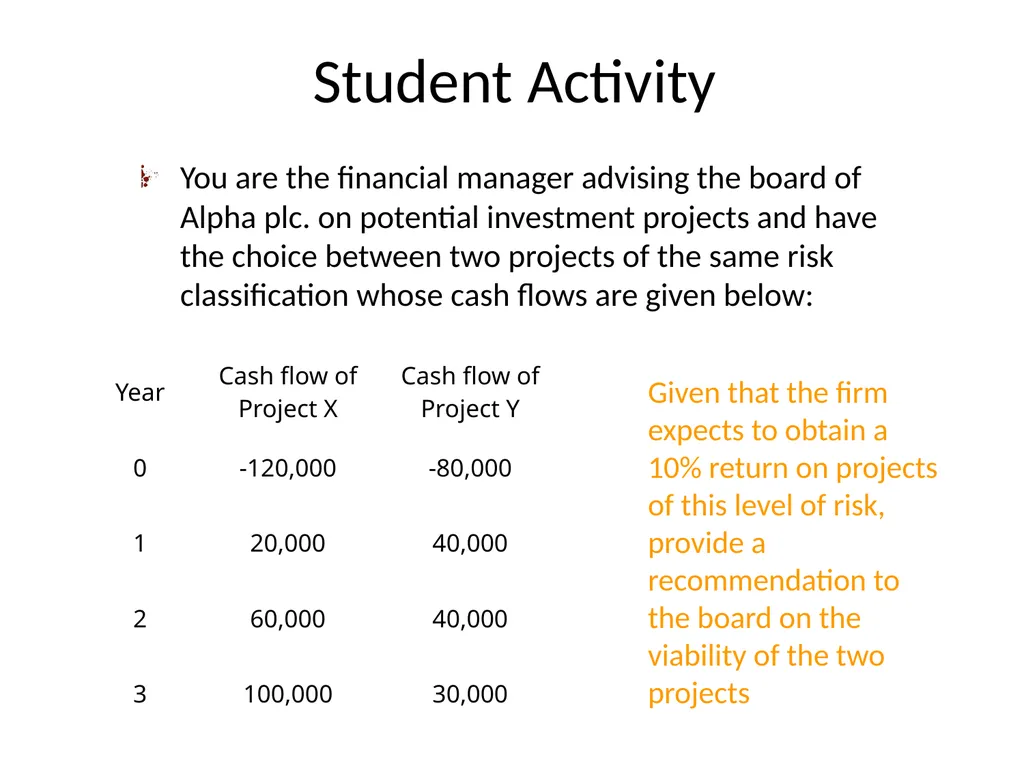
slide40. Student Activity You are the financial manager advising the board of Alpha plc. on potential investment projects and have the choice between two projects of the same risk classification whose cash flows are given below: Given that the firm expects to obtain a 10% return on projects of this level of risk, provide a recommendation to the board on the viability of the two projects<br>
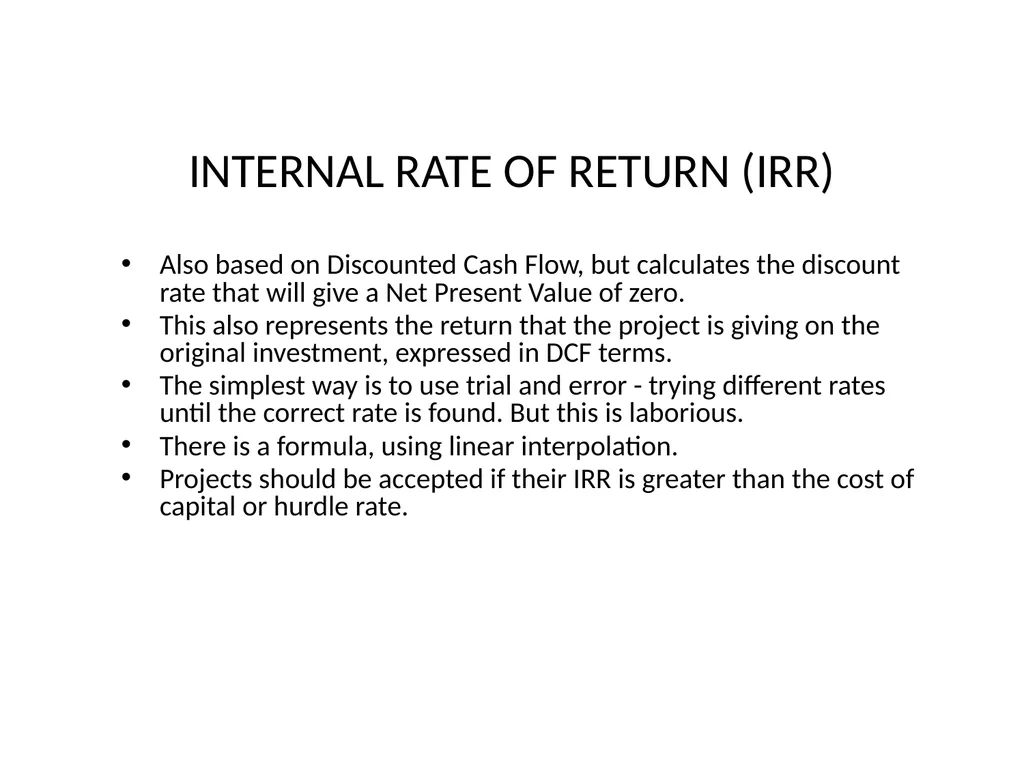
slide41. INTERNAL RATE OF RETURN (IRR) Also based on Discounted Cash Flow, but calculates the discount rate that will give a Net Present Value of zero.
This also represents the return that the project is giving on the original investment, expressed in DCF terms.
The simplest way is to use trial and error - trying different rates until the correct rate is found. But this is laborious.
There is a formula, using linear interpolation.
Projects should be accepted if their IRR is greater than the cost of capital or hurdle rate.<br>
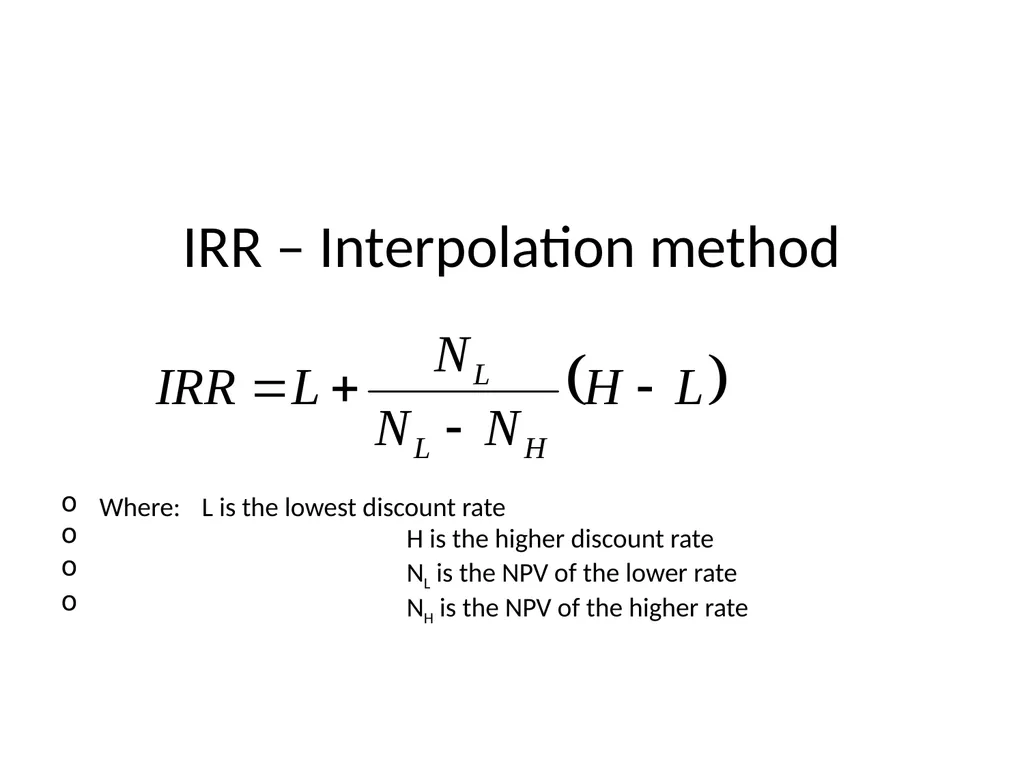
slide42. IRR – Interpolation method Where: L is the lowest discount rate
H is the higher discount rate
NL is the NPV of the lower rate
NH is the NPV of the higher rate<br>
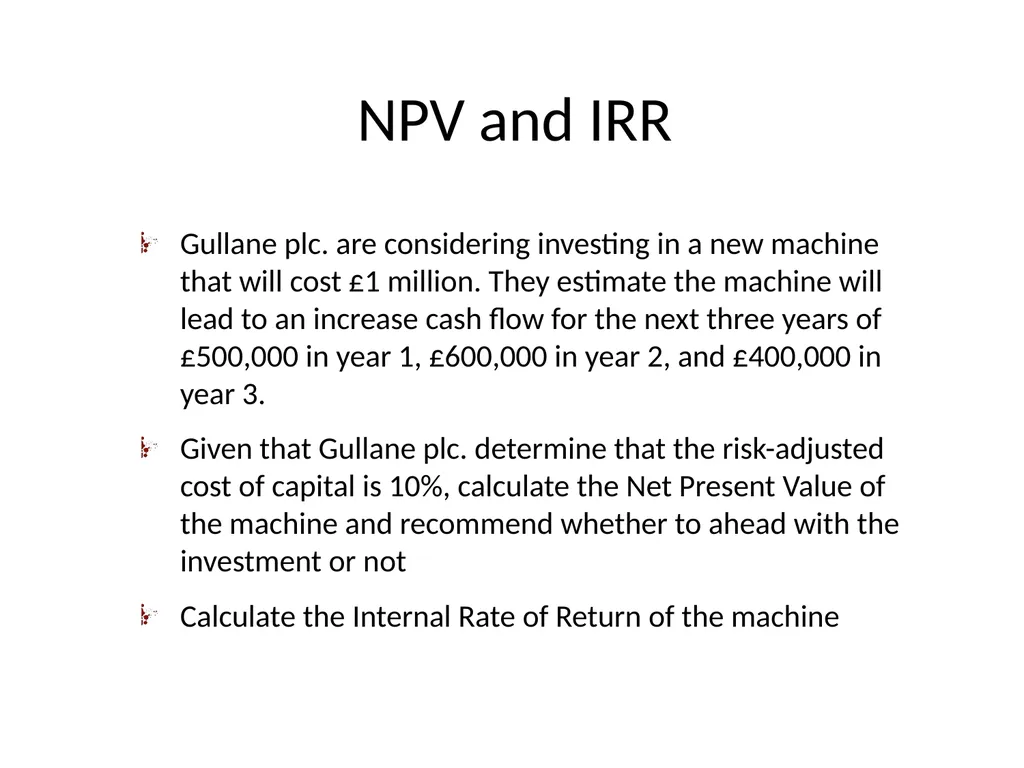
slide43. NPV and IRR Gullane plc. are considering investing in a new machine that will cost £1 million. They estimate the machine will lead to an increase cash flow for the next three years of £500,000 in year 1, £600,000 in year 2, and £400,000 in year 3.
Given that Gullane plc. determine that the risk-adjusted cost of capital is 10%, calculate the Net Present Value of the machine and recommend whether to ahead with the investment or not
Calculate the Internal Rate of Return of the machine<br>
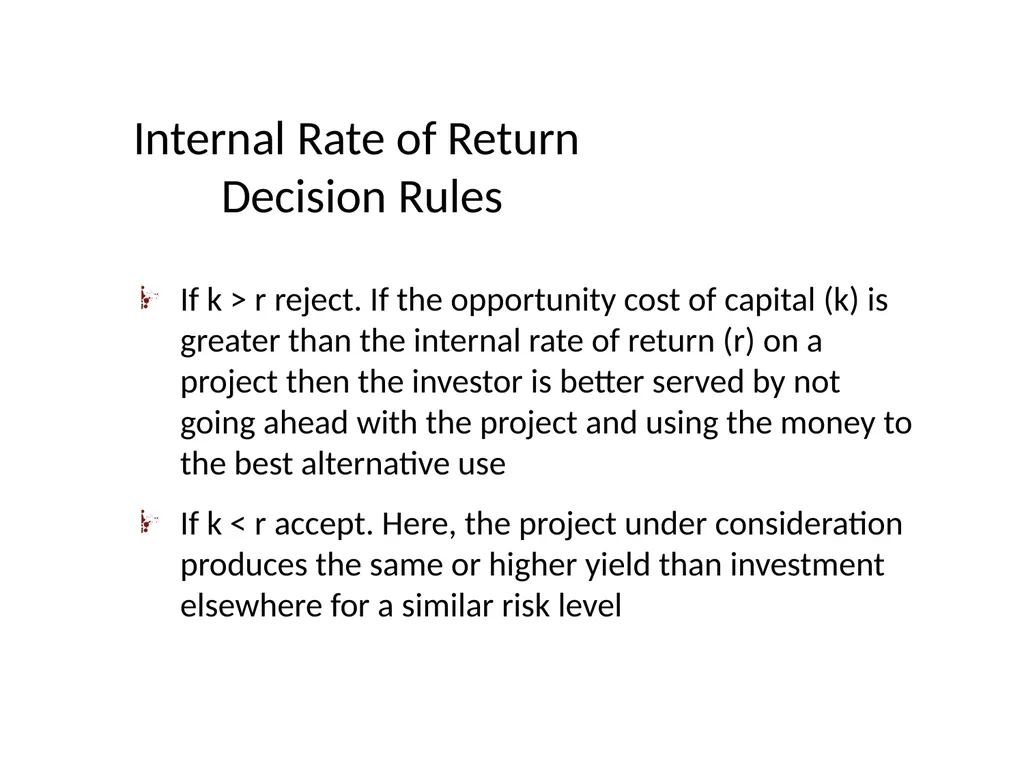
slide44. Internal Rate of Return Decision Rules If k > r reject. If the opportunity cost of capital (k) is greater than the internal rate of return (r) on a project then the investor is better served by not going ahead with the project and using the money to the best alternative use
If k < r accept. Here, the project under consideration produces the same or higher yield than investment elsewhere for a similar risk level<br>
slide45. Payback Consider Cash flows and NOT Profits
Evaluation based on period of recovery of the initial investment
ie. Number of years it takes to cover the cost of investment
Firms should look for early payback of capital invested
Decision criteria
Compare target payback with actual payback
If actual payback period < target payback - Accept project
If actual payback period > target payback - Reject project 45<br>
slide46. Cost of capital of firm
Minimum rate of return, the firm must earn on its investments
Hence also the Required rate of return
Also considered as Opportunity cost
The required rate of return must cover, the cost of all long term sources of funds
Computed as the Weighted average cost of capital Discount factor 46<br>
slide47. Cost of capital (COC) Cost of capital is the company cost of long term source of finance which is generally used to capitalized the asset.
There are tow major sources of long term funds.
Equity and Debt capital<br>
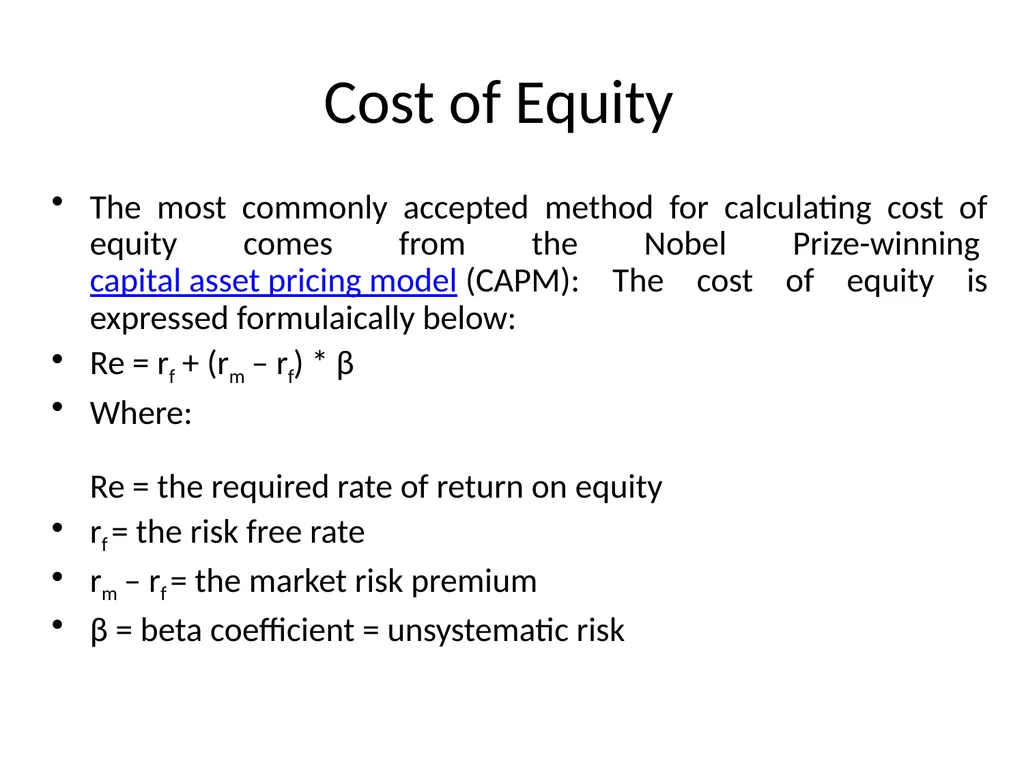
slide48. Cost of Equity The most commonly accepted method for calculating cost of equity comes from the Nobel Prize-winning capital asset pricing model (CAPM): The cost of equity is expressed formulaically below:
Re = rf + (rm – rf) * β
Where: Re = the required rate of return on equity
rf = the risk free rate
rm – rf = the market risk premium
β = beta coefficient = unsystematic risk<br>
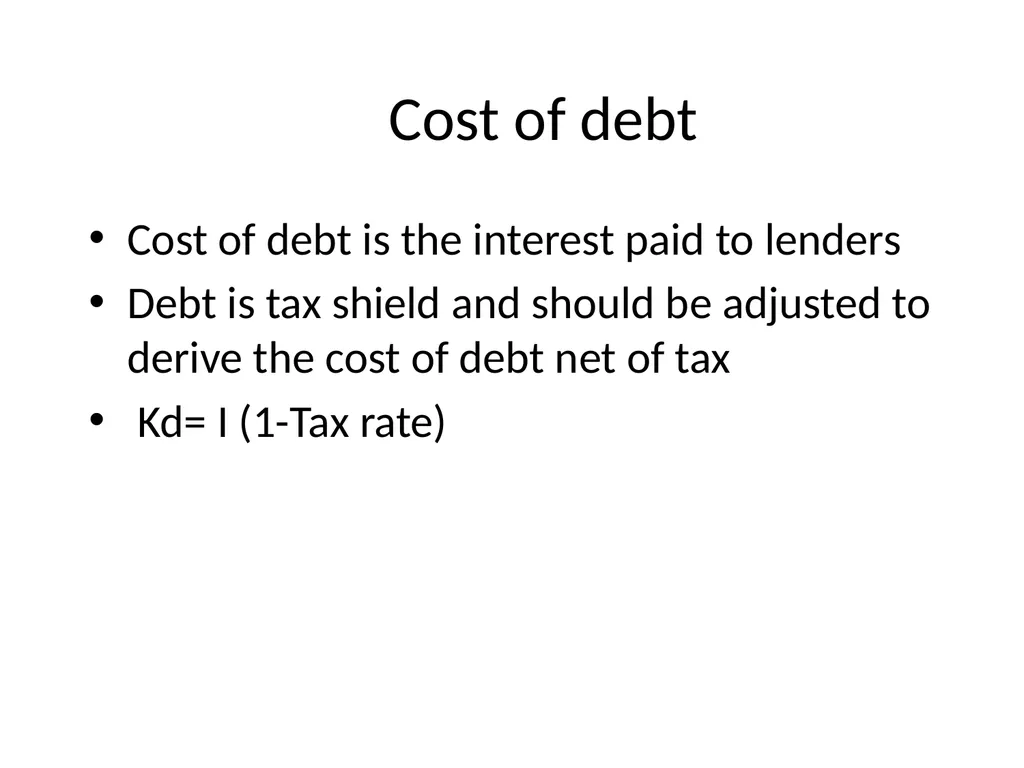
slide49. Cost of debt Cost of debt is the interest paid to lenders
Debt is tax shield and should be adjusted to derive the cost of debt net of tax
Kd= I (1-Tax rate)<br>
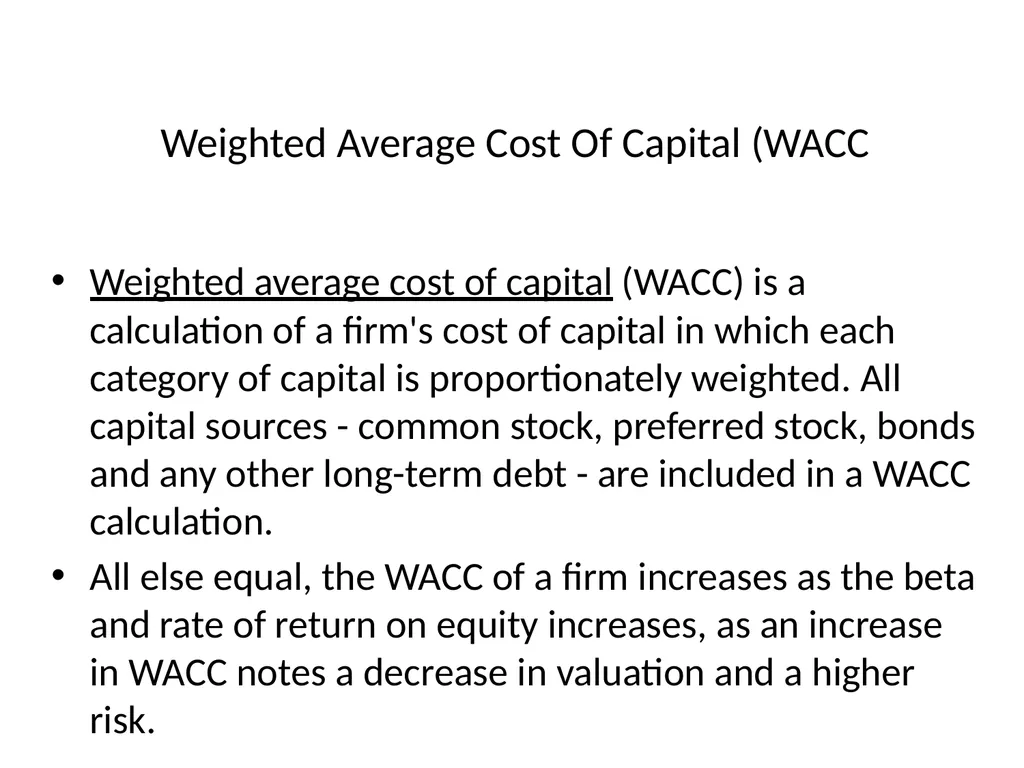
slide50. Weighted Average Cost Of Capital (WACC Weighted average cost of capital (WACC) is a calculation of a firm's cost of capital in which each category of capital is proportionately weighted. All capital sources - common stock, preferred stock, bonds and any other long-term debt - are included in a WACC calculation.
All else equal, the WACC of a firm increases as the beta and rate of return on equity increases, as an increase in WACC notes a decrease in valuation and a higher risk.<br>
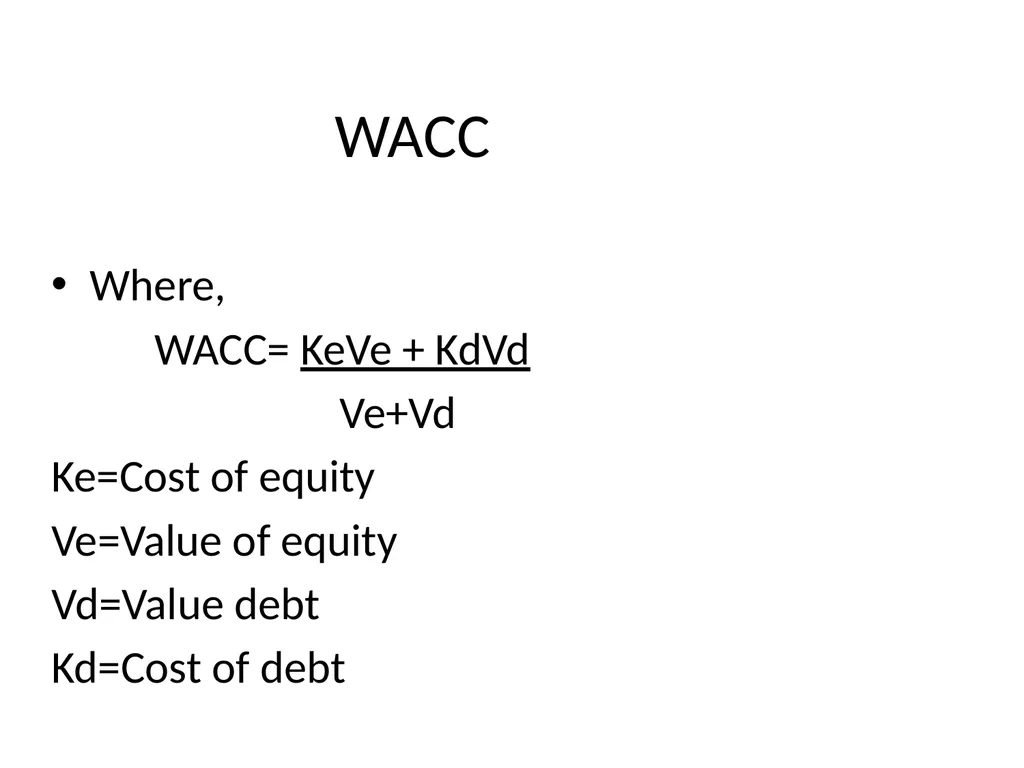
slide51. WACC Where,
WACC= KeVe + KdVd
Ve+Vd
Ke=Cost of equity
Ve=Value of equity
Vd=Value debt
Kd=Cost of debt<br>
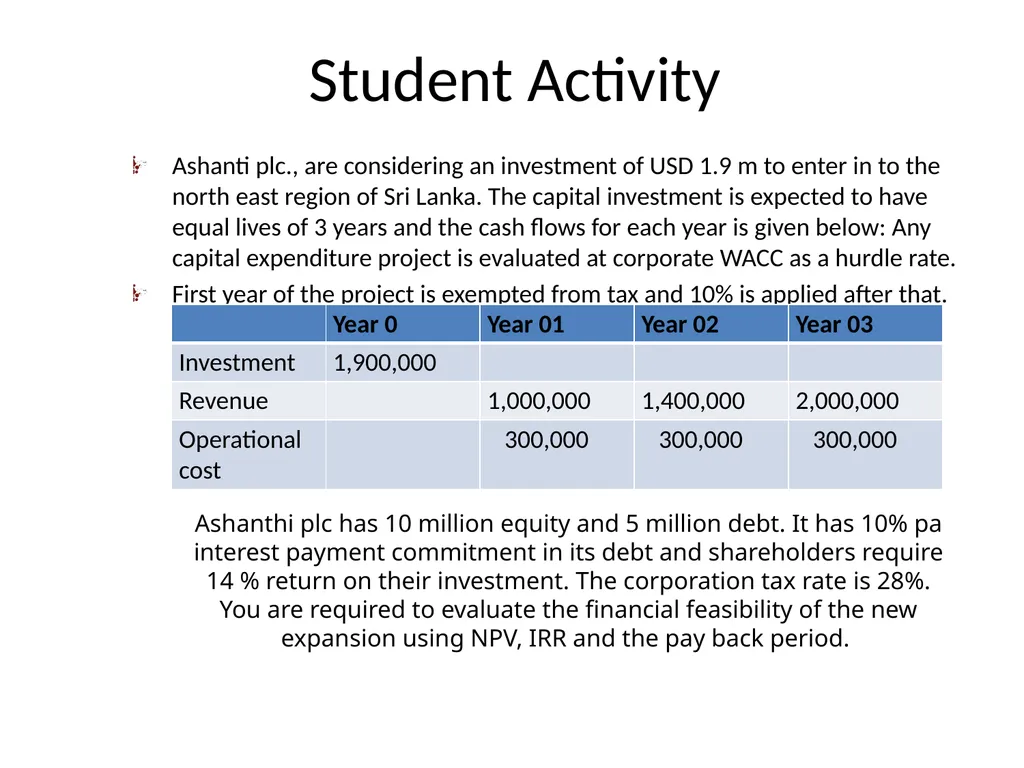
slide52. Student Activity Ashanti plc., are considering an investment of USD 1.9 m to enter in to the north east region of Sri Lanka. The capital investment is expected to have equal lives of 3 years and the cash flows for each year is given below: Any capital expenditure project is evaluated at corporate WACC as a hurdle rate.
First year of the project is exempted from tax and 10% is applied after that. Ashanthi plc has 10 million equity and 5 million debt. It has 10% pa interest payment commitment in its debt and shareholders require 14 % return on their investment. The corporation tax rate is 28%.
You are required to evaluate the financial feasibility of the new expansion using NPV, IRR and the pay back period.<br>
slide53. 1st Assessment –Group work Weightage : 10% to the final assessment
Case study: Why did Kodak collapse
Kodak formerly one of the world's leading photographic companies. Bankruptcy protection in 2012. Why? What went wrong with its business strategy?<br>
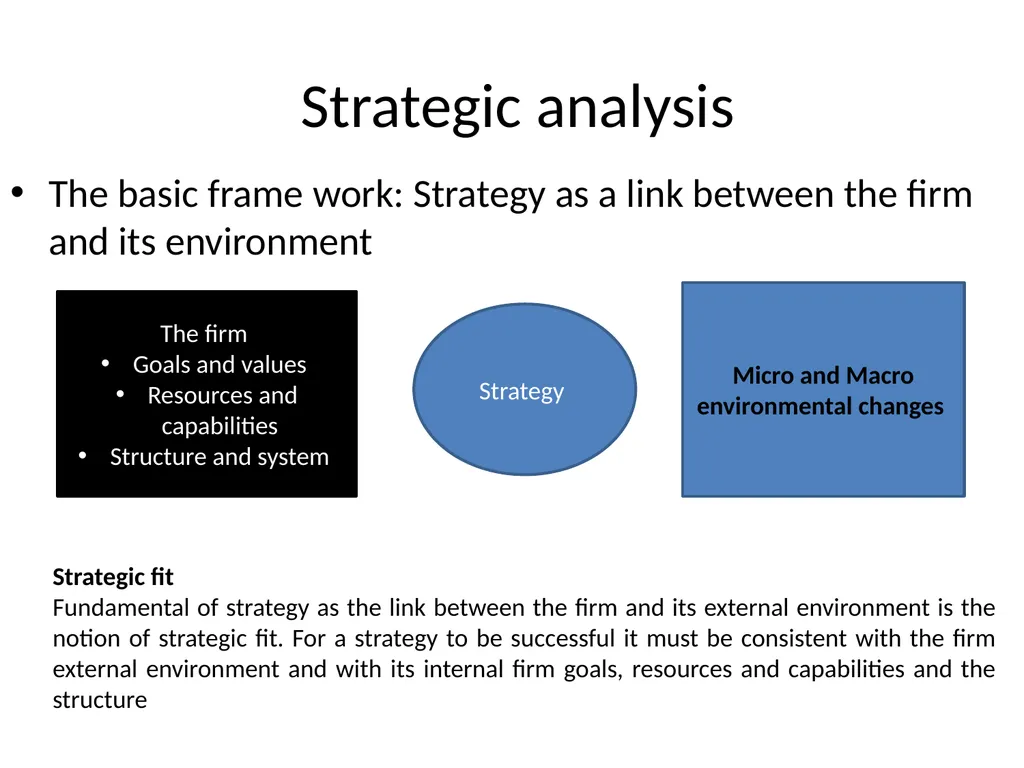
slide54. Strategic analysis The basic frame work: Strategy as a link between the firm and its environment The firm
Goals and values
Resources and capabilities
Structure and system Strategy Micro and Macro environmental changes Strategic fit
Fundamental of strategy as the link between the firm and its external environment is the notion of strategic fit. For a strategy to be successful it must be consistent with the firm external environment and with its internal firm goals, resources and capabilities and the structure<br>
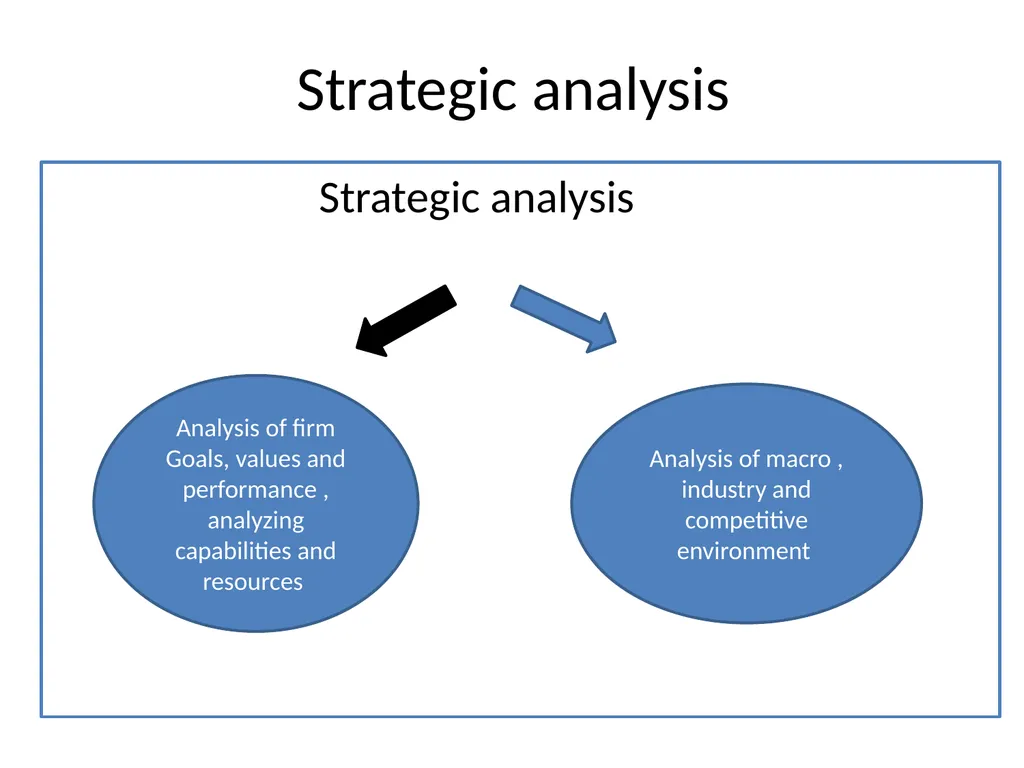
slide55. Strategic analysis Strategic analysis Analysis of firm
Goals, values and performance , analyzing capabilities and resources Analysis of macro , industry and competitive environment<br>
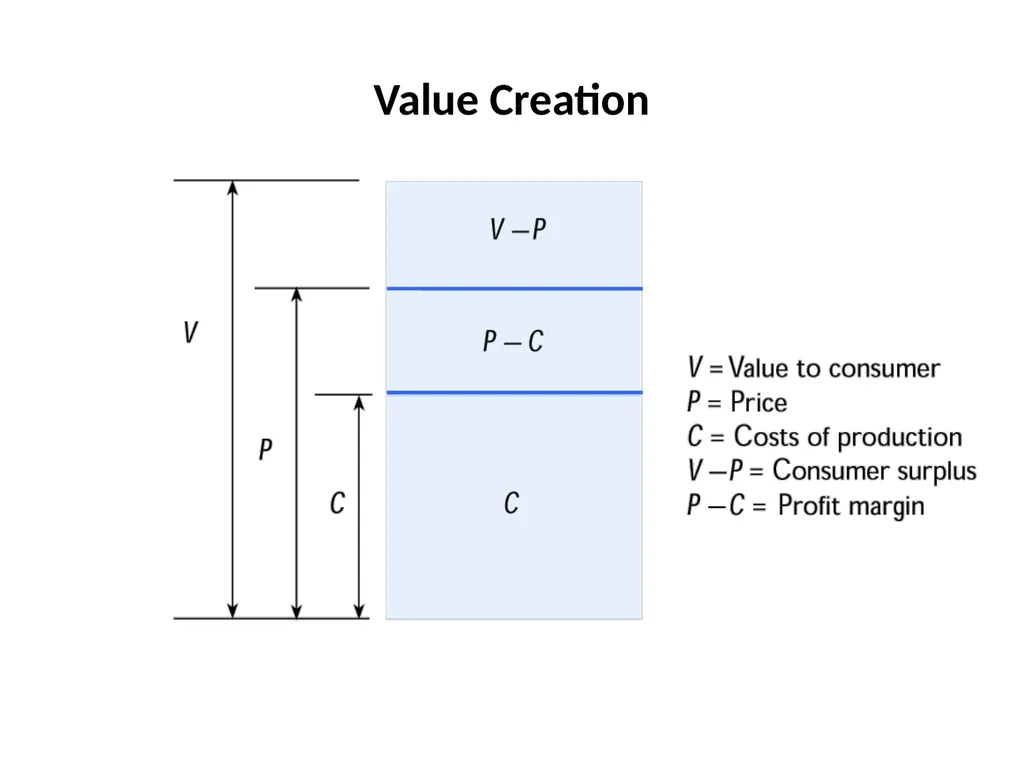
slide56. Creating value Successful strategy is creating value
Continuously creating customer value
Firm value
Shareholder value<br>
slide57. Value Creation<br>
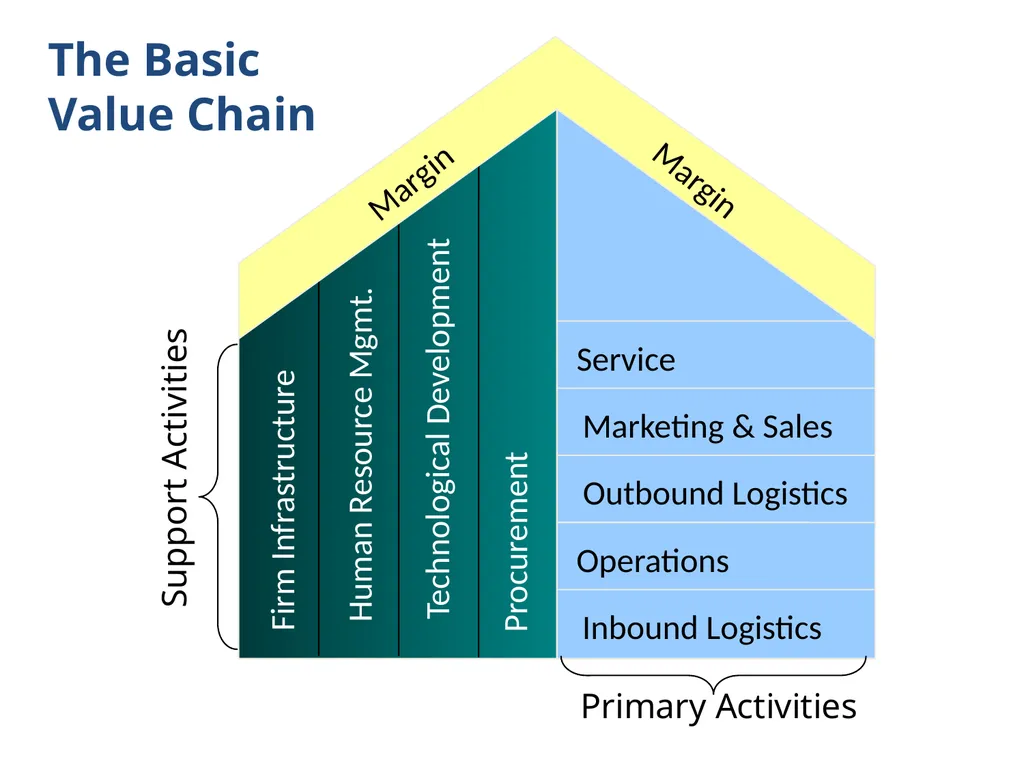
slide58. Service Marketing & Sales Outbound Logistics Operations Inbound Logistics Firm Infrastructure Human Resource Mgmt. Technological Development Procurement Margin Margin Primary Activities Support Activities The Basic
Value Chain<br>
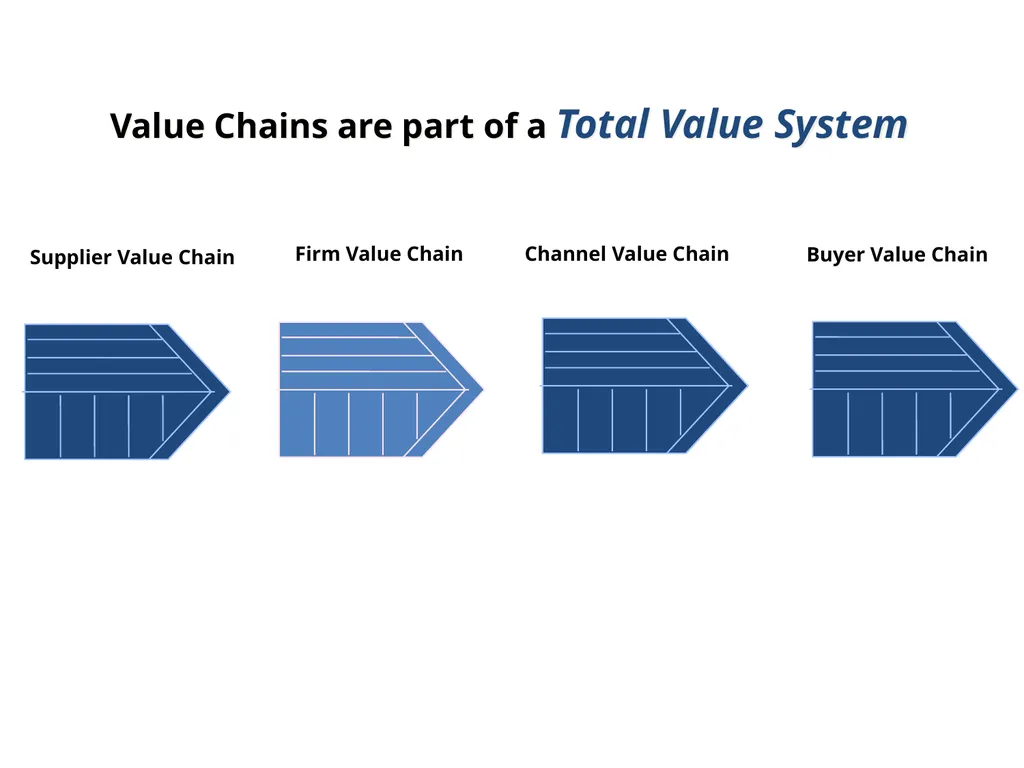
slide59. Value Chains are part of a Total Value System Supplier Value Chain Firm Value Chain Channel Value Chain Buyer Value Chain<br>
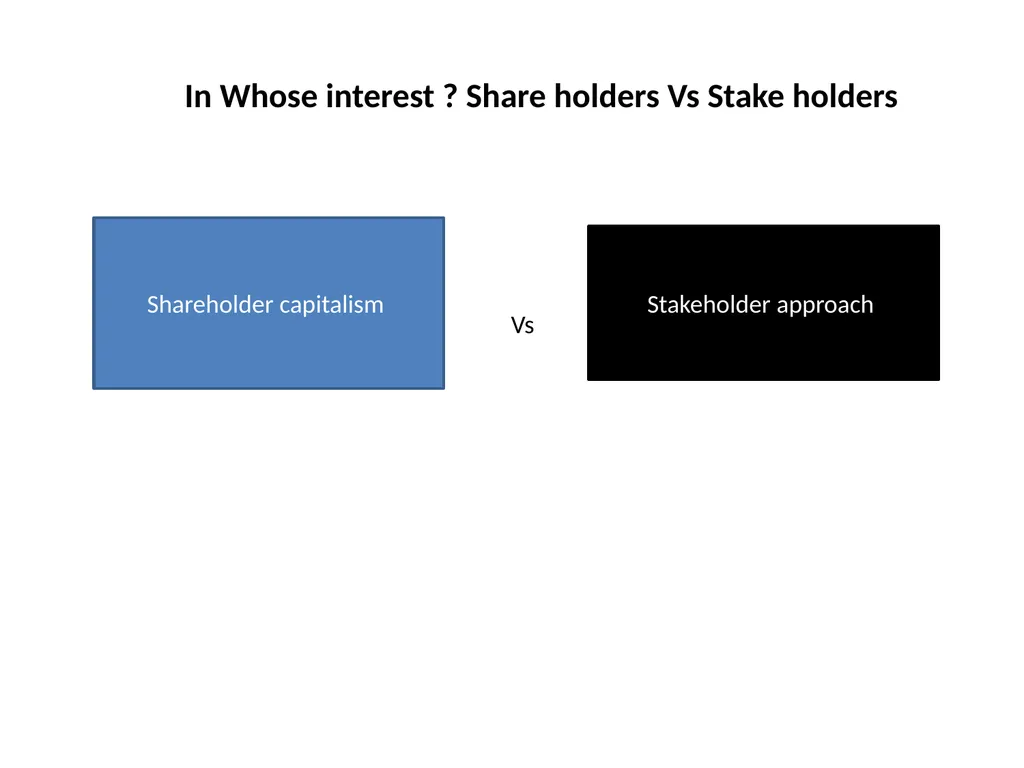
slide60. In Whose interest ? Share holders Vs Stake holders Shareholder capitalism Vs Stakeholder approach<br>
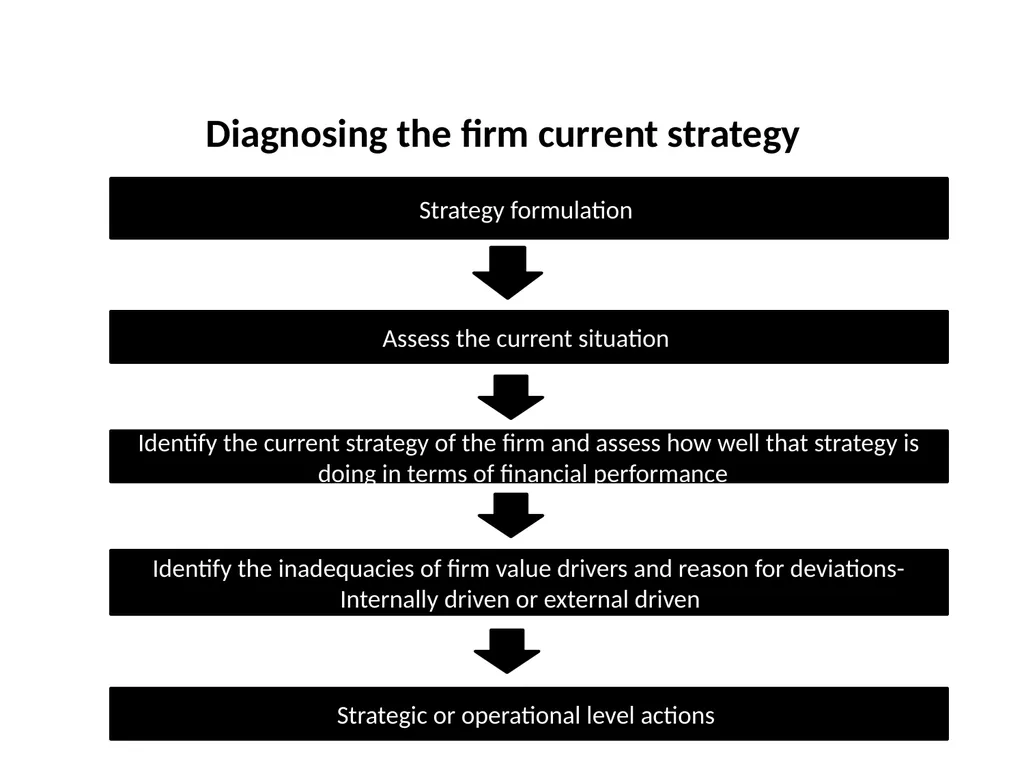
slide61. Diagnosing the firm current strategy Strategy formulation Assess the current situation Identify the current strategy of the firm and assess how well that strategy is doing in terms of financial performance Identify the inadequacies of firm value drivers and reason for deviations-Internally driven or external driven Strategic or operational level actions<br>
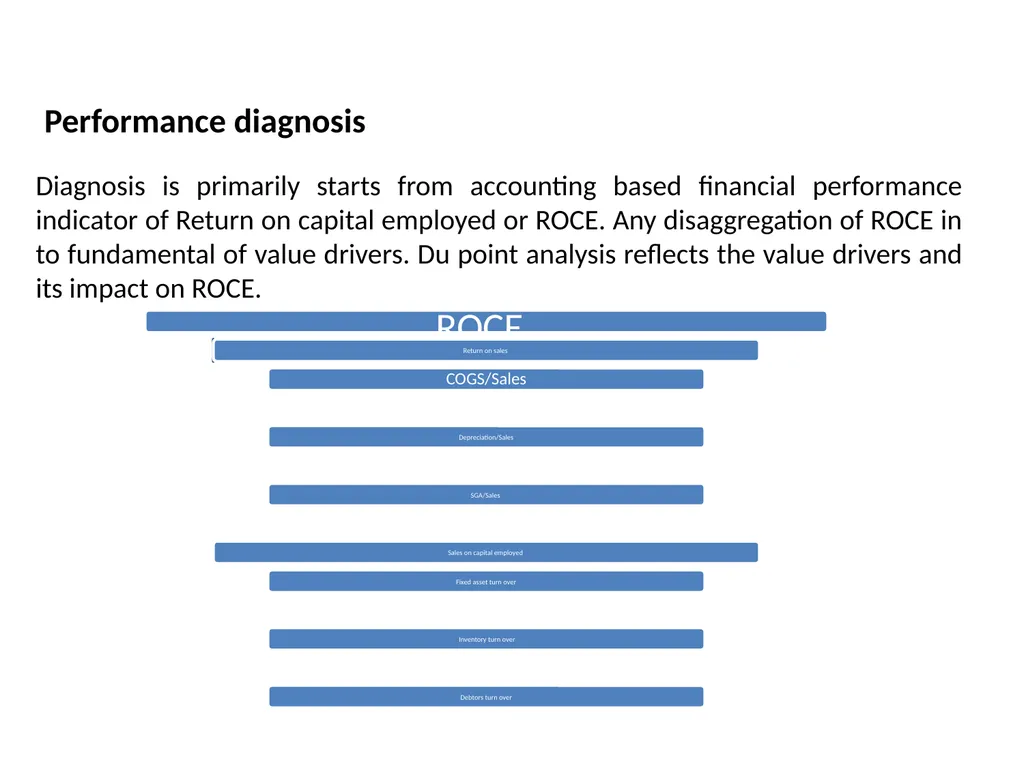
slide62. Performance diagnosis Diagnosis is primarily starts from accounting based financial performance indicator of Return on capital employed or ROCE. Any disaggregation of ROCE in to fundamental of value drivers. Du point analysis reflects the value drivers and its impact on ROCE.<br>
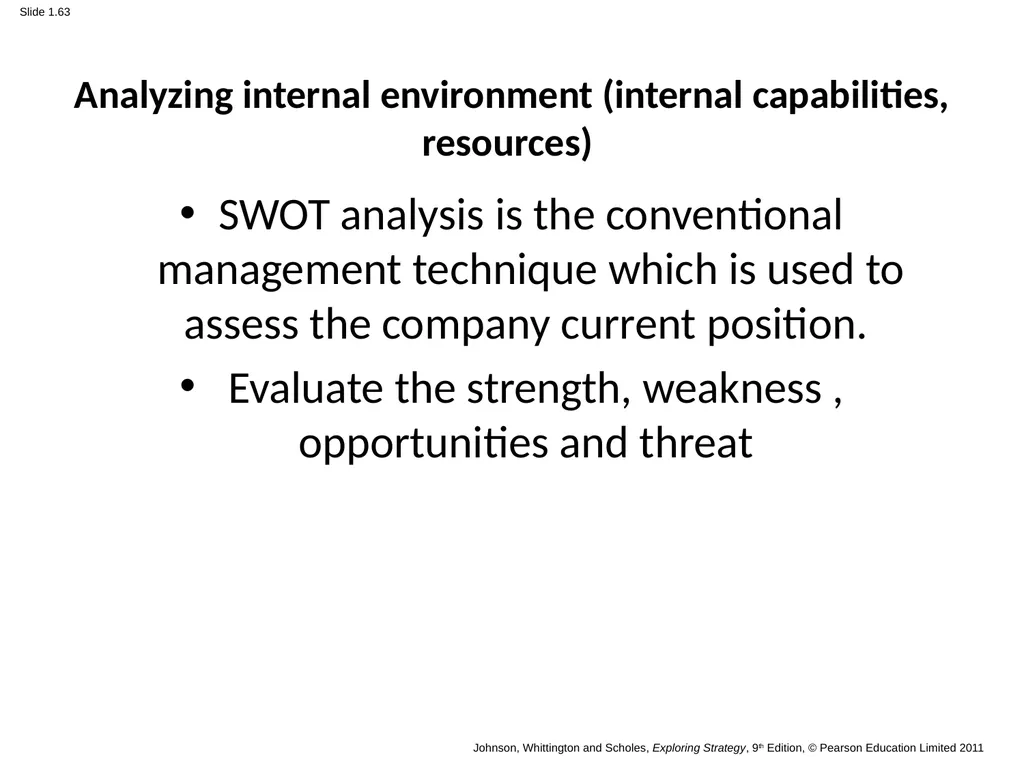
slide63. Analyzing internal environment (internal capabilities, resources) SWOT analysis is the conventional management technique which is used to assess the company current position.
Evaluate the strength, weakness , opportunities and threat<br>
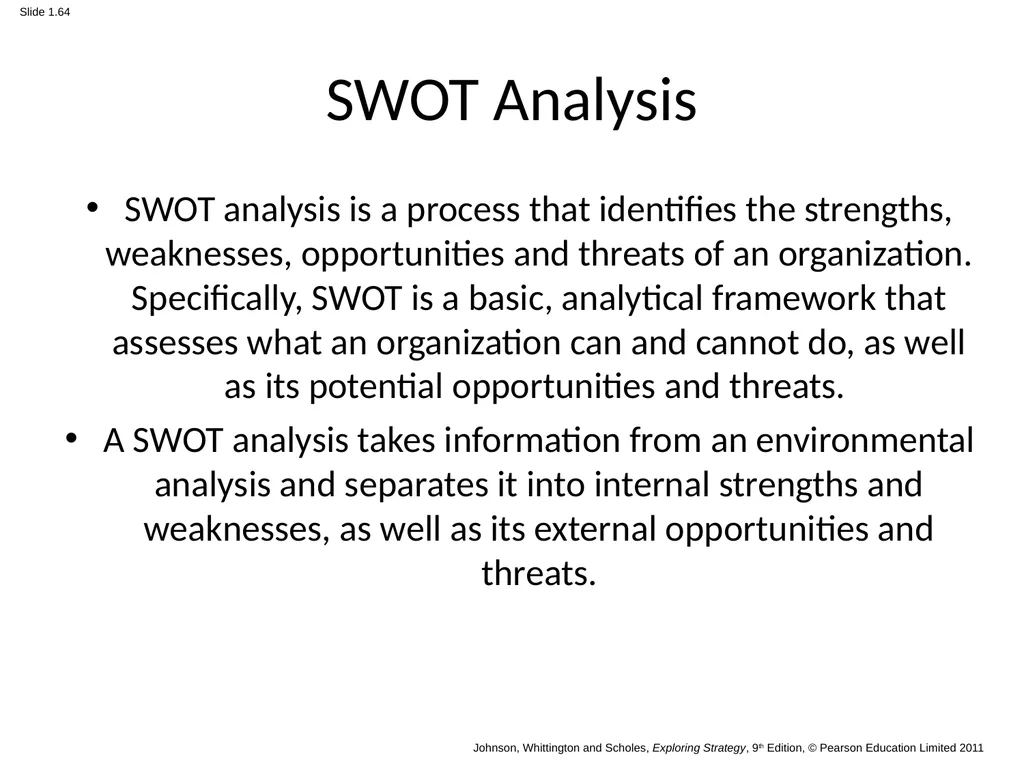
slide64. SWOT Analysis SWOT analysis is a process that identifies the strengths, weaknesses, opportunities and threats of an organization. Specifically, SWOT is a basic, analytical framework that assesses what an organization can and cannot do, as well as its potential opportunities and threats.
A SWOT analysis takes information from an environmental analysis and separates it into internal strengths and weaknesses, as well as its external opportunities and threats.<br>
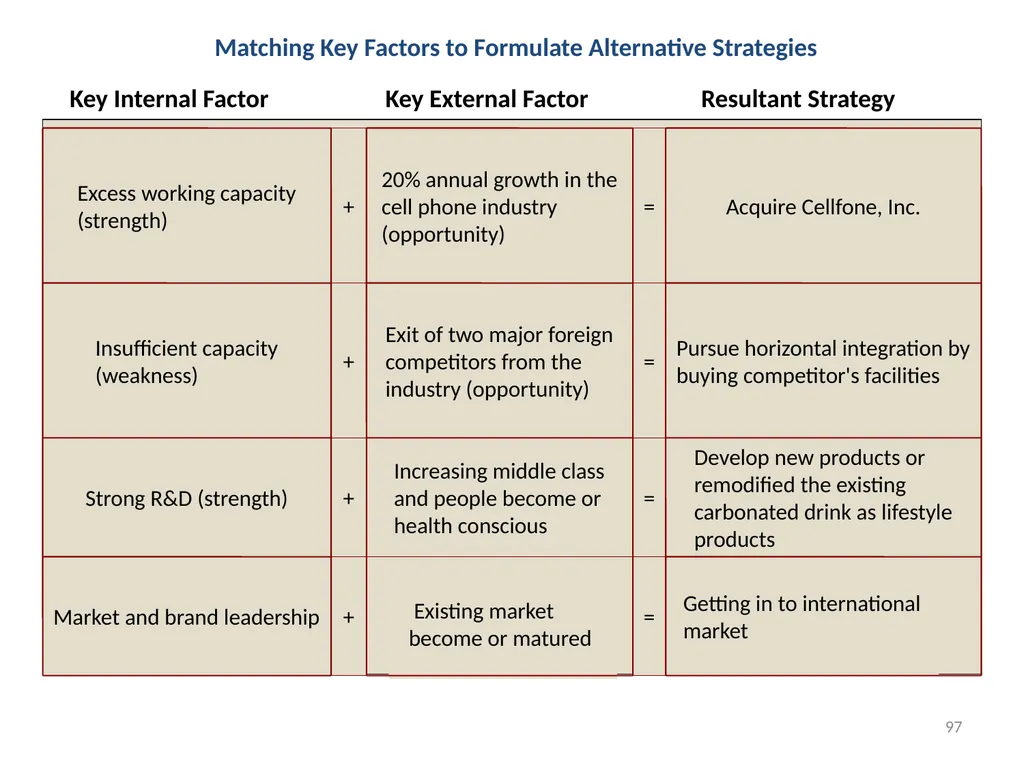
slide65. TOWS Analysis Extension of the SWOT analysis is TOWS and can be presented as TOWS matrix analysis to match the internal factors with external factors of the business to define the strategic direction.<br>
slide66. Resource-based strategy The resource-based view (RBV) of strategy asserts that the competitive advantage and superior performance of an organisation is explained by the distinctiveness of its capabilities.<br>
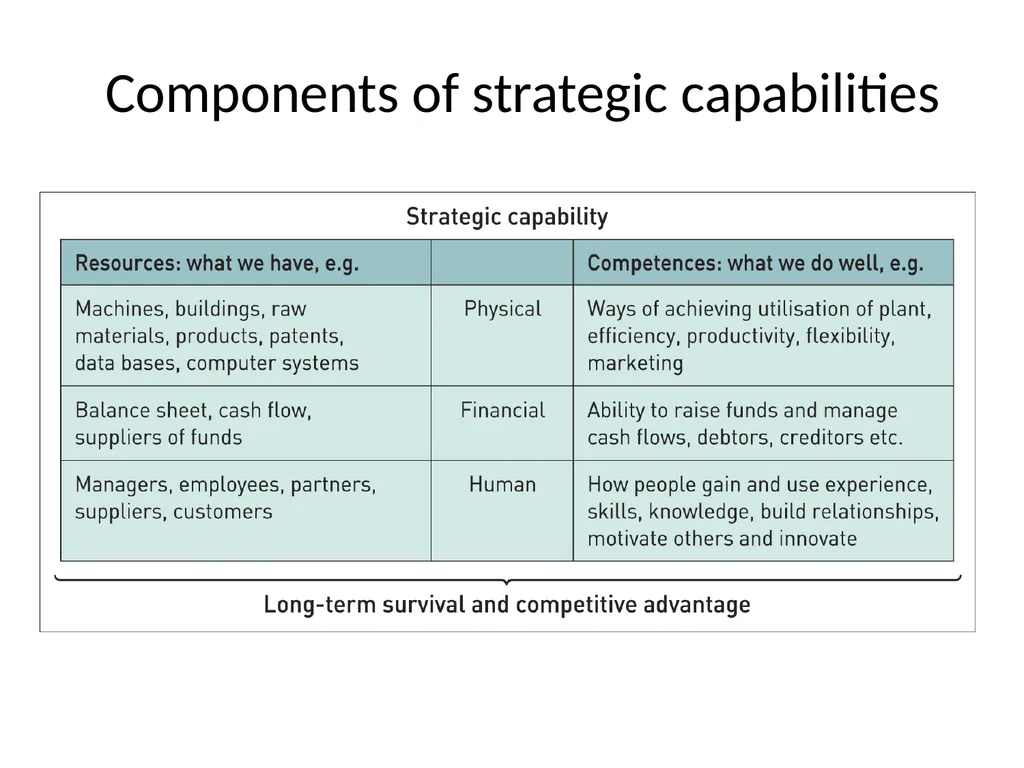
slide67. Resources and competences Resources are the assets that organisations have or can call upon (e.g. from partners or suppliers),that is, ‘what we have’ .
Competences are the ways those assets are used or deployed effectively, that is, what we do well’.<br>
slide68. Components of strategic capabilities<br>
slide69. Threshold and distinctive capabilities Threshold capabilities are those needed for an organisation to meet the necessary requirements to compete in a given market and achieve parity with competitors in that market – ‘qualifiers’.
Distinctive capabilities are those that critically underpin competitive advantage and that others cannot imitate or obtain – ‘winners’.<br>
slide70. Core competences Core competences1 are the linked set of skills, activities and resources that, together:
deliver customer value
differentiate a business from its competitors
potentially, can be extended and developed as markets change or new opportunities arise.
1G. Hamel and C.K. Prahalad, ‘The core competence of the corporation’, Harvard Business Review, vol. 68, no. 3 (1990),
pp. 79–91.<br>
slide71. VRIN framework V = Value
R = Rare
I = Costly to Imitate
O= Non substitutability<br>
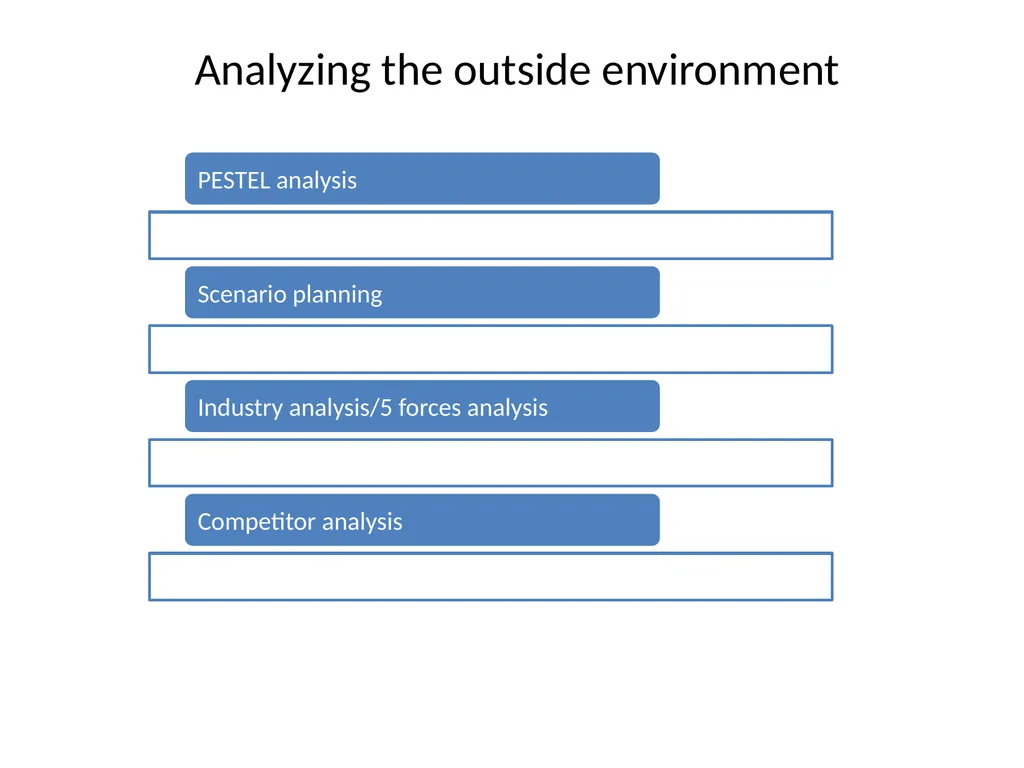
slide72. Analyzing the outside environment<br>
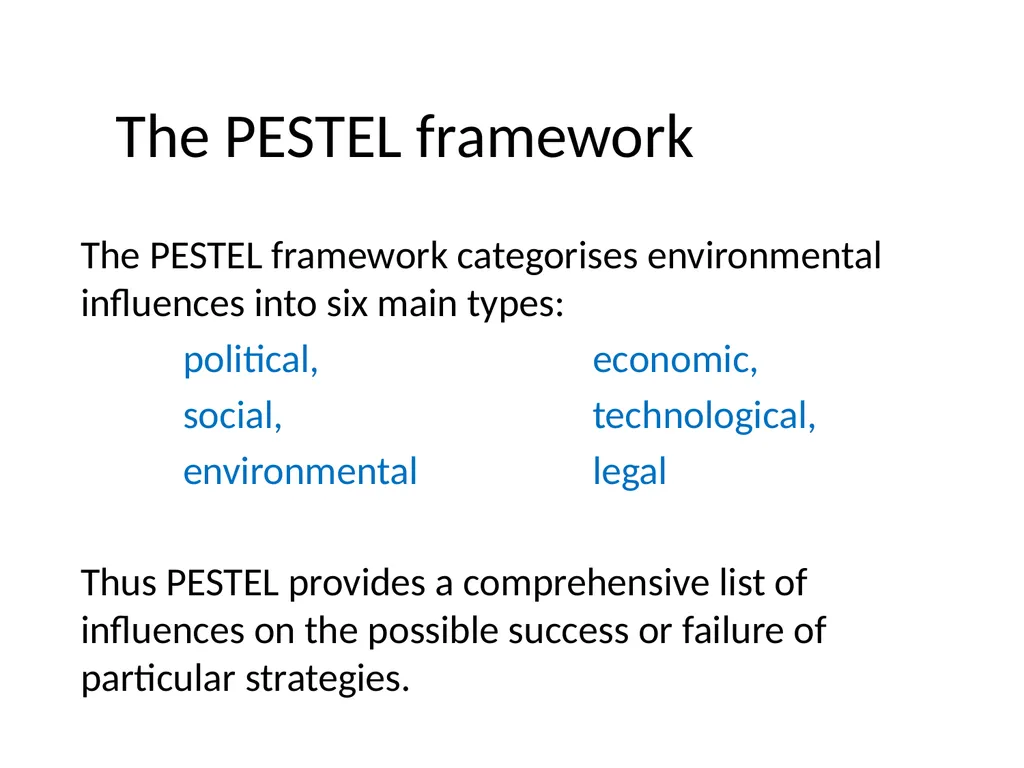
slide73. The PESTEL framework The PESTEL framework categorises environmental influences into six main types:
political, economic,
social, technological,
environmental legal
Thus PESTEL provides a comprehensive list of influences on the possible success or failure of particular strategies.<br>
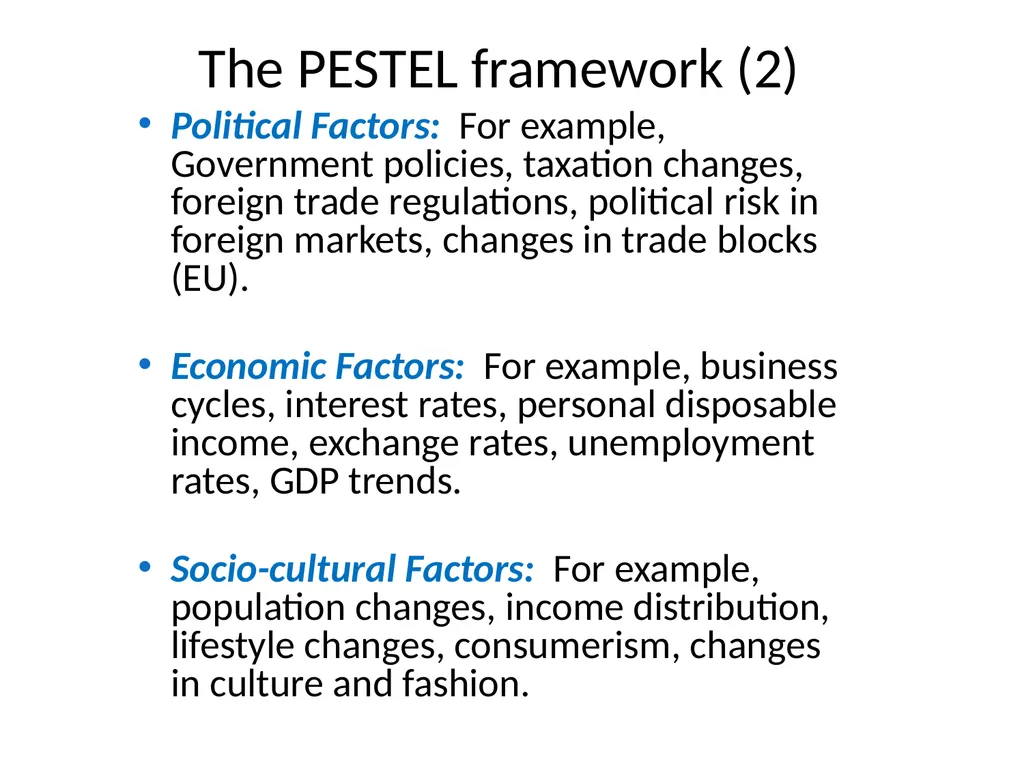
slide74. The PESTEL framework (2) Political Factors: For example, Government policies, taxation changes, foreign trade regulations, political risk in foreign markets, changes in trade blocks (EU).
Economic Factors: For example, business cycles, interest rates, personal disposable income, exchange rates, unemployment rates, GDP trends.
Socio-cultural Factors: For example, population changes, income distribution, lifestyle changes, consumerism, changes in culture and fashion.<br>
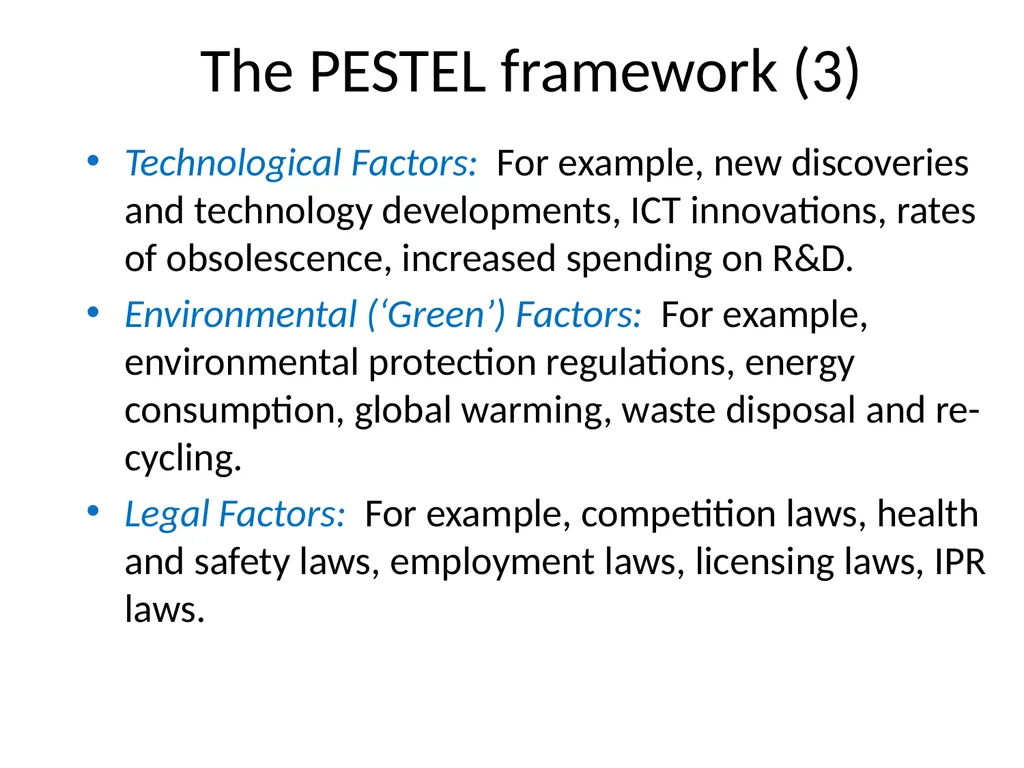
slide75. The PESTEL framework (3) Technological Factors: For example, new discoveries and technology developments, ICT innovations, rates of obsolescence, increased spending on R&D.
Environmental (‘Green’) Factors: For example, environmental protection regulations, energy consumption, global warming, waste disposal and re-cycling.
Legal Factors: For example, competition laws, health and safety laws, employment laws, licensing laws, IPR laws.<br>
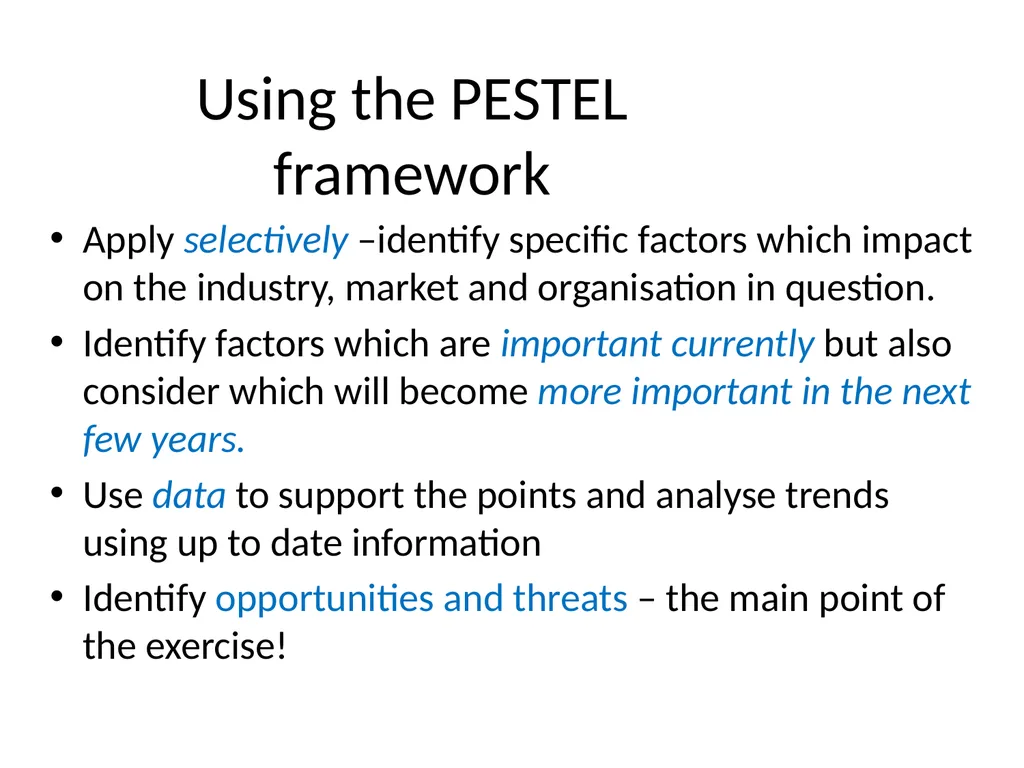
slide76. Using the PESTEL framework Apply selectively –identify specific factors which impact on the industry, market and organisation in question.
Identify factors which are important currently but also consider which will become more important in the next few years.
Use data to support the points and analyse trends using up to date information
Identify opportunities and threats – the main point of the exercise!<br>
slide77. Scenarios Scenarios are detailed and plausible views of how the environment of an organisation might develop in the future based on key drivers of change about which there is a high level of uncertainty.
Build on PESTEL analysis .
Do not offer a single forecast of how the environment will change.
An organisation should develop a few alternative scenarios (2–4) to analyse future strategic options.<br>
slide78. Carrying out scenario analysis Identify the most relevant scope of the study – the relevant product/market and time span.
Identify key drivers of change – PESTEL factors that have the most impact in the future but have uncertain outcomes. Develop scenario ‘stories’ - That is, coherent and plausible descriptions of the environment that result from opposing outcomes
Identify the impact of each scenario on the organisation and evaluate future strategies in the light of the anticipated scenarios.<br>
slide79. Analysing Competitive Industry Structure An industry is a group of firms that market products which are close substitutes for each other (e.g. the car industry, the travel industry).
Some industries are more profitable than others. Why? The answer lies in understanding the dynamics of competitive structure in an industry.<br>
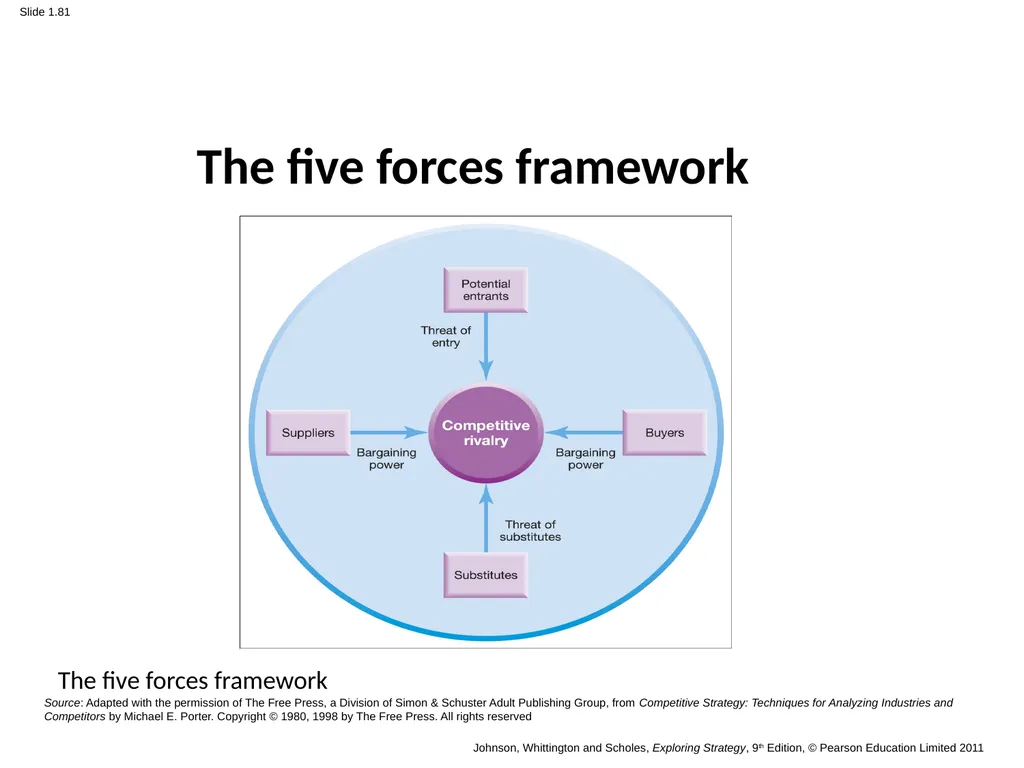
slide80. Porter’s five forces framework Porter’s five forces framework helps identify the attractiveness of an industry in terms of five competitive forces:
the threat of entry,
the threat of substitutes,
the bargaining power of buyers,
the bargaining power of suppliers and
the extent of rivalry between competitors.
The five forces constitute an industry’s ‘structure’.<br>
slide81. Source: Adapted with the permission of The Free Press, a Division of Simon & Schuster Adult Publishing Group, from Competitive Strategy: Techniques for Analyzing Industries and Competitors by Michael E. Porter. Copyright © 1980, 1998 by The Free Press. All rights reserved The five forces framework The five forces framework<br>
slide82. Threat of New Entrants New entrants to an industry can raise the level of competition, thereby reducing its attractiveness.
The threat of new entrants largely depends on the barriers to entry.
High entry barriers exist in some industries (e.g. shipbuilding) whereas other industries are very easy to enter (e.g. estate agency).<br>
slide83. Key barriers to entry include Economies of scale
Capital / investment requirements
Brand loyalty and customer switching costs
Access to industry distribution channels<br>
slide84. Threat of Substitutes The presence of substitute products can lower industry attractiveness and profitability because they limit price levels. The threat of substitute products depends on:<br>
slide85. Bargaining Power of Suppliers (Suppliers are the businesses that supply materials & other products into the industry) The cost of items bought from suppliers (e.g. raw materials, components) can have a significant impact on a company's profitability. If suppliers have high bargaining power over a company, then in theory the company's industry is less attractive.<br>
slide86. The bargaining power of suppliers will be high when: - There are many buyers and few dominant suppliers - The offer unique or scarce resources with high switching costs - Suppliers threaten to integrate forward into the industry<br>
slide87. Bargaining Power of Buyers (Buyers are the people / organisations who create demand in an industry) The bargaining power of buyers is greater when
- There are few dominant buyers and many sellers in the industry - Products are standardised<br>
slide88. Intensity of Rivalry The intensity of rivalry between competitors in an industry will depend on:
- The structure of competition - for example, rivalry is more intense where there are many small or equally sized competitors; rivalry is less when an industry has a clear market leader - The maturity of the industry, a lack of growth will lead to a ‘shakeout’<br>
slide89. Intensity of Rivalry Degree of differentiation through brand loyalty; industries where competitors can differentiate their products have less rivalry - Switching costs - rivalry is reduced where buyers have high switching costs - i.e. there is a significant cost associated with the decision to buy a product from an alternative supplier<br>
slide90. Intensity of Rivalry The height of entry barriers
Exit barriers - when barriers to leaving an industry are high (e.g. the cost of closing down factories) - then competitors tend to exhibit greater rivalry.<br>
slide91. Implications of five forces analysis Identifies the attractiveness of industries – which industries/markets to enter or leave.
Identifies strategies to influence the impact of the forces, for example, building barriers to entry by becoming more vertically integrated.
The forces may have a different impact on different organisations e.g. large firms can deal with barriers to entry more easily than small firms.<br>
slide92. Competitor analysis Identifying the competitors
Assessing the competitors
Selecting the competitors to attack or avoid<br>
slide93. Strategic options evaluation & Choice<br>
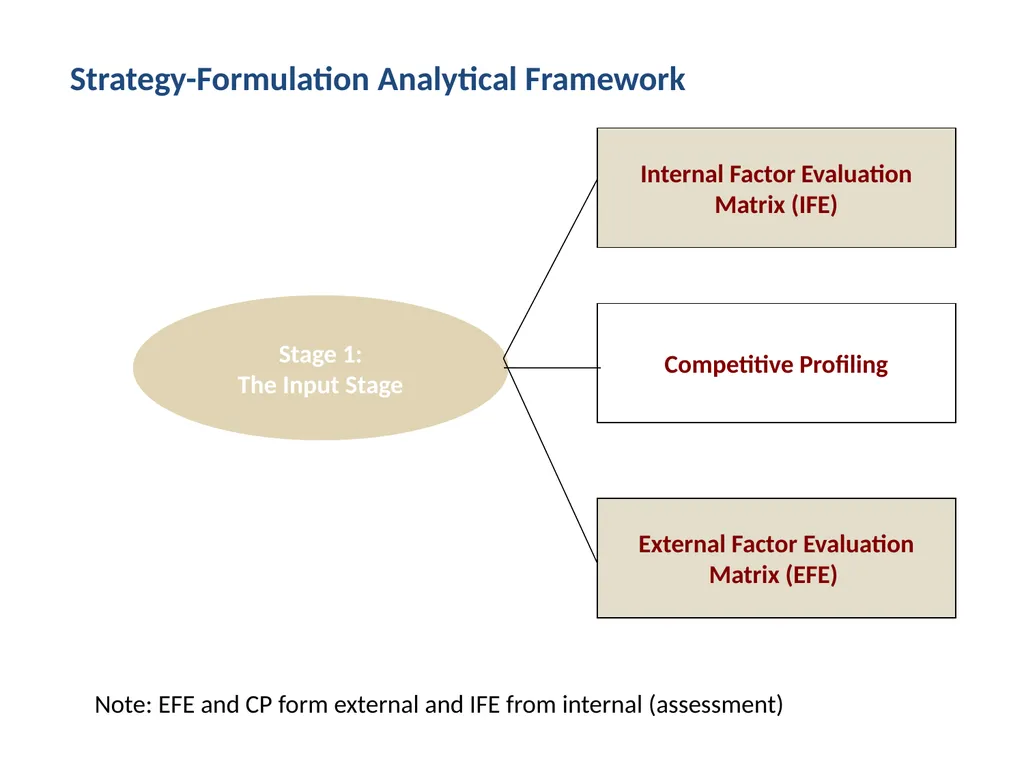
slide94. Strategy-Formulation Analytical Framework Internal Factor Evaluation Matrix (IFE) External Factor Evaluation Matrix (EFE) Stage 1: The Input Stage Competitive Profiling Note: EFE and CP form external and IFE from internal (assessment)<br>
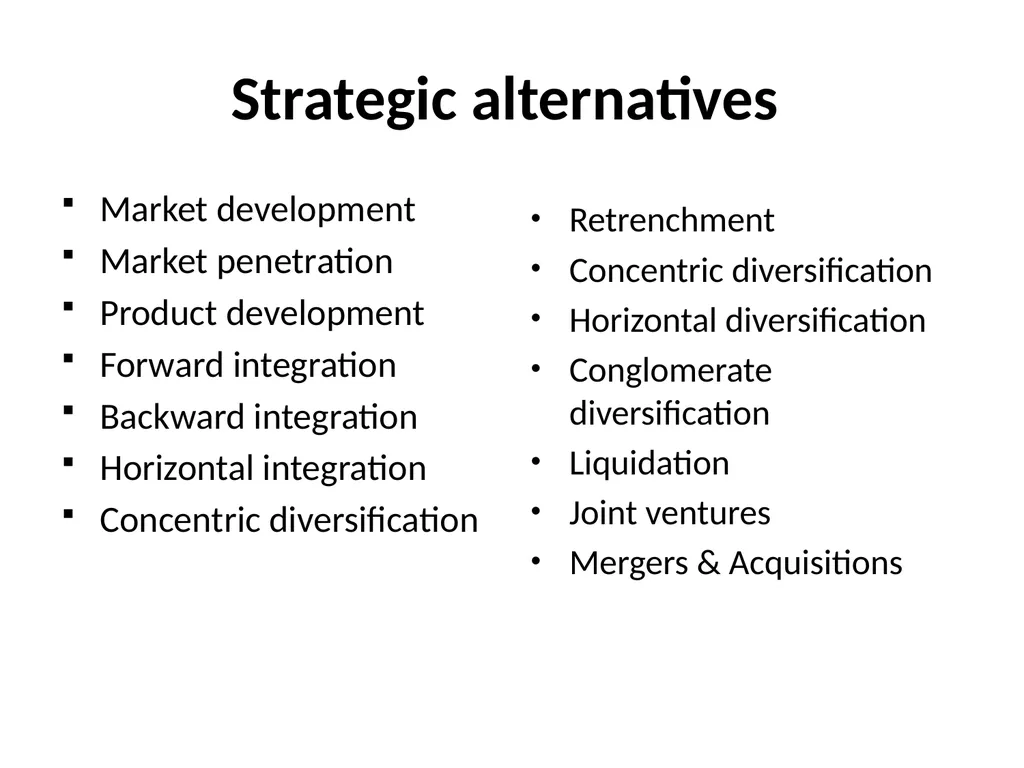
slide95. Strategic alternatives Market development
Market penetration
Product development
Forward integration
Backward integration
Horizontal integration
Concentric diversification Retrenchment
Concentric diversification
Horizontal diversification
Conglomerate diversification
Liquidation
Joint ventures
Mergers & Acquisitions<br>
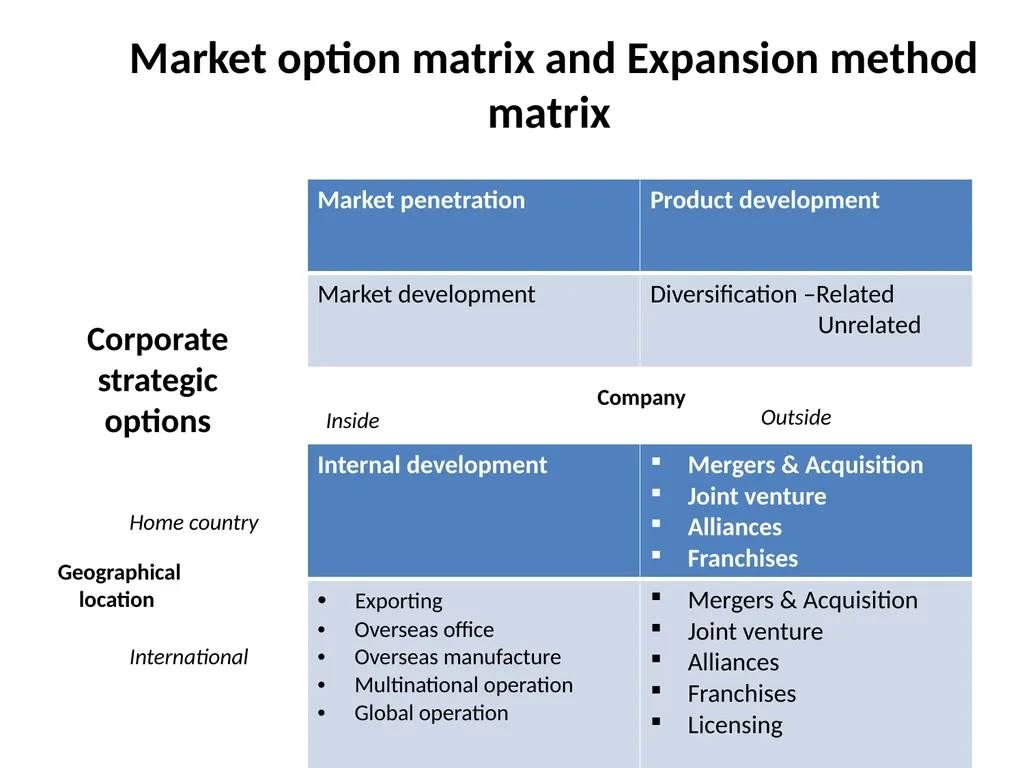
slide96. Market option matrix and Expansion method matrix Corporate strategic options Company Inside Outside Home country International Geographical location<br>
slide97. 97 Key Internal Factor Key External Factor Resultant Strategy Matching Key Factors to Formulate Alternative Strategies<br>
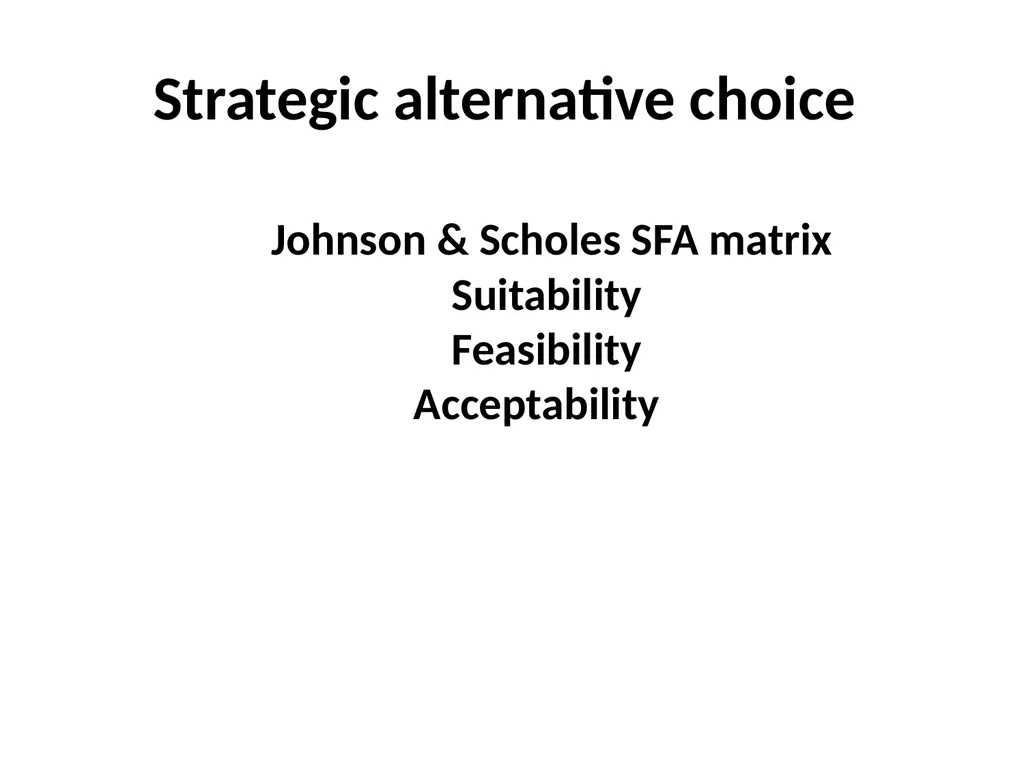
slide98. Strategic alternative choice Johnson & Scholes SFA matrix
Suitability
Feasibility
Acceptability<br>
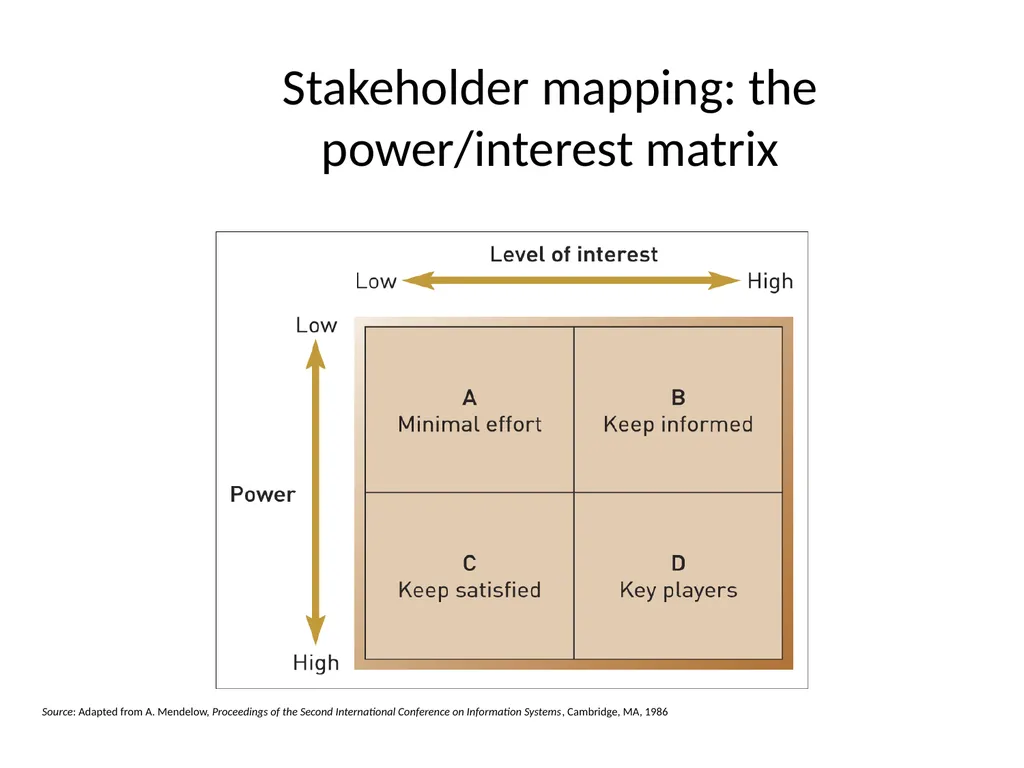
slide99. Stakeholder mapping: the power/interest matrix Source: Adapted from A. Mendelow, Proceedings of the Second International Conference on Information Systems, Cambridge, MA, 1986<br>
slide2. Tasks Involved in Strategic Management & MCS Kelley Summer 2009 GM 105 Strategic Management Defining business and stating a mission
Setting measurable objectives
Crafting a strategy to achieve objectives
Implementing a strategy Evaluating performance of the strategy, reviewing new developments and taking corrective action<br>
slide3. The essence of strategy of the organization<br>
slide4. Rational perspective<br>
slide5. Developing a Mission & Objectives An organization’s Mission
Reflects management’s purpose of operating the business
Provides a clear view of what the organization is trying to accomplish for its customers
Indicates intent to take a business position
An organization’s Objectives
Convert the mission into performance targets
Track performance over time
Must be achievable
Two types
Financial – outcomes that relate to improving financial performance
Strategic – outcomes that will result in greater competitiveness & stronger long-term market position Kelley Summer 2009 GM 105 Strategic Management<br>
slide6. BBC’s purpose statement “To educate, inform and entertain” Walt Disney’s Purpose Statement “To make people happy”<br>
slide7. Management accounting and strategy • Objectives - Specific statement of what the organisation aims to achieve, often quantified and relating to a specific period of time (SMART) • Strategies - Strategy is the direction and scope of an organisation over the long term which achieves advantage for the organisation through its configuration of resources within a changing environment to fulfil stakeholder expectations.
G. Johnson and K. Scholes Exploring Corporate Strategy 6th edition<br>
slide8. The essence of strategic management-a perspective view • Major decisions - What business will we operate in? - What are our basic directions for the future - What systems and structures should we have in place to support our strategies? • Corporate strategy - Decisions about the types of businesses to operate in, which businesses to acquire and divest, and how best to structure and finance the organisation<br>
slide9. If DSI confines itself footwear business, can they offer tyres , tubes, schoolbags?<br>
slide10. What business are you in? If you want to travel from London to Manchester, you can choose from the train, coach, car or aeroplane, so what business should Ryanair be in?<br>
slide11. Levels of Strategy Corporate strategy
Business strategy
Functional strategy<br>
slide12. Corporate Level Strategy What businesses are we in? What businesses should we be in?
Four areas of focus
Diversification management (acquisitions and divestitures)
Synergy between units
Investment priorities
Business level strategy approval (but not crafting)<br>
slide13. Corporate-Level Strategies Firm
Status Valuable
strengths Critical
weaknesses Environmental Status environmental
opportunities Critical
environmental
threats Conglomerate/Unrelated
Diversification
(Risk Mgt.) Turn around/Divestment/Liquidation<br>
slide14. The BCG “Portfolio” Matrix High Low High Low Market Share Anticipated
Growth
Rate Stars ? ? ? ? Question Marks Cash Cows Dogs<br>
slide15. Portfolio decision Product A in the portfolio has been making continues losses during last few financial years of the company. Advice whether the product A should be discontinued or not.<br>
slide16. Business Level Strategy How do we support the corporate strategy?
How do we compete in a specific business arena?
Three types of business level strategies:
Low cost producer
Differentiator
Focus
Four areas of focus
Generate sustainable competitive advantages
Develop and nurture (potentially) valuable capabilities
Respond to environmental changes
Approval of functional level strategies<br>
slide17. Functional / Operational Level Strategy Functional: How do we support the business level strategy?
Operational: How do we support the functional level strategy? An example.
Business L.S.: Become the low cost producer of widgets
Functional L.S. (Mfg.): Reduce manufacturing costs by 10%
Operational (Plant #1): Increase worker productivity by 15%<br>
slide18. A Simple Organization Chart (Single Product Business) Business Research and
Development Manufacturing Marketing Human
Resources Finance Functional
Level
Strategy Business
Level
Strategy<br>
slide19. A Simple Organization Chart (Dominant or Related Product Business) Multi
business
Corporation Corporate
Level<br>
slide20. An example of an Unrelated Product Business (Note: By itself, an SBU can be considered a related product business) A
(Multi-business) Corporation Ex.: G.E. (General
Electric Corp.) Strategic Business Unit 1 S.B.U.
2 SBU: a single business or collection of related businesses that is independent and formulates its own strategy<br>
slide21. An emergent view
Emphasize the uncertainty of the future and suggest that setting out identify purpose and a single strategy and then develop a complete strategic plan may be fruitless task<br>
slide22. A set of certain consistent actions that form an unintended pattern that was not initially anticipated or intended in the initial planning phase. For example, although unintended, adopting an emergent strategy might help a business adapt more flexibly to the practicalities of changing market conditions. What is emergent perspective to strategy Strategy More planned approached/ Intended strategy Emerged outside the formal plan /Unintended pattern recognizing the changing conditions<br>
slide23. Henry Mintzberg's emergent strategy<br>
slide24. Strategic drift Strategic happens when organization strategy is no longer relevant to the external environment facing it Intended strategy through Deliberate planning process Environment forces
????? Strategic drift<br>
slide25. Rate of responding to the environmental change<br>
slide26. What if you don’t redefine your business purpose –Strategic drift<br>
slide27. Slow response to the market led to strategic drift<br>
slide28. How can companies survive a strategic drift Organizational leadership and adaptable culture
Continues assessment of trends, emergence of direct and indirect competitors, technological changes and adjustment in to the current plan. https://www.youtube.com/watch?v=dqwAZKrc6vw<br>
slide29. Financial Implication of strategic management decisions<br>
slide30. Corporate Strategic Decision Growth decision Source: Ansoff Matrix (Igo Ansoff)<br>
slide31. Governance issue Ownership Control Vs<br>
slide32. Financial Feasibility Evaluating the financial feasibility of such a decision will ensure that share holders money are invested in a profitable investment opportunity.<br>
slide33. How to evaluate the corporate strategic decisions Discounted Cash Flow Methods
Net Present Value (NPV)
Internal Rate of Return (IRR)
Non-Discounted Cash Flow Methods
Payback Method
Accounting Rate of Return<br>
slide34. Projections This is the most crucial part of the long term investment decision evaluation. Accurately forecast the cost and the revenue for given period will have significant impact to the decision.<br>
slide35. Assume that your company management is planning to put up a 200 rooms hotel in Trincomalee which will require initial capital outlay USD 500 million. Project the possible cash flows for next five years and what factors should be considered in the determination of the cash flows.<br>
slide36. Discounted Cash Flow Methods NPV - the sum of discounted future cash flows less the initial cost
IRR - the discount rate where NPV = 0<br>
slide37. Net Present Value (NPV) NPV = C1
(1 + r)1 + C2
(1 + r)2 + C3
(1 + r)3 C1, C2, C3 = the project cash flows,
r = discount rate (related to risk of the project)
C0 = initial cost - C0 Discounted cash flows Initial Cost<br>
slide38. Investment Decisions The board of directors of Magoo plc. is considering investing in a new machine that is expected to have a three year life and will cost £80,000. The machine is used to produce a good that is expected to have the following cash flows over the three years of the machine’s life - Year 1 = £30,000; Year 2 = £50,000; Year 3 = £40,000. Cost of capital is 8%
Should it purchase the machine?<br>
slide39. Fundamental Rule of Finance/Financial Economics A capital investment decision is only worthwhile if it adds value. Thus, invest only in projects with a positive net present value<br>
slide40. Student Activity You are the financial manager advising the board of Alpha plc. on potential investment projects and have the choice between two projects of the same risk classification whose cash flows are given below: Given that the firm expects to obtain a 10% return on projects of this level of risk, provide a recommendation to the board on the viability of the two projects<br>
slide41. INTERNAL RATE OF RETURN (IRR) Also based on Discounted Cash Flow, but calculates the discount rate that will give a Net Present Value of zero.
This also represents the return that the project is giving on the original investment, expressed in DCF terms.
The simplest way is to use trial and error - trying different rates until the correct rate is found. But this is laborious.
There is a formula, using linear interpolation.
Projects should be accepted if their IRR is greater than the cost of capital or hurdle rate.<br>
slide42. IRR – Interpolation method Where: L is the lowest discount rate
H is the higher discount rate
NL is the NPV of the lower rate
NH is the NPV of the higher rate<br>
slide43. NPV and IRR Gullane plc. are considering investing in a new machine that will cost £1 million. They estimate the machine will lead to an increase cash flow for the next three years of £500,000 in year 1, £600,000 in year 2, and £400,000 in year 3.
Given that Gullane plc. determine that the risk-adjusted cost of capital is 10%, calculate the Net Present Value of the machine and recommend whether to ahead with the investment or not
Calculate the Internal Rate of Return of the machine<br>
slide44. Internal Rate of Return Decision Rules If k > r reject. If the opportunity cost of capital (k) is greater than the internal rate of return (r) on a project then the investor is better served by not going ahead with the project and using the money to the best alternative use
If k < r accept. Here, the project under consideration produces the same or higher yield than investment elsewhere for a similar risk level<br>
slide45. Payback Consider Cash flows and NOT Profits
Evaluation based on period of recovery of the initial investment
ie. Number of years it takes to cover the cost of investment
Firms should look for early payback of capital invested
Decision criteria
Compare target payback with actual payback
If actual payback period < target payback - Accept project
If actual payback period > target payback - Reject project 45<br>
slide46. Cost of capital of firm
Minimum rate of return, the firm must earn on its investments
Hence also the Required rate of return
Also considered as Opportunity cost
The required rate of return must cover, the cost of all long term sources of funds
Computed as the Weighted average cost of capital Discount factor 46<br>
slide47. Cost of capital (COC) Cost of capital is the company cost of long term source of finance which is generally used to capitalized the asset.
There are tow major sources of long term funds.
Equity and Debt capital<br>
slide48. Cost of Equity The most commonly accepted method for calculating cost of equity comes from the Nobel Prize-winning capital asset pricing model (CAPM): The cost of equity is expressed formulaically below:
Re = rf + (rm – rf) * β
Where: Re = the required rate of return on equity
rf = the risk free rate
rm – rf = the market risk premium
β = beta coefficient = unsystematic risk<br>
slide49. Cost of debt Cost of debt is the interest paid to lenders
Debt is tax shield and should be adjusted to derive the cost of debt net of tax
Kd= I (1-Tax rate)<br>
slide50. Weighted Average Cost Of Capital (WACC Weighted average cost of capital (WACC) is a calculation of a firm's cost of capital in which each category of capital is proportionately weighted. All capital sources - common stock, preferred stock, bonds and any other long-term debt - are included in a WACC calculation.
All else equal, the WACC of a firm increases as the beta and rate of return on equity increases, as an increase in WACC notes a decrease in valuation and a higher risk.<br>
slide51. WACC Where,
WACC= KeVe + KdVd
Ve+Vd
Ke=Cost of equity
Ve=Value of equity
Vd=Value debt
Kd=Cost of debt<br>
slide52. Student Activity Ashanti plc., are considering an investment of USD 1.9 m to enter in to the north east region of Sri Lanka. The capital investment is expected to have equal lives of 3 years and the cash flows for each year is given below: Any capital expenditure project is evaluated at corporate WACC as a hurdle rate.
First year of the project is exempted from tax and 10% is applied after that. Ashanthi plc has 10 million equity and 5 million debt. It has 10% pa interest payment commitment in its debt and shareholders require 14 % return on their investment. The corporation tax rate is 28%.
You are required to evaluate the financial feasibility of the new expansion using NPV, IRR and the pay back period.<br>
slide53. 1st Assessment –Group work Weightage : 10% to the final assessment
Case study: Why did Kodak collapse
Kodak formerly one of the world's leading photographic companies. Bankruptcy protection in 2012. Why? What went wrong with its business strategy?<br>
slide54. Strategic analysis The basic frame work: Strategy as a link between the firm and its environment The firm
Goals and values
Resources and capabilities
Structure and system Strategy Micro and Macro environmental changes Strategic fit
Fundamental of strategy as the link between the firm and its external environment is the notion of strategic fit. For a strategy to be successful it must be consistent with the firm external environment and with its internal firm goals, resources and capabilities and the structure<br>
slide55. Strategic analysis Strategic analysis Analysis of firm
Goals, values and performance , analyzing capabilities and resources Analysis of macro , industry and competitive environment<br>
slide56. Creating value Successful strategy is creating value
Continuously creating customer value
Firm value
Shareholder value<br>
slide57. Value Creation<br>
slide58. Service Marketing & Sales Outbound Logistics Operations Inbound Logistics Firm Infrastructure Human Resource Mgmt. Technological Development Procurement Margin Margin Primary Activities Support Activities The Basic
Value Chain<br>
slide59. Value Chains are part of a Total Value System Supplier Value Chain Firm Value Chain Channel Value Chain Buyer Value Chain<br>
slide60. In Whose interest ? Share holders Vs Stake holders Shareholder capitalism Vs Stakeholder approach<br>
slide61. Diagnosing the firm current strategy Strategy formulation Assess the current situation Identify the current strategy of the firm and assess how well that strategy is doing in terms of financial performance Identify the inadequacies of firm value drivers and reason for deviations-Internally driven or external driven Strategic or operational level actions<br>
slide62. Performance diagnosis Diagnosis is primarily starts from accounting based financial performance indicator of Return on capital employed or ROCE. Any disaggregation of ROCE in to fundamental of value drivers. Du point analysis reflects the value drivers and its impact on ROCE.<br>
slide63. Analyzing internal environment (internal capabilities, resources) SWOT analysis is the conventional management technique which is used to assess the company current position.
Evaluate the strength, weakness , opportunities and threat<br>
slide64. SWOT Analysis SWOT analysis is a process that identifies the strengths, weaknesses, opportunities and threats of an organization. Specifically, SWOT is a basic, analytical framework that assesses what an organization can and cannot do, as well as its potential opportunities and threats.
A SWOT analysis takes information from an environmental analysis and separates it into internal strengths and weaknesses, as well as its external opportunities and threats.<br>
slide65. TOWS Analysis Extension of the SWOT analysis is TOWS and can be presented as TOWS matrix analysis to match the internal factors with external factors of the business to define the strategic direction.<br>
slide66. Resource-based strategy The resource-based view (RBV) of strategy asserts that the competitive advantage and superior performance of an organisation is explained by the distinctiveness of its capabilities.<br>
slide67. Resources and competences Resources are the assets that organisations have or can call upon (e.g. from partners or suppliers),that is, ‘what we have’ .
Competences are the ways those assets are used or deployed effectively, that is, what we do well’.<br>
slide68. Components of strategic capabilities<br>
slide69. Threshold and distinctive capabilities Threshold capabilities are those needed for an organisation to meet the necessary requirements to compete in a given market and achieve parity with competitors in that market – ‘qualifiers’.
Distinctive capabilities are those that critically underpin competitive advantage and that others cannot imitate or obtain – ‘winners’.<br>
slide70. Core competences Core competences1 are the linked set of skills, activities and resources that, together:
deliver customer value
differentiate a business from its competitors
potentially, can be extended and developed as markets change or new opportunities arise.
1G. Hamel and C.K. Prahalad, ‘The core competence of the corporation’, Harvard Business Review, vol. 68, no. 3 (1990),
pp. 79–91.<br>
slide71. VRIN framework V = Value
R = Rare
I = Costly to Imitate
O= Non substitutability<br>
slide72. Analyzing the outside environment<br>
slide73. The PESTEL framework The PESTEL framework categorises environmental influences into six main types:
political, economic,
social, technological,
environmental legal
Thus PESTEL provides a comprehensive list of influences on the possible success or failure of particular strategies.<br>
slide74. The PESTEL framework (2) Political Factors: For example, Government policies, taxation changes, foreign trade regulations, political risk in foreign markets, changes in trade blocks (EU).
Economic Factors: For example, business cycles, interest rates, personal disposable income, exchange rates, unemployment rates, GDP trends.
Socio-cultural Factors: For example, population changes, income distribution, lifestyle changes, consumerism, changes in culture and fashion.<br>
slide75. The PESTEL framework (3) Technological Factors: For example, new discoveries and technology developments, ICT innovations, rates of obsolescence, increased spending on R&D.
Environmental (‘Green’) Factors: For example, environmental protection regulations, energy consumption, global warming, waste disposal and re-cycling.
Legal Factors: For example, competition laws, health and safety laws, employment laws, licensing laws, IPR laws.<br>
slide76. Using the PESTEL framework Apply selectively –identify specific factors which impact on the industry, market and organisation in question.
Identify factors which are important currently but also consider which will become more important in the next few years.
Use data to support the points and analyse trends using up to date information
Identify opportunities and threats – the main point of the exercise!<br>
slide77. Scenarios Scenarios are detailed and plausible views of how the environment of an organisation might develop in the future based on key drivers of change about which there is a high level of uncertainty.
Build on PESTEL analysis .
Do not offer a single forecast of how the environment will change.
An organisation should develop a few alternative scenarios (2–4) to analyse future strategic options.<br>
slide78. Carrying out scenario analysis Identify the most relevant scope of the study – the relevant product/market and time span.
Identify key drivers of change – PESTEL factors that have the most impact in the future but have uncertain outcomes. Develop scenario ‘stories’ - That is, coherent and plausible descriptions of the environment that result from opposing outcomes
Identify the impact of each scenario on the organisation and evaluate future strategies in the light of the anticipated scenarios.<br>
slide79. Analysing Competitive Industry Structure An industry is a group of firms that market products which are close substitutes for each other (e.g. the car industry, the travel industry).
Some industries are more profitable than others. Why? The answer lies in understanding the dynamics of competitive structure in an industry.<br>
slide80. Porter’s five forces framework Porter’s five forces framework helps identify the attractiveness of an industry in terms of five competitive forces:
the threat of entry,
the threat of substitutes,
the bargaining power of buyers,
the bargaining power of suppliers and
the extent of rivalry between competitors.
The five forces constitute an industry’s ‘structure’.<br>
slide81. Source: Adapted with the permission of The Free Press, a Division of Simon & Schuster Adult Publishing Group, from Competitive Strategy: Techniques for Analyzing Industries and Competitors by Michael E. Porter. Copyright © 1980, 1998 by The Free Press. All rights reserved The five forces framework The five forces framework<br>
slide82. Threat of New Entrants New entrants to an industry can raise the level of competition, thereby reducing its attractiveness.
The threat of new entrants largely depends on the barriers to entry.
High entry barriers exist in some industries (e.g. shipbuilding) whereas other industries are very easy to enter (e.g. estate agency).<br>
slide83. Key barriers to entry include Economies of scale
Capital / investment requirements
Brand loyalty and customer switching costs
Access to industry distribution channels<br>
slide84. Threat of Substitutes The presence of substitute products can lower industry attractiveness and profitability because they limit price levels. The threat of substitute products depends on:<br>
slide85. Bargaining Power of Suppliers (Suppliers are the businesses that supply materials & other products into the industry) The cost of items bought from suppliers (e.g. raw materials, components) can have a significant impact on a company's profitability. If suppliers have high bargaining power over a company, then in theory the company's industry is less attractive.<br>
slide86. The bargaining power of suppliers will be high when: - There are many buyers and few dominant suppliers - The offer unique or scarce resources with high switching costs - Suppliers threaten to integrate forward into the industry<br>
slide87. Bargaining Power of Buyers (Buyers are the people / organisations who create demand in an industry) The bargaining power of buyers is greater when
- There are few dominant buyers and many sellers in the industry - Products are standardised<br>
slide88. Intensity of Rivalry The intensity of rivalry between competitors in an industry will depend on:
- The structure of competition - for example, rivalry is more intense where there are many small or equally sized competitors; rivalry is less when an industry has a clear market leader - The maturity of the industry, a lack of growth will lead to a ‘shakeout’<br>
slide89. Intensity of Rivalry Degree of differentiation through brand loyalty; industries where competitors can differentiate their products have less rivalry - Switching costs - rivalry is reduced where buyers have high switching costs - i.e. there is a significant cost associated with the decision to buy a product from an alternative supplier<br>
slide90. Intensity of Rivalry The height of entry barriers
Exit barriers - when barriers to leaving an industry are high (e.g. the cost of closing down factories) - then competitors tend to exhibit greater rivalry.<br>
slide91. Implications of five forces analysis Identifies the attractiveness of industries – which industries/markets to enter or leave.
Identifies strategies to influence the impact of the forces, for example, building barriers to entry by becoming more vertically integrated.
The forces may have a different impact on different organisations e.g. large firms can deal with barriers to entry more easily than small firms.<br>
slide92. Competitor analysis Identifying the competitors
Assessing the competitors
Selecting the competitors to attack or avoid<br>
slide93. Strategic options evaluation & Choice<br>
slide94. Strategy-Formulation Analytical Framework Internal Factor Evaluation Matrix (IFE) External Factor Evaluation Matrix (EFE) Stage 1: The Input Stage Competitive Profiling Note: EFE and CP form external and IFE from internal (assessment)<br>
slide95. Strategic alternatives Market development
Market penetration
Product development
Forward integration
Backward integration
Horizontal integration
Concentric diversification Retrenchment
Concentric diversification
Horizontal diversification
Conglomerate diversification
Liquidation
Joint ventures
Mergers & Acquisitions<br>
slide96. Market option matrix and Expansion method matrix Corporate strategic options Company Inside Outside Home country International Geographical location<br>
slide97. 97 Key Internal Factor Key External Factor Resultant Strategy Matching Key Factors to Formulate Alternative Strategies<br>
slide98. Strategic alternative choice Johnson & Scholes SFA matrix
Suitability
Feasibility
Acceptability<br>
slide99. Stakeholder mapping: the power/interest matrix Source: Adapted from A. Mendelow, Proceedings of the Second International Conference on Information Systems, Cambridge, MA, 1986<br>