Stuart S. Sumida Biology 342 (Over) Simplified Phylogeny of Basal Synapsida Diadectomorpha(?) Synapsida Reptilia Avialae AMNIOTA The Synapsida can be divided into three grades. Pelycosauria Therapsida Mammalia Sphenacodontid
"Stuart S. Sumida Biology 342 (Over) Simplified" is the property of its rightful owner. Permission is granted to
download and print the materials on this website for personal, non-commercial use only, and to display it
on your personal computer provided you do not modify the materials and that you retain all copyright
notices contained in the materials. By downloading content from our website, you accept the terms of this
agreement.
Presentation Transcript
01
Stuart S. Sumida
Biology 342
(Over) Simplified Phylogeny of Basal Synapsida<br>
02
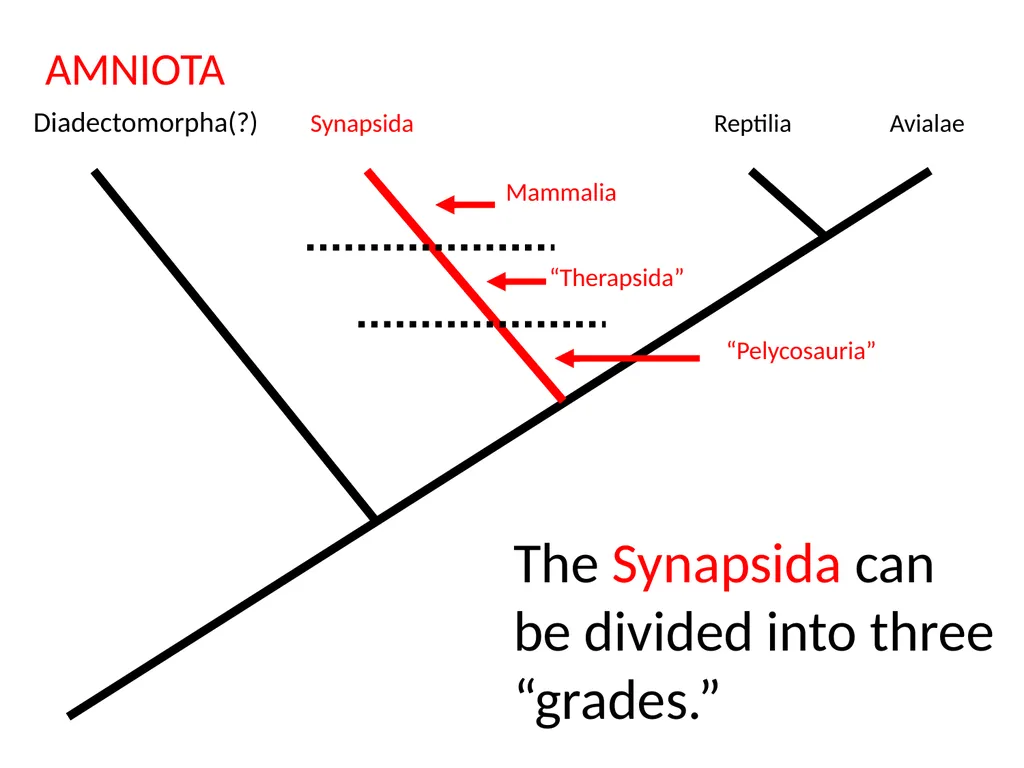
Diadectomorpha(?) Synapsida Reptilia Avialae AMNIOTA The Synapsida can be divided into three “grades.” “Pelycosauria” “Therapsida” Mammalia<br>
03
Sphenacodontid Pelycosaurian-
grade synpasids
Dinocephalia
Anomodontia
Gorgonopsia
Therocephalia
Thrinaxodon
Cynodontia
Mammalia Therapsid-grade
synapsids<br>
04
The phylogenetic tree presented here is extremely simplified, highlighting only major groups of therapsids.
Each successive taxon demonstrates part of the progression toward a more mammalian skull and dental configuration (heterodonty), and a more mammalian postcranial skeleton approaching parasaggital limb position.
It is presumed that these anatomical changes were mirrored by physiological changes on the path toward mammalian endothermy and other metabolic characteristics.<br>
05
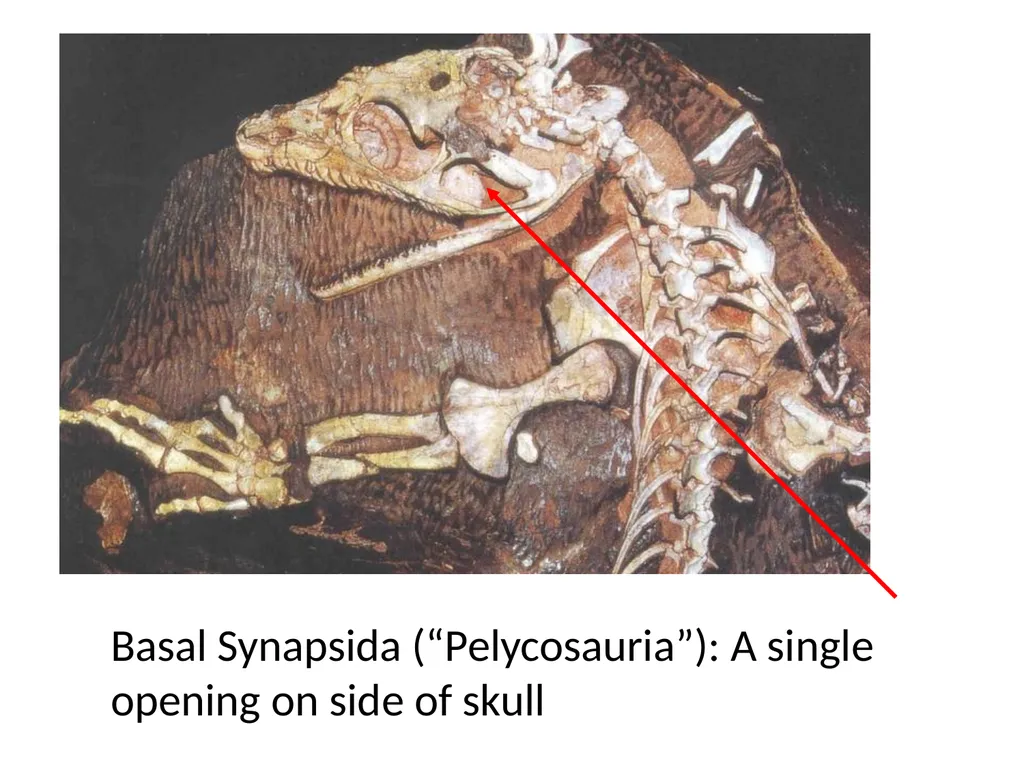
Basal Synapsida (“Pelycosauria”): A single opening on side of skull<br>
06
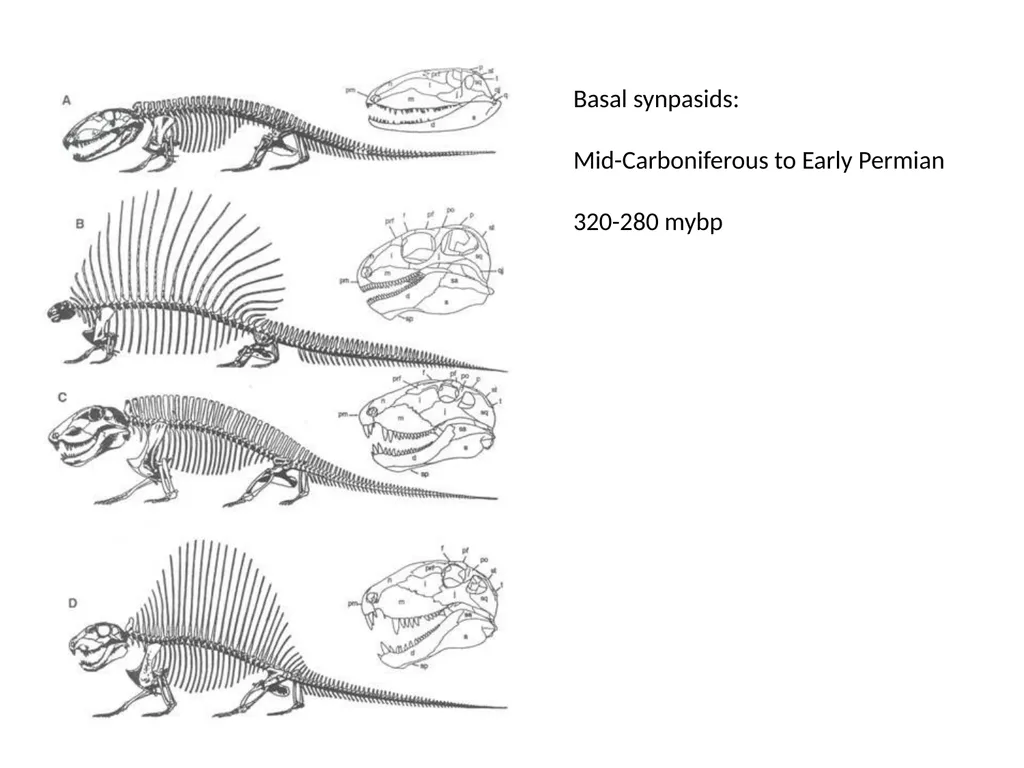
Basal synpasids:
Mid-Carboniferous to Early Permian
320-280 mybp<br>
07
Sphenacodontid Pelycosaurian-
grade synpasids
Dinocephalia
Anomodontia
Gorgonopsia
Therocephalia
Thrinaxodon
Cynodontia
Mammalia Therapsid-grade
synapsids<br>
08
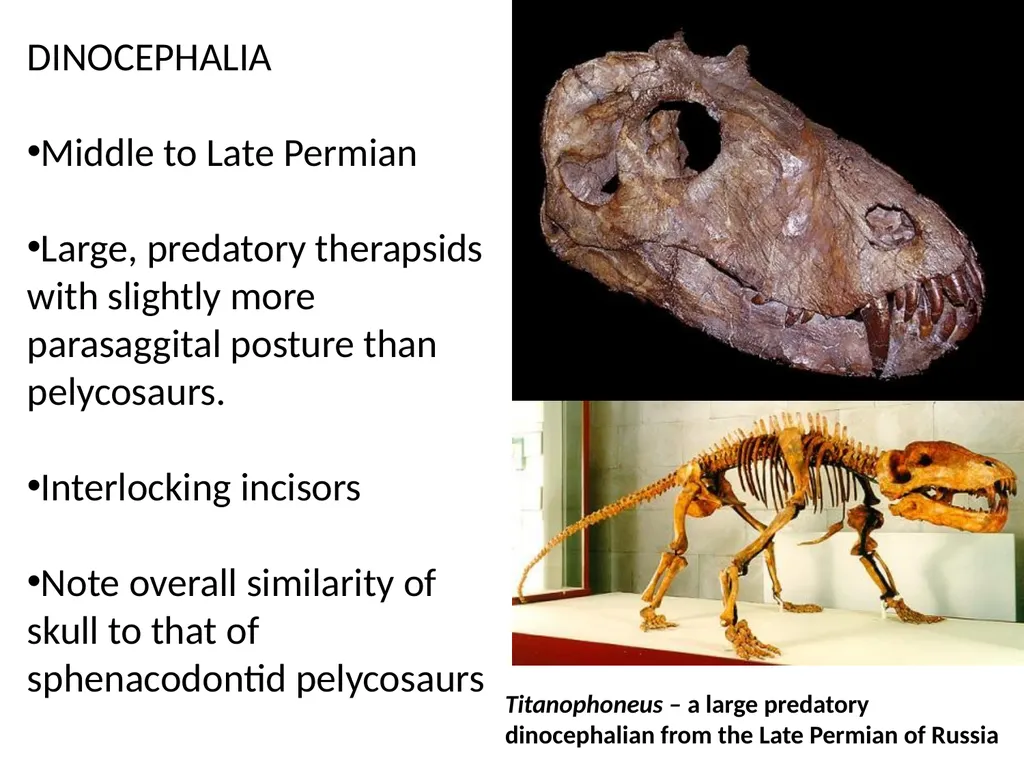
DINOCEPHALIA
Middle to Late Permian
Large, predatory therapsids with slightly more parasaggital posture than pelycosaurs.
Interlocking incisors
Note overall similarity of skull to that of sphenacodontid pelycosaurs Titanophoneus – a large predatory dinocephalian from the Late Permian of Russia<br>
09
Sphenacodontid Pelycosaurian-
grade synpasids
Dinocephalia
Anomodontia
Gorgonopsia
Therocephalia
Thrinaxodon
Cynodontia
Mammalia Therapsid-grade
synapsids<br>
10
ANOMODONTIA
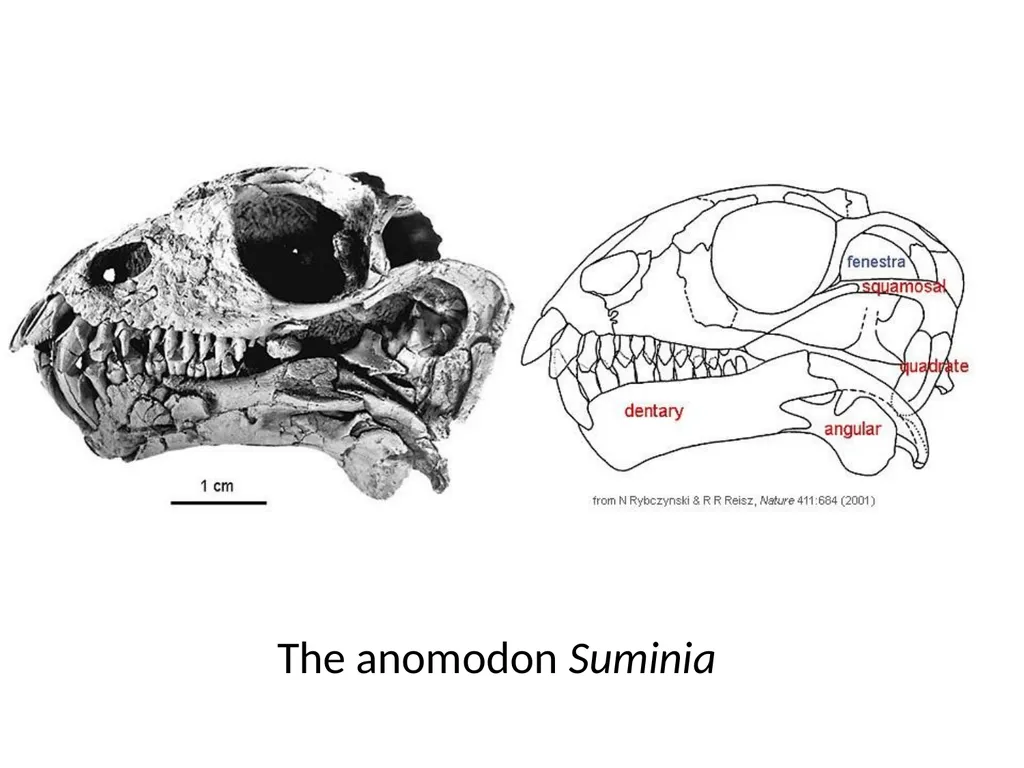
Anomodonts are one of the early major experiments in herbivory amongst therapsids.
Highly derived nearly toothless skull except for large tusks that may have been used for digging, or for display.
Dominant group of terrestrial herbivores during the Triassic.<br>
11
The anomodon Suminia<br>
12
Sphenacodontid Pelycosaurian-
grade synpasids
Dinocephalia
Anomodontia
Gorgonopsia
Therocephalia
Thrinaxodon
Cynodontia
Mammalia Therapsid-grade
synapsids<br>
13
GORGONPSIA
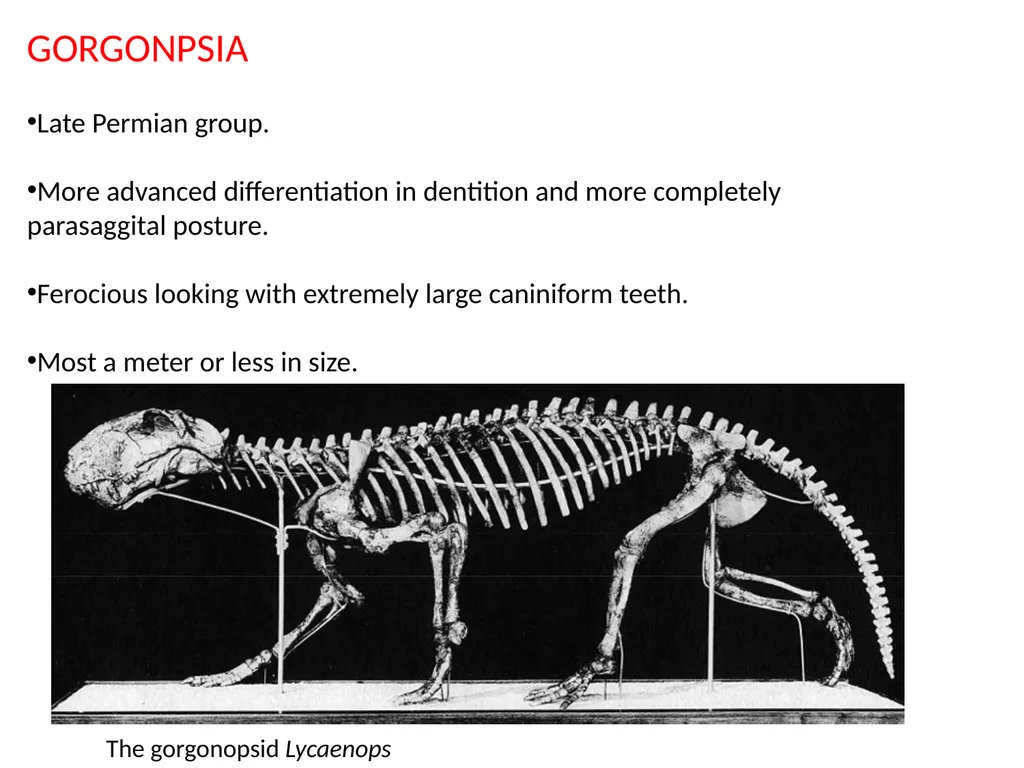
Late Permian group.
More advanced differentiation in dentition and more completely parasaggital posture.
Ferocious looking with extremely large caniniform teeth.
Most a meter or less in size. The gorgonopsid Lycaenops<br>
14
Sphenacodontid Pelycosaurian-
grade synpasids
Dinocephalia
Anomodontia
Gorgonopsia
Therocephalia
Thrinaxodon
Cynodontia
Mammalia Therapsid-grade
synapsids<br>
15
THEROCEPHALIA
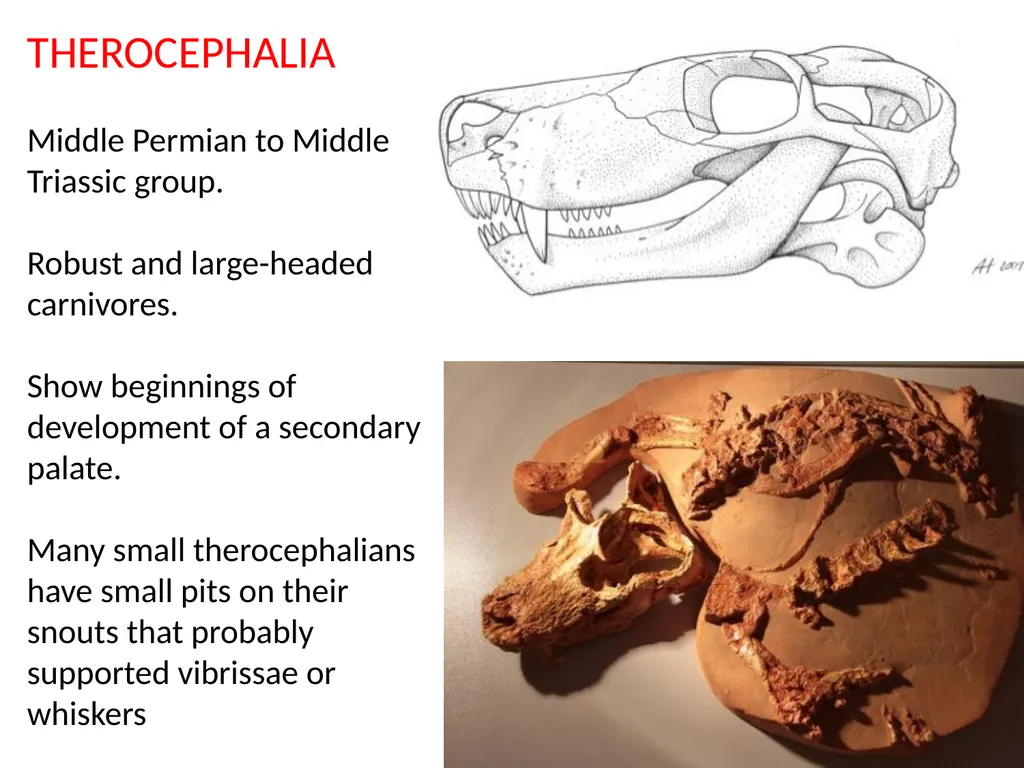
Middle Permian to Middle Triassic group.
Robust and large-headed carnivores.
Show beginnings of development of a secondary palate.
Many small therocephalians have small pits on their snouts that probably supported vibrissae or whiskers<br>
16
Sphenacodontid Pelycosaurian-
grade synpasids
Dinocephalia
Anomodontia
Gorgonopsia
Therocephalia
Thrinaxodon
Cynodontia
Mammalia Therapsid-grade
synapsids<br>
17
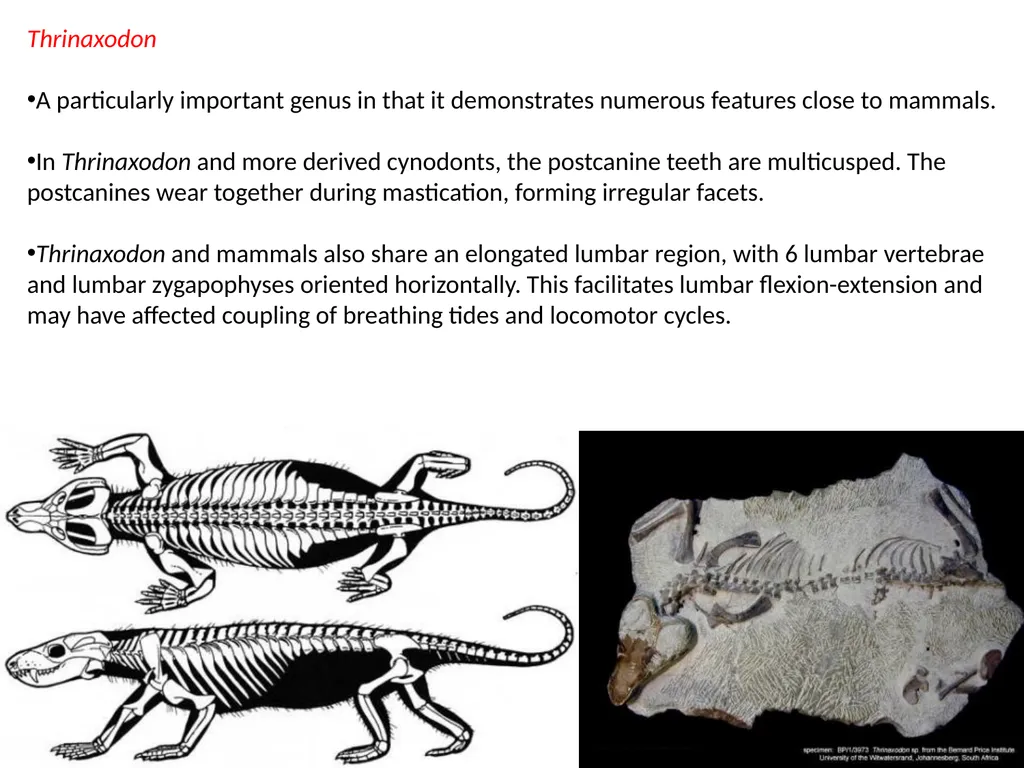
Thrinaxodon
A particularly important genus in that it demonstrates numerous features close to mammals.
In Thrinaxodon and more derived cynodonts, the postcanine teeth are multicusped. The postcanines wear together during mastication, forming irregular facets.
Thrinaxodon and mammals also share an elongated lumbar region, with 6 lumbar vertebrae and lumbar zygapophyses oriented horizontally. This facilitates lumbar flexion-extension and may have affected coupling of breathing tides and locomotor cycles.<br>
18
Sphenacodontid Pelycosaurian-
grade synpasids
Dinocephalia
Anomodontia
Gorgonopsia
Therocephalia
Thrinaxodon
Cynodontia
Mammalia Therapsid-grade
synapsids<br>
19
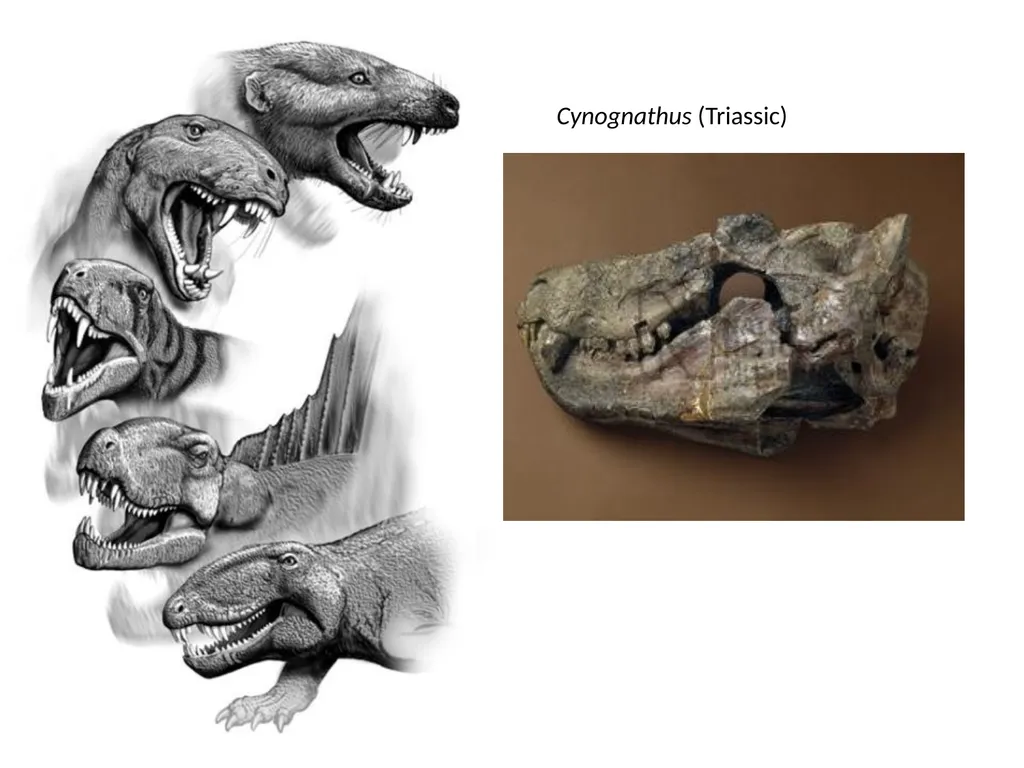
Cynognathus (Triassic)<br>
20
Sphenacodontid Pelycosaurian-
grade synpasids
Dinocephalia
Anomodontia
Gorgonopsia
Therocephalia
Thrinaxodon
Cynodontia
Mammalia Therapsid-grade
synapsids<br>
21
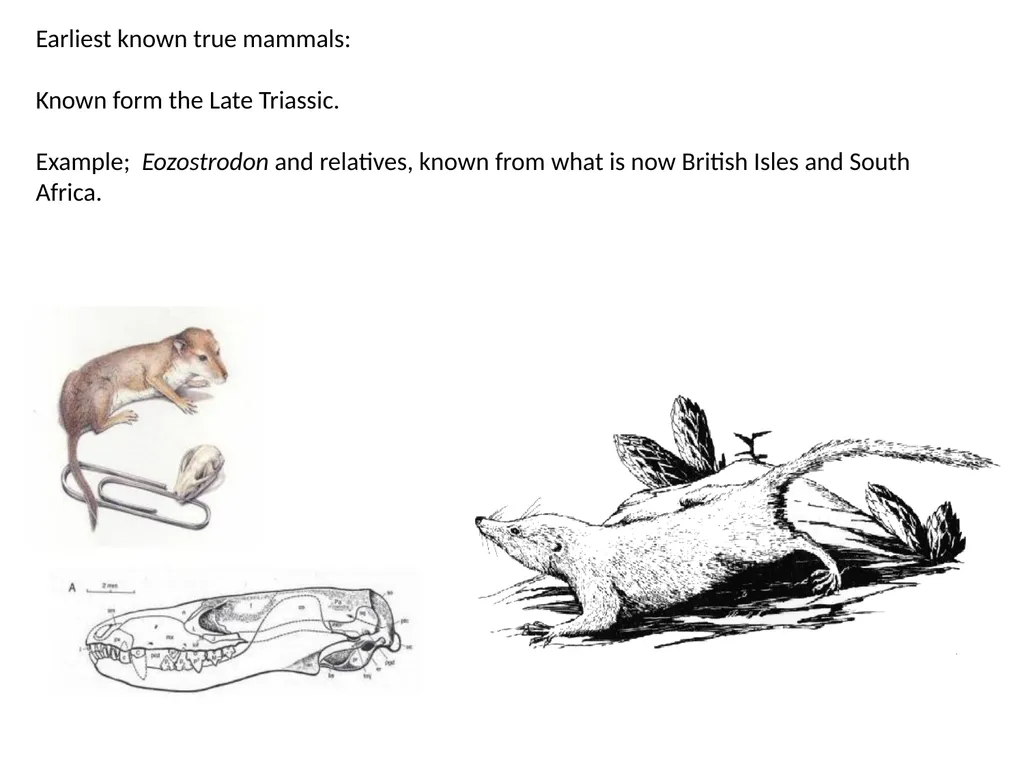
Earliest known true mammals:
Known form the Late Triassic.
Example; Eozostrodon and relatives, known from what is now British Isles and South Africa.<br>