
Study on Intensifying the fight against corruption


Description: Study on Intensifying the fight against corruption and money laundering Lyla Latif Peer Review and Consultation Meeting September 2021 1 Session 1 Setting the scene and framing the narrative on IFFs out of Corruption and Money Laundering 2
Related Topics
Download Presentation
"Study on Intensifying the fight against corruption" is the property of its rightful owner. Permission is granted to download and print the materials on this website for personal, non-commercial use only, and to display it on your personal computer provided you do not modify the materials and that you retain all copyright notices contained in the materials. By downloading content from our website, you accept the terms of this agreement.
Presentation Transcript
slide1. Study
on
Intensifying the fight against corruption and money laundering Lyla Latif
Peer Review and Consultation Meeting
September 2021 1<br>
slide2. Session 1 Setting the scene and framing the narrative on IFFs out of Corruption and Money Laundering 2<br>
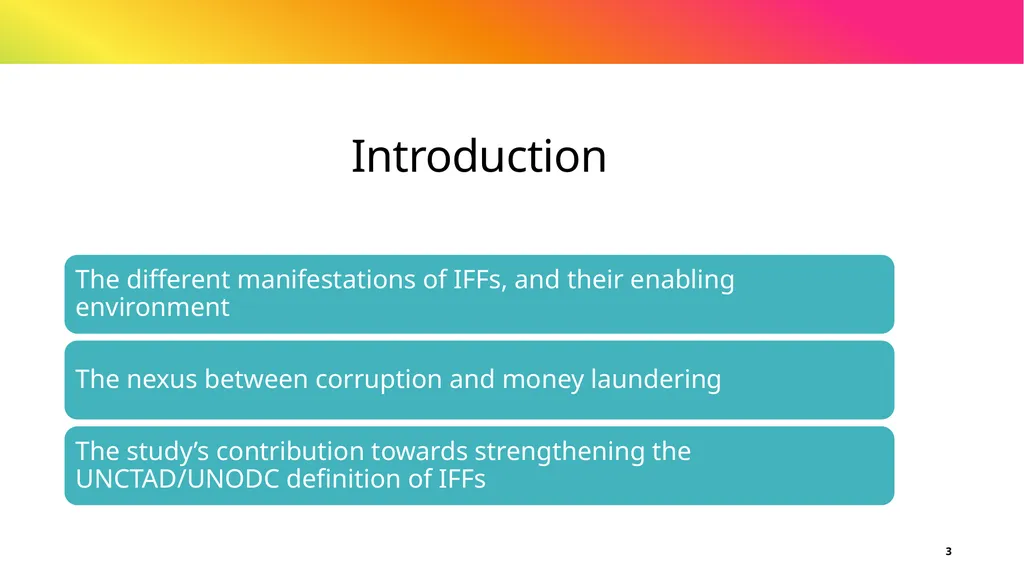
slide3. Introduction 3<br>
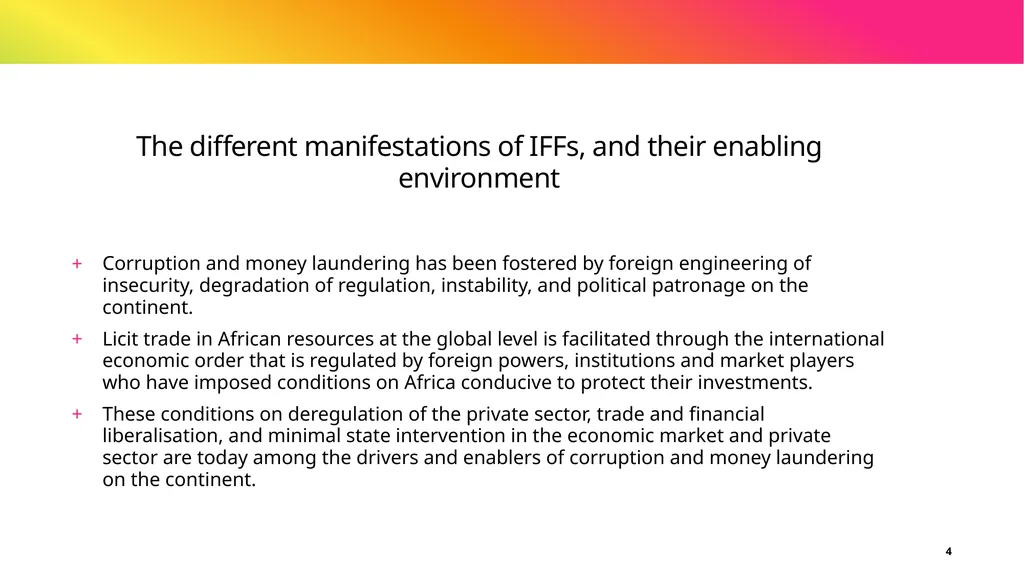
slide4. The different manifestations of IFFs, and their enabling environment Corruption and money laundering has been fostered by foreign engineering of insecurity, degradation of regulation, instability, and political patronage on the continent.
Licit trade in African resources at the global level is facilitated through the international economic order that is regulated by foreign powers, institutions and market players who have imposed conditions on Africa conducive to protect their investments.
These conditions on deregulation of the private sector, trade and financial liberalisation, and minimal state intervention in the economic market and private sector are today among the drivers and enablers of corruption and money laundering on the continent. 4<br>
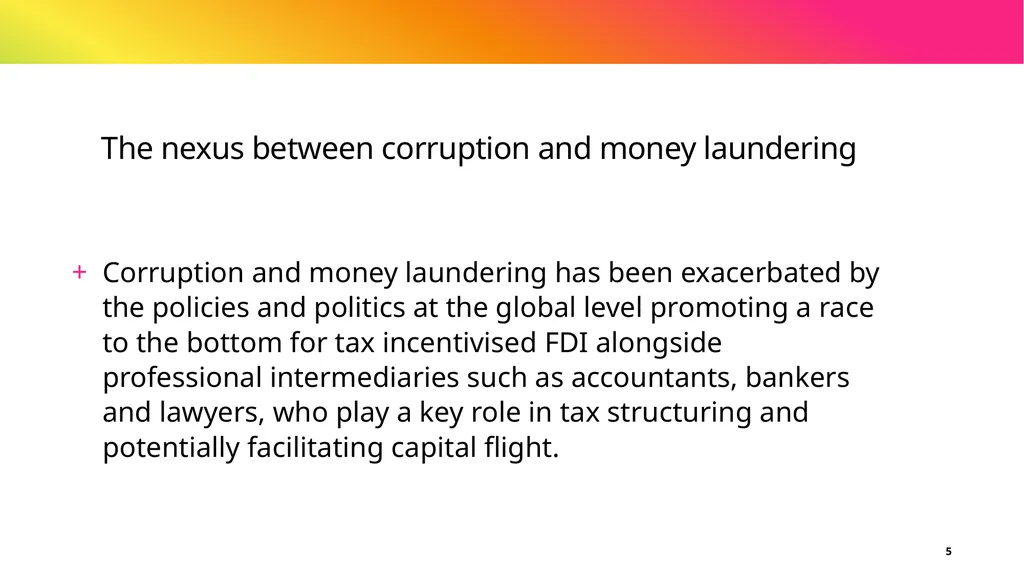
slide5. The nexus between corruption and money laundering Corruption and money laundering has been exacerbated by the policies and politics at the global level promoting a race to the bottom for tax incentivised FDI alongside professional intermediaries such as accountants, bankers and lawyers, who play a key role in tax structuring and potentially facilitating capital flight. 5<br>
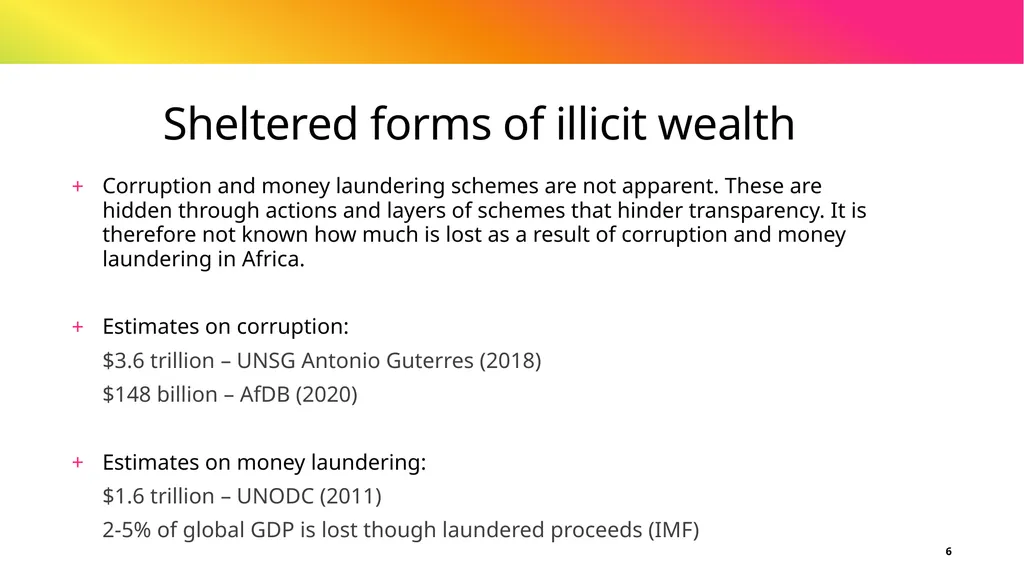
slide6. Sheltered forms of illicit wealth Corruption and money laundering schemes are not apparent. These are hidden through actions and layers of schemes that hinder transparency. It is therefore not known how much is lost as a result of corruption and money laundering in Africa.
Estimates on corruption:
$3.6 trillion – UNSG Antonio Guterres (2018)
$148 billion – AfDB (2020)
Estimates on money laundering:
$1.6 trillion – UNODC (2011)
2-5% of global GDP is lost though laundered proceeds (IMF) 6<br>
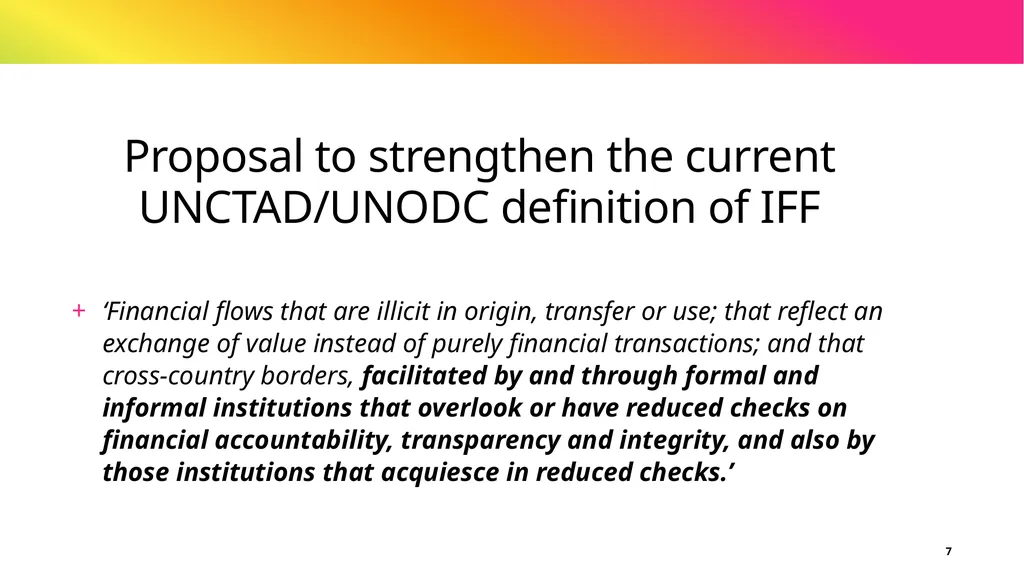
slide7. Proposal to strengthen the current UNCTAD/UNODC definition of IFF ‘Financial flows that are illicit in origin, transfer or use; that reflect an exchange of value instead of purely financial transactions; and that cross-country borders, facilitated by and through formal and informal institutions that overlook or have reduced checks on financial accountability, transparency and integrity, and also by those institutions that acquiesce in reduced checks.’ 7<br>
slide8. Session 2 Corruption and money laundering challenges in the African context 8<br>
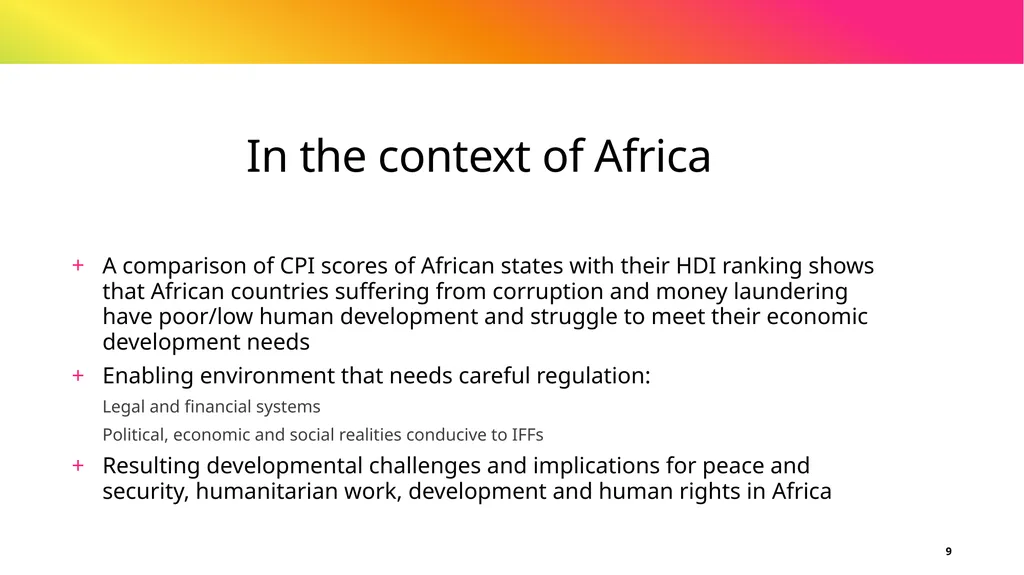
slide9. In the context of Africa A comparison of CPI scores of African states with their HDI ranking shows that African countries suffering from corruption and money laundering have poor/low human development and struggle to meet their economic development needs
Enabling environment that needs careful regulation:
Legal and financial systems
Political, economic and social realities conducive to IFFs
Resulting developmental challenges and implications for peace and security, humanitarian work, development and human rights in Africa 9<br>
slide10. Session 3 International and Africa specific strategies designed to combat corruption and money laundering 10<br>
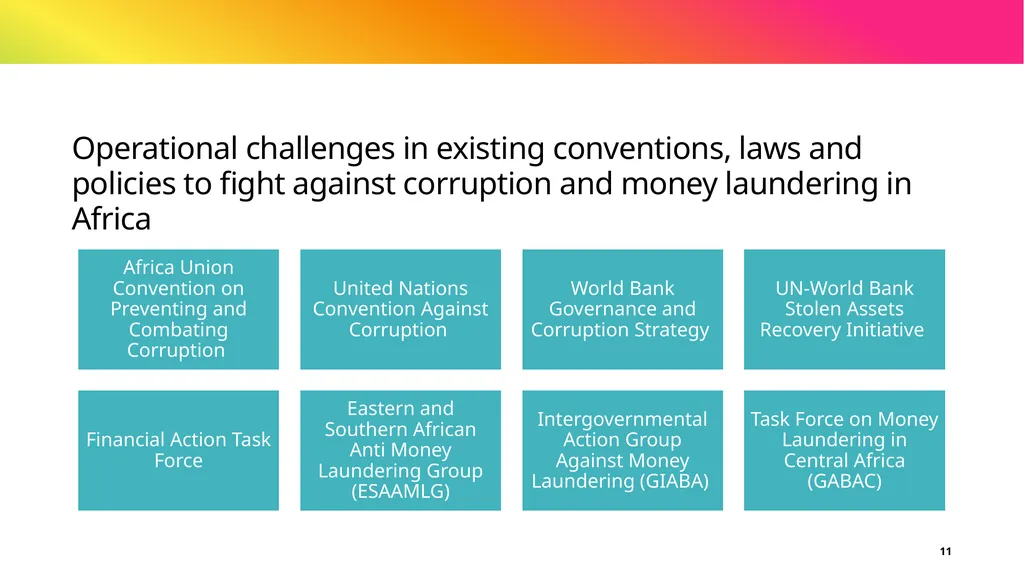
slide11. Operational challenges in existing conventions, laws and policies to fight against corruption and money laundering in Africa 11<br>
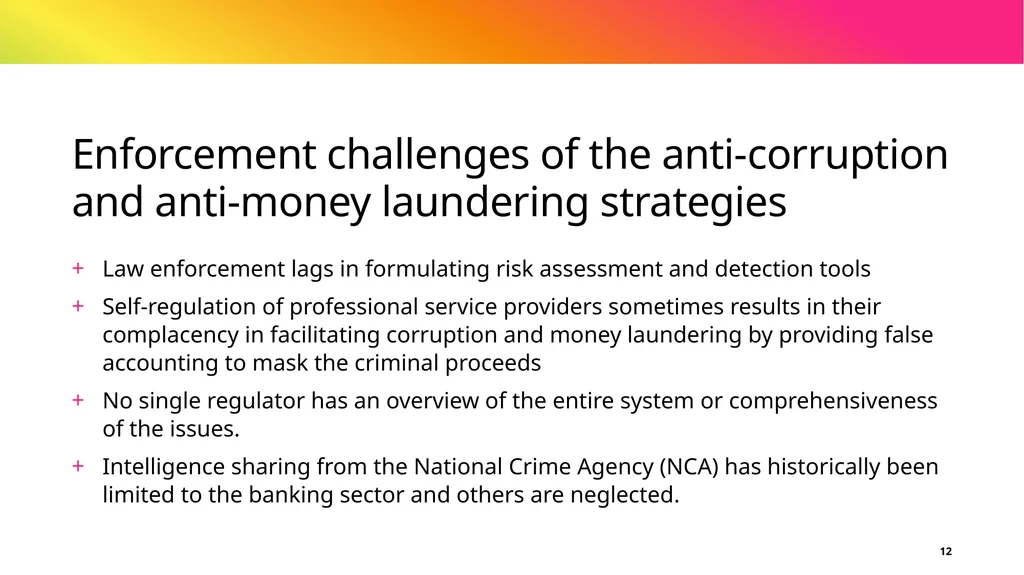
slide12. Enforcement challenges of the anti-corruption and anti-money laundering strategies Law enforcement lags in formulating risk assessment and detection tools
Self-regulation of professional service providers sometimes results in their complacency in facilitating corruption and money laundering by providing false accounting to mask the criminal proceeds
No single regulator has an overview of the entire system or comprehensiveness of the issues.
Intelligence sharing from the National Crime Agency (NCA) has historically been limited to the banking sector and others are neglected. 12<br>
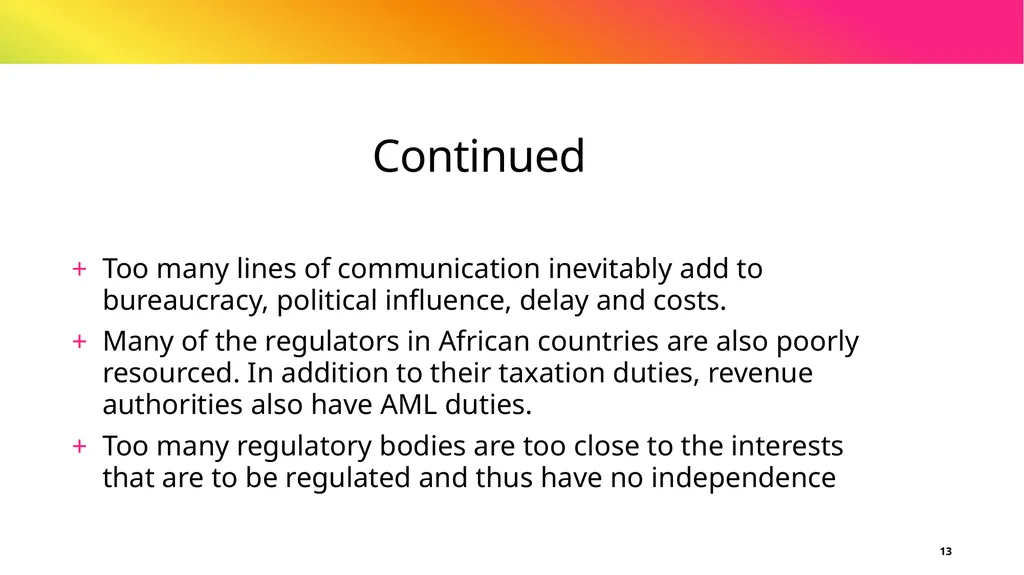
slide13. Continued Too many lines of communication inevitably add to bureaucracy, political influence, delay and costs.
Many of the regulators in African countries are also poorly resourced. In addition to their taxation duties, revenue authorities also have AML duties.
Too many regulatory bodies are too close to the interests that are to be regulated and thus have no independence 13<br>
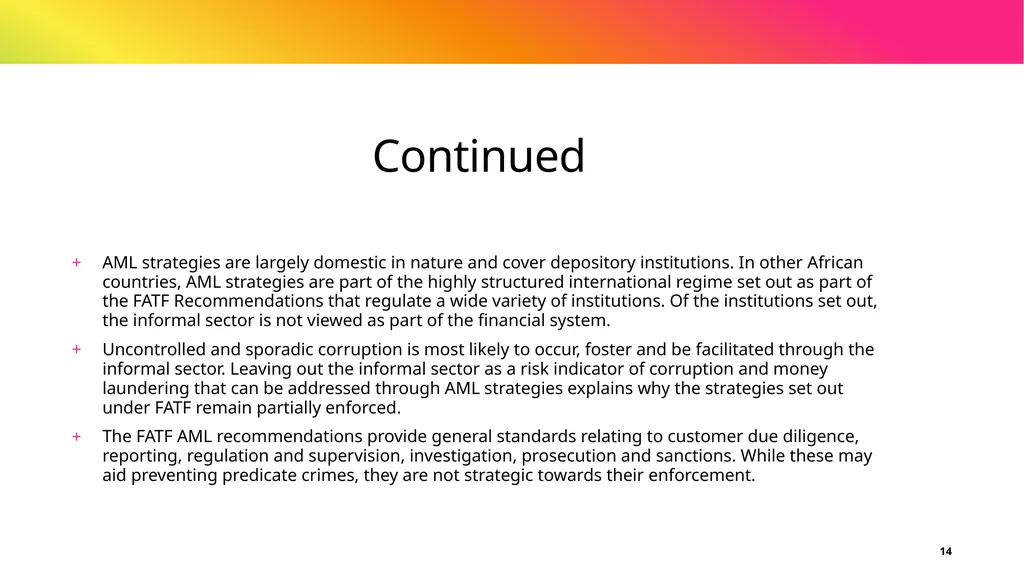
slide14. Continued AML strategies are largely domestic in nature and cover depository institutions. In other African countries, AML strategies are part of the highly structured international regime set out as part of the FATF Recommendations that regulate a wide variety of institutions. Of the institutions set out, the informal sector is not viewed as part of the financial system.
Uncontrolled and sporadic corruption is most likely to occur, foster and be facilitated through the informal sector. Leaving out the informal sector as a risk indicator of corruption and money laundering that can be addressed through AML strategies explains why the strategies set out under FATF remain partially enforced.
The FATF AML recommendations provide general standards relating to customer due diligence, reporting, regulation and supervision, investigation, prosecution and sanctions. While these may aid preventing predicate crimes, they are not strategic towards their enforcement. 14<br>
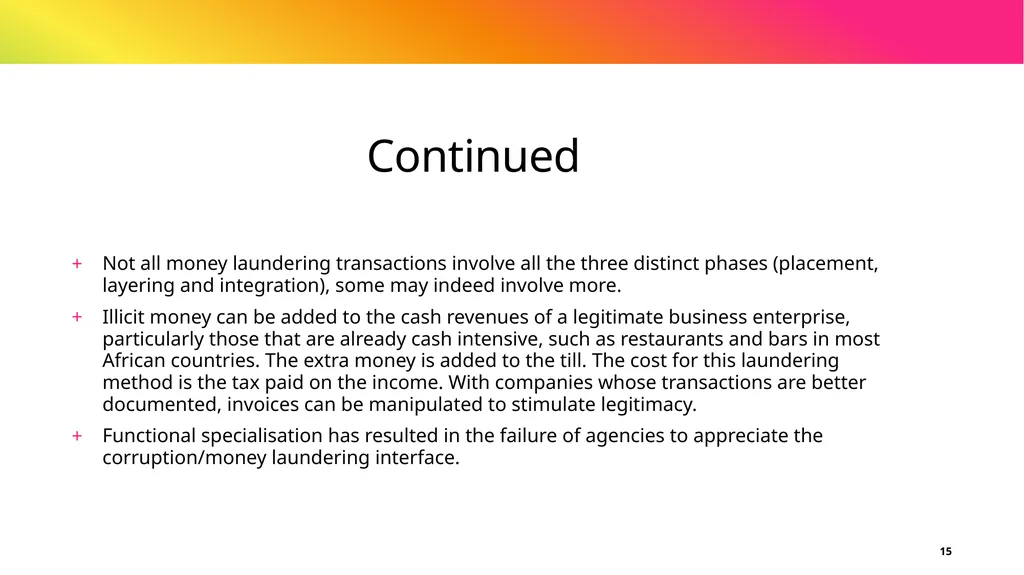
slide15. Continued Not all money laundering transactions involve all the three distinct phases (placement, layering and integration), some may indeed involve more.
Illicit money can be added to the cash revenues of a legitimate business enterprise, particularly those that are already cash intensive, such as restaurants and bars in most African countries. The extra money is added to the till. The cost for this laundering method is the tax paid on the income. With companies whose transactions are better documented, invoices can be manipulated to stimulate legitimacy.
Functional specialisation has resulted in the failure of agencies to appreciate the corruption/money laundering interface. 15<br>
slide16. Session 4 Recommendations and way forward 16<br>
slide17. Recommendations African governments must replace discretion of public officials and control deregulation of the private sector with UN FACTI principles.
Constituting a panel under UNECA to support and recommend reform of the anti-corruption and AML regulatory system which is fragmented and ineffective, and through which technical assistance to FATF style regional bodies in Africa (ESAAMLG, GIABA and GABAC) will be facilitated to share intelligence and capabilities from across the public and private sectors to tackle money laundering. 17<br>
slide18. Recommendations African led investigative group comprising of CSOs, investigative journalists, forensic accountants, lawyers, academics, and state officers working to combat corruption at national levels assisted by WB and UNODC technical support should be formed to investigate, and recovery stolen funds from the continent. Since StAR does not investigate cases but only serves as an intermediary to help return assets, the African led investigative group would support strengthening StAR initiatives to support the recovery of stolen African funds. 18<br>
slide19. Recommendations Strengthening the capacity of the national anti-corruption bodies to do research on the prevalent national forms of corruption, including in collaboration with other international organisations, with the strategic aim of improving the effectiveness of capacity building and technical assistance towards investigating the diverse forms of corruption and money laundering schemes.
Since corruption is transnational where the illicit proceeds can be gained in one state and transferred to another setting up a continental anti-corruption and anti-money laundering judicial institution where enablers and recipients of these forms of IFF can be prosecuted is one way of countering the lack of political will at national levels to curb corruption and money laundering. 19<br>
slide20. Recommendations Introducing a legal requirement of a certificate of good conduct to be issued by a government authority confirming the individual(s) incorporating the company has no previous criminal records, is tax compliant, and has not been flagged for suspicious transactions is one way to safeguard against the risk of forming companies for illicit purposes. While this may delay company formation when such certificate is sought, implementing technology solutions such as machine learning and data analytics can help to swiftly provide this data. 20<br>
slide21. Recommendations Applying punitive sanctions against professional service providers, especially private bankers, lawyers, and accountants, who enable tax avoidance/evasion. Their regulatory architecture should be redesigned. There should be fewer bodies, preferably one well-resourced regulatory body that regulates these professionals. This body should have its own investigative capacity so that it can have in-house expertise, and specialisms rather than outsourcing investigations. 21<br>
slide22. Recommendations Under the auspices of APRM, African governments should conduct a national risk assessment of corruption and money laundering to build on their understanding of these threats arising internally as well as being facilitated through international institutions. Such risk assessment will provide the foundation for the government and private sector to tackle these two forms of IFFs. It will lead to discovery of which financial actors remain outside the purview of regulation, such as crypto asset exchange providers and custodian wallet providers emerging out of the digitised economy. It will reveal what the governments need to do to enhance their domestic response to economic crimes and address the international dimensions to money laundering which can be restricted by domestic reforms. 22<br>
slide23. Recommendations AU to support the setting up of a Continental Anti-Corruption and Money Laundering Coordination Centre, hosted in Addis Ababa where specialist African law enforcement officers are brought together from their multiple domestic agencies to tackle allegations of grand corruption and money laundering. 23<br>
slide24. Way forward 24<br>
Peer Review and Consultation Meeting
September 2021 1<br>
slide2. Session 1 Setting the scene and framing the narrative on IFFs out of Corruption and Money Laundering 2<br>
slide3. Introduction 3<br>
slide4. The different manifestations of IFFs, and their enabling environment Corruption and money laundering has been fostered by foreign engineering of insecurity, degradation of regulation, instability, and political patronage on the continent.
Licit trade in African resources at the global level is facilitated through the international economic order that is regulated by foreign powers, institutions and market players who have imposed conditions on Africa conducive to protect their investments.
These conditions on deregulation of the private sector, trade and financial liberalisation, and minimal state intervention in the economic market and private sector are today among the drivers and enablers of corruption and money laundering on the continent. 4<br>
slide5. The nexus between corruption and money laundering Corruption and money laundering has been exacerbated by the policies and politics at the global level promoting a race to the bottom for tax incentivised FDI alongside professional intermediaries such as accountants, bankers and lawyers, who play a key role in tax structuring and potentially facilitating capital flight. 5<br>
slide6. Sheltered forms of illicit wealth Corruption and money laundering schemes are not apparent. These are hidden through actions and layers of schemes that hinder transparency. It is therefore not known how much is lost as a result of corruption and money laundering in Africa.
Estimates on corruption:
$3.6 trillion – UNSG Antonio Guterres (2018)
$148 billion – AfDB (2020)
Estimates on money laundering:
$1.6 trillion – UNODC (2011)
2-5% of global GDP is lost though laundered proceeds (IMF) 6<br>
slide7. Proposal to strengthen the current UNCTAD/UNODC definition of IFF ‘Financial flows that are illicit in origin, transfer or use; that reflect an exchange of value instead of purely financial transactions; and that cross-country borders, facilitated by and through formal and informal institutions that overlook or have reduced checks on financial accountability, transparency and integrity, and also by those institutions that acquiesce in reduced checks.’ 7<br>
slide8. Session 2 Corruption and money laundering challenges in the African context 8<br>
slide9. In the context of Africa A comparison of CPI scores of African states with their HDI ranking shows that African countries suffering from corruption and money laundering have poor/low human development and struggle to meet their economic development needs
Enabling environment that needs careful regulation:
Legal and financial systems
Political, economic and social realities conducive to IFFs
Resulting developmental challenges and implications for peace and security, humanitarian work, development and human rights in Africa 9<br>
slide10. Session 3 International and Africa specific strategies designed to combat corruption and money laundering 10<br>
slide11. Operational challenges in existing conventions, laws and policies to fight against corruption and money laundering in Africa 11<br>
slide12. Enforcement challenges of the anti-corruption and anti-money laundering strategies Law enforcement lags in formulating risk assessment and detection tools
Self-regulation of professional service providers sometimes results in their complacency in facilitating corruption and money laundering by providing false accounting to mask the criminal proceeds
No single regulator has an overview of the entire system or comprehensiveness of the issues.
Intelligence sharing from the National Crime Agency (NCA) has historically been limited to the banking sector and others are neglected. 12<br>
slide13. Continued Too many lines of communication inevitably add to bureaucracy, political influence, delay and costs.
Many of the regulators in African countries are also poorly resourced. In addition to their taxation duties, revenue authorities also have AML duties.
Too many regulatory bodies are too close to the interests that are to be regulated and thus have no independence 13<br>
slide14. Continued AML strategies are largely domestic in nature and cover depository institutions. In other African countries, AML strategies are part of the highly structured international regime set out as part of the FATF Recommendations that regulate a wide variety of institutions. Of the institutions set out, the informal sector is not viewed as part of the financial system.
Uncontrolled and sporadic corruption is most likely to occur, foster and be facilitated through the informal sector. Leaving out the informal sector as a risk indicator of corruption and money laundering that can be addressed through AML strategies explains why the strategies set out under FATF remain partially enforced.
The FATF AML recommendations provide general standards relating to customer due diligence, reporting, regulation and supervision, investigation, prosecution and sanctions. While these may aid preventing predicate crimes, they are not strategic towards their enforcement. 14<br>
slide15. Continued Not all money laundering transactions involve all the three distinct phases (placement, layering and integration), some may indeed involve more.
Illicit money can be added to the cash revenues of a legitimate business enterprise, particularly those that are already cash intensive, such as restaurants and bars in most African countries. The extra money is added to the till. The cost for this laundering method is the tax paid on the income. With companies whose transactions are better documented, invoices can be manipulated to stimulate legitimacy.
Functional specialisation has resulted in the failure of agencies to appreciate the corruption/money laundering interface. 15<br>
slide16. Session 4 Recommendations and way forward 16<br>
slide17. Recommendations African governments must replace discretion of public officials and control deregulation of the private sector with UN FACTI principles.
Constituting a panel under UNECA to support and recommend reform of the anti-corruption and AML regulatory system which is fragmented and ineffective, and through which technical assistance to FATF style regional bodies in Africa (ESAAMLG, GIABA and GABAC) will be facilitated to share intelligence and capabilities from across the public and private sectors to tackle money laundering. 17<br>
slide18. Recommendations African led investigative group comprising of CSOs, investigative journalists, forensic accountants, lawyers, academics, and state officers working to combat corruption at national levels assisted by WB and UNODC technical support should be formed to investigate, and recovery stolen funds from the continent. Since StAR does not investigate cases but only serves as an intermediary to help return assets, the African led investigative group would support strengthening StAR initiatives to support the recovery of stolen African funds. 18<br>
slide19. Recommendations Strengthening the capacity of the national anti-corruption bodies to do research on the prevalent national forms of corruption, including in collaboration with other international organisations, with the strategic aim of improving the effectiveness of capacity building and technical assistance towards investigating the diverse forms of corruption and money laundering schemes.
Since corruption is transnational where the illicit proceeds can be gained in one state and transferred to another setting up a continental anti-corruption and anti-money laundering judicial institution where enablers and recipients of these forms of IFF can be prosecuted is one way of countering the lack of political will at national levels to curb corruption and money laundering. 19<br>
slide20. Recommendations Introducing a legal requirement of a certificate of good conduct to be issued by a government authority confirming the individual(s) incorporating the company has no previous criminal records, is tax compliant, and has not been flagged for suspicious transactions is one way to safeguard against the risk of forming companies for illicit purposes. While this may delay company formation when such certificate is sought, implementing technology solutions such as machine learning and data analytics can help to swiftly provide this data. 20<br>
slide21. Recommendations Applying punitive sanctions against professional service providers, especially private bankers, lawyers, and accountants, who enable tax avoidance/evasion. Their regulatory architecture should be redesigned. There should be fewer bodies, preferably one well-resourced regulatory body that regulates these professionals. This body should have its own investigative capacity so that it can have in-house expertise, and specialisms rather than outsourcing investigations. 21<br>
slide22. Recommendations Under the auspices of APRM, African governments should conduct a national risk assessment of corruption and money laundering to build on their understanding of these threats arising internally as well as being facilitated through international institutions. Such risk assessment will provide the foundation for the government and private sector to tackle these two forms of IFFs. It will lead to discovery of which financial actors remain outside the purview of regulation, such as crypto asset exchange providers and custodian wallet providers emerging out of the digitised economy. It will reveal what the governments need to do to enhance their domestic response to economic crimes and address the international dimensions to money laundering which can be restricted by domestic reforms. 22<br>
slide23. Recommendations AU to support the setting up of a Continental Anti-Corruption and Money Laundering Coordination Centre, hosted in Addis Ababa where specialist African law enforcement officers are brought together from their multiple domestic agencies to tackle allegations of grand corruption and money laundering. 23<br>
slide24. Way forward 24<br>