StudyMafia.Org Submitted To: Submitted By:
Description: StudyMafia.Org Submitted To: Submitted By: Studymafia.org Studymafia.org Forest Table Contents Definition Introduction Importance of Forest Types of Forest Threats to Forest Steps to Conserve Forest Conclusion 2 Definition A forest is an
Related Topics
Download Presentation
"StudyMafia.Org Submitted To: Submitted By:" is the property of its rightful owner. Permission is granted to download and print the materials on this website for personal, non-commercial use only, and to display it on your personal computer provided you do not modify the materials and that you retain all copyright notices contained in the materials. By downloading content from our website, you accept the terms of this agreement.
Presentation Transcript
slide1. StudyMafia.Org Submitted To: Submitted By:
Studymafia.org Studymafia.org Forest<br>
slide2. Table Contents Definition
Introduction
Importance of Forest
Types of Forest
Threats to Forest
Steps to Conserve Forest
Conclusion 2<br>
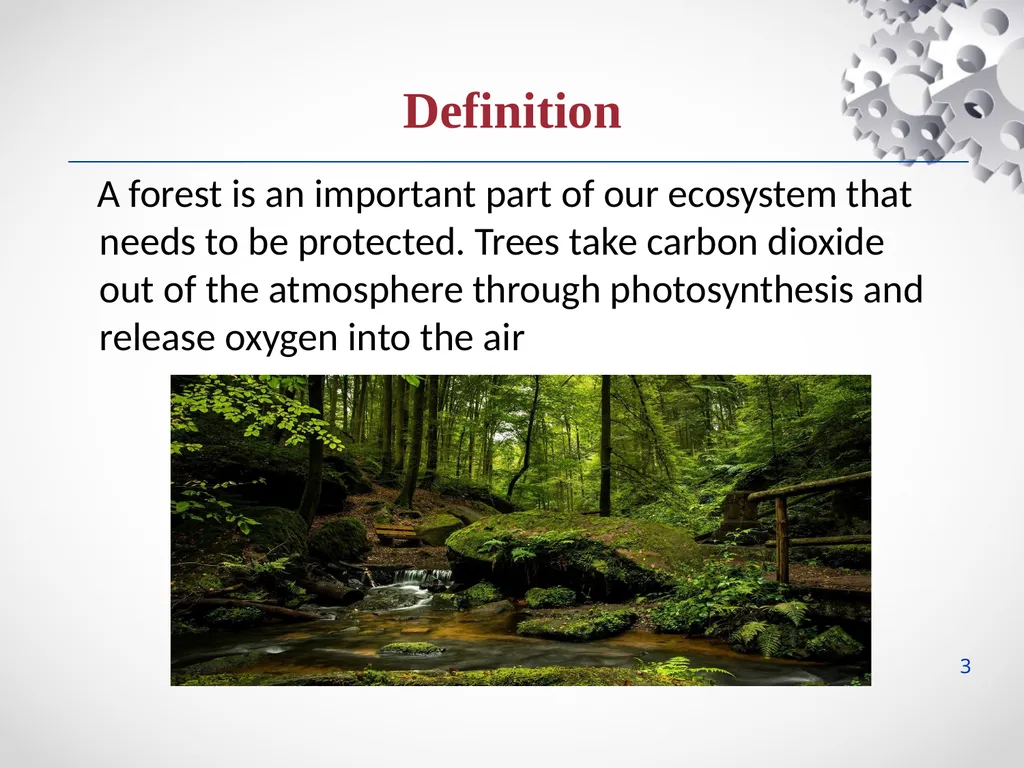
slide3. Definition A forest is an important part of our ecosystem that needs to be protected. Trees take carbon dioxide out of the atmosphere through photosynthesis and release oxygen into the air 3<br>
slide4. Introduction The forest is a source of life for the plants and animals that live in it. Animals, insects, reptiles, birds, amphibians, and many other creatures find homes in the forest. The forest also provides a habitat for many species that may not exist elsewhere, such as elk and moose.
The forest is a big part of the ecosystem in this world. They can be found all over the world, and they help create habitats for wildlife and protect water sources from pollution. 4<br>
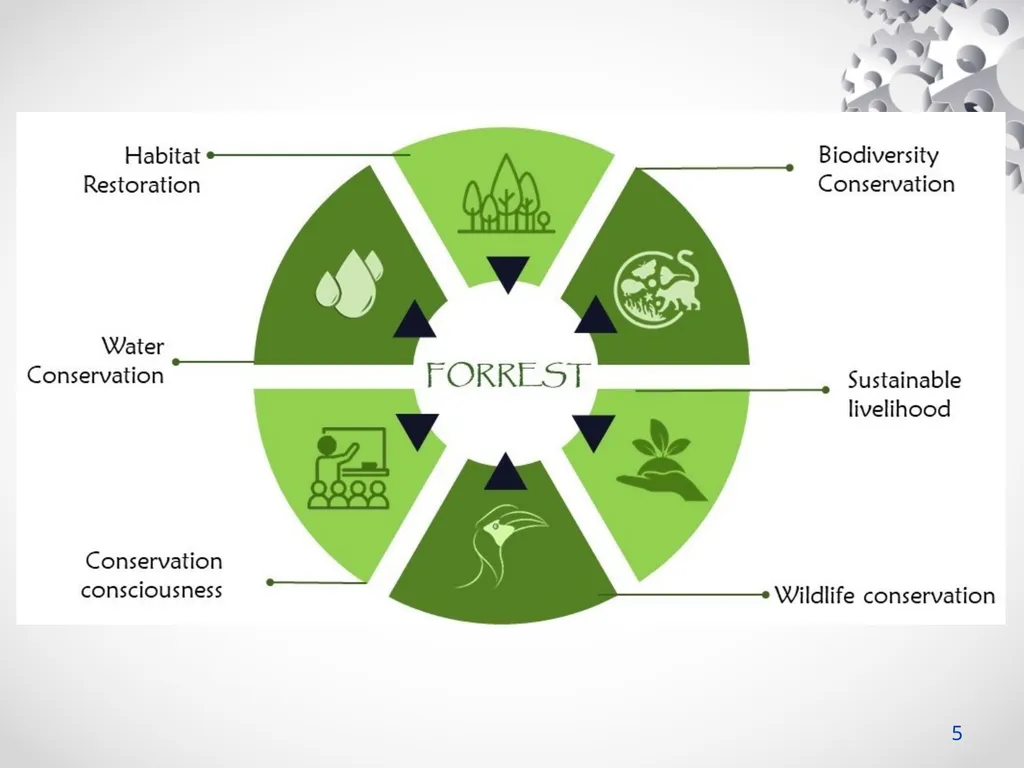
slide5. 5<br>
slide6. Importance of Forest Forests are necessary for a healthy planet. Forests are vital to our society because they provide many essential resources.
Forests are suitable for the economy because the trees can be cut down and turned into paper, wood, and other products.
Forested land also provides essential habitat for animals and plants, and many species of microorganisms. ●●●
6<br>
slide7. Importance of Forest Forests have an enormous impact on the environment. They provide oxygen for animals, plants, and humans.
They filter air and water and regulate the weather and climate changes.
Forests also provide habitats for wildlife, including endangered species. 7<br>
slide8. Types of Forest Boreal Forests
Boreal forests, or taiga, are found between 50 and 60 degrees latitude in North America, Asia, and Europe. Beneath boreal forests is land shaped by glaciers that left a legacy in the geology, hydrology, and soils of the area.
Boreal forests’ bitter cold climate makes it difficult for life, leading to low species diversity compared to temperate and tropical forests. ●●●
8<br>
slide9. Types of Forest Temperate Forests
Temperate forests are located at mid-latitudes, which gives them their characteristic four seasons. Very few patches of old-growth temperate forest remain; the zone is dominated by secondary forests.
As of 2020, temperate forests accounted for 16% of the Earth’s total forest cover. ●●●
9<br>
slide10. Types of Forest Tropical Forests
Located between the Tropics of Cancer and Capricorn at 23 degrees north and south, tropical forests are some of the most biodiverse ecosystems on Earth.
These forests cover only a tenth of the surface of the planet, yet harbor half of all species.11 They are also some of the most threatened by human activities. 10<br>
slide11. Threats to Forest Climate change
Climate change is one of the greatest challenges currently facing humankind. Increased severity and occurrence of natural disasters, changing weather patterns, polar ice melt, sea level rise and drought are just some of the consequences already experienced by populations around the world. ●●●
11<br>
slide12. Threats to Forest Deforestation
Deforestation can result in serious negative impacts for forest biodiversity. The UN Food and Agriculture Organization (FAO) estimated that 13 million hectares of forest are lost each year to deforestation.
While it would take 1000 years for some tropical forests to recreate their biodiversity, others have been irreversibly damaged, as species become extinct after the destruction of their habitat. ●●●
12<br>
slide13. Threats to Forest Natural disasters and disturbances
Fire is a natural part of forest ecosystems and several species of trees have found ways to protect their seeds from it.
However, with increasing temperatures favouring more intense wildfires, many forests will not be able to recover. ●●●
13<br>
slide14. Threats to Forest Natural disasters and disturbances
Agriculture is generally acknowledged as the main driver of deforestation, as forests are cleared to make space for crops or cattle farms.
In comparison, only a small proportion of global deforestation is caused directly from the forest sector through the establishment of plantations and overexploitation of timber. 14<br>
slide15. Steps To Conserve Forest Regulated and Planned Cutting of Trees:
One of the main reasons of deforestation is commercial felling of trees. According to an estimate, about 1,600 million cubic metres of wood have been used for various purposes in the world.
Although trees are considered as perennial resource, when exploited on a very large scale, their revival cannot be possible. ●●●
15<br>
slide16. Steps To Conserve Forest Control over Forest Fire:
Destruction or loss of forest by fire is fairly common; because trees are highly exposed to fire and once started it becomes difficult to control.
Sometimes, the fire starts by natural process, i.e., by lightning or by friction between trees during speedy winds, while in most cases it is also by man either intentionally or unintentionally. ●●●
16<br>
slide17. Steps To Conserve Forest Reforestation and Afforestation:
The sustained yield concept dictates that whenever timber is removed, either by block cutting or by selective cutting, the denuded area must be reforested.
This may be done by natural or artificial methods. Similarly, any forested land, which has been destroyed by fire or mining activities, should be reforested. ●●●
17<br>
slide18. Steps To Conserve Forest Check over Forest Clearance for Agricultural and Habitation Purposes:
Most of the present-day agricultural land was once forested and then cleared for the use of agriculture. But now it has reached the stage where further clearance will be dangerous for the entire ecosystem.
There are tribals in some parts of Asia, Africa and South America, where shifting cultivation is still a part of their system of land procurement. ●●●
18<br>
slide19. Steps To Conserve Forest Check over Forest Clearance for Agricultural and Habitation Purposes:
Most of the present-day agricultural land was once forested and then cleared for the use of agriculture. But now it has reached the stage where further clearance will be dangerous for the entire ecosystem.
There are tribals in some parts of Asia, Africa and South America, where shifting cultivation is still a part of their system of land procurement. ●●●
19<br>
slide20. Steps To Conserve Forest Protection of Forests:
The existing forests should be protected. Apart from commercial cutting, unorganised grazing is also one of the reasons.
There are several forest diseases resulting from parasitic fungi, rusts, mistletoes, viruses and nematodes which cause the destruction of trees. ●●●
20<br>
slide21. Steps To Conserve Forest Proper Utilisation of Forest and Forests Products:
Generally, trees are cut for logs and the rest, including stump, limbs, branches and foliage, etc., is left out as worthless debris.
Further waste occurs at the saw mills. There is thus need to utilise this waste material. 21<br>
slide23. Conclusion Forests are an intricate ecosystem on earth which contains trees, shrubs, grasses and more. The constituents of forests which are trees and plants form a major part of the forests.
Furthermore, they create a healthy environment so that various species of animals can breed and live there happily. 23<br>
slide24. ThanksTo StudyMafia.org<br>
Studymafia.org Studymafia.org Forest<br>
slide2. Table Contents Definition
Introduction
Importance of Forest
Types of Forest
Threats to Forest
Steps to Conserve Forest
Conclusion 2<br>
slide3. Definition A forest is an important part of our ecosystem that needs to be protected. Trees take carbon dioxide out of the atmosphere through photosynthesis and release oxygen into the air 3<br>
slide4. Introduction The forest is a source of life for the plants and animals that live in it. Animals, insects, reptiles, birds, amphibians, and many other creatures find homes in the forest. The forest also provides a habitat for many species that may not exist elsewhere, such as elk and moose.
The forest is a big part of the ecosystem in this world. They can be found all over the world, and they help create habitats for wildlife and protect water sources from pollution. 4<br>
slide5. 5<br>
slide6. Importance of Forest Forests are necessary for a healthy planet. Forests are vital to our society because they provide many essential resources.
Forests are suitable for the economy because the trees can be cut down and turned into paper, wood, and other products.
Forested land also provides essential habitat for animals and plants, and many species of microorganisms. ●●●
6<br>
slide7. Importance of Forest Forests have an enormous impact on the environment. They provide oxygen for animals, plants, and humans.
They filter air and water and regulate the weather and climate changes.
Forests also provide habitats for wildlife, including endangered species. 7<br>
slide8. Types of Forest Boreal Forests
Boreal forests, or taiga, are found between 50 and 60 degrees latitude in North America, Asia, and Europe. Beneath boreal forests is land shaped by glaciers that left a legacy in the geology, hydrology, and soils of the area.
Boreal forests’ bitter cold climate makes it difficult for life, leading to low species diversity compared to temperate and tropical forests. ●●●
8<br>
slide9. Types of Forest Temperate Forests
Temperate forests are located at mid-latitudes, which gives them their characteristic four seasons. Very few patches of old-growth temperate forest remain; the zone is dominated by secondary forests.
As of 2020, temperate forests accounted for 16% of the Earth’s total forest cover. ●●●
9<br>
slide10. Types of Forest Tropical Forests
Located between the Tropics of Cancer and Capricorn at 23 degrees north and south, tropical forests are some of the most biodiverse ecosystems on Earth.
These forests cover only a tenth of the surface of the planet, yet harbor half of all species.11 They are also some of the most threatened by human activities. 10<br>
slide11. Threats to Forest Climate change
Climate change is one of the greatest challenges currently facing humankind. Increased severity and occurrence of natural disasters, changing weather patterns, polar ice melt, sea level rise and drought are just some of the consequences already experienced by populations around the world. ●●●
11<br>
slide12. Threats to Forest Deforestation
Deforestation can result in serious negative impacts for forest biodiversity. The UN Food and Agriculture Organization (FAO) estimated that 13 million hectares of forest are lost each year to deforestation.
While it would take 1000 years for some tropical forests to recreate their biodiversity, others have been irreversibly damaged, as species become extinct after the destruction of their habitat. ●●●
12<br>
slide13. Threats to Forest Natural disasters and disturbances
Fire is a natural part of forest ecosystems and several species of trees have found ways to protect their seeds from it.
However, with increasing temperatures favouring more intense wildfires, many forests will not be able to recover. ●●●
13<br>
slide14. Threats to Forest Natural disasters and disturbances
Agriculture is generally acknowledged as the main driver of deforestation, as forests are cleared to make space for crops or cattle farms.
In comparison, only a small proportion of global deforestation is caused directly from the forest sector through the establishment of plantations and overexploitation of timber. 14<br>
slide15. Steps To Conserve Forest Regulated and Planned Cutting of Trees:
One of the main reasons of deforestation is commercial felling of trees. According to an estimate, about 1,600 million cubic metres of wood have been used for various purposes in the world.
Although trees are considered as perennial resource, when exploited on a very large scale, their revival cannot be possible. ●●●
15<br>
slide16. Steps To Conserve Forest Control over Forest Fire:
Destruction or loss of forest by fire is fairly common; because trees are highly exposed to fire and once started it becomes difficult to control.
Sometimes, the fire starts by natural process, i.e., by lightning or by friction between trees during speedy winds, while in most cases it is also by man either intentionally or unintentionally. ●●●
16<br>
slide17. Steps To Conserve Forest Reforestation and Afforestation:
The sustained yield concept dictates that whenever timber is removed, either by block cutting or by selective cutting, the denuded area must be reforested.
This may be done by natural or artificial methods. Similarly, any forested land, which has been destroyed by fire or mining activities, should be reforested. ●●●
17<br>
slide18. Steps To Conserve Forest Check over Forest Clearance for Agricultural and Habitation Purposes:
Most of the present-day agricultural land was once forested and then cleared for the use of agriculture. But now it has reached the stage where further clearance will be dangerous for the entire ecosystem.
There are tribals in some parts of Asia, Africa and South America, where shifting cultivation is still a part of their system of land procurement. ●●●
18<br>
slide19. Steps To Conserve Forest Check over Forest Clearance for Agricultural and Habitation Purposes:
Most of the present-day agricultural land was once forested and then cleared for the use of agriculture. But now it has reached the stage where further clearance will be dangerous for the entire ecosystem.
There are tribals in some parts of Asia, Africa and South America, where shifting cultivation is still a part of their system of land procurement. ●●●
19<br>
slide20. Steps To Conserve Forest Protection of Forests:
The existing forests should be protected. Apart from commercial cutting, unorganised grazing is also one of the reasons.
There are several forest diseases resulting from parasitic fungi, rusts, mistletoes, viruses and nematodes which cause the destruction of trees. ●●●
20<br>
slide21. Steps To Conserve Forest Proper Utilisation of Forest and Forests Products:
Generally, trees are cut for logs and the rest, including stump, limbs, branches and foliage, etc., is left out as worthless debris.
Further waste occurs at the saw mills. There is thus need to utilise this waste material. 21<br>
slide23. Conclusion Forests are an intricate ecosystem on earth which contains trees, shrubs, grasses and more. The constituents of forests which are trees and plants form a major part of the forests.
Furthermore, they create a healthy environment so that various species of animals can breed and live there happily. 23<br>
slide24. ThanksTo StudyMafia.org<br>