01
Subject: Performing Arts: Drama
Topic: Development of Theatre: Elizabethan Year: 8 Elizabethan theatre took place during the late 16th century. The themes of plays changed during Elizabeth’s reign and English playwrights began to write comedies and tragedies. Elizabethan theatre was notoriously raucous. Most people would stand throughout the play and talk back to the actors as if they were real people. Hints of this is seen in Shakespeare’s plays.
Elizabethan acting style very often used this method where the actors would acknowledge the audience through gestures, eye contact and language.
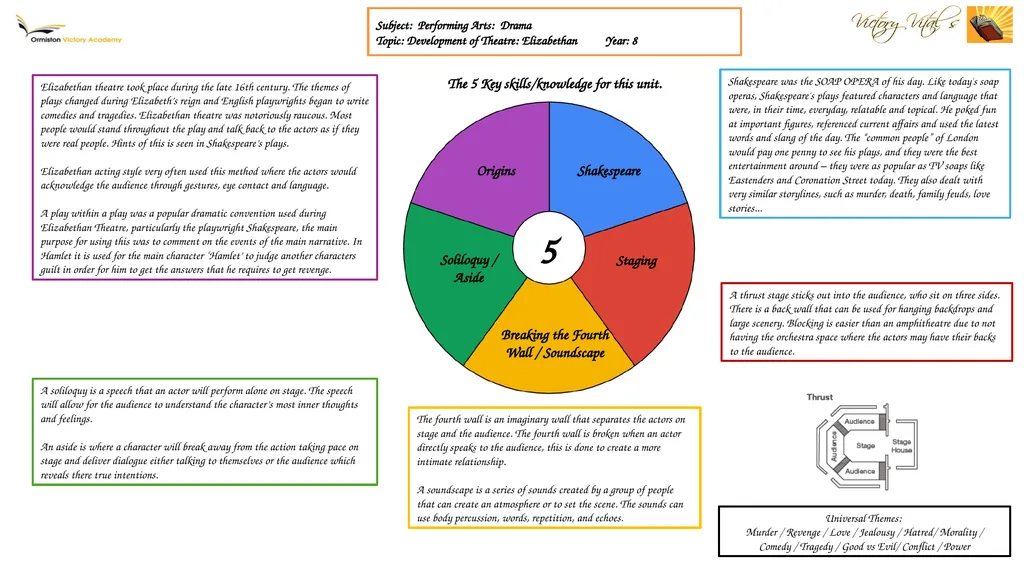
A play within a play was a popular dramatic convention used during Elizabethan Theatre, particularly the playwright Shakespeare, the main purpose for using this was to comment on the events of the main narrative. In Hamlet it is used for the main character ‘Hamlet’ to judge another characters guilt in order for him to get the answers that he requires to get revenge. Shakespeare was the SOAP OPERA of his day. Like today's soap operas, Shakespeare's plays featured characters and language that were, in their time, everyday, relatable and topical. He poked fun at important figures, referenced current affairs and used the latest words and slang of the day. The “common people” of London would pay one penny to see his plays, and they were the best entertainment around – they were as popular as TV soaps like Eastenders and Coronation Street today. They also dealt with very similar storylines, such as murder, death, family feuds, love stories... A thrust stage sticks out into the audience, who sit on three sides. There is a back wall that can be used for hanging backdrops and large scenery. Blocking is easier than an amphitheatre due to not having the orchestra space where the actors may have their backs to the audience. The fourth wall is an imaginary wall that separates the actors on stage and the audience. The fourth wall is broken when an actor directly speaks to the audience, this is done to create a more intimate relationship.
A soundscape is a series of sounds created by a group of people that can create an atmosphere or to set the scene. The sounds can use body percussion, words, repetition, and echoes. A soliloquy is a speech that an actor will perform alone on stage. The speech will allow for the audience to understand the character’s most inner thoughts and feelings.
An aside is where a character will break away from the action taking pace on stage and deliver dialogue either talking to themselves or the audience which reveals there true intentions. The 5 Key skills/knowledge for this unit. Universal Themes:
Murder / Revenge / Love / Jealousy / Hatred/ Morality / Comedy / Tragedy / Good vs Evil/ Conflict / Power<br>