
Submodularity Reading Group Polymatroid M. Pawan


Description: Submodularity Reading Group Polymatroid M. Pawan Kumar http:www.robots.ox.ac.ukoval Submodular Function Ground set S Function f over power set of S f(T) f(U) f(T U) f(T U) for all T, U S Diminishing Returns Define df(sT)
Related Topics
Download Presentation
"Submodularity Reading Group Polymatroid M. Pawan" is the property of its rightful owner. Permission is granted to download and print the materials on this website for personal, non-commercial use only, and to display it on your personal computer provided you do not modify the materials and that you retain all copyright notices contained in the materials. By downloading content from our website, you accept the terms of this agreement.
Presentation Transcript
slide1. Submodularity Reading Group
Polymatroid M. Pawan Kumar
http://www.robots.ox.ac.uk/~oval/<br>
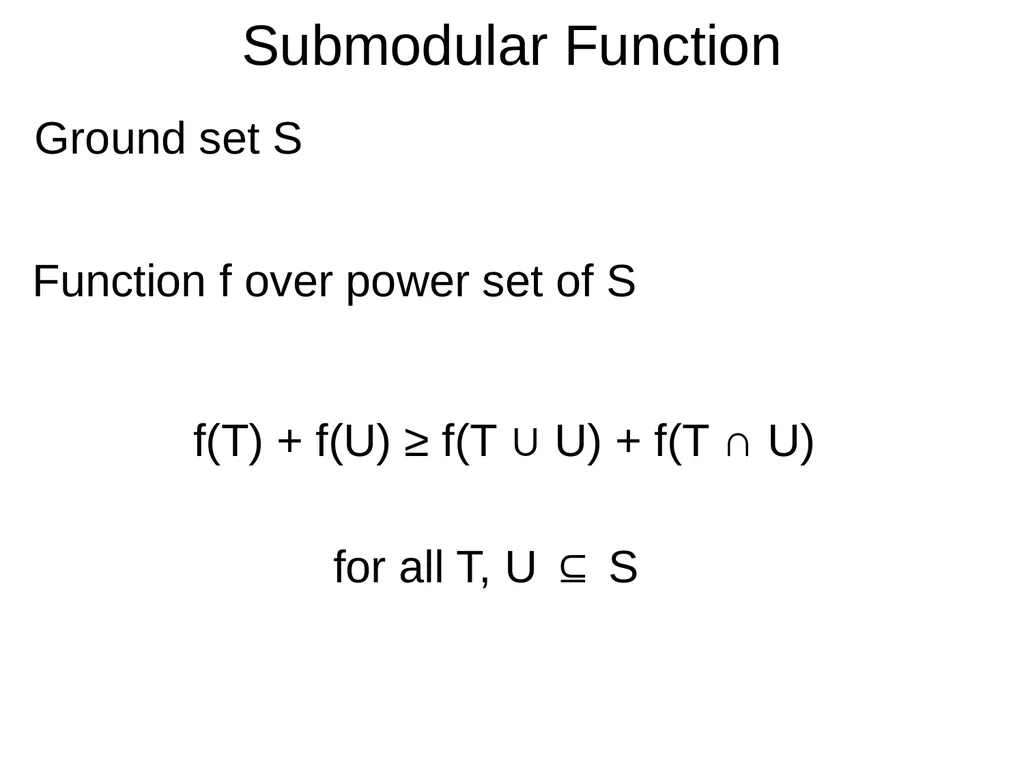
slide2. Submodular Function Ground set S Function f over power set of S f(T) + f(U) ≥ f(T ∪ U) + f(T ∩ U) for all T, U ⊆ S<br>
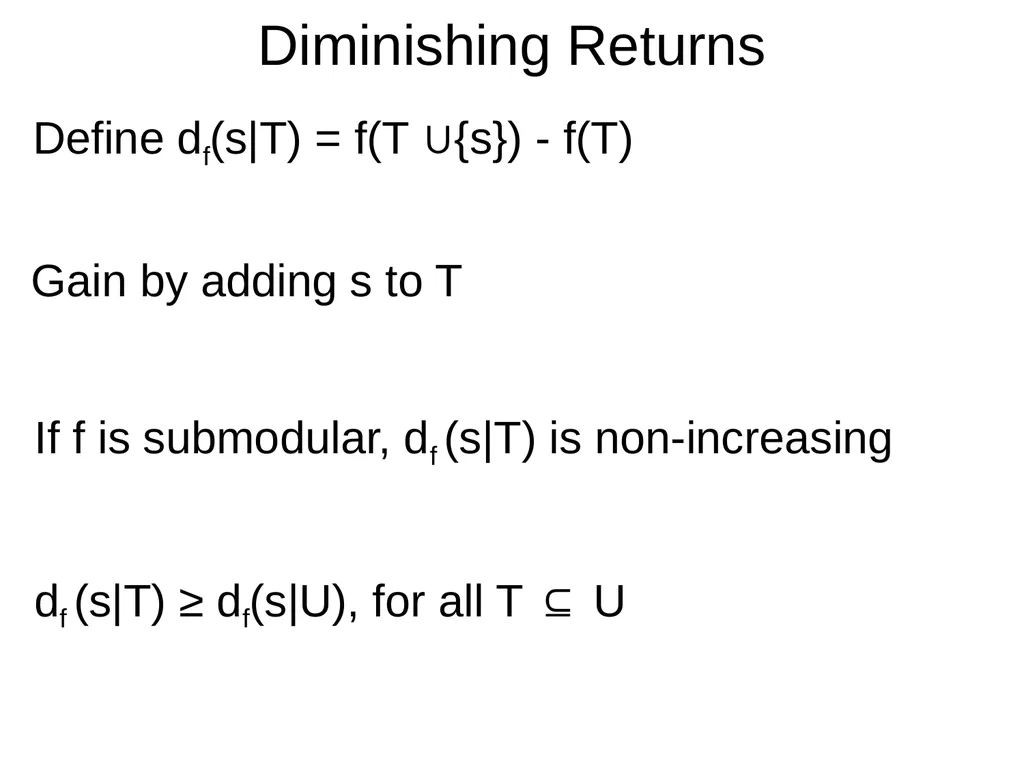
slide3. Diminishing Returns Define df(s|T) = f(T ∪{s}) - f(T) Gain by adding s to T If f is submodular, df (s|T) is non-increasing df (s|T) ≥ df(s|U), for all T ⊆ U<br>
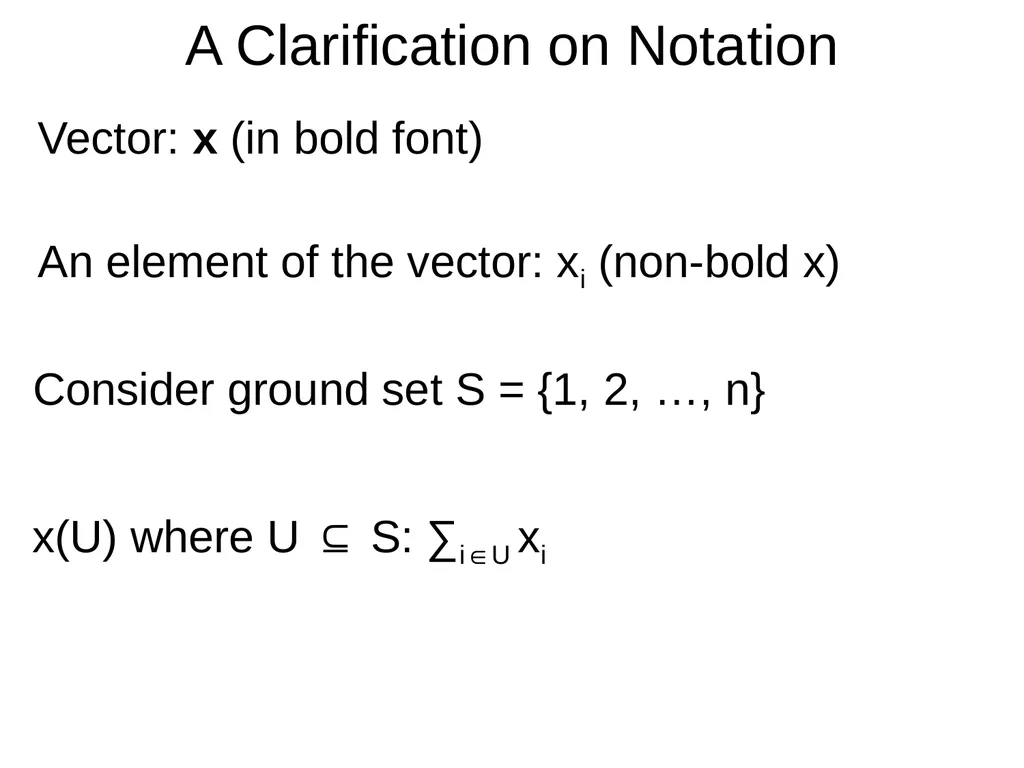
slide4. A Clarification on Notation Vector: x (in bold font) An element of the vector: xi (non-bold x) x(U) where U ⊆ S: ∑i∈U xi Consider ground set S = {1, 2, …, n}<br>
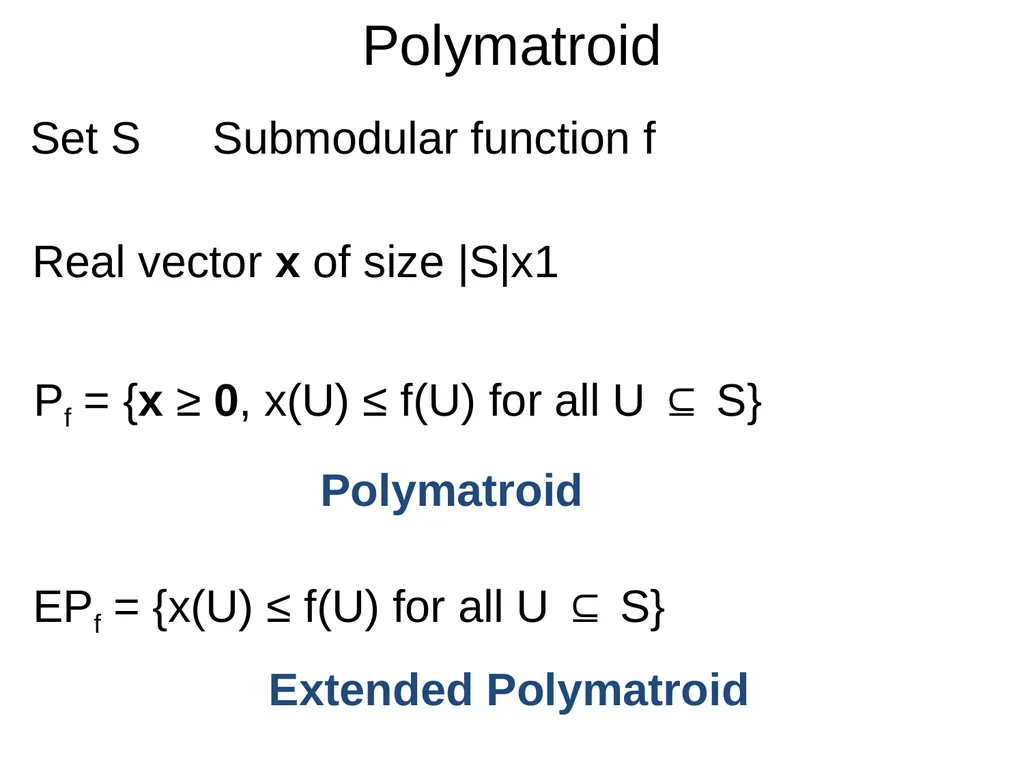
slide5. Polymatroid Set S Real vector x of size |S|x1 Submodular function f Pf = {x ≥ 0, x(U) ≤ f(U) for all U ⊆ S} EPf = {x(U) ≤ f(U) for all U ⊆ S} Polymatroid Extended Polymatroid<br>
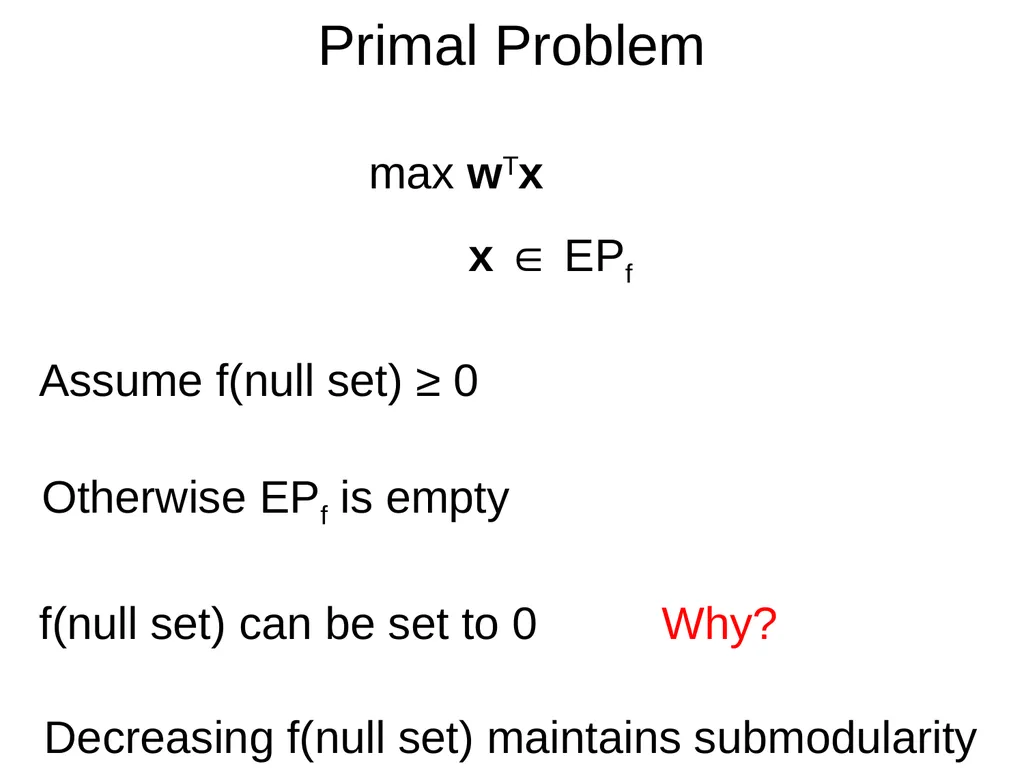
slide6. Primal Problem max wTx x ∈ EPf Assume f(null set) ≥ 0 Otherwise EPf is empty f(null set) can be set to 0 Why? Decreasing f(null set) maintains submodularity<br>
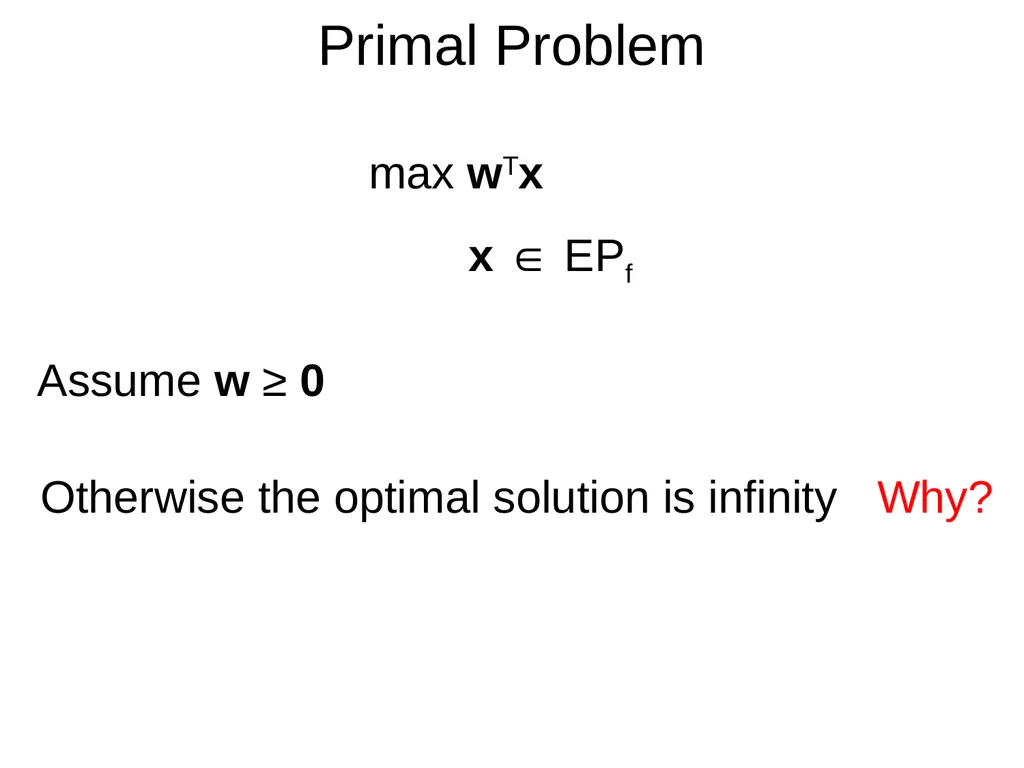
slide7. Primal Problem max wTx x ∈ EPf Assume w ≥ 0 Otherwise the optimal solution is infinity Why?<br>
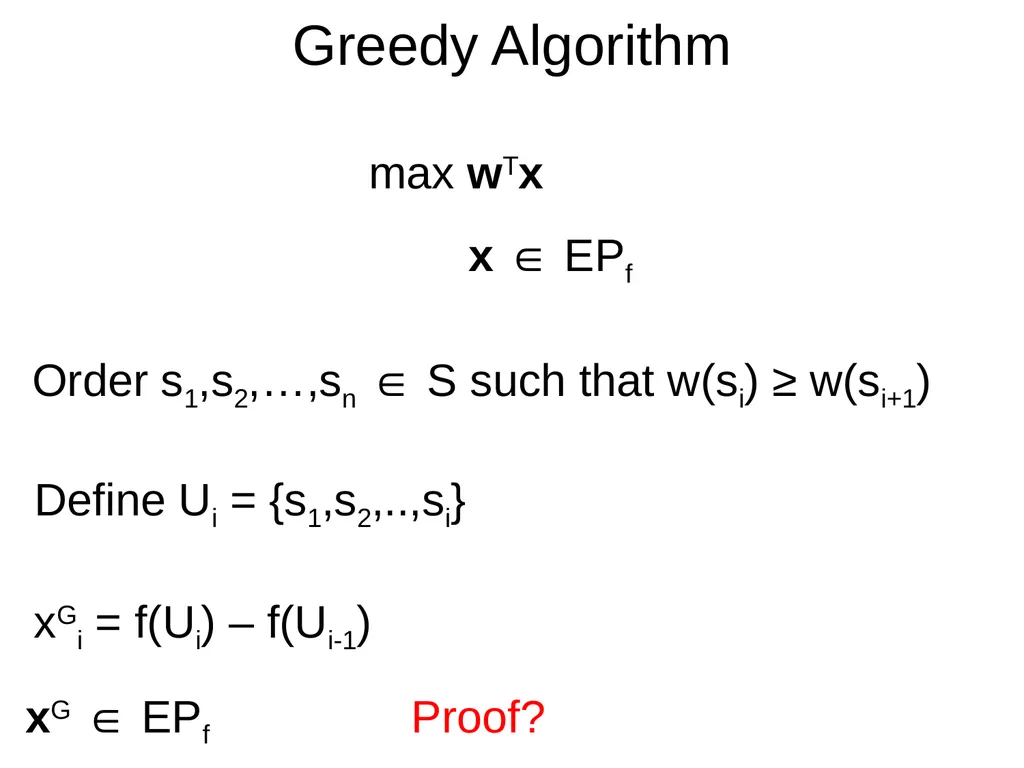
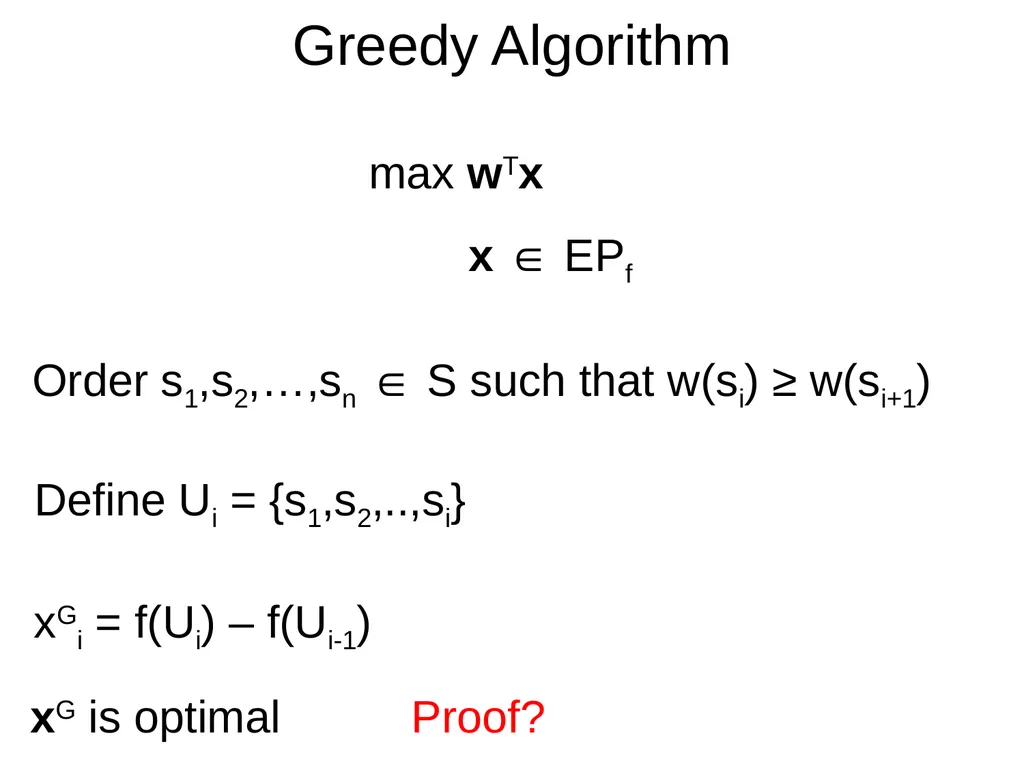
slide8. Greedy Algorithm max wTx x ∈ EPf Order s1,s2,…,sn ∈ S such that w(si) ≥ w(si+1) Define Ui = {s1,s2,..,si} xGi = f(Ui) – f(Ui-1) xG ∈ EPf Proof?<br>
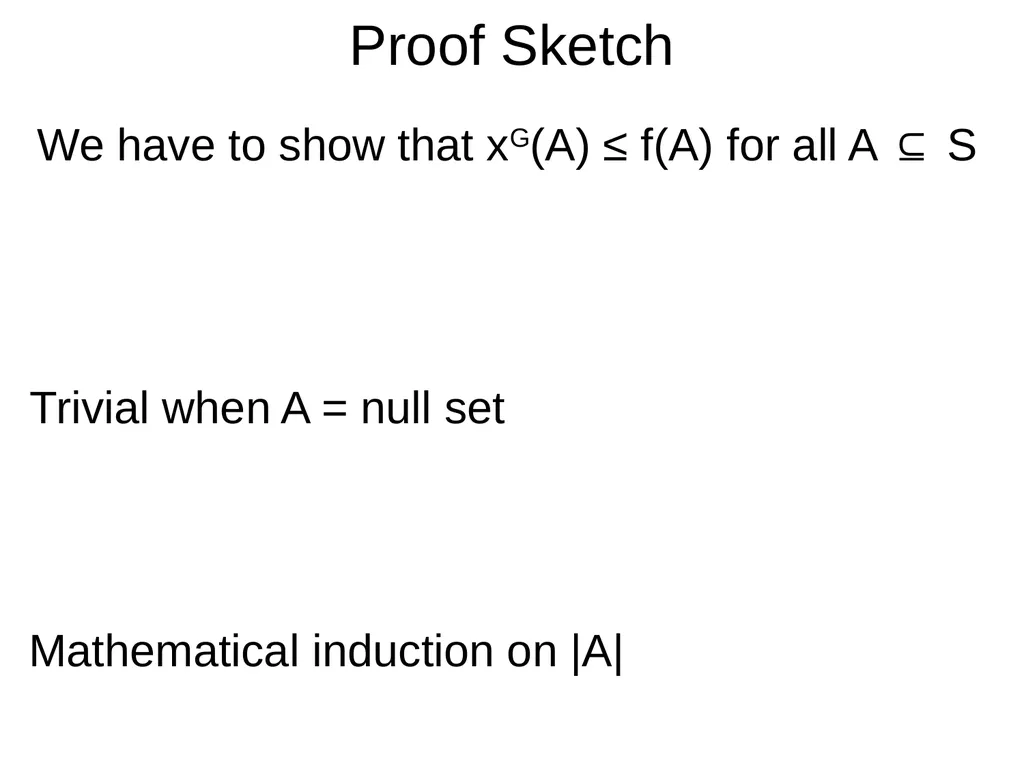
slide9. Proof Sketch We have to show that xG(A) ≤ f(A) for all A ⊆ S Trivial when A = null set Mathematical induction on |A|<br>
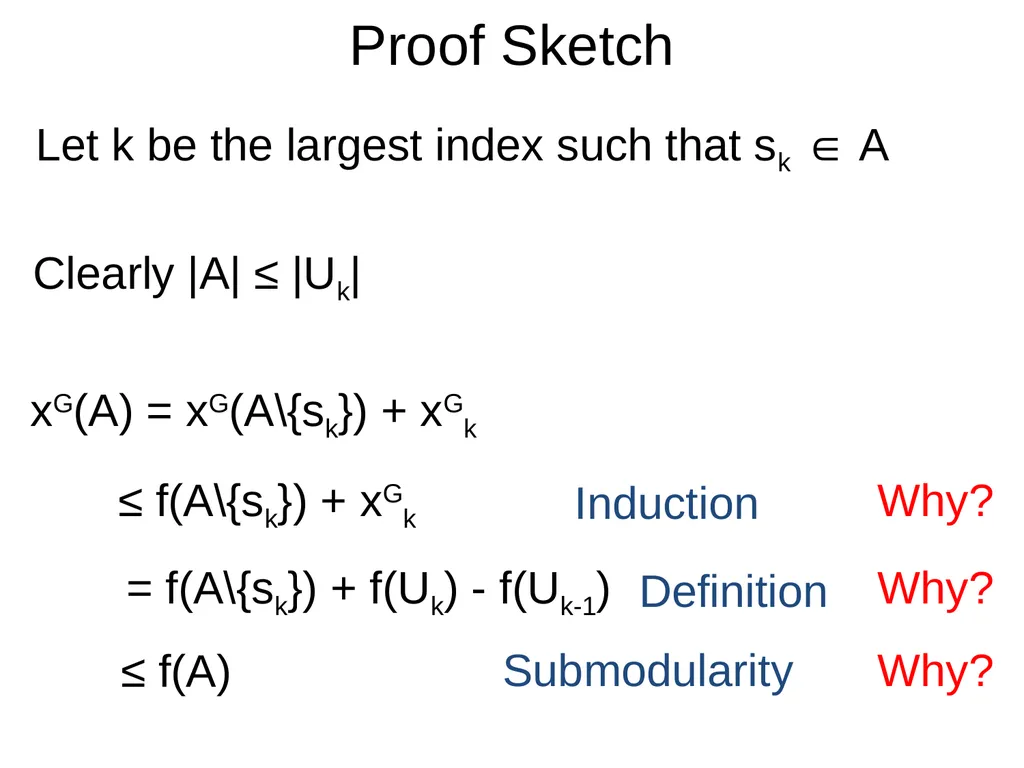
slide10. Proof Sketch Let k be the largest index such that sk ∈ A Clearly |A| ≤ |Uk| xG(A) = xG(A\{sk}) + xGk = f(A\{sk}) + f(Uk) - f(Uk-1) ≤ f(A) ≤ f(A\{sk}) + xGk Why? Induction Why? Why? Submodularity Definition<br>
slide11. Greedy Algorithm max wTx x ∈ EPf Order s1,s2,…,sn ∈ S such that w(si) ≥ w(si+1) Define Ui = {s1,s2,..,si} xGi = f(Ui) – f(Ui-1) xG is optimal Proof?<br>
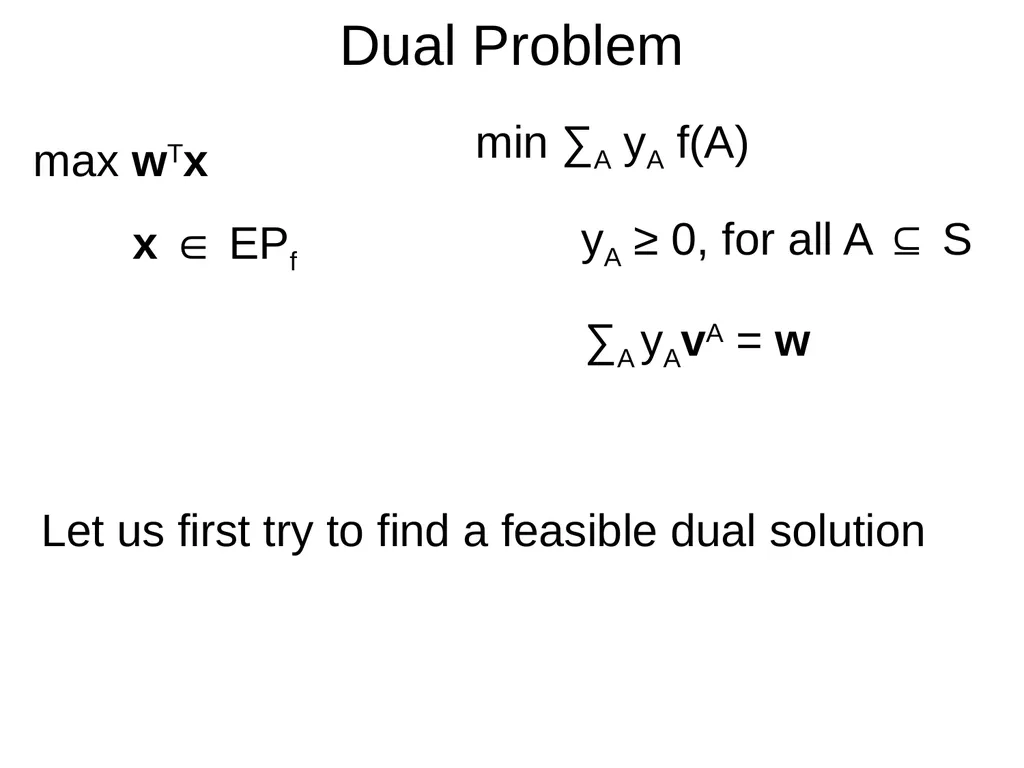
slide12. Dual Problem max wTx x ∈ EPf min ∑A yA f(A) yA ≥ 0, for all A ⊆ S ∑A yAvA = w Let us first try to find a feasible dual solution<br>
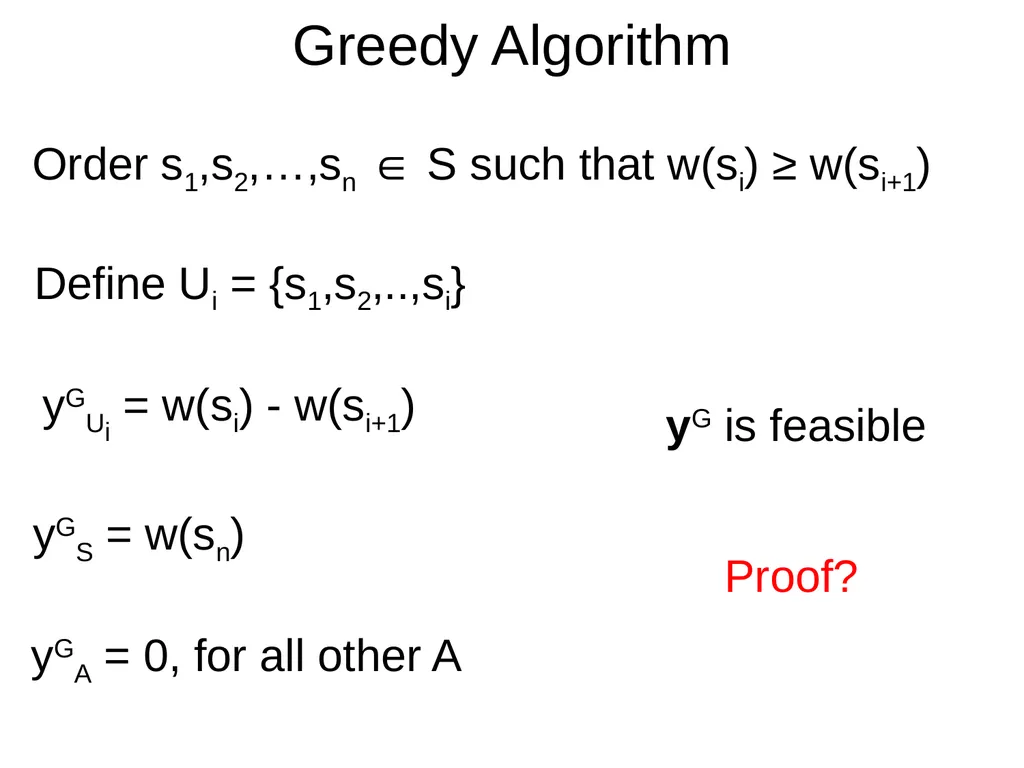
slide13. Greedy Algorithm Order s1,s2,…,sn ∈ S such that w(si) ≥ w(si+1) Define Ui = {s1,s2,..,si} yGUi = w(si) - w(si+1) yG is feasible yGS = w(sn) yGA = 0, for all other A Proof?<br>
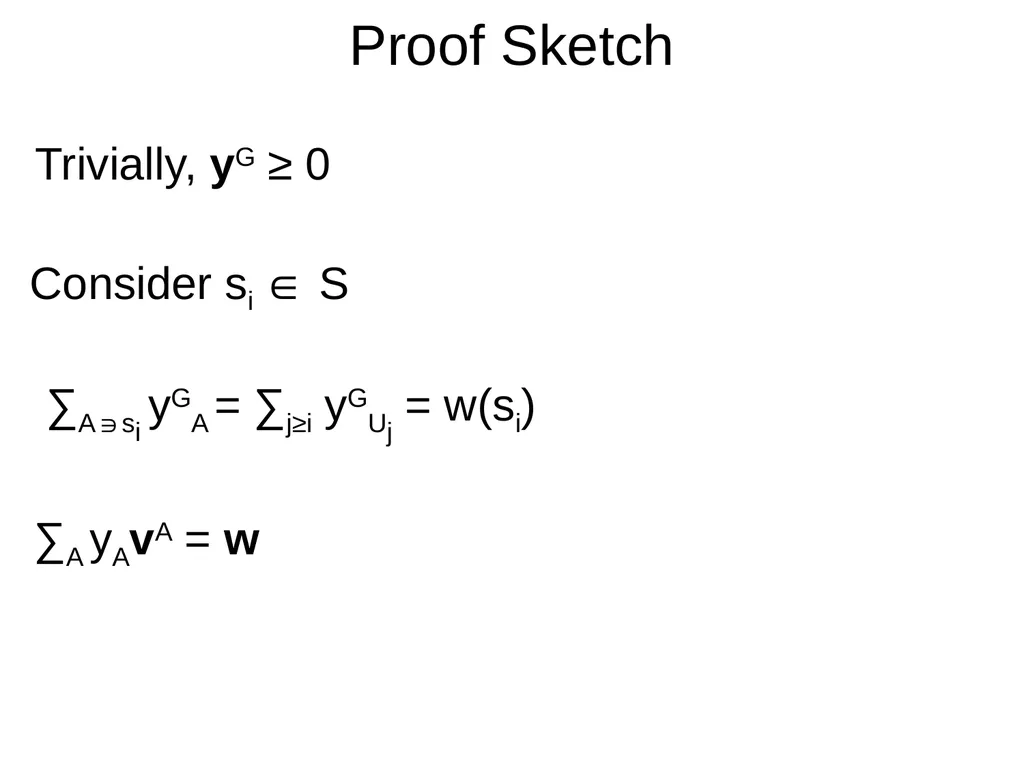
slide14. Proof Sketch Trivially, yG ≥ 0 Consider si ∈ S ∑A∋si yGA = ∑j≥i yGUj = w(si) ∑A yAvA = w<br>
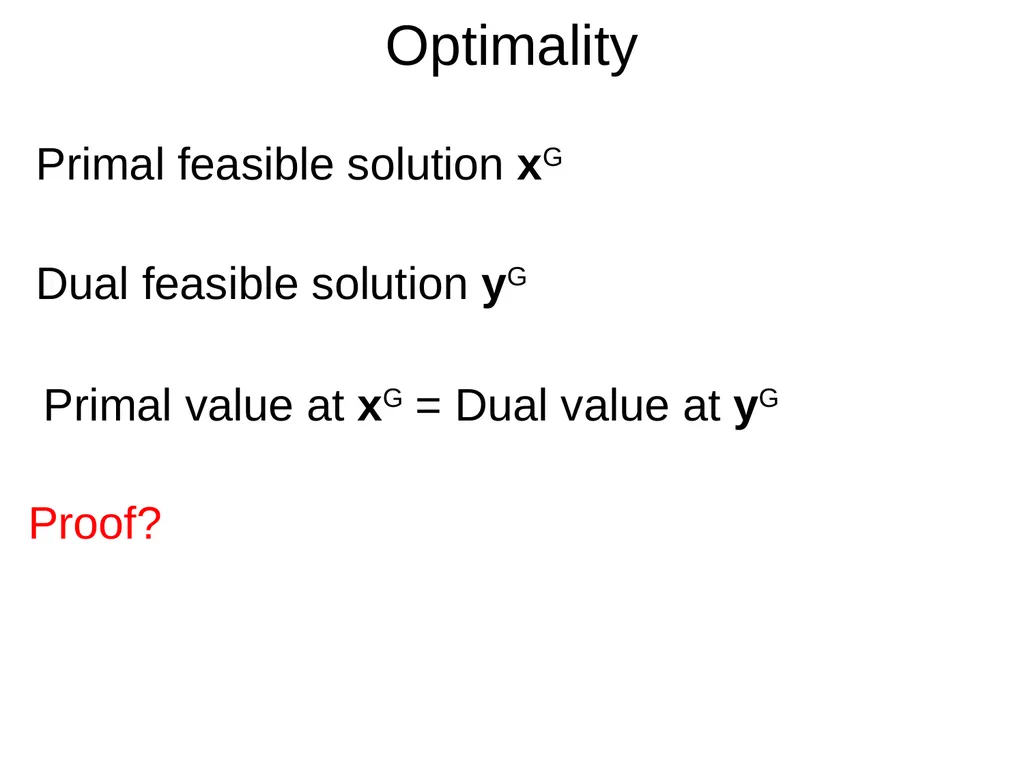
slide15. Optimality Primal feasible solution xG Dual feasible solution yG Primal value at xG = Dual value at yG Proof?<br>
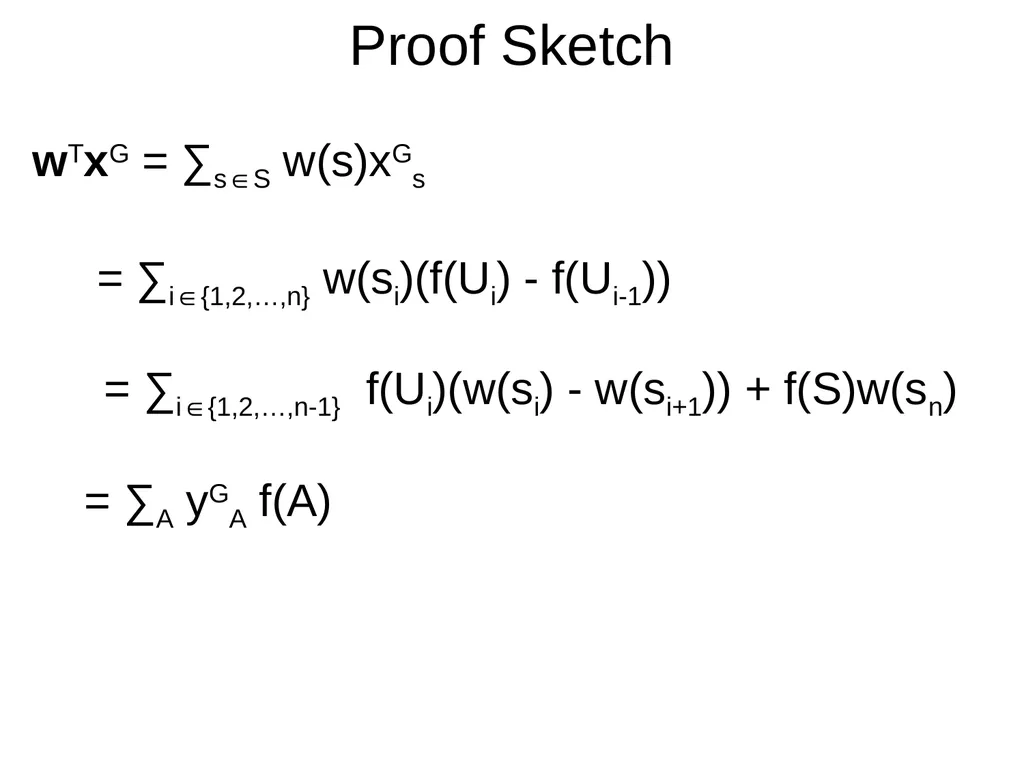
slide16. Proof Sketch wTxG = ∑s∈S w(s)xGs = ∑i∈{1,2,…,n} w(si)(f(Ui) - f(Ui-1)) = ∑i∈{1,2,…,n-1} f(Ui)(w(si) - w(si+1)) + f(S)w(sn) = ∑A yGA f(A)<br>
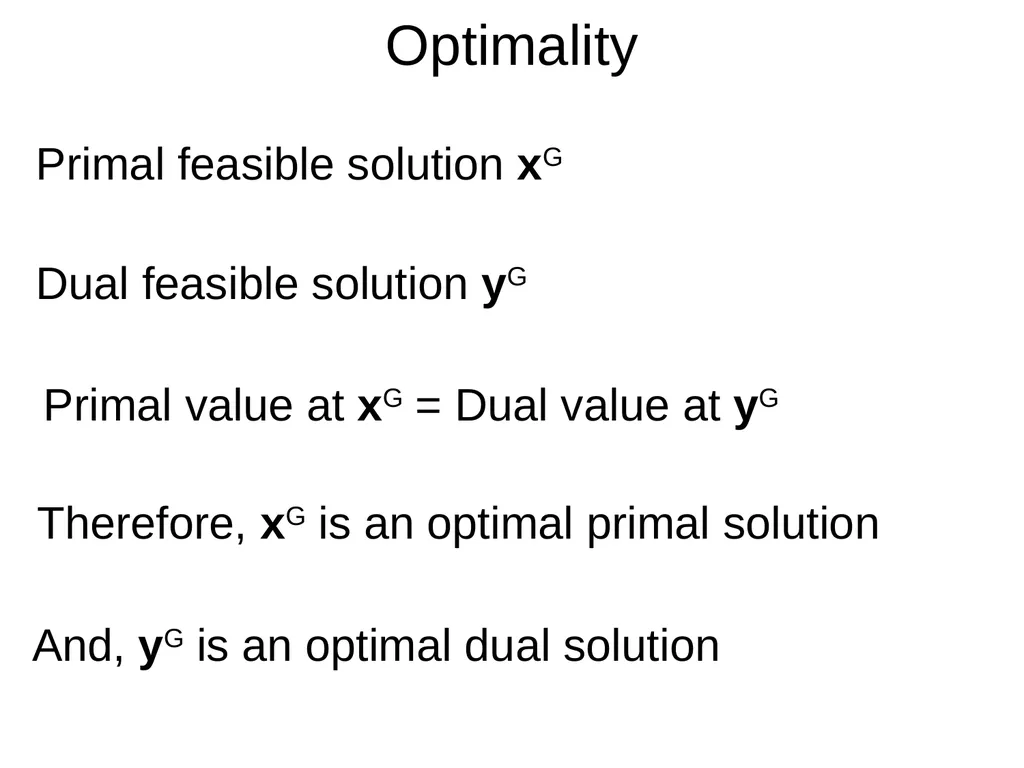
slide17. Optimality Primal feasible solution xG Dual feasible solution yG Primal value at xG = Dual value at yG Therefore, xG is an optimal primal solution And, yG is an optimal dual solution<br>
http://www.robots.ox.ac.uk/~oval/<br>
slide2. Submodular Function Ground set S Function f over power set of S f(T) + f(U) ≥ f(T ∪ U) + f(T ∩ U) for all T, U ⊆ S<br>
slide3. Diminishing Returns Define df(s|T) = f(T ∪{s}) - f(T) Gain by adding s to T If f is submodular, df (s|T) is non-increasing df (s|T) ≥ df(s|U), for all T ⊆ U<br>
slide4. A Clarification on Notation Vector: x (in bold font) An element of the vector: xi (non-bold x) x(U) where U ⊆ S: ∑i∈U xi Consider ground set S = {1, 2, …, n}<br>
slide5. Polymatroid Set S Real vector x of size |S|x1 Submodular function f Pf = {x ≥ 0, x(U) ≤ f(U) for all U ⊆ S} EPf = {x(U) ≤ f(U) for all U ⊆ S} Polymatroid Extended Polymatroid<br>
slide6. Primal Problem max wTx x ∈ EPf Assume f(null set) ≥ 0 Otherwise EPf is empty f(null set) can be set to 0 Why? Decreasing f(null set) maintains submodularity<br>
slide7. Primal Problem max wTx x ∈ EPf Assume w ≥ 0 Otherwise the optimal solution is infinity Why?<br>
slide8. Greedy Algorithm max wTx x ∈ EPf Order s1,s2,…,sn ∈ S such that w(si) ≥ w(si+1) Define Ui = {s1,s2,..,si} xGi = f(Ui) – f(Ui-1) xG ∈ EPf Proof?<br>
slide9. Proof Sketch We have to show that xG(A) ≤ f(A) for all A ⊆ S Trivial when A = null set Mathematical induction on |A|<br>
slide10. Proof Sketch Let k be the largest index such that sk ∈ A Clearly |A| ≤ |Uk| xG(A) = xG(A\{sk}) + xGk = f(A\{sk}) + f(Uk) - f(Uk-1) ≤ f(A) ≤ f(A\{sk}) + xGk Why? Induction Why? Why? Submodularity Definition<br>
slide11. Greedy Algorithm max wTx x ∈ EPf Order s1,s2,…,sn ∈ S such that w(si) ≥ w(si+1) Define Ui = {s1,s2,..,si} xGi = f(Ui) – f(Ui-1) xG is optimal Proof?<br>
slide12. Dual Problem max wTx x ∈ EPf min ∑A yA f(A) yA ≥ 0, for all A ⊆ S ∑A yAvA = w Let us first try to find a feasible dual solution<br>
slide13. Greedy Algorithm Order s1,s2,…,sn ∈ S such that w(si) ≥ w(si+1) Define Ui = {s1,s2,..,si} yGUi = w(si) - w(si+1) yG is feasible yGS = w(sn) yGA = 0, for all other A Proof?<br>
slide14. Proof Sketch Trivially, yG ≥ 0 Consider si ∈ S ∑A∋si yGA = ∑j≥i yGUj = w(si) ∑A yAvA = w<br>
slide15. Optimality Primal feasible solution xG Dual feasible solution yG Primal value at xG = Dual value at yG Proof?<br>
slide16. Proof Sketch wTxG = ∑s∈S w(s)xGs = ∑i∈{1,2,…,n} w(si)(f(Ui) - f(Ui-1)) = ∑i∈{1,2,…,n-1} f(Ui)(w(si) - w(si+1)) + f(S)w(sn) = ∑A yGA f(A)<br>
slide17. Optimality Primal feasible solution xG Dual feasible solution yG Primal value at xG = Dual value at yG Therefore, xG is an optimal primal solution And, yG is an optimal dual solution<br>