
Supporting postgraduate students – best practices
MT
Published · 20 slides · 0 views
1 / 1


Description
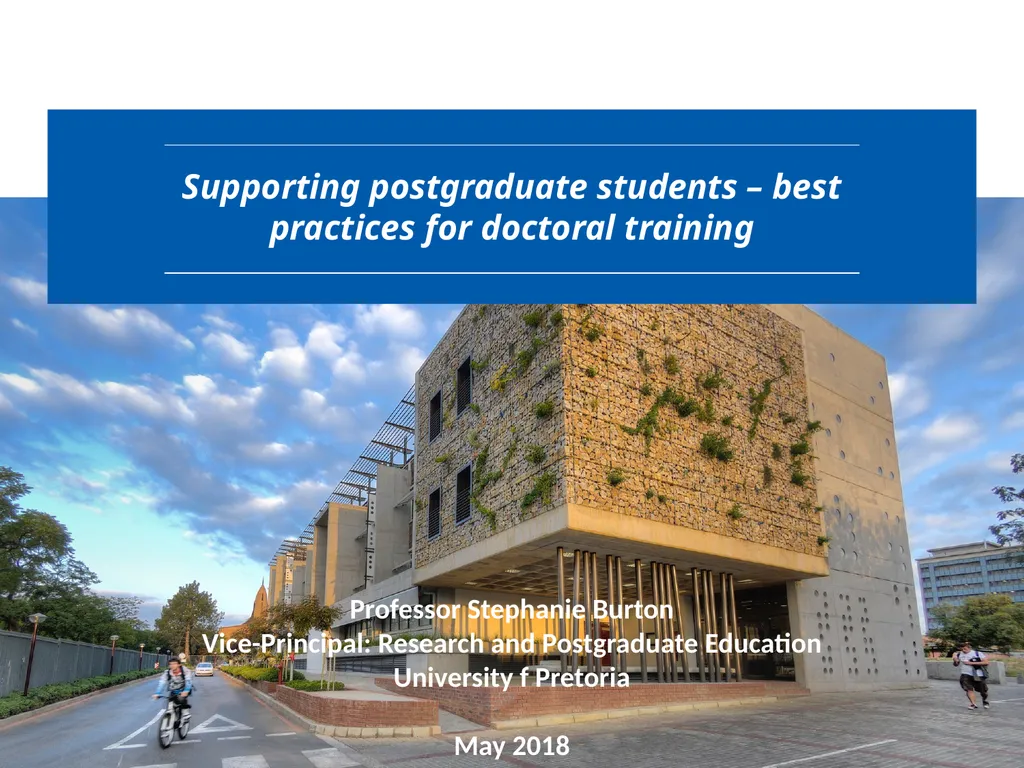
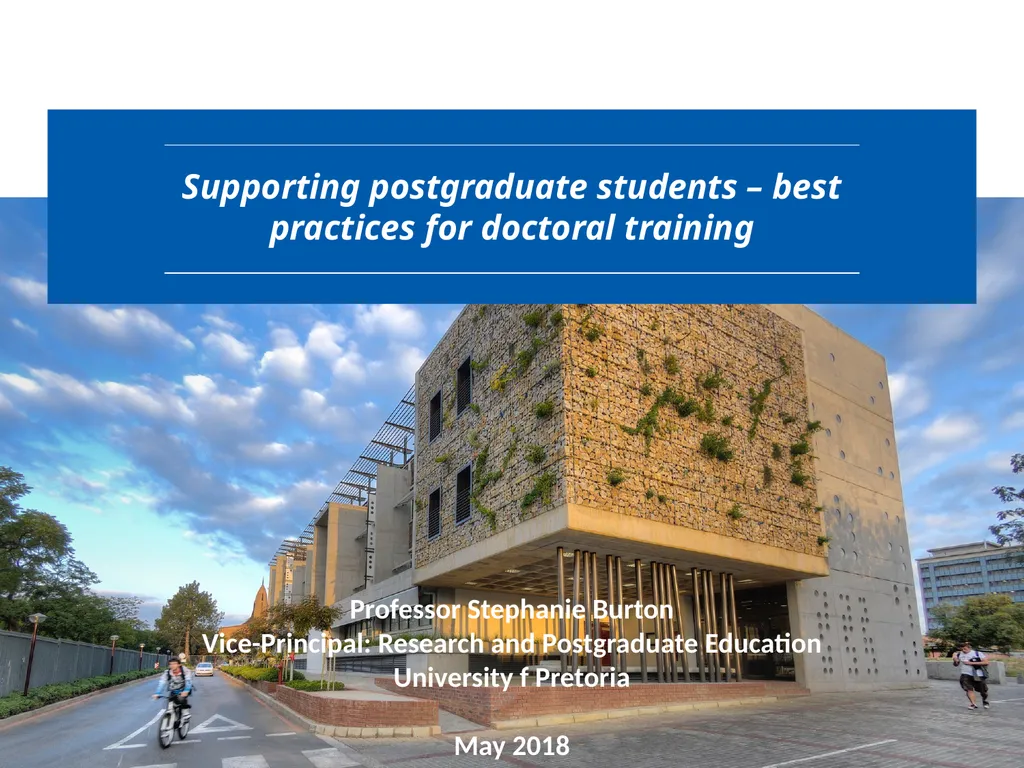
Supporting postgraduate students best practices for doctoral training Professor Stephanie Burton Vice-Principal: Research and Postgraduate Education University f Pretoria May 2018 Best practice for doctoral training Sector-wide approaches
Related Topics
Share
Embed code
Download this presentation From Below
"Supporting postgraduate students – best practices" is the property of its rightful owner. Permission is granted to download and print the materials on this website for personal, non-commercial use only, and to display it on your personal computer provided you do not modify the materials and that you retain all copyright notices contained in the materials. By downloading content from our website, you accept the terms of this agreement.
Presentation Transcript
01
Supporting postgraduate students – best practices for doctoral training Professor Stephanie Burton
Vice-Principal: Research and Postgraduate Education
University f Pretoria
May 2018<br>
Vice-Principal: Research and Postgraduate Education
University f Pretoria
May 2018<br>
02
Best practice for doctoral training Sector-wide approaches
National context
Quality and quality assurance
Institutional practices
Policy frameworks
The student focus
Best practices
The student focus
Opportunities and trends<br>
National context
Quality and quality assurance
Institutional practices
Policy frameworks
The student focus
Best practices
The student focus
Opportunities and trends<br>
03
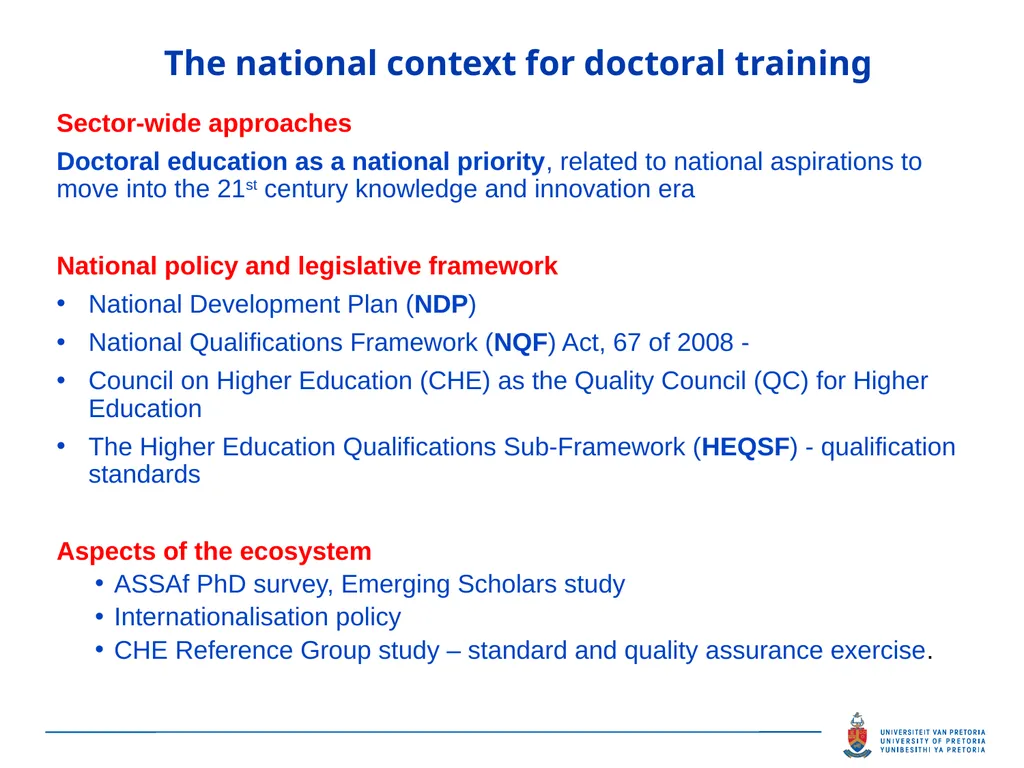
The national context for doctoral training Sector-wide approaches
Doctoral education as a national priority, related to national aspirations to move into the 21st century knowledge and innovation era
National policy and legislative framework
National Development Plan (NDP)
National Qualifications Framework (NQF) Act, 67 of 2008 -
Council on Higher Education (CHE) as the Quality Council (QC) for Higher Education
The Higher Education Qualifications Sub-Framework (HEQSF) - qualification standards
Aspects of the ecosystem
ASSAf PhD survey, Emerging Scholars study
Internationalisation policy
CHE Reference Group study – standard and quality assurance exercise.<br>
Doctoral education as a national priority, related to national aspirations to move into the 21st century knowledge and innovation era
National policy and legislative framework
National Development Plan (NDP)
National Qualifications Framework (NQF) Act, 67 of 2008 -
Council on Higher Education (CHE) as the Quality Council (QC) for Higher Education
The Higher Education Qualifications Sub-Framework (HEQSF) - qualification standards
Aspects of the ecosystem
ASSAf PhD survey, Emerging Scholars study
Internationalisation policy
CHE Reference Group study – standard and quality assurance exercise.<br>
04
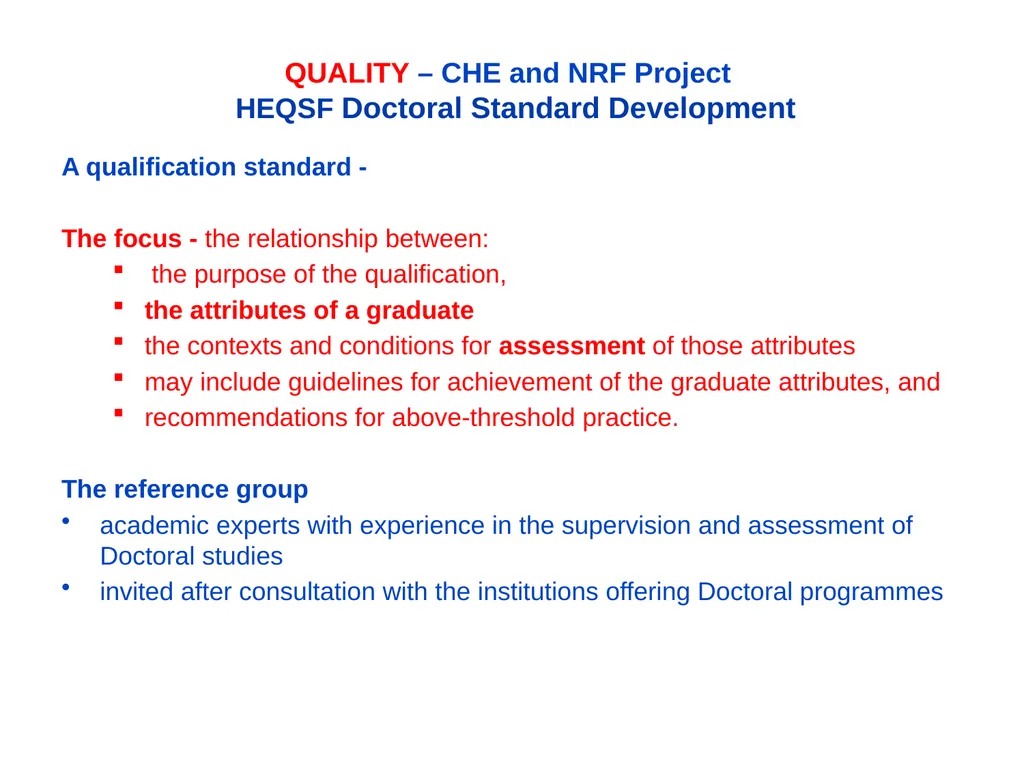
QUALITY – CHE and NRF Project
HEQSF Doctoral Standard Development A qualification standard -
The focus - the relationship between:
the purpose of the qualification,
the attributes of a graduate
the contexts and conditions for assessment of those attributes
may include guidelines for achievement of the graduate attributes, and
recommendations for above-threshold practice.
The reference group
academic experts with experience in the supervision and assessment of Doctoral studies
invited after consultation with the institutions offering Doctoral programmes<br>
The focus - the relationship between:
the purpose of the qualification,
the attributes of a graduate
the contexts and conditions for assessment of those attributes
may include guidelines for achievement of the graduate attributes, and
recommendations for above-threshold practice.
The reference group
academic experts with experience in the supervision and assessment of Doctoral studies
invited after consultation with the institutions offering Doctoral programmes<br>
05
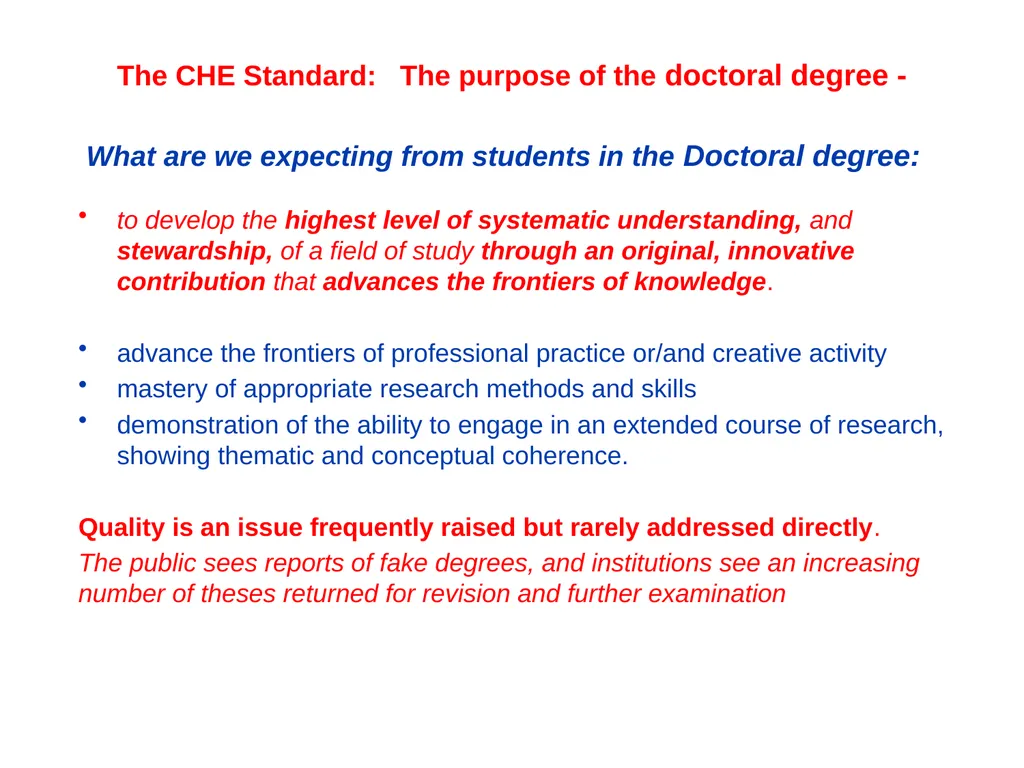
The CHE Standard: The purpose of the doctoral degree - to develop the highest level of systematic understanding, and stewardship, of a field of study through an original, innovative contribution that advances the frontiers of knowledge.
advance the frontiers of professional practice or/and creative activity
mastery of appropriate research methods and skills
demonstration of the ability to engage in an extended course of research, showing thematic and conceptual coherence.
Quality is an issue frequently raised but rarely addressed directly.
The public sees reports of fake degrees, and institutions see an increasing number of theses returned for revision and further examination What are we expecting from students in the Doctoral degree:<br>
advance the frontiers of professional practice or/and creative activity
mastery of appropriate research methods and skills
demonstration of the ability to engage in an extended course of research, showing thematic and conceptual coherence.
Quality is an issue frequently raised but rarely addressed directly.
The public sees reports of fake degrees, and institutions see an increasing number of theses returned for revision and further examination What are we expecting from students in the Doctoral degree:<br>
06
And the definitions of Doctoral degree(s): The (General) doctorate provides training for an academic career… and more broadly for work in other sectors
The defining characteristic of this qualification is that the candidate is required to demonstrate high level research capability and to make a significant and original academic contribution at the frontiers of a discipline or field
The professional doctorate provides education and training for a career in the professions and/or industry and is designed around the development of high level performance and innovation in a professional context.
a combination of coursework and advanced research
The defining characteristic of this qualification is that in addition to the demonstration of high level research capability it requires the ability to integrate theory with practice through the application of theoretical knowledge to highly complex problems in a wide range of professional contexts.<br>
The defining characteristic of this qualification is that the candidate is required to demonstrate high level research capability and to make a significant and original academic contribution at the frontiers of a discipline or field
The professional doctorate provides education and training for a career in the professions and/or industry and is designed around the development of high level performance and innovation in a professional context.
a combination of coursework and advanced research
The defining characteristic of this qualification is that in addition to the demonstration of high level research capability it requires the ability to integrate theory with practice through the application of theoretical knowledge to highly complex problems in a wide range of professional contexts.<br>
07
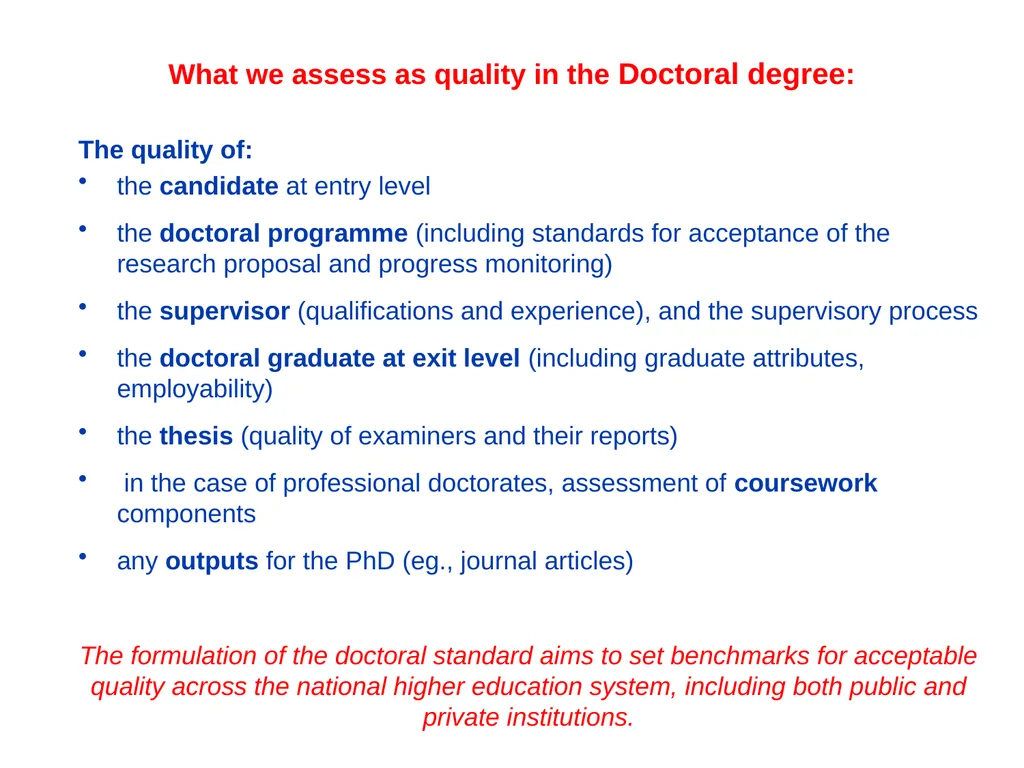
What we assess as quality in the Doctoral degree: The quality of:
the candidate at entry level
the doctoral programme (including standards for acceptance of the research proposal and progress monitoring)
the supervisor (qualifications and experience), and the supervisory process
the doctoral graduate at exit level (including graduate attributes, employability)
the thesis (quality of examiners and their reports)
in the case of professional doctorates, assessment of coursework components
any outputs for the PhD (eg., journal articles)
The formulation of the doctoral standard aims to set benchmarks for acceptable quality across the national higher education system, including both public and private institutions.<br>
the candidate at entry level
the doctoral programme (including standards for acceptance of the research proposal and progress monitoring)
the supervisor (qualifications and experience), and the supervisory process
the doctoral graduate at exit level (including graduate attributes, employability)
the thesis (quality of examiners and their reports)
in the case of professional doctorates, assessment of coursework components
any outputs for the PhD (eg., journal articles)
The formulation of the doctoral standard aims to set benchmarks for acceptable quality across the national higher education system, including both public and private institutions.<br>
08
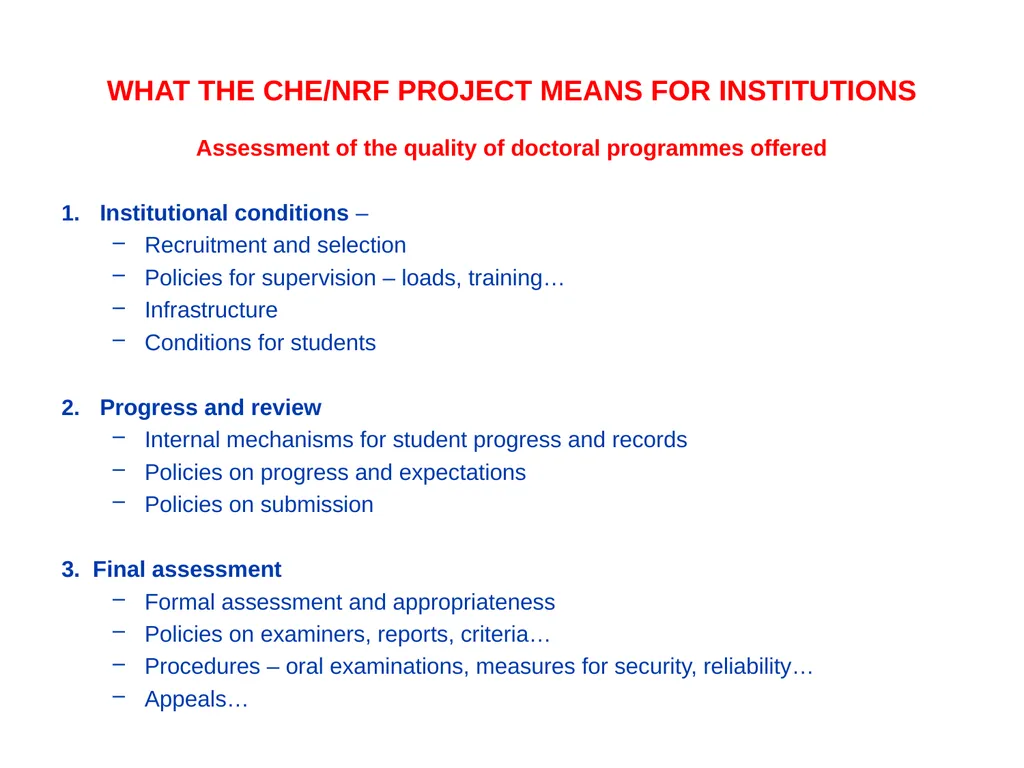
WHAT THE CHE/NRF PROJECT MEANS FOR INSTITUTIONS Assessment of the quality of doctoral programmes offered
Institutional conditions –
Recruitment and selection
Policies for supervision – loads, training…
Infrastructure
Conditions for students
Progress and review
Internal mechanisms for student progress and records
Policies on progress and expectations
Policies on submission
3. Final assessment
Formal assessment and appropriateness
Policies on examiners, reports, criteria…
Procedures – oral examinations, measures for security, reliability…
Appeals…<br>
Institutional conditions –
Recruitment and selection
Policies for supervision – loads, training…
Infrastructure
Conditions for students
Progress and review
Internal mechanisms for student progress and records
Policies on progress and expectations
Policies on submission
3. Final assessment
Formal assessment and appropriateness
Policies on examiners, reports, criteria…
Procedures – oral examinations, measures for security, reliability…
Appeals…<br>
09
WHAT DOES THIS MEAN FOR THE DOCTORAL STUDENT?<br>
10
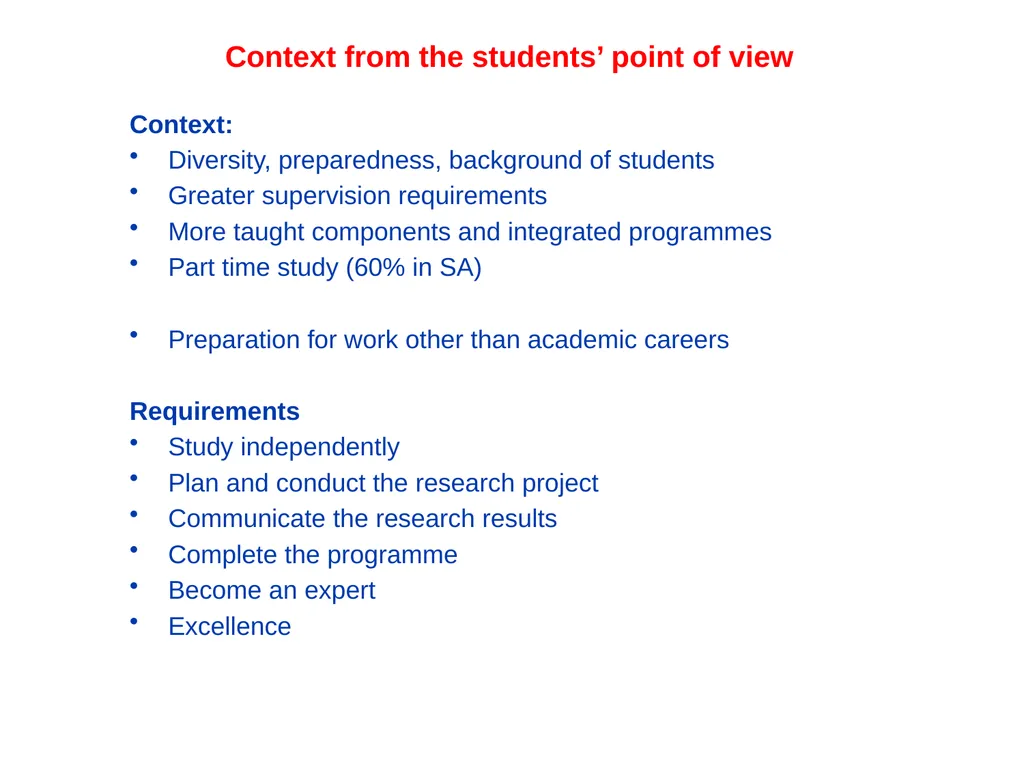
Context from the students’ point of view Context:
Diversity, preparedness, background of students
Greater supervision requirements
More taught components and integrated programmes
Part time study (60% in SA)
Preparation for work other than academic careers
Requirements
Study independently
Plan and conduct the research project
Communicate the research results
Complete the programme
Become an expert
Excellence<br>
Diversity, preparedness, background of students
Greater supervision requirements
More taught components and integrated programmes
Part time study (60% in SA)
Preparation for work other than academic careers
Requirements
Study independently
Plan and conduct the research project
Communicate the research results
Complete the programme
Become an expert
Excellence<br>
11
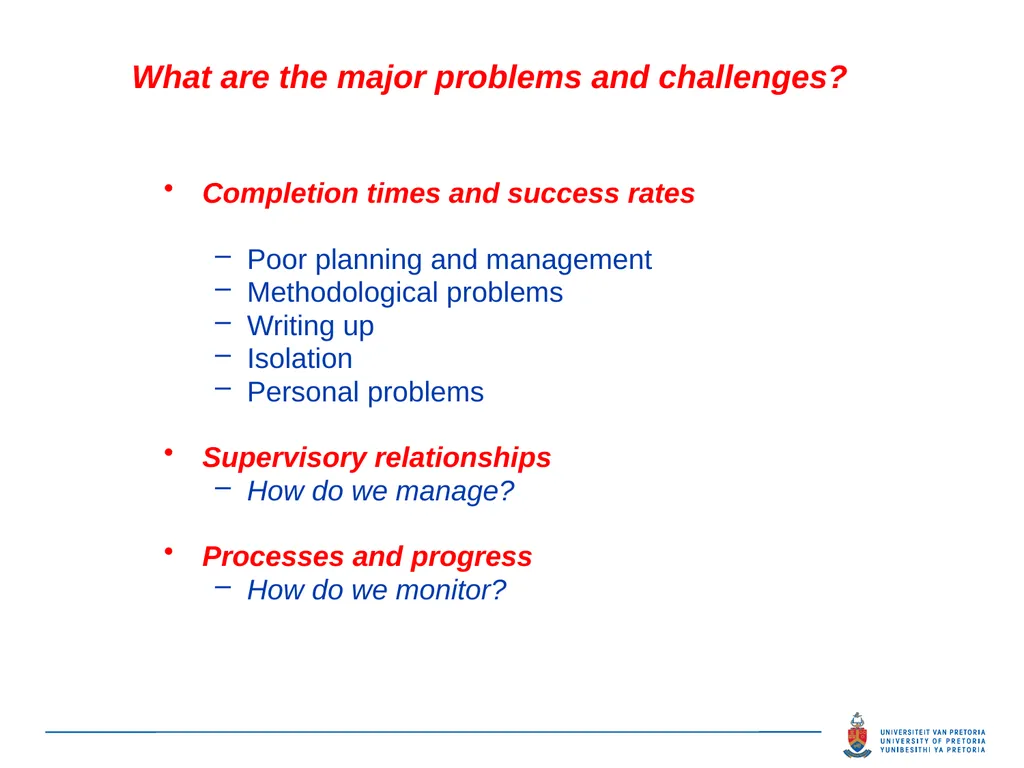
What are the major problems and challenges? Completion times and success rates
Poor planning and management
Methodological problems
Writing up
Isolation
Personal problems
Supervisory relationships
How do we manage?
Processes and progress
How do we monitor?<br>
Poor planning and management
Methodological problems
Writing up
Isolation
Personal problems
Supervisory relationships
How do we manage?
Processes and progress
How do we monitor?<br>
12
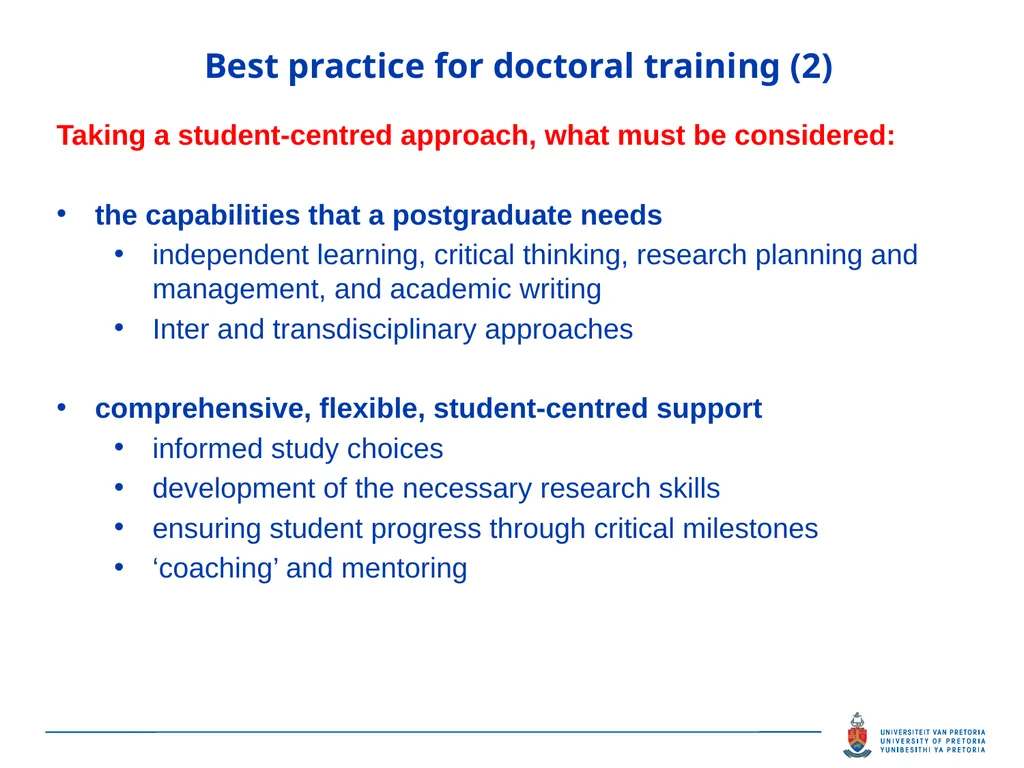
Best practice for doctoral training (2) Taking a student-centred approach, what must be considered:
the capabilities that a postgraduate needs
independent learning, critical thinking, research planning and management, and academic writing
Inter and transdisciplinary approaches
comprehensive, flexible, student-centred support
informed study choices
development of the necessary research skills
ensuring student progress through critical milestones
‘coaching’ and mentoring<br>
the capabilities that a postgraduate needs
independent learning, critical thinking, research planning and management, and academic writing
Inter and transdisciplinary approaches
comprehensive, flexible, student-centred support
informed study choices
development of the necessary research skills
ensuring student progress through critical milestones
‘coaching’ and mentoring<br>
13
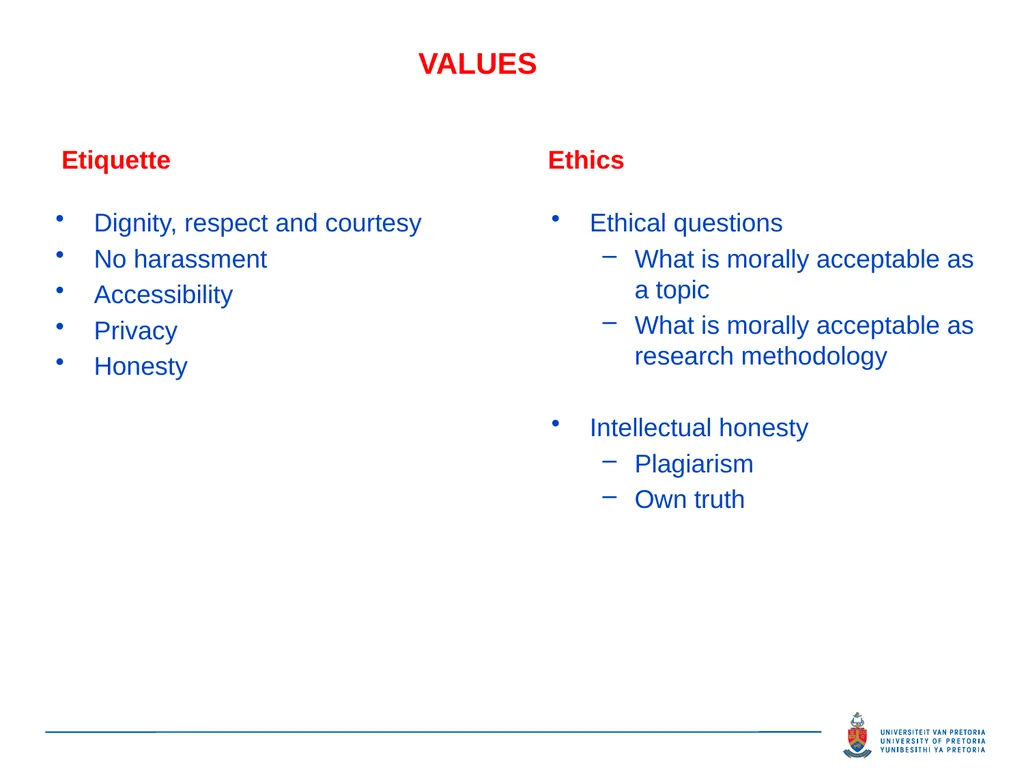
VALUES Etiquette Dignity, respect and courtesy
No harassment
Accessibility
Privacy
Honesty Ethics Ethical questions
What is morally acceptable as a topic
What is morally acceptable as research methodology
Intellectual honesty
Plagiarism
Own truth<br>
No harassment
Accessibility
Privacy
Honesty Ethics Ethical questions
What is morally acceptable as a topic
What is morally acceptable as research methodology
Intellectual honesty
Plagiarism
Own truth<br>
14
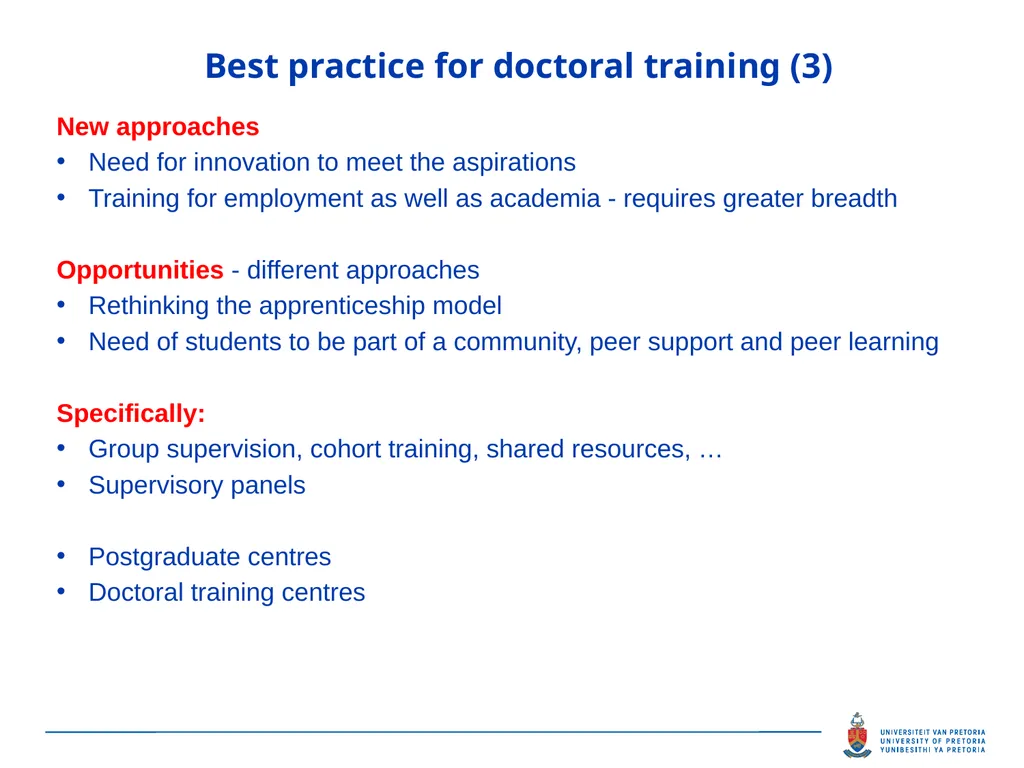
Best practice for doctoral training (3) New approaches
Need for innovation to meet the aspirations
Training for employment as well as academia - requires greater breadth
Opportunities - different approaches
Rethinking the apprenticeship model
Need of students to be part of a community, peer support and peer learning
Specifically:
Group supervision, cohort training, shared resources, …
Supervisory panels
Postgraduate centres
Doctoral training centres<br>
Need for innovation to meet the aspirations
Training for employment as well as academia - requires greater breadth
Opportunities - different approaches
Rethinking the apprenticeship model
Need of students to be part of a community, peer support and peer learning
Specifically:
Group supervision, cohort training, shared resources, …
Supervisory panels
Postgraduate centres
Doctoral training centres<br>
15
The purpose of a postgraduate college/centre A centralised postgraduate centre should add value through:
coordination and facilitation of relevant training and support
wide cross-faculty interdisciplinary interaction
broad external outreach
heightened profile and reputation
providing a positive and effective environment in which postgraduates can achieve their potential and aspirations
Providing:
Academic and professional support
Student support
Skills training
Research oversight
Student progress oversight
Supervision monitoring
Administration<br>
coordination and facilitation of relevant training and support
wide cross-faculty interdisciplinary interaction
broad external outreach
heightened profile and reputation
providing a positive and effective environment in which postgraduates can achieve their potential and aspirations
Providing:
Academic and professional support
Student support
Skills training
Research oversight
Student progress oversight
Supervision monitoring
Administration<br>
16
Doctoral training centres Enhanced training environment through peer-to-peer support
Training programme with breadth and depth, drawing on UK-wide and international expertise
Sharing of knowledge and best practice
National and international connectivity
Industry exposure nationally and globally
Components/mechanisms
Seminars, summer schools, meetings
Co-supervisory arrangements
Mentorships
Principles from previous meetings
Must be mutually beneficial
Focussed efforts
Achieving critical outcomes on scale that makes a difference
In SA, collaborating with UUK: DTCs
– Maths, Statistics and Data science, and Food Security<br>
Training programme with breadth and depth, drawing on UK-wide and international expertise
Sharing of knowledge and best practice
National and international connectivity
Industry exposure nationally and globally
Components/mechanisms
Seminars, summer schools, meetings
Co-supervisory arrangements
Mentorships
Principles from previous meetings
Must be mutually beneficial
Focussed efforts
Achieving critical outcomes on scale that makes a difference
In SA, collaborating with UUK: DTCs
– Maths, Statistics and Data science, and Food Security<br>
17
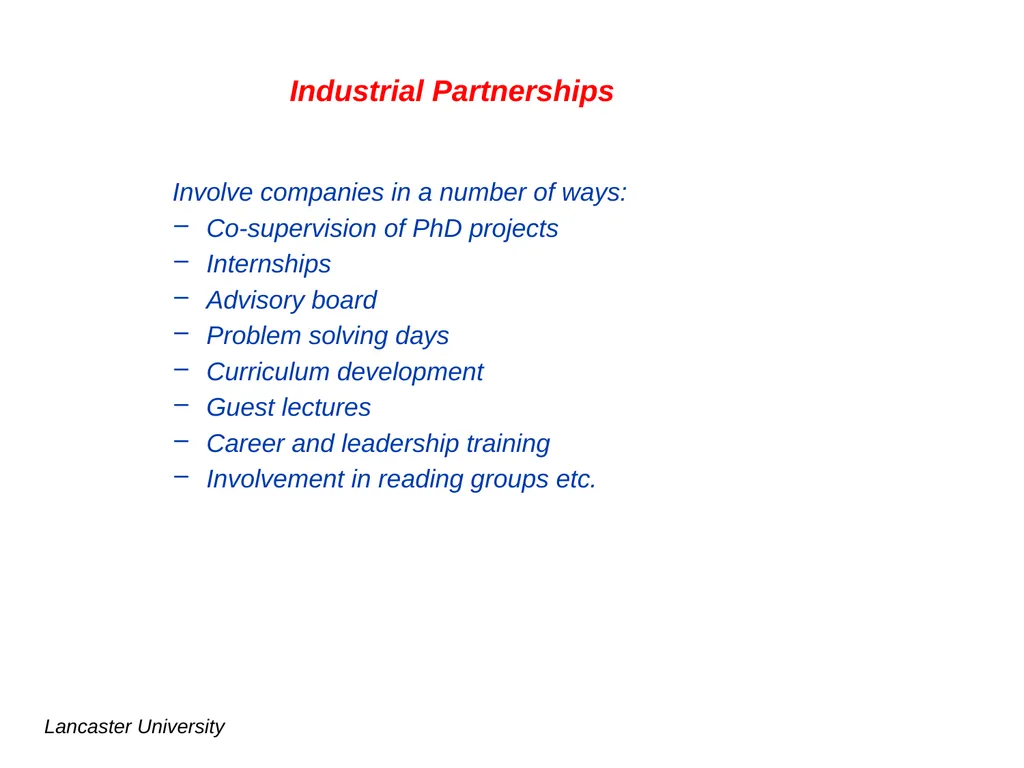
Industrial Partnerships Involve companies in a number of ways:
Co-supervision of PhD projects
Internships
Advisory board
Problem solving days
Curriculum development
Guest lectures
Career and leadership training
Involvement in reading groups etc. Lancaster University<br>
Co-supervision of PhD projects
Internships
Advisory board
Problem solving days
Curriculum development
Guest lectures
Career and leadership training
Involvement in reading groups etc. Lancaster University<br>
18
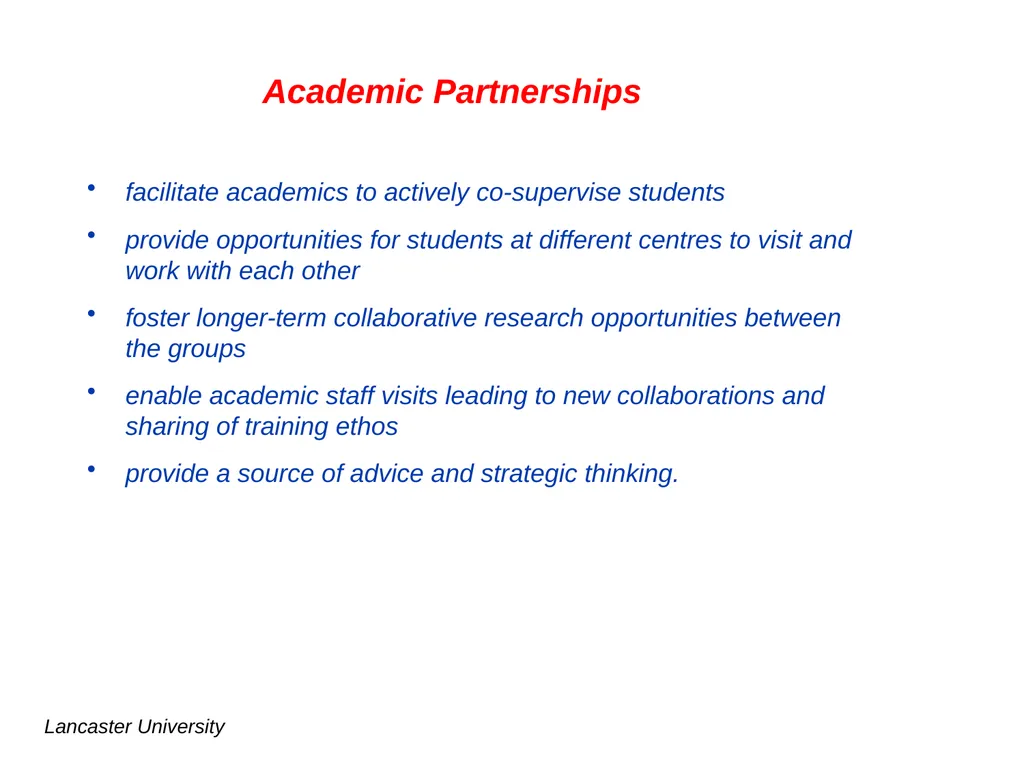
Academic Partnerships facilitate academics to actively co-supervise students
provide opportunities for students at different centres to visit and work with each other
foster longer-term collaborative research opportunities between the groups
enable academic staff visits leading to new collaborations and sharing of training ethos
provide a source of advice and strategic thinking. Lancaster University<br>
provide opportunities for students at different centres to visit and work with each other
foster longer-term collaborative research opportunities between the groups
enable academic staff visits leading to new collaborations and sharing of training ethos
provide a source of advice and strategic thinking. Lancaster University<br>
19
An Engaged Student Community Strong group ethos with the students taking ownership of the programme
All students can have roles
Mentoring
Away Days
Group training
Themed research groups
Forums
Social programme
Benefits later: professional collaboration, mutual support, alumni engagement, work recruitment Lancaster University<br>
All students can have roles
Mentoring
Away Days
Group training
Themed research groups
Forums
Social programme
Benefits later: professional collaboration, mutual support, alumni engagement, work recruitment Lancaster University<br>
20
Alumni contributions Evidence that they want continued engagement
Contributions as:
Ambassadors
New industry links
Source of industry-led training
Company experience of employing students Lancaster University<br>
Contributions as:
Ambassadors
New industry links
Source of industry-led training
Company experience of employing students Lancaster University<br>
21
Thank you<br>