
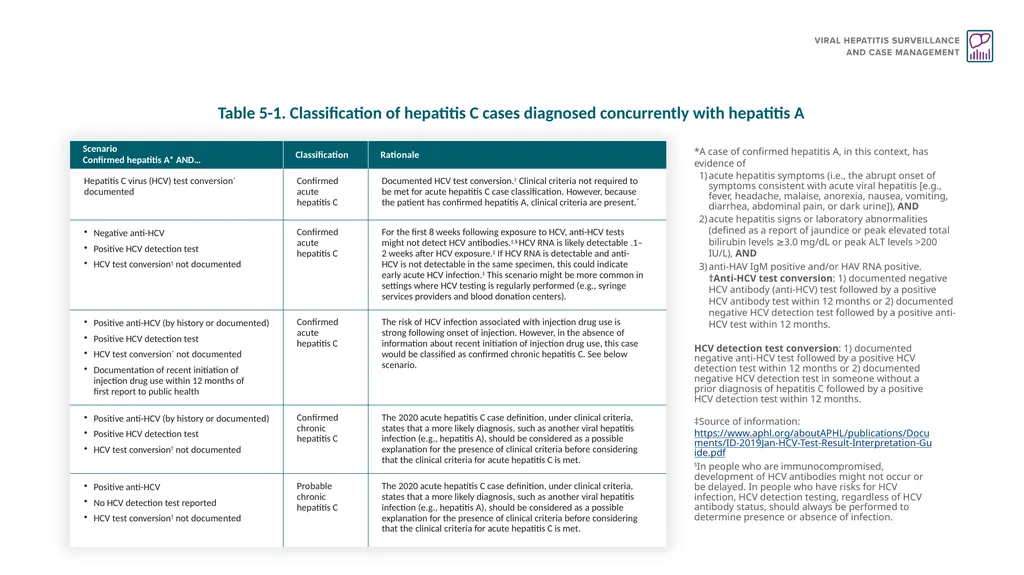
Table 5-1. Classification of hepatitis C cases

Published  . 0 views
↓ Download
Table 5-1. Classification of hepatitis C cases
1 / 1
Description: Table 5-1. Classification of hepatitis C cases diagnosed concurrently with hepatitis A A case of confirmed hepatitis A, in this context, has evidence of acute hepatitis symptoms (i.e., the abrupt onset of symptoms consistent with acute

Related Topics

Download Presentation

"Table 5-1. Classification of hepatitis C cases" is the property of its rightful owner. Permission is granted to download and print the materials on this website for personal, non-commercial use only, and to display it on your personal computer provided you do not modify the materials and that you retain all copyright notices contained in the materials. By downloading content from our website, you accept the terms of this agreement.

Presentation Transcript

slide1. Table 5-1. Classification of hepatitis C cases diagnosed concurrently with hepatitis A *A case of confirmed hepatitis A, in this context, has evidence of
acute hepatitis symptoms (i.e., the abrupt onset of symptoms consistent with acute viral hepatitis [e.g., fever, headache, malaise, anorexia, nausea, vomiting, diarrhea, abdominal pain, or dark urine]), AND
acute hepatitis signs or laboratory abnormalities (defined as a report of jaundice or peak elevated total bilirubin levels ≥3.0 mg/dL or peak ALT levels >200 IU/L), AND
anti-HAV IgM positive and/or HAV RNA positive. †Anti-HCV test conversion: 1) documented negative HCV antibody (anti-HCV) test followed by a positive HCV antibody test within 12 months or 2) documented negative HCV detection test followed by a positive anti-HCV test within 12 months.
HCV detection test conversion: 1) documented negative anti-HCV test followed by a positive HCV detection test within 12 months or 2) documented negative HCV detection test in someone without a prior diagnosis of hepatitis C followed by a positive HCV detection test within 12 months.
‡Source of information: https://www.aphl.org/aboutAPHL/publications/Documents/ID-2019Jan-HCV-Test-Result-Interpretation-Guide.pdf
§In people who are immunocompromised, development of HCV antibodies might not occur or be delayed. In people who have risks for HCV infection, HCV detection testing, regardless of HCV antibody status, should always be performed to determine presence or absence of infection.<br>