Tackling the parasitological challenges arising from organic farming practices Spiridoula Athanasiadou, ProPara coordinator ProPara aim Generate information and novel tools that can be readily used by organic farmers to improve animal
"Tackling the parasitological challenges arising" is the property of its rightful owner. Permission is granted to
download and print the materials on this website for personal, non-commercial use only, and to display it
on your personal computer provided you do not modify the materials and that you retain all copyright
notices contained in the materials. By downloading content from our website, you accept the terms of this
agreement.
Presentation Transcript
01
Tackling the parasitological challenges arising from organic farming practices Spiridoula Athanasiadou, ProPara coordinator<br>
02
ProPara aim Generate information and novel tools that can be readily used by organic farmers to improve animal health and welfare
Achieve this by targeting the interface between research and dissemination
We will utilise industry datasets (e.g. liver condemnation data) and close links with key stakeholders for our on-farm trials (through the extension services of the partners)<br>
03
ProPara approach Perform targeted research at a farm systems level, to fine-tune sustainable parasite control strategies, and/or facilitate the implementation plans
Pool information generated from the current and legacy national and international research projects and perform cost-benefit and farmers’ acceptance analysis
Evaluate implementation strategies and disseminate them to key stakeholders of the wider organic community<br>
04
ProPara deliverables Report on helminth parasite control strategies across organic farms in Europe
Generate quantitative data on the use of alternatives for GIN control in organic sheep and goats
Economic impacts of the implementation of alternative approaches for GIN control
Characterisation of dairy cattle breeds on their resilience/robustness to GIN infections
Estimates of liver and rumen fluke incidence in organic cattle and sheep farms
Electronic application (‘app’) that identifies potential risk of infection with liver fluke
Web-based decision tree evaluated by the organic farming community for its applicability, for the control of GIN in cattle, sheep and goats<br>
05
UK contribution Perform on farm trials where alternative strategies of GIN control are put to test by organic farmers<br>
06
Basket of options trial Organic sheep farmers are given options to consider for sustainable worm control
Suggested strategies to reduce worm burdens: - Drench if FEC are rising - Protein supplementation (DUP) around parturition and/or lactation - Grazing on bioactive forages, e.g. chicory - TSTs. Weigh lambs a few times a year and calculate grass availability. If weight is less than expected (based on grass availability measured) animals get drenched
The participating farmer can select one or more of these options, use it in one group, and then compare the results with another group managed in a “usual” manner.<br>
07
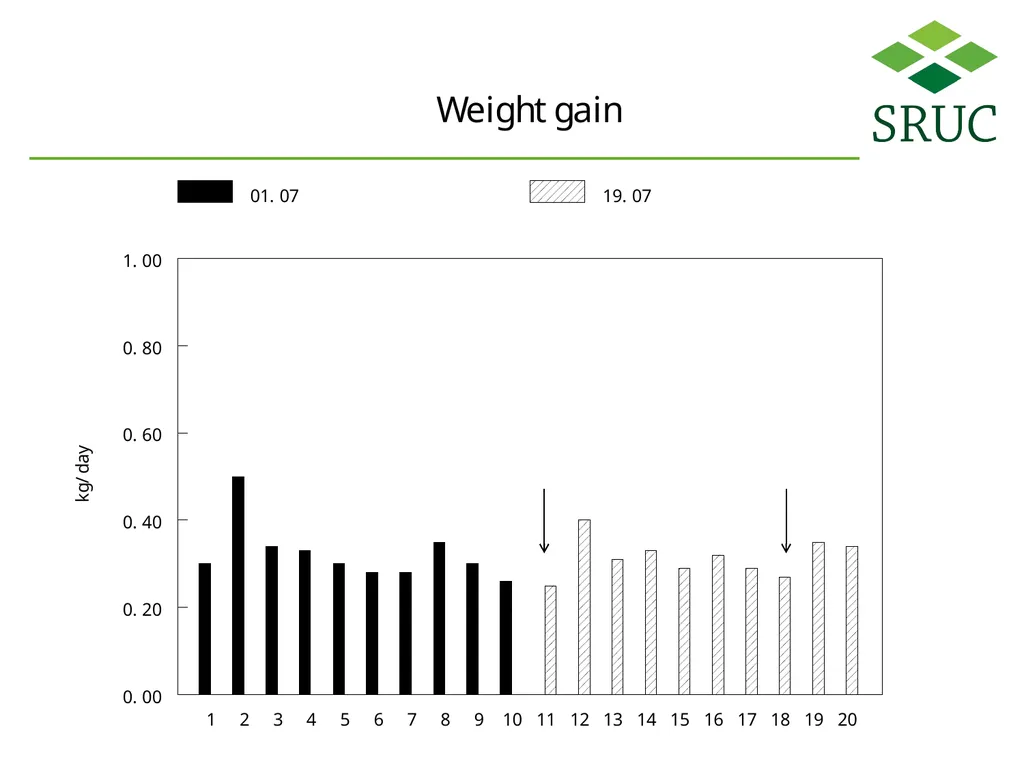
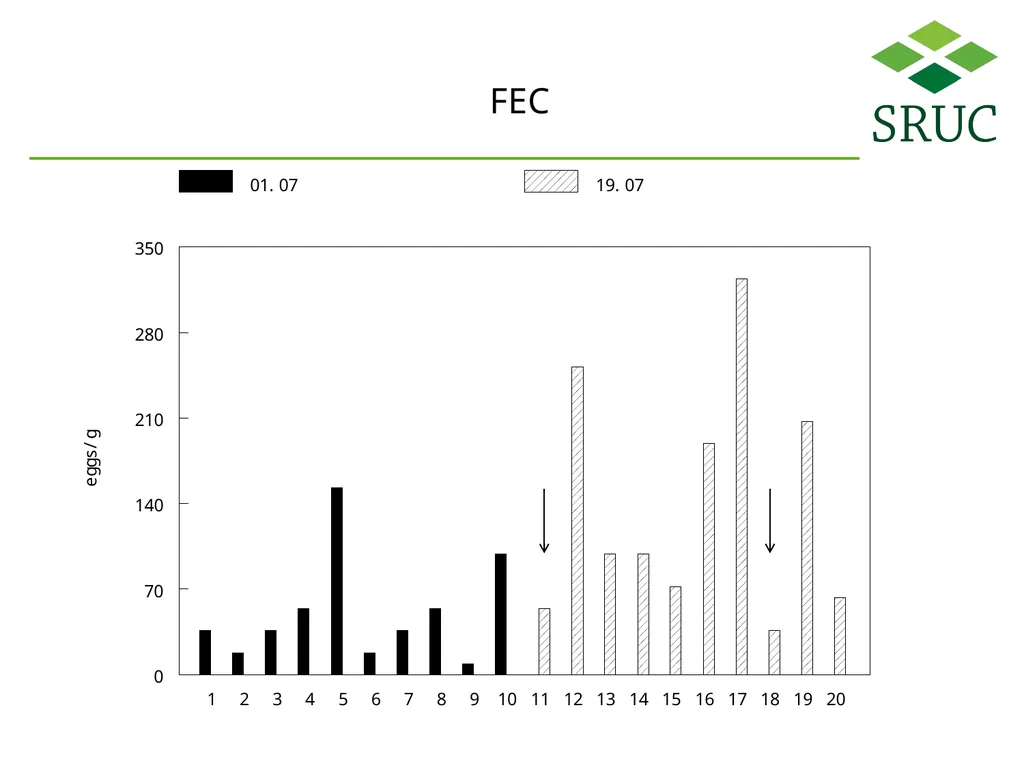
Farmer 1: FEC vs weight gain Currently - Ewes: mob FEC and “blanket drenching” although he leaves 10% undrenched - Lambs: drenching based on mob FEC if suspected problems
Farmer monitors lamb weights at 2-3 occasions. - 1st 42-84 day old, - 2nd 21 weeks old - Likely a third weighing sometime between the two above
He also measures DM of grass.<br>
08
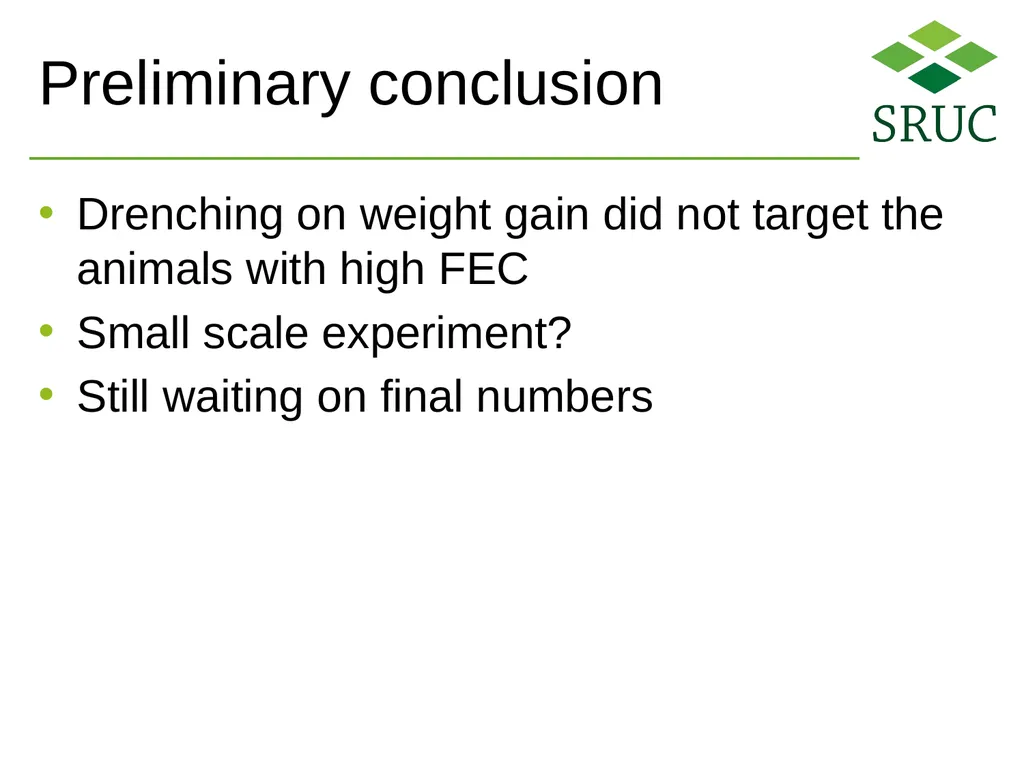
Preliminary conclusion Drenching on weight gain did not target the animals with high FEC
Small scale experiment?
Still waiting on final numbers<br>
09
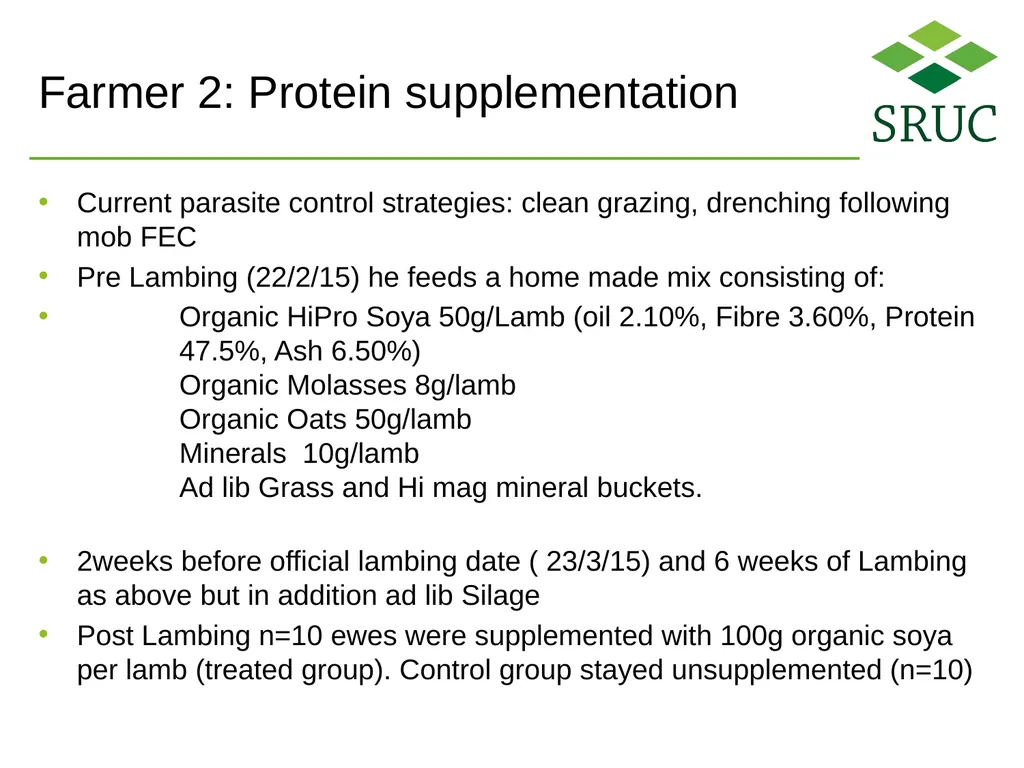
Farmer 2: Protein supplementation Current parasite control strategies: clean grazing, drenching following mob FEC
Pre Lambing (22/2/15) he feeds a home made mix consisting of:
Organic HiPro Soya 50g/Lamb (oil 2.10%, Fibre 3.60%, Protein 47.5%, Ash 6.50%) Organic Molasses 8g/lamb Organic Oats 50g/lamb Minerals 10g/lamb Ad lib Grass and Hi mag mineral buckets.
2weeks before official lambing date ( 23/3/15) and 6 weeks of Lambing as above but in addition ad lib Silage
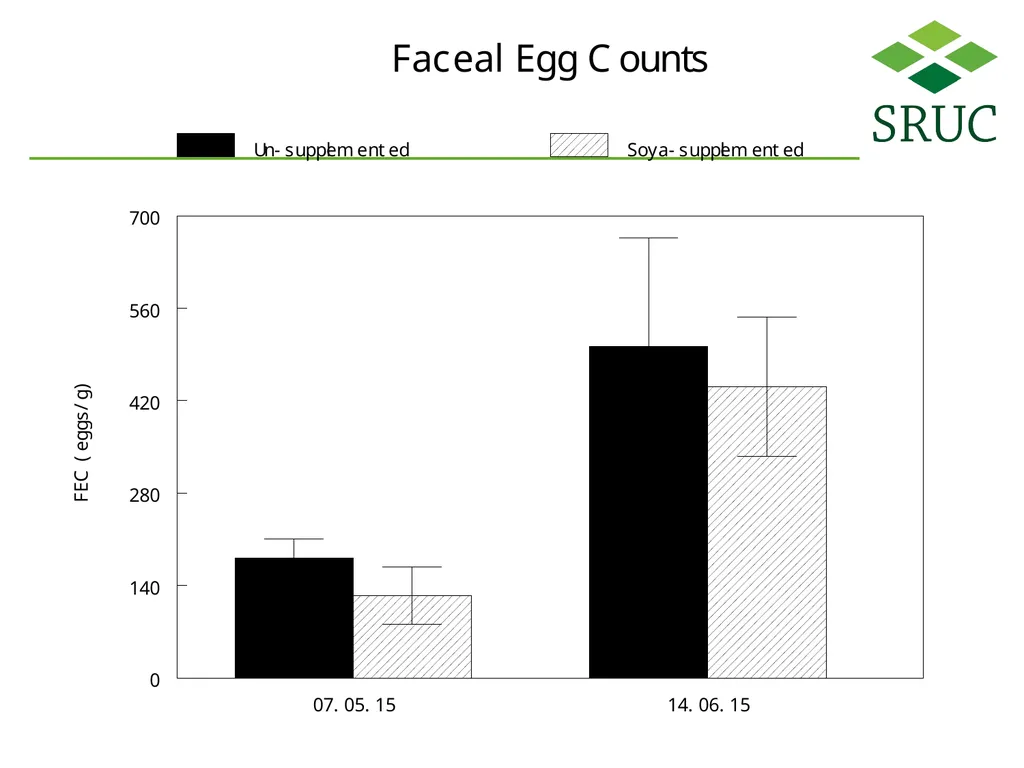
Post Lambing n=10 ewes were supplemented with 100g organic soya per lamb (treated group). Control group stayed unsupplemented (n=10)<br>
10
Preliminary conclusion Soya supplementation has reduced FEC in ewes
Small scale experiment, but encouraging
Still waiting on final lamb weights to investigate whether there was an effect on lamb performance<br>
11
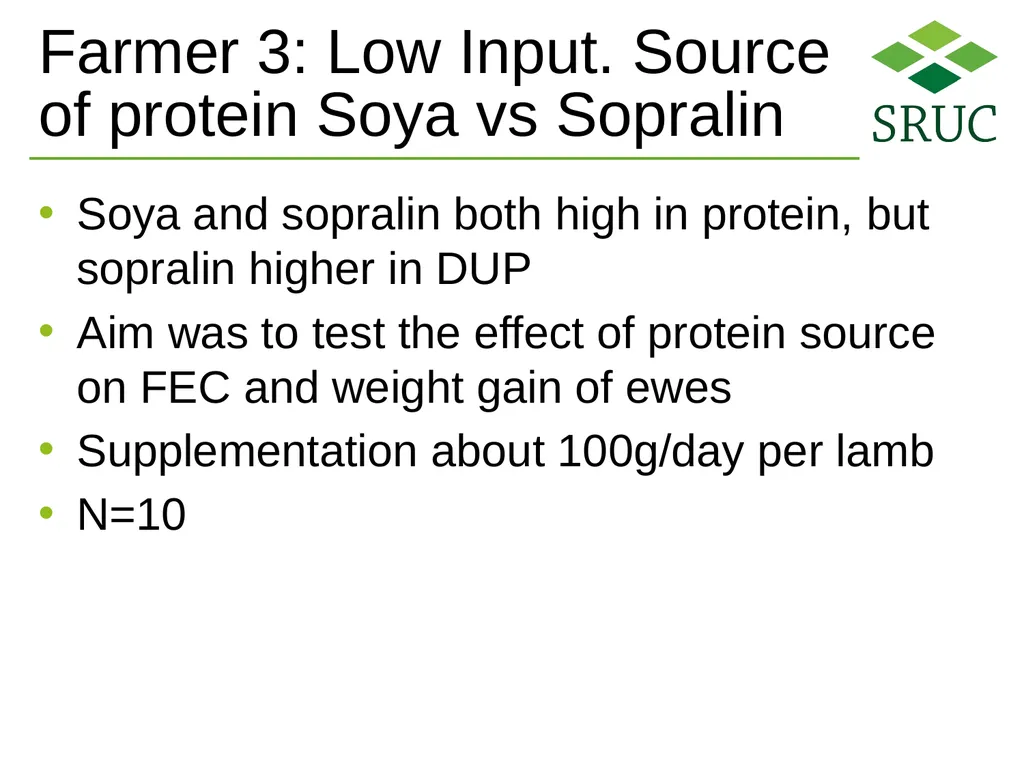
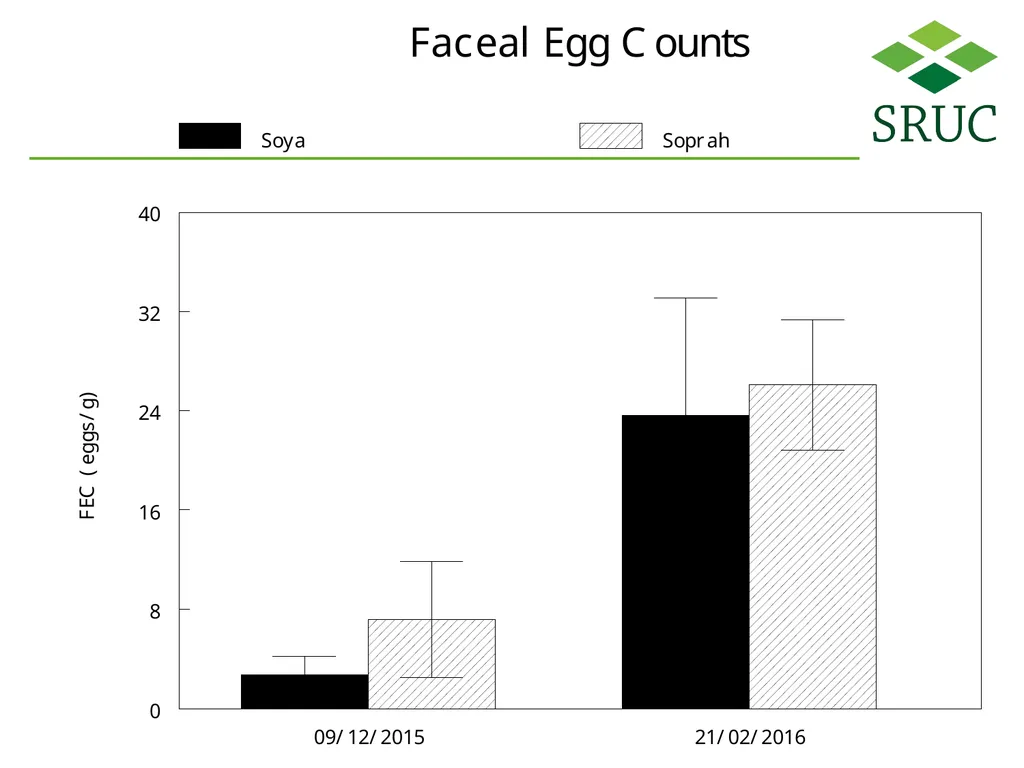
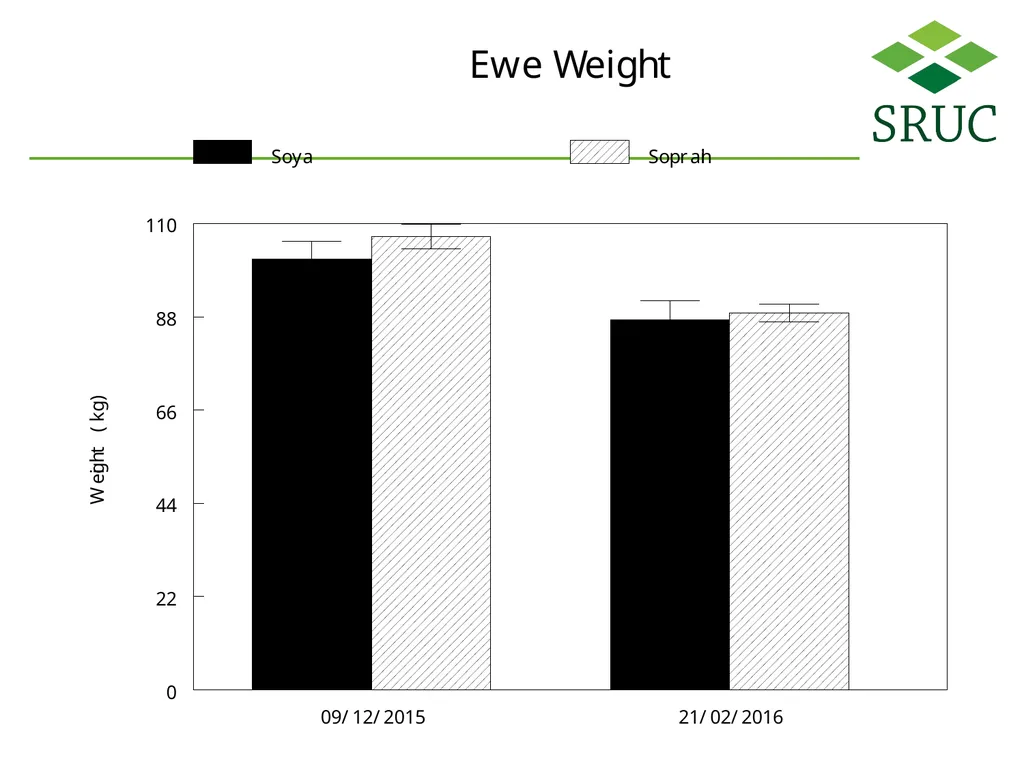
Farmer 3: Low Input. Source of protein Soya vs Sopralin Soya and sopralin both high in protein, but sopralin higher in DUP
Aim was to test the effect of protein source on FEC and weight gain of ewes
Supplementation about 100g/day per lamb
N=10<br>
12
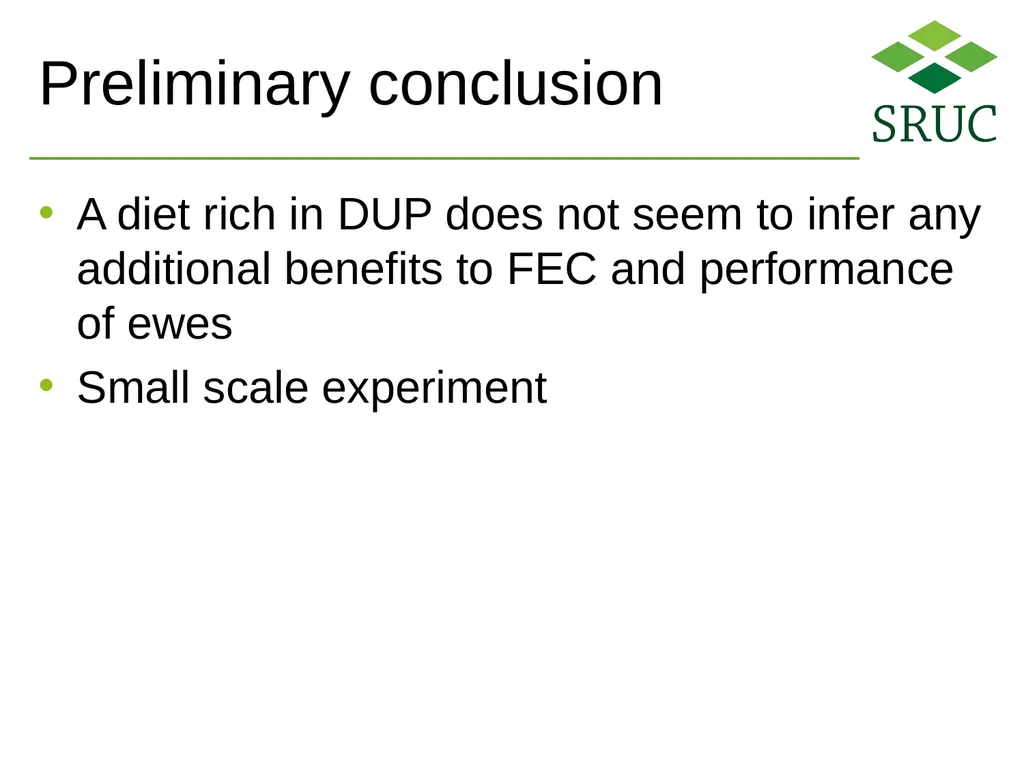
Preliminary conclusion A diet rich in DUP does not seem to infer any additional benefits to FEC and performance of ewes
Small scale experiment<br>
13
Acknowledgements Financial support provided by transnational funding bodies, being partners of the FP7 ERA-net project, CORE Organic Plus, and the cofund from the European Commission.