Talent Management Dr. Michele Paludi, Matthew Baird, MSM, Dr. Candice Ward, Dr. Teresa Jepma, Dr. David Lawyer, and Dr. John Theodore December 21, 2020 1 2 This webinar is designed for informational purposes only and does not constitute
"Talent Management Dr. Michele Paludi, Matthew" is the property of its rightful owner. Permission is granted to
download and print the materials on this website for personal, non-commercial use only, and to display it
on your personal computer provided you do not modify the materials and that you retain all copyright
notices contained in the materials. By downloading content from our website, you accept the terms of this
agreement.
Presentation Transcript
01
Talent Management Dr. Michele Paludi, Matthew Baird, MSM,
Dr. Candice Ward, Dr. Teresa Jepma, Dr. David Lawyer,
and Dr. John Theodore
December 21, 2020 1<br>
02
2 This webinar is designed for informational purposes only and does not constitute legal advice. Any action or inaction by the viewer based on the information provided is done without guarantee of its accuracy or suitability for a particular purpose. TALENT MANAGEMENT<br>
03
3 Dr. Teresa Jepma
Matthew Baird, MSM
Dr. Candice Ward
Dr. David Lawyer
Dr. John Theodore
Dr. Michele Paludi MEET THE EXPERT PANEL<br>
04
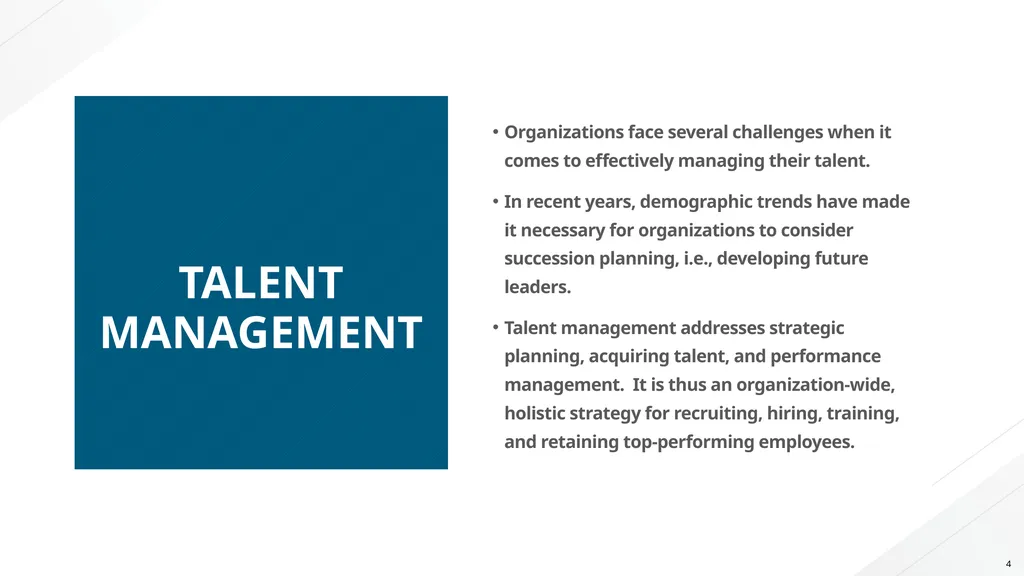
TALENT MANAGEMENT Organizations face several challenges when it comes to effectively managing their talent.
In recent years, demographic trends have made it necessary for organizations to consider succession planning, i.e., developing future leaders.
Talent management addresses strategic planning, acquiring talent, and performance management. It is thus an organization-wide, holistic strategy for recruiting, hiring, training, and retaining top-performing employees. 4<br>
05
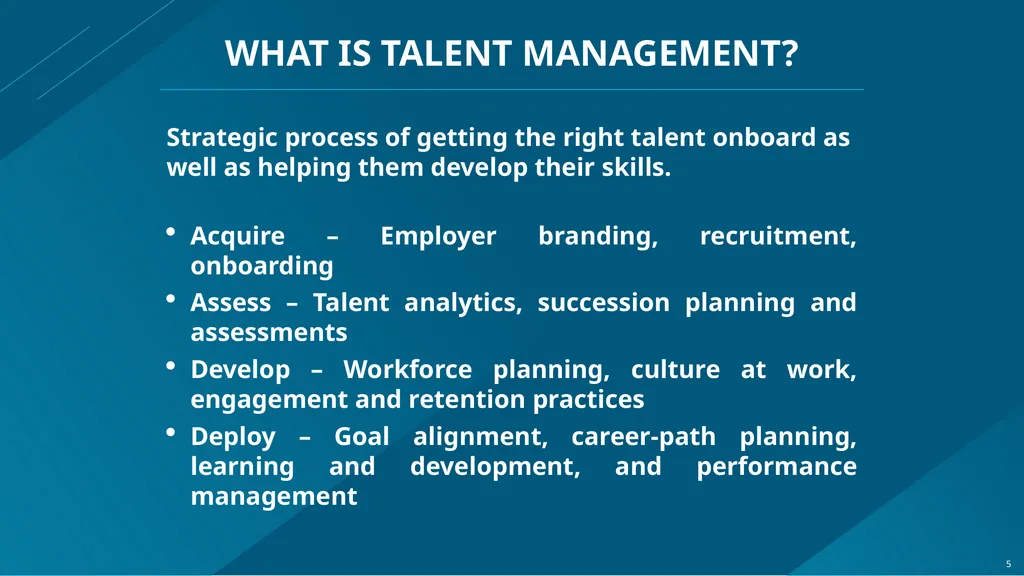
5 Strategic process of getting the right talent onboard as well as helping them develop their skills.
Acquire – Employer branding, recruitment, onboarding
Assess – Talent analytics, succession planning and assessments
Develop – Workforce planning, culture at work, engagement and retention practices
Deploy – Goal alignment, career-path planning, learning and development, and performance management WHAT IS TALENT MANAGEMENT?<br>
06
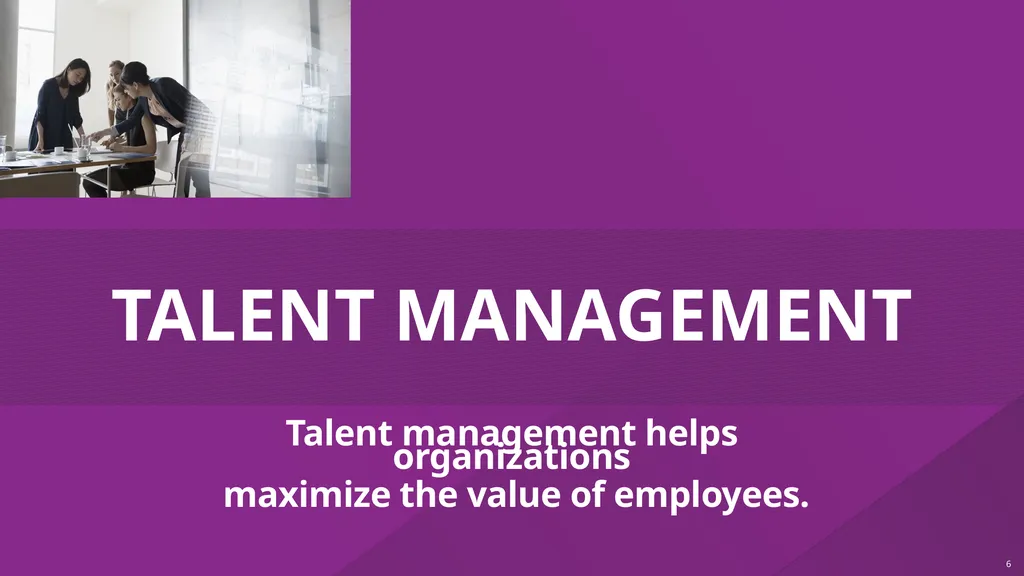
TALENT MANAGEMENT Talent management helps organizations
maximize the value of employees. 6<br>
07
BENEFITS OF TALENT MANAGEMENT Improves performance
Allows companies to stay competitive
Alerts organization to risks
Builds high functioning teams
Drives innovation
Decreases turnover 7<br>
08
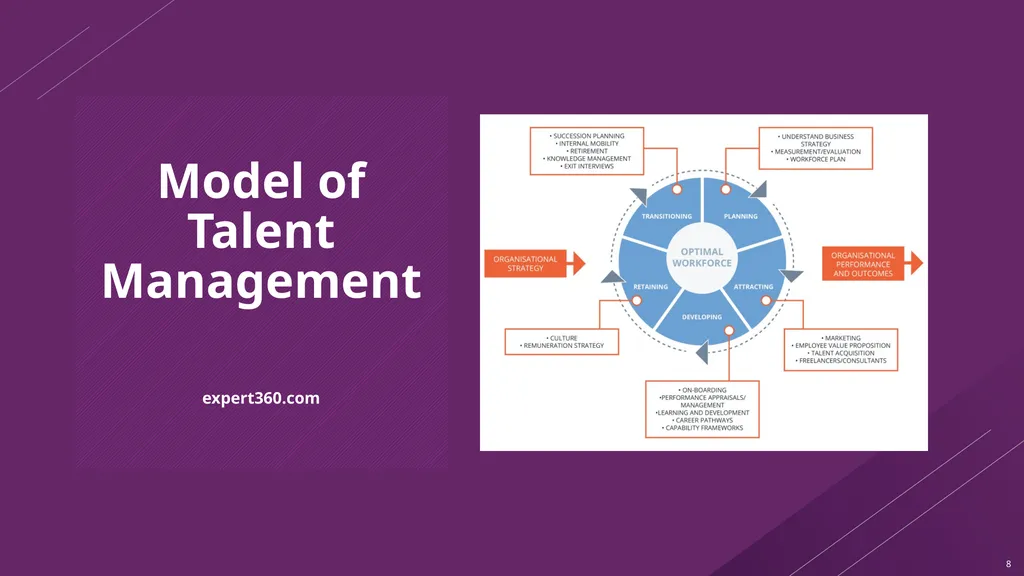
Model of Talent Management expert360.com 8<br>
09
IMPORTANCE OF TALENT MANAGEMENT FOR BUSINESS The opportunity to continue to grow and develop their professional and personal skills is a major motivator for why employees take and stay at a job. 9<br>
10
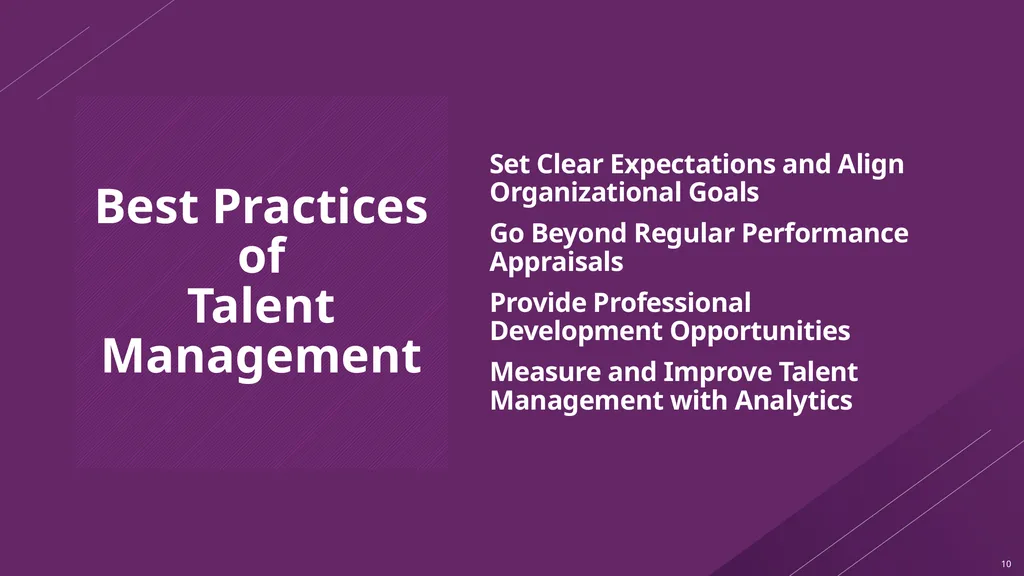
Best Practices of Talent Management Set Clear Expectations and Align Organizational Goals
Go Beyond Regular Performance Appraisals
Provide Professional Development Opportunities
Measure and Improve Talent Management with Analytics 10<br>
11
IMPORTANCE OF TALENT MANAGEMENT Talent management helps employees feel:
engaged
skilled
motivated
satisfied 11<br>
12
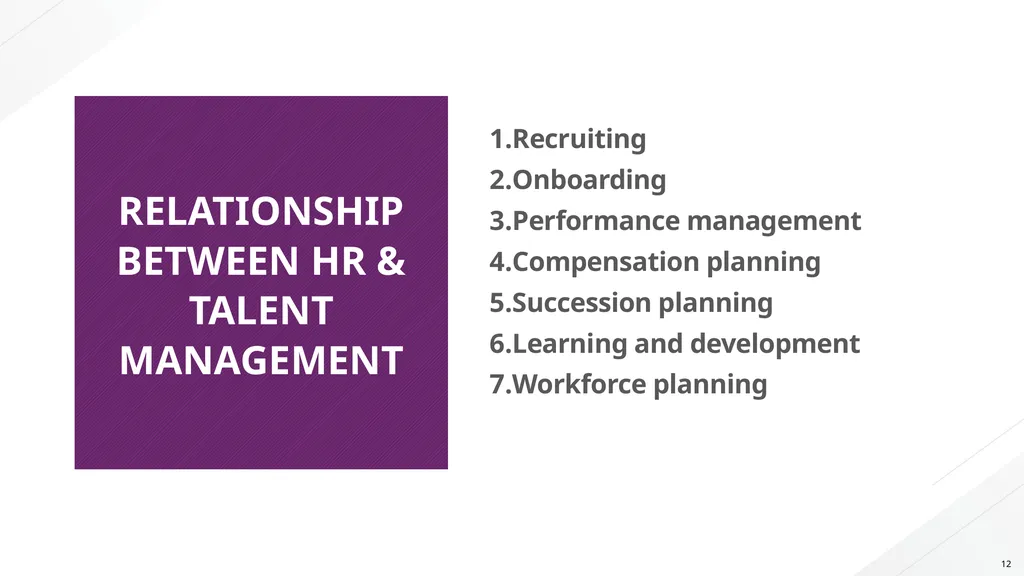
RELATIONSHIP BETWEEN HR & TALENT MANAGEMENT Recruiting
Onboarding
Performance management
Compensation planning
Succession planning
Learning and development
Workforce planning 12<br>
13
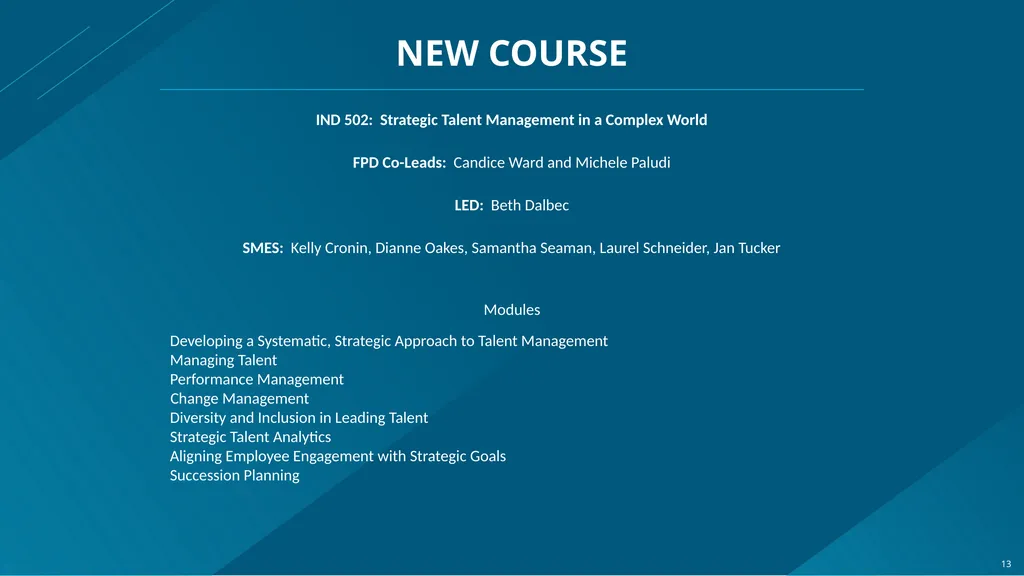
13 IND 502: Strategic Talent Management in a Complex World
FPD Co-Leads: Candice Ward and Michele Paludi
LED: Beth Dalbec
SMES: Kelly Cronin, Dianne Oakes, Samantha Seaman, Laurel Schneider, Jan Tucker
Modules
Developing a Systematic, Strategic Approach to Talent Management
Managing Talent
Performance Management
Change Management
Diversity and Inclusion in Leading Talent
Strategic Talent Analytics
Aligning Employee Engagement with Strategic Goals
Succession Planning NEW COURSE<br>
14
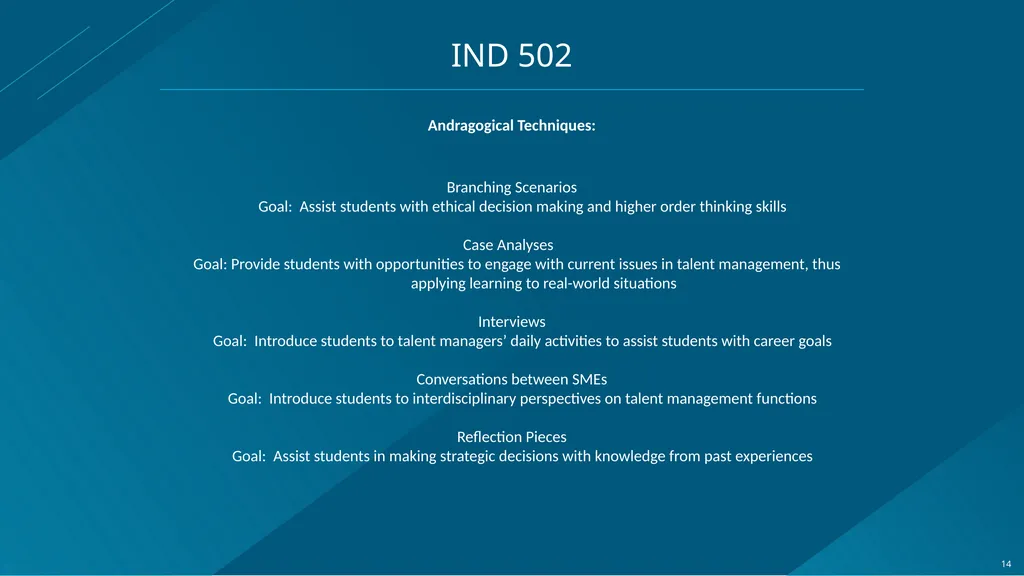
14 Andragogical Techniques:
Branching Scenarios
Goal: Assist students with ethical decision making and higher order thinking skills
Case Analyses
Goal: Provide students with opportunities to engage with current issues in talent management, thus
applying learning to real-world situations
Interviews
Goal: Introduce students to talent managers’ daily activities to assist students with career goals
Conversations between SMEs
Goal: Introduce students to interdisciplinary perspectives on talent management functions
Reflection Pieces
Goal: Assist students in making strategic decisions with knowledge from past experiences IND 502<br>
15
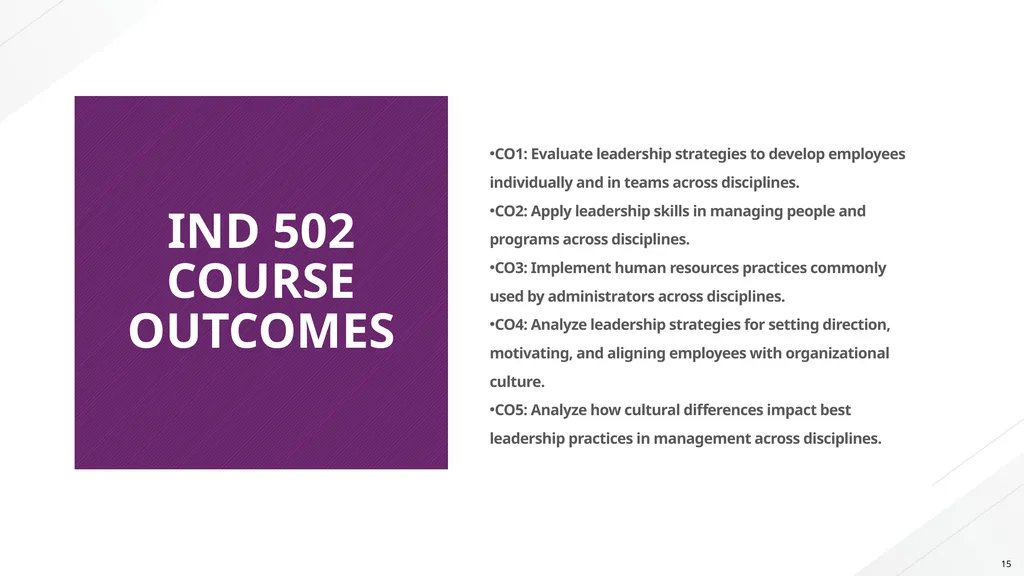
IND 502 COURSE OUTCOMES CO1: Evaluate leadership strategies to develop employees individually and in teams across disciplines.
CO2: Apply leadership skills in managing people and programs across disciplines.
CO3: Implement human resources practices commonly used by administrators across disciplines.
CO4: Analyze leadership strategies for setting direction, motivating, and aligning employees with organizational culture.
CO5: Analyze how cultural differences impact best leadership practices in management across disciplines. 15<br>
16
16 Course Walkthrough<br>
17
QUESTIONS COMMENTS 17<br>
18
THANK YOU Michele Paludi, Ph.D.
Senior Faculty Program Director
School of Graduate Studies
Excelsior College
7 Columbia Circle
Albany, New York 12203
mpaludi@excelsior.edu 18<br>